On this page
- First, food: where fiber should come from
- How much fiber a supplement should actually add
- The main types of fiber supplements, explained
- Fiber capsules vs powder: which format fits your routine
- How to choose a fiber supplement: a four-question checklist
- A simple capsule route (what we sell)
- How to start taking fiber supplements without the growing pains
- Key takeaways
- FAQ: fiber supplements for regularity
- Sources
Fiber is one of the least glamorous things you can take — and one of the simplest to understand. If you're looking for the best fiber supplement for regularity, here's the honest version: the brand on the label matters far less than four practical choices — the type of fiber, the format, what else is in the bottle, and whether it fits a routine you'll actually keep. This guide walks through all four in plain language, with no twenty-product ranking at the end.
One thing to say up front: no capsule outperforms a diet with enough plants in it. A fiber supplement is a gap-filler — a genuinely useful one — not a replacement for food. So that's where we'll start.
First, food: where fiber should come from
Beans, lentils, oats, berries, pears, broccoli, nuts, seeds, whole grains. That's the boring, correct answer, and it matters because food gives you something no supplement fully replicates: a mix of fiber types woven into a matrix of water, polyphenols, and other nutrients, arriving gradually across the day.
According to MedlinePlus, the recommendation for older children, teens and adults is 21 to 38 grams of fiber a day, and Americans eat about 16 grams a day on average. That gap is real — but before you buy anything, it's worth asking whether one or two food swaps could close part of it. A bowl of oats instead of toast. A half-cup of beans folded into whatever you were already making. An apple with the skin on.
If you want the bigger picture on how digestion actually works and what tends to help, our guide to gut health basics is a good companion to this one.
How much fiber a supplement should actually add
Here's a framing that saves people a lot of discomfort: a fiber supplement is there to add a few grams, not to deliver your entire daily quota.
Jumping from 15 grams a day to 35 overnight — whether from food or capsules — tends to produce a memorably rough week. MedlinePlus notes that increasing dietary fiber too quickly can lead to gas, bloating, and cramps. Your gut bacteria adapt to what you feed them, and they need time to adjust to more fiber. The practical target for a supplement is modest: a few grams a day to start, taken consistently, increased slowly if you want more.
So when you're comparing products, don't be seduced by the biggest number on the front of the tub. Consistency at a modest dose beats a heroic dose you abandon by Thursday.
The main types of fiber supplements, explained
This is the decision that matters most, and it's the one most product pages skate past. Different fibers behave very differently in your gut.
Psyllium husk
Psyllium is the husk of the Plantago ovata seed. Its trick is that it forms a soft gel when it meets water, and that gel holds water as it moves through the gut. That water-holding gel is why psyllium is the usual starting point when the goal is regularity.
The gel-forming behavior also means psyllium tends to produce less gas than fibers that ferment quickly. It's the sensible default for most people whose goal is simply staying regular — which is exactly why psyllium husk capsules have become such a popular route: the same fiber, without the gritty texture that puts some people off the powder.
Methylcellulose
A plant-derived, semi-synthetic soluble fiber. Like psyllium, it isn't meaningfully fermented, so it's gentle on gas-prone stomachs. It's a reasonable alternative if psyllium's texture or gel doesn't agree with you.
Inulin and chicory root fiber
Inulin is a prebiotic fiber — food for your gut bacteria — and it ferments quickly. That's its point, and also its catch: fast fermentation means it produces the most gas and bloating of the common supplement fibers, especially at higher doses. Inulin isn't the fiber most people should reach for when the goal is regularity. If it's in a product you like, look for a modest amount rather than a hero dose.
Wheat dextrin and other "invisible" fibers
These dissolve clear and taste like nothing, which makes them easy to stir into coffee or soup. They ferment more slowly than inulin, so they're milder — but they're also less gel-forming than psyllium.
Psyllium vs other fiber supplements, in one paragraph: if your goal is regularity, psyllium is the one with a mechanism — that water-holding gel — that maps directly onto the goal. Methylcellulose is the gentle understudy. Inulin is for feeding gut bacteria, not for staying regular. The invisible fibers are convenient but less gel-forming.
Fiber capsules vs powder: which format fits your routine
The same fiber works the same way in either format — psyllium absorbs water in your gut, not your bloodstream — so this choice is genuinely about your life, not your biology. We go deeper on this exact decision in Psyllium Husk Capsules vs Powder.
Powder is cheaper per gram and easy to titrate: you can start with half a teaspoon and inch upward. The trade-offs are texture (psyllium powder thickens fast and some people never make peace with it), the mixing ritual, and the fact that it doesn't travel well.
Capsules are the convenience play: no taste, no texture, no spoon, easy to keep at your desk or in a bag. The trade-off is dose density — depending on the product, it can take several capsules to match a teaspoon of powder, so read the serving size on whatever you buy rather than assuming one capsule does the job of one scoop.
Neither is "better." The best format is the one you'll still be using in March. If you know yourself to be a person who will not stir gritty liquid every morning, that's not a character flaw — it's useful information. Buy the capsules. And for the morning-or-night question, When to Take Fiber Supplements settles it.
How to choose a fiber supplement: a four-question checklist
There's no single best fiber supplement for regularity across every person and routine — but there is a best one for you, and four questions get you there:
- What type of fiber is it? For regularity, look for psyllium first. If the label leads with inulin or chicory root, it's really a prebiotic product wearing a fiber costume.
- What format will you actually take daily? Powder if you don't mind mixing and want cheap grams; capsules if convenience is what keeps you consistent.
- What else is in it? Shorter is better. Skip added sugars and sweeteners you don't want, dyes, and long "proprietary blends" that hide how much fiber you're actually getting.
- Does the dose let you start low? You want a product where a small starting dose is easy — a couple of capsules or a part-teaspoon — so your gut can adapt gradually.
That's the whole method. It's less exciting than a ranked list of twenty products, but it'll still be true next year.
A simple capsule route (what we sell)
Full transparency: we sell supplements, so weigh this section accordingly. Here's where our products fit the checklist above.
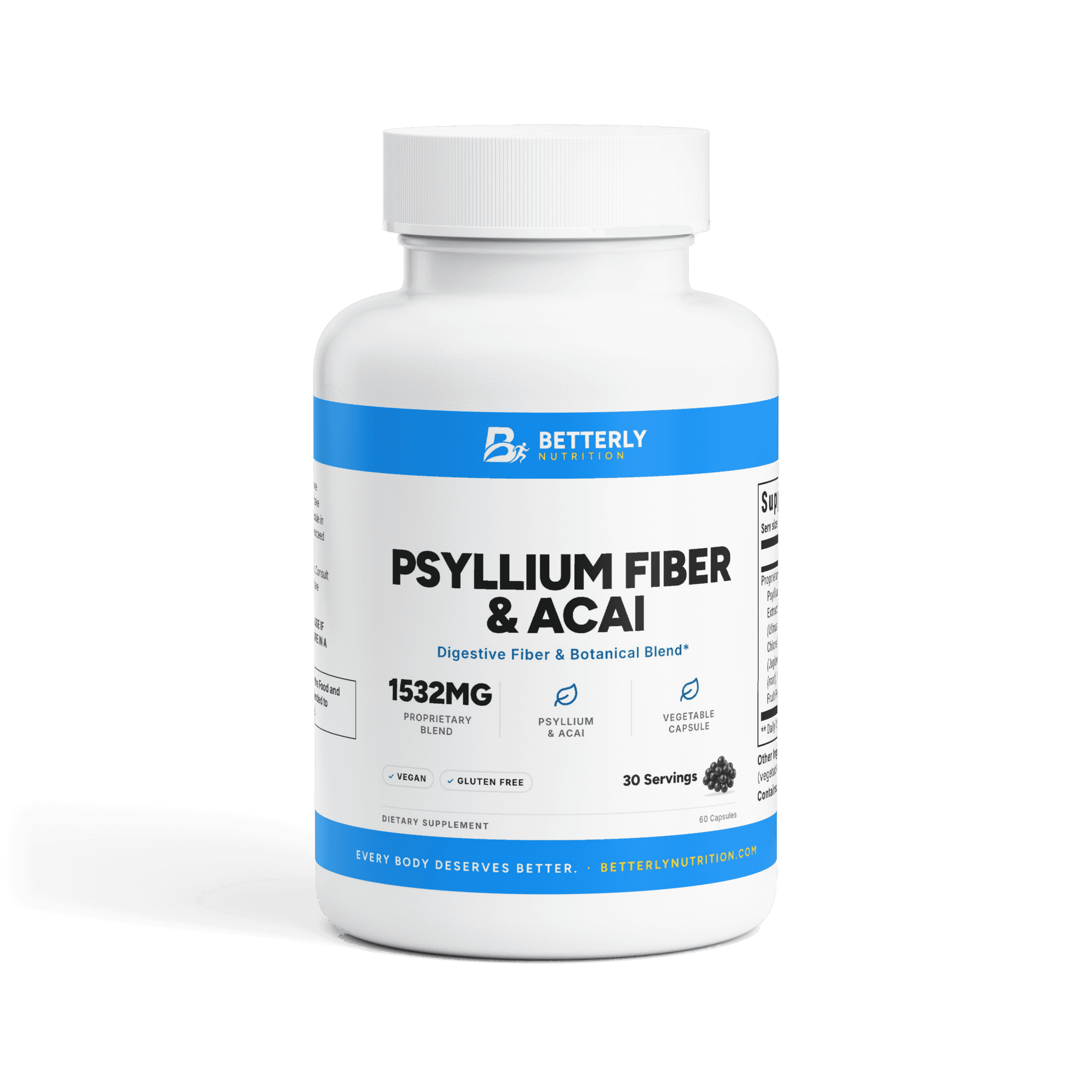
Our Psyllium Fiber & Acai Capsules are the capsule route we carry — a 1,532 mg proprietary blend per 2-capsule serving, led by psyllium husk, with acai next and inulin, slippery elm, aloe ferox, ginger and other botanicals behind them, in a bottle of 60 vegetable capsules, made to support digestive regularity. The label's Contains line lists tree nuts (black walnut hull), so read the label in full before you start.
Fair notice against our own checklist: it's a proprietary blend, so the label doesn't say how much of that 1,532 mg is psyllium, and it isn't a single-ingredient psyllium product. The label's suggested use is two capsules once a day (one during the day and one in the evening), and it says not to exceed two capsules per day, so the step-up advice below is for single-ingredient fiber products, not this blend. It's the "capsules" answer to question two: no mixing, no texture, and one fixed daily serving that's easy to stay consistent with.
If your bigger issue is that plants are scarce in your diet generally, Barley Grass & Spirulina Greens Powder is the food-adjacent complement — spirulina and barley grass leading a list of 20-plus plant ingredients to support everyday nutrition. It's not a fiber supplement, and it won't replace vegetables, but it's a practical nudge toward the food-first side of this article.
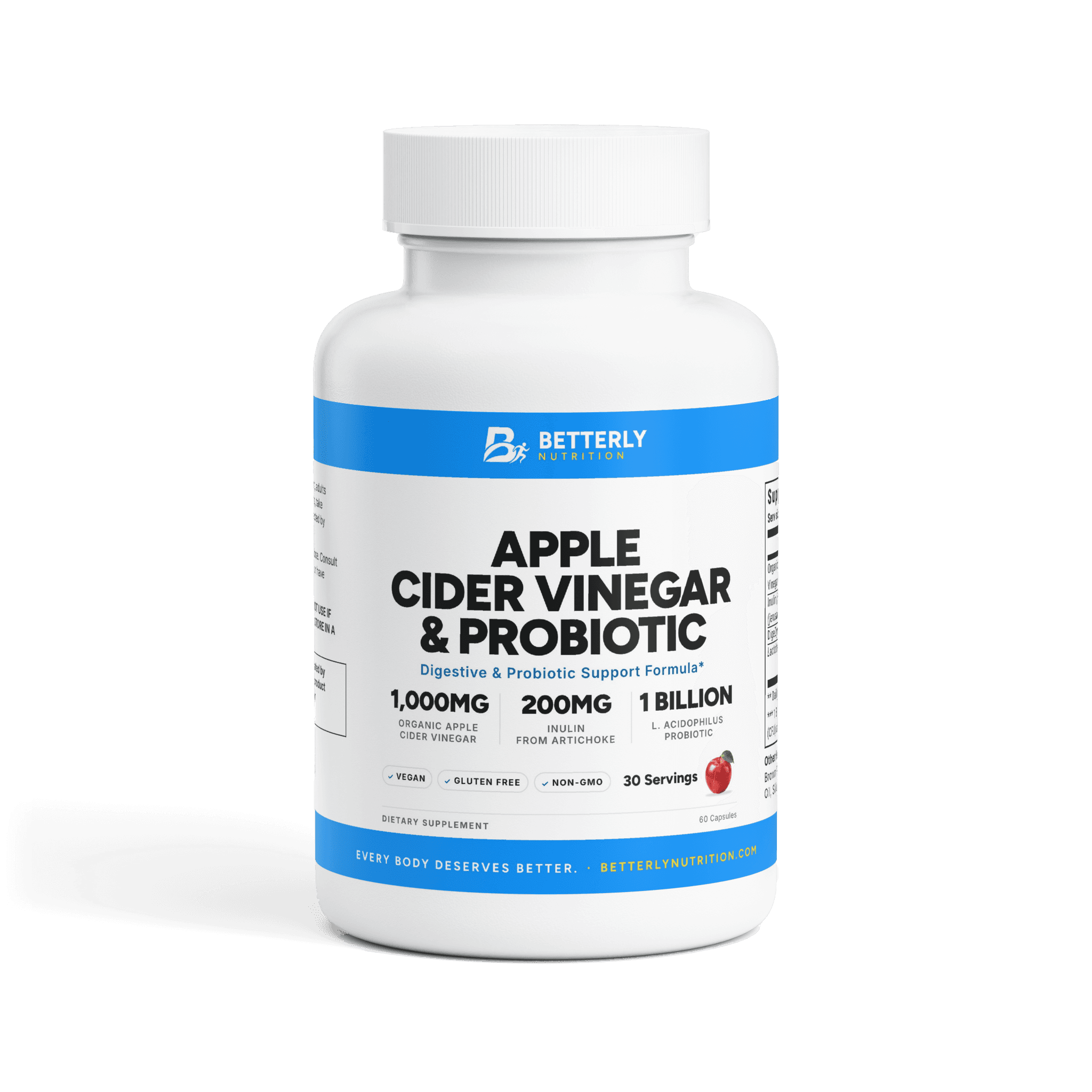
And if apple cider vinegar is more your angle, our Apple Cider Vinegar & Probiotic Capsules combine apple cider vinegar with a probiotic to support healthy digestion — we've written a separate plain-English guide on when to take apple cider vinegar capsules. You can compare everything in one place in the Gut Health & Digestion collection.
Every product page lists the amounts per serving from its label, shipping is charged at cost, and if an order arrives wrong, tell us within 30 days and we'll make it right. No miracle claims — fiber doesn't need them.
How to start taking fiber supplements without the growing pains
Most fiber regrets come from enthusiasm, not from fiber. The playbook:
- Start low. Begin with the smallest sensible dose — a couple of capsules or half a serving of powder — even if the label's full serving is higher.
- Go slow. Hold each dose for one to two weeks before increasing. Your gut bacteria adapt on their schedule, not yours.
- Drink real water. Gel-forming fiber needs water to do its job. Take every dose with a full glass, and keep drinking through the day. Fiber without fluid can leave you feeling more stuck, not less.
- Split the dose. If you're working up to a larger amount, taking half in the morning and half in the evening spreads the load and tends to mean less gas.
- Expect a little turbulence. Some extra rumbling in week one is normal and usually settles as your gut adjusts. If it doesn't settle after a couple of weeks, drop back a dose level — or check in with your provider.
- Mind your medications. Fiber can slow the absorption of some medications, so take it a couple of hours apart from them and ask your pharmacist if you're unsure.
If you're figuring out where fiber slots in among everything else you take, our guide to building a simple supplement routine covers the sequencing.
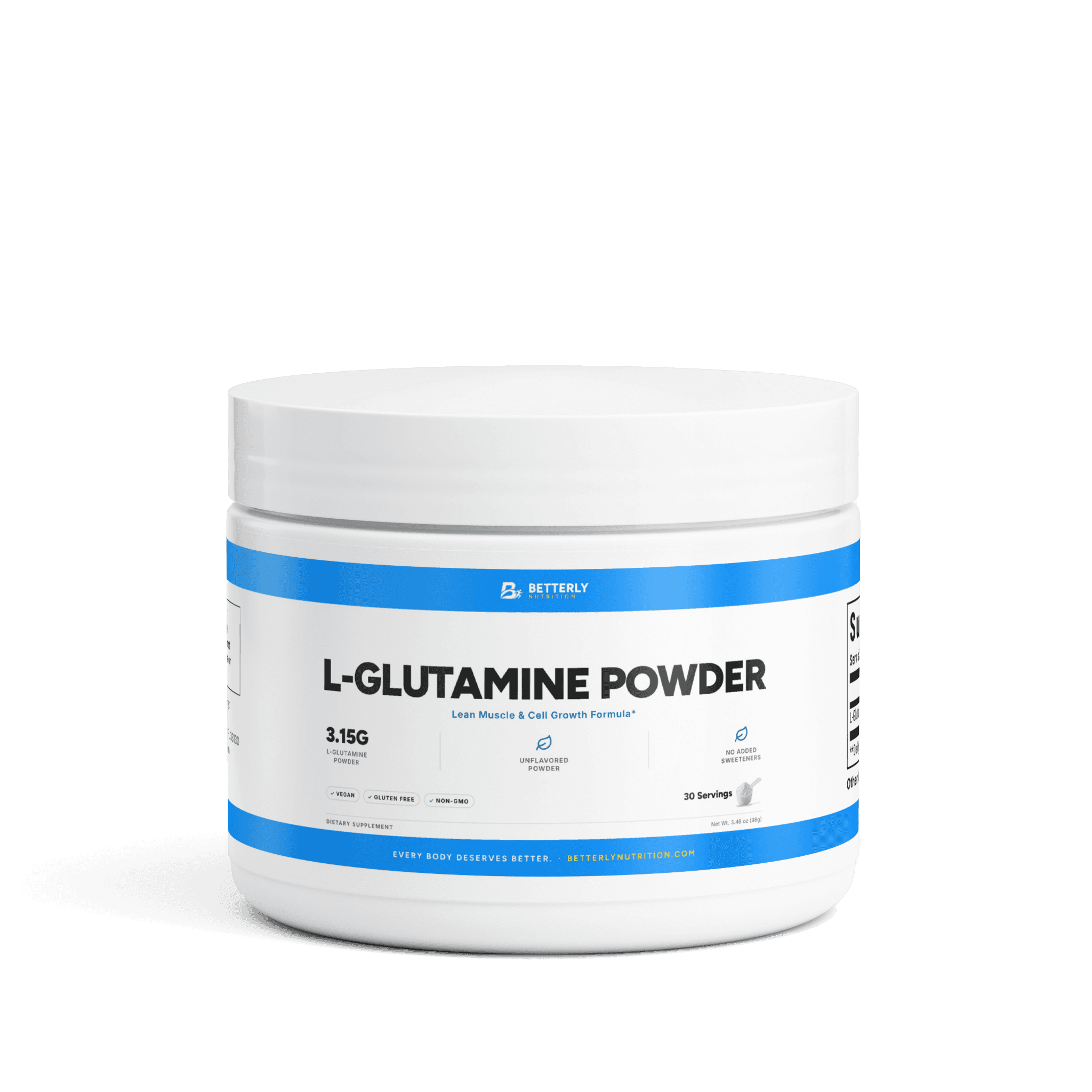
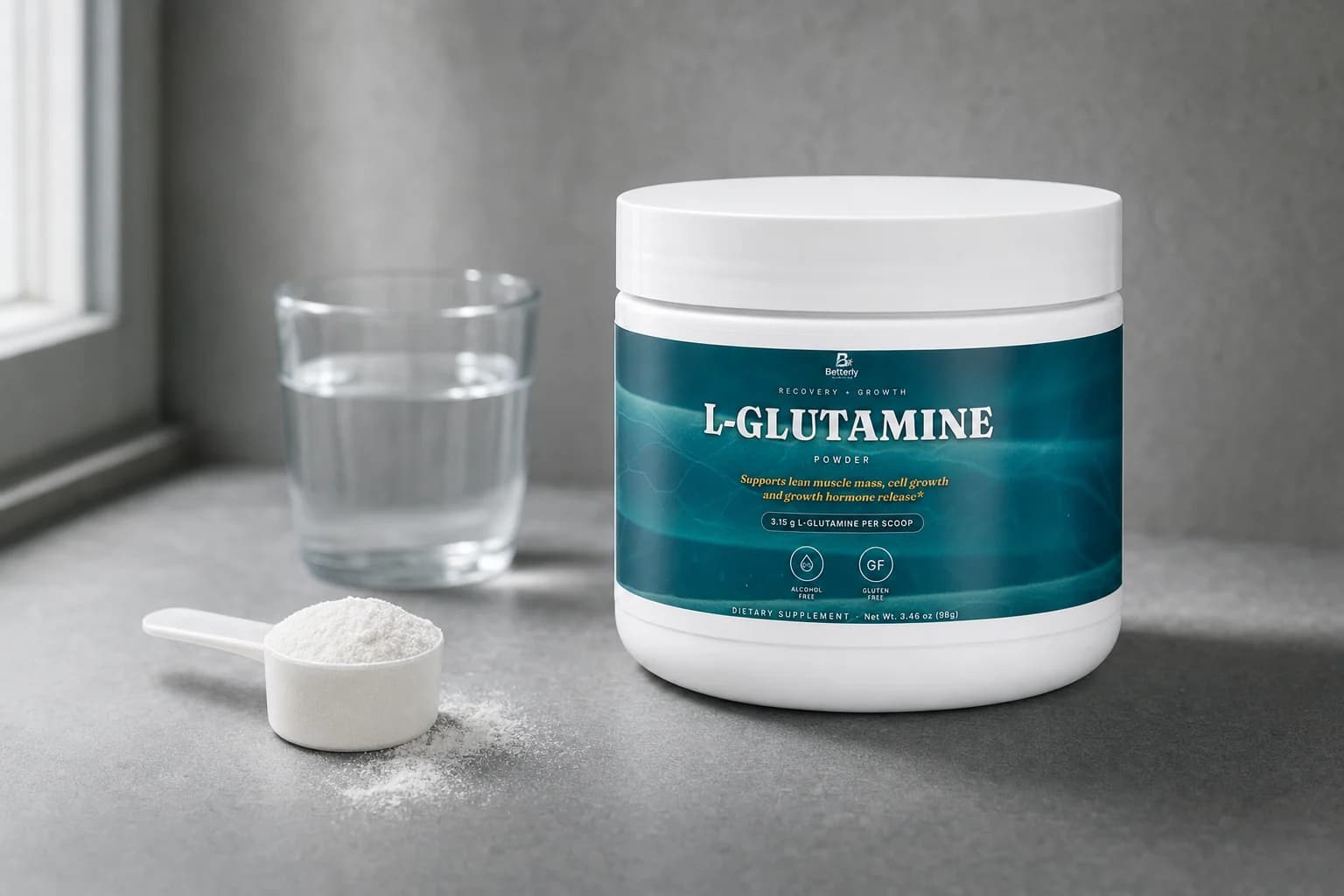
One more honest note: fiber's lane is regularity and everyday digestive comfort. If what you're curious about is the gut lining itself, that's a different conversation — one we cover in our L-glutamine gut health guide, alongside our single-ingredient L-Glutamine Powder.
Key takeaways
- Food first. Most people are roughly half short of the 21–38 grams of daily fiber that guidelines suggest — close what you can with beans, oats, fruit, and vegetables before supplementing the rest.
- Type is the big decision. Psyllium's water-holding gel makes it the usual starting point for regularity; methylcellulose is the gentle alternative; inulin is a prebiotic, not a regularity tool.
- Format is about honesty with yourself. Powder is cheaper; capsules are the ones many people actually keep taking.
- Read the rest of the label. Fewer ingredients, no unwanted sweeteners, no mystery blends.
- Start low, go slow, drink water. A modest daily dose you keep beats an ambitious one you quit.
A daily fiber supplement for digestion is one of the rare supplement categories where the mechanism is simple and the habit is unglamorous. Pick your type, pick your format, start small, and stay consistent.
FAQ: fiber supplements for regularity
What if a fiber supplement doesn't seem to help?
A fiber supplement works best with steady daily use and plenty of water, and responses vary from person to person. Check the serving on your label and stay within it. If you don't notice a difference at the label's suggested use, check in with a healthcare provider rather than simply taking more.
Should I take fiber in the morning or at night?
Whichever time of day you'll actually remember. Consistency matters more than clock time. The two real rules: take it with a full glass of water, and keep it a couple of hours away from medications, since fiber can slow their absorption.
How many fiber capsules equal a teaspoon of powder?
It varies by product, but for psyllium it commonly takes several capsules to match a teaspoon of powder. That's why capsule products are best thought of as a convenient way to take a modest daily amount — read the serving size on your specific label rather than assuming.
Can I take a fiber supplement and a probiotic together?
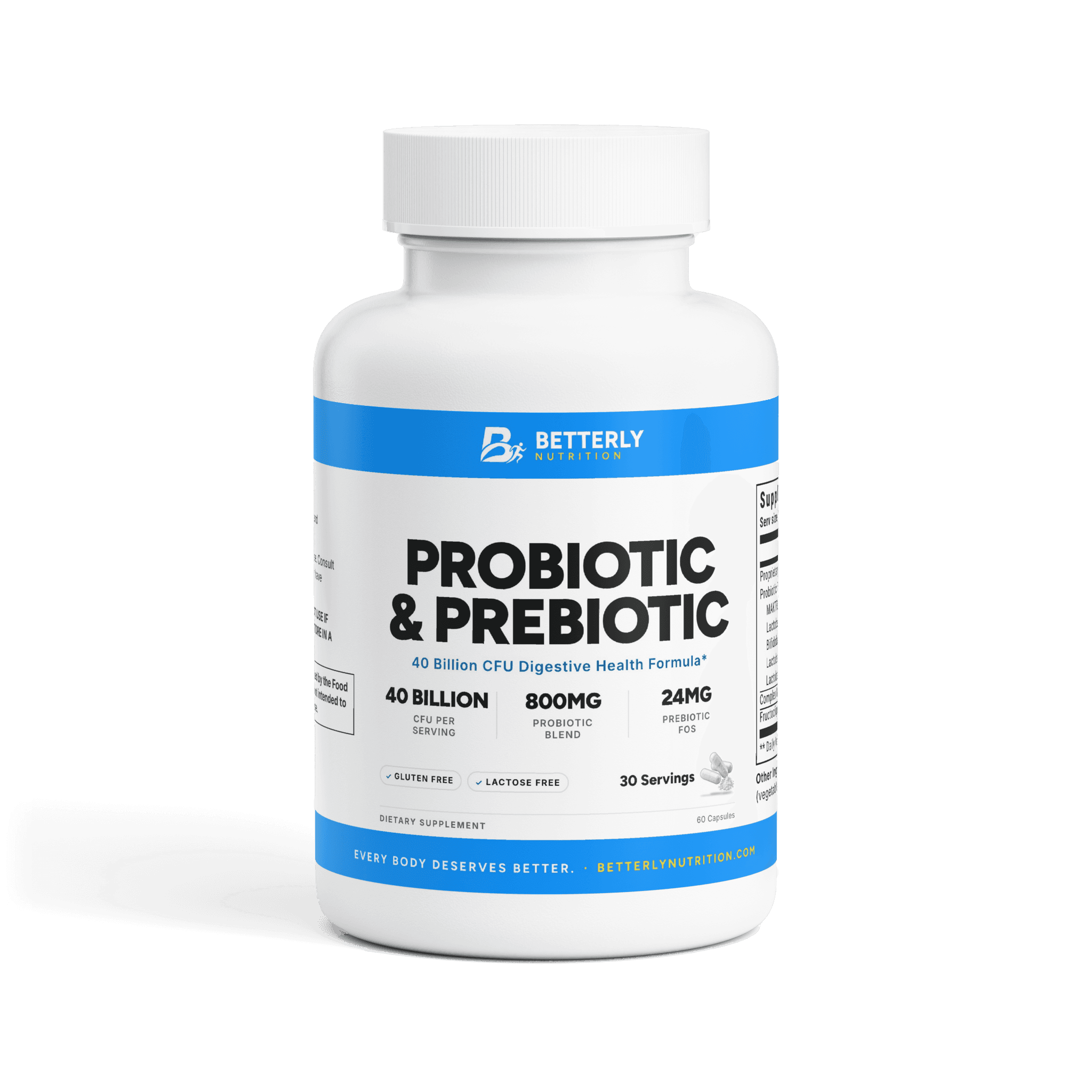
Generally, yes — many people take both, and fiber is, loosely speaking, food for the bacteria a probiotic adds. If you're choosing one, our probiotics guide walks through what to look for. As always, start one new thing at a time so you can tell what's doing what.
What if fiber makes me bloated?
Almost always a sign of too much, too fast. Drop back to a smaller dose, make sure you're drinking enough water, and split the dose across the day. Fibers that ferment quickly — inulin especially — produce the most gas, so switching toward psyllium can help too. If bloating persists at low doses, stop and talk to your provider.
Is it okay to take a fiber supplement every day?
For most healthy adults, daily use is generally considered fine — fiber supplements are among the more routine things people take long-term. That said, if you're pregnant, nursing, managing an ongoing health condition, or taking regular medications, check with a healthcare professional before adding one.
Sources
- Fiber, MedlinePlus Medical Encyclopedia
- Dietary Fiber, MedlinePlus
If this left you looking for somewhere to start, read psyllium husk powder in single-serve sachets — its amounts per serving are listed on the page. For the practical questions this raises, how dosing, sourcing and subscriptions work is answered in one place.