On this page
- Key takeaways
- What's the difference between oral probiotics and regular probiotics?
- Aren't all probiotics oral probiotics?
- What lives in your mouth, and why does that matter here?
- What types of oral probiotics can you buy?
- How do our chewable, capsule and strip compare?
- Do oral probiotics work for gut health?
- How do you take an oral probiotic chewable vs a capsule?
- When don't you need an oral probiotic?
- Who should check with a healthcare provider first?
- FAQ: oral probiotics vs probiotics
- Sources
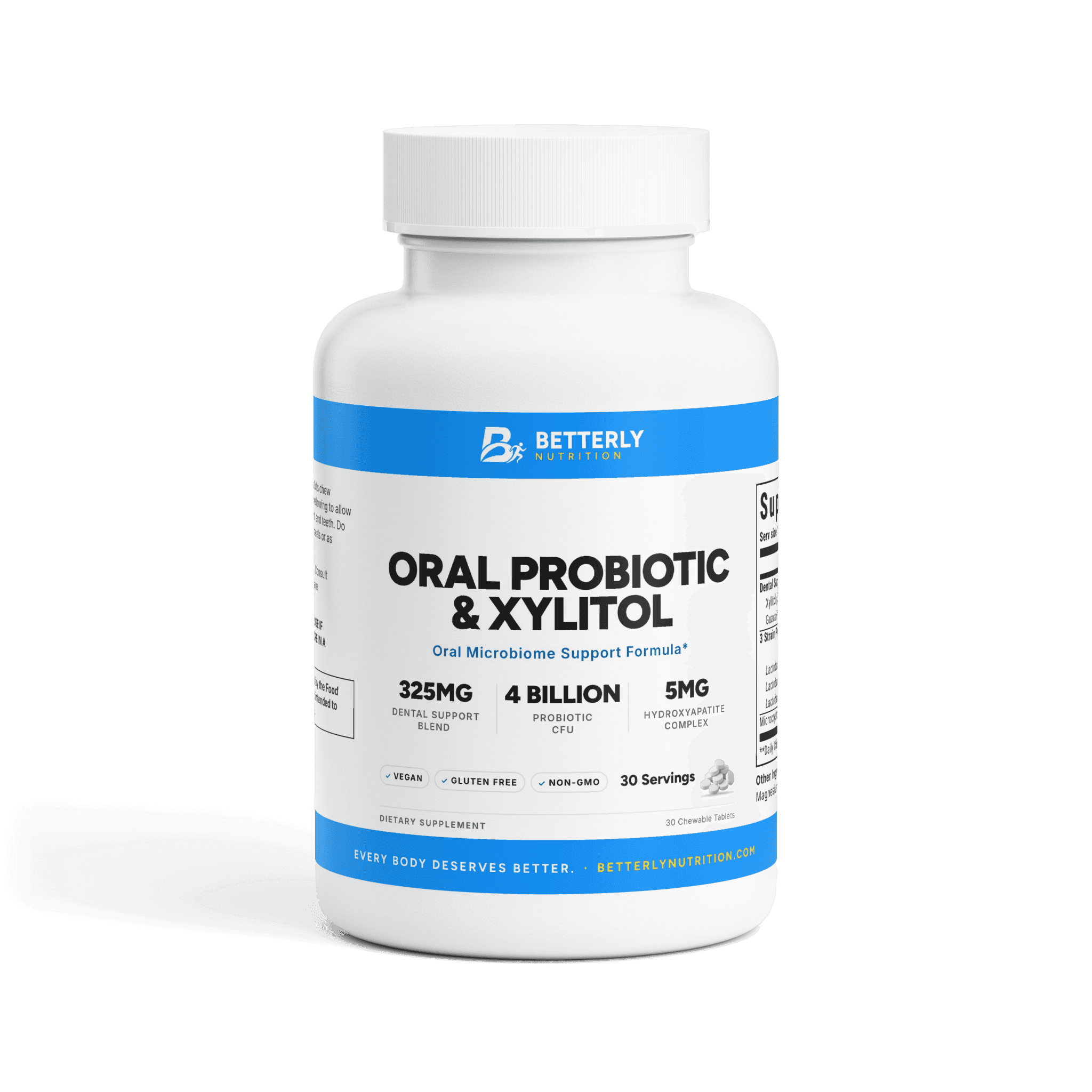
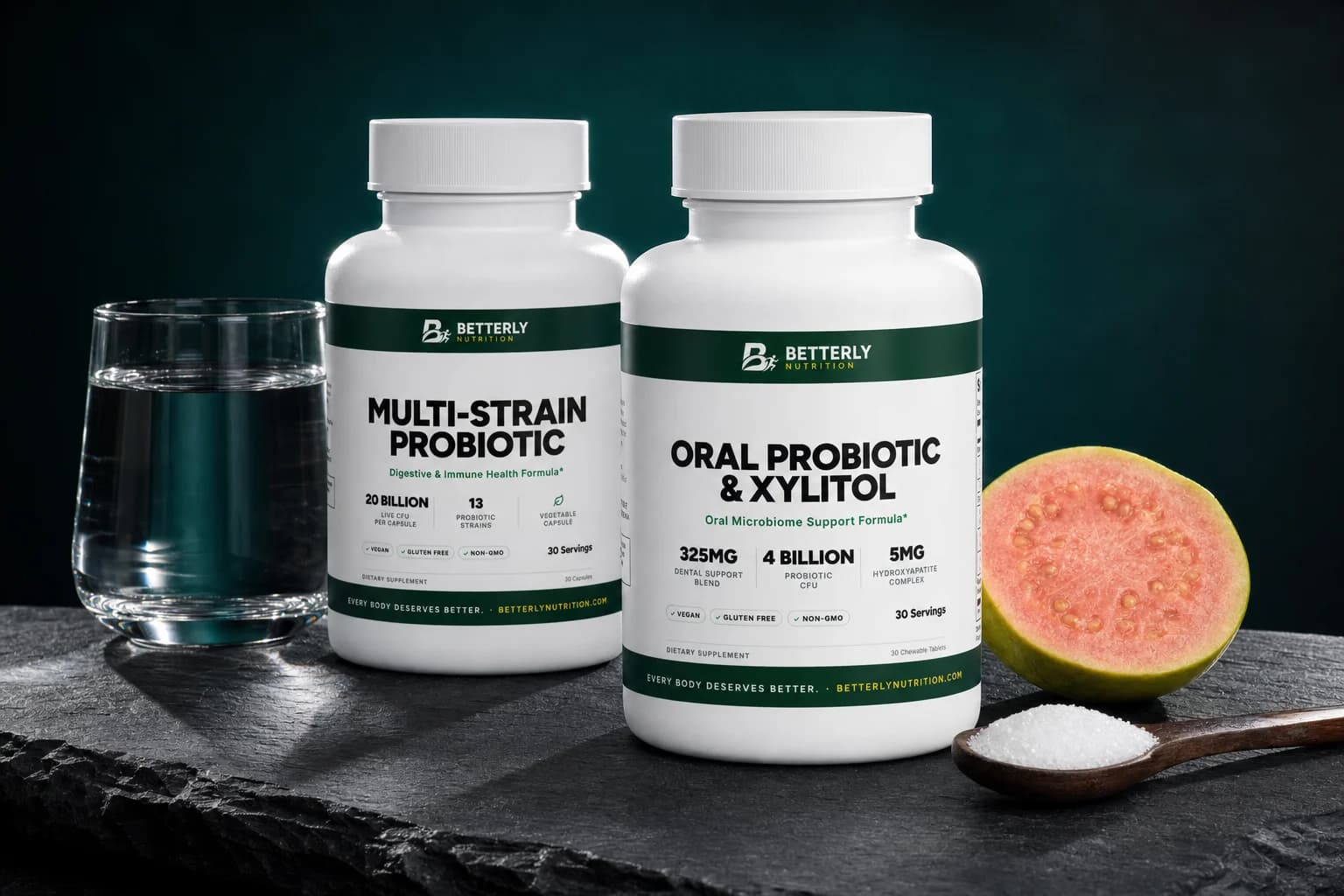
The short answer: Comparing oral probiotics vs probiotics comes down to where each one is built to work. An oral probiotic, also called a dental probiotic, is chewed or held in your mouth so its microbes spend time there. A regular probiotic is swallowed and heads for your gut. Our Oral Probiotic & Xylitol Chewables list 4 Billion CFU from three named strains per chewable tablet, and the label says not to swallow it whole.
A quick heads-up: the chewable, the capsule and the strip in this article are all ours. So we've set their Supplement Facts panels side by side and flagged where our own labels leave out something you'd want to know.
Key takeaways
- An oral probiotic is chewed, sucked or held in the mouth so its microbes spend time there, while a regular probiotic is swallowed and travels on to your gut.
- On a label, "oral" can describe the route (by mouth, which covers nearly every probiotic) or the target (the mouth itself), so check which one a product means.
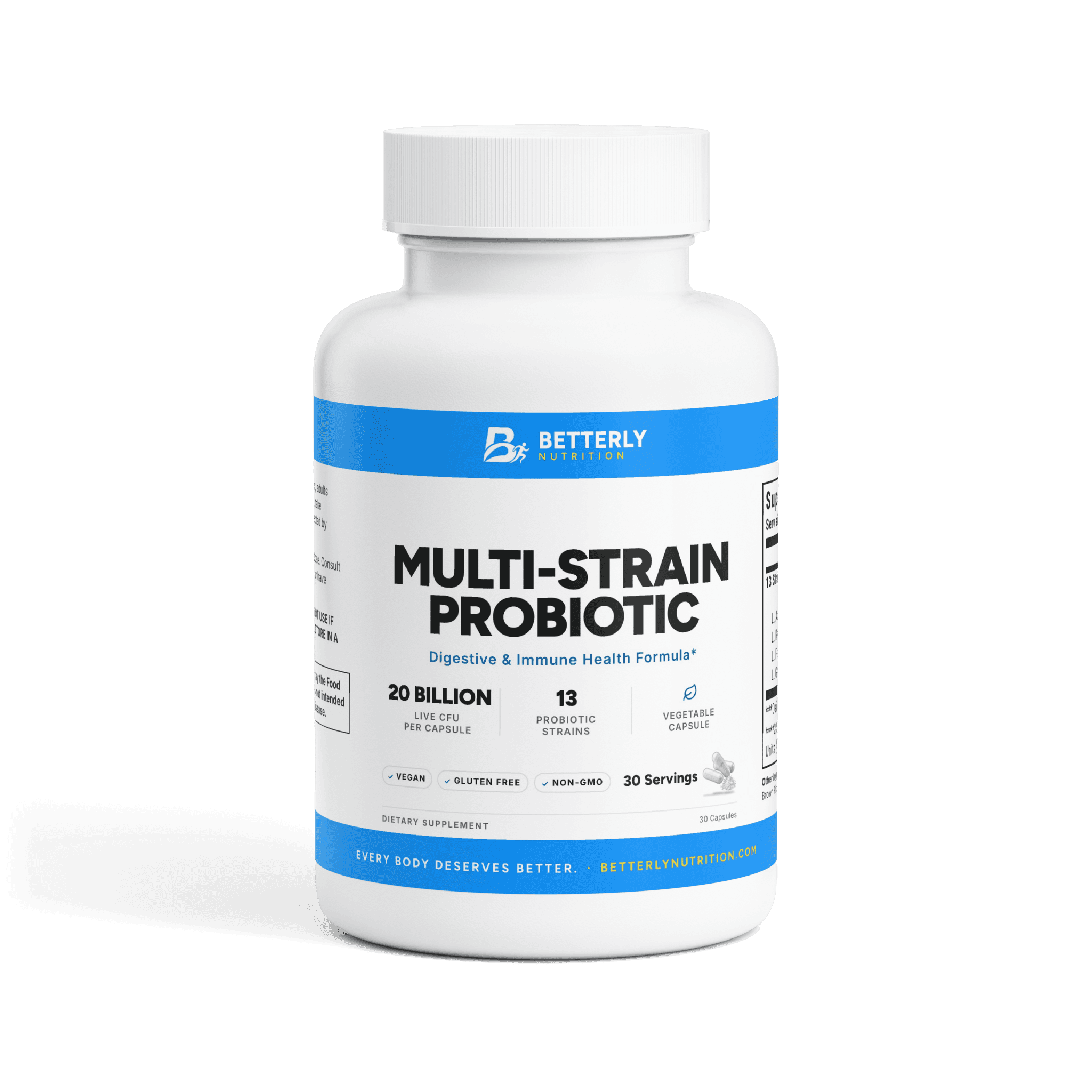
- Our chewable lists 4 Billion CFU per tablet, a fifth of the 20 Billion CFU per capsule in our Multi-Strain Probiotic Capsules.
- All three species in our chewable also show up among the 13 listed in our capsule, so format and directions are the real dividing line.
- An oral probiotic is an optional add-on to brushing, flossing and dental visits, never a stand-in for them.
What's the difference between oral probiotics and regular probiotics?
An oral probiotic is made to release its microbes in your mouth, while a regular probiotic is made to be swallowed and pass through to your gut. Format, directions and extras all follow from that one choice.
Here's the verdict up front:
| Question | Oral (dental) probiotic | Regular (gut) probiotic |
|---|---|---|
| Where it's meant to work | Your mouth | Your gut |
| What the label says | Chew thoroughly; don't swallow whole | Take as directed (our capsule: with water) |
| Usual formats | Chewables, lozenges, melts | Capsules, powders, foods |
| CFU on our labels | 4 Billion per tablet | 20 Billion per capsule |
| Other actives on our labels | Xylitol-guava blend, hydroxyapatite | None |
If you remember one row, make it the second. Our chewable's label is firm that you chew it and never swallow it whole, because chewing is the step the whole design rests on. Our capsule's label simply says to take it with water. So the directions, read alongside the front label, tell you which kind you've got.
Aren't all probiotics oral probiotics?
Nearly every probiotic is taken by mouth, but "oral probiotic" on a shelf usually means one made to act in the mouth itself. Two meanings share one word, and that trips up a lot of shoppers.
Technically, your mouth is where your digestive tract begins. NIDDK, an NIH institute, lists the mouth first among the hollow organs that make up the GI tract, ahead of the esophagus, stomach, small intestine, large intestine and anus. NIDDK also says bacteria in your large intestine help break down remaining nutrients.
The NIH Office of Dietary Supplements (ODS) says probiotics act mainly in the digestive tract. A capsule washed down with water spends only a moment in your mouth on its way to the stomach and intestines.
So how do you tell which kind you're holding? Read the directions and the front label together:
- Told to chew thoroughly or hold it in your mouth, with a front label about your mouth? It's an oral probiotic.
- Told to swallow it with water? It's a regular probiotic, taken orally like almost all of them.
- Dissolves on your tongue but says nothing about your mouth? It's likely a regular probiotic in a no-water format.
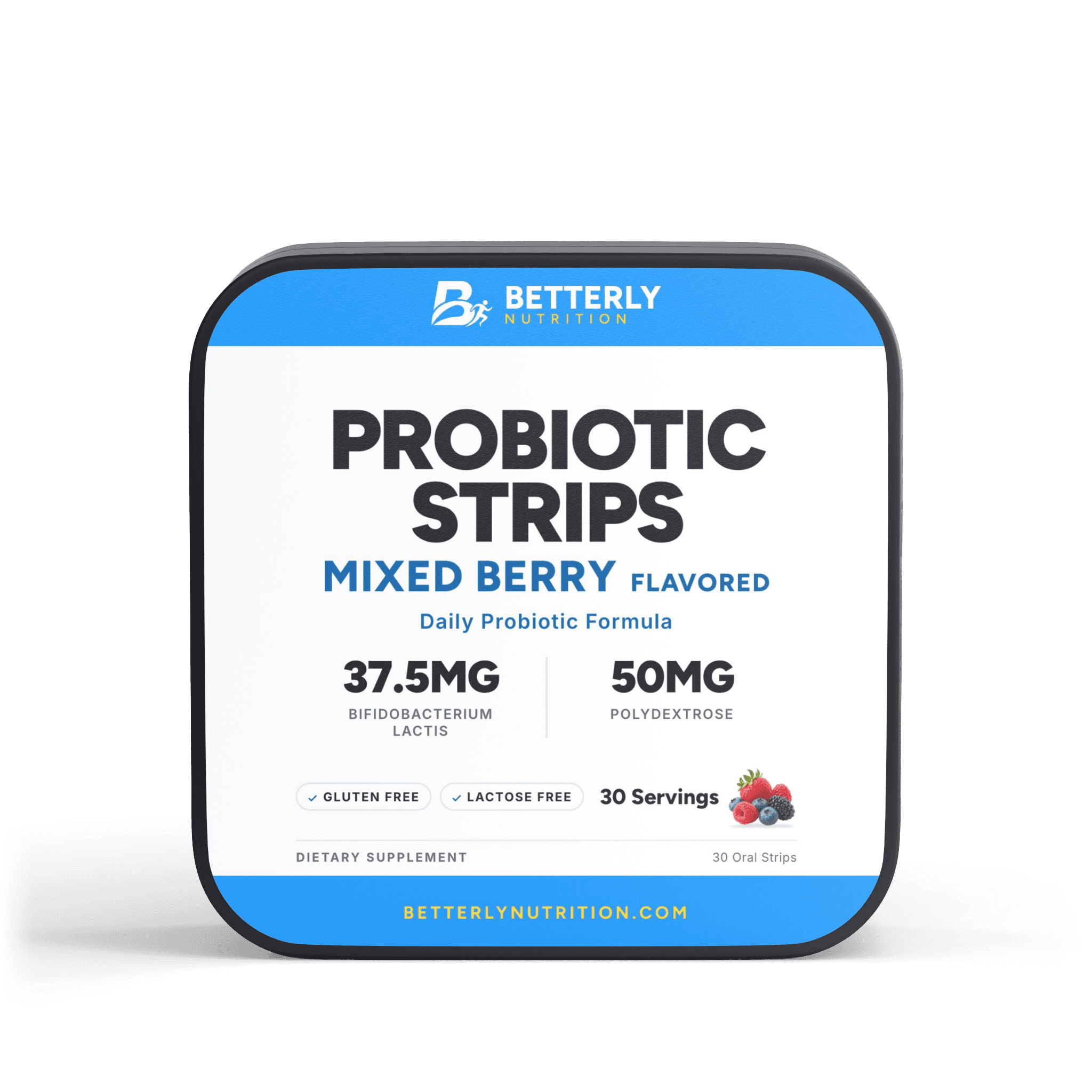
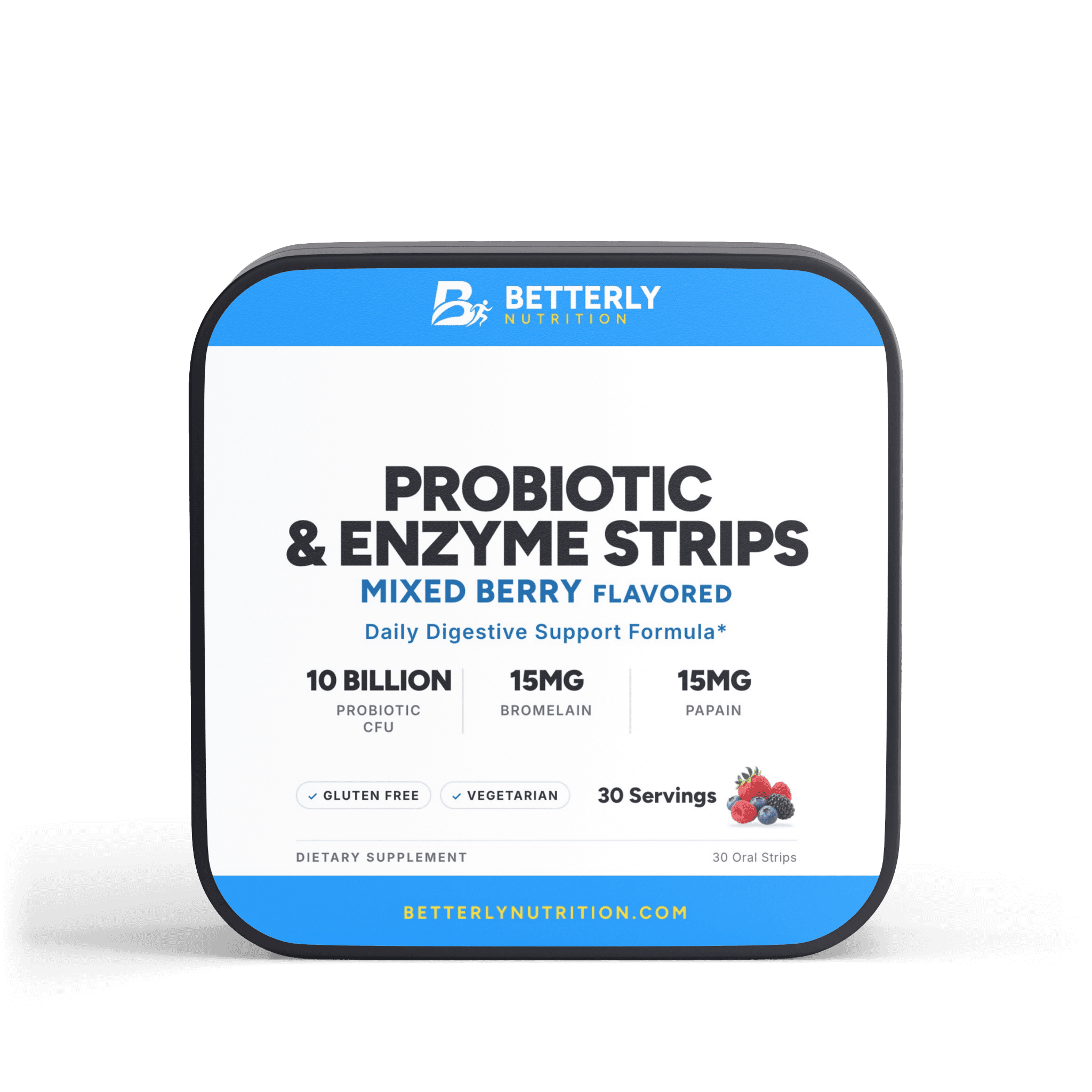
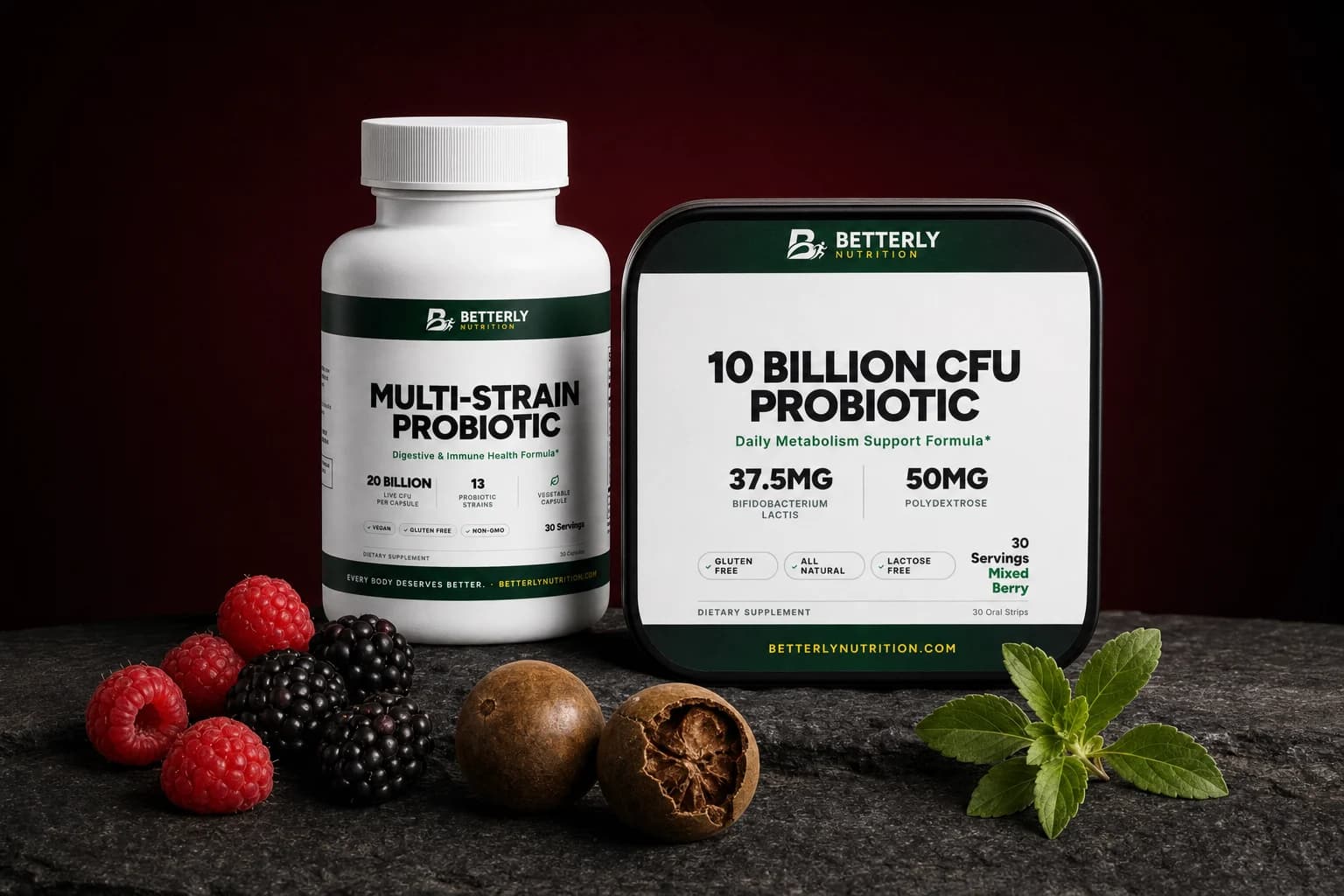
That last group includes our 10 Billion CFU Probiotic Strips.
What lives in your mouth, and why does that matter here?
Your mouth hosts its own community of microbes, separate from the one in your gut, and oral probiotics are designed around that community.
The National Institute of Dental and Craniofacial Research (NIDCR) counts 774 known oral bacterial species. It describes your gums, tongue and teeth as distinct habitats. It also reports that the microbes on your cheek linings, the roof of your mouth, and above and below the gumline differ from one another. And it notes that most of these microbes promote health.
That's the thinking behind the chewing instruction. Our chewable's label spells it out: chew thoroughly "to allow the active ingredients to interact with the mouth and teeth." A capsule swallowed whole never gets that chance.
The research is young, though. NIDCR says one group of scientists it supports is identifying health-promoting oral bacteria to develop probiotics to maintain oral health. That's work in progress, so think of any oral probiotic as an optional extra rather than a sure thing.
What types of oral probiotics can you buy?
Oral probiotics come as chewable tablets, lozenges, mints and melt-away tablets, and they differ in which microbes they carry. The format tells you how to take one. The strain line tells you what's inside.
The main formats you'll run into:
- Chewable tablets, like ours, which you chew fully before swallowing
- Lozenges and mints, which you let dissolve slowly
- Melt-away tablets and powders, which break down on your tongue
The microbes vary more than the formats do. ODS explains that probiotics are named by genus, species and strain. In Lacticaseibacillus rhamnosus GG, for example, GG is the strain. Our chewable prints all three levels for each of its microbes: Lactobacillus salivarius LS97, Lactobacillus paracasei LC86 and Lactobacillus acidophilus LA85.
How do our chewable, capsule and strip compare?
Our Oral Probiotic & Xylitol Chewables carry the fewest CFU of the three products here but the most strain detail, and they're the only one built to be chewed.
| Per serving | Oral Probiotic & Xylitol Chewables | Multi-Strain Probiotic Capsules | 10 Billion CFU Probiotic Strips |
|---|---|---|---|
| Serving | 1 chewable tablet | 1 capsule | 1 oral strip (180 mg) |
| Probiotic | 20 mg (4 Billion CFU) | 317 mg (20 Billion CFU) | 37.5mg (10 Billion CFU) |
| Microbes listed | 3, with strain codes | 13 strains, species names only (no codes) | 1 (Bifidobacterium lactis), no code |
| CFU counted | Not stated | At manufacture | Not stated |
| How to take | Chew well, after meals | Take with water | Dissolve on tongue |
| Other actives | 325 mg blend, 5 mg hydroxyapatite | None | 50 mg polydextrose |
The capsule leads on count, the chewable leads on naming detail, and the strip sits between them on count, though like the capsule it prints no strain code. That doesn't crown a winner, because each one is built for a different job.
Why not just pick the biggest number? ODS says higher CFU counts alone don't necessarily mean greater benefit. What decides a product's benefit, if it has one, is the pairing of its specific strains with its CFU count.
Here's a detail that's easy to miss. All three species in the chewable (salivarius, paracasei and acidophilus) also appear in the capsule's list of 13. The name salivarius points to saliva, yet it's in our swallowed capsule too. Without strain codes on the capsule, you can't tell whether any strains match. But it shows that a species name alone doesn't make a product "oral" or "gut."
Now the honest gaps in our chewable's label. Our capsule's footnote ties its 20 Billion CFU to the time of manufacture, but the chewable's panel prints no CFU-timing footnote, so you can't tell when its 4 Billion was counted. ODS explains why that matters: a count taken when a product was made doesn't necessarily match what's in it when you use it. The label also lists the 325 mg Dental Support Blend as one number. Xylitol comes first in it, then guava fruit powder, but you can't see how much is xylitol.
One more gap: the label lists 5 mg of Microcrystalline Hydroxyapatite Complex but doesn't say what the complex contains or where it comes from. The pack is labeled vegan, gluten free and non-GMO, and the chewable sits with our other single-purpose formulas in the Targeted Support collection.
From our shop: Oral Probiotic & Xylitol Chewables — 4 Billion CFU from three named Lactobacillus strains, plus a 325 mg xylitol and guava blend, in each chewable tablet.
Do oral probiotics work for gut health?
Oral probiotics are designed for the mouth rather than the gut, and our chewable's label makes no gut claim, so a swallowed probiotic is the closer match for gut goals.
You do swallow a chewable once it's broken down, so what's left follows the same path as your food. But 4 Billion CFU from three strains, labeled for your mouth, isn't the same thing as a product made for your intestines. We haven't found a verified source showing that a mouth-focused chewable does a gut probiotic's job, so we won't claim it does.
The reverse holds as well. A gut capsule passes through your mouth inside its shell, so it can't stand in for a chewable either.
If digestion is your real goal, our plain-English guide to choosing a probiotic covers strains and CFU for gut products. Before buying anything, read what actually helps gut health, which puts food, fiber and sleep ahead of any supplement. And if heavy meals are the issue, our side-by-side of digestive enzymes and probiotics explains which one does what.
How do you take an oral probiotic chewable vs a capsule?
Take our Oral Probiotic & Xylitol Chewables by chewing one tablet thoroughly after a meal, and swallow one Multi-Strain Probiotic capsule with a glass of water.
For the chewable, the label's suggested use is:
- Adults chew one tablet daily.
- Chew it thoroughly before swallowing. The label is blunt: "Do not swallow whole."
- For best results, use it after meals, or as a healthcare professional directs.
For the capsule, the label's suggested use is one capsule daily for adults. For best results, take it with 6-8 oz (177-237 ml) of water. For the strip, the label says to place one strip on your tongue daily and let it dissolve.
All three labels ask for storage somewhere cool and dry, and all three warn against going past the recommended dose of one serving a day.
One practical note if you share your home with a dog. Xylitol is a sugar alcohol sweetener, and the FDA warns that xylitol is dangerous for dogs. Its list of products that can contain xylitol includes chewable vitamins and dietary supplements. The FDA's advice: if a product contains xylitol, "make sure your pet can't get to it."
Questions like whether to chew before or after brushing get their own walkthrough in when to take oral probiotics.
From our shop: Multi-Strain Probiotic Capsules — one vegetable capsule a day with water, holding 20 Billion CFU (counted at manufacture) from a 13-strain blend.
When don't you need an oral probiotic?
You don't need an oral probiotic if your mouth feels comfortable with your usual brushing, flossing and dental checkups. ODS points out that no official guidance tells healthy people to take probiotics at all.
You can also skip one in these cases:
- Your real goal is digestion. A mouth-focused chewable is the wrong tool for that job.
- You'd rather not chew a tablet daily. The design depends on chewing, so skip it if you'd end up swallowing it whole.
- You want to know exactly how much xylitol you're getting. Our label doesn't break that number out of the blend.
- Your dog gets into bags and nightstands. If you can't store xylitol products safely, leave them out of the house.
Who should check with a healthcare provider first?
Talk with a healthcare provider before starting our Oral Probiotic & Xylitol Chewables if you're pregnant or nursing, under 18, or managing a medical condition, as the label's caution says.
- ODS warns that probiotics might cause problems for people who are already seriously ill or have weak immune systems.
- If you take any prescription medication, ask your pharmacist before adding a supplement.
- If you have dental work or surgery coming up, tell your dentist or care team everything you take.
If something in your mouth is sore or changing, see your dentist before trying any supplement.
FAQ: oral probiotics vs probiotics
Are dental probiotics the same as oral probiotics?
Yes, dental probiotics and oral probiotics are two names for the same kind of product: a probiotic you chew, suck or hold in your mouth so its microbes spend time there. Some brands say "dental" to point at teeth, and others say "oral" to cover the whole mouth. The name matters less than the directions and the strain line, so read both before you buy.
Can you take oral probiotics with regular probiotics?
Yes, as far as our labels go: neither the Oral Probiotic & Xylitol Chewables nor the Multi-Strain Probiotic Capsules label rules out using both on the same day, as long as you keep each to its one-a-day suggested use. Think of them as separate products with separate limits. Ask a healthcare provider first if you're pregnant or nursing, under 18, managing a medical condition or on any medication.
Do you chew or swallow oral probiotics?
You chew oral probiotic tablets, then swallow what's left. Our Oral Probiotic & Xylitol Chewables label says to chew one tablet thoroughly before swallowing so the ingredients can interact with your mouth and teeth, and it says not to swallow the tablet whole. Lozenges and melts work differently, so follow each product's own directions.
Are oral probiotics safe?
For healthy people, probiotics as a group carry low risk, according to the NIH Office of Dietary Supplements: gas is possible, and other health problems are rare. That covers probiotics in general rather than dental ones in particular, and it doesn't cover everyone. ODS says people who are already seriously ill or have weak immune systems could run into problems. Our chewable's label adds pregnancy, nursing, under 18 and medical conditions to the check-first list. It also contains xylitol, so keep it where dogs can't reach it.
Is a probiotic strip an oral probiotic?
A probiotic strip is taken in the mouth, but that doesn't make it an oral probiotic in the dental sense. Our 10 Billion CFU Probiotic Strips dissolve on your tongue and carry one named microbe, Bifidobacterium lactis, listed at 10 Billion CFU per 1 Oral Strip (180 mg) serving. Its label calls it an oral strip because it melts on your tongue, but nothing on it points to a mouth benefit, so we'd group the strips with regular probiotics that simply come in a no-water format.
Sources
- Probiotics: Fact Sheet for Consumers (NIH Office of Dietary Supplements)
- Your Digestive System & How it Works (NIDDK)
- Exploring the Mouth's Microbial Wonders (NIDCR)
- Paws Off Xylitol; It's Dangerous for Dogs (FDA)
If this left you looking for somewhere to start, read oral probiotic chewable tablets — its amounts per serving are listed on the page. For the practical questions this raises, how dosing, sourcing and subscriptions work is answered in one place.