On this page
- Key takeaways
- What is xylitol, and why is it in gum, mints and chewables?
- Is xylitol good for teeth and gums?
- What are xylitol's side effects compared with other sugar alcohols?
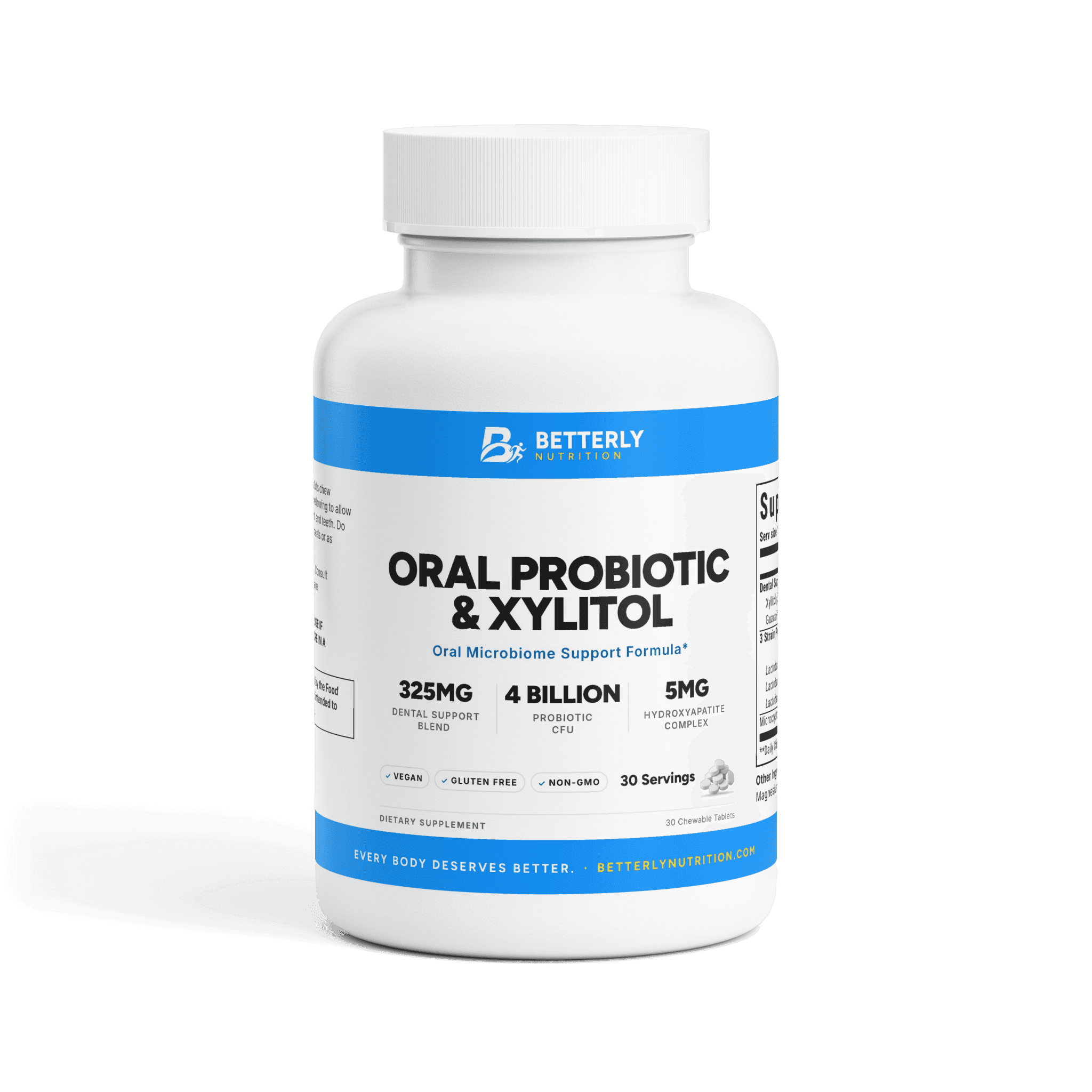
- How much xylitol is in our Oral Probiotic & Xylitol Chewables?
- Why is xylitol dangerous for dogs?
- What did the 2024 NIH-funded xylitol study find?
- How should you take a xylitol chewable?
- When don't you need a xylitol chewable?
- Who should check with a healthcare provider first?
- FAQ: xylitol, teeth and safety
- Sources
The short answer: Xylitol is a sugar alcohol, not a sugar, which is why it sweetens so many sugar-free gums, mints and toothpastes. Whether xylitol is good for teeth like yours is a question for your dentist. What we can say for certain: large amounts may upset your stomach, xylitol is dangerous for dogs, and our Oral Probiotic & Xylitol Chewables hold it inside a 325 mg blend per tablet.
Key takeaways
- Xylitol is a sugar alcohol sweetener that the FDA says can turn up in toothpaste, sugar-free gum, children's and adult chewable vitamins, and even some peanut and nut butters.
- Our chewable's pack front says Dental Support Blend and Oral Microbiome Support Formula, yet the label promises no specific result for teeth or gums, so ask your dentist about those.
- MedlinePlus says sugar alcohols such as xylitol may cause stomach cramps and diarrhea when eaten in large amounts.
- The FDA warns that xylitol can make a dog seriously ill within 10 to 60 minutes, so anything that contains it needs to live where pets can't reach.
- Our Oral Probiotic & Xylitol Chewables pair xylitol with guava fruit powder in a 325 mg Dental Support Blend, so each tablet holds less than a third of a gram of xylitol.
We sell a chewable with xylitol in it, so we'll show you exactly what its label tells you and where it goes quiet.
What is xylitol, and why is it in gum, mints and chewables?
Xylitol is a sugar alcohol, a kind of sweetener the FDA describes as slightly lower in calories than sugar. It shows up wherever a product needs sweetness without table sugar.
Despite the name, a sugar alcohol isn't table sugar or the alcohol in a drink. Sorbitol, mannitol and erythritol belong to the same family.
According to NIH Research Matters, small amounts occur naturally in fruits and vegetables, and your own body makes some as part of normal metabolism. The same NIH page notes that xylitol sweetener is often derived from birch. Our label doesn't say what our xylitol is made from.
The FDA's consumer update on xylitol and dogs lists the places you're most likely to meet it:
- Sugar-free chewing gum, sugar-free candy and breath mints
- Toothpaste and mouthwash
- Children's and adult chewable vitamins, dietary supplements, cough syrup and over-the-counter medicines
- Some peanut and nut butters, baked goods and sugar-free desserts such as "skinny" ice cream
In our chewable, xylitol is the first ingredient named in the active blend. The bottle sits in our Targeted Support collection, apart from our digestion-focused probiotics.
Is xylitol good for teeth and gums?
Whether xylitol is good for your teeth and gums is a dental question, and your dentist is the right person to answer it for your mouth. Our chewable's label doesn't claim it either.
Here's why we hold back. None of the federal pages this article relies on evaluates what xylitol does for teeth. The FDA page is about dogs, the MedlinePlus page covers sweeteners and your stomach, and the NIH summary is about cardiovascular risk and blood clotting. Without a federal review to point you to, we won't sum up that question ourselves.
Our label calls its blend a Dental Support Blend and the product an Oral Microbiome Support Formula, but it promises no specific result for your teeth or gums. Its reason for chewing is contact between the tablet and your mouth, which describes a method, not an outcome.
If you'd like a professional view, ask your dentist whether xylitol has a place in your routine at all and, if it does, whether gum, mints or a chewable suits your habits.
None of this replaces brushing and flossing. Our look at whether oral probiotics work sets out the daily cleaning routine federal health pages recommend, and why any chewable only ever sits on top of it.
What are xylitol's side effects compared with other sugar alcohols?
The xylitol side effect MedlinePlus describes for people is stomach trouble: in some people, sugar alcohols like xylitol may bring on cramps and diarrhea.
The MedlinePlus page on sugars and sugar alcohols as sweeteners names sorbitol, mannitol and xylitol as the ones that may cause cramps and diarrhea when eaten in large amounts. It also says your body absorbs sugar alcohols much more slowly than sugar.
What counts as "large" isn't spelled out. Neither MedlinePlus nor the FDA page we read gives a daily gram limit for people, so we won't make one up.
Here's how the common sugar alcohols line up, using MedlinePlus and our own labels:
| Sweetener | MedlinePlus on your stomach | Examples on our labels |
|---|---|---|
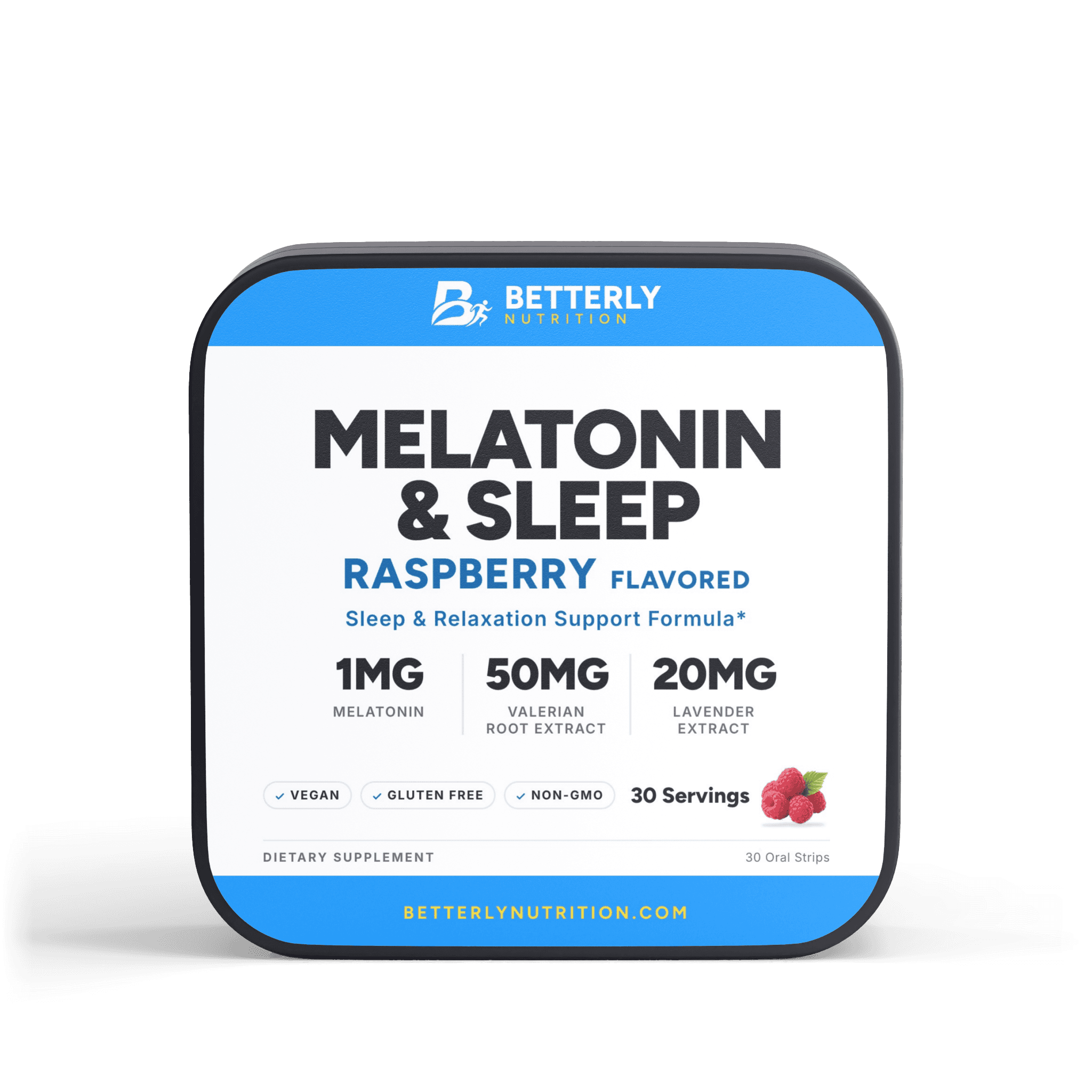
| Xylitol | May cause cramps and diarrhea in large amounts | Our chewable's active blend; 1mg Melatonin Sleep Strips (other ingredients) |
| Sorbitol | Same caution as xylitol | Several oral strips, often as sorbitol syrup |
| Mannitol | Same caution as xylitol | Several oral strips |
| Erythritol | Unlike other sugar alcohols, doesn't cause stomach upset | Several oral strips |
The takeaway: xylitol is one of several "-ol" sweeteners on supplement labels, and it's in the group MedlinePlus flags for stomach upset at high intakes.
Erythritol's easier stomach profile isn't the whole picture, though. MedlinePlus mentions a recent study linking erythritol to a mildly higher risk of adverse cardiovascular events, and the NIH page describes a similar earlier association for blood erythritol levels. Both pages call for more research.
Scanning a label? The FDA notes xylitol may also be called birch sugar or wood sugar, so look for those names too. Our guide to probiotic side effects runs a similar check on the fibers and sweeteners in our probiotic labels.
How much xylitol is in our Oral Probiotic & Xylitol Chewables?
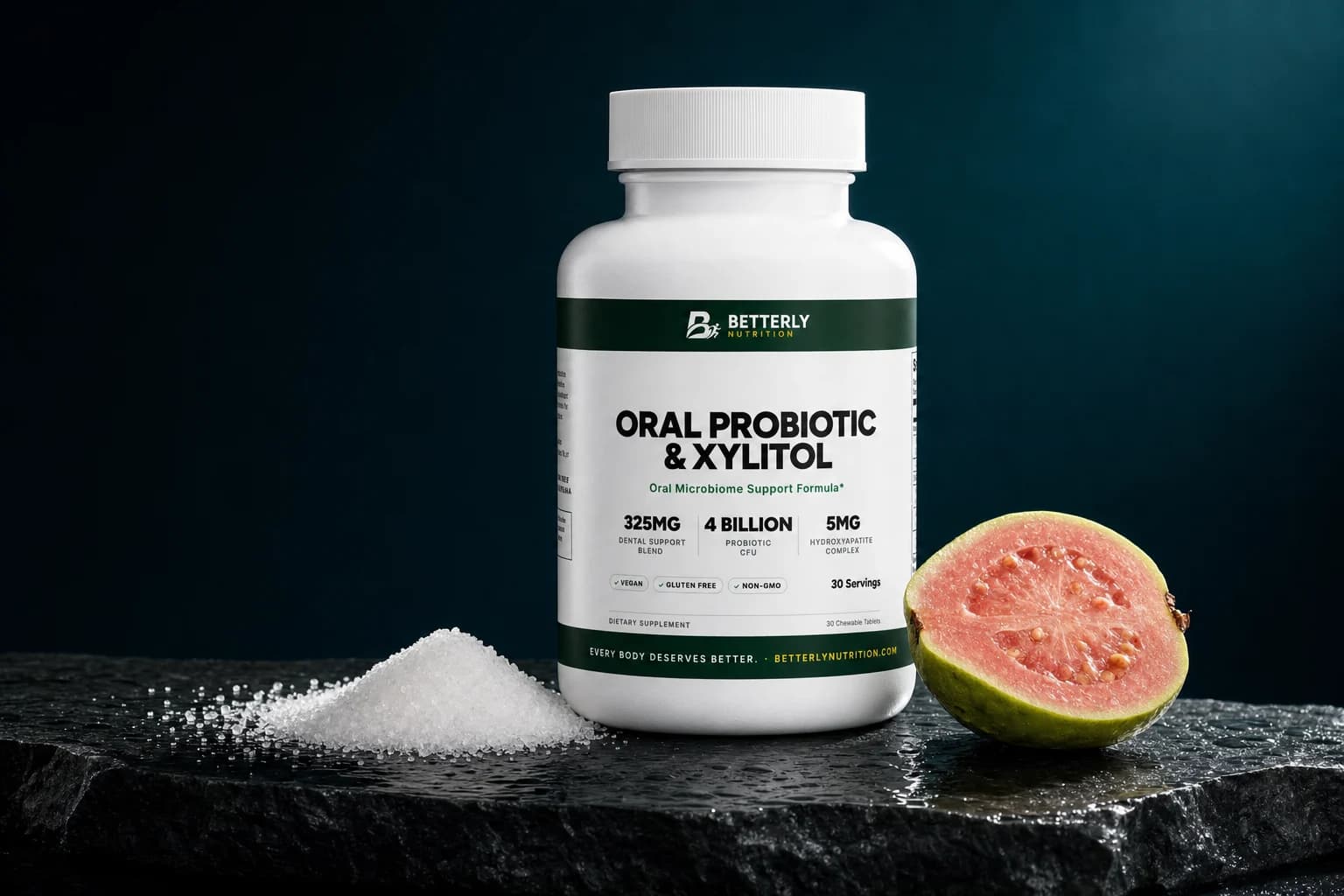
Our Oral Probiotic & Xylitol Chewables don't print a separate xylitol amount. Each 1 Chewable Tablet serving lists one combined figure, 325 mg, for a Dental Support Blend that holds xylitol and guava fruit powder.
A single total with no per-ingredient split is how a blend works on a label, and our explainer on how proprietary blends work on a label covers what that costs you. You can still narrow the xylitol number down:
- The blend weighs 325 mg per tablet and names two ingredients: "Xylitol (Direct Compressible)" first, then guava fruit powder.
- The FDA's labeling rule for supplements, 21 CFR 101.36, has blend ingredients declared "in descending order of predominance by weight."
- Xylitol comes first, so its weight is at least equal to the guava powder's. That makes it at least half the blend.
- That puts xylitol between about 163 mg and just under 325 mg per tablet, which is less than a third of a gram.
The same tablet carries a 3 Strain Probiotic (Ari) blend at 20 mg (4 Billion CFU), naming Lactobacillus salivarius LS97, Lactobacillus paracasei LC86 and Lactobacillus acidophilus LA85, plus 5 mg of Microcrystalline Hydroxyapatite Complex. The other ingredients are beta-cyclodextrin, natural flavors and magnesium stearate.
Three claims sit on the label: vegan, gluten free and non-GMO. Sugar-free isn't one of them, and with guava fruit powder in the blend, we won't claim it either.
From our shop: Oral Probiotic & Xylitol Chewables — one chewable tablet a day, with xylitol named first in a 325 mg Dental Support Blend plus a 20 mg probiotic blend listing 4 Billion CFU.
Why is xylitol dangerous for dogs?
Xylitol is dangerous for dogs because their bodies absorb it quickly and can respond with a sudden, powerful insulin release, the FDA warns. Effects can begin within 10 to 60 minutes.
People don't react this way. The FDA notes that in humans, xylitol doesn't stimulate insulin release from the pancreas, so a sweetener that's routine for you can be an emergency for your dog.
The signs the FDA describes:
- Vomiting
- Then decreased activity, weakness and staggering
- Poor coordination, collapse and seizures
If you think your dog has eaten anything with xylitol in it, the FDA's advice is to go to your vet or an emergency animal hospital right away. Don't wait to see whether signs show up, since the FDA adds that in some cases serious effects may not appear for up to 12 to 24 hours.
The FDA page gives no safe amount for dogs, so a small amount per tablet is no reason to relax. Our chewable lists xylitol in its active blend, and our sleep strips list it fifth of ten other ingredients, which share each 210 mg strip with 91 mg of listed actives. Store the bottle and the tin closed and well out of reach. The FDA's own examples include a dog nosing into a handbag for gum and dogs that counter-surf.
One more item on the FDA's list catches people out: some peanut and nut butters. Before you share a spoonful with your dog, read that jar's ingredient line.
What did the 2024 NIH-funded xylitol study find?
A 2024 NIH-funded study linked higher blood xylitol levels with higher cardiovascular risk, and NIH's summary says further safety studies are warranted.
According to the NIH Research Matters write-up from June 25, 2024, the team measured xylitol in the blood of more than 2,000 people. Those in the top third were about 50% more likely than the bottom third to have cardiovascular events over the next three years. In lab tests, xylitol made platelets, the blood cells that help blood clot, more sensitive to clotting signals.
In a small follow-up, 10 healthy people drank a xylitol-sweetened beverage. Their blood xylitol rose 1,000-fold within 30 minutes and returned to baseline after 4 to 6 hours. When their blood xylitol was high, their platelets also reacted more strongly to clotting signals.
What this does and doesn't tell you:
- The three-year finding is an association: it shows a link, not proof that xylitol caused the cardiovascular events.
- The drink test was small, and NIH's page doesn't say how much xylitol the drink held, so there's no way to compare it with a 325 mg blend.
- The lead researcher, Dr. Stanley Hazen, is quoted on NIH's page: "It does not mean throw out your toothpaste if it has xylitol in it." He added that people should be aware that a product with high levels could raise the risk of clot-related events.
Our read is that this is an open question. If you're managing a medical condition or take prescription medication, raise sugar alcohols with your doctor before adding any daily xylitol product.
How should you take a xylitol chewable?
Take our Oral Probiotic & Xylitol Chewables the way the label's suggested use says: adults chew one tablet a day, thoroughly, ideally after meals, and never swallow it whole.
A few label-based points:
- One tablet is the whole serving. The caution rules out going above the recommended dose, so one a day is your ceiling. At that rate, a bottle of 30 chewable tablets lasts 30 days.
- Storage covers pets too. The bottle asks for a cool, dry spot out of children's reach. Add dogs to that list.
- The one-a-day limit covers this bottle only. MedlinePlus links stomach trouble to large amounts, and gum, mints and toothpaste can add xylitol too. If you use them daily, mention that to your doctor.
From our shop: Oral Probiotic & Xylitol Chewables — 5 mg of hydroxyapatite complex sits beside the xylitol blend in every tablet, which adults chew after a meal rather than swallow whole.
When don't you need a xylitol chewable?
You can skip a xylitol chewable entirely: nothing in the FDA, MedlinePlus or NIH pages cited here says anyone needs xylitol from a product. Three situations make skipping it the easier call:
- You're cutting back on sugar alcohols after reading the MedlinePlus caution, and a daily tablet would add one more source.
- You'd prefer to wait while the NIH clotting question stays open. That's a fair choice with any new daily xylitol product, ours included.
- What you really want is a sugar-free sweet. Our chewable is a once-a-day supplement, not a candy or a mint, and its label makes no sugar-free claim.
Who should check with a healthcare provider first?
Anyone pregnant, nursing, under 18 or living with a medical condition should talk to a doctor before using our Oral Probiotic & Xylitol Chewables, as its caution directs.
It's also worth a conversation first if:
- You take any prescription medication.
- You have surgery or major dental work coming up.
FAQ: xylitol, teeth and safety
Does xylitol whiten teeth?
No source we read says xylitol whitens teeth, and whitening appears nowhere on our Oral Probiotic & Xylitol Chewables label. Xylitol is a sweetener, and the label's chewing direction is about contact, not color. If a brighter smile is your goal, your dentist can explain which whitening options suit your teeth and how to use them safely.
Is xylitol safe for people?
Xylitol is in many foods and products made for people, the FDA notes, but it comes with two cautions. MedlinePlus says it may cause stomach cramps and diarrhea when eaten in large amounts. NIH Research Matters describes a 2024 study that linked higher blood xylitol with more cardiovascular events and called for more safety research. None of these pages sets a daily limit, so stay within each label's directions and ask your doctor first if you have a medical condition.
Is xylitol safe for cats?
Xylitol doesn't seem to be as dangerous for cats and other pets as it is for dogs, according to the FDA. The same FDA page makes an exception for ferrets, which have had seizures after eating xylitol, as dogs have. Chewable tablets and oral strips aren't pet food, and the FDA page gives no safe amount for any animal. Store xylitol products away from every pet, and call your vet if a pet eats something that worries you.
Is xylitol safe during pregnancy?
Xylitol during pregnancy is a question for your doctor first. The caution on our Oral Probiotic & Xylitol Chewables asks pregnant and nursing readers to see a physician before use, and no federal page we used gives a xylitol amount for pregnancy. Your doctor or midwife can weigh a daily supplement against your full picture. Take the bottle along so the whole facts panel is in front of them.
How long does xylitol stay in your blood?
In one small NIH-funded test, blood xylitol stayed raised for a few hours. Levels in 10 healthy people rose sharply within 30 minutes of a xylitol-sweetened drink and returned to baseline after 4 to 6 hours, according to NIH Research Matters. NIH's page doesn't give that drink's xylitol amount, so it can't tell you what one 325 mg chewable blend would do.
Sources
- Paws Off Xylitol; It's Dangerous for Dogs (FDA)
- Xylitol may affect cardiovascular health (NIH Research Matters)
- Sweeteners - sugars (MedlinePlus Medical Encyclopedia)
- 21 CFR 101.36: Nutrition labeling of dietary supplements (eCFR)
If this left you looking for somewhere to start, read xylitol chewable with oral probiotics — its amounts per serving are listed on the page. For the practical questions this raises, how dosing, sourcing and subscriptions work is answered in one place.