On this page
- Key takeaways
- What do strain codes like SNZ1969 and GBI-30, 6086 tell you?
- What does an FDA GRAS letter say about Bacillus coagulans?
- What are the real Bacillus coagulans benefits?
- Is Bacillus coagulans a probiotic if it forms spores?
- What should a Bacillus coagulans label show you?
- Bacillus coagulans vs Lactobacillus acidophilus: what's different?
- How do you take Bacillus coagulans strips?
- When isn't a Bacillus coagulans supplement worth buying?
- Who should check with a healthcare provider first?
- FAQ: Bacillus coagulans
- Sources
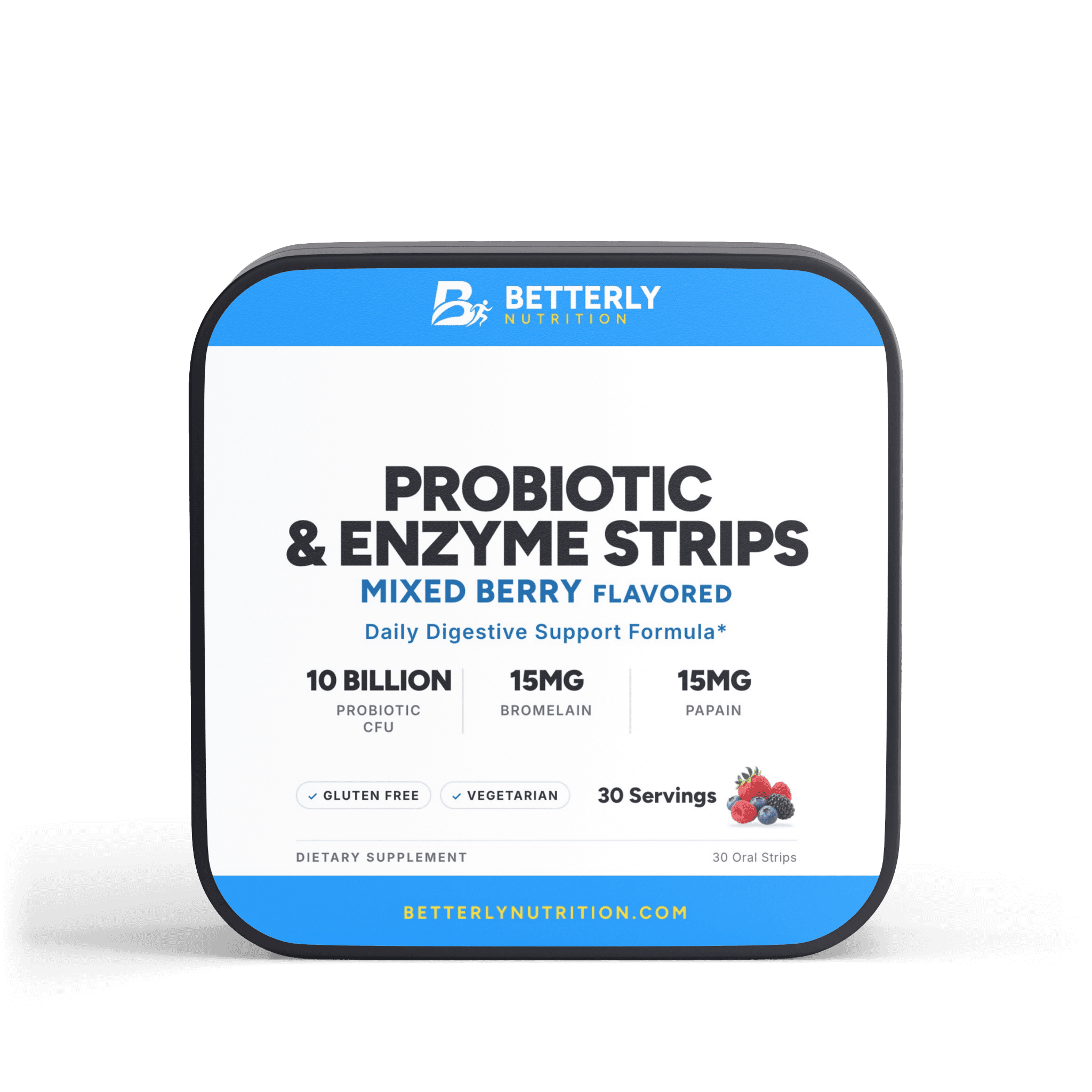
The short answer: Bacillus coagulans benefits can't be read off the species name alone. The NIH ties a probiotic's effects to its exact strains and count, and FDA's food-safety letters on this spore-forming microbe name specific strains, such as SNZ1969 and GBI-30, 6086. Our Probiotic & Digestive Enzyme Strips list 50 mg (10 Billion CFU) of Bacillus coagulans per 1 Oral Strip (210 mg) serving, but print no strain code.
Key takeaways
- FDA's response to GRAS Notice No. GRN 000597 covers one strain, B. coagulans SNZ1969, as a food ingredient, and FDA says it made no GRAS determination of its own.
- Bacillus coagulans, Weizmannia coagulans and Heyndrickxia coagulans all name one species; NCBI's taxonomy records list Heyndrickxia as the current genus.
- The National Library of Medicine files B. coagulans with the endospore-forming bacteria and Lactobacillus acidophilus with rods that don't form spores.
- Our Probiotic & Digestive Enzyme Strips list 50 mg (10 Billion CFU) of B. coagulans, 15 mg of bromelain and 15 mg of papain per 1 Oral Strip (210 mg) serving, but no strain code appears on the panel.
- If you already take an enzyme product with bromelain or papain, ask a healthcare provider before adding this strip, because it carries both.
We sell a Bacillus coagulans strip, the one named above, so we have a reason to talk it up. We'd rather show you where its label falls short, starting with that missing strain code.
What do strain codes like SNZ1969 and GBI-30, 6086 tell you?
A strain code like SNZ1969 or GBI-30, 6086 pins down one line of Bacillus coagulans, and safety files and study results stay tied to that line.
Search for B. coagulans and you'll meet a string of codes: SNZ1969, GBI-30, 6086, MTCC 5856 and Unique IS-2. They share a species name, but each marks a different strain. The NIH Office of Dietary Supplements (ODS) counts the strain as part of a probiotic's full name. It also says a product's benefits, if it has any, come from both its strains and its CFU count (colony-forming units, an estimate of live microbes).
In its response to GRAS Notice No. GRN 000597, FDA describes a spore preparation of B. coagulans SNZ1969, a strain isolated from green malt in 1949. A footnote adds that it was originally designated SANK 70258, so even a code can change. Another footnote points to an earlier notice, GRN 000399, on spores of strain GBI-30, 6086.
None of those codes is on our strip. Its panel reads "Bacillus Coagulans" and gives a count, which leaves no file for you, or us, to match it to.
What does an FDA GRAS letter say about Bacillus coagulans?
An FDA GRAS letter on Bacillus coagulans records that the agency had no questions about one company's safety conclusion for one strain used in foods. That isn't an approval.
GRAS is short for "generally recognized as safe." This notice covers the SNZ1969 spore preparation as an ingredient in a long list of foods, from baked goods and breakfast cereals to fruit juices, chewing gum and soups.
FDA's closing is careful. It had no questions about the company's conclusion, but it "has not, however, made its own determination" on that use. Earlier, the letter says FDA didn't evaluate whether the notice would support any label claims.
So the letter speaks to one strain in food, not to a supplement that names no strain, like ours.
What are the real Bacillus coagulans benefits?
Bacillus coagulans is mostly sold for digestive support, and any benefit a study reports belongs to the strain and amount it used, not to the species name.
You'll see searches for B. coagulans benefits for women, for men or for skin. Our strip's label gives one set of directions, with nothing separate for women or men, and it makes no skin claim. When a site ties a benefit to one of those groups, look for the strain code behind it, then see whether your product prints the same one.
What federal sources say is broad. By ODS's account, probiotics do most of their work in the gut, and they may help your digestive system function better. ODS doesn't single out B. coagulans for any benefit. Neither does the National Library of Medicine, whose index simply notes that the species is used as a probiotic.
Is Bacillus coagulans a probiotic if it forms spores?
Yes, Bacillus coagulans is used as a probiotic, according to the National Library of Medicine's MeSH index, which also files it with the spore-forming bacteria.
Under ODS's definition, a probiotic is a live microorganism that brings a health benefit in a sufficient amount. Nothing in that definition rules out spore-formers; whether a given product delivers a benefit depends on its strain and count.
The MeSH record for Bacillus coagulans describes a lactic acid producer that occurs in fermented foods and is used as a probiotic. Its classification tree places the species under endospore-forming rods. For what that means on a shelf, see our guide to spore probiotics vs regular probiotics.
One honest gap: our label is silent on whether those 10 Billion CFU are counted as spores.
Why does Bacillus coagulans keep changing its name?
Bacillus coagulans was reclassified twice, to Weizmannia in 2020 and Heyndrickxia in 2023, while many labels, ours included, kept the name it got in 1915.
The National Library of Medicine's NCBI Taxonomy Browser gives Heyndrickxia coagulans as the current name, with the two older ones kept as synonyms. NCBI adds a caveat of its own: the database isn't meant as the final word on naming, and it sends readers to the scientific literature. MeSH adds a fourth name you may still spot: Lactobacillus sporogenes.
What should a Bacillus coagulans label show you?
A Bacillus coagulans label should show a strain code, a CFU count with its weight, when that count applies, and clear directions. Our strip's panel covers two of the four.
| What to look for | Why it matters | Our strip's panel |
|---|---|---|
| Strain code | Links a product to files and research on that strain | Not printed |
| CFU and weight | ODS calls CFU a better guide to active microbes than weight | 50 mg (10 Billion CFU) |
| When the count applies | ODS says CFU counts can drop over time | Not stated |
| Directions and caution | Sets your serving and who should ask first | 1 strip daily, caution printed |
The table's lesson: our strip tells you how much B. coagulans a serving holds, but not which strain it is or whether the count lasts to the use-by date. If a named strain is your deal-breaker, this strip won't pass.
By weight, B. coagulans makes up 50 mg of each 210 mg strip, just under a quarter.
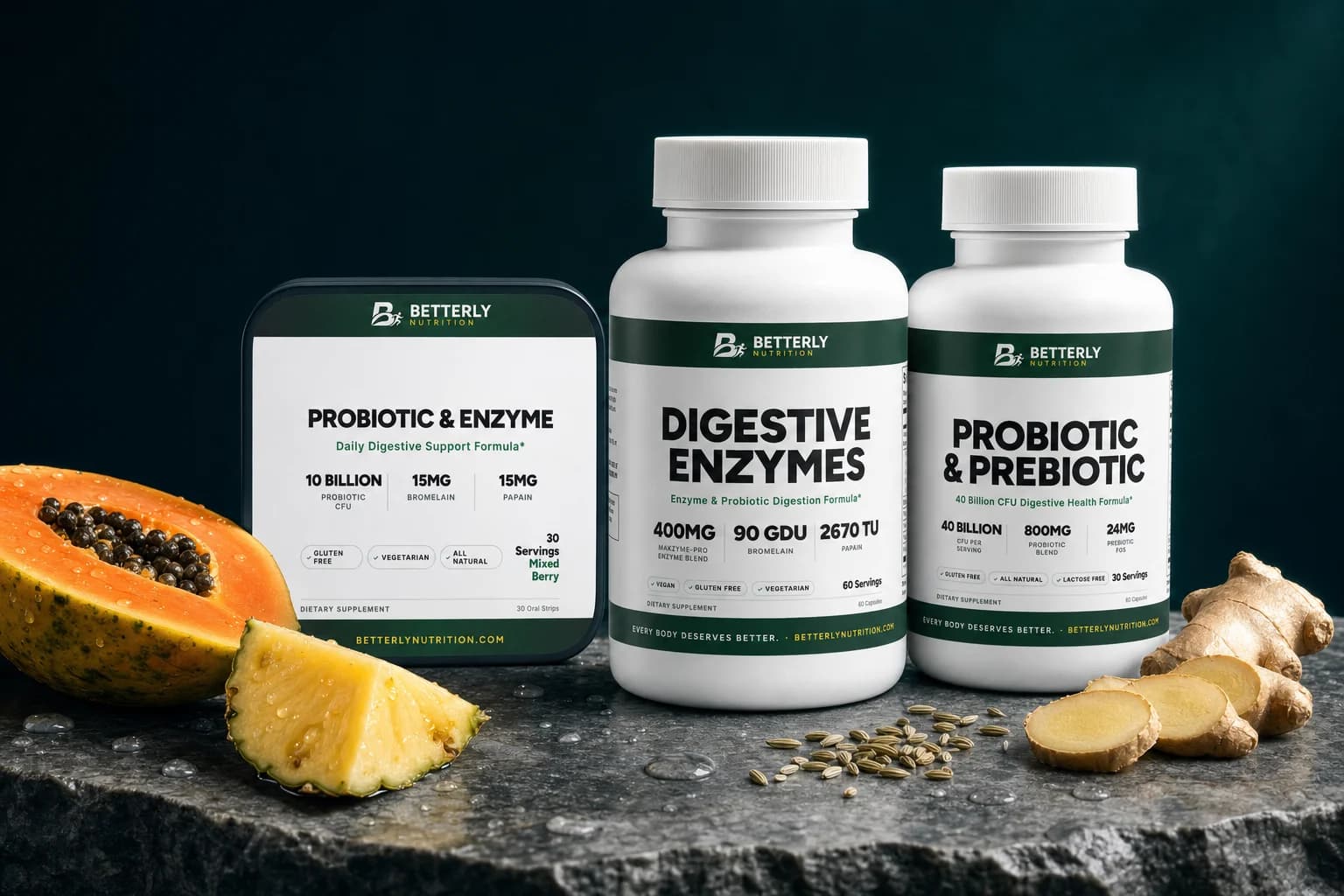
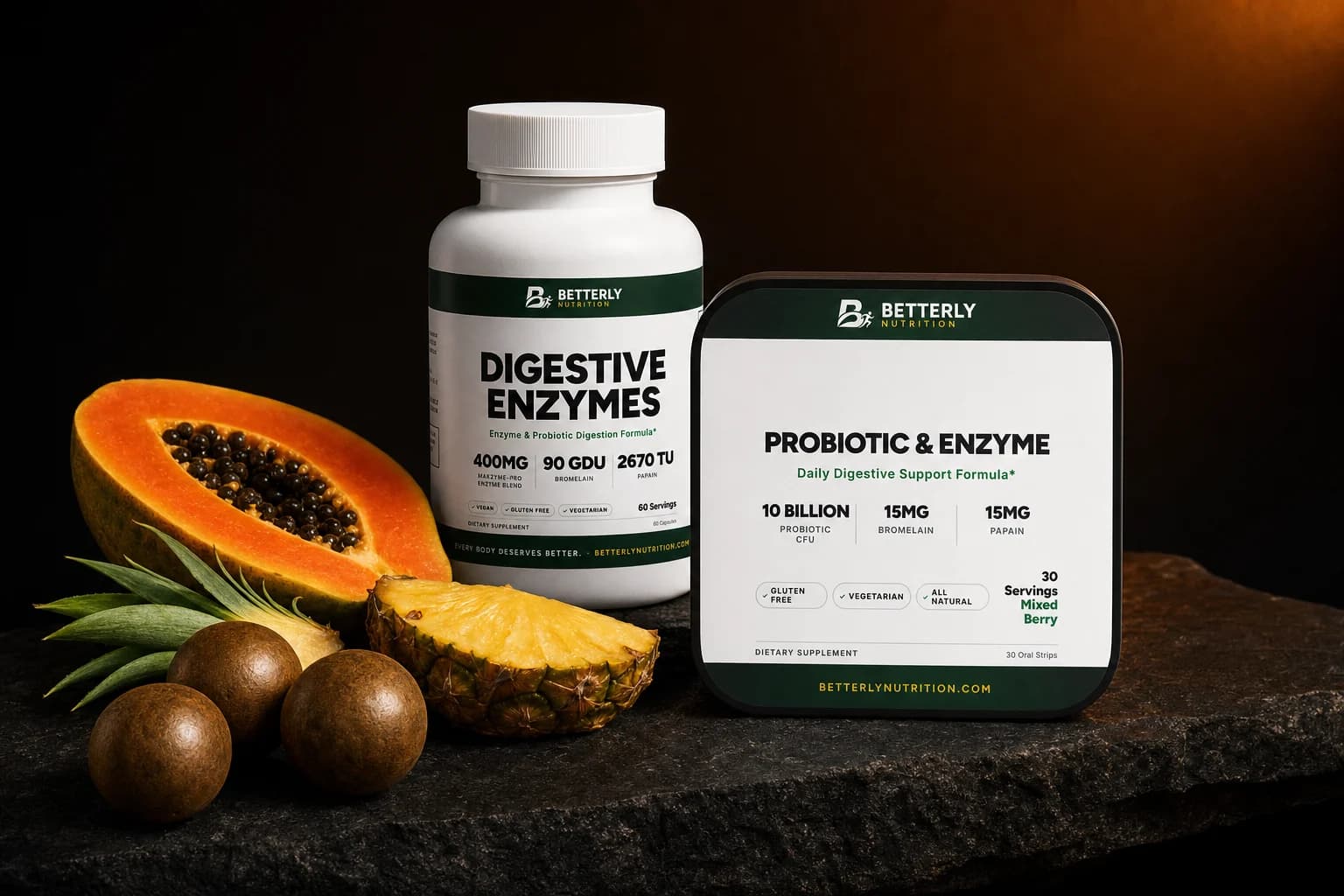
From our shop: Probiotic & Digestive Enzyme Strips — a mixed berry oral strip holding 50 mg of Bacillus coagulans (10 Billion CFU) plus protease, papain and bromelain per 1 Oral Strip (210 mg) serving.
Bacillus coagulans vs Lactobacillus acidophilus: what's different?
Bacillus coagulans forms spores and Lactobacillus acidophilus doesn't, according to the National Library of Medicine's MeSH index, which also describes each in a different setting.
MeSH files acidophilus under asporogenous rods, meaning rods that don't form spores. Its Lactobacillus acidophilus record describes a species isolated from the digestive tract of people and animals and from the human mouth.
| Trait | Bacillus coagulans | Lactobacillus acidophilus |
|---|---|---|
| Spores | Filed with endospore-forming rods | Filed with rods that don't form spores |
| Where MeSH places it | Fermented foods | Human and animal gut, human mouth |
| Example from our shop | Probiotic & Digestive Enzyme Strips, 50 mg (10 Billion CFU) | Digestive Enzyme & Probiotic Capsules, no count |
Put simply, spores are the dividing line between the species, and of these two products, only the strip gives its microbe a count. The Digestive Enzyme & Probiotic Capsules name L. acidophilus with L. casei and L. plantarum but print no CFU, so you can't compare the two products microbe for microbe. Their enzymes are a separate topic, covered in our guide to enzymes versus probiotics.
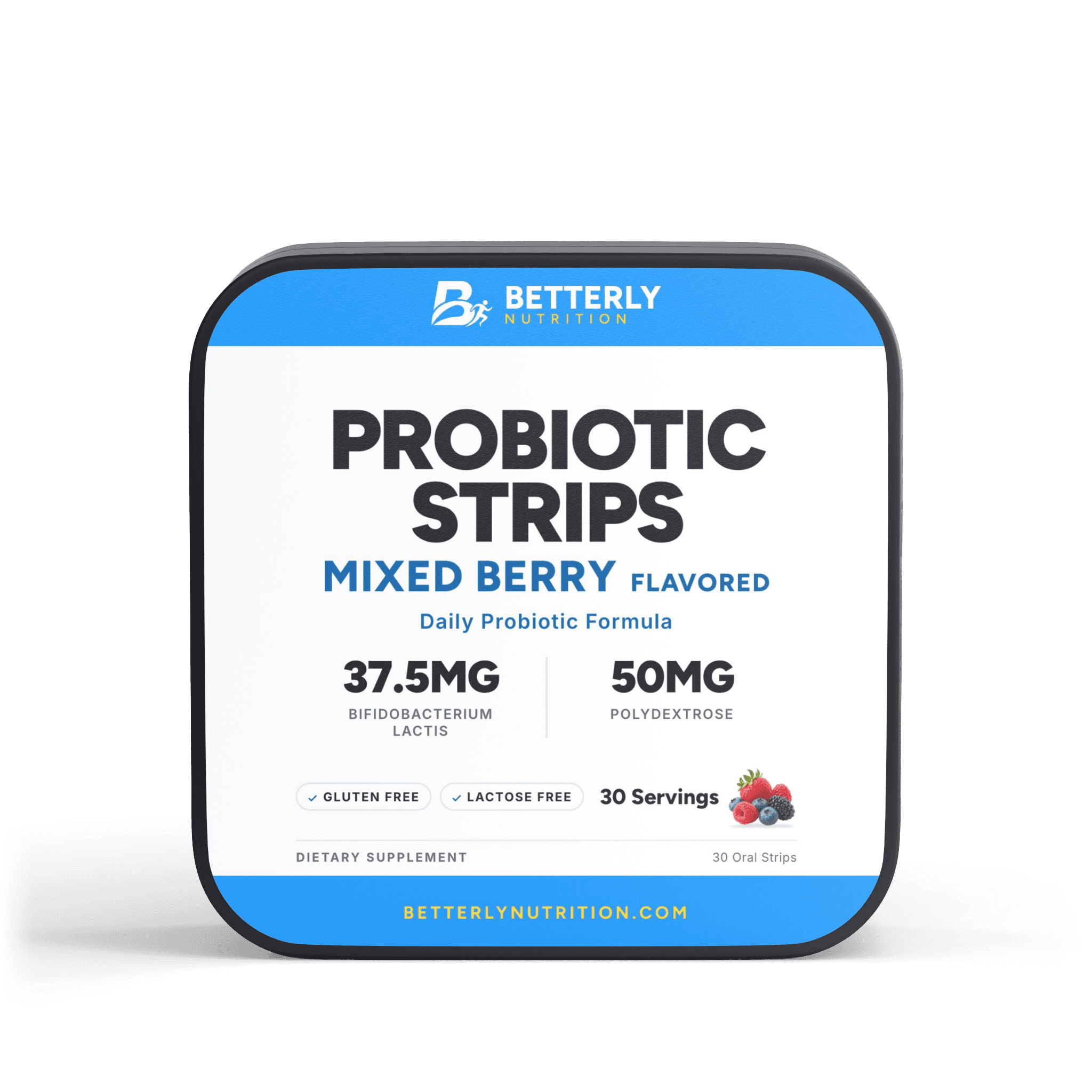
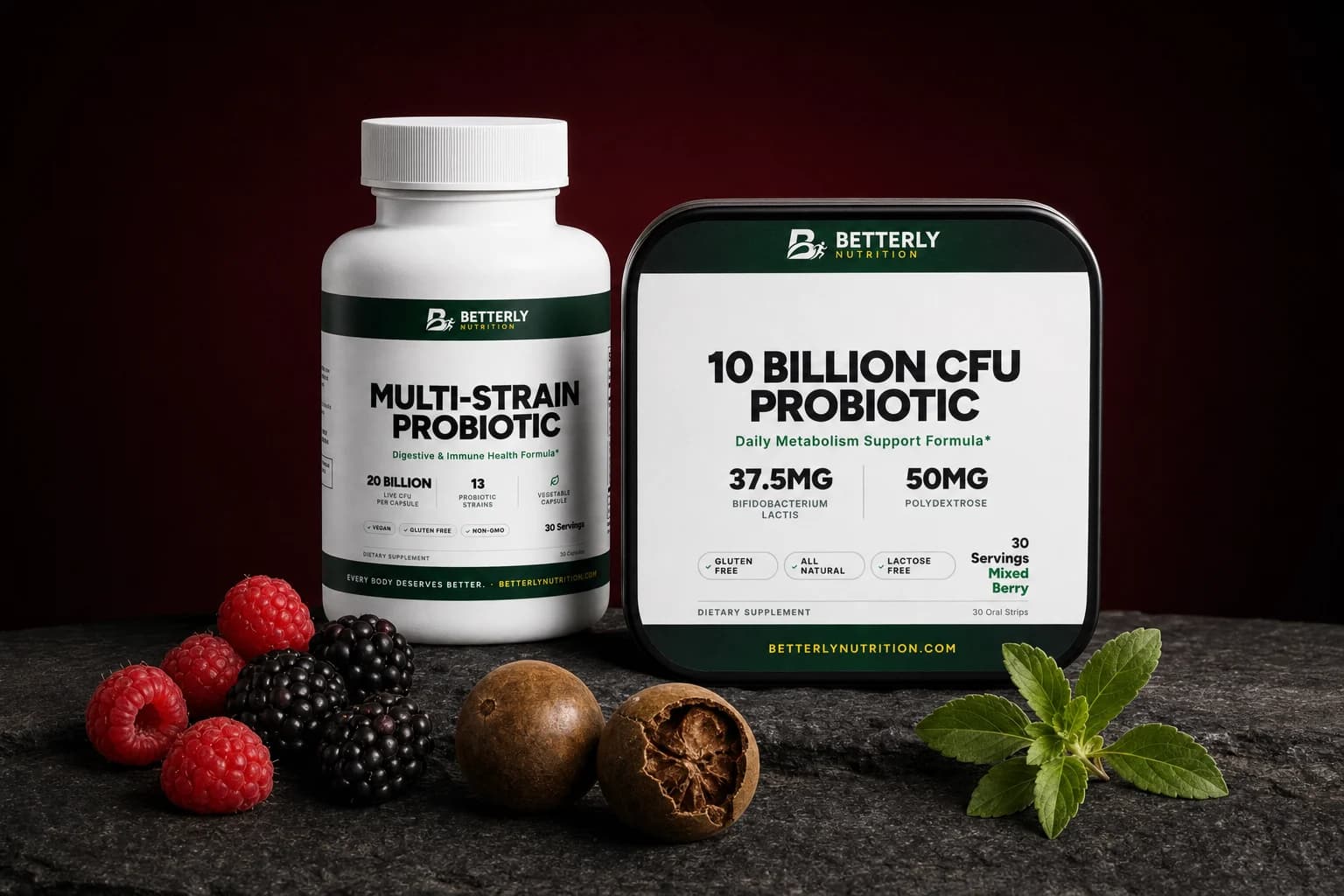
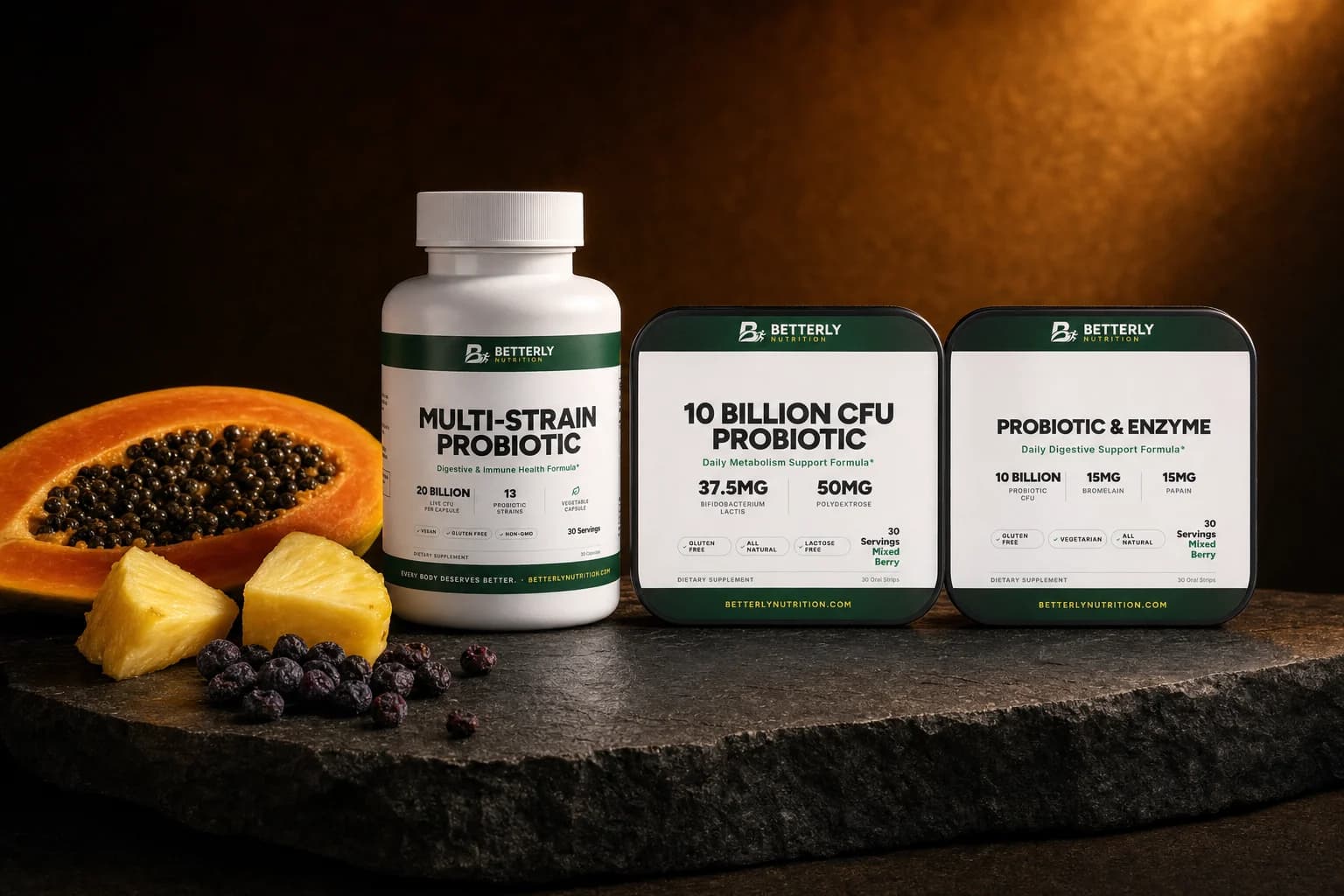
For acidophilus strains that do carry codes, see our guide to Lactobacillus acidophilus. For the strip format with a different species, our 10 Billion CFU Probiotic Strips list 37.5mg of Bifidobacterium lactis (10 Billion CFU) per 1 Oral Strip (180 mg) serving, also with no strain code.
From our shop: Digestive Enzyme & Probiotic Capsules — three Lactobacillus species, acidophilus among them, listed within the Makzyme-Pro™ Enzyme Blend (2500 HUT/400mg) per 1 Veggie Capsule serving, for readers who want enzymes timed to meals.
How do you take Bacillus coagulans strips?
You take Bacillus coagulans strips one a day, letting each strip dissolve on your tongue, which is the label's suggested use.
The label doesn't tie the strip to food, water or a clock, so attach it to a fixed point in your day. Our enzyme capsules run on a meal schedule instead: two a day, each taken 20-30 min before you eat.
Each pack has 30 strips, a month's supply at one a day. Because the label says "Do not exceed recommended dose," a missed day stays missed; don't take two the next morning. Keep the pack where the label says: cool, dry and out of children's reach.
Before you buy, note that the pack claims gluten free and vegetarian. Its other ingredients include mannitol, monk fruit extract and steviol glycosides, with no amounts given.
When isn't a Bacillus coagulans supplement worth buying?
A Bacillus coagulans supplement isn't worth buying when you want a specific strain's results and the label prints only the species, as ours does.
ODS cautions that some probiotic supplements may lack any study at all, so what they do, if anything, may be unknown. A species-only label gives you no code to check against FDA files or published research, so you can't tell where a product stands.
Food is another route if a named strain matters to you. The GRN 000597 notice described plans to add SNZ1969 spores to everyday foods such as breakfast cereals and fruit juices. Per ODS, when a food contains probiotics, its label should name them down to the strain, so a food with added probiotics may tell you more than our strip does.
If a printed strain code is the detail you're after, look past this strip: two capsules in our gut health range name theirs. And if your digestion already feels fine, skipping a probiotic is a fair call. ODS has no official recommendation telling healthy people to take one.
Who should check with a healthcare provider first?
Bacillus coagulans strips need a provider's go-ahead first for anyone expecting or breastfeeding, anyone under 18, and anyone taking medication, facing an operation or living with a medical condition.
This strip isn't only a probiotic. Each 1 Oral Strip (210 mg) serving also carries 10 mg of protease, 15 mg of bromelain and 15 mg of papain. Bromelain is an enzyme group from the pineapple plant, and papain comes from papaya. If either fruit doesn't agree with you, or you already take an enzyme supplement, show the panel to your provider first.
The strip's printed caution names four of those groups and asks them to consult a physician. We add medication and surgery because this is a microbe plus two plant enzymes, and whoever manages your prescriptions or your procedure should see the whole panel, not just the probiotic line.
Spores or not, B. coagulans sits under ODS's general warnings for probiotics. The sheet says bacterial infections and similar problems are possible for people who are very sick or whose immune defenses are weak. For preterm infants, it adds, FDA has reported that probiotics might lead to infections and, at worst, illness that threatens life.
Even the SNZ1969 food notice keeps its distance from the youngest eaters: the company said its preparation isn't meant for foods intended for infants and toddlers. Any question about a probiotic for a baby belongs with a pediatrician.
FAQ: Bacillus coagulans
Is Bacillus coagulans the same as Lactobacillus sporogenes?
Yes, Lactobacillus sporogenes is an older name for Bacillus coagulans, and the National Library of Medicine's MeSH index still lists it as an alternate term. NCBI now gives Heyndrickxia coagulans as the current name, so a label with any of these names holds the same species.
Is Bacillus coagulans vegan?
Our Bacillus coagulans strip isn't labeled vegan. The pack claims gluten free and vegetarian, and its other ingredients include lecithin with no source named. If you need a printed vegan claim, our Digestive Enzyme & Probiotic Capsules carry one, though they hold three Lactobacillus species instead of B. coagulans.
How much Bacillus coagulans should you take?
Take only the amount your Bacillus coagulans product's label suggests. For our strip, that's 1 oral strip a day, which gives you 50 mg (10 Billion CFU). ODS sets no official amount for healthy people and leaves the product, the dose and the length of use to a talk with your healthcare provider. ODS also cautions that a bigger CFU number, by itself, isn't a sign of bigger benefits.
Can you take Bacillus coagulans with digestive enzymes?
Bacillus coagulans can share a routine with digestive enzymes, but ask a healthcare provider first when the enzymes overlap. Our strip and our Digestive Enzyme & Probiotic Capsules each list bromelain and papain, so using both doubles up. You can't total them yourself, either. The strip lists 15 mg of each per 1 Oral Strip (210 mg) serving, while the capsules list both inside an enzyme blend, with no separate amounts, per 1 Veggie Capsule serving.
What are the side effects of Bacillus coagulans?
Bacillus coagulans has no side-effect list of its own on the ODS fact sheet, which covers probiotics as a group. For healthy people, the sheet's list is short: possible gas, with infections and other problems described as rare. Our strip also carries bromelain and papain, so if the strip disagrees with you, you can't pin it on one ingredient from the panel alone. Stop the strip and talk with your provider.
Does Bacillus coagulans need to be refrigerated?
Our Bacillus coagulans strip's label doesn't call for refrigeration; it asks for a cool, dry place. ODS notes that storage needs differ, with some probiotics kept refrigerated and others fine at room temperature, so each product's own storage line is the one to follow. Our guide to probiotic refrigeration compares the storage wording across our probiotic labels.
Sources
- Probiotics: Fact Sheet for Consumers (NIH Office of Dietary Supplements)
- Agency Response Letter, GRAS Notice No. GRN 000597 (U.S. Food and Drug Administration)
- Bacillus coagulans: MeSH (NCBI, National Library of Medicine)
- Lactobacillus acidophilus: MeSH (NCBI, National Library of Medicine)
- Taxonomy Browser: Heyndrickxia coagulans (NCBI, National Library of Medicine)
If this left you looking for somewhere to start, read bacillus coagulans probiotic strips with digestive enzymes — its amounts per serving are listed on the page. For the practical questions this raises, how dosing, sourcing and subscriptions work is answered in one place.