On this page
- Key takeaways
- How do you choose a digestive enzyme?
- Full-spectrum or single-enzyme: which kind do you need?
- Is Beano the same as digestive enzymes, and where does Lactaid fit?
- What do HUT, FIP, LACU, GALU, GDU and TU mean?
- How do you read an enzyme blend on a label?
- How do our enzyme labels compare, weak spots included?
- How do the directions differ across enzyme labels?
- When is a digestive enzyme the wrong buy?
- Who should check with a healthcare provider first?
- FAQ: choosing a digestive enzyme
- Sources
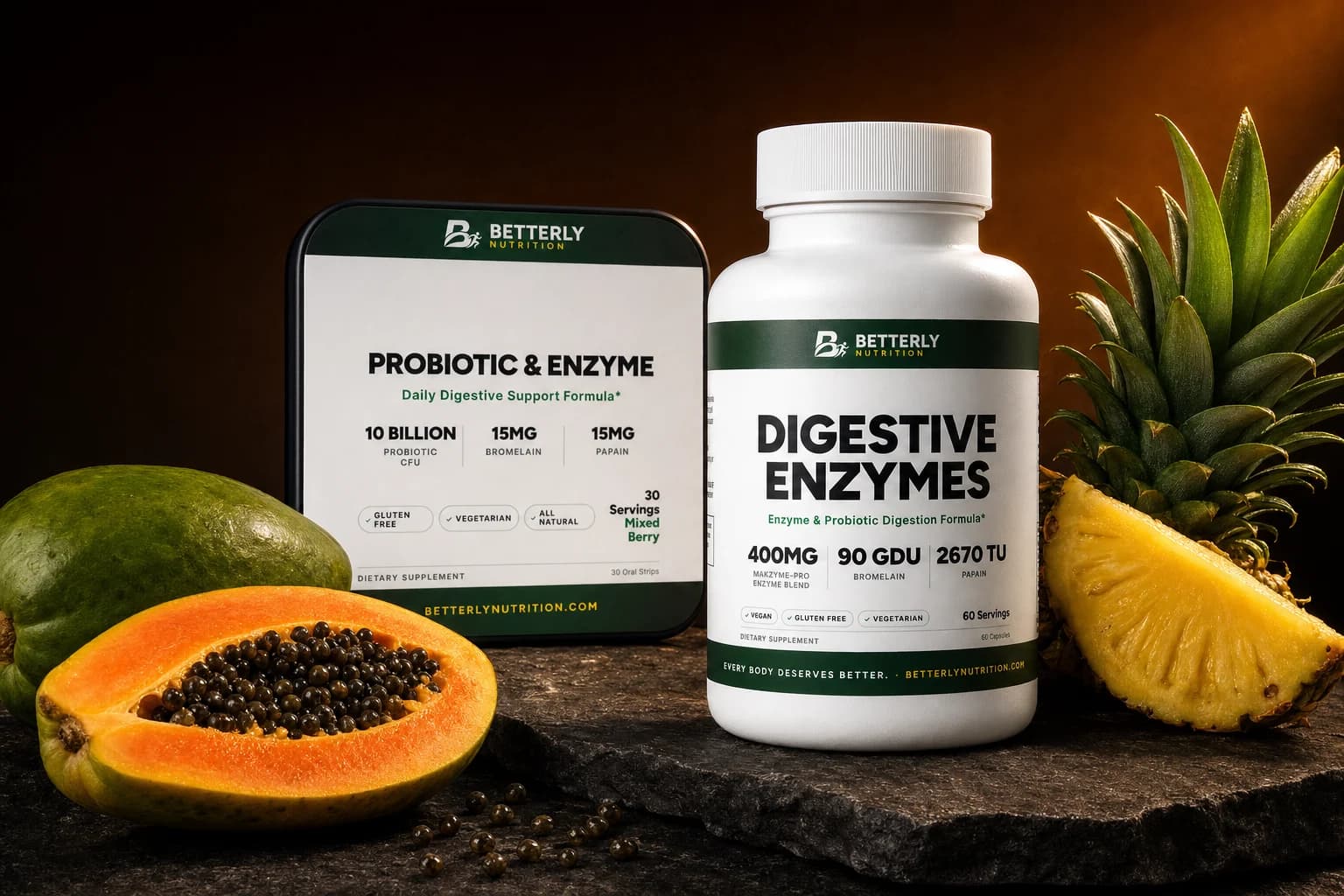
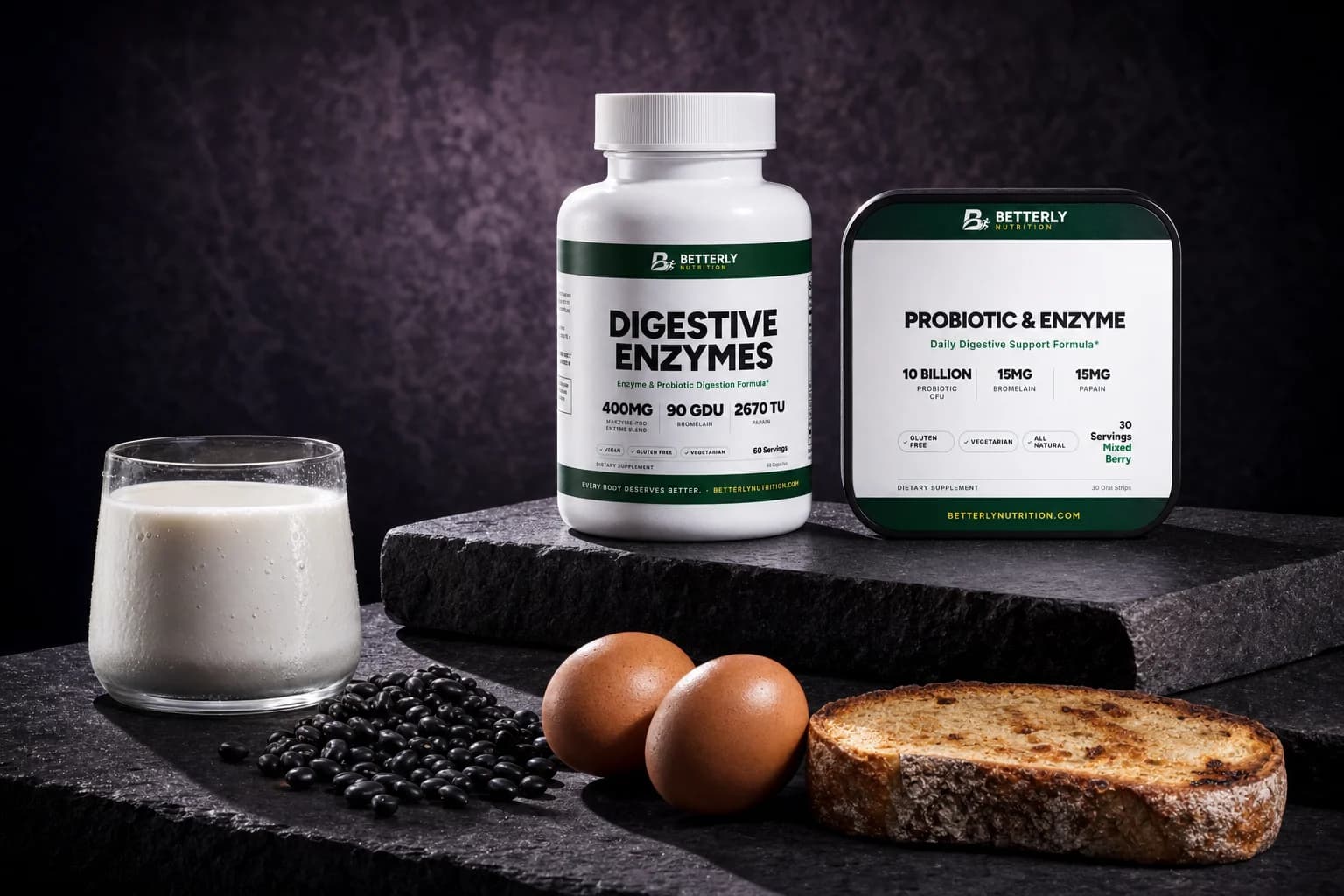
The short answer: How to choose a digestive enzyme comes down to a match and a number. Match the enzyme to the food: lactase for milk sugar, alpha-galactosidase for bean carbohydrates, protease for protein, lipase for fat, amylase for starch. Then check that each enzyme gets its own amount in a unit you can compare. Our Digestive Enzyme & Probiotic Capsules name six enzymes per 1 Veggie Capsule serving, all inside one blend with a single 2500 HUT figure, and amylase isn't one of them.
Key takeaways
- Digestive enzymes are specialists: lactase ignores protein and protease ignores milk sugar, so start from your plate, not the ingredient list.
- HUT, FIP, LACU, GALU, GDU and TU each come from a different lab test, so two numbers compare only when they share a unit.
- Beano's label lists a single enzyme, alpha-galactosidase, and lactase-only caplets list just lactase, while a blend spreads across several food groups.
- Our enzyme capsule lists three Lactobacillus species with no CFU count, so it isn't the buy if a probiotic count matters to you.
Full disclosure: we sell all five products whose labels we pull apart below, so we have a stake in how you shop. We'll flag where each label falls short, not just where it looks good.
How do you choose a digestive enzyme?
You choose a digestive enzyme by naming the meal that sent you shopping, then reading the Supplement Facts panel from top to bottom for a row that fits it.
Five checks, in the order the back panel prints them:
- Serving size. Every amount below it covers that much: 1 Veggie Capsule on our enzyme capsule, 2 Capsules on our Ox Bile & Artichoke Capsules.
- Row or blend. A row of its own means an amount of its own. A name indented under a blend shares one total.
- Unit letters. Milligrams are weight, HUT or GALU are test results, and only matching letters line up.
- Claims and other ingredients. Vegan or gluten free claims and the capsule material live here; ours claims vegan and gluten free.
- Suggested use and caution. How many a day, when, and who should ask a doctor first.
If you reach check five without a row that fits your meal, put that label back.
Full-spectrum or single-enzyme: which kind do you need?
A single-enzyme product fits when one food is the whole story, while a multi-enzyme or "full spectrum" blend fits mixed meals where no single food stands out.
"Full spectrum" and "broad spectrum" are makers' phrases, and no labeling rule we've read says which enzymes they must include. A wide blend usually aims at protein, fat and carbohydrate, the three groups your own digestive juices break down.
Our capsule's one blend lists three protein enzymes (fungal protease, bromelain and papain), plus one each for fat, milk sugar and bean carbohydrates. It lists no amylase, the starch enzyme, and no cellulase, which works on plant fiber.
| What's on your plate | Product type | Row to look for |
|---|---|---|
| Milk, lattes, milkshakes | Lactase-only, or a blend | Lactase, with its own amount |
| Black beans, split peas, lentils | Alpha-galactosidase-only, or a blend | Alpha-galactosidase, often in GALU |
| Mixed plates, nothing stands out | Multi-enzyme blend | Protease, lipase and amylase |
| Rice, pasta, toast | Blend with amylase | Amylase (our capsule has none) |
The takeaway: when one food keeps coming up, a single-enzyme product is often the simpler buy, and a blend earns its extra rows only when they match your plate.
Is Beano the same as digestive enzymes, and where does Lactaid fit?
Beano is a digestive enzyme product, but a single-enzyme one: its label lists alpha-galactosidase, which acts on certain carbohydrates in beans and other legumes.
Beano's entry in the NIH's Dietary Supplement Label Database, recorded in 2022, calls it a food enzyme dietary supplement and lists one enzyme: alpha-galactosidase at 600 GALU per 2-tablet serving. A generic lactase caplet in that database does the same for milk sugar. Its label invites you to compare it with the lactase in Lactaid Original, and it lists lactase alone, at 9,000 FCC Lactase Units per 3-caplet serving.
So the real question isn't "Beano or digestive enzymes?" It's "one enzyme or several?" Our capsule lists both of those enzymes, alpha galactosidase and fungal lactase, inside its 400mg blend per 1 Veggie Capsule serving, beside four protein and fat enzymes, with no separate amount for any of them.
Beano prints GALU, but our capsule prints no alpha-galactosidase figure at all, so the two can't be compared on that enzyme: our label only tells you it's in the blend. Lactase works the same way: the caplet prints FCC Lactase Units, and our capsule's lactase has no figure of its own.
What do HUT, FIP, LACU, GALU, GDU and TU mean?
HUT, FIP, LACU, GALU, GDU and TU are activity units: each one reports how much work an enzyme did in its own standardized lab test, not how much it weighs.
| Unit | What it stands for | Enzyme it measures | Our capsule, per 1 Veggie Capsule |
|---|---|---|---|
| HUT | Hemoglobin units, tyrosine basis | Protease (protein) | 2500 HUT, for the whole blend |
| GDU | Gelatin digesting units | Bromelain (protein) | In the blend, no figure |
| TU | Tyrosine units | Papain (protein) | In the blend, no figure |
| FIP | International Pharmaceutical Federation | Lipase (fat) | In the blend, no figure |
| LACU | Lactase units | Lactase (milk sugar) | In the blend, no figure |
| GALU | Galactosidase units | Alpha-galactosidase (bean carbs) | In the blend, no figure |
A label that breaks its protein enzymes out can print three different protein units, each from its own test, so a HUT figure beside a TU figure means nothing on its own: different tests, different rulers. Our capsule prints just one of them, the blend's 2500 HUT. The DU and CU on other brands' amylase and cellulase rows are separate rulers too.
Can you compare milligrams with activity units?
No, milligrams and activity units don't convert: a milligram figure is the weight of the enzyme ingredient, while an activity unit is what it did in a test.
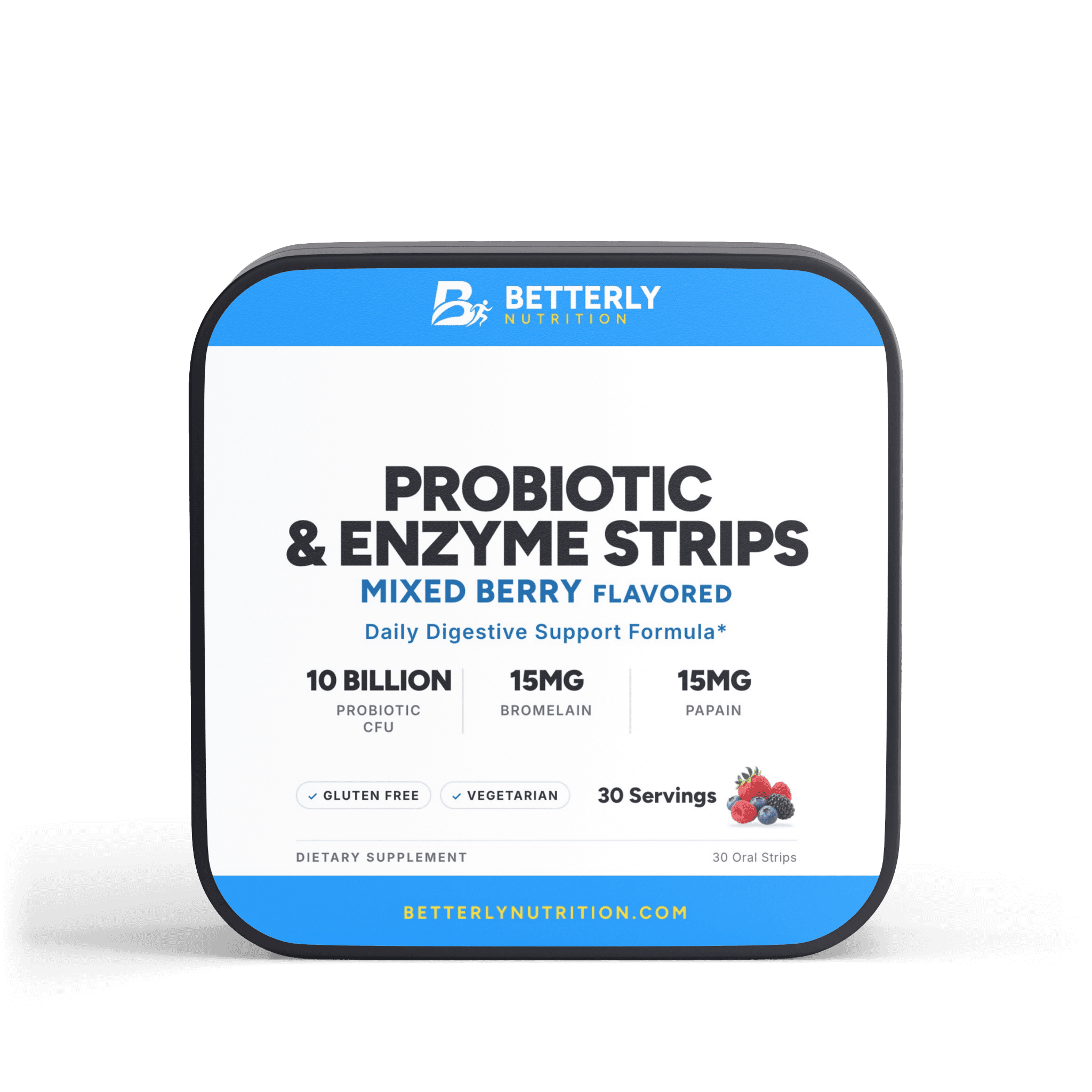
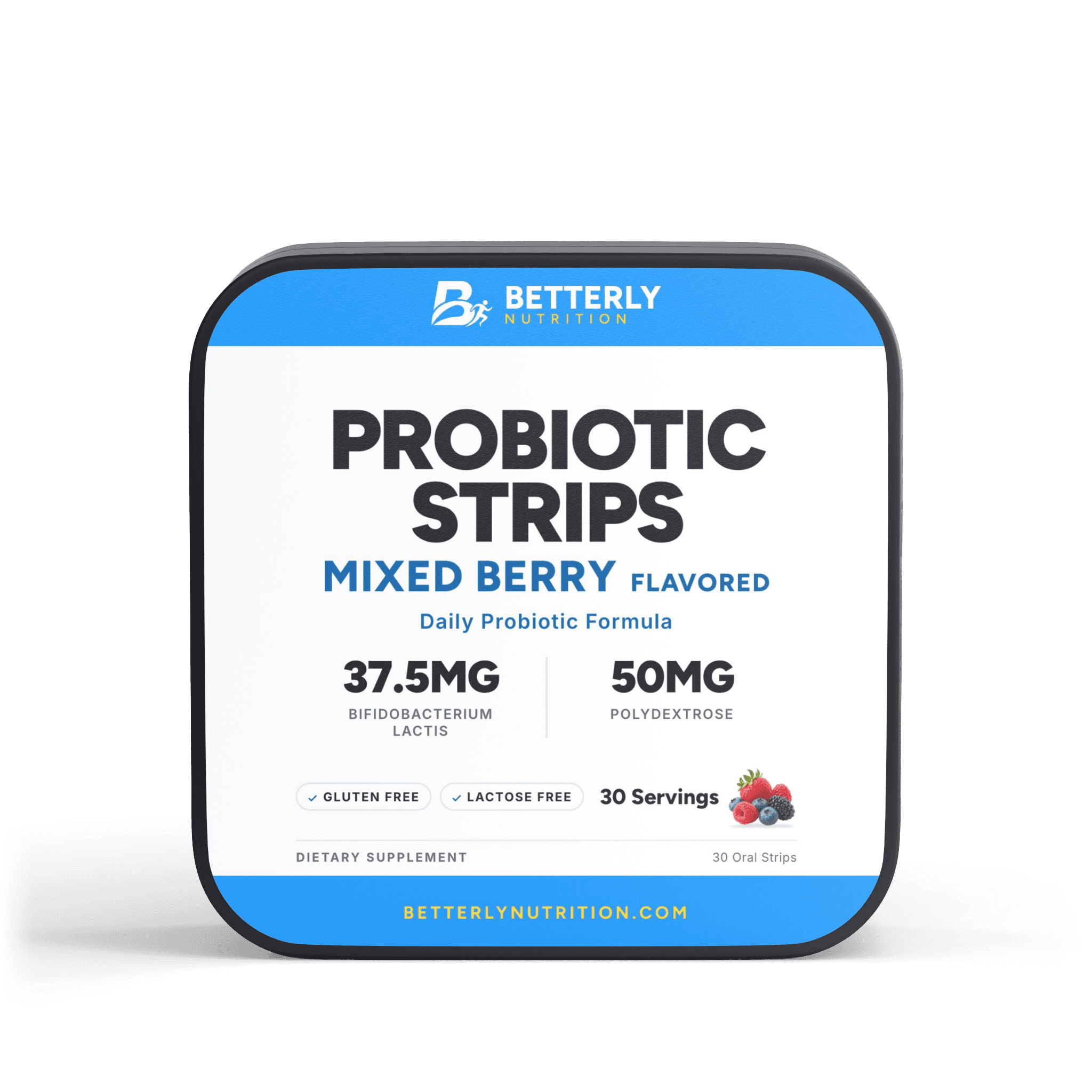
Probiotic & Digestive Enzyme Strips list 15 mg of bromelain and 15 mg of papain per 1 Oral Strip (210 mg) serving, plus 10 mg of protease. That's the strip's weak spot: with no activity figure printed, the only fair comparison is another milligram label, and no NIH source we can cite ranks weight against activity.
From our shop: Digestive Enzyme & Probiotic Capsules — per 1 Veggie Capsule serving, one Makzyme-Pro™ Enzyme Blend at 2500 HUT/400mg lists six enzymes and three Lactobacillus species, with no separate figure for any of them and no amylase.
How do you read an enzyme blend on a label?
You read an enzyme blend by checking its total weight, the order of the ingredients inside it, and what's missing, like individual amounts and, for any probiotic, a CFU count.
Under the FDA's labeling rules for blends, the ingredients inside are listed heaviest first. Apply that rule to our capsule's Makzyme-Pro™ Enzyme Blend, which reads 2500 HUT/400mg.
Fungal protease from Aspergillus oryzae comes first, then Lactobacillus acidophilus, casei and plantarum, then bromelain, papain, fungal lipase, fungal lactase and alpha-galactosidase. Nine ingredients share 400mg, and the first-listed one must weigh at least as much as each of the others, so the protease accounts for at least a ninth of it, about 44mg. Everything after it splits the rest, and the label doesn't say how. And since HUT measures protease activity, the 2500 HUT tells you nothing about the lipase, lactase or alpha-galactosidase in the same blend.
The bigger gap is the missing count. The NIH Office of Dietary Supplements says a CFU (colony-forming unit) count reflects how many active microorganisms a product holds more accurately than their weight does. Our capsule prints no CFU count and no separate weight for its three species, so treat it as an enzyme product.
Two more blend styles sit on our shelf:
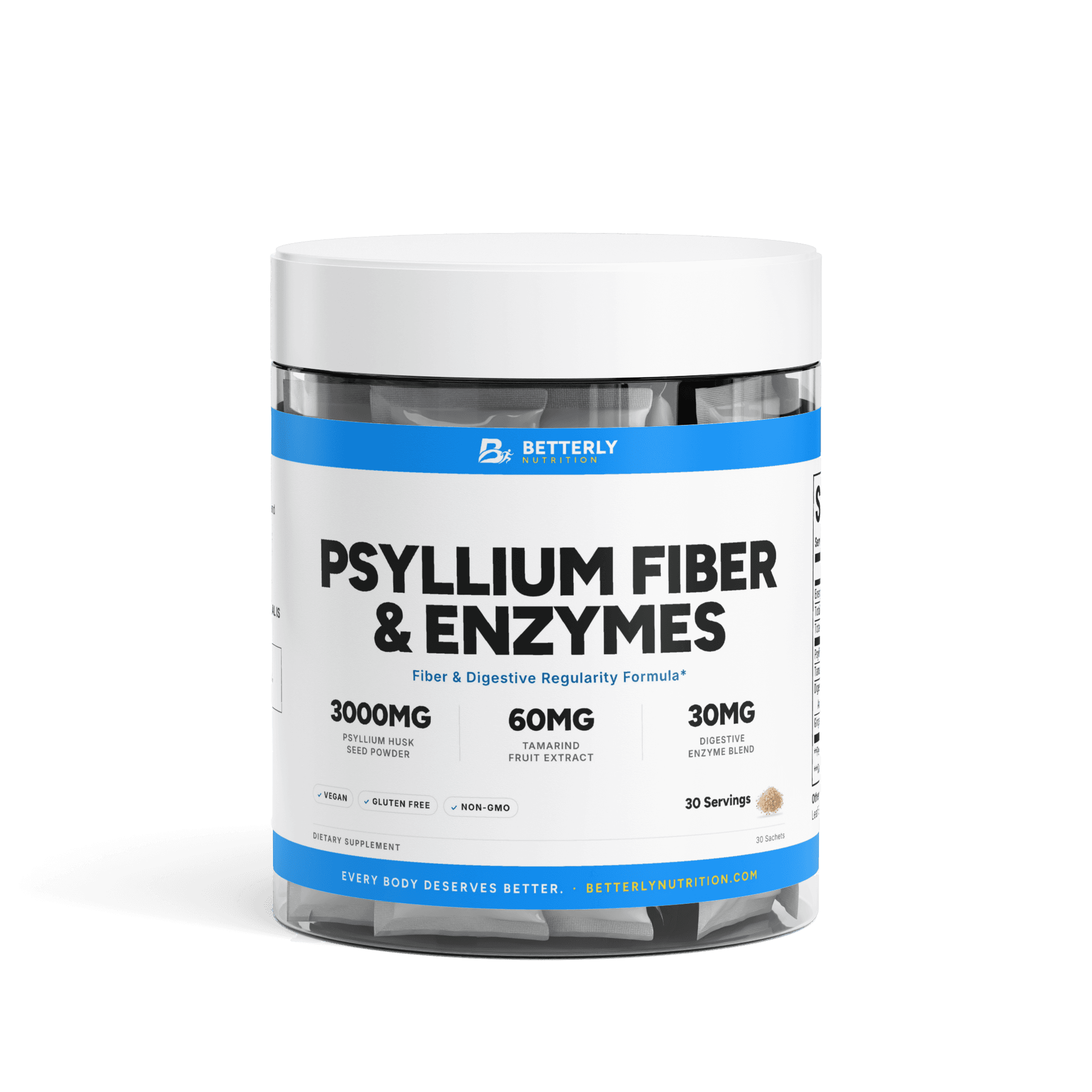
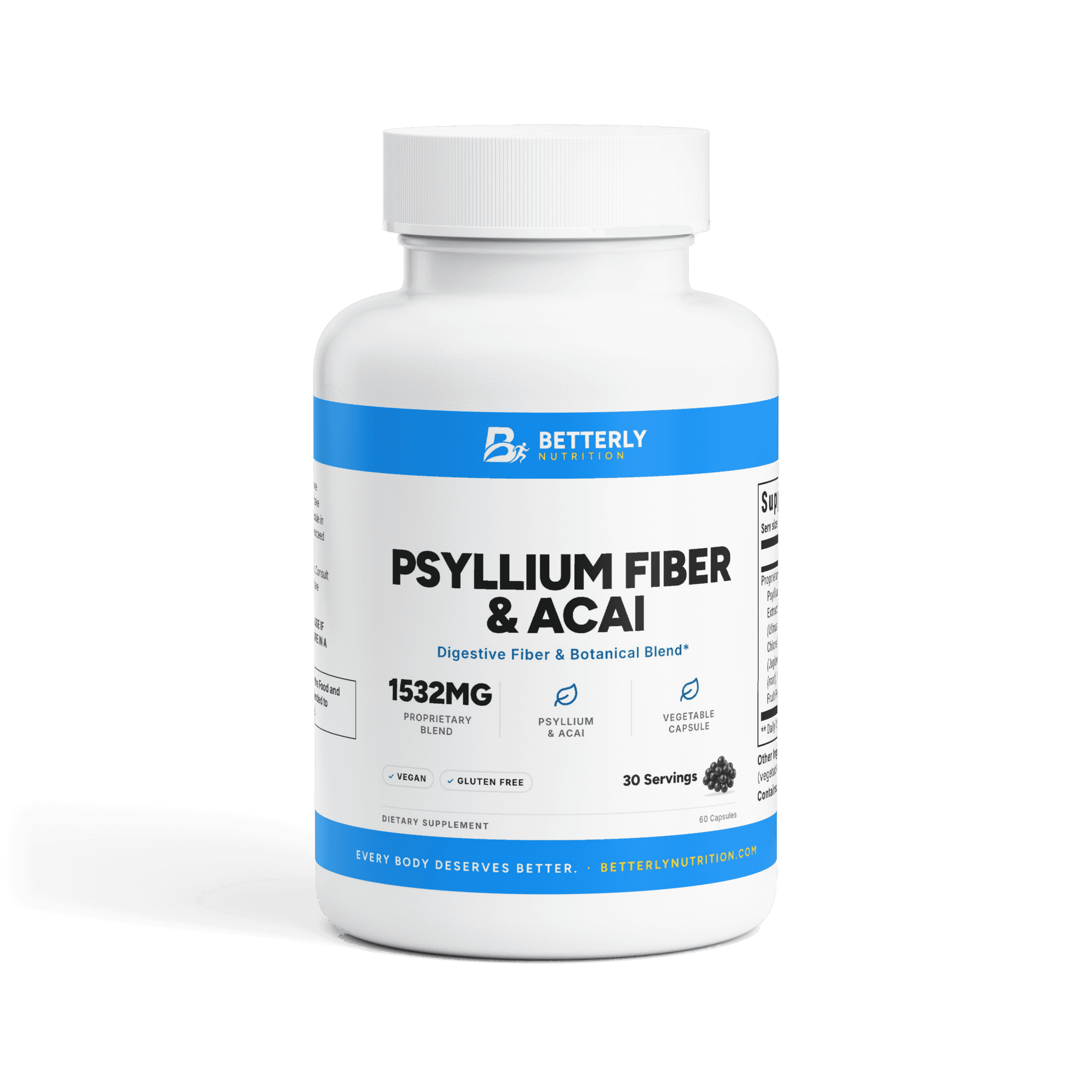
- One weight, several enzymes: Psyllium Fiber & Digestive Enzyme Powder names amylase, lactase, lipase and cellulase inside a 30mg Digestive Enzyme Blend (from Fermented Cereals) per 1 Sachet serving, with no single amounts.
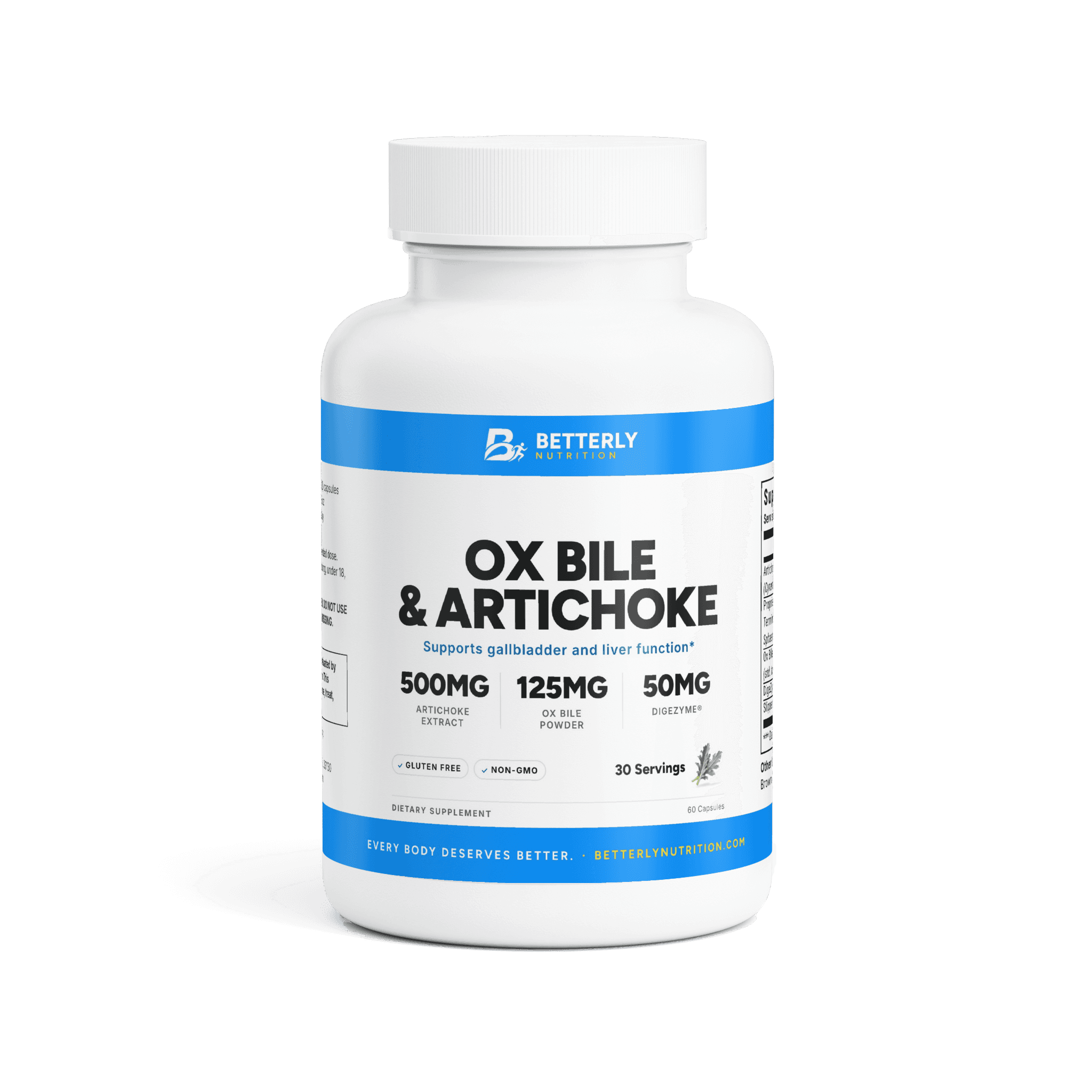
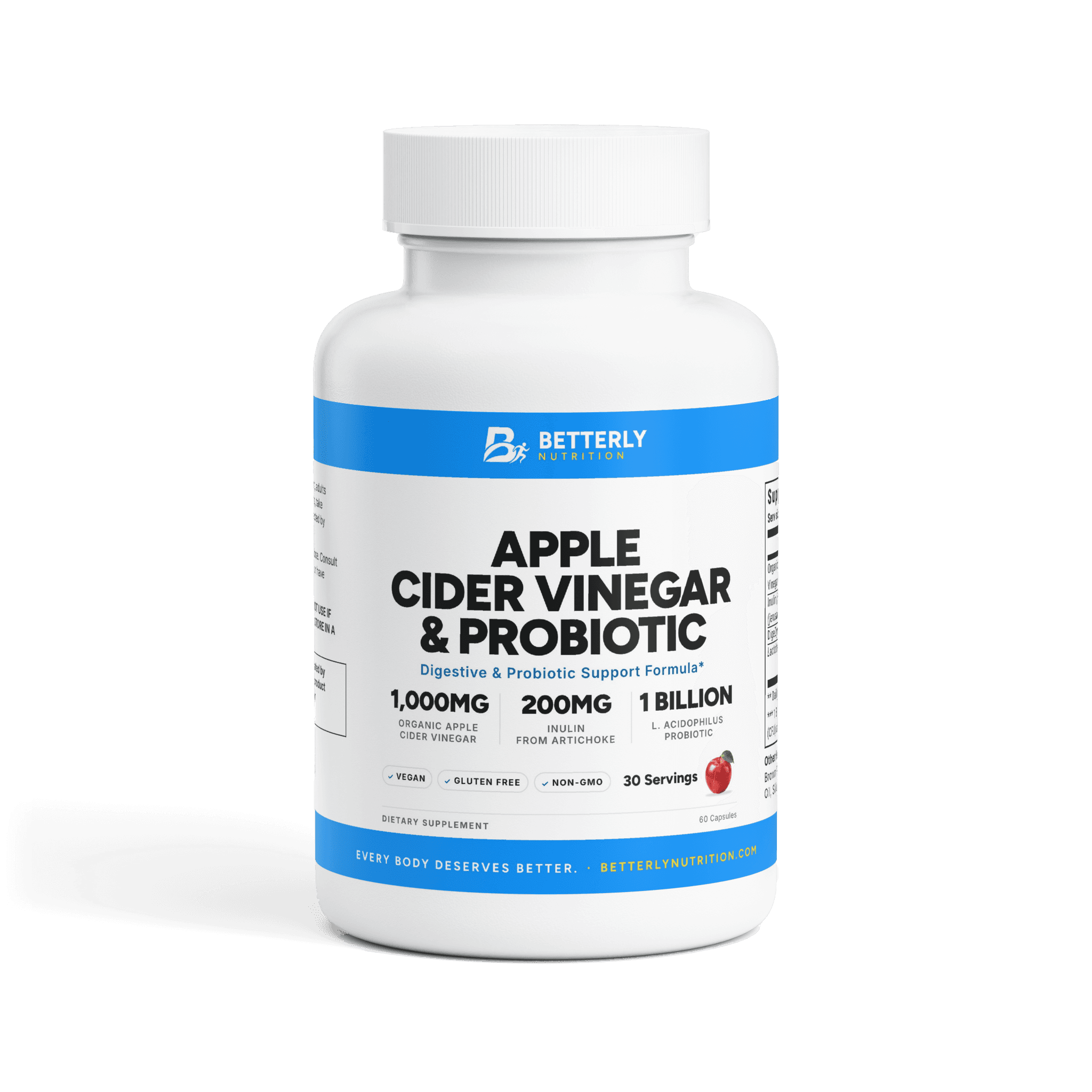
- A trademark, no enzymes named: our Ox Bile & Artichoke Capsules and Apple Cider Vinegar & Probiotic Capsules each list DigeZyme® as one row without naming the enzymes inside.
For the rest of the FDA's blend layout, see our guide to reading a proprietary blend.
How do our enzyme labels compare, weak spots included?
The five enzyme-bearing labels in this guide range from six named enzymes under one activity figure to one trademarked row that names none.
| Our product (serving) | Enzymes named | How they're measured | The gap |
|---|---|---|---|
| Enzyme capsules (1 Veggie Capsule) | Six, all in one blend | One figure for the blend: 2500 HUT/400mg | No single amounts; no amylase; no CFU |
| Enzyme strips (1 Oral Strip) | Protease, papain, bromelain | 10 mg, 15 mg, 15 mg | Weight only; protein only |
| Psyllium powder (1 Sachet) | Amylase, lactase, lipase, cellulase | One 30mg total | No single amounts; away from meals |
| Ox bile capsules (2 Capsules) | None; DigeZyme® only | 50 mg | Enzymes unnamed |
| ACV capsules (2 Capsules) | None; DigeZyme® only | 100 mg | Enzymes unnamed |
Only the strip gives each of its enzymes an amount, in milligrams; the capsule names more enzymes but gives the whole blend one figure. The other three put something else at the center:
- The strips lead with Bacillus coagulans, so they read as a probiotic strip first.
- The powder is mostly psyllium: 3000mg of psyllium husk seed powder per 1 Sachet serving.
- The ox bile capsules center on 500 mg of artichoke extract and 125 mg of ox bile powder per 2-capsule serving. Bile isn't an enzyme either. NIDDK describes bile as a liver-made digestive juice that helps with fats and some vitamins.
- The ACV capsules center on 1,000 mg of organic apple cider vinegar powder per 2-capsule serving.
All five sit in our Gut Health & Digestion range, where each product page lists its amounts per serving.
From our shop: Probiotic & Digestive Enzyme Strips — a mixed berry strip listing protease, papain and bromelain by weight, with Bacillus coagulans at 50 mg (10 Billion CFU), per 1 Oral Strip (210 mg) serving.
How do the directions differ across enzyme labels?
Enzyme directions differ in timing and count: our Digestive Enzyme & Probiotic Capsules say one capsule twice daily, ahead of meals, while our strips say one a day.
The capsule label adds that, for best results, each one goes 20-30 minutes before a meal. The FDA labeling guide explains why that panel's serving is 1 capsule: a serving is the most the label recommends for one eating occasion. So each number on the panel is what one meal gets, and the label covers two such meals a day.
The rest of our enzyme-bearing labels set different terms:
- Strips: one a day, set on the tongue to melt, with no meal timing given.
- Ox bile and ACV capsules: both labels say adults take two capsules daily, with 6-8 oz (177-237ml) of water for best results.
- Psyllium powder: 1 sachet mixed into 6.8 fl oz (200 mL) of water and finished right away, 1–2 times daily, away from meals.
One overlap to watch: the capsule and the strips each carry bromelain and papain, so check with a provider before using both on the same day.
When is a digestive enzyme the wrong buy?
A digestive enzyme is the wrong buy when your meals already sit comfortably, or when none of its rows matches the food you had in mind.
According to NIDDK's guide to how the digestive system works, your small intestine makes its own digestive juice. That juice mixes with pancreatic juice and bile to finish breaking down proteins, carbohydrates and fats.
The second case covers meals you can't tie to one food group, or a mostly starchy plate facing a label with no amylase row.
If one kind of meal keeps leaving you uncomfortable, take that pattern to a healthcare provider before you buy anything. Our piece on digestive enzymes and occasional bloating shows how a few weeks of food notes make that visit more useful.
Who should check with a healthcare provider first?
Ask a healthcare provider before buying a digestive enzyme if you're pregnant or nursing, under 18, on any medicine, living with a medical condition or scheduled for surgery.
- Four of these five labels (capsule, strips, ox bile, ACV) print one shared caution naming pregnancy, nursing, being under 18 and any medical condition.
- The psyllium powder's label words it differently: it's not intended for children under 12, and it wants a physician consulted before use or if you take medication, with at least 2 hours between them.
- For bromelain, in our capsule and strips, the National Center for Complementary and Integrative Health (NCCIH) points anyone on medication to a provider first, because some herbs and medicines can interact harmfully. It also calls bromelain's safety in pregnancy and breastfeeding largely unknown.
- Mention any pineapple, papaya or latex allergy. Bromelain and papain come from those two fruits, and our bromelain and papain explainer covers the FDA note tying latex allergy to papaya.
A few signals point to a doctor's visit rather than a new bottle. NIDDK's page on the symptoms and causes of gas names them: gas symptoms that bother you, symptoms that change suddenly, and gas that turns up alongside belly pain, a change in bowel habits or losing weight.
FAQ: choosing a digestive enzyme
How many digestive enzyme capsules can you take a day?
Take no more than the label's suggested use, which for our Digestive Enzyme & Probiotic Capsules is two capsules a day, one capsule twice daily. Its caution also says "Do not exceed recommended dose," so eating more often doesn't raise that ceiling. Other brands set their own limits.
Is a higher number on an enzyme label better?
A higher number on a digestive enzyme label isn't better on its own. Two lactase products that both print LACU can be compared, and the bigger figure means more measured activity for that one enzyme. What no source we've read says is how much activity a given meal calls for. So never take extra to chase a bigger total.
Is a digestive enzyme with HCl the same as a regular one?
No, a digestive enzyme with HCl adds an ingredient that isn't an enzyme at all. On enzyme labels, HCl usually means betaine HCl (betaine hydrochloride), which is sold as a source of acid. NIDDK lists stomach acid and enzymes as two separate things your stomach lining makes. None of the five labels in this guide lists HCl, so ask a provider before trying a product that does.
Can kids take digestive enzymes?
Don't give a child a digestive enzyme without asking a pediatrician first. Our capsule and strip labels ask anyone under 18 to consult a physician, our Ox Bile & Artichoke Capsules are labeled for adults, and our Psyllium Fiber & Digestive Enzyme Powder isn't intended for children under 12.
Sources
- Dietary Supplement Labeling Guide: Chapter IV. Nutrition Labeling (FDA)
- Beano (Label), Dietary Supplement Label Database (NIH)
- Lactase Enzyme (Label), Dietary Supplement Label Database (NIH)
- Probiotics: Fact Sheet for Consumers (NIH Office of Dietary Supplements)
- Your Digestive System & How it Works (NIDDK)
- Symptoms & Causes of Gas in the Digestive Tract (NIDDK)
- Bromelain: Usefulness and Safety (NCCIH)
If this left you looking for somewhere to start, read digestive enzymes with lactase, lipase and alpha-galactosidase — its amounts per serving are listed on the page. For the practical questions this raises, how dosing, sourcing and subscriptions work is answered in one place.