On this page
- Key takeaways
- Slippery elm vs psyllium husk: what's the difference?
- What is psyllium husk, and why does it turn to gel?
- What is slippery elm bark, and how much research backs it?
- Can you take slippery elm and psyllium husk together?
- How much slippery elm is in a psyllium blend capsule?
- Which should you choose: slippery elm, psyllium or a blend?
- How do you take our psyllium sachet and capsule?
- When don't you need slippery elm or psyllium husk?
- Who should check with a healthcare provider first?
- FAQ: slippery elm vs psyllium husk
- Sources
The short answer: Slippery elm vs psyllium husk comes down to evidence. Both turn slick when they meet water. Psyllium husk, the seed coat of Plantago ovata, is one of seven isolated fibers the FDA has identified as meeting its dietary fiber definition. Slippery elm is the inner bark of Ulmus rubra, a traditional herb with far less research behind it. If you want a listed fiber with a printed amount, psyllium is the clearer pick.
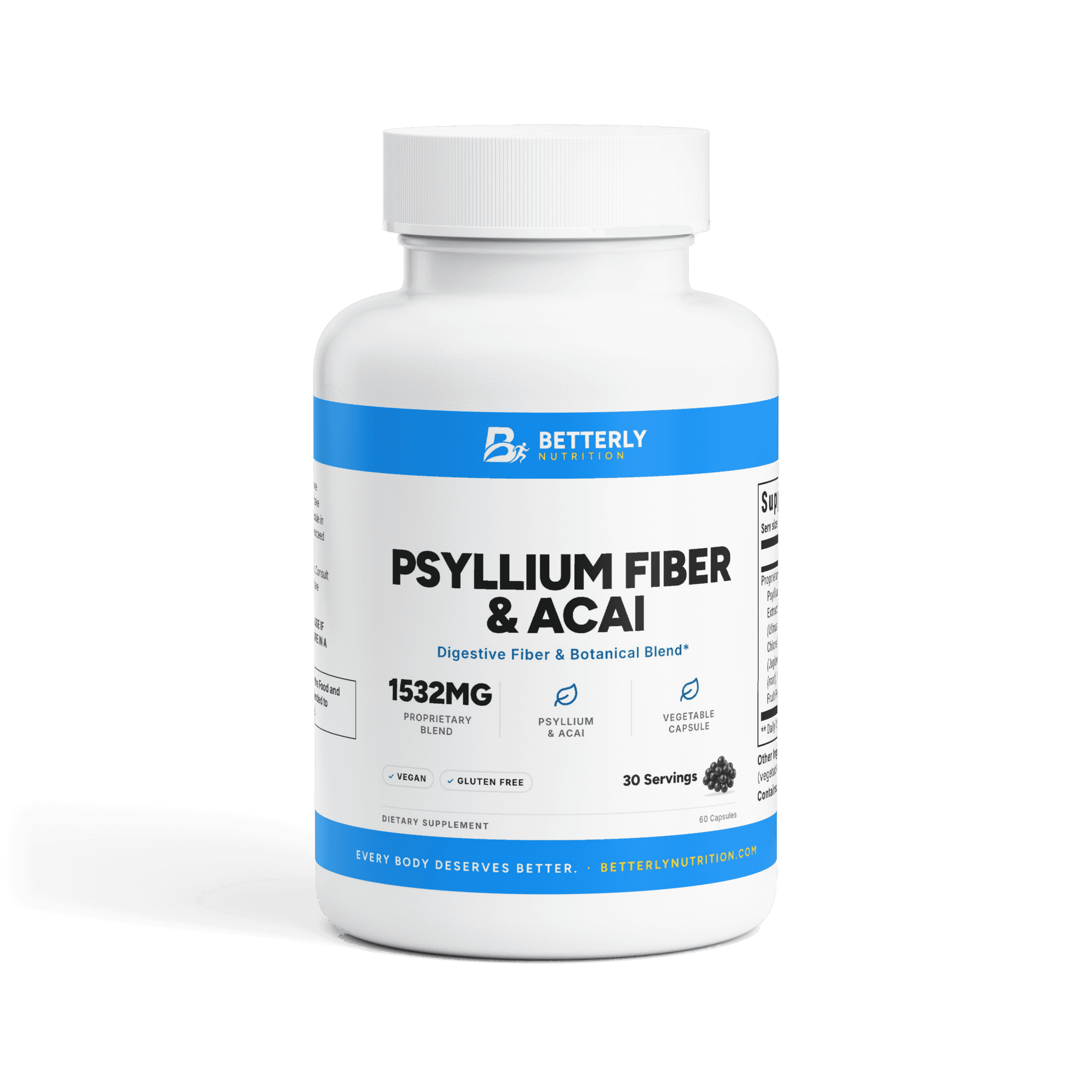
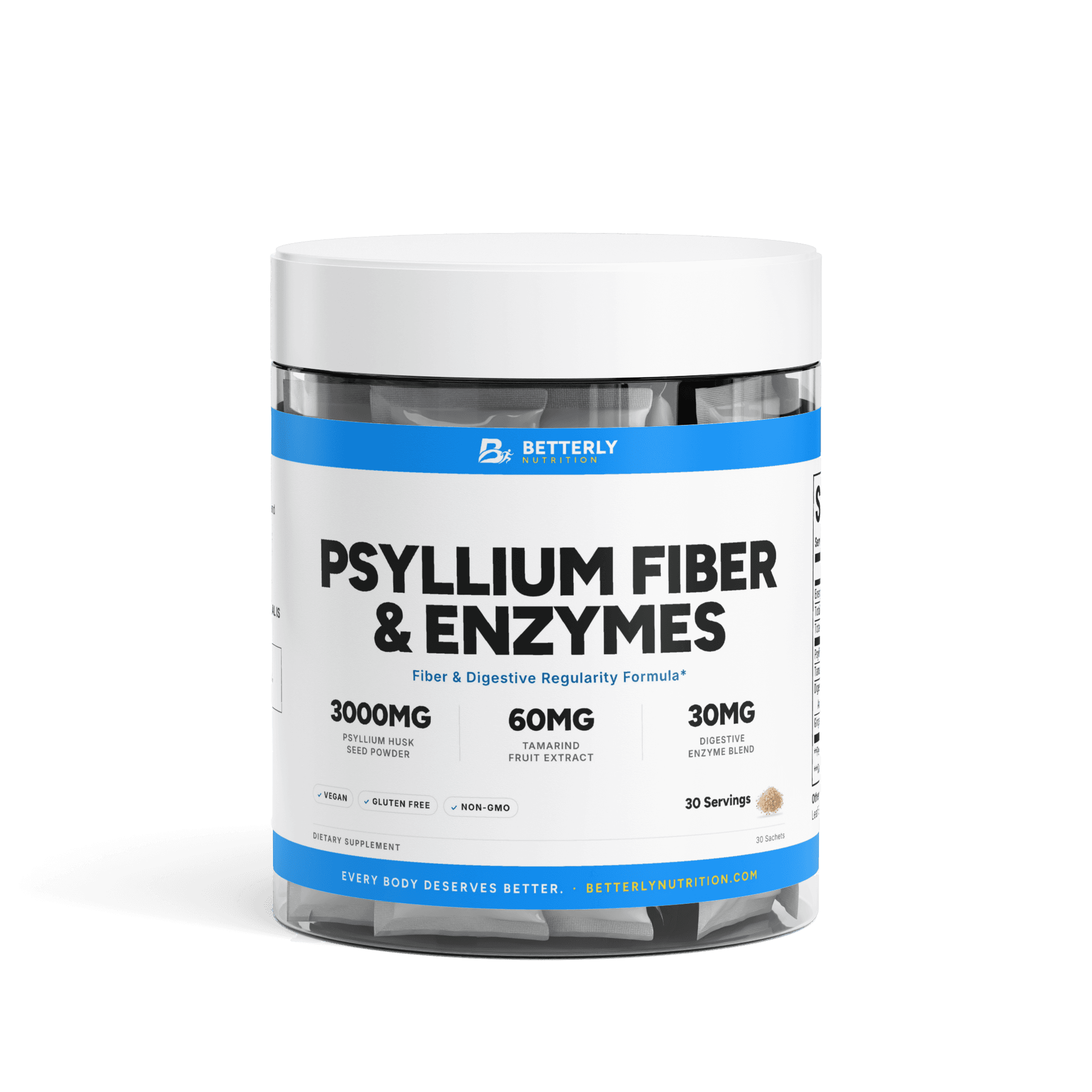
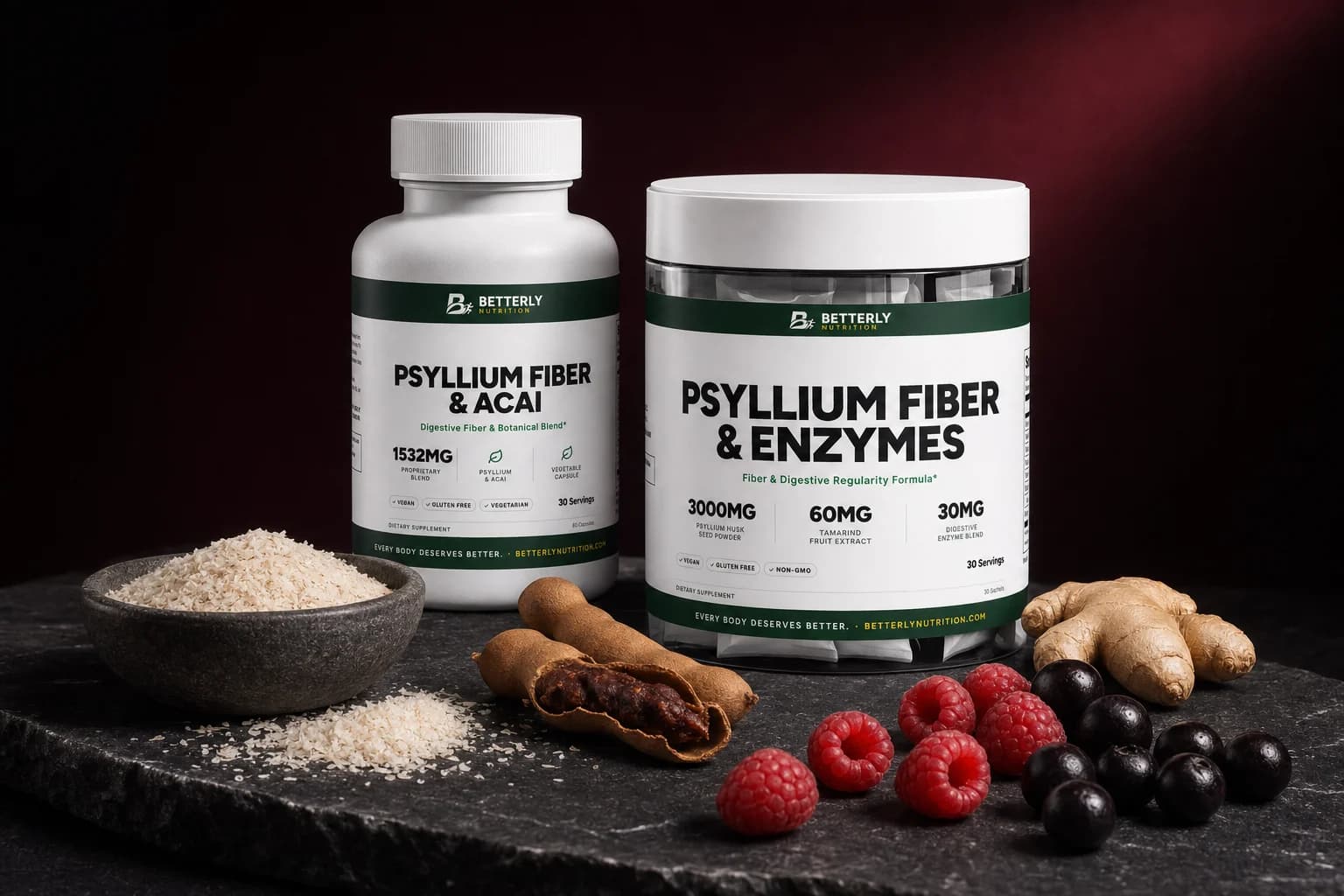
We sell two products that land on different sides of this question, so we have a stake in your answer. Psyllium Fiber & Digestive Enzyme Powder prints its psyllium amount. Psyllium Fiber & Acai Capsules hold psyllium and slippery elm together in one blend without saying how much of either, and that gap shapes the verdict below.
Key takeaways
- Psyllium husk comes from a seed coat and slippery elm from a tree's inner bark, yet both form a slippery gel when mixed with water.
- Psyllium husk is on the FDA's short list of isolated fibers that meet its dietary fiber definition, and slippery elm isn't.
- NIH's LiverTox database says no large-scale clinical trials have reported on side effects of slippery elm preparations.
- A proprietary-blend capsule that holds both can't tell you how much of each you're swallowing, and ours is one of them.
Slippery elm vs psyllium husk: what's the difference?
Psyllium husk is a seed-coat fiber you can measure on a label, while slippery elm is a tree's inner bark valued for its mucilage, with much less research behind it.
| Psyllium husk | Slippery elm bark | |
|---|---|---|
| Plant and part | Plantago ovata, seed coat | Ulmus rubra, inner bark |
| What makes it slick | Soluble fiber that swells | Mucilage |
| On FDA's isolated fiber list | Yes | No |
| Safety data we could verify | MedlinePlus cautions and spacing | LiverTox: no large trials |
| In our shop | 3,000 mg per sachet; unstated in the acai capsule | Unstated in the acai capsule; 40 mg extract in Ox Bile & Artichoke Capsules |
The two feel alike in a glass, and that's where the likeness ends. Psyllium has a federal fiber finding and a printed weight, while slippery elm has tradition and little measured data.
What is psyllium husk, and why does it turn to gel?
Psyllium husk is the seed coat of Plantago ovata, and it gels because its soluble fiber soaks up water and swells.
The MedlinePlus page on psyllium explains that it absorbs liquid in the intestines and swells. That swelling is why our sachet label says to drink the mix immediately. MedlinePlus also wants at least 8 ounces (240 milliliters) of liquid taken with each dose.
The FDA's Questions and Answers on Dietary Fiber names psyllium husk as one of seven isolated or synthetic fibers that meet its dietary fiber definition. That definition covers isolated fibers "determined by FDA to have physiological effects that are beneficial to human health."
Psyllium comes as loose husk, powder, sachets and capsules. The fiber stays the same across forms, while the amount per serving and the add-ins change.
What is slippery elm bark, and how much research backs it?
Slippery elm bark is the inner bark of Ulmus rubra, a North American tree, and the research behind it is thin compared with psyllium's.
NIH's LiverTox entry on slippery elm describes a medium-sized tree, also called red elm, native to the eastern and central United States and Canada. The name comes from the texture the inner bark takes on when it's chewed or mixed with water. LiverTox names mucilages, slick plant compounds that thicken in liquid, as the bark's apparent active ingredients, and adds that it's rich in tannins and resins too.
Slippery elm has a long history in Native American traditional use. LiverTox notes that over-the-counter preparations are still sold as demulcents, a word for substances that leave a slick film on whatever they touch.
LiverTox also says no large-scale clinical trials have reported on side effects of slippery elm preparations, and that the bark hasn't been formally assessed for liver effects. Tradition isn't the same as a measured dose tested in people.
Slippery elm doesn't appear on the FDA's dietary fiber page, either. That list covers isolated fibers only, and FDA's definition also counts fiber left naturally intact in plants, so the bark's absence doesn't mean it holds none. It means you can't count any. Slippery elm and psyllium lines both give ingredient weight, not grams of dietary fiber, but only psyllium husk is a listed fiber.
Can you take slippery elm and psyllium husk together?
Slippery elm and psyllium husk can share one product, as in ours, but no federal source we found studies the pair, so weigh each ingredient on its own.
Verified facts on the pairing are few. Both ingredients thicken in water, and LiverTox, our best federal source on slippery elm, doesn't discuss combining it with anything. So a combination carries two sets of notes: psyllium's liquid and medicine-spacing guidance from MedlinePlus, plus slippery elm's thin evidence. If you'd add them as separate products, starting one before the other gives any change a clear source.
How much slippery elm is in a psyllium blend capsule?
In Psyllium Fiber & Acai Capsules, slippery elm sits fourth in a 1,532 mg blend, so a 2-capsule serving holds an unstated amount of it, 383 mg at most.
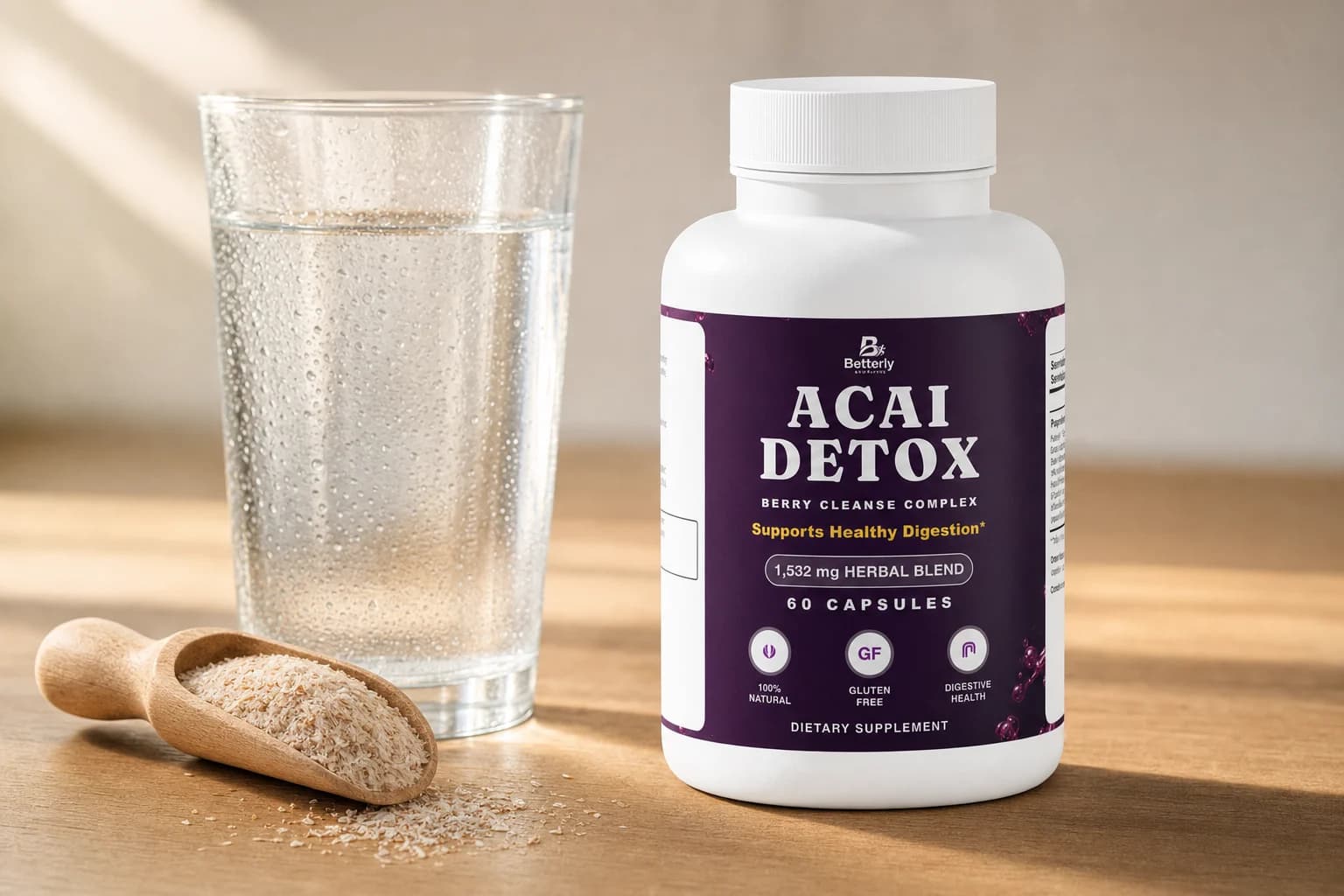
Per 2-capsule serving, the 1,532 mg proprietary blend lists psyllium powder (husk), acai berry extract, inulin, slippery elm bark, aloe ferox powder (printed "Alion 18%"), chlorella, black walnut hulls powder, ginger root, hyssop leaf, papaya fruit powder and lycopene 5%. No ingredient inside it gets its own weight.
Under the federal Supplement Facts rule, 21 CFR 101.36, a proprietary blend must list its ingredients "in descending order of predominance by weight." Apply that to this panel and you can bound two of the numbers:
- Psyllium, 1st of 11. Nothing in the blend outweighs it, so it's at least 1,532 ÷ 11, or about 139 mg, and possibly much more.
- Slippery elm, 4th of 11. Psyllium, acai and inulin each weigh at least as much, so slippery elm can't pass 1,532 ÷ 4, which is 383 mg.
- No floor. The panel sets no minimum for slippery elm, so it could sit well under 383 mg.
Even if the whole 1,532 mg were psyllium, which it isn't, one 2-capsule serving would hold about half the 3,000 mg of psyllium husk seed powder in a single sachet. Our explainer on how to read a blend's listing order runs the same math on other panels.
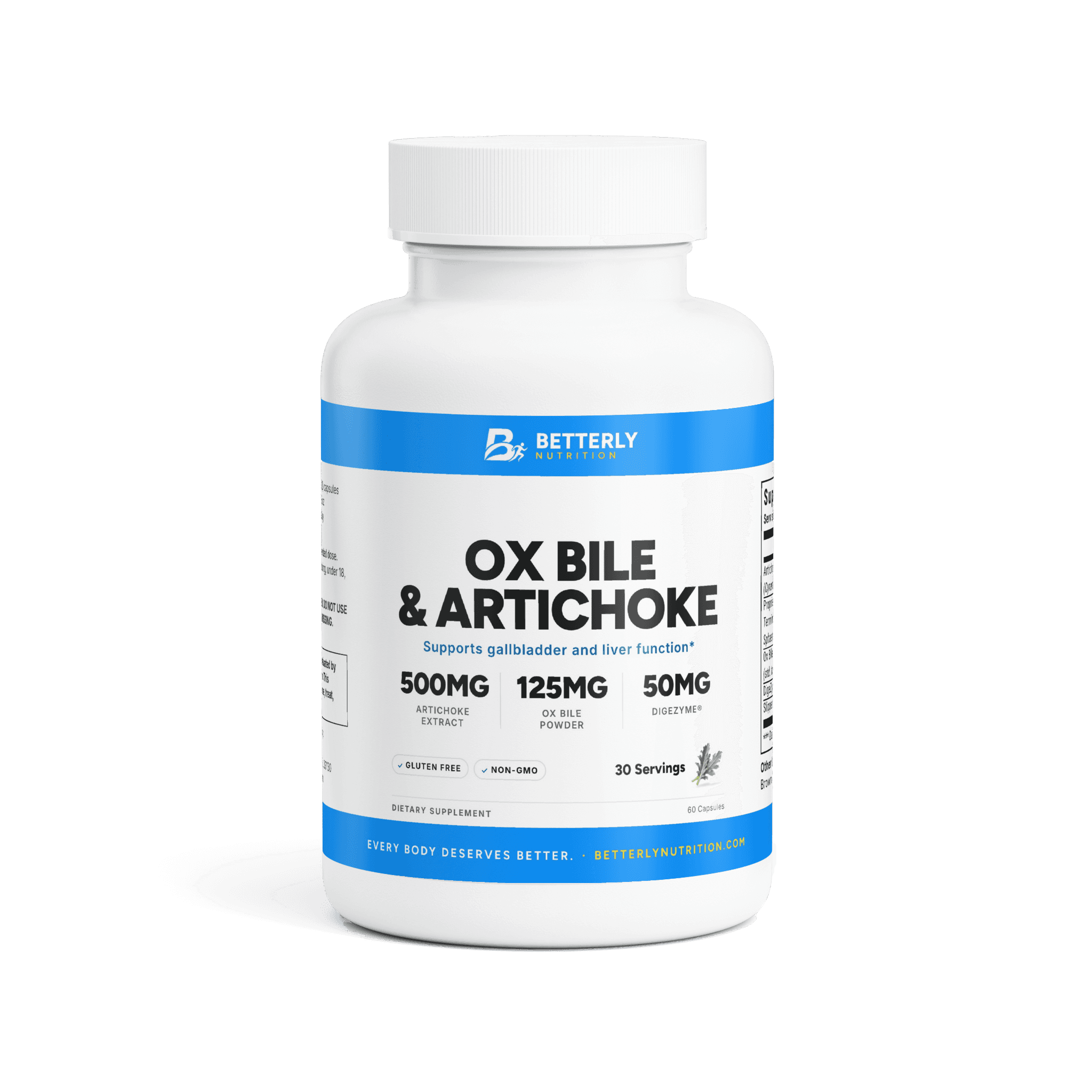
For contrast, Ox Bile & Artichoke Capsules print a slippery elm number: 40 mg of slippery elm bark extract per 2-capsule serving. It's a supporting ingredient in a gelatin capsule built around ox bile and artichoke, not a slippery elm product.
The aloe ferox row deserves a look before you buy, and our rundown of fiber capsule side effects explains why.
Which should you choose: slippery elm, psyllium or a blend?
Pick psyllium husk for a fiber with a printed weight, a single-ingredient slippery elm label for a stated bark amount, and a blend only when convenience matters most.
| If you want | Look for | The trade-off |
|---|---|---|
| A fiber with a printed amount | A psyllium label that prints mg or grams | A full glass of liquid every dose |
| Slippery elm on its own | A label with its own slippery elm line | Little research to guide the amount |
| Both in one daily capsule | A blend like our acai capsule | No amount for either ingredient |
| Fiber without a supplement | Oats, barley, beans and lentils | More planning at meals |
The more a label tells you, the easier it is to judge. If you came here for fiber, that points to a printed psyllium amount, which in our shop means the sachet, not the capsule.
Our other digestive formulas sit in the gut health and digestion collection.
From our shop: Psyllium Fiber & Digestive Enzyme Powder — 3,000 mg of psyllium husk seed powder per 1-sachet serving on its own panel line, in raspberry-flavored single-serve sachets.
How do you take our psyllium sachet and capsule?
Psyllium Fiber & Digestive Enzyme Powder and Psyllium Fiber & Acai Capsules carry very different directions, so follow the label of whichever one you buy.
| Label direction | Psyllium sachet | Acai capsule |
|---|---|---|
| Serving | 1 sachet, 1 to 2 times daily | 2 capsules a day, best split 1 by day and 1 in the evening |
| Liquid | 6.8 fl oz (200 mL) of water; consume immediately | Not given |
| Meals | Away from meals | Not mentioned |
| Medicine spacing | At least 2 hours apart | Not given |
| Upper limit | Don't exceed the recommended dose | No more than 2 capsules a day |
The sachet's label answers the water, meal and medicine questions for you. The capsule's label leaves all three open. MedlinePlus's minimum for any psyllium dose is 8 ounces (240 mL) of liquid, a little more than the sachet's 200 mL. For medicine timing, a pharmacist can match a gap to your own list.
Slippery elm adds nothing separate to schedule. In the capsule it rides in the same 2 capsules as the psyllium, at no more than 383 mg per serving by the blend math above, so the label's day-and-evening split covers both.
Beside its psyllium, the sachet's panel carries 15 mg of ginger root extract, 60 mg of tamarind fruit extract and a 30 mg digestive enzyme blend per 1-sachet serving. Its label claims vegan, gluten free and non-GMO. The capsule bottle holds 30 servings.
From our shop: Psyllium Fiber & Acai Capsules — psyllium husk, slippery elm bark and nine more ingredients in a 1,532 mg blend per 2-capsule serving, in vegan vegetable capsules.
When don't you need slippery elm or psyllium husk?
Skip slippery elm and psyllium husk products like ours if you need a stated slippery elm amount, already take psyllium, or avoid tree nuts or aloe.
- You picked slippery elm for its slick feel, yet a listed fiber is what you're after. The bark isn't one, so it answers a different question.
- A psyllium powder or husk is already in your routine. Our acai capsule would pile a second helping of psyllium on top, in an amount its panel never states.
- Tree nuts or aloe are off your list. The acai capsule declares black walnut hull and puts aloe ferox powder in its blend.
- You want slippery elm alone, with a number. We don't sell a stand-alone slippery elm product, so you'd need to shop elsewhere.
We'd rather you buy nothing than buy a blend expecting a slippery elm dose it never states.
Who should check with a healthcare provider first?
Talk to a provider before starting slippery elm or psyllium husk if you're pregnant, nursing, under 18, managing a medical condition or taking any medication.
The capsule's caution names the first four: pregnancy, nursing, age under 18 and a medical condition. The medication check is the sachet's, whose caution wants a physician consulted before use, or whenever you're on any medication.
Psyllium has the most federal guidance. MedlinePlus says to keep digoxin, aspirin (salicylates) and nitrofurantoin at least 3 hours away from it, and our sachet asks for a 2-hour gap from any medication. MedlinePlus also wants your doctor told about any past trouble swallowing, and it warns that breathing in the powder while mixing can cause allergic reactions. The sachet's label rules it out for children under 12.
MedlinePlus covers psyllium as an over-the-counter medicine and limits that use to 1 week unless a doctor says otherwise. Both of our labels are written for daily use, so if you plan to keep going, raise that mismatch with your provider. Call a doctor right away, MedlinePlus says, for trouble breathing or swallowing, stomach pain, a rash, itching, nausea or vomiting.
Slippery elm has far less to go on. LiverTox mentions rare skin allergy reports, and we found no federal page with an interaction rule for it, so have a pharmacist check it against what you already take.
The acai capsule's blend adds its own checks. Its Contains line declares tree nuts (black walnut hull), and its aloe ferox leaf powder is worth raising if anything else you take lists aloe.
FAQ: slippery elm vs psyllium husk
Is slippery elm better than Metamucil?
Not if you want a listed fiber, because slippery elm doesn't do the same job as Metamucil. Metamucil is built on psyllium husk, and the two powders in our label-by-label look at Metamucil add flavor and sweetener. Slippery elm is a tree bark with a traditional reputation, little research and no spot on the FDA's isolated fiber list. For a listed fiber in a stated amount, psyllium in any form is the clearer choice.
Can slippery elm replace psyllium husk?
Slippery elm can't stand in for psyllium husk if you want a listed fiber in a known amount. Both turn slippery in water, so they can seem interchangeable. Psyllium, though, is on the FDA's isolated fiber list and labeled by weight. A slippery elm row gives you bark or extract weight only, like the 40 mg extract line on our ox bile capsule, with no fiber finding behind it.
When should you take slippery elm and psyllium husk?
Take slippery elm and psyllium husk on the schedule your product's label sets. Our sachet's directions say 1 to 2 servings daily, away from meals, and its caution asks for at least 2 hours from medication. MedlinePlus sets 3 hours for digoxin, aspirin (salicylates) and nitrofurantoin. Our capsule, which holds both ingredients, suggests 1 capsule during the day and 1 in the evening, with no more than 2 a day.
Does slippery elm interact with medications?
Slippery elm's drug interactions aren't spelled out in the federal sources we could verify, so ask a pharmacist before pairing it with medicine. LiverTox, the NIH resource we used for slippery elm, focuses on liver safety. Psyllium is better documented, since MedlinePlus names medicines to keep 3 hours away from it.
Is slippery elm safe to take every day?
There's no firm yes for slippery elm, because no federal source we found sets a safe daily amount. NIH's LiverTox says no large-scale clinical trials have reported on its side effects, and that it hasn't been formally assessed for liver effects. Despite common use, no published case reports tie it to liver injury, and LiverTox rates it an unlikely cause. It also notes rare skin allergy reports. If you use it daily, stay within your label's directions and ask a provider.
Sources
- Psyllium, MedlinePlus Drug Information, National Library of Medicine
- Questions and Answers on Dietary Fiber, U.S. Food and Drug Administration
- Slippery Elm, LiverTox, National Institutes of Health (NCBI Bookshelf)
- 21 CFR 101.36: Nutrition labeling of dietary supplements, Electronic Code of Federal Regulations
If this left you looking for somewhere to start, read psyllium and slippery elm capsules — its amounts per serving are listed on the page. For the practical questions this raises, how dosing, sourcing and subscriptions work is answered in one place.