On this page
- Key takeaways
- What is acai, and where does the berry come from?
- What are the proven benefits of acai berry capsules?
- Why is acai linked to so many misleading ads?
- How much acai does an acai berry capsule contain?
- Should you buy our Psyllium Fiber & Acai capsule for the acai?
- How should you take acai berry capsules?
- What are the side effects of acai berry capsules?
- When don't you need an acai supplement?
- Who should check with a healthcare provider first?
- FAQ: acai berry capsules
- Sources
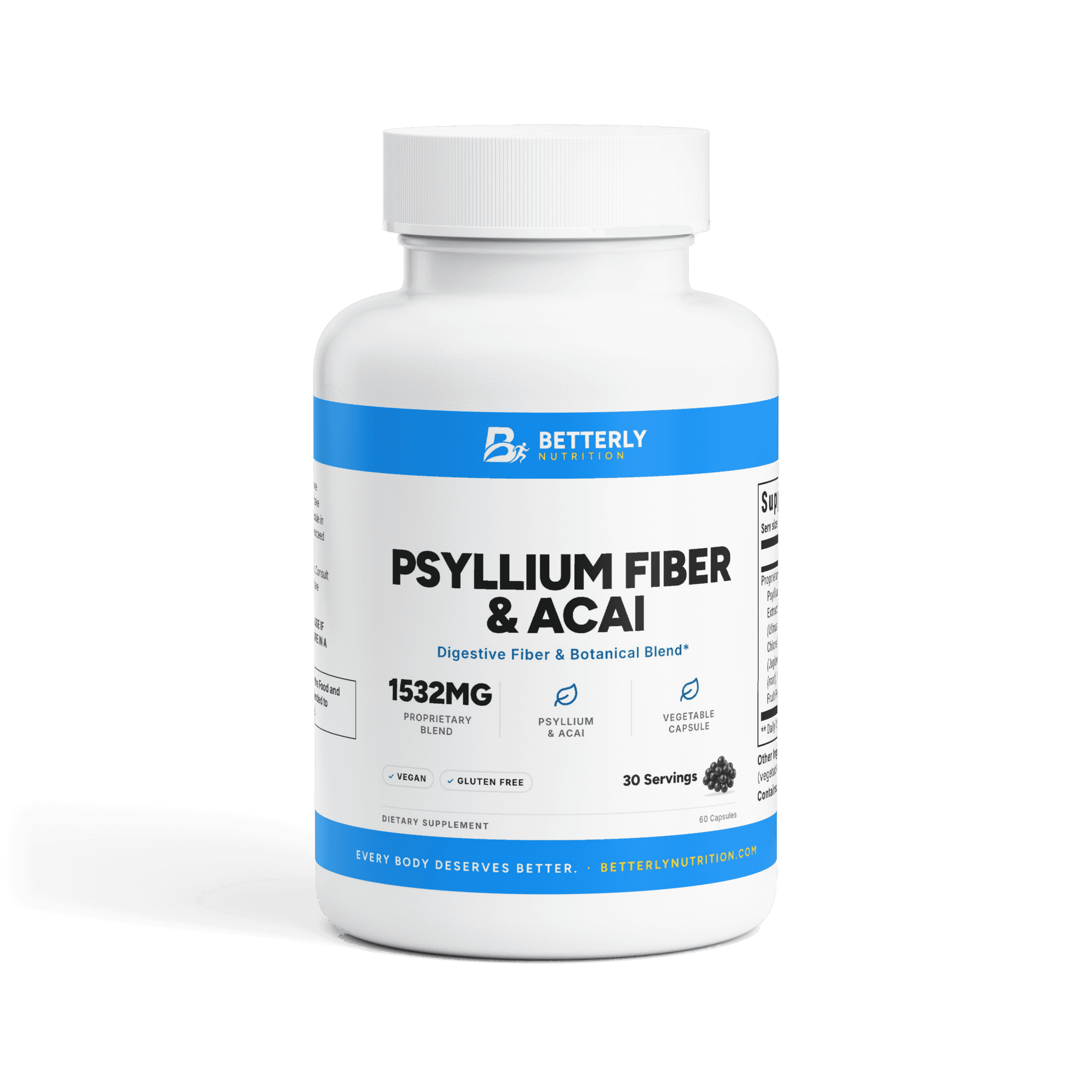
The short answer: Acai berry capsule benefits are unproven in people. The National Center for Complementary and Integrative Health (NCCIH) says there isn't enough reliable information to know whether acai helps with any health-related purpose. The purple palm fruit does carry anthocyanin compounds, but once acai goes into a blend, the label doesn't have to say how much. Our Psyllium Fiber & Acai Capsules list acai berry extract inside a 1,532 mg blend with no amount of its own.
Key takeaways
- Acai (Euterpe oleracea) is the dark purple fruit of a palm native to Central and South America, and very little research has tested acai products in people.
- USDA's flavonoid database lists frozen purple acai at about 62 mg of cyanidin per 100 g, while white acai, a single data point, came in under half a milligram.
- The Federal Trade Commission went after marketers who sold acai weight-loss supplements through fake news websites, so big acai promises deserve suspicion.
- Our Psyllium Fiber & Acai Capsules list acai second in a 1,532 mg blend per 2-capsule serving, which caps it at 766 mg but guarantees no minimum.
A word before we start: we sell three products with acai on the panel (a fiber capsule, a reds powder and a greens powder), and none of them prints an acai amount. Read this as a label guide first and a shop page a distant second.
What is acai, and where does the berry come from?
Acai is the round, dark purple fruit of the acai palm, Euterpe oleracea, a tree native to tropical Central and South America.
NCCIH's acai fact sheet says the fruit has long been an important food for Indigenous people there. It's pronounced "AH-sigh-EE." In US stores it shows up as frozen pulp, juice, freeze-dried powder or dried extract, and a capsule holds one of the dried forms.
Color turns out to be a decent clue. The USDA Database for the Flavonoid Content of Selected Foods reports anthocyanins as their base compounds, called aglycones, and for acai that's mainly cyanidin. Per 100 g of the edible portion:
- Frozen purple acai averaged 61.94 mg of cyanidin across 6 data points, ranging from about 24 mg to 162 mg.
- Fresh purple acai averaged 53.64 mg across 4 data points.
- A freeze-dried pulp and skin powder, from a single data point, held about 201 mg of cyanidin plus about 4 mg of peonidin.
- Frozen white acai, also a single data point, held 0.48 mg.
Purple matters, and within frozen purple acai the highest data point was several times the lowest. The word "acai" on a label can't tell you which end of that range you're holding.
What are the proven benefits of acai berry capsules?
No benefit of acai berry capsules has been proven in people. NCCIH says there isn't enough reliable information to say whether acai might help with any health-related purpose.
Here's what else NCCIH's page reports, as of its November 2024 update:
- Lab studies point to possible antioxidant properties, but a lab dish can't show what a capsule does in your body.
- Several small studies found acai pulp improved antioxidant defenses in people. They used pulp, the fruit's flesh, not a dried extract in a capsule.
- No studies in people published in peer-reviewed journals in the previous 5 years back up claims that acai promotes weight loss.
What's left? Acai is a traditional food, and USDA has measured the flavonoids in its purple pulp. That record belongs to the fruit. Our plain-English guide to polyphenol supplements explains where flavonoids fit.
Why is acai linked to so many misleading ads?
Acai's reputation took a beating from fake news websites that pushed acai weight-loss supplements, and the Federal Trade Commission took their operators to court.
According to the FTC's February 2013 announcement, federal courts temporarily halted 10 of these online operations in 2011 at the agency's request. The FTC alleged the sites were dressed up as news but were really ads, built around "reporters" describing their own acai results. The FTC's complaints said the sites often falsely claimed their stories had been seen on major media outlets.
That sweep, plus two related cases against affiliate networks, ended with defendants agreeing to pay more than 9.4 million dollars to settle the charges. The FTC adds that a settlement isn't an admission of breaking the law.
How much acai does an acai berry capsule contain?
An acai berry capsule contains whatever its Supplement Facts panel states, and when acai sits inside a blend, that panel gives you only an upper limit.
Start with the word "extract." When a panel lists acai berry extract, the federal labeling rule at 21 CFR 101.36 counts the dried extract itself, so "500 mg acai extract" means 500 mg of finished extract, not 500 mg of berries.
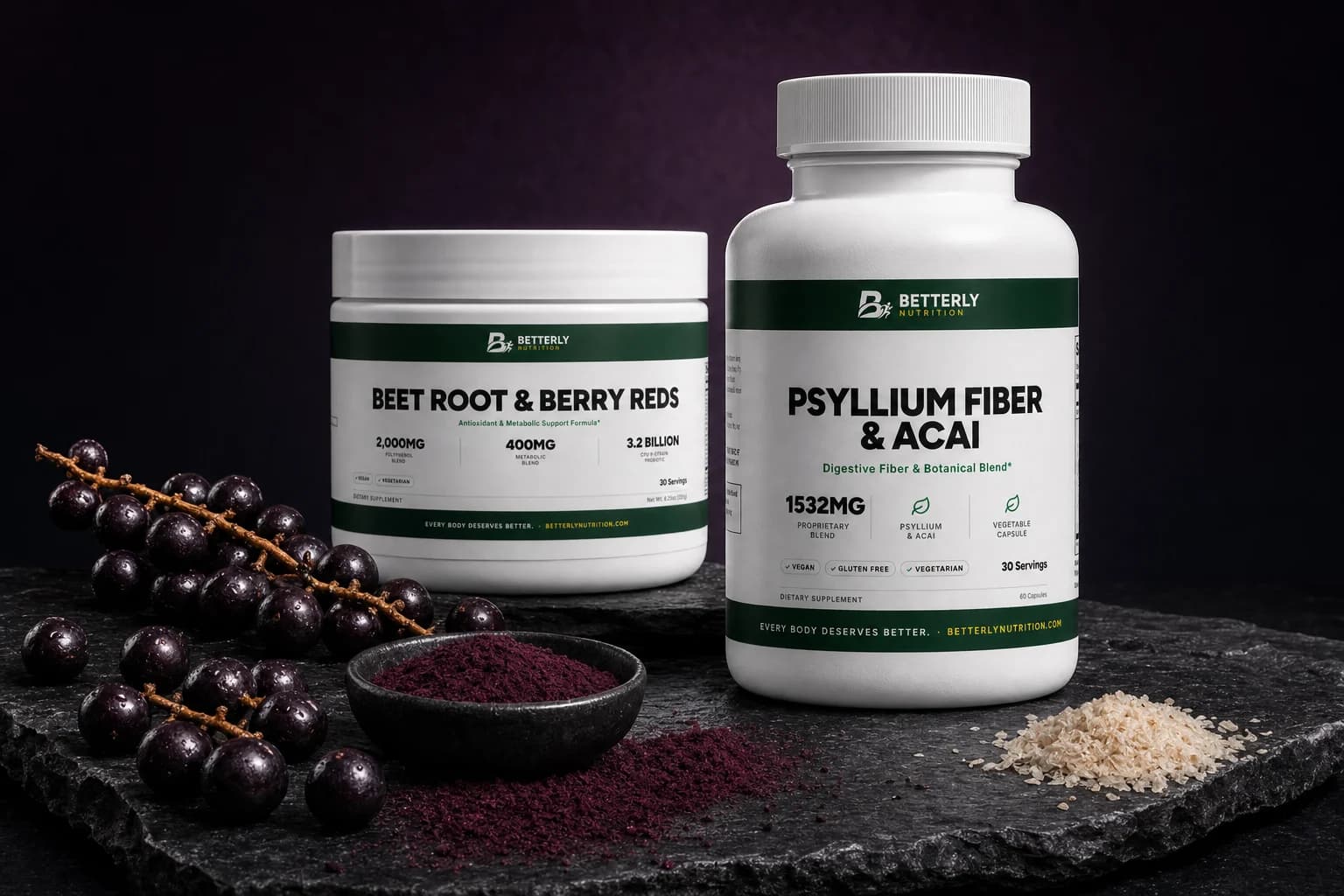
A blend hides acai a different way. The same rule makes a blend list its ingredients heaviest first, so acai's spot in line sets its ceiling. On our capsule, acai berry extract comes 2nd of 11. Psyllium, 1st, has to weigh at least as much, so acai can't pass half of 1,532 mg, or 766 mg.
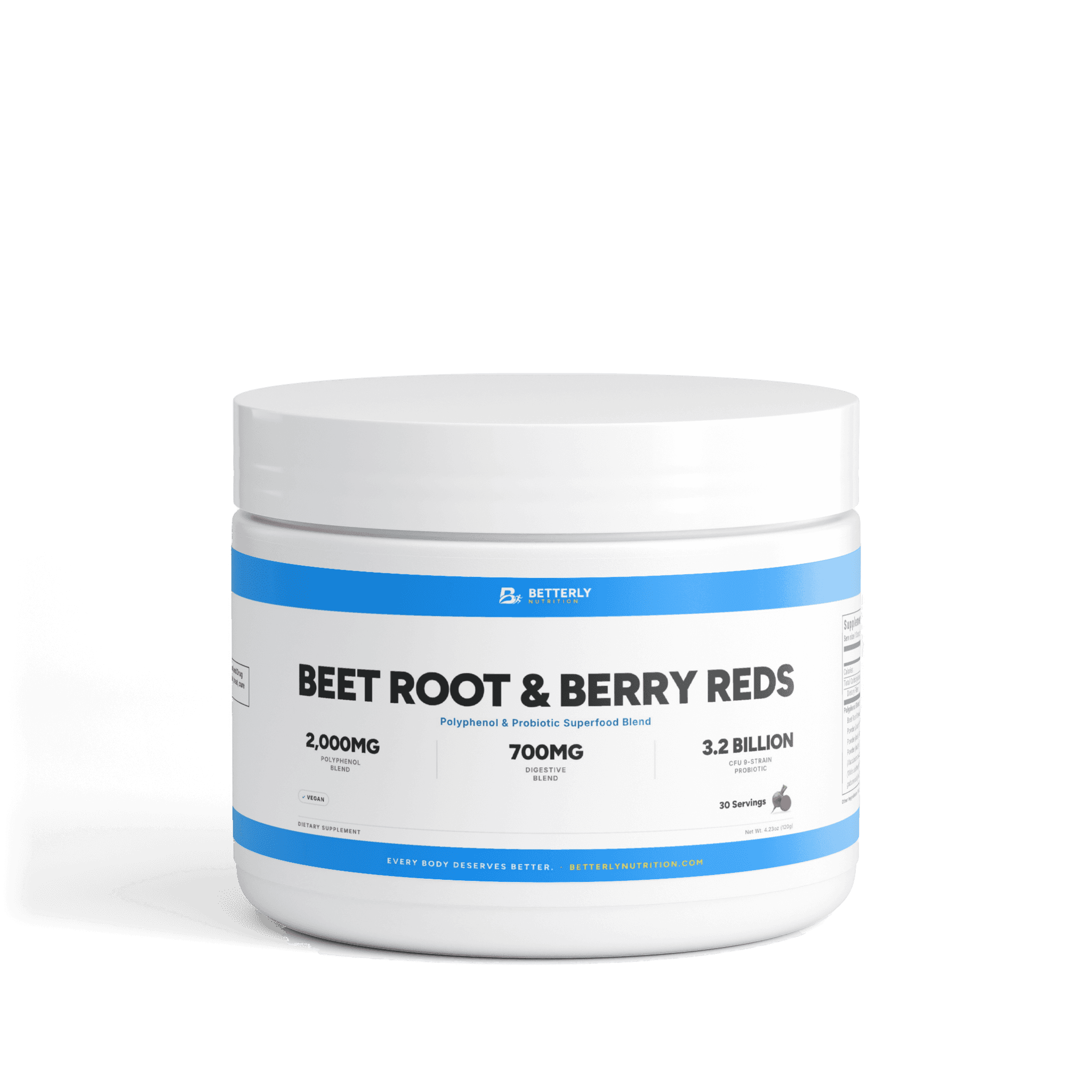
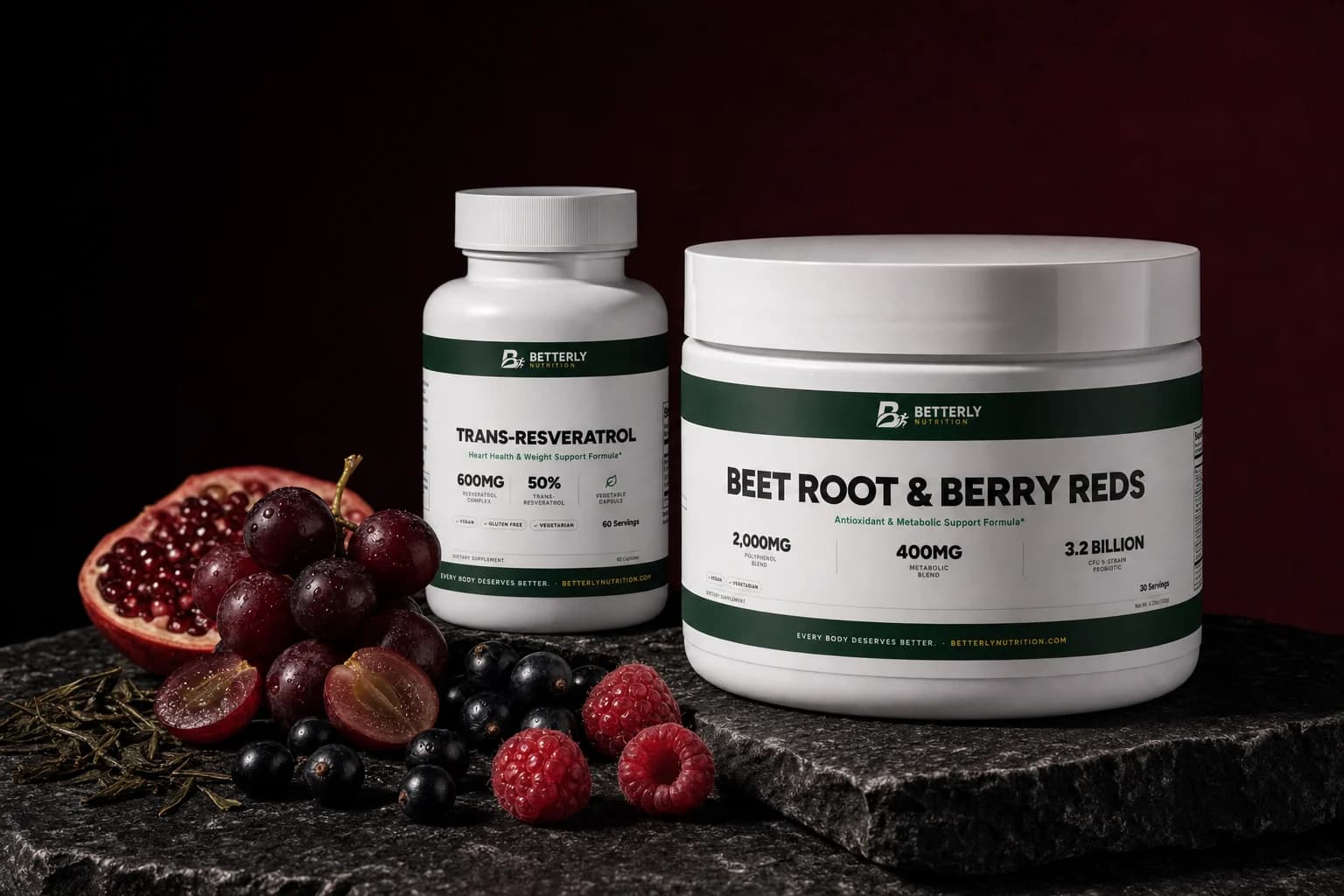
Our reds powder puts acai juice powder 6th, behind five plants that each weigh at least as much. Splitting 2,000 mg six ways caps acai at about 333 mg. No spot in line sets a floor. Our proprietary blend primer runs the same division on other labels. Here's each ceiling, next to plain frozen fruit:
| Product and serving | How acai appears | Most acai the label allows |
|---|---|---|
| Psyllium Fiber & Acai Capsules, 2 capsules | Acai berry extract, 2nd of 11 in a 1,532 mg blend | 766 mg, no floor |
| Beet Root & Berry Reds Powder, 1 scoop (4 g) | Acai juice powder, 6th of 11 in a 2,000 mg blend | About 333 mg, no floor |
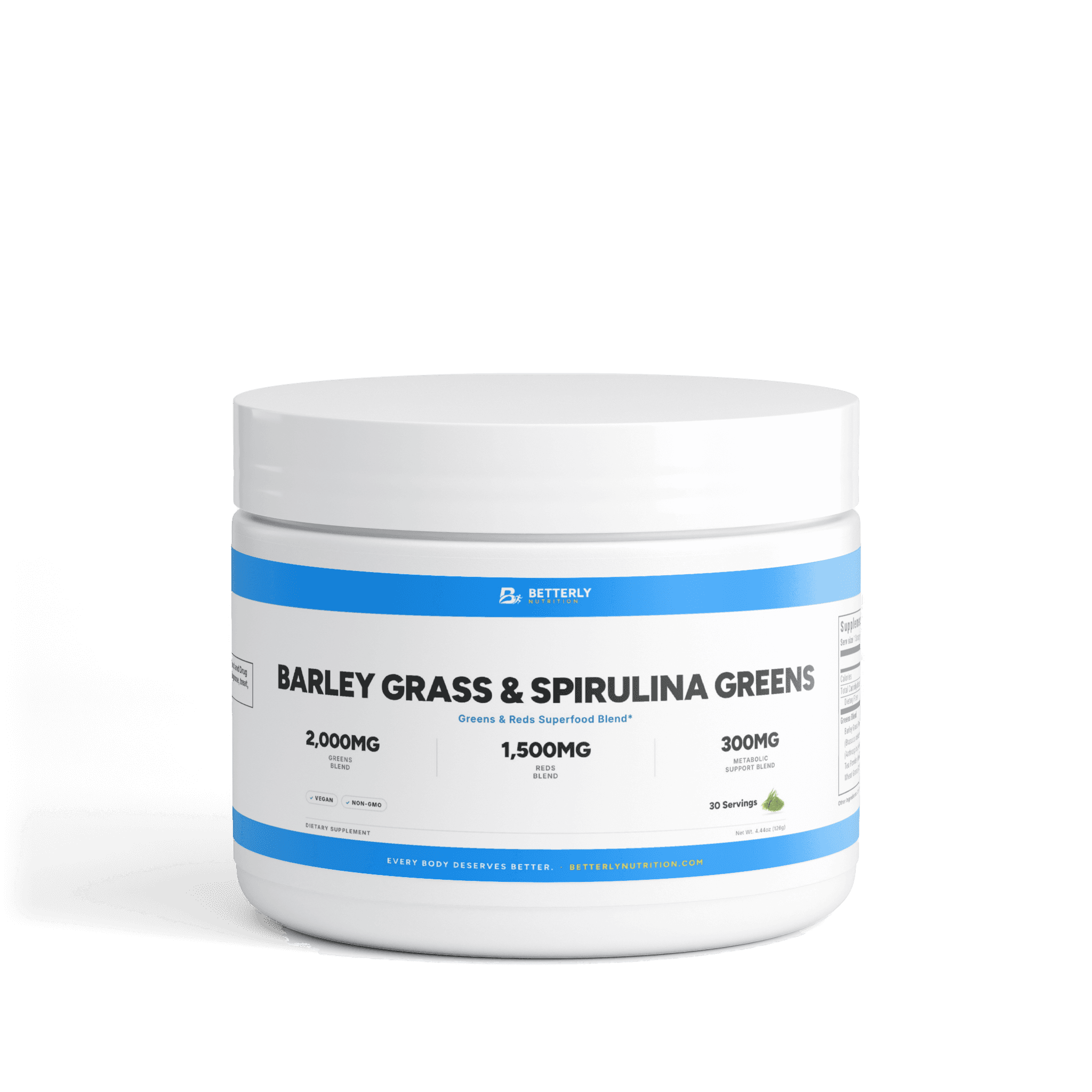
| Barley Grass & Spirulina Greens Powder, 1 scoop (4.2 g) | Acai juice powder, 5th of 7 in a 1,500 mg blend | 300 mg, no floor |
| Frozen purple acai, 100 g | The fruit itself | 100 g of fruit, about 62 mg cyanidin on USDA's average |
None of our three products can tell you how much acai you're getting, only a ceiling. For a known acai amount, look for a product with its own acai milligram line, or buy the fruit.
Reading the acai line on a pack
The front of an acai pack sells the berry. The back tells you what you're buying, so find the acai line and look for four details:
- The species and part. Look for Euterpe oleracea (fruit). The FDA rule points botanical listings to the part of the plant used.
- The form. Extract, juice powder, whole fruit powder and pulp aren't interchangeable.
- A milligram line of its own. An amount you can read beats a blend that only caps it.
- Strength details. An extract with no ratio and no stated compound percentage can't be compared with anything.
Should you buy our Psyllium Fiber & Acai capsule for the acai?
No. Buy our Psyllium Fiber & Acai Capsules only if you want a psyllium-led fiber and botanical blend, because the acai inside has no stated amount.
Per 2-capsule serving, psyllium husk powder comes first, so it's the largest single ingredient. Acai berry extract (fruit) is second and inulin, another fiber, is third. Eight more ingredients follow, including slippery elm bark, chlorella, black walnut hull and aloe ferox leaf powder listed at 18% aloin (printed "Alion" on the panel).
The shell is hypromellose (a vegetable capsule), with magnesium stearate as the only other added ingredient. The label claims vegan and gluten free.
Two rows deserve attention. The label declares a tree nut allergen, black walnut hull. And the aloe ferox is sold on its aloin content, which brings its own cautions. Our guide to fiber capsule side effects covers both.
It suits someone who wants capsule-format psyllium inside a botanical mix and is fine with unmeasured amounts of each part. For other digestion options, browse our gut health and digestion collection.
From our shop: Psyllium Fiber & Acai Capsules — 60 vegan, gluten-free capsules with psyllium husk listed first and acai berry extract second in a 1,532 mg blend per 2-capsule serving.
How should you take acai berry capsules?
Take acai berry capsules only as their own label directs. For ours, that's 2 capsules a day and never more.
The label's suggested use is 2 capsules once a day, and for best results it suggests splitting them: 1 during the day and 1 in the evening. It also says, "Do not exceed two capsules per day." That's 30 days from a 60-capsule bottle.
Quick answers:
- How many a day? Two, on ours. Any other brand's label sets its own ceiling.
- What's the best time? Ours splits the serving between daytime and evening.
- Missed a day? Just carry on the next day. The limit is per day, so never double up.
- Water? Our label sets no liquid amount. Psyllium leads the blend, and MedlinePlus's psyllium page says to drink at least 8 ounces (240 milliliters) of liquid when you take it, so have a full glass with each capsule. Our fiber guide above goes further.
Our label gives no spacing from medicines, so ask your pharmacist how to time the two.
What are the side effects of acai berry capsules?
Acai berry capsules have little safety research behind them. NCCIH says acai pulp has been used safely for up to 3 months in clinical research, but acai's safety is understudied.
NCCIH flags four specific cautions:
- Raw acai fruit and juice can carry parasites, and in rare cases raw juice has been linked to outbreaks of a parasitic illness.
- Acai might affect the results of an MRI of the digestive tract.
- Early research suggests acai could interact with at least one class of prescription medicine.
- Little is known about whether acai is safe during pregnancy or while breastfeeding.
In a blended capsule, acai usually isn't the ingredient to watch. In ours, the two fibers, the aloe ferox and the black walnut hull each carry their own cautions. If anything feels off after you start, stop and check in with your provider.
When don't you need an acai supplement?
An acai supplement adds little for you when the fruit itself appeals more, when you track psyllium by the gram, or when a weight pitch is what brought you here.
- You're after the fruit. Frozen purple acai comes in grams, not milligrams, and USDA has real numbers for it.
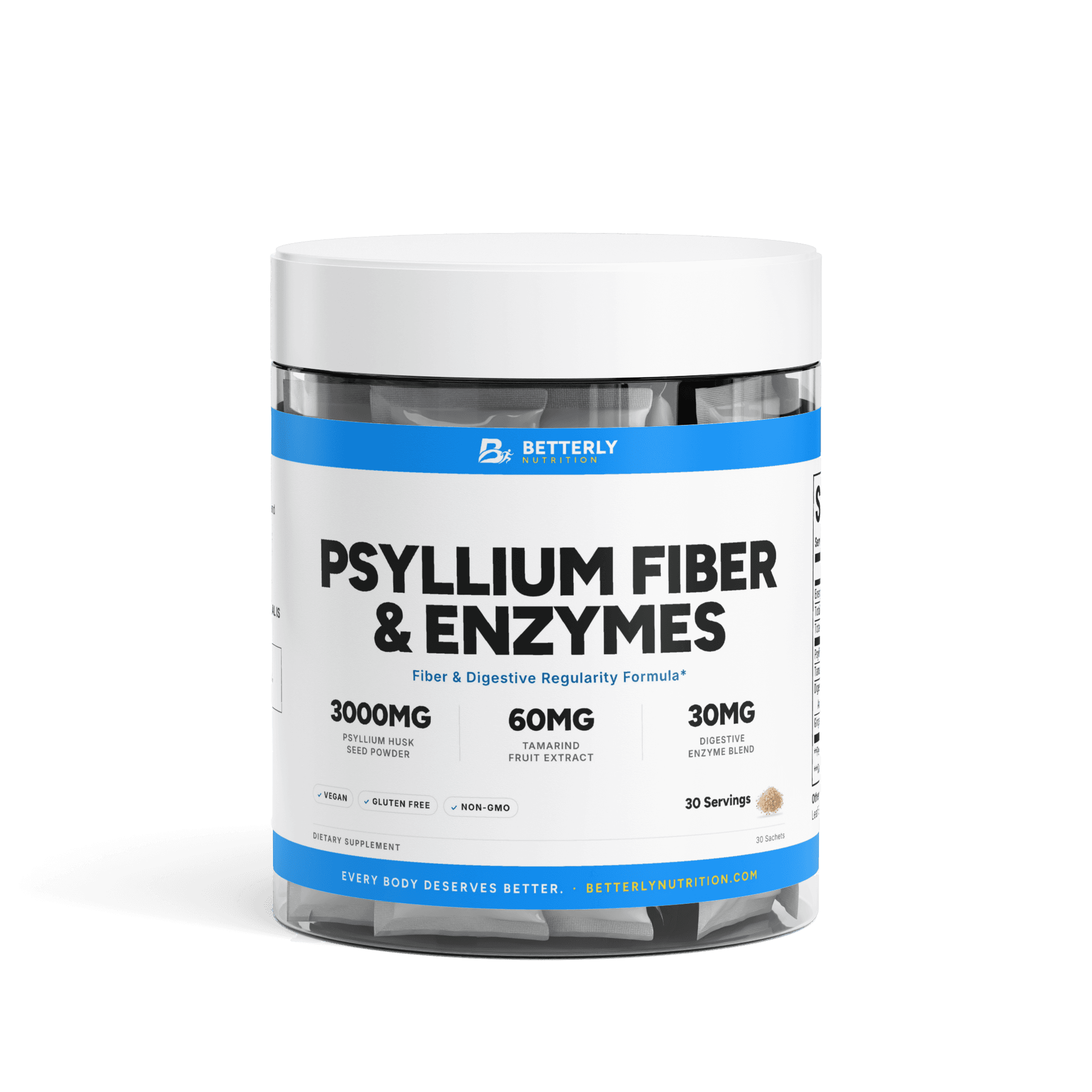
- You count psyllium in grams. Our blended capsule never states its psyllium share, but each 1-sachet serving of our Psyllium Fiber & Digestive Enzyme Powder prints its own 3,000 mg psyllium husk seed powder line.
- The pitch was about weight. Given the FTC history above, close the tab.
- You already eat plenty of dark purple fruit. Nothing on NCCIH's page suggests acai outranks it.
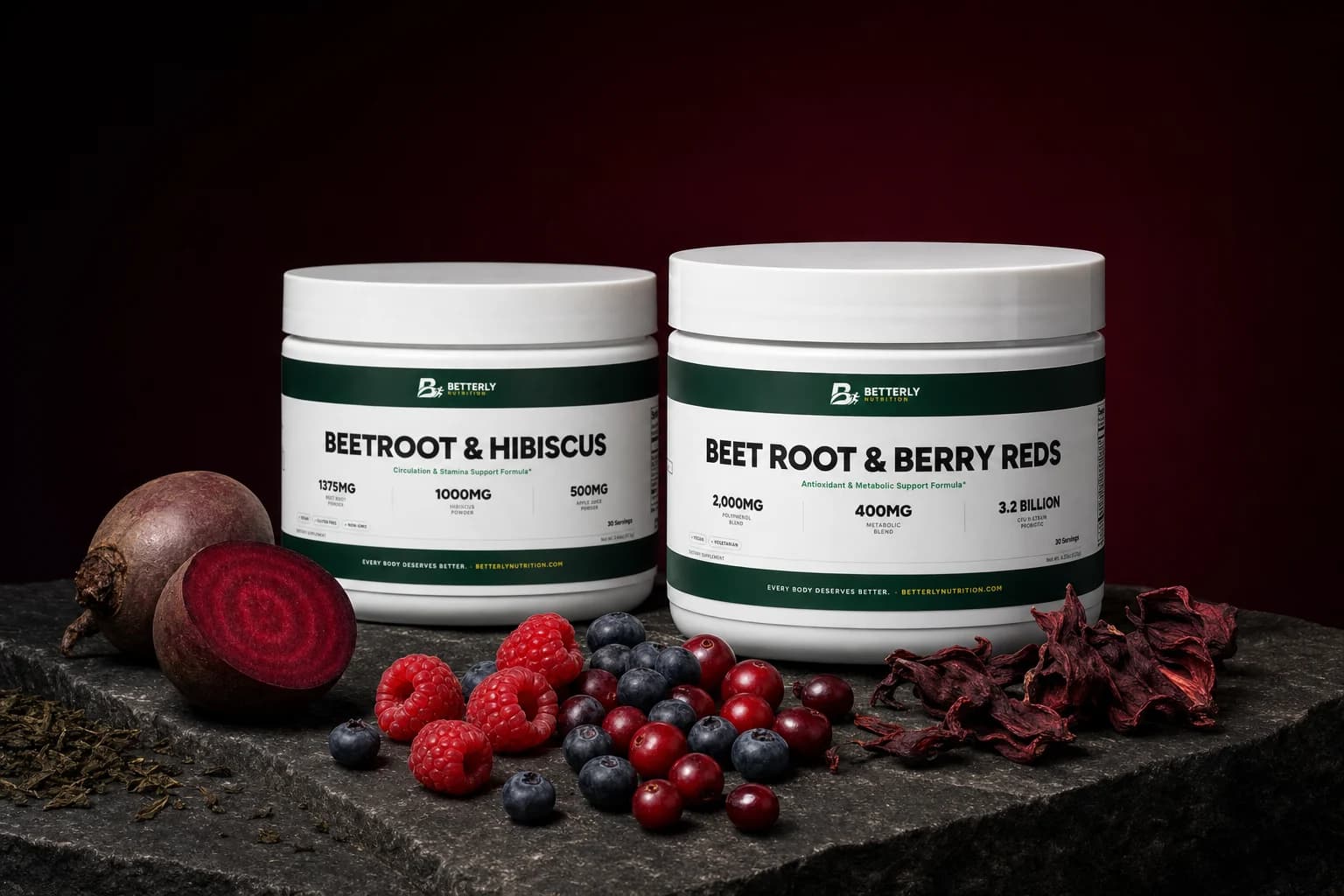
Want acai as one fruit among many in a drink? Our reds powder is a beet-and-berry mix, not an acai product, with acai sixth of 11 plants. Beyond its 2,000 mg Polyphenol Blend, each 4 g scoop holds a 400 mg Metabolic Blend with green tea powder, a 9-strain probiotic and a 700 mg Digestive Blend. Its label says to stir 1 scoop into 6 to 8 ounces of cold water or a favorite drink once daily.
From our shop: Beet Root & Berry Reds Powder — a beet-and-berry scoop whose 2,000 mg Polyphenol Blend includes acai juice powder, with 2 g of dietary fiber per 4 g serving.
Who should check with a healthcare provider first?
Ask a healthcare provider before taking acai berry capsules if you're pregnant or breastfeeding, under 18, on any medicine, due for an MRI or living with a health condition.
- Pregnant or breastfeeding: our capsule's caution names both, and NCCIH says little is known about acai's safety in either case.
- Under 18, or living with a medical condition: our label's caution tells you to see a physician before use.
- Taking any medicine: NCCIH tells anyone on medication to talk with a provider before using acai or other herbal products, since certain herb and drug combinations can cause harm.
- Scheduled for an MRI: NCCIH says acai might affect imaging of the digestive tract.
- Allergic to tree nuts: skip our capsule, because its label declares black walnut hull.
FAQ: acai berry capsules
Does the FDA approve acai berry capsules?
No. The FDA doesn't approve acai berry capsules, or any other dietary supplement, before they're sold. NCCIH explains that supplement makers and distributors are responsible for checking the safety and labeling of their own products before marketing, and that the FDA can act when a safety concern comes up.
What does 500 mg mean on an acai capsule?
A 500 mg acai line means 500 mg of whatever acai form the label names. For a dried extract, FDA's labeling rule counts the weight of the finished extract, not the berries that went into it. Without an extract ratio or a stated compound percentage, one brand's 500 mg can't be compared with another's. Whole fruit powder at 500 mg is simply half a gram of dried acai.
Is acai berry extract better than acai powder?
Acai berry extract isn't better than acai powder by default. What matters is whether the label tells you how much you're getting and how strong it is. USDA lists about 201 mg of cyanidin per 100 g for a freeze-dried acai powder, from a single data point, over three times its frozen purple average. An extract might be stronger or weaker, and without a ratio on the panel, you can't tell.
Can you take acai berry capsules every day?
Acai berry capsules can be taken daily when the label directs it, as ours does, but long-term safety data on acai supplements is thin. NCCIH notes acai pulp has been used safely for up to 3 months in clinical research. Planning to go longer? Raise it with your provider, and keep to the label's limit, which is 2 a day on ours.
Is frozen acai better than acai capsules?
Frozen purple acai gives you far more actual fruit by weight than a capsule, and USDA averaged about 62 mg of cyanidin per 100 g of it. Check frozen packs for added sugars. Capsules mainly win on convenience, and a blended one may hold only a small share of acai.
Sources
- Acai: Usefulness and Safety, National Center for Complementary and Integrative Health
- FTC Permanently Stops Fake News Website Operator that Allegedly Deceived Consumers about Acai Berry Weight-Loss Products, Federal Trade Commission, February 7, 2013
- USDA Database for the Flavonoid Content of Selected Foods, Release 3.3, USDA Agricultural Research Service
- 21 CFR 101.36, Nutrition labeling of dietary supplements, Electronic Code of Federal Regulations
- Psyllium, MedlinePlus Drug Information
If this left you looking for somewhere to start, read acai and psyllium fiber capsules — its amounts per serving are listed on the page. For the practical questions this raises, how dosing, sourcing and subscriptions work is answered in one place.