On this page
- Key takeaways
- Milk thistle vs dandelion root: what's the actual difference?
- Dandelion leaf vs root: is it the same herb in a different form?
- Milk thistle vs dandelion benefits: is either better for liver support?
- Can you take milk thistle and dandelion root together?
- How much milk thistle and dandelion is in our liver capsule?
- Milk thistle or dandelion root: which fits your situation?
- How should you take these capsules, going by the label?
- When don't you need milk thistle or dandelion at all?
- Who should check with a healthcare provider first?
- FAQ: milk thistle and dandelion
- Sources
The short answer: In milk thistle vs dandelion root, the biggest difference is the plant part. Milk thistle supplements usually use the seeds, which hold a compound mix called silymarin. Dandelion root is the taproot of the common lawn dandelion, often roasted into a coffee-like drink. According to NCCIH, milk thistle's liver research in people is conflicting or too limited, and dandelion has very little research at all.
Key takeaways
- Milk thistle and dandelion are both daisy-family plants, but supplements use different parts: milk thistle seeds, dandelion root or leaf.
- NCCIH finds no compelling scientific evidence for dandelion and calls milk thistle's liver research in people conflicting or too limited to allow conclusions.
- Dandelion leaf and dandelion root aren't interchangeable on a label, so check which part a product names before you buy.
- Per 2-capsule serving, our own liver capsule has 100 mg of dandelion leaf and 50 mg of milk thistle powder, so it isn't a strong dose of either herb.
One thing to know up front: we sell a liver formula with a little of both herbs, plus a separate artichoke capsule. So every number of ours is below, including the ones that don't flatter us.
Milk thistle vs dandelion root: what's the actual difference?
Supplements use milk thistle's seeds and dandelion's root or leaf, so these two herbs part ways at the plant part before anything else.
Milk thistle is Silybum marianum, a tall plant with big purple flower heads. Dandelion is Taraxacum officinale, the yellow weed in most lawns. The National Center for Complementary and Integrative Health (NCCIH) says both are native to Europe, and it lists daisies, marigolds and ragweed among each plant's relatives. That's about where the resemblance stops.
| Milk thistle | Dandelion root | Dandelion leaf | |
|---|---|---|---|
| Part used | Seeds | Taproot | Leaves |
| Latin name | Silybum marianum | Taraxacum officinale | Taraxacum officinale |
| What labels often state | A silymarin % | Milligrams of root | Milligrams of leaf |
| In the kitchen | Rarely | Roasted, brewed like coffee | Salad or cooking green |
| NCCIH's read | Conflicting or limited | Very little research | Very little research |
The table's main point: milk thistle is a seed prized for one compound family, while dandelion's root and leaf are sold as separate products.
NCCIH puts milk thistle's claim to fame simply: "The main constituent of milk thistle extract is silymarin, a mixture of compounds." Our guide to milk thistle and how to choose one covers silymarin and extract strengths in depth. This post spends its time on the half most comparisons rush past: dandelion.
Dandelion leaf vs root: is it the same herb in a different form?
Dandelion leaf and dandelion root come from the same plant, but they're different parts that get used differently in kitchens and on supplement labels.
The leaves are the jagged green part you'd pull out of a flower bed. Young ones go raw into salads, and older, tougher ones are usually cooked. The root is a long, pale taproot. Roasted and ground, it brews into a dark, caffeine-free drink some people use in place of coffee.
NCCIH's dandelion fact sheet notes that the flowers, leaves and root have all been used in traditional Mexican and other North American medicine. Its page doesn't split the research by plant part, though. It sums up what's known in one line: "We know very little about dandelion's effect on human health."
So when a website assigns the root one job and the leaf another, ask for the source. Usually it's tradition. On a Supplement Facts panel, look for the plant part in parentheses. A label that just says "dandelion" hasn't told you what you're buying.
What about milk thistle vs dandelion tea?
Milk thistle and dandelion both come in tea bags, and the NIH describes tea as a more dilute preparation than a tincture or an extract.
The NIH Office of Dietary Supplements (ODS) spells out the scale in its fact sheet on botanical supplements: a mug's worth of a botanical might fit in a few teaspoons of tincture, and in even less extract. The same sheet says some roots, bark and berries need more than steeping. They're brought to a boil and simmered for several minutes, a method called a decoction.
Dandelion root is often prepared that way, or roasted first and brewed like coffee. Dandelion leaf tea is usually just steeped. If it's milk thistle tea you're weighing, our milk thistle guide lines it up against capsules and tinctures.
Milk thistle vs dandelion benefits: is either better for liver support?
Milk thistle has far more research behind it than dandelion root, but NCCIH's summaries show thin evidence for both, so "better" mostly means "better studied."
NCCIH's milk thistle page describes the human research on milk thistle for the liver as conflicting or too limited to allow conclusions. Two studies it funded, in people with diagnosed liver concerns, didn't show benefits from the extract silymarin.
Dandelion has even less. NCCIH says there's no compelling scientific evidence for using it for any health condition, and the early work was laboratory studies of extracts, not studies in people. Most "dandelion root for the liver" content online rests on tradition.
So the benefits side of this comparison is short. If you want the herb with more human research, that's milk thistle, ideally a seed extract that states its silymarin. If you want dandelion, pick it because you like it as a food or drink. Our own label stops at supporting normal liver function, and if a doctor already watches your liver, neither herb replaces that plan.
Can you take milk thistle and dandelion root together?
Milk thistle and dandelion often share a formula, ours included, but neither NCCIH fact sheet looks at the two herbs taken as a pair.
- Allergies: NCCIH says milk thistle may cause allergic reactions, especially in people allergic to ragweed, chrysanthemums, marigolds or daisies. For dandelion, it calls the evidence on those same plants conflicting. A formula with both gives a daisy-sensitive person two chances to react.
- Medicines: NCCIH advises checking with a provider about medicines for both herbs, and the FAQ below names the drug types it lists for dandelion.
The ODS guide Dietary Supplements: What You Need to Know lists taking many different supplements, or high doses, among the times side effects are most likely. It also names comfrey and kava as all-natural botanicals that can harm the liver.
How much milk thistle and dandelion is in our liver capsule?
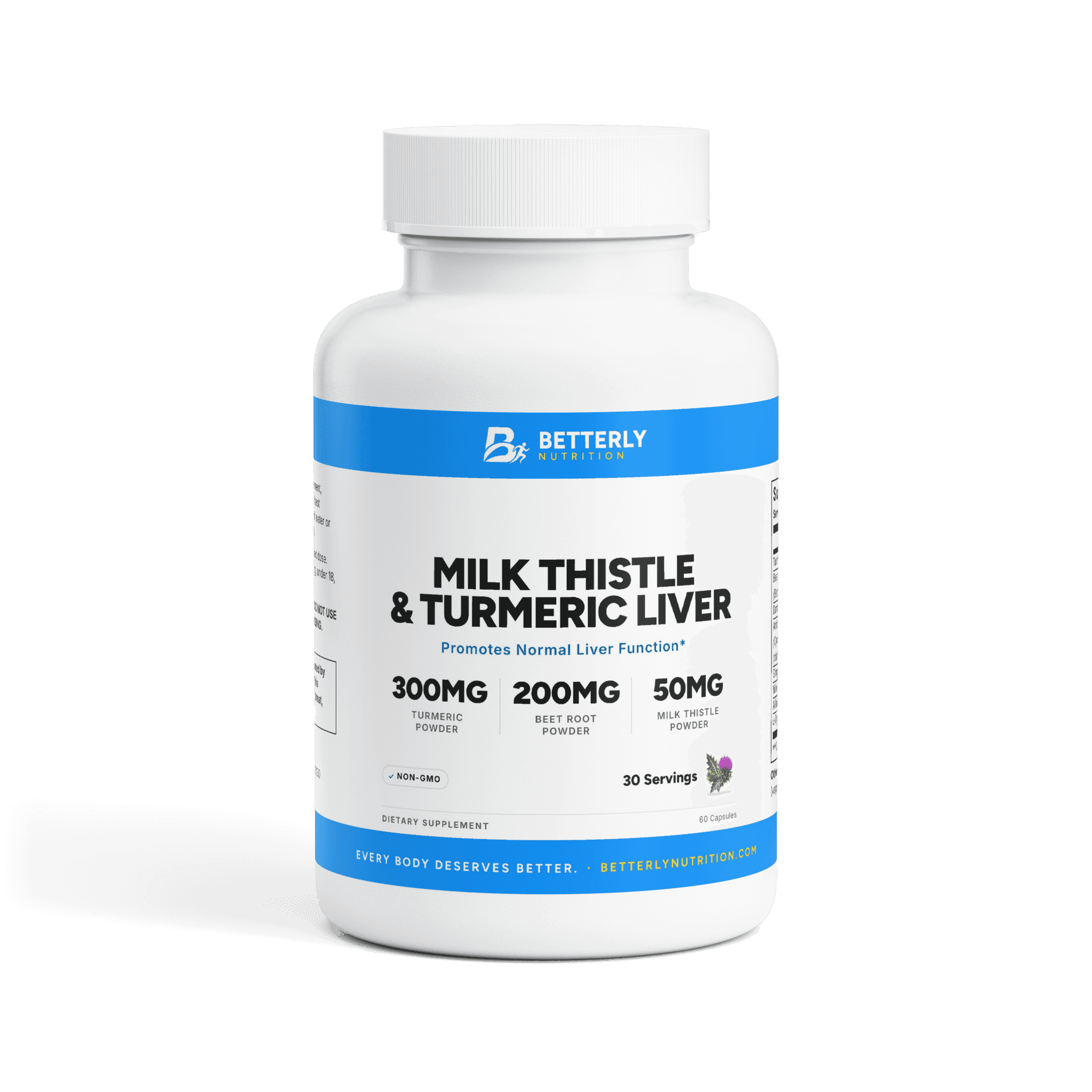
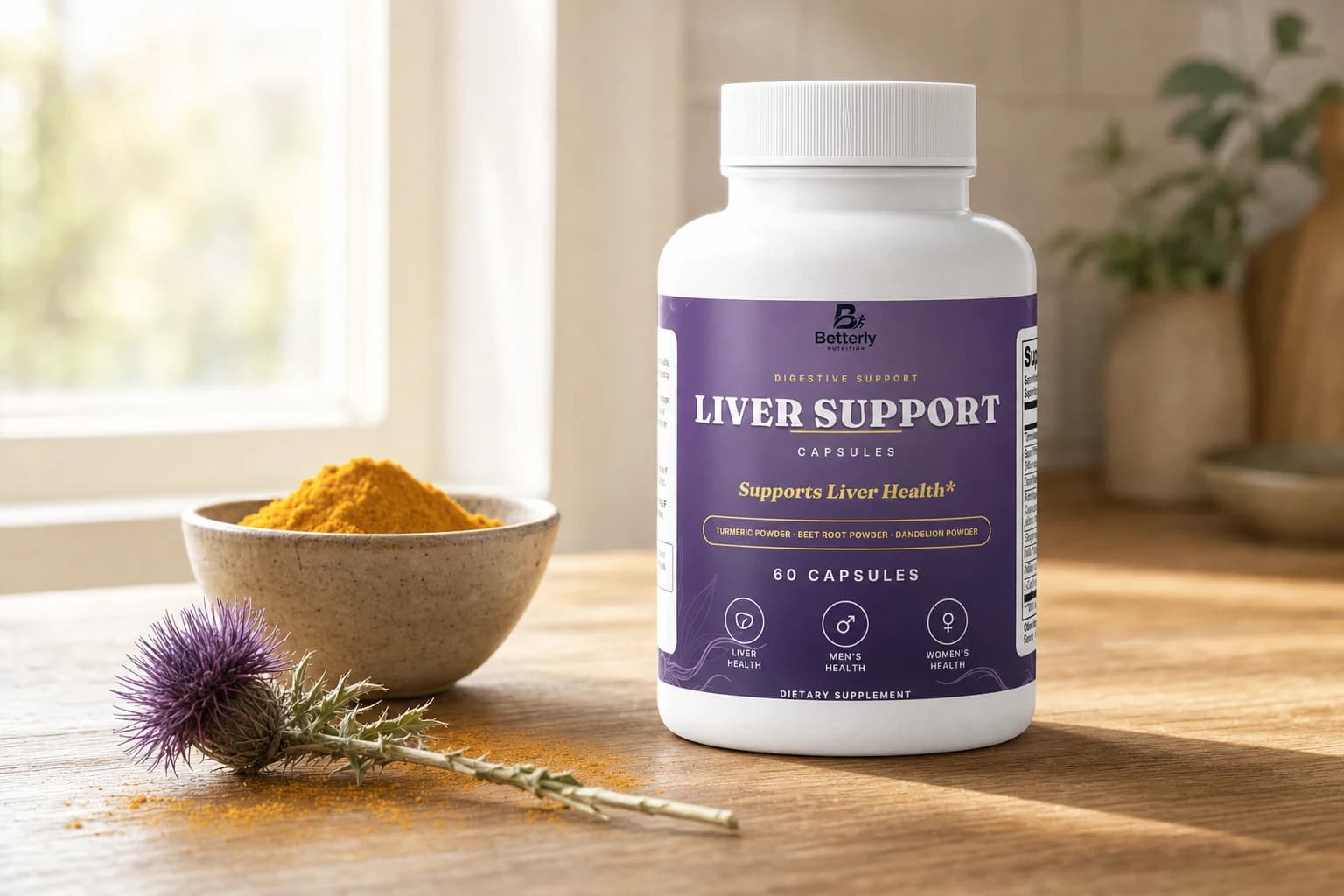
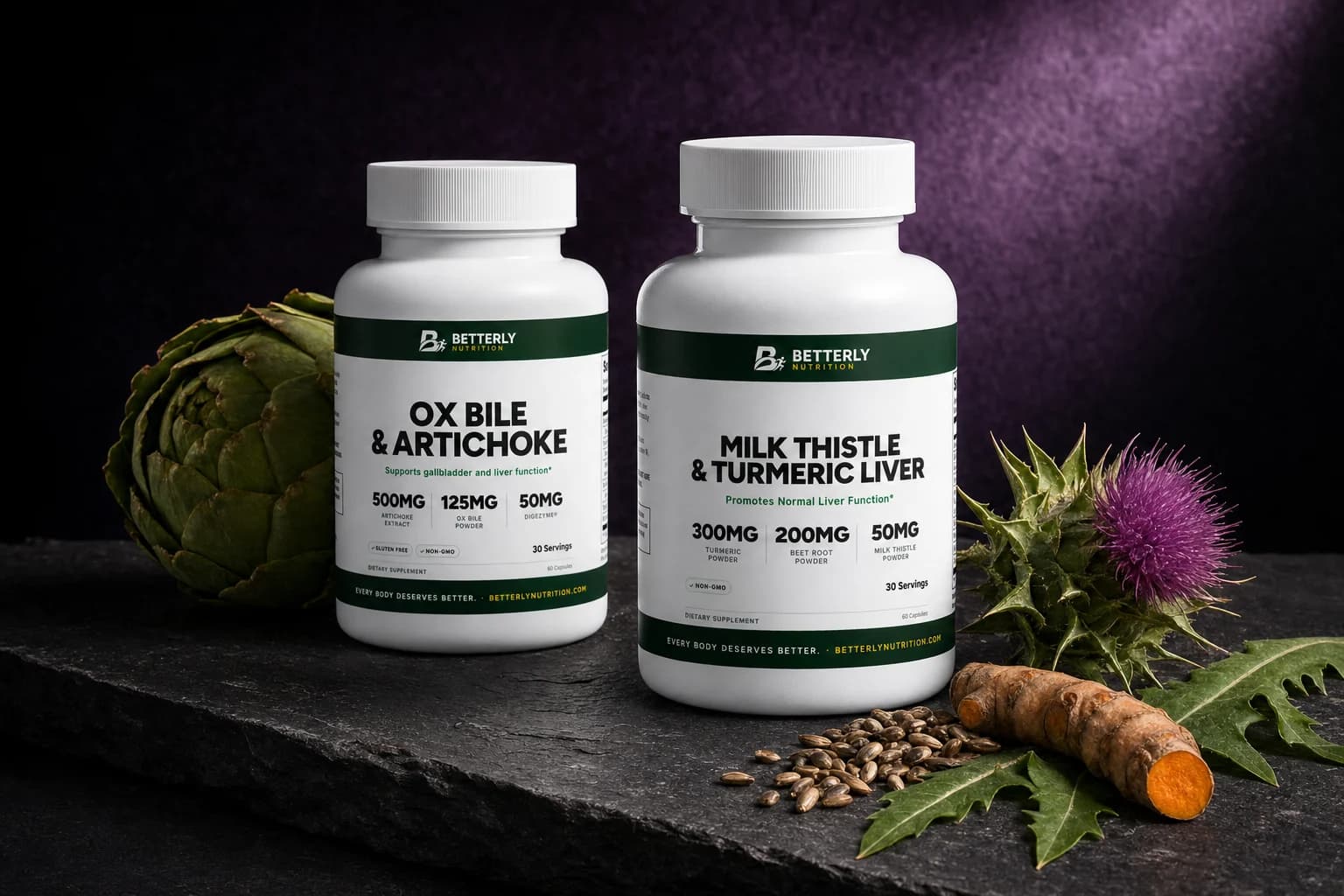
Our Milk Thistle & Turmeric Liver Capsules hold 50 mg of milk thistle powder and 100 mg of dandelion leaf powder per 2-capsule serving, inside a formula led by turmeric.
The panel's eight amounts add up to 780 mg per serving. Turmeric root powder leads at 300 mg, then 200 mg of beet root powder. Dandelion is the third-largest row, and milk thistle ties with artichoke extract and ginger root at 50 mg each.
Three details matter for this comparison:
- The dandelion is leaf, not root. If you came here looking for dandelion root, this capsule doesn't contain any.
- The milk thistle row is vague. It reads "Milk Thistle Powder," with no plant part and no silymarin percentage, so you can't line it up against a standardized seed extract.
- The bottle math is small. Across 30 servings, you get 3 g of dandelion leaf and 1.5 g of milk thistle powder in total. Turmeric outweighs milk thistle six to one.
The artichoke extract is standardized to 5% cynarin, or 2.5 mg per serving. For a row-by-row read, see our honest look at whether liver support supplements work.
From our shop: Milk Thistle & Turmeric Liver Capsules — 100 mg dandelion leaf and 50 mg milk thistle powder alongside 300 mg turmeric root per 2-capsule serving, with 30 servings in a bottle.
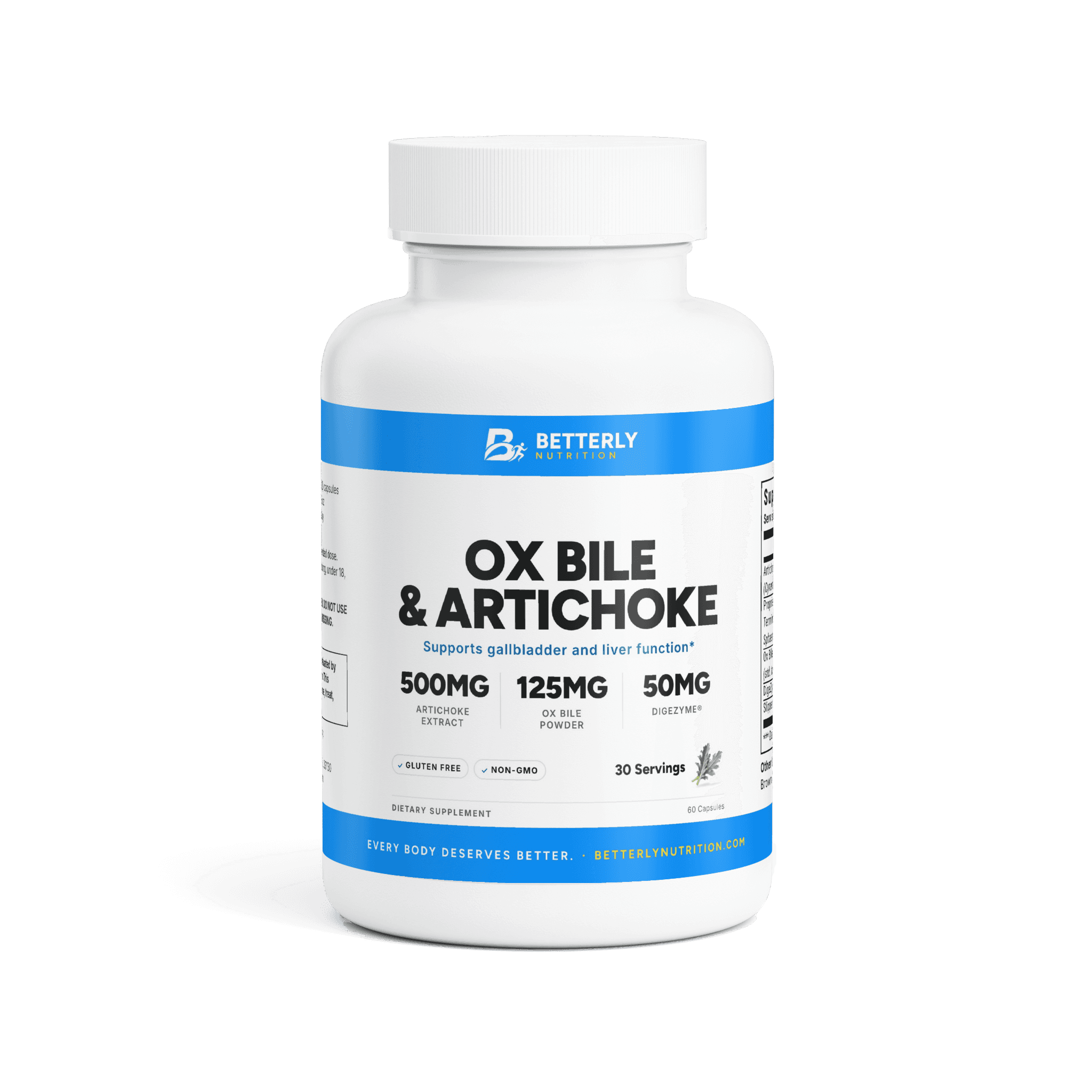
Our Ox Bile & Artichoke Capsules contain neither herb. They're built around artichoke, another daisy-family plant, with ten times the liver formula's artichoke extract.
| Per 2-capsule serving | Liver capsule | Ox bile capsule |
|---|---|---|
| Milk thistle | 50 mg powder | None |
| Dandelion | 100 mg leaf powder | None |
| Artichoke extract | 50 mg (5% cynarin) | 500 mg (leaf) |
| Hidden amounts | None | 300 mg proprietary blend |
| Capsule shell | Hypromellose | Gelatin |
The ox bile capsule also lists 125 mg of ox bile powder standardized to 40% cholic acid (that's 50 mg of cholic acid), 50 mg of DigeZyme® and 40 mg of slippery elm bark extract. Its proprietary blend gives one total for Terminalia chebula and Sphaeranthus indicus extracts. With ox bile and gelatin, it isn't suitable for vegetarians.
Milk thistle or dandelion root: which fits your situation?
Choosing between milk thistle and dandelion root depends on your goal: a stated silymarin amount points to milk thistle, and a food or coffee-style drink points to dandelion.
| If you want | Closer fit | Why |
|---|---|---|
| A stated silymarin amount | A standardized milk thistle seed extract | Its label gives a percentage |
| A caffeine-free roasted drink | Roasted dandelion root tea | The root is the part that's roasted |
| More leafy greens | Dandelion greens from the produce aisle | The leaf is a food first |
| Small amounts of several herbs, all shown | Our liver capsule | Eight rows, each with its own mg |
| Artichoke as the main ingredient | Our ox bile capsule | 500 mg artichoke leaf extract |
| No reason beyond "liver" on a label | Neither | Thin human evidence for both |
Read down the table and our two capsules fit only two rows. If you want silymarin or dandelion root specifically, a single-herb product with a stated amount suits you better. Compare both with the fiber and enzyme options among our digestion and gut health products.
From our shop: Ox Bile & Artichoke Capsules — 500 mg of artichoke leaf extract and 125 mg of ox bile powder per 2-capsule serving, in a gelatin capsule with no milk thistle or dandelion.
How should you take these capsules, going by the label?
Both of our capsules share one suggested use: adults take two capsules daily with 6-8 oz (177-237ml) of water, or as directed by a healthcare professional.
Neither label ties the dose to a meal or a clock time, so choose whichever slot you'll remember. Each label's caution leads with "Do not exceed recommended dose," so skip the extra capsules after a missed day.
- Don't layer our two capsules without asking a provider. Together they'd add up to 550 mg of artichoke extract a day from two labels.
- Count every source of the same herb. Tell your pharmacist about any dandelion tea or separate milk thistle too.
With a single-herb product, follow its own directions, not a number from a website. ODS notes the manufacturer suggests the serving size, but your provider might decide a different amount suits you.
When don't you need milk thistle or dandelion at all?
You can skip a milk thistle or dandelion capsule if the plant is already on your plate or in your mug, or if the word "liver" is your only reason.
Dandelion is a food before it's a pill. A capsule adds little when:
- You already eat dandelion greens or drink roasted dandelion root. A capsule adds milligrams of dried leaf to a plant that's already part of your meals.
- Liver wording on the front of a bottle is what caught your eye. Neither herb has human evidence for a change you'd notice, and our label doesn't promise one.
- A formula you take now already lists milk thistle or dandelion. A second product means doubling up on the same plant, so check the panels you already own.
If you like the greens or the roasted root, keep enjoying them. Food amounts are where NCCIH is most confident about dandelion's safety.
Who should check with a healthcare provider first?
Loop in a doctor or pharmacist before you try milk thistle or dandelion if you're pregnant, nursing, under 18, on medicine, scheduled for surgery or managing a medical condition.
- If you're pregnant, nursing, under 18 or managing a condition, both of our labels say to consult a physician. NCCIH says little is known about milk thistle's safety during pregnancy or breastfeeding, or about dandelion in amounts larger than food.
- If you take medicine or react to daisy-family plants, see the allergy note above and the FAQ's medication answer, then bring the label to your pharmacist.
- If an operation is on your calendar, ODS asks you to tell your provider about every supplement you use. Its reason: a few can affect bleeding, and a few can change how your body handles anesthesia.
- If turmeric doesn't agree with you, note that our liver capsule leads with 300 mg of turmeric root powder, and read our guide on who should skip turmeric supplements as well.
FAQ: milk thistle and dandelion
Does dandelion root have caffeine?
No, dandelion root doesn't contain caffeine, which is why roasted dandelion root is sold as a coffee-style drink. Read the box, though: some dandelion "coffee" blends mix in real coffee. Our liver capsule contains dandelion leaf, not root, and lists no caffeine on its panel.
Can you take dandelion every day?
In food amounts, NCCIH considers dandelion likely safe, but it says less is known about larger amounts. Its fact sheet doesn't give a daily amount for supplements. If you use a dandelion product, stay within its suggested use. Our liver capsule's label says two capsules daily, which works out to 100 mg of dandelion leaf.
Are dandelion greens the same as a dandelion leaf supplement?
Dandelion greens and a dandelion leaf supplement come from the same plant part, but the form and amount differ. A salad holds fresh leaves, while a capsule holds dried, ground leaf measured in milligrams. Our liver capsule's 100 mg per 2-capsule serving is a small amount. If you pick your own greens, choose leaves from ground that hasn't been sprayed.
Can milk thistle or dandelion interact with medications?
Dandelion may interact with some medicines: NCCIH lists theoretical reasons it might interact with blood thinners, water pills and other drug types. Its milk thistle page names no specific drugs, but both pages say that if you take any medicine, you should talk with your provider first, since some herbs and medicines interact in harmful ways. Show your pharmacist the full Supplement Facts panel before starting either one.
How long does milk thistle or dandelion take to work?
There's no reliable timeline for milk thistle or dandelion, because neither has solid human evidence for an effect you'd feel. Our liver capsule's label says "Promotes Normal Liver Function," not a result on a schedule. If you try one, follow the label, keep your routine steady, and stop if it doesn't agree with you.
Sources
- Dandelion: Usefulness and Safety (NCCIH)
- Milk Thistle: Usefulness and Safety (NCCIH)
- Botanical Dietary Supplements: Background Information (NIH Office of Dietary Supplements)
- Dietary Supplements: What You Need to Know (NIH Office of Dietary Supplements)
If this left you looking for somewhere to start, read milk thistle, dandelion leaf and turmeric capsules — its amounts per serving are listed on the page. For the practical questions this raises, how dosing, sourcing and subscriptions work is answered in one place.