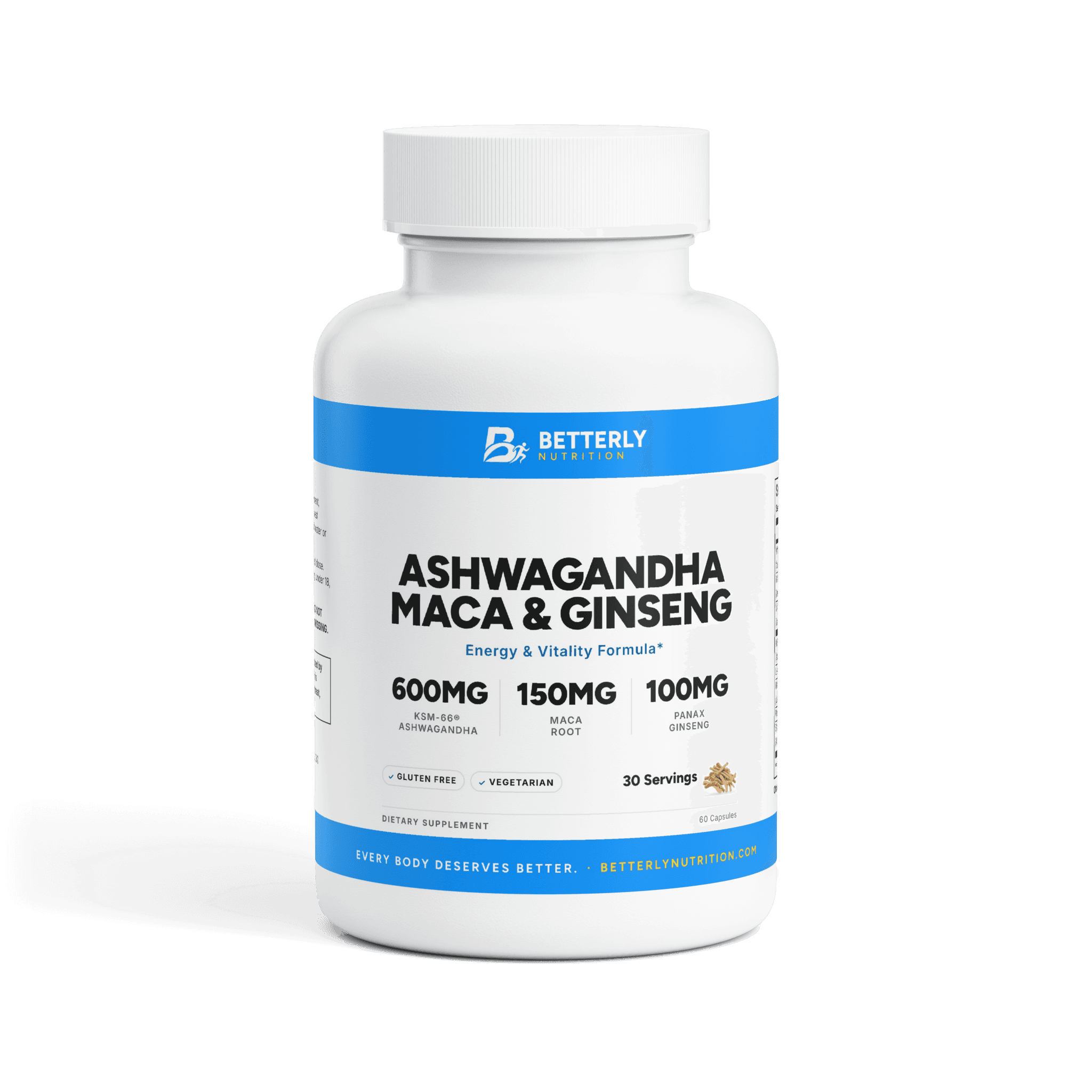
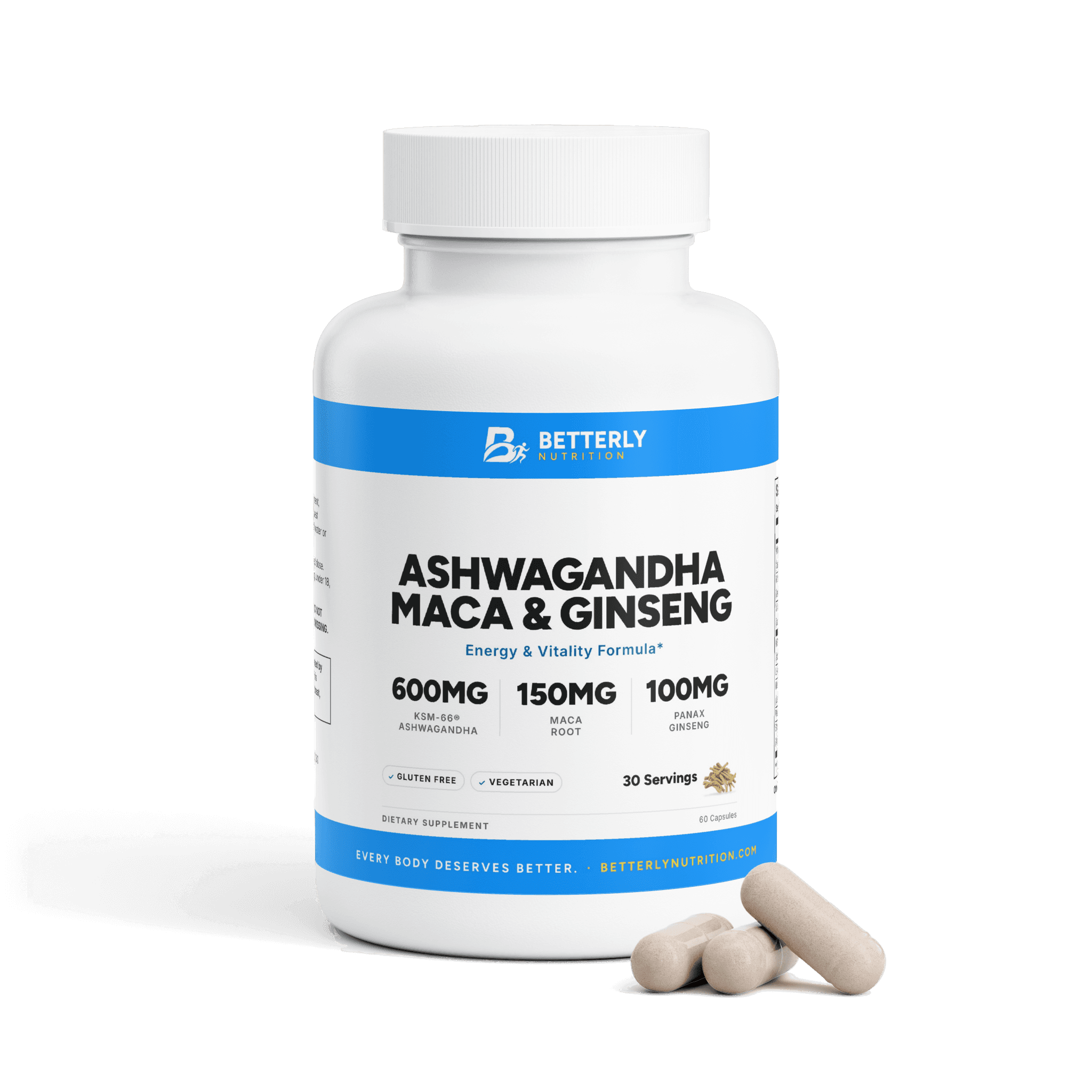
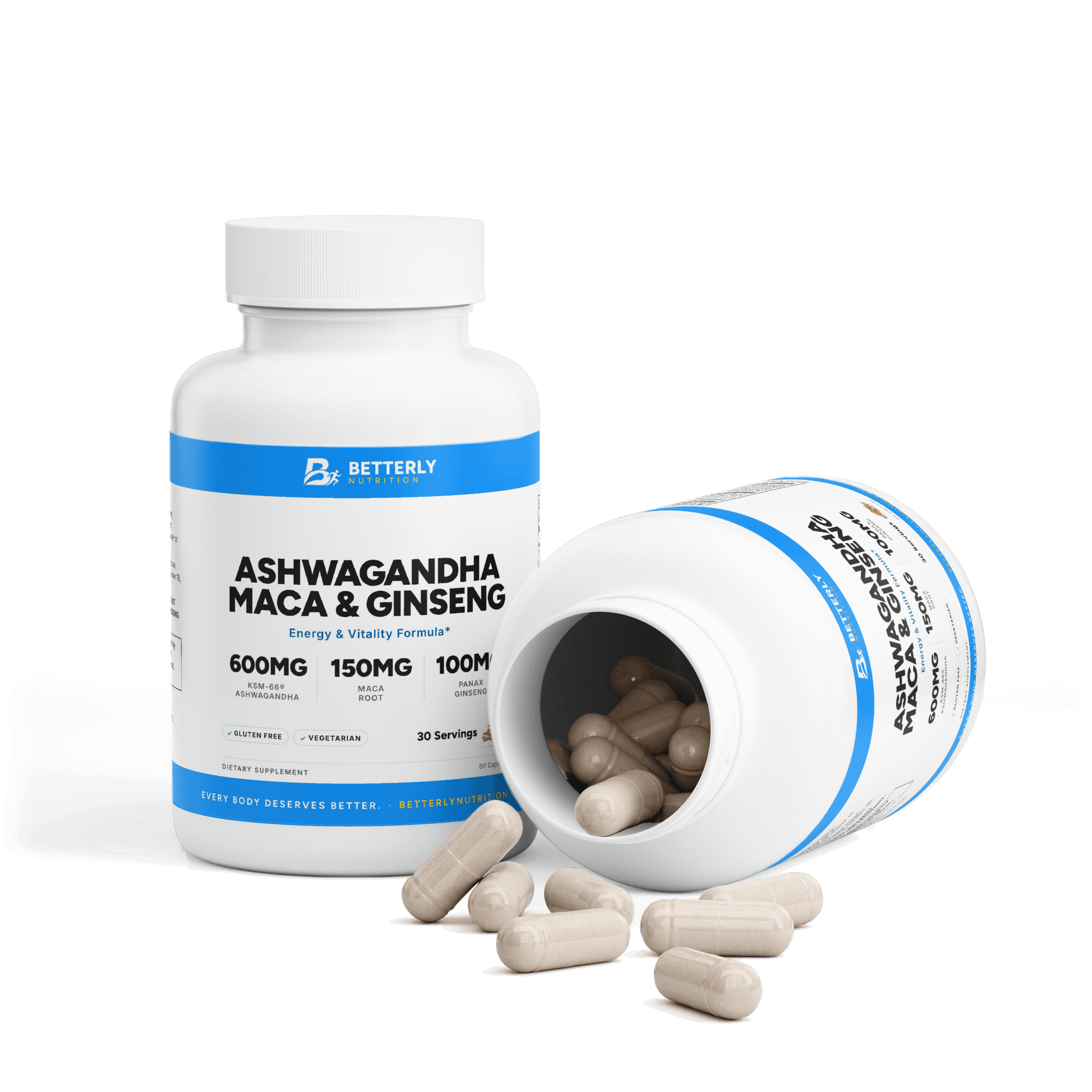
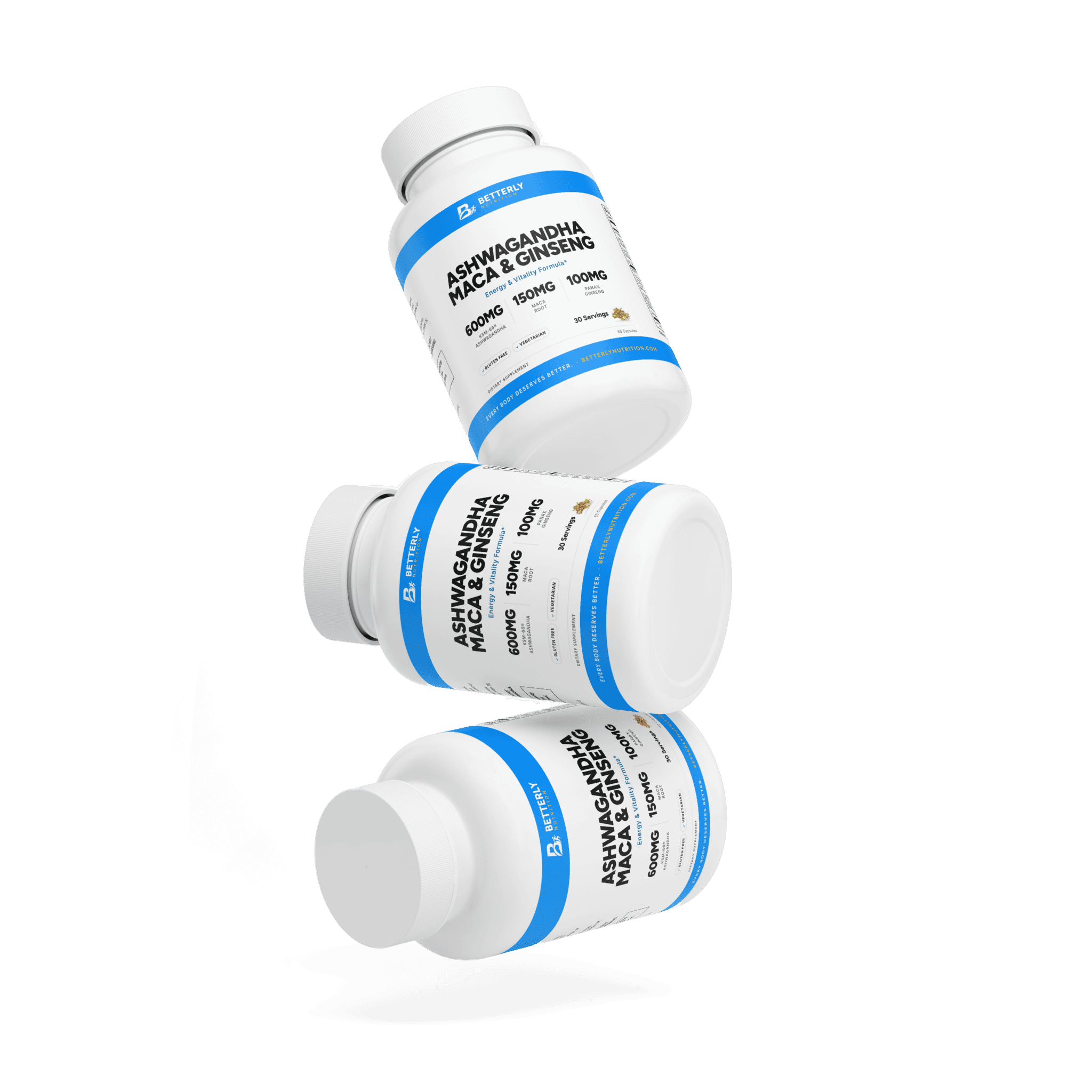
Ashwagandha, Maca & Ginseng Capsules
Ashwagandha, Maca & Ginseng Capsules build on 600 mg of KSM-66® Ashwagandha Extract per serving, then bring in L-arginine, maca root, Panax ginseng and shatavari, plus vitamin D3, B6 and B12. Eight rows on one panel, sixty capsules, thirty servings — one bottle instead of five. The label calls it an Energy & Vitality Formula*.
- Gluten-Free
- Non-GMO
- Vegetarian
$30.50
* These statements have not been evaluated by the Food and Drug Administration. This product is not intended to diagnose, treat, cure, or prevent any disease.
What you get in every serving
Two capsules deliver:
- 600 mg KSM-66® Ashwagandha Extract, standardized to 5% withanolides
- 300 mg L-Arginine
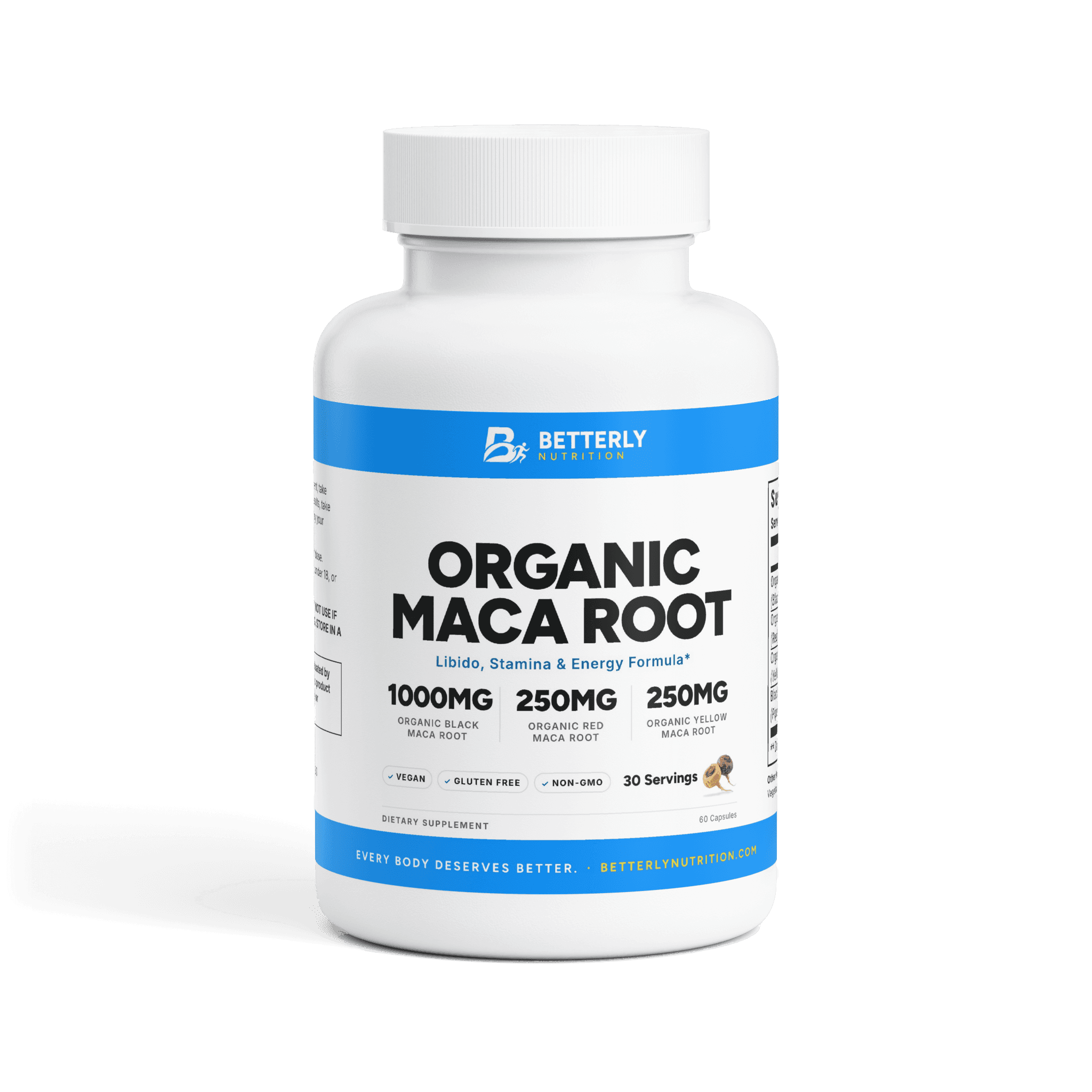
- 150 mg Maca Root Powder (Lepidium meyenii) (root)
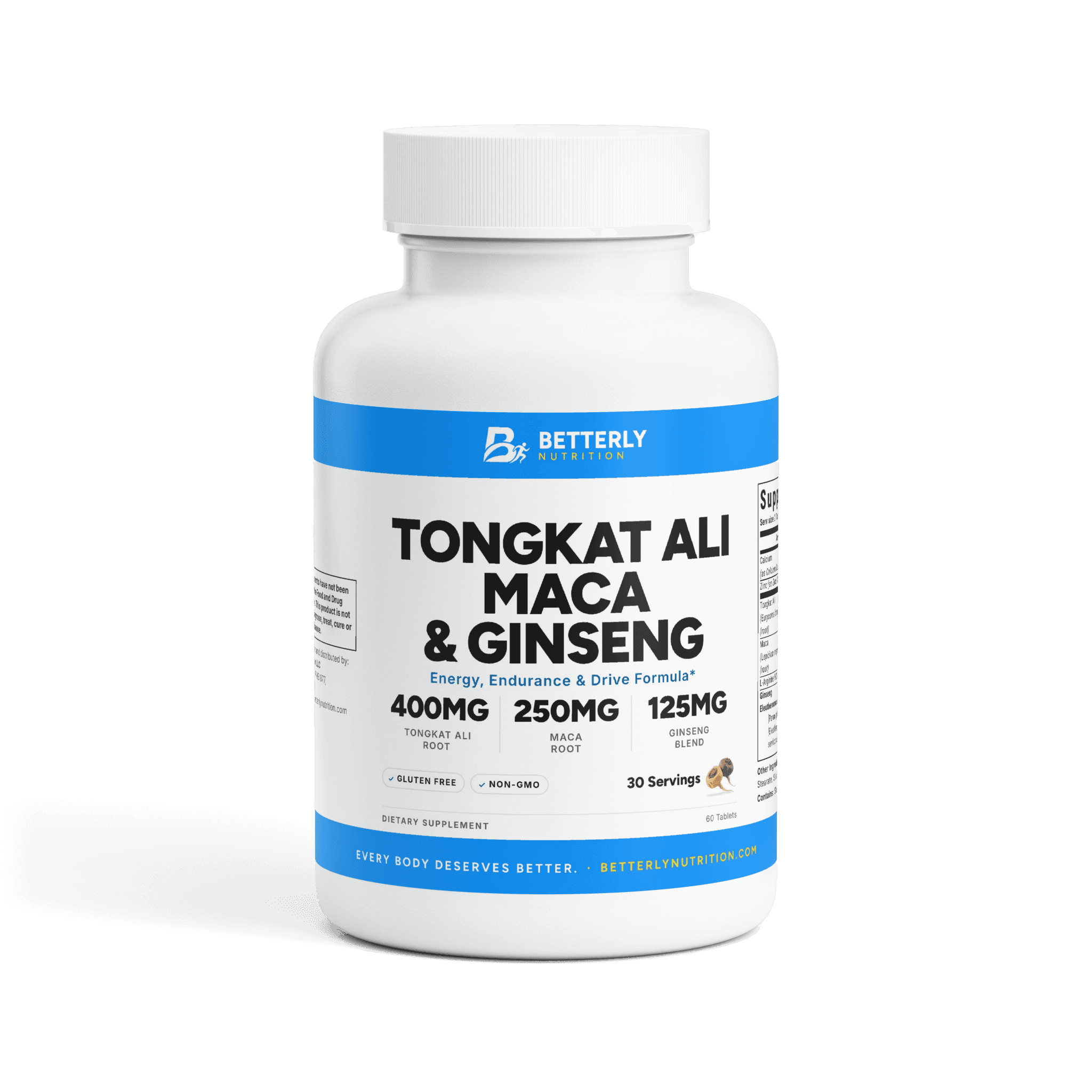
- 100 mg Panax Ginseng Powder (root)
- 50 mg Shatavari Powder (Asparagus racemosus) (root)
- 20 mcg Vitamin D3 as cholecalciferol — 100% DV
- 2.5 mg Vitamin B6 as pyridoxine hydrochloride — 147% DV
- 25 mcg Vitamin B12 as methylcobalamin 1% — 1042% DV
- Daily Value is not established for the four botanicals or the amino acid, so the panel marks them **
- Gluten free, non-GMO and vegetarian
The botanicals
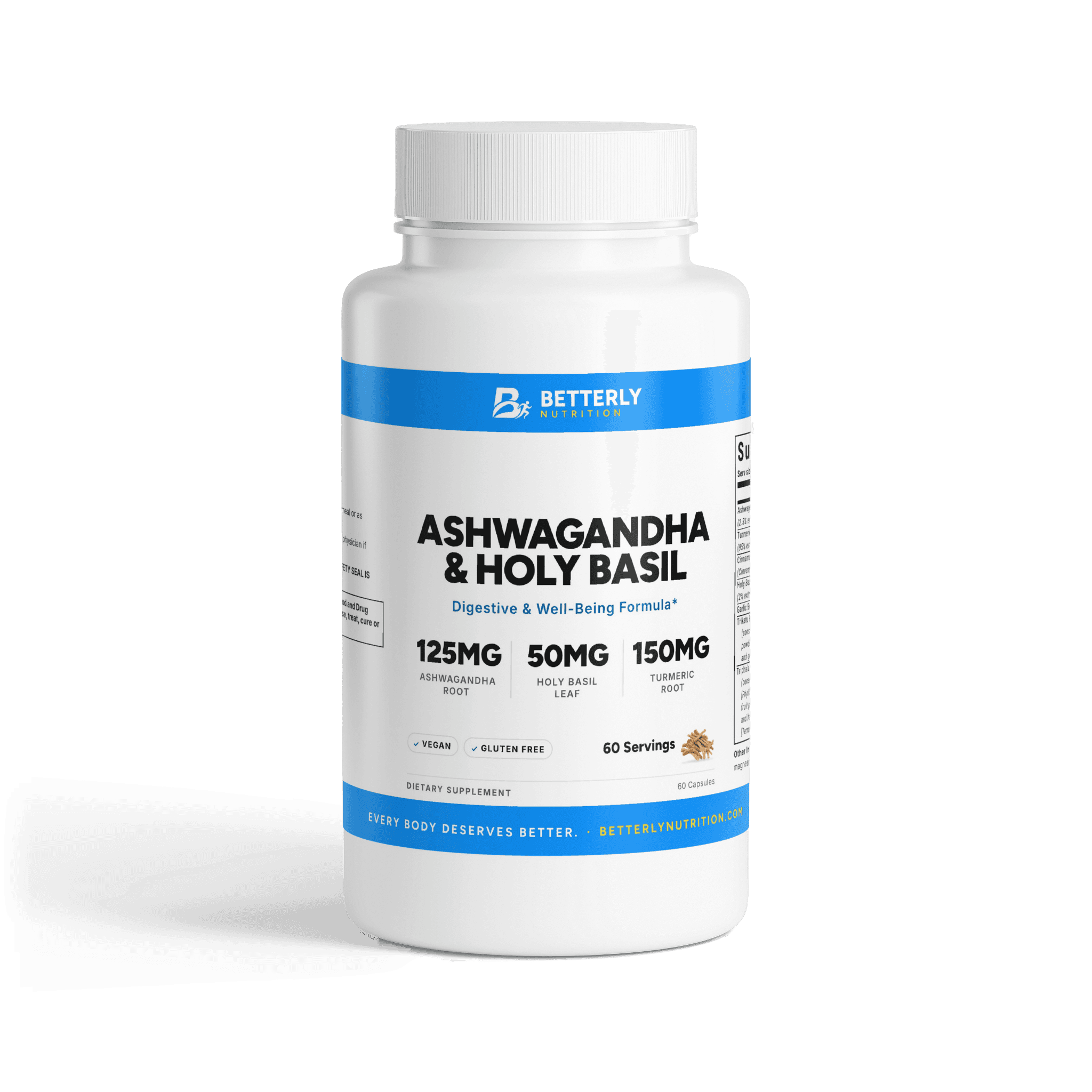
Ashwagandha is a plant with a long history in Ayurvedic tradition, and KSM-66® is one of the trademarked ashwagandha extracts made from it. The panel standardizes this one to 5% withanolides — withanolides are the naturally occurring class of compounds that extract makers measure to describe how concentrated a batch is. At 600 mg it's the largest row here by some distance.
Maca (Lepidium meyenii) is a root vegetable grown high in the Andes and traditionally dried and milled. This is the root, as a powder, at 150 mg.
Panax ginseng is Asian ginseng — worth naming precisely, because more than one unrelated plant gets sold under the shortened name "ginseng". This is the root, powdered, at 100 mg.
Shatavari (Asparagus racemosus) is a climbing plant and another long-standing ingredient in Ayurvedic formulation. The root, at 50 mg.
L-arginine rounds the list out at 300 mg. It isn't a botanical at all — it's an amino acid, one of the building blocks proteins are assembled from, and at 300 mg it's the second-largest row on the panel.
The three vitamins
Above the botanicals, separated by a rule on the label, sit three vitamins. Vitamin D3 as cholecalciferol at 20 mcg, which is 100% of the Daily Value. Vitamin B6 as pyridoxine hydrochloride at 2.5 mg, 147% DV. Vitamin B12 at 25 mcg, 1042% DV, printed on the panel as methylcobalamin 1%.
How it's taken
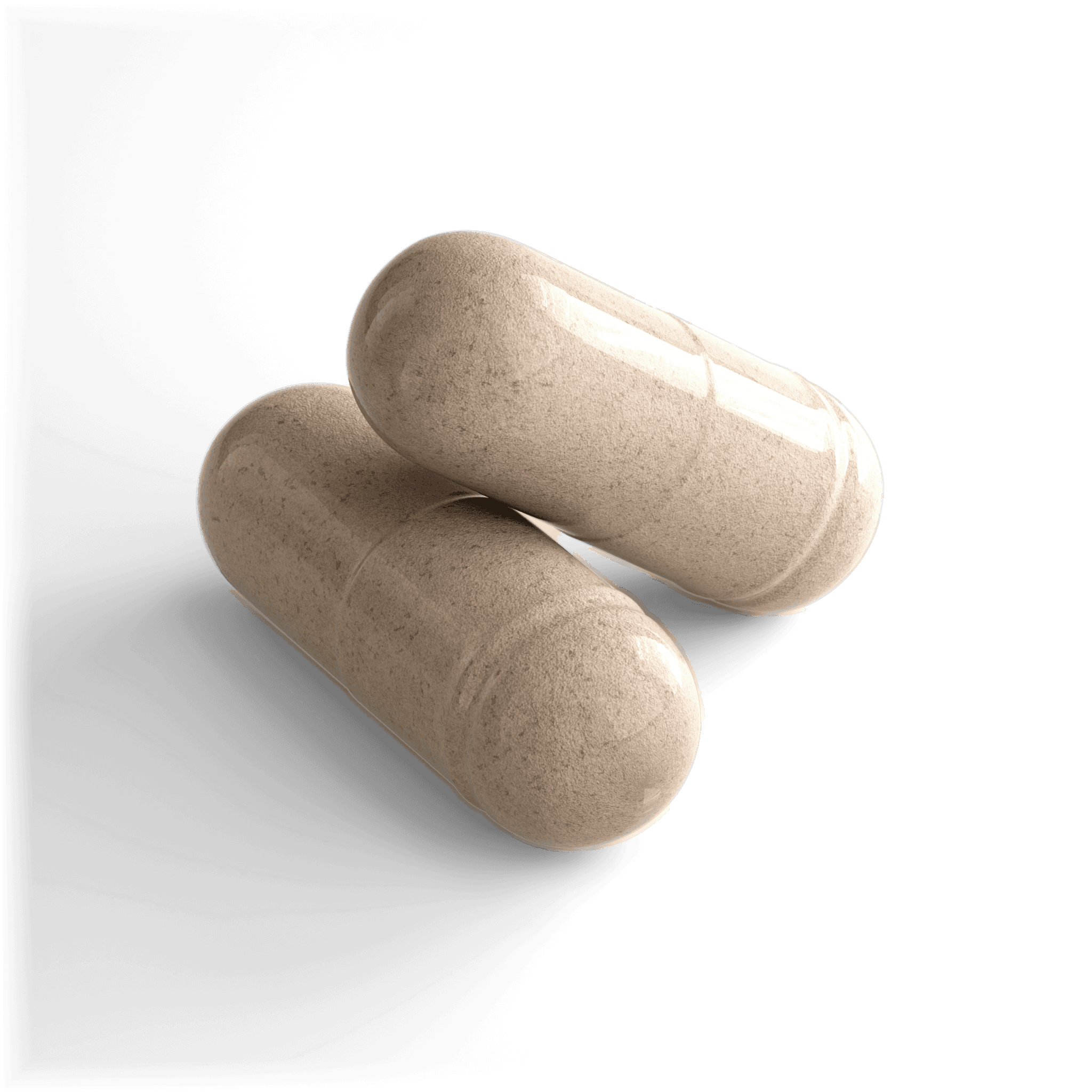
Two capsules daily with 6-8 oz of water. Capsules mean no earthy maca taste and no bitterness from the extracts, which is the usual reason people give up on loose botanical powders. The shell is HPMC, a plant cellulose, and it's the only other ingredient in the bottle — no filler, no flow agent, no colouring.
Who it's for
Anyone who'd otherwise be buying ashwagandha capsules, a maca powder and a ginseng supplement separately, and would rather take one. It's gluten free, non-GMO and vegetarian, and two capsules turn a long ingredient list into one daily habit.
How to use it
As a dietary supplement, adults take two (2) capsules daily. For best results, take with 6-8 oz (177-237ml) of water or as directed by healthcare professional.
Other ingredients
HPMC (vegetable capsule)
60 Capsules · 30 Servings · Serving size 2 Capsules
Caution: Do not exceed recommended dose. Consult a physician if pregnant, nursing, under 18, or have a medical condition. KEEP OUT OF REACH OF CHILDREN. DO NOT USE IF SAFETY SEAL IS DAMAGED OR MISSING. STORE IN A COOL, DRY PLACE.
*This statement has not been evaluated by the Food and Drug Administration. This product is not intended to diagnose, treat, cure or prevent any disease.
Guides for Ashwagandha, Maca & Ginseng Capsules
Tried it? Tell people how it went.
Honest words only — we publish reviews after a quick check and never edit them for sentiment.
Goes great together