On this page
- Key takeaways
- Maca vs ashwagandha: which one has the stronger evidence?
- What does each root's research actually measure?
- Is maca or ashwagandha better for men or for women?
- Can you take maca and ashwagandha together?
- Is the 150 mg of maca in our blend enough?
- How do you take maca and ashwagandha, per the label?
- When should you skip maca, ashwagandha or our blend?
- Who should talk to a healthcare provider before maca or ashwagandha?
- FAQ: maca vs ashwagandha
- Sources
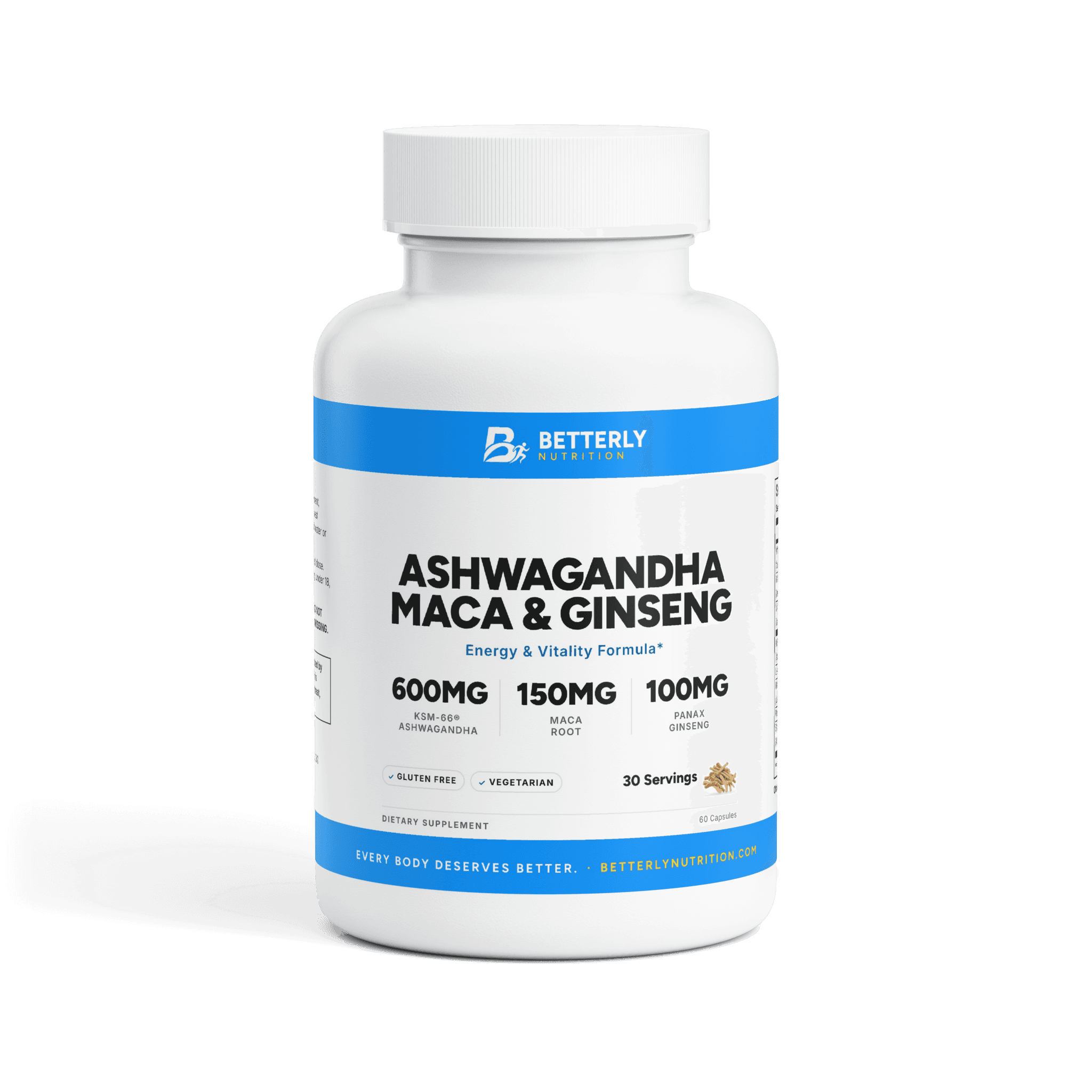
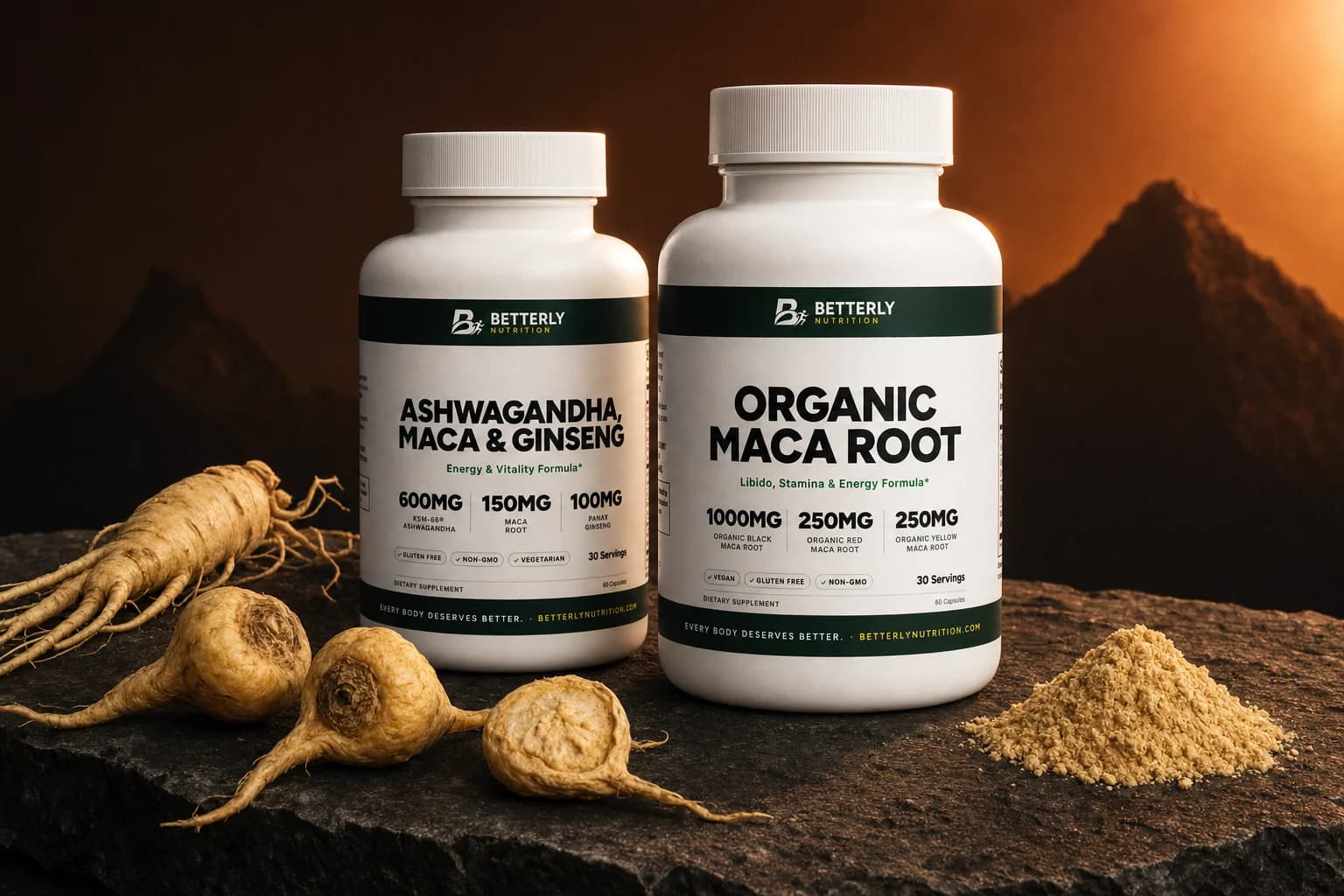
The short answer: Maca vs ashwagandha is mostly a question of what each root has been tested for. Ashwagandha (Withania somnifera) has more trials, largely on occasional stress and sleep, scored with validated questionnaires. Maca (Lepidium meyenii) has a handful of small trials, mostly of self-rated desire in healthy adults. Our Ashwagandha, Maca & Ginseng Capsules carry 600 mg of KSM-66® ashwagandha but just 150 mg of maca per 2-capsule serving.
Key takeaways
- Ashwagandha's stress trials, as summarized by the NIH Office of Dietary Supplements, used validated rating scales, while maca's main desire trial used a 6-point scale of uncertain validity.
- Healthy men taking maca in a 2002 trial ended up with the same testosterone and estradiol levels as men on a placebo.
- Ashwagandha comes with specific federal cautions, while maca's safety record is mostly blank because the trials in a 2010 review never looked for side effects.
- Across the four maca trials that review covered, daily amounts ran from 1.5 g to 3.5 g, so a serving with 150 mg of maca holds 10% of the lowest.
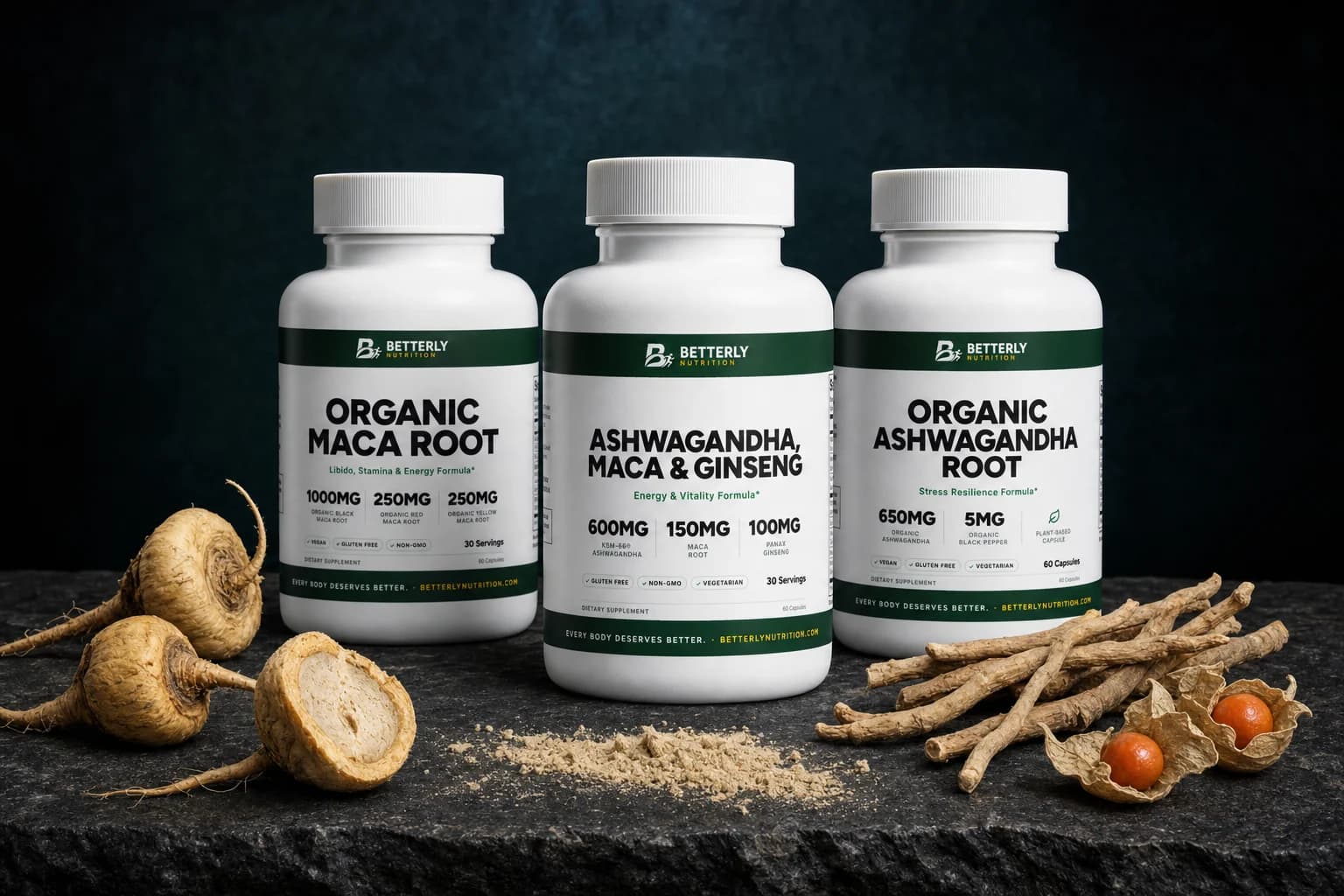
Our stake in this: Betterly profits whichever root you choose. Several of our formulas contain maca or ashwagandha, and the three compared here (a maca capsule, an ashwagandha root capsule and an ashwagandha-led blend) are the main ones. Every milligram below comes off their Supplement Facts panels, including the maca number that makes our blend look thin.
Maca vs ashwagandha: which one has the stronger evidence?
Ashwagandha has more research, mostly on occasional stress and sleep, while maca's few small trials mostly measured self-reported desire in healthy adults.
| Maca | Ashwagandha | |
|---|---|---|
| Plant | Andean root in the mustard family | Root of an evergreen shrub from Ayurvedic tradition |
| Main outcome in trials | Self-rated desire | Perceived stress and sleep quality |
| How it was scored | A 6-point scale in the main men's trial, validity unclear | Validated rating scales, per ODS |
| Side effects recorded? | Not by the four trials a 2010 review covered | Yes: drowsiness, stomach upset, rare liver reports |
| Federal fact sheet | None we could find | ODS and NCCIH pages |
The side-effects row matters most. Ashwagandha's caution list exists because its trials logged side effects and doctors published case reports. Maca's cell is empty because those four trials never wrote side effects down, which leaves the question open, not settled. Both roots are stocked in our adaptogen range, but they arrived with very different paperwork.
What does each root's research actually measure?
Ashwagandha trials mostly scored stress and sleep with validated questionnaires, while a 2002 maca trial asked healthy men to rate their own desire on a simple 6-point scale.
The NIH Office of Dietary Supplements (ODS) ashwagandha fact sheet summarizes seven trials from a 2021 review, all run in India with 491 adults in total. Over 6 to 8 weeks, people given ashwagandha scored lower on validated stress scales than people given a placebo. Daily amounts spanned 240 to 1,250 mg of extract, and several trials saw bigger effects at 500 to 600 mg. Three of the seven used KSM-66, our blend's extract.
"Validated" means the questionnaire was tested beforehand to show it reliably measures what it claims. Everyone enrolled started out highly stressed, by their own rating or a clinician's, which limits how far the results travel.
In a 2002 trial published in Andrologia, healthy men aged 21 to 56 took gelatinized maca (a processed maca powder) or a placebo for 12 weeks. By week 8, the men on maca reported more desire. The team tracked mood scores only to check whether a mood shift explained that change, and they reported it didn't.
A 2010 systematic review in BMC Complementary and Alternative Medicine points out two soft spots in that trial. The reviewers couldn't tell whether the desire scale was a validated one, and the trial averaged its two maca groups together before comparing them with placebo. So maca's headline result rests on a self-rating of uncertain quality. Our trial-by-trial look at maca in women and men goes through maca's other studies.
Energy is thinner ground for both. None of our three panels lists caffeine, and ODS counts drowsiness among ashwagandha's common, mild side effects. Our comparison of caffeine-free energy supplements covers other options.
Is maca or ashwagandha better for men or for women?
Neither root has clear sex-specific evidence: maca's desire findings come mostly from men, and ODS doesn't report ashwagandha results separately for women and men.
For men, the 2002 trial found no difference in testosterone or estradiol between the maca and placebo groups, so it offers no support for hormone claims.
Women get one small maca trial in the review. It reported a positive result on its sexual-function measure. But participants switched between maca and placebo with no washout (a clean break between phases), and the reviewers said that carry-over risk made the trial difficult to interpret.
Ashwagandha's clearest line for women is a warning, not a result. The National Center for Complementary and Integrative Health (NCCIH) tells people who are pregnant to avoid the root on its ashwagandha safety page, and says it shouldn't be used while breastfeeding.
Can you take maca and ashwagandha together?
Maca and ashwagandha are often sold together, including in our blend, but no trial we found tested the pair, so start with the daily totals.
Here's what our three bottles add up to per day, at label directions:
| Combination | Ashwagandha a day | Maca a day | What to know |
|---|---|---|---|
| Blend only | 600 mg KSM-66® extract | 150 mg | Mostly an ashwagandha product |
| Maca capsules + ashwagandha root capsules | 1,300 mg root | 1,500 mg | Each root under its own label |
| Blend + maca capsules | 600 mg extract | 1,650 mg | Maca from two panels; get a provider's view |
| Blend + ashwagandha root capsules | 600 mg extract + 1,300 mg root | 150 mg | Ashwagandha from two panels; avoid |
Read down the last column: only the two single-root bottles keep each herb under one set of directions. Adding either one to the blend puts a root on two panels, which neither label was written for.
The risk isn't a known clash between the roots. Ashwagandha carries interaction flags with some medicines, and we found no source that has checked maca's. If you want both, begin with one bottle and add the second later, so any change in your stomach or sleep has one obvious suspect.
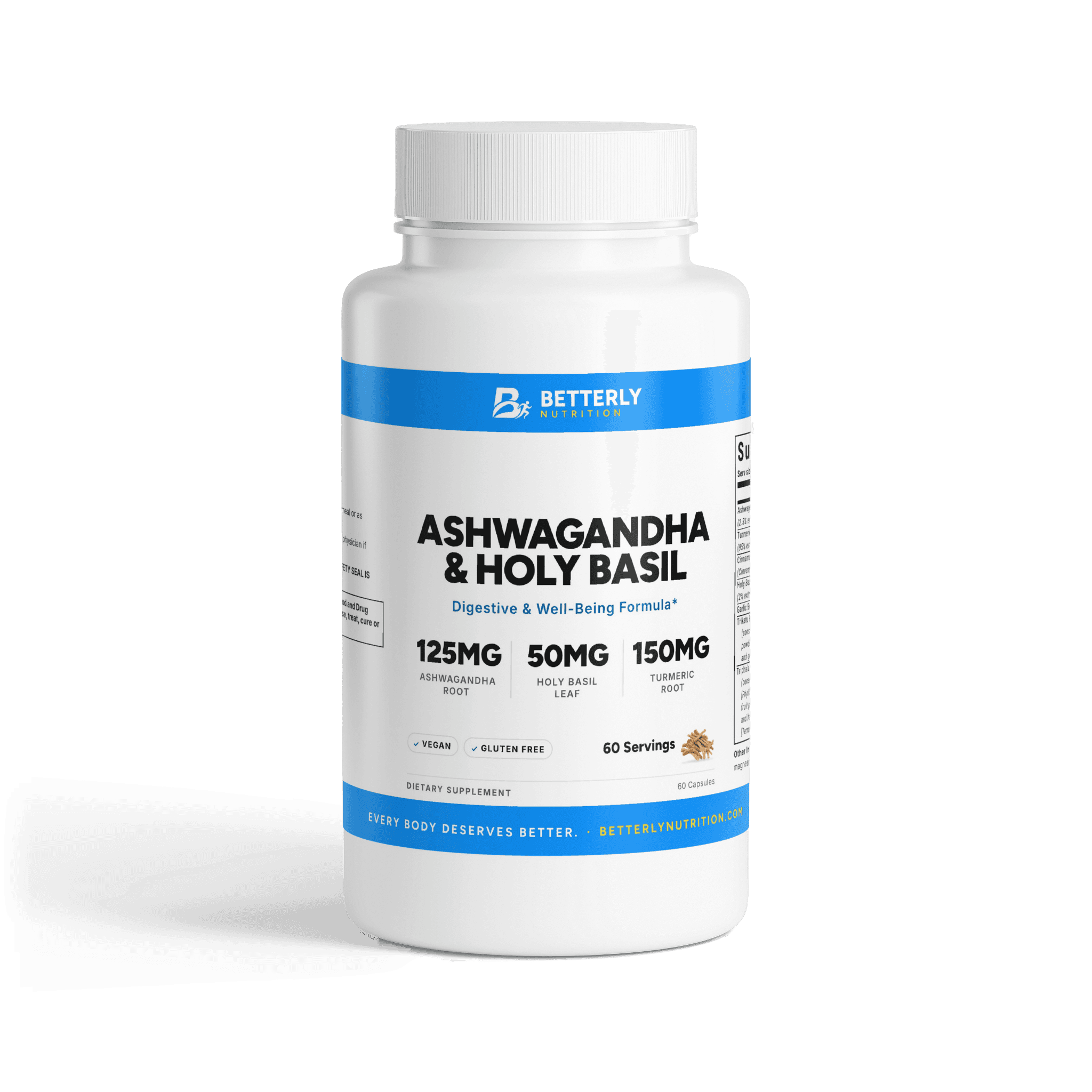
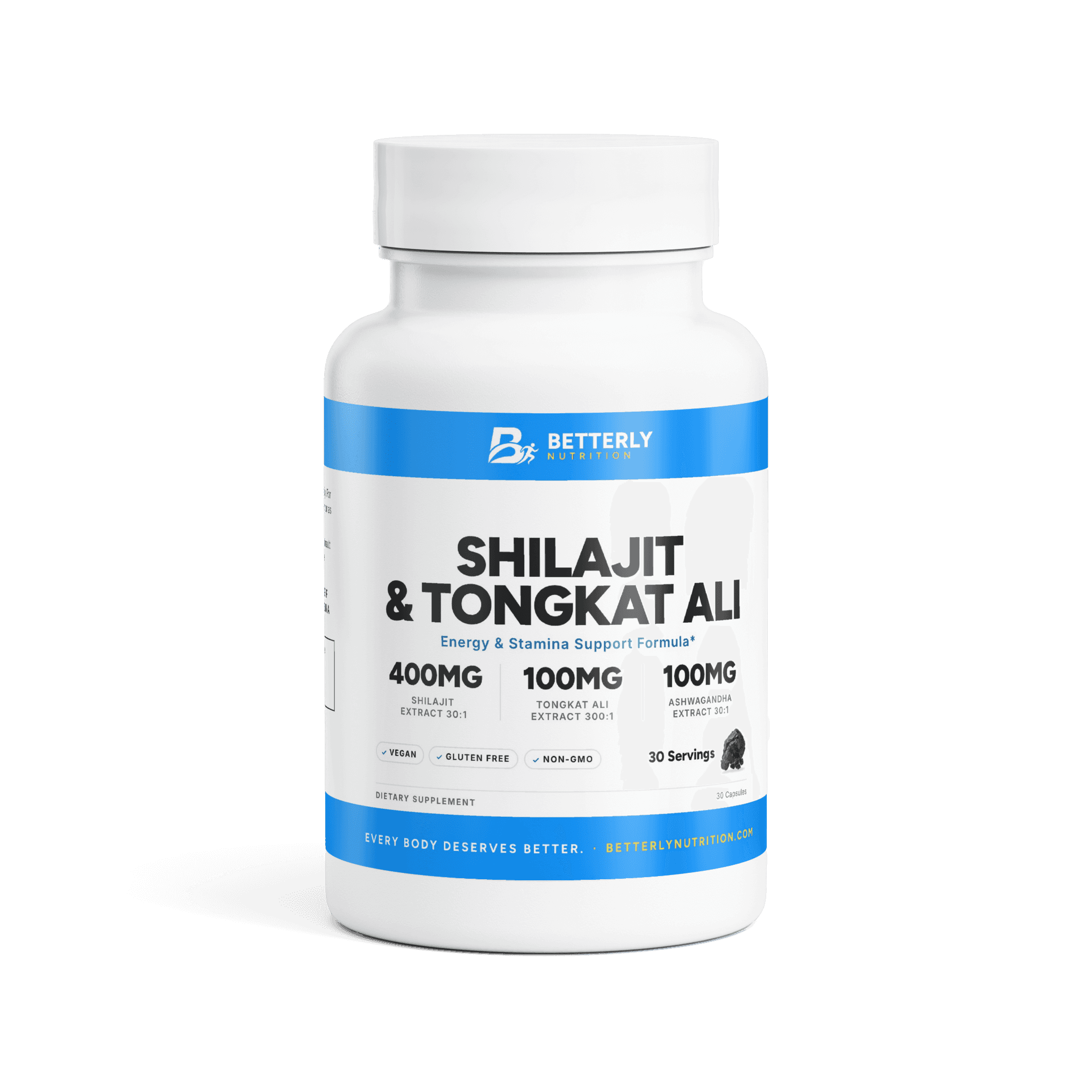
Two other Betterly formulas list ashwagandha too. Shilajit & Tongkat Ali Capsules hold 100 mg of a 30:1 root extract per 1-capsule serving, and Ashwagandha & Holy Basil Ayurvedic Capsules hold 125 mg of a 2.5% root extract per 1-capsule serving. If either is already in your routine, count it in the ashwagandha column above.
Is the 150 mg of maca in our blend enough?
For maca itself, no: our Ashwagandha, Maca & Ginseng Capsules list 150 mg of maca per 2-capsule serving, while the 2010 review's trials started at 1,500 mg a day.
That gap is by design: the blend is built around ashwagandha. Its biggest row is 600 mg of KSM-66® extract standardized to 5% withanolides, or 30 mg of withanolides per 2-capsule serving. ODS points to withanolides as the likely source of much of ashwagandha's proposed activity, and it describes a KSM-66 sleep trial at 600 mg a day. No trial tested our formula, though.
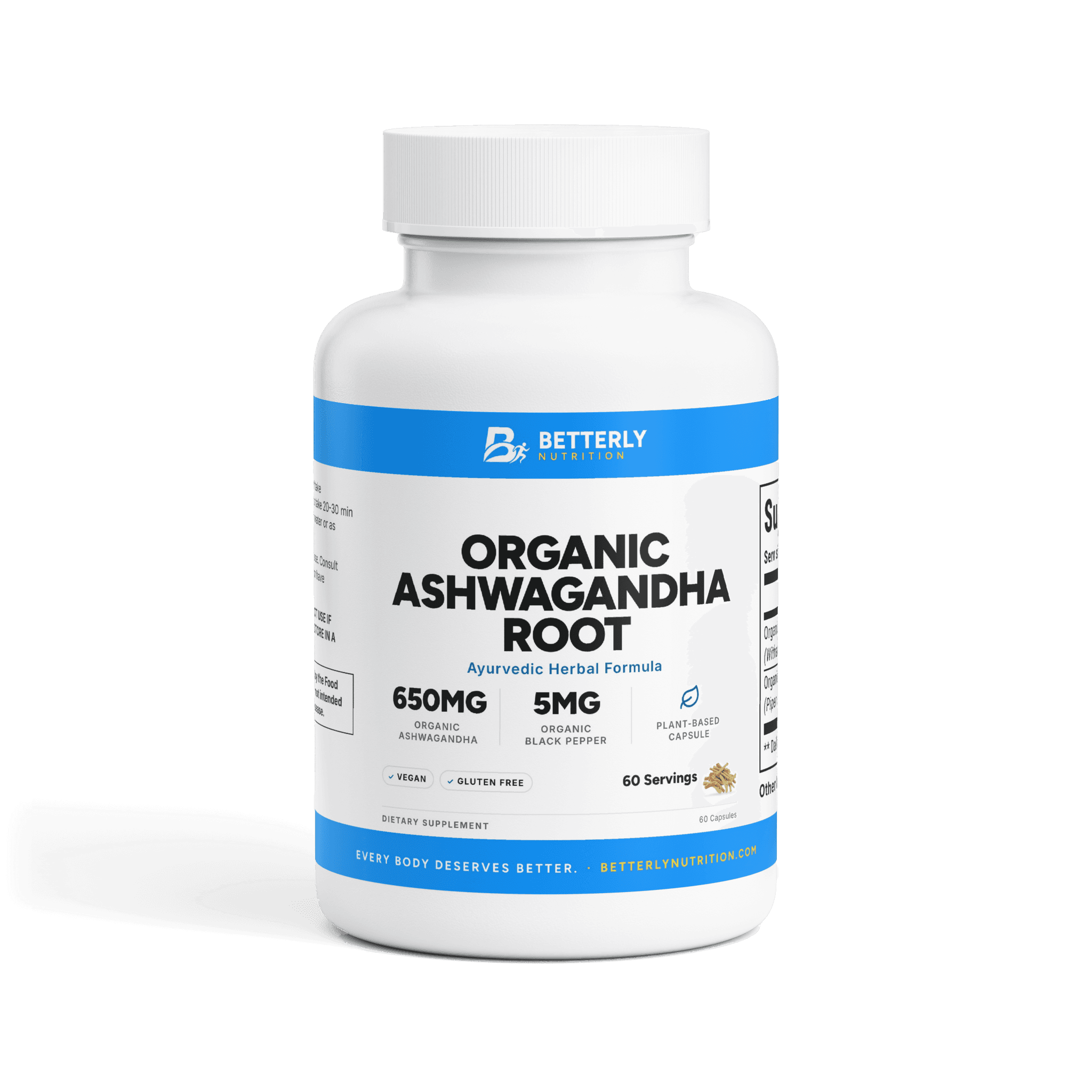
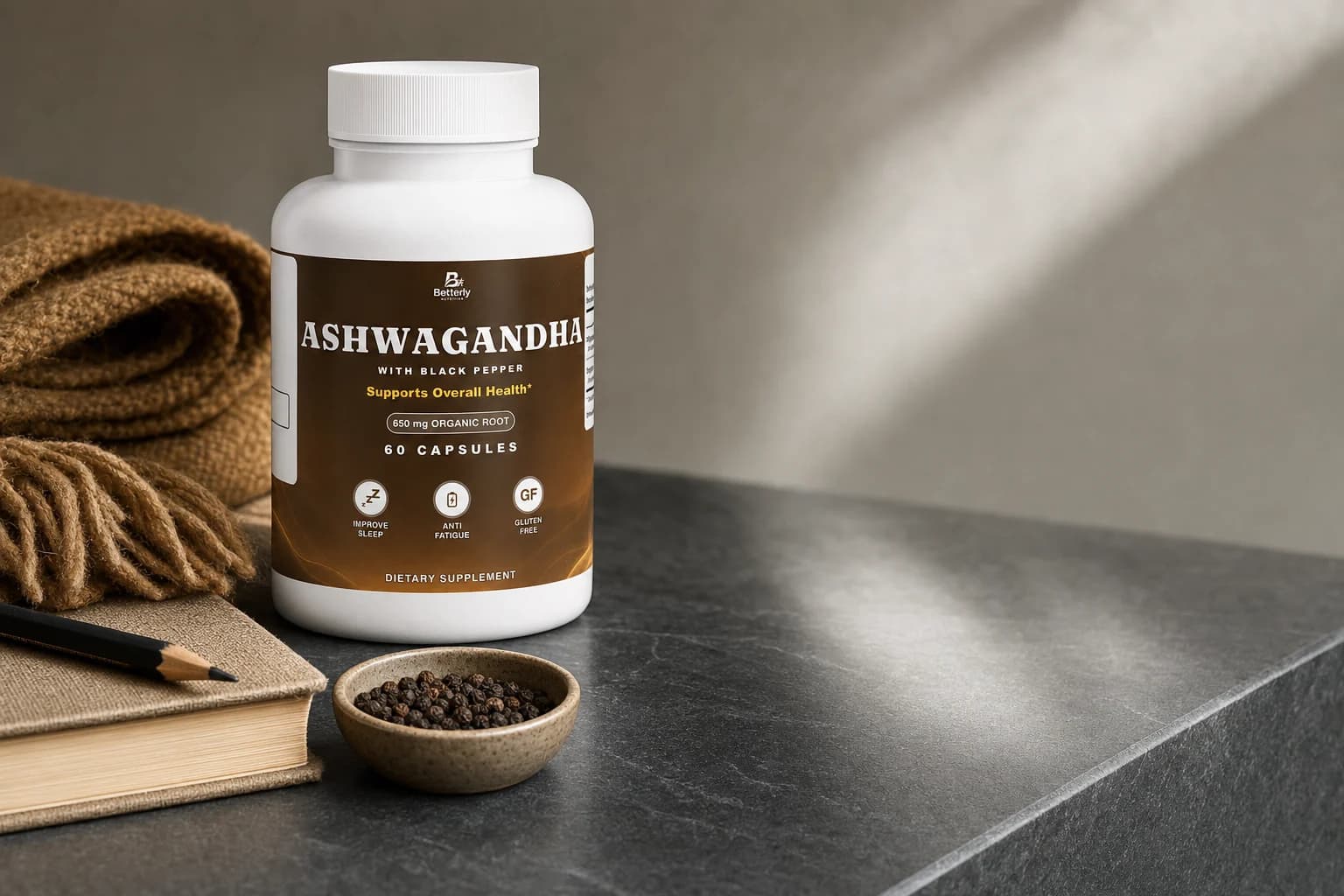
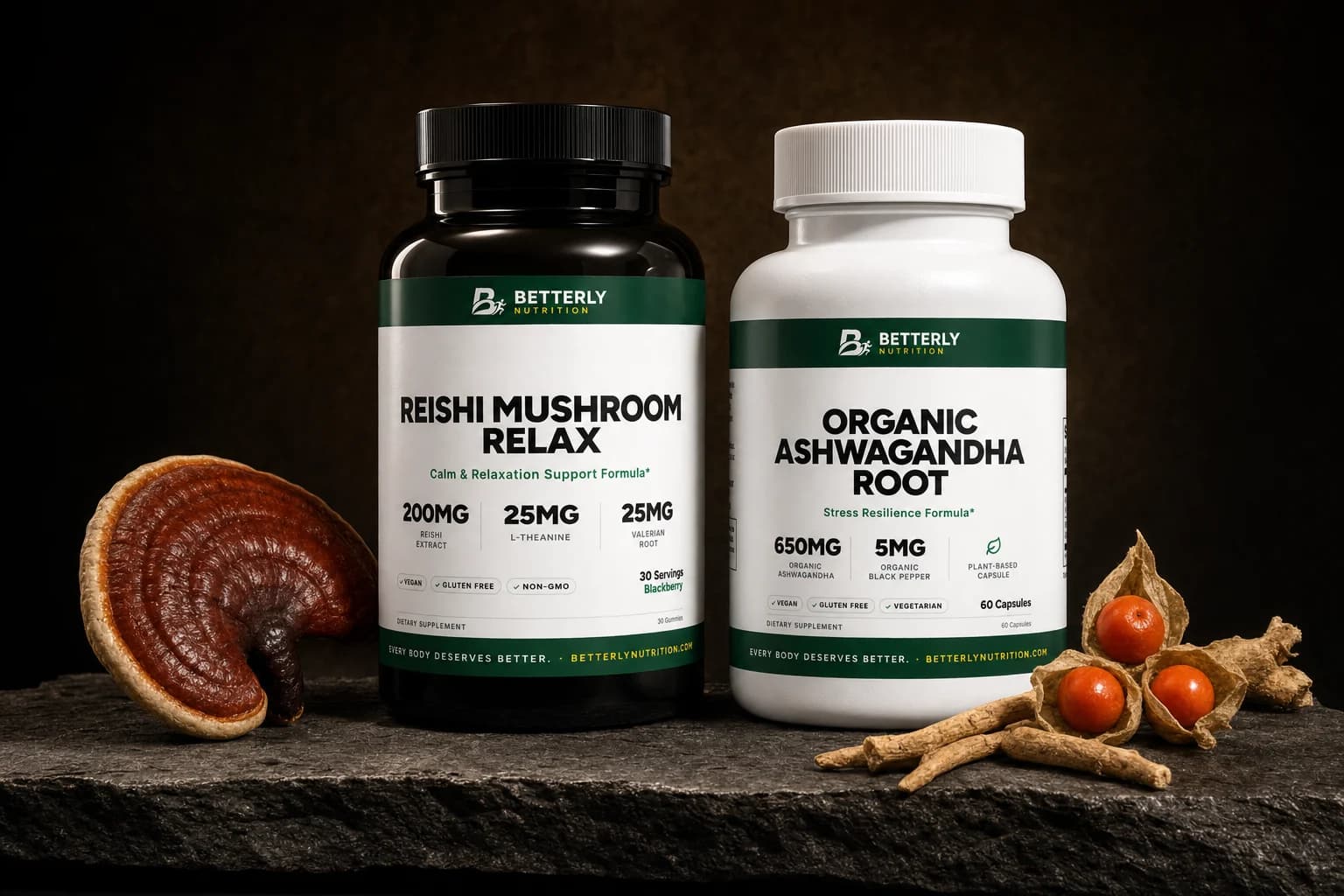
Our Organic Ashwagandha Root Capsules take a plainer route: 650 mg of organic ashwagandha root per 1-capsule serving, with no withanolide percentage printed.
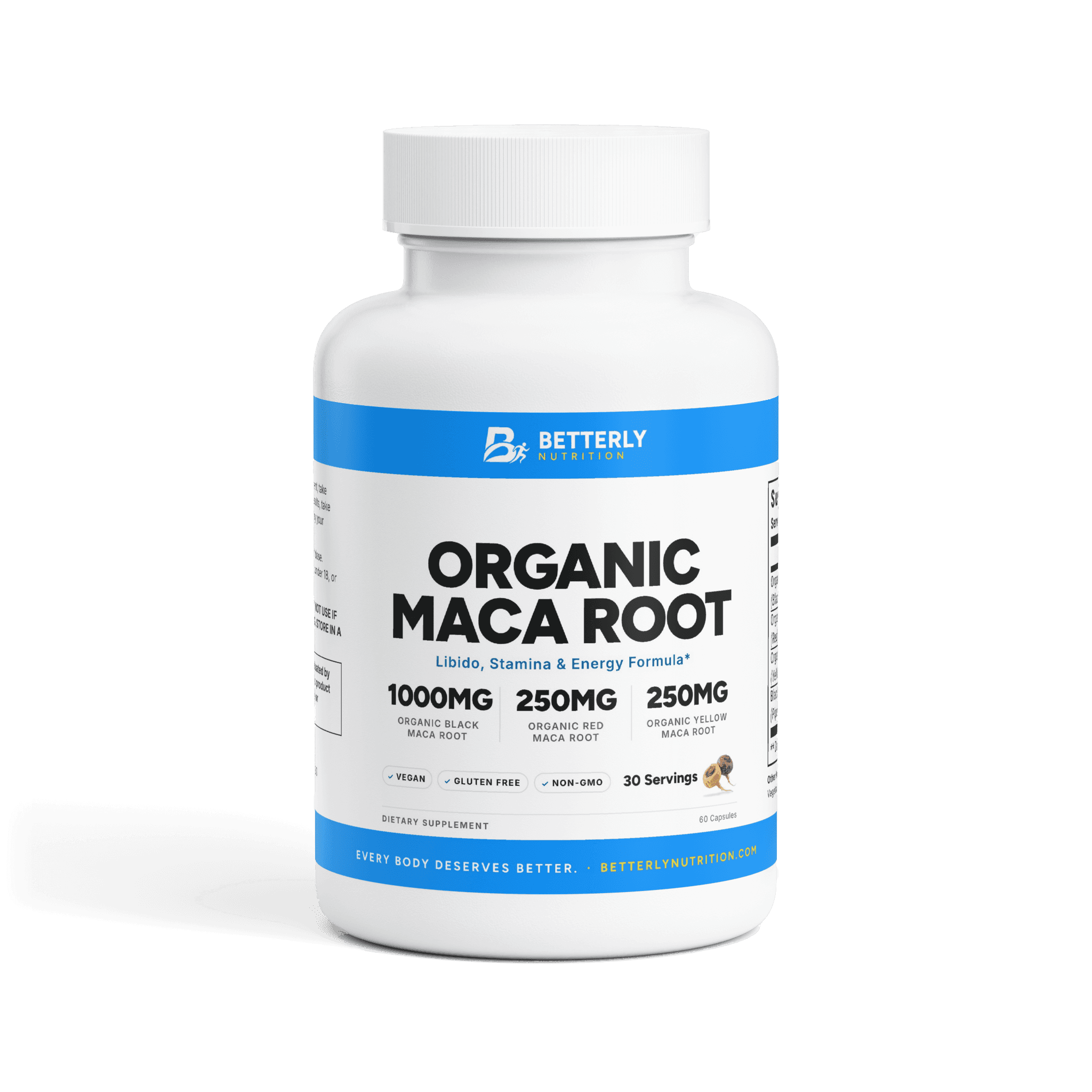
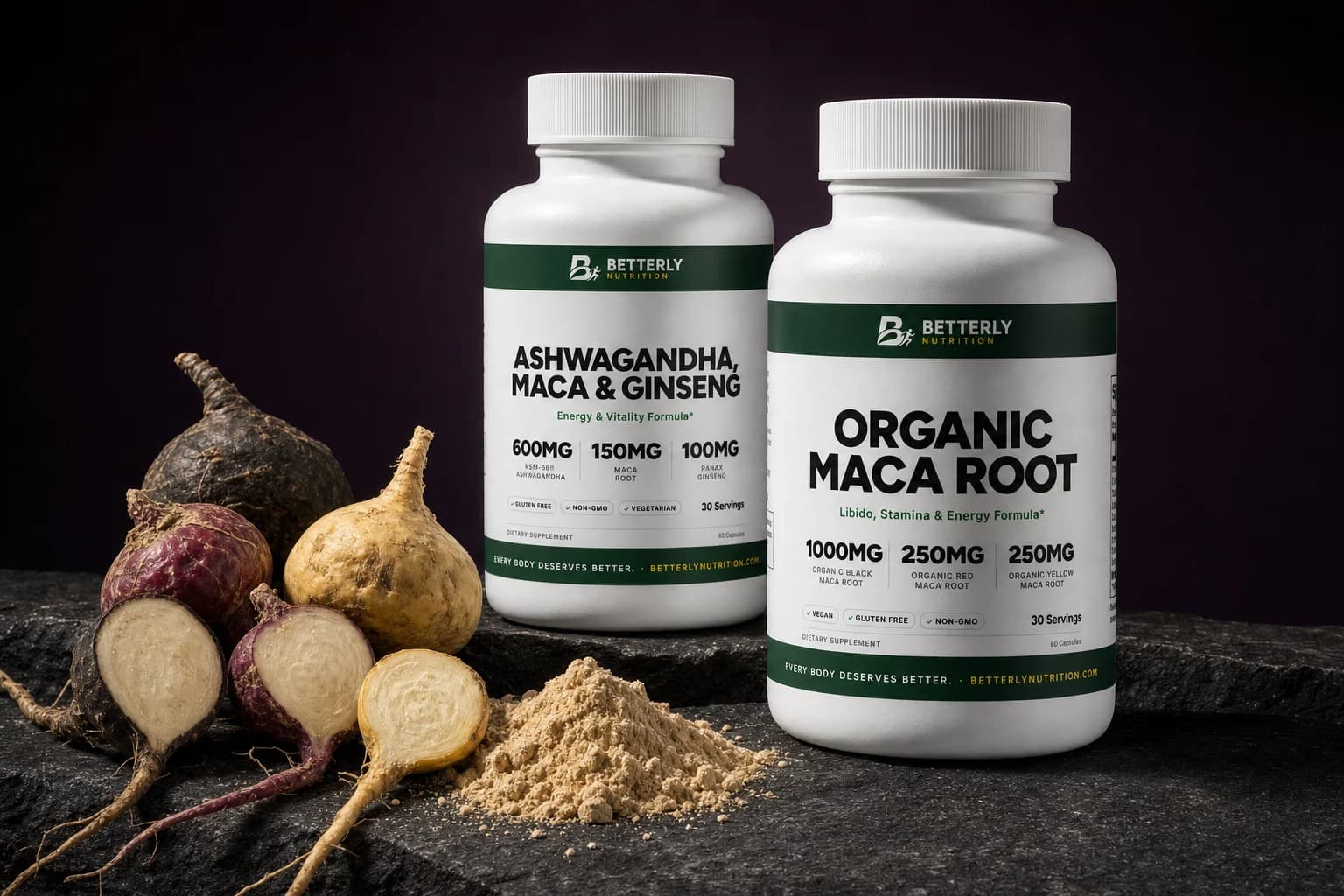
If maca is the draw, look at the Organic Maca Root Capsules. Each 2-capsule serving lists 1,000 mg of black, 250 mg of red and 250 mg of yellow organic maca root, 1,500 mg in all. That matches the smaller daily amount in the 2002 men's trial by weight, not by material. Those men got gelatinized maca, and the review calls single-dose study amounts "extract quantities," while our panel lists plain organic root, neither gelatinized nor extract. The review also says the best maca dose is unknown.
From our shop: Organic Maca Root Capsules — the bottle for a maca-first plan, with ten times the blend's maca: 1,500 mg of black, red and yellow organic maca root per 2-capsule serving.
How do you take maca and ashwagandha, per the label?
Betterly's three labels differ: maca is two capsules before one meal, ashwagandha root is one capsule before each of two meals, and the blend is two capsules with water.
- Organic Maca Root Capsules: the label's suggested use is two capsules once a day, 20 to 30 minutes before a meal. The bottle holds 30 servings.
- Organic Ashwagandha Root Capsules: one capsule twice a day, 20 to 30 minutes before a meal, with an 8 oz (237 ml) glass of water. The 60 capsules last a month.
- Ashwagandha, Maca & Ginseng Capsules: adults take two capsules daily with 6 to 8 oz (177 to 237 ml) of water, and the directions don't mention meals. It's also 30 servings.
All three cautions begin "Do not exceed recommended dose," so skip extra capsules meant to chase a trial amount.
Some online advice assigns maca to breakfast and ashwagandha to bedtime. Our labels don't make that split: two tie the capsules to meals, and the blend leaves timing open. Drowsiness is on NCCIH's list of possible ashwagandha effects, so learn how the root lands for you on a day off, before a serving lines up with a commute.
Plain root and standardized extract don't compare milligram for milligram, and our longer ashwagandha explainer walks through the forms.
From our shop: Ashwagandha, Maca & Ginseng Capsules — the pick when ashwagandha is the priority, with 600 mg of KSM-66® extract standardized to 5% withanolides per 2-capsule serving, plus smaller amounts of maca, Panax ginseng and shatavari.
When should you skip maca, ashwagandha or our blend?
Skip maca, ashwagandha or both when you want what their evidence doesn't cover: a measured stress result from maca, a hormone change, or a same-day lift.
- You want a stress result measured on validated questionnaires, but you were leaning toward maca. The maca papers we read offer no such trial.
- You want maca, not ashwagandha. The blend is 600 mg of KSM-66® with 150 mg of maca riding along, so it's the wrong bottle for a maca-first plan.
- You're shopping for a hormone change. Maca's 2002 trial saw testosterone and estradiol hold level, and our labels make no hormone claim either.
- You need to feel different by this afternoon. None of our three panels lists caffeine, and trials of both roots ran for weeks, not hours.
- You're not sure what's wearing you down. A healthcare provider can help sort that out first.
Who should talk to a healthcare provider before maca or ashwagandha?
Maca and ashwagandha both call for a provider's input first if you're under 18, expecting or breastfeeding, have an operation coming, take prescription drugs, or manage a medical condition.
Maca: a label caution and little else. Our maca bottle's caution matches the other two word for word: consult a physician if pregnant, nursing, under 18, or have a medical condition. We found no NIH or NCCIH fact sheet devoted to maca, and the 2010 review's four trials didn't check for side effects. With medicines in the picture, maca is untested, not cleared.
Ashwagandha: specific federal flags. Beyond pregnancy and breastfeeding, NCCIH steers people with surgery ahead away from the root, along with people whose doctor is managing their thyroid or immune function. It also names possible interactions with several kinds of prescription drugs, including sedatives and thyroid hormone, so give a pharmacist your medicine list before the first capsule. Liver injury has rarely been tied to ashwagandha supplements, as NCCIH notes and ODS describes case by case.
Our blend inherits every ashwagandha flag and adds Panax ginseng, L-arginine, shatavari and vitamins D3, B6 and B12, so show a pharmacist the whole panel. For a group-by-group walk-through, see who should avoid ashwagandha.
FAQ: maca vs ashwagandha
Is maca or ashwagandha better for libido?
Maca is the one whose small trials looked at desire, and the evidence is early. In a 2002 trial, healthy men on maca rated their desire higher than a placebo group while their testosterone held steady. A 2010 review of four small trials still called maca's evidence limited. The ashwagandha trials ODS summarizes focused on stress and sleep. Read libido wording on any label, ours included, as a prompt for questions, not a promise.
Is maca or ashwagandha better for sleep?
Of the two, only ashwagandha has been tested for sleep. Across five trials with 372 adults, ODS reports, the extract beat placebo by a small but statistically significant margin. The effect looked stronger at 600 mg a day than at lower amounts. We found no maca sleep trial. Our blend's KSM-66® comes to 600 mg per 2-capsule serving, but that exact formula has never been trialed.
Is maca a type of ginseng?
No, maca isn't ginseng, and ashwagandha isn't either. The 2010 review places maca in the brassica, or mustard, family. ODS explains that "Indian ginseng" is only a nickname for ashwagandha, since the shrub doesn't belong to the ginseng family. Real ginseng does appear in our blend, on its own panel line: 100 mg of Panax ginseng powder per 2-capsule serving.
Do maca and ashwagandha have side effects?
Ashwagandha has known side effects, while maca's are largely unmeasured. According to NCCIH, some people get drowsiness, an upset stomach, diarrhea or vomiting from ashwagandha, and a number of rare liver injury cases have been linked to its supplements. For maca, the trials in the 2010 review never checked, so there's no list to quote. If you notice a change after starting either root, pause it and ask your provider or pharmacist.
How long can you take maca and ashwagandha?
Neither root has a tested long-term answer. NCCIH describes ashwagandha as possibly safe short term, up to 3 months, with too little information to judge longer use. For maca, the trials in the 2010 review ran no longer than 12 weeks. Our labels give daily directions but no stopping point. If you've been taking either one for about a season, that's a natural time to review it with your provider.
Sources
- Ashwagandha: Fact Sheet for Health Professionals, NIH Office of Dietary Supplements
- Ashwagandha: Usefulness and Safety, National Center for Complementary and Integrative Health
- Maca (L. meyenii) for improving sexual function: a systematic review, BMC Complementary and Alternative Medicine, 2010 (PubMed Central)
- Effect of Lepidium meyenii (MACA) on sexual desire and its absent relationship with serum testosterone levels in adult healthy men, Andrologia, 2002 (PubMed)
If this left you looking for somewhere to start, read ashwagandha and maca capsules with 600 mg KSM-66 — its amounts per serving are listed on the page. For the practical questions this raises, how dosing, sourcing and subscriptions work is answered in one place.