On this page
- Key takeaways
- What does research say about maca root benefits?
- What is maca root, and why is it called an adaptogen?
- Is maca root good for women?
- Is maca root good for men?
- Does maca root change hormone levels?
- How much maca did trials use, and how does our capsule compare?
- How do you take maca root capsules?
- What won't maca do, and when can you skip it?
- Who should ask a healthcare provider before starting maca?
- FAQ: maca root
- Sources
The short answer: Maca root benefits are modest and rest on a few small trials. Healthy adults on maca reported better energy and mood at one trial site, and healthy men reported more desire, with no change in testosterone. Our Organic Maca Root Capsules list 1,500 mg of maca root per 2-capsule serving. That matches the lower dose in the 2002 men's trial, which used gelatinized maca, while the energy-and-mood trial used an extract made from about 13 times more root.
Key takeaways
- The best maca findings are self-reported: in small trials, people taking maca rated their energy, mood or desire higher than people on a placebo did.
- In a 12-week trial of healthy men, maca didn't change testosterone or estradiol levels compared with placebo.
- A 2010 review of maca and sexual function found only four placebo-controlled trials, 131 people in all, and called the evidence limited.
- The four trials in a 2010 review used 1.5 g to 3.5 g a day; our tri-color capsules give 1,500 mg per 2-capsule serving and our ashwagandha blend gives 150 mg per 2-capsule serving.
We sell two products with maca in them, so weigh our take with that in mind. Every product number below comes off our own labels, and every study is linked, including the results that shrink maca's case.
What does research say about maca root benefits?
Research on maca root benefits is small and mostly self-reported: a few trials found more energy, mood or desire with maca, often at one site only, and no hormone changes.
"Self-reported" means people rated how they felt on a questionnaire. That's real information, but it's softer than a blood test.
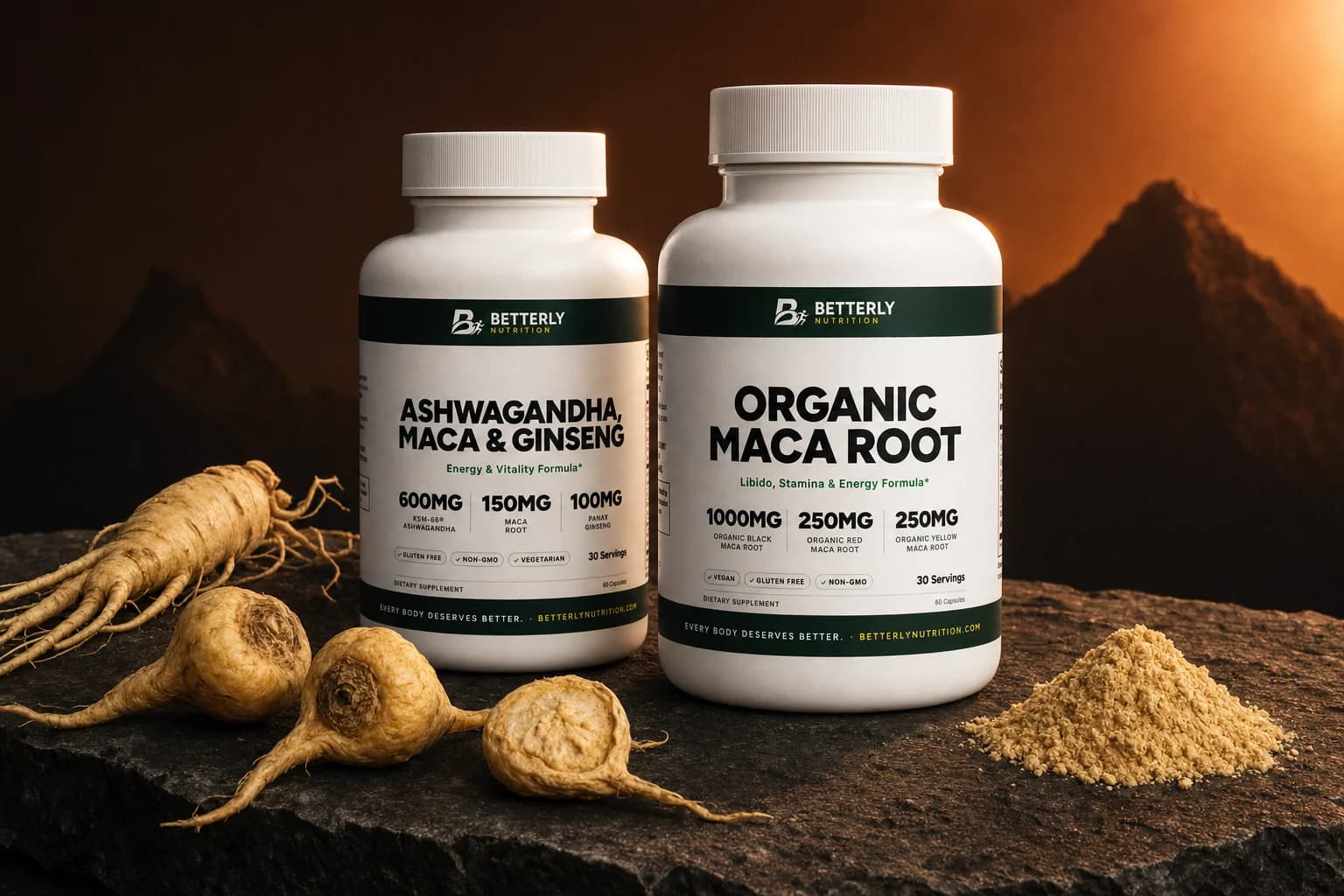
Our bottle's front reads "Libido, Stamina & Energy Formula." Here's how those words, plus hormones, hold up in the research we opened:
| Claim you'll see | What the trials we read found | Our honest read |
|---|---|---|
| More energy | Beat placebo at the low-altitude site only | Modest, self-reported |
| Better mood | Beat placebo at the low-altitude site; mixed at altitude | Modest, self-reported |
| Healthy libido | More desire in healthy men; mixed by site in a larger trial | Small and mixed |
| Stamina | No result that beat placebo in our sources | Not shown |
| Hormone shifts | Testosterone and estradiol unchanged in healthy men | No change found |
So energy and mood have the most support, and even that held cleanly at only one of the two sites. Libido has a little, and stamina and hormone claims have none we could find.
The largest trial we found was published in 2016 in the journal Pharmaceuticals. It gave 175 adults aged 18 to 65 in Peru either 3 g of maca extract or a placebo every day for 12 weeks. More people in the maca groups agreed, on a 5-point scale, that their mood and energy had improved. The results split by site, though: at the high-altitude site, energy rose in every group, placebo included, and the authors called that a placebo effect.
The other key paper is a 2010 systematic review in BMC Complementary and Alternative Medicine on maca and sexual function. It found only four placebo-controlled trials, with 8 to 57 people each. The authors wrote that the trials were too few, too small and too flawed for firm conclusions.
What is maca root, and why is it called an adaptogen?
Maca root (Lepidium meyenii) is a mustard-family vegetable from Peru's Andes, often called an adaptogen: a loose label for herbs said to help the body cope with stress.
It grows at about 4,000 m and has been eaten there as food for centuries.
The part people eat is a swollen bulb where the root meets the stem, called a hypocotyl. It's dried and ground, then sold in a few forms:
- Raw powder: dried, ground maca, often stirred into food.
- Gelatinized maca: a processed powder sold under that name. The 2002 healthy-men trial used a commercial gelatinized product.
- Extract: a concentrate made from a larger amount of root, like the 2016 trial's spray-dried extract.
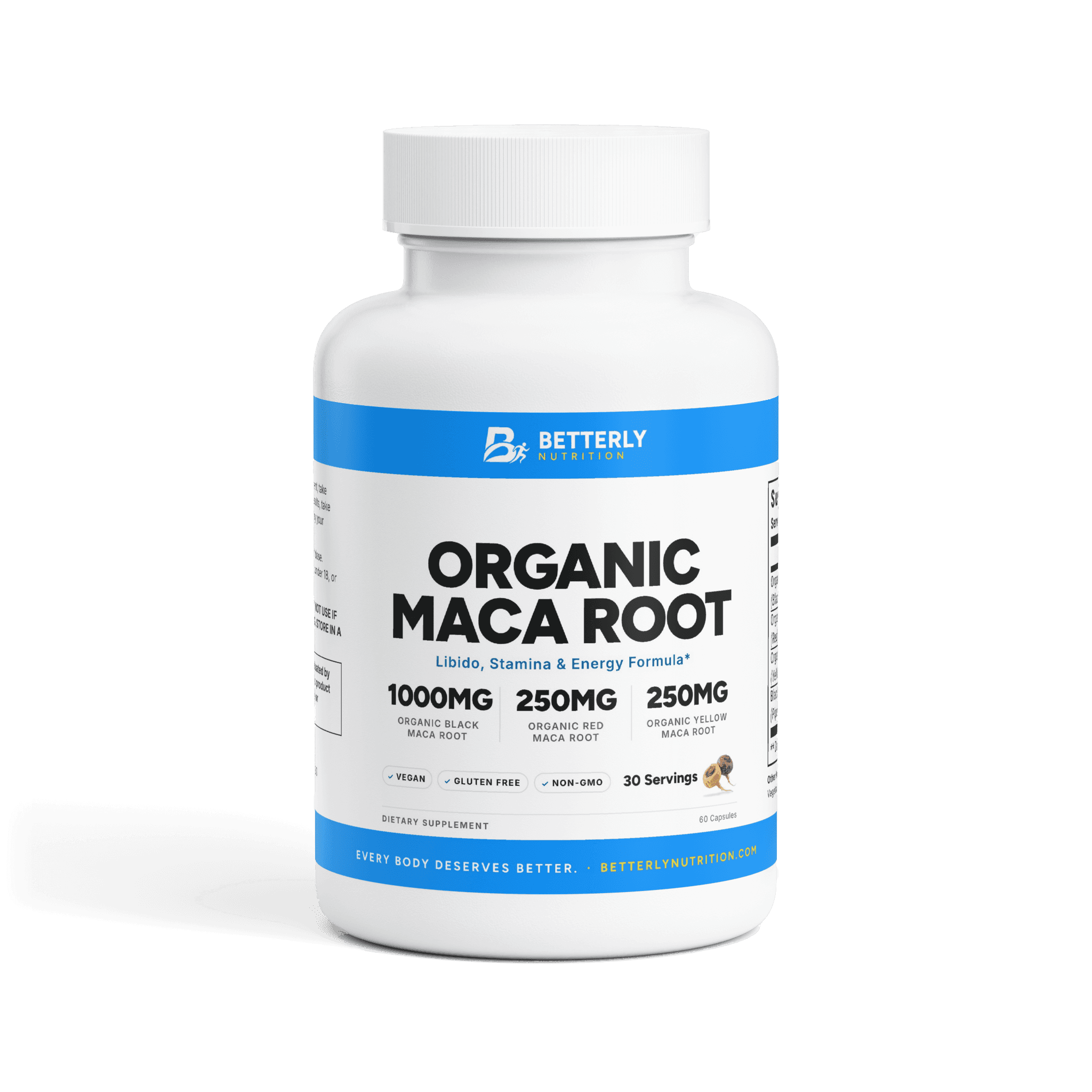
Our tri-color panel lists "Organic Maca Root" in three colors, with no mention of gelatinizing and no extract ratio. If you're wondering whether color matters, our guide to black, red and yellow maca takes that on.
Our primer on what "adaptogen" really means explains what that word does and doesn't promise. Maca sits with ashwagandha and holy basil on our adaptogen shelf.
Is maca root good for women?
Maca root's evidence for women is thin: one 12-week trial enrolled women and men together, and its energy and mood results weren't reported by sex.
The 2010 review's only trial in women enrolled 16 women with an average age of 54. Its result was positive, but 16 women of one age group can't speak for all women. In the 2016 trial, red maca beat placebo on desire at one site but not the other, and the paper didn't report women's results separately. So we can't point to good evidence that maca supports libido in women.
Search "maca root benefits for women" and you'll find promises about body shape, weight and "balanced" hormones. The 2016 trial tracked body mass index in its women and men and found no change with maca compared with placebo. None of our sources measured body shape or women's hormones, so we don't claim them.
Is maca root good for men?
Maca root's clearest finding for men comes from one 12-week trial: healthy men reported more desire than the placebo group, while their testosterone stayed the same.
That trial, published in Andrologia in 2002, gave men aged 21 to 56 either 1,500 mg or 3,000 mg of gelatinized maca a day, or a placebo. The change in desire didn't track with the men's mood scores.
Look closer and the finding shrinks. The 2010 review counted 57 men in that trial, with only 12 on placebo. It noted that desire was rated on a simple scale the reviewers couldn't confirm was validated, and that the two maca groups were pooled before being compared with placebo. The honest summary: maca may support a healthy libido in healthy men, and the evidence is early.
As for stamina, the middle word on our label, we found no placebo-controlled result for it. Read that word as the formula's aim, not a finding.
The National Center for Complementary and Integrative Health (NCCIH) warns that some products sold as supplements, mostly ones promoted for weight loss, sexual enhancement or bodybuilding, may contain prescription drugs or ingredients missing from the label. A maca product that promises fast, dramatic results is a reason to walk away.
Does maca root change hormone levels?
Maca root didn't change hormone levels in the one trial we read that measured them: healthy men's testosterone and estradiol matched the placebo group's.
Estradiol is the main form of estrogen, and men make it too.
We didn't find a trial measuring women's hormone levels among our sources. So when a label or a post says maca "balances hormones," ask what was measured, and in whom. Maca isn't a hormone, our panel lists none, and you won't see us market it as one.
How much maca did trials use, and how does our capsule compare?
The four trials in a 2010 review used 1.5 g to 3.5 g a day; Betterly's Organic Maca Root Capsules give 1,500 mg per 2-capsule serving, the low end.
Here's how the tri-color capsule and our Ashwagandha, Maca & Ginseng Capsules compare with the research:
| Source | Maca per day | Versus our 1,500 mg |
|---|---|---|
| Healthy-men trial, 2002 | 1,500 mg or 3,000 mg gelatinized | Equal, or double |
| Mixed-adult trial, 2016 | 3 g extract (about 20 g dried maca) | Roughly 13 times more |
| Four trials, 2010 review | 1.5 g to 3.5 g | Bottom of the range |
| Our ashwagandha blend | 150 mg maca root powder | One-tenth |
By weight, our tri-color serving lines up with the lower arm of the healthy-men trial. By material, it doesn't quite, since that trial used gelatinized maca and our label doesn't say ours is. The 2016 authors wrote that 20 g of dried maca represents almost 3 g of their extract, far more root than any capsule holds.
Per 2-capsule serving, our panel lists black maca root at 1,000 mg and red and yellow at 250 mg each, plus 5 mg of black pepper fruit.
Please don't chase the 3,000 mg arm by doubling up. That would mean four capsules, and our label says two, once a day, and "Do not exceed recommended dose." The 2010 reviewers also wrote that the best dose of maca is unknown.
From our shop: Organic Maca Root Capsules — a 2-capsule serving holds 1,500 mg of organic maca root in three colors, and the bottle's claims read vegan, gluten free and non-GMO.
How do you take maca root capsules?
Take Betterly's Organic Maca Root Capsules as the label says: "take two (2) capsules once a day," and for best results, "20-30 min before a meal."
- At that rate, a 60-capsule bottle is a 30-day supply.
- The panel lists no caffeine, so nothing ties maca to mornings. Anchor the serving to a meal you never skip; our guide to maca timing covers when to take it.
- The capsule itself is hypromellose, a plant-based shell.
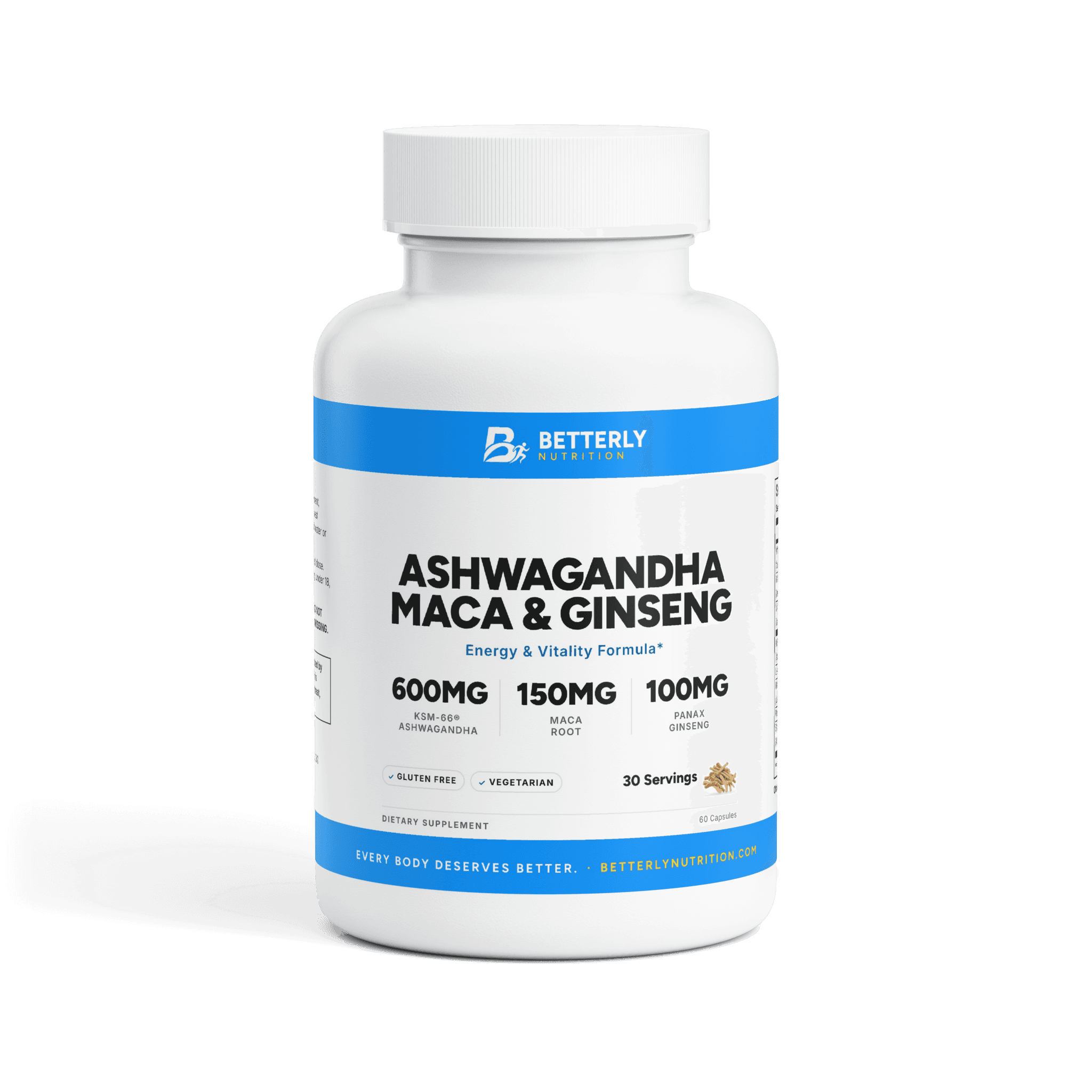
The Ashwagandha, Maca & Ginseng Capsules read differently. That label asks adults for two capsules daily, washed down with 6 to 8 oz of water. Each 2-capsule serving carries 600 mg of KSM-66® ashwagandha extract, 300 mg of L-arginine, 100 mg of Panax ginseng powder and 50 mg of shatavari root powder.
It adds vitamins too: 20 mcg of vitamin D3 (100% DV), 2.5 mg of B6 (147% DV) and 25 mcg of B12 (1042% DV). If a multivitamin you take lists vitamin D, total them up first. Ashwagandha is that blend's headline, and our ashwagandha benefits and dosing guide covers it in depth.
Taking both bottles would add up to 1,650 mg of maca a day, which neither label accounts for, so ask your provider first.
From our shop: Ashwagandha, Maca & Ginseng Capsules — a 2-capsule serving pairs 150 mg of maca root with 600 mg of KSM-66® ashwagandha and 100 mg of Panax ginseng, plus vitamins D3, B6 and B12.
What won't maca do, and when can you skip it?
Maca won't act like caffeine, didn't shift hormone levels in the one trial that checked, and won't reshape your body, so skip it for those goals.
Leave these off your maca wish list:
- A quick lift. The panel lists no caffeine, and the energy findings came from weeks of questionnaires. For options without a jolt, see our rundown of caffeine-free energy picks.
- Hormone shifts. The one trial we read that measured hormones found no change.
- Body shape or weight changes. The 2016 trial tracked body mass index for 12 weeks and saw no difference from placebo, and we don't promise either.
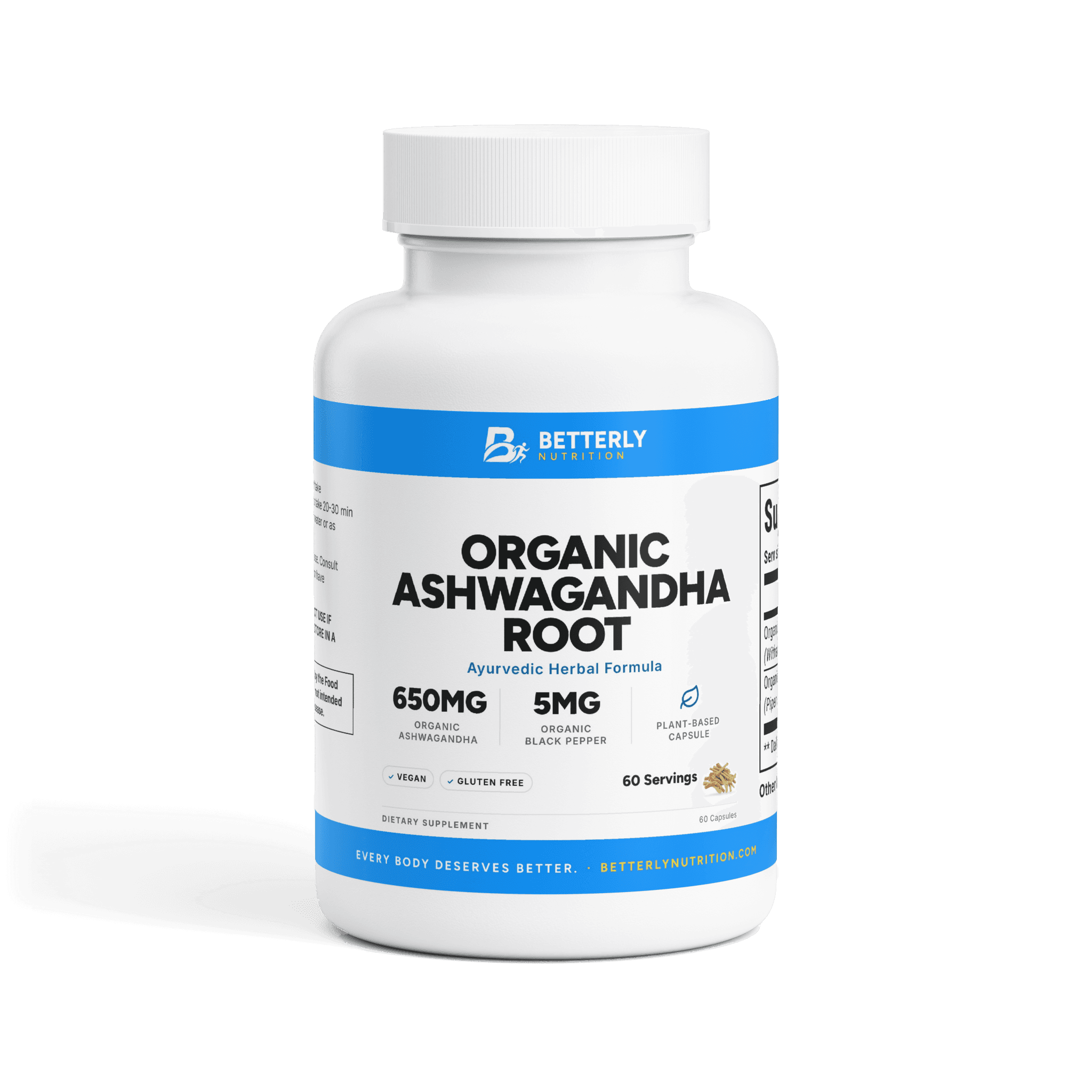
Skip the Ashwagandha, Maca & Ginseng blend if maca is the reason you'd buy it: its 150 mg per 2-capsule serving is one-tenth of the smallest trial amount. If ashwagandha is what you're after, our Organic Ashwagandha Root Capsules list 650 mg of organic ashwagandha per 1-capsule serving.
Who should ask a healthcare provider before starting maca?
Ask a healthcare provider before starting maca if you're pregnant, nursing or under 18, live with a medical condition, take prescription medication, or have surgery coming up.
Pregnancy, nursing, age and medical conditions all come straight from our label's caution. According to NCCIH, supplements can clash with prescription or over-the-counter medicines. NCCIH's advice for anyone facing an operation is to tell the surgical team about every supplement well ahead, since some affect bleeding or anesthesia.
Maca's safety record is thinner than its marketing. None of the four trials in the 2010 review looked for side effects, and the reviewers called knowledge of maca's risks insufficient. The 2016 trial tracked them and reported no serious adverse effects over 12 weeks, but it only enrolled people who weren't taking medication. Our maca side effects guide goes deeper.
The blend brings ashwagandha's own cautions, so read the safety notes in our ashwagandha guide first. Stop and call your provider if anything feels off after you start.
FAQ: maca root
How long does maca take to work?
Nobody can give you an honest maca timeline. The trials we read lasted between 2 and 12 weeks, which reflects how researchers planned them, not when you'd notice anything. Our label sets no time frame either. If you try maca, stick to the label's two capsules a day and jot down notes on your energy and mood.
Is it safe to take maca root every day?
Maca root is labeled for daily use, but long-term safety data is thin. Our label says two capsules once a day, and no more. The largest trial we read gave adults maca extract daily for 12 weeks and reported no serious adverse effects, while a 2010 review noted its four trials didn't assess side effects at all. If you're on any medication, clear it with your provider.
Can you take maca while pregnant or breastfeeding?
Don't start maca while pregnant or breastfeeding without your provider's go-ahead. Our label's caution names pregnancy and nursing as reasons to consult a physician. NCCIH points out that plenty of supplements were never tested in pregnant women or nursing mothers. The largest maca trial we read excluded pregnant women, so we have no maca-specific pregnancy data.
Does maca root have caffeine?
No, our maca root capsules list no caffeine. Per 2-capsule serving, the panel shows maca root in three colors plus 5 mg of black pepper fruit, and nothing else active. The energy findings in maca trials came from questionnaires filled out over weeks, so don't expect maca to feel like your morning coffee.
What is gelatinized maca?
Gelatinized maca is a processed maca powder sold under that name, and the 2002 trial of healthy men used a commercial gelatinized product. The papers we opened don't detail the process, so we won't guess at it. Our tri-color panel lists organic maca root and doesn't say gelatinized, so don't assume the two are interchangeable. A label that names its form is easier to compare with the research.
Sources
- Effect of Lepidium meyenii (MACA) on sexual desire and its absent relationship with serum testosterone levels in adult healthy men, Andrologia, 2002 (PubMed)
- Maca (L. meyenii) for improving sexual function: a systematic review, BMC Complementary and Alternative Medicine, 2010 (PubMed Central)
- Acceptability, Safety, and Efficacy of Oral Administration of Extracts of Black or Red Maca (Lepidium meyenii) in Adult Human Subjects, Pharmaceuticals, 2016 (PubMed Central)
- Using Dietary Supplements Wisely, National Center for Complementary and Integrative Health
If this left you looking for somewhere to start, read organic maca root capsules, 1,500 mg per serving — its amounts per serving are listed on the page. For the practical questions this raises, how dosing, sourcing and subscriptions work is answered in one place.