On this page
Ashwagandha has been used in Ayurvedic traditions for thousands of years, and lately it's become one of the most talked-about herbs on supplement shelves. If you've been curious about the ashwagandha benefits people mention for stress, sleep, and general resilience, this guide walks through what the herb actually does, how to take it, and how to fit it into a routine that already includes the basics. We're not here to sell you a miracle — just to make the honest version easy to understand.
What ashwagandha is
Ashwagandha (Withania somnifera) is a small shrub whose roots have long been used in traditional wellness practices across India and parts of the Middle East and Africa. It's classified as an adaptogen — a category of herbs thought to help the body handle everyday physical and mental stress. If the word "adaptogen" is new to you, our primer on adaptogens and how they work is a good companion read.
Most modern supplements use a concentrated root extract, and you'll often see a specific branded extract on the label along with a standardization percentage (more on that below). The point is simple: ashwagandha is a plant, used for a long time, now available in a convenient, consistent form.
The main ashwagandha benefits people look for
It's worth being clear up front: a supplement isn't a treatment, and no herb replaces sleep, food, movement, or managing what's stressing you. With that framing, here's what people typically reach for ashwagandha to support.
Helping the body handle stress
The most common reason people take ashwagandha is to support the body's normal response to everyday stress. As an adaptogen, it's used to promote a sense of calm and steadiness when life feels busy — think a demanding week at work rather than anything clinical.
Supporting restful sleep
The species name somnifera literally hints at sleep, and ashwagandha is a longtime favorite for people who want to support relaxation and a good night's rest. It's often taken in the evening as part of a wind-down routine. It won't out-work a phone in bed at midnight, but paired with consistent habits, it can be one part of an evening routine. If sleep is your main goal, you might also browse our Sleep & Stress Relief supplements for related options.
Everyday calm and focus
Because it's used to support a steadier stress response, some people also feel it helps them stay composed and maintain focus during the day. Experiences vary — this is one of those herbs where paying attention to your own response over time matters more than any single claim.
How to take ashwagandha
Dose and forms
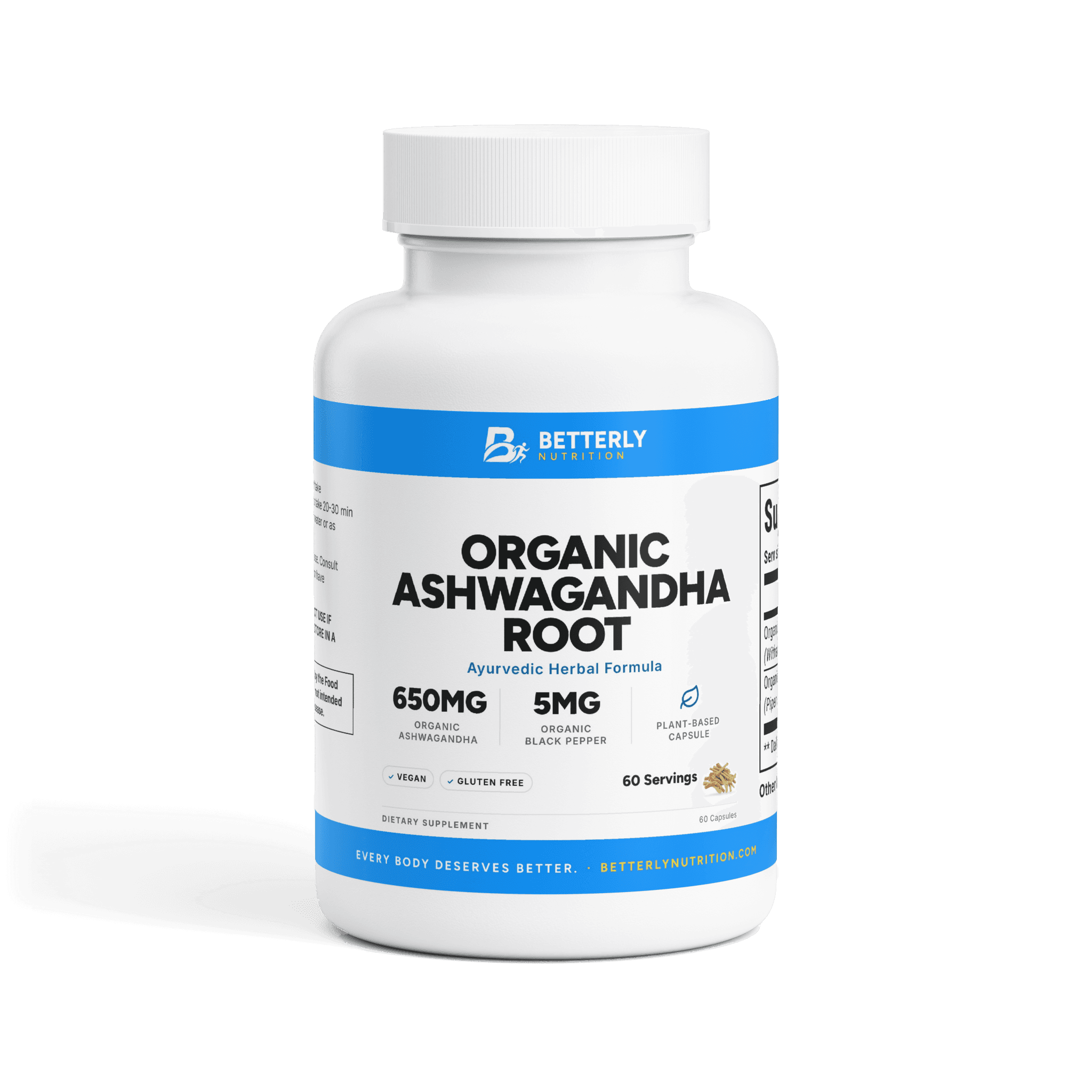
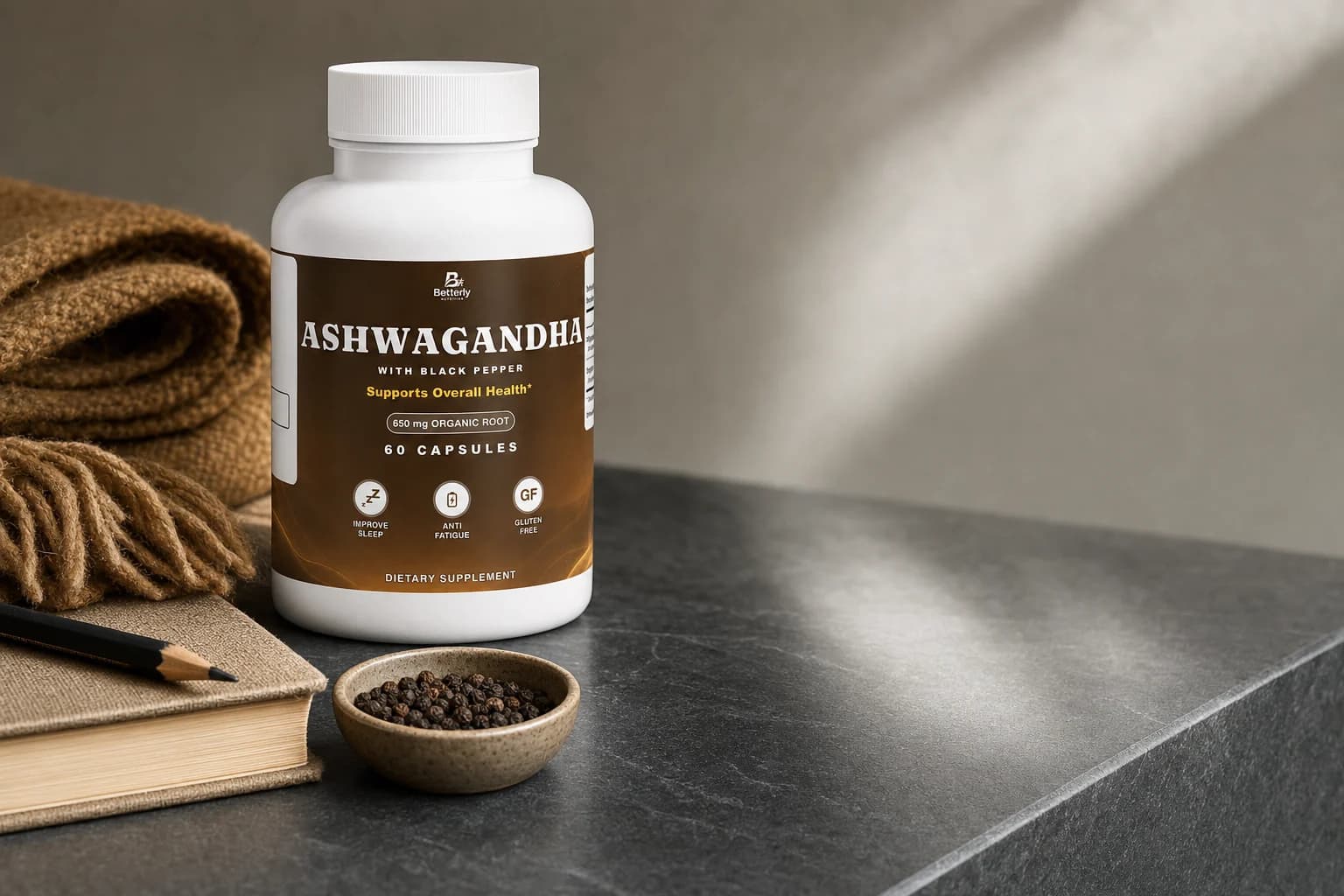
Ashwagandha commonly comes as capsules, powders, and gummies. Extract-based products are often standardized to a percentage of withanolides (the naturally occurring compounds studied in the root), so the label will usually tell you both the total milligrams and the standardization. Follow the serving size on the product you choose rather than guessing, and if you're comparing options, look at the extract and standardization, not just the headline milligram number. For transparency: our Organic Ashwagandha Root Capsules list organic ashwagandha root (650 mg per 1-capsule serving, with 5 mg organic black pepper) rather than a standardized extract, so there's no withanolide percentage on our label.
Timing: morning or night?
There's no universal rule, and it comes down to your goal:
- For daytime calm: many people take it in the morning.
- For sleep support: an evening dose as part of a wind-down routine is popular.
Some people split their serving between morning and evening. If you take our Organic Ashwagandha Root Capsules, the label's suggested use is one capsule twice a day before meals. Consistency tends to matter more than the exact clock time — adaptogens are generally used steadily rather than as a one-off.
With or without food
Directions differ by product, so follow your label. The suggested use on our Organic Ashwagandha Root Capsules is one capsule twice a day, 20-30 minutes before a meal with an 8 oz (237 ml) glass of water, or as directed by your healthcare professional. The National Center for Complementary and Integrative Health (NCCIH) lists stomach upset among possible side effects. If it happens, stop and check with a healthcare professional. Tying your dose to a habit you already have, like brushing your teeth, makes it easier to remember.
How long to take it
There's no set point at which you should expect to notice anything, and experiences vary. According to NCCIH, ashwagandha may be safe when taken in the short term (up to 3 months), but there isn't enough information to judge its long-term safety. Ask a healthcare professional how long it makes sense for you. If you like keeping notes, jot down how you feel — it's the most reliable way to know whether it's earning a place in your routine.
Where ashwagandha fits in a healthy routine
This is the honest part. Ashwagandha is at its best as one small, supporting piece of a routine that already covers the fundamentals:
- Sleep you actually protect (consistent schedule, a real wind-down).
- Food that mostly nourishes you.
- Movement you enjoy enough to keep doing.
- Stress you're managing at the source, not just softening.
A supplement can support the edges of all that. It can't out-run a routine that's missing the middle. If you keep that expectation, you're far more likely to feel good about what you're taking.
Who should check with a healthcare provider first
Supplements aren't right for everyone or every moment. Skip ashwagandha if you're pregnant or breastfeeding. According to NCCIH's ashwagandha safety page, it should be avoided during pregnancy and not used while breastfeeding, and it isn't recommended if you're about to have surgery. Talk with a qualified healthcare professional first if you're under 18, take any prescription medication, or are managing a medical condition, especially one involving your thyroid. Don't take more than the label's suggested use. NCCIH also notes rare cases linking ashwagandha supplements to liver injury. If anything doesn't agree with you, stop and check in with a professional. This article is educational and isn't personal health advice.
Key takeaways
- What it is: an adaptogenic herb (Withania somnifera) used traditionally and now sold mostly as root extracts, according to the NIH Office of Dietary Supplements.
- Why people take it: to support the body's normal stress response, promote relaxation and restful sleep, and support everyday calm.
- How to take it: follow your product's label; ours suggests one capsule twice a day, 20-30 minutes before a meal with a glass of water, and consistency matters more than exact timing.
- The honest frame: it supports — it doesn't replace — sleep, food, movement, and managing stress.
- Skip it if: you're pregnant, breastfeeding or about to have surgery (per NCCIH). Check with a professional first if: you're under 18, take prescription medication, or are managing a medical condition, especially one involving your thyroid.
Try it as part of your routine
If a calmer, steadier baseline is what you're after, our Organic Ashwagandha Root Capsules are a simple way to add this classic adaptogen to a routine you're already building. No hype, no pressure — just a well-made option to try alongside the habits that do the heavy lifting. And if better sleep is the goal, the Sleep & Stress Relief collection is a good place to look next.
Sources
- Ashwagandha: Usefulness and Safety (NCCIH)
- Ashwagandha: Fact Sheet for Health Professionals (NIH Office of Dietary Supplements)
If this left you looking for somewhere to start, read our organic ashwagandha root capsules, 650 mg each — its amounts per serving are listed on the page. For the practical questions this raises, how dosing, sourcing and subscriptions work is answered in one place.