On this page
- Why your mind speeds up the moment the lights go off
- Step 1: Give the day a place to end — the five-minute brain dump
- Step 2: Dim the inputs — screens, bright light, and late caffeine
- Step 3: Pick one repeatable wind-down ritual and keep it boring
- Step 4: Slow your breathing, settle your nervous system
- What to do when you still can't stop thinking at night
- Where calming supplements fit (and where they don't)
- A sample 60-minute wind-down, start to finish
- When it's worth talking to a professional
- FAQ: quieting your mind before bed
It's a cruel bit of timing: the moment you finally lie down, your brain decides it's time to review everything. If that's your nightly pattern, this guide walks through how to calm a racing mind at night with a realistic routine — a five-minute brain dump, dimmer evenings, one boring ritual, slower breathing, and an honest look at where calming supplements fit. No perfection required, and no miracle promised. Just small, repeatable steps that give your mind permission to clock out.
Why your mind speeds up the moment the lights go off
Your brain doesn't actually get louder at night. The noise just finally has room.
All day, your attention is occupied — work, errands, conversations, a phone that never stops offering something. Then you get into bed, the competition disappears, and everything you postponed comes forward at once: the email you didn't send, the awkward thing you said, the money question you've been dodging. Sleep researchers call this state cognitive arousal — your brain stuck in problem-solving mode at exactly the moment you need it to idle.
Two other things make it worse. First, thoughts genuinely feel bigger at night; the parts of your brain that handle logic and perspective wind down in the evening, so a minor worry can balloon at 1 a.m. in a way it never would at lunch. Second, pressure: "I have to fall asleep right now" is itself an alert, effortful thought, which is why trying harder so reliably backfires.
The way out isn't forcing your mind blank — nobody can do that. It's closing the day's open loops before you get into bed, and giving your body signals it can actually follow. That's what the next four steps do.
Step 1: Give the day a place to end — the five-minute brain dump
A surprising amount of nighttime mental chatter is just your brain trying not to forget things. It keeps repeating the unfinished list because it's afraid the list will disappear. So put the list somewhere safer than your head.
In one small study, people who spent five minutes writing out tomorrow's to-do list fell asleep faster — about nine minutes faster on average — than people who wrote about tasks they'd already finished. The more specific the list, the faster they drifted off. Researchers think the writing works as a kind of cognitive offloading: once a task is captured on paper, your brain can loosen its grip on it.
How to do it:
- Do it earlier in the evening, not while lying in bed. The point is to end the day before bedtime, not to bring the day into bed with you.
- Write two quick lists: what needs to happen tomorrow, and whatever is nagging at you tonight.
- Be specific. "Email Sam about the invoice by 10 a.m." unloads better than "work stuff."
- Close the notebook. The physical closing matters more than it sounds — it's the day, ending.
Then, when a thought pops up in bed anyway, you have a genuinely true answer for it: it's on the list.
Step 2: Dim the inputs — screens, bright light, and late caffeine
A racing mind is partly an input problem: an evening full of bright light and stimulating content keeps handing your brain new material to race about.
Light is the big one. Bright light — especially the up-close kind from a phone — tells your body it's still daytime and delays its natural wind-down signals. In the last hour before bed, switch to dim lamps and get the phone out of your hand. Not because screens are evil, but because your brain reads them as noon.
Content counts as an input too. News, work email, and arguments with strangers online are cognitive espresso. If you must scroll, scroll something boring.
And watch the chemistry: caffeine lingers in your system for hours, so an afternoon cup can quietly show up as a busy mind at 11 p.m. Alcohol may make you drowsy at first, but it tends to fragment the second half of the night. Neither has to disappear from your life — they mostly just need to move earlier in the day.
Step 3: Pick one repeatable wind-down ritual and keep it boring
A wind-down routine for sleep works less like an off switch and more like a cue. When the same simple actions happen in the same order most nights, your brain learns what comes next — and starts winding down on schedule instead of on demand.
Good candidates: reading fiction, a warm shower, light stretching, a caffeine-free tea, ten minutes of tidying the kitchen. Pick one or two. Do them in the same order. That's the whole system.
Two honest notes. First, boring is a feature, not a flaw — novelty is stimulation, and stimulation is the enemy here. Second, don't build a twelve-step evening ceremony you'll abandon by Thursday. The power is in the repetition, not in the specific activity, so choose something small enough to survive your worst week.
Step 4: Slow your breathing, settle your nervous system
Your mind follows your body more than we like to admit. When your breathing is slow and your exhale is long, you're sending a physical "we're safe, stand down" signal that a racing mind finds hard to argue with.
The best-known version is 4-7-8 breathing, popularized by integrative-medicine physician Andrew Weil: breathe in through your nose for a count of four, hold for seven, and exhale slowly through your mouth for a count of eight. Repeat for about four rounds. If the counts feel fussy, skip them — the active ingredient is simply an exhale that's longer than the inhale.
Prefer something more physical? Progressive muscle relaxation — tensing and releasing each muscle group from your feet up to your face — gives a restless mind a simple, quiet job to do.
None of this makes you fall asleep. It lowers the volume enough that sleep can show up on its own.
What to do when you still can't stop thinking at night
Some nights you'll do everything right and your mind will race anyway. Two tools for exactly that moment:
Cognitive shuffling. Developed by cognitive scientist Luc Beaudoin, this is deliberate mental static: pick a random word — say, cabin — and for each letter, picture a parade of unrelated images. C: candle, coffee cup, canoe. A: apple, anchor, attic. The task is engaging enough to crowd out worrying, but far too dull to keep you awake. In a small study of students, practicing this kind of serial imagining was associated with settling more easily at bedtime.
The get-up rule. If you've been wide awake and frustrated for what feels like twenty minutes or more, get out of bed. Sit somewhere dim, do something genuinely boring — a paper book, folding laundry — and come back when your eyes are heavy. It feels counterproductive, but lying in bed rehearsing frustration slowly teaches your brain that bed is a wrestling ring. And turn the clock away from you; the arithmetic never once helps.
Where calming supplements fit (and where they don't)
Now the honest part. Learning how to calm a racing mind at night is mostly a behavior project — supplements for winding down at night are a nudge, not a rescue. Nothing in a capsule outruns a bright screen at midnight or a day that never got a proper ending. The four steps above do the heavy lifting; a well-chosen supplement can make the wind-down feel a little more doable.
With that framing, here's where the research and the options actually stand. (For the wider landscape, our guide to the best supplements for better sleep covers the field, and you can browse the full Sleep & Stress Relief collection at your own pace.)
Ashwagandha. An adaptogenic herb with a long history in evening routines. Research suggests it may support a calmer response to everyday stress — in small studies, people taking ashwagandha for several weeks scored lower on stress questionnaires — and a meta-analysis of five small trials found a small but measurable effect on sleep. Note the shape of that: taken daily over weeks, gentle, cumulative. It's not a knockout pill. Those trials used standardized ashwagandha extracts, and the NIH Office of Dietary Supplements notes it's difficult to identify specific extracts or recommended amounts, so read the research as a guide to the ingredient, not to any one product, ours included. Our Organic Ashwagandha Root Capsules pair 650 mg of organic ashwagandha root with 5 mg of organic black pepper per 1-capsule serving, in 60 vegan capsules; the full story is in our ashwagandha guide, and Adaptogens 101 explains where it sits among its cousins.
Magnesium glycinate. A form of magnesium, a mineral many people in the US get less of from their diets than recommended, according to the NIH Office of Dietary Supplements. In a handful of small, low-quality studies in older adults, magnesium supplementation was associated with falling asleep somewhat faster. The effect is modest, and the research is limited. Our Magnesium Glycinate Capsules provide 275 mg of magnesium (from 2,500 mg of magnesium glycinate) per 3-capsule serving, in a container of 90 capsules. Wondering whether it stacks with ashwagandha? We wrote up magnesium and ashwagandha together.
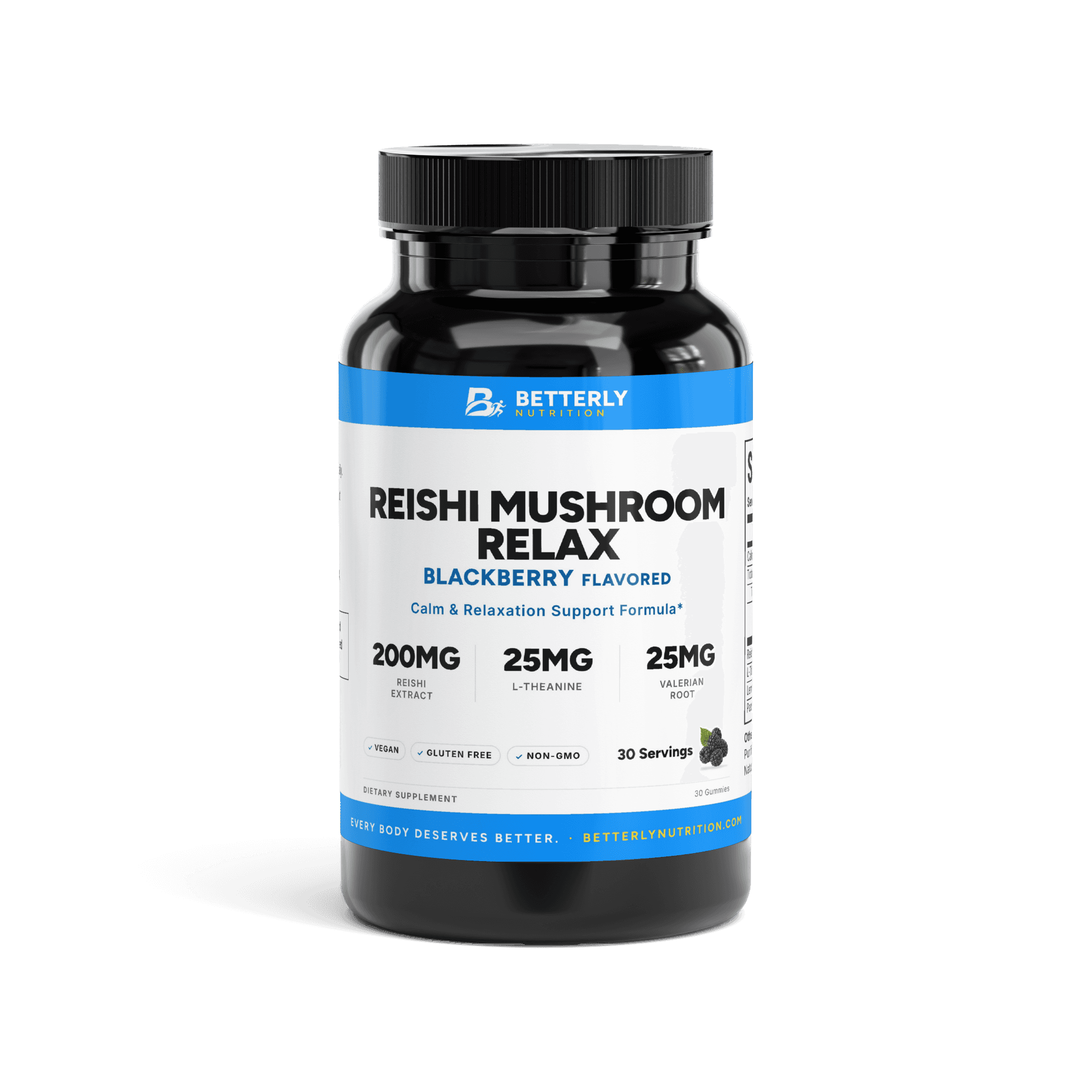
Reishi. A mushroom with centuries of traditional use in evening preparations. The modern research is early — much of it preliminary or in animals, with a few small human trials — so it's best thought of as a traditional evening ingredient rather than a proven one. Our Reishi Mushroom Relax Gummies provide 200 mg of reishi extract per 1-gummy serving, in a container of 30 blackberry-flavored gummies. For the deep dive, see our complete guide to reishi for sleep and relaxation.
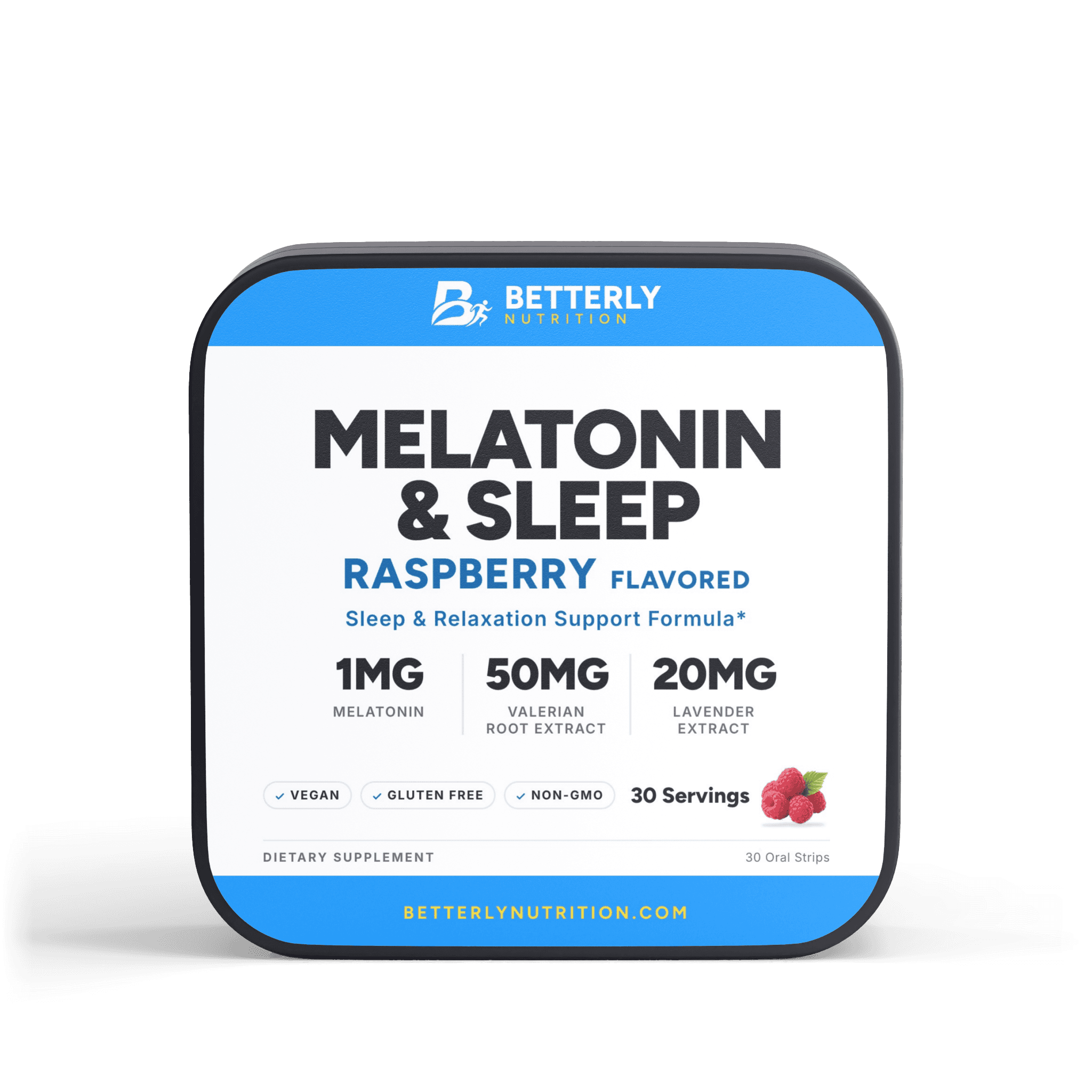
And melatonin? Worth naming, because it's the one everyone reaches for first: melatonin is a timing tool — most useful for jet lag and shifted schedules — not a mind-quieting one. If timing is genuinely your issue, our 1mg Melatonin Sleep Strips pair 1 mg of melatonin with 50 mg of valerian root extract, plus lavender, chamomile and hibiscus extracts, per 1-strip serving, in a container of 30 dissolving oral strips. If you're weighing the two camps, magnesium vs melatonin breaks down which one fits which problem.
Whatever you try: one thing at a time, never more than the label's suggested use, and check with a healthcare provider first if you're pregnant, nursing, under 18, taking any medication, or managing a medical condition.
A sample 60-minute wind-down, start to finish
Here's how to calm a racing mind at night in practice — a copyable evening you can run tonight and adjust freely:
- T-minus 60 minutes: Screens down, lamps dim. If you take a supplement, take it when its label's suggested use says to; this is a good moment to check it.
- T-minus 55: Five-minute brain dump — tomorrow's list, tonight's nags. Close the notebook.
- T-minus 45: Your ritual: warm shower, tea, or ten minutes of tidying. Same one as last night.
- T-minus 30: Read something enjoyable but not thrilling, in low light.
- T-minus 10: Lights out. Four rounds of 4-7-8, or just slow breaths with long exhales.
- In bed: A thought intrudes? It's on the list. Mind still buzzing? Shuffle: pick a word, picture the parade. Wide awake after twenty minutes? Get up, sit in the dim, come back sleepy.
It won't run perfectly the first night — routines are built, not installed. Aim for most nights, not every night. Even the 30-minute version beats zero.
When it's worth talking to a professional
Habits and gentle support cover a lot of ground, but not all of it. It's worth checking in with a clinician if your sleep trouble shows up most nights for months and drags on your days; if the racing thoughts feel heavier than a busy mind — worry that intrudes all day, or a low mood that colors everything; or if you snore heavily, wake gasping, or feel unrefreshed no matter how long you sleep.
For ongoing sleep trouble, there's a structured, well-studied program called CBT-I that clinicians often recommend before anything else — it works on many of the same levers this article does, with professional support behind it. None of this is failure. A routine and a supplement are for the garden-variety racing mind; they're not a substitute for care when something bigger is going on.
FAQ: quieting your mind before bed
Why does my mind race the moment I try to sleep?
Because bedtime is often the first quiet moment of your day. With nothing competing for attention, your brain surfaces every open loop it's been holding — and at night, with your sense of perspective already winding down, those thoughts feel bigger than they are. A brain dump earlier in the evening gives them somewhere else to live.
How do I quiet my mind before bed without taking anything?
Behavior first: write a specific to-do list for tomorrow, dim the lights and screens an hour out, run one boring repeatable ritual, and slow your breathing with long exhales. In one small study, the to-do list alone was associated with falling asleep about nine minutes faster.
Do supplements stop racing thoughts?
No — quieting the mind is mostly a habits job. That said, research suggests ashwagandha and magnesium may support a calmer wind-down when used consistently over weeks, while the research on reishi is still early. Think of them as making the routine easier to keep, not replacing it.
Should I get out of bed when I can't sleep?
If you've been wide awake and frustrated for around twenty minutes, yes. Move somewhere dim, do something boring, and return when drowsy. It protects the association your brain makes between bed and sleep — which is worth more than the minutes you spend out of bed.
How long does it take for a wind-down routine to work?
Parts of it can help the very first night — the brain dump and slow breathing in particular. The cue effect of a ritual builds with repetition. Judge the routine by the trend across a couple of weeks, not by any single night.
If this left you looking for somewhere to start, read ashwagandha capsules for everyday calm — its amounts per serving are listed on the page. For the practical questions this raises, how dosing, sourcing and subscriptions work is answered in one place.