On this page
- What is reishi? The calm one in the mushroom family
- Does reishi help you sleep? What the research suggests
- Reishi vs. lion's mane vs. cordyceps: which mushroom does what
- Forms of reishi: powder, extract, capsules, gummies, and tea
- How to choose a quality reishi supplement
- How and when to take reishi for sleep
- Gentle cautions: who should check with a provider first
- FAQ: reishi mushroom for sleep
- Sources
Ask anyone deep into functional mushrooms which one belongs in the evening, and you'll get the same answer: reishi. Interest in reishi mushroom for sleep has grown fast over the past few years, and for once the reputation roughly matches the early research — reishi seems to work on relaxation and the wind-down, not by knocking you out. This guide walks through what reishi actually is, what studies suggest it may do for rest, how to spot a quality supplement in a crowded market, and how to actually use it.
One honest note before we start: reishi is subtle and slow. If you're looking for something you can feel in twenty minutes, this isn't it — and, as you'll see, that's kind of the point.
What is reishi? The calm one in the mushroom family
Reishi (Ganoderma lucidum) is a glossy, fan-shaped mushroom with a deep reddish-brown cap that grows on hardwood trees. It has a couple thousand years of history in East Asian herbal traditions, where it picked up the memorable nickname "the mushroom of immortality." That's marketing you should ignore. The more useful part of its history is how it was used: simmered slowly into bitter teas and taken regularly, as an everyday tonic rather than a quick fix.
Unlike the mushrooms in your stir-fry, reishi is woody, tough, and intensely bitter — nobody eats it for dinner. What people are after are two families of compounds concentrated inside it: beta-glucans (a type of polysaccharide, associated in research with everyday immune support) and triterpenes (the bitter compounds, generally thought to be behind reishi's calming reputation).
In the modern functional-mushroom lineup, reishi has settled into a clear role: it's the calm one. Where other mushrooms get taken in the morning or before a workout, reishi is the one people reach for after dinner. It's often grouped with the adaptogens — herbs and fungi studied for how they may help the body handle occasional stress. If that whole category is new to you, our plain-English introduction to adaptogens is a good place to start.
Does reishi help you sleep? What the research suggests
Here's the honest state of the science: promising, early, and smaller than the hype suggests.
Most of the foundational work is in animals. In rodent studies, reishi extracts have been observed to increase total sleep time and non-REM sleep — sometimes within a few days — and one interesting line of research suggests the effect may run partly through the gut, with reishi compounds shifting gut bacteria in ways that influenced sleep-related signaling in the brain. Animal findings don't automatically translate to humans, but they're a reasonable starting point.
Human evidence is thinner but growing. Most of that human work measures how people rate their own sleep on questionnaires, not how fast they fall asleep or how long they sleep. One eight-week trial of 218 adults was presented at the SLEEP 2026 conference and hasn't yet been published as a peer-reviewed paper. People taking 980 mg a night of a reishi extract standardized to triterpenes (almost 5 times the 200 mg per 1-gummy serving of our Reishi Mushroom Relax Gummies) reported larger improvements on a sleep questionnaire than people taking melatonin. And in an older multi-week study, participants taking reishi reported less fatigue and better overall well-being. These are encouraging results, but they're early ones — the kind that need repeating before anyone should make confident promises.
Just as important is what reishi doesn't do. It isn't a sedative, and it doesn't work like melatonin, which nudges your body's sense of what time it is. The most consistent theme across research and user experience is that reishi works more like a stress-support layer: people tend to describe calmer, quieter evenings first, and easier nights as a downstream effect. If your main obstacle to sleep is a racing mind, that framing matters — and it's why reishi pairs so naturally with the habit-based approach in our companion piece on how to calm a racing mind at night.
Set your expectations accordingly: reishi is a daily habit, not a quick fix.
Reishi vs. lion's mane vs. cordyceps: which mushroom does what
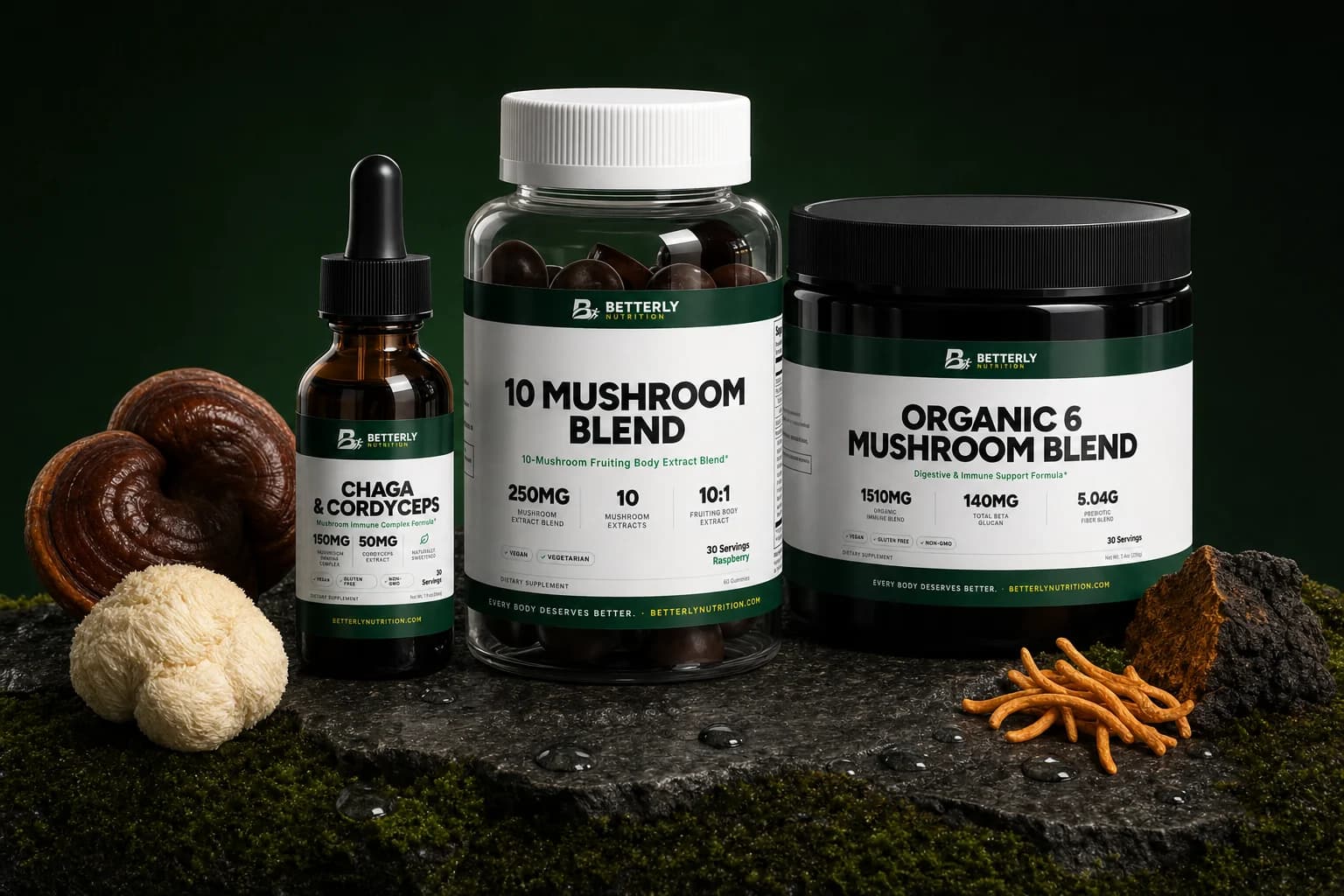
Functional mushrooms get lumped together on store shelves, but they're not interchangeable. The big three each have a distinct job:
- Reishi — the evening one. Associated with relaxation, winding down, and everyday immune support. This is the mushroom you take after the day is done.
- Lion's mane — the daytime one. The "brain mushroom," studied for focus and memory support. People typically take lion's mane, like our Organic Lion's Mane Mushroom Capsules, in the morning, often alongside coffee. It shows up constantly in the nootropics world — our beginner's guide to nootropics explains where it fits.
- Cordyceps — the energy one. Studied for stamina and physical output, which is why Cordyceps Mushroom Energy Gummies tend to get taken before workouts or as a morning pick-me-up, not at night.
The most common mistake people make is assuming these are one thing — taking an energizing mushroom in the evening, or wondering why reishi isn't helping their morning focus. A simple rule of thumb: lion's mane and cordyceps face the day; reishi faces the night. Plenty of people run two of them — one daytime mushroom, reishi in the evening — and that split makes sense.
Forms of reishi: powder, extract, capsules, gummies, and tea
Reishi comes in more formats than almost any other mushroom, and the differences genuinely matter — arguably more than for any other supplement in the sleep aisle.
Raw mushroom powder is just dried, ground reishi. It's the cheapest option, but there's a catch: the useful compounds are locked inside tough cell walls made of chitin, which your body is bad at breaking down. That's why traditional preparation always involved long simmering. Swallowing plain raw powder means you may absorb only a fraction of what's on the label.
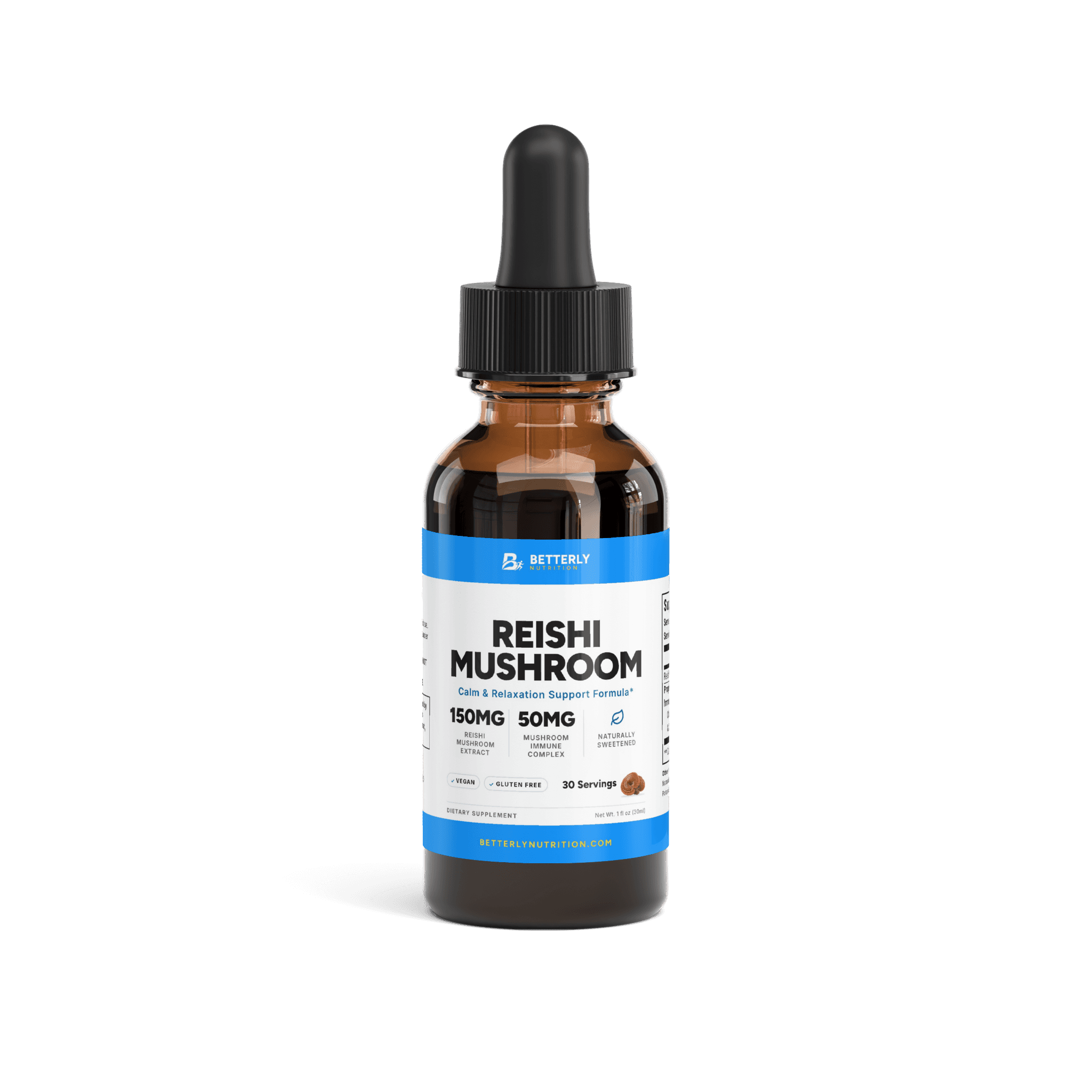
Extracts solve that problem. Hot-water extraction (sometimes combined with an alcohol step) breaks down the cell walls and concentrates the beta-glucans and triterpenes into a smaller, more usable dose. This is the form most human research uses. A modest printed amount of a real extract can mean more than a big, impressive-sounding number of raw powder.
Capsules are convenient and completely dodge reishi's taste. The thing to check is what's inside the capsule — extract or plain ground mushroom. Many labels don't say which it is.
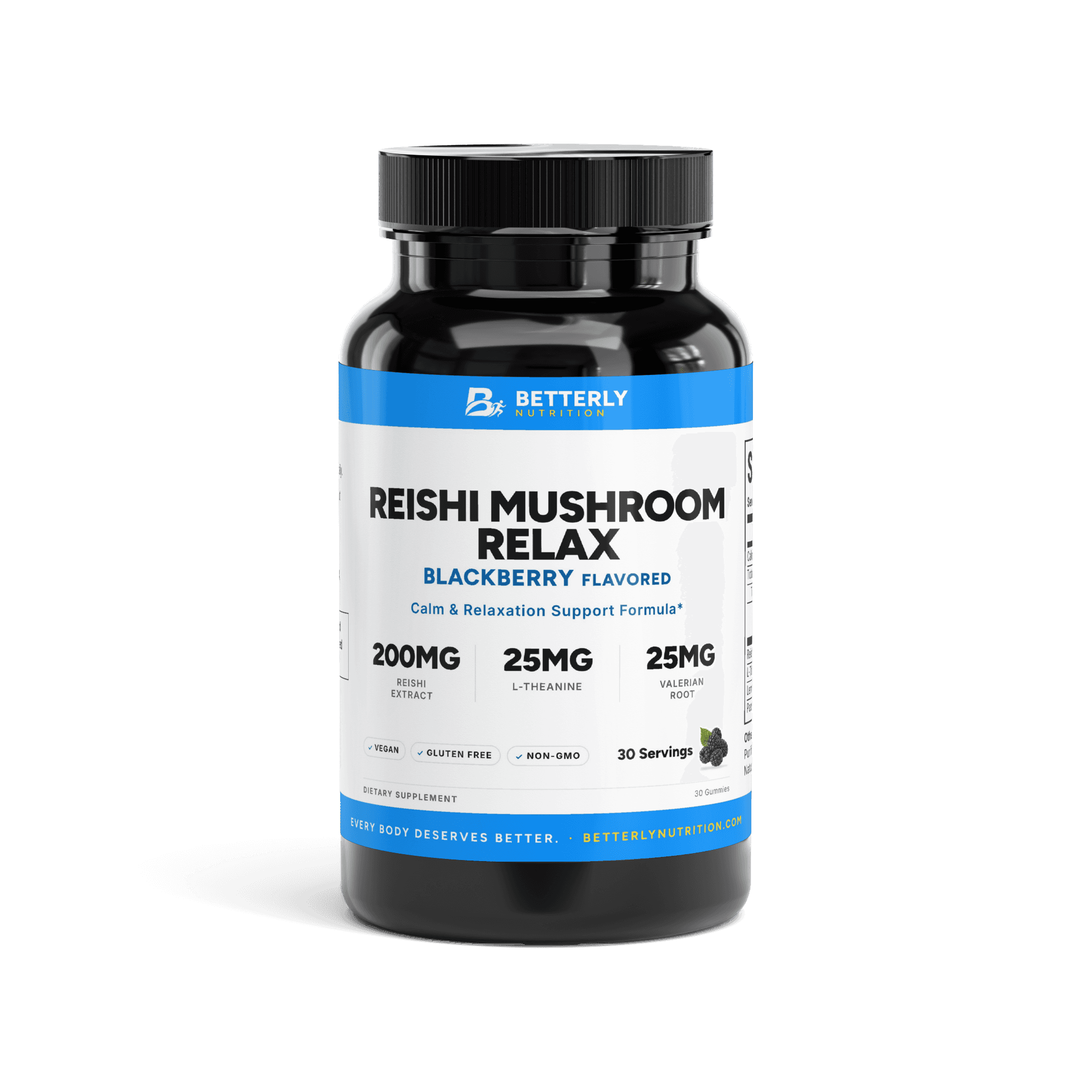
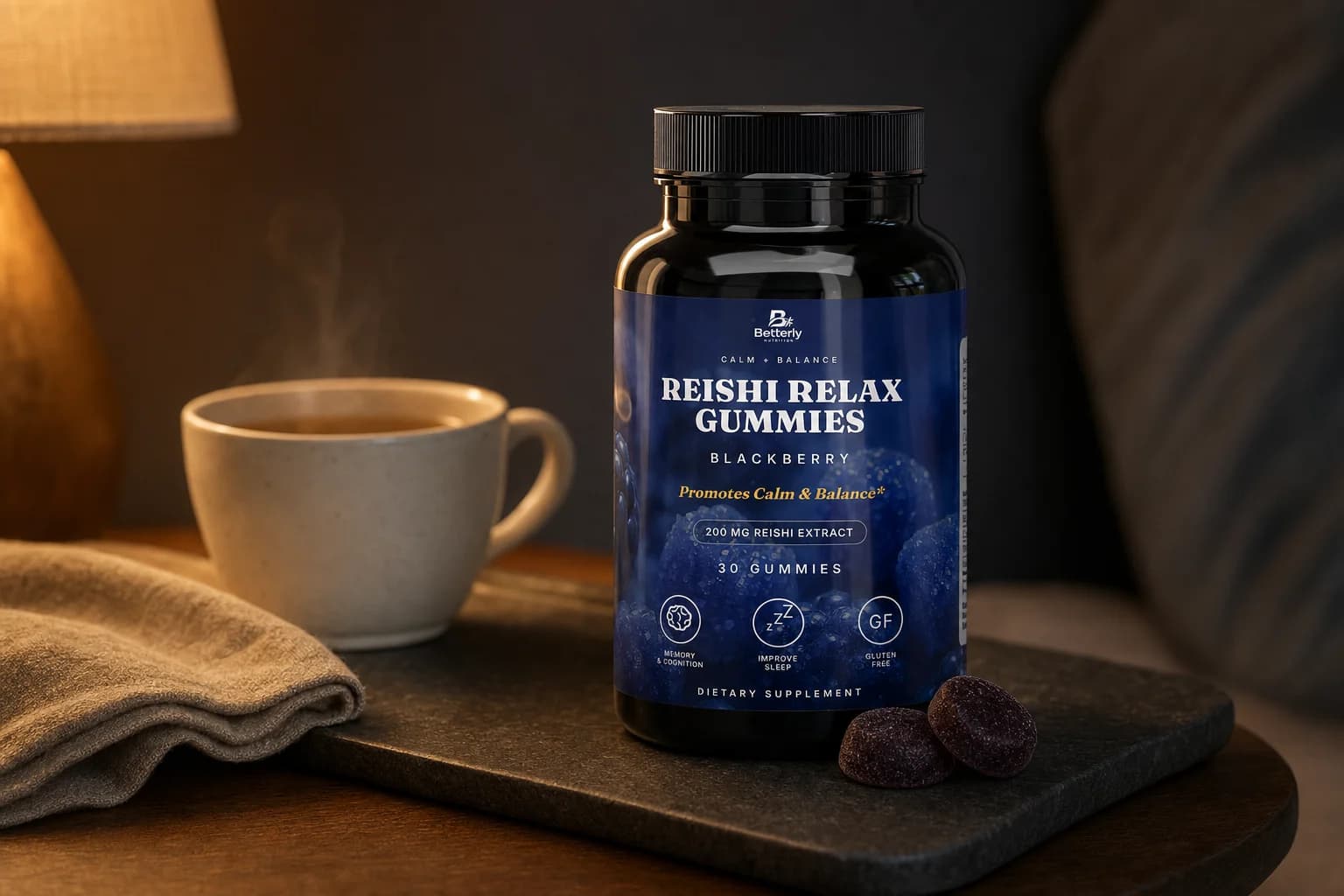
Gummies have become the popular bedtime format for this mushroom, and reishi gummies exist for a defensible reason: reishi is genuinely, memorably bitter, and a gummy turns taking it into a small ritual instead of a chore. Our Reishi Mushroom Relax Gummies provide 200 mg of reishi extract per 1-gummy serving in a blackberry gummy, 30 gummies per container, with the amount printed right on the page, no proprietary-blend hide-and-seek. Each 1-gummy serving also contains 25 mg each of L-theanine, lemon balm, passion flower and valerian root, so it isn't a reishi-only product.
Tea is the traditional route: dried reishi slices simmered for a while, then strained. Some people love the ceremony of it. Be warned that the flavor is an acquired taste — woody and bitter — and the nightly time commitment is real.
There's no single right answer here. The right form is the one you'll actually take every evening, because with reishi, consistency is most of the game.
How to choose a quality reishi supplement
The reishi market is crowded and uneven. A few checks separate the serious products from the filler:
- Extract beats plain powder. For the reasons above. If a label doesn't say "extract," assume it's ground raw mushroom.
- Look for fruiting body. The fruiting body is the actual mushroom; mycelium is the root-like network it grows from. The calming triterpenes concentrate in the fruiting body, and mycelium products grown on grain can end up being a lot of grain. Some mycelium products are fine — but a label that proudly says "fruiting body extract" is telling you something.
- A printed amount, always. If a product hides its reishi inside a "proprietary blend," you cannot know how much you're getting — and with reishi, the form and amount are the whole story.
- The species name and part used. Some labels name Ganoderma lucidum (or its close relative Ganoderma lingzhi) and say which part of the mushroom is used. Ours doesn't: the Reishi Mushroom Relax Gummies label lists "Reishi Extract," 200 mg per 1-gummy serving, without naming the species or the part.
- Realistic claims. Any reishi product promising to knock you out tonight is misrepresenting how this mushroom works. Skepticism about big promises is a quality signal in itself.
How and when to take reishi for sleep
Timing. Almost everything written about reishi mushroom for sleep agrees on this part: take it in the evening. Most people land somewhere between an hour or two before bed for teas and powders, or 30 to 60 minutes before bed for gummies and capsules. The goal with reishi before bed is to fold it into the start of your wind-down, not to swallow it as your head hits the pillow.
Consistency. This is the part most people get wrong. Reishi is not a night-of supplement; the research and the traditional use both point to daily, repeated use. How people respond varies from person to person.
Amount. How much reishi to take depends entirely on the form. Studies have used a wide range — concentrated extracts commonly in the hundreds of milligrams per day, raw powder at much higher amounts — so follow the label of the specific product you bought rather than a number from the internet. More is not better with reishi; consistent is better.
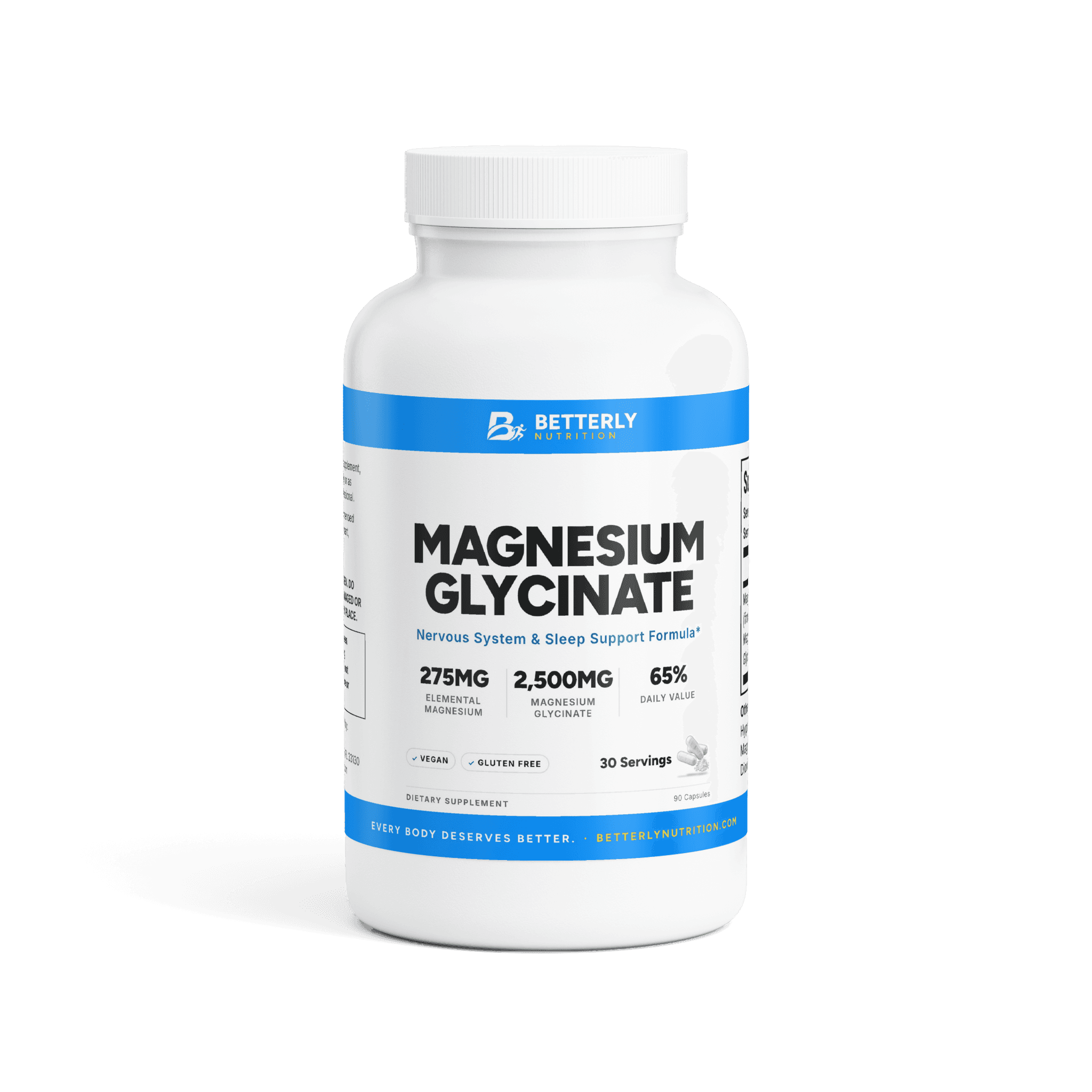
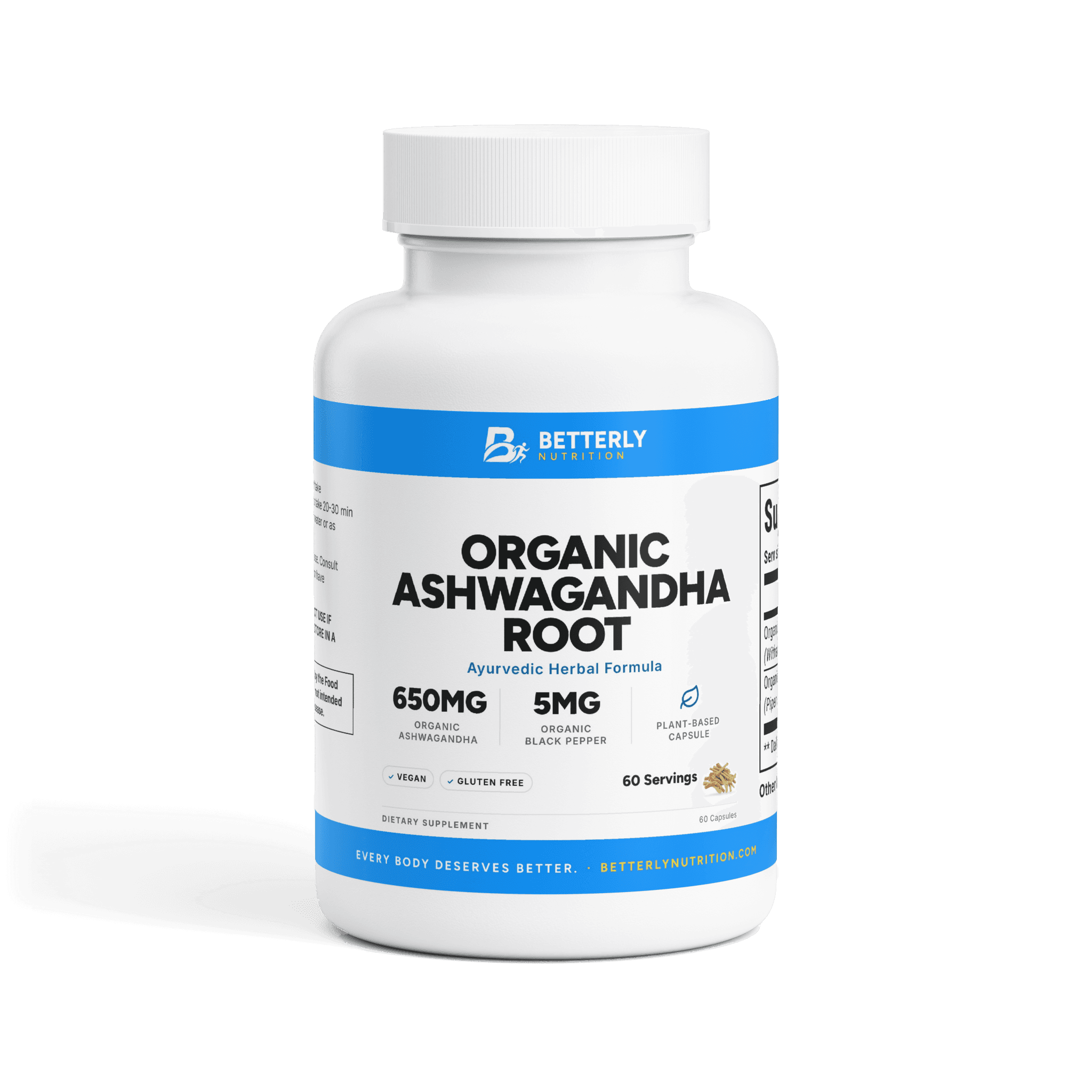
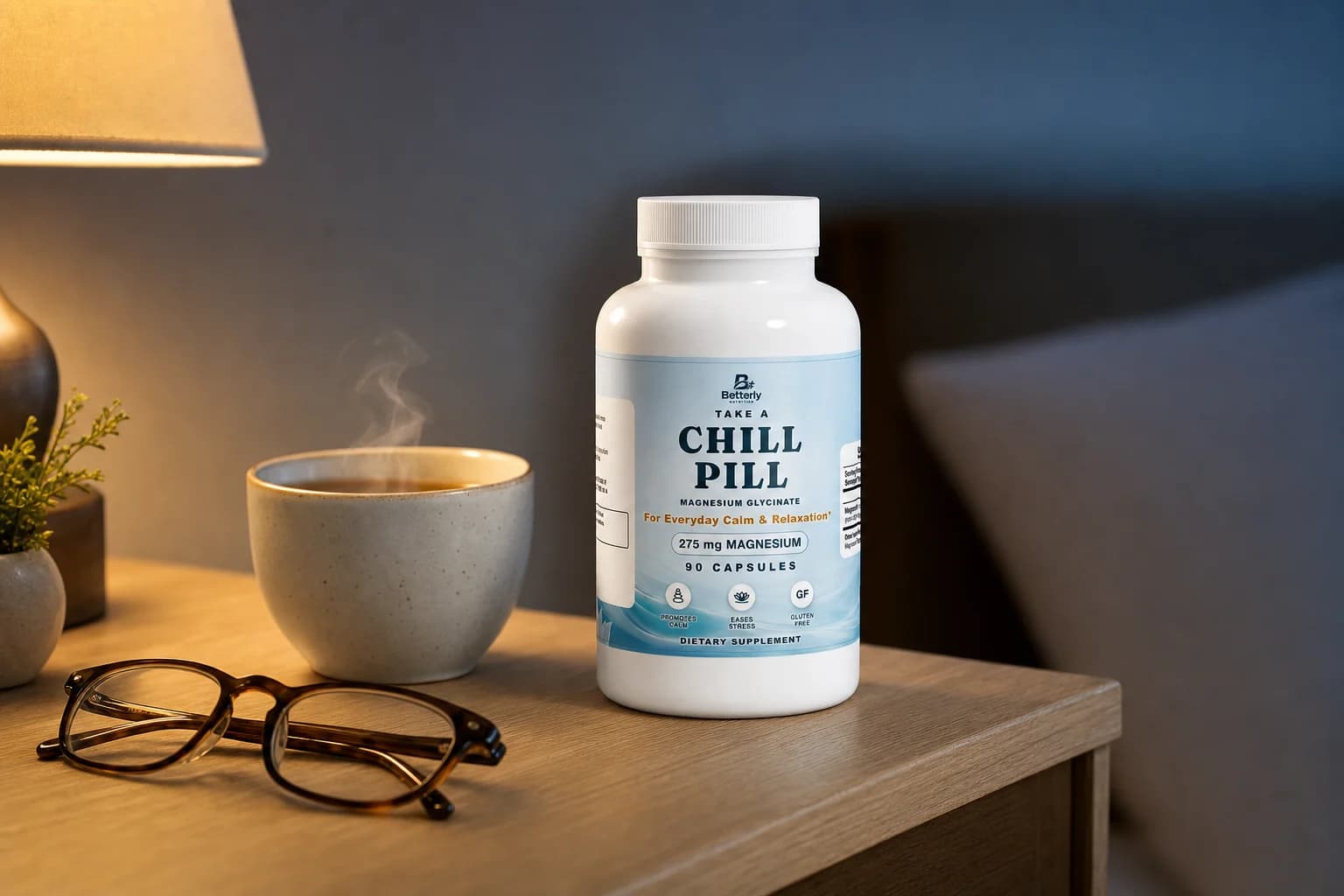
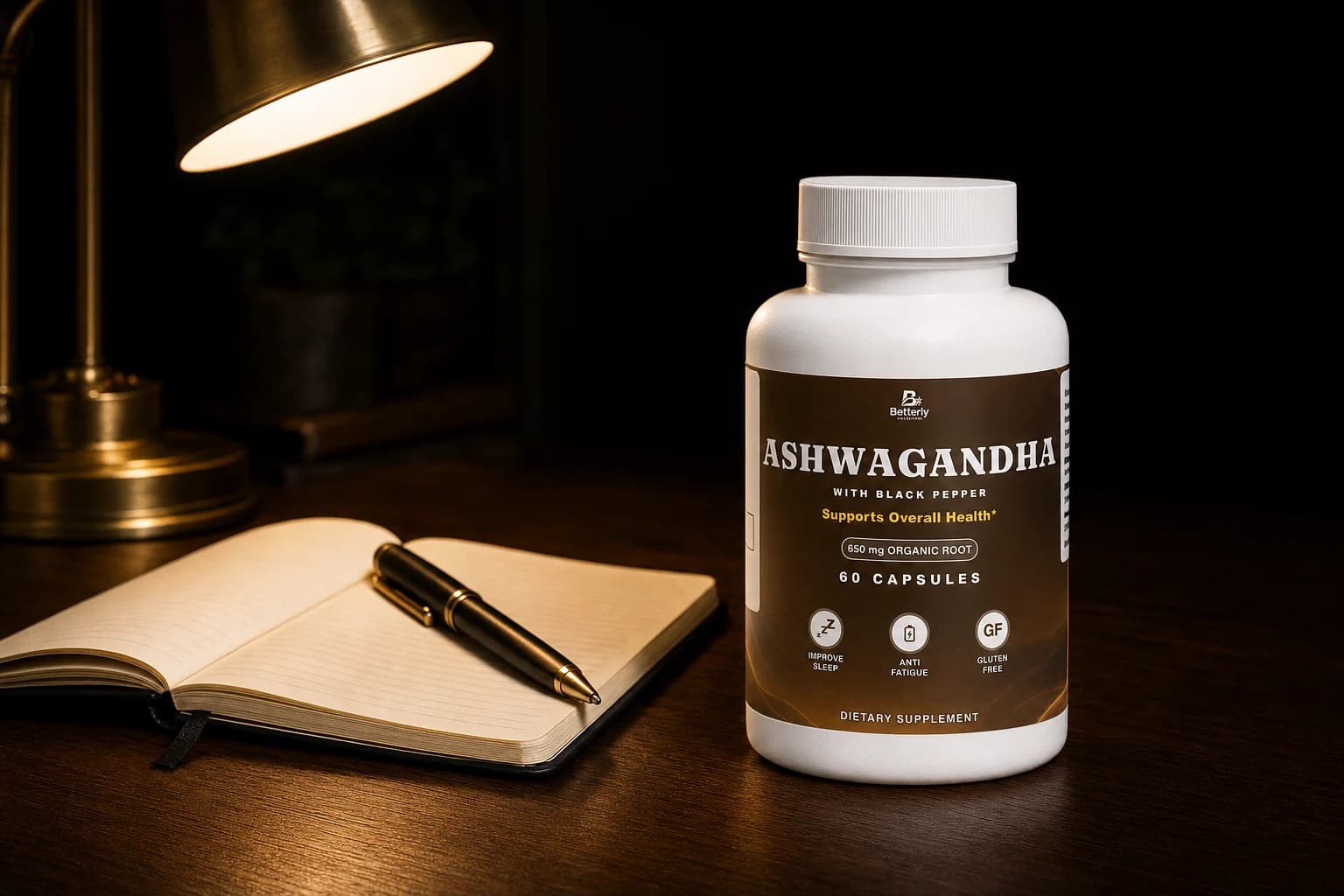
What to pair it with. Reishi plays well with the gentler side of the sleep aisle. A common evening stack is reishi plus Magnesium Glycinate Capsules, which provide 275 mg of magnesium (65% DV) per 3-capsule serving. If occasional daytime stress is a big part of your picture, ashwagandha is the classic adaptogen partner (see our Organic Ashwagandha Root Capsules), and our guide to ashwagandha covers how people use it. And note what reishi isn't: it's melatonin-free, which makes it a natural fit if you're building the kind of routine we describe in our honest guide to melatonin-free sleep supplements.
If you'd rather see the whole toolkit in one place, browse the Sleep & Stress Relief collection — or start with the bigger picture in our overview of the best supplements for sleep.
Introduce one thing at a time. If you add reishi and magnesium and a new bedtime routine all in the same week, you'll never know what's working. Stagger your changes.
Gentle cautions: who should check with a provider first
Reishi is generally well tolerated, but it's a biologically active fungus, not a flavored candy. A few groups should talk to a healthcare provider before starting:
- Pregnant or nursing? Reishi hasn't been well studied in pregnancy or while breastfeeding. Skip it unless your provider says otherwise.
- On medication? Reishi may interact with some medications, including ones that affect blood clotting. If you take one — or any daily prescription — check first.
- Surgery coming up? Because of the blood-clotting question, it's commonly suggested to stop reishi a couple of weeks before a scheduled procedure.
- Mushroom allergies? An allergy or sensitivity to fungi is a clear reason to pass.
NIH's LiverTox database says there's little information about common side effects of reishi extracts in people, and that small short-term trials usually described few or no side effects. It also records rare reports of liver problems, so stop taking reishi and talk to a provider if you notice unusual fatigue, dark urine or yellowing of the skin or eyes.
And a bigger-picture note, in the spirit of honesty: if trouble sleeping is heavy, persistent, and affecting your days, that's a conversation for a professional, not a gummy. Supplements are for supporting a body that's basically doing okay.
FAQ: reishi mushroom for sleep
Does reishi make you sleepy right away?
No — and that's by design of the mushroom, so to speak. Reishi isn't a sedative and doesn't produce a drowsy, heavy-lidded feeling the way some sleep aids can. Its reputation is built on gradual support for relaxation with consistent use. If you use a blend, check the whole label, since other ingredients may work differently from reishi.
Can I take reishi every night?
Yes. Reishi is usually taken daily, and the research on reishi involves daily use rather than one-off doses. Follow your product's label: the suggested use on our Reishi Mushroom Relax Gummies is one to two gummies daily. If you plan to take it long term, it's reasonable to check in with your provider, especially if your medications change.
What do reishi supplements taste like?
Raw reishi is famously bitter and woody — it's the main reason teas are an acquired taste and why capsules and gummies exist. A flavored gummy covers the bitterness entirely, which for many people is the difference between a supplement they take nightly and one that gathers dust.
Can I take reishi with magnesium or melatonin?
Reishi and magnesium are a common evening pairing, since they're associated with different aspects of winding down. Reishi alongside melatonin is also common, though they work in very different ways — reishi on relaxation, melatonin on your body's sense of timing. Whatever you combine, add one new thing at a time, and loop in your provider if you take any medication.
How much reishi should I take for sleep?
Follow the label of your specific product — form changes everything. A few hundred milligrams of a concentrated extract is a very different thing from the same weight of raw powder, and studies have used a wide range of amounts. Start with the labeled serving, take it consistently in the evening, and resist the urge to double up; with reishi, time matters more than quantity.
Sources
If this left you looking for somewhere to start, read reishi gummies for sleep and relaxation — its amounts per serving are listed on the page. For the practical questions this raises, how dosing, sourcing and subscriptions work is answered in one place.