On this page
- Key takeaways
- Can you take reishi and lion's mane together?
- How do reishi and lion's mane differ, and why pair them?
- What are the benefits of reishi and lion's mane together?
- Why take lion's mane in the morning and reishi at night?
- Two bottles or one blend: how should you pair them?
- What's in the evening gummy besides reishi?
- How do you fit both labels into one day?
- When is the pairing more than you need?
- Who needs a provider's OK before pairing reishi and lion's mane?
- FAQ: reishi and lion's mane
- Sources
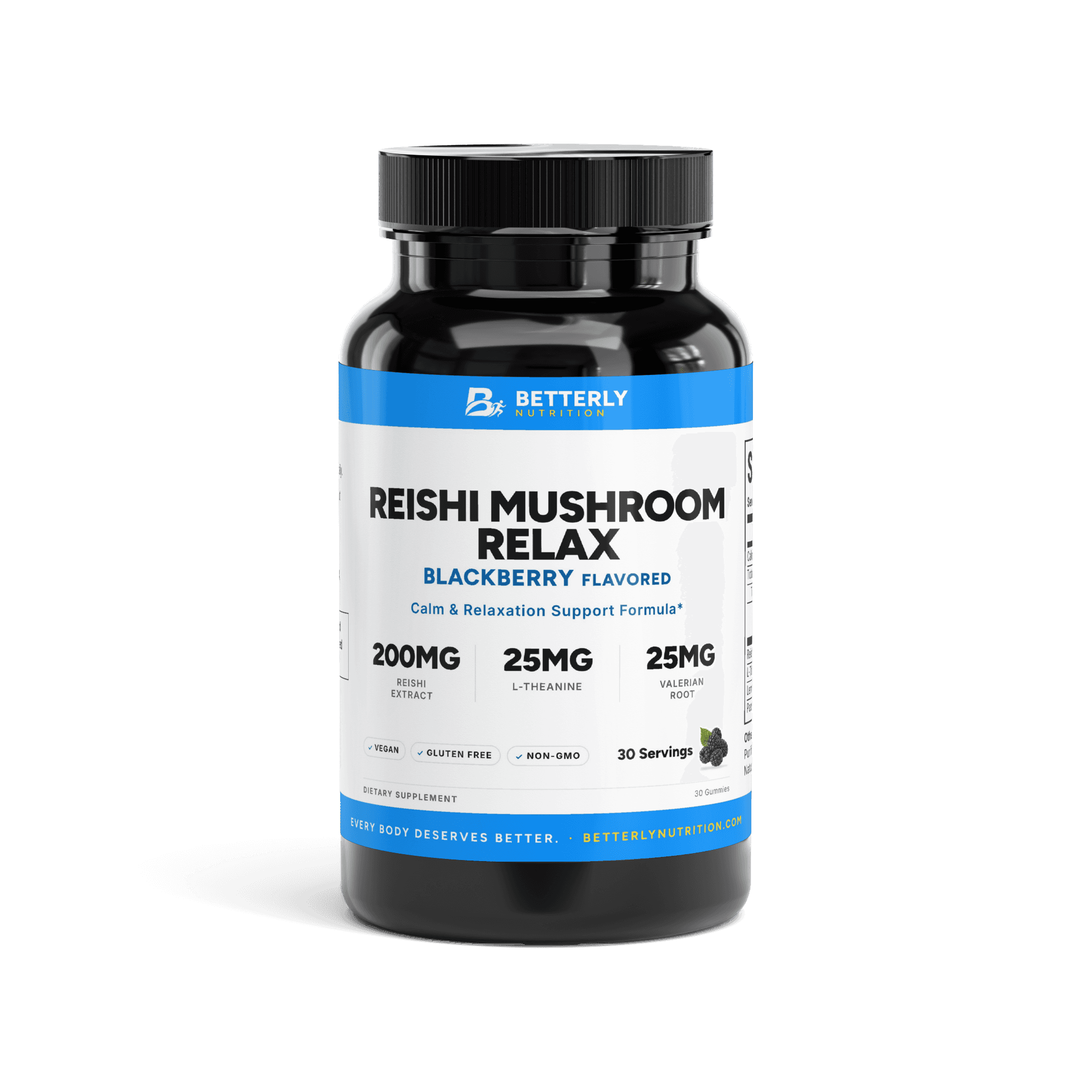
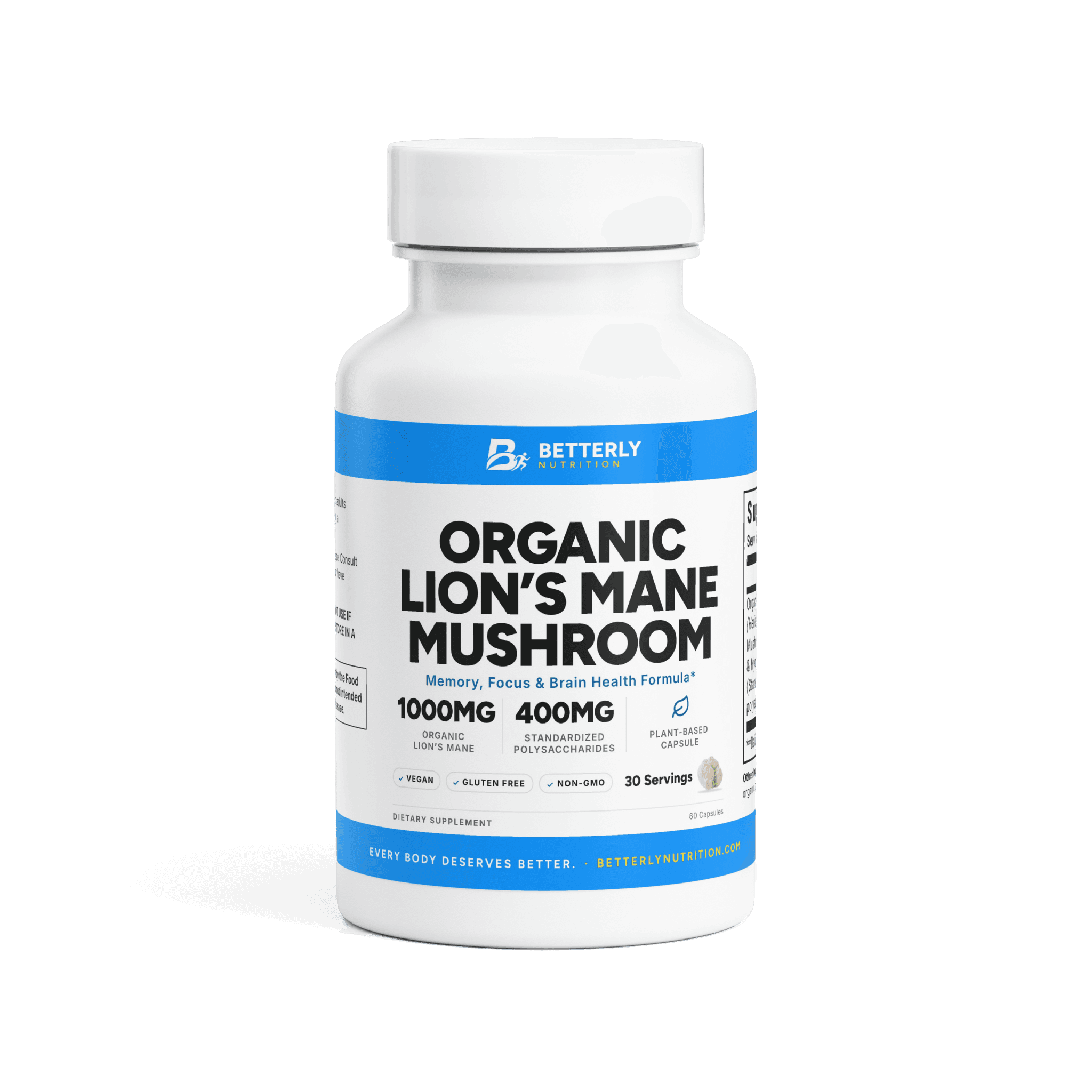
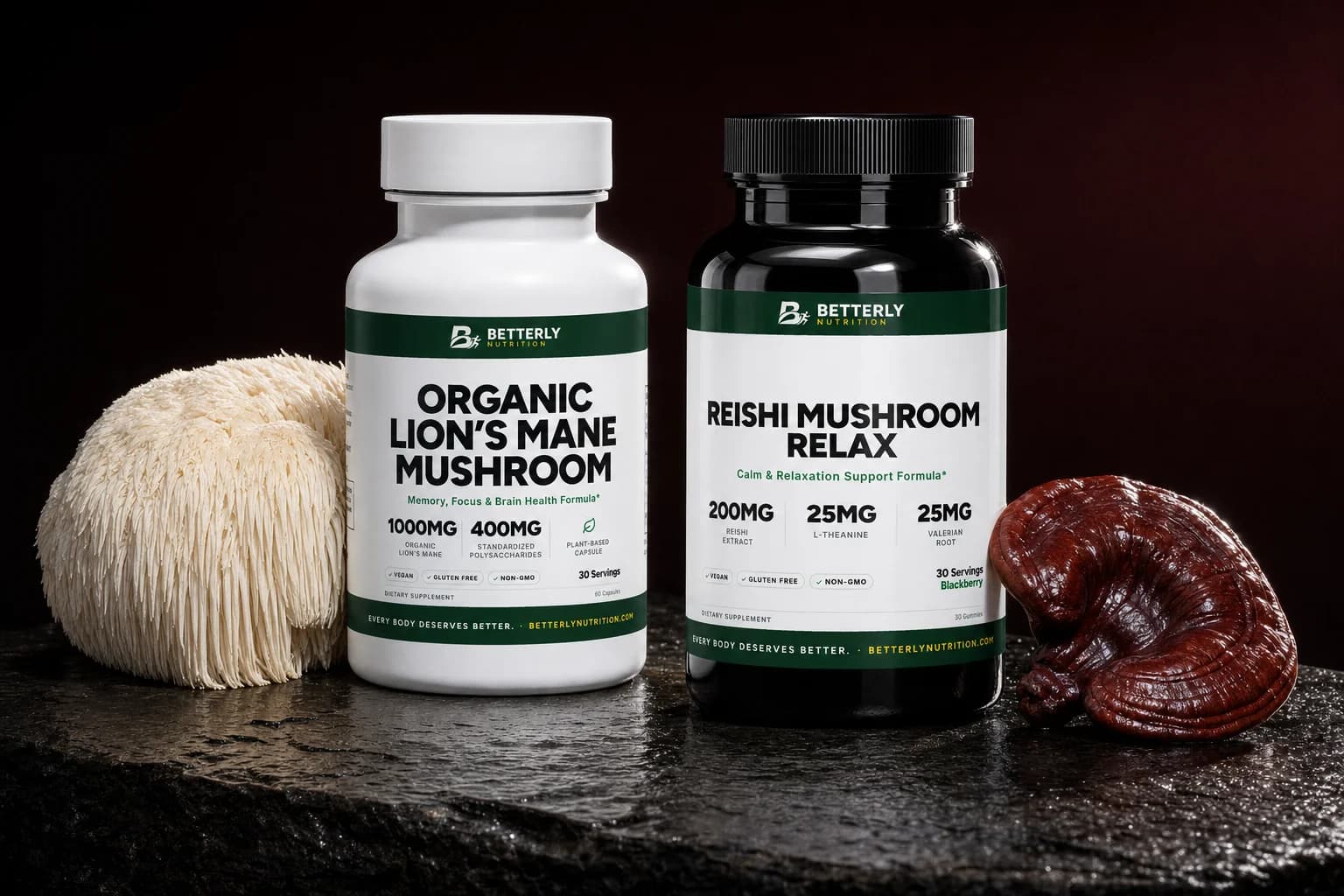
The short answer: Most healthy adults can fit reishi and lion's mane into one routine. We found no federal warning about the pair and no study testing the two together, so any synergy is unproven. One simple setup splits them by the clock: our Organic Lion's Mane Mushroom Capsules hold 1,000 mg per 2-capsule serving for mornings, and our Reishi Mushroom Relax Gummies hold 200 mg of reishi extract per 1-gummy serving for evenings.
Key takeaways
- Reishi (Ganoderma lucidum) and lion's mane (Hericium erinaceus) are separate mushrooms with different label jobs: calm for reishi, memory and focus for lion's mane.
- The NIH's LiverTox reports few side effects for either mushroom in small trials, and neither entry covers the two taken together.
- Lion's mane in the morning and reishi at night is a habit you choose, since our lion's mane capsule label and both reishi labels give no time of day.
- Our Reishi Mushroom Relax Gummies add passion flower and valerian root to the reishi, so save your first one for a quiet evening at home.
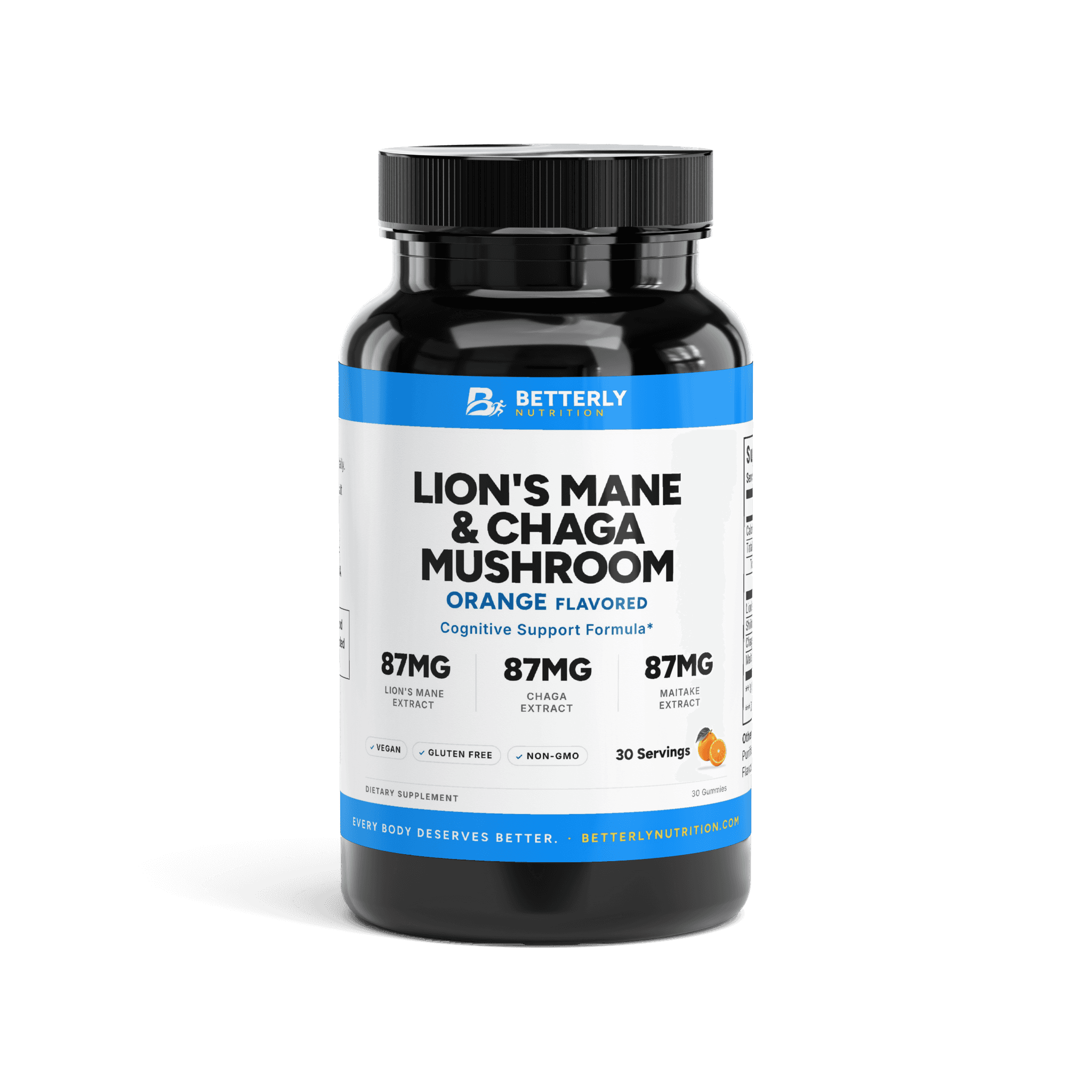
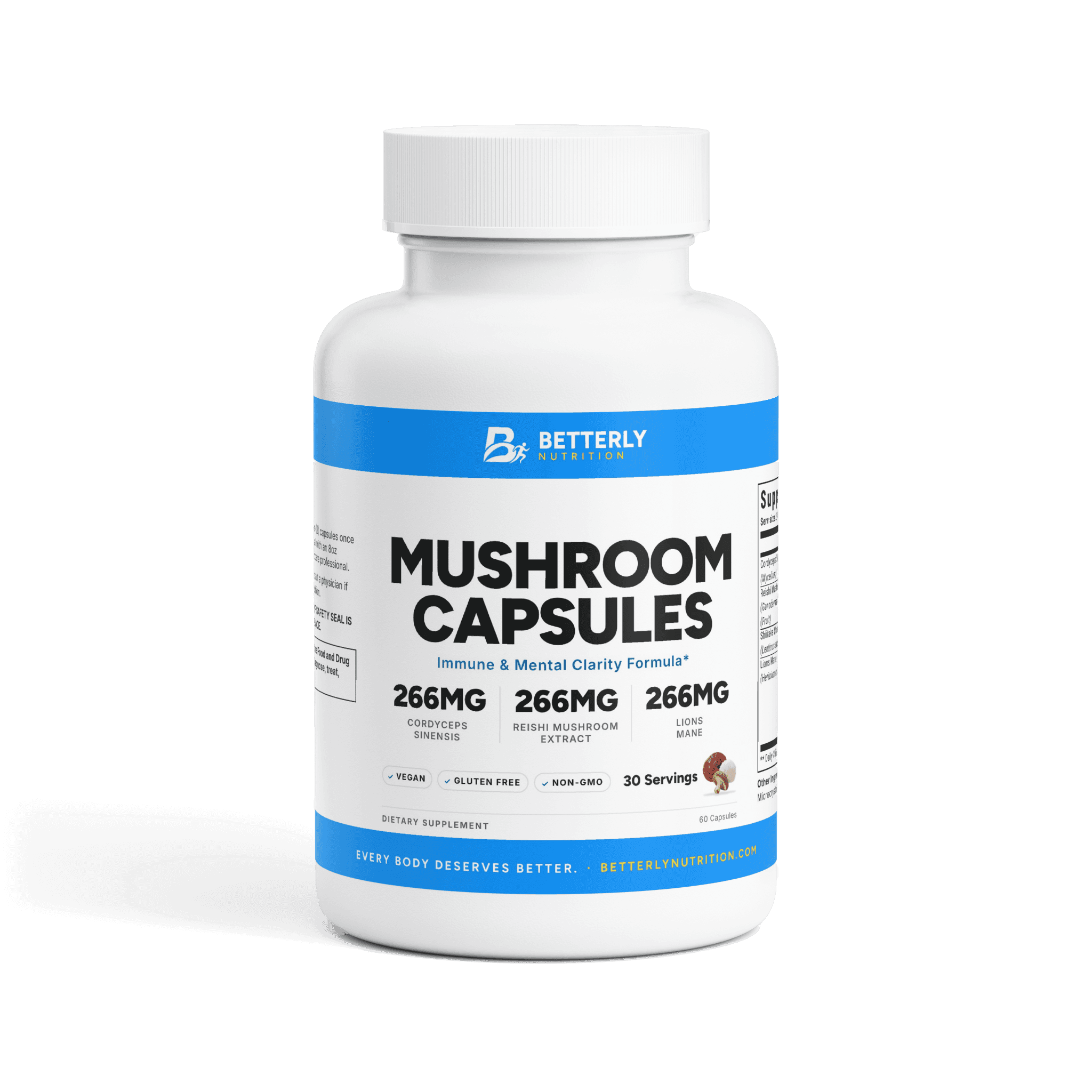
- Only our Mushroom Gummies and Mushroom Capsules contain both reishi and lion's mane, and only the capsules print an amount for each.
A heads-up: Betterly sells every product named here, so we gain whichever route you pick. Our milligram figures are copied from the Supplement Facts panels, blanks and all.
Can you take reishi and lion's mane together?
Yes, healthy adults can generally take reishi alongside lion's mane, since LiverTox reports few side effects for each mushroom and neither entry warns about the other.
LiverTox, the NIH's database on liver harm from drugs and supplements, covers both mushrooms. Its lion's mane entry says trials of longer use logged mild stomach complaints, such as discomfort, nausea or diarrhea, typically in under a tenth of participants, and they generally didn't require stopping. Its liver rating for lion's mane is E, an unlikely cause of injury.
The reishi entry admits the data on reishi's day-to-day side effects is thin, but the small, short trials it reviews mostly described few or none. Still, neither entry looks at these two side by side, so staggering your start dates makes any reaction easier to pin on one bottle.
How do reishi and lion's mane differ, and why pair them?
Reishi is a bitter, reddish-brown mushroom and lion's mane a shaggy white one eaten as food; our labels aim reishi at calm and lion's mane at focus.
LiverTox adds that reishi, called lingzhi in China, is scarce in the wild and mostly grown on logs, sawdust or wood chips, while lion's mane turns up on dead hardwood and is widely eaten in East Asia.
The case for pairing comes from our labels, not biology. The capsule label reads "Memory, Focus & Brain Health Formula," while both reishi labels read "Calm & Relaxation Support Formula." One suits your working hours, the other your evening.
Choosing one instead of both? Our side-by-side of reishi, lion's mane and cordyceps sorts out which mushroom is sold for what.
What are the benefits of reishi and lion's mane together?
The benefits of reishi and lion's mane are, so far, the goals on their labels: memory and focus for lion's mane, calm and relaxation for reishi. LiverTox finds little human proof for either, and we found no trial of the pair.
For reishi, LiverTox says the activities seen in cell and animal work haven't been confirmed in properly sized, well-controlled human trials. For lion's mane, it describes compounds called erinacines with brain-related effects in rat and mouse studies, then says those effects have barely been demonstrated in people.
So "synergy" on a mushroom-stack page is marketing, not a finding. The honest case for pairing is simpler: two formulas meant for opposite ends of the day are easy to keep apart, so you can judge each one separately.
Why take lion's mane in the morning and reishi at night?
Lion's mane goes in the morning and reishi at night because of each formula's purpose; no study sets those times, and neither do our capsule, gummy or drops labels.
None of those three labels mentions food or a clock, either. Of the two blends holding both mushrooms, only the capsules' label does, which puts its dose 20 to 30 minutes ahead of a meal.
So the split follows the descriptors: focus for desk hours, calm for after dinner. The lion's mane capsule panel lists no caffeine, so a lunchtime dose works if breakfast is rushed. Our morning-or-night breakdown for lion's mane covers that half of the routine.
Two bottles or one blend: how should you pair them?
Two separate bottles list the most milligrams of lion's mane and keep the day-night split, while either the Mushroom Gummies or the Mushroom Capsules put reishi and lion's mane into one sitting.
Here's each route per day at the label serving. The lion's mane capsule holds fruiting-body-and-mycelium powder while the reishi rows are extracts, so read these milligrams as printed facts, not a potency ranking.
| Option, per day | Lion's mane | Reishi | Added sugar |
|---|---|---|---|
| Capsules (2) + Relax gummy (1-2) | 1,000 mg | 200-400 mg extract | 2-4 g |
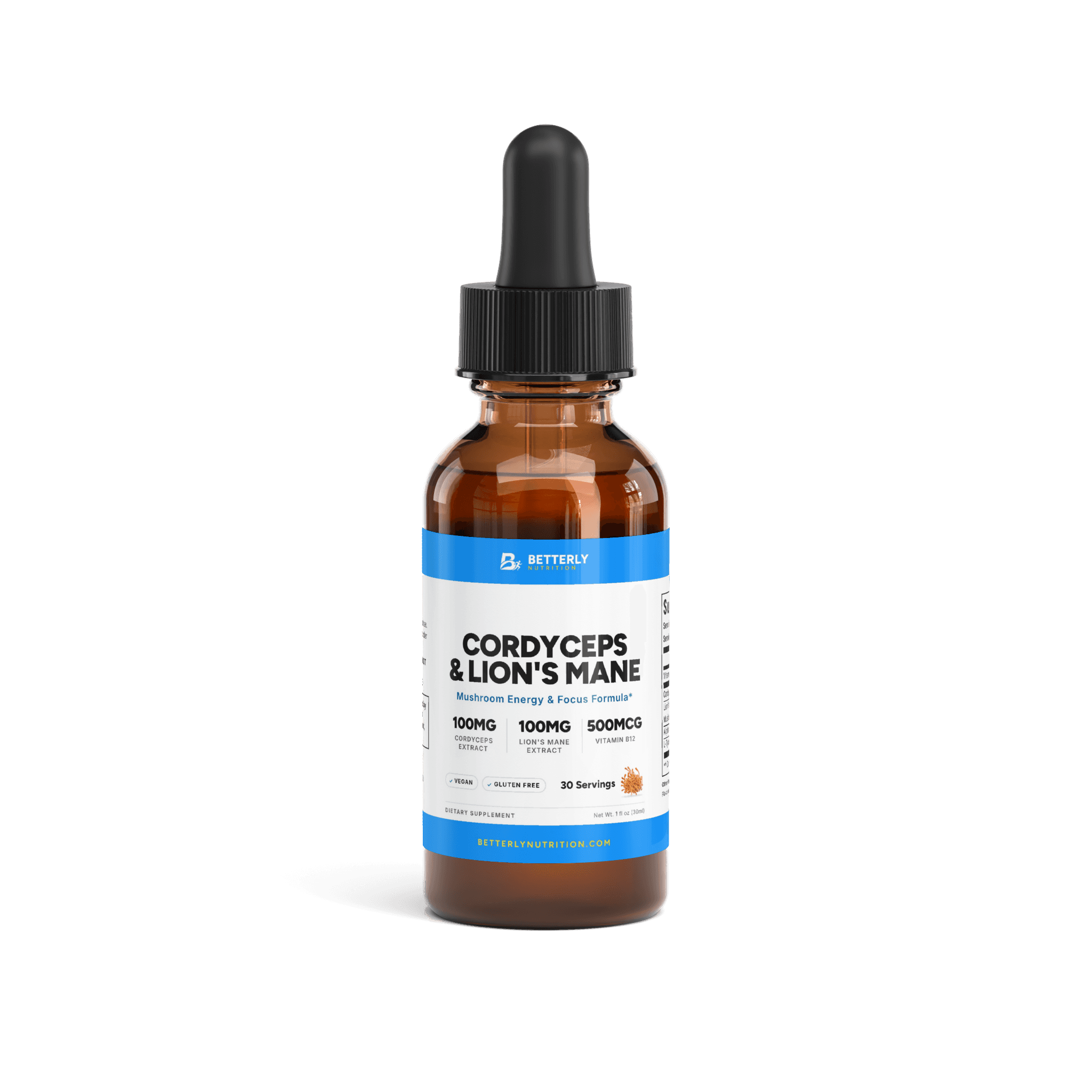
| Capsules (2) + Calm Drops (1 ml) | 1,000 mg | 150 mg extract + share of 50 mg blend | No sugar row |
| Mushroom Gummies (2) | Unstated share of 250 mg | Unstated share of 250 mg | 5 g |
| Mushroom Capsules (2) | 266 mg | 266 mg extract | No sugar row |
The two-bottle routines list far more milligrams of lion's mane: 1,000 mg per 2-capsule serving, against 266 mg in the blend capsules and an unsplit 250 mg blend in the gummies. With both mushrooms in one daily serving, the blend gummies are the simplest habit, yet their panel never breaks out either mushroom.
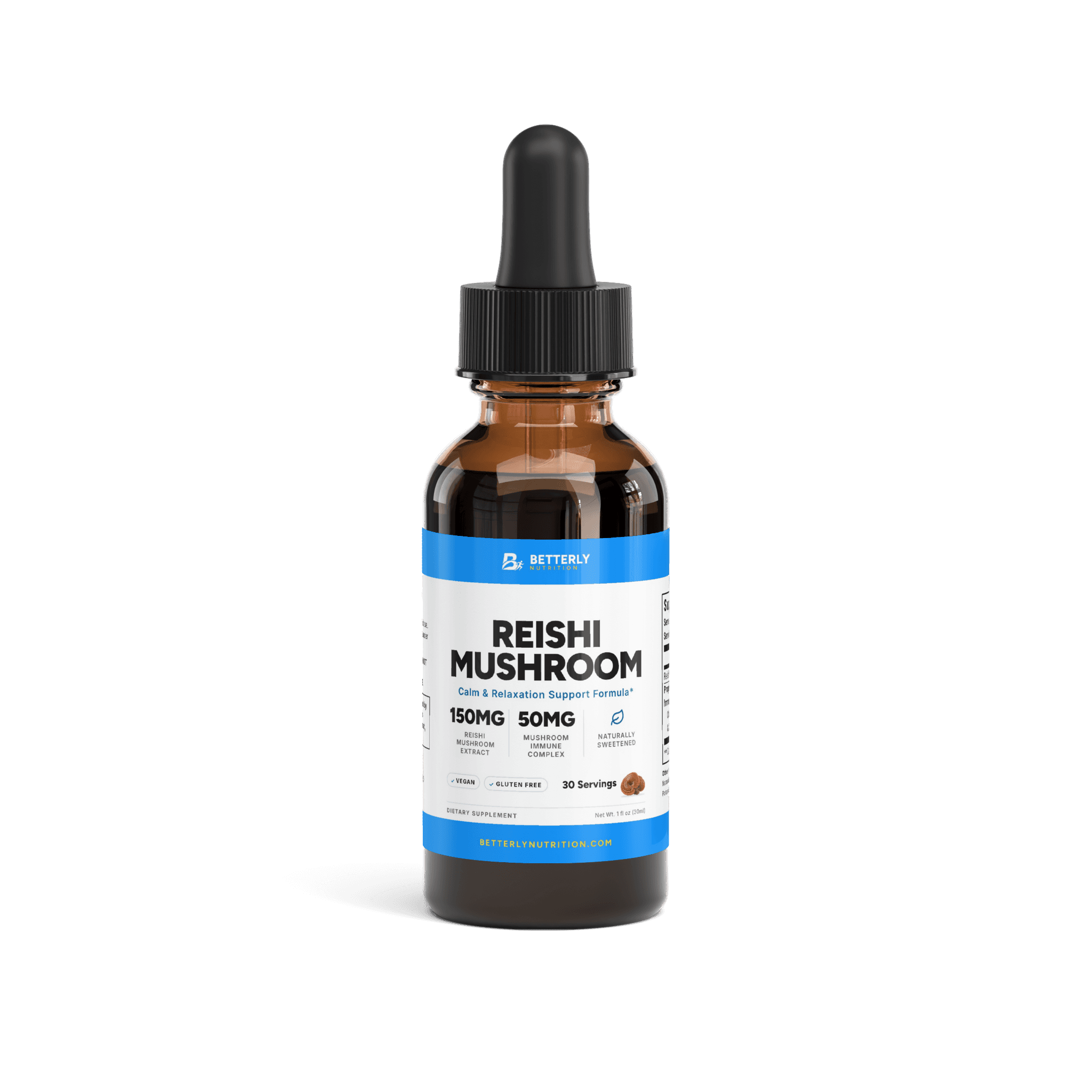
Prefer to skip the gummy's added sugars, passion flower and valerian? The Reishi Mushroom Calm Drops list none of them: reishi extract at 150 mg per 1 ml serving, then a 50 mg five-mushroom complex that gives no single amounts. Their base is glycerin and water, with no alcohol on the label, so they aren't an alcohol tincture.
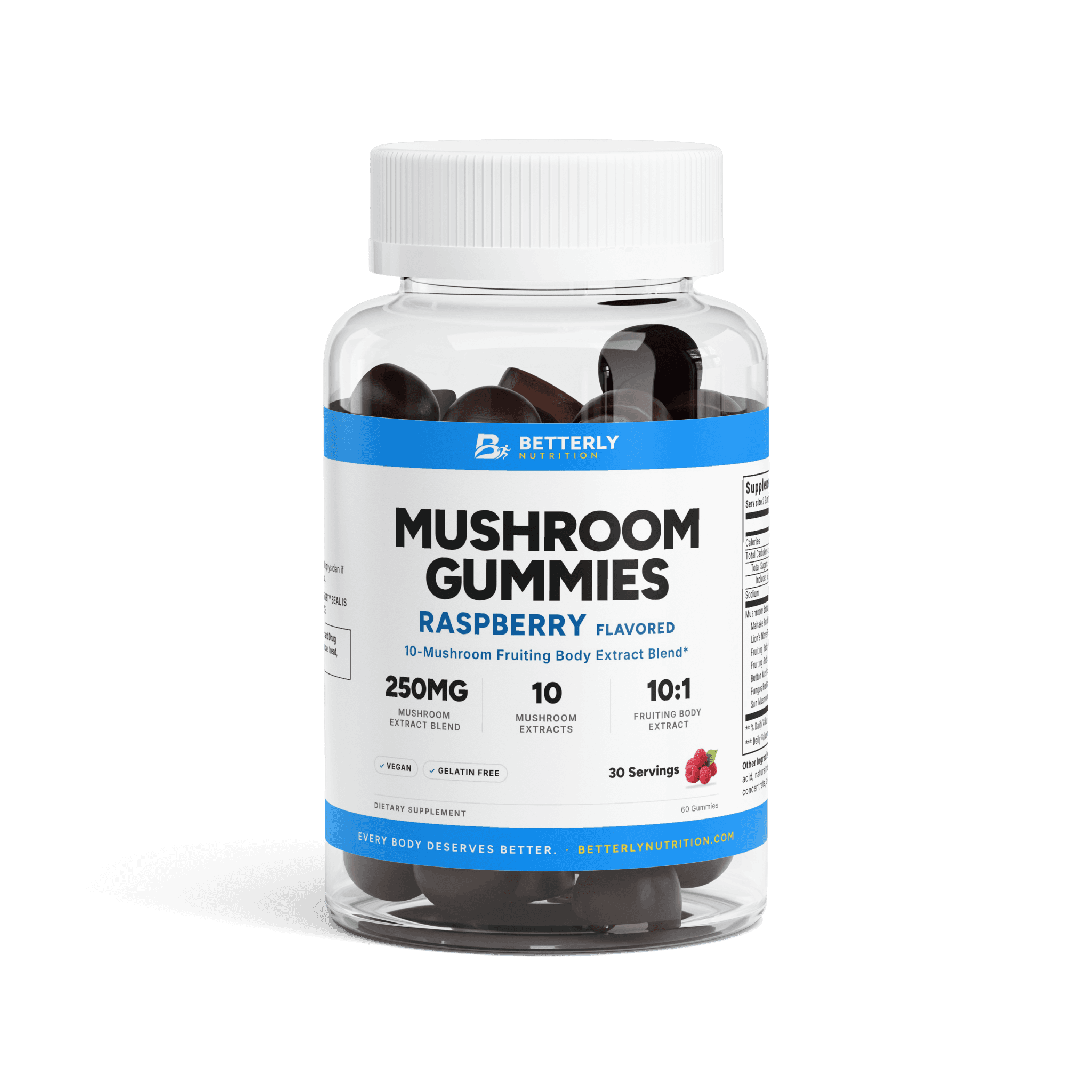
A 2-gummy serving of the Mushroom Gummies packs ten fruiting-body 10:1 extracts, lion's mane and reishi among them, into a single 250 mg blend, alongside 5 g of added sugars.
On the Mushroom Capsules panel, reishi extract and lion's mane get separate rows of 266 mg each per 2-capsule serving, as do cordyceps and shiitake, with a 266 mg six-mushroom blend after them. Because that one dose is tied to a meal, both mushrooms arrive at once.
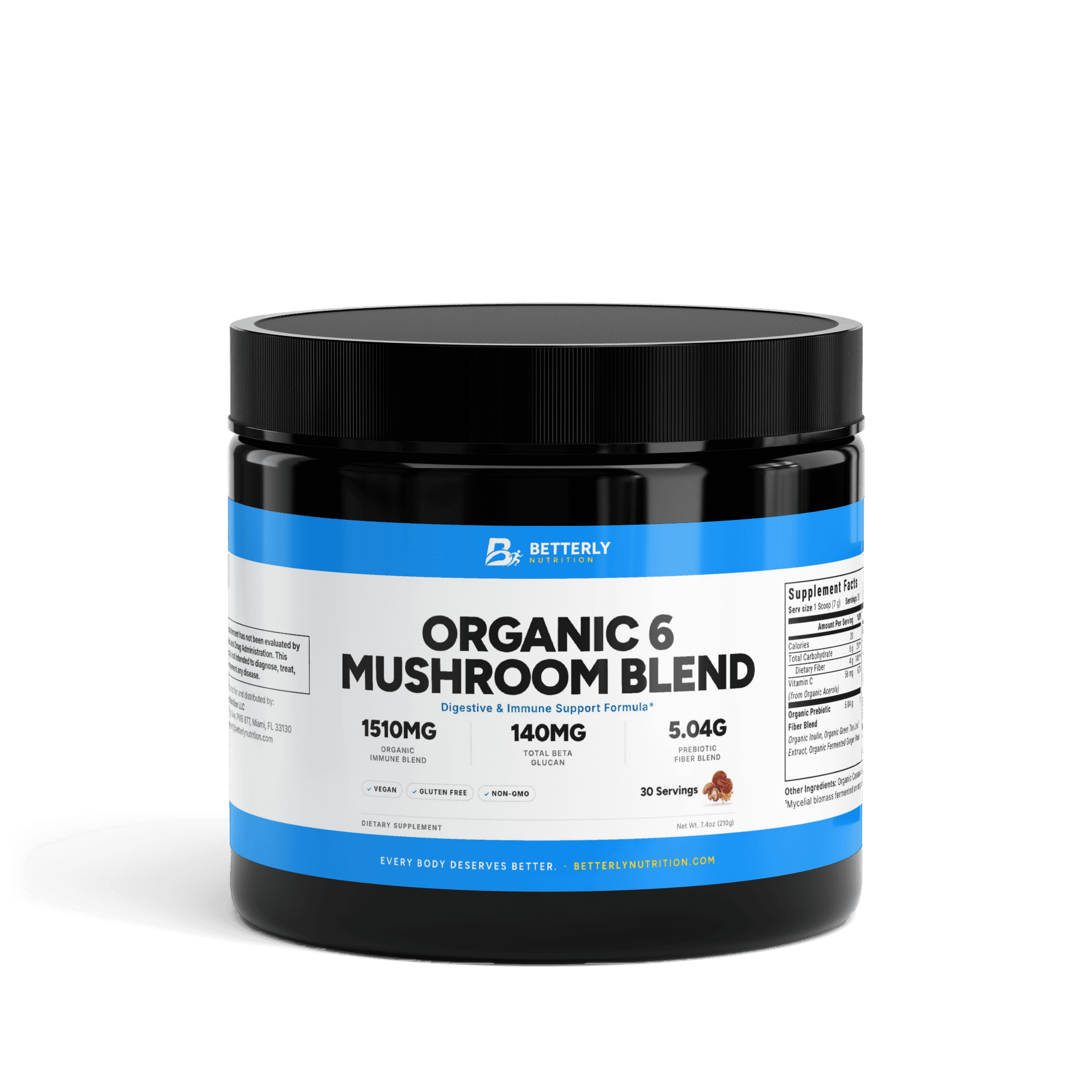
Not every blend in our mushroom shop carries both, though: reishi appears in the Organic 6 Mushroom Blend Powder, but lion's mane doesn't.
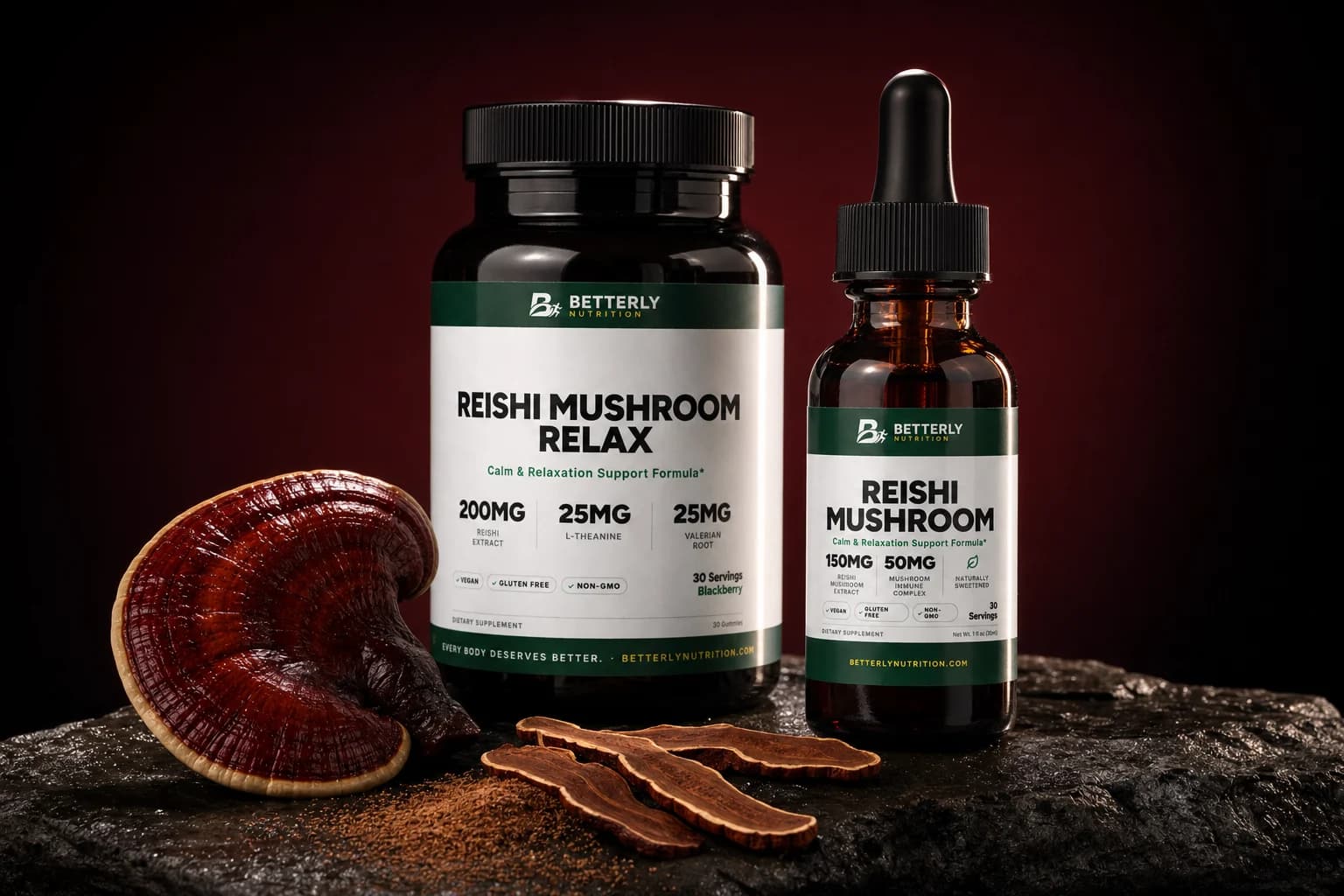
From our shop: Reishi Mushroom Relax Gummies — the evening half of the pair: each 1-gummy serving lists 200 mg of reishi extract plus four extras the morning lion's mane capsule doesn't contain.
What's in the evening gummy besides reishi?
Besides 200 mg of reishi extract, each 1-gummy serving of the Relax Gummies holds 25 mg apiece of lemon balm, passion flower, valerian root and the amino acid L-theanine.
Two of those extras are why the gummy belongs to the evening half of the pair, not the morning. The National Center for Complementary and Integrative Health (NCCIH) calls a sleep-inducing effect from valerian possible but not proven, and its valerian page says that's reason enough to keep valerian away from alcohol and sedatives. Passion flower brings its own list: the passionflower page names dizziness, confusion and drowsiness as possible side effects.
Take your first gummy on a night you're staying in, and hold off on driving afterward until you've seen how you respond. None of these herbs is in the lion's mane capsule, whose only other ingredients are a pullulan shell and organic pea starch.
For scale, NCCIH puts valerian's apparent-safety range at 300 to 600 mg daily, used for as long as 6 weeks, while the label's one or two gummies hold 25 mg or 50 mg of valerian root. Small still isn't zero, so the cautions stand.
How do you fit both labels into one day?
Our reishi and lion's mane labels fit one day: two lion's mane capsules, plus either one to two Relax gummies or a single 1 ml serving of Calm Drops.
Morning slot: lion's mane capsules
- Two capsules, the label's daily amount. It doesn't name a meal, so breakfast is just a handy cue.
- No blend that day. The Mushroom Gummies and Capsules already contain both mushrooms, so adding one doubles up rather than pairs.
Evening slot: one reishi product
- The Relax gummy or the Calm Drops, not both.
- On the gummy, one a night keeps added sugars at 2 g and each extra at 25 mg; a second gummy, which the label allows, doubles both.
- On the drops, shake the bottle first, as the label asks, then measure 1 ml, which the label equates with 30 drops.
- Drinking or driving later? Leave the gummy out that night.
Missed an evening? Just take your usual amount the next night; a skipped day isn't something to make up.
At two gummies a night, the 30-serving gummy bottle lasts 15 nights, half as long as the capsules.
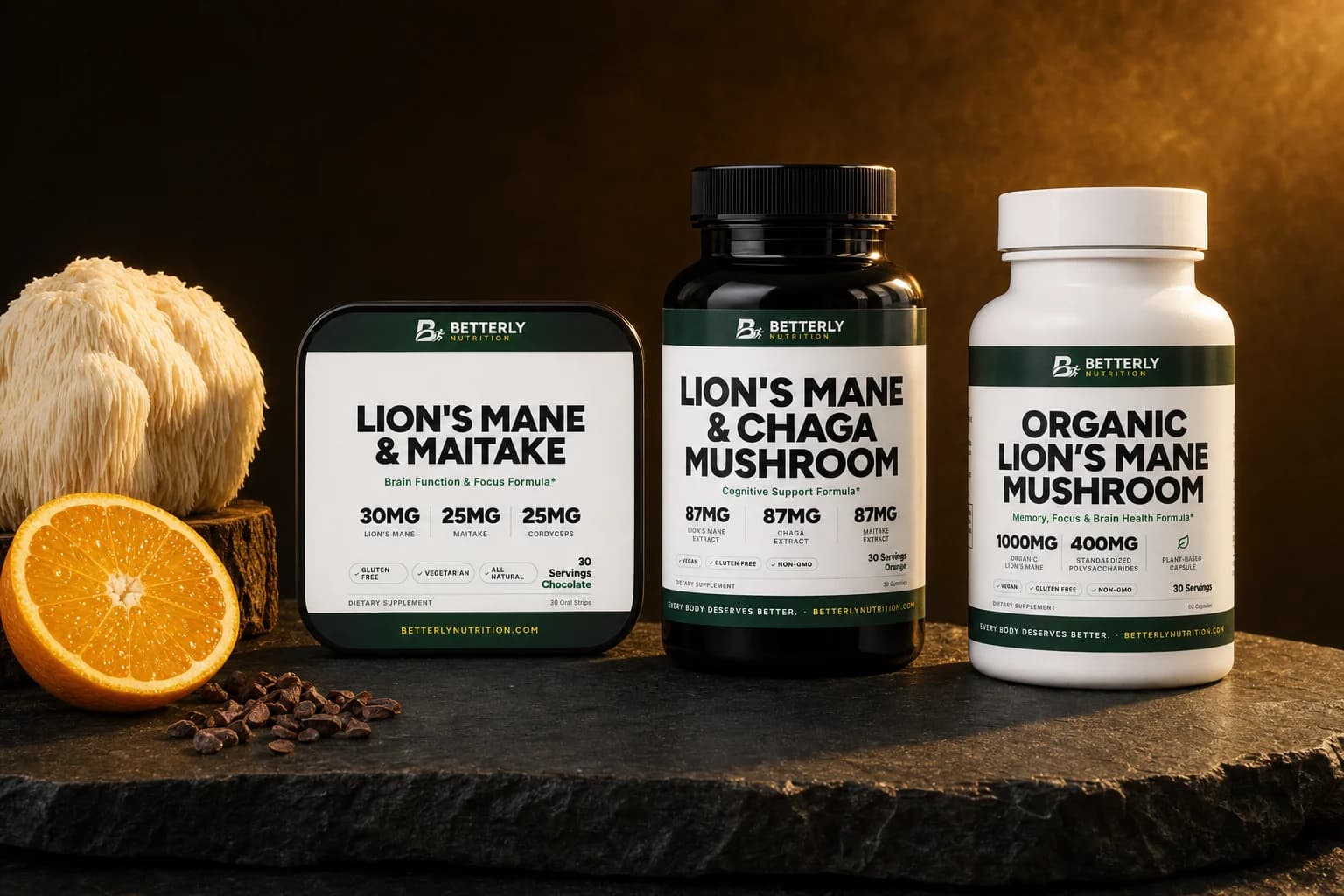
From our shop: Organic Lion's Mane Mushroom Capsules — the morning half of the pair: a 2-capsule serving lists 1,000 mg of organic lion's mane, including 400 mg of polysaccharides, and caffeine appears nowhere on the panel.
When is the pairing more than you need?
You don't need the reishi and lion's mane pairing when only one end of your day needs attention; buy that single bottle and leave the other on the shelf.
Already own the Mushroom Gummies or Capsules? Then both mushrooms are in your cupboard, and the singles would stack more of each rather than pair them.
Be honest about why the Relax gummy appeals, too. If its passion flower, valerian root, lemon balm and L-theanine are the real draw, judge it as an evening blend, not the reishi half of a pair. And if evenings are already the easy part of your day, the gummy just adds four more ingredients to keep track of.
Who needs a provider's OK before pairing reishi and lion's mane?
Check with a provider before pairing reishi and lion's mane if you take medicine, have an operation scheduled, are expecting or breastfeeding, are under 18, or have a health condition.
All six labels we've named carry an identical caution: stay within the stated dose, and see a physician in the last three cases above. The evening gummy adds specifics a morning capsule alone wouldn't:
- Medicines: a pairing puts two new labels in front of your pharmacist, so bring both. For the gummy's herbs, NCCIH's passionflower and valerian pages each say some herbs can interact badly with medicines.
- Surgery: tell your surgical team about every bottle in the pair. NCCIH singles out the gummy's passion flower, which might slow the nervous system too much alongside anesthesia or other surgery-related medicines, and wants your provider told about any use in the 2 weeks before.
- Pregnancy and breastfeeding: NCCIH takes the gummy off the table in pregnancy, since passionflower may cause uterine contractions, and calls valerian's safety while pregnant or nursing largely unknown. Ask about the capsule too; every label here names pregnancy and nursing.
- Liver: the evening product carries two flags. LiverTox gives reishi a D score, a possible but rare source of liver trouble, from a handful of poorly documented case reports. NCCIH says valerian has, very rarely, been linked to liver injury, most often in multi-herb products like the Relax gummy. If a provider checks your liver, ask first; our rundown of reishi's side effects covers those cases.
- Mushroom allergies: LiverTox notes an acute hypersensitivity, or allergy-like, reaction to lion's mane taken orally. If any mushroom has ever disagreed with you that way, ask before opening either bottle.
Notice something unusual after adding the second bottle? Stop whichever you started last and tell your provider.
FAQ: reishi and lion's mane
Can you take a reishi gummy and lion's mane capsules in the morning?
Yes, a reishi gummy and lion's mane capsules can go down together at breakfast, because both labels leave the timing open, but the Relax gummy is an awkward reishi pick before work. Its passion flower and valerian root carry NCCIH cautions about drowsiness and a possible sleep-inducing effect. For both mushrooms at one morning sitting, pair the capsules with a dropper of Calm Drops, which lists neither herb.
Are lion's mane and reishi side effects worse together?
No evidence says so, though we couldn't find a study that looked at whether lion's mane and reishi side effects add up. On their own, LiverTox reports mild stomach upset from lion's mane in under 1 in 10 people in longer trials, and few side effects for reishi in short ones. The real cost of pairing is confusion: with two new bottles, it's harder to tell which one is behind a reaction.
Can you take reishi, lion's mane and cordyceps together?
Yes, you can take reishi, lion's mane and cordyceps together, though we found no study of the three as a set. The Mushroom Capsules hold 266 mg apiece of all three per 2-capsule serving, and their label asks for that dose 20 to 30 minutes before eating, with 8 oz of water. If you build the trio from separate products instead, stick to each label's own serving and don't add a blend on top.
How long before you notice anything from these mushrooms?
There's no set timeline for reishi or lion's mane, and our labels don't give one either. If you try the pair, change nothing else for a while and take each at its label serving, so you're judging the mushrooms and not a new diet or bedtime. Deciding they aren't doing anything for you is a perfectly good reason to stop.
Is it safe to take reishi and lion's mane every day?
Probably, for short stretches at the label serving, but nobody has tested years of daily reishi and lion's mane use. Our labels give daily directions, yet the trials LiverTox reviews for both mushrooms were mostly small, and for reishi, short. The Relax gummy adds limits: NCCIH calls valerian's long-term safety unknown and gives daily passionflower extract a possible safe window of up to 8 weeks. Planning a months-long routine? Loop in your provider.
Sources
- Lingzhi, Reishi, LiverTox, National Institutes of Health
- Lion's Mane, LiverTox, National Institutes of Health
- Passionflower: Usefulness and Safety, NCCIH
- Valerian: Usefulness and Safety, NCCIH
If this left you looking for somewhere to start, read reishi mushroom gummies with L-theanine and valerian root — its amounts per serving are listed on the page. For the practical questions this raises, how dosing, sourcing and subscriptions work is answered in one place.