On this page
- Key takeaways
- What's the difference between cordyceps and lion's mane?
- Is cordyceps or lion's mane better for energy?
- Is lion's mane or cordyceps better for focus?
- Can you take lion's mane and cordyceps together?
- How much cordyceps and lion's mane is in each product?
- Which should you choose: cordyceps, lion's mane or both?
- How do you take each product, going by its label?
- When don't you need cordyceps or lion's mane?
- Who should check with a healthcare provider first?
- FAQ: cordyceps vs lion's mane
- Sources
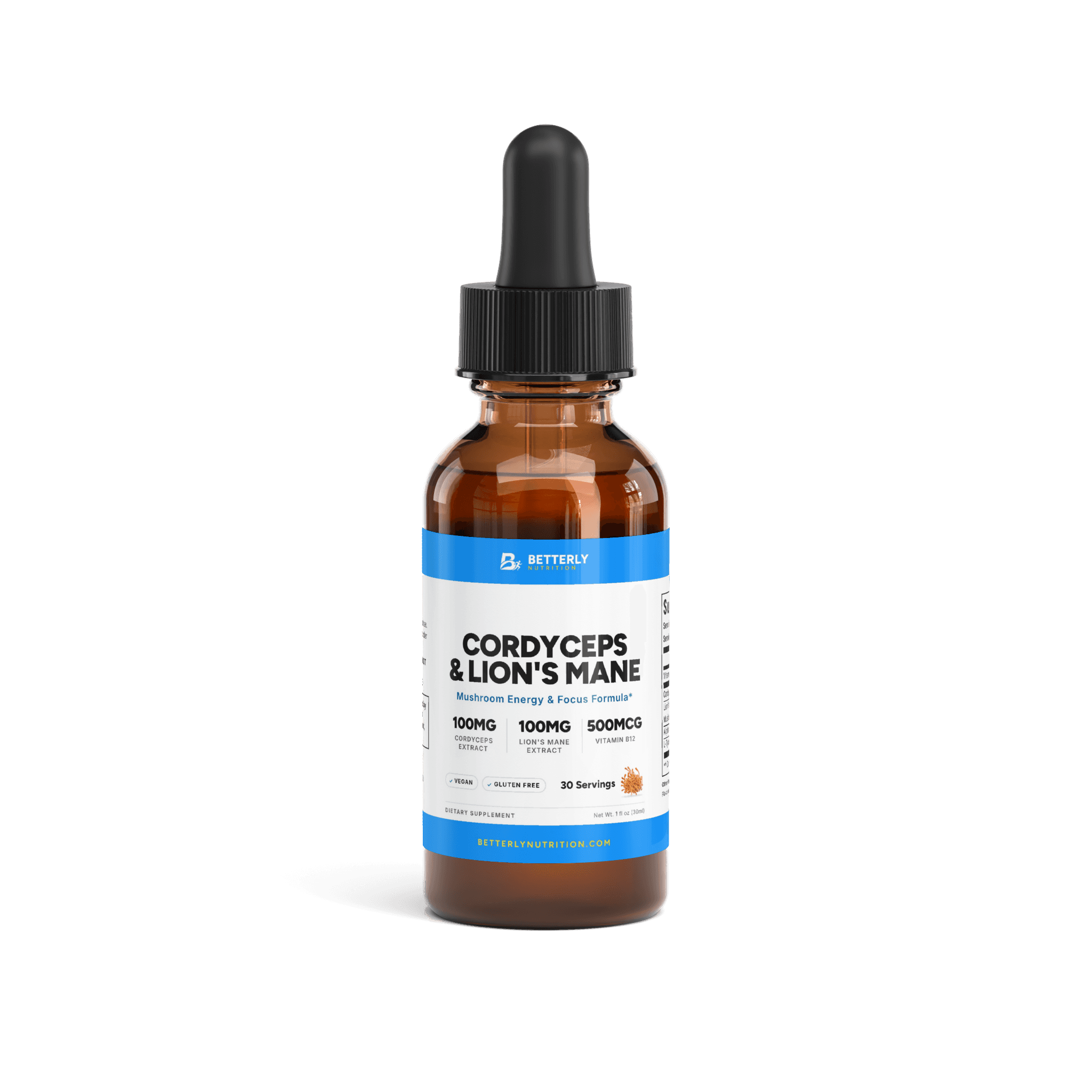
The short answer: Cordyceps vs lion's mane comes down to the job you want done. Cordyceps is sold for energy and stamina and has mostly been tried in small exercise trials. Lion's mane is sold for focus and memory. Neither has convincing human evidence yet, and nothing we read warns against pairing them. One 1 ml dropper of our Cordyceps & Lion's Mane Energy Drops gives you 100 mg of each mushroom extract.
Key takeaways
- Cordyceps and lion's mane are different fungi: wild cordyceps grows on insect larvae, while lion's mane is an edible mushroom that feeds on dead wood.
- NIH's LiverTox database says the benefits promoted for each mushroom haven't been shown convincingly in people, so keep your expectations modest for both.
- The single-mushroom studies LiverTox lists used roughly 1 g to 10 g a day, far more than the 100 mg of each mushroom in one serving of our drops.
- A combination product suits one small daily habit, while a single-mushroom product suits one clear goal and a bigger serving.
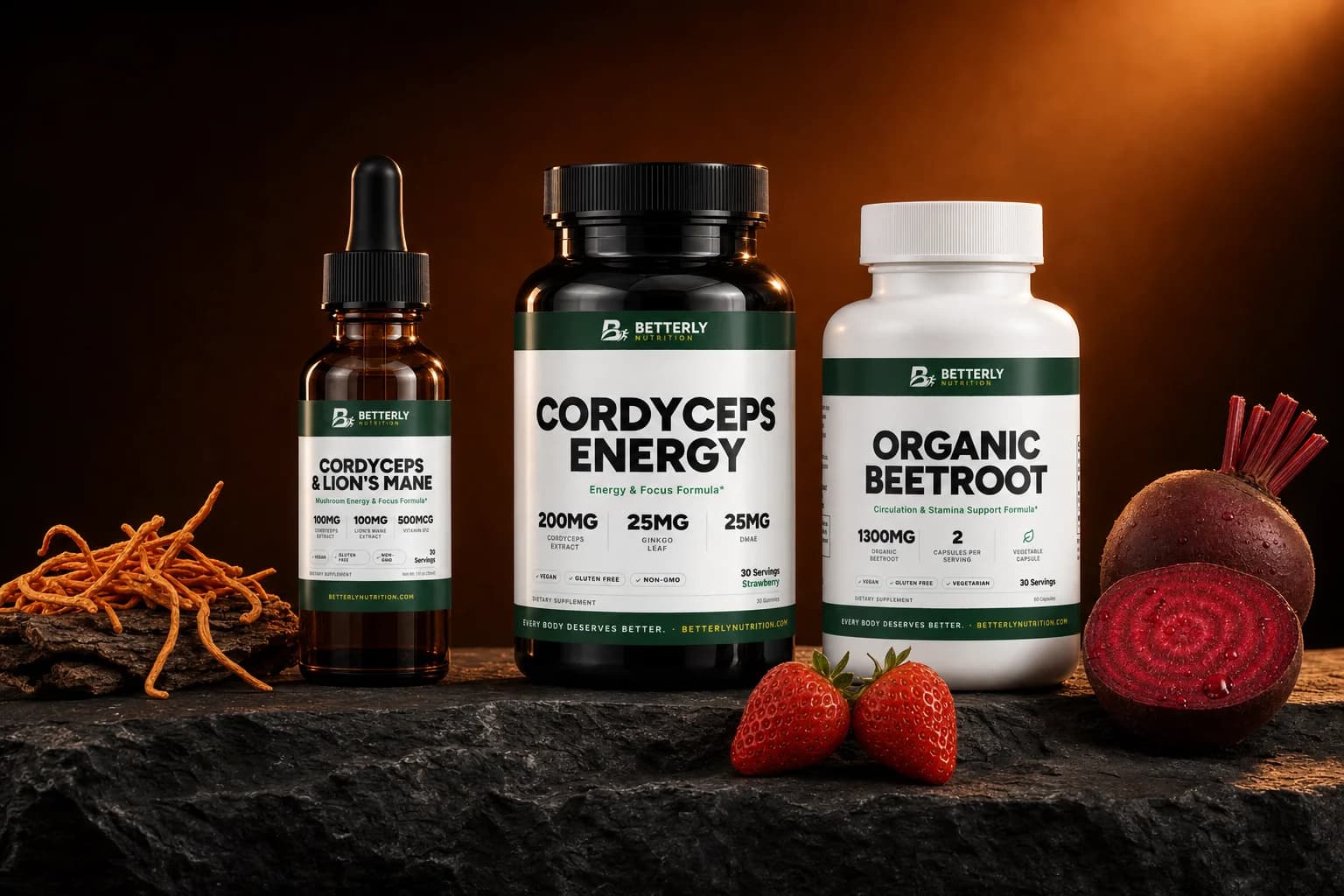
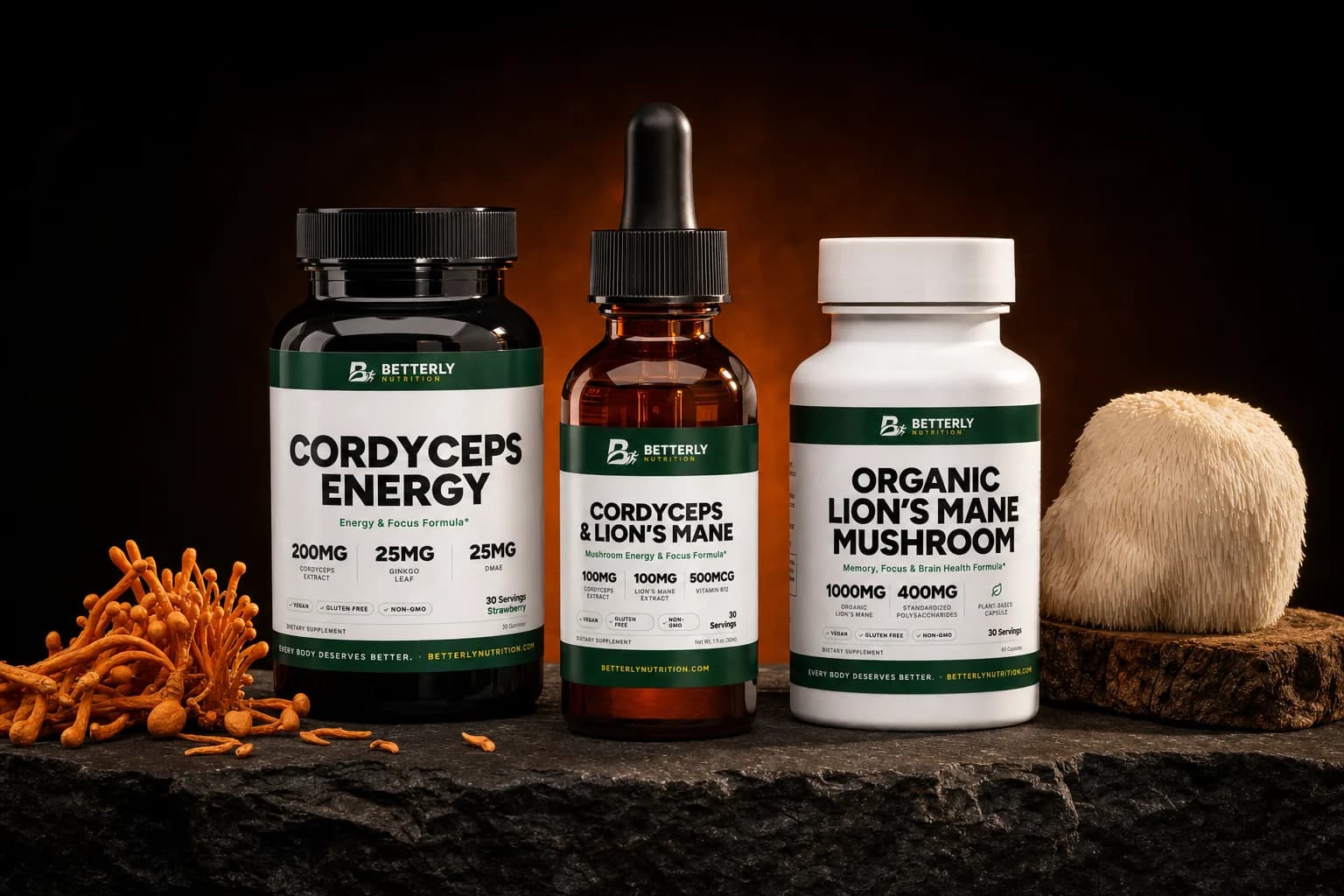
Our shelf has a stake in this question. We sell lion's mane alone in a capsule, cordyceps in an energy gummy with four other ingredients, the pair in a dropper, the pair plus maitake and shiitake in a strip, and both inside a ten-mushroom capsule. Rather than crown one, we've lined up all five panels below.
What's the difference between cordyceps and lion's mane?
Cordyceps and lion's mane are two different kinds of fungi: cordyceps parasitizes insect larvae, while lion's mane is an edible mushroom that feeds on dead wood.
According to NIH's LiverTox entry on cordyceps, "cordyceps" is a common name for several fungi. The main two are Ophiocordyceps sinensis, formerly called Cordyceps sinensis, and Cordyceps militaris. The wild fungus infects insect larvae in the mountains of southwest China and Tibet.
Lion's mane (Hericium erinaceus) makes its living the opposite way. LiverTox's lion's mane entry calls it saprophytic, meaning it feeds on dead matter, usually the trunks of dead hardwood trees, instead of a living host. It's also a food, used widely in East Asia both at the table and in traditional Chinese medicine.
| Cordyceps | Lion's mane | |
|---|---|---|
| Scientific names | Ophiocordyceps sinensis, Cordyceps militaris | Hericium erinaceus |
| How it lives | On insect larvae in the wild; mostly lab-grown for supplements | On dead hardwood |
| What it's sold for | Energy, stamina, workouts | Focus, memory |
| Human evidence, per LiverTox | Not shown convincingly | Not shown to any great extent |
| Amounts, per LiverTox | Trials about 1 g to 3 g a day; products recommend 0.5 g to 4 g | Trials 1 g to 10 g |
In short, these two mushrooms differ in what they're marketed for, not in how strong the proof is. Both sit at the "interesting but unproven" stage, and the amounts studied dwarf what our combination products hold.
Is cordyceps or lion's mane better for energy?
Cordyceps is the mushroom marketed for energy and athletic performance, while lion's mane isn't sold for energy at all.
Still, LiverTox says "none of the purported beneficial effects of cordyceps have been demonstrated convincingly in clinical trials in humans." Its single-ingredient exercise trials landed close to placebo, as our guide on when to take cordyceps explains.
For this comparison, blends tell you more. LiverTox lists two trials of formulas that paired cordyceps with rhodiola, a different herb:
- 14 young, inactive adults started a training program and took a rhodiola and cordyceps supplement or a placebo for 8 weeks. Their changes in maximal oxygen uptake, a standard gauge of aerobic fitness, were similar in both groups.
- 21 college-aged men trained for 14 weeks while taking a multi-ingredient supplement containing cordyceps or a placebo. LiverTox notes that body strength improved, yet overall training performance didn't differ between the two groups.
Neither blend included lion's mane, so they can't settle the pairing question. They do suggest that tucking cordyceps into a formula hasn't, so far, added a measurable training edge.
That fits a broader caution from the NIH Office of Dietary Supplements (ODS). Its fact sheet on exercise and athletic performance supplements says research on performance supplements in general often enrolls small numbers of people for just days, weeks or months.
Neither mushroom stands in for coffee, and our Cordyceps Mushroom Energy Gummies and the Energy Drops list no caffeine. For stimulant-free alternatives, our caffeine-free energy guide weighs cordyceps against beetroot and shilajit.
Is lion's mane or cordyceps better for focus?
Lion's mane is the mushroom marketed for focus, and small studies in healthy adults found mixed results, ranging from minor short-term gains to no difference at all.
LiverTox says lion's mane, whose compounds include hericenones and erinacines, is widely sold with claims that it improves memory and cognitive function. It adds that the alertness and learning effects seen in mice "have not been shown to any great extent in humans."
The healthy-adult studies in that entry run from a single 1 g dose to 10 g a day for four weeks, and the results run just as wide: minor short-term gains on some tests at the low end, no difference from placebo at the top.
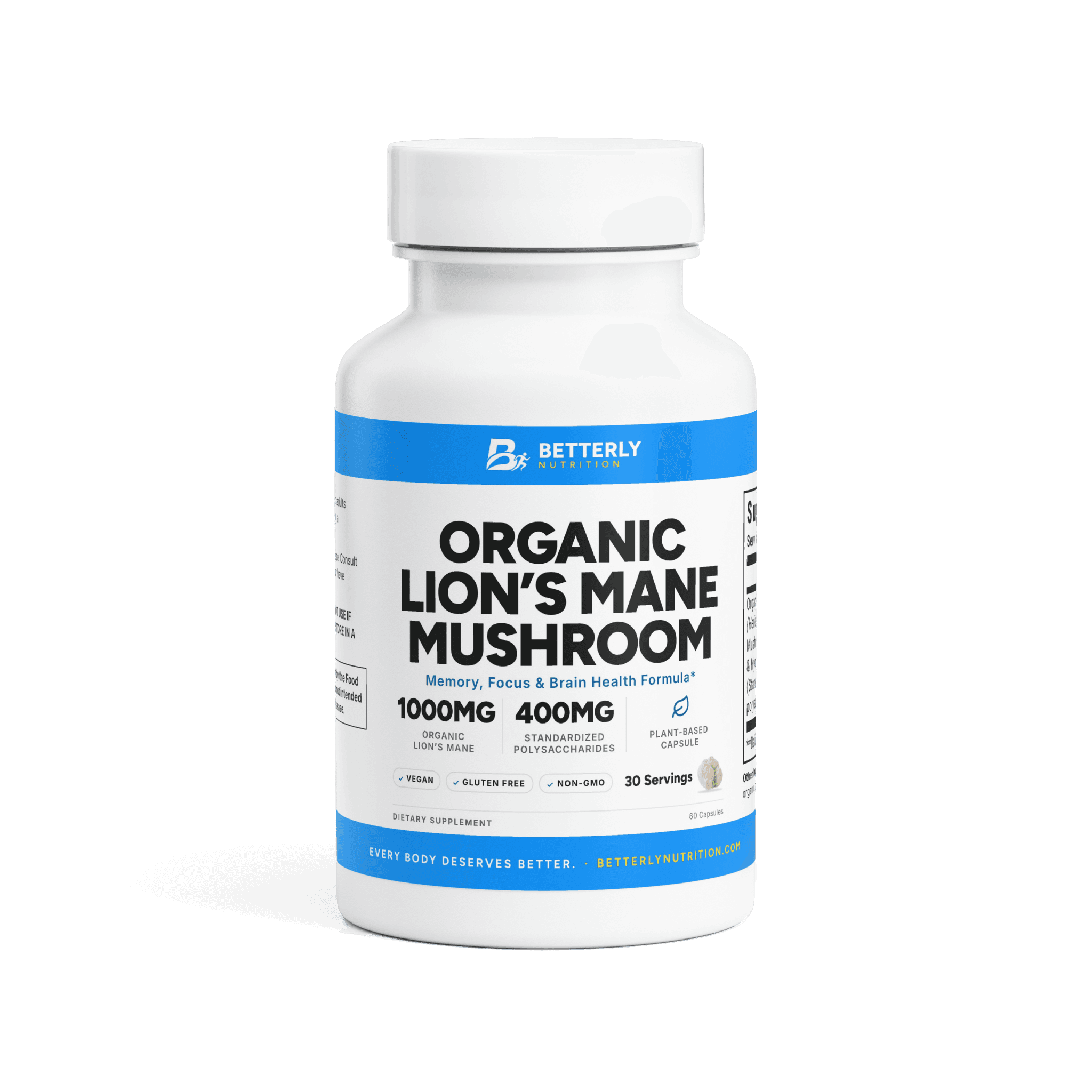
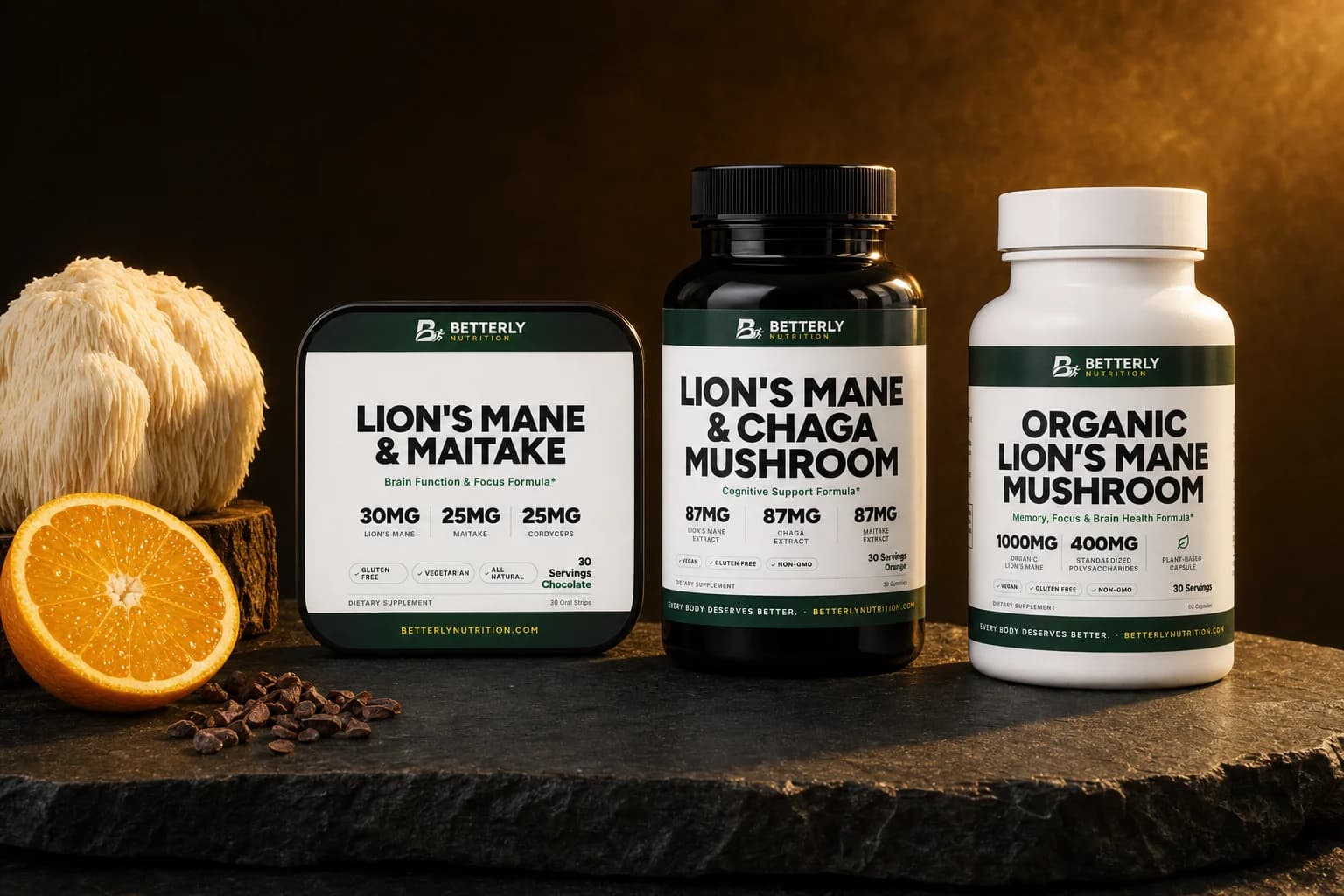
A 2-capsule serving of our Organic Lion's Mane Mushroom Capsules comes to 1,000 mg, the low end of that study range, while a 1 ml dropper of the Energy Drops carries a tenth of that. Extracts and whole-mushroom powders aren't the same material, so use these as rough reference points, not matches.
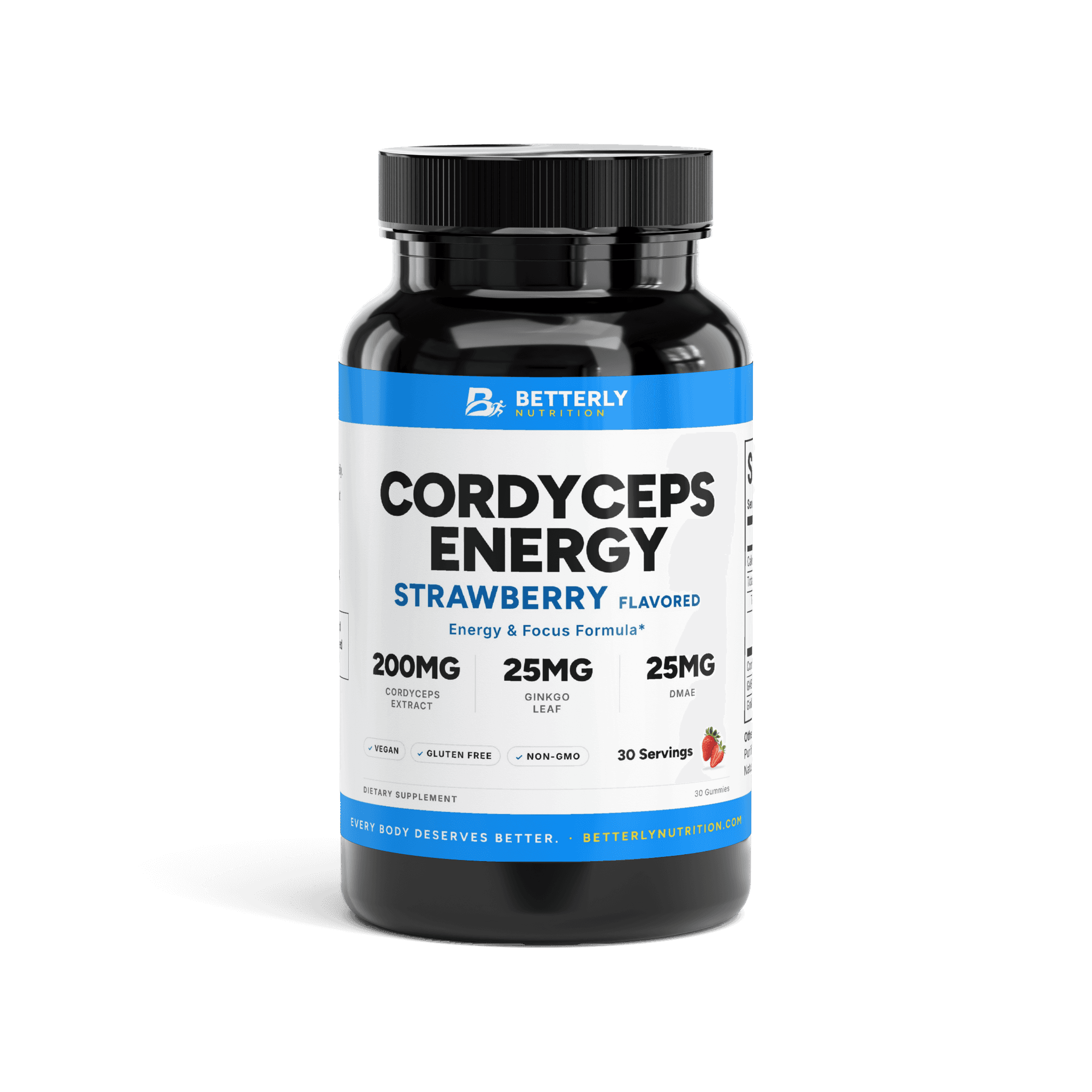
LiverTox's cordyceps entry lists no focus trials at all. Our cordyceps gummy label does read "Energy & Focus Formula," but it also adds ginkgo leaf and DMAE, so the mushroom isn't the only thing inside. Torn between one lion's mane product and a ten-mushroom blend? Our single lion's mane vs blend comparison covers that choice.
Can you take lion's mane and cordyceps together?
Nothing we read warns against taking lion's mane and cordyceps together, and LiverTox describes both as generally well tolerated, with mostly mild stomach complaints.
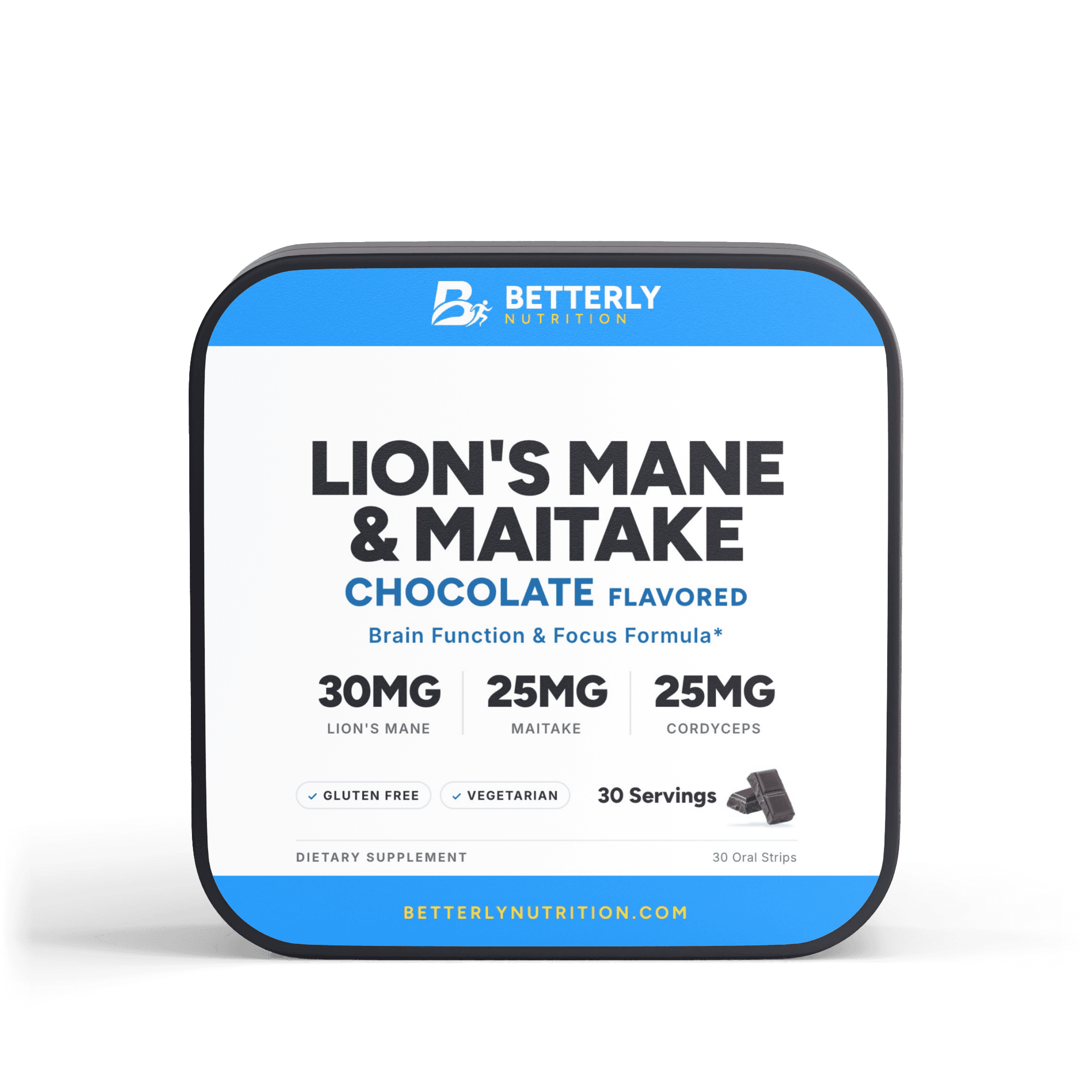
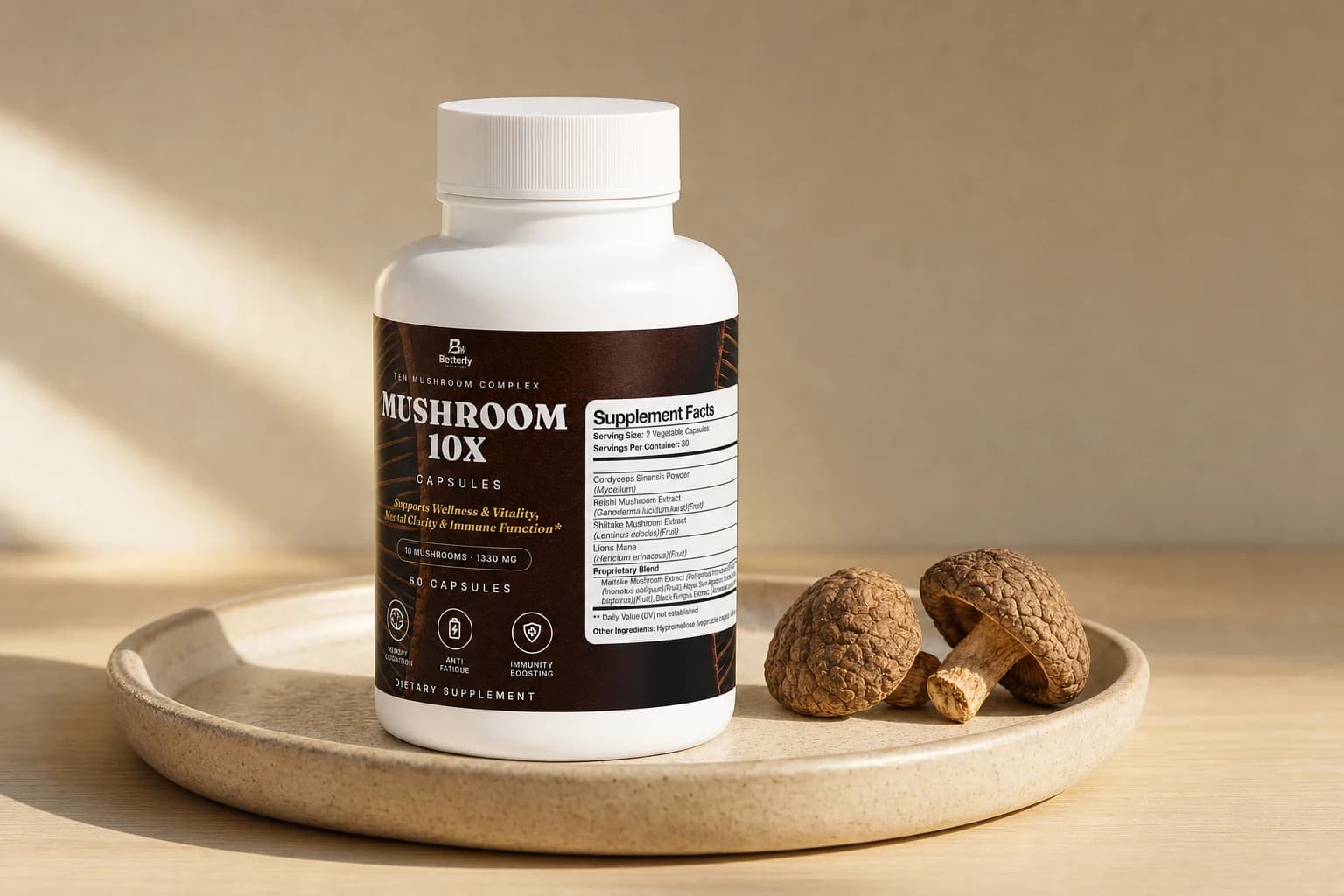
Several of our own products pair them. Besides the drops, the Lion's Mane & Maitake Focus Strips carry both alongside maitake and shiitake, and the Mushroom Capsules fold both into a ten-species formula.
The ODS exercise fact sheet points out that most ingredient combinations haven't been studied, so it can't say how effective or safe they are. Neither LiverTox entry lists a trial of lion's mane and cordyceps taken together.
If you want both, keep it simple:
- Choose one product that contains both, or one product for each. Stacking drops, strips and a blend sends the same two fungi through three labels.
- Add two separate products one at a time. Both LiverTox entries list similar stomach complaints, so staggering shows you which one disagrees with you.
- Keep each product at its own label serving.
How much cordyceps and lion's mane is in each product?
Per serving, our labels run from 25 mg of cordyceps in one strip to 1,000 mg of lion's mane in two capsules; the drops hold 100 mg of each.
| Product (serving) | Cordyceps | Lion's mane | Also on the panel |
|---|---|---|---|
| Energy Drops (1 ml) | 100 mg extract | 100 mg extract | B12, Alpha GPC, L-Tyrosine |
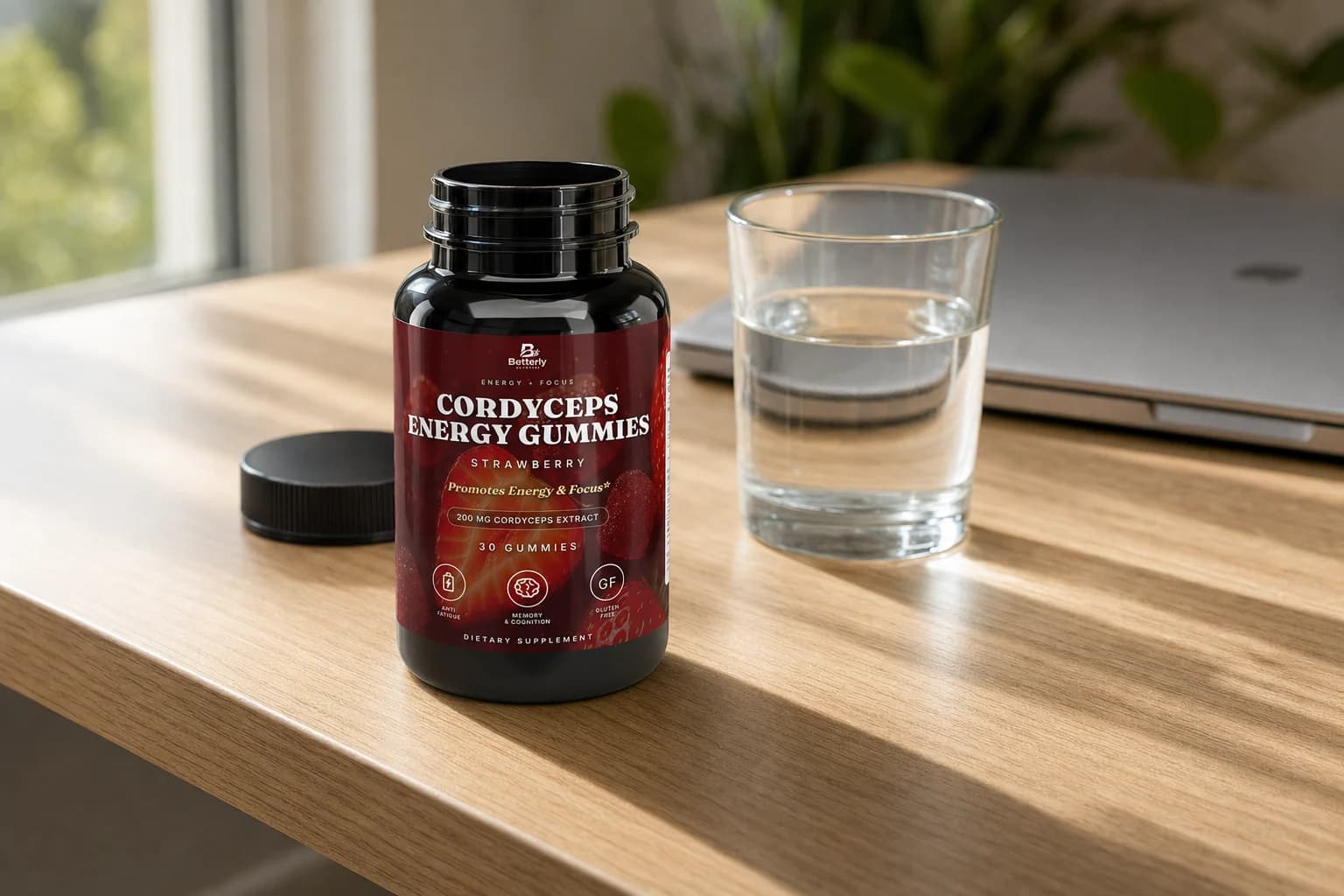
| Cordyceps gummies (1 gummy) | 200 mg extract | None | GABA, ginkgo, L-glutamine, DMAE |
| Lion's mane capsules (2 capsules) | None | 1,000 mg powder | 40% polysaccharides (400 mg) |
| Focus strips (1 strip) | 25 mg | 30 mg | Maitake 25 mg, shiitake 20 mg |
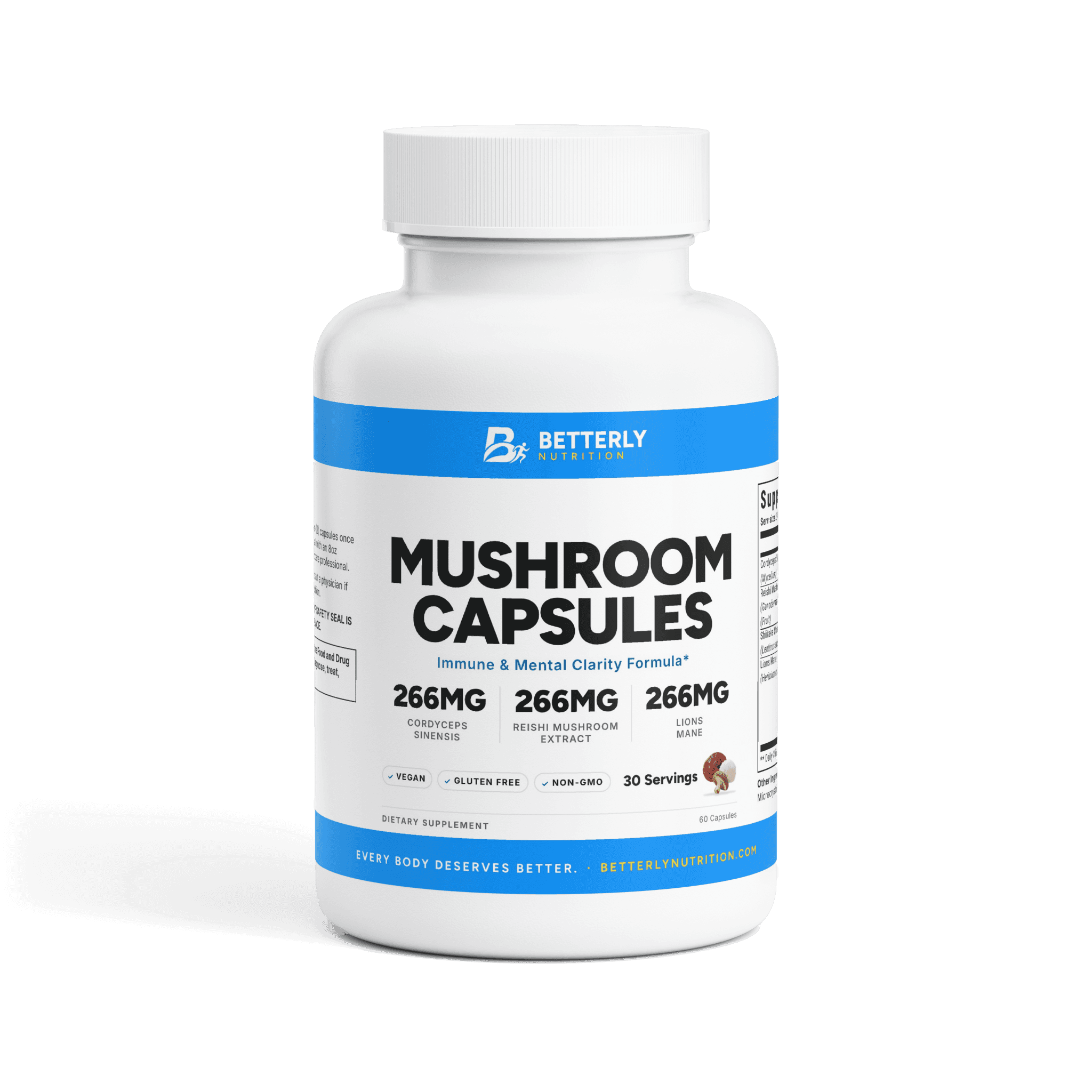
| Mushroom Capsules (2 capsules) | 266 mg mycelium powder | 266 mg (fruit) | Reishi, shiitake, a six-mushroom 266 mg blend |
Reading across the rows, two products list equal amounts of both mushrooms: the drops at 100 mg each per 1 ml, and the blend capsules at 266 mg each per 2 capsules. In the drops, those two are the only mushrooms on the panel, while the blend adds eight more species.
At one 1 ml dropper a day, the drops are a small, measured serving of both, not a high-dose product to top up with extra droppers.
Each 1 ml of the Energy Drops adds 500 mcg of vitamin B12 plus 25 mg apiece of Alpha GPC and L-Tyrosine. The ODS vitamin B12 fact sheet puts the adult requirement at 2.4 mcg daily. It calls supplement doses of 500 mcg or 1,000 mcg safe and notes that the body absorbs only a small percentage.
The drops are labeled vegan and gluten free, in a glycerin and water base sweetened with stevia. The strawberry gummies go another way: 2 g of added sugar each, alongside GABA, ginkgo leaf, L-glutamine and DMAE at 25 mg apiece.
The chocolate-flavored strips use monk fruit and steviol glycosides and are labeled vegetarian, not vegan. The lion's mane capsules keep it plain, with a pullulan capsule and organic pea starch.
Which should you choose: cordyceps, lion's mane or both?
Choose by what each product is sold for: cordyceps for training days, lion's mane for focus, and a combination if you'd rather keep one small daily habit.
Either way, you're picking a product's purpose, not a proven result, since the trials above mostly came out close to placebo.
- Curious to try the mushroom sold for training: the cordyceps gummies, once you've read the added sugar line.
- Work or study focus with the biggest lion's mane serving we carry: the lion's mane capsules.
- Both mushrooms, no pills and no sugar rows: one dropper of the Energy Drops.
- Nothing to measure, chocolate-flavored and dissolved on your tongue: a focus strip, with the smallest amounts here.
- Many species in one serving: the Mushroom Capsules.
You'll find the drops, the gummies and non-mushroom options on our Energy Support shelf.
From our shop: Cordyceps & Lion's Mane Energy Drops — equal 100 mg servings of cordyceps and lion's mane extract in each 1 ml dropper, with 500 mcg of vitamin B12 and a vegan label.
How do you take each product, going by its label?
Our cordyceps and lion's mane labels all give a once-a-day amount: a 1 ml dropper, a gummy or two, a pair of capsules or a single strip.
- Energy Drops: "Shake well. Take 1 ml (30 drops) daily."
- Cordyceps gummies: "Take one (1) to two (2) gummies daily."
- Lion's mane capsules: adults take two capsules daily "or as directed by a healthcare professional."
- Focus strips: "Place 1 oral strip on the tongue daily and allow it to dissolve."
- Mushroom Capsules: "take two (2) capsules once a day. For best results, take 20-30 min before a meal with an 8oz (237ml) glass of water."
The blend is the only one of these five labels that ties its dose to a meal, and none of them names a clock time. For the focus half of this pairing, our guide to taking lion's mane in the morning or at night digs into timing.
From our shop: Organic Lion's Mane Mushroom Capsules — our largest lion's mane serving at 1,000 mg per 2 capsules, standardized to 40% polysaccharides and labeled vegan.
When don't you need cordyceps or lion's mane?
You may skip cordyceps or lion's mane if you want a lift you can feel today, already get both or plenty of B12 elsewhere, or are cutting added sugar.
Neither mushroom is a stimulant, and the studies above don't support a noticeable jolt.
If your Mushroom Capsules already supply 266 mg of each mushroom per 2-capsule serving, adding the drops mostly repeats what's in your cupboard.
For the drops' vitamin B12, ODS says most people in the United States get enough from the foods they eat, and some breakfast cereals and nutritional yeasts are fortified with it. If your multivitamin already lists B12, the drops' 500 mcg sits on top of it. ODS calls doses like that safe, so the issue is doubling up, not safety.
Cutting added sugar? Each cordyceps gummy lists 2 g of added sugars, so the two-gummy maximum adds up to 4 g. The drops, the strips and both capsule products have no sugar rows on their panels.
Who should check with a healthcare provider first?
Check with a healthcare provider before cordyceps or lion's mane if you're pregnant or nursing, under 18, take prescription medication, have surgery scheduled, or manage a medical condition.
Every label in this comparison says: "Do not exceed recommended dose. Consult a physician if pregnant, nursing, under 18, or have a medical condition."
LiverTox calls cordyceps side effects minimal or mild: rash, dry mouth, nausea, diarrhea, poor appetite and abdominal discomfort. For lion's mane, it notes mild stomach complaints, usually in under 10% of people in longer trials, plus at least one allergic-type reaction. If you've reacted to mushrooms before, skip both.
Bring the whole panel to your appointment. The gummies add ginkgo leaf and DMAE, and the drops add Alpha GPC and L-Tyrosine. ODS also says vitamin B12 supplements can interact with some medicines.
FAQ: cordyceps vs lion's mane
Is lion's mane a type of cordyceps?
No. Lion's mane and cordyceps belong to different groups of fungi. Lion's mane is Hericium erinaceus, an edible mushroom with long white spines that feeds on dead wood. Cordyceps is a group of fungi that parasitize insect larvae, mainly Ophiocordyceps sinensis and Cordyceps militaris. They share shelf space because both are sold as functional mushrooms, and several formulas, ours included, combine them.
Do cordyceps and lion's mane contain caffeine?
No, neither cordyceps nor lion's mane is a caffeine source. Our Energy Drops, cordyceps gummies, lion's mane capsules and focus strips list no caffeine on their Supplement Facts panels. If a mushroom product leaves you jittery, check its label for coffee, tea or guarana, since some brands blend mushrooms into caffeinated drinks.
Is the cordyceps in supplements militaris or sinensis?
Cordyceps supplements can use either species, and our own panels show how much that detail varies. LiverTox notes that most commercial cordyceps comes from a lab-grown version called Cs-4, rather than wild Ophiocordyceps sinensis. Our focus strips name Cordyceps sinensis, and our Mushroom Capsules list Cordyceps sinensis mycelium powder. Our drops and gummies just say cordyceps extract, with no species named.
Can you take cordyceps and lion's mane every day?
Yes, our cordyceps and lion's mane labels are written for daily use, at the amount each label gives. In practice, that means a dropper, up to two gummies, two capsules or a strip. A daily label still leaves room for your own situation, so talk to a provider first if you're on medication or have surgery coming up.
Sources
- Cordyceps, LiverTox, National Institutes of Health
- Lion's Mane, LiverTox, National Institutes of Health
- Dietary Supplements for Exercise and Athletic Performance: Fact Sheet for Consumers, NIH Office of Dietary Supplements
- Vitamin B12: Fact Sheet for Consumers, NIH Office of Dietary Supplements
If this left you looking for somewhere to start, read cordyceps and lion's mane drops with 100 mg of each — its amounts per serving are listed on the page. For the practical questions this raises, how dosing, sourcing and subscriptions work is answered in one place.