On this page
Stand in the mushroom aisle of any supplement shop — or scroll any wellness store online — and you'll hit the same fork in the road: a bottle with one mushroom on the label, almost always lion's mane, and a blend promising ten species in a single capsule. The lion's mane vs mushroom complex question sounds like a product debate, but it's really a question about you — specifically, how specific your goal is. This guide walks through what each format genuinely offers, what research suggests about both, and how to pick one without feeling like you need the other.
One thing up front: we sell both. That's exactly why we can play straight referee here. We have no reason to steer you toward either bottle, and you'll only be happy with your pick if the reasoning behind it is honest.
The short answer
Choose a single lion's mane supplement if you have one clear goal — usually focus or memory support. You get a full serving of the one mushroom with the most cognition-focused research behind it, and if something changes (or doesn't), you'll know exactly what to credit.
Choose a mushroom complex if your goal is broad — a general, cover-your-bases addition to a daily routine, usually with a lean toward everyday immune support. You trade depth for breadth: a smaller amount of each species, but far more species in the mix.
You probably don't need both. Most blends already include some lion's mane, so stacking a complex on top of a single-mushroom product often just buys you duplication. More on that below.
What a single lion's mane supplement offers
Lion's mane (Hericium erinaceus) is the shaggy, white, pom-pom-looking mushroom that has become the poster child of the functional mushroom world — and unusually for a wellness trend, there's a reason it stands out. Among functional mushrooms, lion's mane has attracted the most research attention specifically for cognition.
The interest centers on two families of compounds: hericenones, concentrated in the mushroom's fruiting body, and erinacines, found mostly in its root-like mycelium. In preclinical research — meaning cell and animal studies, not people — these compounds have been studied for their role in supporting the body's own production of nerve growth factor, a protein involved in the normal upkeep of nerve cells. That mechanism is why lion's mane shows up in so many focus formulas, and it's the honest version of claims you'll see stated far more confidently elsewhere.
The practical case for a single-mushroom product is simpler than the biochemistry:
- You get a full serving of the mushroom you actually want. No splitting capsule space with nine other species.
- You can tell what's working. Change one variable, watch the result. If you add a ten-mushroom blend and feel different, which mushroom do you thank?
- It matches a specific goal. If you searched "lion's mane for focus," you already have one — and a targeted format fits a targeted goal.
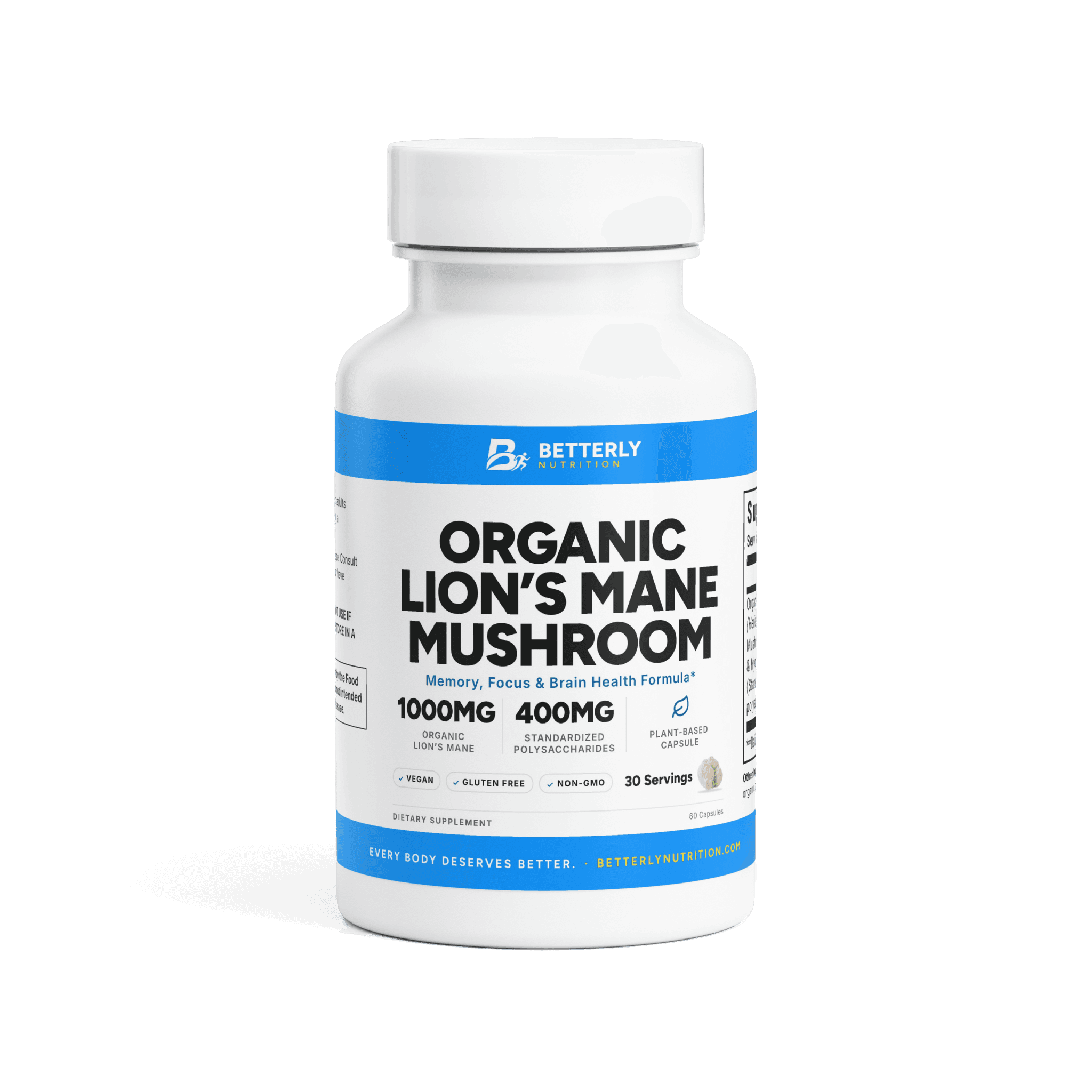
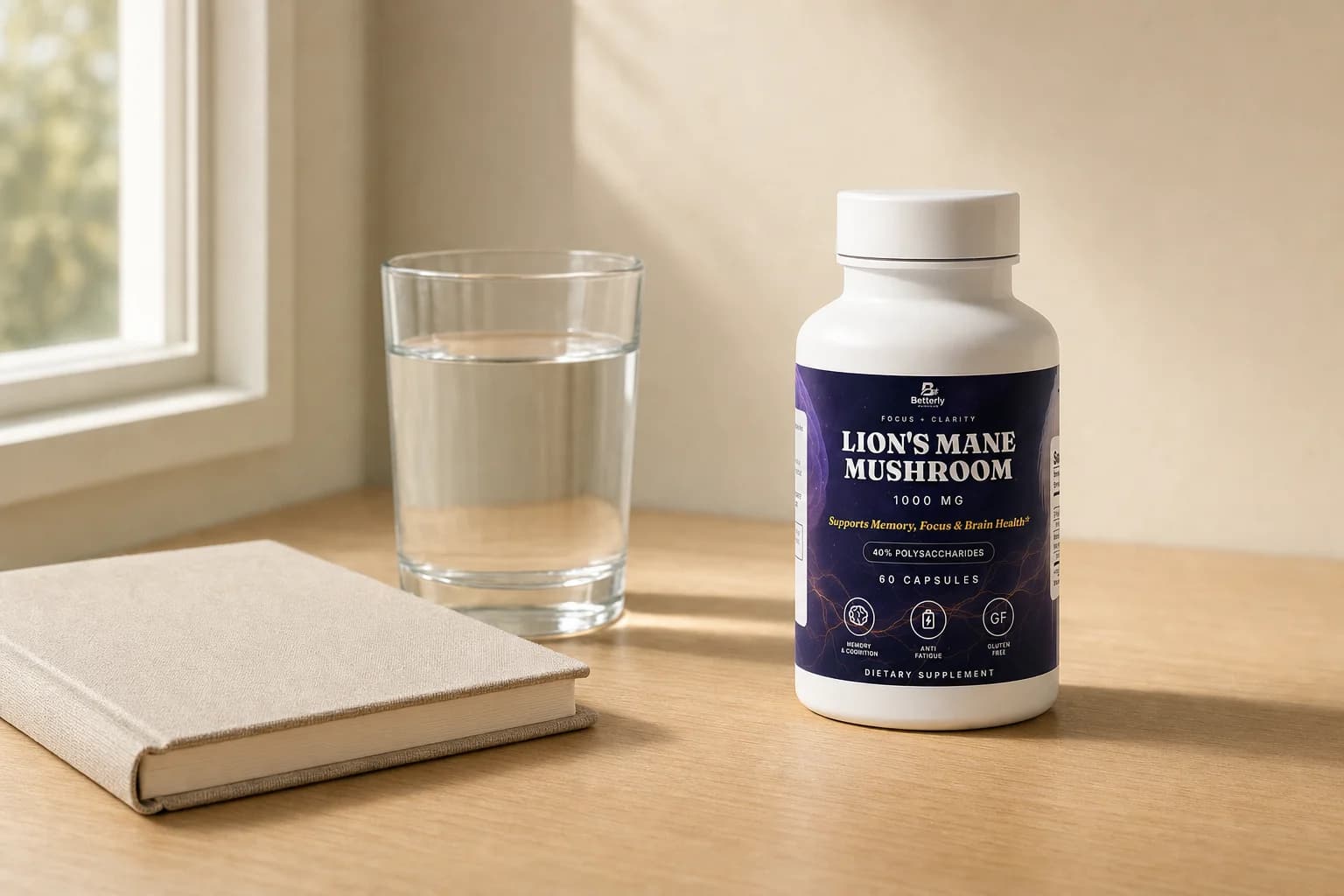
Our own version is deliberately plain: Organic Lion's Mane Mushroom Capsules, with 1,000 mg of lion's mane per 2-capsule serving (standardized to 40% polysaccharides), 60 vegan capsules to a bottle, and the amount printed right on the page — because you can't judge a supplement you can't read.
What a mushroom complex offers
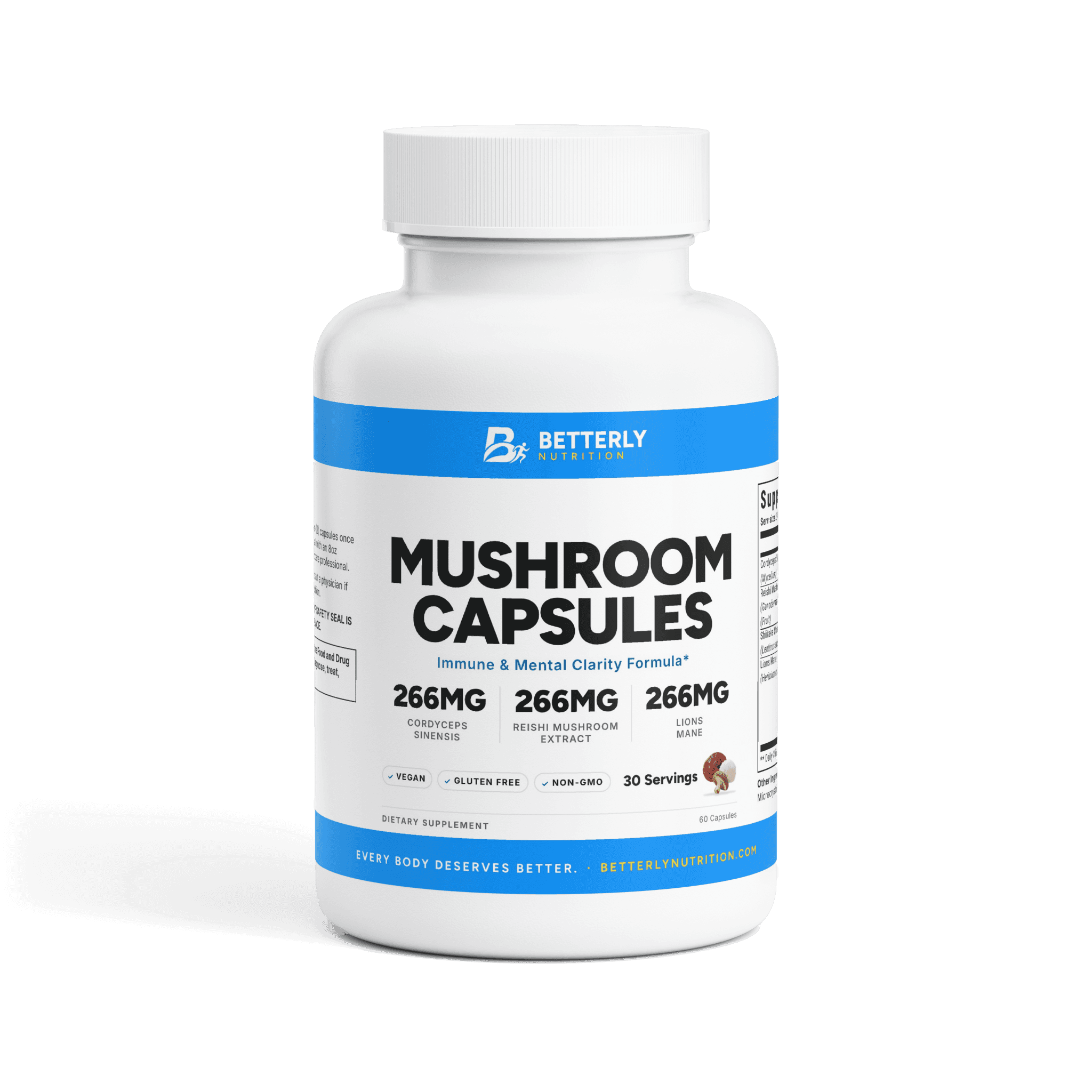
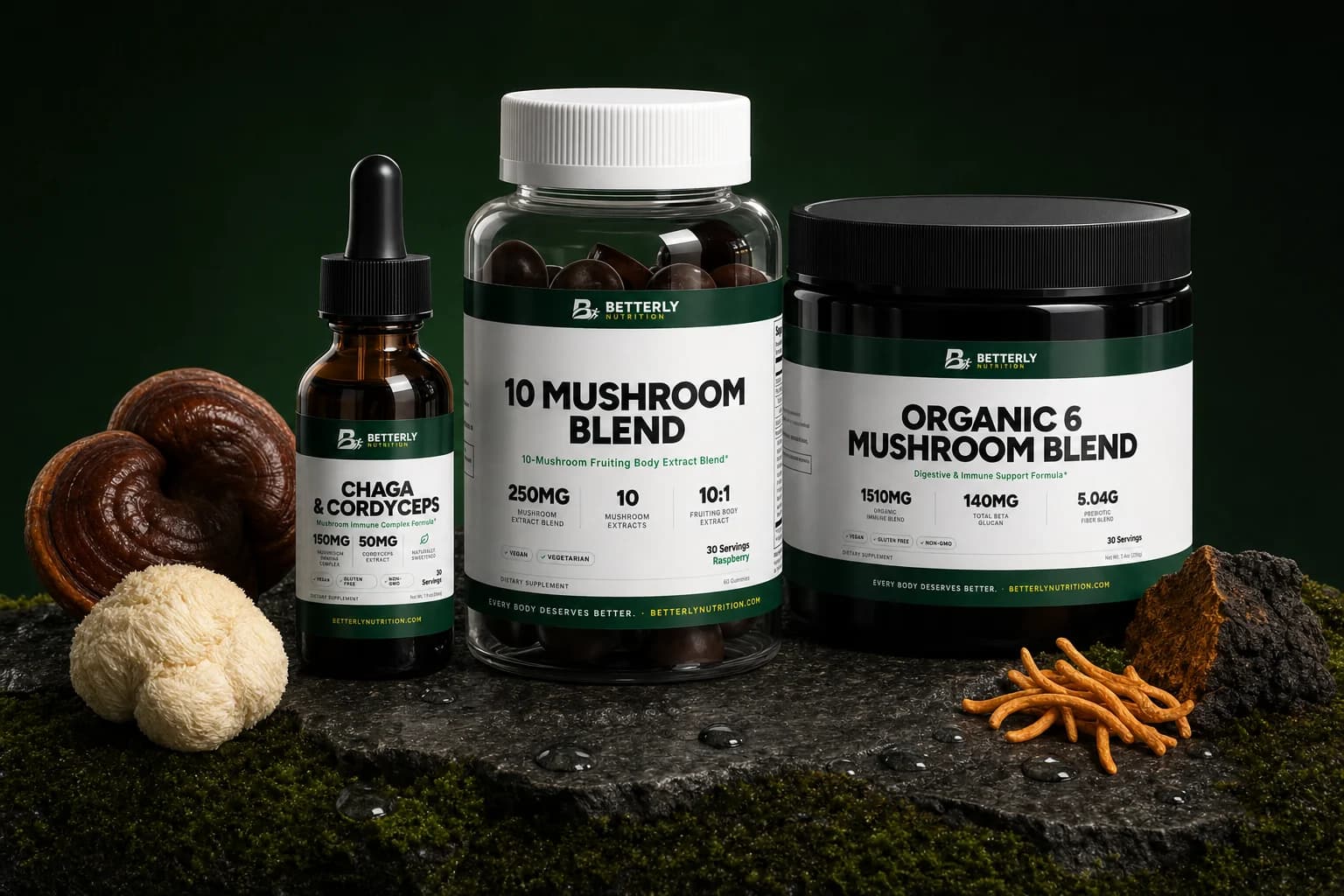
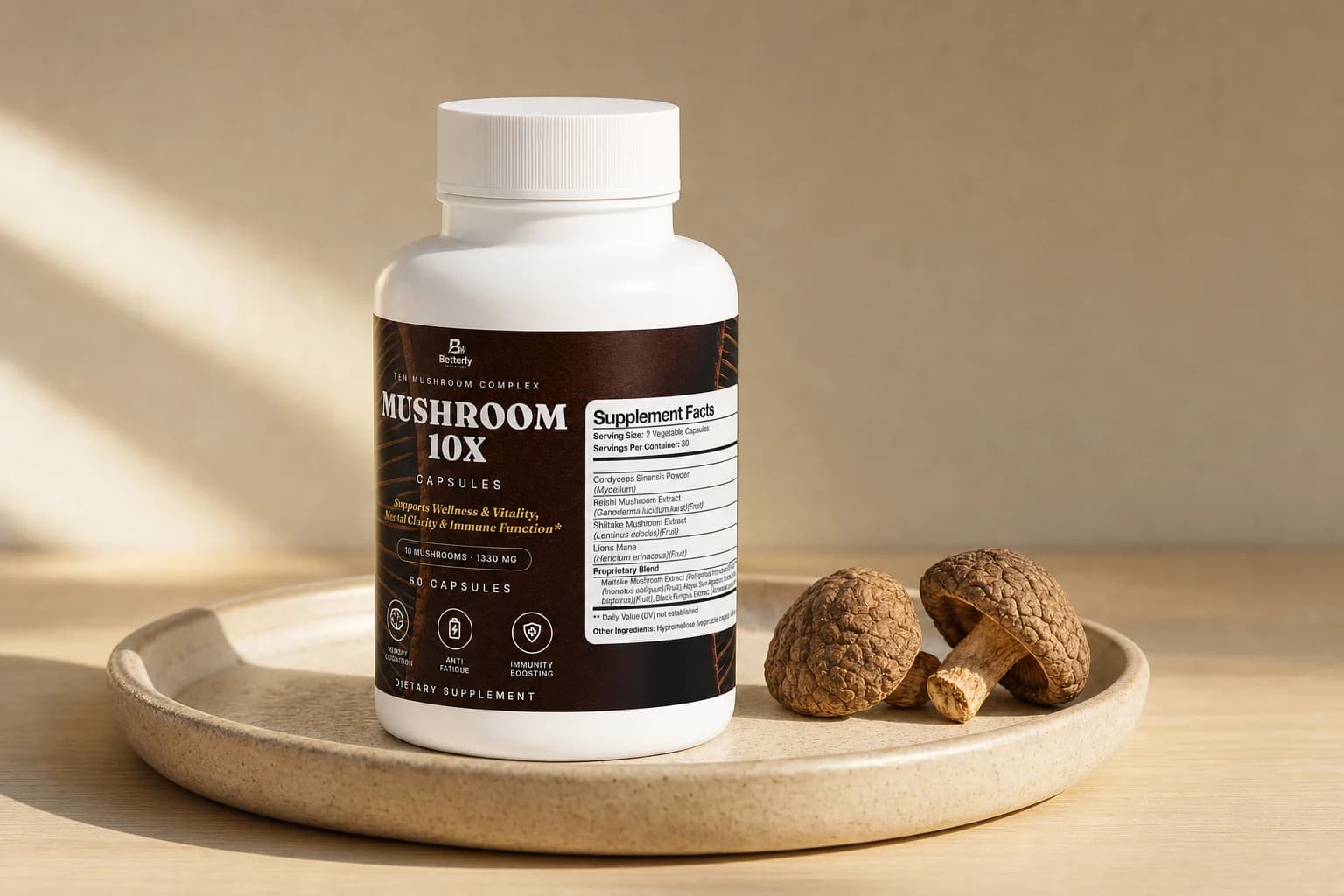
A mushroom complex takes the opposite approach: instead of one species at full depth, it combines many. Typical blends draw from reishi, cordyceps, chaga, turkey tail, maitake, shiitake — and, yes, usually some lion's mane too. Our Mushroom Capsules hold 10 mushrooms per 2-capsule serving: cordyceps, reishi, shiitake and lion's mane at 266 mg each, plus a 266 mg proprietary blend of six more, with 60 vegetable capsules to a bottle. The label calls it an Immune & Mental Clarity Formula, and broad, everyday support is what blends do best.
Here's the honest trade. A capsule only holds so much, so ten species sharing that space means each one is present at a fraction of what a dedicated single-mushroom product delivers. Blend makers call this synergy — the idea that many species together offer something no single one does. There's a kernel of plausibility in that (different mushrooms carry different compounds, and their beta-glucans — the polysaccharides most associated with normal immune function — vary by species), but you should know that very little research exists on ten-mushroom blends as blends. The studies are almost all on individual species.
So why choose a complex? Real reasons:
- Breadth without a shelf full of bottles. Covering five mushrooms individually means five products, five price tags, five things to remember every morning.
- You don't have one sharp goal. "I'd like general daily support and mushrooms seem interesting" is a genuinely common starting point, and a blend meets it well.
- Immune-leaning goals. Mushroom complex benefits are usually framed around everyday immune support — which happens to be where the ingredient research, mostly on beta-glucans, is most concentrated.
What research suggests about each approach
Here's where the lion's mane vs mushroom complex comparison gets honest — and where most product pages go quiet.
On lion's mane: the human research is real but early. A handful of small, randomized, placebo-controlled trials have looked at lion's mane and cognitive performance, and the results are genuinely mixed. In some small studies, participants taking lion's mane extract did a bit better on attention or task-speed measures than the placebo group; in others, researchers found no meaningful difference at all. Trial durations have been short, the groups small, and — importantly — the doses and extract types varied widely from study to study, which makes results hard to compare. The nerve growth factor mechanism is well documented in preclinical work, but cells and mice are not people. Summed up honestly: promising, early, worth watching — not settled.
On blends: the individual species inside a good complex each carry their own mostly small, mostly preliminary research — much of it centered on beta-glucans and normal immune function. But head-to-head trials of a multi-mushroom blend against a single mushroom essentially don't exist. Take a complex and you're extrapolating from single-species research to a combined product. That's not an unreasonable leap, but it is a leap, and you deserve to know you're making it.
If this category is new to you, our nootropics guide for beginners covers how to read early-stage research without getting swept up in it.
Single mushroom vs mushroom blend: how to decide
Match the format to the goal, not to the marketing:
- One specific goal, like focus or memory support? Single lion's mane. Full serving, clean experiment, clearer answer.
- General daily support with an immune lean? The complex. Breadth is the whole point.
- Want to learn what actually works for you? Single. A blend makes cause and effect nearly impossible to untangle.
- Allergic to managing multiple bottles? Blend. A simple routine you keep beats a perfect one you abandon.
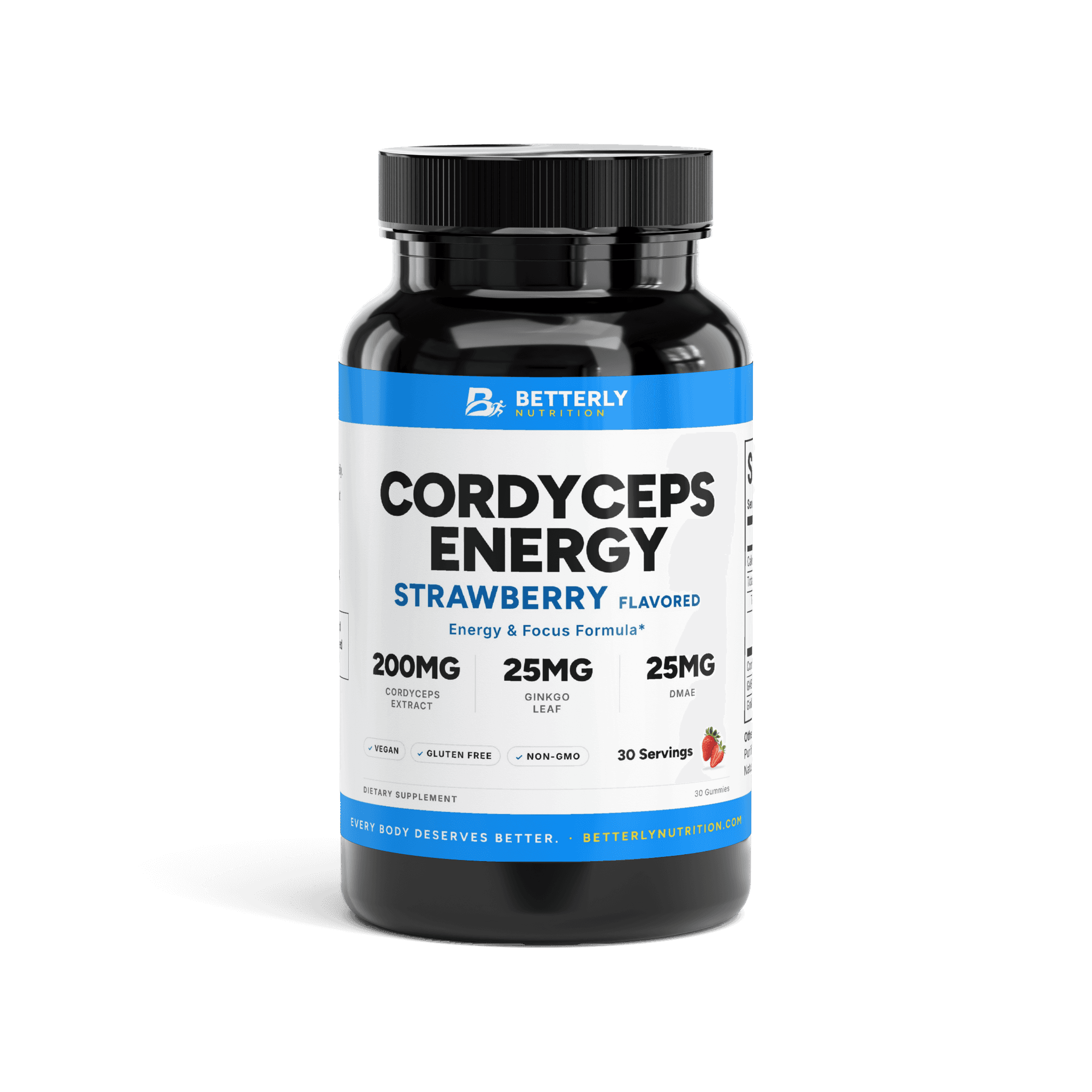
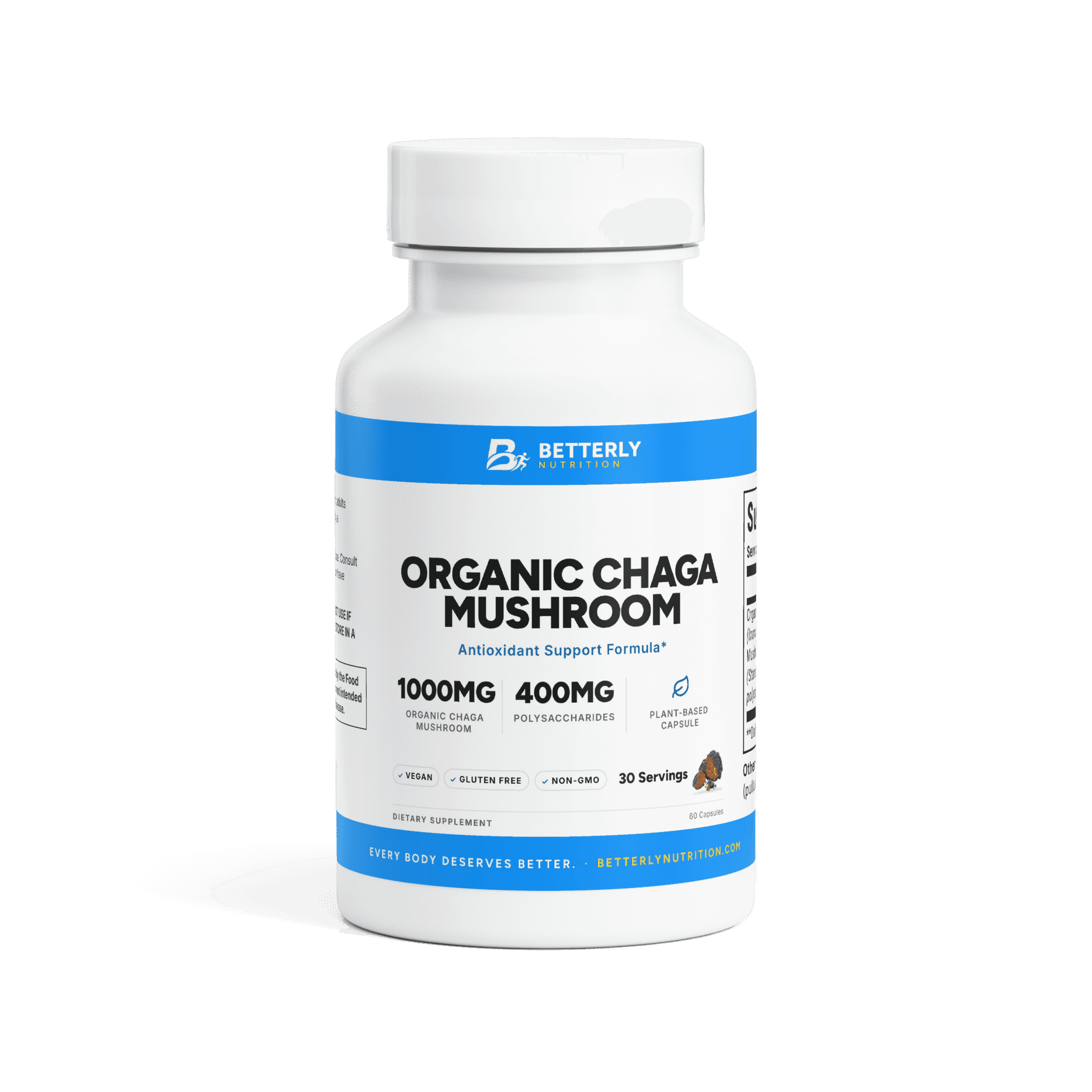
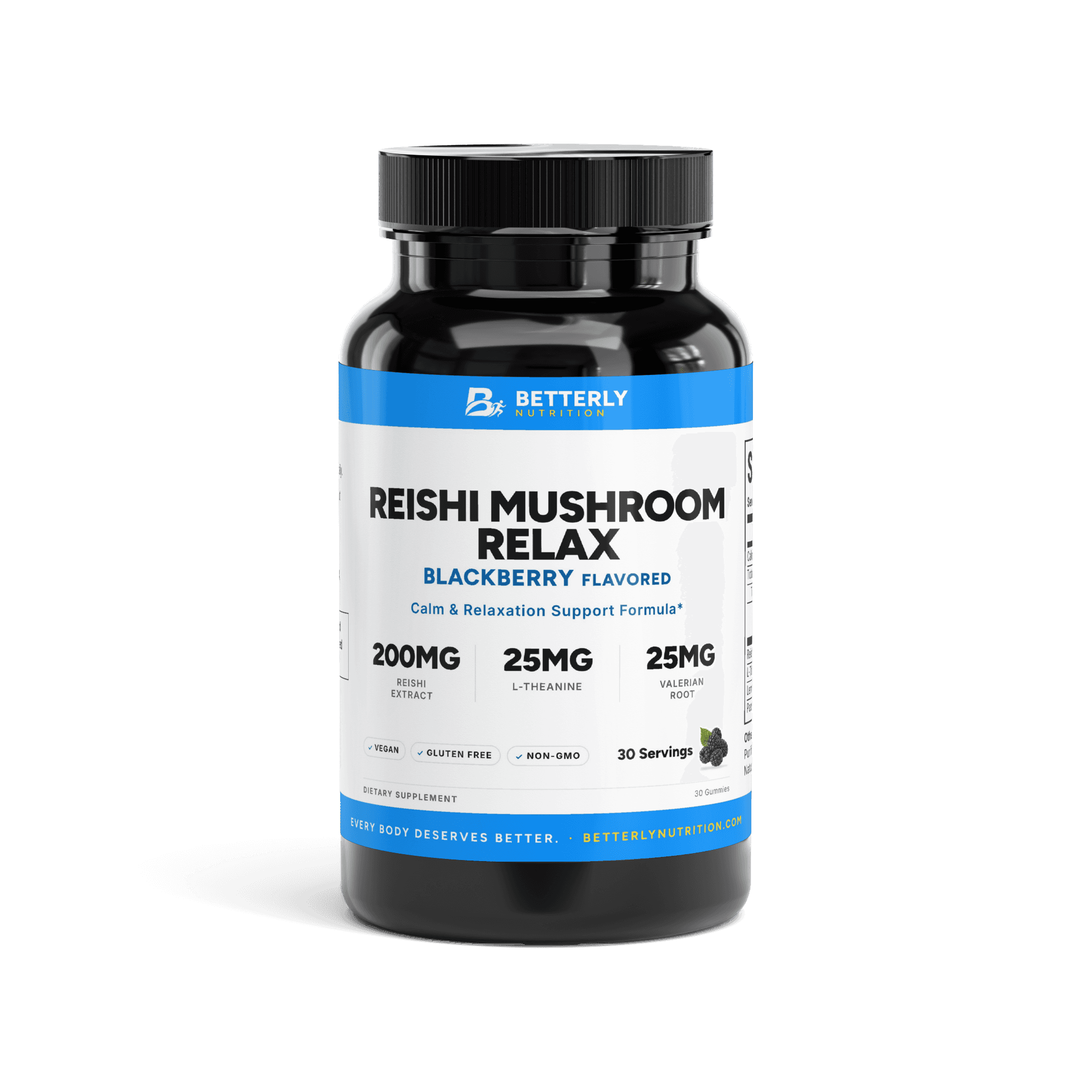
- A specific goal that isn't focus? Skip the blend and pick the single mushroom that matches it: Cordyceps Mushroom Energy Gummies (200 mg cordyceps extract per 1-gummy serving, with no caffeine in the formula) if energy is the goal, Reishi Mushroom Relax Gummies (200 mg reishi extract per 1-gummy serving) for winding down in the evening, or Organic Chaga Mushroom Capsules (1,000 mg organic chaga per 2-capsule serving, labeled an Antioxidant Support Formula) if antioxidant support is the draw. Two of those picks are gummies; if you're wondering whether mushroom gummies work as well as capsules, we compare the formats label by label.
You can compare the cognition-oriented options side by side in our Nootropics & Focus collection. And if part of what draws you to mushrooms is avoiding stimulants altogether, our guide to the best caffeine-free focus supplements puts lion's mane in context with the rest of the non-caffeinated field.
Do you need both? An honest answer
Mostly, no — and remember, we're the ones selling both.
Here's the reasoning. Most mushroom complexes already include some lion's mane, so running a complex plus a single usually means paying twice for the same species. And if focus was the goal that brought you here, a blend adds nine variables to an experiment that only needed one.
There's one situation where doubling up is defensible: you've taken a complex for months as your general daily base, you like it, and a specific focus goal has since emerged. Adding dedicated lion's mane on top of an established routine is a reasonable move, as long as each product stays at its label's suggested use; it's just rarely the right day-one plan. If that's you, add one thing at a time so you can tell what the addition is doing.
A useful rule of thumb: start with the format that matches your sharpest goal. Going from specific to broad later is cheap. Going from broad to specific means starting your whole experiment over.
How to use either one well
Whichever you pick, a few habits separate "I think it helps?" from an actual answer:
- Be consistent. Mushroom supplements are not espresso, and the small human studies on lion's mane are mixed, so don't expect a same-day jolt. Both of our capsule products list 2 capsules daily as the suggested use. Stick with it and check in honestly with how you feel.
- Change one thing at a time. Start lion's mane, bacopa, and a new sleep schedule in the same week and you'll never know what did what. (That applies to herbs beyond mushrooms too — our guide to bacopa monnieri is the companion read if you're weighing that one.)
- Read the label like a skeptic. Whatever brand you buy, look for the actual amount per serving stated plainly, and whether the product uses fruiting body, mycelium, or both. A label that doesn't state these leaves you guessing.
- Slot it into a routine you already keep. Same time every day, tied to a habit you never skip. Our piece on building a simple supplement routine shows how to do this without turning your counter into an apothecary.
- Loop in your provider if you're pregnant or nursing, under 18, take any prescription medication, are managing a medical condition, have surgery scheduled, or have any kind of mushroom allergy.
Key takeaways
- Lion's mane vs mushroom complex is really a question about your goal. Specific goal, single mushroom; broad goal, blend.
- A single lion's mane supplement gives you a full serving of the most cognition-studied mushroom and a clean way to judge whether it's doing anything for you.
- A mushroom complex trades per-species depth for breadth, and fits best as general, immune-leaning daily support.
- The research is early either way. Small human studies on lion's mane are mixed but interesting; blends lean on single-species research, extrapolated to the mix.
- You probably don't need both. Most blends already contain lion's mane. Pick one format, take it consistently as the label directs, and let your own experience break the tie.
FAQ: lion's mane vs mushroom blends
Is a mushroom complex as good as taking lion's mane on its own?
For focus specifically, usually not — a blend carries a fraction of the lion's mane that a dedicated product provides, alongside nine other species chosen mostly for broad support. For general daily supplementation, the comparison flips: a complex covers ground no single mushroom can.
Is there a set timeline for lion's mane?
No reliable one. The small human studies on lion's mane are mixed, so there's no set point at which you should expect to notice anything, and experiences vary. Take it as the label directs, change one thing at a time, and check in honestly with how you feel; subtle is the norm. If you're expecting a caffeine-style kick, you'll be disappointed.
Can you take lion's mane and a mushroom complex together?
Generally yes, as long as each product stays within its own label's suggested use; both of our labels say not to exceed the recommended dose. The bigger issue is redundancy, since most complexes already include some lion's mane. If you do combine them, add one at a time so you can tell what's contributing, and check with your healthcare provider if you take medications or have allergies.
What's the best mushroom supplement for focus?
Among single mushrooms, lion's mane has attracted the most research attention for focus and memory support, which is why it's the usual first answer. Cordyceps is sometimes chosen for a more energy-forward kind of alertness. A blend is rarely the focus-first pick, because its lion's mane content is diluted across the formula.
Do mushroom supplements contain caffeine?
Not usually: mushrooms themselves are naturally caffeine-free, but some mushroom products add coffee or tea ingredients, so check the Supplement Facts and other ingredients. Being caffeine-free is a big part of the appeal for people who want daytime focus support without stimulants. Cordyceps sometimes gets described as "energizing," but that's not caffeine talking; it's still a stimulant-free ingredient.
Fruiting body or mycelium — does it matter?
Enough to check the label. Hericenones concentrate in the fruiting body (the visible mushroom) while erinacines come from the mycelium (the root-like network), and products differ in which they use and how much actual mushroom material ends up in the capsule. There's no universal winner — but a brand that states plainly what's inside is telling you something good about itself.
If this left you looking for somewhere to start, read 10 mushroom blend supplement — its amounts per serving are listed on the page. For the practical questions this raises, how dosing, sourcing and subscriptions work is answered in one place.