On this page
- Key takeaways
- What's the difference between mushroom coffee and a mushroom supplement?
- Does mushroom coffee have caffeine?
- How much mushroom is in a cup of mushroom coffee?
- Mushroom coffee vs mushroom supplements: which label tells you more?
- Is mushroom coffee worth it?
- Are mushroom pills or gummies better than mushroom coffee?
- How do you take a mushroom supplement if you still drink coffee?
- When don't you need mushroom coffee or a mushroom supplement?
- Who should check with a healthcare provider first?
- FAQ: mushroom coffee vs mushroom supplements
- Sources
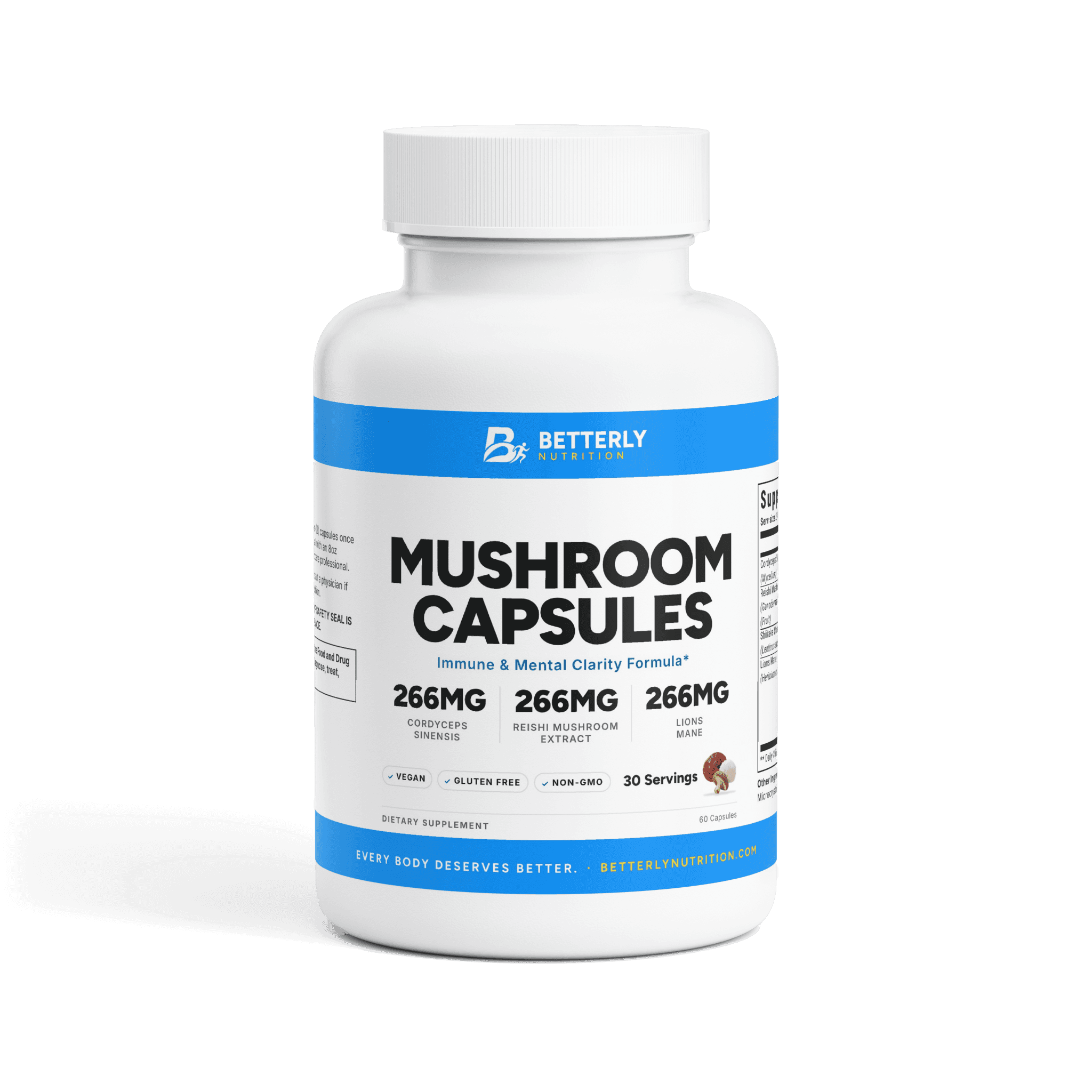
The short answer: In mushroom coffee vs mushroom supplements, the real difference is what each label lets you count. A Supplement Facts panel prints milligrams per serving: the five rows on our Mushroom Capsules total 1,330 mg per 2-capsule serving, and none of them is caffeine. A mushroom coffee brings the coffee's caffeine, and its mushrooms may show up only as a spot in the ingredient list.
Key takeaways
- Mushroom coffee gets its caffeine from the coffee in the blend, and the FDA notes that packaged foods state their caffeine amount voluntarily.
- On a food label, ingredients are ranked by weight without amounts, so a mushroom coffee may never tell you how much mushroom is in your cup.
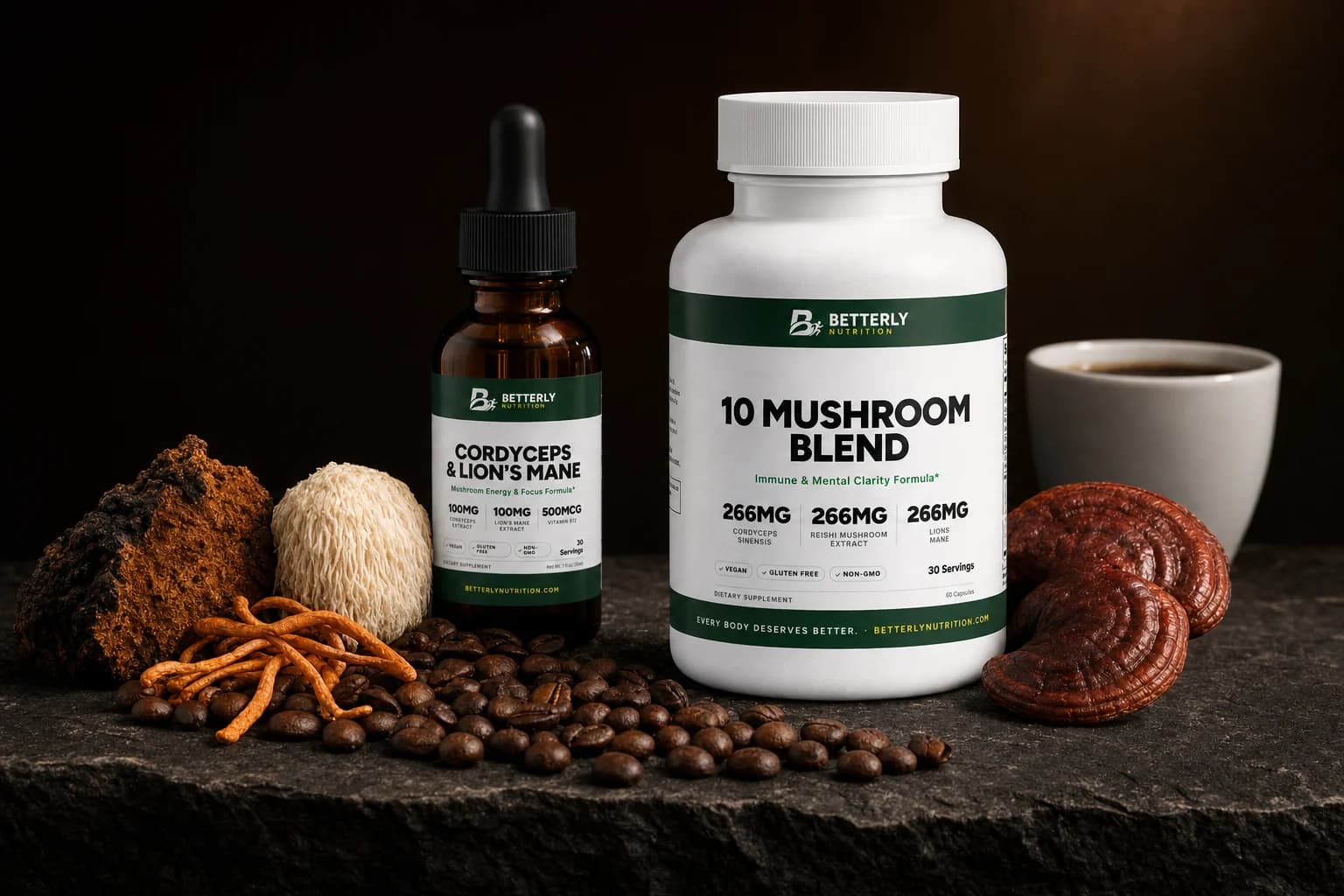
- Betterly's Mushroom Capsules list four mushrooms at 266 mg each, plus a 266 mg blend of six more, per 2-capsule serving.
- The Defense Department's Operation Supplement Safety finds a lack of evidence for functional mushrooms beyond food use, so choose a format for your routine, not a promised result.
We sell mushroom capsules, gummies, powder, drops and strips, but no mushroom coffee, so we're not neutral here. We won't repeat other brands' figures we can't check; you'll get our own label math and a way to read any mushroom coffee bag.
What's the difference between mushroom coffee and a mushroom supplement?
Mushroom coffee is a coffee drink with mushroom powder or extract blended in, while a mushroom supplement is a measured capsule, gummy, powder or drop, usually without coffee.
The species overlap more than the formats do. Operation Supplement Safety (OPSS), the Defense Department's dietary supplement resource, names lion's mane, turkey tail, reishi, cordyceps, shiitake, chaga and maitake as the species commonly listed on supplement labels. The same names turn up on mushroom coffee bags.
What changes is who sets the amount. A supplement fixes the serving: two capsules, one scoop, one dropper. With mushroom coffee, the amount follows your habit, so a heaping spoon or a bigger travel mug changes both the mushroom and the caffeine you get.
Does mushroom coffee have caffeine?
Most mushroom coffee has caffeine, since it's made with real coffee and the caffeine comes from the beans, not the mushrooms. Blends made with decaf carry much less, but still some.
The FDA's caffeine guide, Spilling the Beans, lists regular brewed coffee at 113 to 247 mg of caffeine per 12 fluid ounces. Even decaf keeps 2 to 15 mg in an 8-ounce cup. A mushroom coffee lands somewhere on that map, depending on how much coffee is in each scoop.
The FDA explains that when caffeine arrives inside another ingredient, caffeine itself isn't named on the ingredient list. The coffee is. Printing the amount is voluntary, so a bag can stay quiet about milligrams and still follow the rules.
A coffee-free blend made with cacao isn't automatically caffeine-free, since the FDA uses chocolate as its example of an ingredient with caffeine built in. If you track your intake closely, our energy drink vs coffee comparison shows how much one mug can swing.
None of the four mushroom products in this guide has a caffeine row on its panel. One note: the Organic 6 Mushroom Blend Powder puts organic green tea leaf extract in its fiber blend, and green tea appears on the FDA's caffeine chart. Its panel gives no caffeine figure.
How much mushroom is in a cup of mushroom coffee?
You can only know how much mushroom is in a mushroom coffee if its label prints milligrams, and a food-style Nutrition Facts panel isn't built to show them.
Under 21 CFR 101.36, the FDA's rule for supplement labels, a Supplement Facts panel lists each dietary ingredient with its amount per serving. A proprietary blend is the exception: one total weight, with the ingredients inside listed from most to least by weight.
A mushroom coffee sold as an everyday food carries a Nutrition Facts panel instead, which covers nutrients like calories, sugars and sodium. The mushrooms appear only in the ingredient list, which the food rule, 21 CFR 101.4, requires in descending order of predominance by weight. That ordering still gives you two clues:
- If coffee is listed first, it's the heaviest ingredient in the blend.
- If the mushrooms follow a phrase like "Contains 2 percent or less of," none of them can go over that share by weight. In a scoop that weighs 10 g, for example, each one is 200 mg or less.
Mushroom coffee vs mushroom supplements: which label tells you more?
A Supplement Facts panel tells you more about the mushrooms, while a mushroom coffee label mainly describes the coffee. Ask these questions of any bag, then compare.
| Question for the label | Mushroom coffee bag | Our Mushroom Capsules |
|---|---|---|
| Which panel is it? | Nutrition Facts or Supplement Facts | Supplement Facts |
| Total mushroom per serving? | Only on Supplement Facts, if coffee isn't in the same blend | 1,330 mg (five rows of 266 mg) |
| Amount for each mushroom? | Varies: each, one blend total or none | 4 printed, 6 in a 266 mg blend |
| Fruiting body or mycelium? | Look for either word | 9 fruit, cordyceps from mycelium |
| Caffeine? | From the coffee, number only if printed | No caffeine row |
| How is it taken? | However you brew it | 2 capsules, 20-30 min before a meal |
A mushroom coffee can fill every row too, but only with a Supplement Facts panel or extras printed by choice. If the middle column stays mostly blank for a bag you're eyeing, you're buying coffee with mushrooms in it, not a measured mushroom serving.
Our own label has a gap. The proprietary blend gives 266 mg for maitake, turkey tail, chaga, royal sun agaricus, white button and black fungus together. Maitake is listed first, which under the blend rule makes it the largest share, but the label doesn't say by how much.
Is mushroom coffee worth it?
Mushroom coffee is worth it if you enjoy drinking it, but it's a weak way to get a measured mushroom amount unless the label prints one.
The evidence bar is low for both formats. OPSS's page on mushroom dietary supplements says it "remains unclear" whether mushrooms taken as supplements deliver the same compounds or effects as eating whole mushrooms. It finds a lack of scientific evidence for using functional mushrooms for any purpose other than as a food.
That caveat covers our capsules too. A supplement offers a known serving; mushroom coffee offers a cup you look forward to, which is a fair reason to buy it.
Are mushroom pills or gummies better than mushroom coffee?
Mushroom capsules give you milligrams you can count, gummies are the smaller and sweeter serving, and none of our mushroom products lists caffeine.
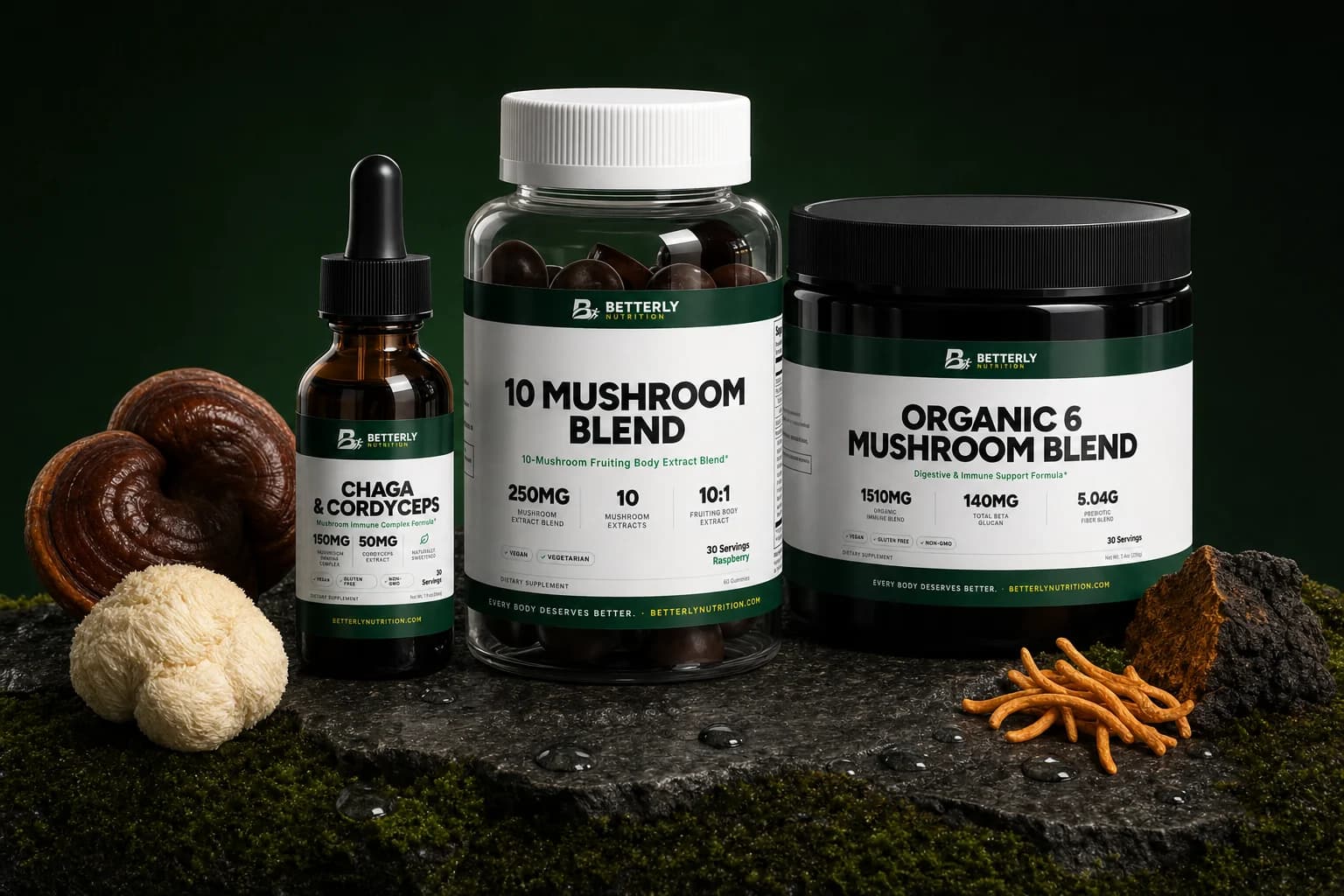
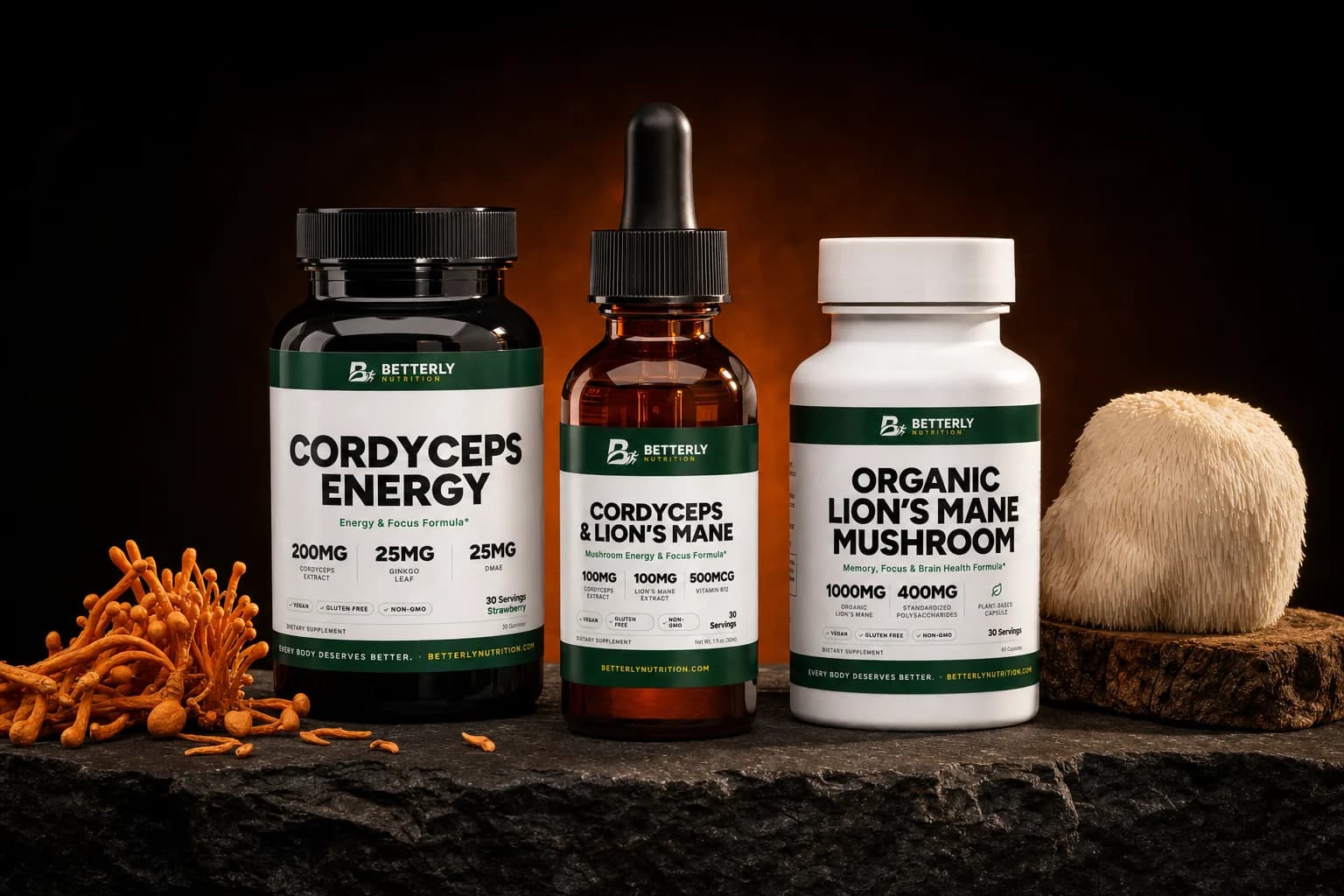
Here's how our four options line up, including the Mushroom Gummies and the Cordyceps & Lion's Mane Energy Drops:
| Product | Mushroom per serving | Also on the panel | Label's directions |
|---|---|---|---|
| Mushroom Capsules | 1,330 mg per 2 capsules | No sugar or caffeine row | 2 capsules once a day |
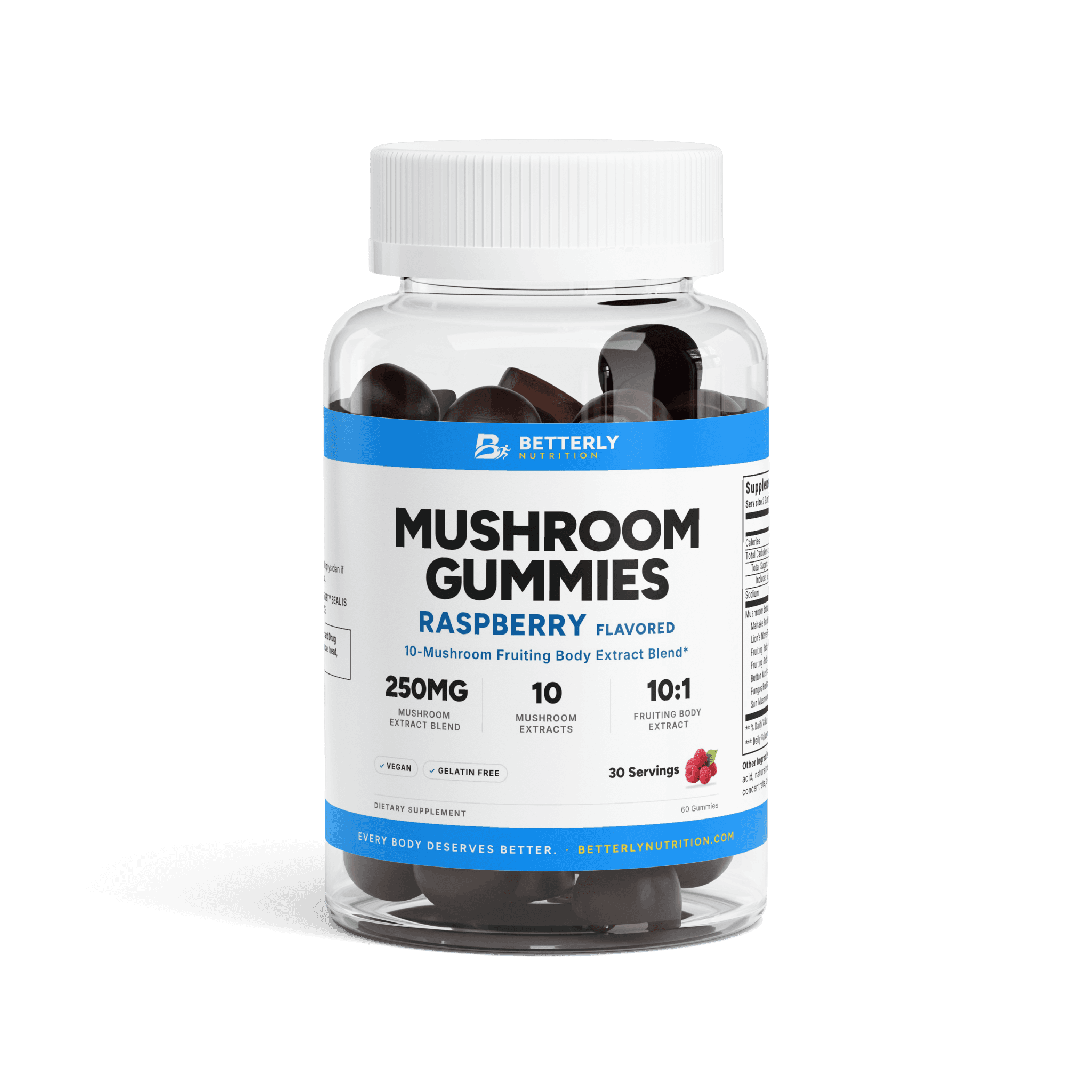
| Mushroom Gummies | 250 mg of 10:1 extract per 2 gummies | 5 g added sugars | 2 gummies daily |
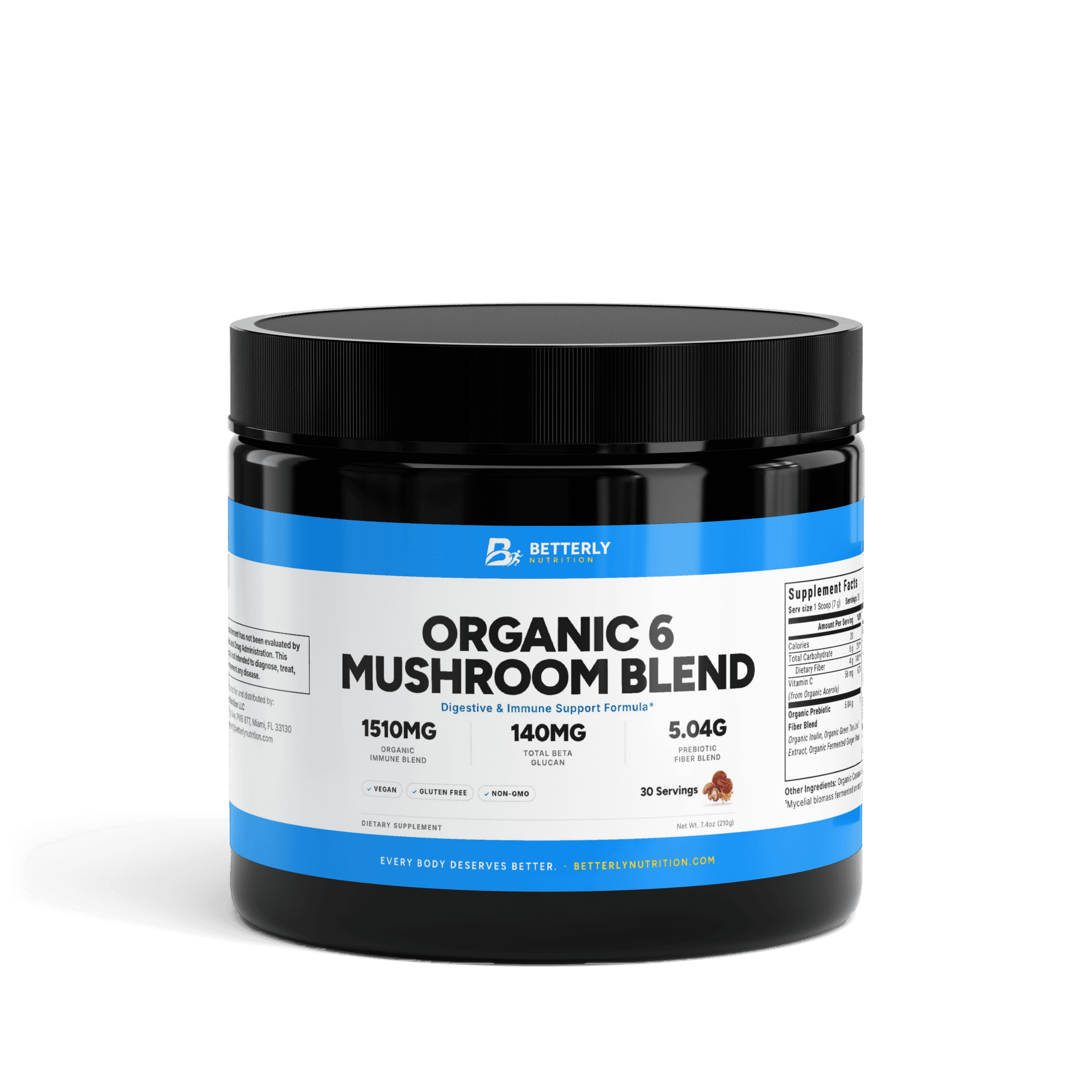
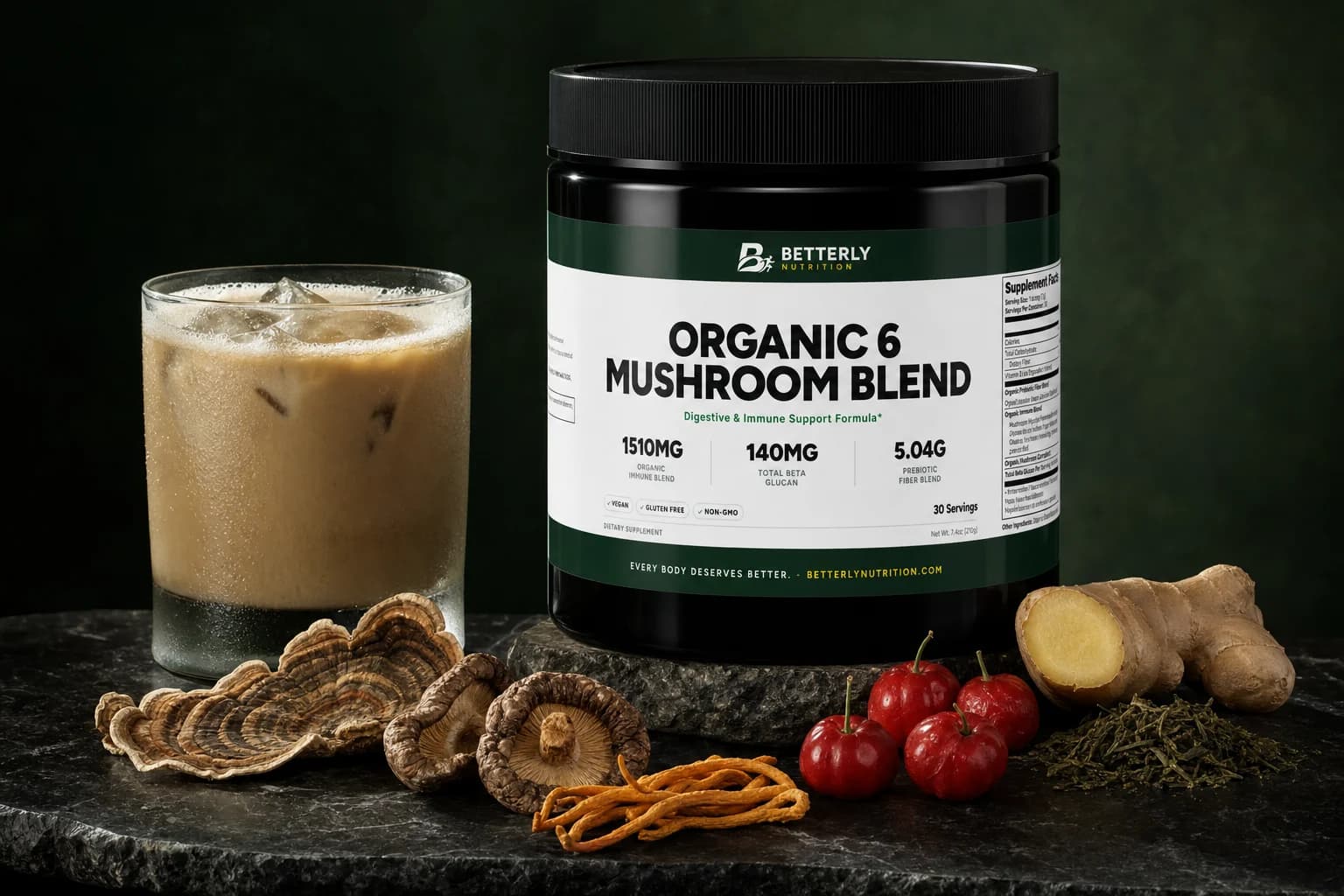
| Organic 6 Mushroom Blend Powder | 1,510 mg mycelial blend, fermented on oats, per 1 scoop (7 g) | 5.04 g prebiotic fiber blend | 1 scoop in food or drinks |
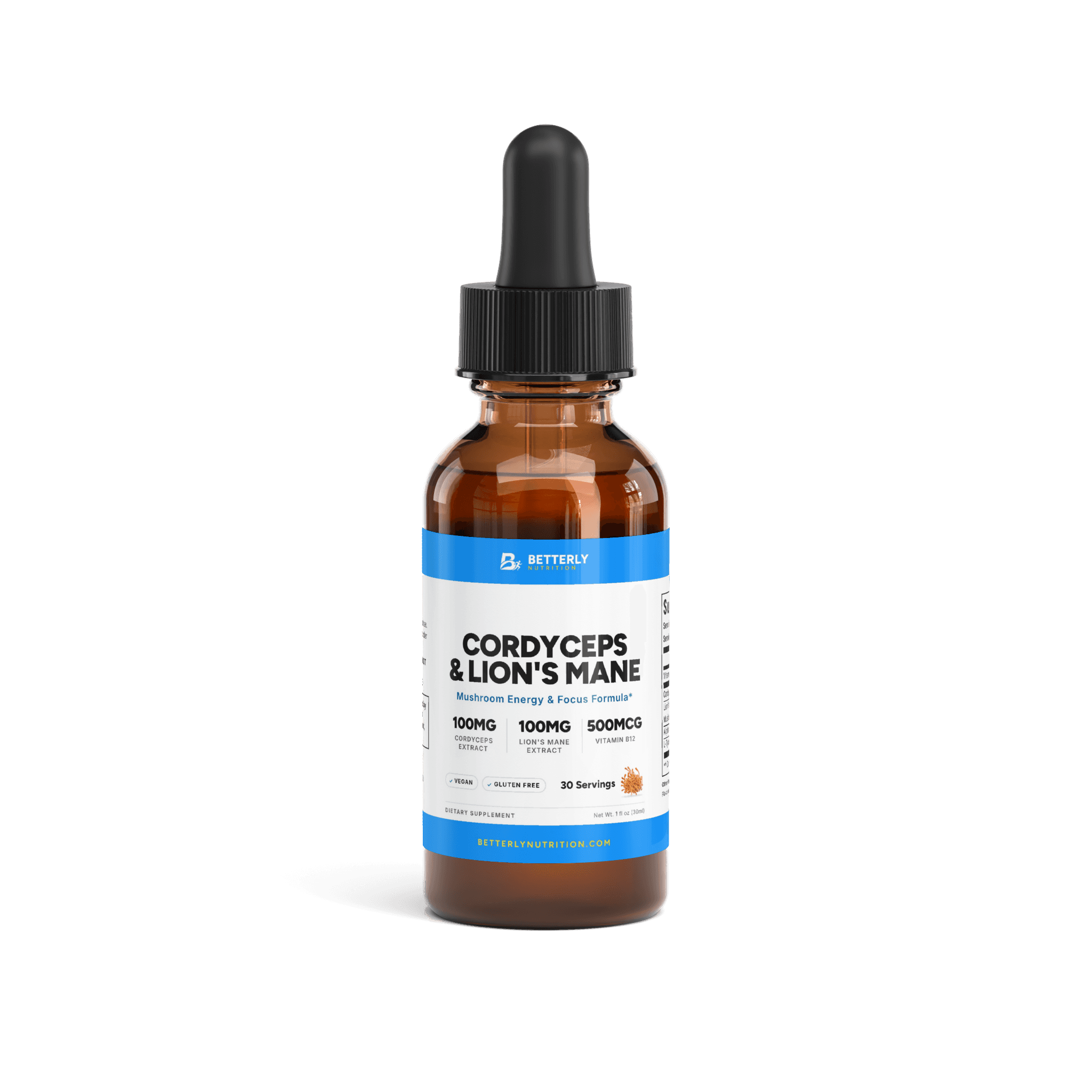
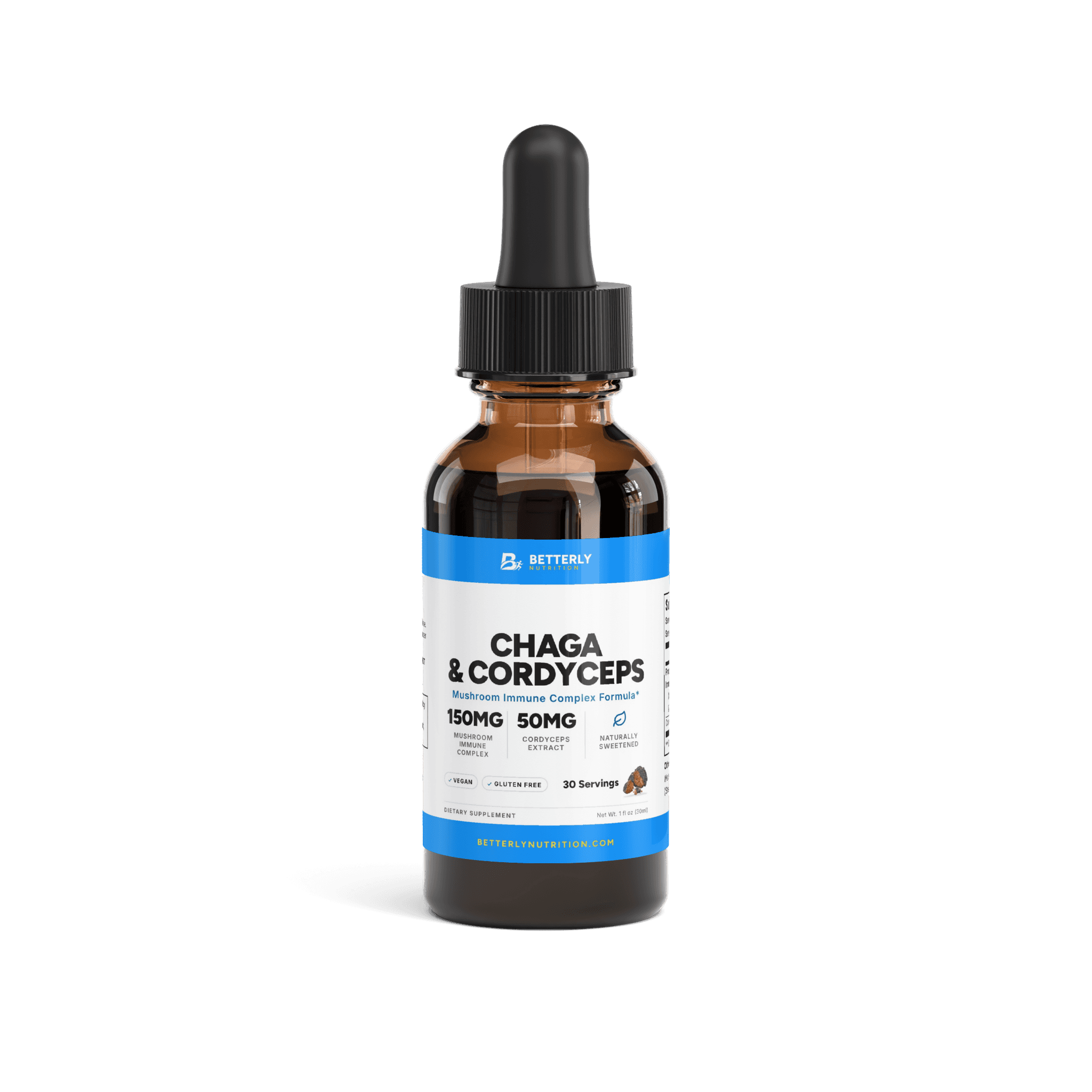
| Cordyceps & Lion's Mane Energy Drops | 200 mg per 1 ml (100 + 100) | 500 mcg vitamin B12 | 1 ml (30 drops) daily |
By plain arithmetic, the powder's 1,510 mg and the capsules' 1,330 mg are the biggest figures. They don't weigh the same material, though. The gummies list 10:1 fruiting body extract, and the capsules list nine mushrooms from the fruit plus cordyceps mycelium powder. The powder's footnote describes "mycelial biomass fermented on organic oats," so its weight can include some of that oat base. The largest figure doesn't guarantee the most mushroom. For strips and single-species gummies, see our side-by-side look at every mushroom format we sell.
Mushroom gummies vs mushroom coffee
Mushroom gummies and mushroom coffee both taste like something to look forward to, but the Mushroom Gummies bring 5 g of added sugar per serving, 10% of the Daily Value. A mug might have none, or more once you sweeten it, so read the Added Sugars line on each. The gummies' 250 mg covers ten fruiting body extracts as a single blend, with no amount for each mushroom.
Cordyceps and lion's mane without the coffee
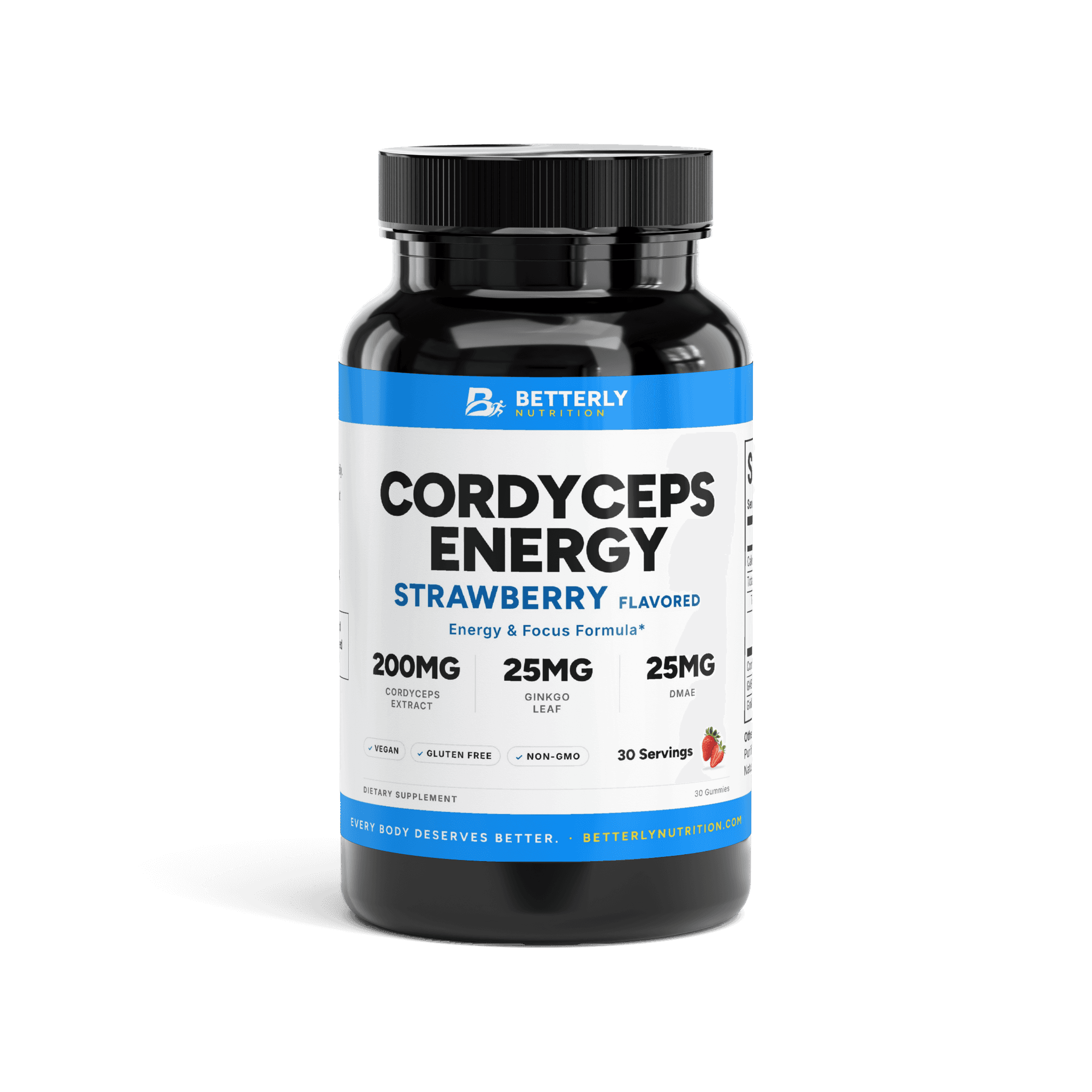
The Cordyceps & Lion's Mane Energy Drops offer the pairing people search for as cordyceps and lion's mane coffee: 100 mg of each extract per 1 ml serving, with no caffeine row. The panel adds 25 mg each of Alpha GPC and L-Tyrosine plus 500 mcg of vitamin B12.
We make no energy claim for either mushroom, since OPSS finds the evidence for marketed benefits like energy lacking beyond food use. Our cordyceps vs lion's mane guide looks at each one on its own.
From our shop: Mushroom Capsules — four named mushrooms at 266 mg apiece and a 266 mg blend of six others per 2-capsule serving, in vegetable capsules labeled vegan, gluten free and non-GMO.
How do you take a mushroom supplement if you still drink coffee?
Take a mushroom supplement on its own label's schedule; for our Mushroom Capsules, that's two capsules with water, 20 to 30 minutes before a meal.
- Mushroom Capsules: two capsules once a day, ideally 20-30 minutes before a meal, with an 8 oz (237 ml) glass of water. If coffee comes with breakfast, the capsules and their water come first.
- Mushroom Gummies: "2 gummies daily or as directed by a healthcare professional."
- Organic 6 Mushroom Blend Powder: one scoop daily "mixed into food or drinks."
- Cordyceps & Lion's Mane Energy Drops: "Shake well. Take 1 ml (30 drops) daily."
None of these labels mentions coffee, and each says "Do not exceed recommended dose." A second mug never calls for a second serving.
Check for overlap before you add anything. If your coffee bag names lion's mane, reishi or cordyceps, our capsules list all three too, so the mug and the capsules would cover the same mushrooms twice, with a printed amount on only one side. Our gummies and capsules carry the same ten mushrooms by name, which makes them an either-or choice rather than a pair.
From our shop: Cordyceps & Lion's Mane Energy Drops — cordyceps and lion's mane extracts at 100 mg apiece per 1 ml serving, sweetened with stevia, with no caffeine listed on the panel.
When don't you need mushroom coffee or a mushroom supplement?
You can pass on mushroom coffee if you hope to cut caffeine, which mushroom coffee only does if its bag prints a lower number than your usual cup. Decaf or a smaller mug gets you there without any mushrooms.
A mushroom supplement is optional too. Here are other cases where one or both add little:
- Your day already runs near 400 mg. The FDA puts that at about two or three 12-ounce cups, and a mushroom coffee from regular beans counts like any other, so adding one to your usual pot only raises the total.
- You'd drink your regular coffee anyway. Trying mushrooms doesn't mean giving up a cup you like, since a supplement follows its own label's schedule beside it.
- The bag names mushrooms but prints no amount. If they're the reason you're buying, a Supplement Facts panel is the more direct way to see one.
Single-species bottles and the rest of our range sit in the Mushrooms collection.
Who should check with a healthcare provider first?
Ask a healthcare provider before trying mushroom coffee or a mushroom supplement if you're under 18, pregnant or nursing, on prescription medicine, expecting surgery or living with a medical condition.
The caution printed on all four of our labels reads: "Consult a physician if pregnant, nursing, under 18, or have a medical condition." Mushroom coffee adds caffeine to that conversation. If you're pregnant, trying to conceive or breastfeeding, the FDA suggests asking a provider whether you should limit caffeine, and it points out that caffeine sensitivity differs a lot from person to person.
OPSS lists reported side effects such as nausea, diarrhea, stomach discomfort, dry mouth and allergic reactions. It also says there's little to no safety data on how combinations of mushrooms interact in the body, which applies to any ten-mushroom blend, ours included. Had a reaction to mushrooms on your plate before? Skip both formats until you've talked it over.
FAQ: mushroom coffee vs mushroom supplements
Is 10 mushroom coffee the same as a 10 mushroom supplement?
Not necessarily, because "10 mushroom" counts mushrooms, not milligrams. Our Mushroom Capsules print four mushrooms at 266 mg each and fold the other six into one 266 mg blend, for 1,330 mg per 2-capsule serving. A 10 mushroom coffee could hold more or far less. Unless it carries a Supplement Facts panel, you may only see ten names in the ingredient list, ranked by weight.
Can you stir mushroom powder into your own coffee instead?
Yes, Organic 6 Mushroom Blend Powder can go in coffee, since its label says one scoop daily "mixed into food or drinks." The mushroom amount then comes from a printed panel, and the coffee stays whatever you already brew. The label says nothing about heat, so we make no claim about how the blend handles a hot mug. Our how-to for mushroom powder in coffee covers the mixing.
Is it safe to drink mushroom coffee every day?
Daily mushroom coffee is a caffeine question first. Add up your day against 400 mg, the number the FDA gives for most adults and says isn't generally tied to negative effects, counting every mug plus tea and soda. On the mushroom side, OPSS says there's limited information on the safety of functional mushrooms used in supplements. If you're on a prescription, check with your provider before making it a daily habit.
Does mushroom coffee have less caffeine than regular coffee?
Mushroom coffee has less caffeine than regular coffee only when its bag prints a number below your usual cup. The FDA puts regular brewed coffee at 113 to 247 mg per 12 fluid ounces and decaf at 2 to 15 mg per 8 ounces, and it says packaged foods share caffeine amounts voluntarily. Mushroom powder fills part of each scoop, but a heaping spoon can erase that gap. With no printed figure, there's nothing fair to compare.
Sources
- Spilling the Beans: How Much Caffeine is Too Much?, U.S. Food and Drug Administration
- Mushroom Dietary Supplements, Operation Supplement Safety, U.S. Department of Defense
- 21 CFR 101.4: Food; designation of ingredients, Electronic Code of Federal Regulations
- 21 CFR 101.36: Nutrition labeling of dietary supplements, Electronic Code of Federal Regulations
If this left you looking for somewhere to start, read 10 mushroom capsules with 1,330 mg per serving — its amounts per serving are listed on the page. For the practical questions this raises, how dosing, sourcing and subscriptions work is answered in one place.