On this page
- Key takeaways
- Energy drink vs coffee: what's actually different?
- Which has more caffeine, an energy drink or a cup of coffee?
- What else is in an energy drink besides caffeine?
- Are energy drinks worse for you than coffee?
- Is coffee or an energy drink more acidic on your stomach?
- Coffee or an energy drink for studying and staying awake?
- When is plain coffee the better pick?
- How should you use our energy powder or strips?
- Who should check with a healthcare provider first?
- FAQ: energy drink vs coffee
- Sources
The short answer: In the energy drink vs coffee choice, the caffeine is the same compound, so the real difference is how sure you can be of your dose. The FDA gives a 12-ounce brewed coffee anywhere from 113 to 247 mg. Most U.S. energy drinks list their total caffeine on the label instead, and they may add taurine, B vitamins and sugar or a sweetener. Black coffee wins on simplicity, and a labeled serving wins on predictability.
Worth saying up front: we sell the energy powder and strips covered below, and no coffee, so weigh our take with that in mind.
Key takeaways
- Ounce for ounce, a strong brewed coffee can carry as much caffeine as the strongest energy drinks the FDA lists; the can is simply bigger.
- A labeled energy product states its caffeine dose, while a cup of coffee changes with the beans, the grind and the brew.
- Added sugar is the clearest split, because one 16-ounce energy drink may carry more added sugar than the recommended maximum for an entire day.
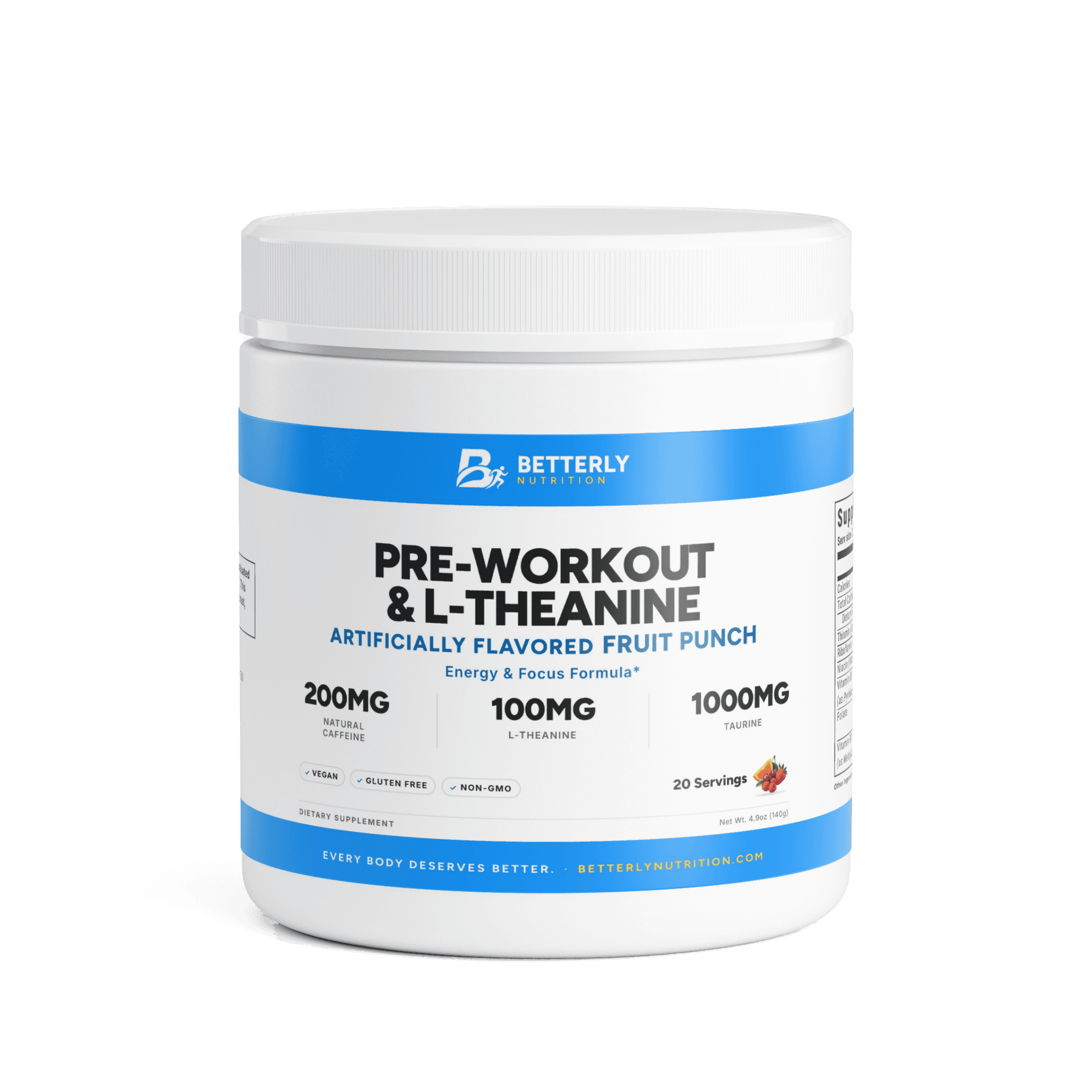
- Betterly's Pre-Workout Caffeine & L-Theanine Energy Powder (Yuzu) lists 200 mg of natural caffeine from green tea per 2-scoop (6 g) serving, half the 400 mg a day the FDA cites for most adults.
Energy drink vs coffee: what's actually different?
Coffee is one brewed ingredient whose caffeine shifts from cup to cup, while an energy drink is a formulated product with a stated caffeine dose and added ingredients.
| Reach for | When it fits | What to watch |
|---|---|---|
| Plain brewed coffee | You enjoy it, and one or two mugs carry you | The dose moves with every brew |
| Canned energy drink | You want it cold, fizzy and labeled | Added sugar and oversized cans |
| Energy powder or strip | You want to measure caffeine by the scoop | Sweeteners, extras and the daily cap |
| Neither | You're already near 400 mg for the day | One more drink can push you past it |
The takeaway: both deliver the same stimulant, so your choice rests on what rides along with it and how sure you want to be of the dose.
MedlinePlus explains that caffeine stimulates your central nervous system, which can make you feel more awake. That part is the same in a mug or a can.
Which has more caffeine, an energy drink or a cup of coffee?
A single energy drink often has more caffeine than a single cup of coffee, mostly because the can is bigger, not because the liquid is stronger.
The FDA's caffeine guide gives a 12-ounce regular brewed coffee 113 to 247 mg. A 16-ounce energy drink gets 54 to 328 mg. Divide each by its ounces and the gap nearly closes.
| Drink and serving | Caffeine | Per fluid ounce |
|---|---|---|
| Brewed coffee, 12 fl oz (FDA) | 113 to 247 mg | About 9 to 21 mg |
| Energy drink, 16 fl oz (FDA) | 54 to 328 mg | About 3 to 21 mg |
| Decaf coffee, 8 fl oz (FDA) | 2 to 15 mg | Under 2 mg |
| Our energy powder, 2 scoops in 12 to 20 fl oz | 200 mg | About 10 to 17 mg |
Coffee's catch is the mug itself, since a 20-ounce travel cup holds closer to two of the FDA's 12-ounce servings than one.
Energy drinks have their own blind spot. MedlinePlus notes that the caffeine in energy drinks varies widely, and that labels sometimes don't give the actual amount.
Guarana adds a wrinkle, since NCCIH says the plant contains caffeine. The FDA says most U.S. energy drinks already count caffeine from guarana in the label's total, so don't add it twice. If a can lists guarana but prints no caffeine number, you can't know your real dose.
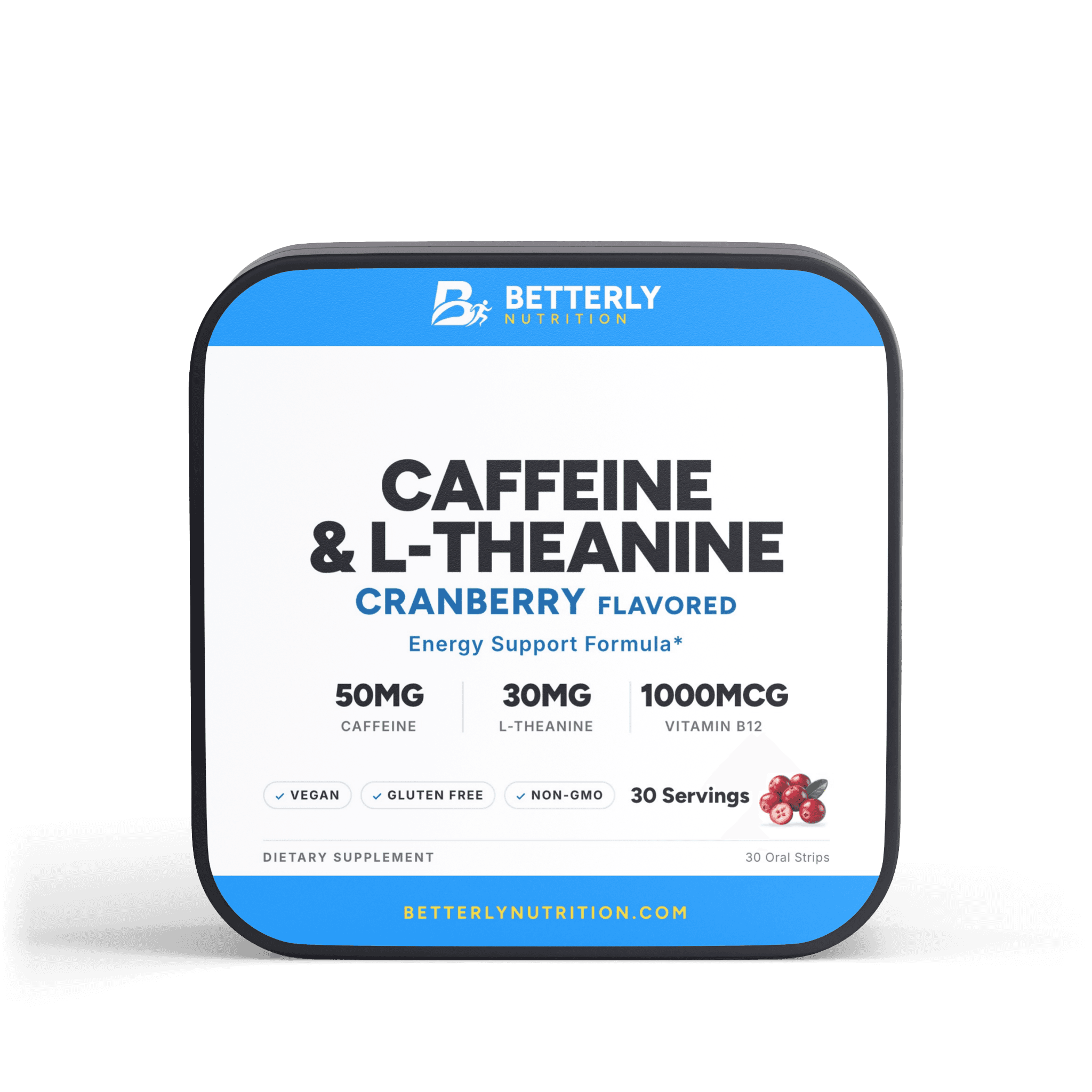
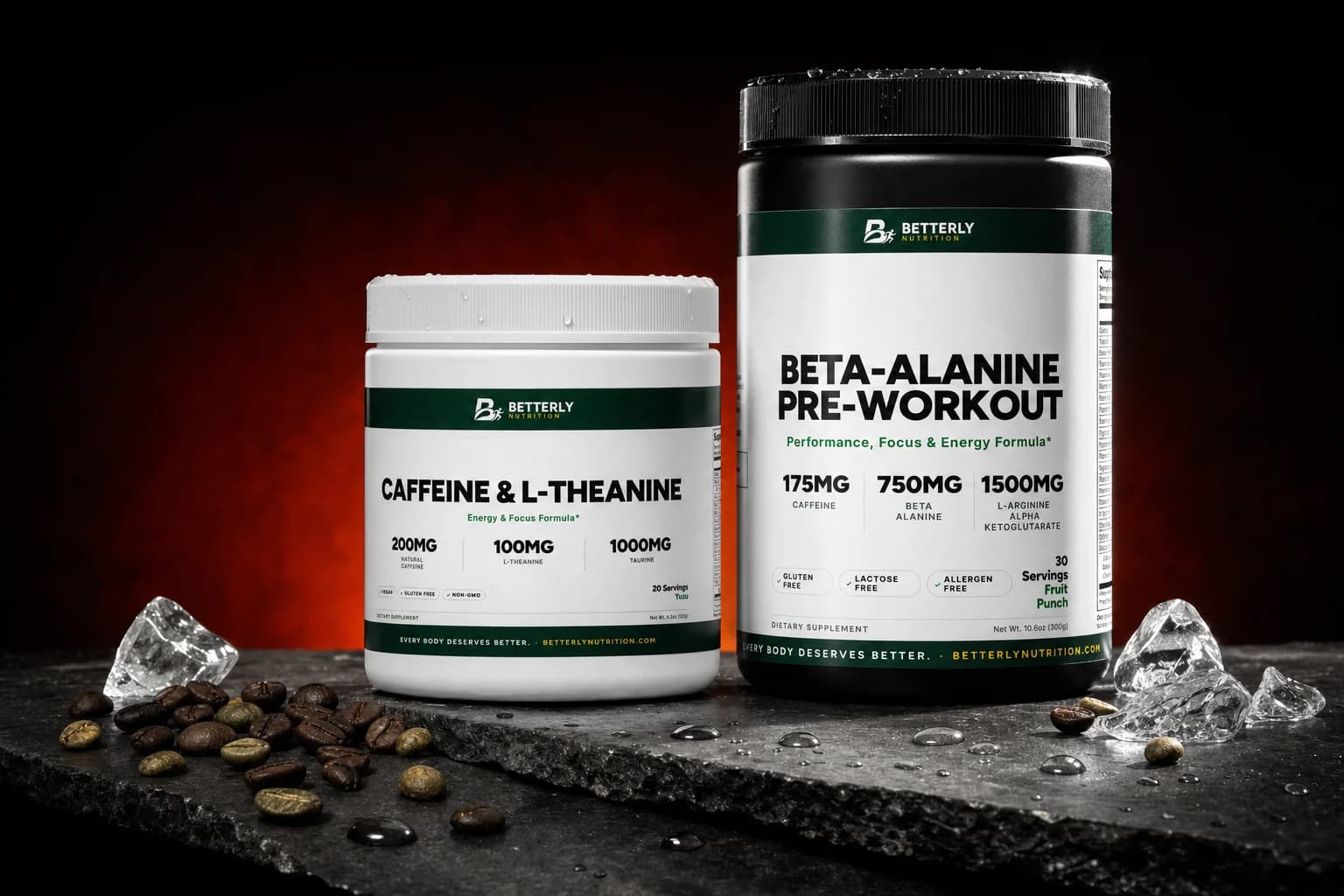
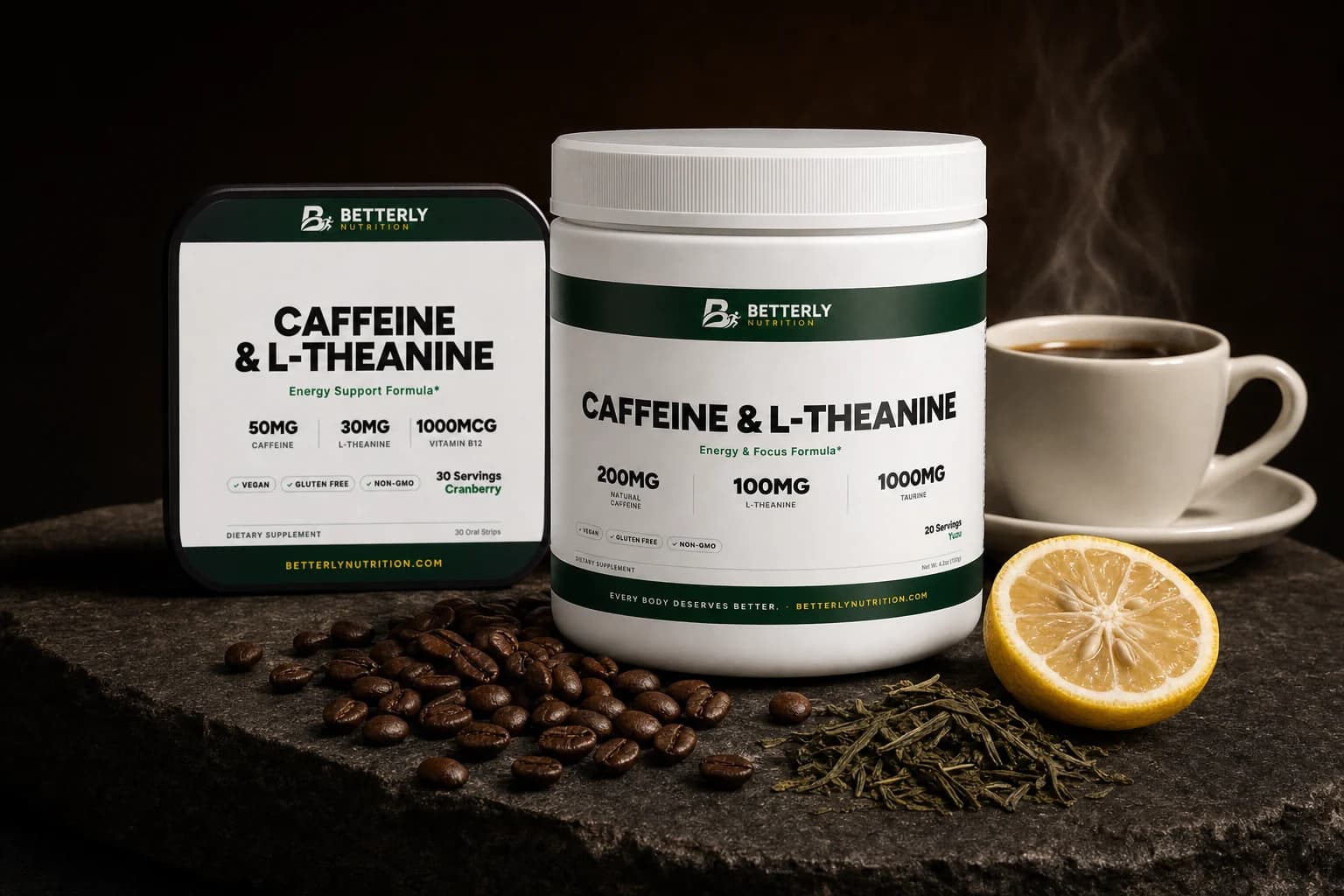
Our Pre-Workout Caffeine & L-Theanine Energy Powder (Yuzu) lists 200 mg of natural caffeine from green tea per 2-scoop (6 g) serving, so each scoop works out to 100 mg. Our Caffeine & L-Theanine Energy Strips carry 50 mg per 1 oral strip (290 mg) serving, a smaller step than most mugs.
What else is in an energy drink besides caffeine?
Besides caffeine, an energy drink may contain sugars, taurine, B vitamins and herbs such as guarana or ginseng, depending on the brand.
The NCCIH page on energy drinks names guarana, sugars, taurine, ginseng, B vitamins, glucuronolactone, carnitine and bitter orange among the ingredients energy drinks may contain. Black coffee has none of them added.
Our powder's extras, per 2-scoop (6 g) serving:
- Taurine, 1000 mg, with no Daily Value set and no claim from us about what it does.
- L-theanine, 100 mg, an amino acid found naturally in tea leaves.
- Seven B vitamins at 33% DV each, including thiamin (0.40 mg) and vitamin B12 (0.80 mcg).
- Magnesium (36 mg), sodium (60 mg) and potassium (130 mg), each as a citrate.
- Sucralose for sweetness, with 20 calories and 4 g of carbohydrates, 2 g of which are dietary fiber.
The NIH Office of Dietary Supplements' vitamin B12 fact sheet says B12 is often promoted for energy, but it doesn't provide that benefit in people who already get enough from their diet. That applies to our strips as well, which list 1000 mcg of vitamin B12 per 1 oral strip (290 mg) serving.
If you'd like L-theanine with your coffee instead, our guide to adding L-theanine to your morning cup covers that pairing.
Are energy drinks worse for you than coffee?
Energy drinks aren't automatically worse than coffee, but plain black coffee is the simpler drink, with no added sugar or extra actives to account for.
Sugar tells a starker story. According to NCCIH, a single 16-ounce energy drink may hold 54 to 62 g of added sugar, which is more than the maximum amount of added sugar recommended for a whole day. Coffee keeps its edge only while you drink it close to black, since flavored syrups and sweetened creamers count as added sugar too.
Then there's dose. The FDA's highest can figure, 328 mg, uses up 82% of a 400 mg day in a single drink. A 12-ounce brewed coffee tops out lower, at 247 mg, though a second or third refill catches up fast.
Each 2-scoop (6 g) serving of our powder has 20 calories and a fixed 200 mg of caffeine, and the tub prints vegan, gluten free and non-GMO claims. Its sweetness comes from sucralose, alongside natural and artificial flavors. That makes it a measured way to take caffeine, not a purer one than black coffee. Skipping sweeteners altogether? Plain coffee or unsweetened tea is the simpler route.
From our shop: Pre-Workout Caffeine & L-Theanine Energy Powder (Yuzu) — a yuzu drink mix listing 1000 mg of taurine, 100 mg of L-theanine and 200 mg of natural caffeine from green tea per 2-scoop (6 g) serving.
Is coffee or an energy drink more acidic on your stomach?
Coffee and energy drinks share the one stomach effect federal sources describe: both carry caffeine, which prompts your stomach to release more of its own acid.
MedlinePlus lists this among caffeine's effects: it increases the release of acid in your stomach, sometimes leading to an upset stomach. So the size of the caffeine dose matters more than whether it came from roasted beans or a scoop of powder.
What about the acidity of the drink itself? None of the federal pages cited here compares the pH of the two drinks, so we won't guess at a ranking. Our powder's ingredient list includes citric acid, a common tart flavoring, and we don't publish a pH figure for it.
If caffeine sits badly with you, the simplest move is a smaller amount. With our powder, the label's first option is 1 scoop (100 mg of caffeine) in 6 to 10 fl oz of water. With coffee, a smaller mug or a half-caf blend does the same job.
Coffee or an energy drink for studying and staying awake?
For studying, coffee and energy drinks both work through caffeine, so the better pick is whichever lets you control the amount and still stop in time to sleep.
MedlinePlus says caffeine's effects can last four to six hours, so a 9 p.m. can before an exam may still be working at 1 a.m. Sleep disruption is on the FDA's list of signs you've had too much caffeine, a poor trade for an extra hour of notes.
Refills are coffee's quiet problem in a long study session, because a full pot makes it easy to lose count. A pre-measured serving puts a number on each round. In the morning, either one works; what matters is the total you reach by mid-afternoon, and timing gets its own guide on the best time to drink an energy drink.
Already close to 400 mg when the evening session starts? Then neither drink is the right call. Training rather than studying? Our pre-workout vs energy drink comparison covers the gym side.
When is plain coffee the better pick?
Plain coffee is the better pick when you enjoy the ritual, drink it black or close to it, and your usual mug already leaves plenty of room under 400 mg.
Here's when an energy product adds little for a coffee drinker:
- Grinding, brewing and that first sip are part of your morning, and a scoop in a shaker wouldn't replace them.
- You take it black, so there's no sugar or syrup for a labeled product to beat.
- You'd rather not track sweeteners. Our powder lists sucralose plus natural and artificial flavors.
- Your usual mug or two sits comfortably under the FDA's 400 mg figure.
Hoping to cut caffeine, not just change where it comes from? We compare energy supplements made without caffeine in a separate roundup.
How should you use our energy powder or strips?
Follow the label: our Pre-Workout Caffeine & L-Theanine Energy Powder's suggested use is 1 scoop mixed into 6 to 10 fl oz of water, or 2 scoops in twice that much.
- Start with 1 scoop, which gives you 100 mg of caffeine, and see how it feels.
- A full 2-scoop (6 g) serving brings you to 200 mg, so use it in place of coffee, not on top of it.
- Keep the tub in a cool, dry place. The label says to consume it within 90 days.
The tub's caution line sets a ceiling of 5 scoops a day. Run that cap through the panel and it lands at 500 mg of caffeine, a full 100 mg past what the FDA has cited as a day's amount for most adults. We don't recommend getting anywhere near it. Stop at the 1 or 2 scoops the directions describe, and count every other caffeine source that day.
The strip label says to place 1 oral strip on your tongue once a day and let it dissolve, and its caution says not to exceed that dose.
Cut back if you notice jitters, an upset stomach, nausea or headache, which the FDA lists among the signs of too much caffeine. Browse every option, with or without caffeine, in our Energy Support collection.
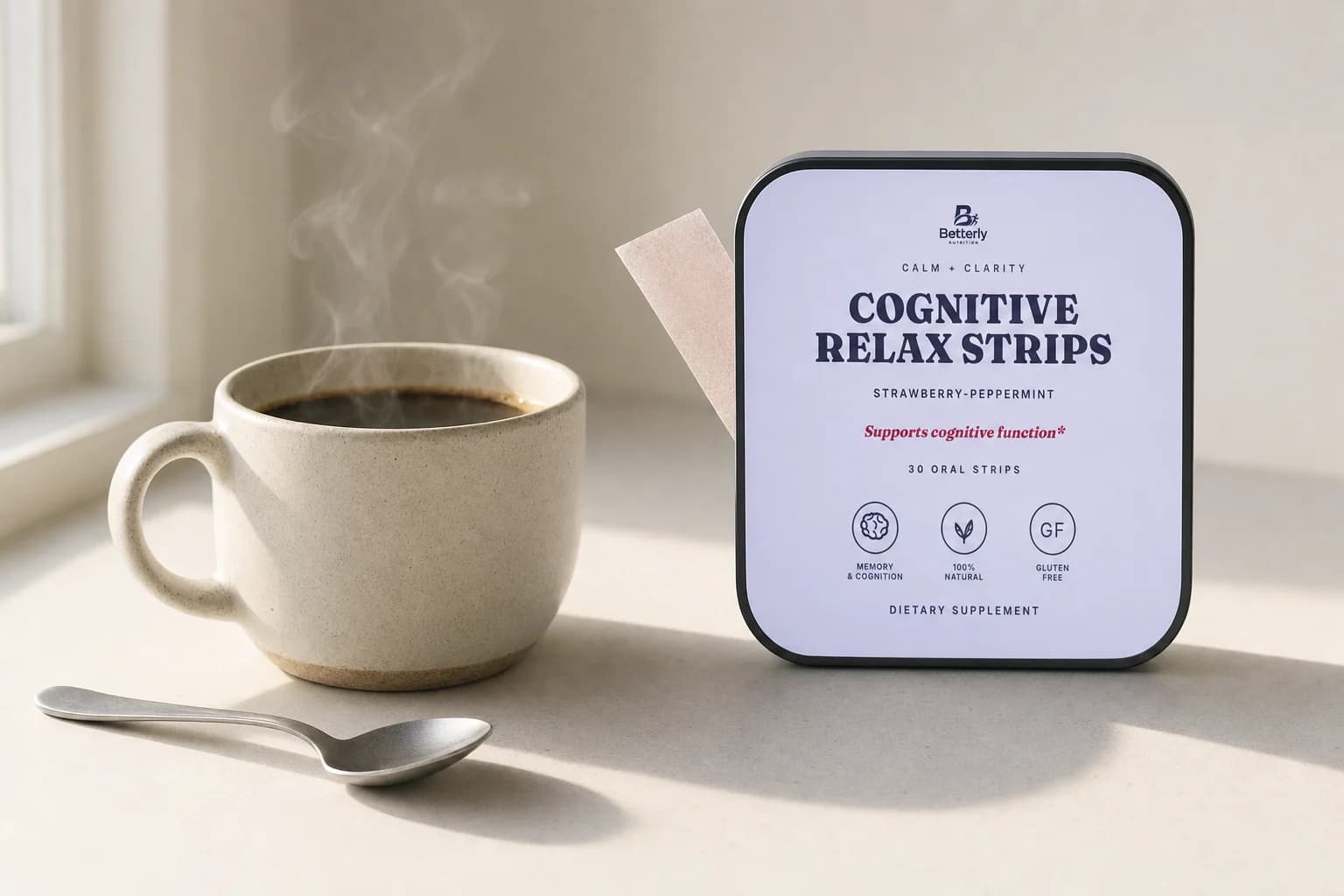
From our shop: Caffeine & L-Theanine Energy Strips — 50 mg of caffeine, 30 mg of L-theanine and 1000 mcg of vitamin B12 per 1 oral strip (290 mg) serving, cranberry flavored, with 30 servings per pack.
Who should check with a healthcare provider first?
Betterly's energy powder and strips are for adults only, and adults who are pregnant, nursing, taking medication or managing a medical condition should ask a healthcare provider first.
- Pregnant or nursing: both of our labels name this, and MedlinePlus says to check with your provider about whether you should limit or avoid caffeine.
- Taking medication or managing a medical condition: our powder's label names both, our strip label names medical conditions, and MedlinePlus names stimulants among the medicines to ask about.
- Under 18: our energy products aren't for anyone under 18, which the strip label also flags. The FDA reports that medical experts advise against energy drinks for children and teens, citing the American Academy of Pediatrics.
- Surgery on the calendar: tell your care team about any caffeine products you use.
One more rule covers coffee and energy drinks alike: don't mix caffeine with alcohol. NCCIH notes that people who combine them may not be able to tell how intoxicated they are.
FAQ: energy drink vs coffee
How many cups of coffee equal one energy drink?
One 16-ounce energy drink can equal anywhere from about half a cup to more than three cups of coffee, depending on the can. NCCIH puts an 8-ounce cup of coffee at about 100 mg of caffeine, and the FDA's range for 16-ounce energy drinks is 54 to 328 mg. Read the milligrams printed on the can rather than guessing from its size.
Is caffeine from green tea gentler than caffeine from coffee?
No, caffeine from green tea isn't gentler because of where it came from. The FDA says there's no difference in how your body handles, or the safety of, caffeine that occurs naturally in coffee and tea compared with caffeine added to a product. Our powder's caffeine comes from green tea, and its 200 mg per 2-scoop serving counts the same as 200 mg from coffee.
Can you drink coffee and an energy drink on the same day?
Yes, coffee and an energy drink can share a day, but only if the combined caffeine fits your limit. For most adults, the FDA has cited 400 mg a day. A 12-ounce brewed coffee can reach 247 mg on its own, so adding a large can could push you past that figure. Check both numbers first, and skip the second drink if you already feel jittery.
How long does caffeine from coffee or an energy drink last?
Caffeine from coffee or an energy drink lasts about the same time, because it's the same compound either way. According to MedlinePlus, caffeine peaks in your blood within an hour of drinking it, and its effects may linger for four to six hours. So a mid-afternoon mug or energy drink can still shape your evening.
Will switching from energy drinks to coffee give you a headache?
Switching from energy drinks to coffee is less likely to bring a headache if your daily caffeine stays about the same. A sudden drop is different. MedlinePlus says stopping regular caffeine abruptly can bring headaches, drowsiness and irritability, which usually fade after a couple of days. Match milligrams rather than cups, and the switch tends to go more smoothly.
Sources
- U.S. Food and Drug Administration: Spilling the Beans: How Much Caffeine Is Too Much?
- National Center for Complementary and Integrative Health: Energy Drinks
- MedlinePlus: Caffeine
- NIH Office of Dietary Supplements: Vitamin B12, Fact Sheet for Consumers
If this left you looking for somewhere to start, read energy drink powder with caffeine from green tea — its amounts per serving are listed on the page. For the practical questions this raises, how dosing, sourcing and subscriptions work is answered in one place.