On this page
- Key takeaways
- Are energy powders bad for you, or is it the dose?
- Energy powder vs energy drink vs pure caffeine: what's different?
- What does our energy powder label say, line by line?
- How many scoops of energy powder is too much?
- Is natural caffeine better than synthetic caffeine?
- Is sucralose in energy powder bad for you?
- How do you take our energy powder, per the label?
- When don't you need an energy powder?
- Who should check with a healthcare provider first?
- FAQ: energy powders
- Sources
The short answer: Energy powders aren't bad for you by default, and the number to watch is 400 mg, the daily caffeine figure the FDA cites for most adults. Betterly's Pre-Workout Caffeine & L-Theanine Energy Powder (Guava Berry) has 200 mg of natural caffeine per 2-scoop (6 g) serving. Its caution line allows up to 5 scoops a day, or 500 mg. That's 100 mg past the FDA figure, so we don't recommend going that high.
We sell the powders and strips covered here, so read this as a brand checking its own label out loud. Product numbers come off our Supplement Facts panels; safety figures come from the FDA and the NIH.
Key takeaways
- An energy powder is a caffeinated drink mix, so whether it suits you depends on the caffeine per scoop and your total for the day.
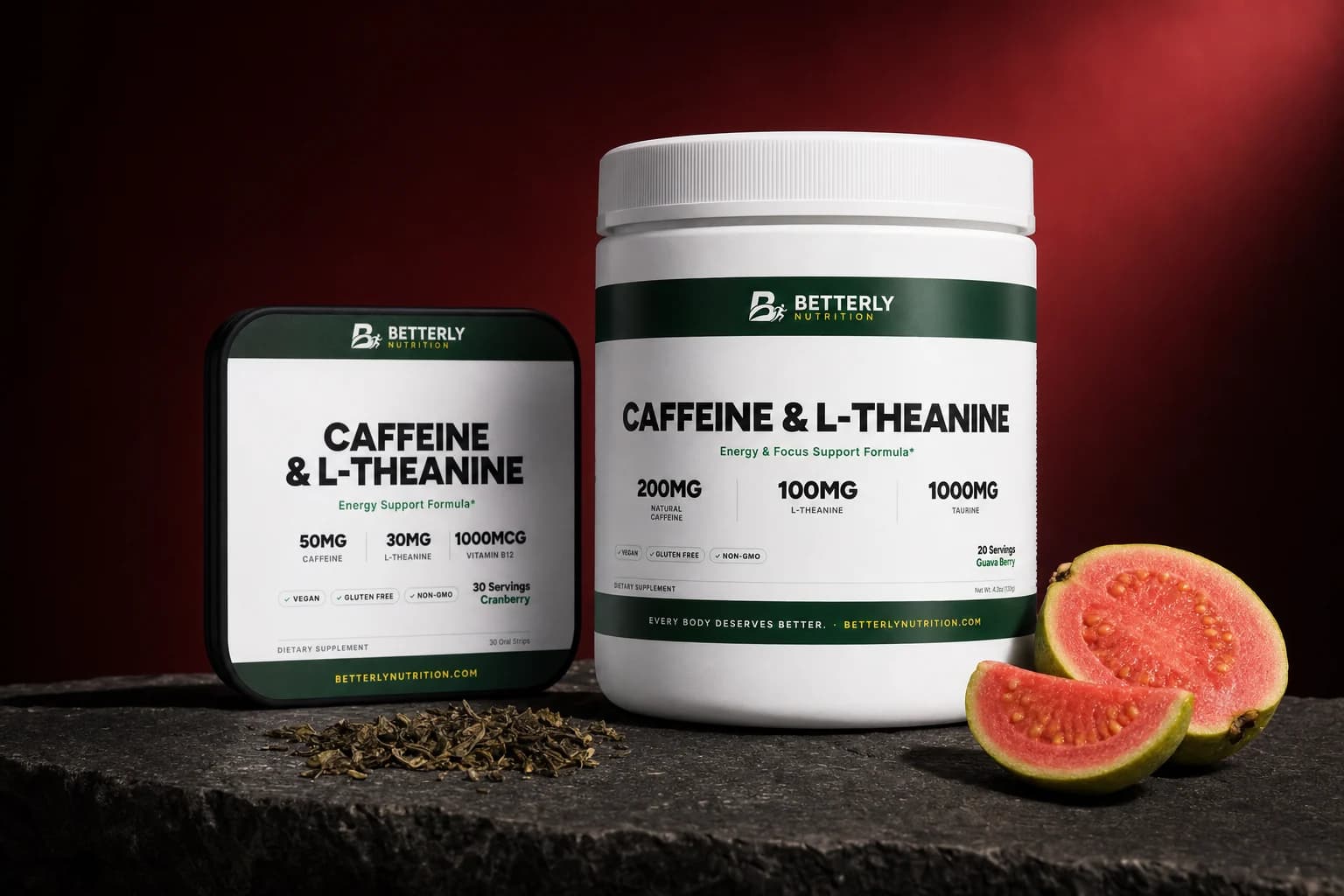
- Betterly's Pre-Workout Caffeine & L-Theanine Energy Powder (Guava Berry) carries 200 mg of natural caffeine in each 2-scoop (6 g) serving, or 100 mg a scoop.
- The tub's 5-scoop daily ceiling comes to 500 mg of caffeine, 100 mg past the FDA's figure for most adults, and we don't recommend it.
- The FDA sees no difference in how your body handles natural or added caffeine, so 200 mg from green tea still counts as 200 mg.
Are energy powders bad for you, or is it the dose?
Energy powders aren't harmful by format alone. What decides it is the dose: the caffeine in each scoop, plus every other scoop, cup and can you add that day.
Whether a tub calls itself an energy powder or a powdered energy drink, it's a dry drink mix. Most pair caffeine with flavoring, a sweetener and extras such as B vitamins, taurine or L-theanine. It comes in a tub or stick packs, and you add the water. Picture a canned energy drink with the water taken out.
That shifts the measuring to you, so three questions decide whether any energy powder suits you:
- How much caffeine sits in one scoop, in milligrams?
- How many scoops, plus coffee, tea and soda, will you have today?
- What sweetens it, and are you comfortable with that ingredient?
One common mix-up: water doesn't dilute the dose. Two scoops in 12 fl oz or in 20 fl oz still give you 200 mg of caffeine. Extra water only changes how strong the drink tastes.
Energy powder vs energy drink vs pure caffeine: what's different?
An energy powder sits between a canned energy drink and bulk pure caffeine powder: you measure it yourself, but each scoop holds a set, labeled amount.
| Format | Caffeine | Who measures it | What to watch |
|---|---|---|---|
| Canned energy drink | 54 to 328 mg in 16 fl oz (FDA) | The can | Can size, sweetener |
| Our energy powder | 100 mg per scoop | You, scoop by scoop | Heaped scoops, daily count |
| Our energy strip | 50 mg per strip | The strip | One a day, per its label |
| Bulk pure caffeine | About 28 cups of coffee per teaspoon (FDA) | You, with kitchen tools | Hard to measure safely |
Read down the third column: the more measuring you do, the more your habits decide the dose.
Pure caffeine powder is what gave powdered caffeine its bad name. The FDA's page on pure and highly concentrated caffeine says one teaspoon can hold as much caffeine as 28 cups of coffee, and warns: "Safe quantities of these products can be difficult or nearly impossible to measure accurately with common kitchen measuring tools." Its consumer caffeine page estimates that rapidly taking in around 1,200 mg, under half a teaspoon of pure caffeine, can bring on toxic effects.
A drink mix is built differently. In our energy powder, caffeine is 200 mg of every 6 g serving, one-thirtieth of the powder by weight. Dilution makes a scoop easier to measure. You still have to count the scoops.
What does our energy powder label say, line by line?
Betterly's Pre-Workout Caffeine & L-Theanine Energy Powder (Guava Berry) prints 16 lines per 2-scoop (6 g) serving, and caffeine is the one line that sets your daily limit.
- Serving: 2 scoops (6 g), 20 servings per tub.
- Calories and carbs: 20 kcal and 4 g of total carbohydrates, 2 g of it dietary fiber. There's no sugars line, so we won't call it sugar-free.
- B vitamins: seven of them, including thiamin, niacin and vitamin B12, each at 33% of the Daily Value (DV). They don't act as stimulants.
- Minerals: magnesium (36 mg), sodium (60 mg) and potassium (130 mg), all in citrate form.
- Taurine 1000 mg, Natural Caffeine (from Green Tea) 200 mg and L-Theanine 100 mg, none with a DV.
- Other ingredients: polydextrose, citric acid, natural and artificial flavors, sucralose, calcium silicate and red beet juice powder for color.
The tub also carries vegan, gluten free and non-GMO claims.
Now run the 5-scoop ceiling through that panel. Every B vitamin would still sit under 100% DV. Caffeine would reach 500 mg. On this label, caffeine runs out of room first, so it's the line to budget around.
On another brand's tub, look for caffeine on its own line, in milligrams. If it's folded into a blend with one total weight, you can't count it; our label guide to proprietary blends shows how to spot one.
How many scoops of energy powder is too much?
Betterly's energy powder reaches the FDA's 400 mg daily figure at 4 scoops with no other caffeine, so stay with the label's 1- or 2-scoop directions.
The FDA's consumer page on caffeine gives most adults 400 mg a day as an amount not generally associated with negative effects.
| Scoops in a day | Caffeine | Against 400 mg |
|---|---|---|
| 1 scoop | 100 mg | 300 mg left for everything else |
| 2 scoops (1 serving) | 200 mg | Half the figure |
| 4 scoops | 400 mg | At the figure, with nothing else |
| 5 scoops (label ceiling) | 500 mg | 100 mg over |
The tub's caution line reads "Do not exceed 5 scoops daily." Against a 400 mg budget, that ceiling is 100 mg too high, and we won't recommend it.
The NIH Office of Dietary Supplements fact sheet on exercise and athletic performance supplements puts up to 400 to 500 mg a day in the range that seems safe for adults. It also says 500 mg or more can work against physical performance, disturb sleep and leave you irritable. A 5-scoop day sits right on that edge.
So we keep it simple: one drink a day of 1 or 2 scoops, mixed the way the label directs, and a talk with a healthcare provider before any day with more than one 2-scoop serving.
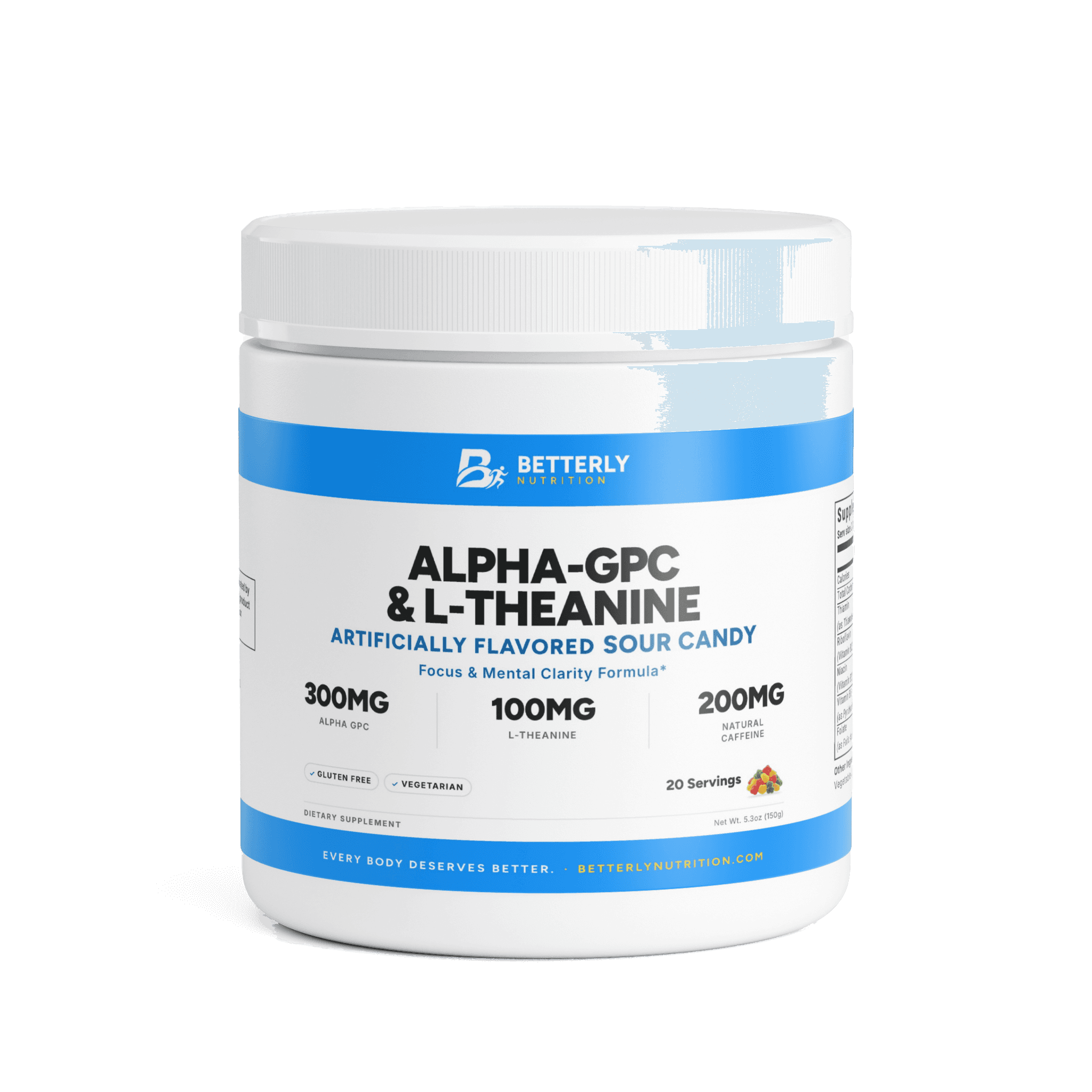
Our Alpha-GPC & L-Theanine Focus Powder (Sour Grape) follows the same math: 200 mg of natural caffeine per 2-scoop (7.5 g) serving, beside 300 mg of Alpha GPC, with the same 5-scoop ceiling, so 5 scoops is also 500 mg of caffeine, 100 mg past the FDA figure, and we don't recommend that either. A serving of each tub already lands on 400 mg.
For scoop-plus-coffee totals, see our pre-workout vs energy drink comparison.
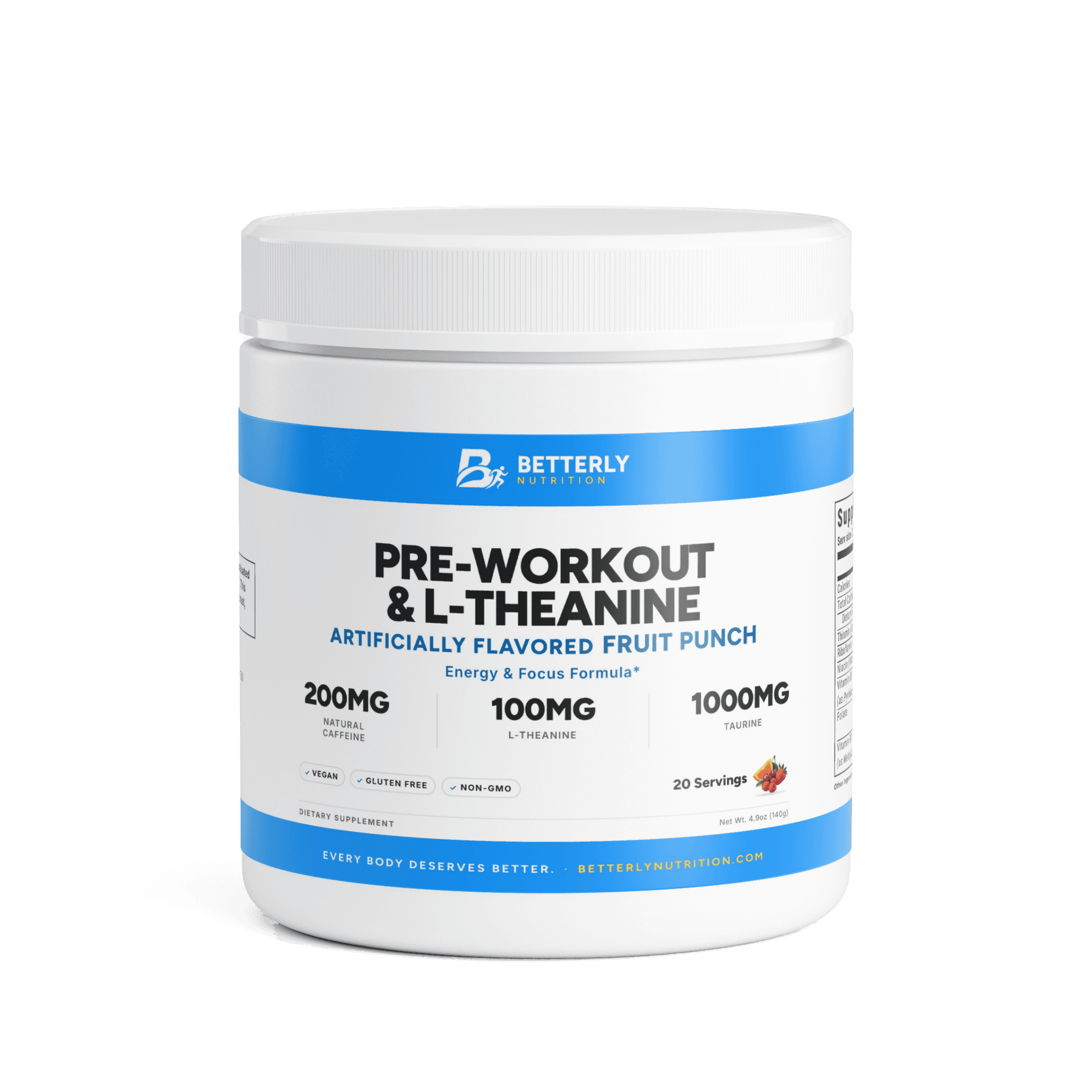
From our shop: Pre-Workout Caffeine & L-Theanine Energy Powder (Guava Berry) — a guava berry drink mix at 20 calories, pairing 200 mg of natural caffeine from green tea with 1000 mg of taurine in each 2-scoop (6 g) serving.
Is natural caffeine better than synthetic caffeine?
Natural caffeine isn't better or gentler than synthetic caffeine. It's the same molecule, and the FDA sees no difference between caffeine that occurs naturally and caffeine added to a product.
By the FDA's wording, even our tub's caffeine counts as added: it was taken from green tea, then blended into the powder. So "Natural Caffeine (from Green Tea)" on our panel names where the caffeine came from. Our 200 mg counts exactly like 200 mg from a coffee maker or a lab.
Synthetic caffeine is made by chemical synthesis rather than extracted from leaves or beans. You'll also see "caffeine anhydrous" on plenty of tubs. Anhydrous just means "without water": a dried caffeine powder, from either source. Preferring a plant source is a fair personal choice, as long as the math stays the same.
Is sucralose in energy powder bad for you?
Sucralose is a high-intensity sweetener the FDA permits in foods. Both Betterly powders list it, so they're not for you if you'd rather avoid it.
The FDA's page on aspartame and other sweeteners says sucralose has been allowed as a general-purpose sweetener in foods since 1999, and the agency reviewed more than 110 studies on it. It sets the acceptable daily intake (ADI), the amount considered safe to eat daily over a lifetime, at 5 mg per kilogram of body weight. For a 154-pound (70 kg) adult, that's 350 mg a day.
Our honest limit: the label lists sucralose among other ingredients without a milligram amount, which is normal for that part of a panel. So we can't tell you a scoop's share of the ADI, and we won't guess.
Want caffeine without sucralose? Of the three products here, only the Caffeine & L-Theanine Energy Strips skip it. Their ingredient list includes erythritol, mannitol and steviol glycosides instead. The same FDA page says it keeps reviewing new information on erythritol and other sweeteners. Black coffee or plain tea skips sweeteners entirely.
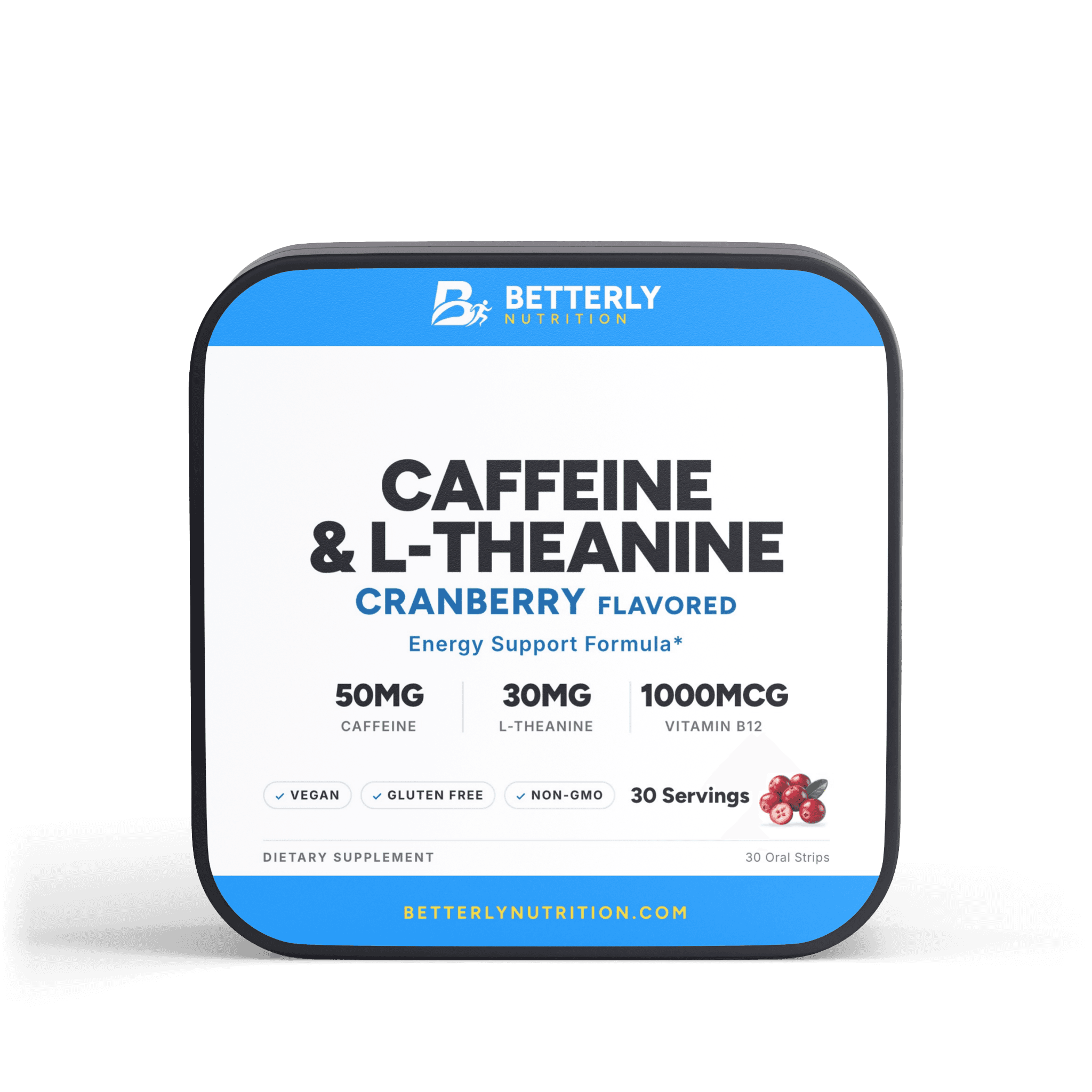
From our shop: Caffeine & L-Theanine Energy Strips — a cranberry-flavored oral strip, sweetened without sucralose, that lists 50 mg of caffeine and 1000 mcg of vitamin B12 per 1 oral strip (290mg) serving.
How do you take our energy powder, per the label?
Betterly's energy powder label pairs each scoop with water: 6 to 10 fl oz for 1 scoop, and double that for a 2-scoop drink.
- Level each scoop. A level scoop is half the 6 g serving, so about 3 g and 100 mg of caffeine.
- Add 6 to 10 fl oz of water for 1 scoop, or 12 to 20 fl oz for 2, and shake until it dissolves.
- Add up coffee, tea and soda before you mix your drink, and skip the scoop if your day is already close to 400 mg.
- Keep it early. Sleep trouble is one of the FDA's warning signs of too much caffeine, so morning beats evening.
- Store it in a cool, dry place, out of children's reach, and finish it within the label's 90-day window. Skip any tub with a broken or missing safety seal.
The focus powder's directions differ: 2 scoops (7.5 g) in 16 fl oz (480 ml) of water. The strip label says 1 oral strip on the tongue daily, left to dissolve.
Our full energy shelf includes options with no caffeine on the label.
When don't you need an energy powder?
You don't need an energy powder when coffee or tea already carries your day, when caffeine leaves you jittery, or when a short night is the real problem.
- Your mug already does the job. The FDA's range for 12 ounces of regular brewed coffee runs from 113 to 247 mg, which can top a full serving of our powder.
- Small amounts of caffeine already leave you jittery or restless.
- You slept badly. No scoop makes up the missing hours, so an earlier night is the real fix.
- It's late afternoon, and tonight's sleep matters more than the next hour.
- You'd like nothing sweetened. Both tubs list sucralose.
Want to cut caffeine back altogether? Our roundup of caffeine-free energy supplements is a better next read than any tub.
Who should check with a healthcare provider first?
Ask a healthcare provider before using Betterly's energy or focus powder if you're pregnant or nursing, take any medication, or manage a medical condition, as both labels say.
- Pregnant or nursing: both powder labels name this.
- Taking medication or managing a medical condition: the FDA says certain conditions, and some medicines, can make you more sensitive to caffeine. The focus powder's panel adds 50 mg of Asian ginseng extract, worth mentioning to your provider.
- Under 18: the strip label names this group, and our energy products are made for adults. The ODS fact sheet says teens should keep caffeine to 100 mg a day or less.
- Surgery coming up: list your energy powder, and any other caffeine, for your surgical team.
The FDA's warning signs of too much caffeine include a faster heartbeat, jitters, an upset stomach, nausea and headache. If any show up, stop and talk with a healthcare provider.
FAQ: energy powders
Is powdered caffeine legal?
Not always: pure powdered caffeine sold in bulk is the form the FDA has acted against, with warning letters to distributors starting in 2015. Its page on pure and highly concentrated caffeine says that in April 2018 it issued guidance to help companies judge when such a supplement is considered adulterated and illegal. The worry is bulk packaging that leaves you to measure a safe serving yourself. Our energy powder is a flavored drink mix with a set amount per scoop, and the same daily math still applies.
Can you dry scoop energy powder?
No, not by our label. Betterly's energy powder directions pair every scoop with water, 6 to 10 fl oz each, and nothing on the tub describes swallowing the powder dry. Water is part of the serving as written. If the flavor tastes too strong, use the top of the water range.
Does a heaping scoop count as one scoop?
No, a heaping scoop of energy powder holds more powder, and more caffeine, than a level one. Betterly's label sets the serving at 2 scoops (6 g) with 200 mg of caffeine, so each level scoop is about 3 g and 100 mg. Pile it high and you no longer know your dose. Level it off with a clean, dry edge.
Can teenagers drink energy powder?
Betterly's energy powder isn't meant for teenagers. The NIH Office of Dietary Supplements says teens should cap caffeine at 100 mg a day, the amount in one level scoop of our powder. The FDA also notes that medical experts steer children and teens away from energy drinks, and our label says to keep the tub out of reach of children.
How long does a tub of energy powder last?
A tub of Betterly's energy powder should be finished within the label's 90-day window and kept in a cool, dry place. At 1 or 2 scoops a day, the 20-serving tub holds 40 scoops, which fits that window easily.
Sources
- U.S. Food and Drug Administration: Spilling the Beans: How Much Caffeine Is Too Much?
- U.S. Food and Drug Administration: Pure and Highly Concentrated Caffeine
- U.S. Food and Drug Administration: Aspartame and Other Sweeteners in Food
- NIH Office of Dietary Supplements: Dietary Supplements for Exercise and Athletic Performance, Fact Sheet for Consumers
If this left you looking for somewhere to start, read energy drink powder with 200 mg natural caffeine per serving — its amounts per serving are listed on the page. For the practical questions this raises, how dosing, sourcing and subscriptions work is answered in one place.