On this page
- Key takeaways
- Do mushroom tinctures expire?
- How long does a mushroom tincture last once you open it?
- Do glycerin tinctures last as long as alcohol tinctures?
- What do potassium sorbate and nisin do in mushroom drops?
- How should you store mushroom tincture drops?
- How can you tell if a mushroom tincture has gone bad?
- When is a bottle of mushroom drops the wrong buy?
- Who should check with a healthcare provider first?
- FAQ: do mushroom tinctures expire
- Sources
The short answer: Mushroom tinctures do expire, and the date that counts is the one printed on your bottle by its maker. FDA doesn't require supplement makers to print a date, but says any date they do print should have data behind it. Our glycerin-based mushroom drops list two preservatives, potassium sorbate and nisin, and ask for a cool, dry place. At the labeled 1 ml a day, each 30 ml bottle is empty in 30 days.
Key takeaways
- A mushroom tincture's shelf life is set by its maker for that one product, so the date on your bottle outranks any general rule you read online, ours included.
- Classic tinctures use an alcohol-and-water base, while our glycerin-based mushroom drops list no alcohol among their ingredients and carry potassium sorbate and nisin as preservatives.
- If a tincture looks or smells off, don't use it, even when the printed date is still months away.
- At the label's 1 ml a day, a 30-serving bottle runs out in 30 days, so the date mostly matters for bottles that sit around half used.
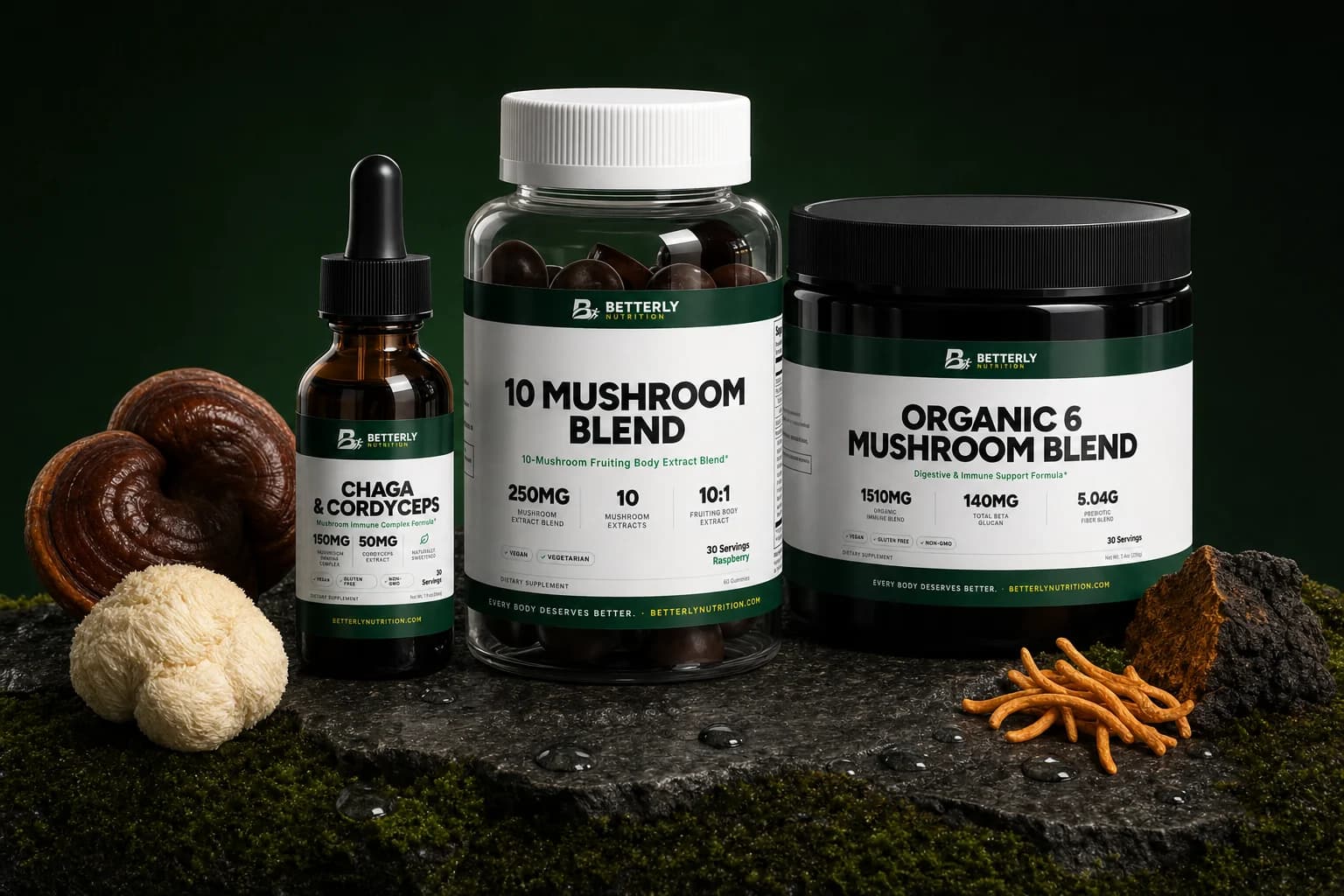
We sell three mushroom dropper bottles, which gives us every reason to want the answer to be "they keep forever." They don't. Every storage line and ingredient named below comes straight off those labels, and we flag each spot where a label says nothing.
Do mushroom tinctures expire?
Yes, mushroom tinctures expire, and each bottle's date comes from its own maker rather than from one rule that covers every tincture on the shelf.
The FDA's compliance guide for dietary supplement makers answers the question in two parts. The federal rule doesn't require an "expiration date," a "shelf date" or a "best if used by" date. But the same guide says a maker should have data to support any such date it puts on a label.
That's why search results quote everything from months to years. Each figure describes one brand's own liquid, not the bottle on your shelf.
Where's the date on our mushroom drops?
Check the bottle itself, base included, for a printed date or lot code. The artwork file we build each label from has no date field, so we can't quote a best-by date on this page, and we won't guess one.
If you can't find a date you can read on your bottle, get in touch with us before you use it.
How long does a mushroom tincture last once you open it?
An opened mushroom tincture lasts no longer than the date its maker printed, and our three drop labels set no separate, shorter limit for an open bottle.
What the labels do give you is a pace. Each bottle holds 1 fl oz (30 ml), labeled as 30 servings, and the directions call for 1 ml a day. Open one on the first of the month, follow the directions, and it's empty by the end of that month.
Don't double up to beat a date, though. Every one of our drop labels opens its caution with "Do not exceed recommended dose," so leftovers past the date get thrown out.
How to take our mushroom drops, per the label
The label's suggested use reads, in full: "Shake well. Take 1 ml (30 drops) daily." Thirty of those 1 ml servings fill the 30 ml bottle, which is where the one-month math above comes from. For routes like a drink or straight from the dropper, see our walkthrough on ways to take mushroom tincture drops.
Do glycerin tinctures last as long as alcohol tinctures?
Glycerin tinctures and alcohol tinctures keep in different ways, and neither base comes with a shelf life of its own; each maker sets the date for its recipe.
The alcohol version has a head start on paper. In its overview of botanical dietary supplements, the NIH Office of Dietary Supplements (ODS) starts with a plant steeped in alcohol and water, then names "concentrating and preserving" as what tinctures are used for. We read that as the alcohol doing part of the preserving. ODS doesn't spell that out, so treat it as our reading, not theirs.
Our glycerin-and-water drops also list two added preservatives. All three open their ingredient lists with glycerin and purified water, list no alcohol among their ingredients, and close with potassium sorbate and nisin, covered in the next section.
The one ingredient we can't vouch for here is "Natural Flavoring," which the labels don't break down, and none of the three makes an alcohol-free claim. If you avoid alcohol entirely, message us from the contact page before you order.
So is a glycerin tincture's shelf life shorter? We haven't found a federal source that ranks one base above the other. For the wider trade-offs, like taste and who avoids alcohol, see our glycerin vs alcohol tincture guide.
Even our own dropper bottles don't share one recipe for keeping:
| Our dropper bottle | Base on the label | Preservatives listed | Safety-seal line |
|---|---|---|---|
| Our three mushroom drops | Glycerin, purified water | Potassium sorbate, nisin | Printed |
| Cinnamon & Licorice Root Drops | Water, glycerin | Potassium sorbate | Not printed |
| Mullein & Peppermint Oil Drops | MCT oil | None listed | Not printed |
Base, preservatives and seal wording all change from bottle to bottle, even inside one brand. The warnings are where all five labels match: the same caution opening "Do not exceed recommended dose," plus "keep out of reach of children" and "store in a cool, dry place." Only the seal line comes and goes.
What do potassium sorbate and nisin do in mushroom drops?
Potassium sorbate and nisin are both preservatives: FDA lists potassium sorbate among preservative names found on labels, and a federal regulation describes nisin as an antimicrobial agent.
- Potassium sorbate. FDA's Types of Food Ingredients page names it among the preservatives you may see on a label. The page says preservatives help keep foods from spoiling because of bacteria, molds, fungi or yeast, and help maintain freshness.
- Nisin. The federal regulation on nisin preparation, 21 CFR 184.1538, says it's made by fermenting certain strains of a bacterium, Streptococcus lactis. The same section describes nisin's function as an antimicrobial agent.
Both come last on our ingredient lists, right after the stevia. Neither has a milligram amount on the panel; they show up only in the Other Ingredients line.
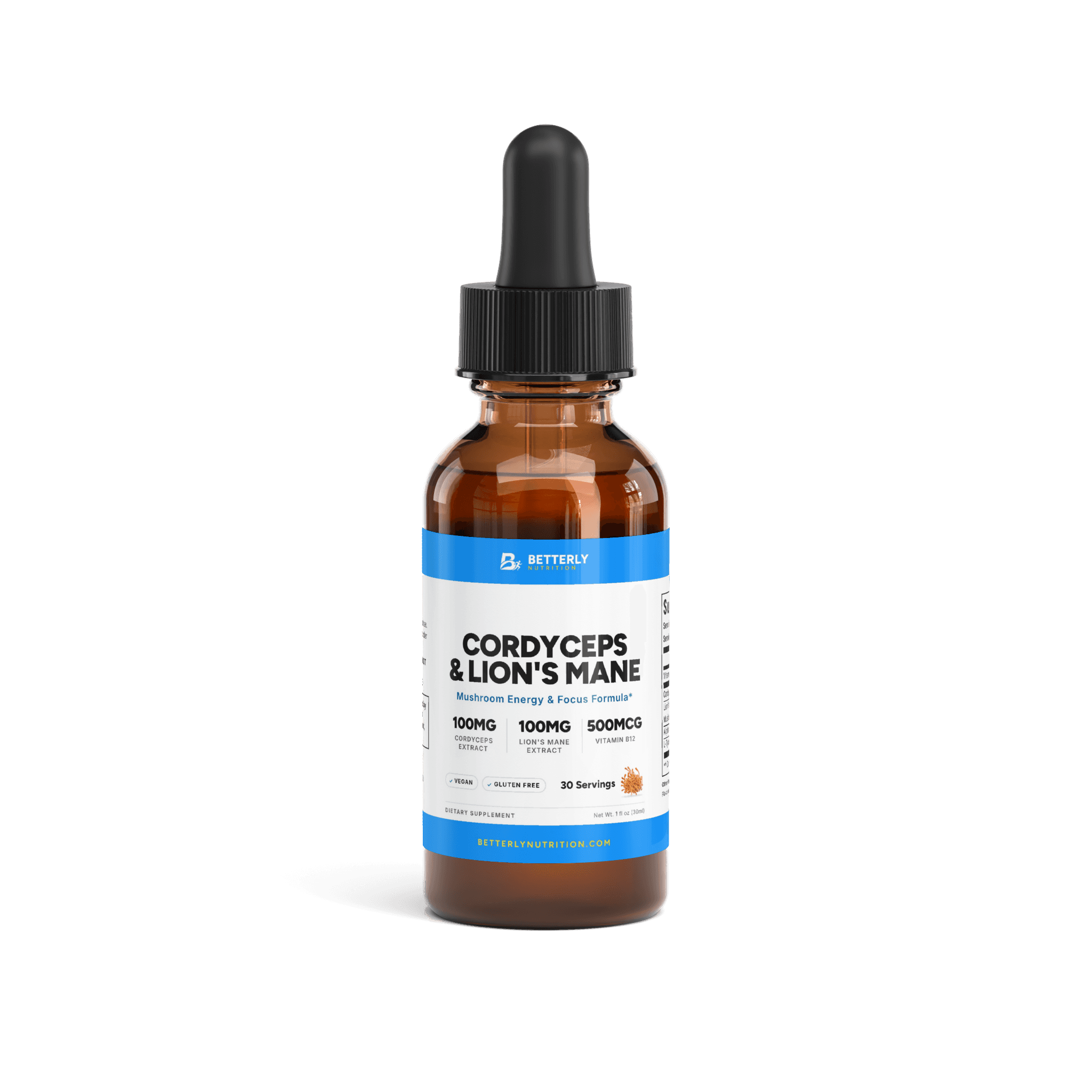
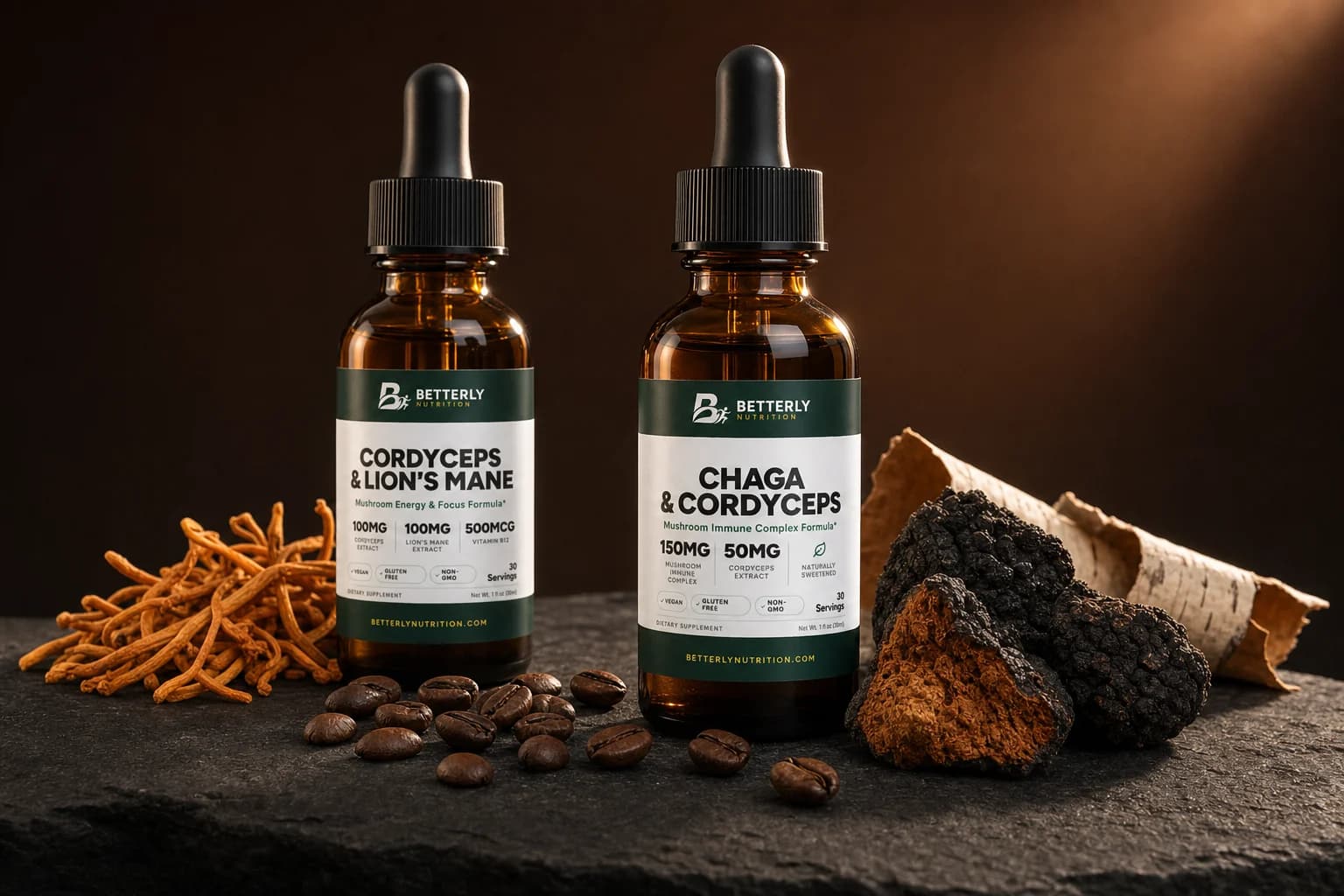
From our shop: Cordyceps & Lion's Mane Energy Drops — a 30-serving, 1 fl oz bottle whose 1 ml serving lists 100 mg of cordyceps extract, 100 mg of lion's mane extract and 500 mcg of vitamin B12, in a glycerin and purified water base.
How should you store mushroom tincture drops?
Store mushroom tincture drops by their label's storage line, which on each of our three mushroom drop labels reads "Store in a cool, dry place."
That line shares the small print with two other keeping rules: keep the bottle out of children's reach, and don't use it if the safety seal is damaged or missing. What the labels leave out matters just as much. They name no temperature and say nothing about light.
"Dry" can't describe a liquid, so we read it as keeping outside water out. We read "cool" as a spot that never gets warmer than an ordinary room. Our product photos show brown glass, but we won't claim it shields the drops when the labels don't. A closed cupboard keeps sun, and its warmth, off the bottle.
The dropper is the one part that leaves the bottle every day, so most keeping habits here are really dropper habits:
- Put the dropper straight back after the serving. Resting it on the counter, even briefly, lets the glass tip pick up crumbs or water on its way back into the liquid.
- Wipe it, don't rinse it. Glycerin is syrupy, so a drip can run down the outside of the glass and leave the cap threads tacky. A dry tissue clears it, while tap water would add an ingredient the label doesn't list.
- Keep the bottle standing. On its side, the liquid can seep into the bulb and around the cap.
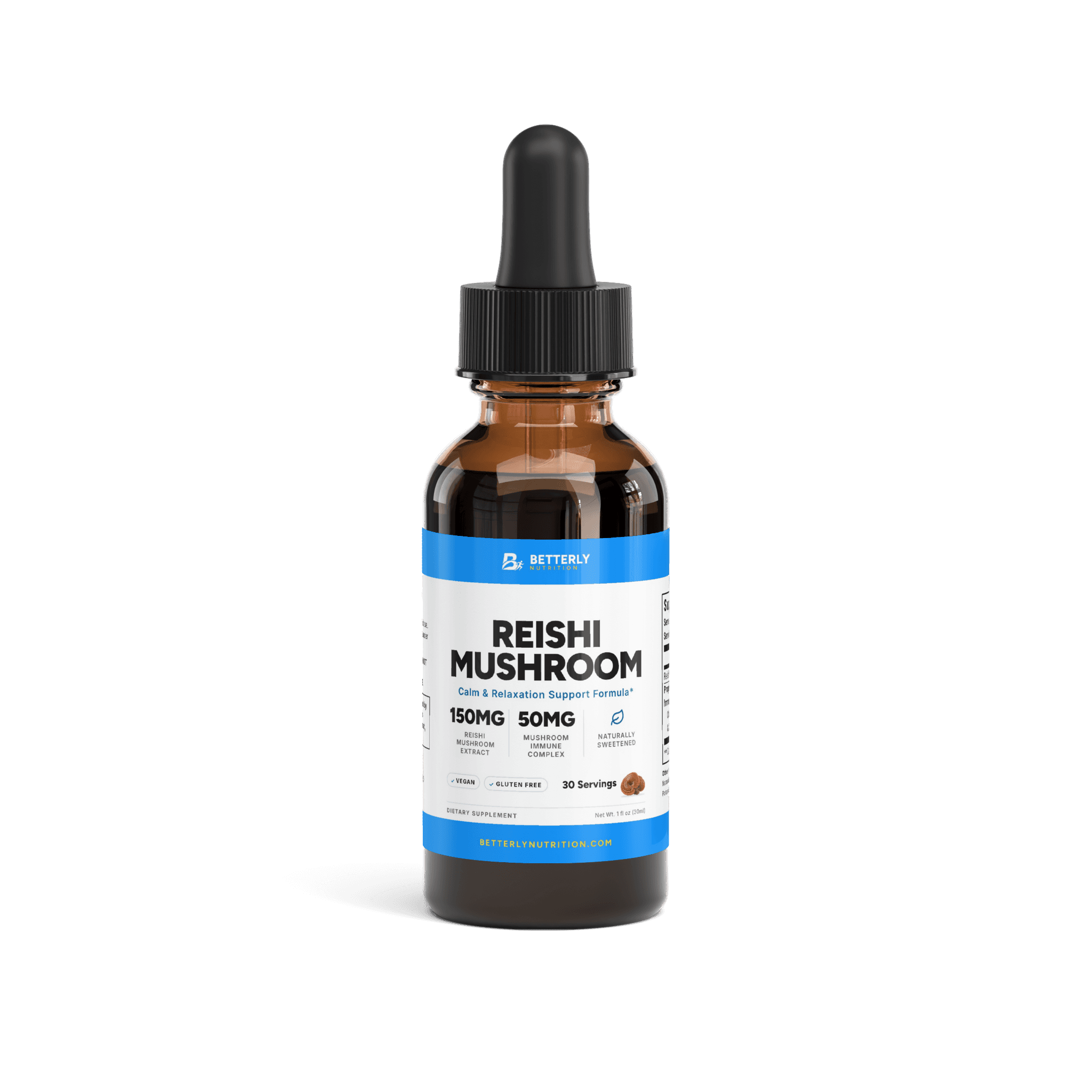
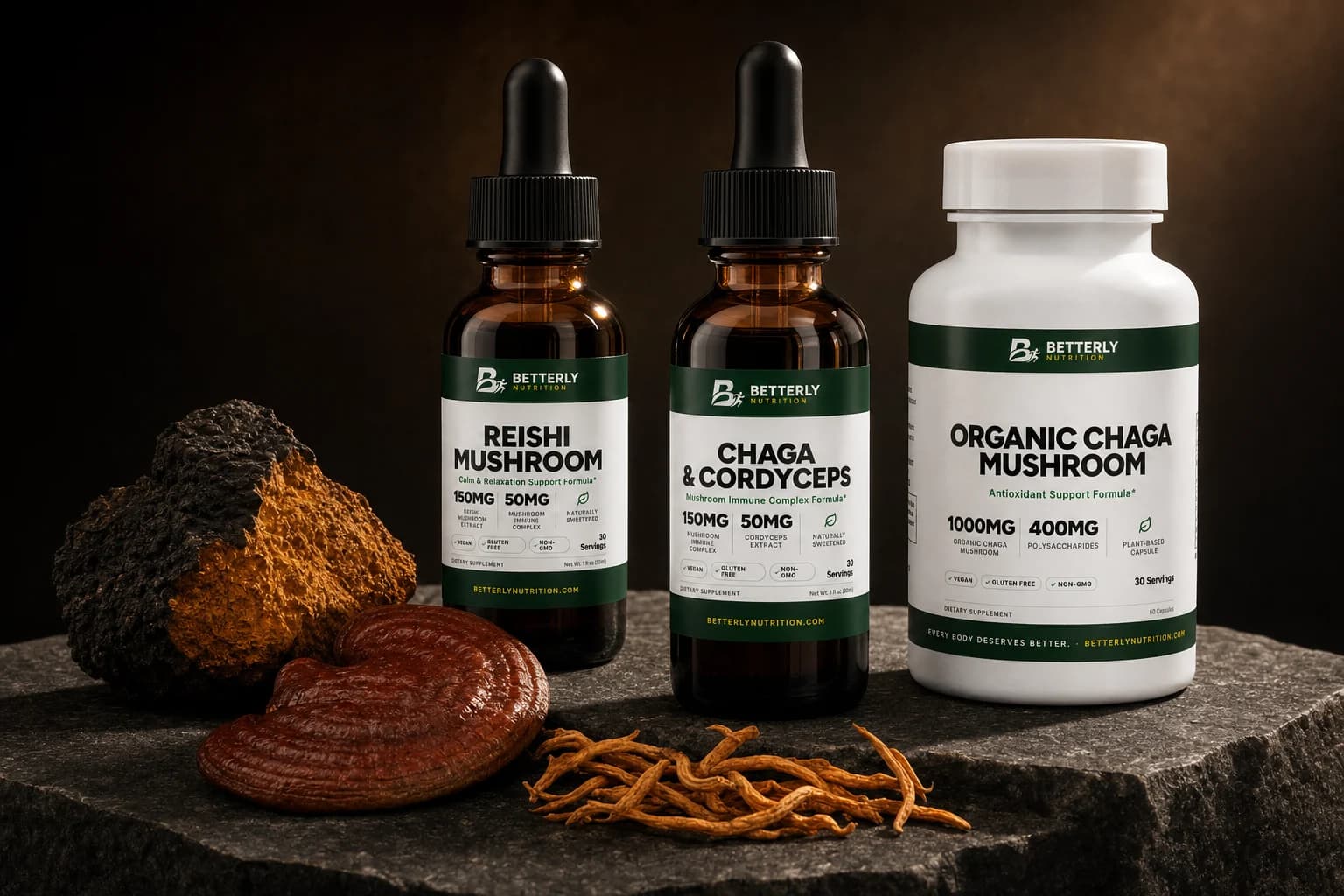
From our shop: Reishi Mushroom Calm Drops — a 30-serving bottle whose 1 ml serving lists 150 mg of reishi mushroom extract and a 50 mg five-mushroom complex, labeled for a cool, dry place.
How can you tell if a mushroom tincture has gone bad?
If a mushroom tincture looks or smells off, don't use it, whatever the date says, and don't use one that's past its printed date either.
Your best baseline is how the bottle looked and smelled the day you opened it:
| What you notice | What to do |
|---|---|
| The printed date has passed | Don't use it; replace it |
| Fuzz, spots or a film on the liquid or dropper | Throw it out |
| A sour, yeasty or new smell | Throw it out |
| New cloudiness or clumps that don't shake back in | Don't use it; replace it |
| Seal damaged or missing on a new bottle | Don't open it; contact the seller |
| Looks and smells as it did when new, date not passed | Shake well and use as labeled |
Five of the six rows take the bottle out of use. "Shake well" leads the directions, which suggests the liquid can settle between servings, so a layer that mixes back in fits what the label expects. Haze or clumps that stay put after shaking don't.
When is a bottle of mushroom drops the wrong buy?
Mushroom drops are the wrong buy if you'll use them only now and then, would rather not measure a liquid, or already have a bottle open.
- You'll take it occasionally. A 30 ml bottle opened for a few servings a month sits half full long after opening day, and that's the bottle most likely to reach its printed date first. Our guide that compares our five mushroom formats sets out the alternatives.
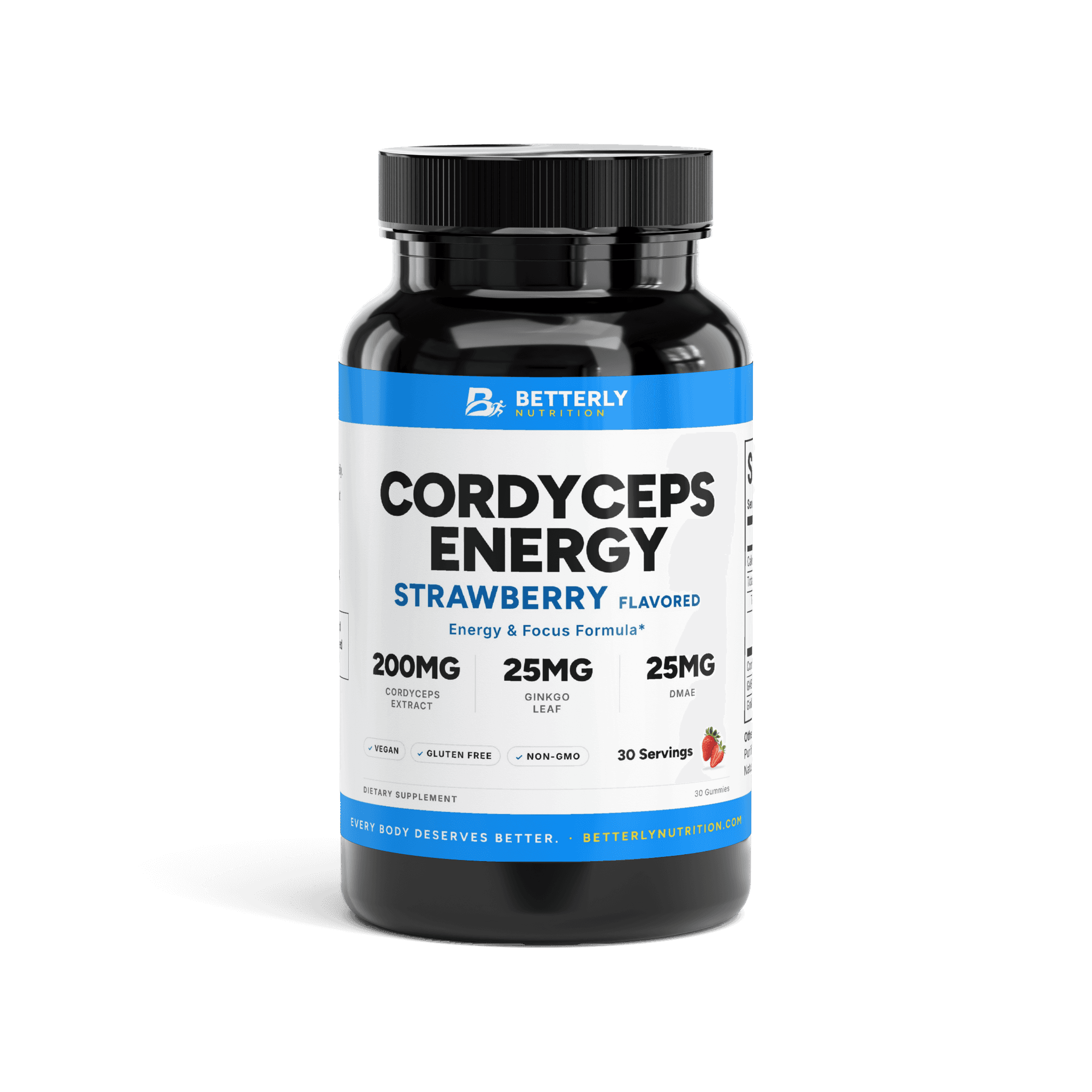
- You'd rather have nothing to measure or shake. Our Cordyceps Mushroom Energy Gummies carry 200 mg of cordyceps extract and 2 g of added sugars in each 1-gummy serving, with the same cool, dry storage line.
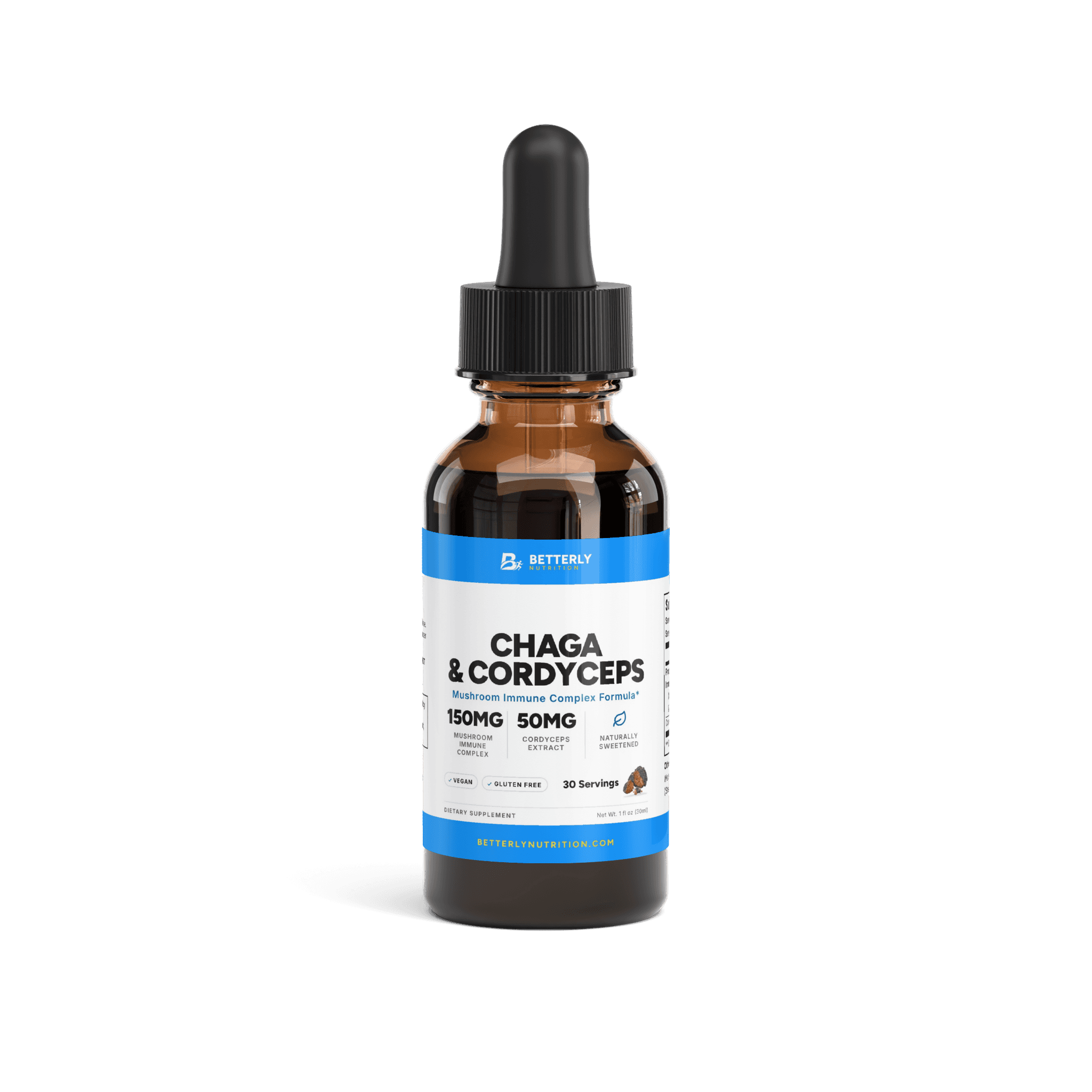
- You already have one of our drops open. A second bottle means two liquids aging in your cupboard at once, and the Chaga & Cordyceps Mushroom Drops and the Reishi Calm Drops repeat the same five-mushroom blend.
- Preservatives or stevia are on your personal skip list. Every one of our mushroom drops lists potassium sorbate, nisin and stevia.
Whether drops do anything for you is a separate question, covered in our honest look at whether mushroom tinctures work. To compare formats, our Energy Support collection puts the Energy Drops beside gummies, strips and powders.
Who should check with a healthcare provider first?
Ask a healthcare provider before your first serving of mushroom drops if you're pregnant, nursing, under 18, taking any medication, managing a medical condition or scheduled for surgery.
Most of that list is printed, word for word, in the caution on every one of our drop labels: "Do not exceed recommended dose. Consult a physician if pregnant, nursing, under 18, or have a medical condition."
The other two come from the NIH Office of Dietary Supplements. Its consumer guide Dietary Supplements: What You Need to Know says to clear any supplement with your provider before pairing it with prescribed medicines, and to bring up every supplement you use before a surgical procedure.
Bring the whole panel, not just the mushroom name. Each 1 ml of the Energy Drops adds Alpha GPC and L-Tyrosine, at 25 mg apiece, and 500 mcg of vitamin B12 to its two mushrooms. The chaga and reishi bottles fold five mushrooms into one blend without splitting its total.
FAQ: do mushroom tinctures expire
Do mushroom tinctures need to be refrigerated?
Our mushroom tinctures don't need the fridge: all three Betterly drop labels print "Store in a cool, dry place" and say nothing about refrigeration. Other brands set their own storage rules, so check theirs. Chilling ours isn't forbidden, but glycerin thickens as it cools, so a cold bottle may draw a slower, shorter dropperful than the 1 ml the label sets as a serving. A kitchen cupboard matches what the label asks for.
Can you use a mushroom tincture after its expiration date?
We wouldn't use a mushroom tincture after its expiration date. FDA's compliance guide says a maker should have data to support any date it prints, so the date marks the end of the period that data was meant to cover. Past it, you're outside what the label stands behind. Don't try to finish an old bottle faster, either, because our labels say "Do not exceed recommended dose."
Does lion's mane tincture go bad?
Yes, lion's mane tincture can go bad like any liquid supplement. Betterly's Cordyceps & Lion's Mane Energy Drops carry 100 mg of lion's mane mushroom extract in each 1 ml serving, in a glycerin and purified water base with potassium sorbate and nisin, and the label names a cool, dry place for storage. Check the printed date, and if the liquid looks or smells different from when you opened it, don't use it.
Do unopened mushroom tinctures expire?
Yes, an unopened mushroom tincture still expires, and keeping it sealed doesn't earn it extra time past the printed date. Our labels don't give separate opened and unopened windows, so the bottle's date applies either way. If you buy two bottles at once, compare their dates and open the earlier one first. The spare belongs in the same cool, dry place as the bottle you're using.
Do mushroom tinctures lose potency over time?
We haven't found a federal source that gives a rate at which mushroom tinctures lose strength, so we won't quote one. What our labels do print is an amount per 1 ml serving, such as 150 mg of reishi mushroom extract in the Reishi Calm Drops. FDA expects a maker to have data behind any date it prints, so use that date as your cutoff and keep the bottle cool and dry until then.
Do mushroom tinctures go bad in the heat?
Our labels don't say how much heat a mushroom tincture can take: "cool" is the only temperature word they print, with no degree limit and nothing about how long a warm spell is too long. Hold the drops up against the gone-bad table above, smell and haze included. If you still can't tell, start a fresh bottle instead of finishing a doubtful one.
Sources
- Small Entity Compliance Guide: Current Good Manufacturing Practice in Manufacturing, Packaging, Labeling, or Holding Operations for Dietary Supplements, U.S. Food and Drug Administration
- Types of Food Ingredients, U.S. Food and Drug Administration
- Botanical Dietary Supplements: Background Information, NIH Office of Dietary Supplements
- Dietary Supplements: What You Need to Know, NIH Office of Dietary Supplements
- 21 CFR 184.1538: Nisin preparation, Electronic Code of Federal Regulations
If this left you looking for somewhere to start, read cordyceps and lion's mane drops with B12 — its amounts per serving are listed on the page. For the practical questions this raises, how dosing, sourcing and subscriptions work is answered in one place.