On this page
- Key takeaways
- How do you take mushroom tincture, step by step?
- Do tincture drops go under your tongue?
- Can you put mushroom tincture in coffee?
- Why do other tinctures give different directions?
- How much mushroom tincture should you take per day?
- When should you take mushroom drops, morning or night?
- When don't you need mushroom drops?
- Who should check with a provider before taking mushroom drops?
- FAQ: how to take mushroom tincture
- Sources
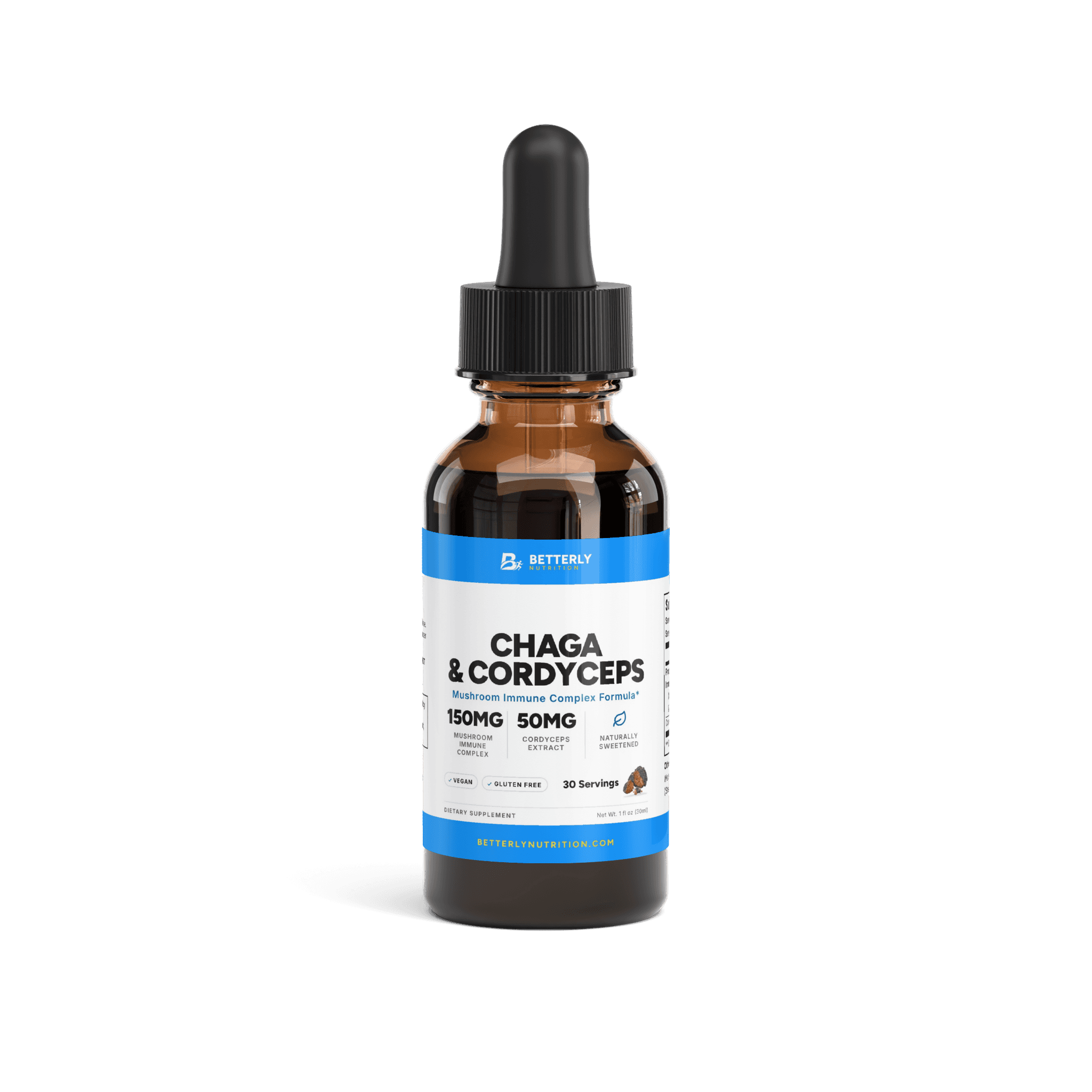
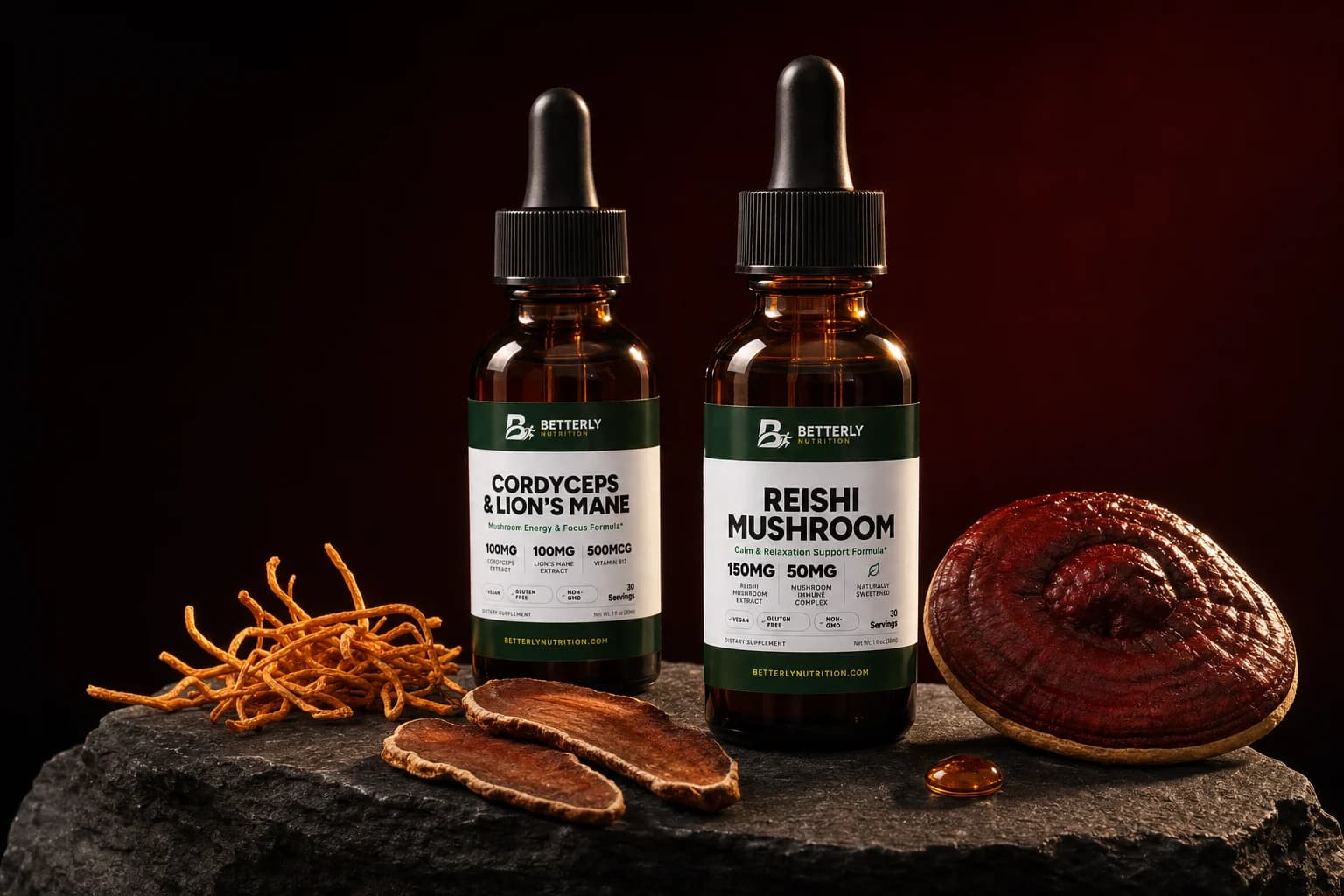
The short answer: How to take mushroom tincture comes down to the bottle in your hand, and ours keep it simple. All three of our mushroom drops say "Shake well. Take 1 ml (30 drops) daily." In practice, you draw a single dropperful each day and take it straight, or stir it into water, coffee or a smoothie you'll drink to the last sip. Thirty servings fill each 30 ml bottle.
Key takeaways
- Betterly's Chaga & Cordyceps Mushroom Drops and our two other mushroom drops share one direction: shake the bottle, then take 1 ml, which the panel equates to one dropper or 30 drops, once a day.
- Advice you'll find elsewhere, such as two droppers several times a day or a 60-second hold under the tongue, is written for other bottles and doesn't appear on ours.
- Alcohol isn't on any of our three ingredient lists, so the familiar tip about warming a dropperful to drive off alcohol was written for alcohol-based tinctures, not these bottles.
- The chaga drops put chaga inside a 150 mg five-mushroom complex without giving chaga its own number, so one 1 ml serving is the only chaga dosage the label supports.
Full disclosure: all three dropper bottles in this guide are ours, and we'd like you to buy one. That's why every direction and number below is quoted from their labels, gaps included.
How do you take mushroom tincture, step by step?
To take our glycerin-based mushroom drops, shake the bottle, fill the dropper once to 1 ml (30 drops) and take that single serving each day.
Here's the whole routine, once a day:
- Shake the capped bottle. "Shake well" opens the directions, and it applies to every serving, not just the first.
- Draw one dropperful. With the bulb pressed, sink the tip into the liquid and release. That single fill is the day's whole serving, since the panel defines one as "1 ml / 1 dropper (30 drops)."
- Choose a route: straight into your mouth, into a drink or into a spoonful of food. The label doesn't pick one.
- Close it and put it away. The label's storage line asks for a cool, dry place and wants the bottle kept away from children.
"Daily" means one serving per day, not one with every meal, so a 30-serving bottle opened today lasts 30 days.
Drops aren't a standard size, so read "30 drops" as a description of one full dropper, not a count you have to hit. Our panel makes that single full draw the serving.
Do tincture drops go under your tongue?
Tincture drops can go under your tongue, but none of our three mushroom drop labels asks for it. Their one instruction is 1 ml a day, whichever way it goes in.
"Sublingual" is the word for under the tongue. If you'd like to take our drops that way, it's a three-step job:
- Lift your tongue and empty the full dropper beneath it.
- Let the liquid sit for a moment. Our labels give no hold time, so there's no clock to watch.
- Swallow, and chase it with a sip of water if the sweetness lingers.
We make no claim that this route gets more into you or works faster; it's a matter of preference and habit. All three bottles share the same six other ingredients, stevia among them, but their active rows differ, and none of the labels describes a flavor.
Can you put mushroom tincture in coffee?
Yes, you can put mushroom tincture in coffee. None of our three drop labels limits what you mix them into, and a glycerin-and-water base stirs into a mug without fuss.
You may have read that a dropperful in hot water or tea lets some alcohol evaporate first. That tip belongs to alcohol-based tinctures, and alcohol isn't among the six other ingredients printed on our labels.
Temperature is your call. The labels don't set one, so hot drip, iced coffee and a room-temperature glass all sit within the directions.
Your serving is whatever you actually swallow, so a few routines help keep the whole 1 ml in play:
- Coffee or tea: add it to your own cup, never the pot, and pick the first cup of the day, the one you reliably finish.
- Smoothies: if you're blending for two, stir the dropper into your glass after pouring, not into the jar you'll split.
- Water: a small glass drunk in one go works better than a liter bottle you may not finish.
Any caffeine in the cup is the coffee's. Not one of our three panels lists caffeine, and that includes the Cordyceps & Lion's Mane Energy Drops.
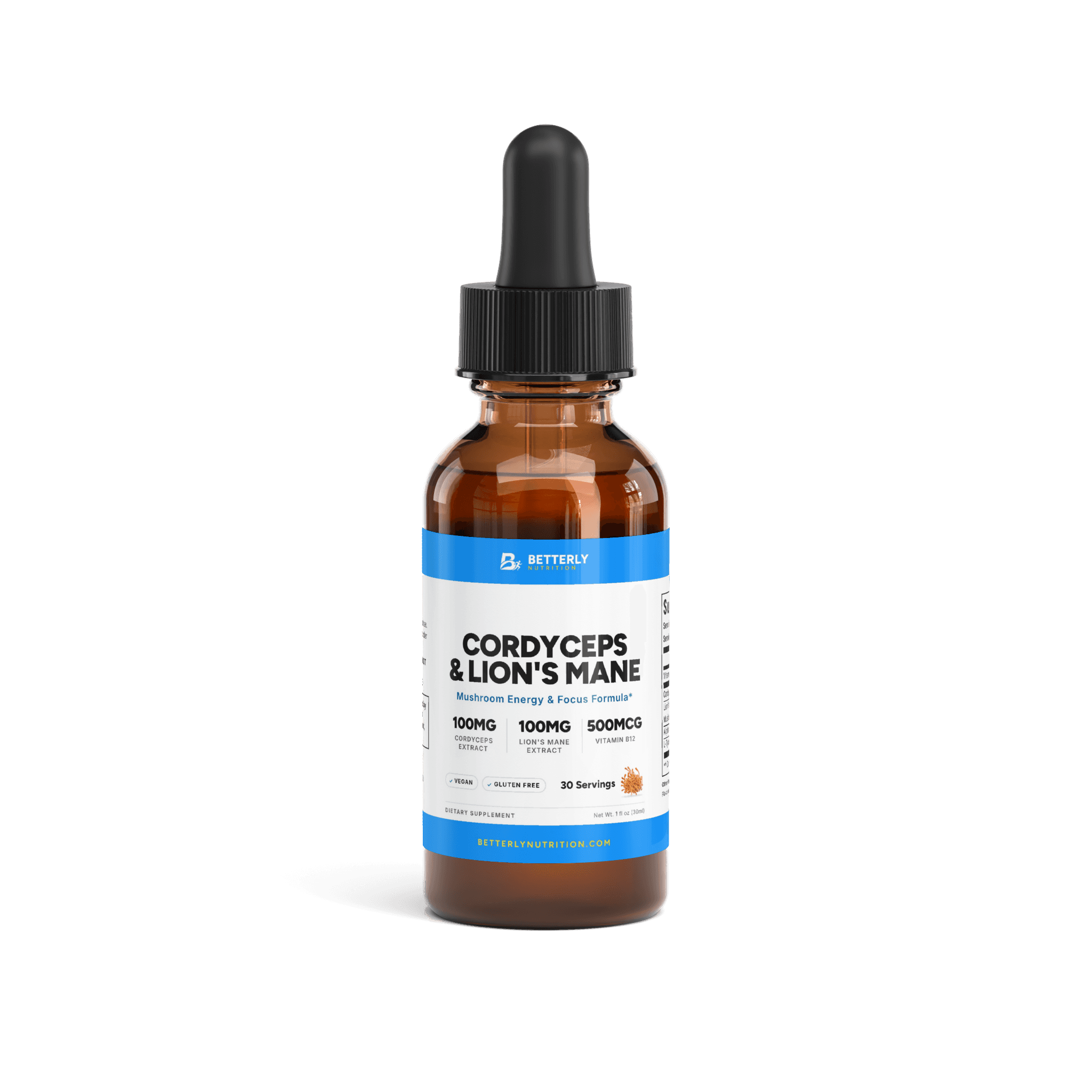
That energy bottle does list 500 mcg of vitamin B12 per 1 ml serving. The NIH Office of Dietary Supplements (ODS) vitamin B12 fact sheet notes that B12 doesn't provide energy benefits when your diet already supplies enough. Read "Energy" on that label as the formula's name, not a promise. For lion's mane in particular, see our guide to taking lion's mane and coffee together.
Why do other tinctures give different directions?
Other tinctures give different directions because every maker chooses its own base, strength and serving, so one brand's dropperful tells you nothing about another's.
Strength is the part you can't see from the dropper. The ODS botanical supplements background page says a tincture is made by soaking a botanical in alcohol and water, and that its strength is expressed as a ratio of dried botanical to finished product. Two bottles at different ratios can't share a dropper count, so each brand writes its own.
Our three panels skip the ratio and state milligrams per 1 ml instead. Their base differs too: glycerin and purified water head each ingredient list.
Here's how advice you'll run into online lines up against what our three labels actually print:
| Direction | Common advice online | Our three drop labels |
|---|---|---|
| Amount | 1 to 2 droppers | 1 ml (30 drops), one dropper |
| How often | 1 to 3 times a day | Once daily |
| Route | Hold under the tongue 30-60 seconds | Not specified |
| Timing | Energy mushrooms a.m., reishi p.m. | No hour given |
| Base | Alcohol and water | Glycerin and purified water |
| Strength | A ratio or "dual extract" | Milligrams per 1 ml, no ratio |
Only the low end of the online amount and frequency ranges matches our labels: one dropper, once a day. The route, timing, base and strength rows don't line up at all. Online advice is written to fit many products at once, while a label speaks only for the liquid inside it, so when the two disagree, go with your bottle.
One naming note, since search results blur the two: none of the fungi in our bottles, chaga and lion's mane included, is a psilocybin mushroom.
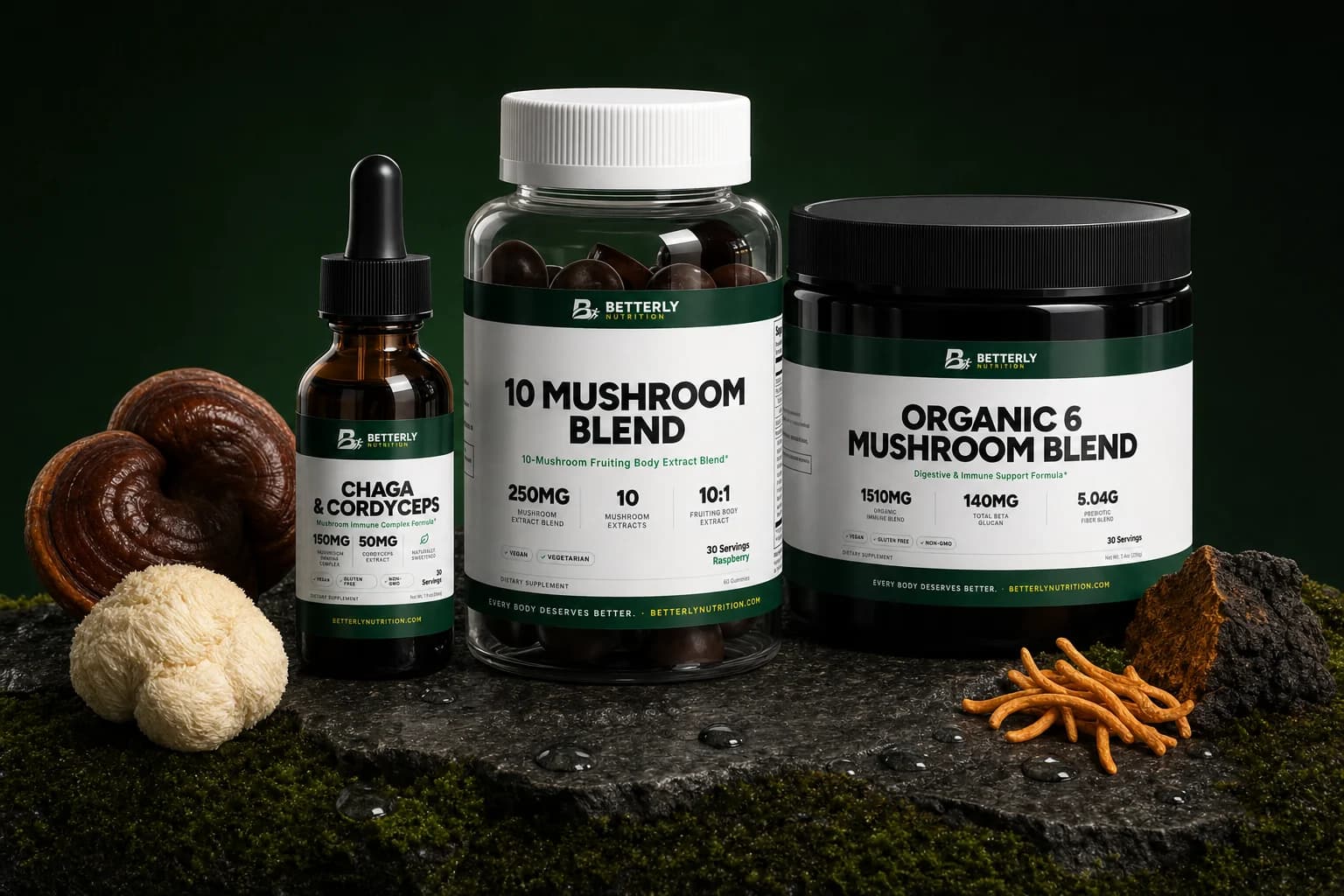
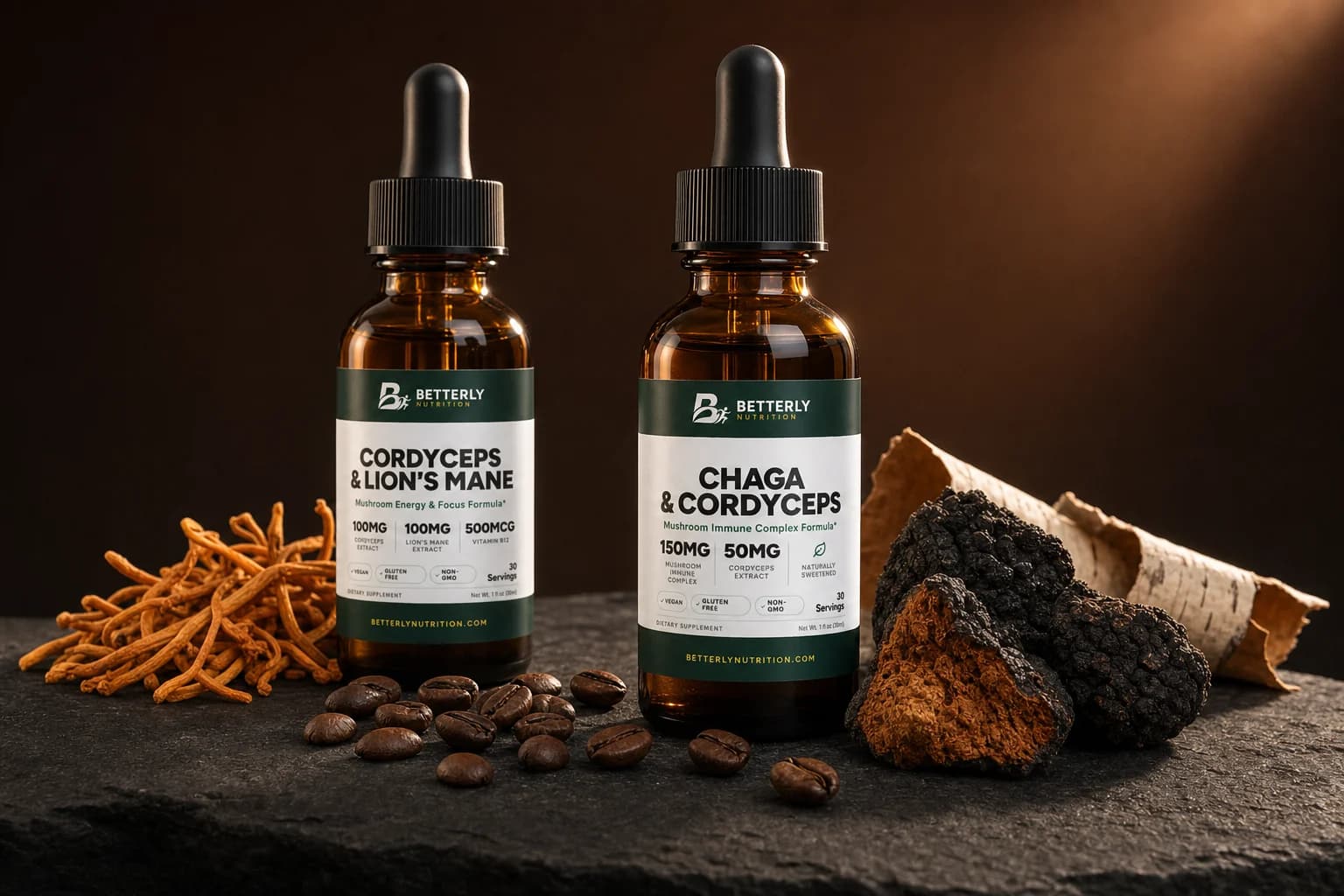
From our shop: Chaga & Cordyceps Mushroom Drops — a 1 fl oz bottle of 30 daily 1 ml servings, each listing a 150 mg complex that names chaga first among five mushrooms, plus a separate 50 mg cordyceps extract row.
How much mushroom tincture should you take per day?
Take the amount your own mushroom tincture label gives; for each of our three drops, that's 1 ml (30 drops) once a day, with no higher option listed.
What changes from bottle to bottle is what that 1 ml carries:
- Chaga & Cordyceps: a 150 mg Proprietary Mushroom Immune Complex plus 50 mg of cordyceps mushroom extract.
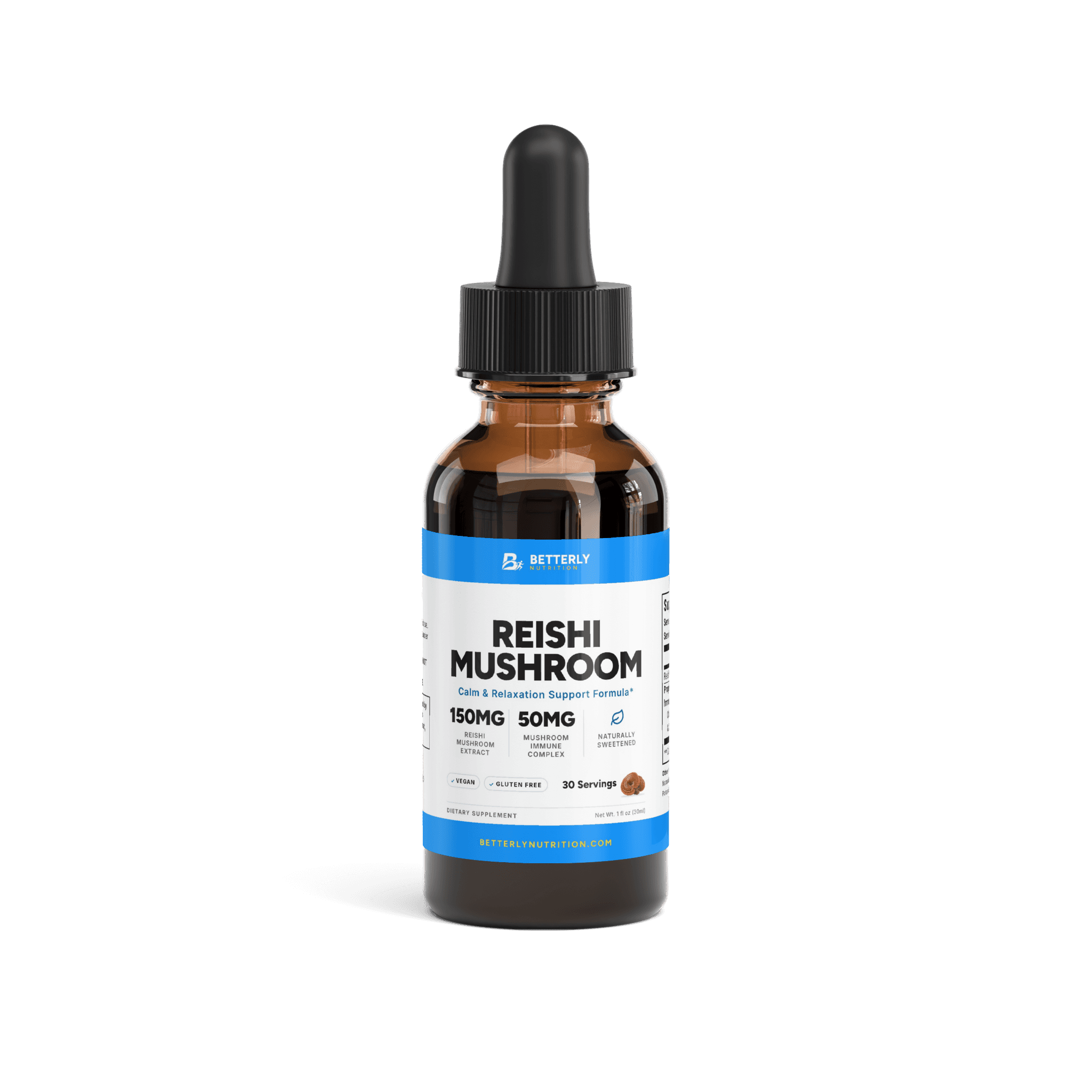
- Reishi Mushroom Calm Drops: 150 mg of reishi mushroom extract, plus the chaga bottle's complex at 50 mg.
- Cordyceps & Lion's Mane Energy: a 100 mg row each for cordyceps and lion's mane extract, plus 500 mcg of vitamin B12 and two 25 mg rows, Alpha GPC and L-Tyrosine.
None of the mushroom, Alpha GPC or L-Tyrosine rows has an established Daily Value, so the label's 1 ml is the only yardstick those rows come with.
What about chaga tincture dosage?
Chaga tincture dosage on our chaga drops is that same single 1 ml serving, and the label never says how many of the complex's 150 mg are chaga.
Under the FDA's dietary supplement labeling guide, the ingredients inside a blend go beneath its total "in descending order of predominance by weight." Chaga comes first in our complex, so it should weigh at least as much as any of the other four mushrooms. The label stops there, with no milligram figure for chaga alone.
Resist borrowing a chaga number from another brand. Its milligrams may measure a different part of the fungus or a different extract strength, and our panel names neither for chaga, so the two figures don't compare.
When should you take mushroom drops, morning or night?
The best time to take mushroom drops, going by our labels, is any one daily slot you'll repeat, because none of the three bottles names an hour.
That includes chaga at night, since nothing on the chaga drops' panel points to one part of the day. The front-label descriptors state a purpose, not a schedule, but they can still help you pick:
- Chaga & Cordyceps, "Mushroom Immune Complex Formula": no time cue at all, so any fixed habit works, like your first glass of water.
- Cordyceps & Lion's Mane, "Mushroom Energy & Focus Formula": if the name steers you toward mornings, that's your routine talking, not the label.
- Reishi Calm, "Calm & Relaxation Support Formula": the wording fits a wind-down, though its directions leave the hour open too.
From our shop: Cordyceps & Lion's Mane Energy Drops — for coffee drinkers, its 1 ml dropper lists vitamin B12 (500 mcg) and 100 mg apiece of cordyceps and lion's mane extract, with no caffeine on the panel.
When don't you need mushroom drops?
You don't need mushroom drops if another product already supplies the same mushrooms, you want a printed chaga amount, or you'd rather swallow a capsule and move on.
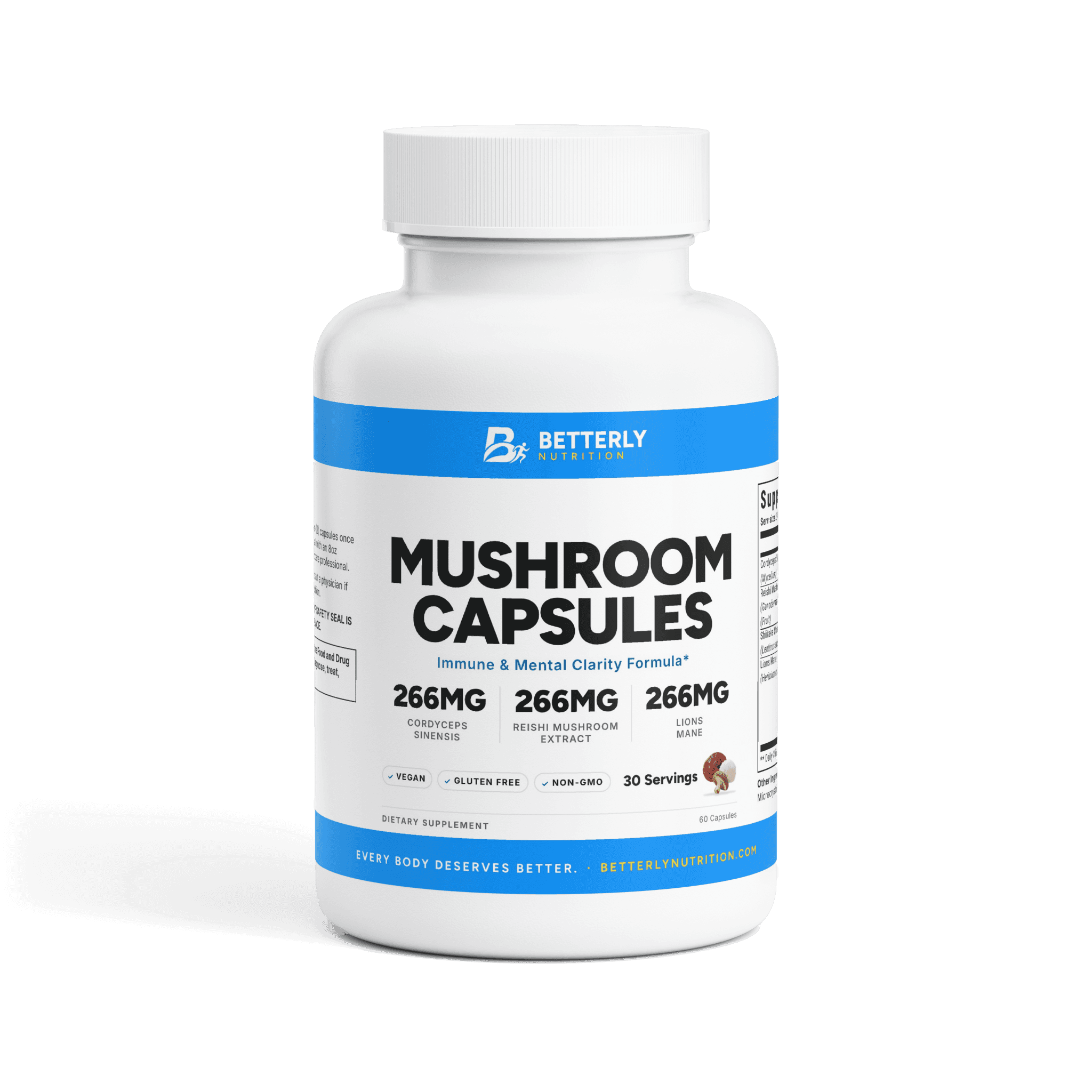
- You already take a mushroom capsule. Our Mushroom Capsules list all six mushrooms named on the chaga drops, though not always in the same form: their cordyceps is a Cordyceps sinensis mycelium powder, not an extract. Cordyceps, reishi and shiitake get their own 266 mg rows, and chaga, maitake and turkey tail sit inside a 266 mg blend, per 2-capsule serving.
- You already use our reishi drops. Their panel repeats the chaga bottle's Proprietary Mushroom Immune Complex at a smaller amount, an overlap our reishi dropper guide sets out row by row.
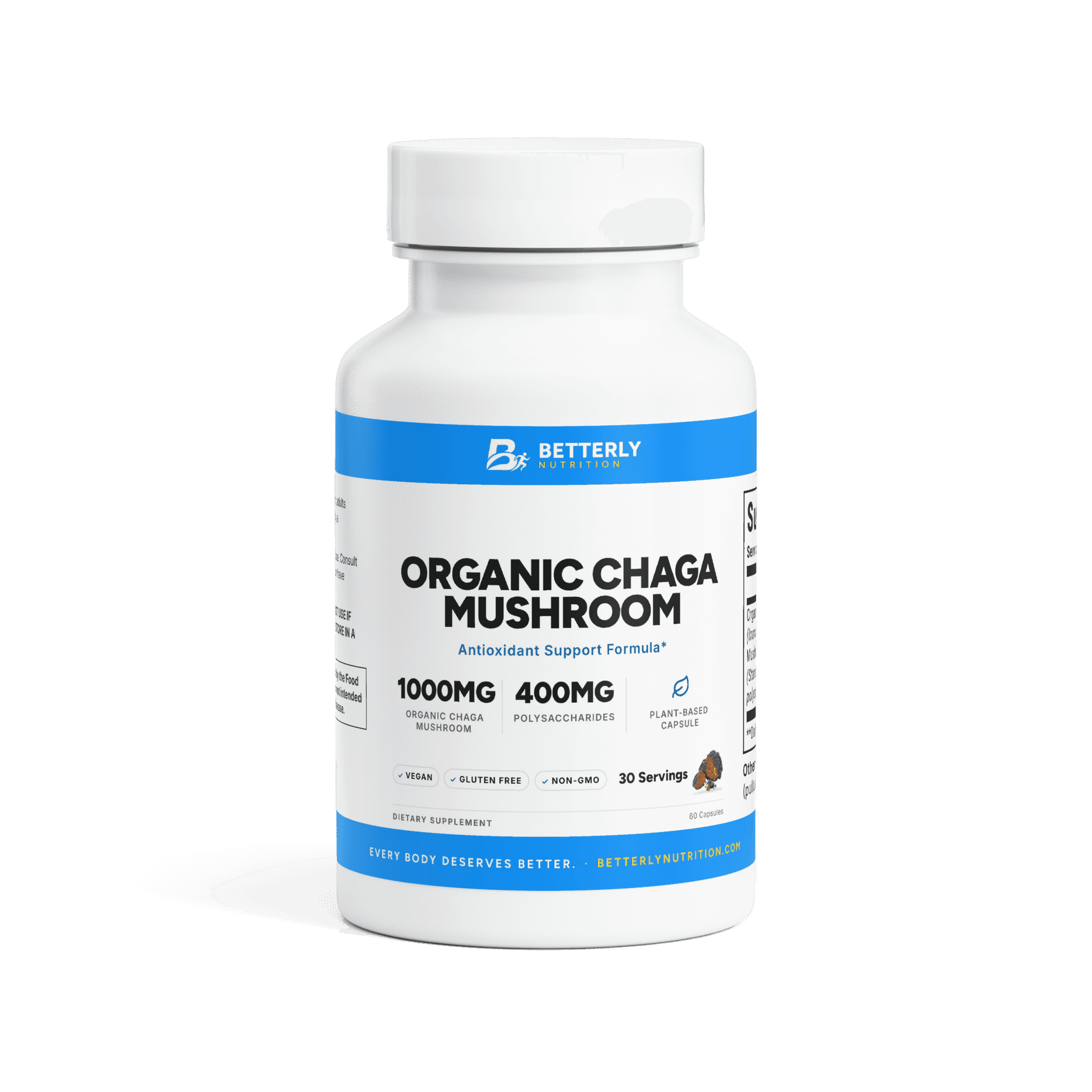
- You want a chaga figure you can read. The drops fold chaga into a shared total, while our Organic Chaga Mushroom Capsules give it a line of its own: 1,000 mg per 2-capsule serving, printed as organic chaga mycelium powder, with two capsules daily as the directions.
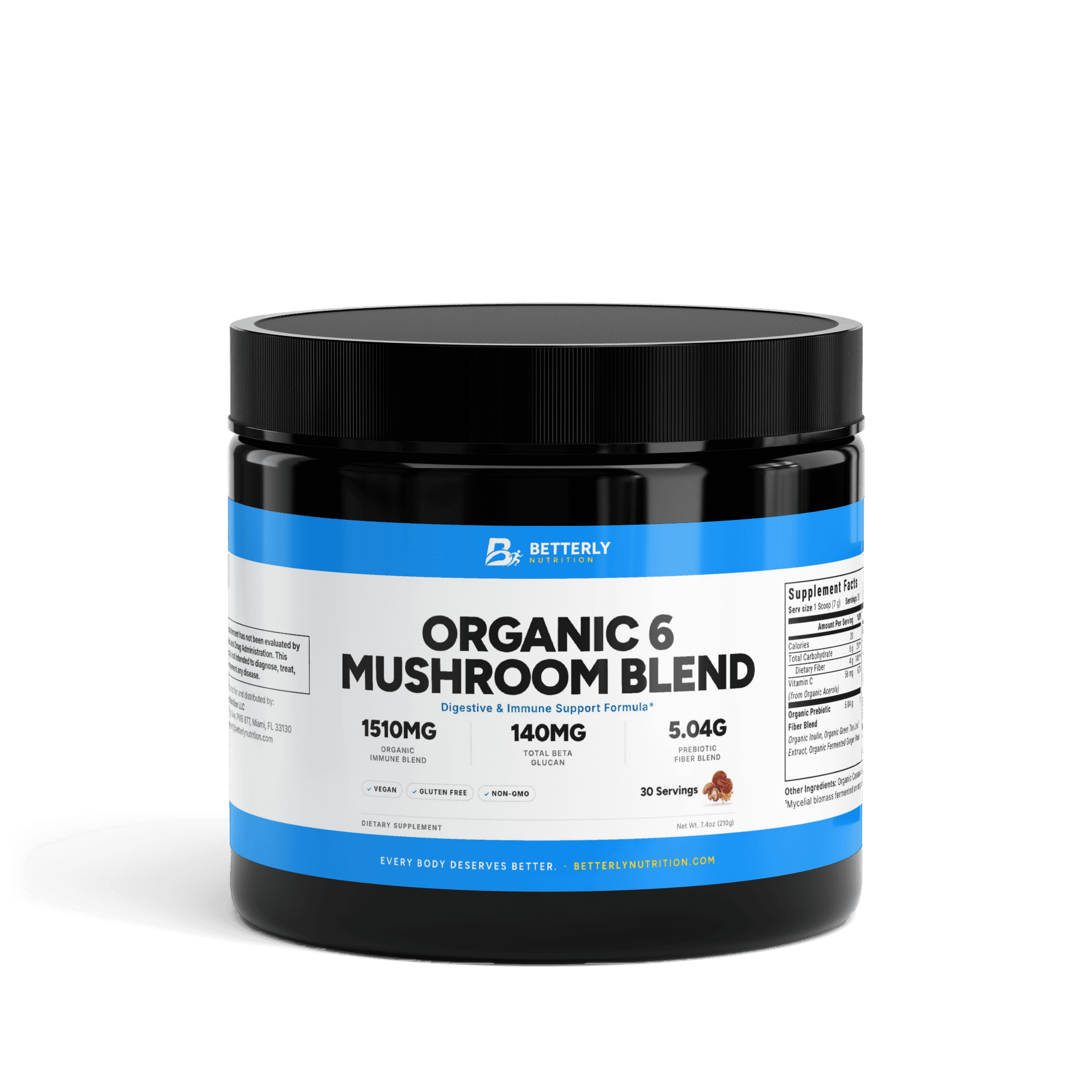
- You'd rather not handle a liquid at all. Capsules and gummies need no shaking or dropper, and our side-by-side of mushroom formats lines up gummies, drops, powder, capsules and strips.
If a different format suits you better, the chaga drops also sit in our immune support collection, beside capsule and powder options.
Who should check with a provider before taking mushroom drops?
Ask a healthcare provider before your first dropper of mushroom drops if you're expecting or breastfeeding, younger than 18, on any medication, living with a medical condition or facing surgery.
All three bottles print the same caution: "Do not exceed recommended dose. Consult a physician if pregnant, nursing, under 18, or have a medical condition."
Surgery isn't on the label, but the National Center for Complementary and Integrative Health, or NCCIH, covers it in its Using Dietary Supplements Wisely guidance. That page flags two surgery-related concerns with some supplements, extra bleeding and a changed response to anesthesia, so the people planning your operation should see a list of everything you take, these drops included. The same page says to stop a supplement and contact your provider if you have side effects.
The Energy Drops have the busiest panel of the three. Beside two mushrooms, it lists vitamin B12, a nutrient ODS names as able to interact with some medicines, plus Alpha GPC and L-Tyrosine. A photo of that panel on your phone makes that conversation quicker.
FAQ: how to take mushroom tincture
How long do mushroom drops take to kick in?
Our mushroom drop labels don't describe a kick-in point, and we won't put a clock on them. None of the three panels lists caffeine, the Energy Drops included, so nothing on these labels points to a quick jolt. If you're hoping for a specific change, talk it through with a healthcare provider rather than adding a second dropper.
Can you take too much mushroom tincture?
Yes, it's possible to take too much mushroom tincture, and our labels are clear about the line. Each sets the serving at 1 ml daily and opens its caution with "Do not exceed recommended dose." If you use two of our bottles, each label covers only its own 1 ml, and the chaga and energy drops both list cordyceps. Took extra by mistake? Go back to one dropper the next day, and per NCCIH, stop and call your provider if side effects appear.
Should you take mushroom tincture with food?
You can take our mushroom drops with or without food, because none of the three labels mentions a meal. That's worth knowing, since one of our other mushroom products does: the Mushroom Capsules suggest taking them 20-30 minutes before a meal with an 8 oz glass of water. If a dropper on an empty stomach bothers you, move it to breakfast.
What if you miss a day of mushroom drops?
If you miss a day of mushroom drops, take your usual 1 ml the next day and carry on. Our labels ask for one serving daily and say nothing about make-up doses, and their "Do not exceed recommended dose" caution rules out a double dropper to catch up. A missed day simply leaves an extra serving in the bottle, so it'll run a day past the 30 you expected.
Can you mix mushroom drops into food instead of a drink?
Yes, you can mix mushroom drops into food, as long as you eat the whole portion. Our labels ask only for 1 ml daily and don't name a way to take it, so yogurt, oatmeal or applesauce all work. As with coffee, temperature is your call, since the labels don't set one. Stir the drops into a single portion you'll finish, not a big batch you'll eat over several days.
Sources
- Vitamin B12: Fact Sheet for Consumers, NIH Office of Dietary Supplements
- Botanical Dietary Supplements: Background Information, NIH Office of Dietary Supplements
- Dietary Supplement Labeling Guide: Chapter IV. Nutrition Labeling, FDA
- Using Dietary Supplements Wisely, NCCIH
If this left you looking for somewhere to start, read chaga and cordyceps mushroom drops, 1 ml daily — its amounts per serving are listed on the page. For the practical questions this raises, how dosing, sourcing and subscriptions work is answered in one place.