On this page
- Key takeaways
- Do mushroom tinctures work, or does it depend on the bottle?
- What does NIH's LiverTox say about reishi, cordyceps and lion's mane?
- What are mushroom drops good for, according to their labels?
- How many milligrams of mushroom are in a 1 ml dropper?
- What should a mushroom tincture label tell you?
- When is a mushroom capsule the better buy?
- How do you take mushroom drops, per the label?
- When don't you need a mushroom tincture?
- Who should check with a healthcare provider first?
- FAQ: do mushroom tinctures work
- Sources
The short answer: Mushroom tinctures work only as well as what's in the dropper, and NIH's LiverTox database says the benefits promoted for reishi and cordyceps haven't been shown in solid human trials. So do mushroom tinctures work? Nobody can honestly promise they will. Our Chaga & Cordyceps Mushroom Drops list 200 mg of mushroom ingredients per 1 ml serving, while two Organic Chaga Mushroom Capsules list 1,000 mg.
Key takeaways
- A mushroom tincture is simply a liquid way to take a mushroom extract, so judge any bottle by its Supplement Facts panel rather than by the dropper.
- NIH's LiverTox database says reishi's promoted benefits haven't been shown in adequately sized, well-controlled human trials, and cordyceps's haven't been shown convincingly in people.
- Per 1 ml serving, our Chaga & Cordyceps Mushroom Drops list 50 mg of cordyceps extract beside a 150 mg five-mushroom complex, and that cordyceps amount is a tenth of the 0.5 g low end LiverTox gives for commercial products.
- None of our three drop labels prints the mushroom part, an extract ratio or a polysaccharide figure, which is why our chaga capsule, whose panel names mycelium and a 40% polysaccharide content, is easier to judge.
A word on who's writing this: we sell the three dropper bottles and the chaga capsule this guide measures. So we've put the drops' small numbers up front, and every product figure below is copied from that product's own Supplement Facts panel.
Do mushroom tinctures work, or does it depend on the bottle?
Whether a mushroom tincture works depends on the human research behind its species and the milligrams each serving lists, since the dropper adds nothing of its own.
Many tincture sellers skip all that and sell the liquid instead, saying it absorbs faster or skips digestion. No federal page we read supports those format claims for mushroom extracts.
One vocabulary note. The NIH Office of Dietary Supplements (ODS) background page on botanical supplements defines a classic tincture by its solvent, a blend of alcohol and water. Our bottles list glycerin and no alcohol, a difference our guide to glycerin vs alcohol tinctures explores.
What does NIH's LiverTox say about reishi, cordyceps and lion's mane?
NIH's LiverTox database says the benefits credited to reishi, cordyceps and lion's mane come mostly from lab and animal work that hasn't been convincingly confirmed in people.
LiverTox, an NIH database on the liver safety of medicines and supplements, summarizes the evidence in each entry, and for our drops' species the summaries agree:
- Reishi (Ganoderma lucidum): the LiverTox reishi entry says "none of the purported beneficial activities has been demonstrated in adequately sized and properly controlled clinical trials in humans." It calls the trials that do exist small and short-term.
- Cordyceps: the LiverTox cordyceps entry says its lab and animal findings haven't carried over convincingly to people. In one trial from its reference list, 22 male cyclists took either 3 g a day of a lab-grown strain called Cs-4 or a placebo, and endurance changed about the same in both groups.
- Lion's mane (Hericium erinaceus): the LiverTox lion's mane entry says its credited effects have mostly shown up in lab dishes and animal studies and haven't been found in people.
- Chaga, maitake, shiitake and turkey tail: these sit inside our five-mushroom complex, and none of the federal pages we used evaluates them as supplements.
Thin evidence isn't proof that something does nothing, but nobody can honestly promise you a result, us included.
What are mushroom drops good for, according to their labels?
Mushroom drops are sold for aims like normal immune function, calm and energy, and each of our bottles names its aim on the front label.
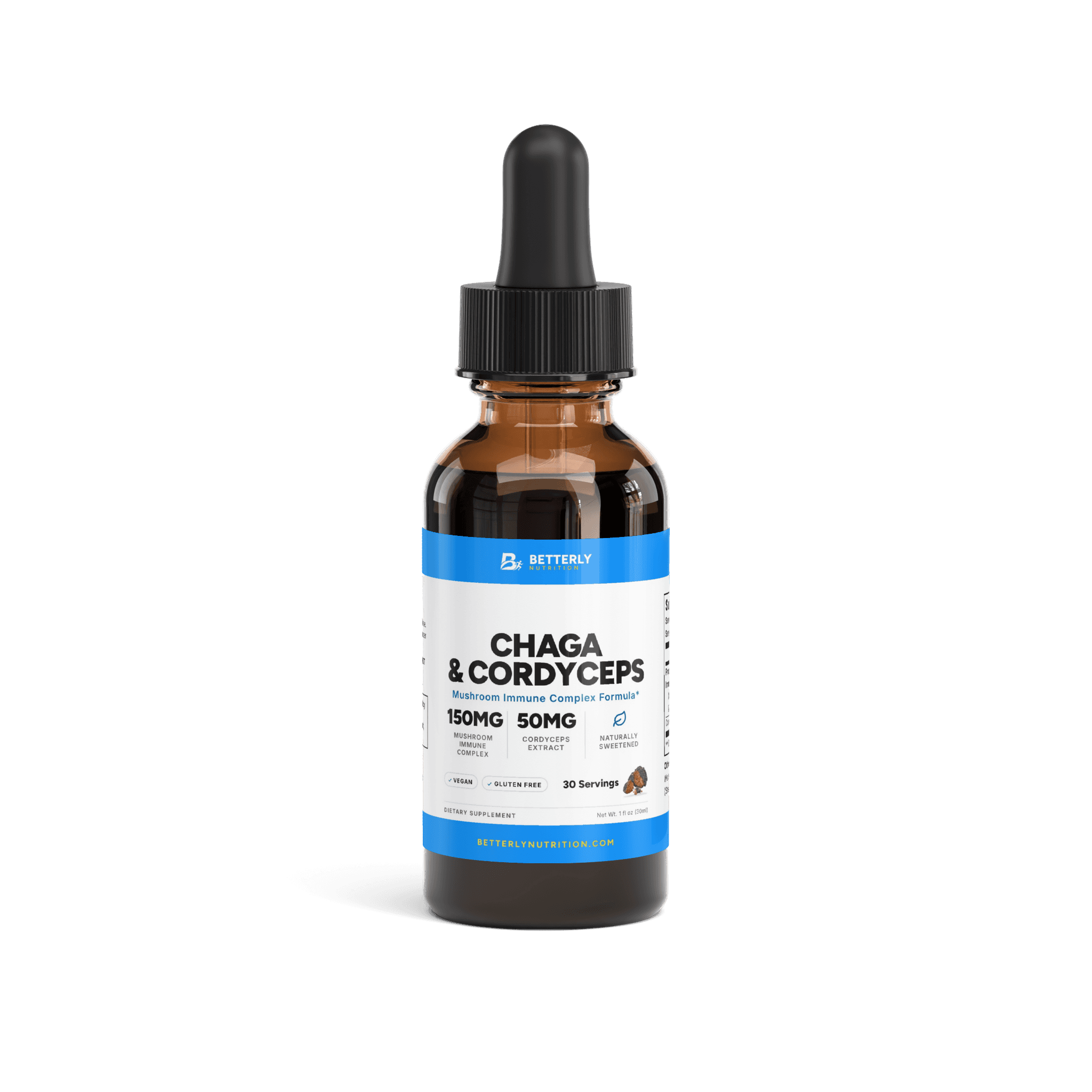
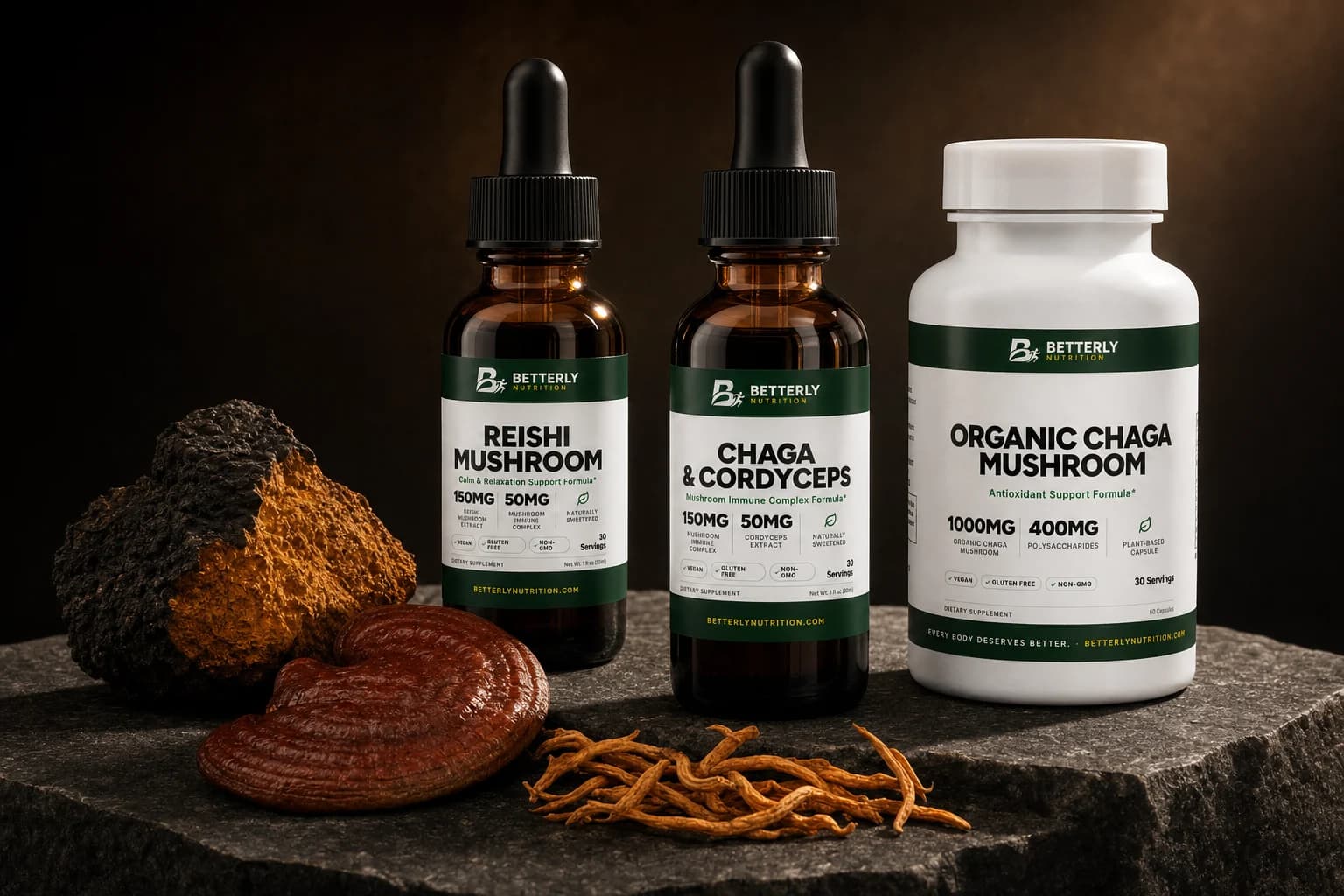
- Chaga & Cordyceps: "Mushroom Immune Complex Formula," built around normal immune function, which is as far as any honest claim goes. Its panel lists 50 mg of cordyceps extract and a 150 mg complex of chaga, reishi, maitake, shiitake and turkey tail.
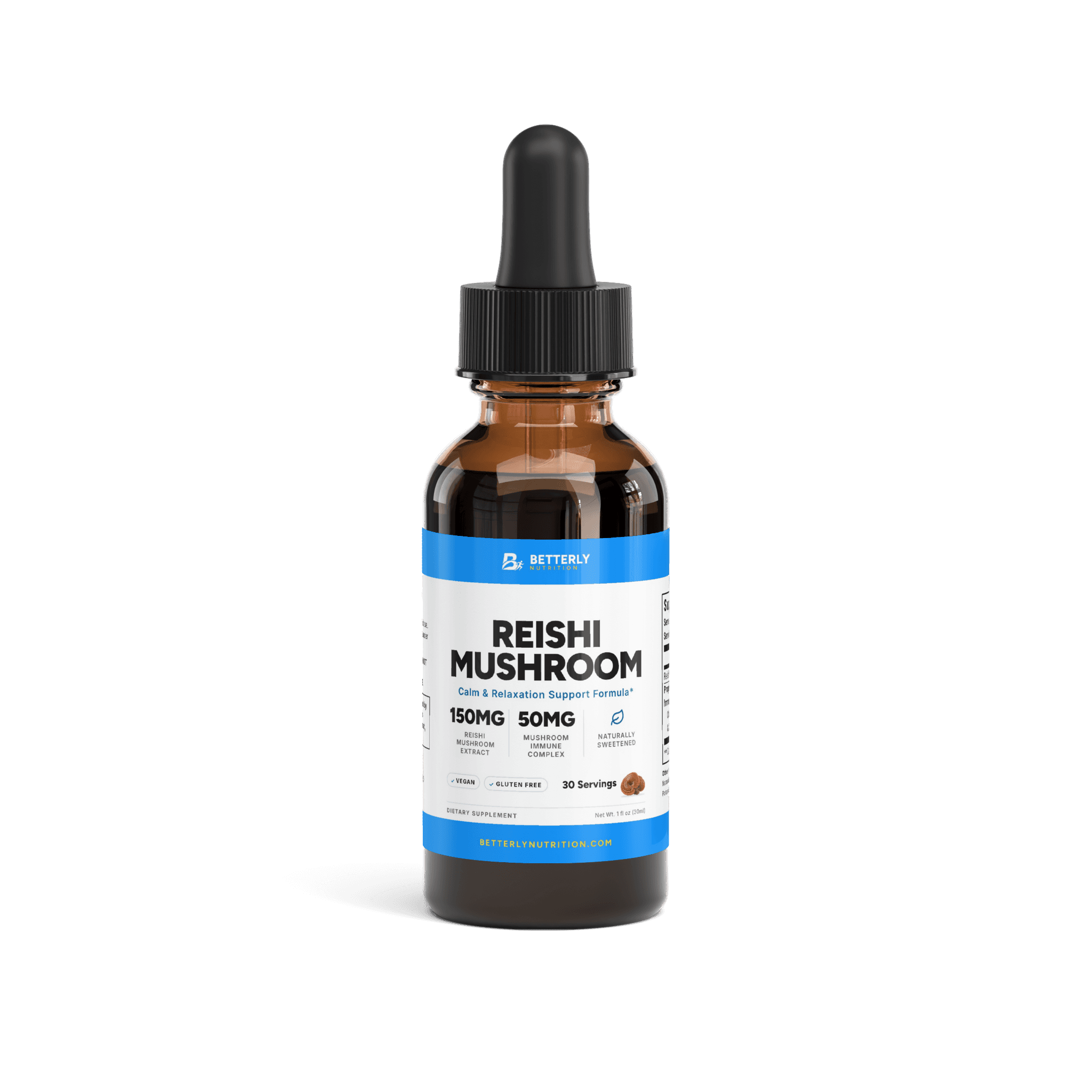
- Reishi Mushroom Calm Drops: "Calm & Relaxation Support Formula," with 150 mg of reishi extract and 50 mg of the same five-mushroom complex.
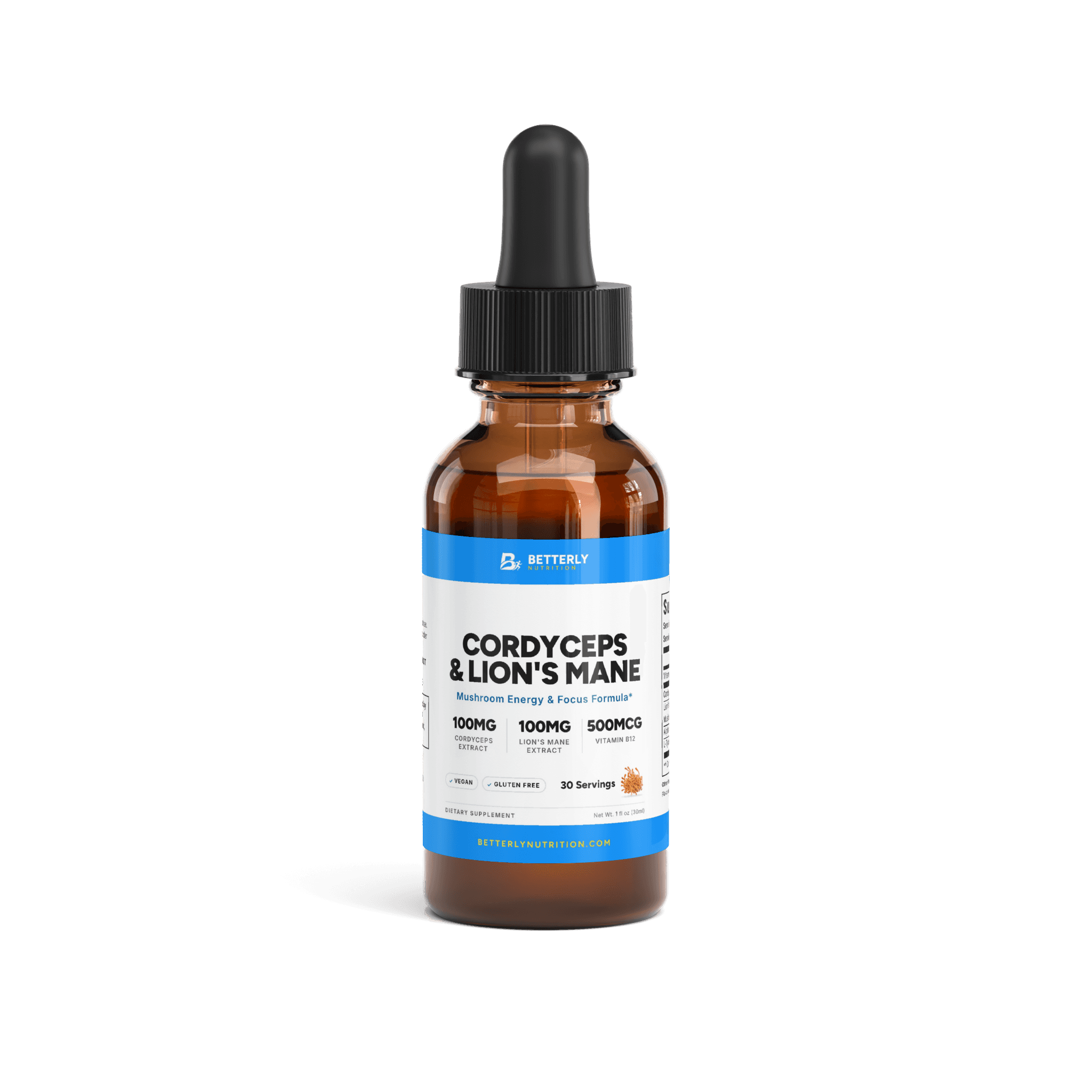
- Cordyceps & Lion's Mane Energy Drops: "Mushroom Energy & Focus Formula," with 500 mcg of vitamin B12, 100 mg each of cordyceps and lion's mane extract, and 25 mg apiece of Alpha GPC and L-Tyrosine.
Three of the Energy Drops' five panel rows aren't mushrooms, so that bottle isn't a clean test of mushrooms alone.
Mushroom complex drops give you variety, not depth. Five species share one 150 mg total in our chaga drops, the label doesn't print each share, and we won't guess how much of it is chaga.
How many milligrams of mushroom are in a 1 ml dropper?
Our mushroom drops hold 50 mg to 150 mg of any one named mushroom extract per 1 ml (30 drops) serving, depending on the bottle and the species.
Compare that with the daily amounts LiverTox describes. It's rough, since LiverTox names no single preparation and our panels print no extract ratio, but it's a useful check.
| Mushroom | Our drops, per 1 ml | Daily range in LiverTox | Ours vs the low end |
|---|---|---|---|
| Reishi | 150 mg extract (Reishi Calm) | 500 mg to 3 g | Under a third |
| Cordyceps | 100 mg extract (Energy Drops) | 0.5 to 4 g | One-fifth |
| Cordyceps | 50 mg extract (Chaga & Cordyceps) | 0.5 to 4 g | One-tenth |
| Chaga | Unstated share of a 150 mg complex | No entry we could find | Can't be worked out |
Every amount we can check lands well under the bottom of the LiverTox range, from under a third for reishi to a tenth for the cordyceps in our chaga drops. One serving is a small, steady amount, not a large one.
One caveat cuts in the drops' favor. The ODS describes an extract as what a liquid draws out of a botanical, so 150 mg of extract may represent more than 150 mg of dried mushroom. With no ratio on the panel, nobody can say how much more.
Please don't read the gap as a reason to take extra droppers. The label's suggested use is one 1 ml serving a day, and its caution starts with "Do not exceed recommended dose." If a bigger printed amount matters to you, pick a different product instead.
What should a mushroom tincture label tell you?
A useful mushroom tincture label gives every species its own milligram amount, says whether it's fruiting body or mycelium, and prints an extract ratio and any measured compound.
Here's how our three drops score on those details, read straight off their panels:
| What the panel shows | Chaga & Cordyceps | Reishi Calm | Energy Drops |
|---|---|---|---|
| Each species' own mg | Cordyceps only | Reishi only | Yes, both |
| Part used (fruit or mycelium) | Not stated | Not stated | Not stated |
| Extract ratio | Not stated | Not stated | Not stated |
| Polysaccharide or beta-glucan figure | Not stated | Not stated | Not stated |
| Alcohol in the base | None listed | None listed | None listed |
Read across the rows: our drops print clean totals and little else. None names the mushroom part, an extract ratio or a polysaccharide figure, and two of the three put five species under one number.
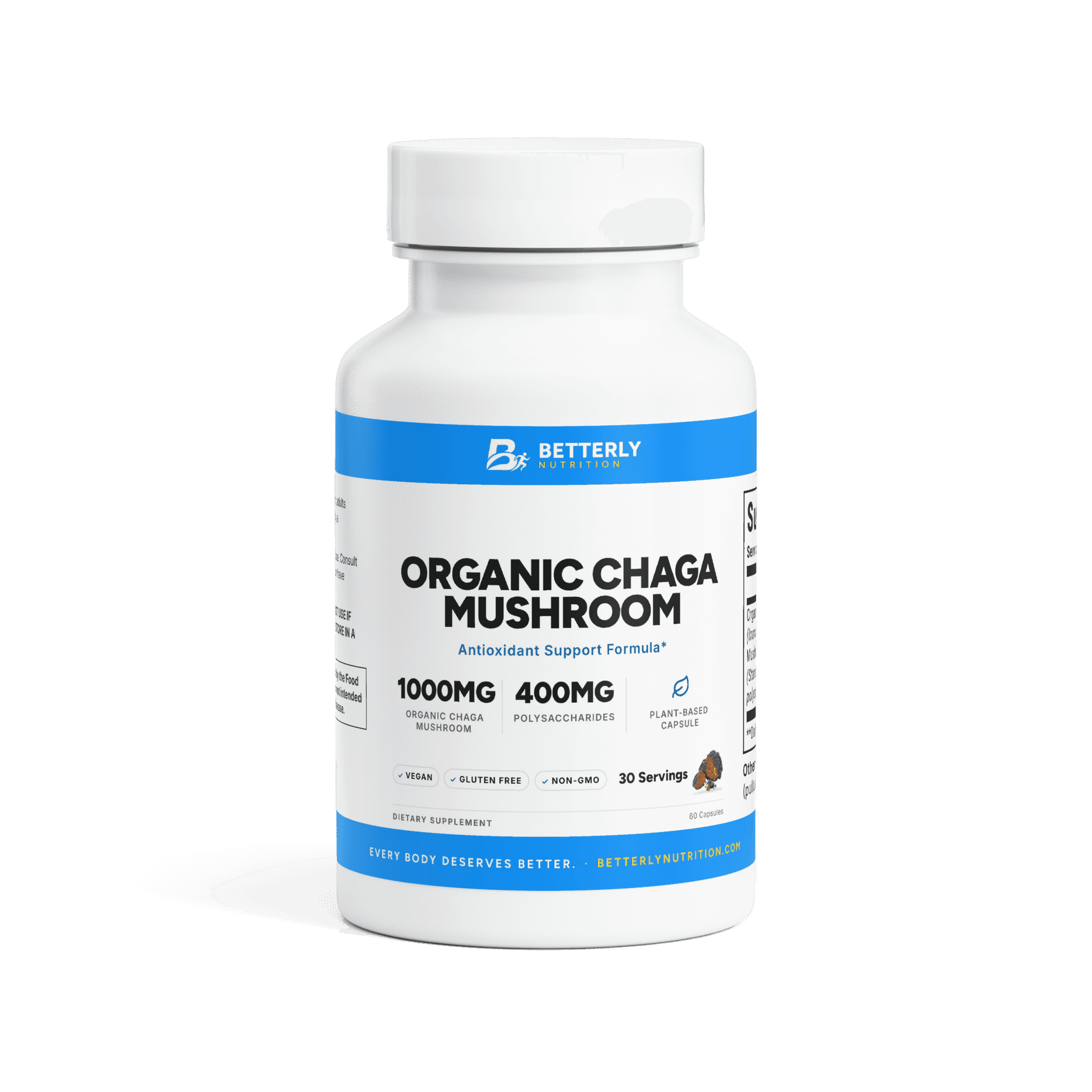
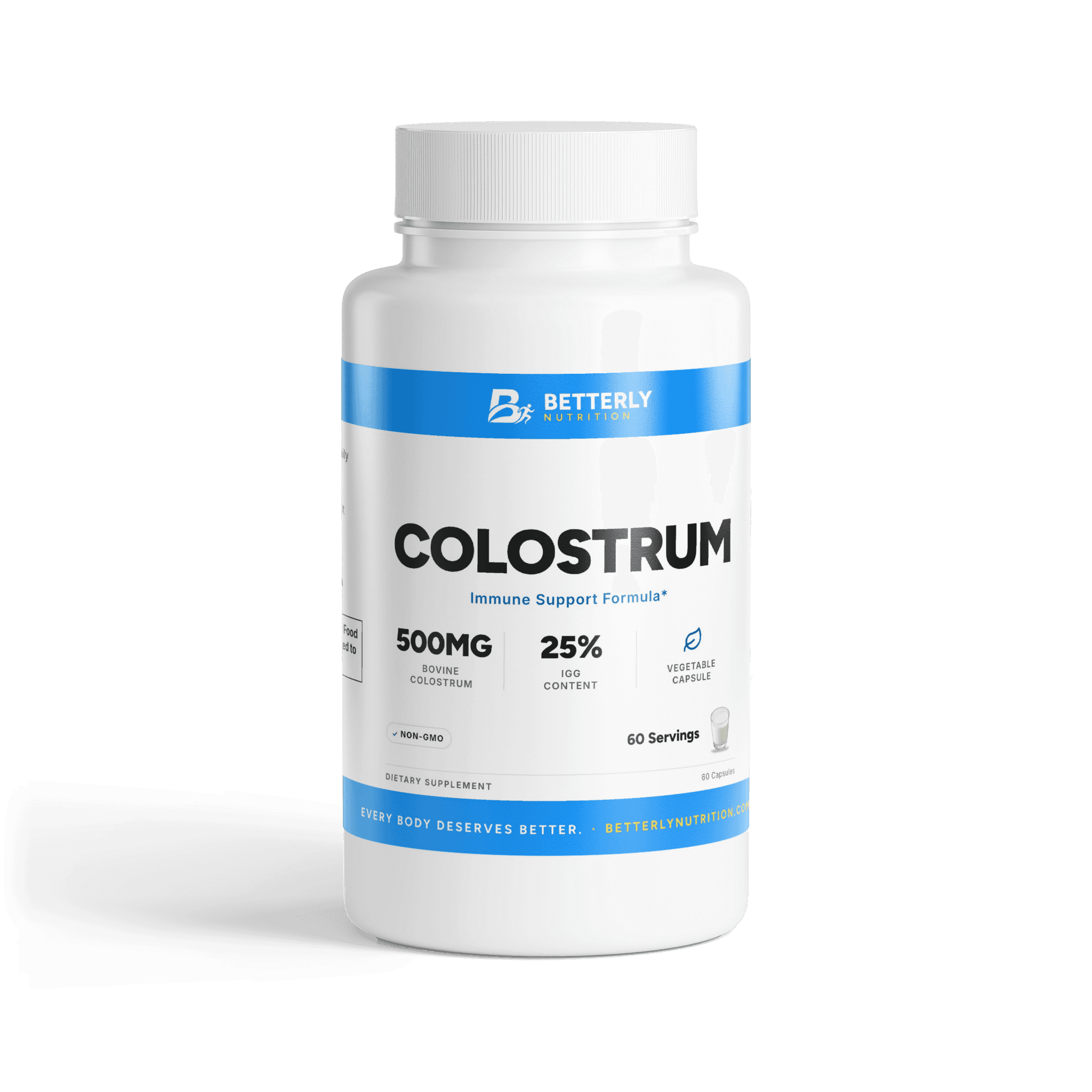
Our Organic Chaga Mushroom Capsules show more of their work. The panel gives the Latin name, Inonotus obliquus, says the powder is mycelium, and prints a standardized 40% polysaccharide content, or 400 mg per 2-capsule serving. Our guide to what labels say about fruiting body and mycelium explains why the part matters.
Even a printed marker has limits. The ODS explains that standardization measures chosen marker compounds, yet for most botanicals nobody knows which compounds do the work. So a polysaccharide figure describes the contents, and it can't vouch for the outcome.
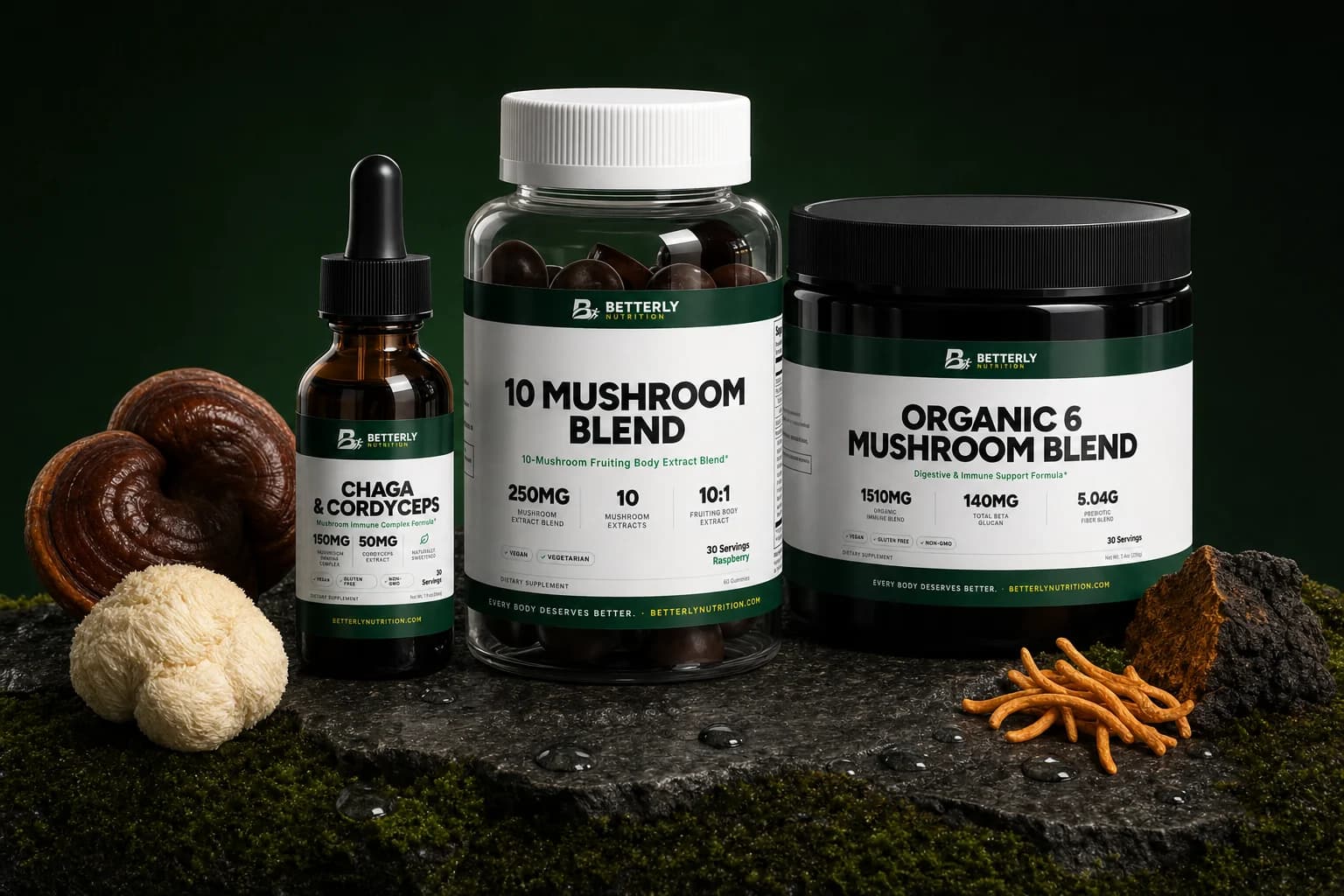
From our shop: Chaga & Cordyceps Mushroom Drops — one daily 1 ml dropper lists 50 mg of cordyceps extract and a 150 mg five-mushroom complex, from a 30-serving, stevia-sweetened bottle.
When is a mushroom capsule the better buy?
A mushroom capsule is the better buy when you want one species in a large, clearly labeled amount, like our chaga capsules' 1,000 mg per 2-capsule serving.
The math is plain. Two Organic Chaga Mushroom Capsules list 1,000 mg of chaga mycelium powder. One dropper of the Chaga & Cordyceps drops lists 200 mg of mushroom ingredients across its two rows, and chaga is only an unstated part of the 150 mg complex. If chaga is why you're shopping, the capsule gives you a readable number and far more of it.
The match-up isn't perfectly even, since an extract can concentrate a larger amount of raw mushroom. But the capsule's label shows enough to judge it, and the drops' label doesn't.
Drops still suit you if you won't swallow capsules, you'd rather have a little of several species, or one dropper a day is the habit you'll keep. Our look at whether mushroom gummies work compares every format we sell, and our immune support collection keeps the Chaga & Cordyceps drops and the chaga capsules on one page.
From our shop: Organic Chaga Mushroom Capsules — 1,000 mg of organic chaga mycelium powder per 2-capsule serving, standardized to 40% polysaccharides, in pullulan capsules with vegan, gluten-free and non-GMO claims on the label.
How do you take mushroom drops, per the label?
All three of our mushroom drop labels give the same direction: "Shake well. Take 1 ml (30 drops) daily."
That's one full dropper a day from a 30-serving, 1 fl oz (30 ml) bottle. The labels name no time of day, no meal and no hold under the tongue.
If your real question is whether the drops are doing anything, two habits help:
- Take one mushroom product at a time, so you know which bottle you're judging.
- Avoid overlap. The Chaga & Cordyceps and Reishi Calm bottles share the same five-mushroom complex, and cordyceps appears in both the chaga drops and the Energy Drops.
The chaga capsules follow their own label: "adults take two (2) capsules daily or as directed by a healthcare professional." For the dropper itself, drinks and timing, see our step-by-step guide to taking mushroom tincture.
When don't you need a mushroom tincture?
You don't need a mushroom tincture if you're counting on a result you can feel, already take a mushroom blend, or want one species in a large amount.
- You want a guaranteed effect. The research on these species can't support one, and we won't promise one.
- Mushrooms are already in your routine as a capsule, powder or gummy, so drops would mostly repeat species you take.
- You want one mushroom in a large printed amount, a job a single-species capsule does better than a dropper.
- You'd rather avoid stevia and natural flavoring, which all three bottles list.
And if you arrived looking for a mind-altering product, these aren't it: none of the species on our panels is a psilocybin mushroom.
Who should check with a healthcare provider first?
Check with a healthcare provider before using mushroom drops if you're pregnant, nursing, under 18, managing a medical condition, taking any medication or have surgery coming up.
All three drop labels and the chaga capsule label carry the same caution: "Do not exceed recommended dose. Consult a physician if pregnant, nursing, under 18, or have a medical condition." The ODS botanical page also says to talk with your health care provider about any botanical supplement you use or are considering.
LiverTox adds one rare flag for reishi, which appears in two of our three drops. It records a small number of liver problem reports tied to reishi products and judges them extremely rare given how widely reishi is used. If you notice unusual tiredness, nausea, dark urine or yellowing skin or eyes, stop and call your provider.
Show your provider the Supplement Facts panel, not the front label. The complex in our chaga and reishi drops adds four species the product names leave out.
FAQ: do mushroom tinctures work
How long do mushroom tinctures take to work?
Nobody can give an honest timeline for mushroom tinctures, so any promised one is a guess. None of our drop labels names a time frame, and LiverTox describes no proven effect in people to put a clock on. The fairer test is consistency: take one bottle at its labeled 1 ml a day, change nothing else, and decide honestly whether it's worth keeping.
Are mushroom tinctures safe to take?
Reishi, cordyceps and lion's mane are generally described by LiverTox as well tolerated, though that isn't a personal guarantee. It lists only mild cordyceps side effects, such as stomach discomfort, dry mouth or nausea, and says small reishi trials reported few or none. No federal page we used reviews the chaga, maitake, shiitake and turkey tail in our five-mushroom complex. Take no more than the label's 1 ml a day, and ask a provider first if you're pregnant, nursing, under 18 or on medication.
Do mushroom extracts work any differently from tinctures?
A mushroom tincture is one way to sell a mushroom extract, so the evidence question is the same for both. The ODS describes an extract as what a liquid such as water or alcohol draws out of a botanical, used as a liquid or dried for capsules. Whichever form you pick, compare the milligrams per serving and check whether the label names the mushroom part.
Is a mushroom complex tincture better than a single mushroom?
A mushroom complex isn't better or worse, just broader and shallower. Our Chaga & Cordyceps Mushroom Drops spread 150 mg across five species per 1 ml with no shares printed, while the Reishi Mushroom Calm Drops give reishi its own 150 mg row. Choose a complex for a little of several mushrooms, and a single species when you want to know exactly how much you're getting.
Do mushroom energy drops work like a cup of coffee?
No, our Cordyceps & Lion's Mane Energy Drops aren't a caffeine product, so don't expect a coffee-style lift. Their panel lists no caffeine, just 100 mg each of cordyceps and lion's mane extract per 1 ml, plus vitamin B12, Alpha GPC and L-Tyrosine. LiverTox says cordyceps's promoted benefits haven't been convincingly shown in people. Our cordyceps vs caffeine comparison sets the two side by side.
Sources
- Lingzhi, Reishi, LiverTox, National Institutes of Health (NCBI Bookshelf)
- Cordyceps, LiverTox, National Institutes of Health (NCBI Bookshelf)
- Lion's Mane, LiverTox, National Institutes of Health (NCBI Bookshelf)
- Botanical Dietary Supplements: Background Information, NIH Office of Dietary Supplements
If this left you looking for somewhere to start, read chaga and cordyceps mushroom drops with a five-mushroom complex — its amounts per serving are listed on the page. For the practical questions this raises, how dosing, sourcing and subscriptions work is answered in one place.