On this page
- Key takeaways
- What's the difference between a glycerin and an alcohol tincture?
- What is vegetable glycerin, and is it a kind of alcohol?
- Is a glycerin or alcohol tincture stronger?
- Why does a label's amount per serving matter more than the solvent?
- Who chooses an alcohol-free mushroom tincture, and why?
- How do glycerin and alcohol tinctures taste, straight or in a drink?
- How do you take glycerin mushroom drops, per the label?
- When don't you need a glycerin tincture at all?
- Who should check with a healthcare provider first?
- FAQ: glycerin vs alcohol tinctures
- Sources
The short answer: Glycerin vs alcohol tincture comes down to taste, tolerance and what the label tells you, and no federal source we read crowns a winner. An alcohol tincture soaks a plant in alcohol and water, and it tastes sharp. A glycerin liquid uses a sweet base that suits people who skip alcohol. Our three mushroom drops list glycerin and purified water and print milligram amounts per 1 ml serving. They name no alcohol, though the labels make no alcohol-free claim and don't itemize the natural flavoring.
Key takeaways
- The NIH Office of Dietary Supplements defines a tincture as a botanical soaked in alcohol and water, so a glycerin liquid falls outside that definition and is often sold as a glycerite.
- Glycerin is chemically a sugar alcohol with a sweet taste. Ethanol, the alcohol in drinks and classic tinctures, is a different compound.
- Claims that alcohol "extracts more" or "absorbs faster" come from sellers, and we found no federal page that supports them.
- A printed amount per serving, such as the 150 mg of reishi mushroom extract in each 1 ml of our reishi drops, tells you more than the solvent's name does.
Full disclosure: we sell three glycerin-based mushroom drops, so we have a stake in the outcome. That's why we've tried to say where each point comes from: a federal source, our own labels, or sellers' claims.
What's the difference between a glycerin and an alcohol tincture?
A glycerin tincture uses glycerin, often with water, as its base, while an alcohol tincture uses alcohol and water. That one swap changes taste, labeling and who reaches for it.
Strictly speaking, only one of the two is a tincture. The NIH Office of Dietary Supplements (ODS) says a tincture is made by soaking a botanical in a mix of alcohol and water, then sold as a liquid "for concentrating and preserving a botanical." For a plant soaked in another liquid, ODS uses the word extract and gives water and alcohol as examples. Glycerin isn't mentioned either way.
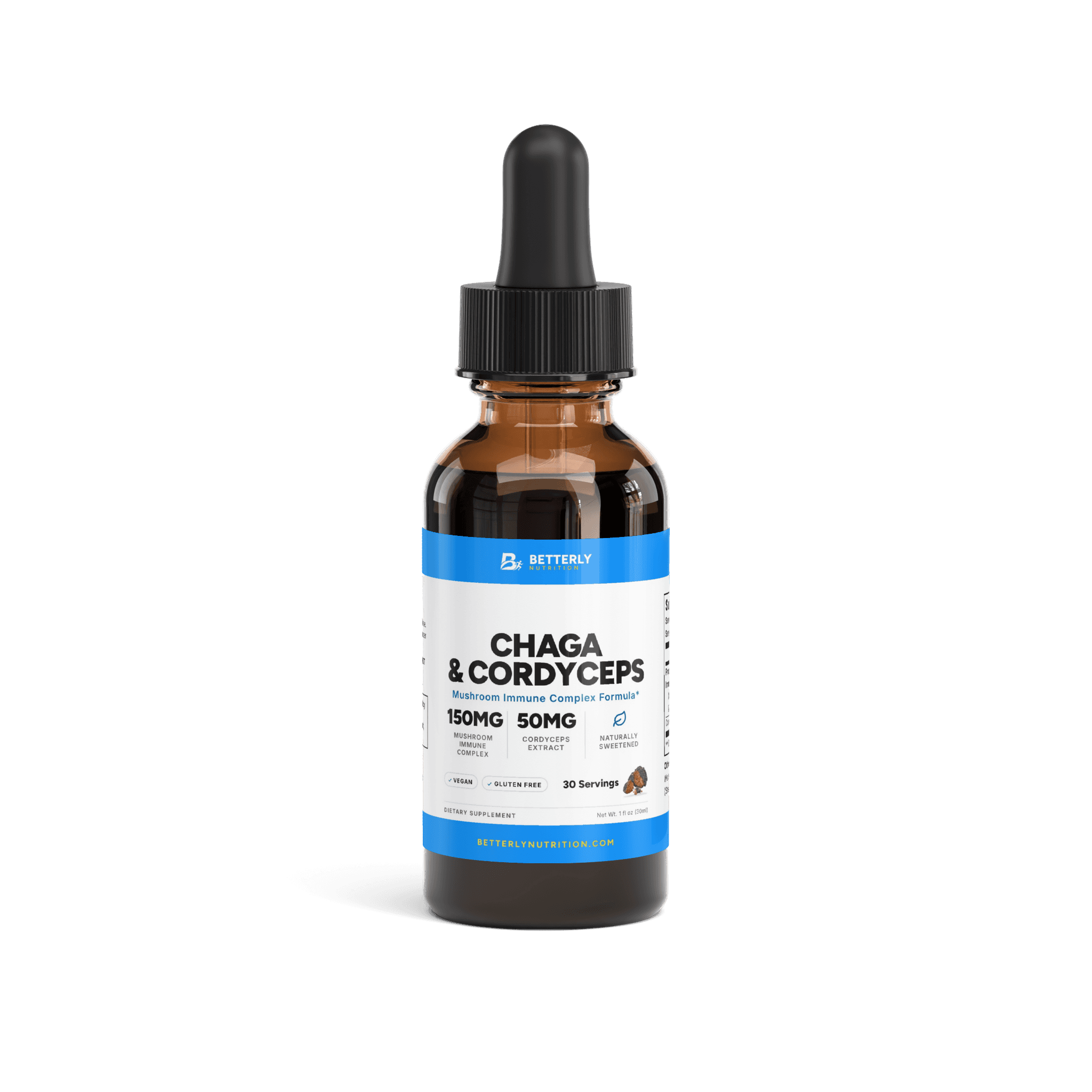
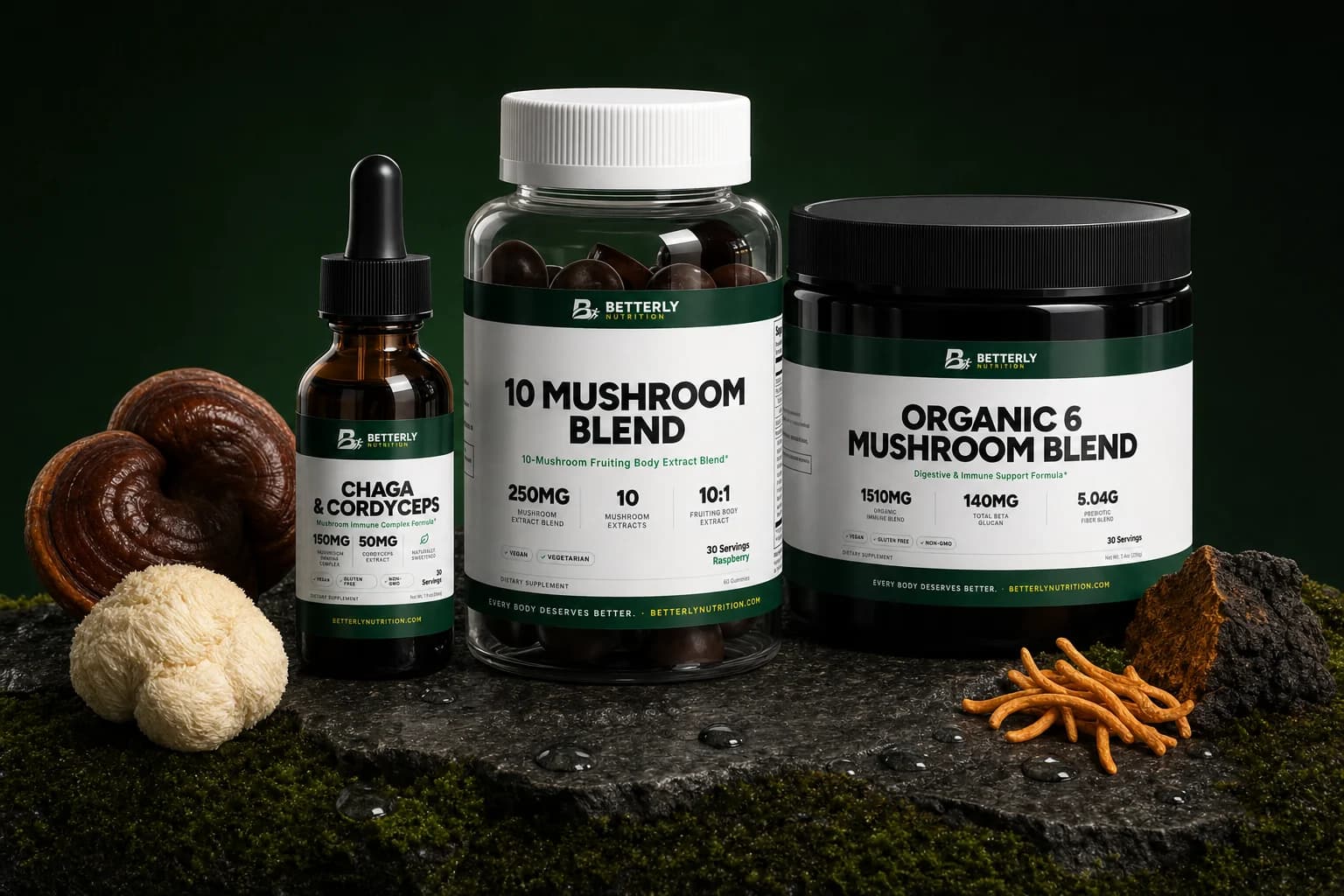
Shelves use the word more loosely. In a store, a mushroom tincture usually means a mushroom extract carried in a liquid base, either alcohol or glycerin, and the glycerin kind gets sold as glycerites, drops or "alcohol-free tinctures." Our Chaga & Cordyceps Mushroom Drops sit in the glycerin group, with glycerin named first among the other ingredients.
| Question | Alcohol tincture | Glycerin drops | What to check |
|---|---|---|---|
| Base liquid | Alcohol and water | Glycerin, often with water | Solvent named on the label |
| Taste | Sharp, with a burn | Sweet and slightly warm | Sweeteners and flavoring |
| Strength shown as | A plant-to-liquid ratio, per ODS | A ratio or mg per ml, by brand | An amount per serving |
| Keeping | ODS ties alcohol to preserving | Depends on the recipe | Date, storage line, preservatives |
| Why people pick it | Classic herbal format | No alcohol in the base | Any "alcohol-free" claim |
Only the first row is settled by the word on the bottle, and the rest change from recipe to recipe. On our bottles, the keeping row points to the last two ingredients, potassium sorbate and nisin. How long an opened bottle lasts gets its own guide on whether mushroom tinctures expire.
What is vegetable glycerin, and is it a kind of alcohol?
Vegetable glycerin is glycerol, a sweet-tasting liquid that chemists class as a sugar alcohol. It's a different compound from ethanol, the alcohol found in beer, wine and classic tinctures.
PubChem, a free chemistry database from the National Library of Medicine, calls glycerol "a trihydroxy sugar alcohol" and records its taste as sweet and warm. Sugar alcohol is a family name based on the molecule's structure. It doesn't mean the liquid behaves like a drink.
The same record, drawing on FDA's inventory of substances added to food, lists solvent, humectant (an ingredient that holds moisture) and nutritive sweetener among glycerin's food uses. It also shows glycerin on FDA's list of multipurpose food substances generally recognized as safe (GRAS). That covers glycerin in food, not any supplement, ours included.
"Vegetable" only names the source. PubChem notes that glycerol is a building block of fats and oils and is obtained as a by-product when they're processed, though a synthetic version made from propene exists too. Our drop labels simply say "Glycerin," and each bottle carries a vegan claim.
Is a glycerin or alcohol tincture stronger?
No federal source we found settles whether a glycerin or alcohol tincture is stronger, so read "stronger" and "weaker" claims from either side as sales copy.
Most pages ranking for this question are brand pages. Their common lines, paraphrased, with what we could check:
- Claim: alcohol extracts a wider range of compounds. Different liquids do pull out different things, and ODS notes that tea, tincture and extract versions of one plant won't carry the same mix or amount of its constituents. Nothing we read compares glycerin with alcohol for chaga, reishi or cordyceps, though.
- Claim: alcohol tinctures absorb faster. None of the federal pages we read measures this, and our labels make no speed claim.
- Claim: you need more of a glycerin tincture. That depends on how concentrated each bottle is, which only its label can answer.
- Claim: dual extraction gets everything out. Many mushroom brands describe a hot-water step plus an alcohol step, but our labels don't describe any process.
Why does a label's amount per serving matter more than the solvent?
A printed amount per serving tells you how much extract each dropper holds, which a solvent name can't, so it's the first line to find on any tincture label.
The solvent does have a federal rule behind it. Under the FDA's dietary supplement labeling guide, a liquid extract that still holds its solvent gets listed by the whole extract's volume or weight, and the solvent must be named on the panel or in the ingredient list. Its strength is optional, so a bottle can say "alcohol" and stop there.
Ratios need one more step. ODS describes tincture strength as the weight of dried plant compared with the volume or weight of finished product. By that reading, a 1:5 tincture used 1 g of dried plant for every 5 ml of finished liquid, so each 1 ml traces back to 200 mg of starting plant. That's what went into the jar, not what dissolved. Dried-extract ratios such as 10:1 keep the same plant-first order, but the finished extract ends up smaller than the plant that went in. Our mushroom extract vs powder breakdown covers those ratios and the FDA's sample label line.
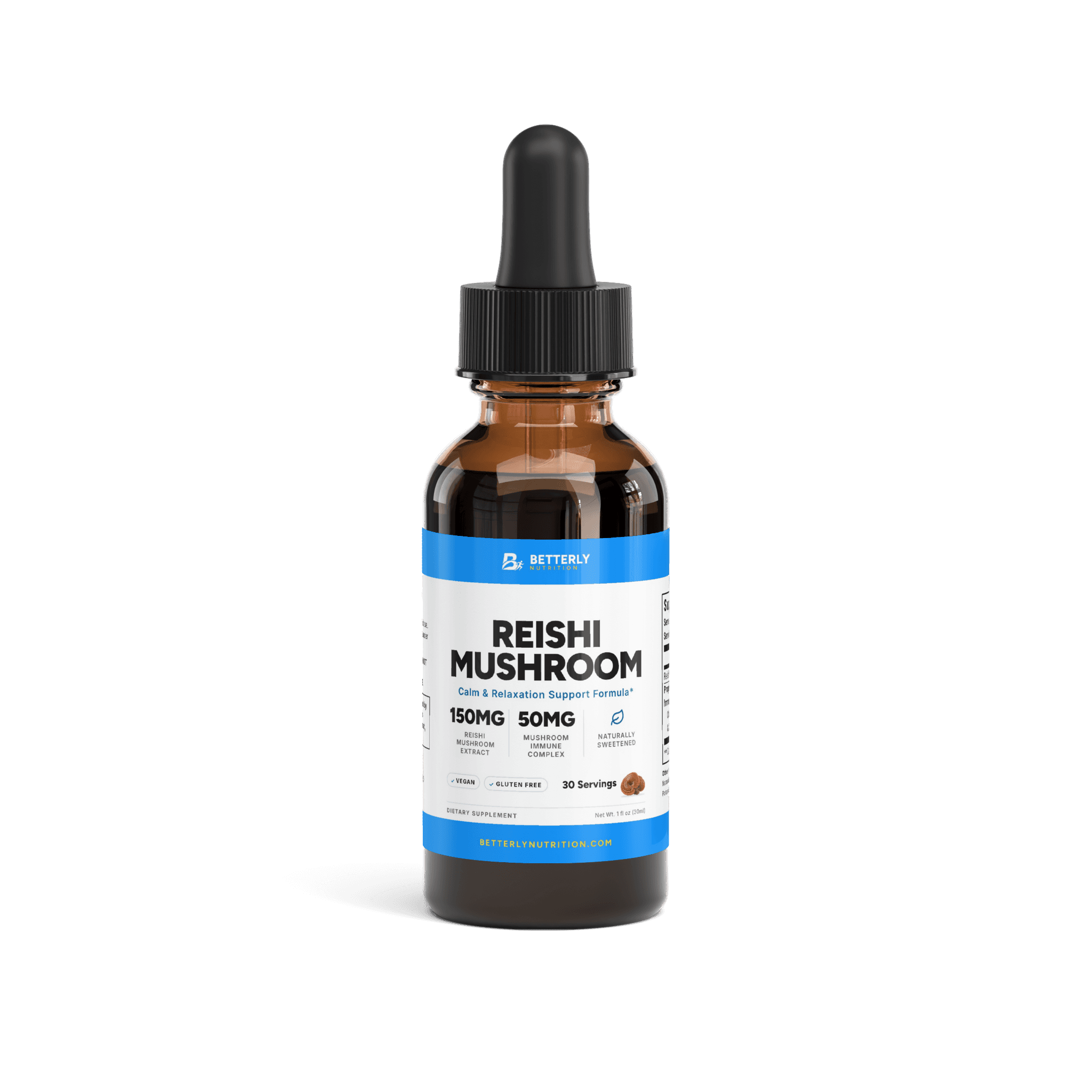
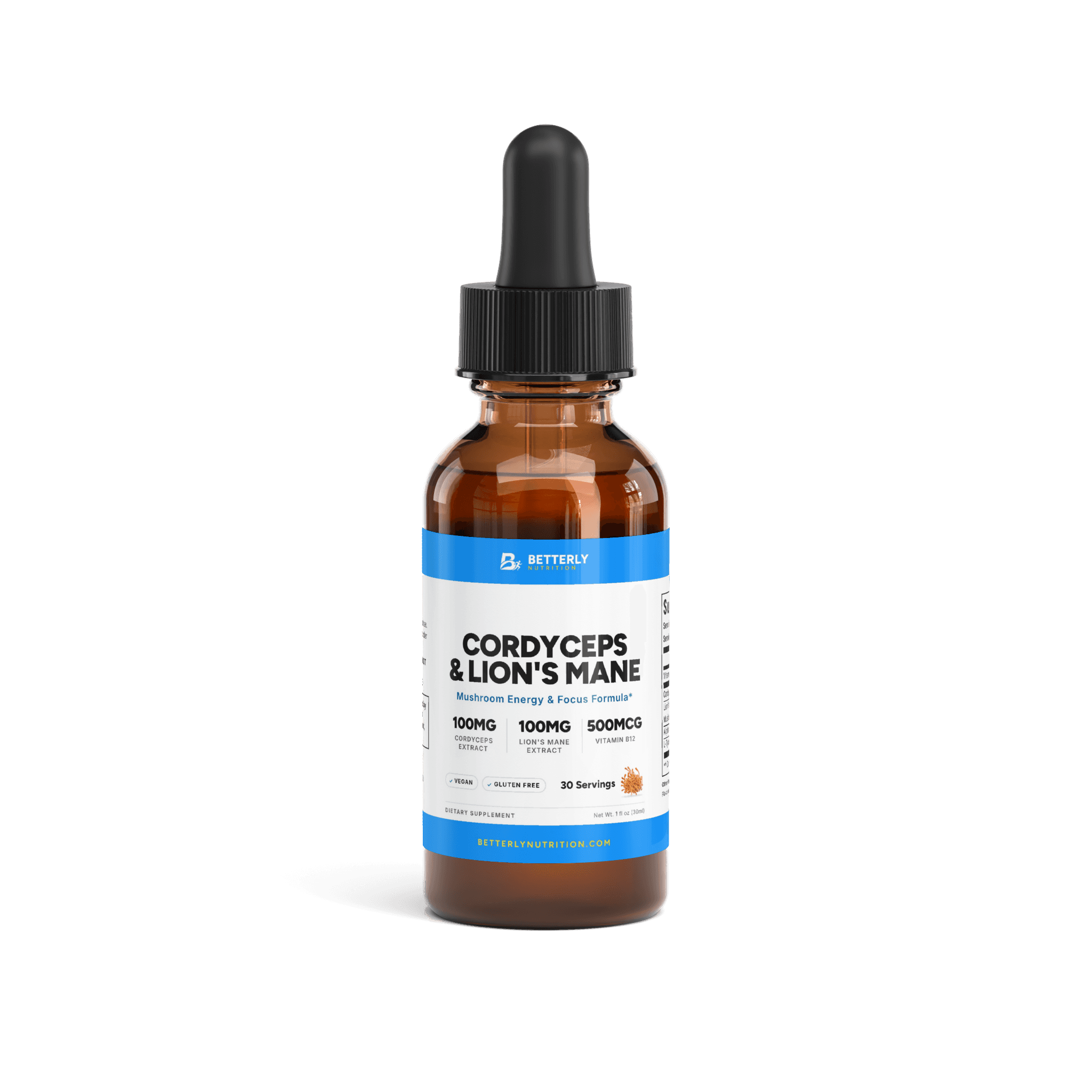
Our three mushroom drops print weights instead. Each 1 ml serving (one dropper, 30 drops) of the Chaga & Cordyceps bottle lists a 150 mg Proprietary Mushroom Immune Complex and 50 mg of cordyceps mushroom extract. The Reishi Mushroom Calm Drops flip those figures: 150 mg of reishi mushroom extract and a 50 mg complex. The Cordyceps & Lion's Mane Energy Drops list 100 mg each of cordyceps and lion's mane mushroom extract, plus 500 mcg of vitamin B12 and 25 mg each of Alpha GPC and L-Tyrosine.
A milligram figure fits either FDA route: a dried extract's weight, or the weight of a whole liquid extract. Our labels don't say which, or how the mushrooms were extracted, so we won't claim more than the 150 mg, 50 mg and 100 mg mushroom rows themselves.
From our shop: Chaga & Cordyceps Mushroom Drops — a glycerin-and-water liquid listing a 150 mg mushroom complex and 50 mg of cordyceps extract per 1 ml (30-drop) serving.
Who chooses an alcohol-free mushroom tincture, and why?
People choose an alcohol-free mushroom tincture when they avoid alcohol entirely, whether for faith, pregnancy, sobriety, a medicine that doesn't mix with it, or simply the taste.
For most of these shoppers the target is zero, and even a small amount counts. Pregnancy is a special case, though: our label asks you to talk to a physician first, whatever the base.
Medicines are the reason to take the question seriously. NIH's alcohol institute, NIAAA, warns that mixing alcohol with certain medicines can cause side effects and can make a medicine less effective or even harmful. It adds that some herbal remedies can also cause harm alongside alcohol, and that certain medicines contain up to 10 percent alcohol themselves. If you take any medicine, mention your tincture's base to your pharmacist.
A glycerin base settles the alcohol question only. The mushroom and nutrient rows still apply in full, so glycerin doesn't make those ingredients gentler.
Searching for an alcohol-free reishi tincture? Our reishi drops use a glycerin-and-water base and name no alcohol, but the label makes no alcohol-free claim and doesn't itemize its natural flavoring. If you need zero, ask us through our contact page first.
How do glycerin and alcohol tinctures taste, straight or in a drink?
Glycerin tinctures taste sweet and a little warm, while alcohol tinctures carry the sharp bite of the alcohol itself.
On top of glycerin's own sweetness, our labels add natural flavoring plus stevia, the one ingredient the list calls a sweetener, and the chaga and reishi bottles say "Naturally Sweetened" on the front.
PubChem also notes that glycerol mixes completely with water, so a glycerin dropper stirs into water, tea or juice without separating. Straight from the dropper or stirred into a glass? Our labels leave that choice to you.
Oil is a third base altogether. PubChem lists glycerol as insoluble in oils, so an oil drop sits in a category of its own. Our Mullein & Peppermint Oil Drops list MCT oil as the only other ingredient, with a 400 mg Proprietary Oil Blend per 2 ml (40-drop) serving.
How do you take glycerin mushroom drops, per the label?
Take glycerin mushroom drops exactly as the bottle says; for all three of ours, that means shaking well, then taking 1 ml (30 drops) once a day, and no more.
The suggested use reads: "Shake well. Take 1 ml (30 drops) daily." Each 1 fl oz (30 ml) bottle holds 30 of those servings.
A sweet base can make a second dropper tempting, but the first words of every caution panel are "Do not exceed recommended dose."
Using two of our drops? Each label's directions apply to that bottle alone. The chaga and energy bottles both list cordyceps. The chaga and reishi bottles also share one five-mushroom complex, so taking both doubles up on chaga, reishi, maitake, shiitake and turkey tail. Ask your provider before stacking two bottles that share a mushroom.
Store the bottle in a cool, dry spot that children can't get to, and skip any bottle whose safety seal is damaged or missing. Whether to hold drops under your tongue or add them to coffee is covered in how to take mushroom tincture drops.
From our shop: Reishi Mushroom Calm Drops — for reishi in a glycerin-and-water base, each 1 ml (30-drop) serving lists 150 mg of reishi mushroom extract, and the label carries vegan and gluten-free claims.
When don't you need a glycerin tincture at all?
You don't need a glycerin tincture if alcohol doesn't bother you and you've found a tincture you like, or if you'd rather swallow a capsule than measure a liquid.
- Alcohol isn't an issue, and your current tincture prints its amount per serving. Switching bases gives you no verified advantage.
- You'd rather skip liquids. Our side-by-side of five mushroom formats compares capsules, gummies, powders and strips with drops.
- You want less sweetness. Glycerin tastes sweet and our drops add stevia, so a capsule is the plainer choice.
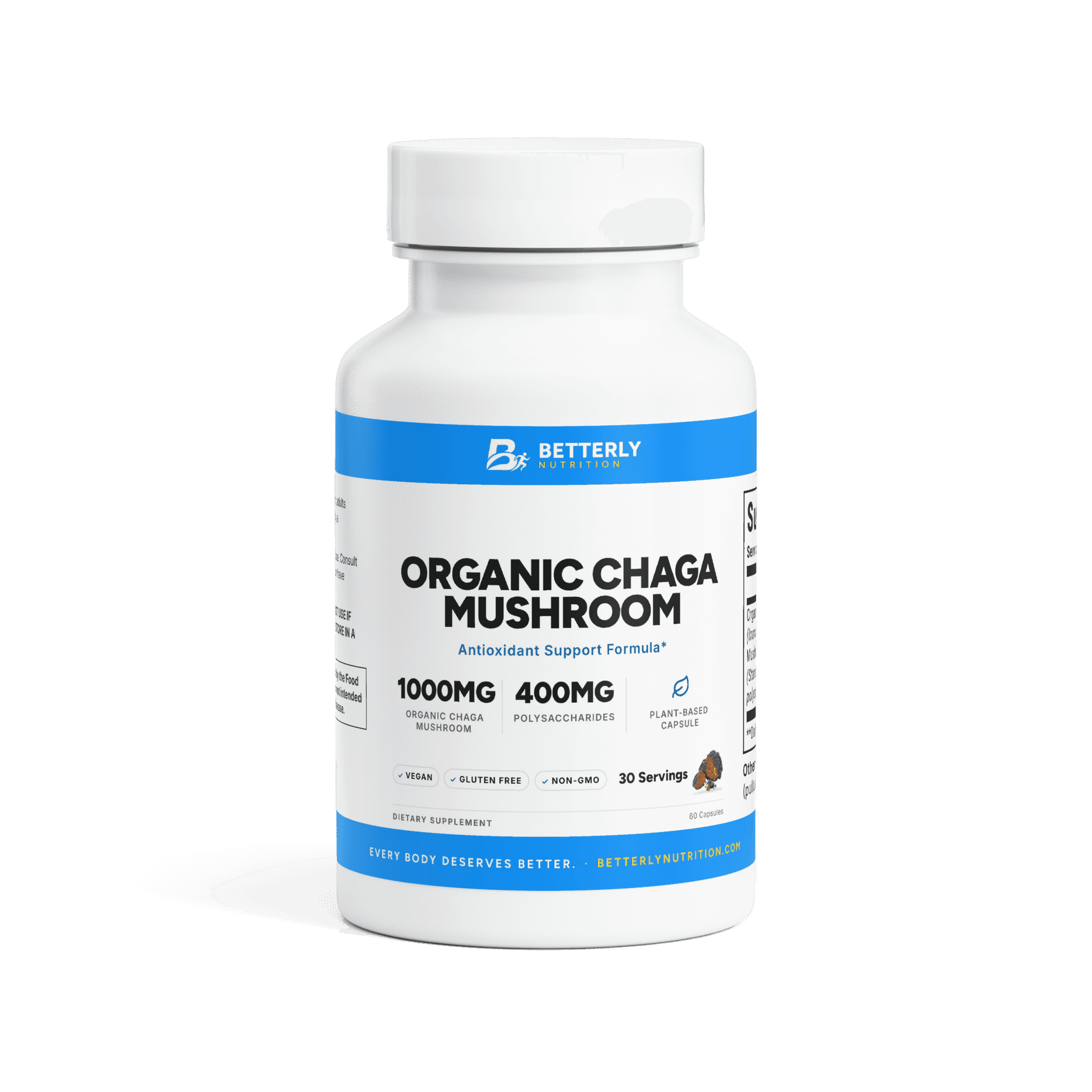
If none of the drops fits, our immune support shelf holds capsules and powders, each with its own amounts per serving to compare.
Who should check with a healthcare provider first?
Check with a healthcare provider before starting any mushroom tincture, glycerin or alcohol, if you're pregnant or nursing, under 18, taking medication, managing a medical condition or scheduled for surgery.
All three of our drop labels say: "Do not exceed recommended dose. Consult a physician if pregnant, nursing, under 18, or have a medical condition."
If you take medication, bring the whole label to that conversation. The Energy Drops, for example, list vitamin B12, Alpha GPC and L-Tyrosine beside the two mushrooms.
Surgery isn't on our label, but your surgical team should see every supplement you use. If anything feels off after you start, pause the drops and phone your provider.
FAQ: glycerin vs alcohol tinctures
What is a glycerin tincture called?
A glycerin tincture is usually called a glycerite, the name herbalists and brands use for a plant preparation in a glycerin base. By NIH Office of Dietary Supplements definitions, it isn't a true tincture, because ODS defines a tincture by its alcohol-and-water base. Shelves blur the line, so "alcohol-free tincture" and "drops" can describe the same bottle. Read the other ingredients to see which base you've actually got.
Are Betterly's mushroom drops alcohol-free?
Betterly's mushroom drops name no alcohol on their panels, though the labels stop short of an alcohol-free claim. Past the Supplement Facts rows, the other-ingredients line names glycerin and purified water first, then natural flavoring, stevia (the listed sweetener), potassium sorbate and nisin. That natural flavoring isn't itemized. If you avoid alcohol strictly, for faith or sobriety, ask us before you order.
Does glycerin count as sugar?
Glycerin isn't table sugar, though PubChem classes it as a sugar alcohol and FDA's food-substance inventory lists it as a nutritive sweetener. Our drop labels make no sugar-free claim, so this guide doesn't either. If you track sugar or carbohydrates closely, ask your provider or a dietitian how glycerin fits your count.
How much alcohol is in one dropper of tincture?
The alcohol in one dropper of tincture depends on the percentage its label prints: multiply your serving in ml by that percentage. A 1 ml serving of a liquid labeled 50% alcohol holds about 0.5 ml of alcohol. FDA rules require a liquid extract's solvent to be named, but not every label states a percentage. If yours doesn't, ask the brand before assuming the amount is negligible.
Can kids or teens take glycerin mushroom drops?
Glycerin mushroom drops are often pitched as kid-friendly because they taste sweet, but a sweet base doesn't settle whether a product suits a child. Each of our three drop labels says to consult a physician if you're under 18, so any family use should start with a pediatrician's go-ahead. The labels also say to keep the bottle out of children's reach.
Sources
- Botanical Dietary Supplements: Background Information, NIH Office of Dietary Supplements
- Dietary Supplement Labeling Guide: Chapter IV. Nutrition Labeling, U.S. Food and Drug Administration
- Glycerol (Compound Summary, CID 753), PubChem, National Library of Medicine
- Harmful Interactions: Mixing Alcohol With Medicines, NIAAA
If this left you looking for somewhere to start, read glycerin-based chaga and cordyceps mushroom drops — its amounts per serving are listed on the page. For the practical questions this raises, how dosing, sourcing and subscriptions work is answered in one place.