On this page
- Key takeaways
- Mushroom extract vs powder: what's actually different?
- Is mushroom extract or powder better?
- What does a 10:1 ratio on a mushroom extract mean?
- How do you compare milligrams across mushroom labels?
- Lion's mane and reishi: should you buy extract or powder?
- Is a liquid mushroom extract better than a powder?
- How do you take a mushroom extract or powder, per the label?
- When don't you need a mushroom extract or powder at all?
- Who should check with a healthcare provider first?
- FAQ: mushroom extract vs powder
- Sources
The short answer: Mushroom extract vs powder comes down to processing. A powder is the whole mushroom dried and ground, while an extract keeps only what a liquid such as water or alcohol pulled out, usually dried afterward. No federal source we found shows either form is better for people. A 10:1 ratio means about 10 parts dried mushroom went in per part of extract, not that the extract is 10 times stronger.
Key takeaways
- A mushroom powder is dried, ground mushroom, while an extract holds only what a liquid drew out, and both can end up as powder in a capsule.
- An extract ratio like 10:1 describes how much dried mushroom went into the process, not how much more the extract can do.
- Milligrams compare fairly only between like materials, so check whether each row says extract, powder or mycelium first.
- A measured marker, such as a polysaccharide percentage or a beta-glucan line, tells you more than the word "extract," and powders can print one too.
We sell mushroom products on both sides of this line, plus a capsule that mixes the two, so there's no winner we'd rather announce. Every product number below comes from our own labels; where we've added rows up or worked from a ratio, we say so.
Mushroom extract vs powder: what's actually different?
Mushroom powder is dried mushroom ground fine, while a mushroom extract is the material a liquid pulls out of the mushroom, which is usually dried afterward.
The NIH Office of Dietary Supplements (ODS) walks through the extract step in its background sheet on botanical supplements. The raw material soaks in a chosen liquid, such as water or alcohol, to draw out the constituents the maker wants. That liquid can be used as is, or evaporated into a dry extract for capsules and tablets.
That last step is where the confusion starts. A dried extract is a powder too, so the two can look identical in a scoop. The difference happened earlier: grinding keeps everything the mushroom was made of, while extracting keeps what dissolved and leaves the rest in the vat.
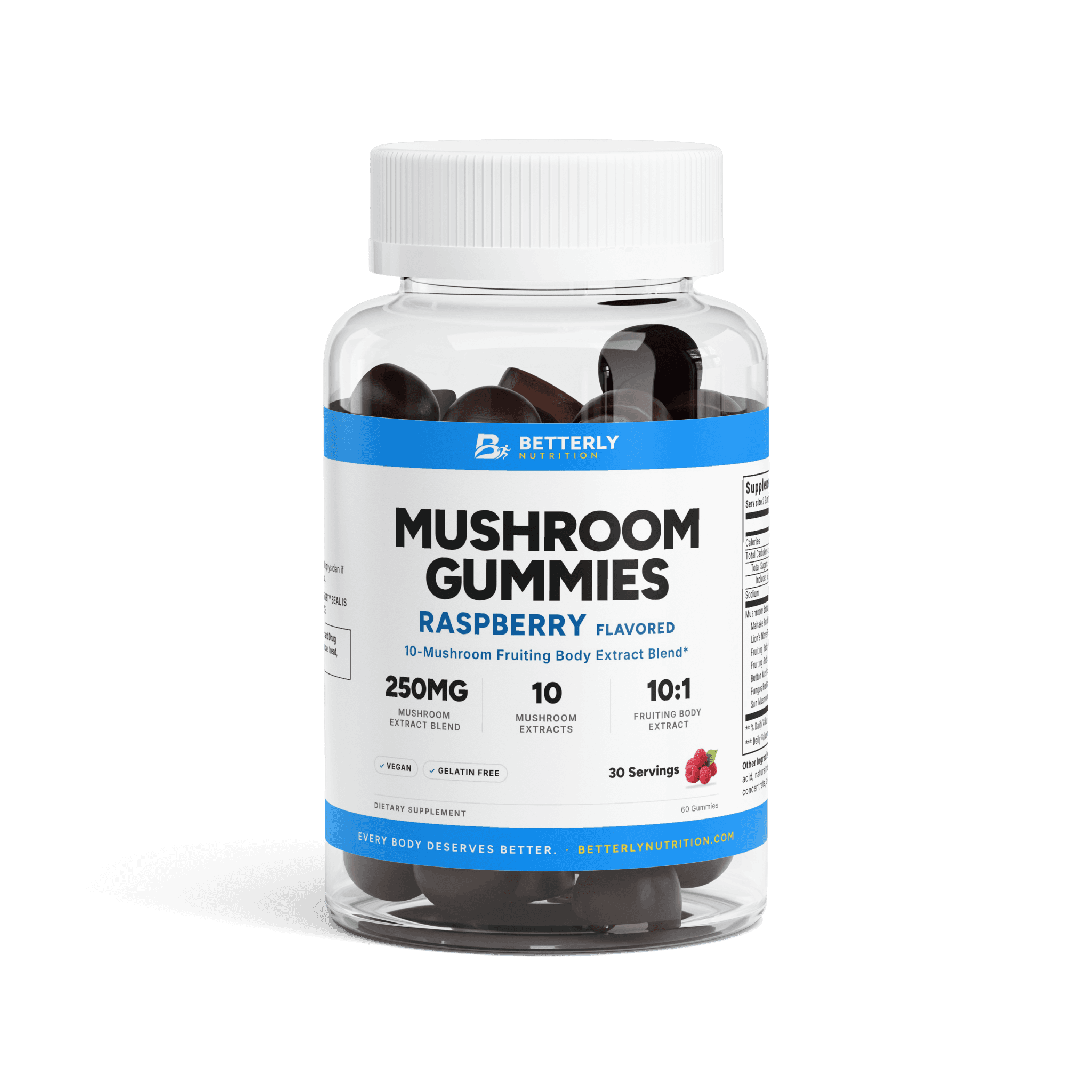
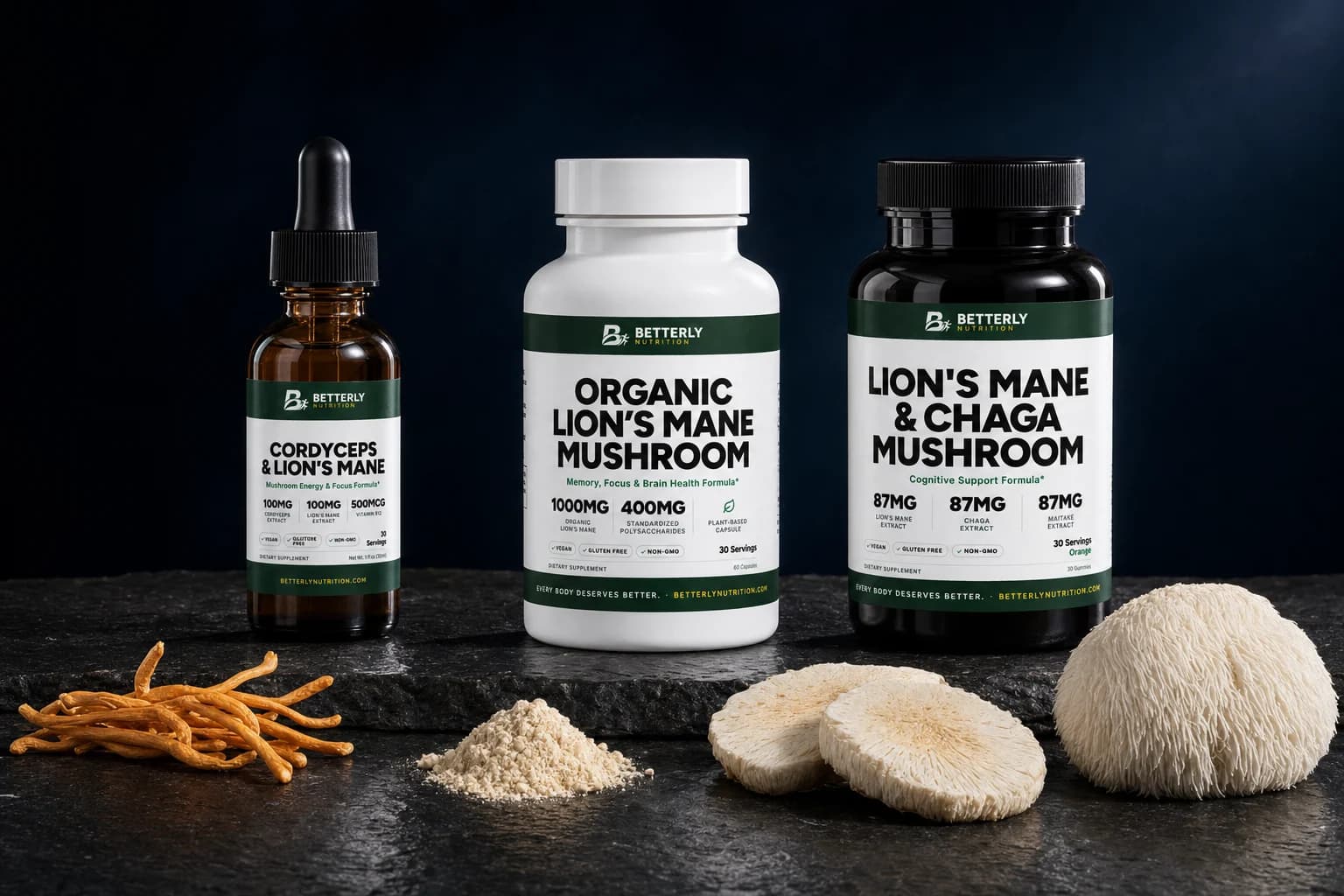
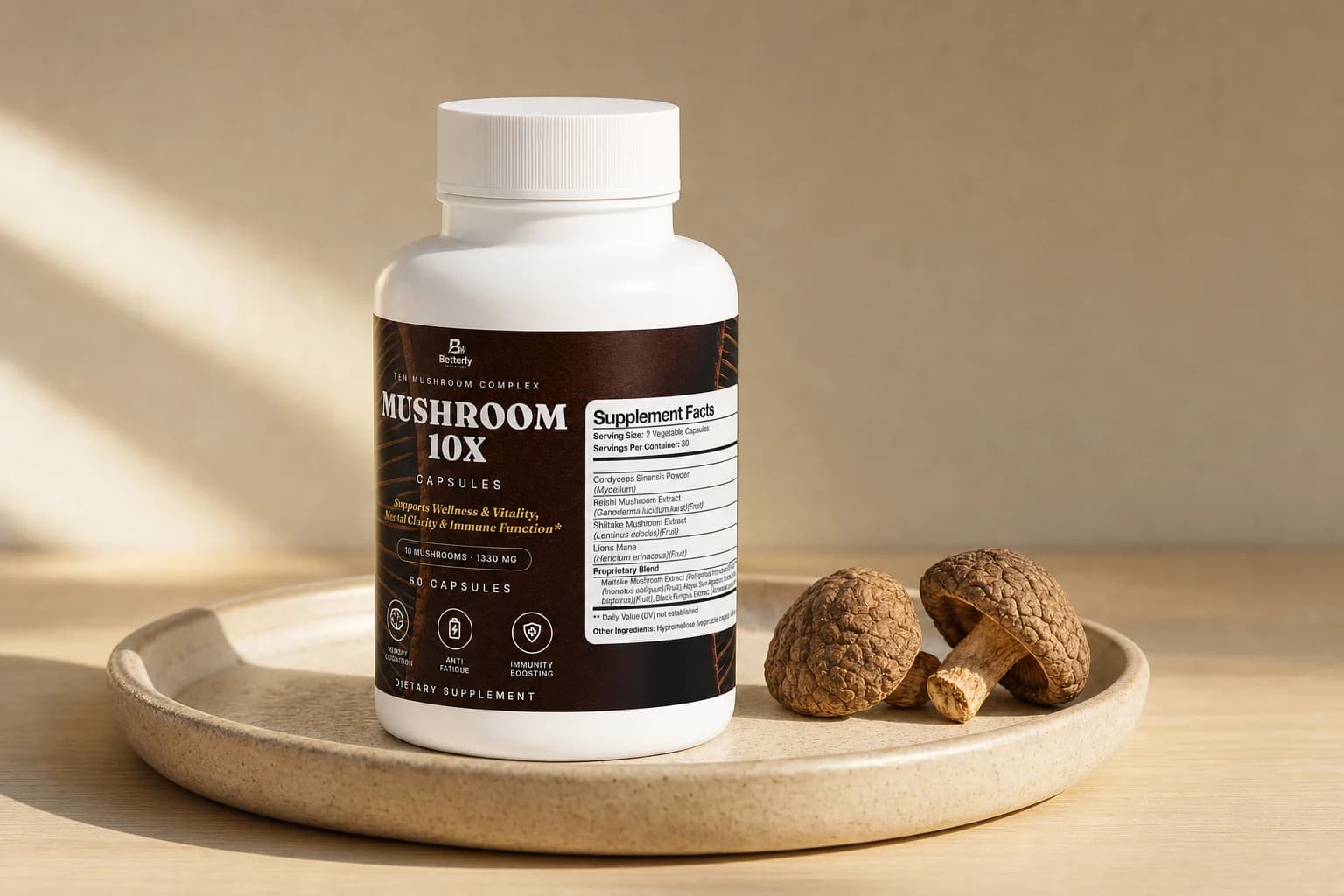
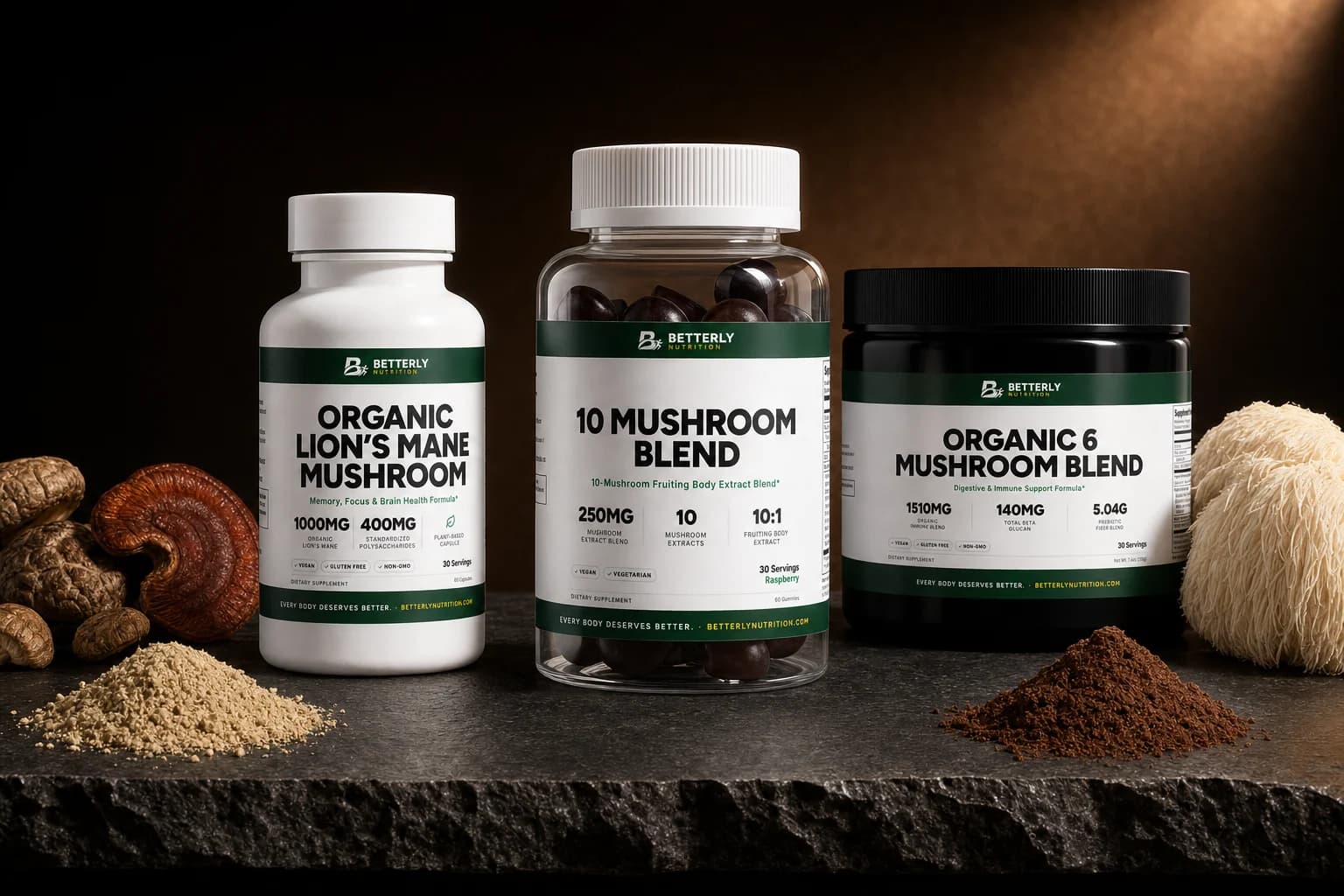
On our shelf, the Mushroom Gummies hold extracts, the Organic Lion's Mane Mushroom Capsules are labeled as powder, and the Mushroom Capsules hold some of each.
Is mushroom extract or powder better?
No federal source we found ranks mushroom extract above mushroom powder, or powder above extract, so neither form is the proven pick.
Extract sellers say a mushroom's tough cell walls hold compounds back until heat and liquid get at them. Powder sellers answer that extraction throws part of the mushroom away. We couldn't find a federal source that tested either argument in people.
What does exist is a caution that cuts both ways. The National Center for Complementary and Integrative Health (NCCIH) puts it on its dietary and herbal supplements page: store-bought supplements "may differ in important ways from products tested in research studies." So a finding about one lab's hot-water extract doesn't transfer to a ground powder, or back.
So ask which label lets you check what you're buying:
- Want to know how much mushroom went into each milligram? Look for an extract with a stated ratio.
- Want the whole mushroom with nothing removed? Look for a powder that names its species and part.
- Want a measured compound? Look for a percentage or a beta-glucan line, on either form.
What does a 10:1 ratio on a mushroom extract mean?
A 10:1 ratio on a mushroom extract means roughly 10 parts dried mushroom went in for every 1 part of finished extract, a record of starting material rather than strength.
Our gummies make a handy worked example. Each of the ten mushrooms is listed as a "Fruiting Body 10:1 Extract," and together they fill one 250 mg blend per 2-gummy serving. Run the ratio backward and those 250 mg started as something like 2,500 mg of dried fruiting bodies.
That's our arithmetic about the factory batch, not the gummy in your hand, and whatever didn't dissolve stayed behind. The panel's 250 mg is the finished extract's weight. That's how the FDA's Dietary Supplement Labeling Guide has makers list an extract once its solvent is gone.
A ratio can't tell you:
- Which compounds made it into the extract, or how much of each.
- How a blend divides among species. Our gummy panel gives the ten mushrooms no separate amounts.
- Whether the extract does anything 10 times over. The number describes an input only.
A bigger ratio isn't better by default: a 20:1 extract just started with more raw mushroom per gram.
How do you compare milligrams across mushroom labels?
Compare mushroom milligrams only between rows that describe the same material, then look for a ratio or a measured marker that gives the weight some meaning.
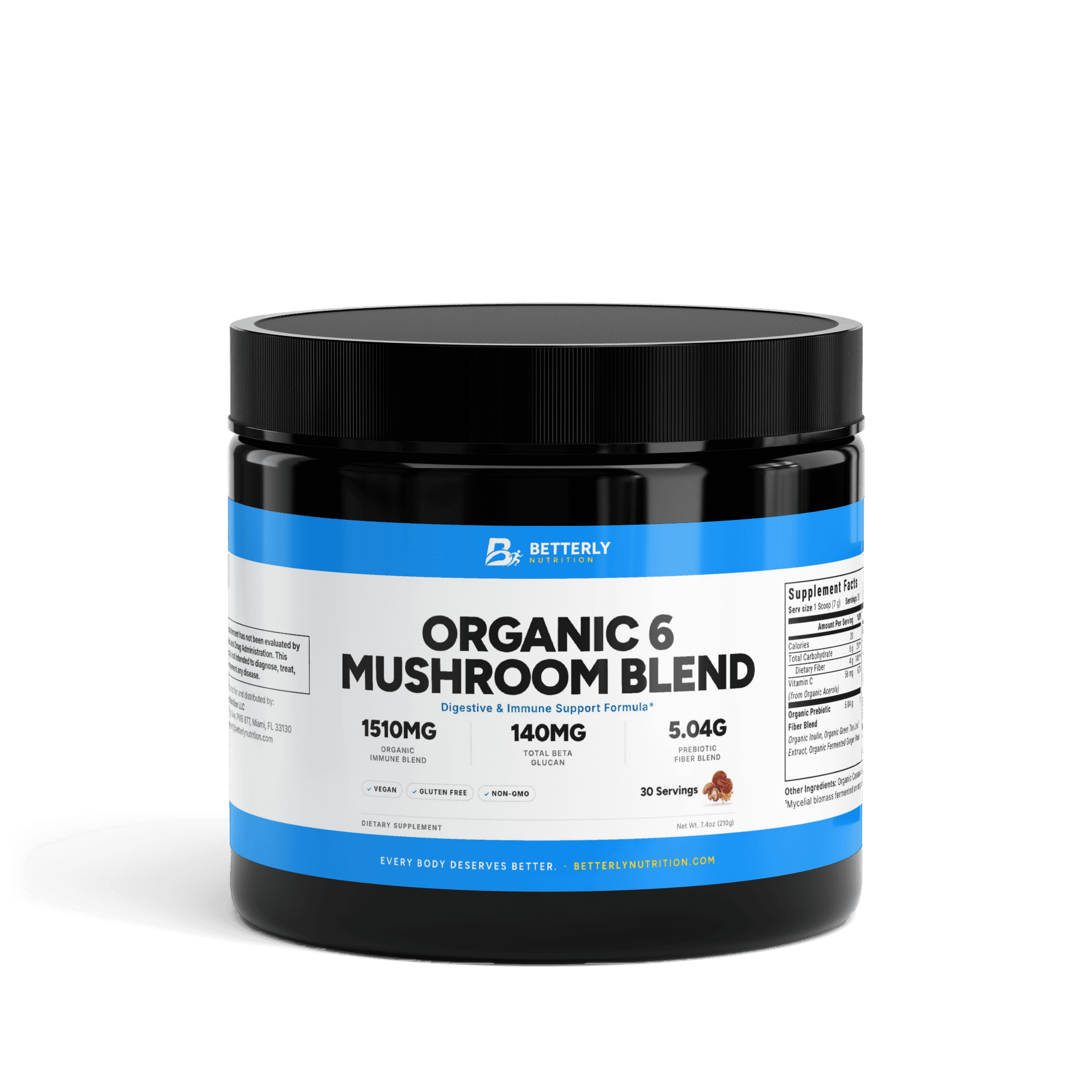
Our Organic 6 Mushroom Blend Powder shows why. Each 1-scoop (7 g) serving holds a 1,510 mg Organic Immune Blend, and its only listed contents are six species of mycelium. A footnote says how they were grown: "Mycelial biomass fermented on organic oats." It's a powder, but not of a mushroom cap you'd recognize.
| Our label, per serving | Form on the panel | Weight | Extra detail printed |
|---|---|---|---|
| Gummies, 2 gummies | Extract, 10:1, all ten mushrooms | 250 mg | Ratio only |
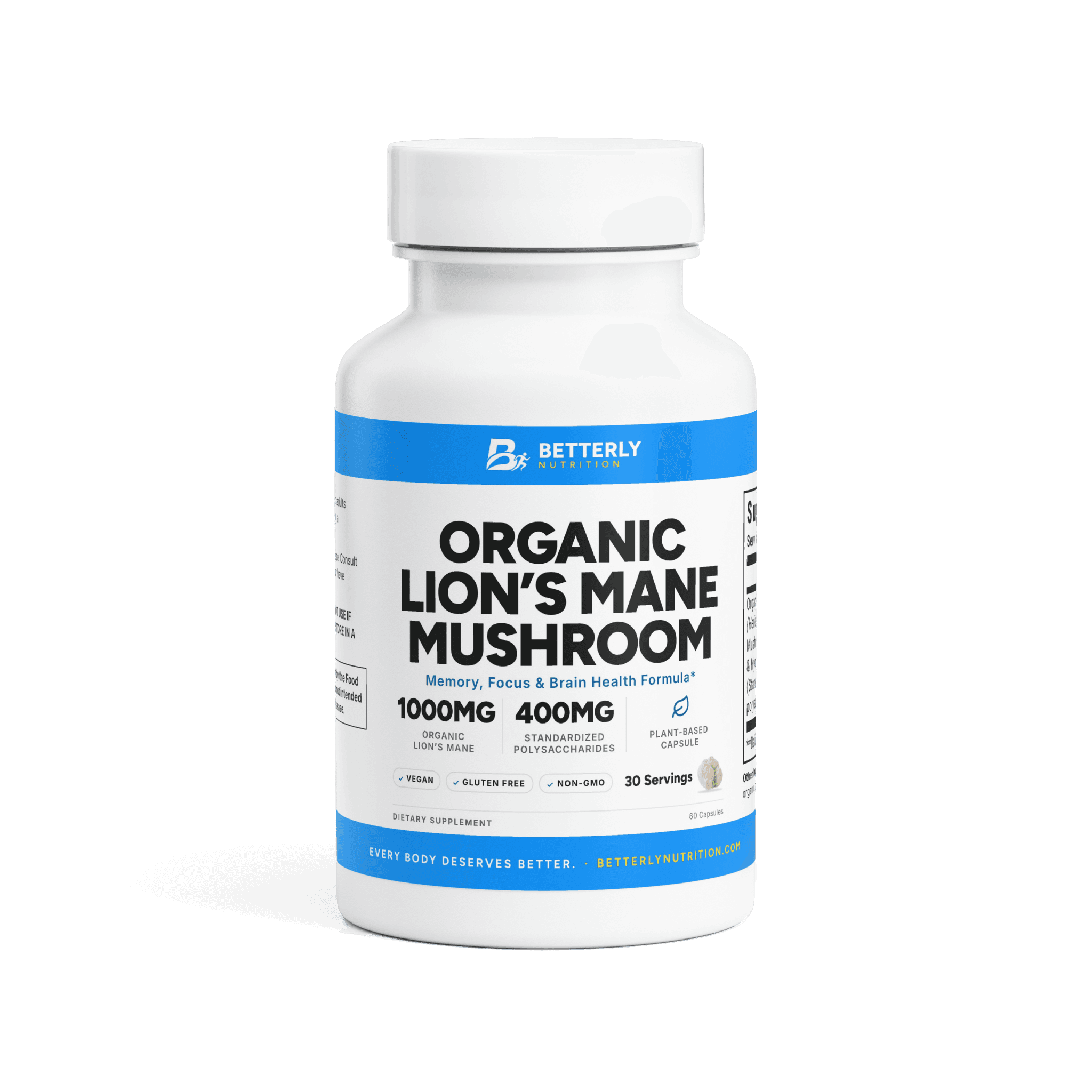
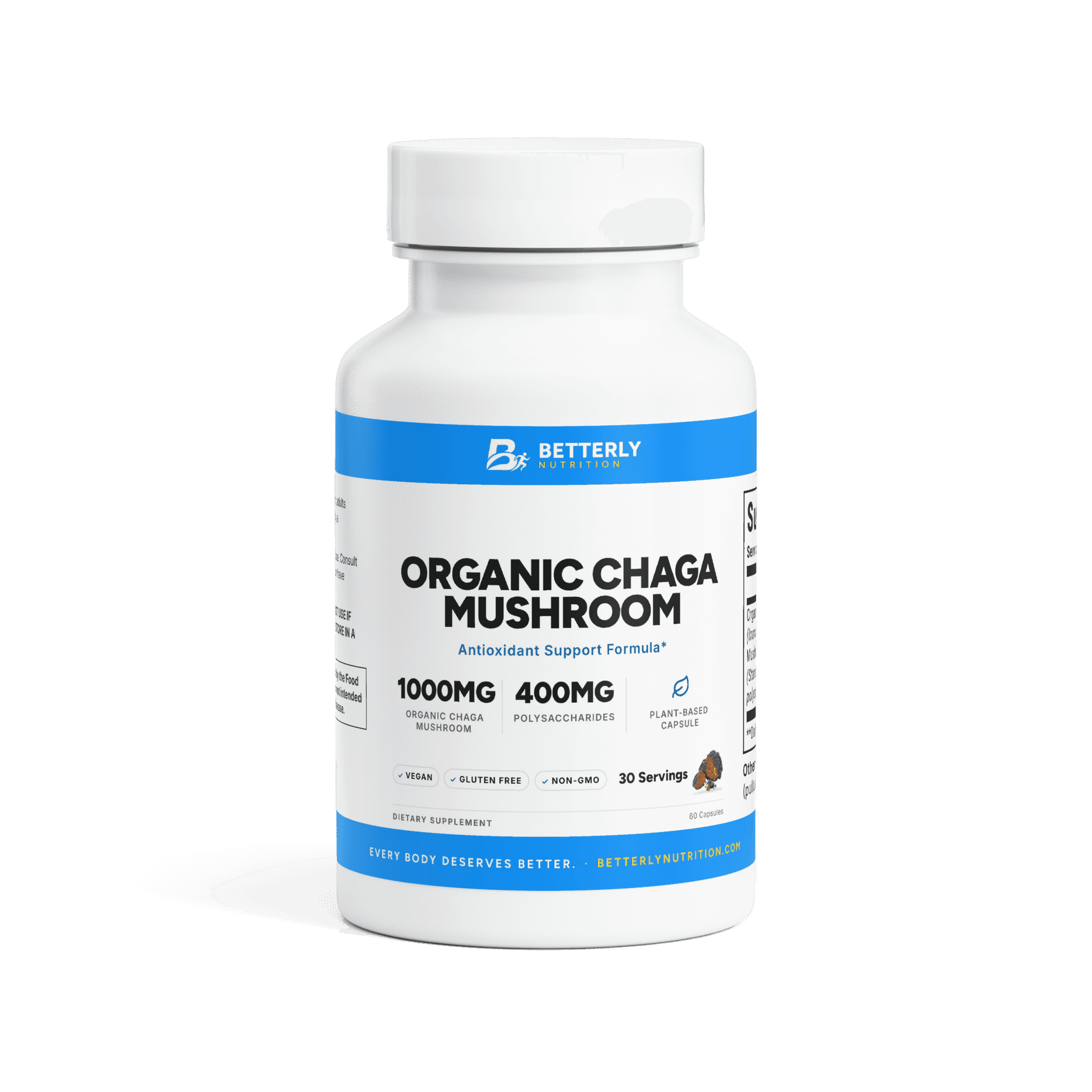
| Organic Lion's Mane, 2 capsules | Powder (fruiting body + mycelium), no extract listed | 1,000 mg | 400 mg polysaccharides (40%) |
| 6 Mushroom powder, 7 g scoop | Fermented mycelium, grown on oats | 1,510 mg | 140 mg total beta glucan |
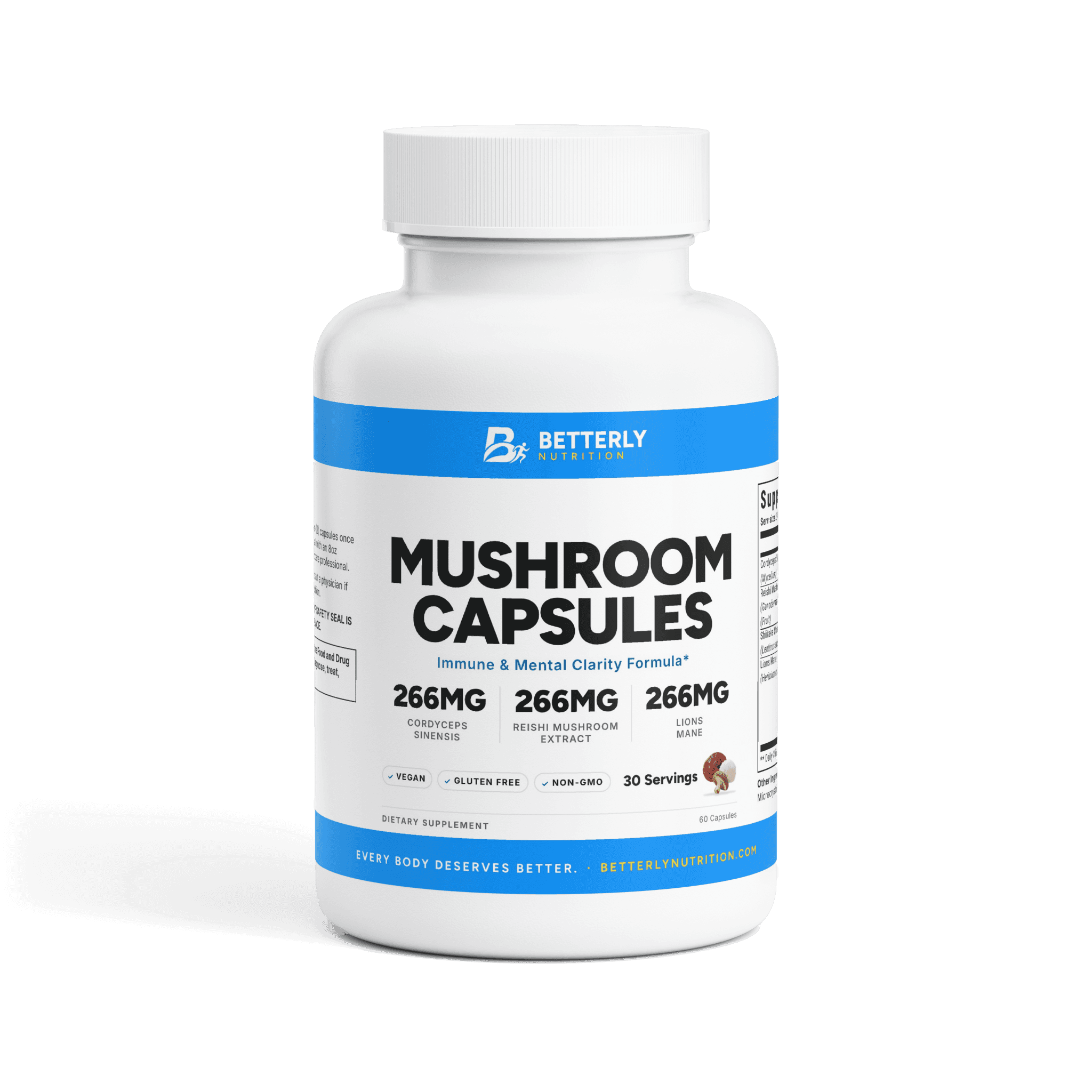
| Blend capsules, 2 capsules | 8 extracts, 1 powder, 1 unstated | 1,330 mg (our sum) | Nothing beyond weight |
The four rows use four yardsticks, so the biggest number doesn't win. A milligram of 10:1 extract, of lion's mane labeled as powder, of oat-grown mycelium and of a capsule mixing both forms are four different things. For drops and strips, our look at whether mushroom gummies work lines up milligrams per serving too.
A printed marker is the one line that can cross from powder to extract. Our lion's mane row is labeled powder, and it's "Standardized to 40% polysaccharides," the sugar chains that include beta-glucans. ODS describes standardization as a step makers may use for extracts, and it says the word alone doesn't necessarily signal high quality. The upside is comparison: 400 mg is a number you could set beside the same marker on an extract label. None of our extract rows prints one.
Markers also need to match. The powder's 140 mg of total beta glucan counts one kind of polysaccharide, so it can't be ranked against that 400 mg.
From our shop: Mushroom Gummies — raspberry gummies labeled vegan, with all ten mushrooms printed as 10:1 fruiting body extracts and 250 mg of blend in every 2-gummy serving.
Lion's mane and reishi: should you buy extract or powder?
For lion's mane and reishi, choose the form whose label lets you check the most, since even our own panels sell each mushroom as more than one material.
Lion's mane mushroom extract vs powder
Our single-species lion's mane capsules list Organic Lion's Mane (Hericium erinaceus) at 1,000 mg per 2-capsule serving. The line beneath calls it fruiting body and mycelium powder, with no extract or ratio listed.
Lion's mane also appears in the gummies, as one of ten 10:1 extracts with no amount of its own. The Mushroom Capsules give it a 266 mg "(Fruit)" row that says neither extract nor powder. Only the single-species capsule states both the amount and the material (fruiting body and mycelium powder). Our lion's mane dose guide sets those numbers beside the amounts human studies used.
Reishi mushroom powder vs extract
For reishi, look for a row with both an extract ratio and its own amount, since you need both to estimate the dried reishi behind it. None of ours has both.
- The Mushroom Capsules: "Reishi Mushroom Extract (Ganoderma lucidum karst)(Fruit)," 266 mg per 2-capsule serving. Amount, yes. Ratio, no.
- The gummies: a reishi fruiting body 10:1 extract. Ratio, yes. Amount, no, since it shares the 250 mg blend.
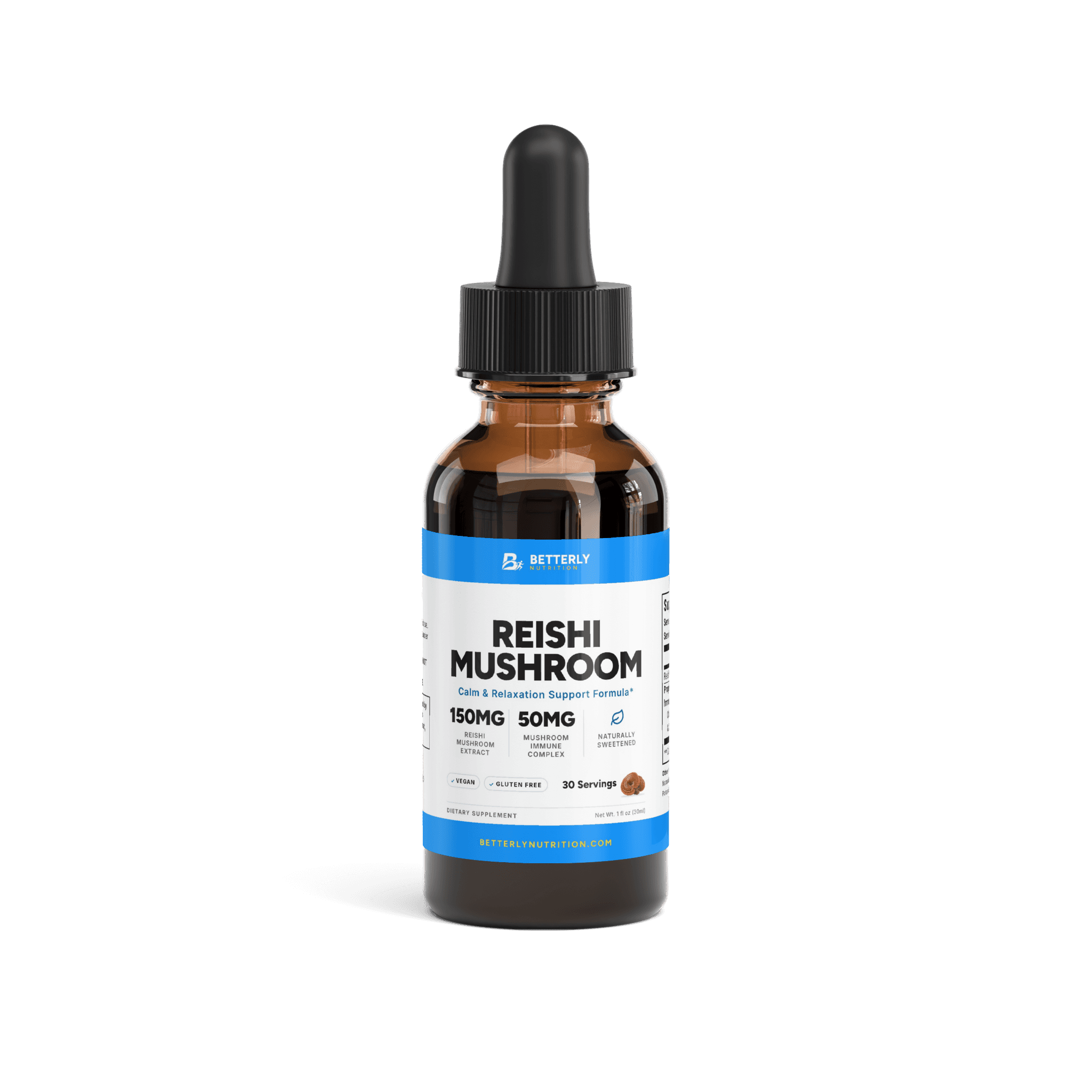
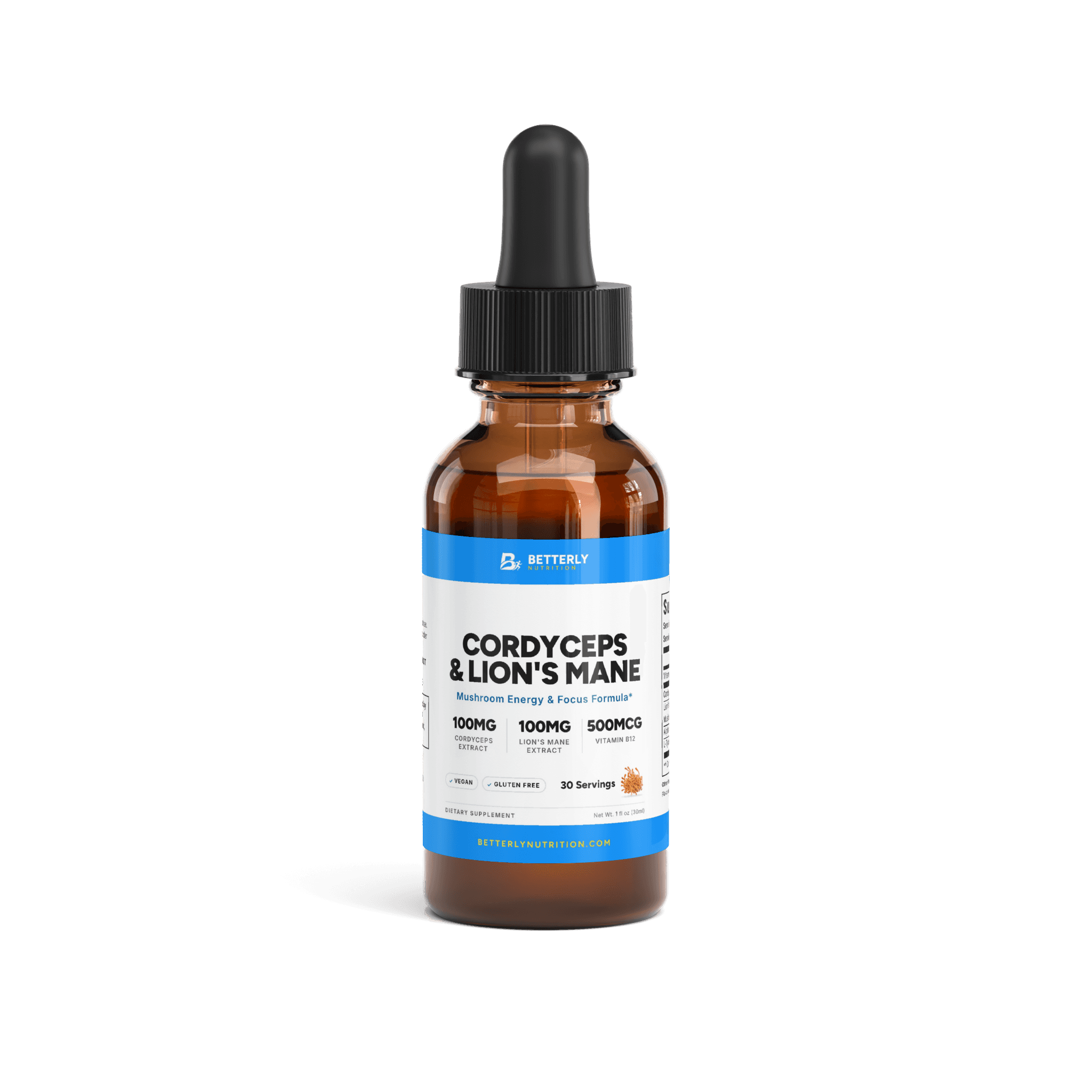
- The Reishi Mushroom Calm Drops: Reishi Mushroom Extract at 150 mg per 1 ml serving. Amount, yes. Ratio and part, no.
- The powder: Organic Reishi (Ganoderma lucidum) inside the fermented mycelium blend, with no extract, ratio or separate amount.
So the math from our 10:1 section works on none of them. The capsules' 266 mg and the drops' 150 mg are both extract weights, but without a ratio you can't say which one started from more reishi.
Is a liquid mushroom extract better than a powder?
A liquid mushroom extract is an extract left in its liquid instead of dried, and we found no federal source showing it beats a powder.
Liquids follow their own labeling rule. For extracts that still hold their solvent, the FDA guide has the panel list the whole extract's volume or weight. A ratio of starting material to solvent is optional, but the solvent must be named on the label. The guide's sample reads like a recipe card: "fresh dandelion root extract, x (y:z) in 70% ethanol."
A liquid also changes how you measure. Our reishi drops set the serving by volume, 1 ml or 30 drops, while a capsule counts pieces and the powder uses a 7 g scoop. Their panel lists the reishi extract by weight, 150 mg per 1 ml, plus a 50 mg five-mushroom blend, with glycerin and purified water among the other ingredients. If a dropper suits your routine, that's a fair reason to pick one; just don't expect a stronger extract.
How do you take a mushroom extract or powder, per the label?
Take a mushroom extract or powder exactly as its own label directs, since switching forms is never a reason to change the serving or chase another product's milligrams.
The gummies and both capsule labels call for two pieces a day. The powder calls for one scoop "mixed into food or drinks," and the drops for 1 ml (30 drops) daily. The blend capsules are the only one of the five with a timing note: for best results, "20-30 min before a meal with an 8oz (237ml) glass of water."
Expect the numbers to shift when you switch forms. By our math the blend capsules total 1,330 mg per serving, while the gummies list 250 mg. The labels describe different materials, so that gap isn't something to make up. Start the new product at its own serving.
Only the gummies list added sugars: 5 g (10% DV) per 2-gummy serving.
From our shop: Organic Lion's Mane Mushroom Capsules — lion's mane labeled as fruiting body and mycelium powder, 1,000 mg per 2 capsules with 400 mg of polysaccharides listed.
When don't you need a mushroom extract or powder at all?
You may not need a new mushroom extract or powder if you already own one in the other form, or if the number you want isn't on any label.
- You already take one form. A second form adds milligrams you can't sensibly total, and our blend capsules already hold extract rows and a powder row.
- You want a figure no panel prints. Reishi's share of the gummies, or the dried mushroom behind the drops, won't appear because you changed forms.
- The only draw is a word. "Extract," "10:1" and "standardized" record how a batch was made, not what it will do. A new word on the front isn't a reason to buy a second bottle.
To compare amounts per serving yourself, our mushroom collection puts every form we sell on one page.
Who should check with a healthcare provider first?
Talk to your healthcare provider before starting a mushroom extract or powder if you're pregnant or nursing, under 18, on prescription medicine, due for surgery or managing a medical condition.
All five labels in this guide print the same caution, telling you to consult a physician if you're pregnant, nursing, under 18 or have a medical condition. NCCIH's supplement page flags two more: medicines a supplement might interact with, and an upcoming surgery.
A bad reaction to a mushroom as food matters here too, because drying, grinding or extracting doesn't change the species. When you ask, show the actual ingredient row. "Reishi Mushroom Extract, 266 mg" tells a provider far more than "a mushroom supplement."
FAQ: mushroom extract vs powder
Is mushroom extract the same as fruiting body?
No, "extract" and "fruiting body" answer different questions. Fruiting body names the part of the fungus, the mushroom you'd recognize, while extract names how that part was processed. One label can say both: every mushroom in our Mushroom Gummies is a "Fruiting Body 10:1 Extract." Our fruiting body vs mycelium guide covers the part question.
Is mushroom extract powder the same as mushroom powder?
No, mushroom extract powder is a dried extract, while mushroom powder is the whole dried mushroom ground up. The two can look and pour the same. The reliable tell is the ingredient row: the word "extract," a ratio such as 10:1, or a named solvent. A row that reads only "powder," with no "extract" or ratio, isn't labeled as an extract. The fruiting body and mycelium powder in our lion's mane capsules is one example.
What is a dual extract mushroom supplement?
A dual extract mushroom supplement is one its brand says was processed with both water and alcohol, and we know of no federal definition for the phrase. None of our mushroom labels uses it. For a liquid extract that still contains its solvent, the FDA's labeling guide requires the solvent to be identified. For a dried extract, read the brand's description as its own claim.
Can you take a mushroom extract and a mushroom powder together?
Not without checking with your healthcare provider first, especially if you take a prescription, since no federal source we found sets a combined amount for a mushroom extract and a powder. Our shelf shows the catch: the Mushroom Gummies hold a lion's mane 10:1 extract and the Organic Lion's Mane Mushroom Capsules hold lion's mane labeled as powder, so taking both doubles up on one mushroom. Each label says "Do not exceed recommended dose," and neither counts the other.
Can you take too much mushroom extract?
Yes, you can take more mushroom extract than a label intends, and we found no federal upper limit for mushroom extracts to measure against. That means nobody has set a ceiling, not that one doesn't exist. Stay at the label's serving; every label in this guide says "Do not exceed recommended dose."
Sources
- Botanical Dietary Supplements: Background Information, NIH Office of Dietary Supplements
- Dietary Supplement Labeling Guide: Chapter IV. Nutrition Labeling, U.S. Food and Drug Administration
- Dietary and Herbal Supplements, National Center for Complementary and Integrative Health
If this left you looking for somewhere to start, read 10:1 fruiting body mushroom extract gummies — its amounts per serving are listed on the page. For the practical questions this raises, how dosing, sourcing and subscriptions work is answered in one place.