On this page
- Key takeaways
- What is a chaga ORAC score?
- Why did USDA withdraw its ORAC database?
- Where do chaga antioxidant comparison charts come from?
- Can a high ORAC score tell you what chaga does in your body?
- What does "antioxidant support" mean on a chaga label?
- What does our chaga label print instead of an ORAC value?
- How do you take chaga capsules or drops, per the label?
- When don't you need chaga for antioxidant support?
- Who should check with a healthcare provider first?
- FAQ: chaga ORAC and antioxidants
- Sources
The short answer: Any chaga ORAC score describes how much one chaga sample held back a chemical oxidation reaction in a lab mixture, per 100 g of that sample. It says nothing about what a capsule does once you swallow it, which is part of why USDA withdrew its own ORAC table in 2012. Our chaga mycelium capsules print no ORAC value, just 400 mg of polysaccharides per 2-capsule serving.
Key takeaways
- ORAC, short for oxygen radical absorbance capacity, is a lab assay scored in Trolox equivalents per 100 g of the tested material.
- USDA's Agricultural Research Service pulled its ORAC table in 2012, saying test-tube antioxidant values can't be extrapolated to effects in people.
- The 2007 USDA table we could open lists 277 foods and no chaga.
- A per-100 g figure describes 100 times the chaga in our 2-capsule serving of 1,000 mg mycelium powder.
- "Antioxidant Support Formula*" on our chaga bottle is a support statement, not a measured antioxidant level.
Full disclosure: the word "antioxidant" is printed on the front of the chaga bottle we sell. So we'll put our own label through the same questions we ask of the charts, and say plainly where it falls short.
What is a chaga ORAC score?
A chaga ORAC score is a lab reading of how well a chaga sample slowed an oxidation reaction, expressed in micromoles of Trolox equivalents (µmol TE) per 100 g.
The USDA Agricultural Research Service described ORAC as measuring how strongly a sample's compounds hold back oxidation caused by peroxyl radicals, inside a mix of lab chemicals. The result is scored against Trolox, a reference compound, and counts both how long the sample slows the reaction and by how much.
USDA's 2007 documentation also split results three ways: H-ORAC for water-soluble compounds, L-ORAC for fat-soluble ones, and a total. A single chart number doesn't say which one you're seeing unless the chart spells it out.
Why did USDA withdraw its ORAC database?
USDA withdrew its ORAC database in 2012, citing mounting evidence that antioxidant capacity values had no relevance to how specific food compounds affect human health.
The withdrawal notice came from the Agricultural Research Service's Nutrient Data Laboratory, on a page last modified May 16, 2012. The live page has since come down, so we read the archived copy. Its main reasons:
- Antioxidant data from in vitro (test-tube) methods can't be extrapolated to in vivo (human) effects.
- Trials testing dietary antioxidants had produced mixed results.
- Antioxidant molecules in food do many jobs, and many have nothing to do with absorbing free radicals.
- Newer ORAC versions use other substrates, so results across versions aren't comparable.
The notice was blunt about marketing, too: "ORAC values are routinely misused by food and dietary supplement manufacturing companies to promote their products ..." It added that shoppers misused them as well, as a guide for picking foods and supplements.
The part about manufacturers describes businesses like ours. You won't find an ORAC figure on any of our labels.
Where do chaga antioxidant comparison charts come from?
The chaga antioxidant charts we found while researching this guide sat on sellers' websites, and the USDA table we could open doesn't list chaga at all.
Some credit their chaga figure to USDA testing. The 2007 USDA ORAC table, still hosted by the Government Publishing Office, covers 277 foods. It has no chaga and no mushroom of any kind. USDA also released a 2010 edition, then withdrew it, and we couldn't find a federal copy to check.
A chart should also say what was tested. Wild chaga is the hard, black growth harvested from birch trees, while our capsules hold chaga mycelium, the fungus's thread-like network. Our guide to fruiting body vs mycelium labels explains why those differ. A figure measured on a wild chunk doesn't describe mycelium powder.
Comparisons wobble even inside USDA's own table. Raw blueberries averaged 6,552 µmol TE per 100 g across 9 samples, with results ranging from 4,790 to 9,209. USDA says values shift with cultivar, growing conditions, processing, preparation and lab methods. And other assays, such as FRAP and TEAC, can't be compared directly with ORAC.
Can a high ORAC score tell you what chaga does in your body?
No. A high ORAC score shows how a chaga sample behaved in a lab mixture, and USDA said test-tube antioxidant values can't be carried over to effects in people.
Nothing in the assay gets swallowed, digested or absorbed. For label claims about how much antioxidant a food holds, federal rules build that step into the definition. Under 21 CFR 101.54(g), a nutrient has "recognized antioxidant activity" only with scientific evidence that it works after absorption from the gut. That means taking part in the body's processes that inactivate free radicals.
The National Center for Complementary and Integrative Health (NCCIH) makes two points in its fact sheet Antioxidant Supplements: What You Need To Know that matter here. Different types of antioxidants may not be interchangeable, since each has different properties, so one score that lumps them together can't capture them.
NCCIH also says that in larger-than-usual amounts, antioxidants may disrupt important work inside the cell, including its own defenses and normal signaling.
What does "antioxidant support" mean on a chaga label?
"Antioxidant support" on a chaga label describes the role the maker intends for the product; it isn't a measured antioxidant level or an ORAC result.
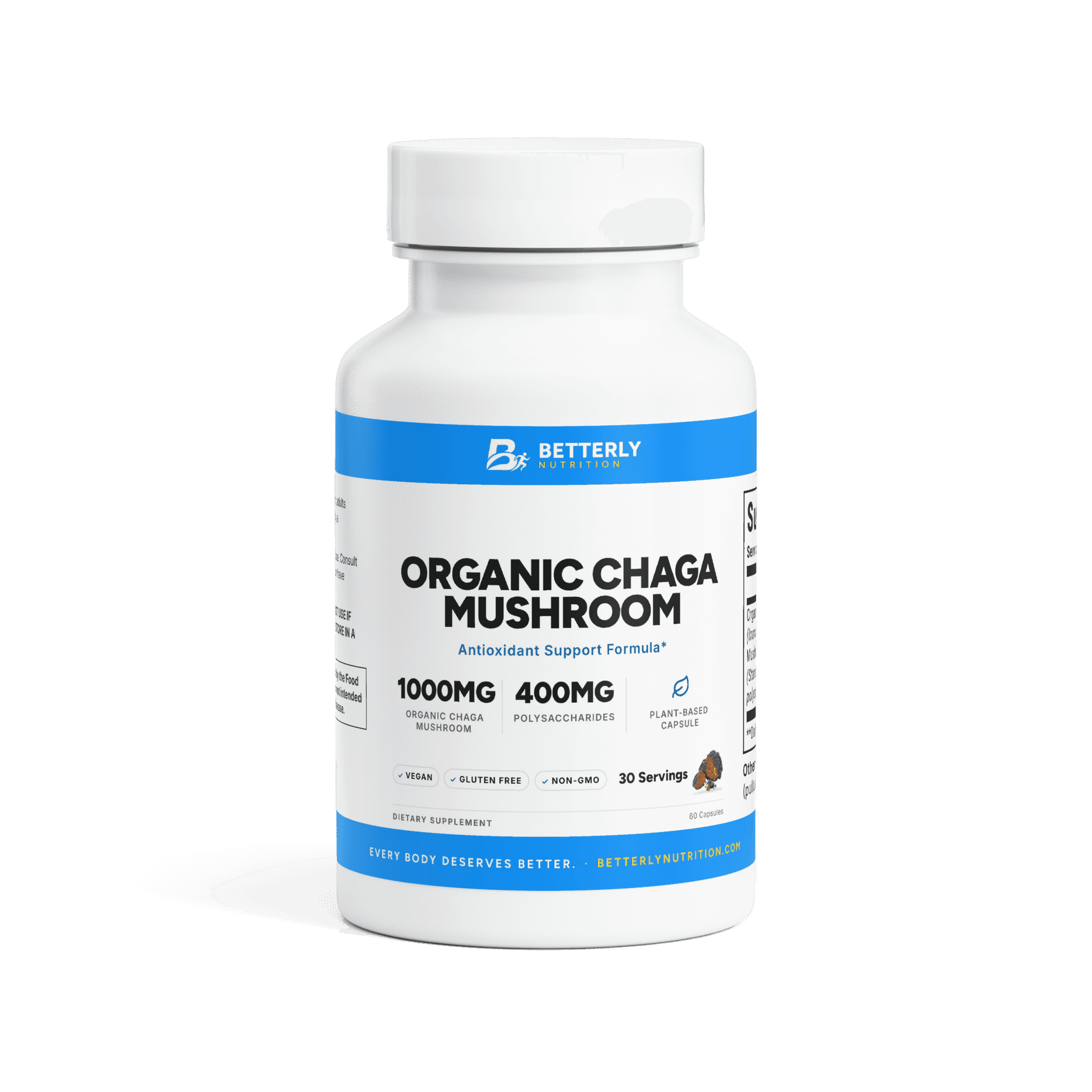
Look at our bottle. The front reads "Antioxidant Support Formula*," and the asterisk leads to the standard FDA notice at the bottom, which says the statement hasn't been evaluated by the agency.
A claim about how much antioxidant a product holds works differently. Under the same federal rule, a claim like "high in antioxidants" has to name the nutrients behind it, and each needs a Reference Daily Intake (RDI). The rule's own example: "high in antioxidant vitamin C" requires at least 20% of the RDI for vitamin C.
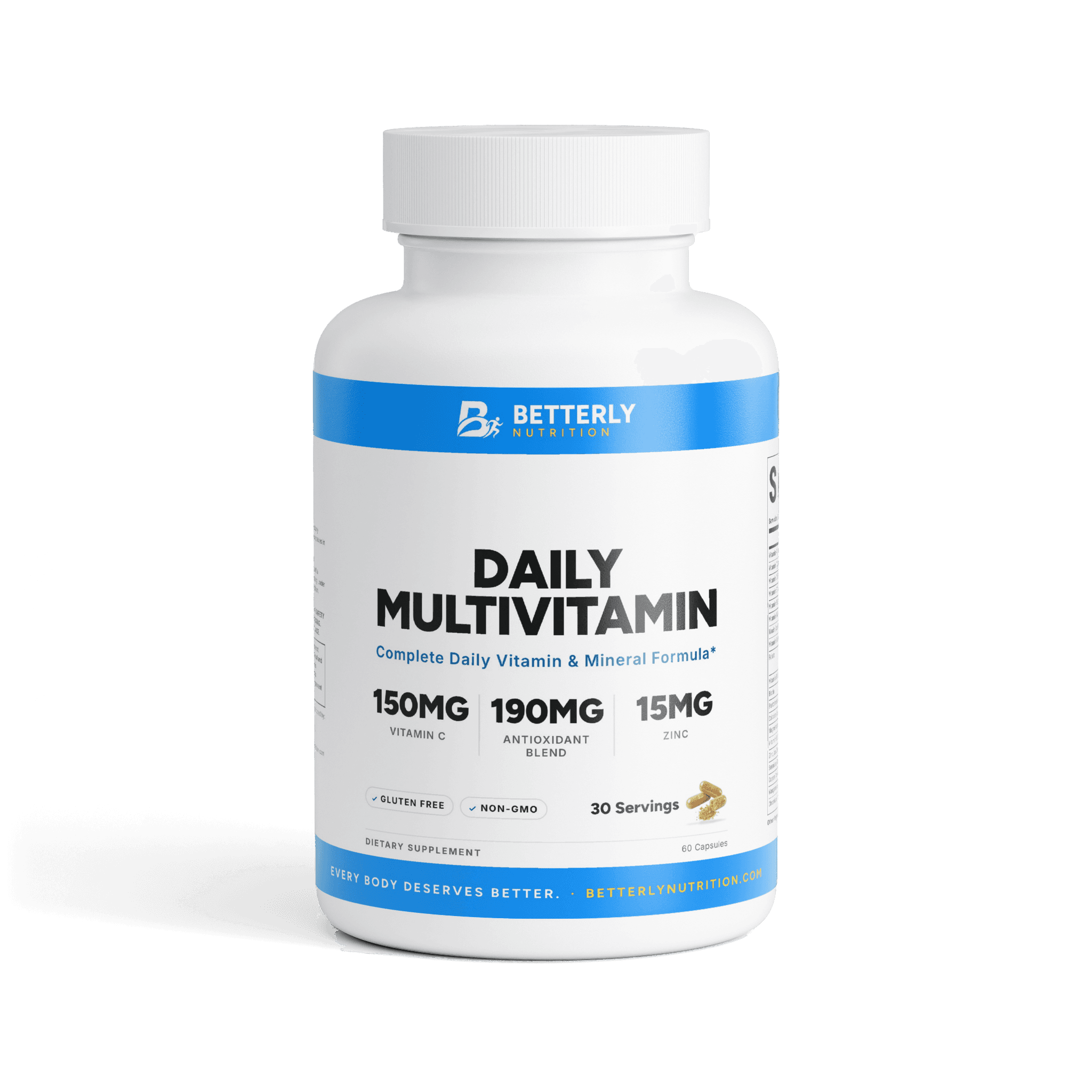
Chaga has no RDI. On our capsule panel, the chaga row points to "Daily Value not established." Compare the vitamin C row on our Daily Multivitamin Capsules: 150 mg per 2-capsule serving, listed as 167% of the Daily Value. Vitamin C has a reference amount. Chaga has nothing to measure against.
| What you see | What it's based on | What it can't tell you |
|---|---|---|
| An ORAC number on a chart | One lab assay, per 100 g of some sample | What was tested, or any effect in you |
| "High in antioxidant vitamin C" | Nutrients with an RDI, at set levels | Anything about chaga, which has no RDI |
| "Antioxidant support" with an asterisk | The maker's statement of intended role | A measured antioxidant amount |
| "Standardized to 40% polysaccharides" | A share of the powder's weight | Antioxidant capacity |
Only the vitamin-style claim is tied to a reference amount. Read the rest as descriptions, not scores.
What does our chaga label print instead of an ORAC value?
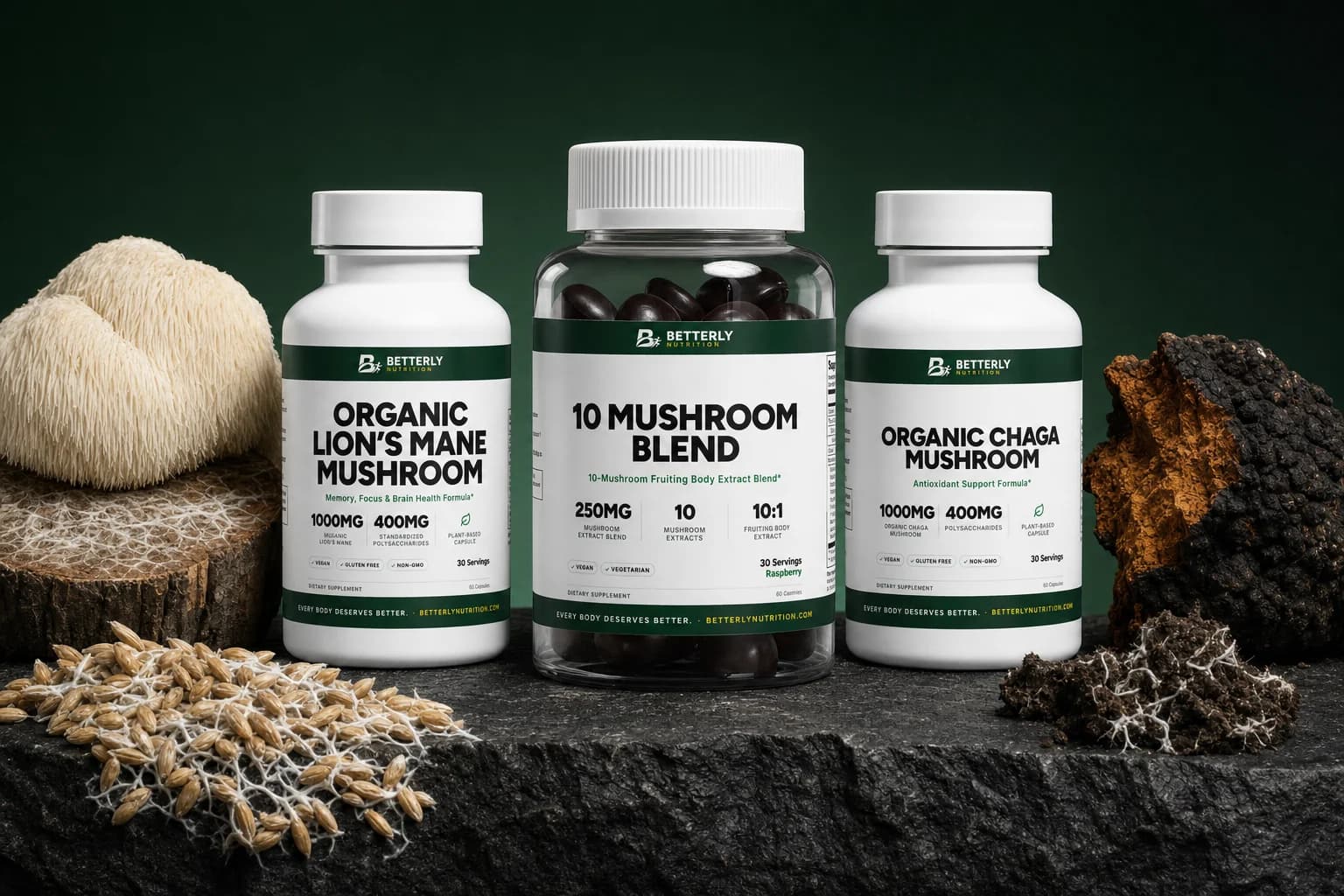
Our Organic Chaga Mushroom Capsules print one active row: 1,000 mg of organic chaga (Inonotus obliquus) mushroom mycelium powder per 2-capsule serving, standardized to 40% polysaccharides, or 400 mg.
Polysaccharides are long sugar chains, the class that includes mushroom beta-glucans. The 400 mg is a share of the powder's weight, and the label doesn't name the test behind it. That's the honest limit of our panel: it says nothing about antioxidant capacity.
The units matter too. ORAC figures are per 100 g, while one serving of our capsules holds 1 g of chaga powder. By our math, the whole 60-capsule bottle holds 30 g, still under a third of 100 g.
| Our product | Chaga per serving | Front descriptor | Antioxidant figure? |
|---|---|---|---|
| Organic Chaga Mushroom Capsules | 1,000 mg mycelium powder per 2 capsules | Antioxidant Support Formula | None |
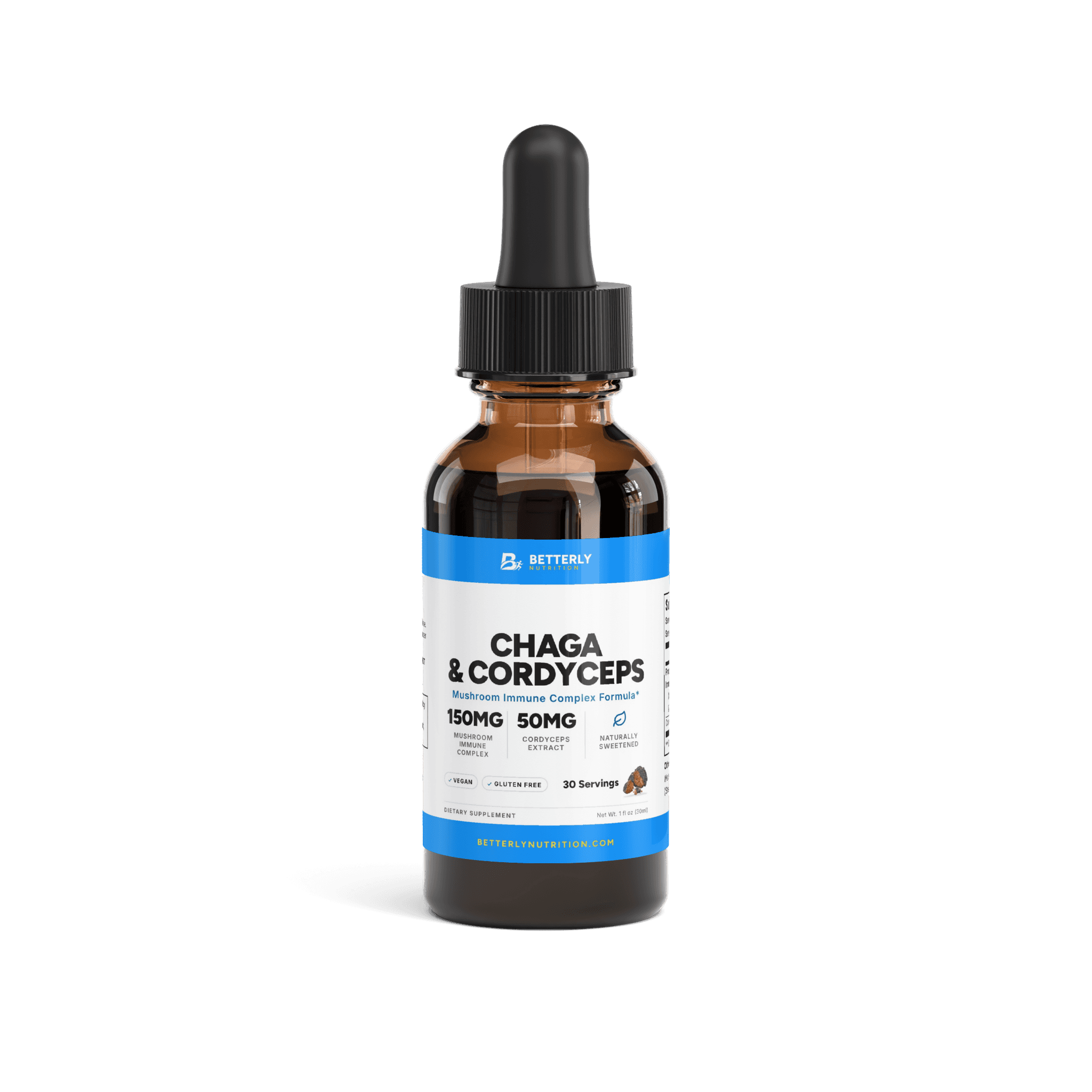
| Chaga & Cordyceps Mushroom Drops | Listed first in a 150 mg five-mushroom complex per 1 ml | Mushroom Immune Complex Formula | None |
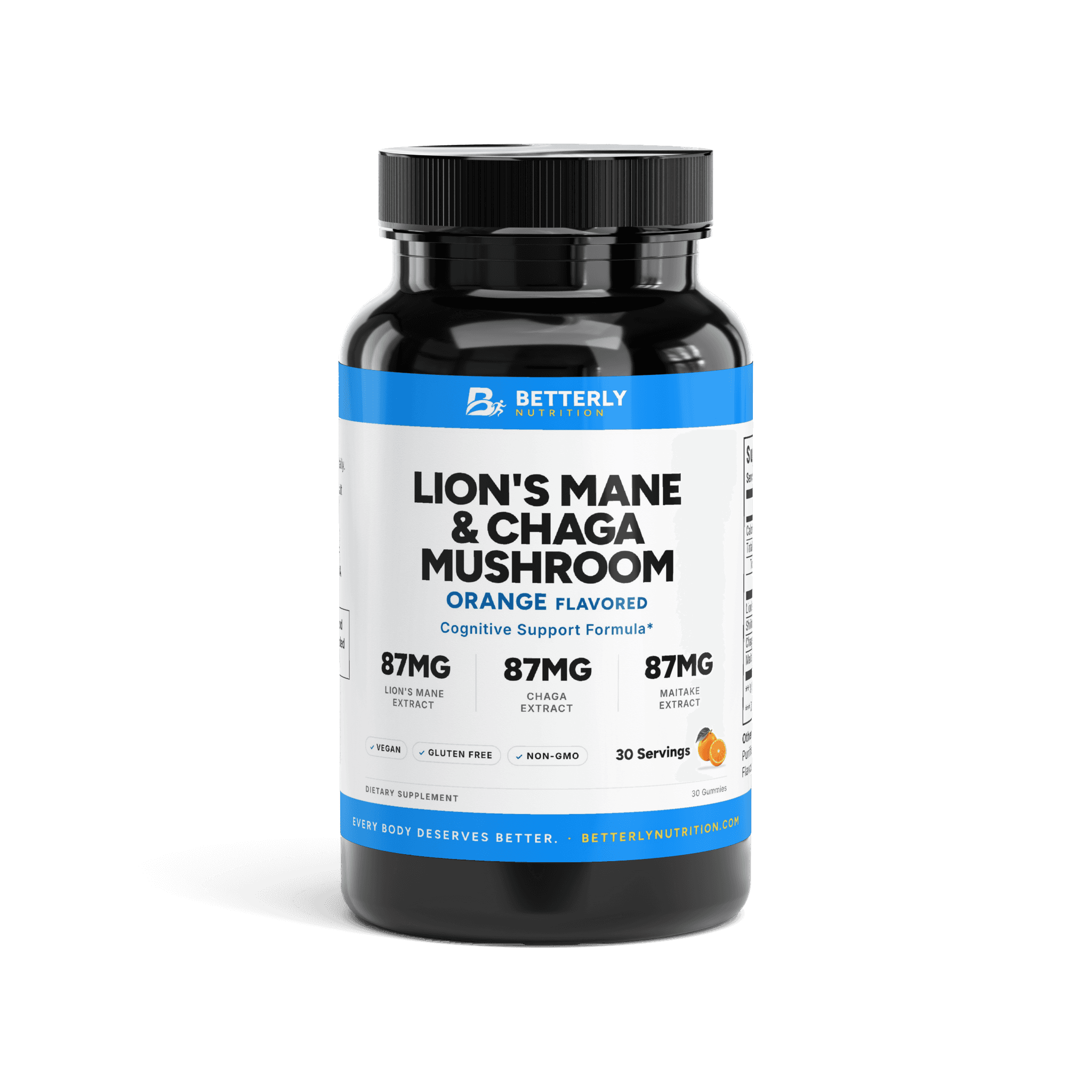
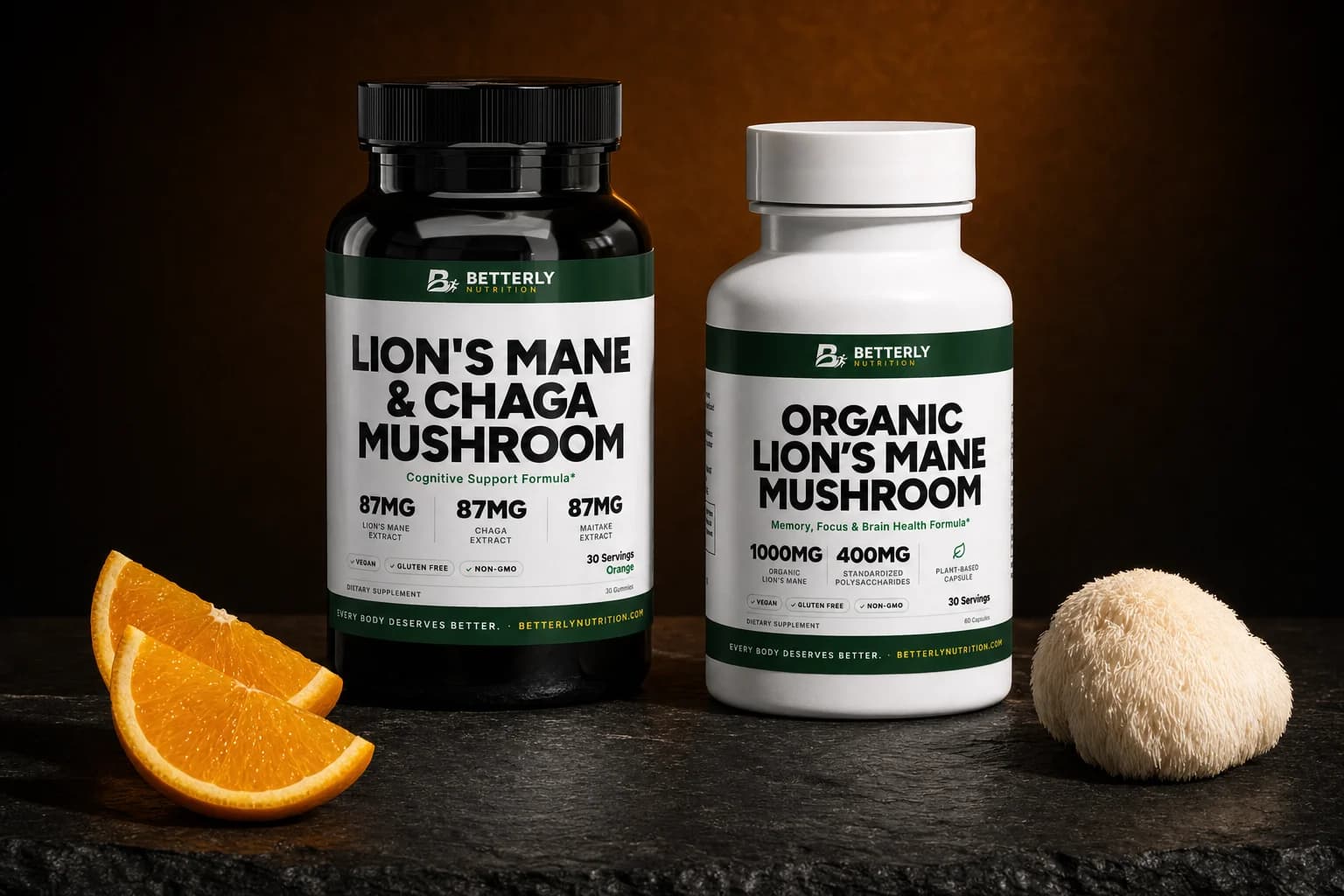
| Lion's Mane & Chaga Mushroom Gummies | 87 mg chaga extract per 1 gummy | Cognitive Support Formula | None |
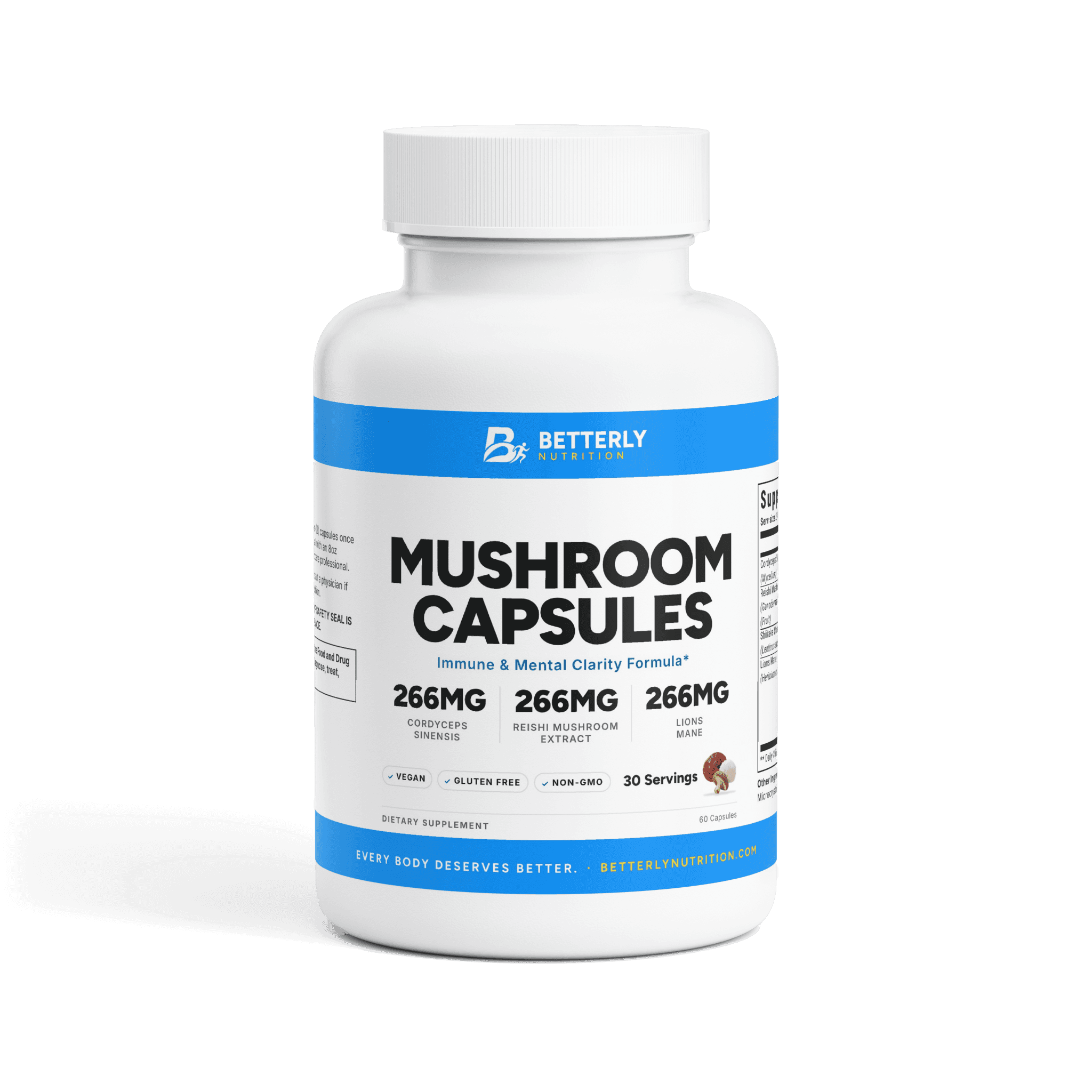
| Mushroom Capsules | Inside a 266 mg six-mushroom blend per 2 capsules | Immune & Mental Clarity Formula | None |
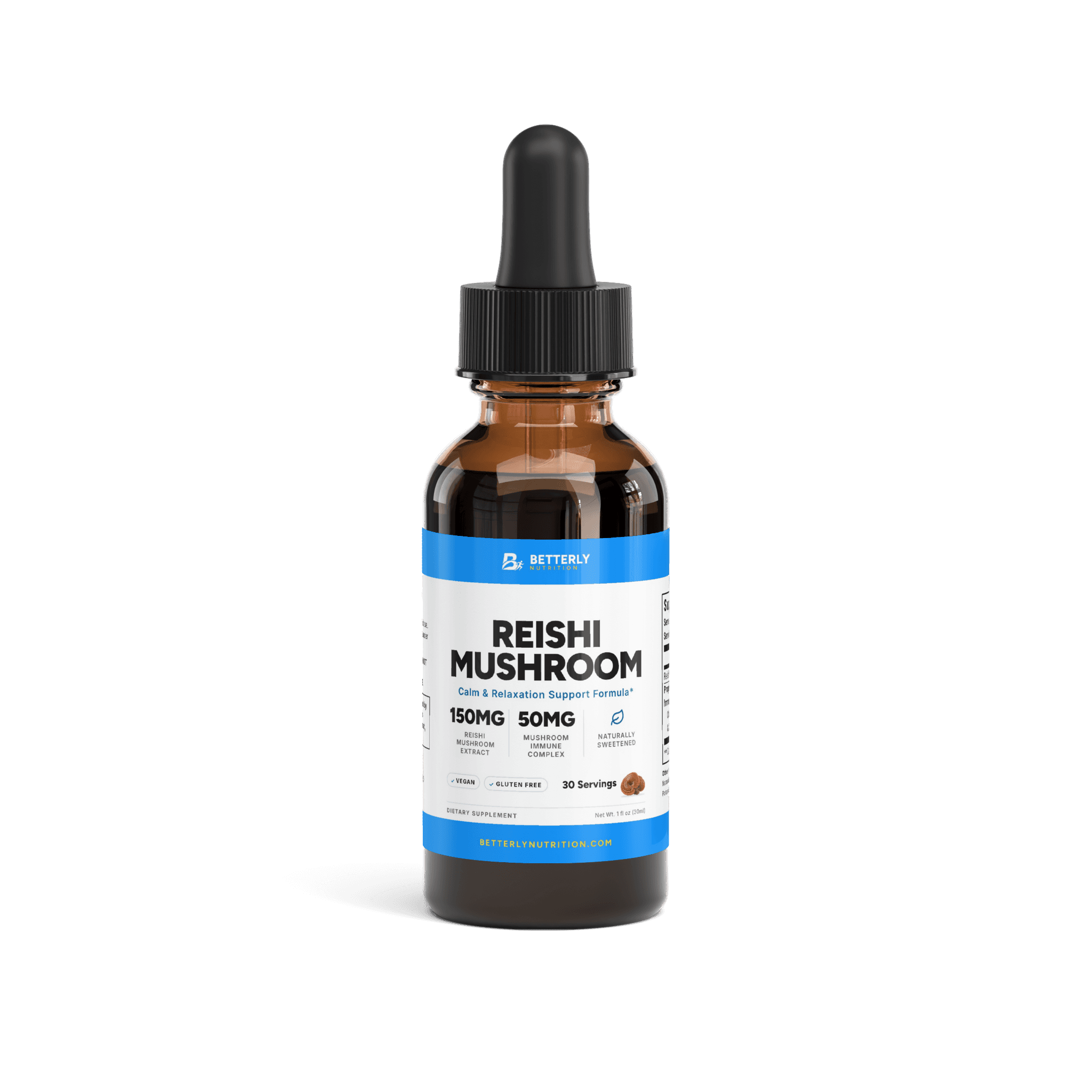
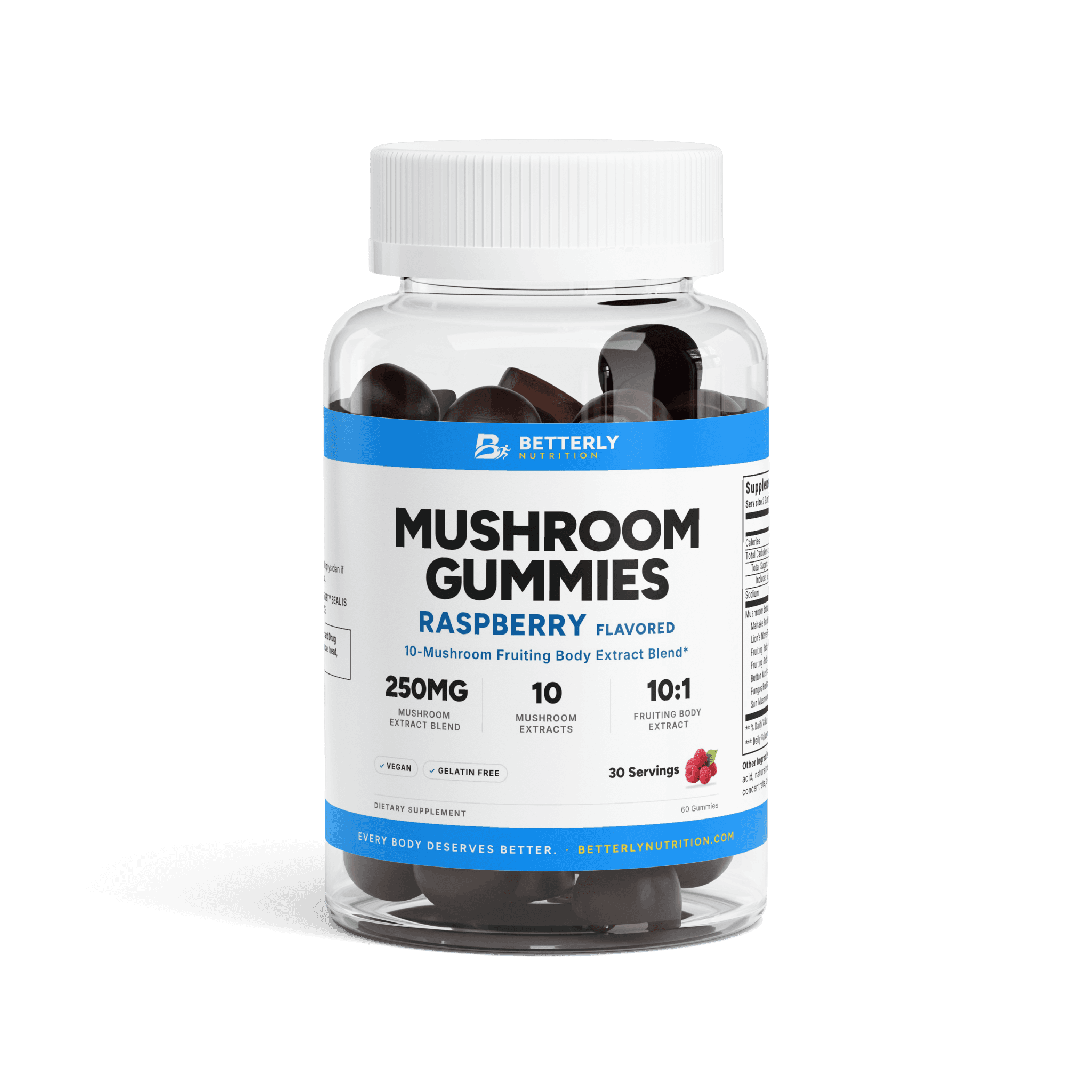
Chaga also turns up in our ten-mushroom gummies and our reishi drops, tucked inside blends with no separate amount.
From our shop: Organic Chaga Mushroom Capsules — 1,000 mg of chaga mycelium powder per 2-capsule serving, standardized to 40% polysaccharides (400 mg), in a pullulan capsule labeled vegan, gluten free and non-GMO.
How do you take chaga capsules or drops, per the label?
Our chaga capsule label tells adults to take two capsules daily or as a healthcare professional directs, and the drops label says to take 1 ml (30 drops) daily.
Each capsule bottle gives you 30 servings. Besides chaga, it lists only the capsule (pullulan, water) and silica.
The Chaga & Cordyceps Mushroom Drops say to shake well first. Each 1 ml dropper holds a 150 mg Proprietary Mushroom Immune Complex of chaga, reishi, maitake, shiitake and turkey tail, and the label marks the drops vegan and gluten free.
Three ground rules follow from the labels:
- Stay at one serving, since both labels say "Do not exceed recommended dose."
- Don't chase a number. None of our chaga labels gives an antioxidant amount, so extra servings buy nothing measurable.
- Choose one product. Each label is written as a full day on its own, so don't layer the capsules on top of the drops.
From our shop: Chaga & Cordyceps Mushroom Drops — a once-daily 1 ml dropper with chaga listed first in a 150 mg five-mushroom complex, plus 50 mg of cordyceps extract, in a stevia-sweetened glycerin base.
When don't you need chaga for antioxidant support?
You don't need chaga if you're buying it for an ORAC number, because the USDA table we could open doesn't list one and our label doesn't print one.
Chaga is also a poor match if a chart ranking it above familiar foods is what sold you. That ranking came from a lab assay on whatever sample was tested, and none of it carries over to a capsule.
Hoping to compare two chaga brands by antioxidant power? Our chaga labels don't print an antioxidant figure, and with no Daily Value for chaga, there's no reference amount to hold one against. And if you want to feel a difference, nothing on our label promises one.
If plant compounds caught your interest, our guide to reading polyphenol supplement labels shows how a blend's weight differs from a measured amount. Weighing chaga against other everyday picks? Browse our full immune-support lineup.
Who should check with a healthcare provider first?
Check with a healthcare provider before adding chaga if you're under 18, pregnant or nursing, take medication, manage a medical condition, have surgery ahead, or already take antioxidant products.
That last group is the one an ORAC chart creates: a ranking that rewards "more antioxidants" makes it easy to stack chaga on a multivitamin and extra vitamin C. Bring all of those bottles to the appointment. NCCIH notes that vitamin E supplements may interact with certain medicines, including ones that affect blood clotting. Our Daily Multivitamin Capsules list 13.5 mg of vitamin E per 2-capsule serving.
Oxalate is chaga's own flag. Our guide to pairing lion's mane with chaga sums up a 2022 case report: a man took 10 to 15 g of chaga powder daily for 3 months, plus 500 mg of vitamin C, and a kidney biopsy later showed calcium oxalate crystals. If a provider keeps track of your oxalate intake or kidney function, say "chaga" before you start.
Have a procedure on the calendar? Ask the team doing it which supplements to stop, and when. The rest is printed on the back of our chaga capsules and drops: "Do not exceed recommended dose. Consult a physician if pregnant, nursing, under 18, or have a medical condition."
FAQ: chaga ORAC and antioxidants
What is a good ORAC score?
There's no "good" ORAC score for a supplement, because no federal standard or Daily Value exists for one. ORAC figures are lab results per 100 g of a tested sample. A higher number only means that sample slowed the lab reaction more. It doesn't mean a capsule or a brand does more for you.
Is chaga antioxidant rich?
Chaga is often called antioxidant rich, but that rests on lab assays of particular samples, not a federal reference value. Chaga has no Daily Value, and no USDA table we could open lists it. Our capsule panel's 1,000 mg of mycelium powder and 400 mg of polysaccharides per 2-capsule serving don't measure antioxidant capacity. For the compounds behind talk of chaga's antioxidant properties, see the "What's inside chaga" section of our complete chaga guide.
Is chaga tea higher in antioxidants than chaga capsules?
Nobody can say from the numbers available, because no USDA table we could open measures chaga tea or chaga capsules. USDA notes that processing and preparation change antioxidant values, so a brewed tea and a dry powder would each need their own tests. The starting material can differ too, such as tea from the wild growth versus a mycelium capsule like ours.
Is chaga safe during pregnancy?
Our chaga label doesn't call chaga safe during pregnancy; its caution says to consult a physician if you're pregnant or nursing. None of the federal sources we used for this guide covers chaga in pregnancy. Talk with your prenatal care provider before taking it, and take the bottle along so the full Supplement Facts panel is in front of them.
Can you take chaga with vitamin C or a multivitamin?
Our chaga and multivitamin labels don't warn against using them together, but ask a pharmacist first if you're on medication or managing a medical condition. Our Daily Multivitamin Capsules already list 150 mg of vitamin C per 2-capsule serving. NCCIH warns that antioxidants in larger-than-usual amounts may get in the way of normal cell work. Read the oxalate note in our provider section above too, since the chaga case it describes also involved vitamin C.
Does the time of day matter for chaga capsules?
It depends on the label. Our Organic Chaga Mushroom Capsules label gives adults two capsules daily and never mentions a clock time, and the drops label gives 1 ml daily with no hour attached. Our Mushroom Capsules, which include chaga, are different: that label says to take them 20-30 minutes before a meal. For the first two, choose a time you'll remember and keep it steady.
Sources
- ORAC of Selected Foods, Release 2 (2010), withdrawal notice, USDA Agricultural Research Service (archived copy, last modified May 16, 2012)
- Oxygen Radical Absorbance Capacity (ORAC) of Selected Foods, 2007, USDA Agricultural Research Service, via govinfo
- 21 CFR 101.54, Nutrient content claims, Electronic Code of Federal Regulations
- Antioxidant Supplements: What You Need To Know, National Center for Complementary and Integrative Health
If this left you looking for somewhere to start, read organic chaga capsules with 400 mg polysaccharides — its amounts per serving are listed on the page. For the practical questions this raises, how dosing, sourcing and subscriptions work is answered in one place.