On this page
- Key takeaways
- Chaga vs reishi: what's the difference at a glance?
- What are chaga and reishi, exactly?
- Chaga vs reishi benefits: what does the evidence show?
- Is chaga or reishi better for you?
- Can you take chaga and reishi together?
- Reishi vs chaga vs lion's mane: where does lion's mane fit?
- How do you take chaga and reishi, per the label?
- When don't you need chaga or reishi?
- Who should check with a healthcare provider first?
- FAQ: chaga vs reishi
- Sources
The short answer: Chaga vs reishi pits a fungus that doesn't look like a mushroom against one that does. Chaga (Inonotus obliquus) is a sterile, charcoal-black mass on living birch. Reishi (Ganoderma lucidum) is a bitter, fan-shaped mushroom that's mostly farmed. Large, well-controlled human trials haven't shown reishi's suggested benefits, and we found no federal review of chaga. Four of our mushroom panels list both, including the reishi drops' 50 mg complex.
Key takeaways
- Chaga grows as a hard, cracked black lump on living birch, and reishi is a reddish-brown fan of a mushroom sprouting from stumps and tree bases.
- According to the NIH's LiverTox database, reishi's lab and animal findings haven't been confirmed in large, well-controlled human trials.
- Four of our mushroom formulas print chaga and reishi on the same panel, so check what you already take before adding a second bottle.
- Before trying either fungus, get a provider's go-ahead if you're expecting or breastfeeding, taking a prescription, managing a medical condition or under 18.
We sell chaga, reishi and blends that contain both, which makes us a biased guide. Product numbers below come straight off our printed Supplement Facts panels, and when we rely on an outside source, we name and link it.
Chaga vs reishi: what's the difference at a glance?
Chaga and reishi differ in source, shape and label wording: chaga is a sterile growth on living birch, and reishi is a bitter, fan-shaped mushroom that's mostly farmed.
| Chaga | Reishi | |
|---|---|---|
| Scientific name | Inonotus obliquus | Ganoderma lucidum (lingzhi) |
| What you harvest | A sterile, cinder-like mass | A reddish-brown, fan-shaped cap |
| Where it grows | Live birch in very cold regions | Tree bases, stumps; rare wild, so farmed |
| Traditional use | Tonic or tea in northern folk medicine | Traditional Chinese medicine, herbal tea |
| Our label's wording | Antioxidant Support Formula | Calm & Relaxation Support Formula |
| Federal evidence summary | None we could find | Not confirmed in large human trials |
| Stand-alone amount on our labels | 1,000 mg mycelium per 2 capsules | 150 mg per 1 ml (drops); 266 mg per 2 capsules (blend) |
The bottom three rows matter most: our labels point chaga at antioxidant support and reishi at relaxation, yet neither has strong human evidence behind it.
What are chaga and reishi, exactly?
Chaga and reishi are both wood-dwelling fungi, but only reishi grows as a true mushroom, from tree bases and stumps; chaga forms a sterile, cinder-like lump on living birch.
Chaga: the cinder conk on birch
The USDA Forest Service's Alaska Region calls chaga the cinder conk. It describes a very hard, deeply cracked, black to dark brown mass whose outside "looks like something that has been burned." Inside, it's yellow to rusty-brown, and it turns up in very cold regions on live paper birch. The page also notes chaga's traditional use as a tonic or tea in northern folk medicine.
For chaga's chemistry, we lean on our own guide to chaga's forms and how to choose one, since no federal page we found covers it. That guide groups chaga's compounds into four families: beta-glucans (cell-wall polysaccharides), a dark melanin pigment, polyphenols and triterpenes such as betulin.
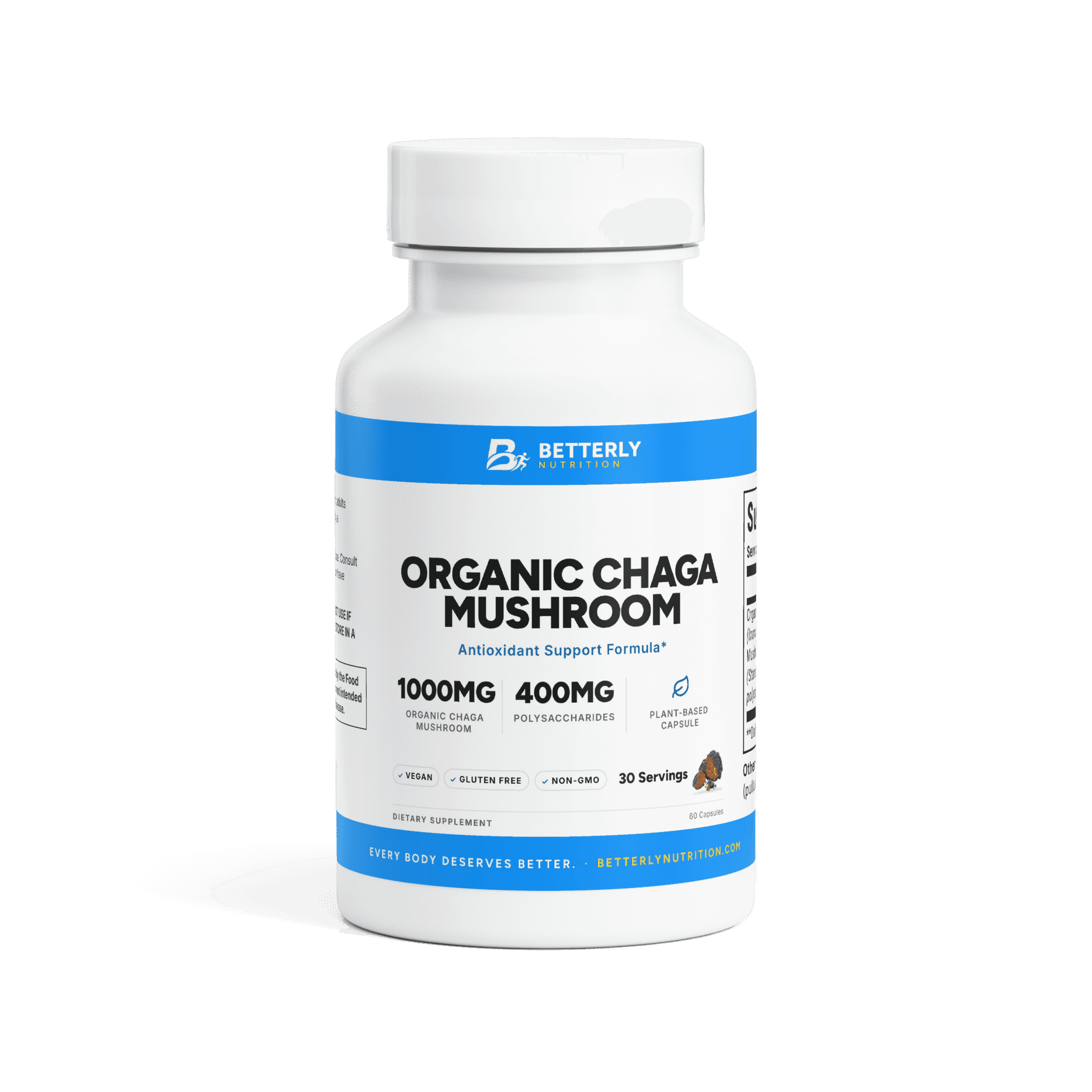
That wild lump isn't what's in our Organic Chaga Mushroom Capsules. Their panel lists organic chaga mycelium powder, the thread-like growth stage of the fungus, and measures only polysaccharides, with nothing on melanin or triterpenes. Our fruiting body vs mycelium guide explains why labels describe chaga so differently.
Reishi: the bitter fan mushroom
Reishi is scarce in the wild, so it's cultivated. LiverTox, the NIH's reference on drug- and supplement-related liver injury, says it's grown on deciduous-tree logs, sawdust or chips; wild reishi sprouts at the base of trees or on stumps.
China calls it lingzhi and Japan calls it reishi. LiverTox notes its distinctive bitter taste, its use in herbal tea and traditional Chinese medicine, and its sale in Western countries as an extract, often in multi-ingredient products.
LiverTox also lists what's been found in reishi extracts: polysaccharides, triterpenoids, nucleosides, ergosterols, fatty acids, proteins, peptides and trace elements. Polysaccharides and triterpenoids are the most characteristic, and which compound drives reishi's purported effects is unknown, it adds.
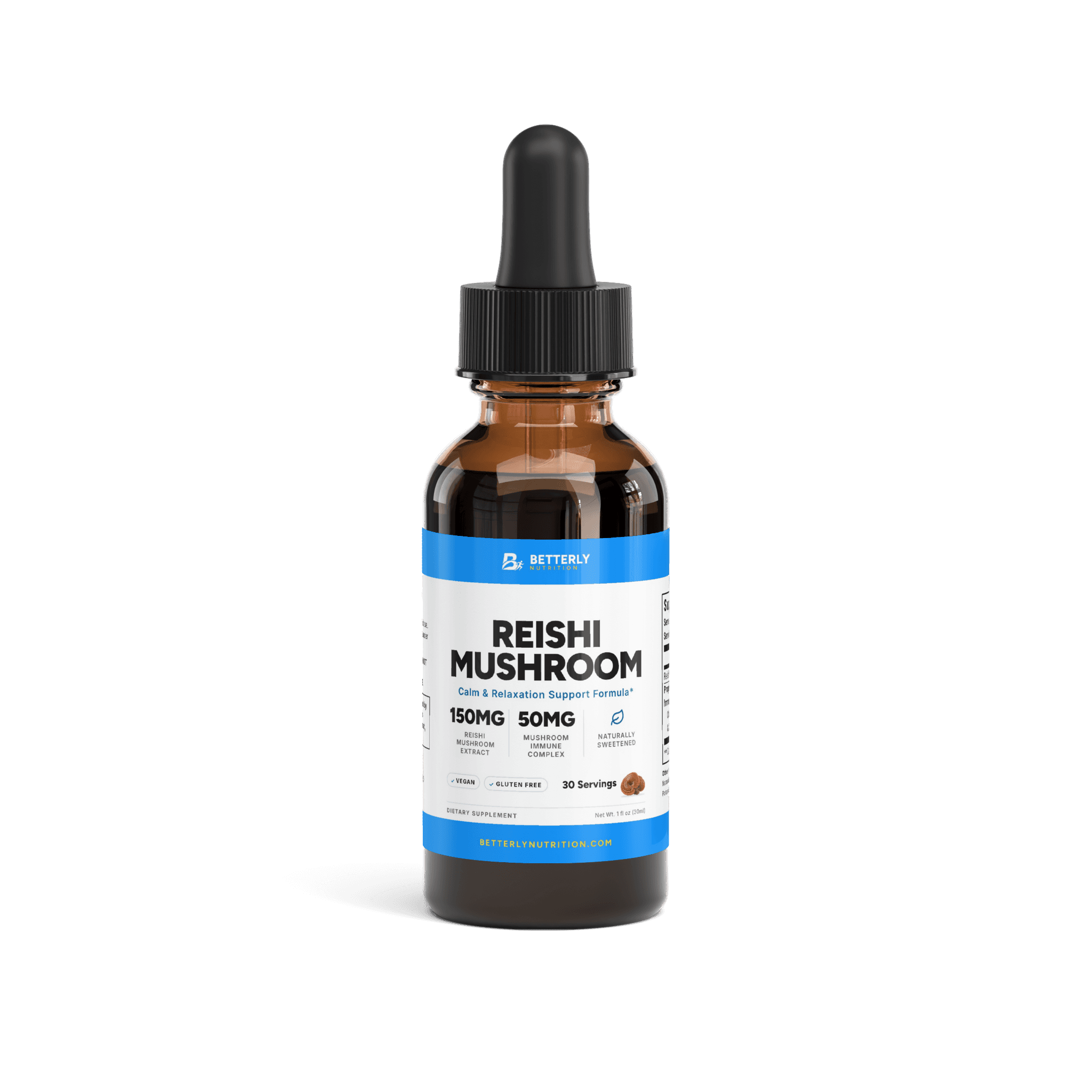
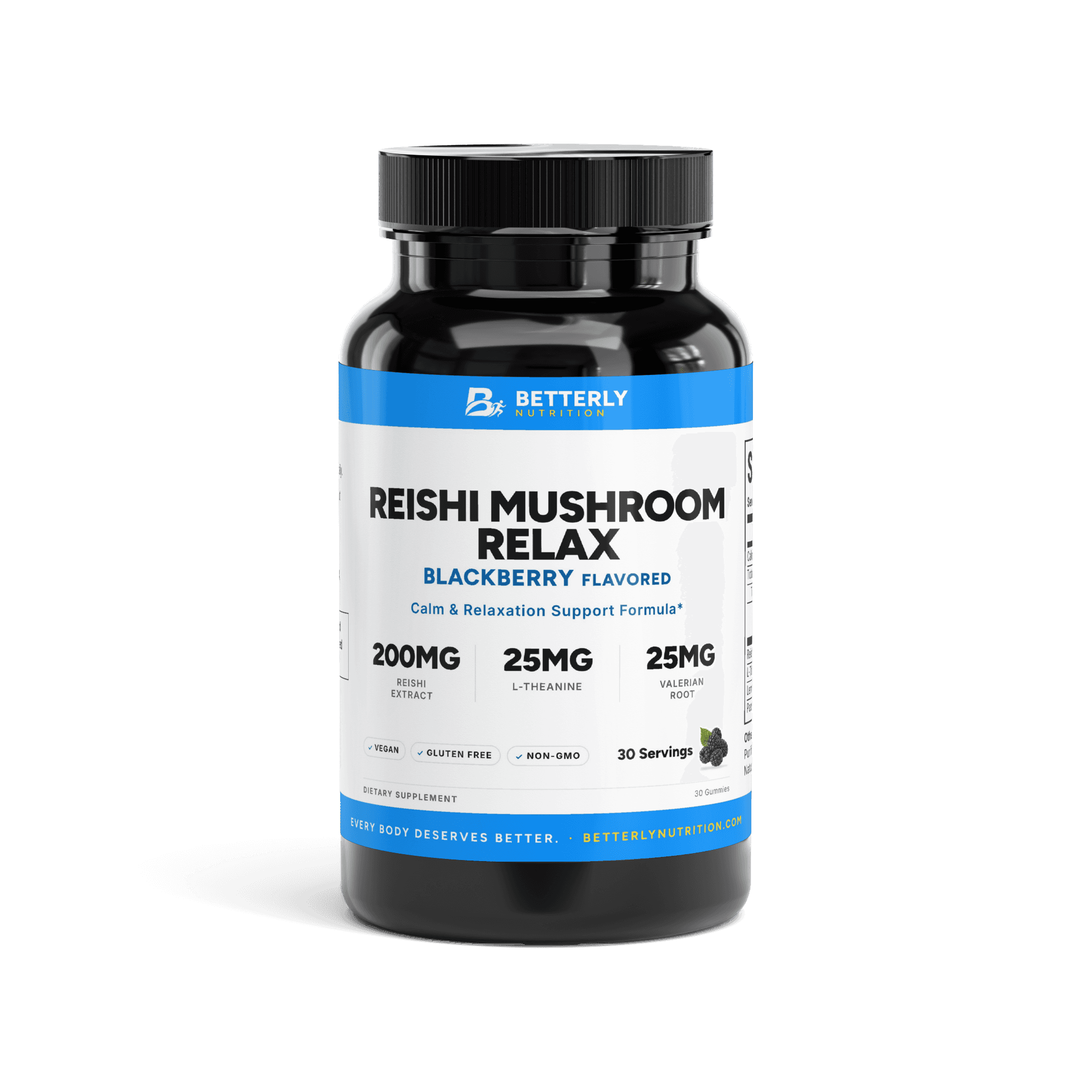
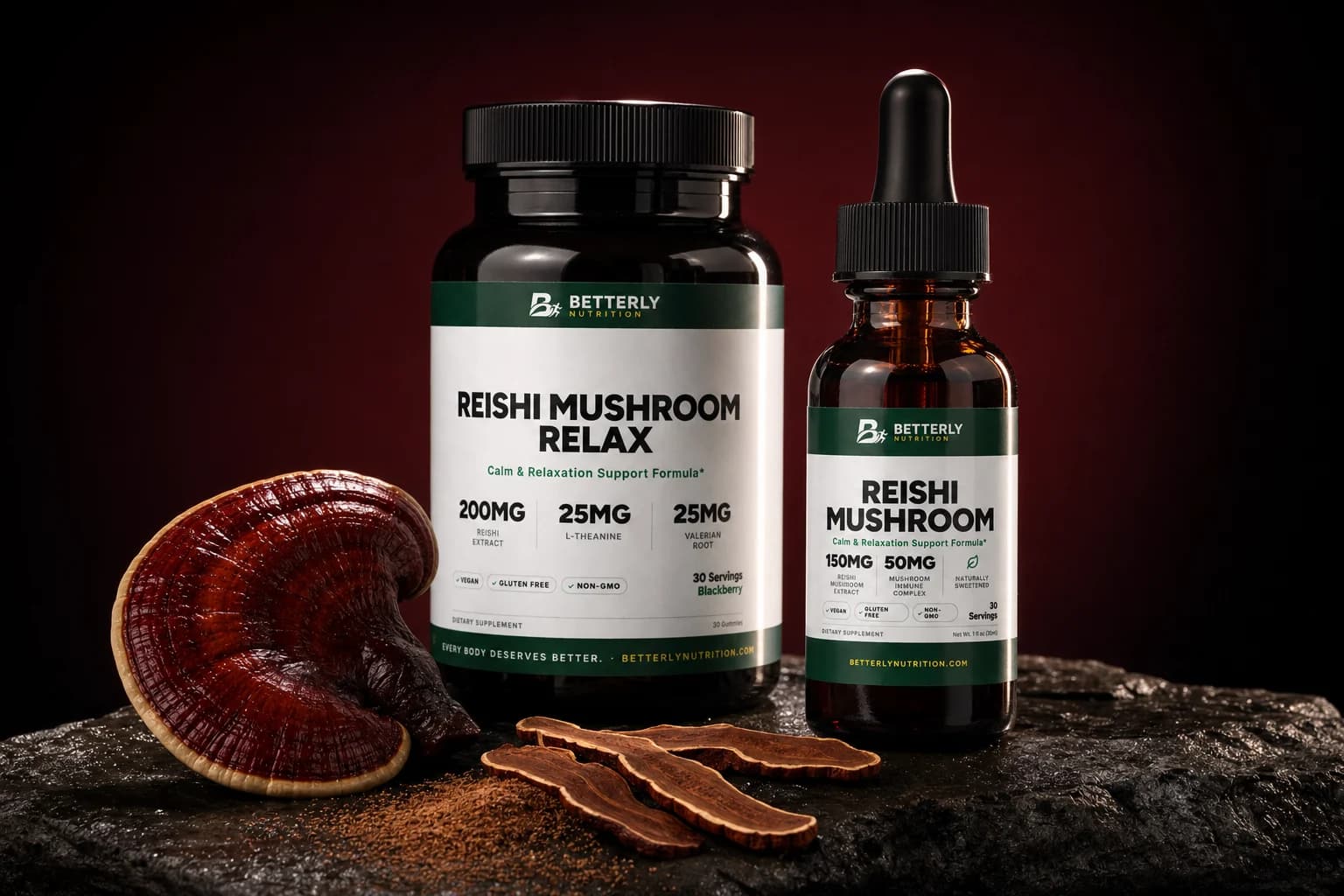
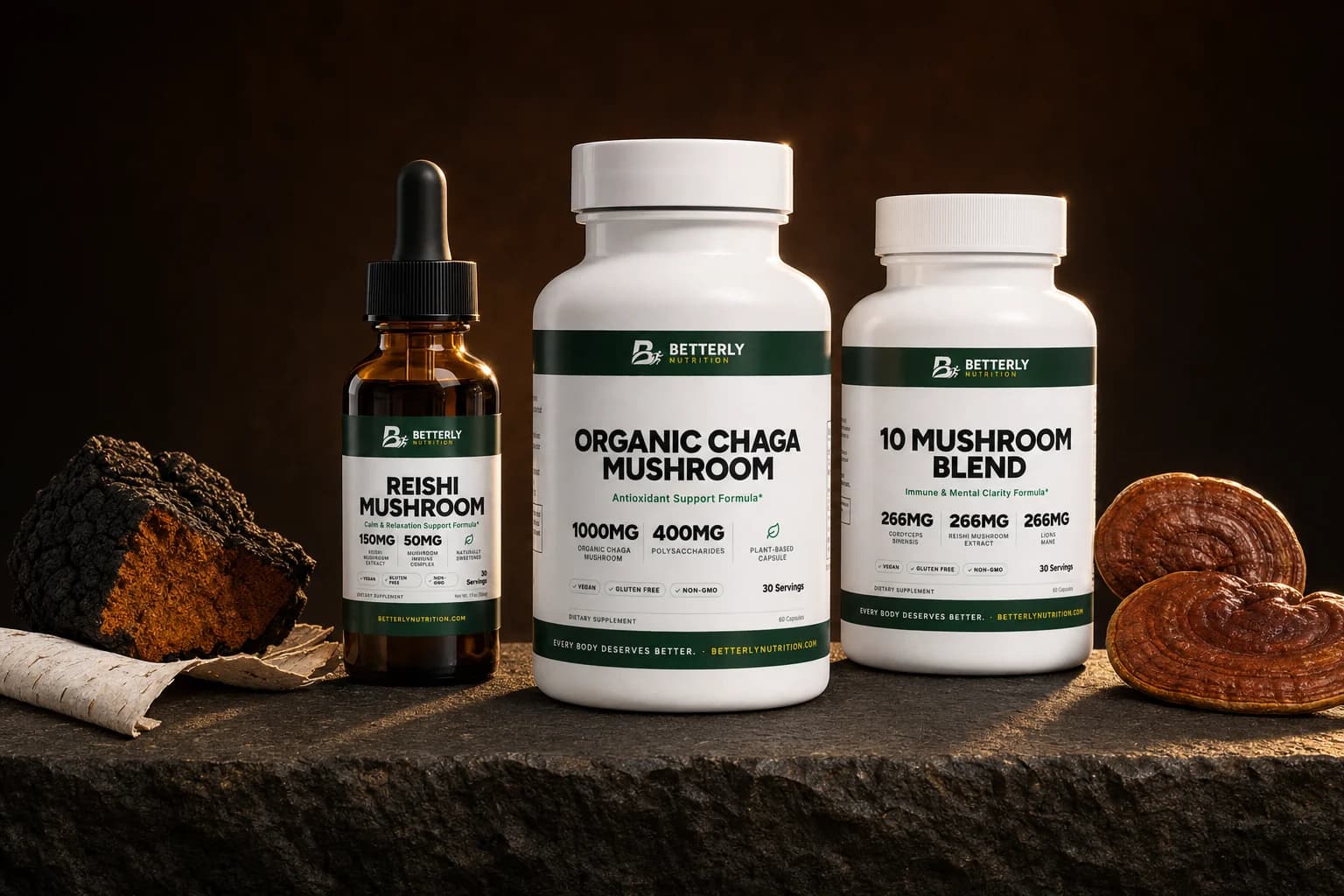
Our Reishi Mushroom Calm Drops are that kind of Western extract product: 150 mg of reishi extract per 1 ml serving, plus a 50 mg complex of five mushrooms.
Chaga vs reishi benefits: what does the evidence show?
Chaga and reishi benefits remain largely unproven in people. Reishi's lab and animal results haven't been confirmed in solid human trials, and chaga lacks even a federal review.
LiverTox is plain about reishi. Cell-culture and animal studies hinted at many activities, but none has been demonstrated in human trials big enough and well enough controlled to count. For chaga, we turned up no NIH fact sheet, no NCCIH herb page and no LiverTox entry.
The chaga capsules say "Antioxidant Support Formula" and the reishi drops "Calm & Relaxation Support Formula," which describe a supporting role, not a promised effect. The NIH Office of Dietary Supplements (ODS) adds that the FDA doesn't decide whether a supplement is effective before it goes on sale.
Is chaga or reishi better for you?
Neither chaga nor reishi is better across the board; it hinges on whether you want one measured ingredient, a wind-down ritual or both in one bottle.
| Your situation | Start with | What the label shows |
|---|---|---|
| You want one ingredient, one printed amount | Chaga capsules | 1,000 mg of a single species |
| You want a small wind-down ritual | Reishi drops | "Calm & Relaxation Support" |
| You'd rather not taste anything | Capsules (chaga or the 10-mushroom blend) | Swallowed whole, no drops to taste |
| You'd rather open one bottle | Mushroom Capsules | A reishi row plus chaga in the blend |
| Your cabinet already holds a mushroom blend | Neither, for now | Chaga or reishi may already be listed |
The takeaway: format and ingredient count decide this, not a winning fungus. For wider options, our Immune Support collection puts the chaga capsules next to non-mushroom picks.
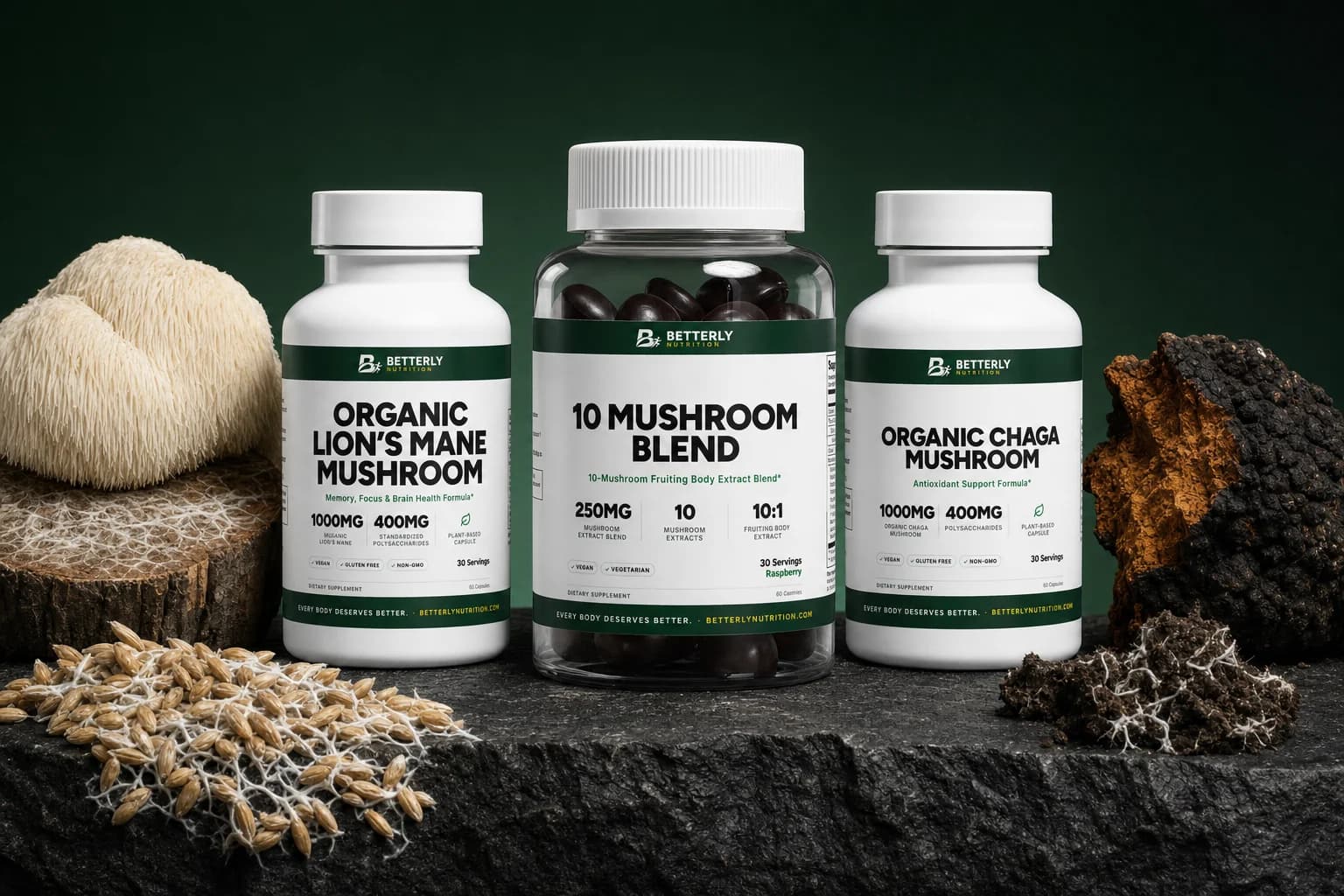
From our shop: Organic Chaga Mushroom Capsules — 1,000 mg of organic chaga mycelium powder per 2-capsule serving, standardized to 400 mg of polysaccharides, in a plant-based capsule.
Can you take chaga and reishi together?
Yes, nothing on our chaga or reishi labels rules out combining them, and four of our formulas already put both fungi on a single panel.
The catch: you may already be doubling up.
| Product (serving) | Chaga on the panel | Reishi on the panel |
|---|---|---|
| Organic Chaga Mushroom Capsules (2 capsules) | 1,000 mg mycelium powder | None |
| Reishi Mushroom Calm Drops (1 ml) | Share of a 50 mg complex | 150 mg extract, plus a share of the complex |
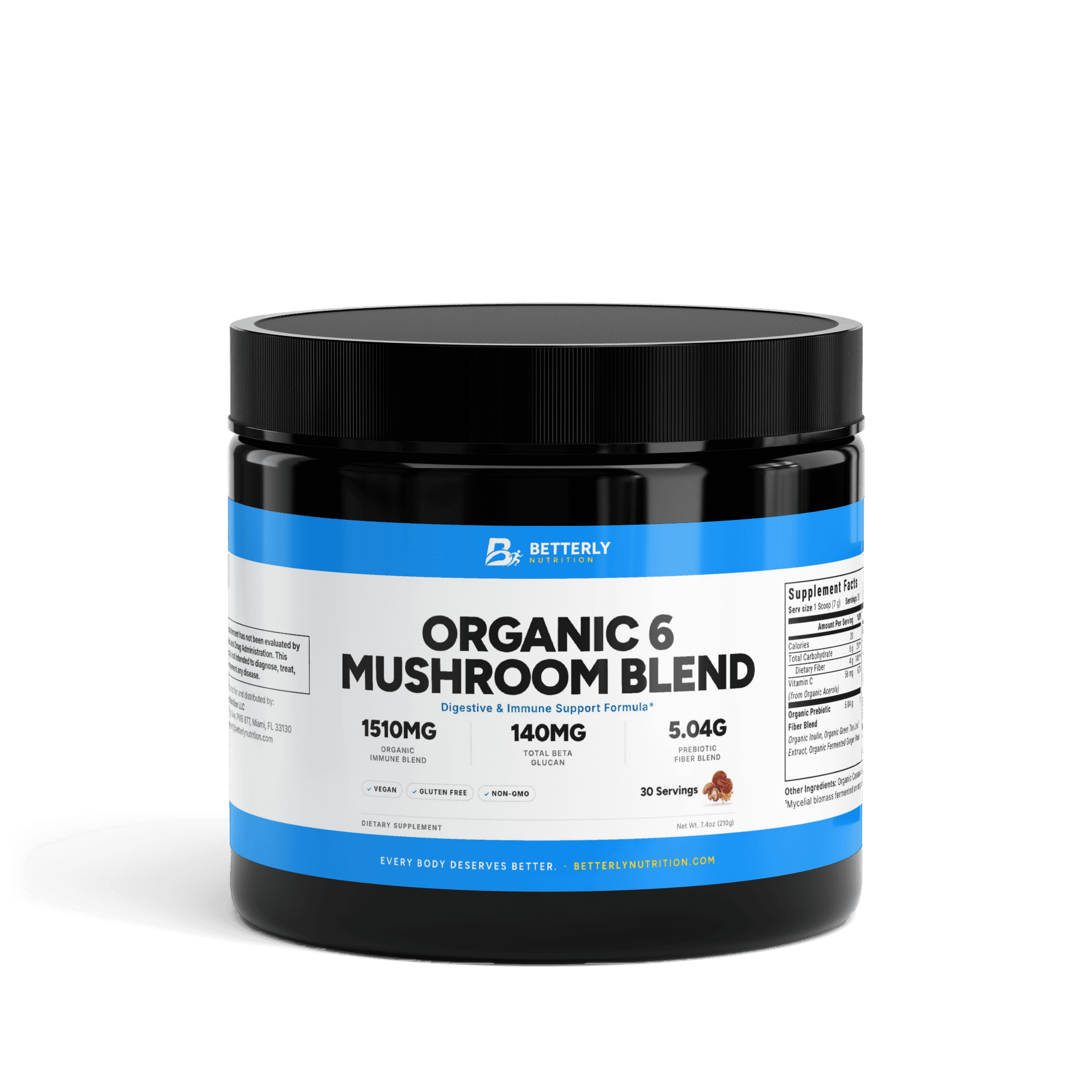
| Mushroom Capsules (2 capsules) | Share of a 266 mg blend | 266 mg extract (fruit) |
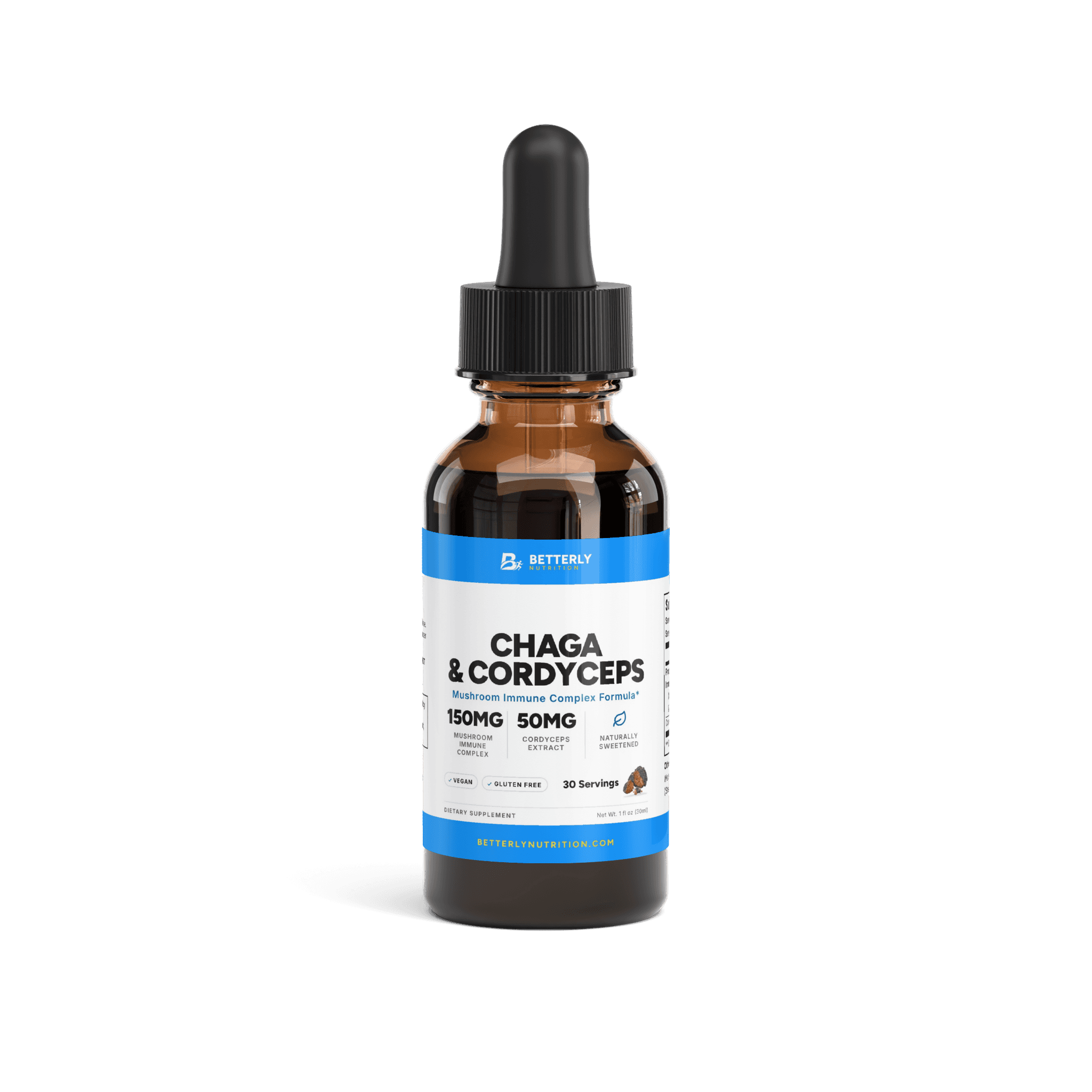
| Chaga & Cordyceps Mushroom Drops (1 ml) | Share of a 150 mg complex | Share of the same complex |
| Mushroom Gummies (2 gummies) | Share of a 250 mg blend | Share of the same blend |
Of these five, only the chaga capsules print a stand-alone chaga amount. Reishi gets its own row in two: 150 mg in the drops and 266 mg in the Mushroom Capsules. Every other share of chaga or reishi is folded into a blend total, with no per-mushroom split.
Pair a serving of the chaga capsules with a serving of the reishi drops and your day holds 1,000 mg of chaga mycelium, 150 mg of reishi extract and the drops' 50 mg complex, which adds an unstated bit more chaga. Swap the drops for the Mushroom Capsules and reishi rises to 266 mg, with chaga again inside a blend.
ODS says side effects are more likely with many different supplements or high doses. Chaga also carries an oxalate caution, explained in the safety section of our chaga guide, so read it before stacking chaga products.
Reishi vs chaga vs lion's mane: where does lion's mane fit?
Lion's mane (Hericium erinaceus) usually comes up as the third option, and our lion's mane label points it at memory and focus rather than antioxidants or relaxation.
Our Organic Lion's Mane Mushroom Capsules print 1,000 mg of organic lion's mane per 2-capsule serving, standardized to 40% polysaccharides (400 mg), the same numbers as our chaga capsules. Reishi is the odd one out: we sell it as drops and gummies, not a single-species capsule.
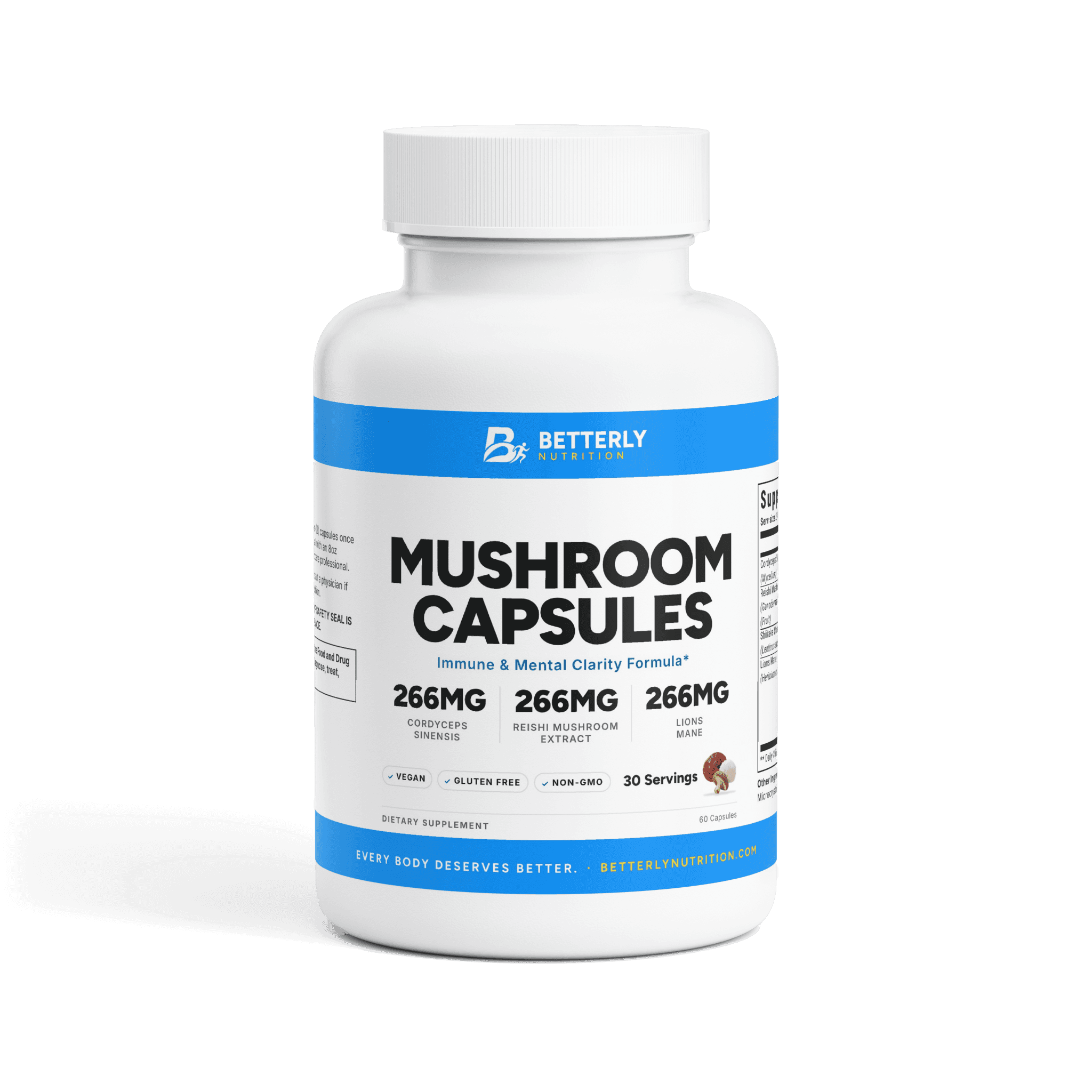
For all three plus cordyceps in one bottle, the Mushroom Capsules print 266 mg rows for cordyceps, reishi, shiitake and lion's mane, while chaga shares a separate 266 mg blend with five other species. For the research on lion's mane, see our look at what lion's mane does.
How do you take chaga and reishi, per the label?
The chaga capsules' label suggests two capsules a day for adults, and the reishi drops' label asks for 1 ml (30 drops) a day, shaken first.
- Chaga capsules: the label's suggested use is "adults take two (2) capsules daily or as directed by a healthcare professional." The 60-capsule bottle holds 30 servings.
- Reishi drops: the label says "Shake well. Take 1 ml (30 drops) daily." The 1 fl oz (30 ml) bottle holds 30 servings.
- Mushroom Capsules: two capsules once a day. Its directions suggest taking them "20-30 min before a meal with an 8oz (237ml) glass of water" for best results.
- Begin with one product before adding the other, so any change you notice traces to a single bottle.
Only that blend ties its serving to a meal. The chaga and reishi directions name an amount per day and no clock time, so pick one you'll remember. All three warn against exceeding the recommended dose, and combining products doesn't loosen that limit.
What should you check on a chaga or reishi label?
- The species: our chaga panel names Inonotus obliquus, and the blend names Ganoderma lucidum. Our reishi drops just say "Reishi Mushroom Extract," with no species or part.
- Standardization: our chaga is standardized to 40% polysaccharides, or 400 mg. The ODS botanical background fact sheet says standardization isn't required by U.S. law and has no legal definition here, and the word alone doesn't prove quality. Our panel also doesn't say how much of that 400 mg is beta-glucan.
- Liquid base: in ODS's definition, a tincture means steeping a botanical in alcohol and water. Our reishi drops list glycerin, purified water, natural flavoring, stevia and two preservatives, with no alcohol on the panel, so they're glycerin-based drops, not a tincture by that definition.
From our shop: Reishi Mushroom Calm Drops — glycerin-based liquid drops with 150 mg of reishi extract per 1 ml (30 drops), plus a 50 mg mushroom complex that lists chaga.
When don't you need chaga or reishi?
You can skip chaga and reishi if an online promise is the reason you're shopping, because the federal sources we checked don't support a specific benefit for either fungus.
Neither is a nutrient. Both panels mark the Daily Value as not established, so there's no official amount you're falling short of. If your meals, sleep and stress habits already feel steady, these have no gap to fill.
Who should check with a healthcare provider first?
Run chaga or reishi past a healthcare provider first if pregnancy, nursing, a prescription, upcoming surgery, a medical condition or being under 18 applies to you.
Our chaga capsules, reishi drops and Mushroom Capsules all print the same caution: "Consult a physician if pregnant, nursing, under 18, or have a medical condition." Beyond that label line:
- ODS says some supplements can raise bleeding risk and, if taken before surgery, can change the way anesthesia affects you. Give your surgeon and dentist plenty of notice.
- ODS also notes that some supplements and medicines don't mix well, so show the bottles to your pharmacist.
- LiverTox scores reishi a "D" on its likelihood scale, which marks it as a possible rare cause of clinically apparent liver injury. The grade leans on a few case reports, and LiverTox calls the link to reishi in those cases somewhat weak. Our reishi side effects guide covers those reports and the warning signs.
- A past bad reaction to any mushroom is worth mentioning to your provider first.
FAQ: chaga vs reishi
Is reishi or chaga better for sleep?
Reishi is the closer fit if winding down is your goal, though you won't find a sleep claim on our reishi or chaga label. Our Reishi Mushroom Calm Drops are sold as a calm and relaxation formula; the chaga capsules speak only to antioxidant support. LiverTox adds that no adequately sized, well-controlled human trial has confirmed reishi's suggested benefits, so think of the drops as one small part of a calmer routine.
Can you make chaga and reishi tea together?
Yes, you can simmer chaga and reishi in the same pot, but keep the chaga portion moderate because of its oxalate content (see the section on taking them together). ODS calls this a decoction, used for tougher plant parts such as roots and bark: they go into water brought to a boil, then simmer at lower heat for several minutes. Expect reishi's bitterness to lead, and follow the seller's amounts.
Is chaga actually a mushroom?
Not in the everyday sense. Chaga is a fungus, but the black lump sold as chaga is a sterile growth rather than a cap. The USDA Forest Service says it produces no spores, and that short-lived, spore-bearing conks may appear after the birch dies. Reishi, by contrast, is the mushroom itself, a large reddish-brown fan in LiverTox's description.
How long do chaga and reishi take to work?
There's no honest timeline for chaga or reishi, so we won't offer one. Our labels don't describe any effect you'd feel, and the federal sources cited here give no timeframe for either fungus. Each label asks for one serving a day and warns against more. If you've used one for a while and can't point to a difference, it's fair to drop it.
Is it OK to take chaga and reishi daily?
Yes, both labels are built around one serving a day. What's missing is any federal word on how long a daily habit can safely run. LiverTox says small, short reishi trials reported few or no side effects, and it also records the rare liver case reports. Chaga's oxalate content is its own reason to keep amounts moderate. Stay within one serving of each, and mention long-term plans to your provider.
Sources
- Lingzhi, Reishi (LiverTox, National Institutes of Health)
- Hardwood Stem Decays (USDA Forest Service, Alaska Region)
- Dietary Supplements: What You Need to Know (NIH Office of Dietary Supplements)
- Botanical Dietary Supplements Background Information (NIH Office of Dietary Supplements)
If this left you looking for somewhere to start, read chaga mushroom capsules with 1,000 mg per serving — its amounts per serving are listed on the page. For the practical questions this raises, how dosing, sourcing and subscriptions work is answered in one place.