On this page
- Key takeaways
- What's the difference between a fruiting body and mycelium?
- Is fruiting body or mycelium better?
- What do five of our labels say about fruiting body vs mycelium?
- Lion's mane fruiting body vs mycelium: does it matter?
- Cordyceps, reishi and chaga: which part are you getting?
- Which should you choose: fruiting body, mycelium or both?
- How do you take these mushroom products, per the label?
- When don't you need a mushroom supplement, or a named part?
- Who should check with a healthcare provider first?
- FAQ: fruiting body vs mycelium
- Sources
The short answer: Fruiting body vs mycelium comes down to which part of the fungus went into the bottle. The fruiting body is the cap, stem or shelf that releases spores, and mycelium is the web of threads underneath. Neither part is proven better. Five of our mushroom labels span both, from a 250 mg fruiting body extract blend per 2-gummy serving to a 1,510 mg mycelial fermented blend per 1-scoop (7 g) serving.
Key takeaways
- A fruiting body is the spore-bearing mushroom, while mycelium is the thread-like network that grows through wood, soil or grain before any mushroom appears.
- No federal source we read ranks one part above the other, and LiverTox says which ingredient drives lion's mane's purported effects is unknown.
- The USDA Forest Service calls chaga's black birch growth sterile, so a chaga "fruiting body" line, two of ours included, is a loose fit.
- A panel that names the part, the species and an amount per serving tells you more than either word does alone.
We sell all five products whose panels we read below. They land on both sides of this question, so we gain nothing by crowning a winner, and we'll flag the gaps in our own labels. Every number comes from their Supplement Facts panels.
What's the difference between a fruiting body and mycelium?
A fruiting body is the mushroom you can see, built to shed spores, while mycelium is the mass of fine threads, called hyphae, that feeds and spreads the fungus.
Much of a fungus's life is spent as mycelium, threading through a log, forest soil or, on a farm, a bag of grain or sawdust. A fruiting body forms only when conditions are right.
On labels, the fruiting body shows up as "fruiting body" or just "(Fruit)," and mycelium as "mycelium," "mycelial biomass" or "mycelial fermented." Many labels name neither. The other seven products in our mushroom collection list species and milligrams but never the part.
Is fruiting body or mycelium better?
Neither fruiting body nor mycelium has been shown to be the better choice, and the human evidence for mushroom supplements is thin whichever part you pick.
LiverTox's lion's mane entry, an NIH reference from the National Library of Medicine, says most of that mushroom's claimed effects have shown up in cell culture or animals but not in people. When the whole mushroom's human record is that sparse, nobody can say which half of it works better.
Brands tend to argue for the part they sell. The fruiting body camp asks what else is in the jar: mycelium grown on grain is often harvested with that grain, they argue, and a label reading "mycelium" can't show the split. That's fair to ask of any mycelium product, ours included.
The mycelium camp counters that indoor growing keeps batches consistent. Fruiting body labels have blind spots too: the words alone don't give milligrams per species or say extract versus ground mushroom.
In its botanical background fact sheet, the NIH Office of Dietary Supplements says judging a plant product's quality from its label is difficult. It adds that "standardized" has no legal or regulatory definition in the United States. We think both points hold for mushrooms, so neither part name works as a quality seal. Weighing one species against a blend? See our comparison of lion's mane and a ten-mushroom complex.
What do five of our labels say about fruiting body vs mycelium?
Across these five mushroom labels, one uses only fruiting body, two use only mycelium, one mixes both into a single powder, and one lists them row by row.
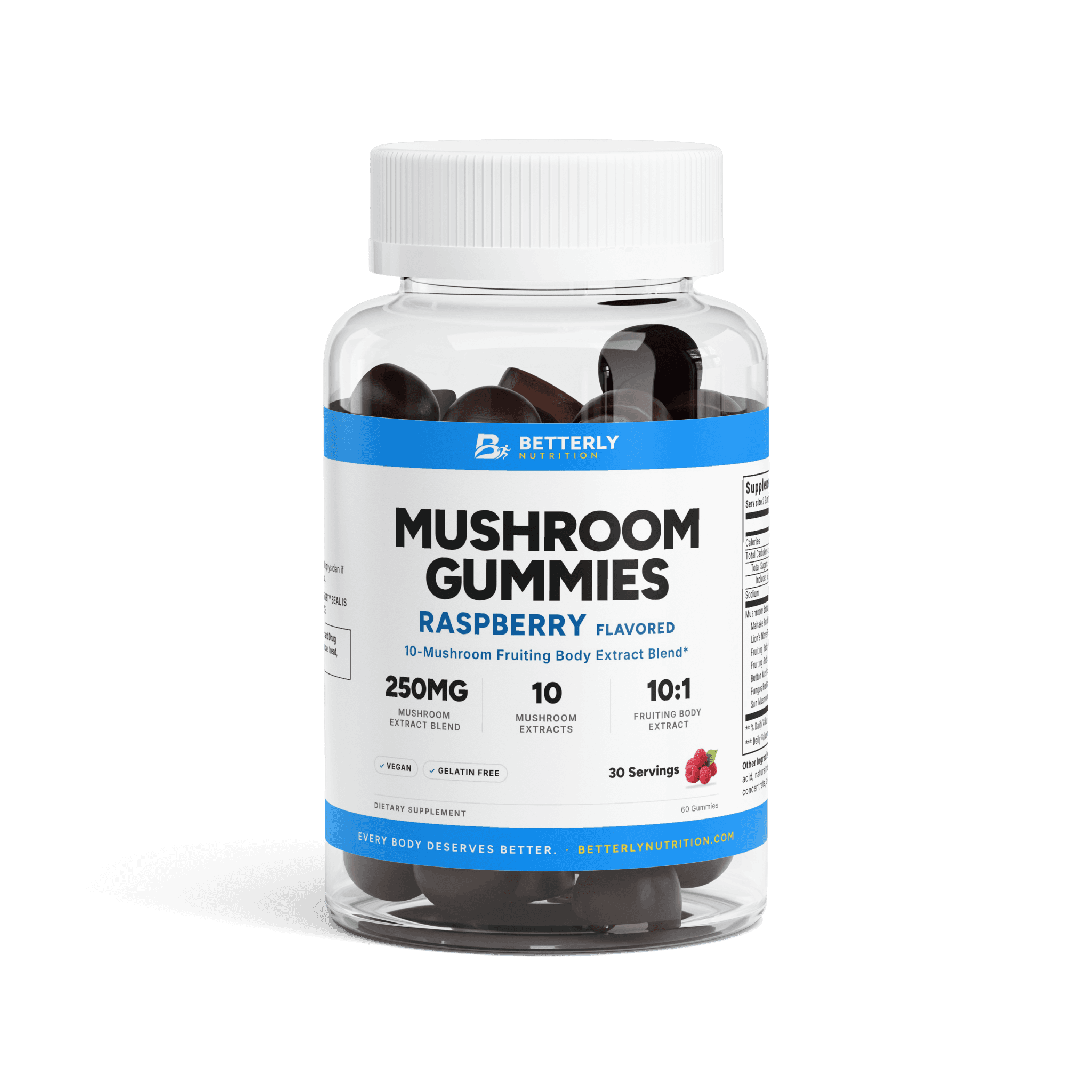
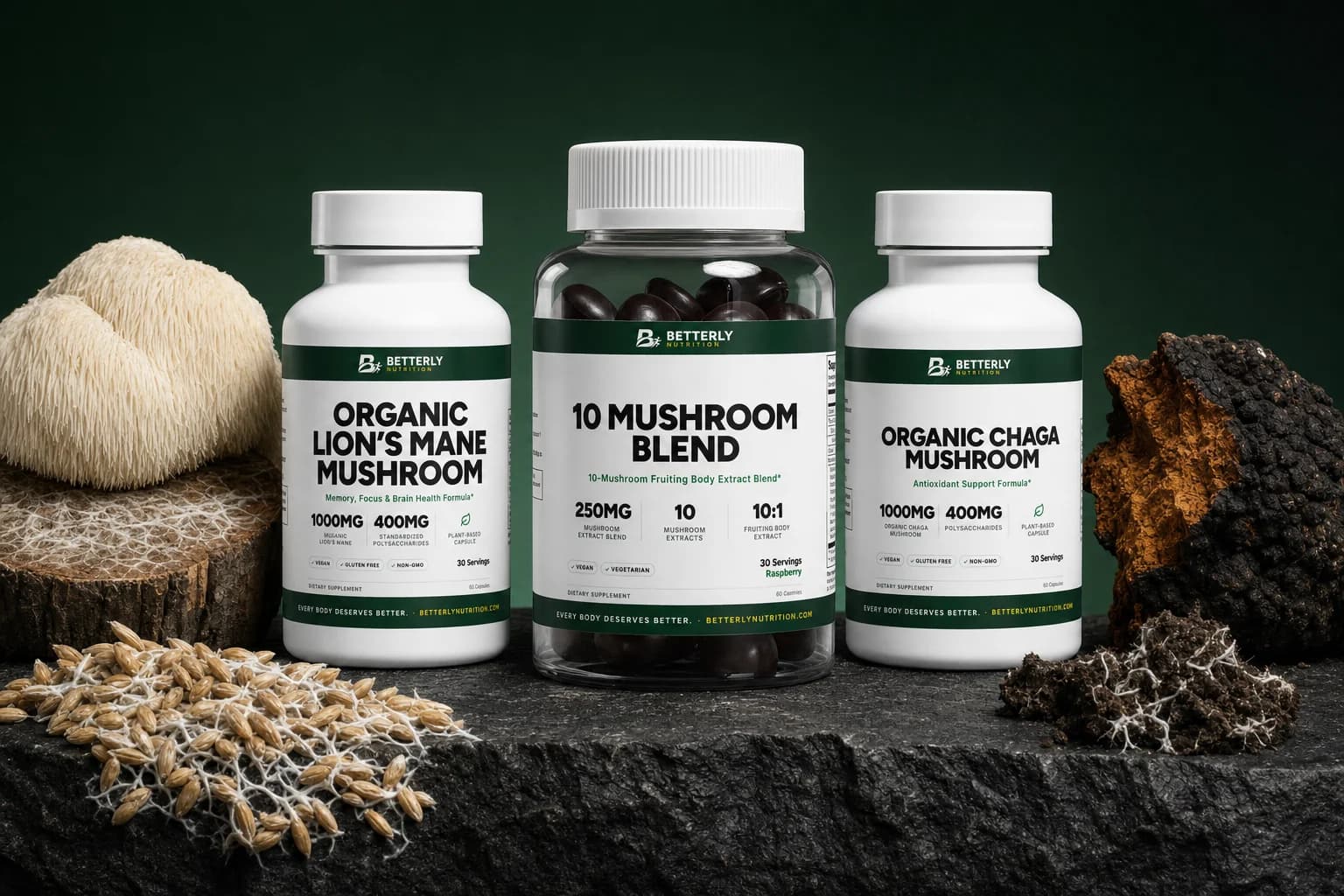
The Mushroom Gummies print "Fruiting Body 10:1 Extract" after every one of their ten mushrooms. All ten sit inside one 250 mg Mushroom Extract Blend per 2-gummy serving, and no species gets a number of its own. Our guide to mushroom extract vs powder explains that 10:1.
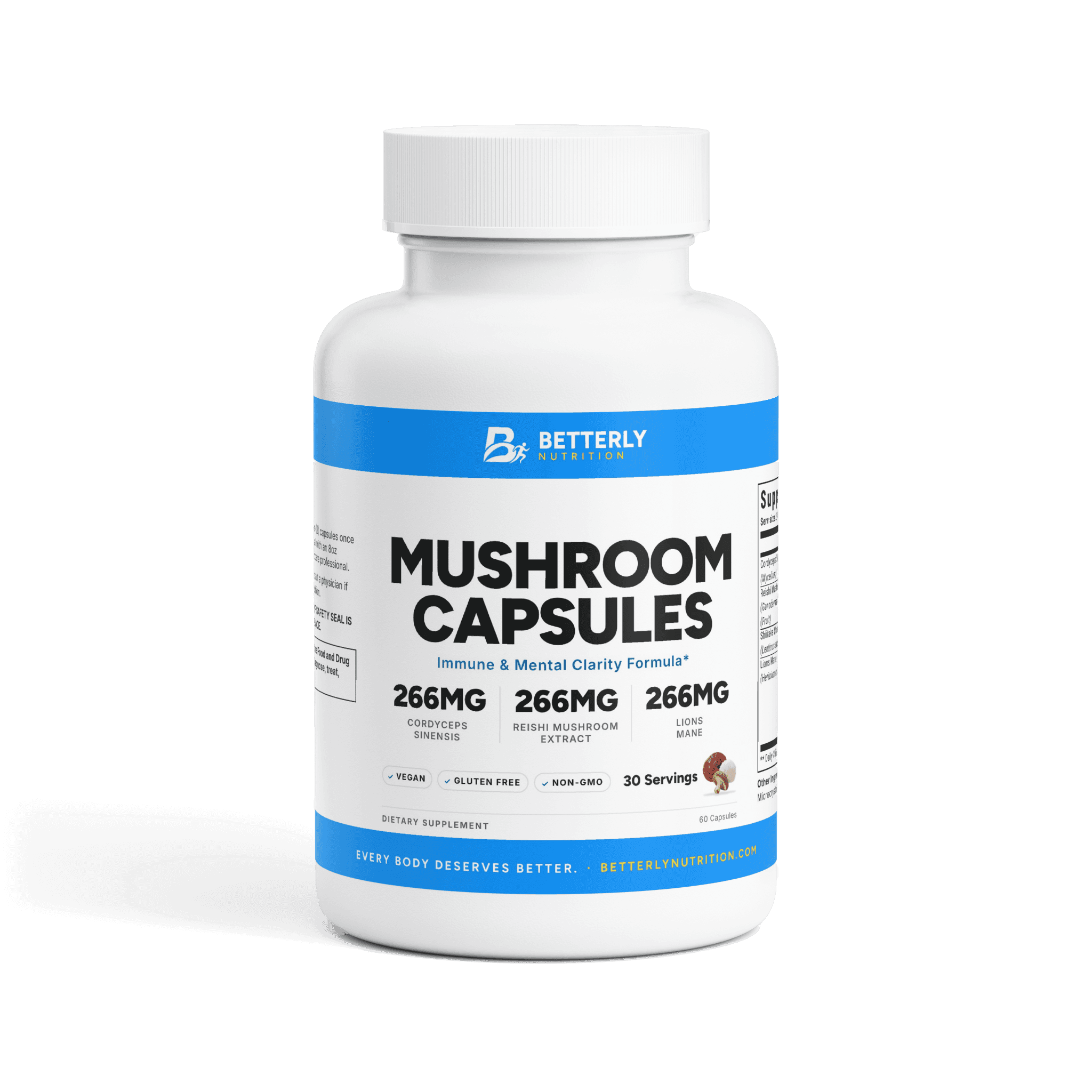
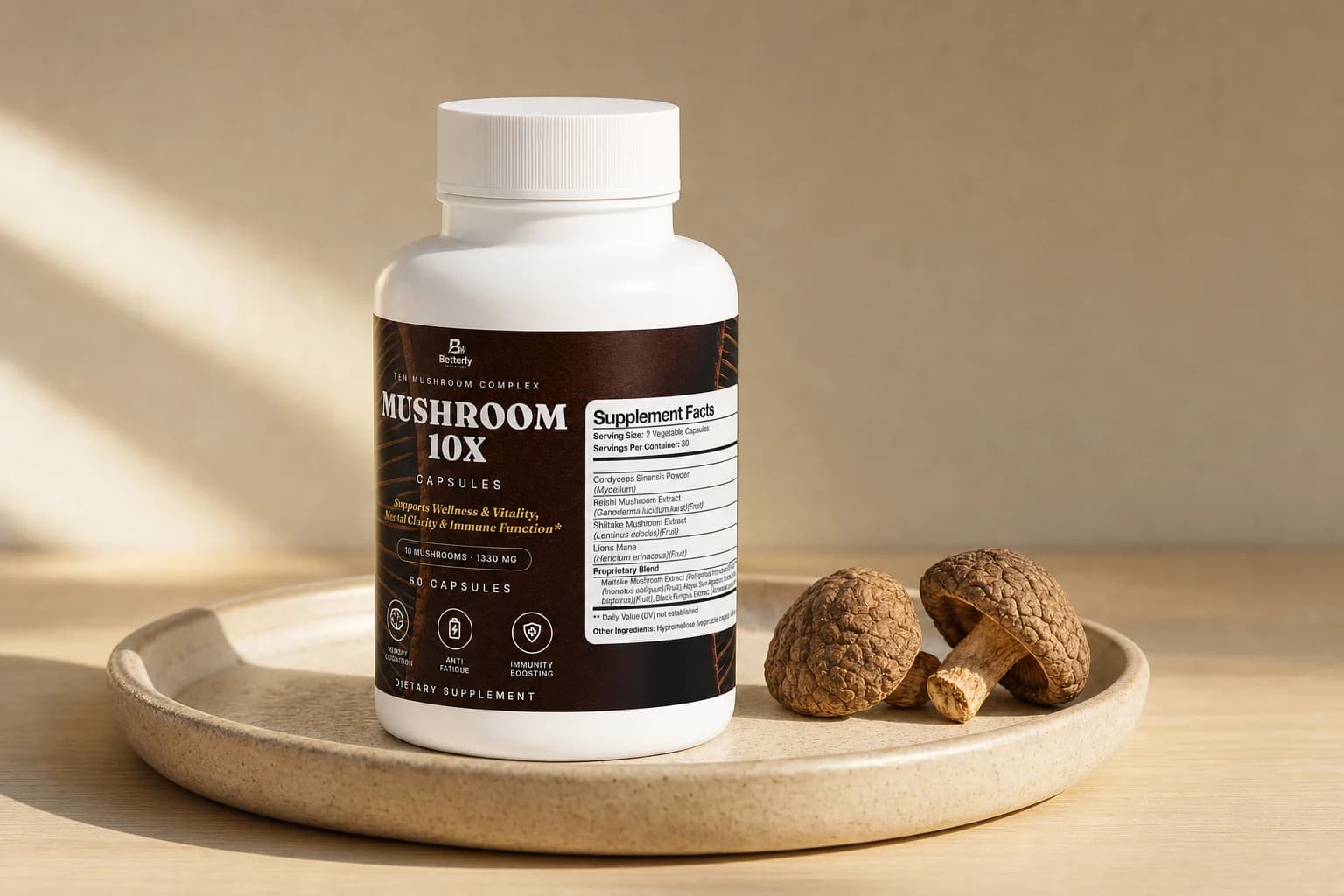
The Mushroom Capsules use the shorthand "(Fruit)." Reishi, shiitake and lion's mane each get a 266 mg row per 2-capsule serving, and six more species share a 266 mg proprietary blend. The panel's first row is the exception: "Cordyceps Sinensis Powder (Mycelium)," also 266 mg.
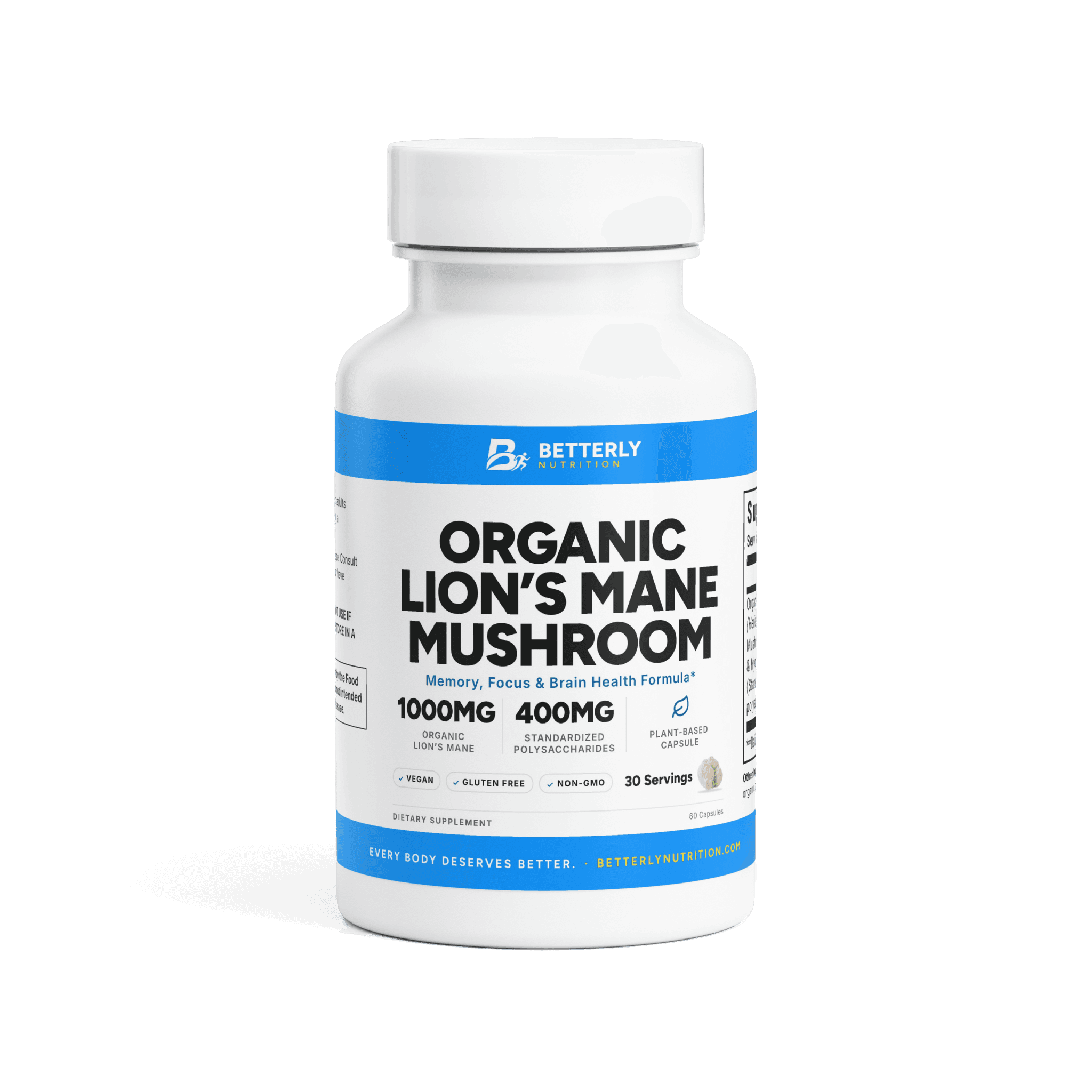
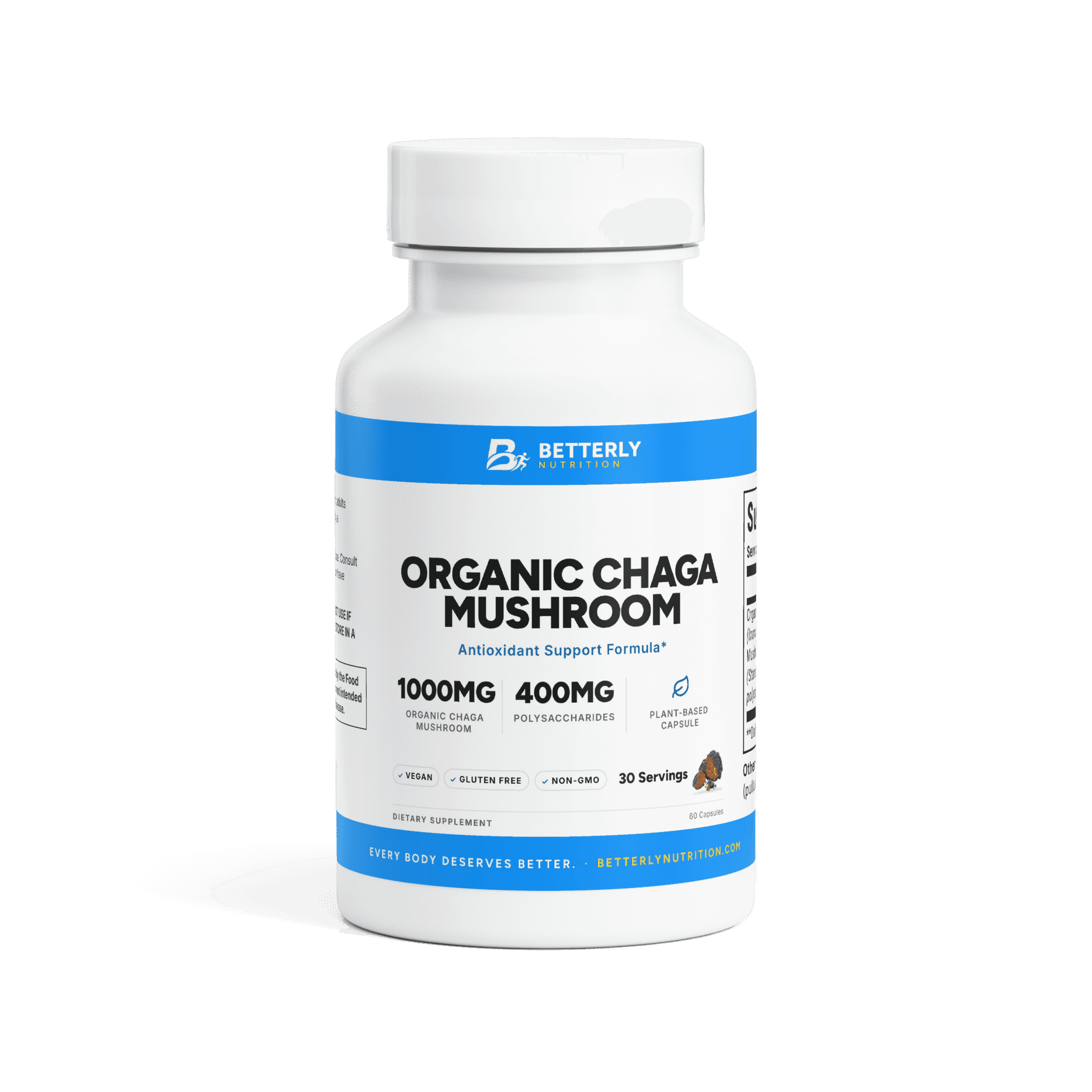
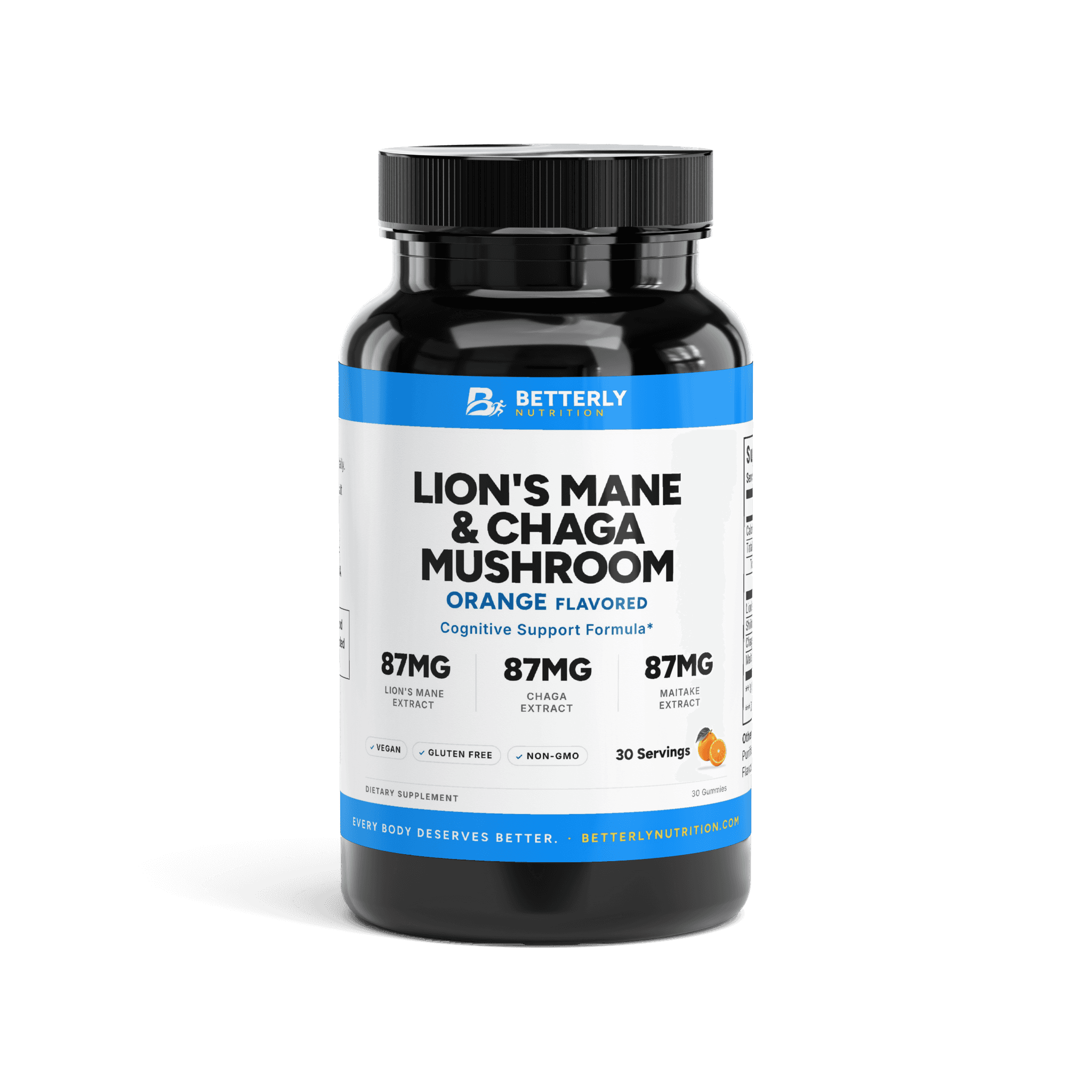
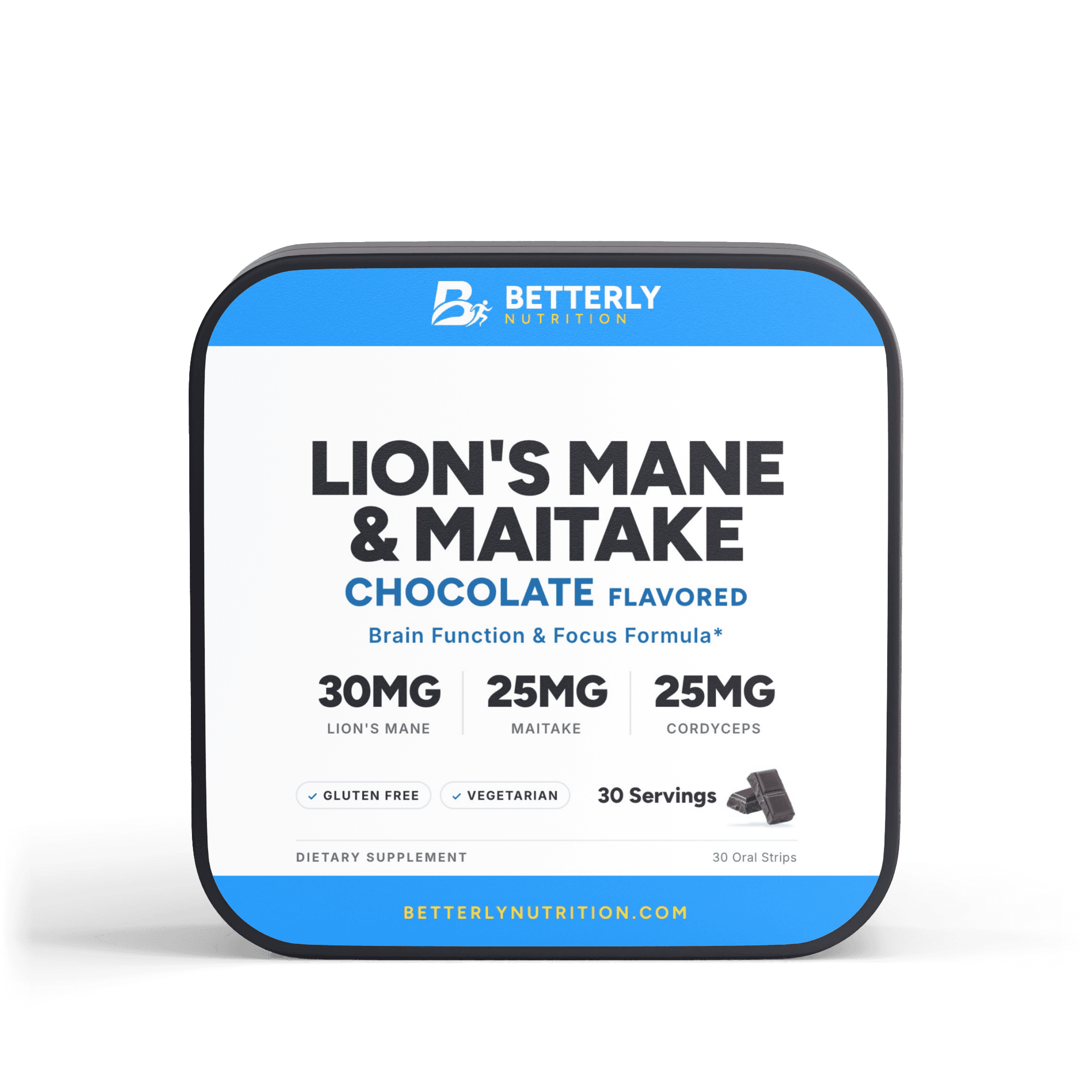
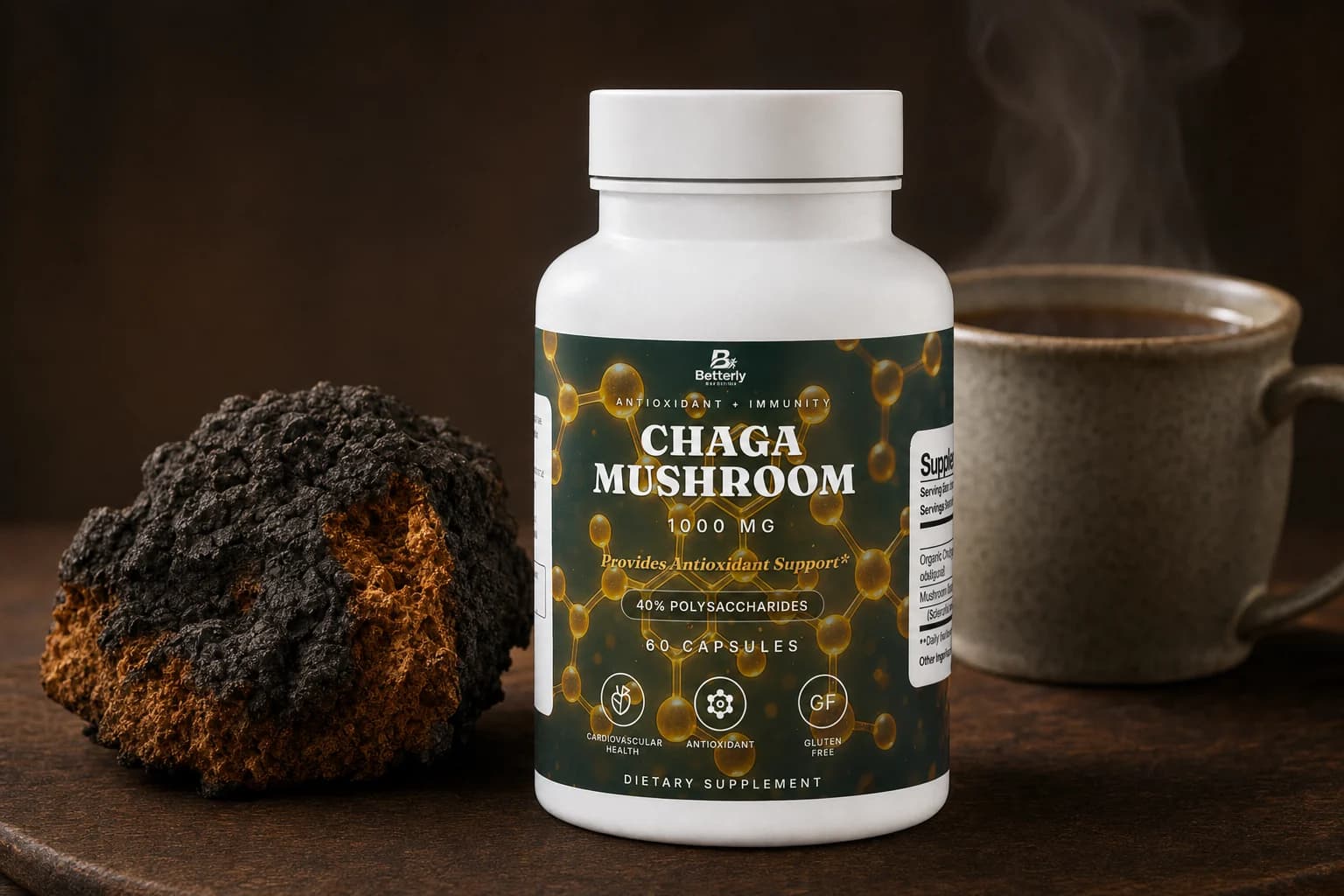
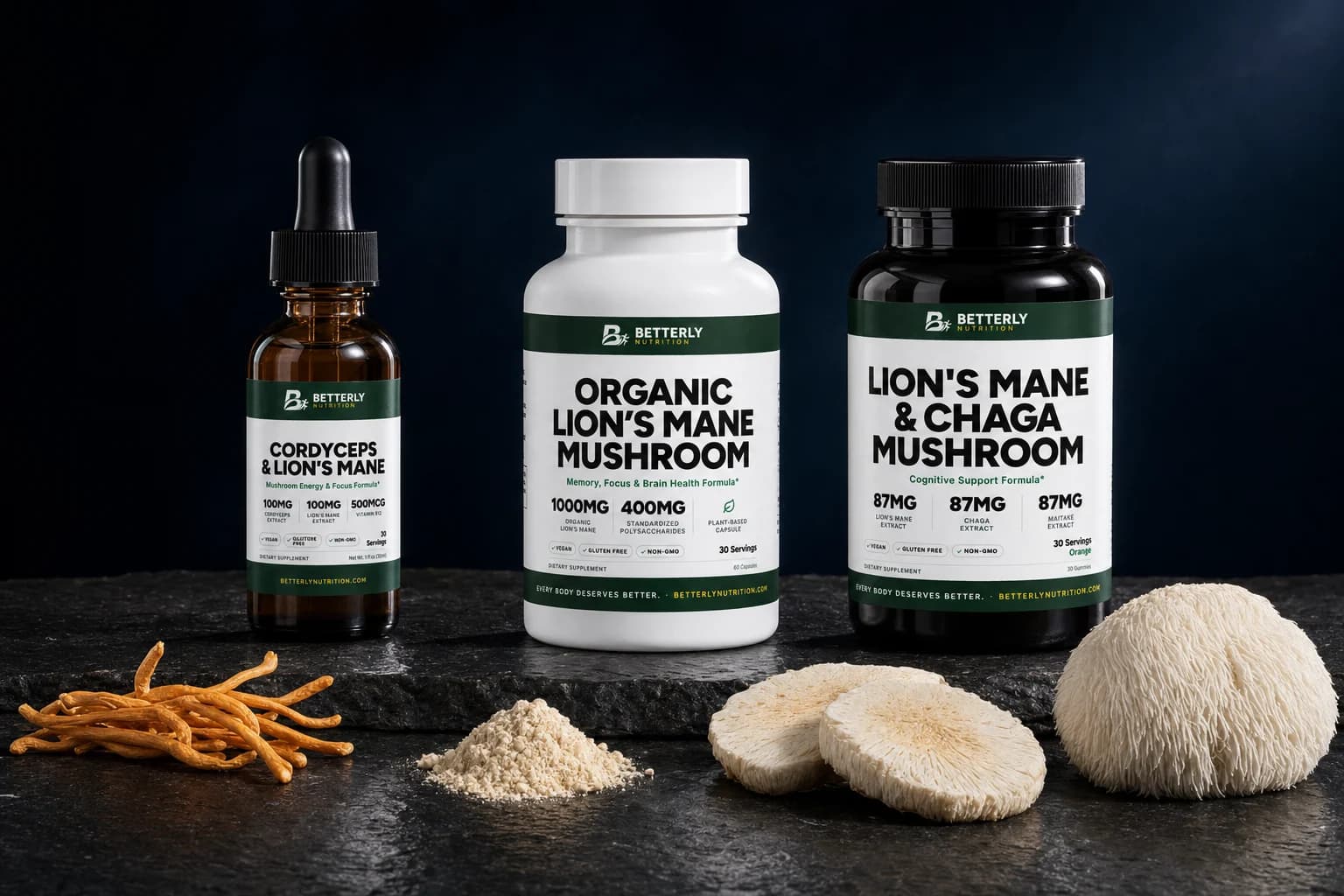
The Organic Lion's Mane Mushroom Capsules carry 1,000 mg of lion's mane per 2-capsule serving. The row beneath names the material: "Mushroom Fruiting Body & Mycelium Powder," standardized to 40% polysaccharides (400 mg). The Organic Chaga Mushroom Capsules name mycelium alone: 1,000 mg of chaga mycelium powder per 2-capsule serving, with the same 400 mg polysaccharide figure.
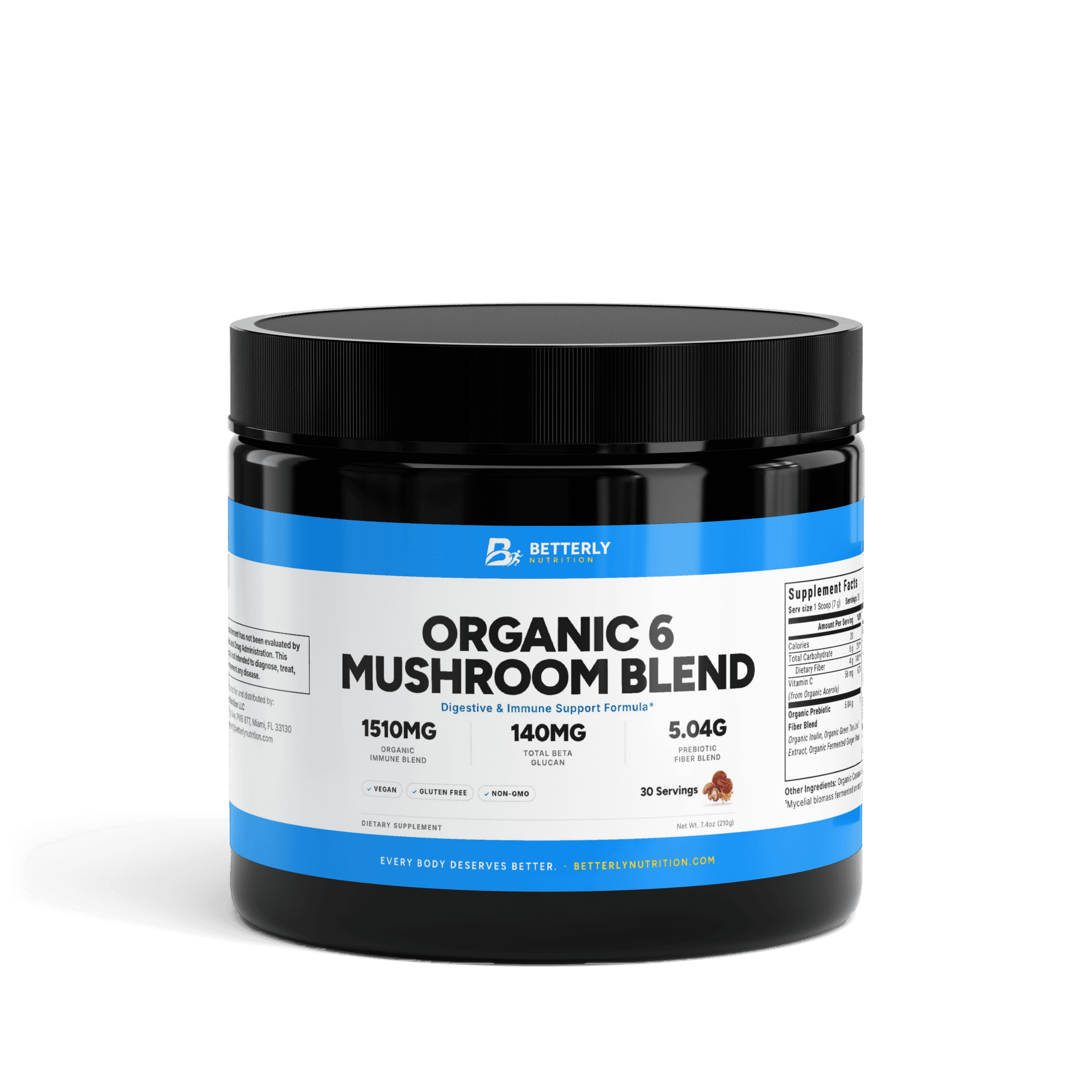
The Organic 6 Mushroom Blend Powder is the only one of the five whose label says fermented. Its Organic Immune Blend, 1,510 mg per 1-scoop (7 g) serving, is a "Mushroom Mycelial Fermented Blend" of six species, and a footnote names what it grew on: organic oats. It's also the only panel here with a beta glucan line, 140 mg per scoop.
| Our product (serving) | Part named on the panel | Amount per serving | Left open |
|---|---|---|---|
| Ten-mushroom gummies (2 gummies) | Fruiting body, 10:1 extract | 250 mg blend | Each species' share |
| Lion's mane capsules (2 capsules) | Fruiting body and mycelium | 1,000 mg | The split between parts |
| Chaga capsules (2 capsules) | Mycelium | 1,000 mg | What it grew on |
| Ten-mushroom capsules (2 capsules) | 9 species fruit, cordyceps mycelium | 1,330 mg (5 rows of 266 mg) | How the blend row divides |
| Six-mushroom powder (1 scoop, 7 g) | Mycelium fermented on oats | 1,510 mg blend | Mycelium vs oat share |
Only the gummies are fruiting body from end to end, and they list the fewest milligrams of the five. The 1,330 mg is our own sum of five rows. Don't read that column like a scoreboard, though, because a milligram of concentrated extract and a milligram of oat-grown biomass aren't the same stuff.
Lion's mane fruiting body vs mycelium: does it matter?
For lion's mane, LiverTox lists the ingredient behind its purported effects as unknown, so there's no basis yet to favor either the fruiting body or the mycelium.
You'll often read that hericenones come mainly from the fruiting body and erinacines from the mycelium. LiverTox calls beta-glucan polysaccharides, hericenones and erinacine terpenoids "the major components responsible for its purported effects," while its background section says which ingredient is responsible is unknown. Neither passage says which part of the mushroom each one comes from.
The human studies it lists don't break the tie. A 48-week study used lion's mane mycelia enriched with erinacine A, while a 16-week study used powdered lion's mane. One result can't vouch for the other material. Our lion's mane dose guide lays out those study amounts.
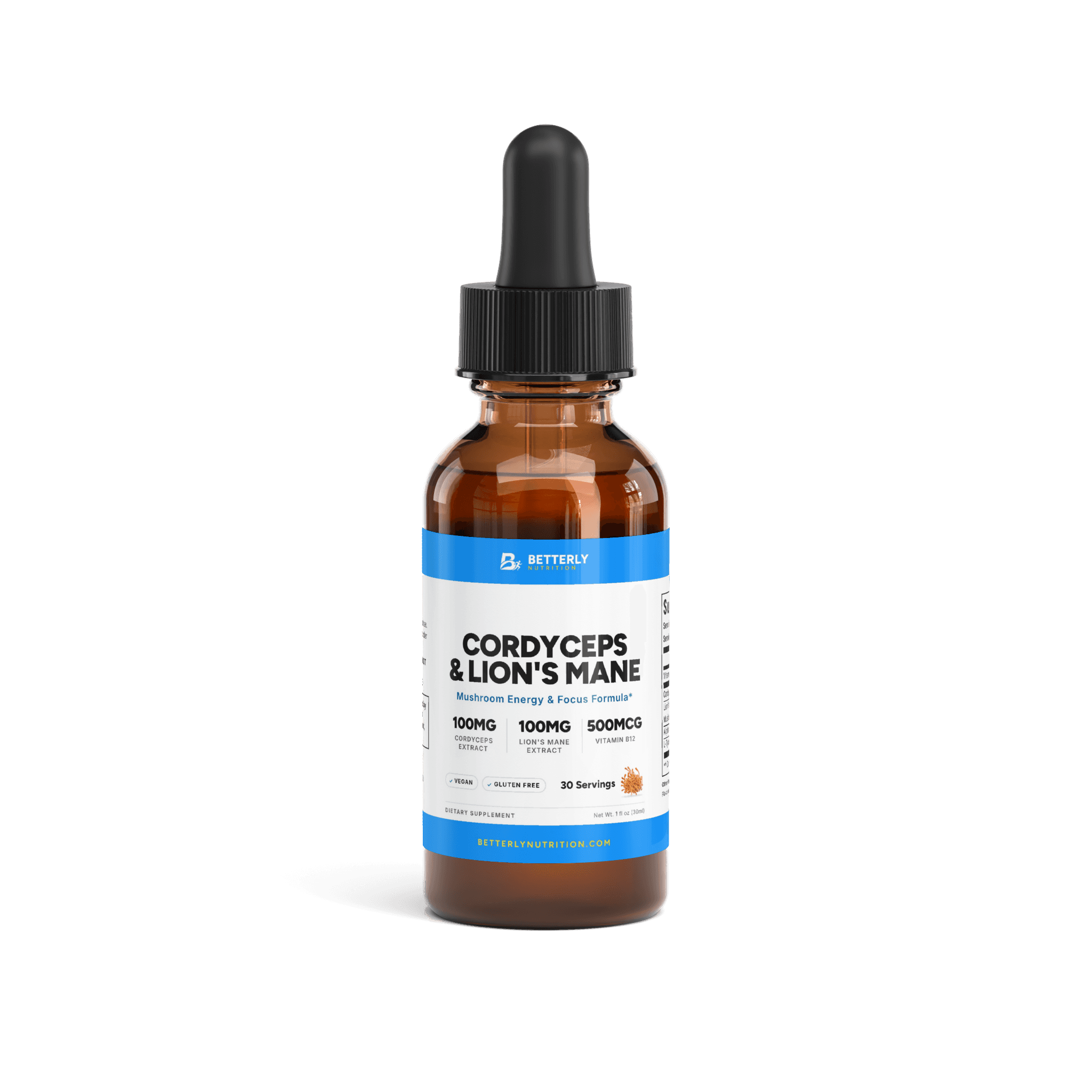
For lion's mane fruiting body with a number of its own, the blend capsules' "Lions Mane (Hericium erinaceus)(Fruit)" row lists 266 mg per 2-capsule serving. The gummies include lion's mane fruiting body extract without saying how much of the 250 mg it takes up. Our other three lion's mane products name no part.
From our shop: Organic Lion's Mane Mushroom Capsules — fruiting body and mycelium in one powder, 1,000 mg per 2-capsule serving, with 400 mg of polysaccharides printed in brackets.
Cordyceps, reishi and chaga: which part are you getting?
With cordyceps, reishi and chaga, the part on a label often reflects how each fungus is grown or harvested, and chaga barely fits the fruiting body label at all.
Cordyceps fruiting body or mycelium?
Cordyceps can be either, and across these five labels our three cordyceps entries name two species and use both parts:
- The Mushroom Capsules: "Cordyceps Sinensis Powder (Mycelium)," 266 mg per 2-capsule serving.
- The six-mushroom powder: Cordyceps militaris, inside the mycelial fermented blend.
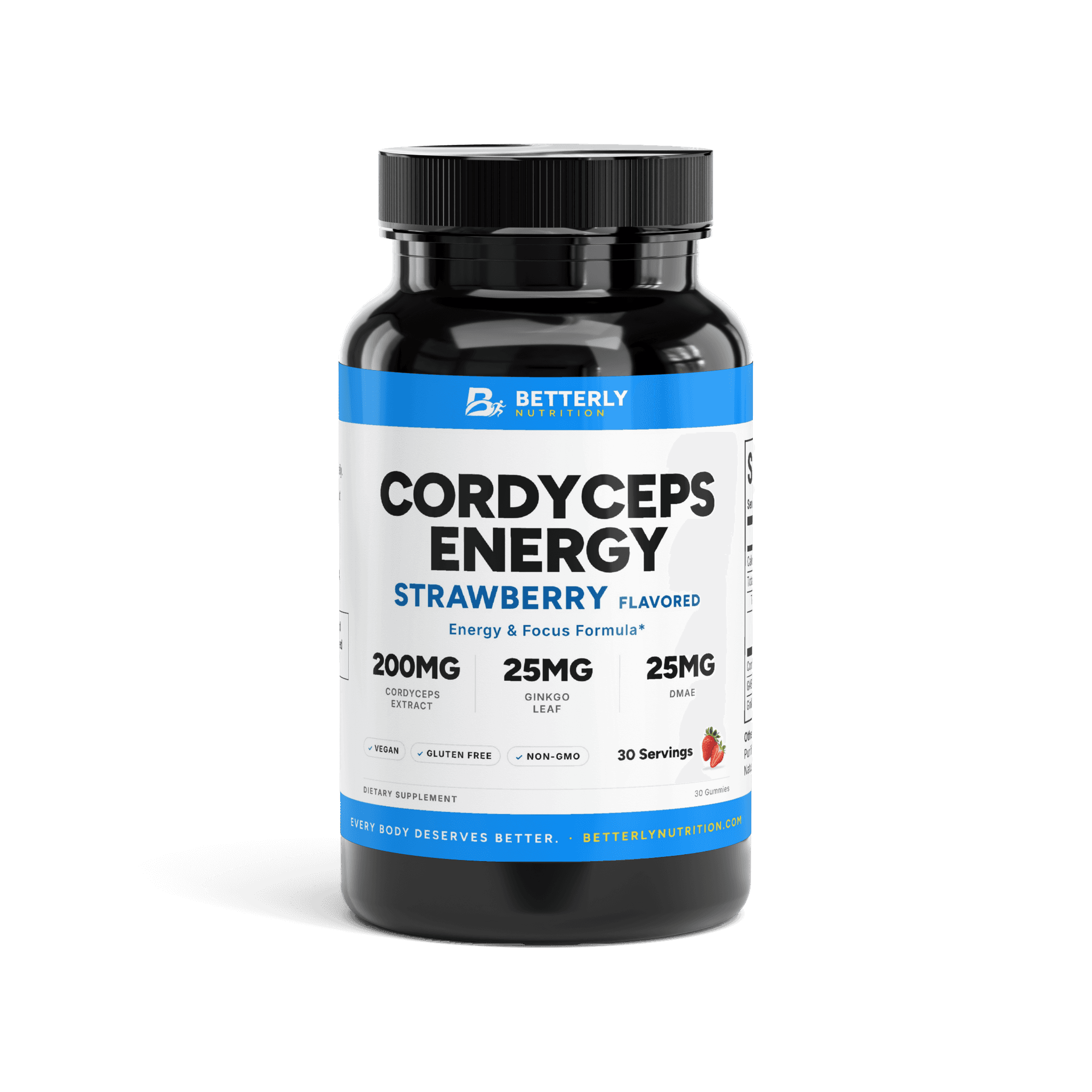
- The gummies: cordyceps fruiting body 10:1 extract, with no species named.
Why do cordyceps labels lean on cultivated material? LiverTox's cordyceps entry describes the wild fungus as a parasite of insect larvae. It adds that most commercial cordyceps supplements come from a laboratory-grown version instead. So a cultivated row, like our capsules' mycelium powder, is the ordinary case, not a warning sign.
Reishi fruiting body or mycelium?
Reishi (Ganoderma lucidum) appears on three of these five panels, and two of them use the fruiting body. The blend capsules give "Reishi Mushroom Extract (Ganoderma lucidum karst)(Fruit)" its own 266 mg row per 2-capsule serving. The gummies fold reishi fruiting body 10:1 extract into their shared blend, while the powder's reishi is mycelium in its fermented blend.
Reishi spore powder, sold by some brands, is a third material, and none of our panels lists it.
Is chaga mycelium or a fruiting body?
Chaga, as most people picture it, isn't a classic fruiting body. It's the black, cracked mass on birch trunks. The USDA Forest Service puts it plainly: "Cinder conks, also called clinker conks or Chaga, are sterile (not true conks, which produce spores)." It adds that short-lived fertile conks may appear after the tree dies.
That puts two of our own panels in an awkward spot. The gummies list "Chaga Fruiting Body 10:1 Extract," and the blend capsules list "Chaga Mushroom Extract (Inonotus obliquus)(Fruit)." Neither says whether it means the sterile birch growth, and we'd rather flag that. The chaga capsules sidestep this by naming mycelium, though not what it grew on. Our chaga guide compares tea, powder and capsule forms.
Which should you choose: fruiting body, mycelium or both?
Choose the mushroom product whose label lets you check the most: a named part, a named species and an amount per serving, not just fruiting body or mycelium.
- One species, part named: the lion's mane capsules (both parts) or the chaga capsules (mycelium).
- Fruiting body with readable numbers: the Mushroom Capsules, though their cordyceps row is mycelium.
- Fruiting body you can chew: the gummies, if 5 g of added sugars per 2-gummy serving (10% DV) and no per-species amounts suit you.
- The biggest daily serving: the powder, which also brings 56 mg of vitamin C (62% DV) and a 5.04 g prebiotic fiber blend per 1-scoop (7 g) serving.
- Nothing grown on grain: skip the powder, whose footnote names oats. Our chaga capsules, lion's mane capsules and the blend capsules' cordyceps row don't say what their mycelium grew on, so only the all-fruiting-body gummies avoid the question.
More of our mushroom products are in our mushroom collection.
From our shop: Mushroom Gummies — the only one of these five panels made entirely from fruiting body extract, with ten species sharing a 250 mg blend per 2-gummy serving.
How do you take these mushroom products, per the label?
All five of these mushroom labels give one daily serving, and none changes its directions for fruiting body or mycelium.
The lion's mane and chaga labels read "adults take two (2) capsules daily or as directed by a healthcare professional." The Mushroom Capsules add, for best results, "20-30 min before a meal with an 8oz (237ml) glass of water." The gummies call for "2 gummies daily," and the powder for one scoop daily "mixed into food or drinks."
No other label names a time. If you keep caffeine to mornings, note that the powder lists green tea leaf extract among its fiber ingredients but prints no caffeine amount. Switching parts is never a reason to go past a label's serving.
When don't you need a mushroom supplement, or a named part?
You may not need a mushroom supplement at all if culinary mushrooms are already on your plate, and the part matters little when a label never names it.
White button, shiitake and maitake are fruiting bodies, so if they already turn up in your cooking, you're eating the mushroom itself.
You can also skip one if you're hoping to feel a specific change, since the human record is thin. We know of no evidence that switching from mycelium to fruiting body changes how you feel.
If a label doesn't state the part, judge that bottle on species, milligrams and what else is inside.
Who should check with a healthcare provider first?
Check with a doctor or pharmacist before any of these five mushroom products if you're pregnant, breastfeeding, under 18, on a prescription, facing surgery or managing a medical condition.
The caution line is identical on all five: "Do not exceed recommended dose. Consult a physician if pregnant, nursing, under 18, or have a medical condition." ODS also suggests talking with your provider about any botanical supplement you use or plan to use.
If mushrooms have disagreed with you as food, ask first too. Bring a photo of the Supplement Facts panel so your provider sees species and amounts, not just "mushroom."
FAQ: fruiting body vs mycelium
Is mycelium grown on grain mostly grain?
Not necessarily, but mycelium grown on grain can carry some of that grain into the bottle, and labels rarely say how much. No federal source we read measures the share. Our Organic 6 Mushroom Blend Powder names its base in a footnote, "Mycelial biomass fermented on organic oats," but its panel doesn't split mushroom from oat within the 1,510 mg. Starch is a polysaccharide too, so a polysaccharide percentage alone can't show where that number came from.
What does "full spectrum" mean on a mushroom label?
"Full spectrum" is a marketing phrase that mushroom brands use loosely, often for a mix of fruiting body and mycelium, sometimes plus whatever the mycelium grew on. We know of no legal definition for it, and it never tells you proportions. None of our five panels uses the phrase. Look past it for the part named in the ingredient row and an amount per serving.
Does mycelium have beta-glucans?
Yes, mycelium can contain beta-glucans, but many labels print no figure. Our Organic 6 Mushroom Blend Powder prints 140 mg of Total Beta Glucan per 1-scoop (7 g) serving from a blend of mycelium fermented on organic oats, and the label doesn't say how much comes from the mycelium versus the oats. Our lion's mane and chaga capsules print polysaccharides instead, 400 mg per 2-capsule serving, which isn't the same measure.
Can you take a fruiting body product and a mycelium product together?
You can combine a fruiting body product with a mycelium product, but check for overlap, and ask a healthcare provider first if you're on any prescription. Every species in our six-mushroom powder, which is mycelium, also appears on our fruiting body gummy panel, so that pair doubles up on six names rather than adding new ones. Whatever you combine, hold each one to its own label serving.
Sources
- Lion's Mane, LiverTox, National Library of Medicine
- Cordyceps, LiverTox, National Library of Medicine
- Hardwood Stem Decays, USDA Forest Service, Alaska Region
- Botanical Dietary Supplements: Background Information, NIH Office of Dietary Supplements
If this left you looking for somewhere to start, read fruiting body extract mushroom gummies with ten species — its amounts per serving are listed on the page. For the practical questions this raises, how dosing, sourcing and subscriptions work is answered in one place.