On this page
- What is chaga mushroom, exactly?
- What's inside chaga: beta-glucans, melanin, and birch-borrowed compounds
- Chaga mushroom benefits: what research actually suggests
- Chaga tea vs capsules vs powder vs extracts
- How to choose a chaga supplement worth taking
- Chaga mushroom dosage: how much and when
- Safety notes: oxalates and who should check with a provider
- Chaga alone vs a mushroom complex: which fits you?
- Key takeaways
- FAQ: chaga mushroom questions
- Sources
Chaga doesn't look like a mushroom at all — it grows as a cracked, charcoal-black mass on birch trees in cold northern forests, and people have been simmering it into tea for centuries. Lately it's been showing up in capsules, powders, and coffee-shop lattes, usually wrapped in bigger promises than the research can carry. This guide walks through the chaga mushroom benefits research actually points to, how the forms compare, and how to choose a chaga supplement that tells you exactly what's in it.
One honest note up front: chaga is interesting, but it isn't magic. The research so far comes from cell and animal studies, not human clinical trials. We'll flag what's promising, what's unknown, and where the hype outruns the evidence.
What is chaga mushroom, exactly?
Chaga (Inonotus obliquus) grows mostly on birch trees in cold climates — Siberia, Northern Europe, Canada, the northern United States. It skips the cap-and-stem look entirely: harvesters collect a dense, woody mass called a conk, black and deeply cracked outside, rusty orange-brown inside. The black exterior isn't char — it's melanin, the same family of pigments found in human skin, and chaga produces an unusual amount of it.
Marketers love to call chaga the "king of mushrooms." We'd skip the crown and just call it what it is: a traditional fungus — grated and simmered into tea for generations across Russia and Scandinavia — with genuinely intriguing compounds and a research base that's still young.
You'll sometimes see chaga grouped with adaptogens — herbs and fungi associated with helping the body handle everyday stress. If that category is new to you, our Adaptogens 101 guide covers it in plain language.
What's inside chaga: beta-glucans, melanin, and birch-borrowed compounds
Chaga's reputation rests on a handful of compound families:
- Beta-glucans. Polysaccharides from fungal cell walls, the most-studied compounds in functional mushrooms, researched for how they interact with immune cells — which is why nearly every mushroom supplement conversation starts here.
- Melanin. Chaga's concentrated pigment has been studied in lab settings for antioxidant activity — its ability to interact with free radicals, the unstable molecules generated by normal metabolism.
- Polyphenols. Compounds found in chaga that have also been studied in lab settings for antioxidant activity.
- Triterpenes, including betulin and betulinic acid. Here's a detail worth knowing: chaga concentrates these compounds from the birch trees it grows on. That's one reason wild chaga is chemically different from mycelium grown in a lab on grain — a distinction we'll come back to.
Chaga mushroom benefits: what research actually suggests
Time for the honest part.
Everyday immune support
This is chaga's main lane, and the reasoning goes through beta-glucans. In studies across mushroom sources, beta-glucans appear to be recognized by receptors on immune cells such as macrophages. That's the mechanistic basis for the "immune support" language you see on labels, and it's why chaga sits in our Immune Support collection.
What we don't have: human clinical trials of chaga itself. Cell and animal research is encouraging, not conclusive. "Supports normal immune function" is about as far as the evidence honestly stretches.
Antioxidant activity
Chaga scores high in lab measures of antioxidant capacity, thanks to its melanin and polyphenols, and its extracts have shown activity against several types of free radicals in cell studies.
The honest caveat: a high score in a test tube doesn't automatically translate to a measurable effect in your body. Antioxidant-rich foods and fungi are a reasonable part of an everyday routine — not a shield to lean on.
What the research doesn't show
You'll find chaga articles online making dramatic claims about serious health conditions. Those claims lean on preliminary cell and animal work, and it's simply too early to say what they mean for people. Anyone promising you specific health outcomes from a chaga supplement is ahead of the science. A good chaga product supports a routine; it doesn't replace medical care, and it shouldn't pretend to.
Chaga tea vs capsules vs powder vs extracts
Chaga's compounds are locked inside tough, chitin-rich cell walls, which your digestion doesn't break down well — so how chaga is prepared matters as much as how much you take. Here's the chaga capsules vs powder vs tea comparison in plain terms:
Chaga tea (the traditional way). Chunks or coarse grounds simmered low and slow — often 15 minutes or more — release chaga's water-soluble compounds, including beta-glucans. The flavor is earthy and mild with a faint natural vanilla note (chaga actually contains vanillin, the same compound found in vanilla beans). Tea is a lovely ritual, but the strength of each cup varies with brew time and material.
Raw chaga powder. Versatile — people stir it into smoothies or coffee — but raw, unextracted powder hasn't had its cell walls broken down, so a quick stir into a cold drink likely leaves much of the good stuff locked up. Raw powder by the heaping spoonful is also where the oxalate question gets most relevant (more on that below).
Capsules. Convenient, tasteless, and consistent — the same measured amount every time, easy to keep up and easy to stop and reassess. The key is a product that prints an actual milligram amount — and, ideally, a standardized active fraction.
Extracts and tinctures. The most processed and often most concentrated option. "Dual extraction" — hot water plus alcohol — is designed to capture both water-soluble beta-glucans and alcohol-soluble triterpenes. Well-made extracts tend to cost more, and quality varies widely.
There's no single winner in the chaga tea vs capsules debate: tea for ritual, capsules for consistency, extracts for concentration at a price. If gummies are on your list too, we compare how well mushroom gummies work against capsules and drops in a separate guide.
How to choose a chaga supplement worth taking
The chaga market is crowded with vague labels. A short checklist cuts through it:
- A printed dose. If a label sells you chaga but won't say how many milligrams of it you're getting, you can't compare it to anything — walk away.
- The actual chaga part, named. Chaga reaches a capsule two ways: wild-harvested conk (often labeled fruiting body), which concentrates birch-specific compounds like betulinic acid, and cultivated mycelium, grown under controlled conditions. Both are legitimate; they're different materials, and a trustworthy label tells you which you're buying. Cultivation brings two practical strengths: batch-to-batch consistency, and a supply that doesn't depend on harvesting a fungus that takes years to grow back. That's the form ours uses, and we chose it on purpose.
- A standardized active fraction. The sharpest question you can ask of any mushroom label, mycelium or conk alike: how much of this weight is the compound family the research actually cares about? A standardization answers with a number, printed on the label instead of left to guesswork.
- A realistic serving. Look for one clear, printed serving and suggested use, and stick to it — megadoses aren't better, and with chaga they're specifically worth avoiding (see the safety section).
- Modest claims. A brand promising dramatic results from chaga is telling you how it handles the truth. Favor labels that stick to measured, "supports"-style language.
- A price that makes sense. Chaga is not a rare luxury ingredient. If a bottle costs several times what comparable products do, you're usually paying for marketing.
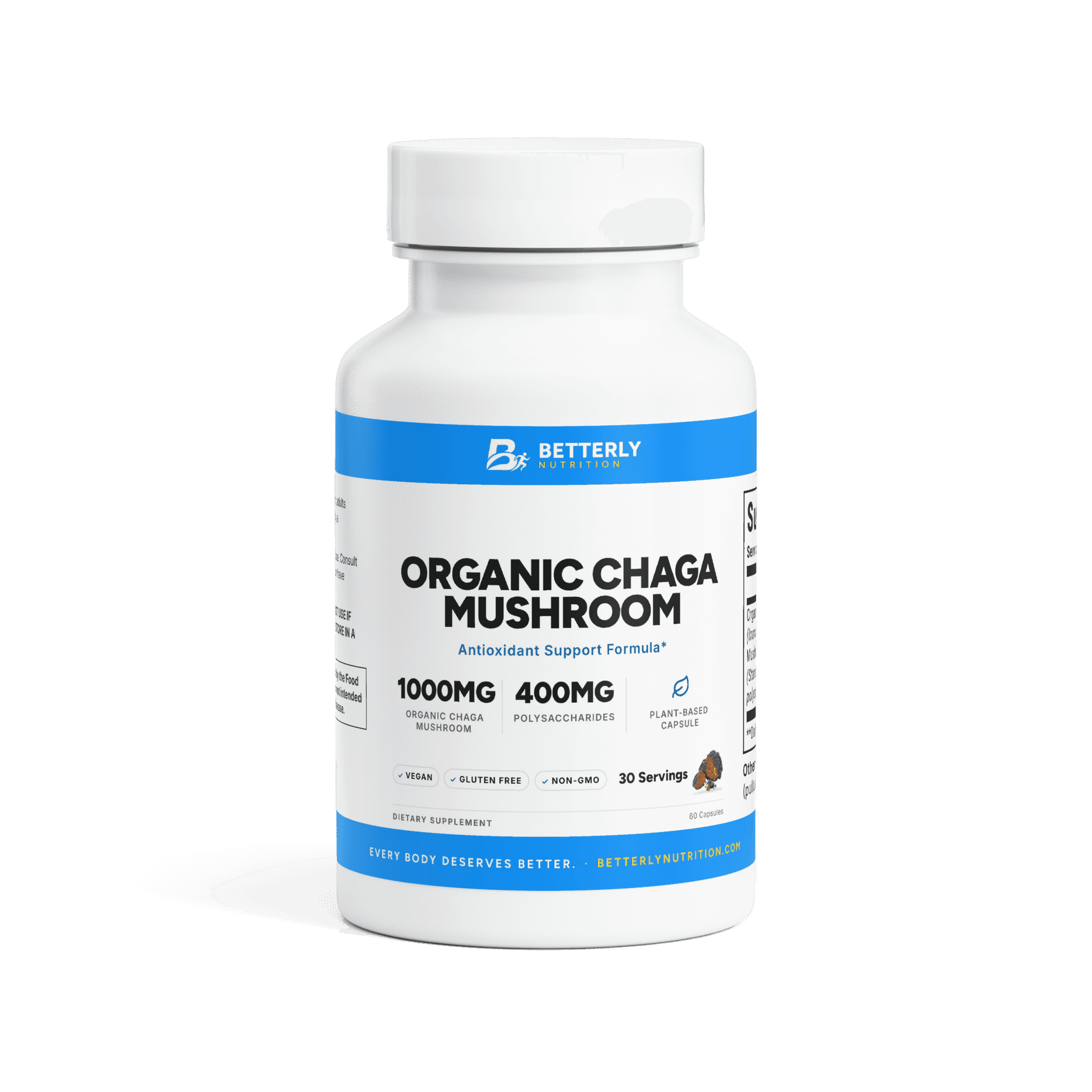
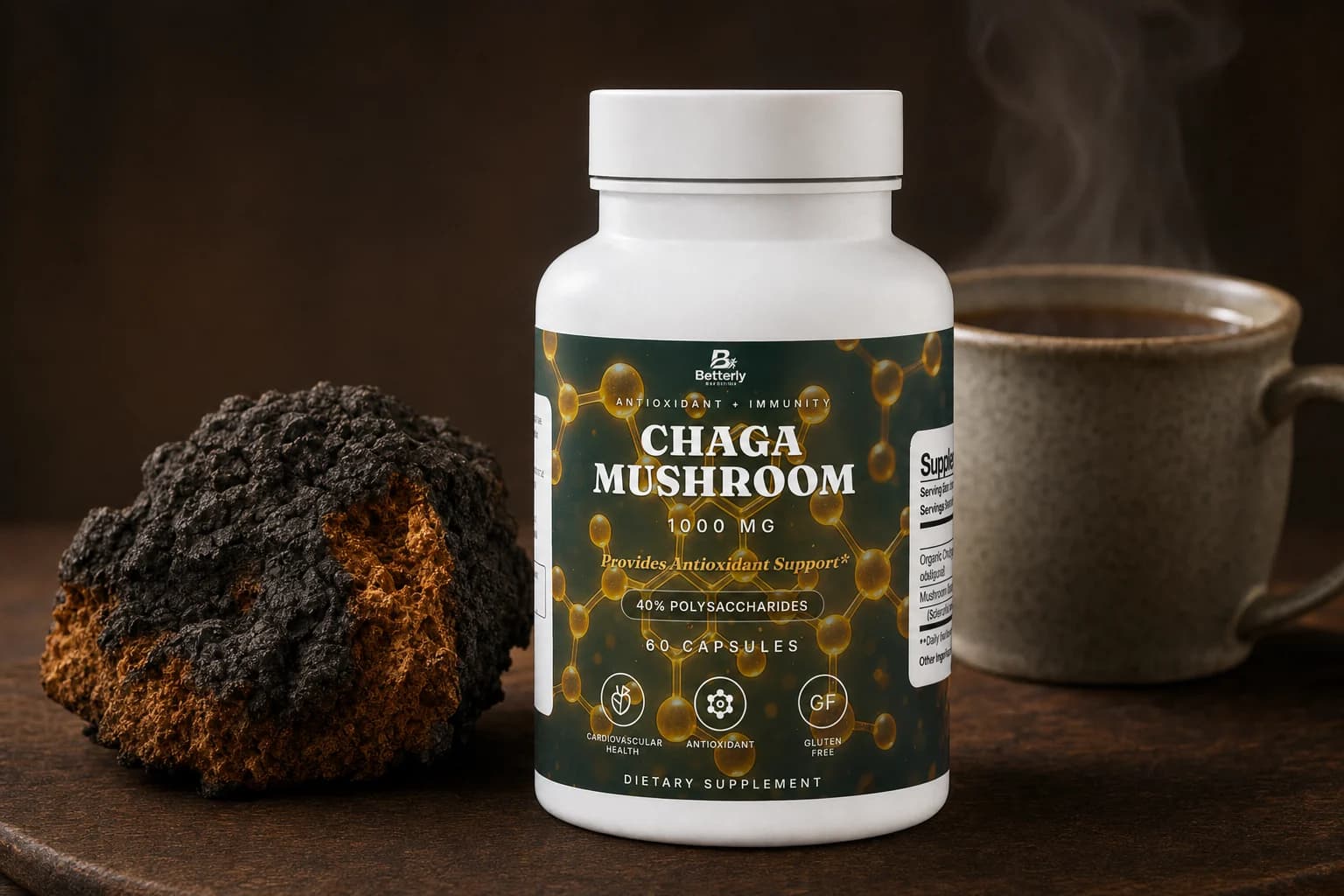
Run that checklist against our Organic Chaga Mushroom Capsules and you'll see why we're comfortable pointing you at them: 1,000 mg of cultivated chaga mycelium per two-capsule serving, standardized to 40% polysaccharides — meaning 400 mg of that 1,000 mg is polysaccharides, the compound class that includes beta-glucans, spelled out right on the panel. Sixty vegan capsules — a month's supply at the full serving — and the complete supplement facts panel sits on the product page before you spend a dollar. Our label prints both the material and the standardized amount, up front.
Chaga mushroom dosage: how much and when
There's no officially established chaga mushroom dosage — the human research isn't there yet. In practice:
- Capsules: for our Organic Chaga Mushroom Capsules, the label's suggested use is for adults to take two (2) capsules daily (1,000 mg per 2-capsule serving) or as directed by a healthcare professional. If you'd rather take less, ask your provider first.
- Tea: there's no established amount for chaga tea, so keep it occasional and moderate (see the safety section).
- Timing: chaga has no caffeine, so morning or evening both work; with food is a comfortable habit for most people.
- Consistency over intensity: there's no established timeline for chaga, so take it steadily as the label directs rather than expecting to notice something on a schedule.
More is not better here. Because of chaga's oxalate content, the sensible approach is a moderate daily amount rather than heaping spoonfuls — this is one supplement where restraint is a feature.
Chaga also works best as one piece of a bigger picture: sleep, movement, and everyday nutrition basics like our Daily Multivitamin Capsules do more heavy lifting than any single mushroom. If you're building from scratch, start with our guide to building a simple supplement routine; our companion piece on a daily immune support routine covers what to take and when.
Safety notes: oxalates and who should check with a provider
This is the section many chaga articles skip, so we won't.
Chaga is naturally high in oxalates, compounds that in large amounts over time can be hard on the kidneys. According to MedlinePlus, oxalate is present in certain foods such as spinach. The concern is mainly with large amounts taken daily for months, such as multiple teaspoons of raw chaga powder a day.
A moderate capsule serving or occasional cup of tea is a very different exposure than daily spoonfuls of raw powder. Still, the practical rules:
- Keep amounts moderate and don't stack multiple high-dose chaga products.
- Check with your provider first if you have kidney concerns — chaga may simply not be the right pick for you.
- Ask about interactions if you take blood-thinning medication or any other prescription medication.
- Skip it if you're pregnant or nursing, or ahead of a scheduled surgery, unless your provider okays it — there just isn't enough safety research.
- Follow the label's caution: do not exceed the recommended dose, and consult a physician if you're pregnant, nursing, under 18, or have a medical condition.
None of this makes chaga scary. It makes it a real ingredient with real properties — which is exactly why dosing honesty matters.
Chaga alone vs a mushroom complex: which fits you?
By now you're probably deciding between a single-mushroom product and a blend. An honest framing:
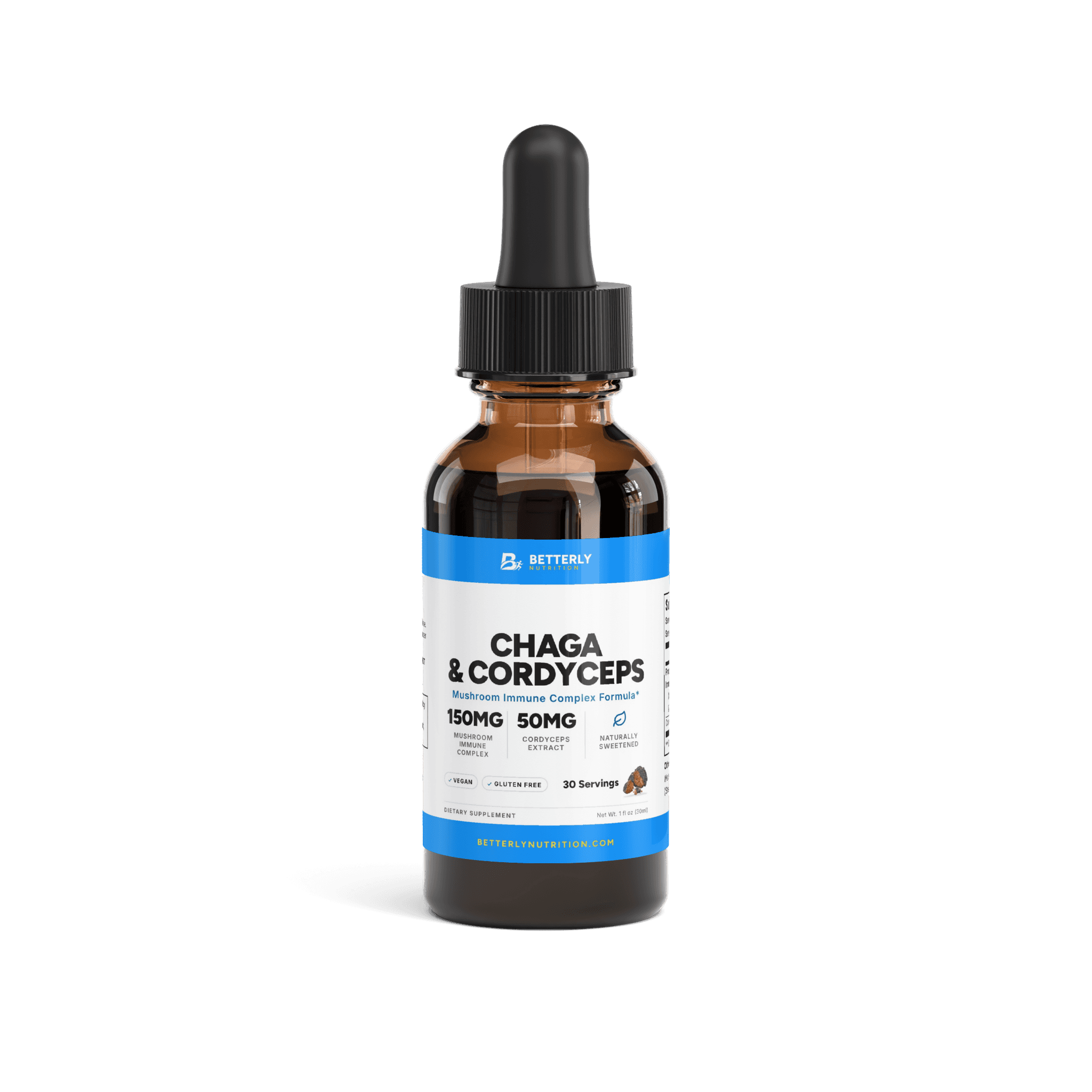
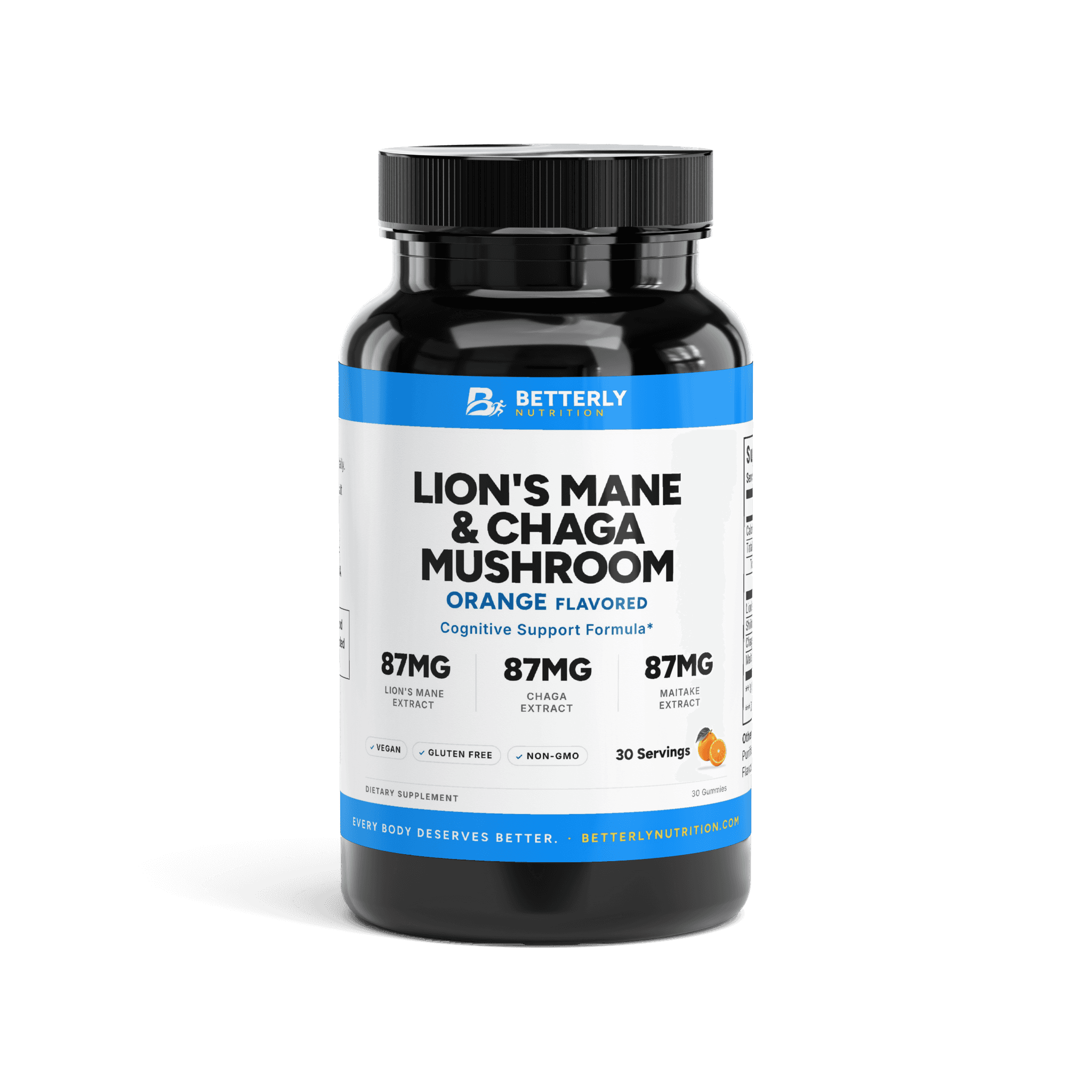
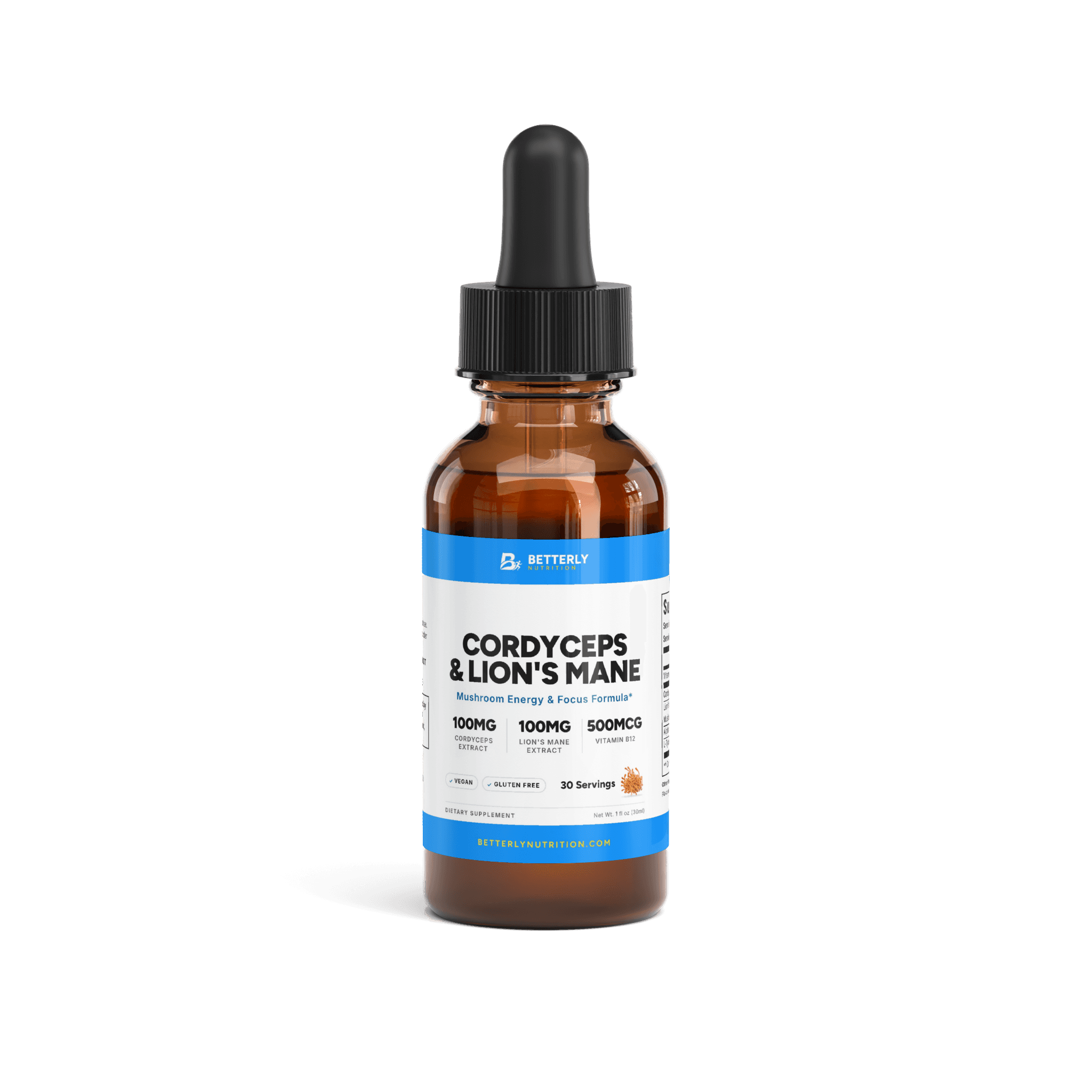
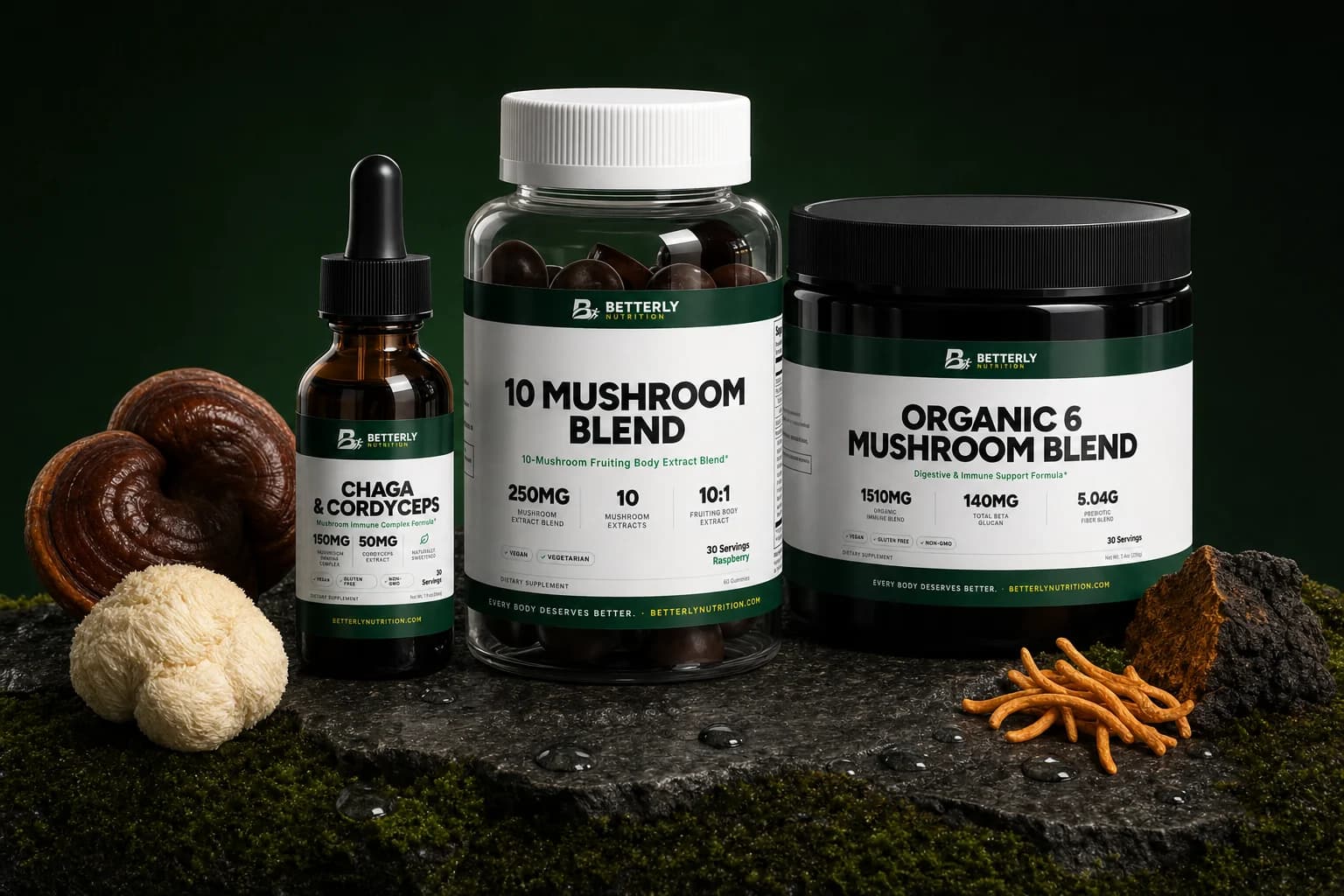
Choose chaga alone if you want to change one variable at a time. A single-ingredient product like our Organic Chaga Mushroom Capsules (1,000 mg per 2-capsule serving) makes it easy to tell whether chaga earns a place in your routine — and easy to drop if it doesn't. It's also the only chaga product we sell with a full, standardized chaga serving; in any blend, including our Chaga & Cordyceps Mushroom Drops and Lion's Mane & Chaga Mushroom Gummies, chaga is one passenger among many.
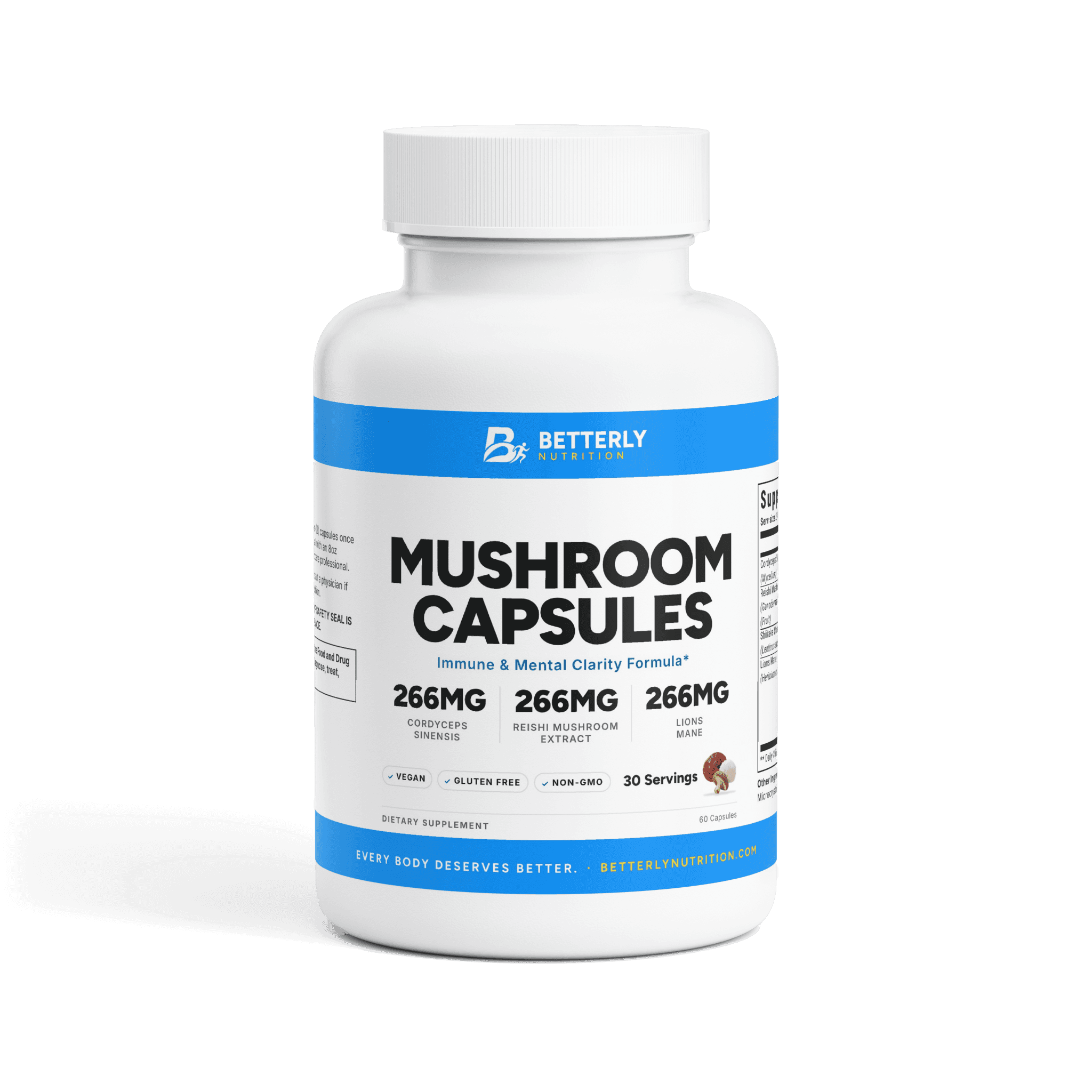
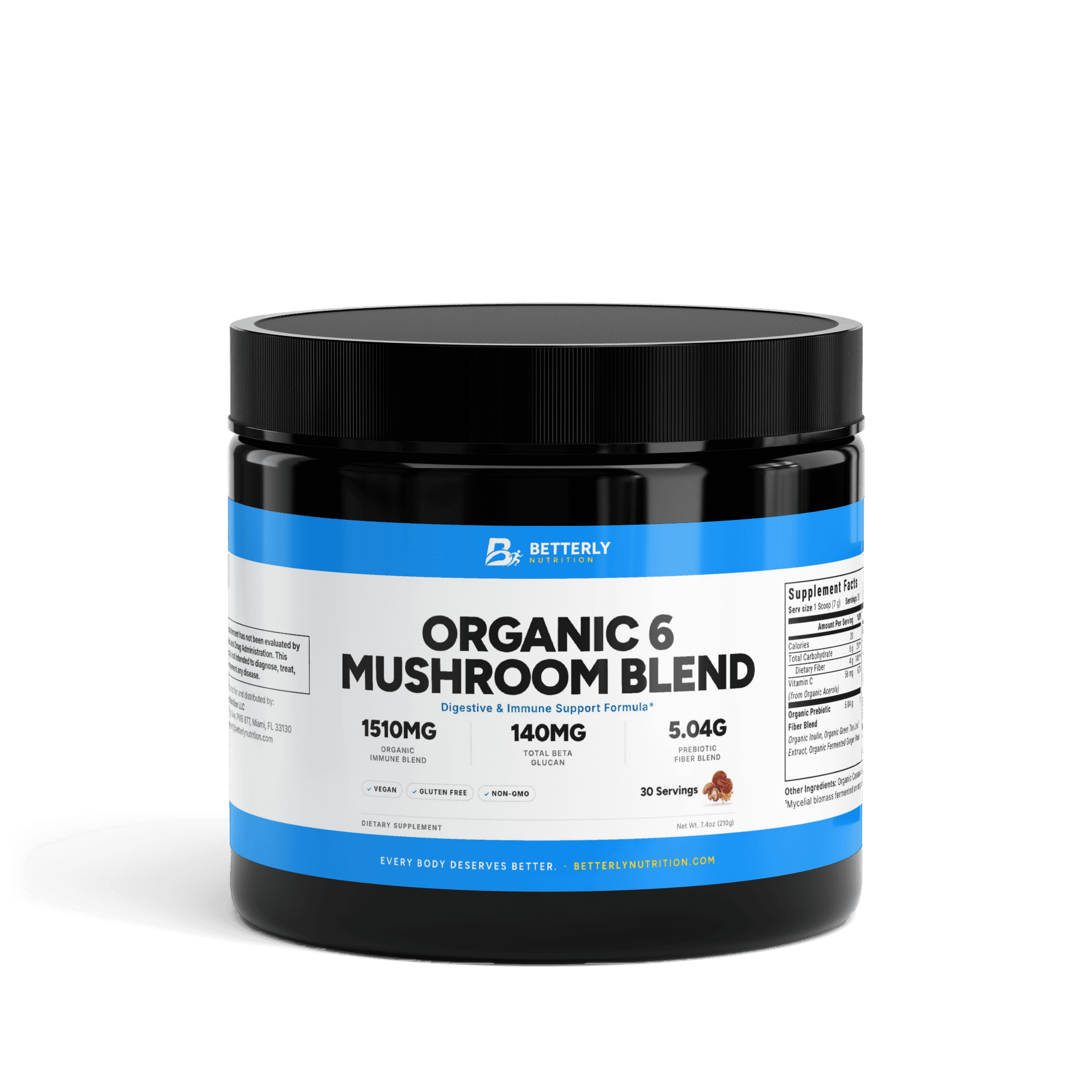
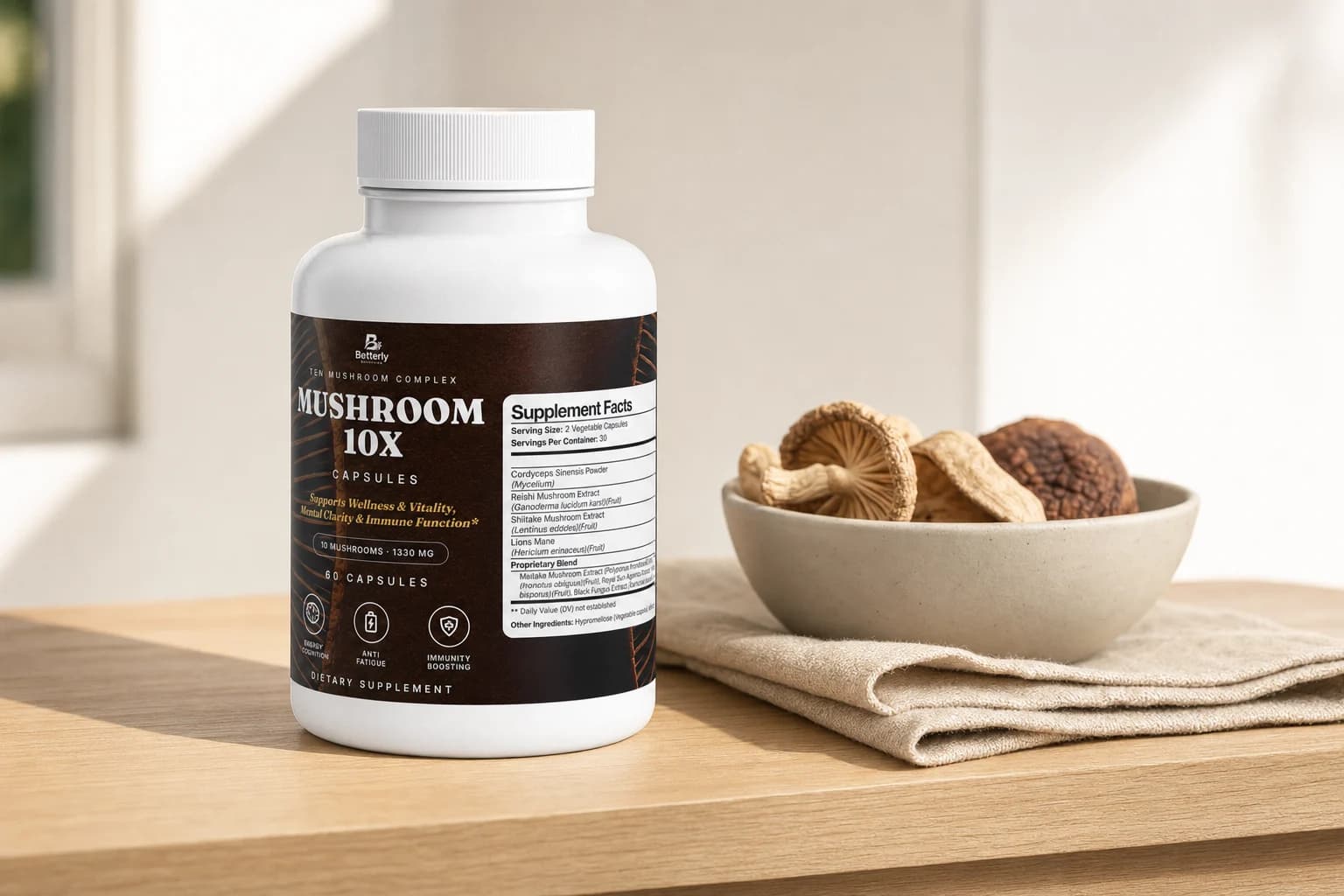
Choose a complex if you want broad functional-mushroom coverage without managing five bottles. Our Mushroom Capsules put ten mushrooms into one two-capsule serving — cordyceps, reishi, shiitake, and lion's mane each printed at 266 mg, with the other six, chaga among them, sharing a further 266 mg blend. That label is honest about what a complex is: breadth over depth, with less of each mushroom than a dedicated bottle — and the chaga portion smaller than the printed four. By our own checklist, if chaga specifically is your goal, the single-ingredient capsule, with 1,000 mg per 2-capsule serving, is the cleaner buy; the complex is for covering the category at once.
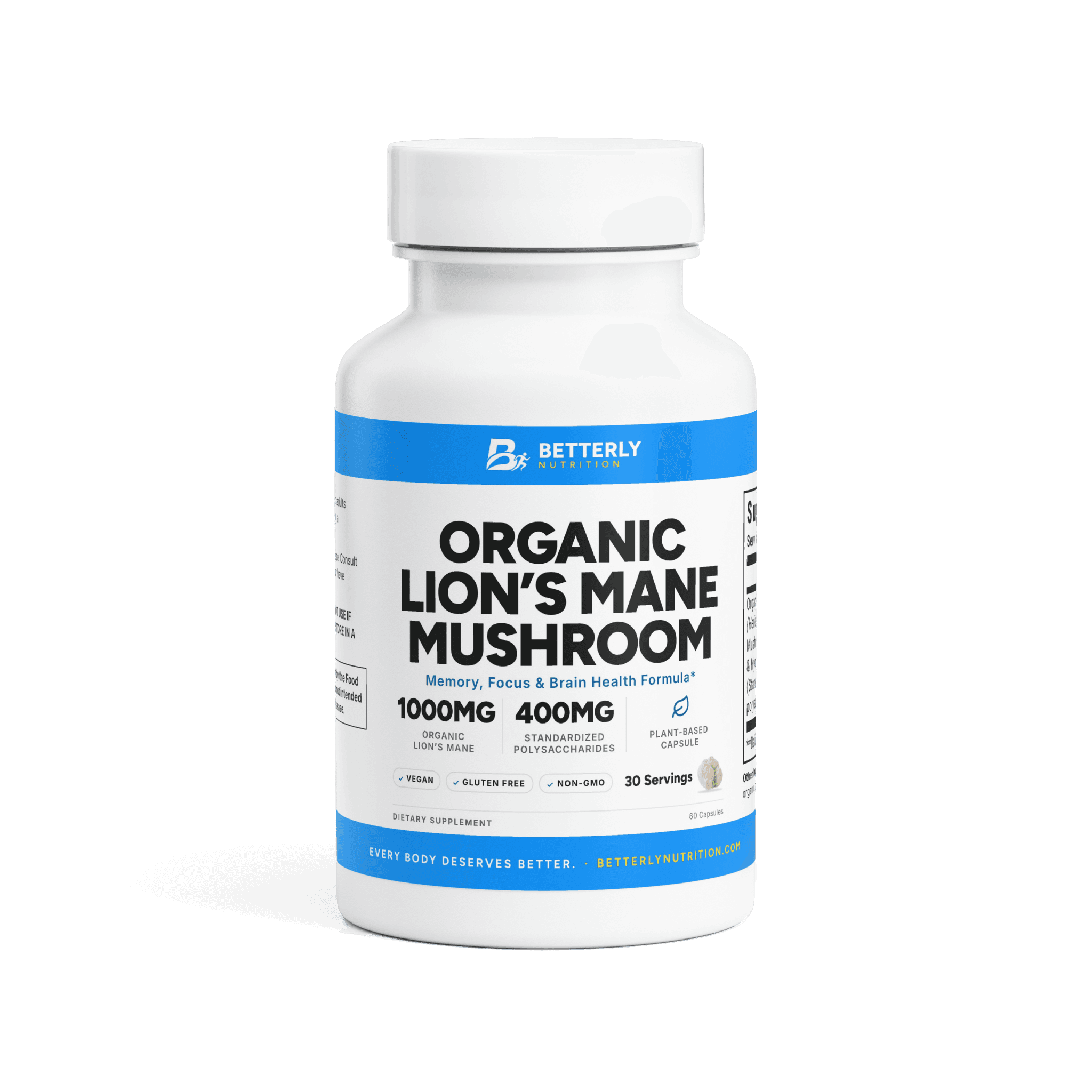
Choose a different mushroom entirely if your goal isn't immune support. Lion's mane, for example, is the mushroom people usually reach for around focus and memory support rather than immunity; our Organic Lion's Mane Mushroom Capsules are the single-ingredient option.
And if you're weighing chaga against non-mushroom staples, two companion reads help: our honest guide to sea moss benefits and dosage and our roundup of the best supplements for everyday immune support, which puts chaga side by side with the other usual suspects.
Key takeaways
- Chaga is a birch-dwelling fungus, traditionally simmered as tea, with an unusually rich mix of beta-glucans, melanin, polyphenols, and birch-derived triterpenes.
- The evidence is early but interesting. Beta-glucans interact with immune cells in research, and chaga shows strong antioxidant activity in lab studies — but human clinical trials haven't been done yet, and honest brands say so.
- Form matters. Simmered tea and extracted products make chaga's compounds more available than raw powder in a cold smoothie; capsules win on consistency.
- Buy by the numbers. A printed milligram amount, a named material (conk or mycelium), and a standardized active fraction are the three biggest quality signals, so check that a label gives you all three.
- Respect the oxalates. Keep servings moderate, skip megadosing, and talk to a provider first if you have kidney concerns or take relevant medications.
FAQ: chaga mushroom questions
Does chaga have caffeine?
No — fungi don't produce caffeine, so chaga tea is naturally caffeine-free; some people use it as an evening alternative to coffee. Any "chaga coffee" product that perks you up is getting that from the added coffee, not the chaga.
How long does chaga take to work?
Chaga isn't fast-acting — you won't feel it the way you feel caffeine. Think of it as a background habit: there's no established timeline for chaga, so take it consistently as the label directs and talk with your provider if you're unsure it belongs in your routine. If a brand promises dramatic effects in days, be skeptical.
Can I take chaga every day?
Many people do, at moderate servings. Because of chaga's naturally high oxalate content, the sensible pattern is a modest daily amount — not heaping spoonfuls of raw powder — and a conversation with your provider first if you have kidney concerns or take blood-thinning or any other prescription medication.
What's the difference between chaga and lion's mane?
They're different fungi with different reputations. Chaga is the immune-support and antioxidant mushroom; lion's mane is the one people usually choose for focus and memory support. They're not interchangeable, but many people take both — separately or in a multi-mushroom blend.
Is wild chaga better than lab-grown?
They're different, not ranked. Wild conk concentrates compounds from the birch trees it grows on — including triterpenes like betulinic acid — which cultivated mycelium doesn't replicate. Cultivated mycelium answers back with batch-to-batch consistency and a supply that doesn't lean on a fungus that takes years to regrow. The real dividing line isn't wild versus cultivated; it's labels that tell you the material and the numbers versus labels that tell you neither.
Sources
- MedlinePlus Medical Encyclopedia, National Library of Medicine
If this left you looking for somewhere to start, read organic chaga capsules with 1,000 mg per serving — its amounts per serving are listed on the page. For the practical questions this raises, how dosing, sourcing and subscriptions work is answered in one place.