On this page
- The short answer: who each one is for
- What sea moss actually provides
- The "92 minerals" claim, honestly
- What a multivitamin actually provides
- Sea moss vs multivitamin head-to-head: coverage, doses, and labels
- When sea moss makes sense
- When a multivitamin makes sense
- Can you take sea moss and a multivitamin together?
- Key takeaways
- FAQ: sea moss vs multivitamin
- Sources
If you've been comparing sea moss vs multivitamin options, here's our disclosure first: we sell both, so we have no winner to crown. This is an honest look at what each one actually provides, where each falls short, and how to decide which one — or both — fits your routine.
One thing up front: neither is a replacement for actual food. A supplement fills gaps and supports a routine that's already mostly working. With that said, the two products solve genuinely different problems, and knowing the difference saves you money and guesswork.
The short answer: who each one is for
If you want the conclusion before the detail, here it is.
- A multivitamin is for coverage. It's a deliberate list of vitamins and minerals at known amounts, designed to backstop the gaps in an imperfect diet. You can read each vitamin and mineral amount on the label, every day.
- Sea moss is for people drawn to a whole-food source of minerals — especially iodine — with a long tradition behind it. It's less about complete coverage and more about a concentrated nudge from a single food.
- Many people take both. That's a reasonable routine, with one check worth doing first — total iodine. We'll get to that below.
The rest of this guide explains why, so you can make the call for yourself.
What sea moss actually provides
Sea moss is a red seaweed — usually Irish moss (Chondrus crispus) — that's been eaten in coastal Ireland and the Caribbean for generations. Its real nutritional story is minerals. It's a notable natural source of iodine, the trace mineral your thyroid uses to make its hormones, and it carries smaller amounts of minerals like potassium, calcium, magnesium, and iron, plus modest amounts of a few vitamins.
Two honest caveats matter here.
First, sea moss is variable. It's a wild plant from the ocean, and its mineral content, iodine especially, can vary with where it grew, the season and how it was processed. Two batches of raw sea moss are not the same product the way two bottles of a formulated supplement are.
Second, sea moss is not broad. It gives you meaningful amounts of a handful of minerals, not a full spread of vitamins. The B vitamins and vitamin D that do a lot of quiet work in a typical multivitamin barely show up in seaweed.
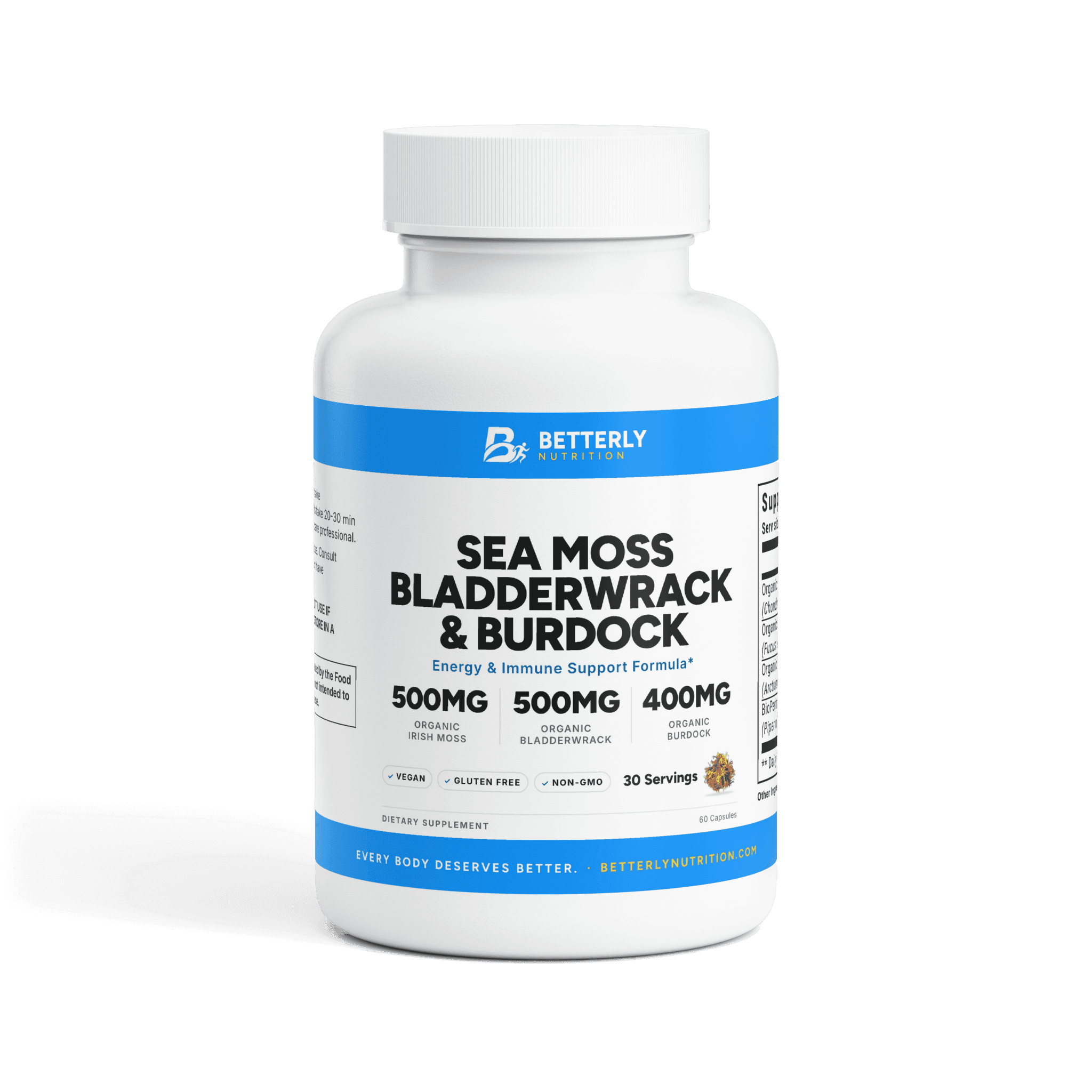
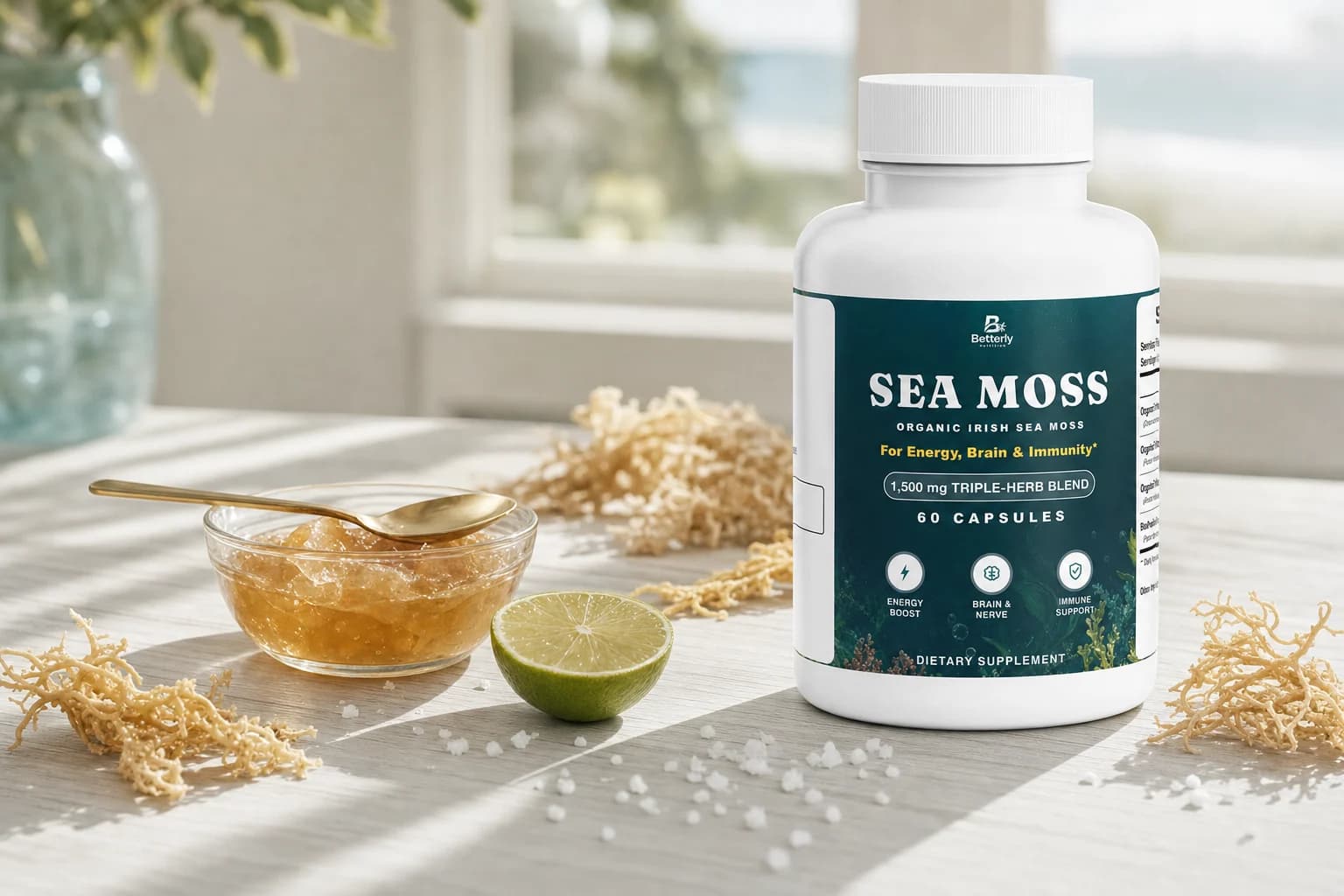
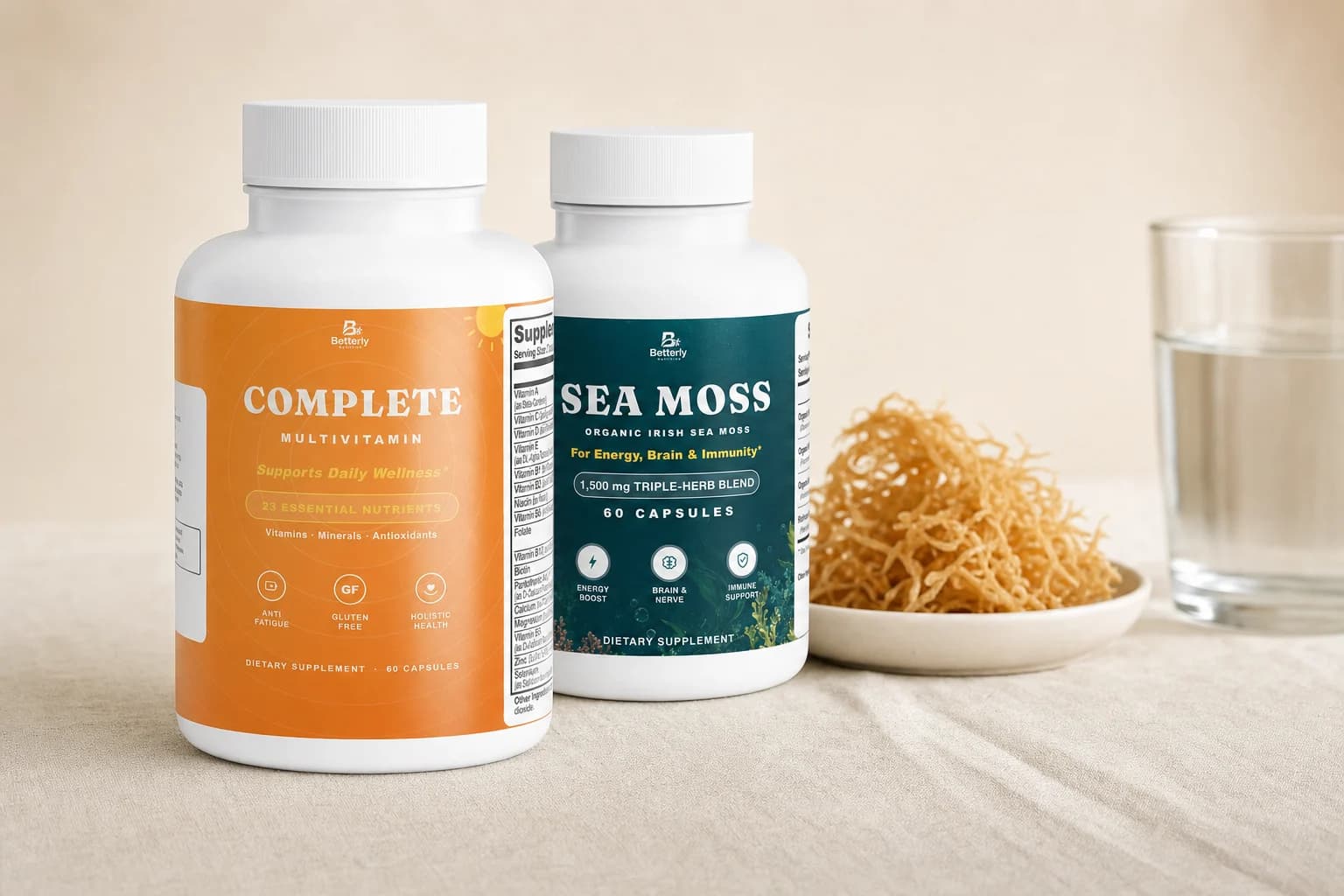
Our Sea Moss, Bladderwrack & Burdock Capsules follow the traditional pairing: Irish moss with bladderwrack and burdock root, in 60 plant-based capsules. If you want the full picture on this ingredient — what it is, how people use it, what to look for when buying — our sea moss benefits and dosage guide goes much deeper.
The "92 minerals" claim, honestly
You can't read about sea moss minerals for five minutes without meeting this line: sea moss contains 92 of the 102 minerals found in the human body.
Here's the honest version. We couldn't find a published lab analysis of sea moss behind that number, and "102 minerals found in the human body" isn't a standard nutrition figure either. Seaweed does absorb a long list of elements from seawater, but most of them show up in trace or ultra-trace amounts that may not mean much at a normal serving size. Some of them aren't nutrients you'd want more of at all — a plant that absorbs whatever is in its water picks up the unwelcome elements along with the good ones, which is exactly why sourcing and sensible serving sizes matter with any seaweed product.
So the truthful summary is this: sea moss is genuinely mineral-rich, with iodine as the standout, and the "92 minerals" line is marketing shorthand — not a nutrition label. A brand leaning on that number to argue sea moss replaces a multivitamin is selling past the evidence.
What a multivitamin actually provides
A multivitamin is the opposite kind of product: not a food, but a formulation. Someone sat down and chose a list of vitamins and minerals at deliberate amounts, so that one or two capsules backstop the most common gaps in a normal diet — the B vitamins, vitamin D, zinc, and the rest that are easy to under-eat and hard to feel day to day.
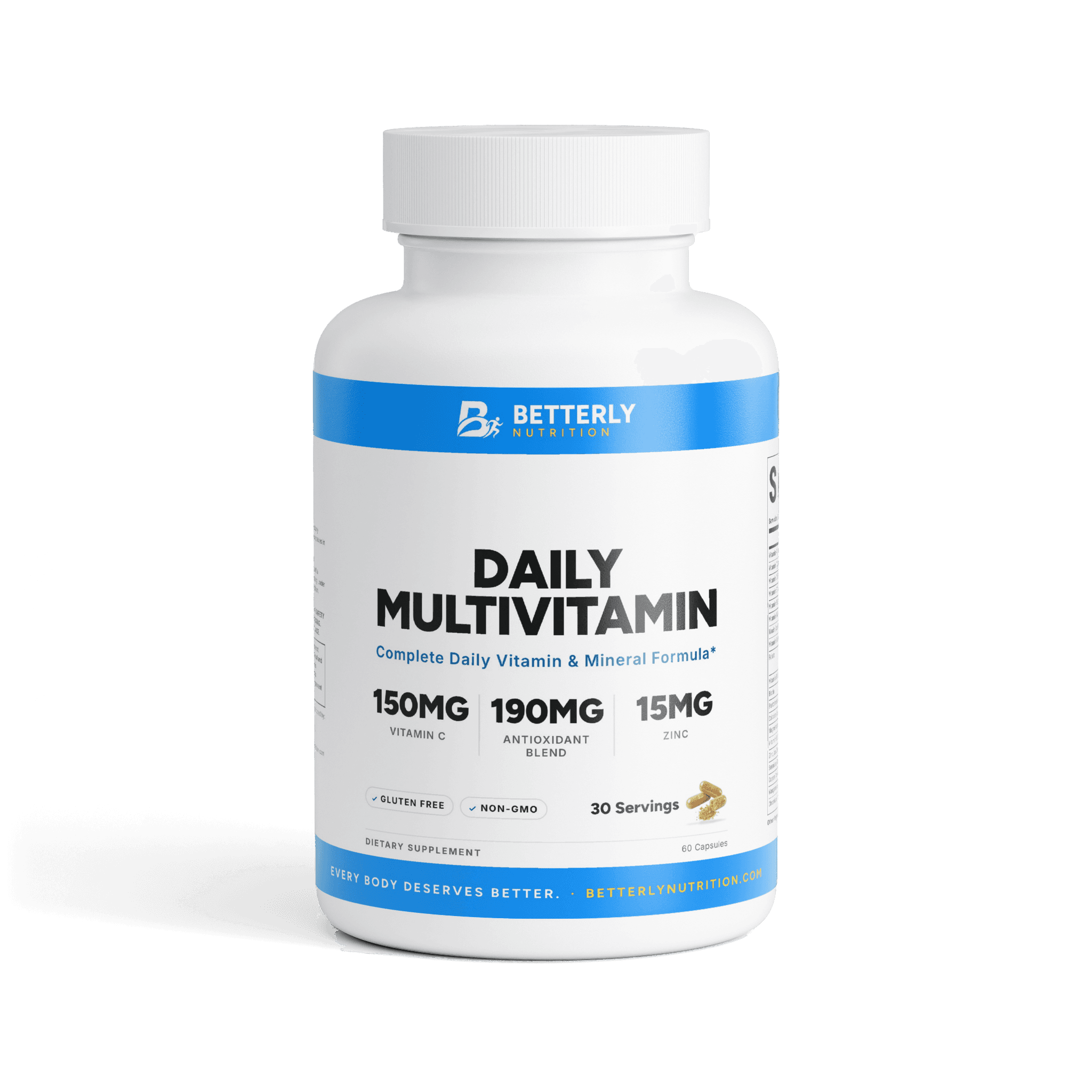
That predictability is the whole point. Our Daily Multivitamin Capsules cover 20 vitamins and minerals in 60 capsules, and — like everything we sell — its amounts per serving are listed on the product page, so you can see what you're comparing before you buy. The honest limit: ours also includes three blends (110 mg, 170 mg and 190 mg per 2-capsule serving) listed by total weight rather than per ingredient.
The research picture deserves the same honesty we gave sea moss. According to the NIH Office of Dietary Supplements, most studies have found that multivitamins have little or no effect on the risk of a range of health problems, or on the risk of death. The same source notes that a few studies found older adults who took a multivitamin for 1 to 3 years had improved memory and related mental skills. It also names people who don't get enough vitamins and minerals from food alone, or who avoid certain foods, as people who might consider one. If you're wondering whether you're in the "worth it" camp, we wrote a whole piece on that question: Do You Actually Need a Multivitamin?
Sea moss vs multivitamin head-to-head: coverage, doses, and labels
Put the two side by side and the trade-offs get clear fast.
| Sea moss | Multivitamin | |
|---|---|---|
| What it is | A whole food (red seaweed) | A designed formula |
| Strength | Concentrated whole-food minerals, especially iodine | Broad coverage of vitamins and minerals |
| Weakness | Narrow; little vitamin content | Nothing "whole food" about it |
| Consistency | Varies by harvest and processing | Same amounts in every capsule |
| Label clarity | Raw sea moss rarely lists exact amounts | Every vitamin and mineral at a stated dose |
One more question sits under this comparison: the whole food supplement vs multivitamin debate itself. The marketing story says whole-food nutrients absorb far better than "synthetic" ones, but that claim usually arrives without a source. There are real reasons to like whole-food supplements (simplicity, tradition, the extra compounds that come along with a real plant), but "your body can't use regular vitamins" isn't one we can back up.
When sea moss makes sense
Sea moss earns its spot in a routine when:
- You want your minerals from a recognizable food. Some people simply prefer a seaweed with centuries of use behind it over a formulated capsule, and that's a fair preference.
- Iodine is the draw. Iodine supports normal thyroid function, and the thyroid touches energy and metabolism in ways people care about. Sea moss is one of the more concentrated everyday food sources.
- Your diet is already decent. If you eat reasonably well and want a modest whole-food nudge rather than full coverage, sea moss fits that role better than a multivitamin does.
- You're building an everyday immune routine. Sea moss is a staple of our immune support collection, alongside options we cover in our guide to the best supplements for everyday immune support.
When it doesn't make sense without a check-in first: the label says to consult a physician if you're pregnant, nursing, under 18 or have a medical condition. Talk to your healthcare provider before adding any concentrated seaweed product, too, if you take any prescription medication or your doctor is managing your thyroid. Iodine is a nutrient where more is not better.
When a multivitamin makes sense
The multivitamin is the right call when:
- You want coverage, not a bet. If the goal is "make sure I'm not quietly missing something," a formula with stated doses does that job in a way no single food can.
- Your diet has known blind spots. Plant-based eaters, picky eaters, people in a busy season who live on repetition — these are the classic cases where the insurance logic holds up.
- You want to know your amounts. If reading a label and seeing real numbers matters to you, a formulated product is the only way to get that.
- A provider has flagged a specific gap. Actually, in that case, a targeted single supplement at the right dose usually beats both sea moss and a general multivitamin. Fix the identified gap first.
Can you take sea moss and a multivitamin together?
Yes — this is one of the most common ways people use them, and it's how the two products stop competing and start covering for each other's weaknesses. The multivitamin handles breadth; sea moss adds its concentrated whole-food minerals on top.
The one check worth doing: add up your iodine. Many multivitamins include iodine, and seaweed is a natural source of it. Our Daily Multivitamin Capsules list no iodine, and our Sea Moss, Bladderwrack & Burdock Capsules list their seaweed amounts (500 mg Organic Irish Moss and 500 mg Organic Bladderwrack per 2-capsule serving) but no iodine figure. Because that number isn't on the label, ask your provider before stacking sea moss with other iodine sources.
According to the NIH Office of Dietary Supplements, adults need 150 mcg of iodine a day, and the adult upper limit from all sources (food, beverages and supplements) is 1,100 mcg. Stacking several iodine sources without checking is the one genuinely careless way to do this. Keep each product to its label's suggested use, and loop in your provider if you're pregnant, nursing, under 18, on medication, or have any thyroid concern.
If you like the "both" approach, follow each label. The label's suggested use for our Daily Multivitamin Capsules is two capsules in the morning with a meal. For our Sea Moss, Bladderwrack & Burdock Capsules, the label's suggested use is two capsules once a day, 20-30 minutes before a meal. Our daily immune support routine guide lays out a realistic schedule that won't fall apart by Thursday.
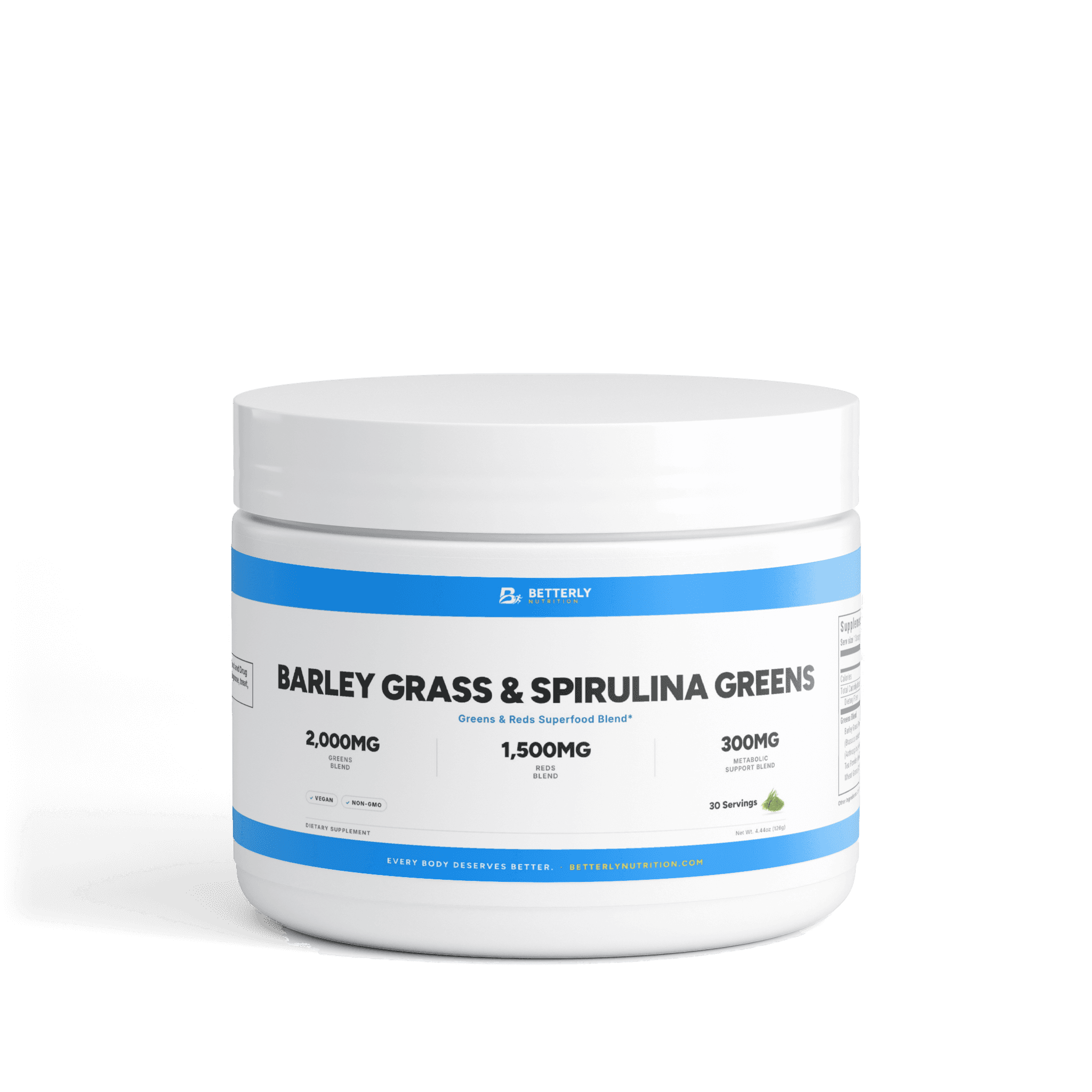
And if what you're really after is broad plant coverage rather than seaweed specifically, a greens powder is the third option in this conversation. Our Barley Grass & Spirulina Greens Powder puts barley grass, spirulina and 20 other ingredients, across four blends, in each 1-scoop (4.2 g) serving. We compared that whole category honestly in our AG1 alternatives breakdown.
Key takeaways
- Sea moss vs multivitamin isn't really a versus. They do different jobs — one is a whole-food mineral source, the other is broad, predictable coverage.
- The "92 minerals" claim is marketing shorthand. Sea moss is genuinely mineral-rich, especially in iodine, but most of the elements it picks up are trace amounts, not a reason to skip everything else.
- A multivitamin's advantage is knowing. Known vitamins and minerals at known doses, printed on the label, identical every day.
- Taking both is common and reasonable, as long as you check your other iodine sources with your provider first.
- Neither replaces food or your provider's advice. Supplements support a routine; they don't carry it.
FAQ: sea moss vs multivitamin
Is sea moss better than a multivitamin?
Neither is "better" — they're different tools. Sea moss is a whole-food source of minerals, led by iodine, with modest vitamin content. A multivitamin is a designed formula that covers a broad list of nutrients at known doses. If you had to pick one for general gap-filling, the multivitamin's breadth usually wins; if you specifically want whole-food minerals, sea moss is the pick.
Can sea moss replace a multivitamin?
Not really. Sea moss provides little of the B vitamins, vitamin D, and other nutrients a multivitamin is built around, and its mineral content varies from batch to batch. It works better as an addition to a solid routine than as a substitute for coverage.
Can you take sea moss and a multivitamin together?
Generally yes, and many people do. The one thing to check is total iodine: many multivitamins include some, and seaweed is a natural source of it, though the label on our Sea Moss, Bladderwrack & Burdock Capsules doesn't state an iodine amount. Check with your healthcare provider before stacking it with other iodine sources, and especially if you're pregnant, nursing, under 18, on medication, or have a thyroid concern.
Does sea moss really contain 92 minerals?
Not in any way we could verify. We couldn't find a published lab analysis of sea moss behind the 92 figure, and "102 minerals in the human body" isn't a standard nutrition figure either. Seaweed does absorb many elements from seawater, but most are present in tiny amounts that may not be meaningful at a normal serving, and a few are elements you don't want more of.
Who should be careful with sea moss?
The label on our Sea Moss, Bladderwrack & Burdock Capsules says to consult a physician if you're pregnant, nursing, under 18 or have a medical condition. The same goes if you take prescription medication or your doctor is managing your thyroid, because sea moss is a concentrated and variable iodine source. If you take other iodine-containing supplements, ask your provider before stacking them.
How should I judge whether either one fits my routine?
Neither sea moss nor a multivitamin comes with a timeline we can honestly promise, and neither label gives one. The fairer test is whether your diet has a gap one of them covers, which your healthcare provider can help you judge. Take either as its label directs, alongside the food, sleep and movement that do the heavy lifting.
Sources
- Iodine: Fact Sheet for Consumers (NIH Office of Dietary Supplements)
- Multivitamin/mineral Supplements: Fact Sheet for Consumers (NIH Office of Dietary Supplements)
If this left you looking for somewhere to start, read a daily multivitamin with 20 vitamins and minerals — its amounts per serving are listed on the page. For the practical questions this raises, how dosing, sourcing and subscriptions work is answered in one place.