On this page
- Key takeaways
- What is sea moss, exactly?
- What is sea moss actually good for?
- Sea moss gel vs capsules: which form should you choose?
- What does the sea moss hype get wrong?
- How much sea moss should you take, and when?
- Who should skip sea moss, or check with a doctor first?
- What should you look for when buying sea moss?
- How does sea moss fit into a bigger routine?
- Frequently asked questions
- Sources
The short answer: Sea moss is a red seaweed — Chondrus crispus — that coastal communities have eaten for generations. It's a whole-food source of minerals, most notably iodine, which your body needs to make thyroid hormones. Taken consistently, it helps support normal thyroid function and everyday immune health. It won't transform you, and anyone promising that is selling something. Capsules are the easiest way to take it consistently: two a day, before a meal.
Key takeaways
- Sea moss is a whole food, not a precision-dosed nutrient. It's a mineral-rich red seaweed, and its best-understood nutrient is iodine — a mineral your body needs to make thyroid hormones.
- Expect quiet support, not fireworks. Phrased honestly, sea moss helps support normal thyroid function and everyday immune health as part of a steady routine.
- The famous "92 minerals" claim doesn't hold up to a careful reading. Seaweed does absorb minerals from seawater, but amounts vary from harvest to harvest, and a daily serving is small.
- Gel versus capsules is mostly a lifestyle question. Gel suits smoothie people who enjoy the ritual; capsules win on consistency, taste (there is none), and shelf life.
- Our label's suggested use is two capsules once a day, 20–30 minutes before a meal. The label says to consult a physician if you're pregnant, nursing, under 18 or have a medical condition, and the NIH Office of Dietary Supplements notes that iodine supplements might interact with antithyroid medicines.
What is sea moss, exactly?
Sea moss is a red seaweed that grows on rocky shorelines along the Atlantic. You'll also hear it called Irish moss, and its botanical name is Chondrus crispus. Despite the name, it isn't a moss at all — it's a small, branching seaweed that gets harvested by hand at low tide, the way it has been for centuries.
Its history is a food history, not a supplement history. In 19th-century Ireland it earned its keep as something nourishing that could be gathered from the shore for free. Simmered in water, sea moss releases a natural gelling substance — this is where carrageenan, the thickener you've seen on food labels, traditionally comes from — and generations of cooks used that property to thicken puddings, broths, and drinks. In Jamaica and across the Caribbean, sea moss drinks blended with spices and milk are a beloved tradition in their own right. When something stays in kitchens that long, it's usually because it's genuinely useful, not because it's magic.
One honest wrinkle worth knowing before you shop: a lot of what's sold as "sea moss" today isn't strictly Chondrus crispus. Much of the commercial supply is a related warm-water red seaweed — often from the genus Gracilaria — farmed in the Caribbean and Southeast Asia. These are similar whole foods, and neither is a scam, but it's the kind of detail an honest label should be clear about. We'll come back to that in the buying section.
So why do people supplement with a seaweed? Because seaweeds absorb minerals from the water they grow in, sea moss ends up being a whole-food source of minerals — iodine most notably. That's also the honest catch: whole foods vary. Two harvests of the same seaweed from two stretches of coastline won't carry identical mineral loads, which is worth keeping in mind whenever a brand quotes suspiciously precise numbers.
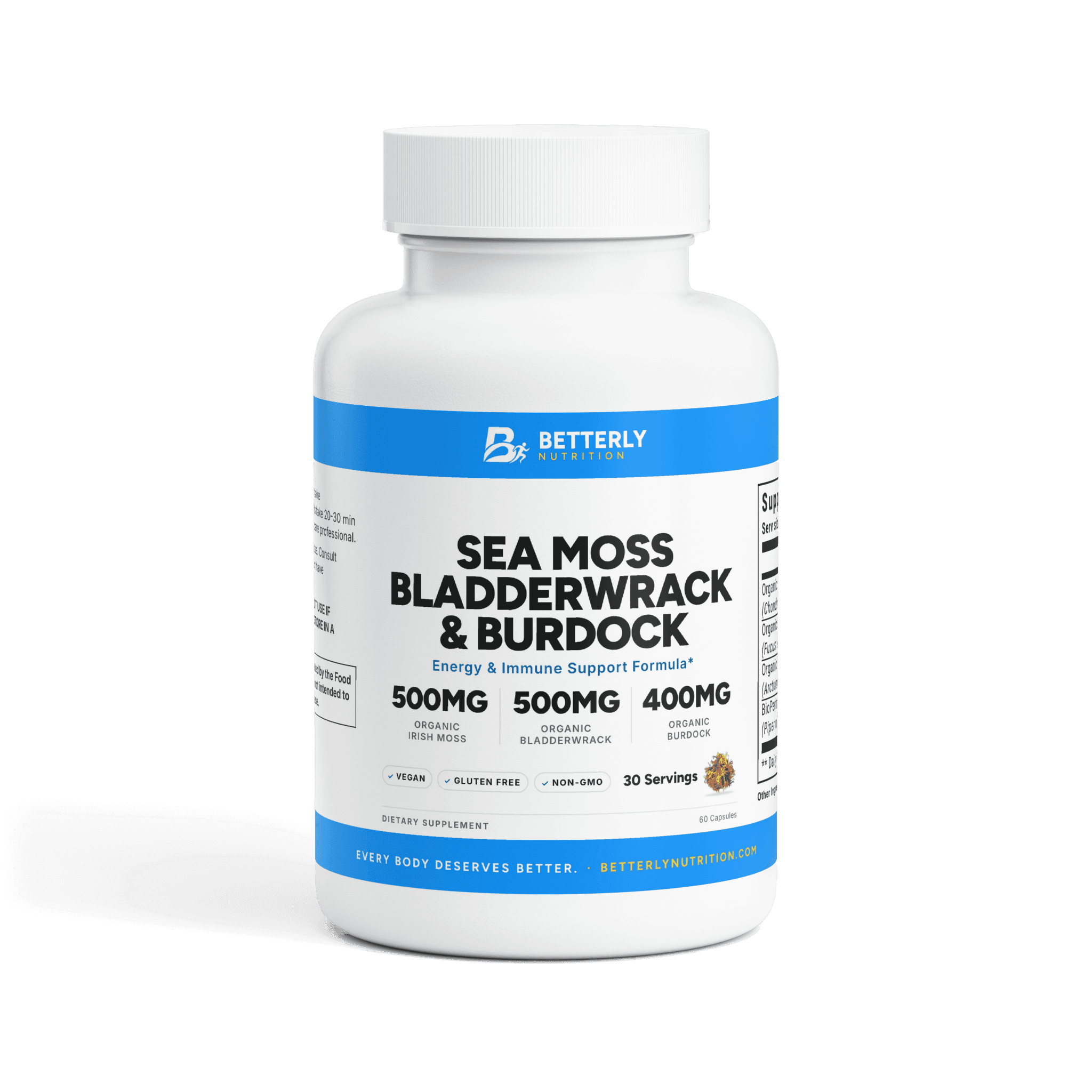
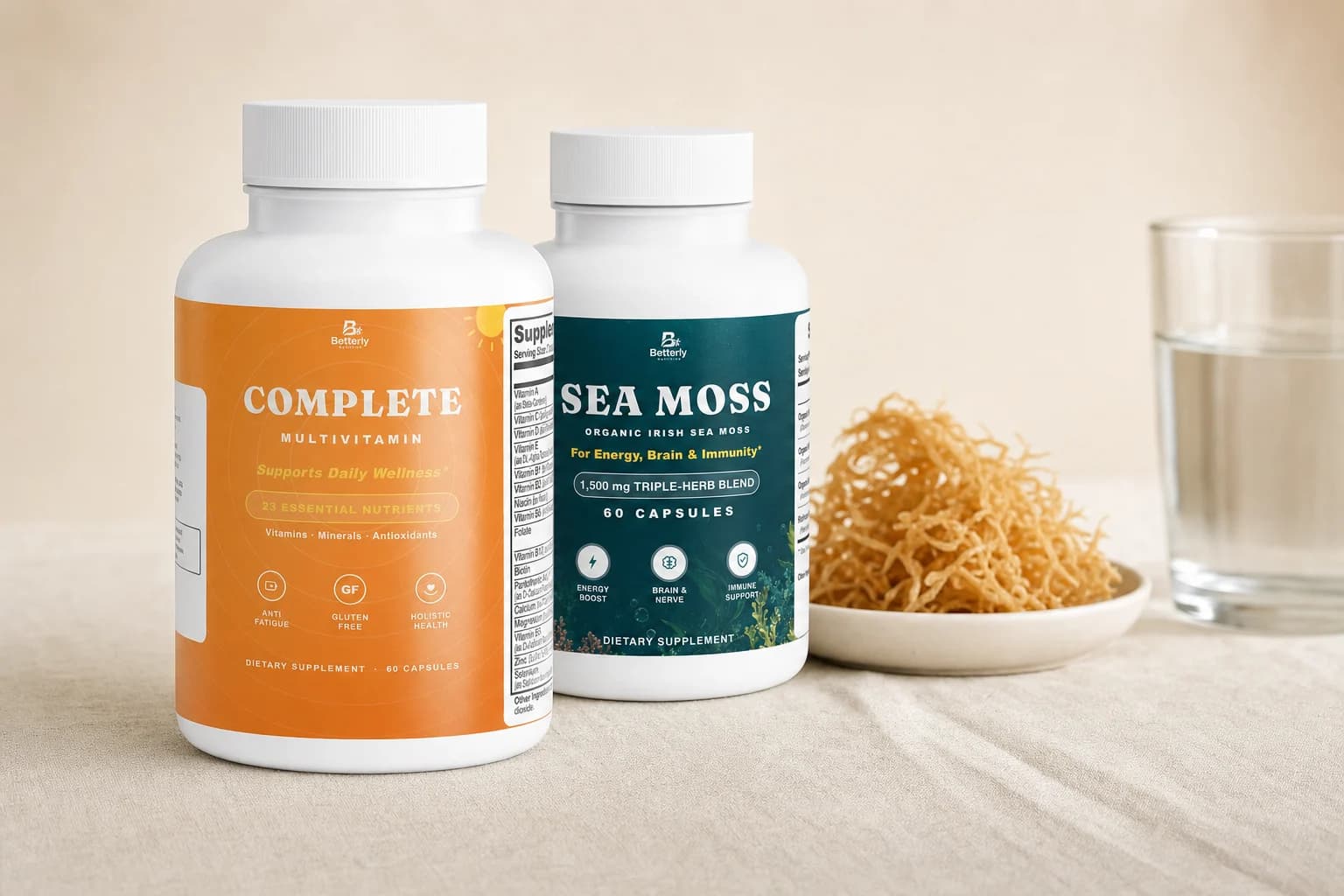
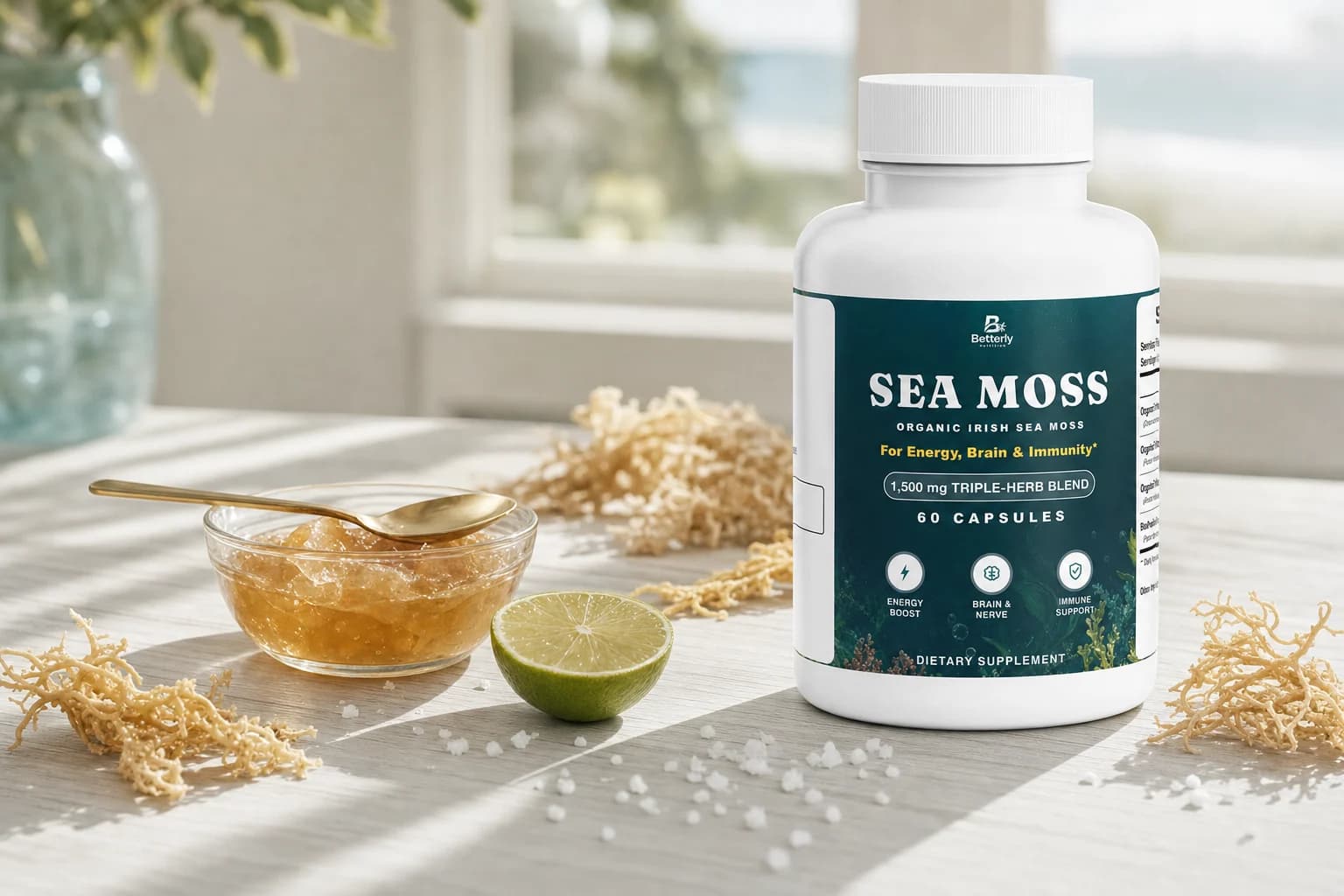
Our own capsules build around sea moss as the anchor of a small team: organic Irish moss alongside organic bladderwrack — another seaweed and a natural source of iodine — plus organic burdock, a traditional root, with 5 mg of BioPerine® (black pepper extract) per 2-capsule serving.
What is sea moss actually good for?
Here's the plain-English version, phrased the way supplement claims are supposed to be phrased — as support for normal function, not as medicine.
Normal thyroid function. This is sea moss's best-grounded lane. Your body needs iodine to make thyroid hormones, and seaweed is one of the foods generally rich in it — the NIH Office of Dietary Supplements iodine fact sheet is a good plain-English overview if you want the textbook background. Irish moss and bladderwrack are natural sources of iodine. Our label doesn't list an iodine amount, and the mineral content of seaweed varies from harvest to harvest. Note the wording: normal function. This is nutritional support for a system that's already doing its job, not a fix for one that isn't — if you have concerns about your thyroid, that's a conversation for your physician, not a seaweed.
Everyday immune health. A mineral-rich whole food is a sensible part of the foundation your immune system runs on, and our blend is built to help support normal immune function as one piece of a balanced daily routine. We'd encourage you to read that exactly as written. No supplement replaces the boring fundamentals — sleep, real food, movement — and sea moss works alongside them, not instead of them.
What about digestion? Sea moss's gel-forming character is part of why it's been a kitchen staple for so long, and in our formula, organic burdock — a root with a long history of traditional use — rounds out the blend. If digestion is the main reason you're reading this, our plain-English guide to gut health basics is worth your time too, because fiber, food variety, and routine tend to matter more than any single capsule.
And that's the honest list. You'll notice it's shorter than the lists floating around social media. That's deliberate — which brings us to forms, and then to the hype.
Sea moss gel vs capsules: which form should you choose?
Walk into this category and you'll meet two main formats: jars of prepared gel (or dried raw sea moss you soak and blend yourself) and capsules. Neither is wrong. They're tuned for different people.
| Raw sea moss gel | Capsules | |
|---|---|---|
| How you take it | Spooned into smoothies, teas, or porridge | Swallowed with water — two capsules, in our case |
| Taste & texture | Mild ocean taste, slippery gel texture — genuinely polarizing | None |
| Serving consistency | Varies jar to jar and spoonful to spoonful | The same measured serving every day |
| Shelf life | Short — lives in the fridge, typically a few weeks | Long — lives in a cabinet |
| Daily effort | Soak, blend, store, remember to use it | Nearly zero |
The verdict, split by use case: if you already make a smoothie every morning and you like food-first rituals, gel is a pleasant, traditional way in — buy small batches and treat it like fresh food. If your actual priority is taking sea moss every day without thinking about it — no taste, no fridge management, no guessing at spoonfuls — capsules are the sensible pick. With a whole-food supplement, the form you'll stick with is the right form, because consistency is doing most of the work.
From our shop: Sea Moss, Bladderwrack & Burdock Capsules — 500 mg organic Irish moss, 500 mg organic bladderwrack and 400 mg organic burdock with 5 mg BioPerine® per 2-capsule serving, in plant-based pullulan capsules.
What does the sea moss hype get wrong?
We sell sea moss, so take this section as us arguing against our own marketing department: the hype around this seaweed has gotten ahead of the seaweed.
The "92 minerals" story. You've probably seen the claim that sea moss contains 92 of the 102 minerals the human body needs. It's repeated so often it feels like a fact. Trace it back and it rests on a simple idea: seawater contains trace amounts of a great many elements, and seaweed grows in seawater. Which is true — and also not the same thing as saying a daily serving delivers meaningful amounts of 92 minerals. "Present in trace amounts" and "present in amounts that matter" are very different claims, and the mineral content of any given batch depends on where and when it was harvested. A brand quoting you a tidy, universal number for a wild-harvested whole food is telling you something about its marketing, not its seaweed.
The everything-promise framing. Sea moss has had a celebrity moment, and in the process it's been credited with just about every benefit a person could want. Our honest position: if one seaweed could do everything the internet says it can, no other food would need to exist. The grounded case — mineral support, with iodine for normal thyroid function at the center — is genuinely decent. It doesn't need embellishment.
More is not better. This one matters. Because seaweeds are natural sources of iodine, sea moss is a case where enthusiasm shouldn't translate into extra spoonfuls or doubled capsules. Your body needs iodine — in sensible, not unlimited, amounts. It's exactly why our label says plainly: do not exceed the recommended dose. A supplement you take modestly and consistently will always beat one you take enthusiastically for three weeks.
The "ancient superfood" halo. The tradition is real, and we think it's worth respecting. But traditional use tells you a food earned a place in kitchens — it doesn't turn a food into a therapy. Sea moss deserves the same expectations you'd put on any whole food: quiet, cumulative, foundational. If a jar promises more than that, the jar is overpromising.
None of this makes sea moss not worth taking. It makes it worth taking honestly — which, conveniently, is the only way we know how to sell it.
How much sea moss should you take, and when?
We can only speak precisely for our own label, so here it is, straight from the suggested use: take two (2) capsules once a day. For best results, take them 20–30 minutes before a meal, or as directed by your healthcare professional. And don't exceed the recommended dose — as covered above, with a natural source of iodine, more is not the goal.
A few practical notes around that:
- There's no loading phase and no cycling ritual. Two capsules, once a day, is the whole routine. Anyone who tells you sea moss requires a complicated protocol is decorating.
- Timing is a suggestion, not a law. The label points to 20–30 minutes before a meal. If that slot keeps getting forgotten, a consistent time you'll actually remember beats a "perfect" time you won't.
- If you go the gel route instead, follow the label on the jar you buy. Gel products vary by maker and batch, so the producer's own serving guidance is your starting point — not a number from a video.
- Give it a fair trial. Whole-food supplements are gradual and subtle by nature, so judge it by whether you keep the daily habit. If you're the type who abandons supplements by week two, our guide to building a simple supplement routine is honestly the better first read.
Who should skip sea moss, or check with a doctor first?
Sea moss is a food-based supplement, but "natural" has never meant "for everyone." A few groups should have a conversation with a physician before starting. Our label's caution covers pregnancy, nursing, anyone under 18 and anyone with a medical condition, and the thyroid note below comes from the NIH Office of Dietary Supplements:
- If you're pregnant or nursing, talk with your physician before using this or any dietary supplement.
- If you're under 18, the label says to consult a physician before using it.
- If you take thyroid medication, check with your physician first. The NIH Office of Dietary Supplements notes that iodine supplements might interact with antithyroid medicines, and bladderwrack and Irish moss are natural sources of iodine.
- If you know you're sensitive to iodine, same answer: talk to your physician before adding a seaweed supplement.
- If you're managing a known medical condition or take daily medication, run it past the person who knows your chart.
Beyond that: don't exceed the recommended dose, and keep the bottle out of reach of children. None of this is drama — it's the standard care you should apply to anything you swallow daily. An article like this is education; it isn't a substitute for personal medical advice.
What should you look for when buying sea moss?
This is where honesty does the most work for you, because the sea moss aisle rewards skepticism. Six things we'd check on any label — including ours:
1. A named seaweed, not just a vibe. The label should tell you what's actually inside — Chondrus crispus, bladderwrack, or a clearly identified relative — rather than a mystery "sea moss blend." As covered earlier, much of the market is Gracilaria sold under the sea moss banner; that's not disqualifying, but a brand should be straight about it.
2. Organic sourcing. Seaweed absorbs what's in its water — the very property that makes it mineral-rich is the reason sourcing standards matter. Certified-organic seaweed adds a layer of oversight to how and where it's grown and handled. Our blend uses organic Irish moss, organic bladderwrack, and organic burdock.
3. A full, readable ingredient list. Every ingredient, including the capsule itself. Ours is short on purpose: three organic botanicals, BioPerine®, and a plant-based pullulan capsule — no gelatin, which keeps it vegetarian-friendly.
4. Claims that sound like support, not salvation. If the label leans on "92 minerals," miracle language, or before-and-after theatrics, walk. A trustworthy sea moss product talks about supporting normal thyroid function and everyday immune health — and stops there, because that's where the honest ground ends.
5. A sane price. Sea moss is a seaweed, not a rare earth metal. Wild pricing usually pays for marketing, not better kelp beds.
6. A clear guarantee. Check what the company does if something goes wrong. Ours covers how your order arrives: if it shows up damaged, defective or wrong, or never arrives, tell us within 30 days and we'll refund or replace it. Supplements can't be restocked, so we don't take change-of-mind returns.
And full disclosure on where we sit in our own checklist: Betterly is a curation and branding company. Our Sea Moss, Bladderwrack & Burdock Capsules come from an established U.S. supplier's contract manufacturers — our job is choosing formulas worth carrying, reproducing the manufacturer's Supplement Facts, directions and cautions word for word, and describing the product without inflation. We'd rather tell you that plainly than imply we run a seaweed farm.
From our shop: Sea Moss, Bladderwrack & Burdock Capsules — a vegan blend of organic Irish moss, bladderwrack and burdock, taken as two capsules once a day.
How does sea moss fit into a bigger routine?
The least glamorous truth in this article: sea moss works best as one steady piece of an ordinary, functioning routine. Real meals, reasonable sleep, some movement — a mineral-rich seaweed supports that foundation; it doesn't replace it. "Alongside a balanced diet" isn't fine print to us. It's the actual mechanism.
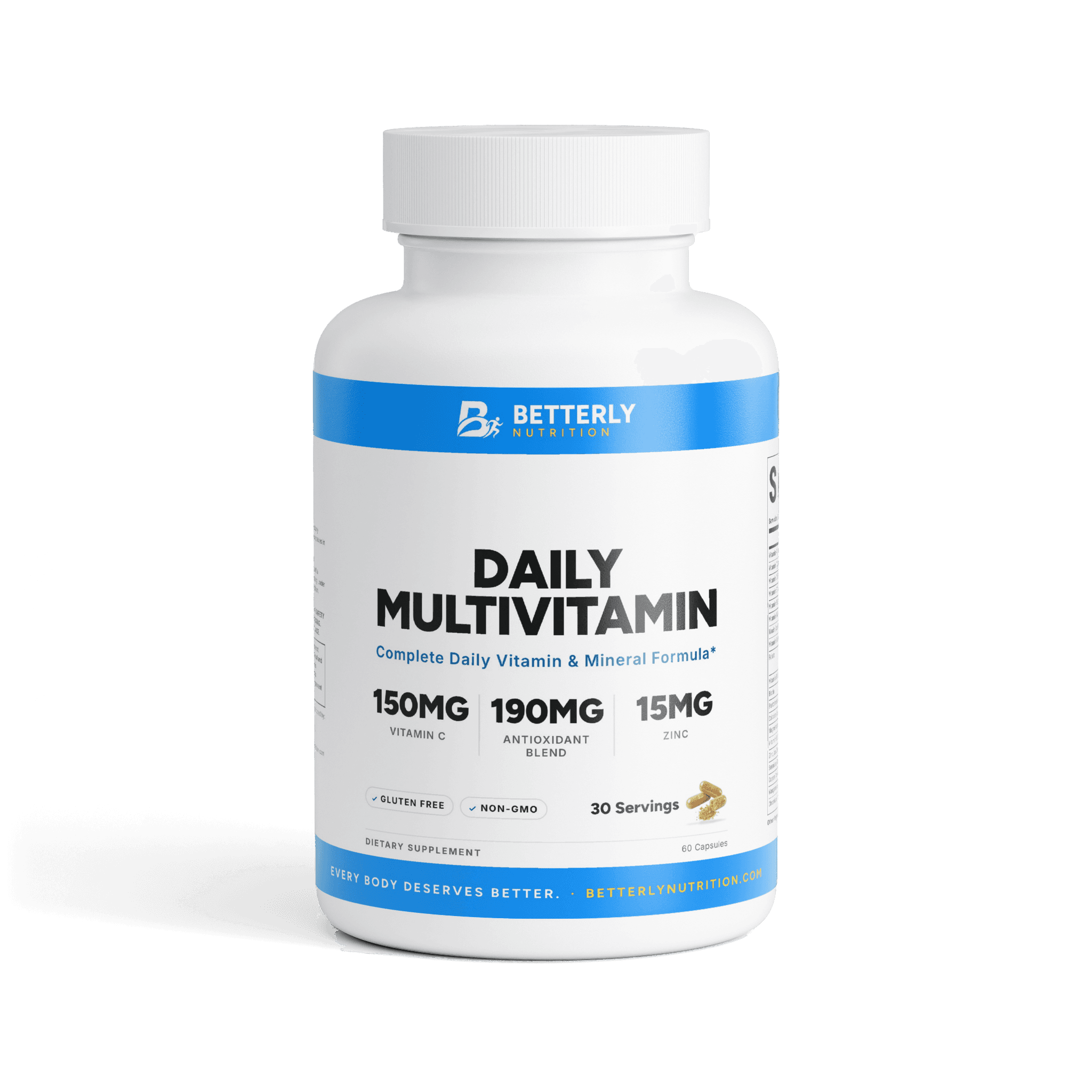
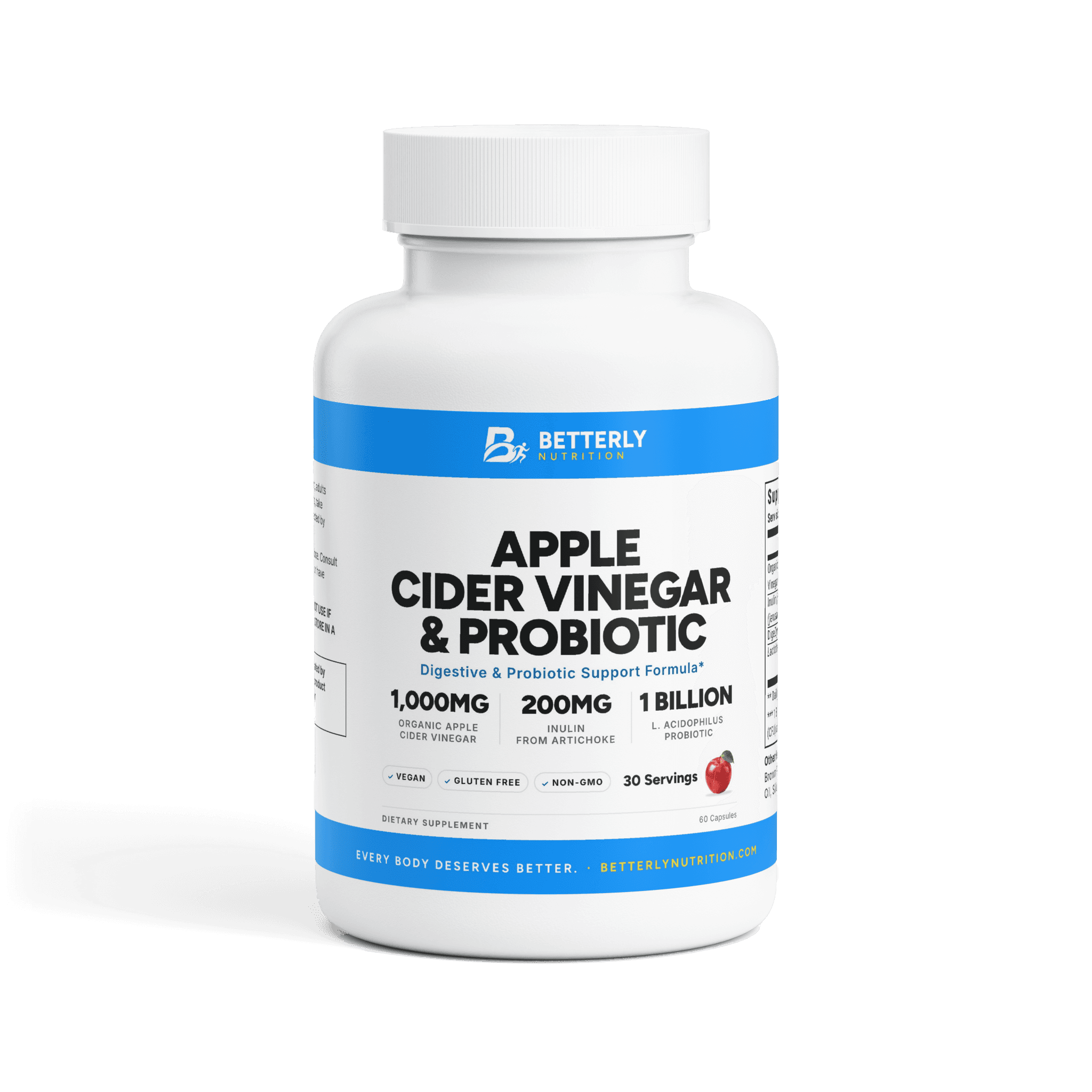
In practical terms, sea moss tends to slot in one of two ways. If you're building a bases-covered daily stack, it sits comfortably next to a foundational product like our Daily Multivitamin Capsules — sea moss brings the whole-food seaweed minerals, the multivitamin covers the broader checklist. If your interest is more gut-centered, it pairs naturally with our Apple Cider Vinegar & Probiotic Capsules, which take the probiotic-and-prebiotic route. Either way, if you're on any medication, the "talk to your physician" rule applies to the stack, not just the single bottle.
If you want to keep reading, two good next stops: our whole Immune Support collection gathers the products built around everyday immune support, and if you're headed to the liver aisle, our guide to whether liver support supplements work gives that category the same honest treatment we've tried to give sea moss here.
One last time, because it's the whole point: sea moss is a good, humble whole-food supplement wearing a superhero costume the internet stitched for it. Take the costume off, and what's left — mineral support, normal thyroid function, a couple of centuries of kitchen credibility — is still worth having. Just at seaweed prices, with seaweed expectations.
Frequently asked questions
Is sea moss the same as Irish moss?
Mostly, yes. Irish moss is the common name for Chondrus crispus, the cold-water red seaweed this whole category is named after. In practice, "sea moss" is often used more broadly and can also refer to related warm-water seaweeds like Gracilaria, so check the label if the species matters to you. Our capsules use organic Irish moss along with organic bladderwrack and burdock.
Does sea moss contain iodine?
Yes — seaweeds are natural sources of iodine, and in our blend both the Irish moss and the bladderwrack contribute. Iodine is a mineral your body needs to make thyroid hormones, which is why sea moss is associated with supporting normal thyroid function. It's also why anyone taking thyroid medication should talk with their physician before starting sea moss.
When is the best time to take sea moss capsules?
Our label suggests taking two capsules once a day, 20–30 minutes before a meal. That said, the timing is a "for best results" suggestion, not a hard rule — a consistent daily habit you actually keep matters more than a perfectly timed one you don't.
Can I take sea moss every day?
That's the intended use — two capsules once a day, without exceeding the recommended dose. Because seaweed is a natural source of iodine, daily consistency at the labeled serving is the goal, not doubling up. If you have a known medical condition or take medication, check with your physician first.
Is sea moss vegetarian-friendly?
Ours is. The three botanicals are plants (well, two seaweeds and a root), and the capsule itself is made from plant-based pullulan rather than animal-derived gelatin. If you're buying elsewhere, check the capsule material on the label — it's a detail some brands don't advertise.
Can I take sea moss alongside other supplements?
It's commonly taken alongside foundational products like a multivitamin or gut-support formula, and there's no caffeine or stimulant in it to complicate your routine. The honest caveat is the same one we've repeated throughout: if you take any medication — thyroid medication especially — or manage a known medical condition, review your full stack with your physician rather than adding bottles one by one.
Sources
- Iodine: Fact Sheet for Consumers, NIH Office of Dietary Supplements
If this left you looking for somewhere to start, read organic sea moss capsules with bladderwrack and burdock — its amounts per serving are listed on the page. For the practical questions this raises, how dosing, sourcing and subscriptions work is answered in one place.