On this page
- Key takeaways
- What are the real sea moss, bladderwrack and burdock root benefits?
- Why do sea moss capsules include bladderwrack and burdock?
- Bladderwrack vs sea moss: what's the difference?
- What does burdock root add to a seaweed formula?
- How much iodine is in sea moss and bladderwrack capsules?
- How and when should you take these capsules?
- What are the side effects of sea moss, bladderwrack and burdock root?
- When don't you need this trio?
- Who should check with a healthcare provider first?
- FAQ: bladderwrack, burdock and sea moss capsules
- Sources
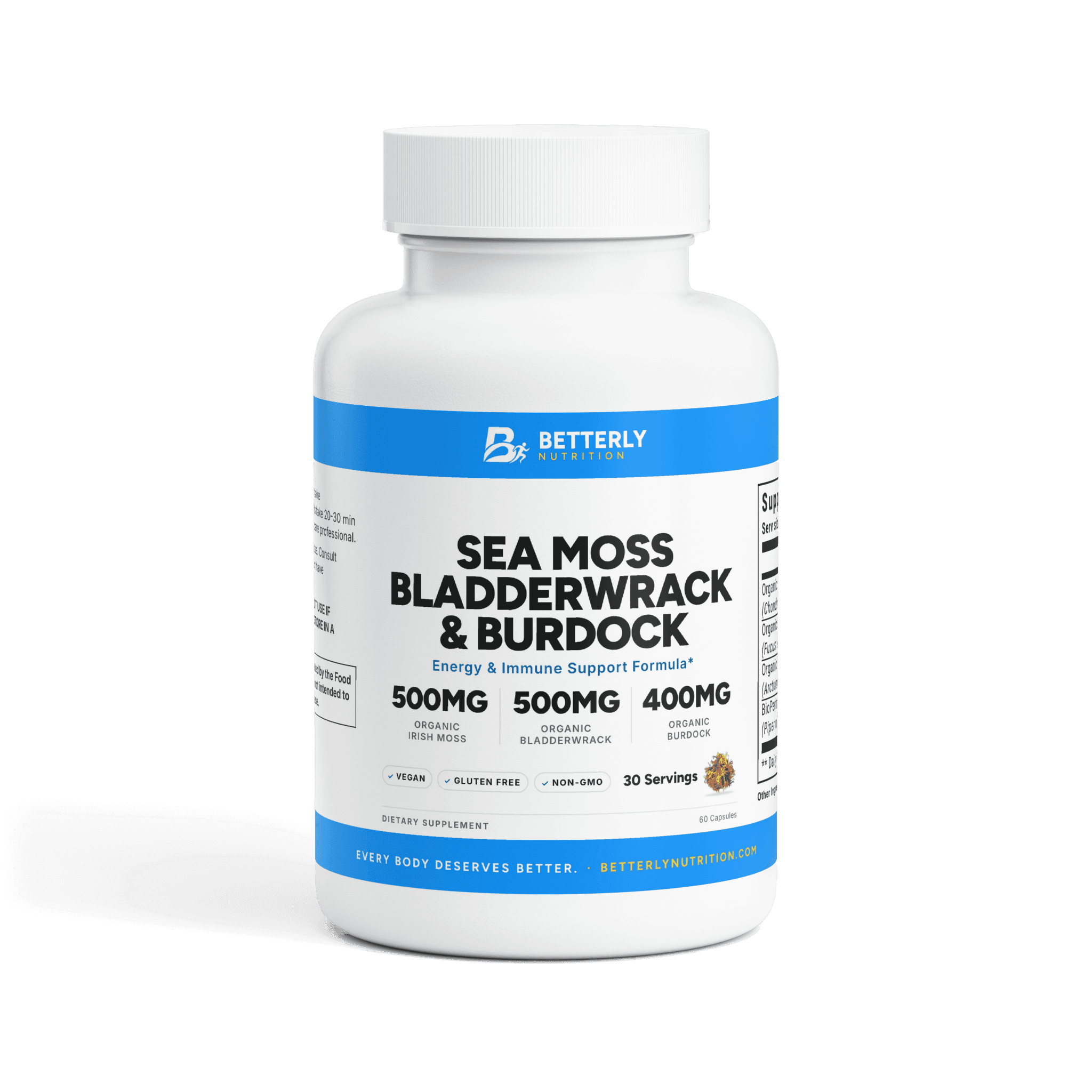
The short answer: Sea moss, bladderwrack and burdock root benefits come down to one well-documented job plus a lot of tradition. The two seaweeds are natural sources of iodine, a mineral your body uses to make thyroid hormones. Burdock is a root vegetable with a long food history. Our capsules hold 500 mg Irish moss, 500 mg bladderwrack and 400 mg burdock per 2-capsule serving, yet the label can't tell you the iodine.
Key takeaways
- Irish moss (the classic sea moss species) and bladderwrack are both seaweeds, and seaweed is generally rich in iodine.
- Burdock root is a land vegetable, eaten as gobo in Japan, and 400 mg of it is less than half a gram.
- Our panel lists the seaweeds by weight, not iodine in micrograms, so you can't check a serving against the 1,100 mcg adult upper limit.
- ODS has no fact sheet on Irish moss, bladderwrack or burdock, and NCCIH's Herbs at a Glance series has no entry for them, so their reputation leans on tradition more than research.
- NIH's LactMed database advises avoiding sea moss while breastfeeding unless its iodine and heavy-metal levels are shown to be low, and anyone pregnant, under 18, on thyroid medicine or managing a medical condition should ask a provider first.
This seaweed-and-burdock formula is ours, sold as the Sea Moss, Bladderwrack & Burdock Capsules, and every milligram in this guide matches its printed panel.
What are the real sea moss, bladderwrack and burdock root benefits?
The best-supported benefit of sea moss, bladderwrack and burdock root is iodine from the two seaweeds, which helps support normal thyroid function.
The NIH's Office of Dietary Supplements (ODS) iodine fact sheet says iodine is a building block for thyroid hormones, which control your metabolism and many other important functions. It also lists seaweed among the foods that are generally rich in iodine.
The "energy" wording on our bottle, which reads "Energy & Immune Support Formula," likely nods to iodine. MedlinePlus's page on iodine in the diet says iodine is needed for your cells to change food into energy. That's a job iodine does in everyone, not a jolt you'll feel after a capsule.
The immune half of the wording rests on tradition. Neither ODS nor NCCIH ties Irish moss, bladderwrack or burdock to immune function, and we'd rather say so than stretch the iodine evidence to cover it.
Burdock brings something different: a root vegetable with a long history in Japanese cooking, plus inulin, a kind of plant fiber. At 400 mg, it's a small supporting player.
Why do sea moss capsules include bladderwrack and burdock?
Sea moss capsules include bladderwrack and burdock mostly by herbal-shop tradition: two seaweeds from different algae groups plus a land root, not because research paired them.
The usual pitch is variety: a red seaweed, a brown seaweed and a root that grows in soil instead of seawater. That's a sensible menu idea, not evidence that the three work better as a set.
The NIH's Botanical Dietary Supplements background fact sheet says studies in people give the most direct evidence of a botanical's effects, and calls them especially important for complex multi-ingredient products. It also notes that some botanicals have had very little research. From what we could find, this trio sits much closer to that second group. The NCCIH's Herbs at a Glance series has no entry for Irish moss, bladderwrack or burdock.
One more label detail: our panel names the plant part, "whole plant" for both seaweeds and "root" for burdock, but no extract ratio or standardized compound. The same ODS page notes U.S. law doesn't require standardization. So a serving is 1,400 mg of plant material, not a measured dose of any one compound.
Bladderwrack vs sea moss: what's the difference?
Bladderwrack (Fucus vesiculosus) is a brown seaweed with air-filled bladders, while sea moss, also called Irish moss (Chondrus crispus), is a red alga prized for its gel.
Both grow on cold, rocky North Atlantic shores. Irish moss is short and frilly, while bladderwrack has longer olive-brown fronds with paired air bladders along the midrib.
Irish moss is the traditional source of carrageenan, the thickener you'll spot on dairy and dessert labels. NIH's LactMed, a database on what reaches breast milk, has a seaweed record covering bladderwrack that lists iodine, soluble fiber, vitamin B12 and iron among its contents. Most of the bladderwrack benefits you'll read about trace back to that iodine.
Neither ODS nor LactMed ranks the two for iodine, so a claim that bladderwrack carries "more" can't be checked without testing a batch. Here's how our panel lines up:
| Ingredient | What it is | Known for | Per 2-capsule serving |
|---|---|---|---|
| Irish moss (Chondrus crispus) | Red seaweed, whole plant | Traditional gel; natural iodine source | 500 mg |
| Bladderwrack (Fucus vesiculosus) | Brown seaweed, whole plant | Iodine; soluble fiber | 500 mg |
| Burdock (Arctium lappa) | Land root vegetable | Gobo in Japanese cooking; inulin | 400 mg |
| BioPerine® (Piper nigrum) | Black pepper fruit extract | Common formula add-in | 5 mg |
Read it this way: two of the four lines carry the iodine story, one is a vegetable, and one is a pinch of pepper extract. Only the seaweeds explain the thyroid wording you see on trio labels.
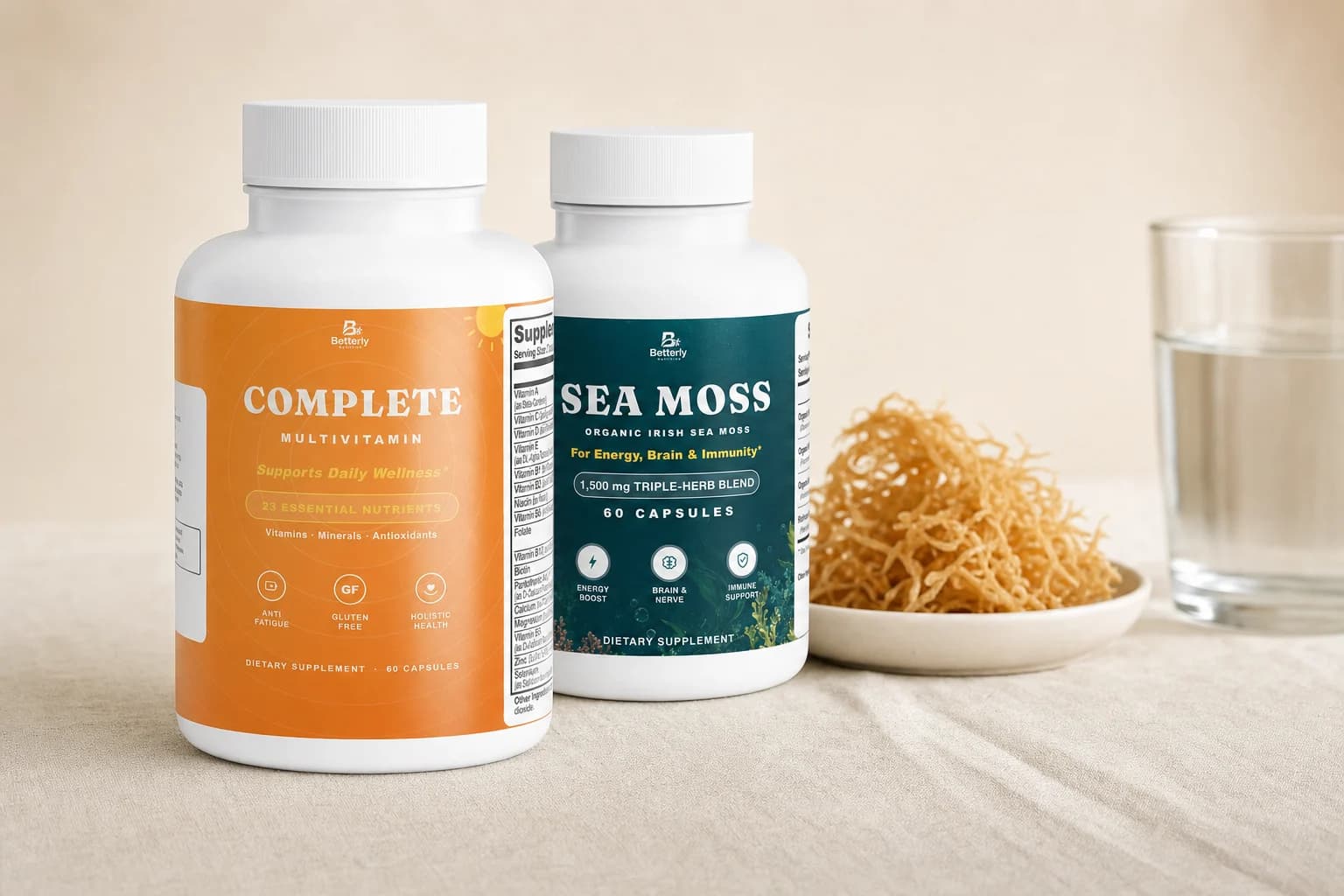
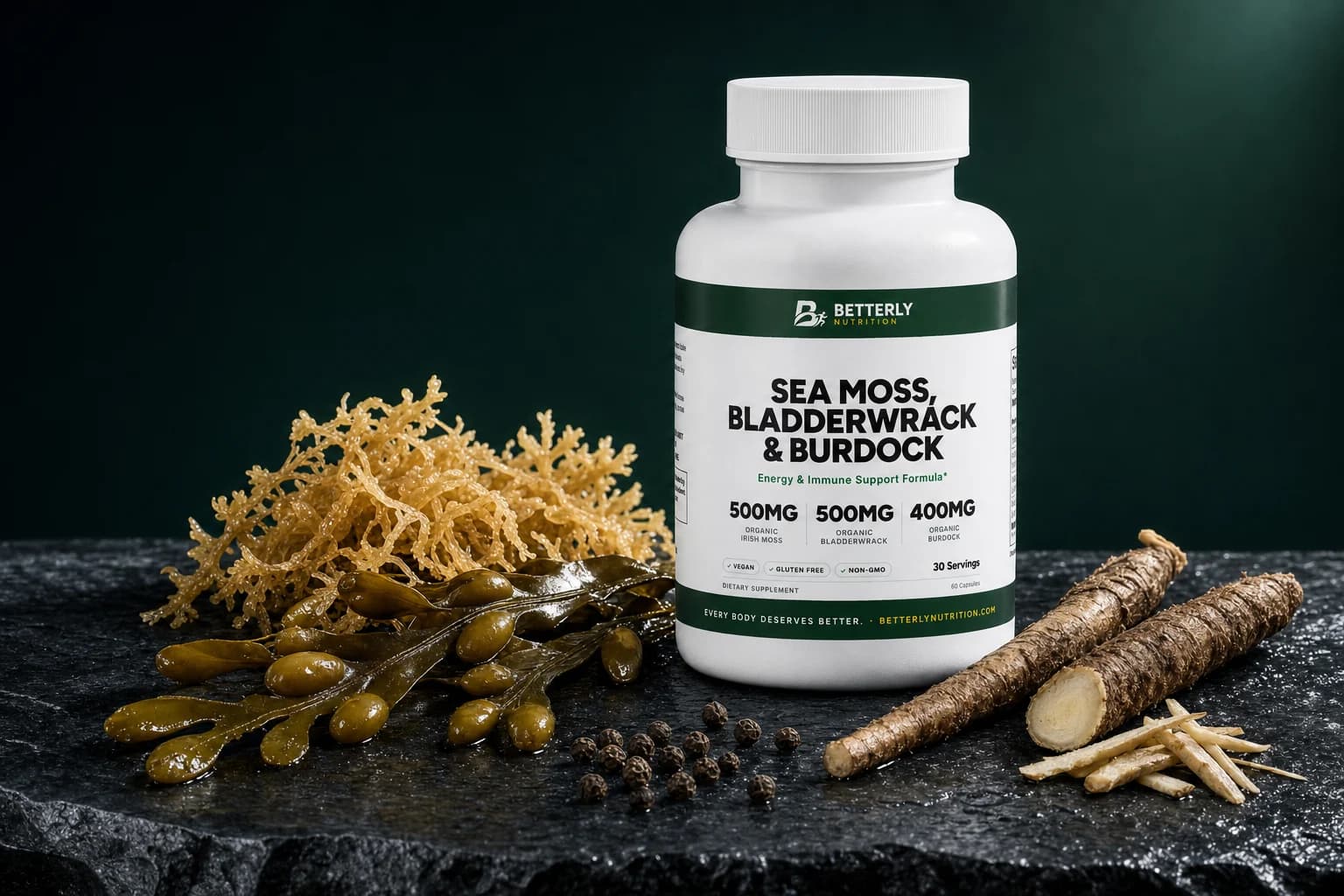
From our shop: Sea Moss, Bladderwrack & Burdock Capsules — 500 mg organic Irish moss, 500 mg organic bladderwrack, 400 mg organic burdock root and 5 mg BioPerine® per 2-capsule serving, in vegan pullulan capsules.
What does burdock root add to a seaweed formula?
Burdock root adds a land vegetable: Arctium lappa, a daisy-family plant whose long taproot is eaten as gobo and contains inulin, a type of plant fiber.
Burdock is native to temperate Europe and Asia. In Japan, the root is an everyday vegetable. A classic dish, kinpira gobo, pairs thin strips of burdock and carrot braised with soy sauce and sesame oil.
Now the honest math. Our 400 mg of burdock root is less than half a gram, and a single forkful of kinpira weighs more than that. So don't count on this capsule for meaningful fiber. Vegetables, beans and whole grains do that job far better, and our plain-talk guide to gut health basics covers the food side.
Burdock tea isn't the same serving as a capsule, either. The ODS botanical fact sheet says some roots need a decoction, simmered rather than steeped, and that teas, tinctures and extracts differ in strength.
How much iodine is in sea moss and bladderwrack capsules?
The label can't say: our capsules list Irish moss and bladderwrack by weight, 500 mg apiece, not iodine in micrograms.
That's normal for whole seaweed. ODS explains that foods with natural iodine, such as seaweed and fish, usually don't show it on Nutrition Facts labels, so those labels can't be relied on for iodine. Our panel is the same: no iodine row, and "Daily Value not established" beside every line.
Why it matters: ODS puts the adult daily need at 150 mcg and the upper limit at 1,100 mcg a day, counting every source: meals, beverages and supplements. MedlinePlus adds that very high iodine intake can reduce the function of the thyroid gland. And ODS says most people in the United States already get enough iodine from what they eat and drink.
So before you add a seaweed capsule, look for iodine elsewhere in your day:
- Salt. Check whether the salt in your kitchen says "iodized." ODS notes that sea salt, kosher salt and Himalayan salt usually aren't.
- Food. Seafood, dairy and eggs are among the best sources, per ODS.
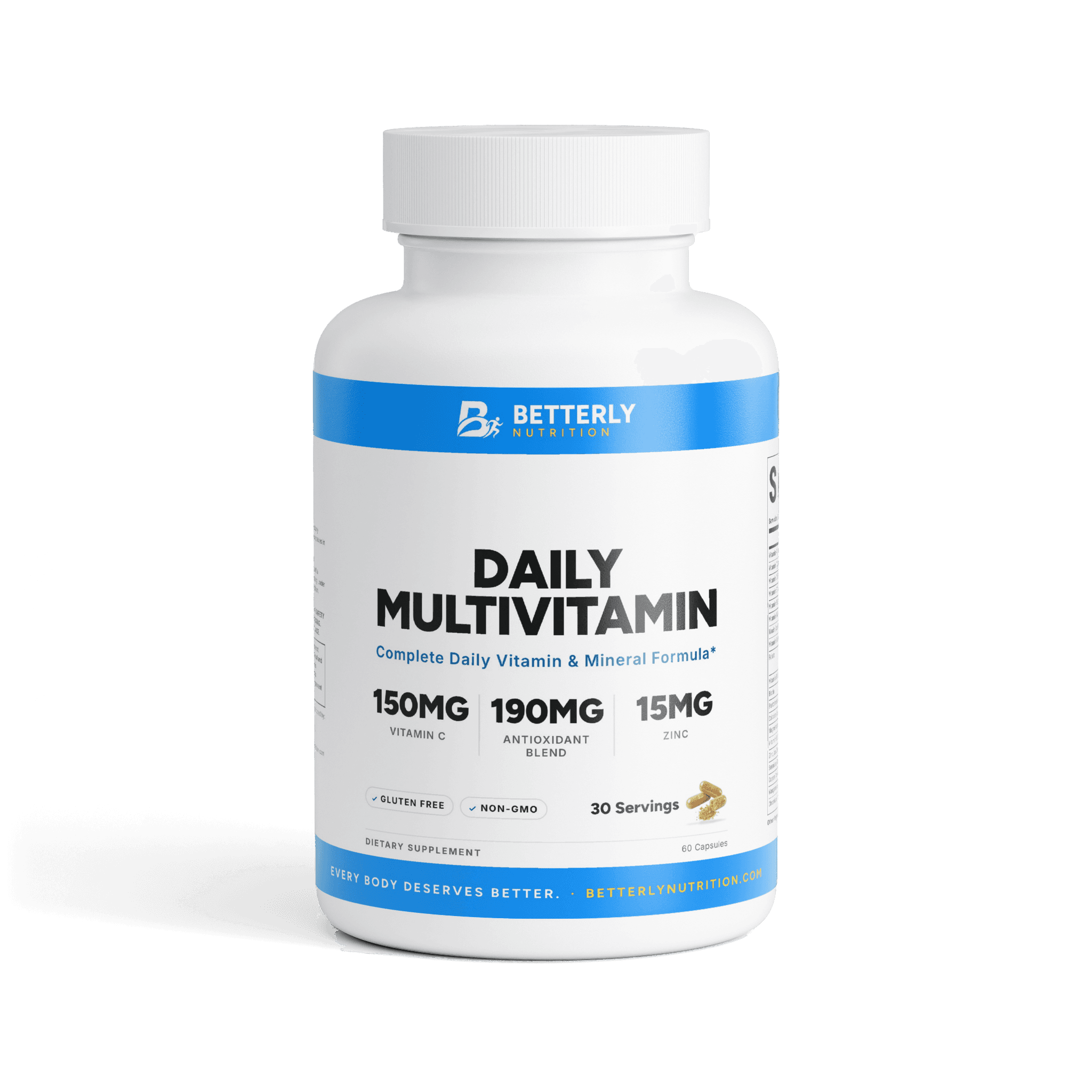
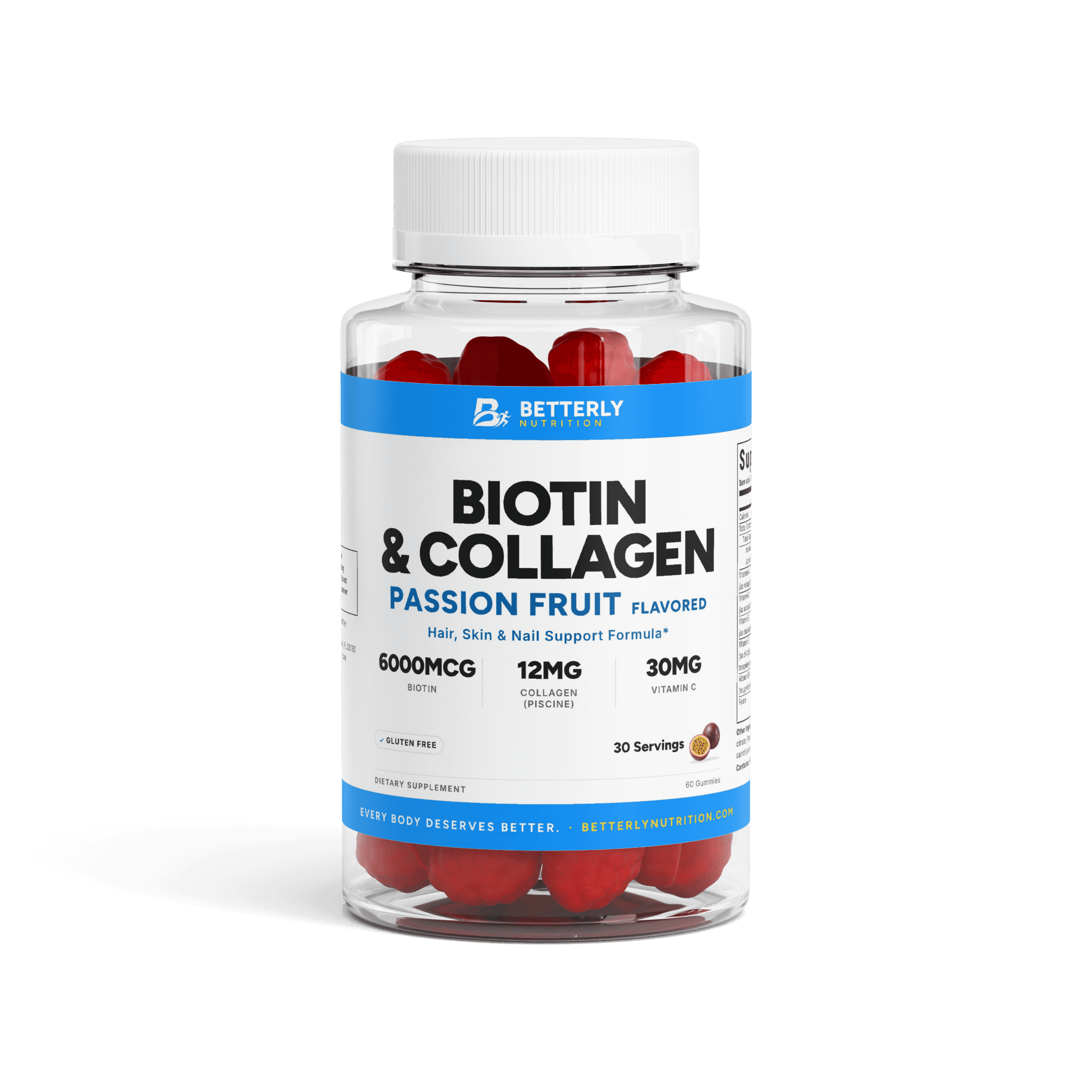
- Other supplements. Our Daily Multivitamin Capsules list no iodine, but our Biotin & Collagen Gummies list 80 mcg of iodine per 2-gummy serving.
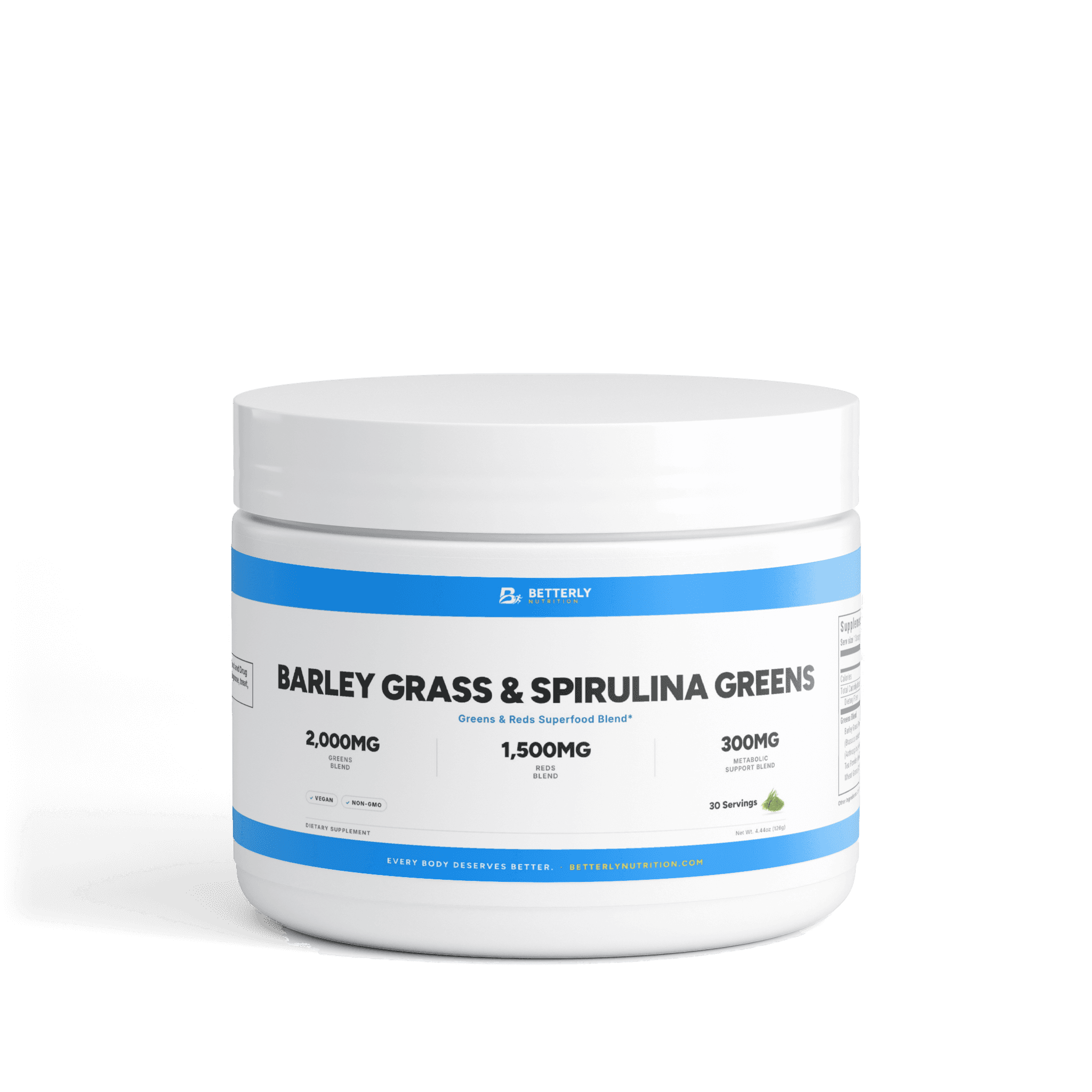
- Other seaweed products. Our Alfalfa & Chlorella Greens Powder includes Sea Whistle (Ascophyllum nodosum), a brown seaweed from bladderwrack's family, inside a 900 mg Sea Vegetable Blend per 2-teaspoon (about 5 g) serving.
Our comparison of sea moss and a multivitamin explains why seaweed iodine varies from batch to batch, and why to total your iodine before you take both.
How and when should you take these capsules?
The label's suggested use for our Sea Moss, Bladderwrack & Burdock Capsules is two capsules once a day, ideally 20-30 minutes before a meal.
The label also allows "as directed by your healthcare professional." It doesn't say why the window sits before a meal, so use that meal as your reminder rather than a rule to fret over.
A few label facts that help:
- The only other ingredient is the capsule itself, a pullulan shell rather than gelatin.
- The front label prints "Vegan," "Gluten Free" and "Non-GMO."
- The caution says "Do not exceed recommended dose." With two iodine-bearing seaweeds, extra capsules aren't a shortcut.
Gel versus capsules and sea moss dosing on its own are covered in our longer sea moss benefits and dosage guide.
What are the side effects of sea moss, bladderwrack and burdock root?
With sea moss, bladderwrack and burdock root, the seaweeds raise the main questions: too much iodine, and heavy metals they can take up from the water they grow in.
LactMed's sea moss record notes that sea moss can contain heavy metals such as arsenic, lead and cadmium from the water where it grew, and its seaweed record says bladderwrack can too. Our panel doesn't list heavy-metal levels, just as it doesn't list iodine.
Neither ODS nor NCCIH publishes a safety summary for these plants. That's a gap, not proof of safety.
A "natural" label doesn't settle safety either. The ODS botanical fact sheet says safety depends on a botanical's makeup, how it's prepared and how much you take.
Burdock adds one more check. It belongs to the daisy family (Asteraceae), so if you've reacted to plants in that family, raise it with a provider first.
When don't you need this trio?
You likely don't need Irish moss and bladderwrack capsules if iodized salt, seafood, dairy or eggs are regular parts of your diet.
ODS lists several groups more likely to fall short on iodine, including people who don't use iodized salt, pregnant women, and people who follow a vegan diet or eat little dairy, seafood or eggs. If those foods already show up in your week, a seaweed capsule isn't filling an obvious gap.
And if one of those groups does describe you, weigh the trade-off. ODS says iodine supplements usually come as potassium iodide or sodium iodide. A product like that prints its iodine in micrograms, the way our gummies show 80 mcg, while a seaweed capsule gives you no number to add up.
You can also skip it if you'd rather have a broad mix of plants than a gram of seaweed. Some products in our Greens & Superfoods collection spread a serving across dozens of ingredients.
From our shop: Alfalfa & Chlorella Greens Powder — a 2-teaspoon (about 5 g) serving mixes grain, grass, herbal, fruit and vegetable blends with a 900 mg Sea Vegetable Blend of spirulina, chlorella and one seaweed, Sea Whistle.
Who should check with a healthcare provider first?
Check with a healthcare provider before taking this seaweed-and-burdock capsule if you're pregnant, under 18, on any prescription or managing a medical condition, and skip it while breastfeeding.
Our label's caution reads: "Do not exceed recommended dose. Consult a physician if pregnant, nursing, under 18, or have a medical condition." A few situations deserve extra care:
- Thyroid medicine. ODS lists antithyroid medicines among iodine's interactions, and taking high doses of iodine with them could cause your body to make too little thyroid hormone. Don't add a seaweed product without your prescriber's okay.
- Pregnancy. ODS says iodine needs rise to 220 mcg a day in pregnancy, and this label can't show how much a serving adds, so talk it through with your provider.
- Breastfeeding. LactMed advises avoiding sea moss while nursing unless its iodine and heavy-metal levels are shown to be low, since too much iodine can reach the baby through breast milk. Our label lists neither, so we don't suggest these capsules while you're breastfeeding.
- Scheduled surgery. Give your surgeon and anesthesia team a full list of your supplements, this capsule included.
FAQ: bladderwrack, burdock and sea moss capsules
Is bladderwrack the same as kelp?
No, bladderwrack isn't a true kelp, though the word gets used loosely. Bladderwrack (Fucus vesiculosus) is a brown seaweed in the order Fucales, while true kelps belong to a different order, Laminariales. Even NIH's LactMed seaweed record calls bladderwrack "kelp," so check the Latin name on any panel. Egg wrack (Ascophyllum nodosum), a close cousin from bladderwrack's own family, is the Sea Whistle listed on our greens powder panel.
Why is BioPerine in a sea moss capsule?
BioPerine® is a trademarked black pepper fruit extract, and our sea moss capsules list 5 mg per 2-capsule serving. Pepper gets its bite from a compound called piperine. Formulators often add it next to botanicals with the aim of supporting absorption, but our label makes no specific claim for it, and none of the sources cited here covers it. If you take prescription medicine, show your pharmacist the full panel.
Can you take sea moss and bladderwrack while pregnant or nursing?
Sea moss and bladderwrack need a provider's okay in pregnancy, and we don't suggest them while nursing. NIH's LactMed database advises avoiding sea moss during breastfeeding unless its iodine and heavy-metal levels are shown to be low, because too much iodine can reach the baby through breast milk. Our label lists neither. In pregnancy, ODS puts iodine needs at 220 mcg a day, and a seaweed capsule can't show its iodine in micrograms, so let your provider weigh in.
What does burdock root taste like?
Fresh burdock root has an earthy flavor, and cooks often drop cut pieces into water because the flesh darkens fast in air. In a capsule, you won't taste it at all. Our capsules hold 400 mg of burdock root per 2-capsule serving, sealed in a pullulan shell.
How long does a 60-capsule bottle of sea moss last?
A 60-capsule bottle of our Sea Moss, Bladderwrack & Burdock Capsules covers 30 days if you follow the label. That's 30 servings of two capsules taken once a day. Keep it in a cool, dry cupboard that kids can't get into, and don't use a bottle whose safety seal is broken or gone.
Sources
- Iodine: Fact Sheet for Consumers, NIH Office of Dietary Supplements
- Iodine in diet, MedlinePlus Medical Encyclopedia
- Botanical Dietary Supplements: Background Information, NIH Office of Dietary Supplements
- Herbs at a Glance, National Center for Complementary and Integrative Health
- Sea Moss, LactMed, National Institutes of Health
- Seaweed, LactMed, National Institutes of Health
If this left you looking for somewhere to start, read Irish sea moss, bladderwrack and burdock root capsules — its amounts per serving are listed on the page. For the practical questions this raises, how dosing, sourcing and subscriptions work is answered in one place.