On this page
- Key takeaways
- Why does my multivitamin make me nauseous?
- Is it bad to take a multivitamin on an empty stomach?
- Which multivitamin ingredients can upset your stomach?
- Could your supplement routine be doubling the dose?
- Why does my multivitamin make my pee bright yellow?
- Is a multivitamin without iron easier on your stomach?
- How should you take Daily Multivitamin Capsules?
- When don't you need a multivitamin at all?
- Who should check with a healthcare provider first?
- FAQ: multivitamin nausea and side effects
- Sources
The short answer: If you're wondering why your multivitamin makes you nauseous, the cause is often an empty stomach, a second product that doubles the dose, or one ingredient your stomach doesn't like. Our Daily Multivitamin Capsules label asks for 2 capsules in the morning with a meal. Each serving has 15 mg of zinc and no iron. If queasiness keeps coming back even with food, pause it and ask a provider.
Key takeaways
- The Daily Multivitamin Capsules label says to take 2 capsules in the morning with a meal, so a before-breakfast habit is the first thing to change.
- Each serving lists 15 mg of zinc, and the NIH lists nausea and upset stomach as possible signs of excess zinc.
- This panel has no iron, so if you need supplemental iron, it comes from a separate product taken at another time of day.
- Bright yellow pee after a multivitamin can come from its B vitamins. MedlinePlus lists B complex vitamins among the causes of dark yellow or orange urine, and this formula has all eight.
- Vomiting that lasts longer than a day calls for a provider, not more troubleshooting.
One thing up front: we sell the multivitamin this guide keeps quoting. So we've stuck to what its Supplement Facts panel actually prints, including the spots where that panel leaves you guessing.
Why does my multivitamin make me nauseous?
A multivitamin can make you nauseous because of when you take it, how much you take in total, or one specific ingredient, and sometimes the vitamin isn't the cause.
A multi squeezes a long list of vitamins and minerals into one dose, and ours adds three blends on top. When that dose sits badly, start troubleshooting with the label itself. If the queasiness also shows up on mornings you skip the multi, look beyond the capsules and mention it to a provider.
| What you notice | Label line to check | First thing to try |
|---|---|---|
| Queasy after a before-breakfast dose | "in the morning with a meal" | Take it with food, as directed |
| Nausea even with a meal | 15 mg zinc; 110 mg Immune Support blend | Add up zinc and echinacea across every product |
| Warm, red, tingly or itchy skin | 30 mg NE niacin | Note it and tell a provider |
| Bright yellow pee | The B vitamin rows | Read the urine section below |
| Repeated vomiting | Not a label question | Stop and call a provider |
Most rows point to something you can check at home: when you took the capsules and what else you took that day. Only the last one means calling a provider.
Is it bad to take a multivitamin on an empty stomach?
Taking Daily Multivitamin Capsules on an empty stomach goes against their label, which says to take 2 capsules in the morning with a meal.
The label doesn't say why it asks for a meal. What we can point to is the NIH Office of Dietary Supplements (ODS), which links high doses of iron, especially on an empty stomach, to stomach trouble. Our multi has no iron, and we'll come back to that below. If you use another brand, its own directions come first.
What "with a meal" looks like in real life:
- A latte or a black coffee doesn't count as the meal.
- The capsules go down during the meal, not an hour before it.
- If you rarely eat in the morning, talk that through with a pharmacist before moving the dose somewhere else.
So is it bad? For this product, it mostly means "not as directed," and moving the capsules to a meal is the first fix to try.
Which multivitamin ingredients can upset your stomach?
On the Daily Multivitamin Capsules panel, zinc and echinacea are the ingredients we'd look at first, because federal fact sheets list nausea among their possible side effects.
A side-effect list tells you what's possible, not what will happen to you.
Zinc: 15 mg per serving, as zinc oxide
The ODS zinc fact sheet for consumers says signs of too much zinc include nausea, dizziness, headaches, upset stomach, vomiting and loss of appetite. Its adult upper limit is 40 mg a day, and that figure covers food, drinks, supplements and medicines combined.
Our label lists 15 mg of zinc (as zinc oxide) per 2-capsule serving, or 136% of the Daily Value. That's under the 40 mg adult limit on its own. Totals climb when a second product repeats zinc, which the next section adds up.
Echinacea, inside a 110 mg blend
The label's Immune Support blend weighs 110 mg and holds four ingredients: echinacea purpurea extract, beta glucan, spirulina and garlic. The National Center for Complementary and Integrative Health (NCCIH) says on its echinacea safety page that the most common side effects are digestive, such as abdominal pain, nausea or stomach pain. Some people also have allergic reactions, which may be severe.
The panel won't tell you how much of that 110 mg is echinacea. It prints one total per blend, and the three blends on this label add up to 470 mg per serving.
Niacin: 30 mg NE, listed as plain niacin
If you feel warmth and prickling more than queasiness, look at the niacin row. The ODS niacin fact sheet says nicotinic acid from supplements, at 30 mg or more, can cause flushing: red skin on the face, arms and chest that burns, tingles or itches, sometimes with headaches or dizziness.
Our panel lists 30 mg NE of niacin (188% DV) per serving and names the source simply as niacin, not niacinamide (nicotinamide), the other main form ODS describes. The adult ceiling ODS gives for supplemental niacin is 35 mg a day, so this multi leaves only 5 mg of room.
One blank on this panel
The 190 mg Antioxidant Fruit & Energy Blend includes green tea extract, but the panel doesn't list a caffeine amount. That blank is ours to own, and it's why we won't call the capsules caffeine-free.
Could your supplement routine be doubling the dose?
Yes, a second product that repeats your multivitamin's zinc, niacin or echinacea can push your daily total well past what either label shows on its own.
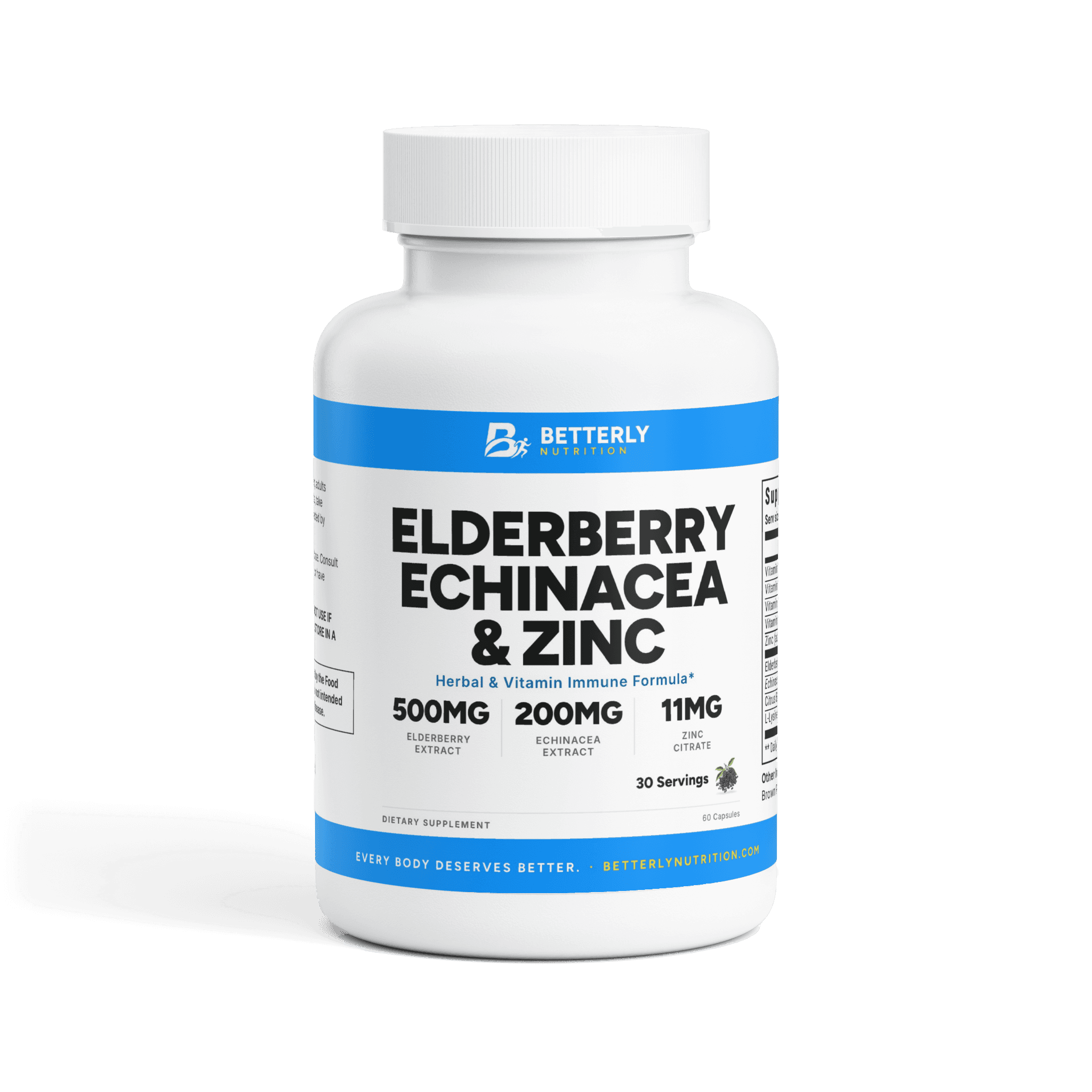
Take our own shelf. Our Elderberry, Echinacea & Zinc Capsules list 11 mg of zinc (as zinc citrate) and 200 mg of echinacea purpurea extract per 2-capsule serving. Take both products at label directions and you get:
- Zinc: 15 mg plus 11 mg, or 26 mg from supplements, before any zinc from food.
- Echinacea: 200 mg from the elderberry formula, plus an unknown share of the multi's 110 mg blend.
That 26 mg sits under the 40 mg limit, but zinc-rich meals shrink the gap. Any product with 30 mg of zinc per serving, taken alongside the multi, would put you at 45 mg from capsules alone.
Niacin is tighter. Any other supplement with more than 5 mg of niacin takes you past the 35 mg limit when paired with this multi, and ODS notes that B-complex supplements carry niacin too.
The fix is dull but reliable: line up every label you take and add the rows that repeat. Our guide to putting your supplements on one simple schedule covers keeping that list short and tied to a habit you already have.
Why does my multivitamin make my pee bright yellow?
Bright yellow pee after a multivitamin can come from its B vitamins: MedlinePlus lists B complex vitamins among the causes of dark yellow or orange urine.
The MedlinePlus page on abnormal urine color says the usual color is straw-yellow and that dark yellow or orange urine can be caused by B complex vitamins or carotene. Our multi carries both: all eight B vitamins, plus vitamin A as beta-carotene (600 mcg RAE). Riboflavin (vitamin B2) alone comes to 7.5 mg per 2-capsule serving, 577% of the Daily Value.
If a darker yellow is the only change, B vitamins are one cause MedlinePlus lists. It does say to see a provider for odd urine color you can't explain that doesn't go away, any blood in your urine, or clear dark-brown urine.
Is a multivitamin without iron easier on your stomach?
A multivitamin without iron removes a mineral ODS links to stomach upset, and Daily Multivitamin Capsules contain no iron at all.
The ODS iron fact sheet lists nausea, vomiting, constipation, diarrhea, abdominal pain and upset stomach as possible effects of high-dose iron supplements, particularly on an empty stomach. If the multi you've been taking lists iron, that row deserves a look first.
Iron-free isn't automatically better, though. Some people need iron, and only your provider, with a blood test, can tell you whether that's you.
If you take iron, ODS points out that calcium might get in the way of iron absorption, and that spacing calcium and iron supplements into different parts of the day might avoid that. Our multi has 50 mg of calcium (as calcium carbonate) per serving, so iron belongs in its own time slot. Our guide on taking iron without upsetting your stomach covers timing and pairings in detail.
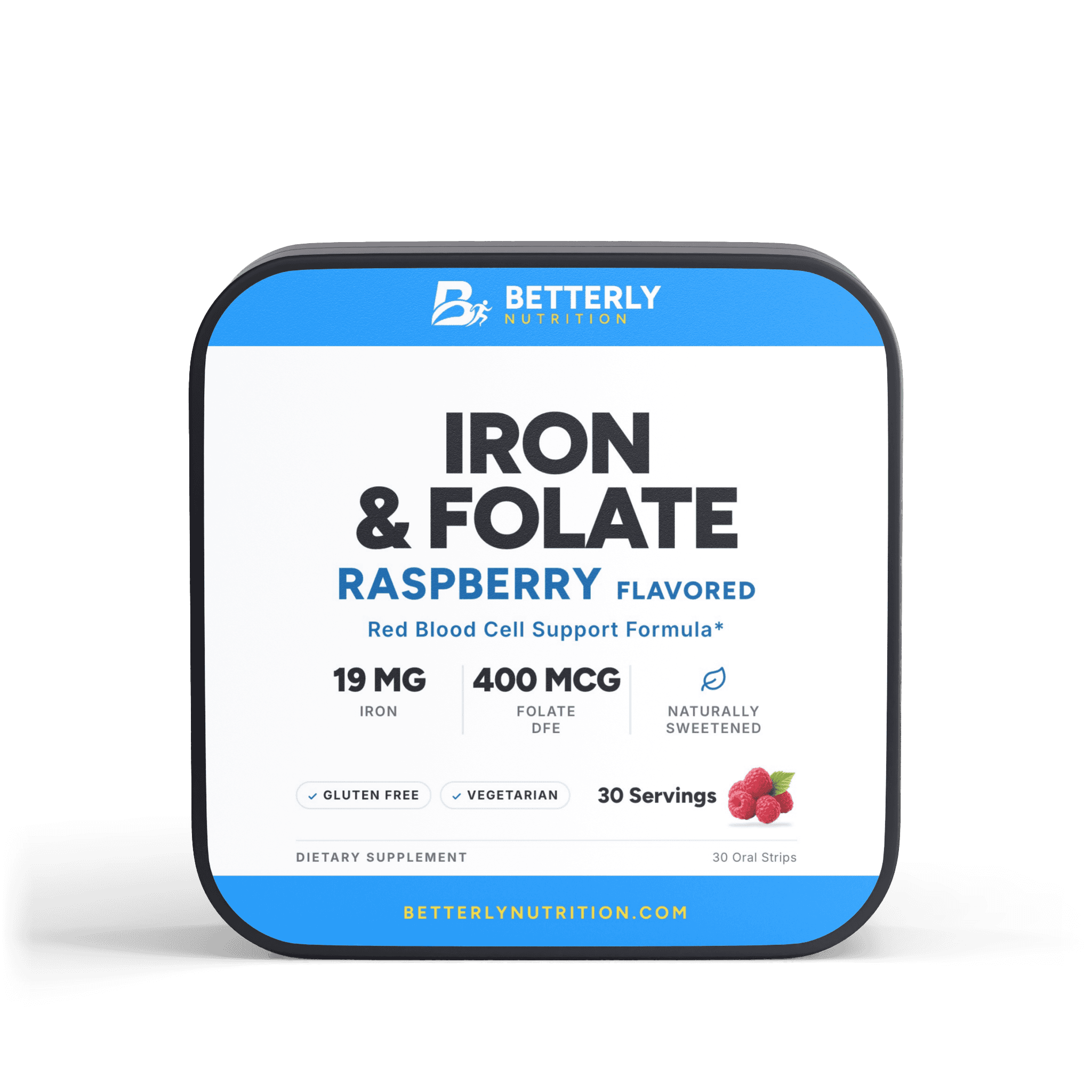
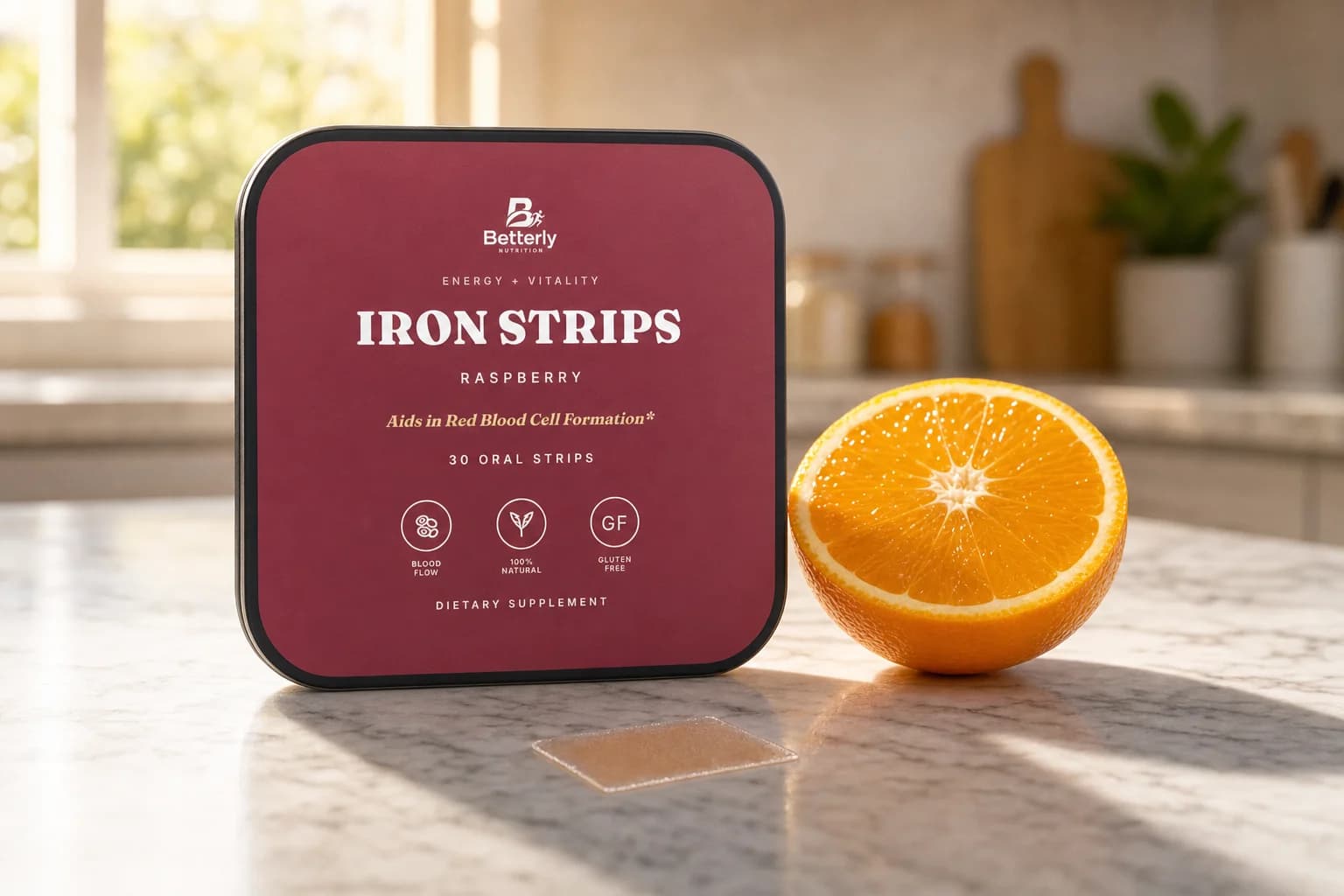
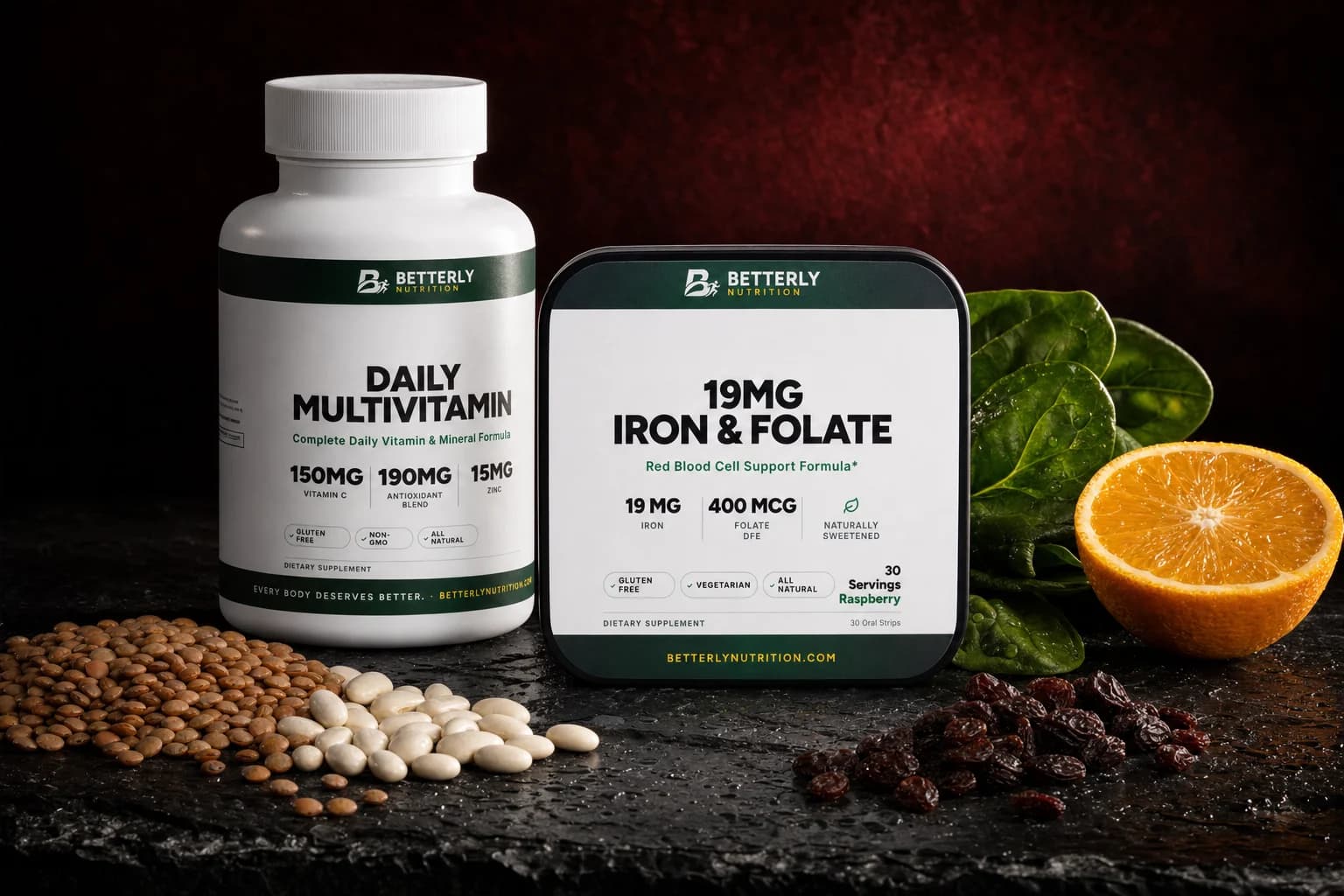
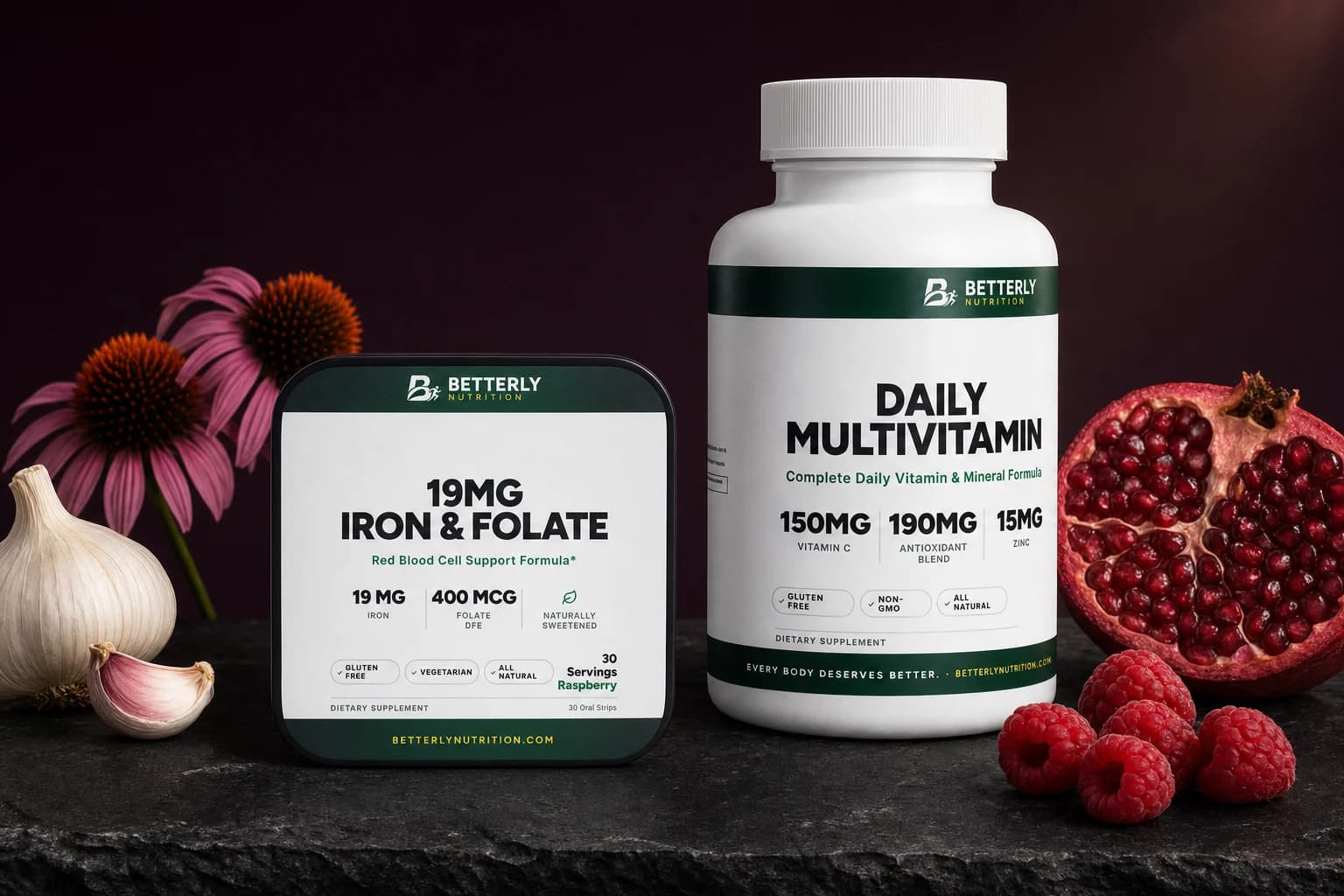
Our 19mg Iron & Folate Strips keep iron in a product of its own. Each 1-strip (200 mg) serving lists iron at 19 mg (106% DV), from ferric saccharate, and folate at 400 mcg DFE. The suggested use is 1 strip dissolved on the tongue daily, with no time named, so pick one away from your multivitamin. Its label also warns that accidental overdose of iron-containing products is a leading cause of fatal poisoning in children under 6, so store the tin out of reach.
From our shop: 19mg Iron & Folate Strips — a raspberry oral strip with 19 mg of iron and 400 mcg DFE of folate per serving, for keeping iron separate from our iron-free multivitamin.
How should you take Daily Multivitamin Capsules?
Take Daily Multivitamin Capsules exactly as the label says, 2 capsules in the morning with a meal, and change only one other thing at a time.
- Swallow both capsules with your morning meal. The label's suggested use is "two (2) capsules in the morning with a meal."
- Stop at 2 capsules a day. The label says "Do not exceed recommended dose." A missed morning doesn't call for a double serving tomorrow.
- Keep any iron at a different time of day, following the ODS note on calcium and iron.
- Add only one new product at once, so any reaction has a single suspect.
- Write down what you ate and when you felt off. A few mornings of notes beat memory.
What we won't suggest: splitting the serving, opening the capsules, or taking one now and one later. If the full serving still disagrees with you at a meal, ask a provider or pharmacist.
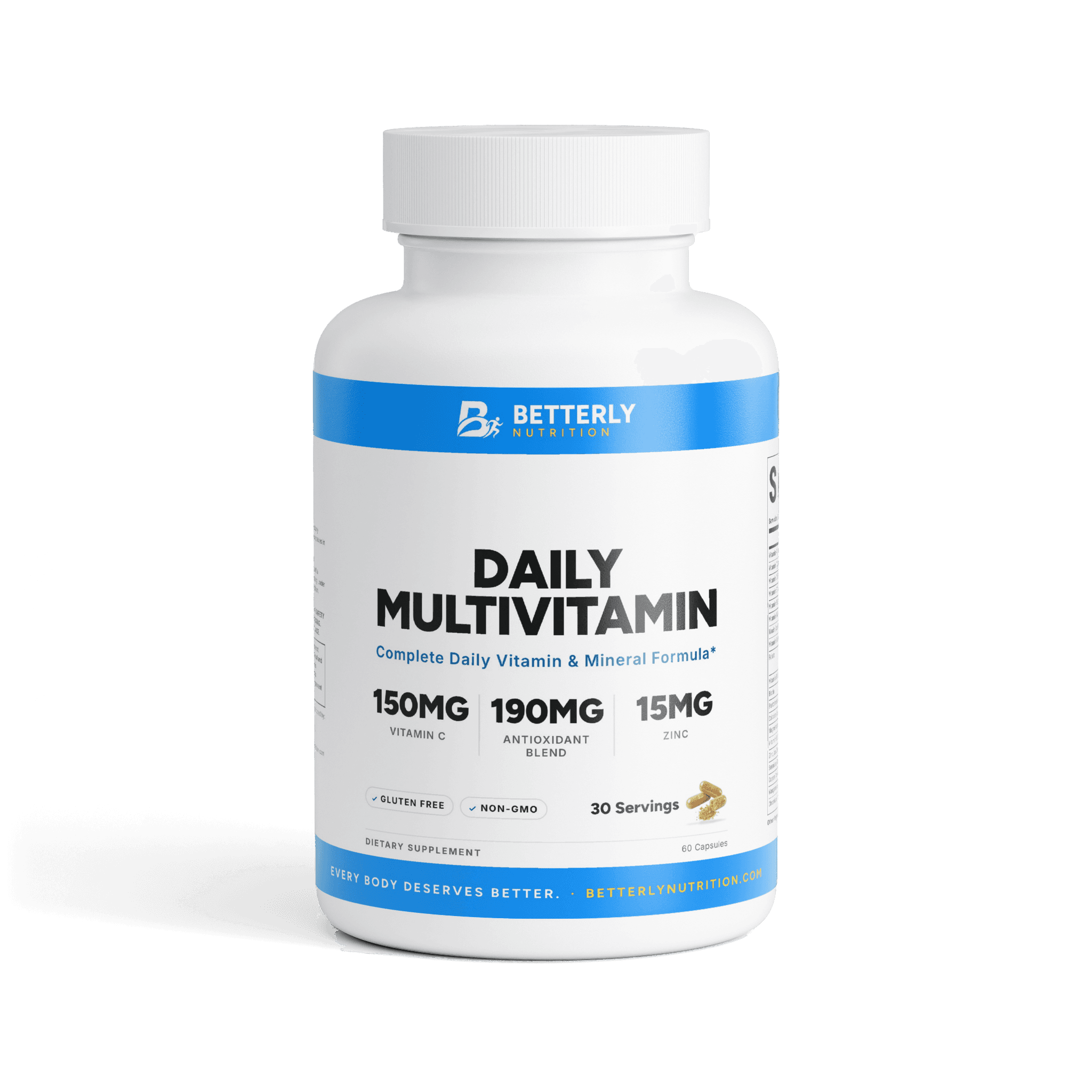
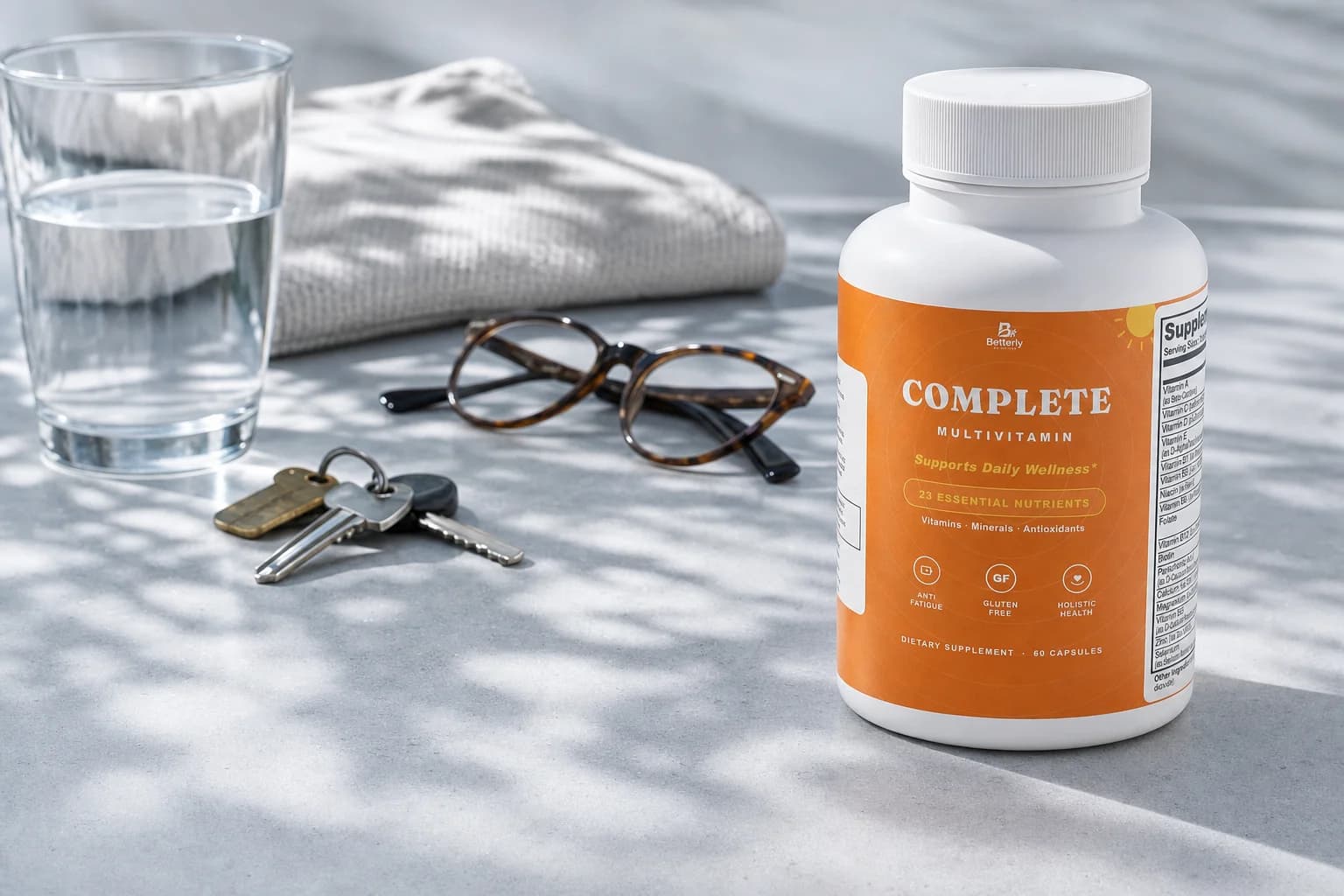
From our shop: Daily Multivitamin Capsules — an iron-free formula, gluten free and non-GMO per its label, with 15 mg of zinc and 7.5 mg of riboflavin in each 2-capsule serving, taken with a morning meal.
When don't you need a multivitamin at all?
You may not need a multivitamin if your meals are varied most days, or if one keeps making you feel unwell even when you take it exactly as directed.
Food is meant to do most of the work, and a multi is a backup. One that leaves you queasy every morning isn't earning its spot, and stopping is a reasonable choice you can revisit later.
If you're unsure a broad formula fits you at all, our guide to who tends to benefit from a daily multivitamin walks through that decision. If you only want one or two nutrients, a single-nutrient product means fewer rows to trip over. To see what else sits alongside the multi, browse our immune support range.
Who should check with a healthcare provider first?
Check with a healthcare provider before starting Daily Multivitamin Capsules if you're pregnant or nursing, under 18, on prescription medicine, scheduled for surgery, or living with any medical condition.
Its caution line says: "Consult a physician if pregnant, nursing, under 18, or have a medical condition." We add prescription medicines because the ODS zinc sheet lists interactions between zinc and some medicines, and upcoming surgery because your care team should know about every supplement you take.
Then there's when to stop. MedlinePlus's guide to nausea and vomiting in adults says to contact a provider promptly if you:
- Have been vomiting for longer than 24 hours
- Can't keep any fluids down for 12 hours or more
- Vomit 3 or more times in 1 day
- Have severe stomach or belly pain
It says to seek emergency care if you see blood or dark, coffee-colored material in vomit, or if you think the vomiting comes from poisoning. Heartburn that keeps returning after your multi, or any sign of an allergic reaction, is also worth a call rather than another tweak.
FAQ: multivitamin nausea and side effects
Why does my multivitamin make me throw up?
Throwing up after a multivitamin is a signal to stop taking it and talk with a provider, not to keep experimenting. Mild queasiness can come from timing or stacking, but vomiting is different. MedlinePlus says to contact a provider promptly if vomiting lasts longer than 24 hours or happens 3 or more times in a day. Take the bottle along so they can see every ingredient.
Can I take one capsule instead of two?
The Daily Multivitamin Capsules label sets the serving at 2 capsules, taken together in the morning with a meal, and we don't suggest changing that on your own. Every amount on the panel assumes both capsules. If the full serving bothers you even with food, ask a provider or pharmacist whether this formula suits you.
Can I take my multivitamin at night instead?
The Daily Multivitamin Capsules label says to take them in the morning with a meal, so night isn't the timing it gives. Other brands may print different directions, and your own label is the one to follow. If mornings truly don't work for you, ask a pharmacist rather than moving the dose on a hunch.
Can a multivitamin interact with my medications?
Yes, some multivitamin ingredients can interact with medicines. The ODS zinc fact sheet says taking zinc supplements with certain antibiotics might reduce how much of both your body absorbs. Our multi also contains herbal blends, including echinacea and garlic. Before you start, show the full panel to your pharmacist along with a list of everything else you take.
Sources
- Zinc: Fact Sheet for Consumers, NIH Office of Dietary Supplements
- Niacin: Fact Sheet for Consumers, NIH Office of Dietary Supplements
- Iron: Fact Sheet for Consumers, NIH Office of Dietary Supplements
- Echinacea: Usefulness and Safety, National Center for Complementary and Integrative Health
- Urine - abnormal color, MedlinePlus Medical Encyclopedia
- Nausea and vomiting - adults, MedlinePlus Medical Encyclopedia
If this left you looking for somewhere to start, read multivitamin without iron — its amounts per serving are listed on the page. For the practical questions this raises, how dosing, sourcing and subscriptions work is answered in one place.