On this page
- Habits first: what actually carries immune health
- What to look for in everyday immune support supplements
- Daily Multivitamin Capsules: the everyday foundation
- Mushroom Capsules: broad botanical support in one daily serving
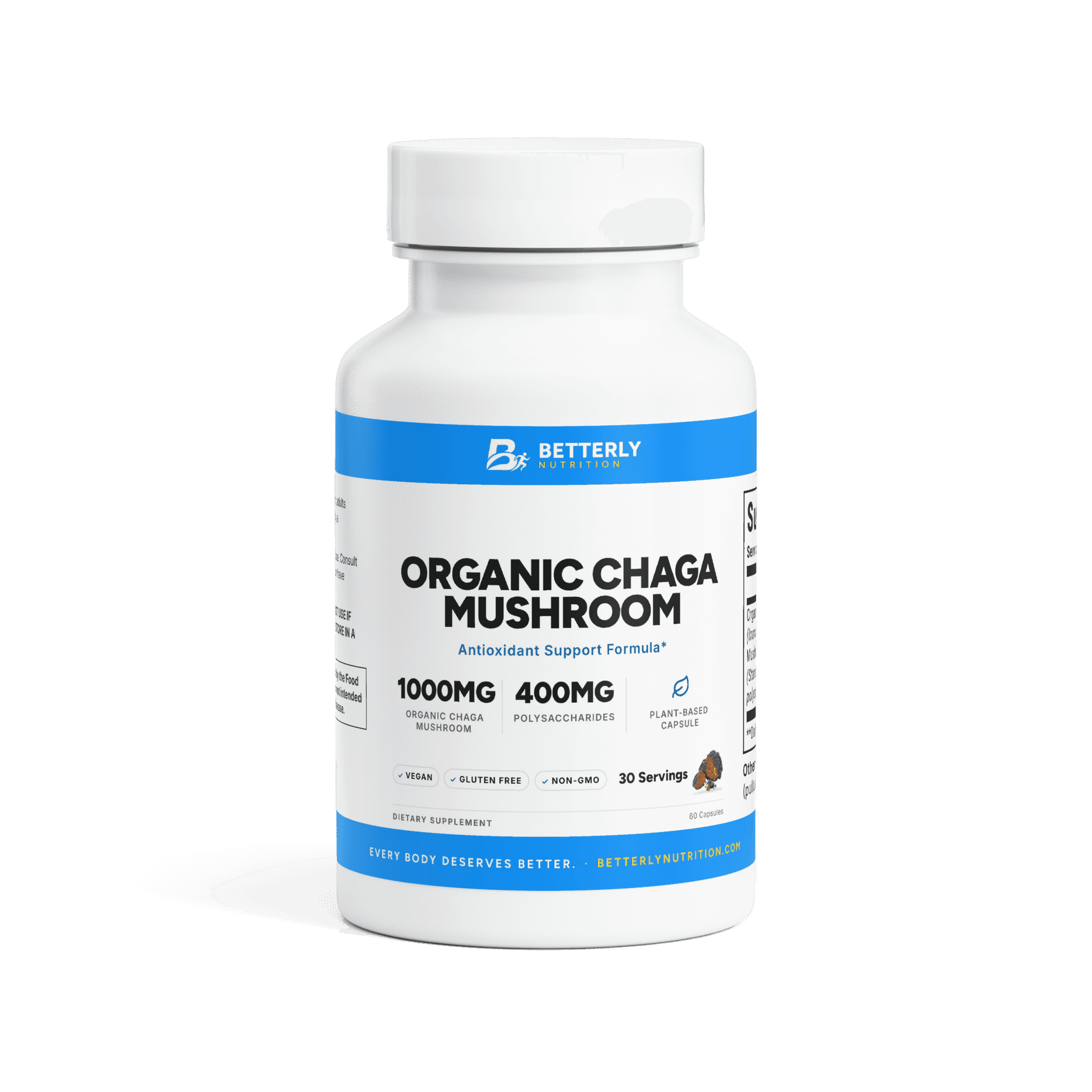
- Organic Chaga Mushroom Capsules: the focused single-mushroom pick
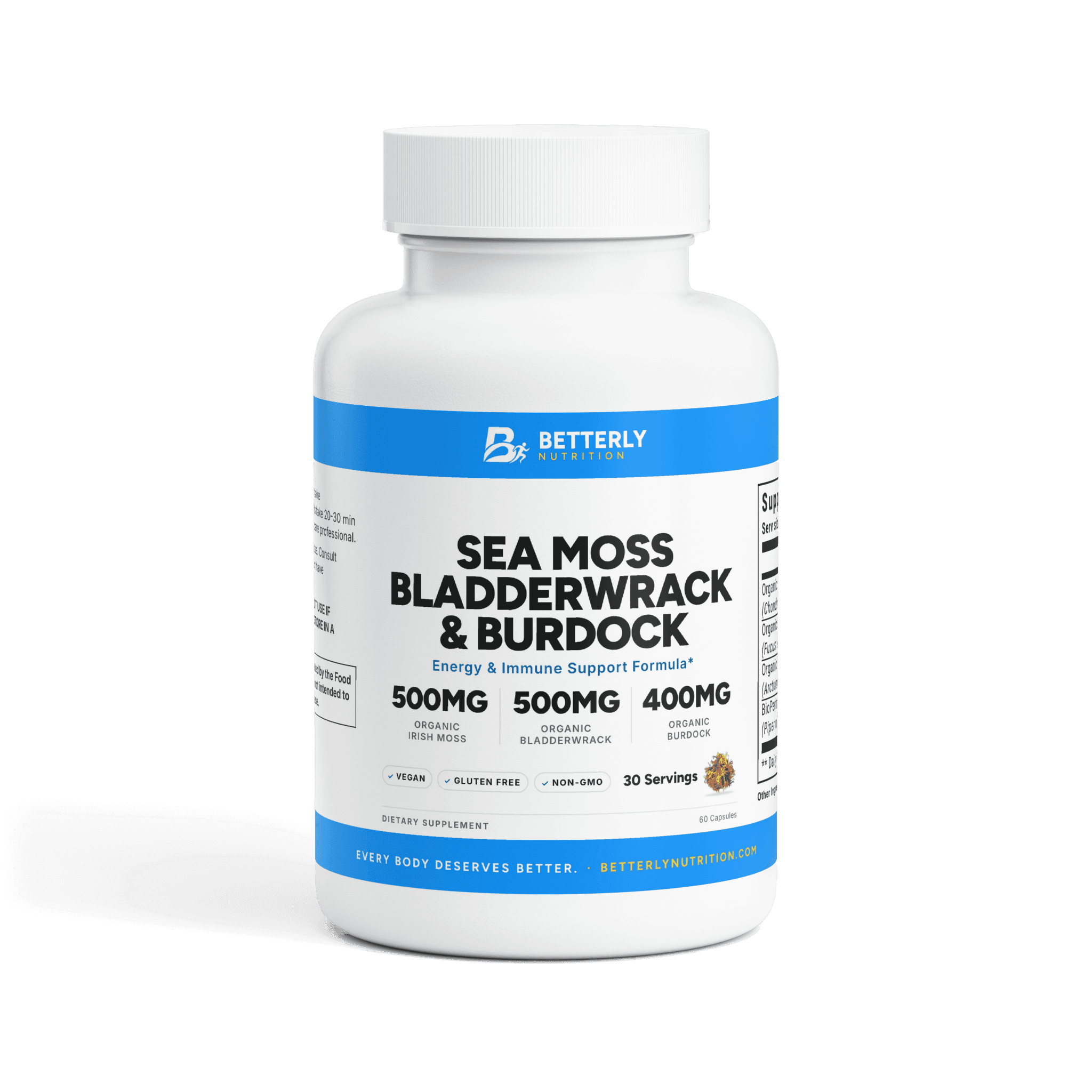
- Sea Moss, Bladderwrack & Burdock Capsules: a marine botanical pick
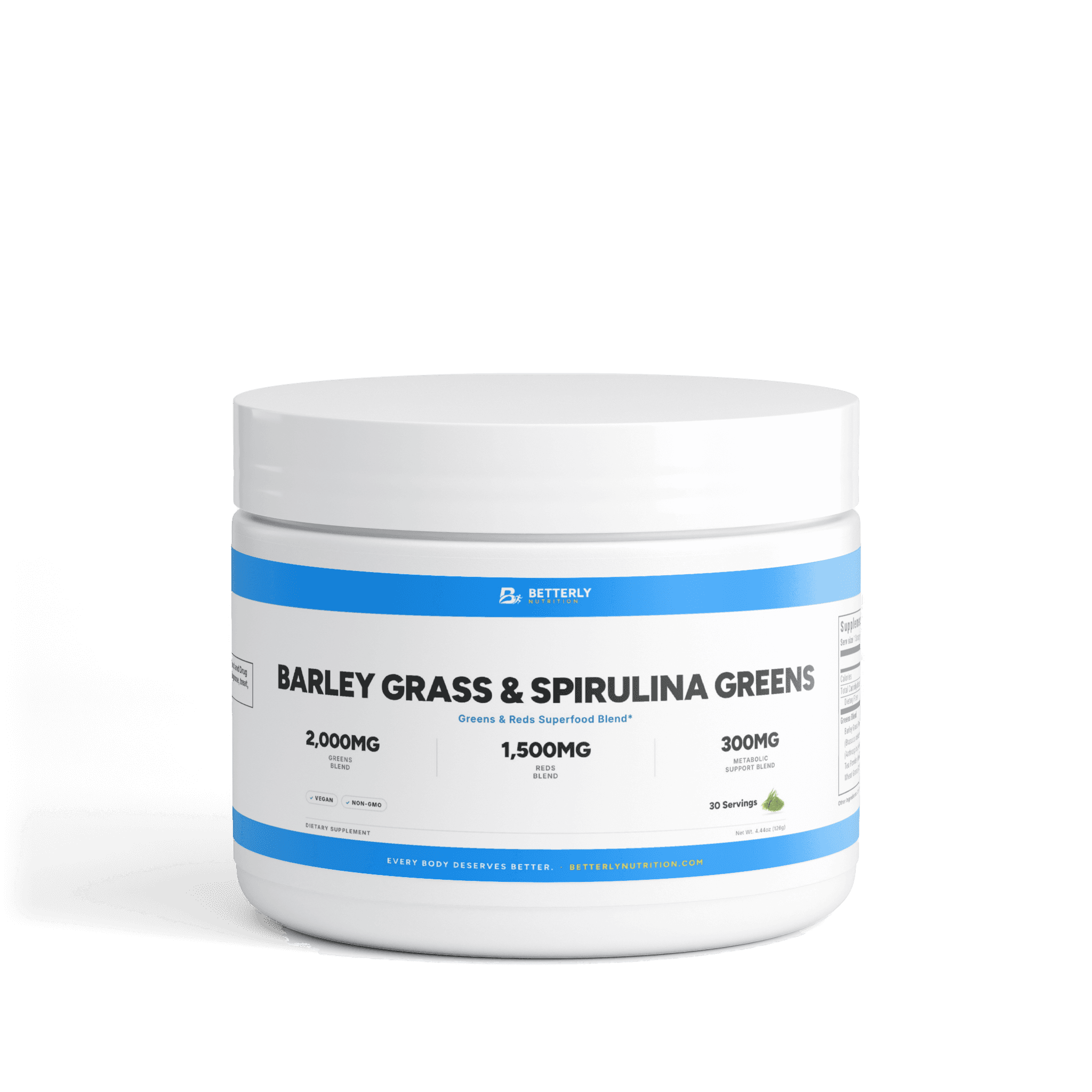
- Barley Grass & Spirulina Greens Powder: a food-first daily habit
- How to combine them without overdoing it
- Key takeaways
- FAQ: everyday immune support supplements
- Sources
Every fall, the supplement aisle turns into a wall of products promising to turbocharge your immune system overnight. Most of that is marketing. This is a calmer guide to the best supplements for everyday immune support — what your immune system actually runs on, which ingredients have genuine (if early) research behind them, and an honest shortlist of five daily options from our own shop.
One thing up front: your immune system isn't a muscle you can pump up on demand, and "boosting" it isn't really how any of this works. It's a system, and systems do best with steady, slightly boring support — mostly from sleep, food, and movement, with supplements filling the gaps.
Habits first: what actually carries immune health
No capsule outworks your daily habits. The basics of immune health are an unglamorous list, so before you buy anything, it's worth being honest about where everyday immune support really comes from:
- Sleep, consistently. Your body does a surprising amount of immune housekeeping while you're asleep. Seven to nine hours, at roughly the same times each day, matters more than any ingredient on this page.
- Regular movement. Around 150 minutes of moderate activity a week is the common benchmark — a brisk daily walk covers most of it.
- Mostly plants, mostly whole foods. Fruits and vegetables carry the vitamins, minerals, and fiber your immune system depends on. No powder fully substitutes for them.
- A gut that's looked after. A large share of your immune tissue lives in and around your gut, which is why digestion and immunity keep showing up in the same conversations. Our guide to gut health basics covers that side of the picture.
- Managed stress, and moderation on the rest. Ongoing stress, heavy drinking, and smoking all quietly work against you.
If those basics are shaky, start there — genuinely. If they're mostly in place, supplements can be a sensible next layer: a way to cover nutrient gaps and add steady, food-adjacent support you might not get otherwise.
What to look for in everyday immune support supplements
The immune aisle rewards skepticism more than almost any other shelf in the store. A few filters that make choosing easier:
- Named doses, not mystery blends. If a label hides its amounts behind a "proprietary blend" with no numbers, you can't compare it to anything — including the research.
- Modest language. Honest immune ingredients support normal function. Anything that promises you a winter without a single rough week is overpromising by definition.
- Something you'll actually take daily. Your immune system depends on your nutrient status over time, not on occasional heroics. A plain capsule you take every morning beats an exotic powder you abandon in a cabinet by February.
- Ingredients with real research. For daily use, that mostly means three buckets: baseline vitamins and minerals (according to the NIH Office of Dietary Supplements, your immune system needs vitamin C, vitamin D and zinc, among other nutrients, and extra amounts from supplements generally don't help people who already get enough); beta-glucans, the fibers in mushroom cell walls that researchers are still studying; and whole-food ingredients that simply add plants and minerals to your day.
Run those filters and the best supplements for everyday immune support turn out to be a short, fairly humble list. Here are five everyday picks from our immunity collection, and who each one tends to suit.
Daily Multivitamin Capsules: the everyday foundation
If you take exactly one thing for everyday immune support, a solid multivitamin is the least glamorous and most defensible choice. Normal immune function depends on a long list of nutrients — vitamin C, vitamin D, zinc, and plenty of others — and research fairly consistently suggests these matter most at adequate levels rather than mega-doses. The win is covering gaps, not stockpiling.
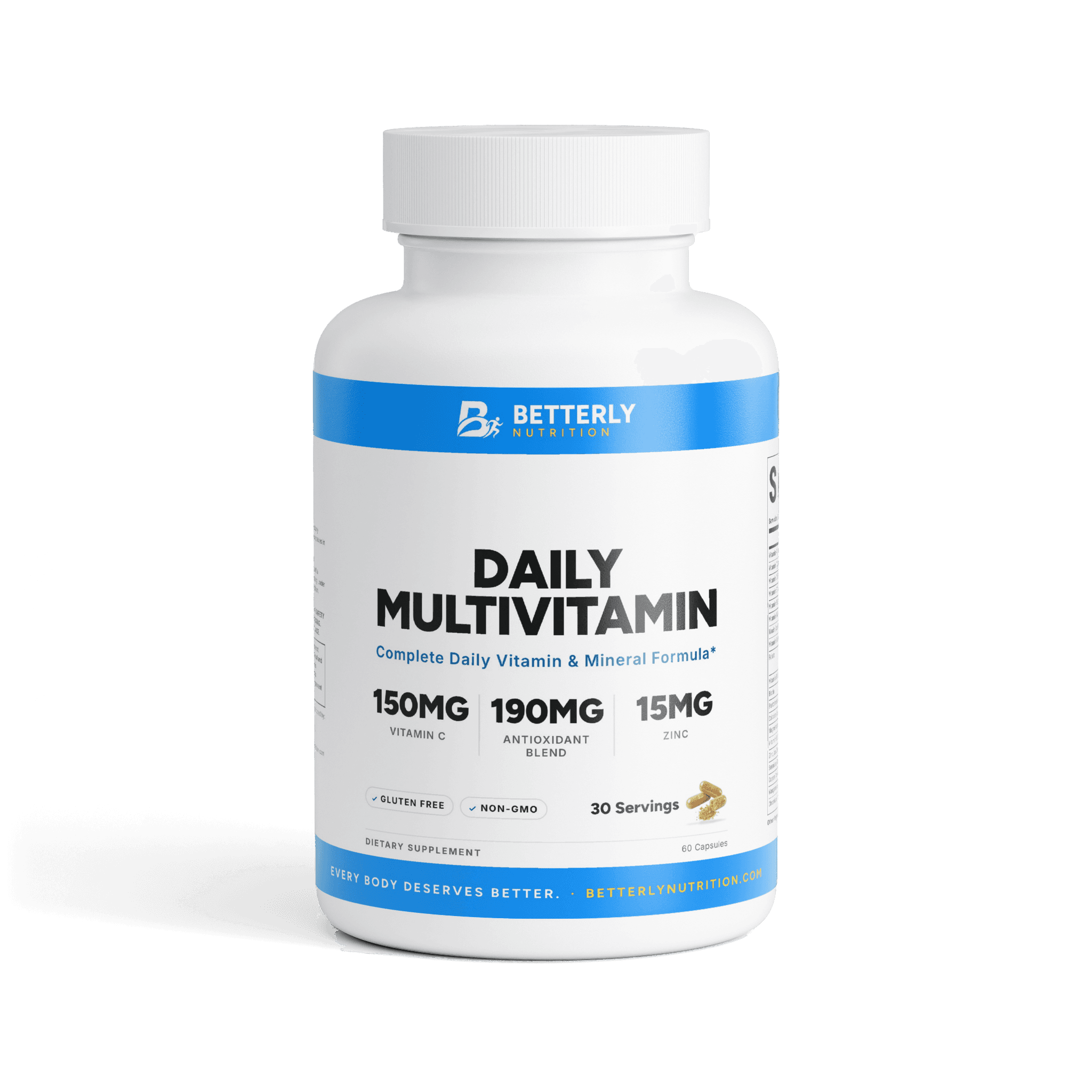
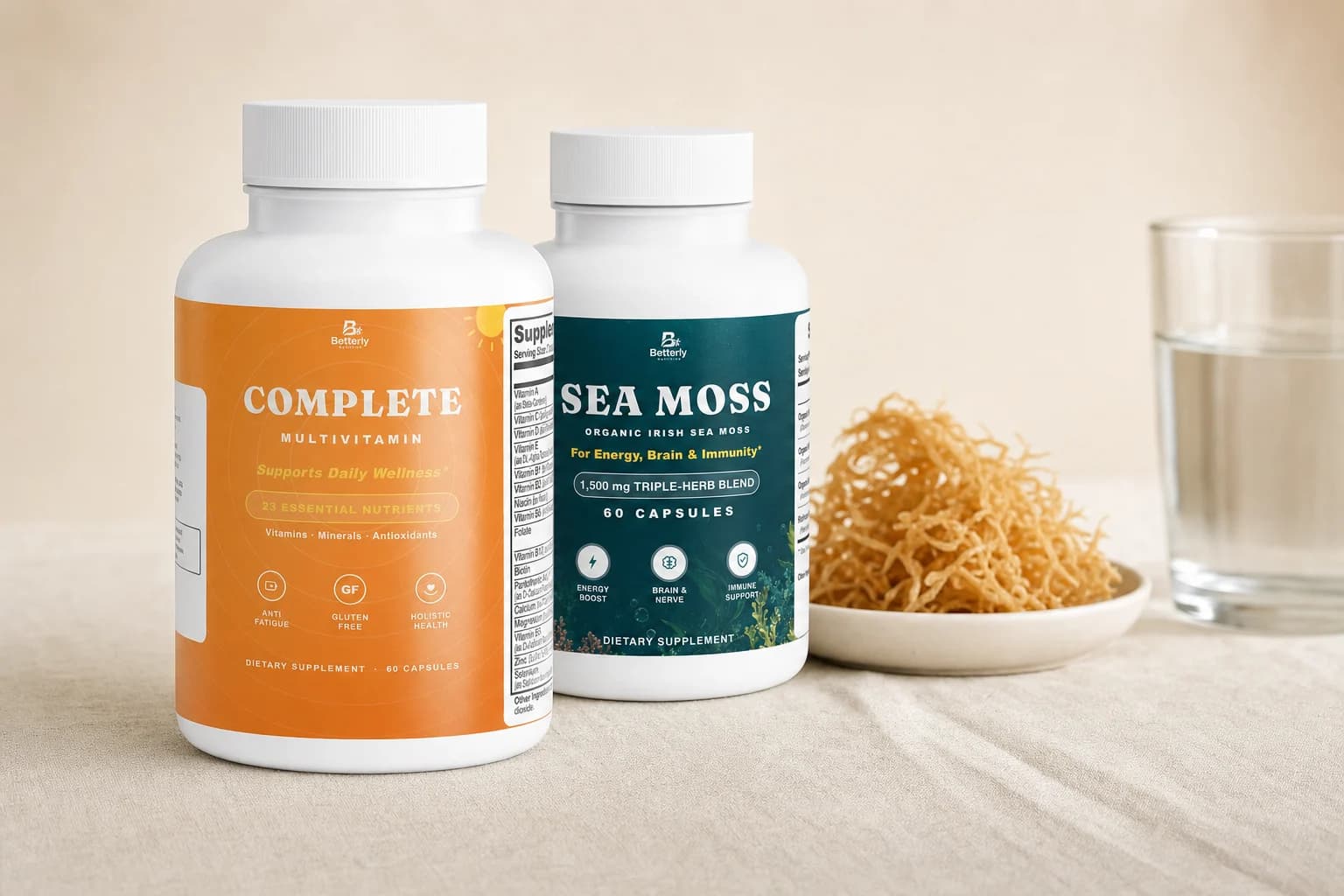
Our Daily Multivitamin Capsules cover 20 vitamins and minerals in a 60-capsule bottle, formulated to support immune function as part of overall daily nutrition. It's the boring-on-purpose pick: one habit, broad coverage, no heroics.
Whether you personally need one depends on how you actually eat, and the honest answer is "not everyone does" — we walk through it in Do You Actually Need a Multivitamin?
Best for: anyone starting from zero, or anyone whose diet is currently more aspiration than reality.
Mushroom Capsules: broad botanical support in one daily serving
Mushroom supplements for immune support have moved from fringe to mainstream over the past few years, and the interest isn't just aesthetic. Mushrooms are one of the richer natural sources of beta-glucans — fibers found in their cell walls. How beta-glucans relate to immune function is still an early research question, and neither of our mushroom labels lists a beta-glucan amount. The research is still developing, but it's genuinely interesting rather than pure hype.
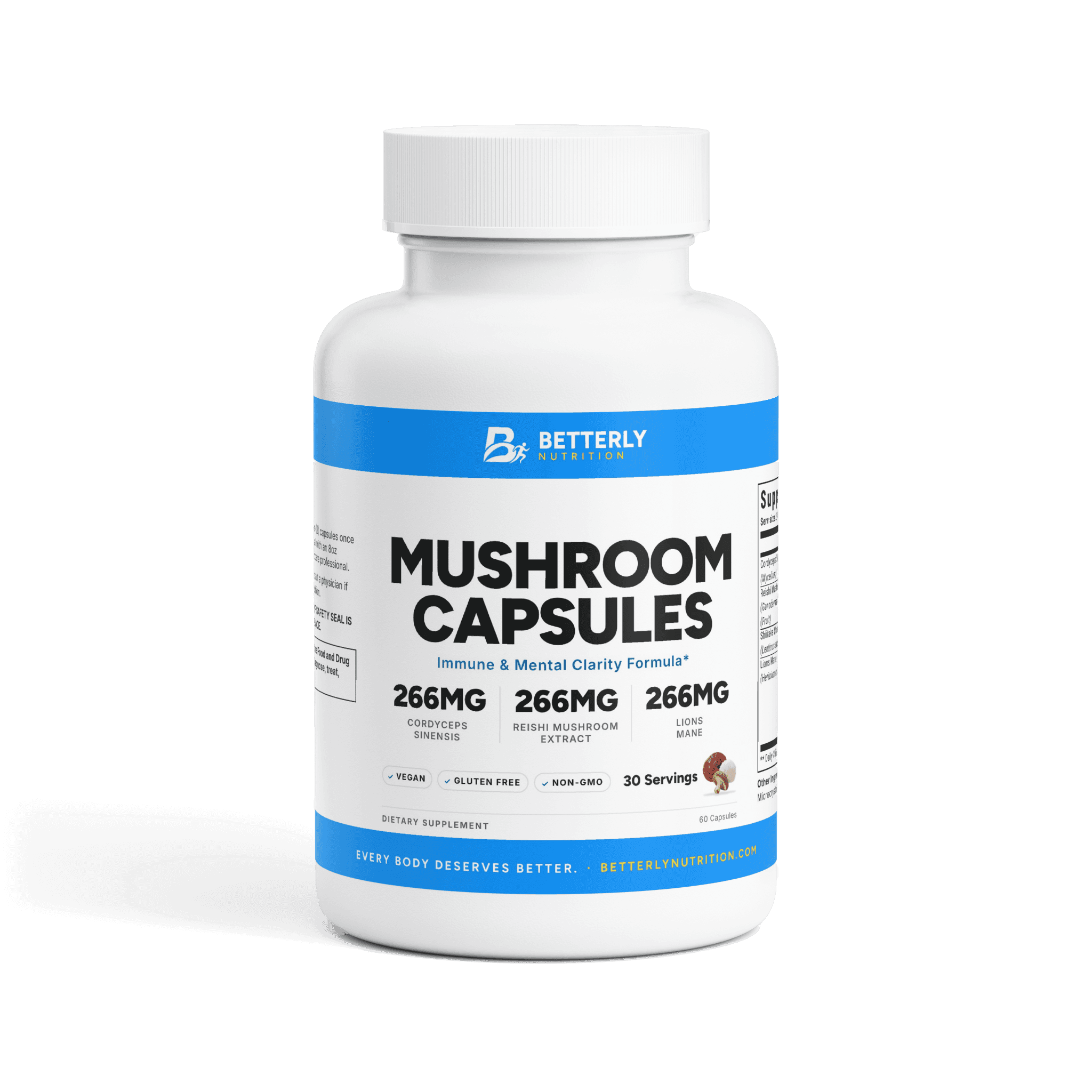
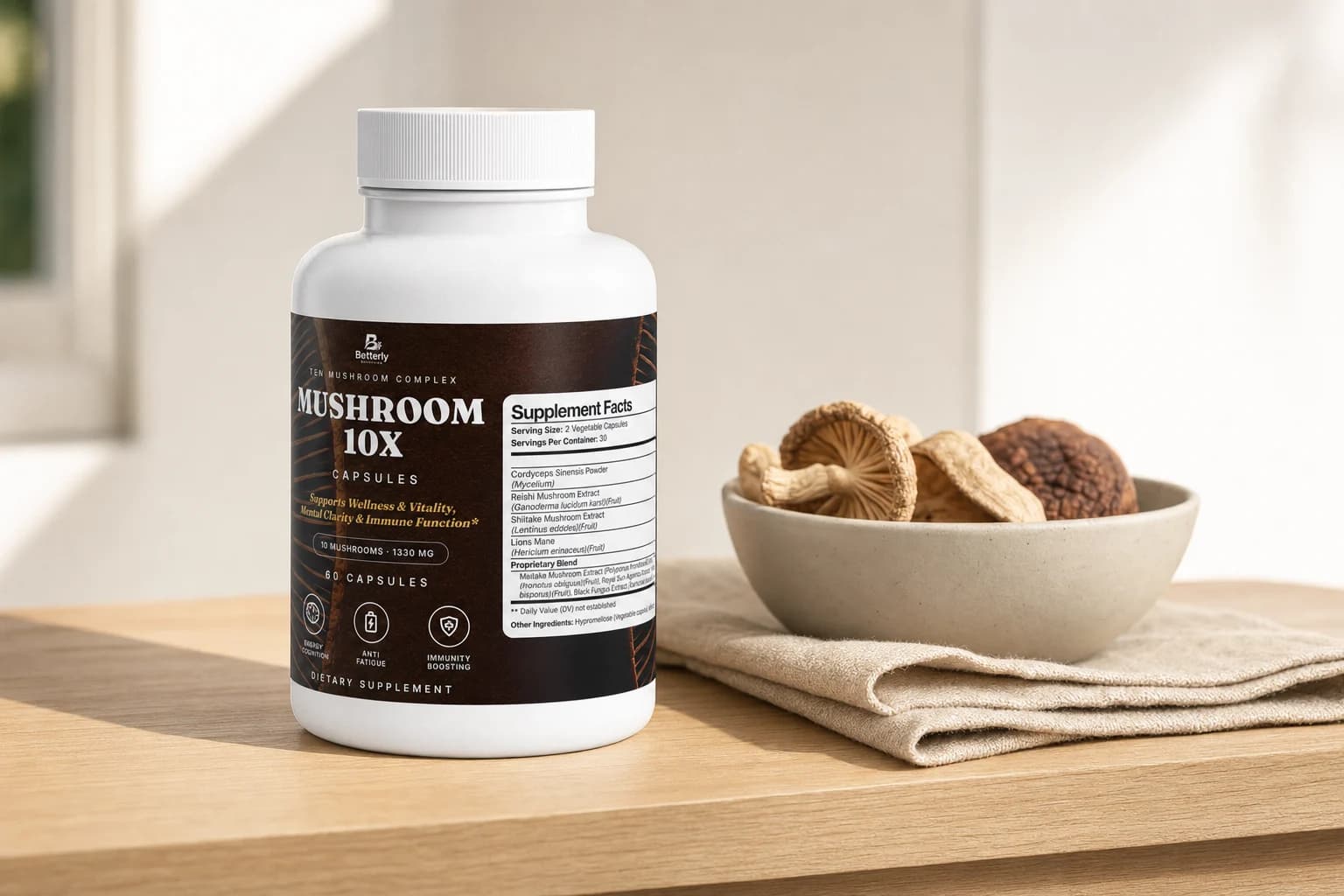
Mushroom Capsules take the breadth approach: a 10-mushroom blend in 60 vegetable capsules, formulated to support immune health. Per 2-capsule serving, the label lists cordyceps, reishi, shiitake and lion's mane at 266 mg each, and six more mushrooms share a 266 mg proprietary blend. A blend like this suits people who want broad botanical exposure in one daily 2-capsule serving instead of betting on a single species and hoping they picked well.
Best for: the cover-more-ground personality: one 2-capsule serving, ten mushrooms, no decision fatigue.
Organic Chaga Mushroom Capsules: the focused single-mushroom pick
Chaga is the opposite philosophy: one mushroom, taken seriously. It grows mainly on birch trees in cold northern forests and has a long history as a traditional tea in parts of Northern Europe and Russia. Modern research on chaga is still early — so far it comes from lab and animal studies, and chaga hasn't been tested in clinical trials in people — so treat it as a traditional botanical with early research behind it.
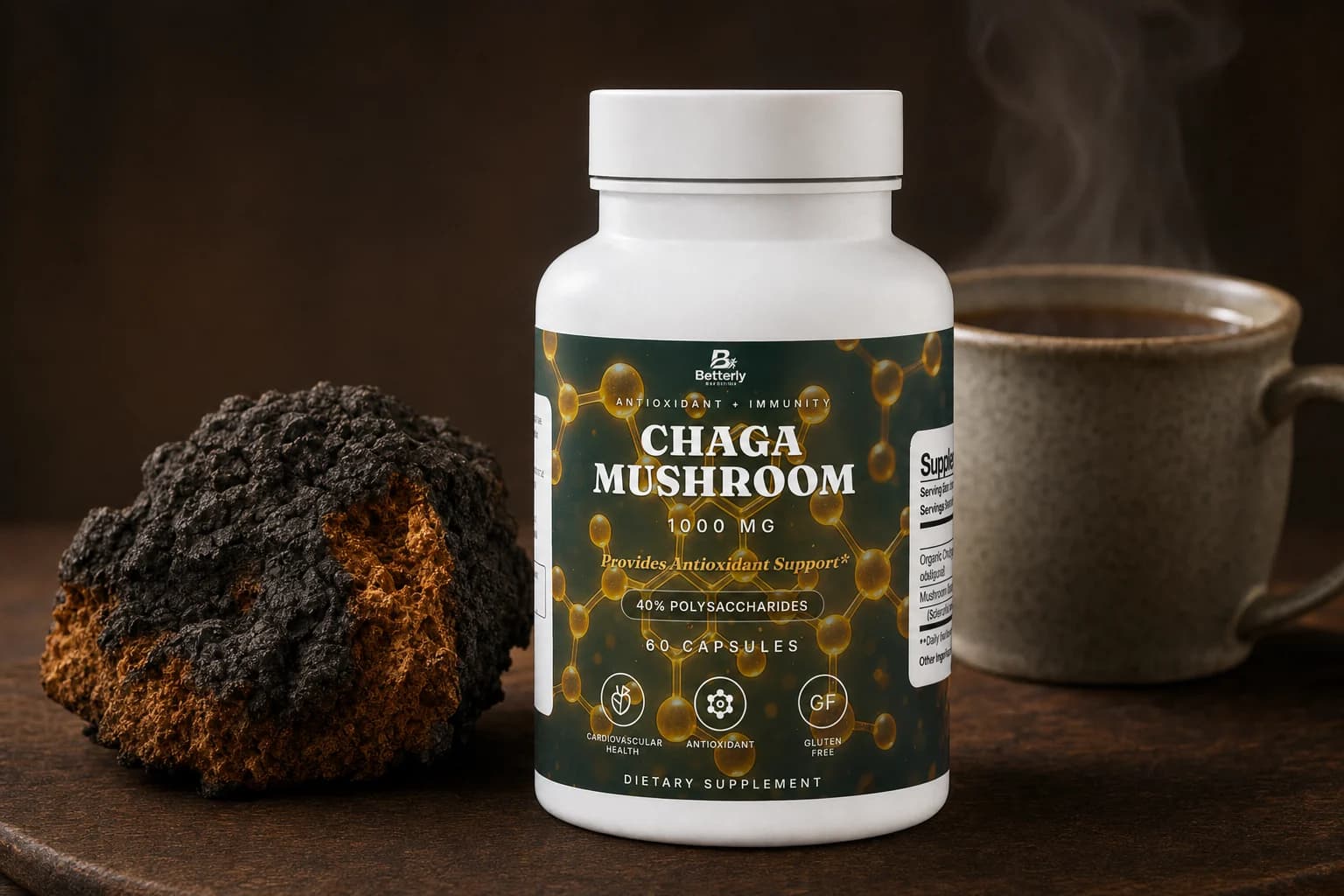
Our Organic Chaga Mushroom Capsules deliver 1,000 mg of organic chaga (Inonotus obliquus) mushroom mycelium powder, standardized to 40% polysaccharides (400 mg), per 2-capsule serving in a 60-count vegan-capsule bottle. That's mycelium, the mushroom's thread-like root network, rather than the birch-grown chaga traditionally brewed as tea. The label describes the formula as antioxidant support.
If you're weighing powder against capsules, or wondering what actually belongs on a chaga label, our companion piece Chaga Mushroom: Benefits, Forms & How to Choose goes deeper.
Best for: people who prefer single ingredients they can research over blends.
Sea Moss, Bladderwrack & Burdock Capsules: a marine botanical pick
Sea moss earned its moment on social media, but underneath the trend sits something older and simpler: sea vegetables are natural sources of minerals — including iodine, which plays a role in normal thyroid function. Because your thyroid helps set the tempo for many of the body's systems, sea moss tends to get reached for as general mineral support with an immune angle, especially by people who rarely eat anything from the ocean.
Our Sea Moss, Bladderwrack & Burdock Capsules pair organic Irish moss with organic bladderwrack and organic burdock root — a traditional trio — in 60 plant-based capsules (500 mg Irish moss, 500 mg bladderwrack and 400 mg burdock root per 2-capsule serving), formulated to support energy and normal immune function. Its label doesn't list an iodine amount. One honest caution: with iodine, more is not better. If you have any thyroid concerns or take medication, check with your provider before adding it.
For dosage, history, and what the research does and doesn't say, see our full sea moss benefits and dosage guide.
Best for: people whose diet includes almost no sea vegetables and who want a marine botanical in capsule form.
Barley Grass & Spirulina Greens Powder: a food-first daily habit
A greens powder will never replace vegetables, and any brand implying otherwise is selling you something. What it can do is add a scoop's worth of plants to a day that would otherwise fall short — and, just as usefully, anchor a morning routine you actually keep.
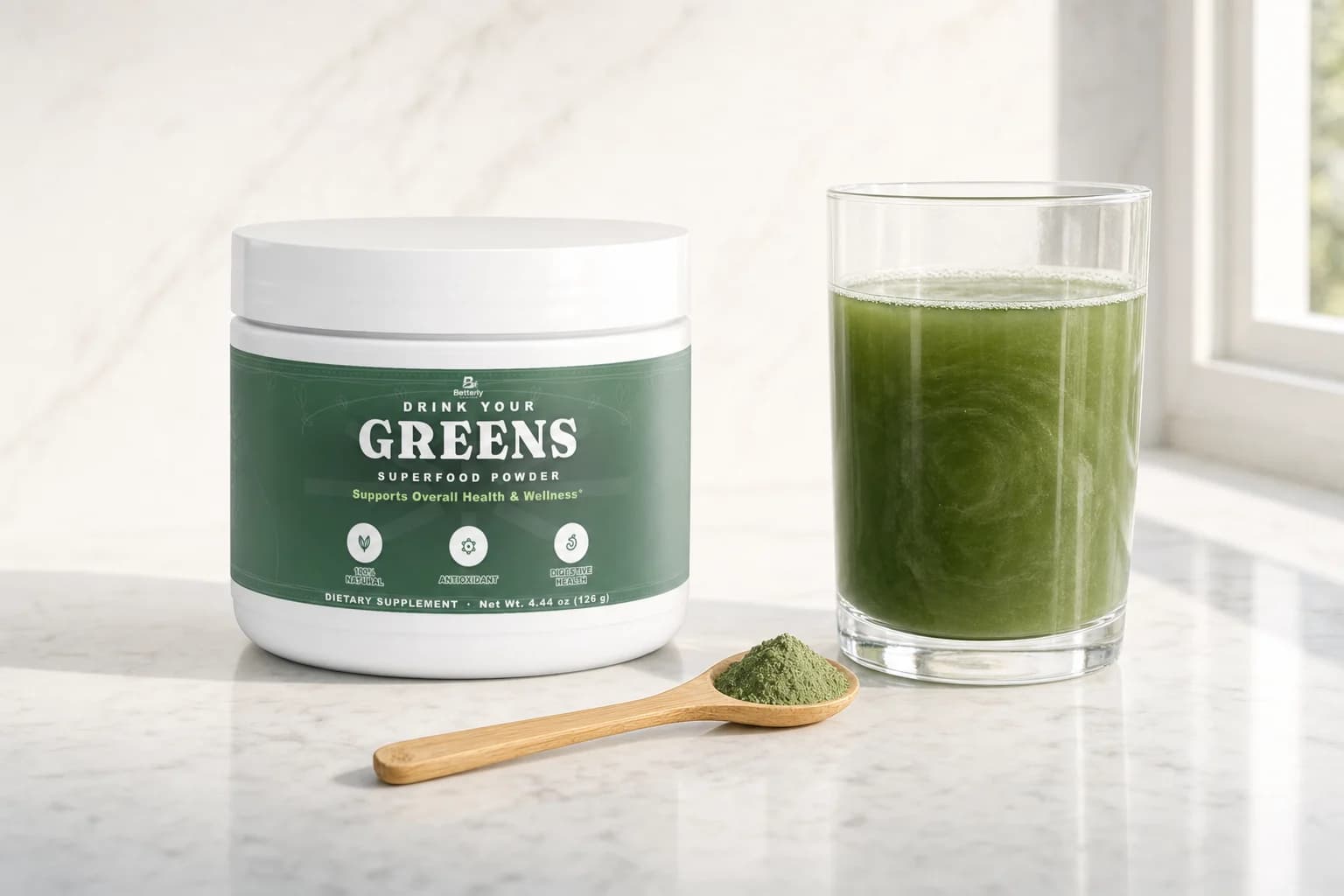
Barley Grass & Spirulina Greens Powder is built around barley grass and spirulina with more than 20 plant ingredients, aimed at everyday nutrition rather than any single promise. If your honest vegetable count is lower than you'd like, this is the food-first way into an everyday immune support routine: a scoop in water or a smoothie every morning, done before you've had time to negotiate with yourself.
Best for: the person whose real gap is vegetables, not vitamins.
How to combine them without overdoing it
You do not need all five. A stack of everything is more expensive, harder to stick to, and no better supported by research than a small, consistent routine. A sensible build looks like this:
- Start with one foundation. The multivitamin if your diet has nutrient gaps; the greens powder if plant intake is the gap. Running both is possible, but for many people it's redundant — pick the one you'll actually take.
- Add one botanical, if you want one. The Mushroom Capsules for breadth or the Organic Chaga Mushroom Capsules for focus — not both to start. Judge it by whether it fits your routine, not by whether you feel different.
- Add sea moss only if it fits. It earns a spot if you rarely eat sea vegetables and want a marine botanical, not as a reflex because it's trending. Its label doesn't list an iodine amount, so don't count on it as an iodine source.
Two habits make any combination work better. Take everything at the same anchor point (breakfast is the usual winner), and read labels for overlap when products share nutrients, so you're not doubling up without meaning to. Our guide to building a simple supplement routine covers those mechanics, and if you want this mapped onto an actual day — what to take, when, and what to skip — our companion piece on a daily immune support routine lays it out step by step.
Key takeaways
- Habits carry immune health. Sleep, movement, plants, and managed stress do the heavy lifting; supplements are the supporting cast, not the star.
- The best supplements for everyday immune support are unglamorous. A daily multivitamin for nutrient gaps, a mushroom formula if you want a botanical, sea moss as a marine botanical, greens for plant intake.
- Consistency beats intensity. Daily and modest is easier to sustain than occasional mega-dosing, which hasn't been shown to help people who already get enough.
- Start small. One foundation, maybe one botanical. Add anything else only when it earns its place.
FAQ: everyday immune support supplements
Can you take immune support supplements every day?
The options in this guide are designed for daily use — that's the point, since your immune system depends on nutrient status over time rather than occasional bursts. Follow each label's serving size, and if you're pregnant, nursing, under 18, taking medication or have a medical condition, run your routine past a healthcare provider first.
Will I feel a difference from immune supplements?
Honest answer: you may never "feel" an immune supplement working, because supporting normal function isn't a sensation. There's no set timeline to expect, so judge a routine by whether you can keep it up week after week, not by whether you feel different tomorrow. Follow each label's suggested use and serving size.
Do I still need separate vitamin C and zinc?
A daily multivitamin like our Daily Multivitamin Capsules (150 mg vitamin C and 15 mg zinc per 2-capsule serving) already covers a baseline of both. According to the NIH Office of Dietary Supplements, extra amounts generally don't help people who already get enough, and high zinc intakes over a long time can lower copper levels and impair immune function. Cover the gap; skip the pile.
Should I take a mushroom complex or a single mushroom like chaga?
Neither is objectively better — they're different philosophies. A ten-mushroom blend gives you breadth in one daily 2-capsule serving; single-ingredient chaga gives you one focused, researchable ingredient. Pick whichever matches how you like to run a routine, and start with just one.
When is the best time of day to take immune supplements?
Whenever you'll actually remember them. For most people that's around breakfast. Follow each label's suggested use: the Daily Multivitamin Capsules label says two capsules in the morning with a meal, the Mushroom Capsules and Sea Moss, Bladderwrack & Burdock Capsules labels say two capsules once a day, 20-30 minutes before a meal, the Organic Chaga Mushroom Capsules label says two capsules daily, and the Barley Grass & Spirulina Greens Powder label says one scoop in 6-8 ounces of cold water or another beverage once daily.
Are natural immune support supplements safe to combine?
Usually, if you keep the routine small, but check first. Every one of these labels says to consult a physician if you're pregnant, nursing, under 18, or have a medical condition, and anyone taking prescription medication should ask their provider before adding the Organic Chaga Mushroom Capsules or the herbal blend in the Barley Grass & Spirulina Greens Powder. Watch for overlapping nutrients across products (minerals like iodine and zinc especially), and add one new thing at a time.
Sources
- Dietary Supplements for Immune Function, Consumer Fact Sheet (NIH Office of Dietary Supplements)
- Iodine, Consumer Fact Sheet (NIH Office of Dietary Supplements)
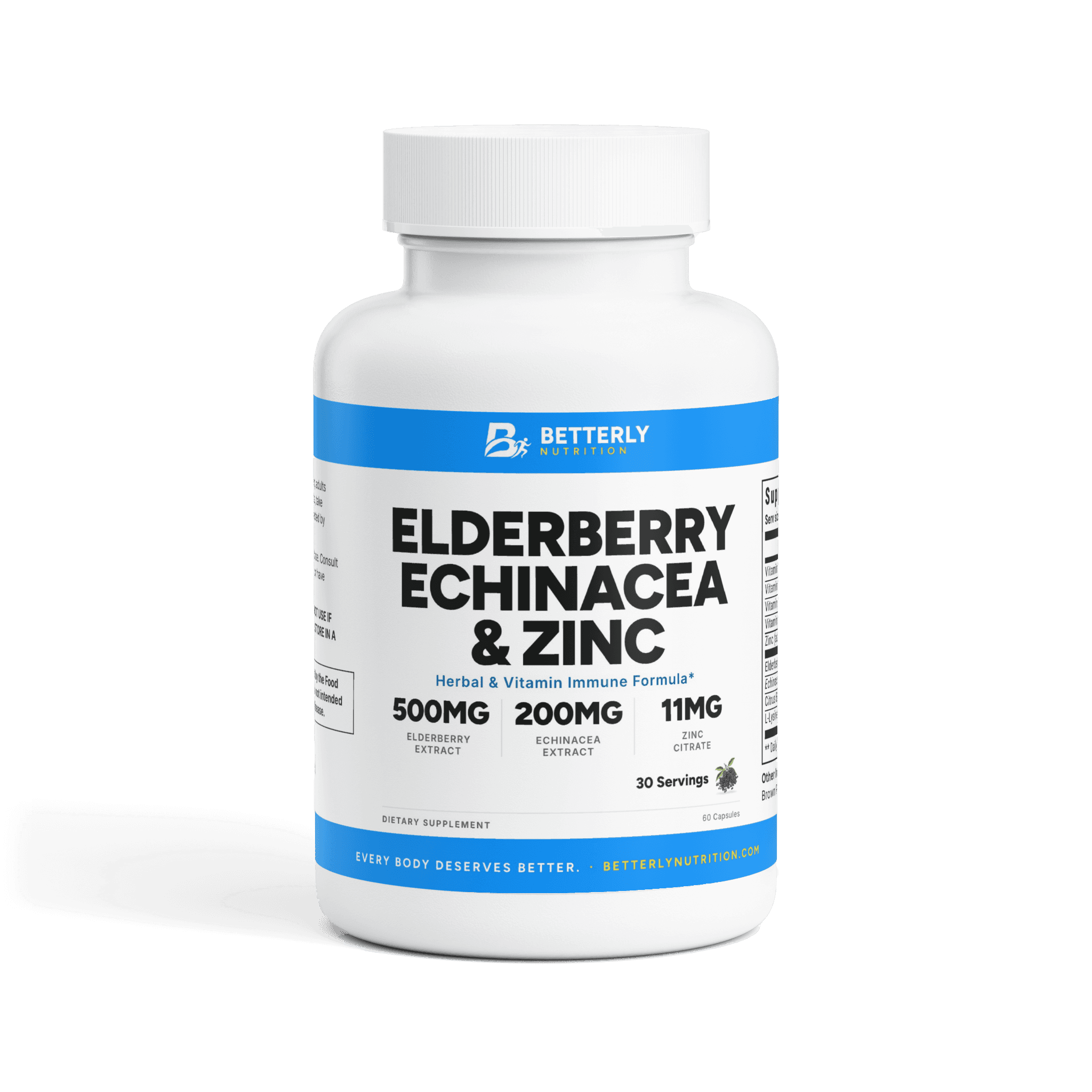
If this left you looking for somewhere to start, read elderberry, echinacea and zinc capsules with vitamins C and D — its amounts per serving are listed on the page. For the practical questions this raises, how dosing, sourcing and subscriptions work is answered in one place.