On this page
- Key takeaways
- What is elderberry with zinc and vitamin C good for?
- What's in Betterly's elderberry capsules with vitamin C and zinc?
- Can you take elderberry and vitamin C together, or with zinc?
- How do the totals add up with a multivitamin?
- Could an elderberry and zinc stack put you over 40 mg of zinc?
- How should you take elderberry with zinc and vitamin C capsules?
- When don't you need an elderberry, zinc and vitamin C supplement?
- Who should check with a healthcare provider before taking elderberry and zinc?
- FAQ: elderberry with zinc and vitamin C
- Sources
The short answer: Elderberry with zinc and vitamin C pairs two nutrients your immune system needs with a berry extract that has little research behind it. Betterly's Elderberry, Echinacea & Zinc Capsules list 180 mg of vitamin C, 11 mg of zinc and 40 mcg of vitamin D3 per 2-capsule serving. Add both our Daily Multivitamin Capsules and Vitamin D3 Softgels, and vitamin D hits 100 mcg (4,000 IU), the NIH Office of Dietary Supplements' adult upper limit, before food. Pick one, not both.
Key takeaways
- The NIH Office of Dietary Supplements names vitamin C, vitamin D and zinc among the nutrients your immune system needs, while elderberry and echinacea have no daily requirement.
- Betterly's elderberry formula holds more than its front label shows, including 180 mg of vitamin C and 40 mcg of vitamin D3 per 2-capsule serving.
- Betterly's elderberry capsules plus our Daily Multivitamin Capsules supply 26 mg of zinc and 330 mg of vitamin C a day, under the NIH adult limits of 40 mg and 2,000 mg.
- We don't suggest taking our elderberry capsules, multivitamin and Vitamin D3 Softgels together, because the three reach the NIH's 100 mcg vitamin D adult limit before any food.
- Nothing we've read shows these ingredients work better together than apart, so a combination capsule is a convenience, not a stronger formula.
We sell all three products named here. That's a good reason to check our arithmetic, so each number below comes straight off a printed Supplement Facts panel, and we flag every overlap between our own bottles.
What is elderberry with zinc and vitamin C good for?
Elderberry with zinc and vitamin C combines nutrients that support normal immune function with a fruit extract whose effects are far less clear.
The nutrient side rests on solid ground. The NIH Office of Dietary Supplements (ODS) says in its consumer fact sheet on immune function that your immune system needs certain vitamins and minerals to work properly, and it names vitamin C, vitamin D and zinc. Vitamin C also helps your body make collagen, and zinc helps it build proteins and DNA.
The elderberry side is thinner. Elderberry is the dark purple fruit of the European or black elder tree, Sambucus nigra, and the National Center for Complementary and Integrative Health (NCCIH) says only a small number of studies have looked at it. Echinacea, the second herb in our formula, grows in North America and Europe, according to ODS. Our elderberry vs echinacea comparison weighs the two herbs one at a time.
Is elderberry or zinc better? They aren't rivals. Zinc is an essential mineral with a daily target of 11 mg for adult men and 8 mg for adult women, according to ODS. Elderberry has no daily target at all.
What's in Betterly's elderberry capsules with vitamin C and zinc?
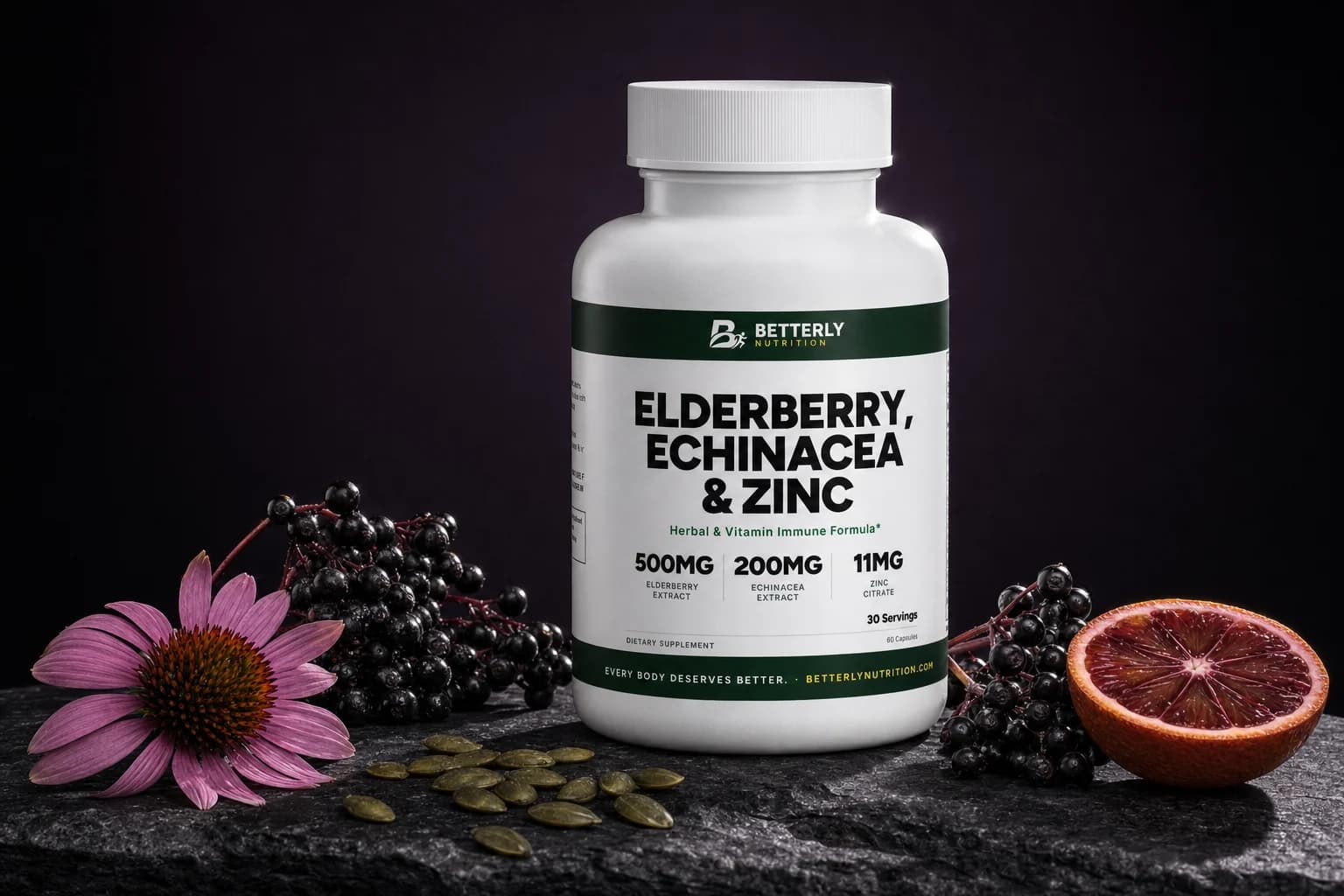
Betterly's Elderberry, Echinacea & Zinc Capsules list nine ingredients per 2-capsule serving: five vitamins and minerals with a Daily Value, and four extras without one.
The five with a Daily Value, as the panel prints them:
- Vitamin C (as ascorbic acid): 180 mg, 200% DV
- Vitamin D3 (as cholecalciferol): 40 mcg, 200% DV
- Vitamin E (as d-alpha tocopheryl acetate): 15 mg, 100% DV
- Vitamin B6 (as pyridoxal 5'-phosphate): 1.7 mg, 100% DV
- Zinc (as zinc citrate): 11 mg, 100% DV
The other four are elderberry extract (Sambucus nigra, fruit) at 500 mg, Echinacea purpurea extract (whole plant) at 200 mg, citrus bioflavonoid 50% at 100 mg and L-lysine at 100 mg.
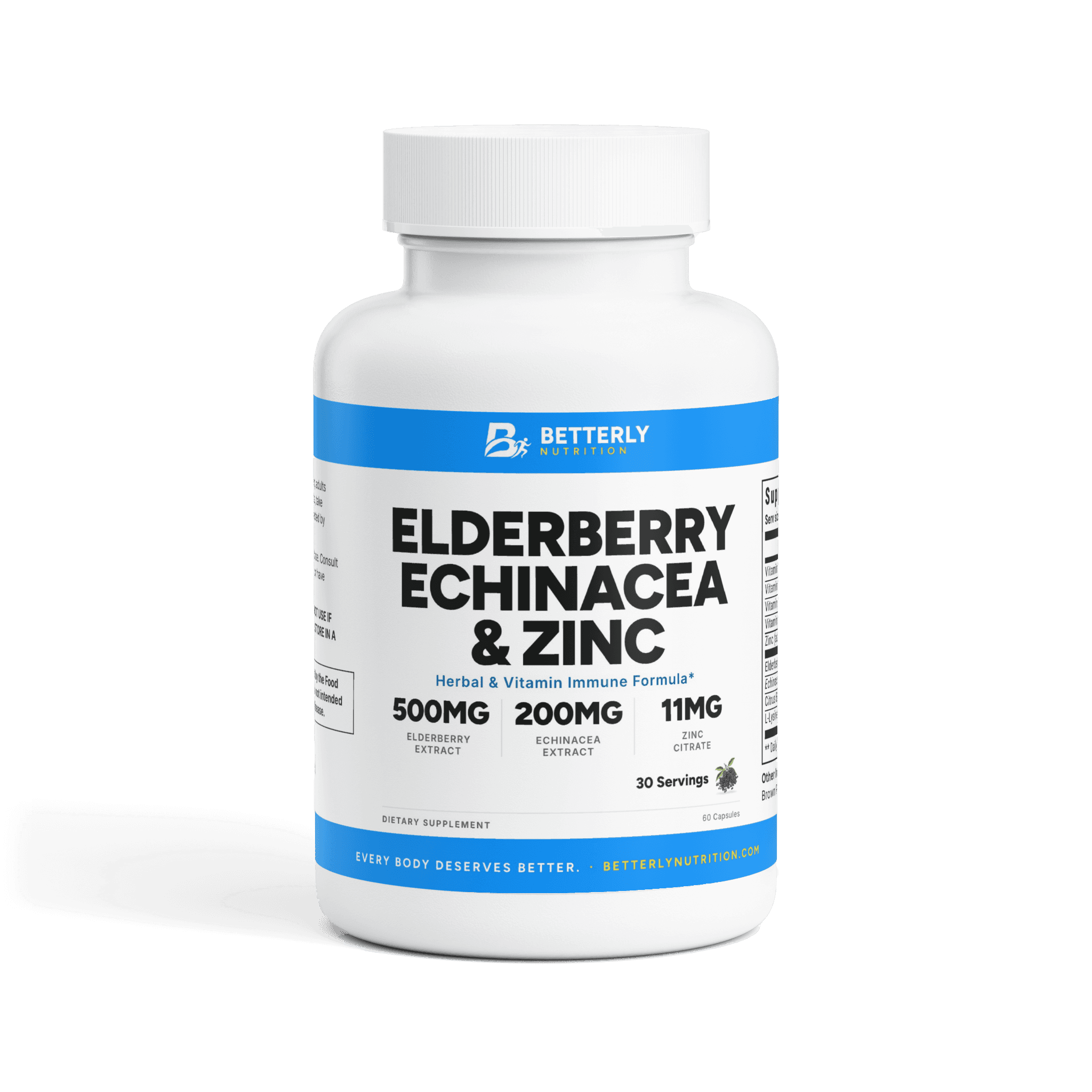
The front of the bottle shows three numbers: 500 mg elderberry, 200 mg echinacea and 11 mg zinc citrate. The vitamin C and vitamin D3 appear only in the Supplement Facts panel, and that gap is how people double up without meaning to.
Besides the actives, the panel lists just a gelatin capsule and brown rice flour, which matters if you avoid animal-derived ingredients. The label makes no vegan or gluten-free claim, so we don't make one either.
The ODS zinc fact sheet says supplements use several forms of zinc and that it's not clear whether one form is better than the others. Our multivitamin uses zinc oxide instead of citrate. Both count toward the same daily total.
Can you take elderberry and vitamin C together, or with zinc?
Yes, you can take elderberry, vitamin C and zinc together, and a combination capsule like ours already does. The part worth watching is your daily total of each nutrient.
None of the federal pages we read warns against pairing these three. Their safety notes are about amounts. The ODS immune function sheet puts the adult upper limits at 2,000 mg of vitamin C, 40 mg of zinc and 100 mcg (4,000 IU) of vitamin D a day. ODS's separate zinc and vitamin D sheets add that those two limits count food and drinks, not just supplements.
Echinacea is the overlap people rarely spot. Our multivitamin lists a 110 mg "Immune Support" blend of Echinacea purpurea (aerial parts), beta glucan, spirulina and garlic, without saying how much of it is echinacea. So with both bottles, you're taking 200 mg of echinacea plus an unknown share of that blend.
Vitamin C is the easy one. ODS says too much can cause diarrhea, nausea and stomach cramps, but the 330 mg from both bottles sits far below the 2,000 mg line.
How do the totals add up with a multivitamin?
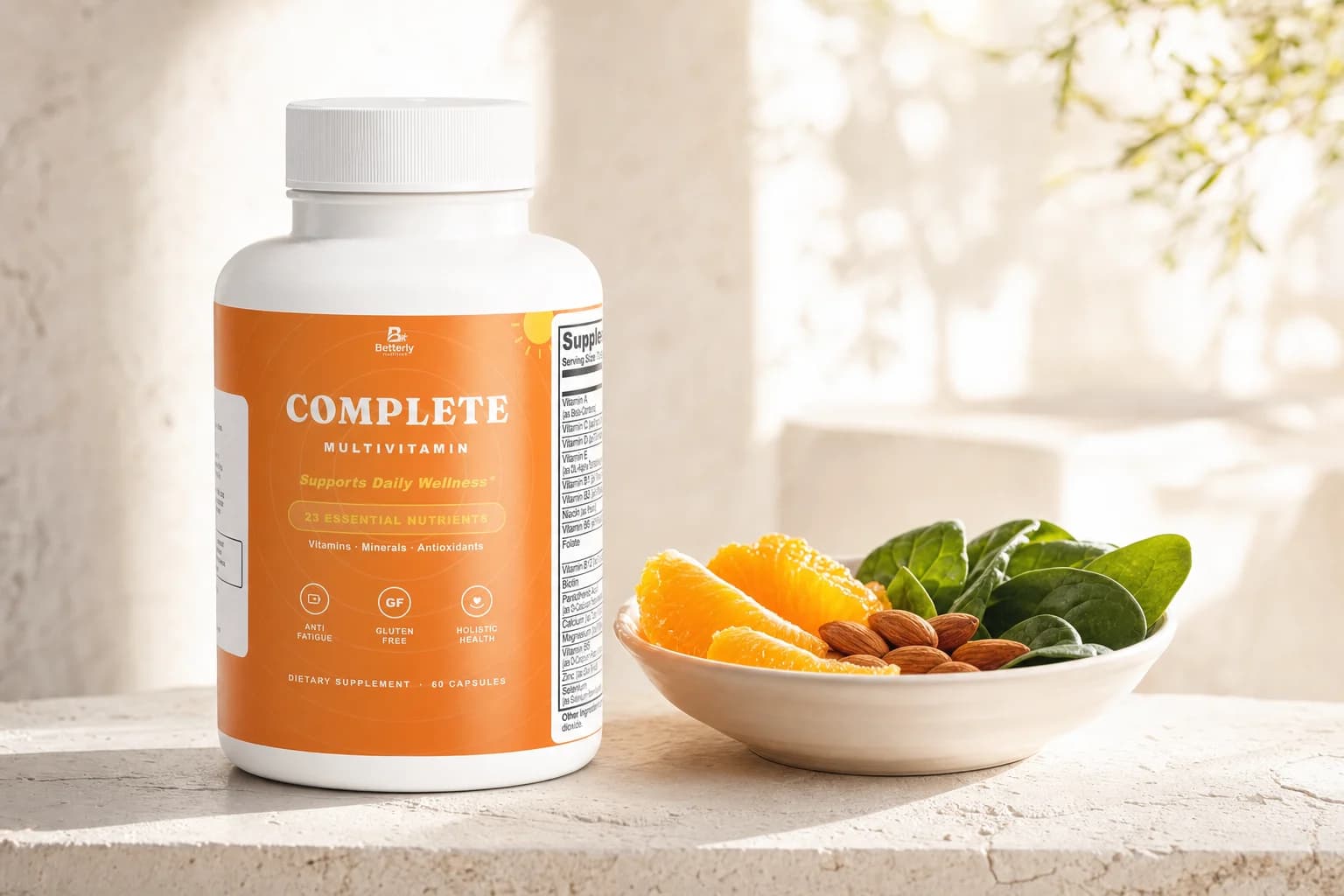
Betterly's elderberry formula and Daily Multivitamin Capsules supply 330 mg of vitamin C, 26 mg of zinc and 50 mcg of vitamin D a day, each under its adult limit.
That's two elderberry capsules and two multivitamin capsules, each label's suggested use:
| Nutrient | Elderberry capsules alone | With our multivitamin | Adult upper limit (ODS) |
|---|---|---|---|
| Vitamin C | 180 mg | 330 mg | 2,000 mg |
| Zinc | 11 mg | 26 mg | 40 mg, food included |
| Vitamin D | 40 mcg | 50 mcg (100 mcg if you also take our D3 softgel) | 100 mcg (4,000 IU), food included |
| Echinacea | 200 mg | 200 mg + part of a 110 mg blend | No NIH limit |
The takeaway: on this two-bottle pairing, zinc comes closest to its limit at about two-thirds, while vitamin C uses about a sixth and vitamin D half.
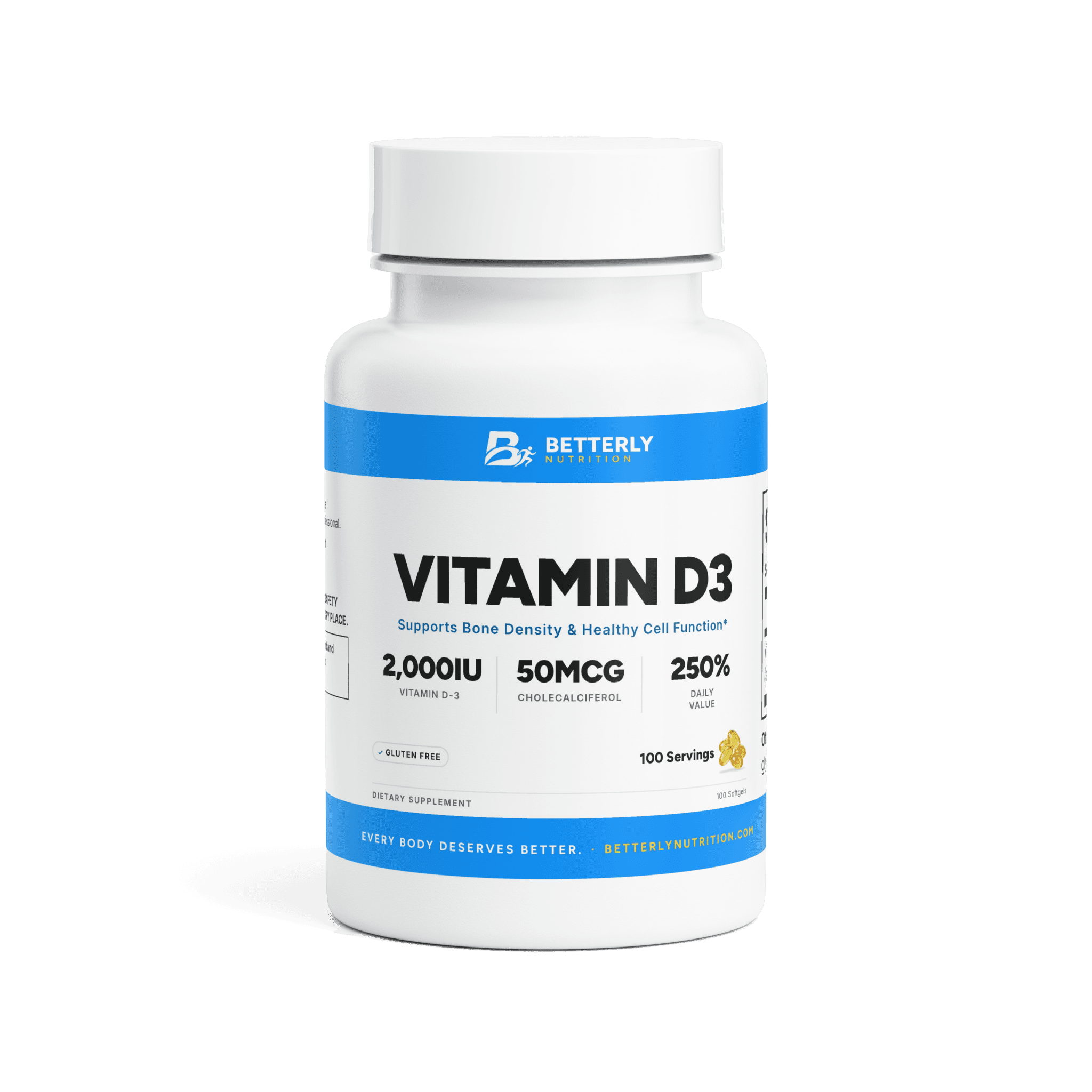
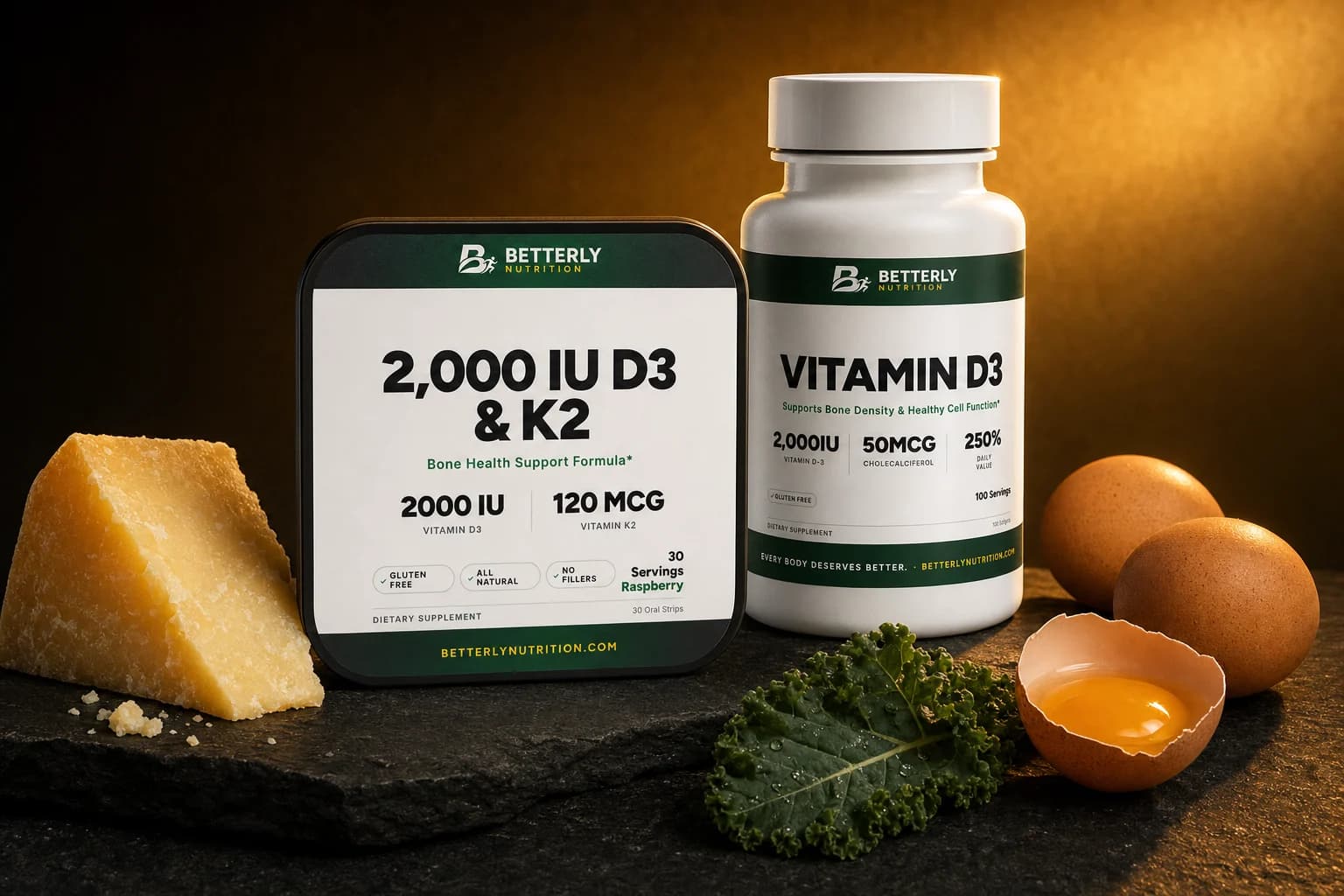
We don't suggest taking all three products together. Our Vitamin D3 Softgels add 50 mcg per softgel, which brings the trio to 100 mcg of vitamin D from supplements alone. The ODS vitamin D fact sheet says that limit covers food and beverages too, so anything fortified you eat that day takes you past it. Pair the elderberry capsules with the multivitamin (50 mcg) or with the softgel (90 mcg), not both. The softgel pairing leaves only 10 mcg under the ODS limit of 100 mcg for food and fortified drinks, while the multivitamin pairing leaves 50 mcg, so count what you eat. Our D3 and K2 label guide lines up vitamin D across our whole range.
Two smaller overlaps sit outside the table: vitamin E comes to 28.5 mg and vitamin B6 to 9.2 mg. If other formulas you take list B6, our guide to how much vitamin B6 is too much checks totals against the US and European limits.
From our shop: Elderberry, Echinacea & Zinc Capsules — 180 mg vitamin C, 11 mg zinc as zinc citrate and 40 mcg vitamin D3 alongside the elderberry and echinacea extracts, per 2-capsule serving.
Could an elderberry and zinc stack put you over 40 mg of zinc?
An elderberry and zinc stack built from our labels stays under the ODS limit of 40 mg: the elderberry formula and multivitamin supply 26 mg, which leaves 14 mg for food.
That leftover room matters because the ODS zinc fact sheet counts foods, beverages, supplements and medications toward the 40 mg adult limit. Oysters, meat and fortified cereal all use some of it.
According to ODS, most Americans already meet their zinc needs through meals, so it's worth doing your own math. An adult man who eats his recommended 11 mg reaches 37 mg with both bottles, and an adult woman who eats her 8 mg reaches 34 mg. Both stay under the limit, but there's no space for another zinc product. The D3 softgel lists no zinc.
What does too much zinc do? The ODS zinc sheet lists headaches, dizziness, nausea, vomiting and an upset stomach among the signs. Over a long time, excess zinc can also leave you low in copper and impair immune function, the very job people buy zinc for. On our panels, only the multivitamin carries copper, 2 mg in each 2-capsule serving, and the elderberry capsules have none.
Higher-dose zinc is a separate question, and our look at 80 mg zinc doses takes it on.
How should you take elderberry with zinc and vitamin C capsules?
Take Betterly's elderberry with zinc and vitamin C capsules as the label directs: adults take two capsules daily, with 6-8 oz (177-237 ml) of water for best results.
Nothing on this label ties the capsules to a clock or a meal. Our multivitamin's label asks for two capsules in the morning with a meal, so if you take both, breakfast fits both labels.
A few habits keep the stack tidy:
- Before adding anything new, write down the vitamin C, zinc and vitamin D from every panel you already take.
- Don't make up a missed day by doubling the next one. The label says, "Do not exceed recommended dose."
- Plan on one bottle a month: 60 capsules is 30 servings at two a day.
- Recheck your totals whenever you switch brands, since a new multivitamin or D3 product may list different amounts.
When don't you need an elderberry, zinc and vitamin C supplement?
You may not need an elderberry, zinc and vitamin C supplement if you eat a varied diet or already take a multivitamin that covers these nutrients.
The ODS immune function sheet says a variety of nutritious foods can give you enough vitamins and minerals for a healthy immune system. It also says that if you aren't short on a vitamin or mineral, taking more through supplements usually doesn't make your immune system work any better.
You can probably skip this kind of formula if:
- Your multivitamin already lists vitamin C and zinc at 100% of the Daily Value or more. Ours prints 167% and 136%.
- You eat fruit, vegetables, seafood or meat, beans and nuts most days.
- You already take vitamin D and don't want a third source to track.
- You only want the elderberry. Five added nutrients means extra bookkeeping, and we don't sell an elderberry-only option.
For a wider look, see our guide to whether you need a multivitamin at all. Our other immune-support formulas sit together in our immune support collection.
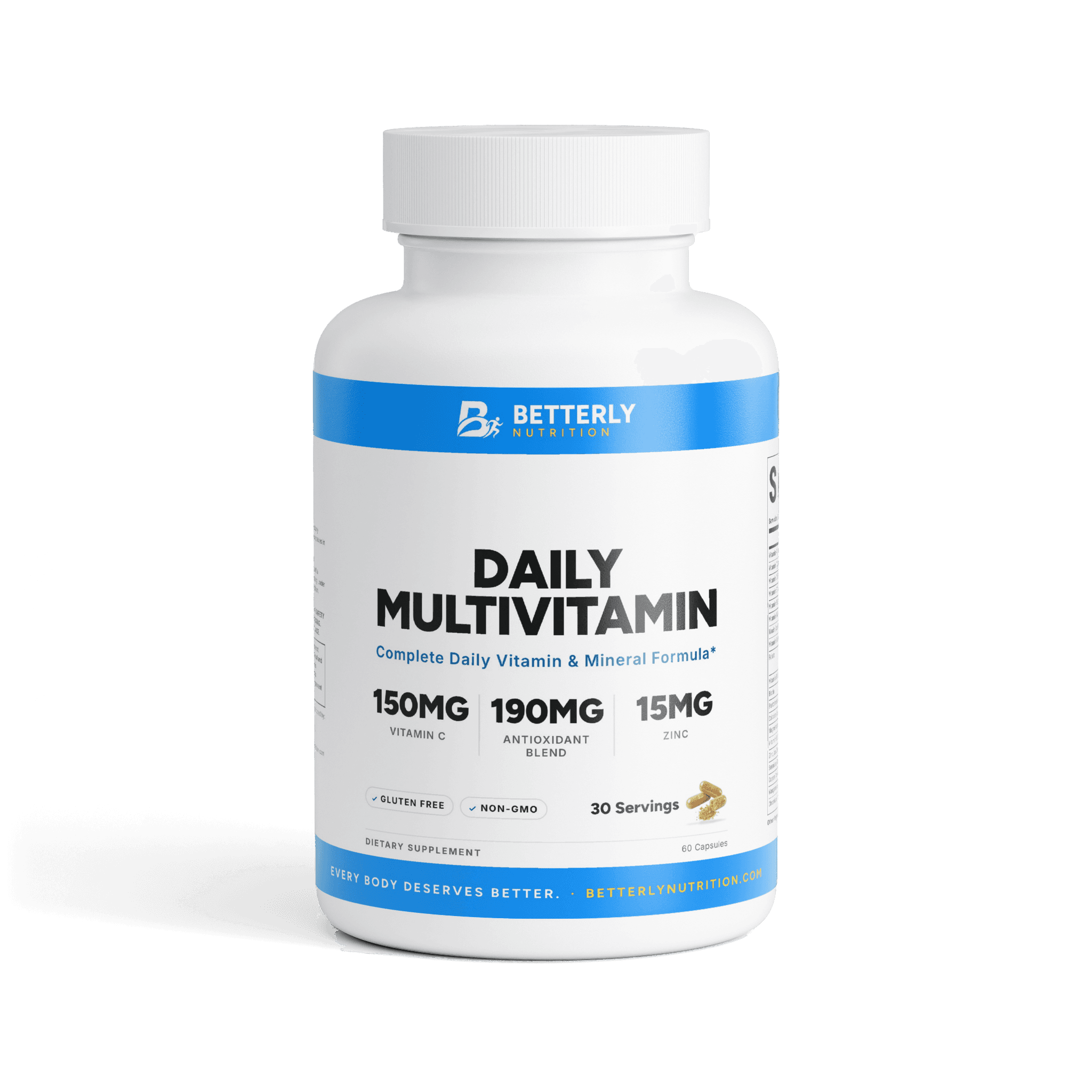
From our shop: Daily Multivitamin Capsules — 150 mg vitamin C, 15 mg zinc as zinc oxide and 10 mcg vitamin D per 2-capsule serving, plus a 110 mg immune blend that includes echinacea.
Who might find the formula useful? ODS lists people on vegetarian or vegan diets among those who may struggle to get enough zinc, though our gelatin capsule won't suit anyone avoiding animal ingredients. ODS also says people who smoke need 35 mg more vitamin C a day.
Who should check with a healthcare provider before taking elderberry and zinc?
Ask a healthcare provider before taking elderberry and zinc if you use immune-suppressing medicine, which ODS says both herbs in our formula might make less effective.
The bottle's caution line names more groups: "Consult a physician if pregnant, nursing, under 18, or have a medical condition." Here's what the federal pages add:
- Other medicines: ODS says elderberry might affect insulin levels, so show the label to whoever manages your prescriptions.
- Antibiotics: quinolone and tetracycline antibiotics can interact with zinc, per ODS. Its fix is spacing: the antibiotic goes 2 or more hours ahead of your zinc, or 4 to 6 hours after it.
- Pregnancy and nursing: NCCIH's elderberry page says little is known about elderberry's safety during pregnancy or breastfeeding, and ODS says scientists don't know whether echinacea is safe in pregnancy.
- Allergies: ODS says echinacea might cause allergic reactions in rare cases.
- Long-term use: our label sets no end date, so tell your provider if you plan to take it for months.
FAQ: elderberry with zinc and vitamin C
Can you take elderberry with zinc and vitamin C every day?
Yes, Betterly's Elderberry, Echinacea & Zinc Capsules are labeled for daily use: two capsules daily, taken with 6-8 oz of water. Daily use is where overlaps pile up, so keep your totals under the ODS adult limits of 2,000 mg of vitamin C, 40 mg of zinc and 100 mcg of vitamin D. The label sets no end date, so ask a provider before taking it for months.
Is elderberry and zinc the same thing?
No, elderberry and zinc are different kinds of ingredients. Zinc is an essential mineral with a daily need of 11 mg for adult men and 8 mg for adult women, according to ODS, and a 40 mg adult upper limit. Elderberry is a fruit extract from the black elder tree with no daily need or upper limit on the NIH pages we used.
How much elderberry should you take per day?
Take the amount on your product's label, because none of the NIH pages we cite sets a daily amount for elderberry. Betterly's formula provides 500 mg of elderberry extract per 2-capsule serving, once a day. Our label prints no extract ratio, so that 500 mg can't be compared directly with another brand's syrup or gummy.
Can you take elderberry with a multivitamin?
You can, as long as you total the overlap and stop at two bottles. Betterly's elderberry capsules with our Daily Multivitamin Capsules give 330 mg of vitamin C, 26 mg of zinc and 50 mcg of vitamin D a day, all under adult limits. We don't suggest adding our Vitamin D3 Softgels as well. The three together reach the 100 mcg vitamin D limit before food, and ODS counts food toward it. Choose the multivitamin or the softgel, not both.
What are the side effects of elderberry with zinc and vitamin C?
For this combination, most side effects federal sources list come from taking too much of the nutrients, which is why totals matter. ODS says excess vitamin C can cause diarrhea, nausea and stomach cramps, and excess zinc can cause nausea and an upset stomach. For echinacea, ODS lists stomach upset and, rarely, allergic reactions. Our guide to elderberry side effects covers the berry itself.
Sources
- Dietary Supplements for Immune Function: Fact Sheet for Consumers, NIH Office of Dietary Supplements
- Zinc: Fact Sheet for Consumers, NIH Office of Dietary Supplements
- Vitamin D: Fact Sheet for Consumers, NIH Office of Dietary Supplements
- Elderberry: Usefulness and Safety, National Center for Complementary and Integrative Health
If this left you looking for somewhere to start, read elderberry capsules with vitamin C and zinc — its amounts per serving are listed on the page. For the practical questions this raises, how dosing, sourcing and subscriptions work is answered in one place.