On this page
- Key takeaways
- How much vitamin B6 is too much per day for adults?
- What happens if you take too much vitamin B6?
- Is 25 mg or 50 mg of vitamin B6 too much?
- How do you read % DV and "pyridoxine HCl" on a B6 label?
- How fast does vitamin B6 add up across supplements?
- How should you take a formula that contains vitamin B6?
- When is extra vitamin B6 unnecessary?
- Who should talk to a clinician before adding vitamin B6?
- FAQ: vitamin B6 limits
- Sources
The short answer: How much vitamin B6 is too much depends on which limit you go by. The NIH Office of Dietary Supplements puts the US adult ceiling at 100 mg daily, with food and supplements counted together. Europe's food safety agency chose a far stricter 12 mg in 2023. Most adults need only 1.3 to 1.7 mg, so one supplement can carry many times that.
Key takeaways
- The US upper limit for vitamin B6 is 100 mg a day for adults, and the NIH Office of Dietary Supplements counts every source toward it.
- Europe's food safety authority settled on 12 mg daily for adults in 2023, a figure a US label would print as about 706% of the Daily Value.
- High amounts of vitamin B6 from supplements, taken for a year or longer, have been linked to nerve damage, while food alone almost never causes a problem.
- Vitamin B6 turns up in focus, metabolism, hair and prostate formulas, so add up every panel you take.
Full disclosure: we sell several formulas that list vitamin B6, and two of the four we compare below pass the European figure on their own. We print their B6 amounts next to the limits, the awkward ones too.
How much vitamin B6 is too much per day for adults?
Vitamin B6 counts as too much for adults once your daily total passes the 100 mg US upper limit, and Europe's 2023 limit draws that line lower, at 12 mg.
On its consumer page about vitamin B6, the NIH Office of Dietary Supplements (ODS) lists limits by age, lower for children and teens and 100 mg for adults. Those numbers cover B6 from food, beverages and supplements together. ODS adds that they don't apply to people taking B6 for medical reasons under a doctor's care.
The same page notes that some experts favor lower ceilings. Its example is EFSA, the European Food Safety Authority, whose 2023 figure for every adult is 12 mg daily. ODS doesn't rank the two numbers, so we'll use both.
Now compare those ceilings with what you need. ODS puts the recommended amount at 1.3 mg a day for adults 19 to 50, then 1.7 mg for men and 1.5 mg for women after 50. So the US limit sits nearly 60 times above the highest of those, and Europe's sits about 7 times above it. That gap is why a label can print a huge percentage and still be under the American limit.
What happens if you take too much vitamin B6?
Too much vitamin B6 is mainly a supplement problem: ODS ties high intakes kept up over a year or more to severe nerve damage and trouble controlling body movements.
ODS lists other signs too: painful, unsightly skin patches, extreme sensitivity to sunlight, nausea and heartburn. MedlinePlus's vitamin B6 page puts the effects of large doses in plainer words: difficulty coordinating movement, numbness and sensory changes, meaning shifts in how things feel.
Two more ODS details matter. First, "People almost never get too much vitamin B6 from food or beverages." Second, the symptoms usually stop when people stop taking the supplements.
That isn't a reason to wait and see. If you notice numbness, clumsiness or odd sensations while taking anything that lists B6, call a healthcare provider and bring every label you use. Fewer products make that total easier to track, which is why our step-by-step routine builder argues for keeping the list short.
Is 25 mg or 50 mg of vitamin B6 too much?
Neither 25 mg nor 50 mg of vitamin B6 goes over the 100 mg US adult limit, but both sit well above Europe's 12 mg figure.
That's why these questions don't get a clean yes or no. Neither ODS nor MedlinePlus names a safe number between the two, so anyone who calls 25 mg "fine" or "dangerous" without seeing your full routine is guessing.
This table sets common daily totals against both limits, using FDA's 1.7 mg Daily Value for B6 and rounded percentages:
| Daily B6 total | % Daily Value | US limit (100 mg) | European limit (12 mg) |
|---|---|---|---|
| 10 mg | 588% | Under | Under |
| 12 mg | 706% | Under | At the limit |
| 15 mg | 882% | Under | Over |
| 25 mg | 1,471% | Under | About 2x over |
| 50 mg | 2,941% | Under | About 4x over |
| 100 mg | 5,882% | At the limit | About 8x over |
Across the rows, every total from 15 mg to 50 mg stays under the US ceiling but crosses the European one, and 100 mg sits right at the US limit. Any label printing more than 706% DV for B6 is past Europe's figure in one serving.
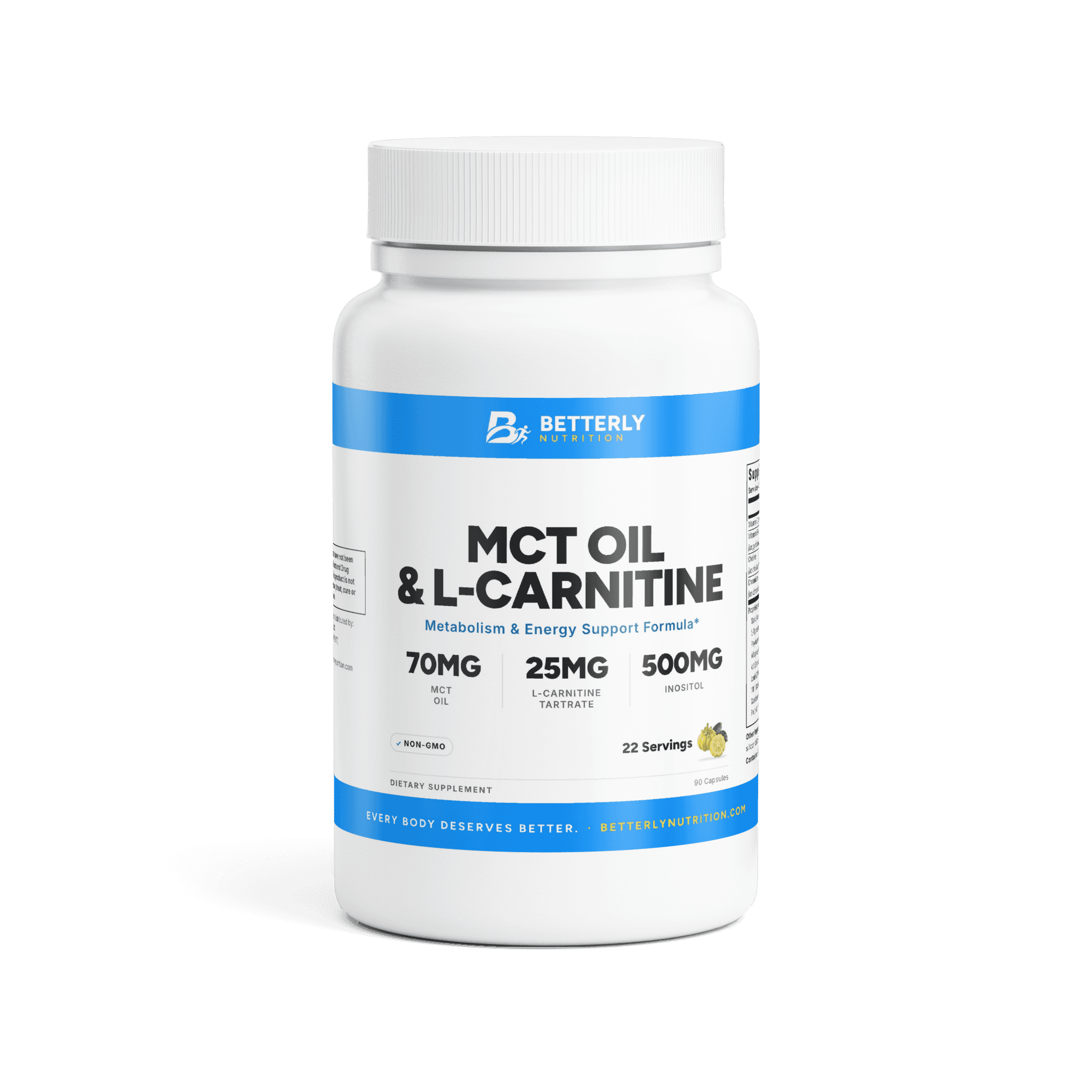
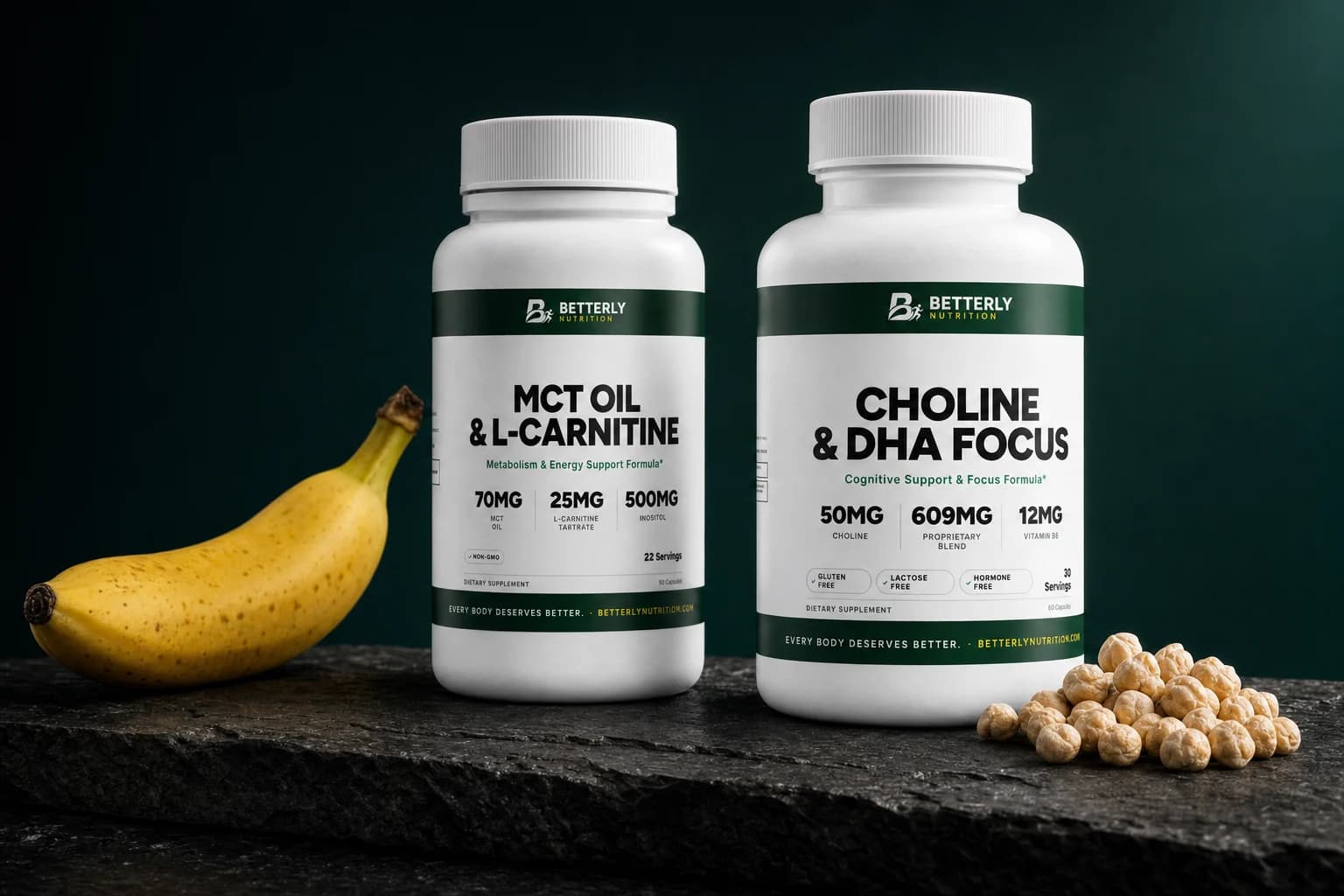
Now our own numbers. Betterly's MCT Oil & L-Carnitine Capsules list 25 mg of vitamin B-6 (as pyridoxine HCl), 1471% DV, per 4-capsule serving. The label's suggested use is 4 capsules daily, so that product alone gives you 25 mg of B6 a day: under the US limit, about twice the European one. It's our label, and we'd rather point that out ourselves.
If that bothers you, don't trim the serving yourself. Ask a clinician whether the product fits your routine at its labeled amount.
How do you read % DV and "pyridoxine HCl" on a B6 label?
On a Supplement Facts panel, add up the vitamin B6 milligrams; the % DV compares each amount with FDA's 1.7 mg Daily Value, and pyridoxine HCl names the form used.
FDA's page on the Daily Value on Nutrition and Supplement Facts labels describes % DV as one serving's share of your daily diet. As a rule of thumb, FDA calls anything at 20% DV or above a high amount.
People often miss one detail. For B6, the Daily Value is an amount to aim for, not a line you mustn't cross. A label reading 706% doesn't mean "seven times over the safe amount." It means one serving holds about 7 times the 1.7 mg Daily Value. The ceiling is the upper limit, and 100 mg works out to about 5,882% DV.
To turn a percentage into milligrams, multiply the % DV by 1.7 and divide by 100. A 441% row works out to about 7.5 mg, exactly what our multivitamin prints beside it.
The words in parentheses name the form. ODS says supplements usually provide B6 as pyridoxine, and "HCl" is short for hydrochloride, so "pyridoxine HCl" and "pyridoxine hydrochloride" are the same ingredient. Our labels use both spellings. Count the milligram figure in the B6 row, since that's what its % DV is calculated from.
A quick checklist for any B6 label, ours included:
- Find the row under any spelling: vitamin B6, vitamin B-6 or pyridoxine.
- Read the serving size. Our MCT capsule's serving is 4 capsules, not 1.
- Multiply by the servings the suggested use calls for each day.
- Repeat for every product you take, including ones bought for sleep, hair or energy.
How fast does vitamin B6 add up across supplements?
Vitamin B6 adds up fast: at label directions, two of Betterly's formulas together can pass 38 mg a day, more than three times Europe's 12 mg limit.
B6 usually rides along in formulas sold for other reasons. Four of our labels show how differently B6 is dosed:
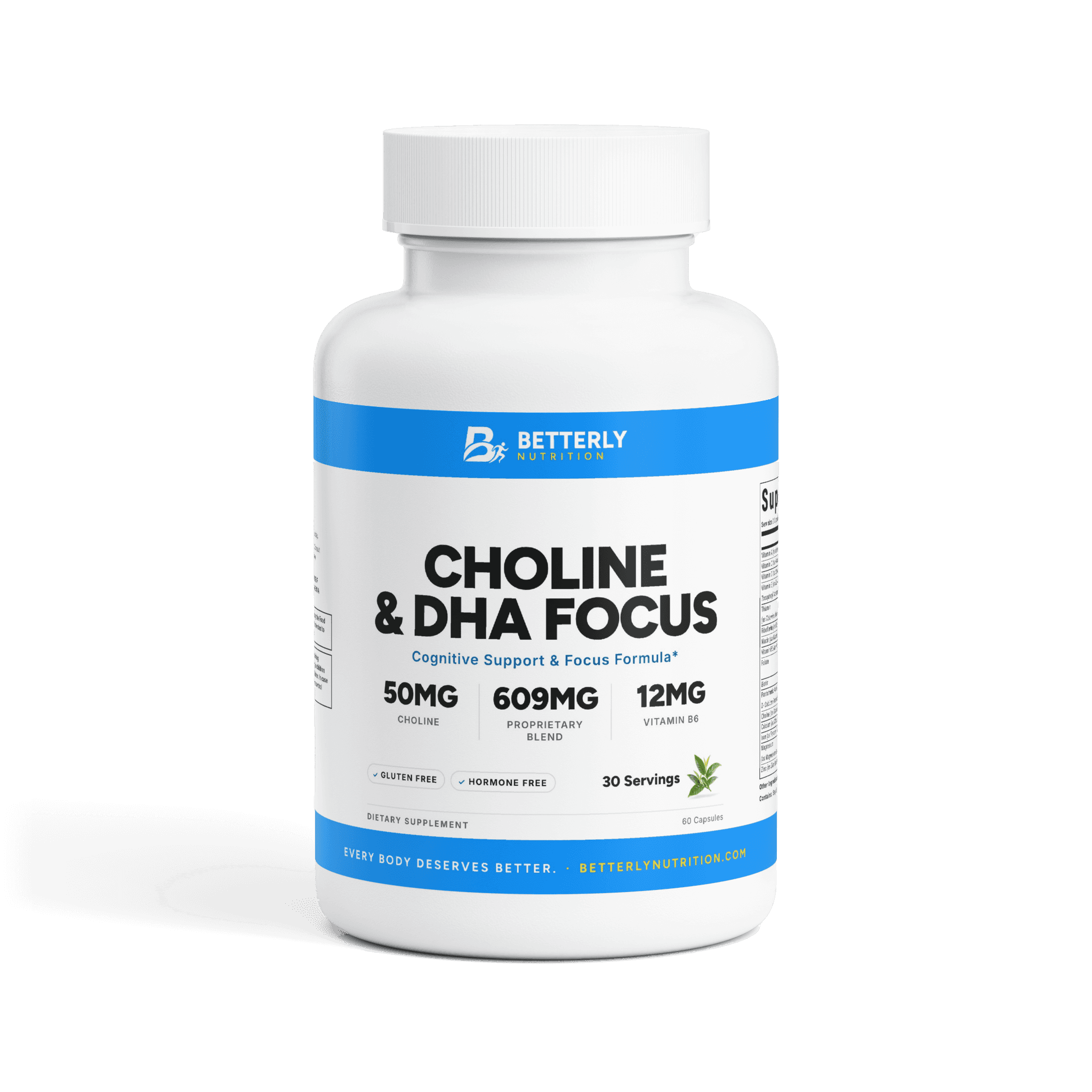
- Choline & DHA Focus Capsules: 12 mg (706% DV) per 2-capsule serving
- MCT Oil & L-Carnitine Capsules: 25 mg (1471% DV) per 4-capsule serving
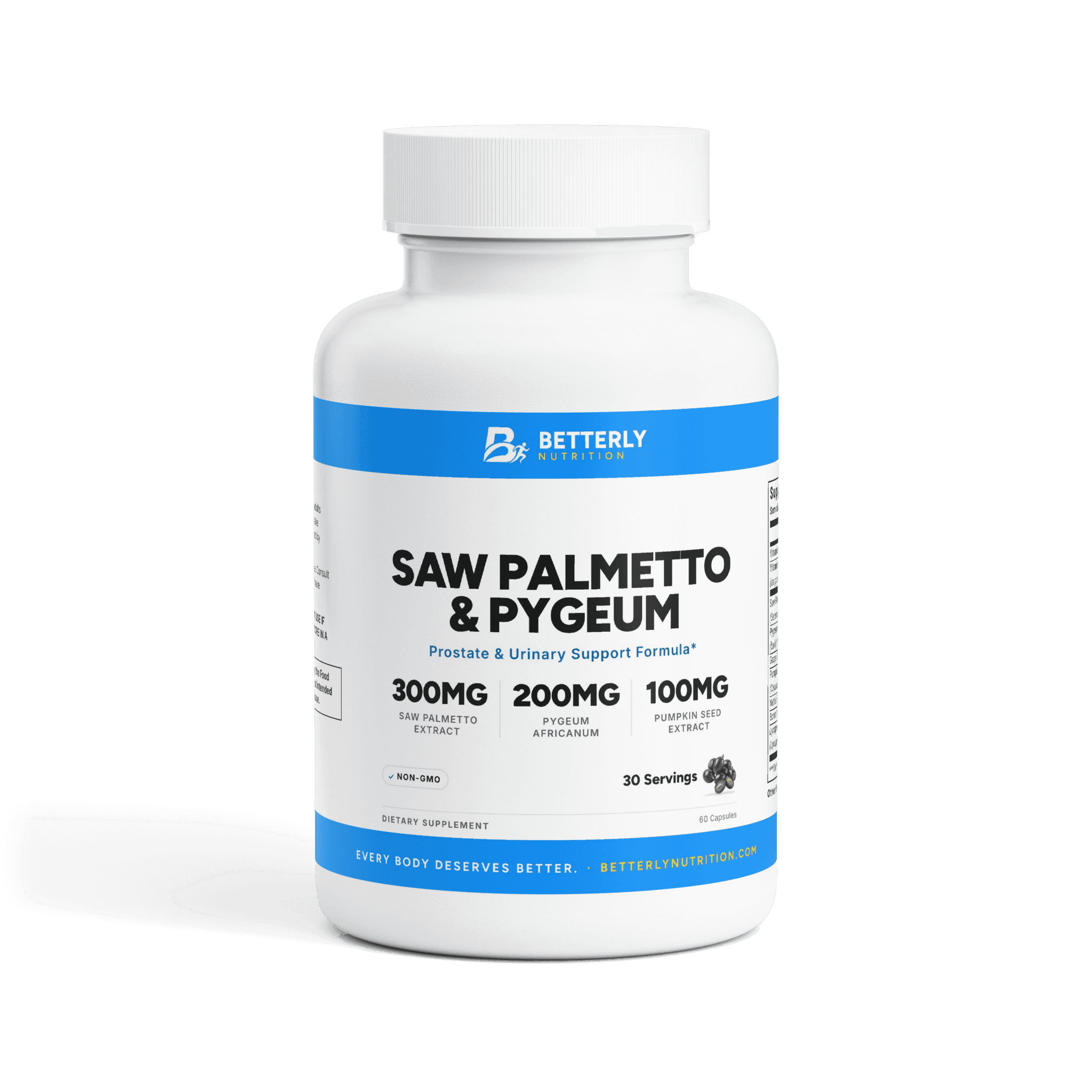
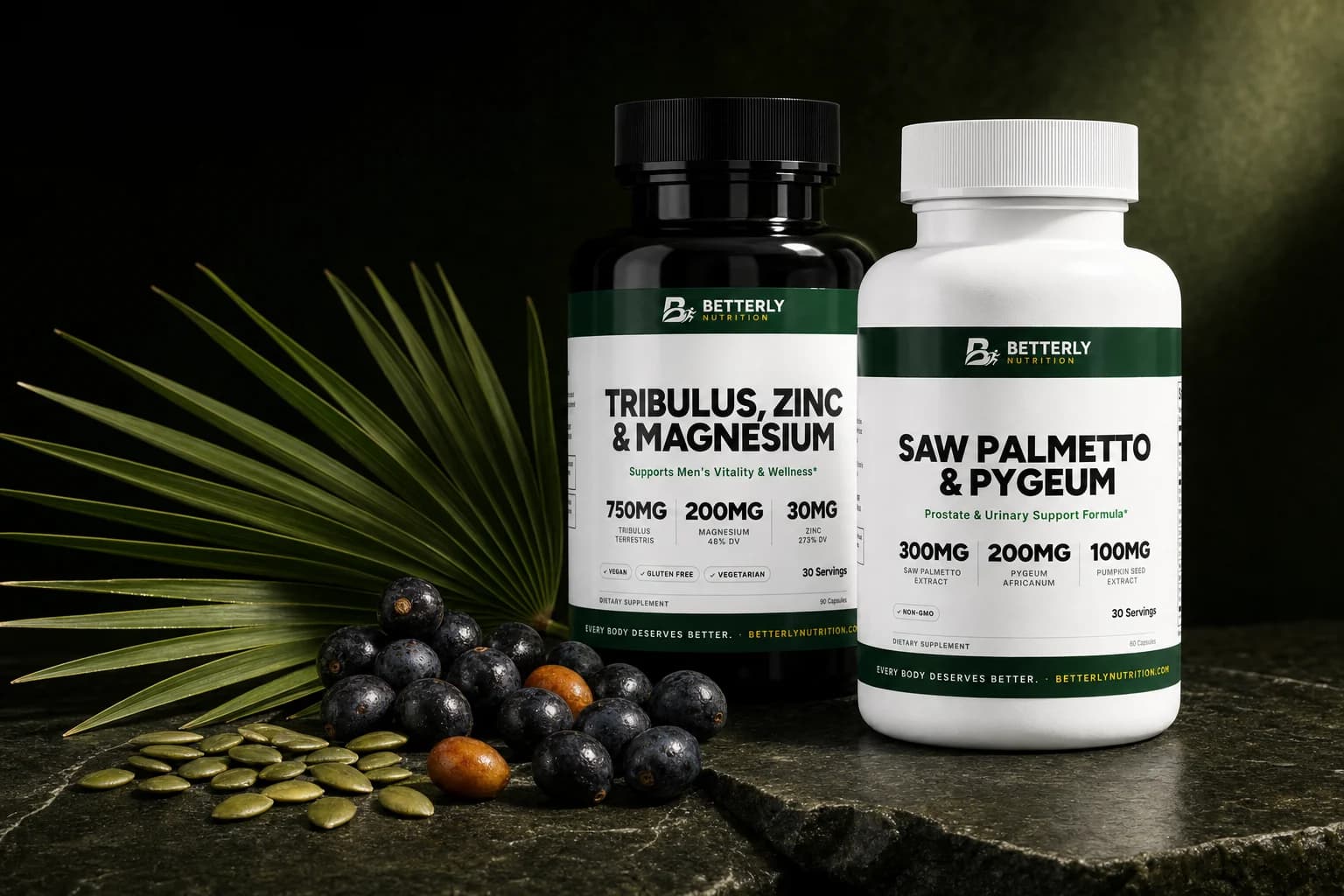
- Saw Palmetto & Pygeum Prostate Capsules: 13.8 mg (812% DV) per 2-capsule serving
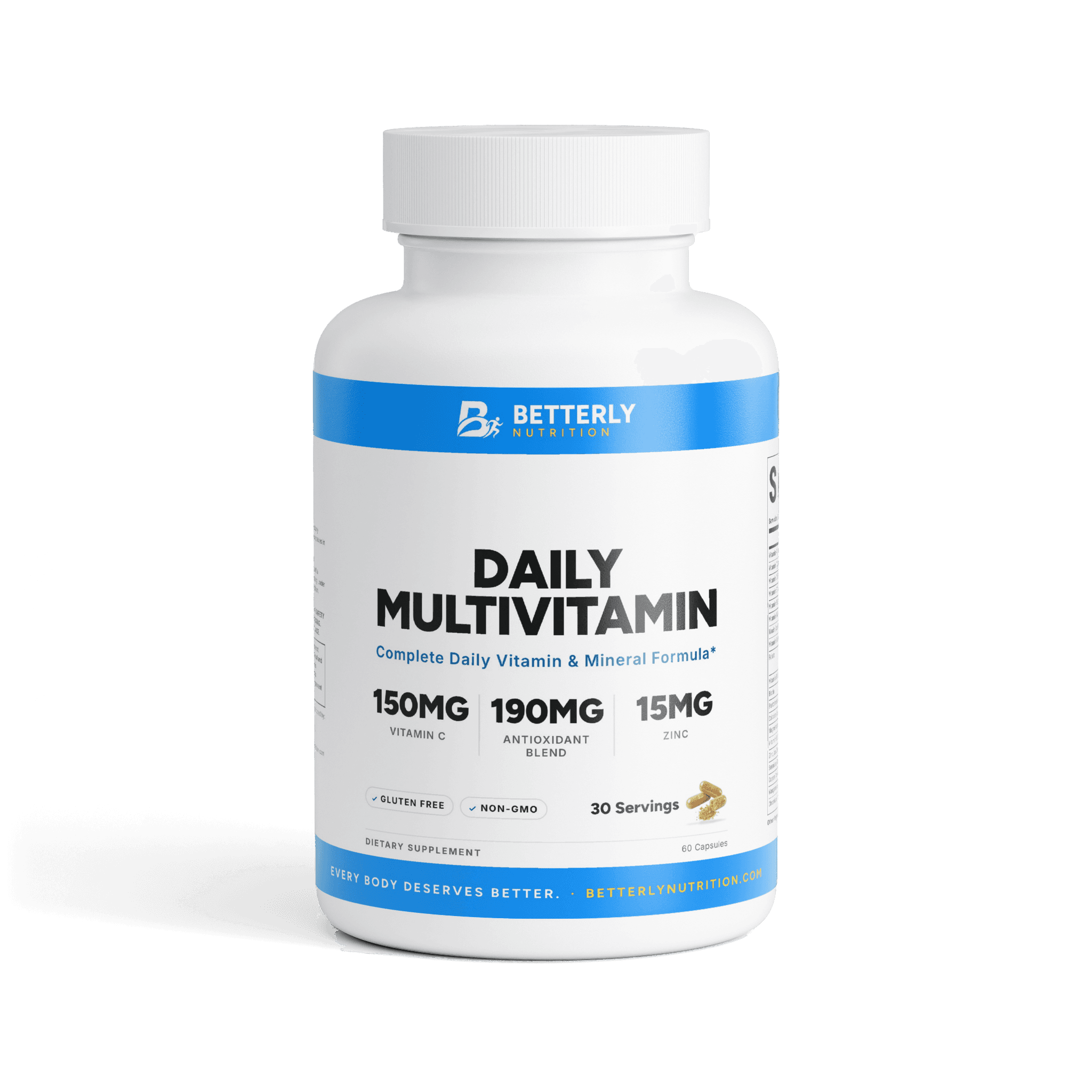
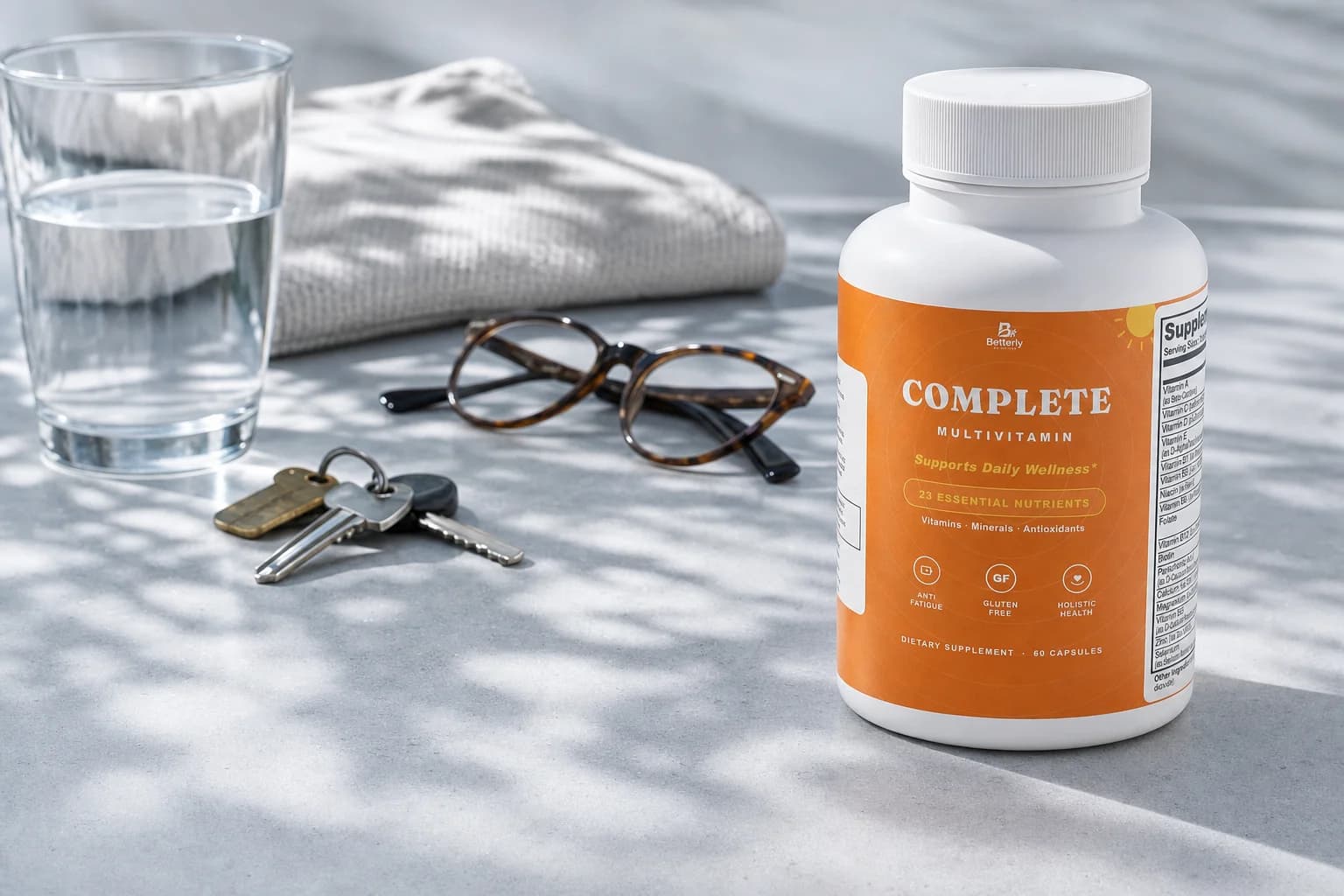
- Daily Multivitamin Capsules: 7.5 mg (441% DV) per 2-capsule serving
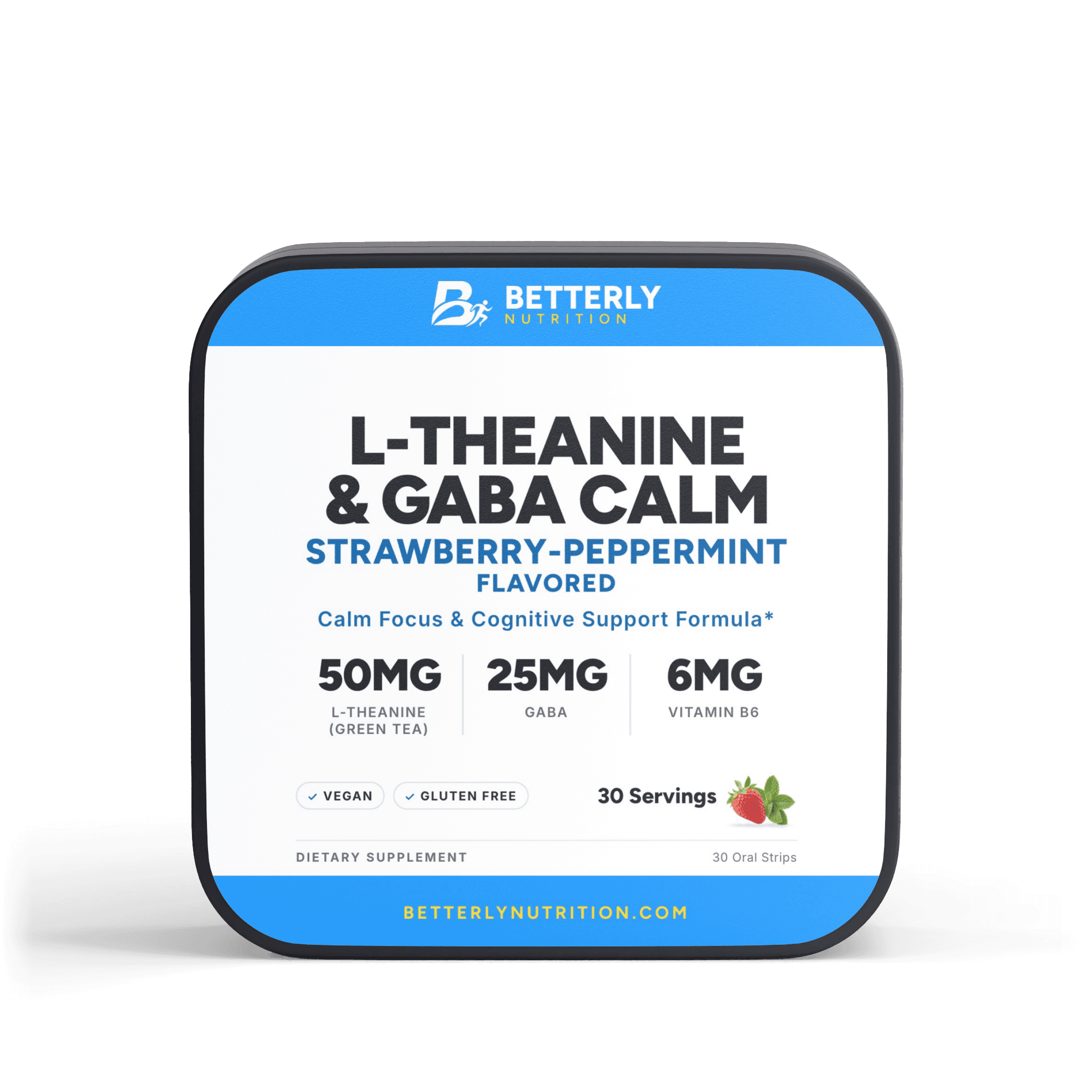
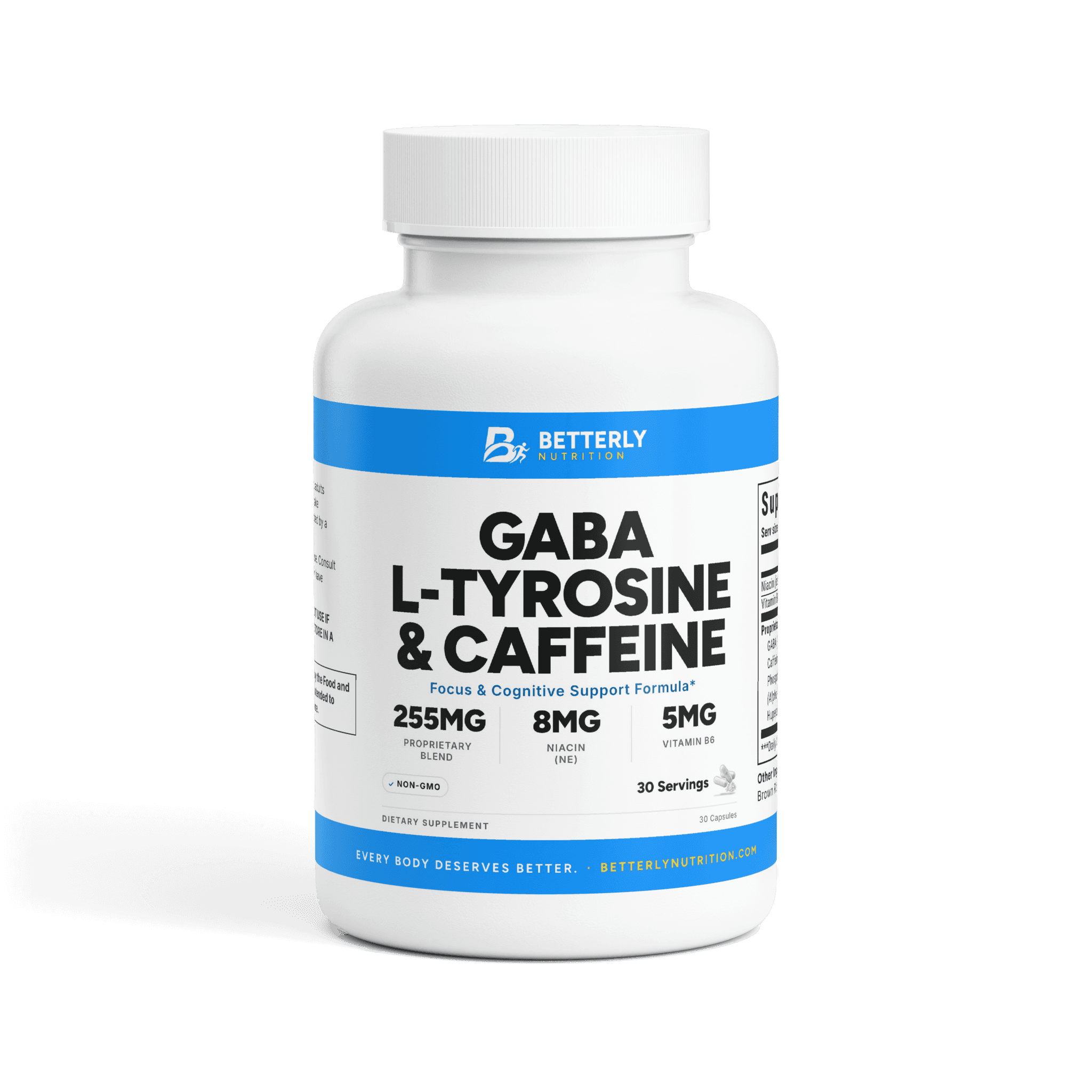
Smaller amounts appear elsewhere. Our Biotin & Horsetail Hair Capsules list 8 mg per 2-capsule serving, each of our L-Theanine & GABA Calm Strips carries 6 mg, and our GABA, L-Tyrosine & Caffeine Capsules list 5 mg per capsule.
Each of those four labels calls for one serving a day. Pair them up, and the panels add to these totals:
| Combination | B6 per day | Combined % DV | Vs Europe's 12 mg |
|---|---|---|---|
| Choline & DHA Focus + Daily Multivitamin | 19.5 mg | 1,147% | About 1.6x |
| Choline & DHA Focus + MCT Oil & L-Carnitine | 37 mg | 2,177% | About 3x |
| MCT Oil & L-Carnitine + Saw Palmetto & Pygeum | 38.8 mg | 2,283% | About 3.2x |
| All four together | 58.3 mg | 3,430% | Almost 5x |
At label directions, no combination passes the 100 mg US limit, even all four together. Every one passes the European figure, though. The Choline & DHA capsule reaches 12 mg alone, so any B6 added to it goes over, and all four together use more than half the US limit before a single meal.
ODS's fact sheet on multivitamin/mineral supplements gives the general version of this warning. When a multivitamin sits alongside fortified foods or other supplements, ODS wants you to confirm the combination keeps each nutrient under its upper limit.
From our shop: Choline & DHA Focus Capsules — 12 mg of vitamin B6 (as pyridoxine HCl) and 50 mg of choline per 2-capsule serving, so count its B6 before you add another formula that lists it.
How should you take a formula that contains vitamin B6?
Take any formula that contains vitamin B6 exactly as its label directs, and count its B6 toward your daily total before adding a second product that lists it.
Each label words its directions a little differently:
- Choline & DHA Focus Capsules: "Take two (2) capsules once a day."
- MCT Oil & L-Carnitine Capsules: 4 capsules daily with meals, as 2 before breakfast and 2 before dinner.
- Saw Palmetto & Pygeum Prostate Capsules: two capsules daily for adults, washed down with 6 to 8 oz of water.
- Daily Multivitamin Capsules: two capsules with a morning meal.
All four share one caution: "Do not exceed recommended dose. Consult a physician if pregnant, nursing, under 18, or have a medical condition."
No label gives B6-specific timing, and the ODS page is silent on time of day too. So the useful habits are bookkeeping ones. Keep a note of each product's B6 per day, and redo it whenever you add or switch something. If two products you're weighing both carry double-digit B6, you can pick the one you want more instead of taking both.
Shopping for a focus formula? Our nootropics primer for beginners explains the main ingredient types, and our focus and nootropics collection puts the options side by side.
When is extra vitamin B6 unnecessary?
Extra vitamin B6 is often unnecessary, since ODS reports that ordinary diets cover B6 needs for most Americans.
ODS names poultry, fish and organ meats as rich sources, with potatoes, other starchy vegetables and non-citrus fruit among the major ones for Americans. MedlinePlus adds tuna, salmon, bananas, chickpeas, nuts and whole grains, plus fortified breads and cereals.
You probably don't need to seek out more B6 if:
- You eat a varied diet that includes some of those foods most days.
- Your multivitamin already lists B6, and you're eyeing a second product mainly for its B6.
- A formula appeals mostly because its B6 percentage looks impressive. A bigger % DV doesn't make a product better.
Our lineup has one honest limit here: none of these four formulas is a B6 supplement. The B6 comes bundled with choline, herbs or other vitamins, so if you want what else is in the bottle, count the B6 that comes with it. Unsure whether a broad formula suits you at all? Our honest look at who benefits from a multivitamin walks through that choice.
From our shop: Daily Multivitamin Capsules — 7.5 mg of vitamin B6 (441% DV) per 2-capsule serving, the lowest B6 of the four formulas in the pairing table above, alongside vitamins A, C, D and E and zinc.
Who should talk to a clinician before adding vitamin B6?
Vitamin B6 deserves a clinician's input first if you're expecting or breastfeeding, younger than 18, taking any prescription, heading into surgery or managing a health condition.
Medicines. ODS says B6 supplements can interact with some medicines, naming the antibiotic cycloserine, certain anticonvulsant drugs and theophylline. Tell your doctor or pharmacist about every supplement you take, including ones where B6 is a minor ingredient.
Pregnancy and nursing. ODS lists higher B6 needs during pregnancy and breastfeeding, and every one of our four labels names pregnancy and nursing in its caution.
Under 18. ODS lists lower upper limits for children and teens, and every one of our labels says to consult a physician before use if you're under 18.
Ongoing care or surgery. If you manage a medical condition or already take B6 on a clinician's advice, share your full supplement list before adding anything, and do the same before any scheduled procedure.
FAQ: vitamin B6 limits
Is the vitamin B6 upper limit different for women and men?
No, the vitamin B6 upper limit is the same for men and women: the NIH Office of Dietary Supplements lists it as 100 mg daily across every source. Europe's 12 mg figure also covers all adults. What differs is need: 1.3 mg for adults 19 to 50, then 1.7 mg for men and 1.5 mg for women after 50.
Can you get too much vitamin B6 from food?
Almost never: ODS says getting too much vitamin B6 from meals and drinks is very rare. The severe nerve damage it describes comes from high-dose supplements taken for a year or longer. Fortified cereals and breads do add some B6, though, so check their Nutrition Facts panels if your supplement total already sits near a limit.
Is 10 mg of vitamin B6 a day too much?
For adults, 10 mg of vitamin B6 a day stays under both the 100 mg US upper limit and Europe's 12 mg figure. It's about 588% of the Daily Value, still several times what most adults need. The catch is stacking: add a second product with just 3 mg of B6 and you pass 12 mg.
Does vitamin B6 in energy drinks count toward the limit?
Yes, vitamin B6 in energy drinks counts toward the limit, because ODS counts B6 from food, beverages and supplements together. If an energy drink, fortified cereal or protein bar lists B6 on its panel, add those milligrams to your supplement total. If it shows only a percentage, multiply by 1.7 and divide by 100.
How long does it take for too much B6 to cause problems?
ODS links the serious nerve effects of vitamin B6 to taking high amounts from supplements for a year or longer. It gives no timeline for smaller amounts. ODS also says symptoms usually stop once people stop the supplements. If anything feels off, talk to a healthcare provider promptly.
Sources
- Vitamin B6: Fact Sheet for Consumers, NIH Office of Dietary Supplements
- Multivitamin/mineral Supplements: Fact Sheet for Consumers, NIH Office of Dietary Supplements
- Vitamin B6, MedlinePlus Medical Encyclopedia
- Daily Value on the Nutrition and Supplement Facts Labels, U.S. Food and Drug Administration
If this left you looking for somewhere to start, read choline and DHA capsules with 12 mg vitamin B6 — its amounts per serving are listed on the page. For the practical questions this raises, how dosing, sourcing and subscriptions work is answered in one place.