On this page
- Key takeaways
- What does standardized extract mean on a supplement label?
- Standardized extract vs powder vs plain extract: what's different?
- What do 10:1, 4:1 and 1:5 extract ratios mean?
- How do you turn a standardized percentage into milligrams?
- Is a standardized extract better than a powder or the whole herb?
- What can you compare between two labels, and what can't you?
- How do you take these extracts, per their labels?
- When can you skip a standardized extract?
- Who should check with a healthcare provider first?
- FAQ: standardized extracts
- Sources
The short answer: "Standardized extract" means a plant extract whose maker chose one marker compound, measures it in every batch and adjusts the batch until that compound makes up a stated share of the extract's weight. On a label, 700 mg of ginseng extract "standardized to 7% ginsenosides" works out to about 49 mg of ginsenosides. The maker picks both the compound and the percentage, and U.S. law doesn't define the word.
Key takeaways
- Multiply a standardized extract's weight by its percentage to get the marker compound in milligrams.
- Ratio rows such as 10:1, 4:1 or 1:5 set plant weight against finished weight, so no marker amount comes out of them.
- Percentages from two labels line up only when the plant, part, form and named marker all match.
- A bigger percentage doesn't prove a bigger effect, and an NIH center says "standardized" doesn't necessarily guarantee quality.
A quick disclosure: all five products whose labels appear below are ours to sell, including the strip with the thinnest panel.
What does standardized extract mean on a supplement label?
A standardized extract is one whose maker tracks a chosen marker compound and tunes each batch so that compound lands at a stated percentage of the extract's weight.
The NIH Office of Dietary Supplements (ODS) breaks standardization into three moves in its consumer sheet on botanical supplements: pick out specific chemicals, measure them, then adjust so every batch carries consistent amounts. The same sheet says U.S. law neither requires standardization nor gives the term a legal definition.
So each brand chooses its own compound and goal. Our panels print the idea four ways:
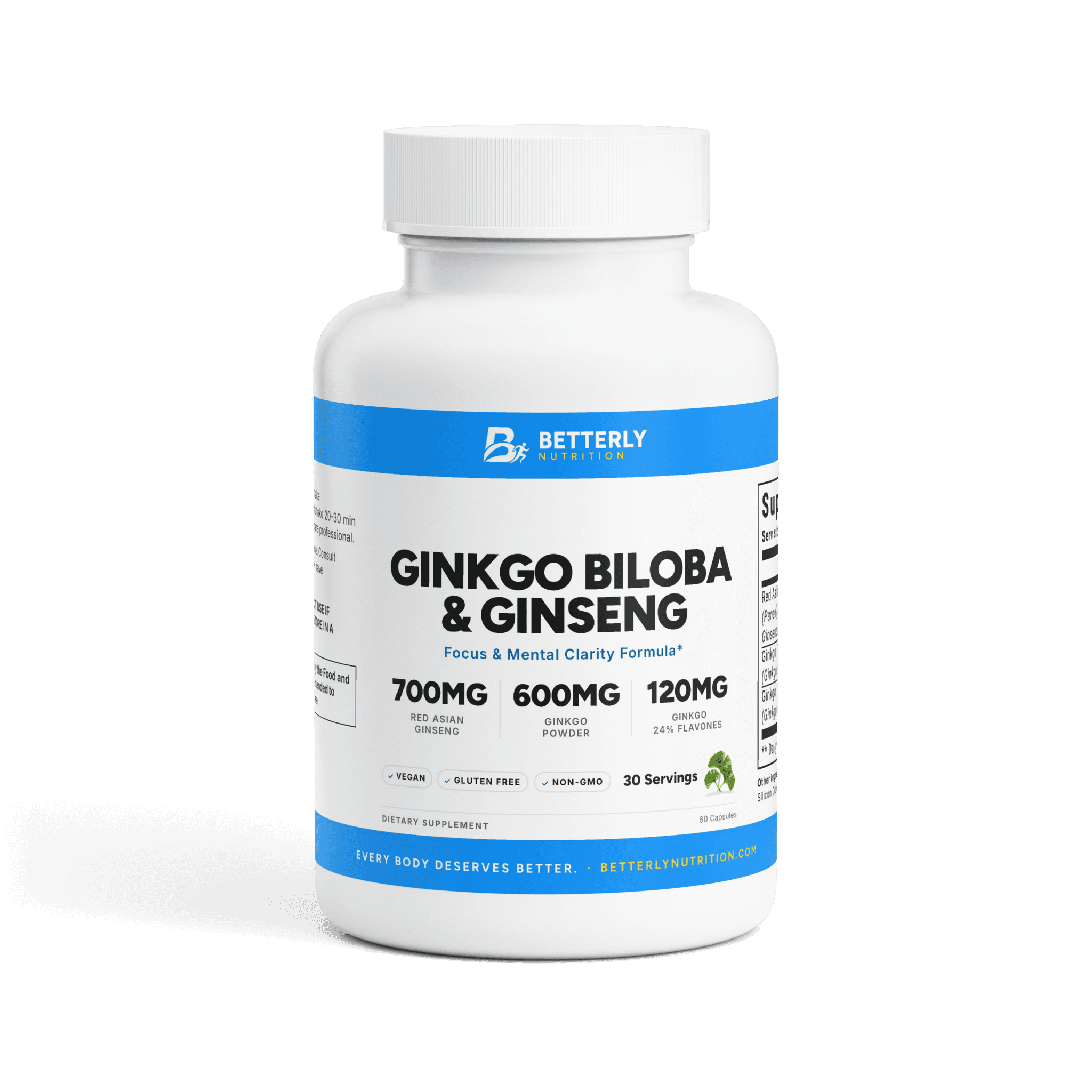
- "Standardized to 7% Ginsenosides" on the ginseng row of the Ginkgo Biloba & Ginseng Capsules
- "(24% Flavones)" on the 120 mg ginkgo row of that same capsule
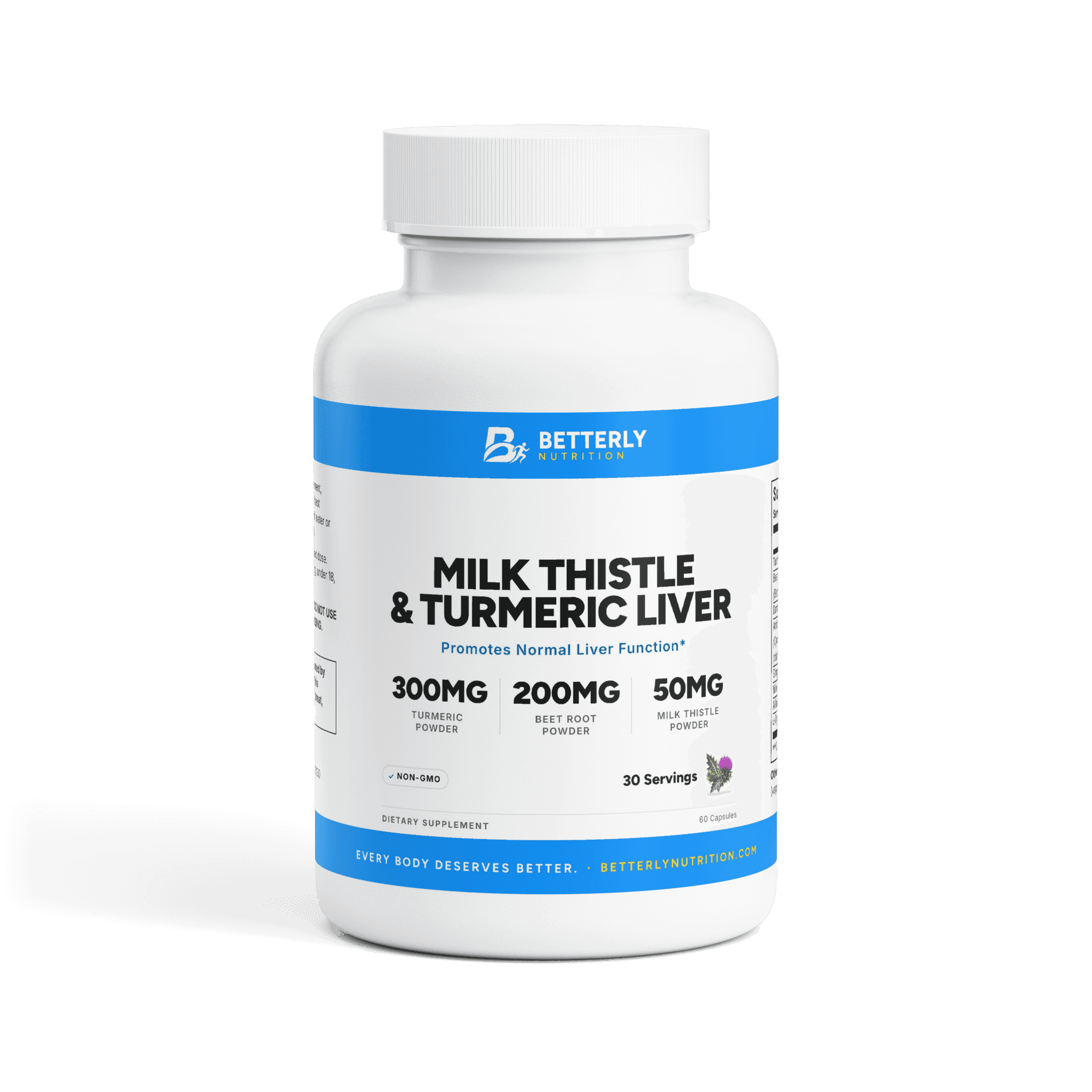
- "std to 5% Cynarin" on the artichoke row of the Milk Thistle & Turmeric Liver Capsules
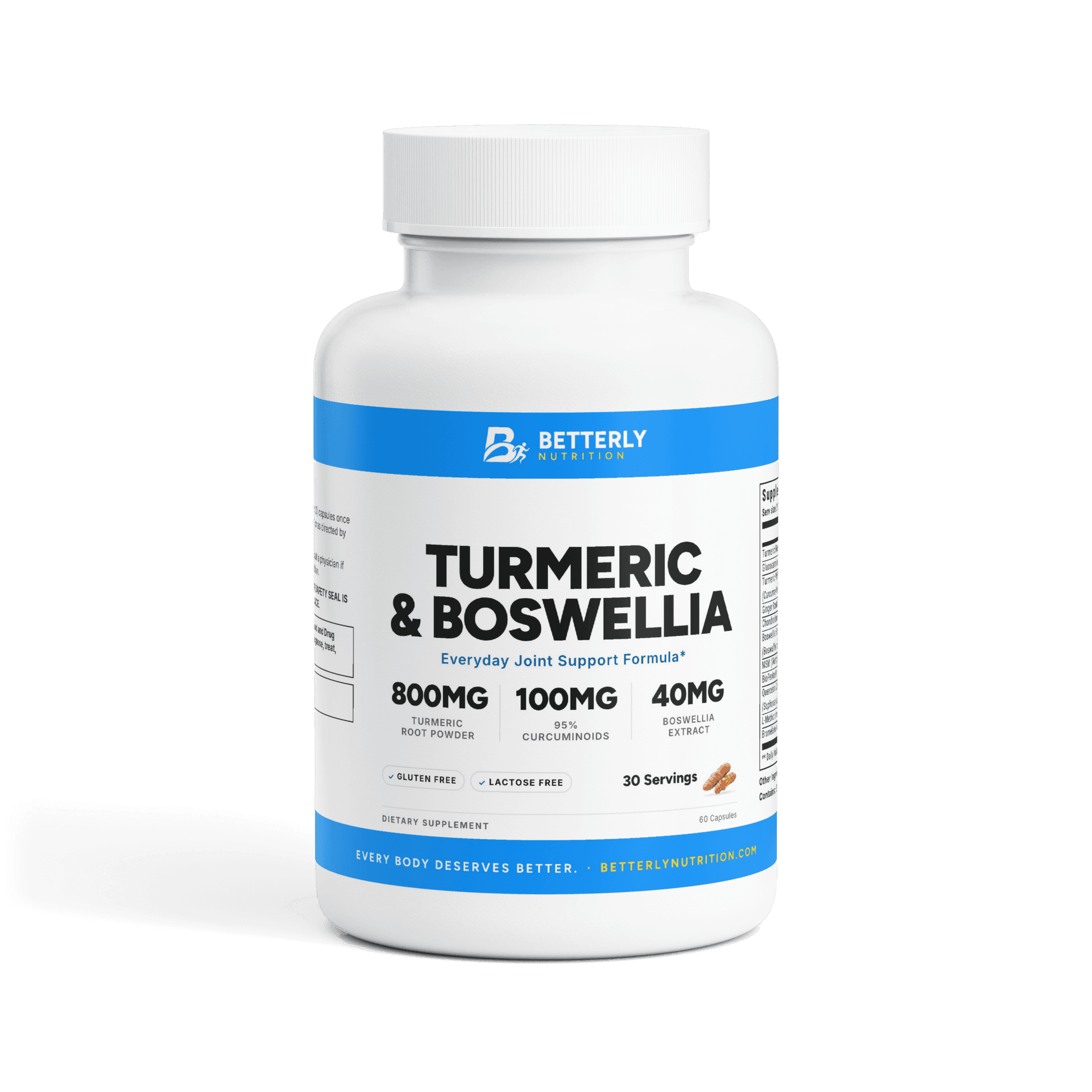
- "95% Curcuminoids" on the 100 mg turmeric row of the Turmeric Curcumin & Boswellia Capsules
Only the first spells out the word, but all four give a compound, a percentage and milligrams.
Standardized extract vs powder vs plain extract: what's different?
Powder is dried, ground plant, plain extract is what a solvent drew out, and standardized extract adds one compound measured and held at a set percentage.
The solvent is the liquid doing the pulling, and ODS names water and alcohol as examples. After the soak, ODS says, the maker can use the liquid as it is or dry it down for capsules and tablets. Once it's inside a capsule, the row's wording is your only clue to which material you bought.
| Row wording | Our example, per serving | What the milligrams weigh | Compound amount? |
|---|---|---|---|
| Powder | Turmeric Root Powder, 800 mg (2 capsules) | Ground root | None printed |
| Extract, nothing else | Curcuma Longa extract, 20 mg (1 strip) | Extract | Can't be found |
| Ratio extract | 1:5 Extract of Cinnamon (bark), 500 mg (2 ml) | Liquid, solvent included | Not from a ratio |
| Standardized extract | Red Asian Ginseng Extract, 7% ginsenosides, 700 mg (2 capsules) | Dried extract | 700 x 7% = 49 mg |
Three of those rows stop at a weight. Only the ginseng row converts to milligrams of a named compound.
What does a bare extract row tell you?
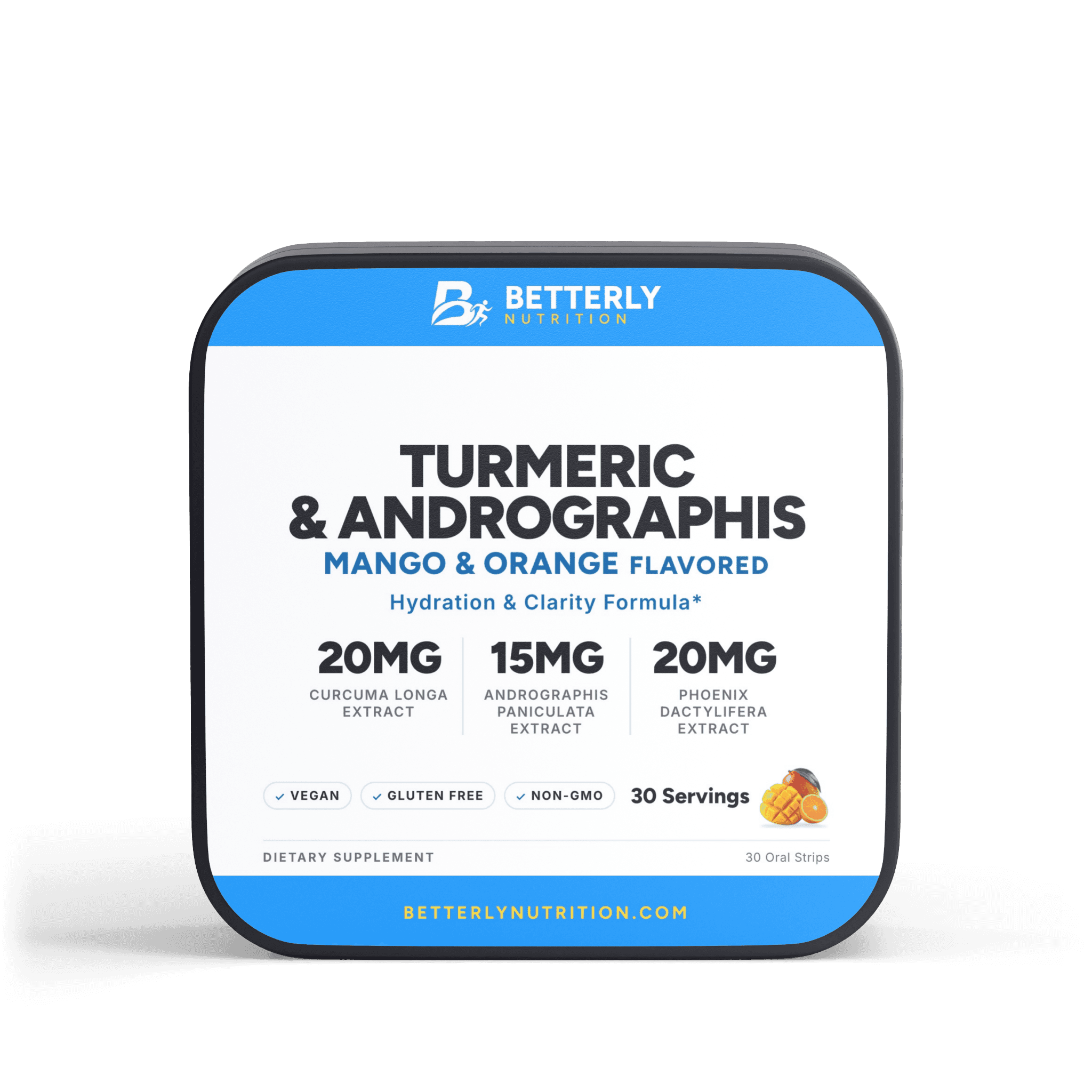
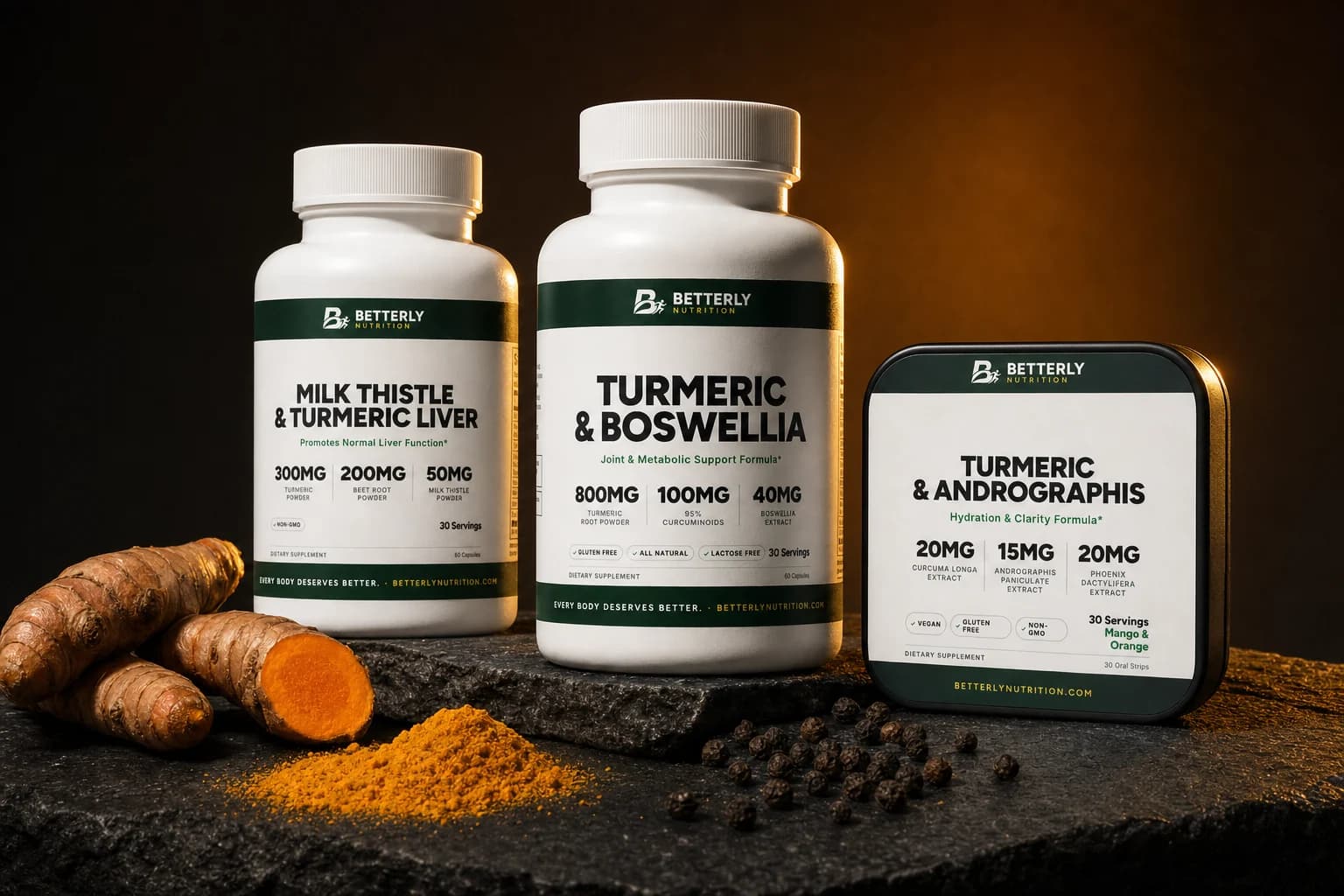
An extract row with no ratio or percentage gives only the plant's name and the extract's weight, and every panel row on our Turmeric & Andrographis Strips reads that way.
Per 1 Oral Strip (165 mg) serving, the strips list Phoenix dactylifera (date palm) and Curcuma longa (turmeric) extracts at 20 mg each. Extracts of andrographis (spelled "paniculate" on the panel), Cichorium intybus, Vitis vinifera, Phyllanthus niruri and Phyllanthus emblica follow at 15 mg each. A licorice extract also sits among the other ingredients, with no weight given.
That's our own label's limit, so here it is plainly: nobody can work out the curcuminoids in that 20 mg of turmeric extract, us included. The strip is a small daily mix of seven panel botanicals, with no measured amount of any one compound.
What do 10:1, 4:1 and 1:5 extract ratios mean?
An extract ratio sets plant weight against finished product: 10:1 means about 10 parts dried plant per part of extract, and 1:5 means 1 part plant per 5 of liquid.
ODS's name for it is a botanical-to-extract ratio, and the dried plant always comes first. A big left-hand number marks a concentrate and a big right-hand number a dilution. So a 100 mg row marked 10:1 began as roughly 1,000 mg of dried plant.
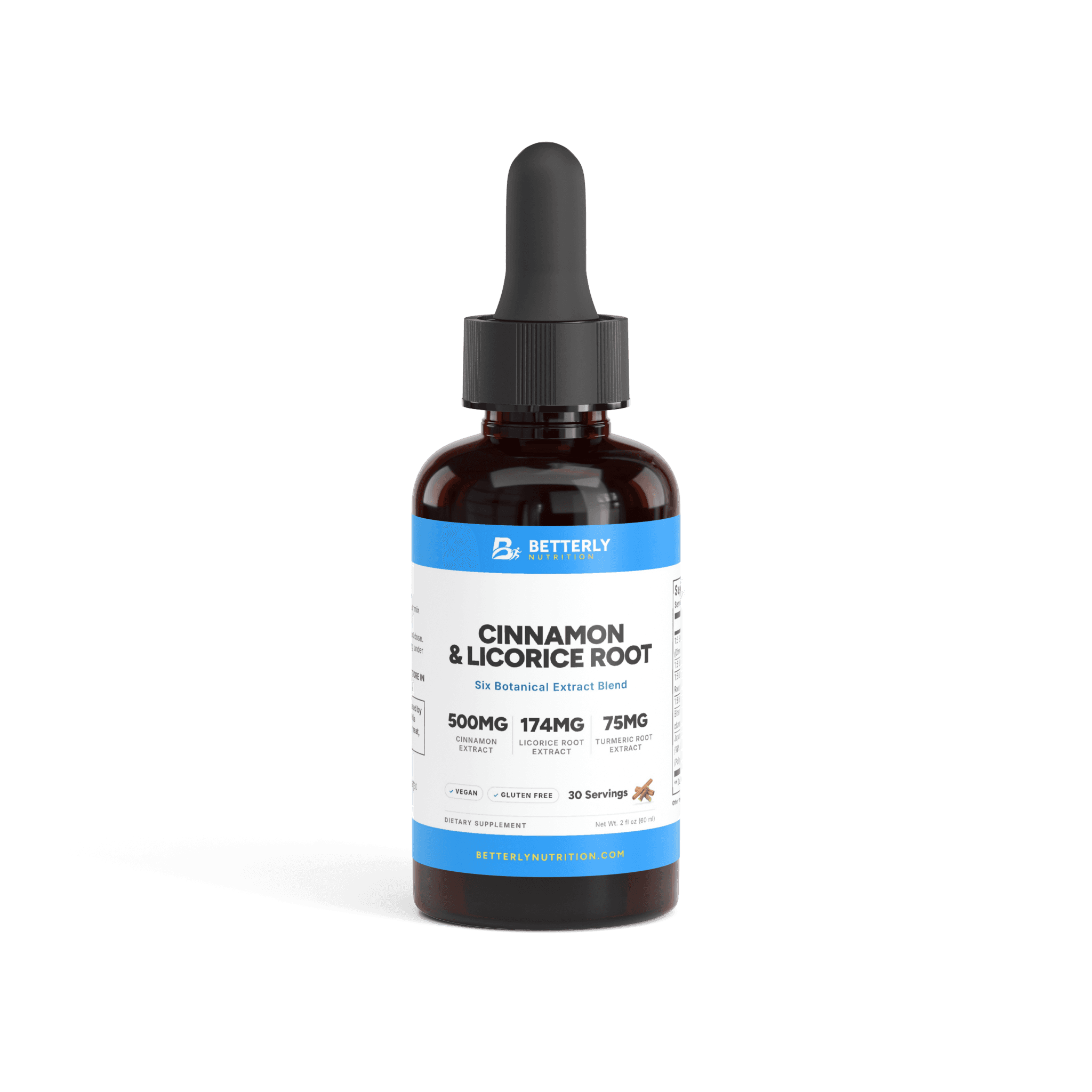
Both directions turn up on one panel of our Cinnamon & Licorice Root Drops. Their Bitter Melon Extract (fruit) row is a 4:1 extract, so a concentrate: 0.8 mg per 2 ml (40 drops) serving, which read the usual way traces back to about 3.2 mg of fruit.
The four 1:5 rows are dilutions. Under the FDA's Dietary Supplement Labeling Guide, a liquid extract's ratio pits starting-plant weight against solvent volume, and the printed milligrams cover the entire liquid rather than the plant in it. The drops' label doesn't call the bark fresh, so we read the ratio as dried bark. Density and how the maker measured the ratio can move the math, so the roughly 100 mg of bark our cinnamon extract vs ground cinnamon guide finds behind the 500 mg cinnamon row is a ballpark only.
A ratio also never shows which compounds made the trip. The knotweed row on those same drops shows what a ratio leaves out: it names resveratrol and gives its share, 98%.
How do you turn a standardized percentage into milligrams?
Multiply the extract's weight by its percentage: 700 mg of ginseng extract at 7% ginsenosides gives 49 mg of ginsenosides per 2-capsule serving.
Every standardized row in this guide, per serving:
- Ginseng extract, Ginkgo Biloba & Ginseng Capsules: 700 mg x 7% = 49 mg of ginsenosides.
- Ginkgo leaf row, same capsule: 120 mg x 24% = 28.8 mg of flavones.
- Turmeric row, Turmeric Curcumin & Boswellia Capsules: 100 mg x 95% = 95 mg of curcuminoids.
- Artichoke extract, Milk Thistle & Turmeric Liver Capsules: 50 mg x 5% = 2.5 mg of cynarin.
- Japanese knotweed extract, Cinnamon & Licorice Root Drops: 0.1 mg x 98% = 0.098 mg of resveratrol.
If a panel prints the compound's milligrams on an indented line under the herb, as the FDA guide allows, use that number. Ours don't, so each result above is our arithmetic and assumes the batch hit its goal.
That assumption matters. The National Center for Complementary and Integrative Health (NCCIH) warns on its turmeric page that oral curcumin products differ in how much curcumin they really hold.
The ginkgo and turmeric capsules also carry unstandardized powder rows (600 mg of ginkgo leaf, 800 mg of turmeric root), so neither panel gives a full marker total.
Two last traps: a bare "2% extract" can't be converted without a named compound, and no marker here has a Daily Value to judge 49 mg against.
From our shop: Ginkgo Biloba & Ginseng Capsules — three botanical rows per 2-capsule serving, two of them standardized: 700 mg of red Asian ginseng extract at 7% ginsenosides and 120 mg of ginkgo at 24% flavones.
Is a standardized extract better than a powder or the whole herb?
A standardized extract isn't proven better than a powder or the whole herb. It's easier to measure, which isn't the same as working better.
ODS explains the gap with two herbs. In senna, the compounds behind the plant's main action are known, so measuring them in each batch tracks what matters. Valerian is different, since many of its constituents may play a part, and ODS says most botanicals sit closer to valerian, with the responsible compounds still unknown. For those herbs, a percentage records the maker's chosen yardstick and nothing more.
NCCIH puts it more bluntly in its advice on using supplements wisely. A manufacturer calling a product "standardized," it says, "does not necessarily guarantee product quality or consistency."
A dried 10:1 or 4:1 extract carries more starting plant per milligram than powder does, while a 1:5 liquid carries less. ODS pictures the spread with one fixed amount of plant: it might fill a cup as tea, shrink to teaspoons as a tincture and take up less room again as an extract.
Still, more plant per milligram isn't proof of more effect. Our KSM-66 vs ashwagandha root powder comparison works through this same choice on a single herb.
What can you compare between two labels, and what can't you?
You can compare botanical rows between two labels only when the plant, part and form match, and percentages only when they name the same marker.
| Two rows side by side | Fair to compare? | Why |
|---|---|---|
| 800 mg turmeric root powder vs 300 mg turmeric powder (root) | Yes, by weight | Same plant, part and form |
| 20 mg turmeric extract (strip) vs 100 mg at 95% curcuminoids | No | Only one names a marker |
| 7% ginsenosides from stem and leaf vs another brand's 7% root extract | Partly | Same marker, different part |
Turmeric shows why. Four of this guide's five products list it: 20 mg of extract in the strip, 800 mg of root powder plus the 95% row in the turmeric capsule, 300 mg of root powder in the liver capsule and 75 mg of 1:5 root extract in the drops. Only the two powder rows share a yardstick, so adding all five rows into one "turmeric total" would mix four materials.
Milk thistle has marker quirks of its own, covered in our milk thistle and silymarin guide. The liver capsule shows the problem: its milk thistle row is a plain 50 mg powder with no silymarin figure, so artichoke is the only row on that panel you can convert.
How do you take these extracts, per their labels?
Each label in this guide sets its own serving, and a percentage on some other bottle is no reason to go past it.
- Turmeric & Andrographis Strips: one strip a day, resting on the tongue as it dissolves.
- Turmeric Curcumin & Boswellia Capsules: a single daily serving of two capsules, timed 20-30 minutes before a meal.
- Ginkgo Biloba & Ginseng Capsules: two capsules twice a day, each time 20-30 minutes before eating. By our math, that's 98 mg of ginsenosides daily.
- Milk Thistle & Turmeric Liver Capsules: adults take two capsules a day, with 6-8 oz (177-237 ml) of water per serving.
The drops' label sets 2 ml (40 drops) as the morning serving. All five labels also say "Do not exceed recommended dose," and no marker percentage changes that. Four of the five list turmeric in some form, so run any pairing past a healthcare provider before starting.
From our shop: Turmeric & Andrographis Strips — seven botanical extracts on its Supplement Facts panel, each listed by weight alone, in one mango and orange flavored oral strip a day with vegan, gluten-free and non-GMO claims on its label.
When can you skip a standardized extract?
You can skip a standardized extract if you enjoy the herb as food or tea, already get it in another product, or only noticed the word on the front.
- You cook with turmeric. A capsule's percentage doesn't make that habit incomplete.
- Something you take already lists the herb. Read both panels before adding a second.
- You're hoping to copy a study. NCCIH's guide cautions that a supplement off the shelf may not match the product researchers used.
- The front says "standardized" and the back never names a compound. With no marker and no percentage, there's nothing to check.
Our nootropics collection gathers the strip, the ginkgo capsule and other focus formulas.
Who should check with a healthcare provider first?
Taking medicine, a planned surgery, a health condition, being under 18, pregnancy and nursing are each a reason to ask a healthcare provider about a botanical extract first.
Four of those reasons appear in each label's own caution line. NCCIH's supplement page supplies the other two: certain supplements can be harmful for people on some medicines, and some may increase bleeding or alter your response to anesthesia.
The turmeric capsule gives two more reasons to ask. Its label carries a shellfish-allergy warning, and its panel adds BioPerine®, a black pepper extract, at 10 mg per 2-capsule serving. Pepper matters here because NCCIH's turmeric page ties piperine to better curcumin absorption and says highly bioavailable curcumin formulations may harm your liver. We'd read that warning as covering this capsule. Our turmeric vs curcumin guide spends longer on the pepper pairing.
FAQ: standardized extracts
Is a standardized extract the same as an extract ratio?
No, a standardized extract and an extract ratio describe different things. A percentage gives one named compound's share of the finished extract, while a ratio records how much plant went into making it. The Cinnamon & Licorice Root Drops print both on one panel: 1:5 on four rows, 4:1 on bitter melon and 98% resveratrol on knotweed.
Is a higher-percentage extract stronger?
No, a percentage is one compound's share of the extract, not a measure of effect. The row's weight turns it into milligrams of that compound per serving (0.098 mg of resveratrol in our drops, 95 mg of curcuminoids in our turmeric capsule), but those are different compounds, and more milligrams isn't proof of more effect.
Does "standardized" mean a supplement's quality was checked?
No, "standardized" on its own isn't a quality seal. ODS says quality control comes down to the manufacturer and the rest of the production chain, and none of that is visible in one word. A label can show you the marker, the percentage, the plant part and the amount per serving, so judge a row by whether it names all four.
Should you combine two supplements with the same herb?
Not before you check with a healthcare provider, since neither label counts what the other adds. Per 2-capsule serving, the Turmeric Curcumin & Boswellia Capsules hold 800 mg of turmeric root powder, and the liver capsules hold 300 mg. Taking both puts 1,100 mg of root powder in your day before you count the 95% curcuminoid row.
How long will one bottle last at the label's serving?
Four of the five products here run 30 days at the pace their labels set, and the Ginkgo Biloba & Ginseng Capsules last 15. The strips, the other two capsules and the drops each hold 30 once-a-day servings. The ginkgo label lists 30 two-capsule servings but calls for two servings a day (two capsules twice a day), so its 60 capsules last 15 days.
Sources
- Botanical Dietary Supplements: Background Information, NIH Office of Dietary Supplements
- Using Dietary Supplements Wisely, National Center for Complementary and Integrative Health
- Turmeric: Usefulness and Safety, National Center for Complementary and Integrative Health
- Dietary Supplement Labeling Guide: Chapter IV. Nutrition Labeling, U.S. Food and Drug Administration
If this left you looking for somewhere to start, read turmeric and andrographis extract oral strips — its amounts per serving are listed on the page. For the practical questions this raises, how dosing, sourcing and subscriptions work is answered in one place.