On this page
- Key takeaways
- Cinnamon extract vs ground cinnamon: what's the actual difference?
- What does "1:5" mean on a cinnamon extract label?
- Is cinnamon extract stronger than ground cinnamon powder?
- Does coumarin differ between ground cinnamon and cinnamon extract?
- Is cinnamon extract good for you?
- Cinnamon drops vs capsules: how do our three labels compare?
- Cinnamon tincture dosage: how much do the labels say to take?
- When is ground cinnamon a better fit than an extract?
- Who should check with a healthcare provider first?
- FAQ: cinnamon extract vs ground cinnamon
- Sources
The short answer: Cinnamon extract vs ground cinnamon is milled bark vs what a liquid drew out of the bark. With the spice, every milligram you measure is bark. A liquid extract's label weighs the finished liquid instead, so "500 mg of 1:5 extract" isn't 500 mg of cinnamon. By our math, the 500 mg in our cassia drops reflects roughly 100 mg of bark.
Key takeaways
- Ground cinnamon is whole dried bark, and USDA FoodData Central lists a teaspoon of it at 2.6 g.
- A 1:5 liquid extract pairs 1 part bark by weight with 5 parts liquid, so most of its milligram figure is liquid.
- A quarter teaspoon of ground cinnamon holds about 650 mg of bark, more than the bark behind a serving of any of the three Betterly products compared here.
- None of our cinnamon panels lists coumarin, the cassia compound NCCIH flags, and its amount can shift from one form to another.
We sell the three products compared below, and we earn money when you buy one. Two of them sit in our adaptogens collection. Every product number comes straight from a real Supplement Facts panel, and we flag our own math.
Cinnamon extract vs ground cinnamon: what's the actual difference?
Ground cinnamon is Cinnamomum bark dried and milled whole, while a cinnamon extract keeps only the part of that bark a liquid dissolved.
The NIH Office of Dietary Supplements (ODS) describes the process in its botanical supplements background fact sheet. A plant sits in a liquid, water or alcohol for example, which pulls out its constituents. That liquid is sold as is or dried into a powder for capsules.
The cinnamon extract in the baking aisle is something else: a food flavoring with no Supplement Facts panel.
| What to check | Ground cinnamon | Cinnamon capsule | Liquid cinnamon extract |
|---|---|---|---|
| What's inside | Whole milled bark | Bark powder or dried extract | Bark compounds in liquid |
| How the amount shows | By the spoon | mg per capsule, unless blended | mg of finished liquid, plus a ratio |
| Taste | Full spice flavor | None if swallowed whole | You'll taste it |
| Species named? | Not always | Not always | Not always |
In this table only the liquid column shows a ratio, though some dried-extract capsules print one too, and it's an easy number to misread. NCCIH adds that a cinnamon product may not clearly say which species or plant part it uses.
What does "1:5" mean on a cinnamon extract label?
On a liquid cinnamon extract, "1:5" pairs 1 part bark by weight with 5 parts liquid, though federal sources define that liquid a little differently.
The FDA's Dietary Supplement Labeling Guide, Chapter IV lists a liquid extract by "the volume or weight of the total extract," and its sample ratio sets the starting plant's weight against the volume of solvent. ODS measures tincture strength against the finished product instead: dried plant weight to its volume or weight. Solvent going in and liquid coming out aren't the same amount.
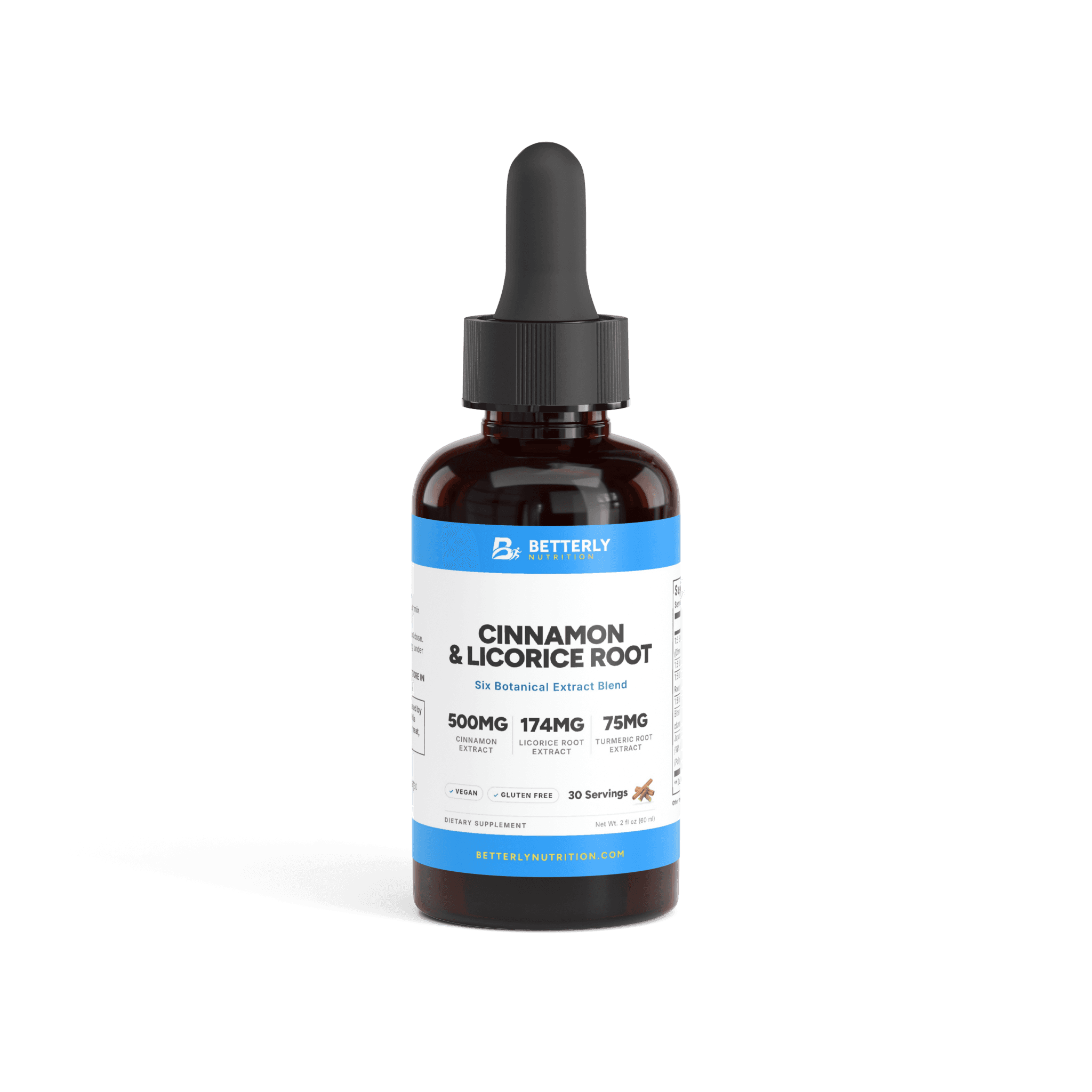
Take our Cinnamon & Licorice Root Drops as the worked example. The panel's first row reads "1:5 Extract of Cinnamon (Cinnamomum cassia) (bark)," 500 mg in each 2 ml (40 drops). Those 500 mg are finished liquid, not bark.
The arithmetic, using the ODS finished-product reading:
- A 1:5 ratio pairs 1 g of bark with 5 ml of finished liquid.
- Spread that gram across the 5 ml, and each milliliter stands for about 200 mg of bark.
- If the liquid weighs close to what water does, 500 mg of it is about half a milliliter.
- Half a milliliter at 200 mg per ml comes to roughly 100 mg of bark.
Liquid density and how the maker measured the ratio could move this either way, so take 100 mg as a ballpark, not a number on the bottle. The FDA guide also says a label must note when the starting plant was fresh. Ours doesn't, so we read the ratio as describing dried bark.
Dried-extract powders can carry ratios too, written the other way round, such as 10:1. Our guide to standardized extracts explains that side of label reading.
Is cinnamon extract stronger than ground cinnamon powder?
A 1:5 liquid cinnamon extract isn't stronger than ground cinnamon, since each gram reflects about 200 mg of bark, though a dried 10:1 extract powder runs the other way.
That liquid has been thinned, not concentrated, so it can't hold more of any compound than the bark behind it.
USDA's FoodData Central entry for ground cinnamon puts a teaspoon at 2.6 g. A quarter teaspoon is about 650 mg of bark, several times the roughly 100 mg behind a serving of our drops.
Does coumarin differ between ground cinnamon and cinnamon extract?
Coumarin can differ between ground cinnamon and a cinnamon extract, because each form carries its own share of the bark's compounds, and none of our three labels lists coumarin.
The NCCIH cinnamon fact sheet singles out coumarin as the cassia compound to watch. How much each species carries is a question our guide to Ceylon and cassia cinnamon takes up.
ODS makes the general point that teas, tinctures and extracts differ in strength and hold different amounts of a plant's constituents. For cinnamon:
- Ground cinnamon and bark-powder capsules: both are whole bark, so their coumarin tracks the bark's species, batch and plant part.
- Liquid extracts: only what dissolved ends up in the bottle, so the coumarin share could sit above or below the bark's.
- Dried extracts: these concentrate whatever the liquid pulled out, and a ratio can't tell you whether coumarin was part of it.
On our shelf, the drops hold cassia as a 1:5 liquid. Our Chromium, Gymnema & Cinnamon Capsules print "Cinnamon (Cinnamomum cassia)(bark)" with no "extract" after it, while bitter melon and banaba are named as extracts, so we read that cassia as plain bark. Our Ashwagandha & Holy Basil Ayurvedic Capsules use Cinnamomum wilsonii, a third species, as bark powder.
Is cinnamon extract good for you?
Cinnamon extract hasn't been shown to beat the spice. In NCCIH's reading of the research, cinnamon isn't clearly supported for any health condition.
Be wary of long benefit lists. NCCIH notes that many cinnamon studies leave the species or plant part unclear, and the lists rarely mention form. A finding with a dried extract powder says little about a glycerin liquid.
An extract's honest offer is practical: a set serving and, when the label prints them, a named species and plant part. It can't promise a result, and neither can our drops.
The same goes for "cinnamon tincture benefits." ODS uses "tincture" for alcohol-and-water liquids, and our drops list water, glycerin and potassium sorbate, so strictly they're a liquid extract.
Cinnamon drops vs capsules: how do our three labels compare?
Only our Cinnamon & Licorice Root Drops print a cassia amount; the Ashwagandha & Holy Basil capsule lists bark powder, and the chromium capsule blends cassia in.
| Per serving | Cinnamon on the panel | Species and form | Bark it reflects |
|---|---|---|---|
| Ground cinnamon, 1 tsp | 2.6 g, per USDA | Milled bark, species may go unnamed | About 2,600 mg |
| Cinnamon & Licorice Root Drops, 2 ml (40 drops) | 500 mg of 1:5 extract | C. cassia bark, liquid | Roughly 100 mg (our math) |
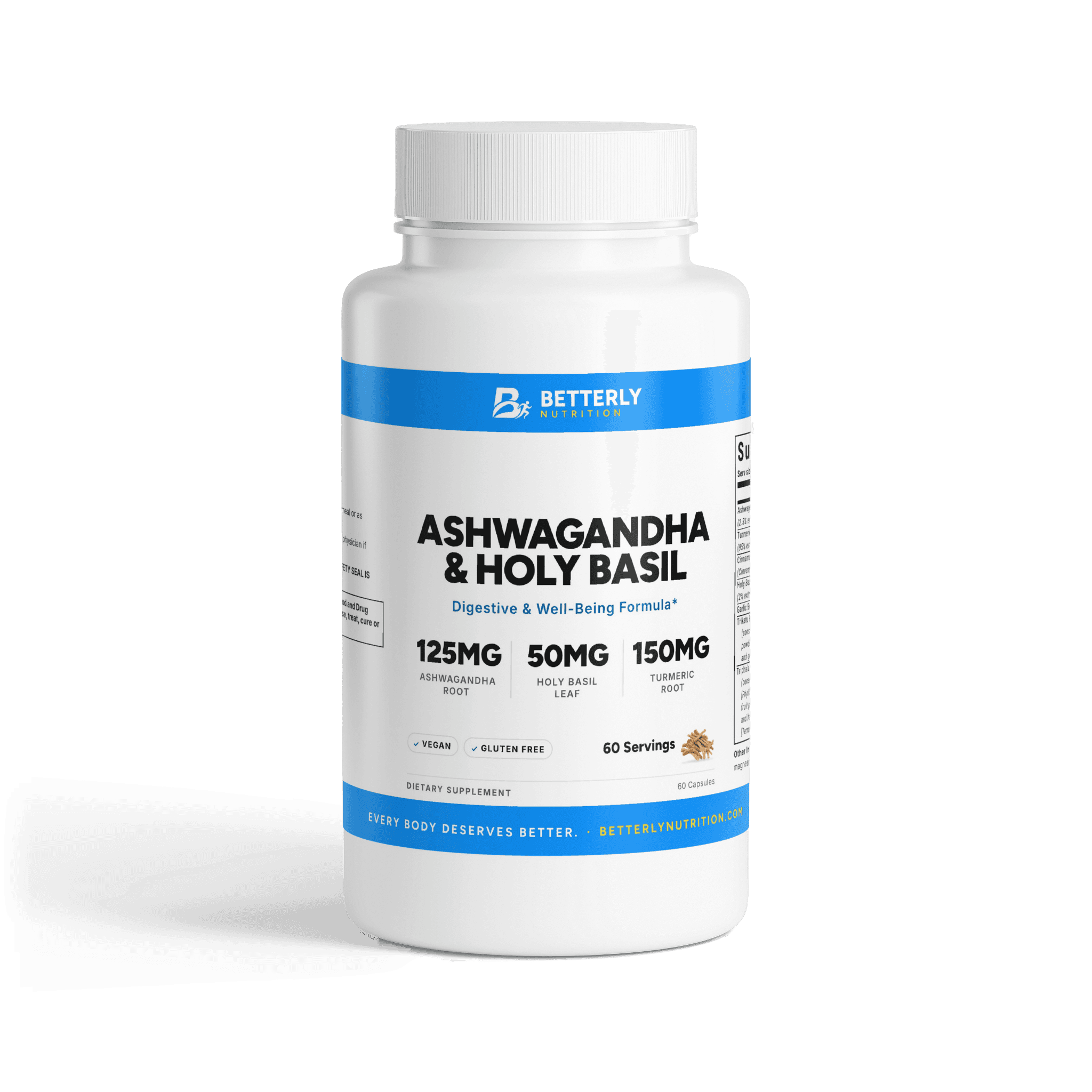
| Ashwagandha & Holy Basil Ayurvedic Capsules, 1 capsule | 75 mg bark powder | C. wilsonii bark, powder | 75 mg |
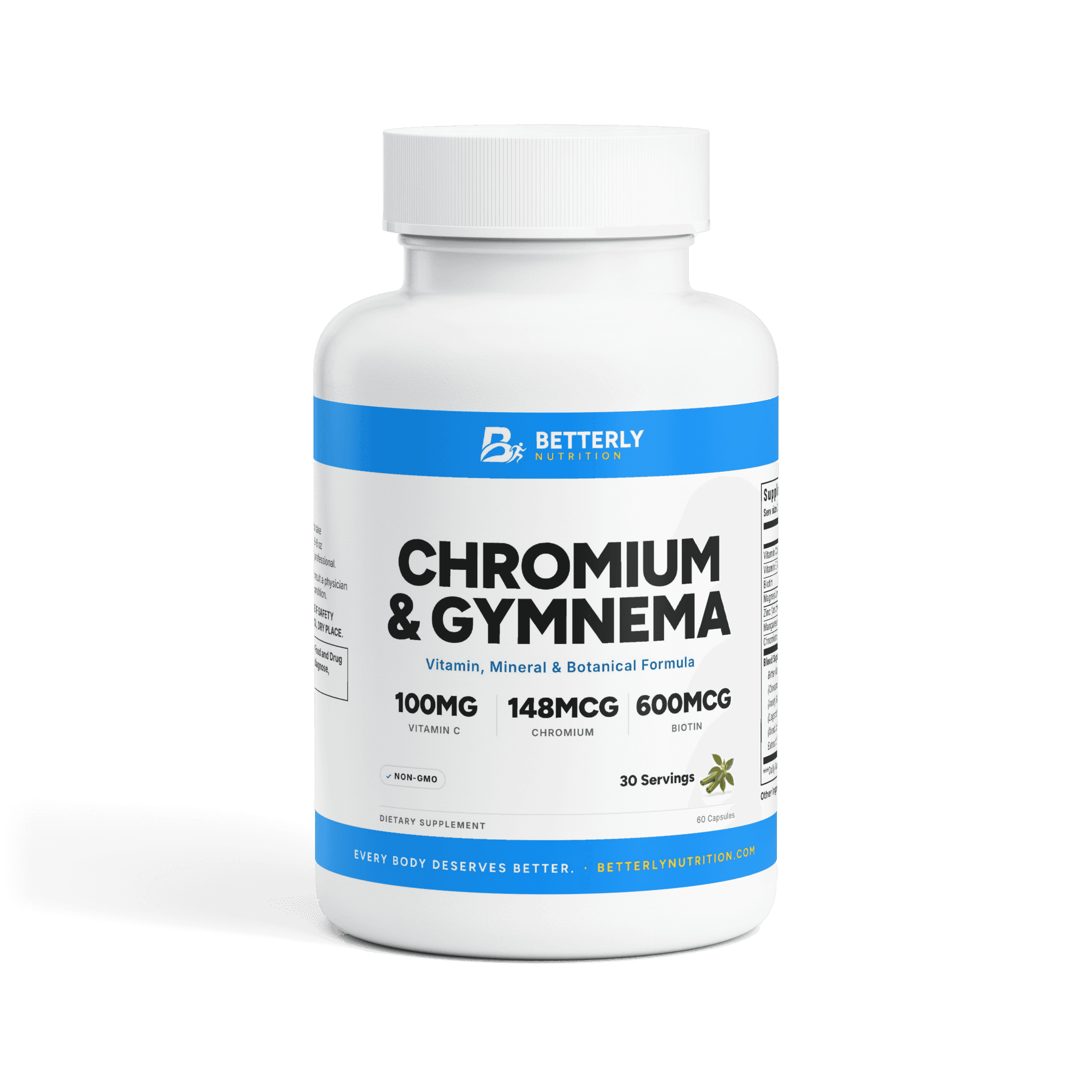
| Chromium, Gymnema & Cinnamon Capsules, 2 capsules | Not stated, inside a 620 mg blend | C. cassia bark | 310 mg at most |
Measured as bark, even the most generous reading of any of our three servings is smaller than a teaspoon from the jar.
The drops list licorice root (174 mg), turmeric root (75 mg) and coriander seed (50 mg) next to the cassia, all as 1:5 extracts per 2 ml serving, plus trace rows of bitter melon extract (0.8 mg) and Japanese knotweed extract (0.1 mg). The label calls the drops vegan and gluten-free.
The Ashwagandha & Holy Basil capsules use cinnamon as a supporting player: 75 mg of bark powder among 17 ingredient rows. As plain powder, it's the closest of the three to the spice jar.
The chromium capsules put cassia bark second of 11 blend ingredients, behind bitter melon extract. FDA's guide says a blend's ingredients go in descending order of weight, so the bitter melon outweighs or ties the cassia. That caps cassia at 310 mg, and it may be far less. Our explainer on proprietary blends covers this kind of label.
From our shop: Cinnamon & Licorice Root Drops — Cinnamomum cassia bark as a 1:5 liquid extract, 500 mg in every 2 ml (40 drops) serving, and the only one of our three labels here to give cassia its own row.
Cinnamon tincture dosage: how much do the labels say to take?
NCCIH's cinnamon page gives no daily supplement amount, so each label sets your limit: our drops say 2 ml (40 drops) once daily, in the morning.
- Cinnamon & Licorice Root Drops. Adults take 2 ml (40 drops) once each morning after a good shake, taken straight or stirred into a drink. At that pace, a 60 ml bottle covers 30 days. See our drops-per-milliliter guide for measuring.
- Ashwagandha & Holy Basil Ayurvedic Capsules. One capsule a day, preferably with a meal, per the label. The bottle holds 60 servings.
- Chromium, Gymnema & Cinnamon Capsules. 2 capsules daily for adults, with a glass of water (the label says 6 to 8 oz). The bottle holds 30 servings.
Choose one, not all three. Combined, they'd double up turmeric and bitter melon, draw licorice from all three labels and add cassia from a blend that never states its share. And the teaspoon comparison isn't a target to reach with extra servings.
From our shop: Ashwagandha & Holy Basil Ayurvedic Capsules — 75 mg of Cinnamomum wilsonii bark powder in each 1-capsule serving, with no liquid to measure or taste.
When is ground cinnamon a better fit than an extract?
Ground cinnamon suits you better than a cinnamon extract if you'd rather measure by the spoon, dislike a liquid's taste, or already take a blend that lists cassia.
| Your situation | Reach for | Reason |
|---|---|---|
| You'd rather level a teaspoon than count 40 drops | Ground cinnamon | The drops need a 2 ml measure every morning |
| You don't want to taste a liquid | Cinnamon in food, or a capsule | The drops go in your mouth or a drink |
| You want a cassia amount printed on a capsule | Neither of our capsules | One blends its cassia; the other uses C. wilsonii |
| Something you take already blends in cassia | What you already take | A blend hides its cassia amount |
No row in the middle column points to an extract. A cinnamon extract earns its place only when you want a set daily serving from a panel that names the species and plant part.
Who should check with a healthcare provider first?
Take the whole panel, not just the cinnamon row, to a healthcare provider before starting any of our three cinnamon products, because each pairs cinnamon with other botanicals or nutrients.
All three of our label cautions name the same groups: anyone pregnant, nursing, under 18 or with a medical condition.
NCCIH adds medicine to that list. If you take any type of medicine, its cinnamon page asks you to check with a health care provider before starting cinnamon or another herbal product, because some herbs can interact harmfully with medicines. It also flags long-term cassia use for people who could be sensitive to it, with a liver condition as its example. On pregnancy, it says some studies suggest cinnamon is safe in the amounts found in food, and it calls larger amounts of Ceylon cinnamon unsafe. Little is known about larger amounts while breastfeeding.
Here's what each label adds beyond cinnamon, per serving:
- Cinnamon & Licorice Root Drops (2 ml): 174 mg of 1:5 licorice root extract, not labeled as deglycyrrhizinated (DGL, the form with glycyrrhizin removed), plus 75 mg of 1:5 turmeric root extract.
- Ashwagandha & Holy Basil Ayurvedic Capsules (1 capsule): 16 other ingredients share the capsule, among them ashwagandha root (125 mg), turmeric root (150 mg) and licorice root powder (25 mg).
- Chromium, Gymnema & Cinnamon Capsules (2 capsules): 10 other blend ingredients, DGL and bitter melon among them, plus seven vitamins and minerals, including chromium at 148 mcg (420% DV) and biotin at 600 mcg (2000% DV).
Turmeric shows up on two of these panels, so read our rundown of who shouldn't take turmeric before you choose.
FAQ: cinnamon extract vs ground cinnamon
Is cinnamon oil the same as cinnamon extract?
No, cinnamon oil isn't the same as a supplement cinnamon extract. An oil is its own concentrated product, while a 1:5 liquid extract is bark steeped in liquid at a stated ratio. ODS offers a parallel: peppermint tea is generally considered safe to drink, but peppermint oil is far more concentrated and can cause harm if misused. NCCIH also notes reports of skin irritation from some cinnamon oils.
Are cinnamon sticks better than ground cinnamon?
Cinnamon sticks and ground cinnamon are the same bark in different shapes, so neither is better. Sticks suit simmering in a drink and lifting out, while ground cinnamon blends into batter or oatmeal. Either shape can be Ceylon or cassia, so check the label.
Can you use cinnamon drops instead of ground cinnamon in baking?
No, Cinnamon & Licorice Root Drops aren't a baking swap for ground cinnamon. They're a dietary supplement with a set daily serving of 2 ml, and each serving also carries licorice root, turmeric root and coriander seed extracts, plus small amounts of bitter melon and Japanese knotweed extracts. The label's directions cover taking them by mouth or in a beverage, not cooking. For recipes, use the spice or a flavoring extract made for baking.
Is it safe to take cinnamon drops and eat cinnamon on the same day?
Cinnamon in food amounts is likely safe, according to NCCIH, but count your kitchen cinnamon if you use a lot alongside cassia drops. Bigger amounts or long stretches of use are sometimes tied to stomach complaints or allergic reactions, NCCIH adds, and steady cassia use is its concern for sensitive people.
Should you take cinnamon drops in the morning or at night?
Take Cinnamon & Licorice Root Drops in the morning, since the label's directions name that time: 2 ml (40 drops) once daily, after shaking, either on their own or in a drink. Nothing on the label ties them to a meal. The label doesn't say what to do after a missed morning, so don't double up; its caution says not to exceed the recommended dose.
Sources
- Cinnamon: Usefulness and Safety, National Center for Complementary and Integrative Health
- Botanical Dietary Supplements: Background Information (Fact Sheet for Consumers), NIH Office of Dietary Supplements
- Dietary Supplement Labeling Guide: Chapter IV. Nutrition Labeling, U.S. Food and Drug Administration
- Spices, cinnamon, ground, USDA FoodData Central
If this left you looking for somewhere to start, read liquid cinnamon extract drops — its amounts per serving are listed on the page. For the practical questions this raises, how dosing, sourcing and subscriptions work is answered in one place.