On this page
- Key takeaways
- Is DGL the same thing as licorice root?
- What is glycyrrhizin, and why does it decide everything?
- What are the side effects of licorice root compared with DGL?
- Does licorice root have proven benefits?
- How do you tell DGL from regular licorice on a label?
- Is a licorice root tincture the same as licorice drops?
- How do you take the drops and the chromium capsules, per the labels?
- When don't you need licorice or DGL at all?
- Who should check with a healthcare provider first?
- FAQ: DGL vs licorice root
- Sources
The short answer: DGL vs licorice root isn't a choice between two plants. DGL, short for deglycyrrhizinated licorice, is licorice with its glycyrrhizin removed, and regular licorice root still contains it. The National Center for Complementary and Integrative Health (NCCIH) links glycyrrhizin to serious adverse effects, chiefly when intake is large or goes on a long time, and says DGL might be safe for up to 4 months. If a label doesn't print "deglycyrrhizinated" or "DGL," assume you're holding the regular kind.
Key takeaways
- DGL and regular licorice root come from the same Glycyrrhiza plants, but DGL has had its glycyrrhizin taken out.
- NCCIH says glycyrrhizin can cause serious heart-related adverse effects, above all in large amounts or with long-term use.
- NCCIH also finds the high-quality evidence too thin to clearly support licorice for any health condition.
- A Latin name such as Glycyrrhiza glabra names the species, not the processing. Only "deglycyrrhizinated" or "DGL" tells you the glycyrrhizin is gone.
- Of the eight Betterly labels that list licorice, just one names DGL.
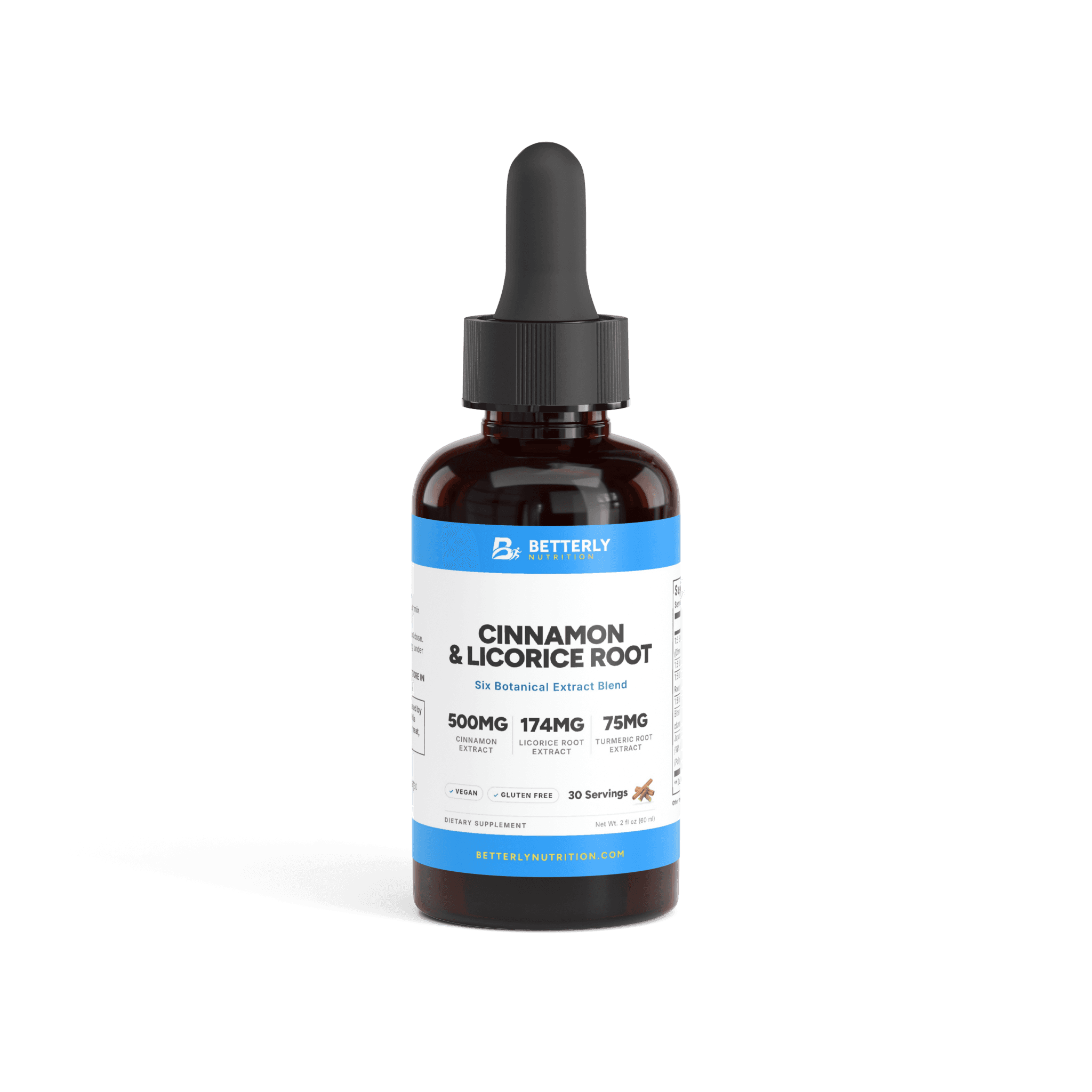
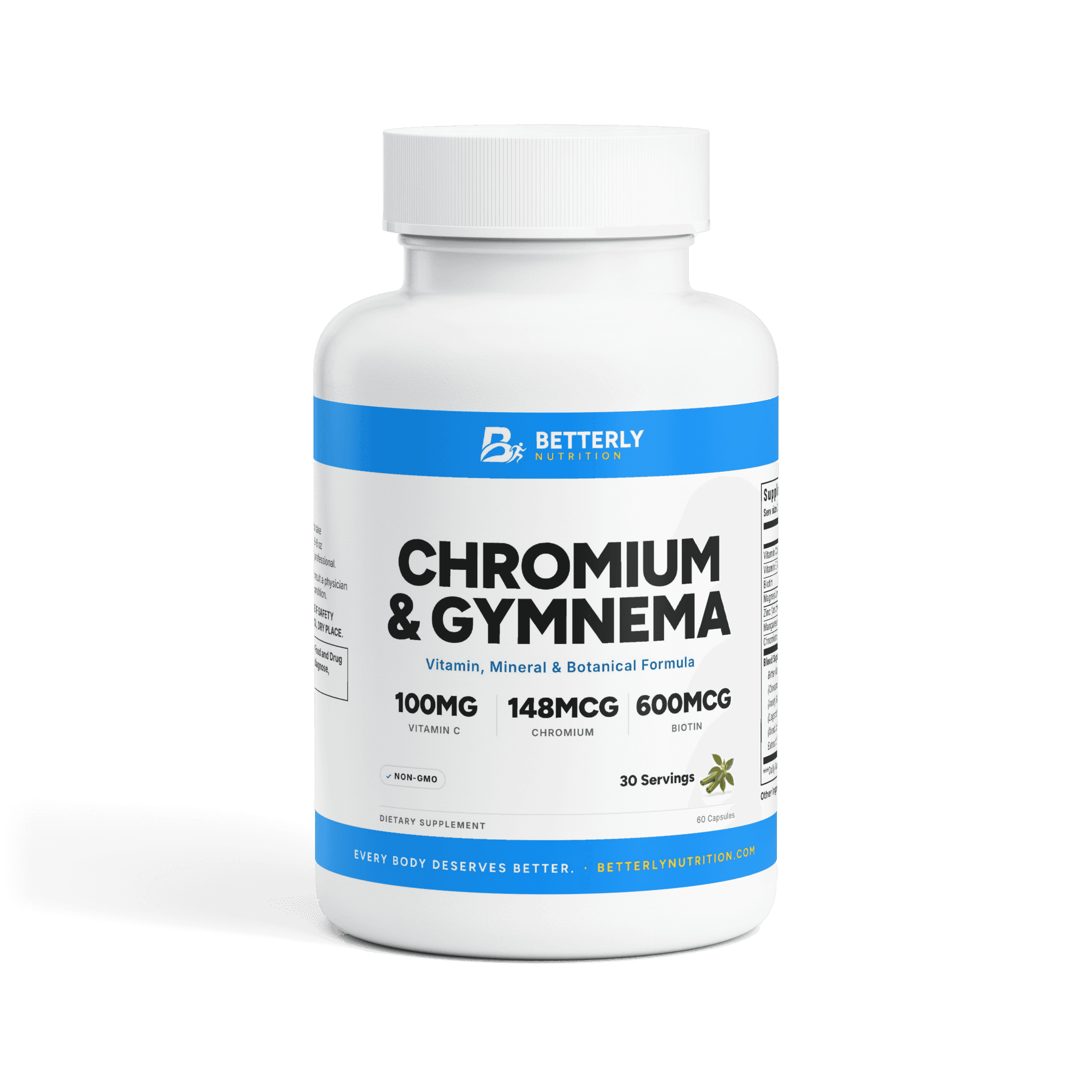
A quick disclosure: Betterly sells both forms. Our Cinnamon & Licorice Root Drops use regular licorice root, and our chromium capsule blend lists DGL, so we earn money whichever way you lean. What follows sticks to our own panels and to federal sources.
Is DGL the same thing as licorice root?
DGL isn't the same as regular licorice root. DGL is licorice processed to remove glycyrrhizin, while regular licorice root and its extracts keep that compound.
The NCCIH licorice root page lists three species under the licorice name: Glycyrrhiza glabra, Glycyrrhiza uralensis and Glycyrrhiza inflata. It also lists other names you might spot on a bottle, like liquorice, sweet root and gan cao.
The FDA's food regulation for licorice, 21 CFR 184.1408, adds two handy definitions. Licorice root is the dried, ground root and rhizome (the underground stem) of Glycyrrhiza glabra or another Glycyrrhiza species. Licorice extract is the portion drawn out of that root with boiling water. DGL goes one step further, with the glycyrrhizin stripped out.
| Question | Regular licorice root | DGL |
|---|---|---|
| Same plant? | Yes, Glycyrrhiza root | Yes, Glycyrrhiza root |
| Glycyrrhizin | Still there | Removed |
| NCCIH safety note | Serious adverse effects possible | Might be safe for up to 4 months |
| Label wording | Licorice root, licorice extract or a Glycyrrhiza name | Deglycyrrhizinated licorice, or DGL |
| Betterly labels | 7 | 1 |
Only one row changes the safety picture: glycyrrhizin. The plant and even the Latin name can match on two very different products.
What is glycyrrhizin, and why does it decide everything?
Glycyrrhizin, also called glycyrrhizic acid, is the licorice compound NCCIH connects to serious adverse effects, and it's the one thing DGL processing sets out to remove.
It's a flavor ingredient, too. The same FDA regulation lists the food uses of licorice and its derivatives, mainly as a flavoring agent or flavor enhancer, and it caps how much glycyrrhizin a food may contain:
- Baked foods: 0.05%
- Nonalcoholic beverages: 0.15%
- Vitamin or mineral dietary supplements: 0.5%
- Soft candy: 3.1%
- Hard candy: 16.0%
The five caps above apply to licorice used as a flavoring agent or flavor enhancer, and the rule's only supplement category is vitamin or mineral dietary supplements. Still, the rule shows that federal food law measures glycyrrhizin and limits it.
NCCIH notes that many "licorice" products sold in the U.S. contain no actual licorice, because anise oil, which smells and tastes similar, is often used instead. Only the ingredient list tells you which kind you've got.
What are the side effects of licorice root compared with DGL?
The serious licorice root side effects NCCIH describes trace back to glycyrrhizin, while NCCIH says DGL taken by mouth might be safe for up to 4 months.
Put plainly, NCCIH's safety summary for regular licorice says:
- As a food ingredient, licorice root is generally considered safe.
- Glycyrrhizin can cause serious heart-related adverse effects, most of all with large amounts or long-term use.
- Even small amounts of glycyrrhizin have been linked to severe reactions in certain people, such as those with salty diets or with heart or kidney conditions.
- During pregnancy, licorice extract in large amounts (about 250 grams of licorice a week) is unsafe.
- Licorice has reported interactions with corticosteroid medicines.
NCCIH's DGL line is worth reading exactly: "Oral licorice products that do not contain glycyrrhizin (deglycyrrhizinated licorice) might be safe for up to 4 months." Notice the "might" and the time limit. NCCIH doesn't say what happens after 4 months, and we won't guess.
So DGL has the more reassuring safety note, not an unlimited one. The one Betterly label that names DGL, a chromium capsule blend, also doesn't print how much glycyrrhizin, if any, remains.
Does licorice root have proven benefits?
NCCIH finds too little high-quality evidence to clearly support licorice root for any health condition, even though some studies in people have been done.
NCCIH traces licorice use back to ancient Egypt, Greece, China, India and beyond. Today, it says, licorice root is promoted as a supplement for digestive, respiratory and energy support. "Promoted" describes how products are sold, not what's been shown.
Most of the human research NCCIH summarizes involves rinses, gargles and skin gels, not a swallowed daily supplement.
DGL gets no benefits line of its own on NCCIH's page; it appears only under safety. If a DGL product page promises a specific result, it's going past the federal summary. Neither the drops nor the chromium capsules make a licorice-specific promise.
How do you tell DGL from regular licorice on a label?
You can tell DGL from regular licorice only by the words "deglycyrrhizinated" or "DGL" on the panel. Species names, extract ratios and percentages don't answer the glycyrrhizin question.
Run any licorice product through these checks:
- Find every licorice line. Scan the Supplement Facts panel and the other-ingredients line under it.
- Look for the word. "Deglycyrrhizinated licorice" or "DGL" means the glycyrrhizin was removed. If neither appears, assume it's there.
- Don't read the Latin as a safety signal. G. glabra and G. uralensis both sit under NCCIH's licorice name. A species says which plant, not how it was processed.
- Decode the ratio. Per the NIH Office of Dietary Supplements' botanical background fact sheet, "1:5" means one part dried plant, by weight, for every five parts of finished product. That's strength, not glycyrrhizin.
- Question a lonely percentage. "(1%)" with no compound named settles nothing, and the same ODS sheet notes "standardized" has no legal definition in the U.S.
- Watch for blends. Inside a proprietary blend you only see the total. Our proprietary blend guide shows how ingredient order can cap each amount.
Here's how our own eight licorice labels come out:
| Betterly product | Licorice as printed | Own amount | DGL? |
|---|---|---|---|
| Cinnamon & Licorice Root Drops | 1:5 Extract of Licorice Root | 174 mg per 2 ml (40 drops) | No |
| Chromium, Gymnema & Cinnamon Capsules | Deglycyrrhizinated Licorice Extract (root) | Not stated (620 mg blend) | Yes |
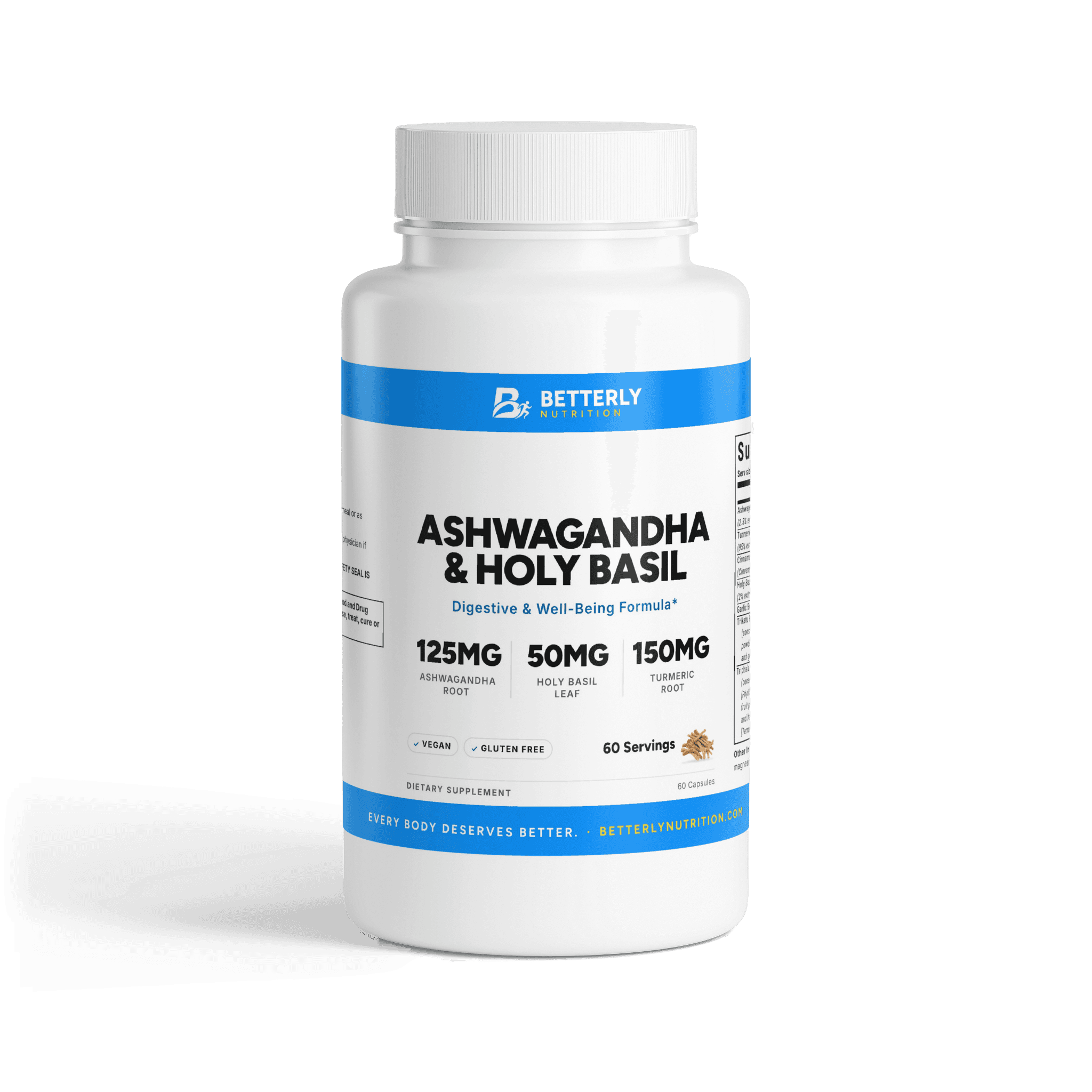
| Ashwagandha & Holy Basil Ayurvedic Capsules | Licorice Root Powder | 25 mg per 1 capsule | No |
| Black Cohosh & Red Clover Capsules | Licorice Root Extract (1%) | 150 mg per 2 capsules | No |
| Choline & DHA Focus Capsules | Licorice Root Extract (Glycyrrhiza glabra) | Not stated (609 mg blend) | No |
| Tongkat Ali, Maca & Ginseng Capsules | Licorice Extract (Glycyrrhiza uralensis) (root) | Not stated (745 mg blend) | No |
| Alfalfa & Chlorella Greens Powder | Licorice Powder (root) | Not stated (1 g herbal blend) | No |
| Turmeric & Andrographis Strips | Licorice extract, in other ingredients | Not stated | No |
One label in eight names DGL, so assume glycyrrhizin is present in the other seven. None of the eight prints a glycyrrhizin figure.
From our shop: Chromium, Gymnema & Cinnamon Capsules — 148 mcg of chromium per 2-capsule serving, plus a 620 mg blend whose 11 ingredients include deglycyrrhizinated licorice, the only Betterly label that names it.
Is a licorice root tincture the same as licorice drops?
A licorice root tincture is licorice soaked in alcohol and water, per ODS. Drops are liquid too, and neither format is DGL unless its label says so.
ODS adds that teas, tinctures and extracts carry different strengths, so a full mug and a small squirt of extract can hold similar amounts of plant. Compare per serving, never per bottle.
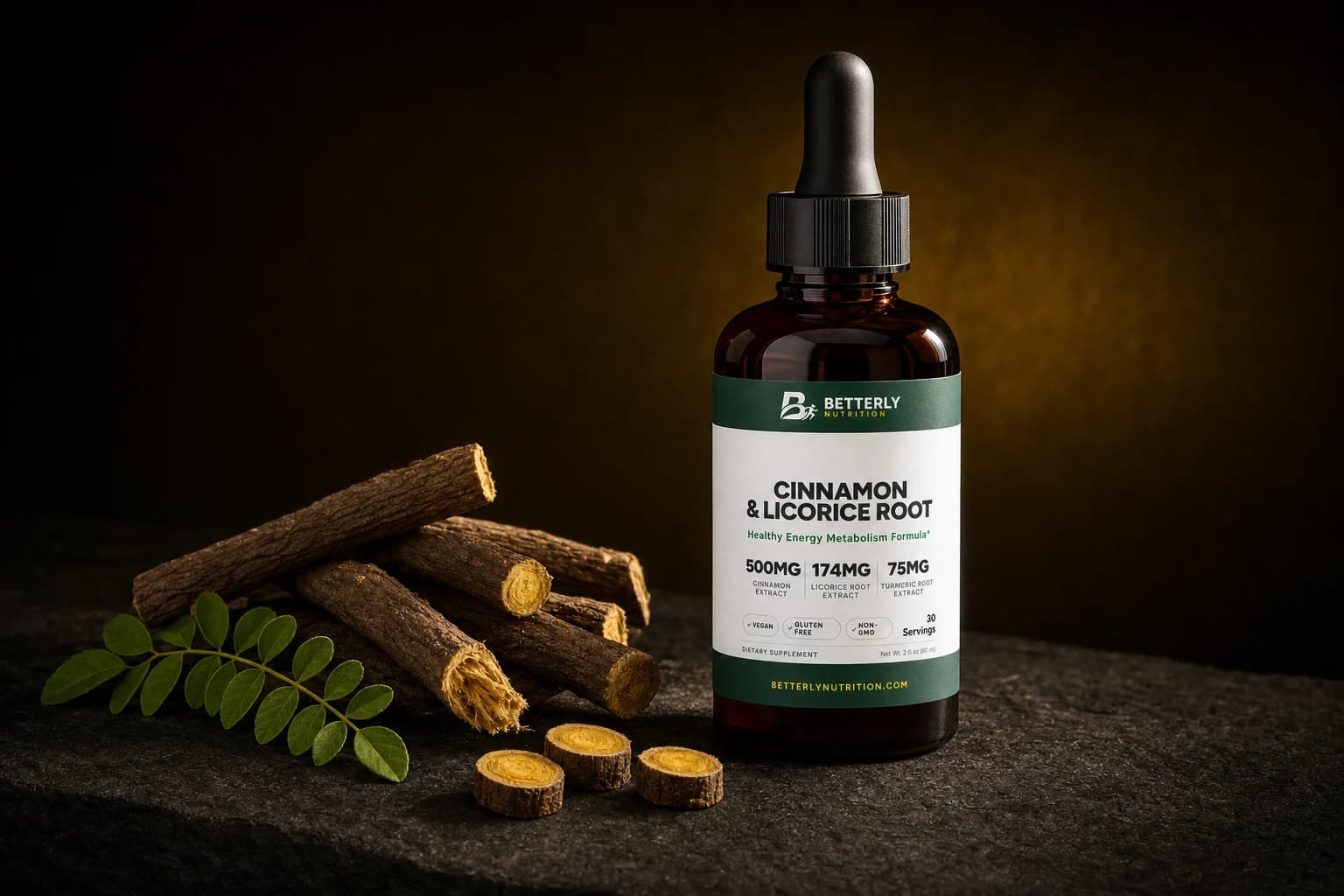
Our Cinnamon & Licorice Root Drops don't call themselves a tincture. The panel lists "1:5 Extract of Licorice Root," and the other-ingredients line reads water, glycerin and potassium sorbate. Alcohol isn't on that line, but the label never calls itself alcohol-free, so we don't either.
Nothing on the panel says the glycyrrhizin was removed, so the drops are regular licorice.
How do you take the drops and the chromium capsules, per the labels?
Per the labels, adults take 2 ml (40 drops) of Cinnamon & Licorice Root Drops each morning, and 2 chromium capsules a day with water.
Shake the drops first, and take them by mouth or in a drink. Each serving pairs the 174 mg of licorice root extract with 500 mg of 1:5 cassia cinnamon extract, 75 mg of 1:5 turmeric root extract and 50 mg of 1:5 coriander seed extract, plus 0.8 mg of bitter melon extract and 0.1 mg of Japanese knotweed extract. The 2 fl oz (60 ml) bottle holds 30 servings. Our Ceylon vs cassia comparison covers the cinnamon half.
Two honest limits: the panel names neither the licorice species nor a glycyrrhizin amount, and the label sets no end date, while NCCIH ties glycyrrhizin's risks to long-term use. Take one serving a day, never more, and ask your provider before using the drops daily for months.
The Chromium, Gymnema & Cinnamon Capsules label pairs its 2 capsules with 6 to 8 oz (177 to 237 ml) of water. It's built around chromium, and DGL is just the third of 11 names in the 620 mg blend. If the panel follows the heaviest-first order rule, DGL can't top roughly 207 mg per serving (620 divided by 3), and it could be far less. Each serving also has 148 mcg of chromium and 600 mcg of biotin, in a gelatin shell.
The drops live on our adaptogens shelf, and the capsules sit with our weight support products.
From our shop: Cinnamon & Licorice Root Drops — the regular, non-DGL form, with 174 mg of a 1:5 licorice root extract in each 40-drop (2 ml) morning serving, 30 servings to a bottle.
When don't you need licorice or DGL at all?
A licorice supplement or DGL is unnecessary if you just enjoy the flavor, already take a blend with licorice, or expect a specific result.
- If you simply like the taste, enjoy it in ordinary food amounts, the use NCCIH calls generally safe. Its large-amount and long-term caution still applies to real licorice candy.
- If you're after a particular outcome, NCCIH's evidence summary doesn't back one, and no label can honestly promise it, ours included.
- If you already take one of the seven regular-licorice labels above, adding the drops stacks glycyrrhizin you can't total.
- If you want DGL on its own, we don't sell it. Ours is one name in an 11-ingredient chromium capsule blend.
- A salty diet or a heart or kidney condition puts you in a group NCCIH flags, so talk with your provider before choosing either form.
Who should check with a healthcare provider first?
Check with a provider before licorice root or DGL if you take prescription medication, are pregnant, nursing or under 18, or have heart, kidney or salt-intake concerns.
- NCCIH rates heavy licorice extract use in pregnancy as unsafe, and its page offers no DGL-specific pregnancy guidance, so ask first if you're pregnant or nursing.
- Per NCCIH, licorice has reported interactions with corticosteroids. If you take any prescription, bring the bottle itself, since licorice can hide in a blend or in other ingredients. For the chromium capsules, show a pharmacist the chromium row and all 11 blend names, not just the licorice.
- A salty diet and heart or kidney conditions mark the groups NCCIH names for severe reactions to even small amounts of glycyrrhizin.
- The chromium capsules have 600 mcg of biotin per serving. According to the ODS biotin fact sheet, more biotin than recommended can skew certain lab test results. Our biotin side effects guide explains what to tell whoever orders your blood work.
- Both labels are written for adults, and a scheduled surgery is a good reason to review every supplement you take.
The drops and the chromium capsules share one caution line: "Do not exceed recommended dose. Consult a physician if pregnant, nursing, under 18, or have a medical condition."
FAQ: DGL vs licorice root
What does DGL stand for?
DGL stands for deglycyrrhizinated licorice, meaning licorice with its glycyrrhizin removed. "De" means taken away, and the rest names glycyrrhizin, the compound NCCIH links to serious adverse effects. Our Chromium, Gymnema & Cinnamon Capsules use the full phrase, "Deglycyrrhizinated Licorice Extract (root)," inside a 620 mg blend per 2-capsule serving.
Which is better, DGL or regular licorice root?
Neither is better across the board, but DGL has the more reassuring safety note. NCCIH says DGL taken by mouth might be safe for up to 4 months, while glycyrrhizin in regular licorice can cause serious adverse effects, mainly at high intakes or over long stretches. On benefits, NCCIH says the evidence doesn't clearly support licorice for any health condition, so decide on safety, not promises.
Does black licorice candy contain real licorice root?
Black licorice candy may or may not contain real licorice root. NCCIH says many "licorice" products sold in the U.S. use anise oil for the flavor instead. When real licorice is added as a flavor, the FDA's food regulation caps glycyrrhizin at 3.1% for soft candy and 16% for hard candy. The ingredient list tells you which.
How long can you take DGL or licorice root?
NCCIH says DGL taken by mouth might be safe for up to 4 months, and it gives no safe time window for regular licorice. It warns instead that glycyrrhizin's risks rise with bigger amounts and longer use. Our Cinnamon & Licorice Root Drops label calls for one 2 ml serving a day with no end date, so settle the duration with your provider.
Is licorice root tea the same as DGL?
Licorice root tea isn't DGL unless the box says "deglycyrrhizinated" or "DGL." The FDA's food regulation describes licorice extract as the part of the root drawn out by boiling water, which is how tea is brewed. So count plain licorice root tea as the regular form, alongside any licorice supplement.
Sources
- Licorice Root: Usefulness and Safety, National Center for Complementary and Integrative Health
- 21 CFR 184.1408: Licorice and licorice derivatives, eCFR, FDA regulation
- Botanical Dietary Supplements: Background Information for Consumers, NIH Office of Dietary Supplements
- Biotin: Fact Sheet for Consumers, NIH Office of Dietary Supplements
If this left you looking for somewhere to start, read licorice root extract drops — its amounts per serving are listed on the page. For the practical questions this raises, how dosing, sourcing and subscriptions work is answered in one place.