On this page
- Key takeaways
- How many drops are in 1 ml of tincture?
- Why do some of our labels count 20 drops per ml and others 30?
- Is a full dropper 1 ml?
- How many drops are in a 30 ml or 60 ml dropper bottle?
- Should you trust the ml line or the drop count?
- How do you measure a 2 ml or 1 ml serving at home?
- When don't you need to count drops at all?
- Who should check with a healthcare provider first?
- FAQ: counting drops in 1 ml of tincture
- Sources
The short answer: There's no fixed number of drops in 1 ml of tincture, because a drop's size changes from one bottle to the next. Of the five Betterly dropper bottles in this guide, two count 20 drops per ml and three count 30, so the same count can mean different volumes. When a label prints both milliliters and drops, measure the milliliters.
Key takeaways
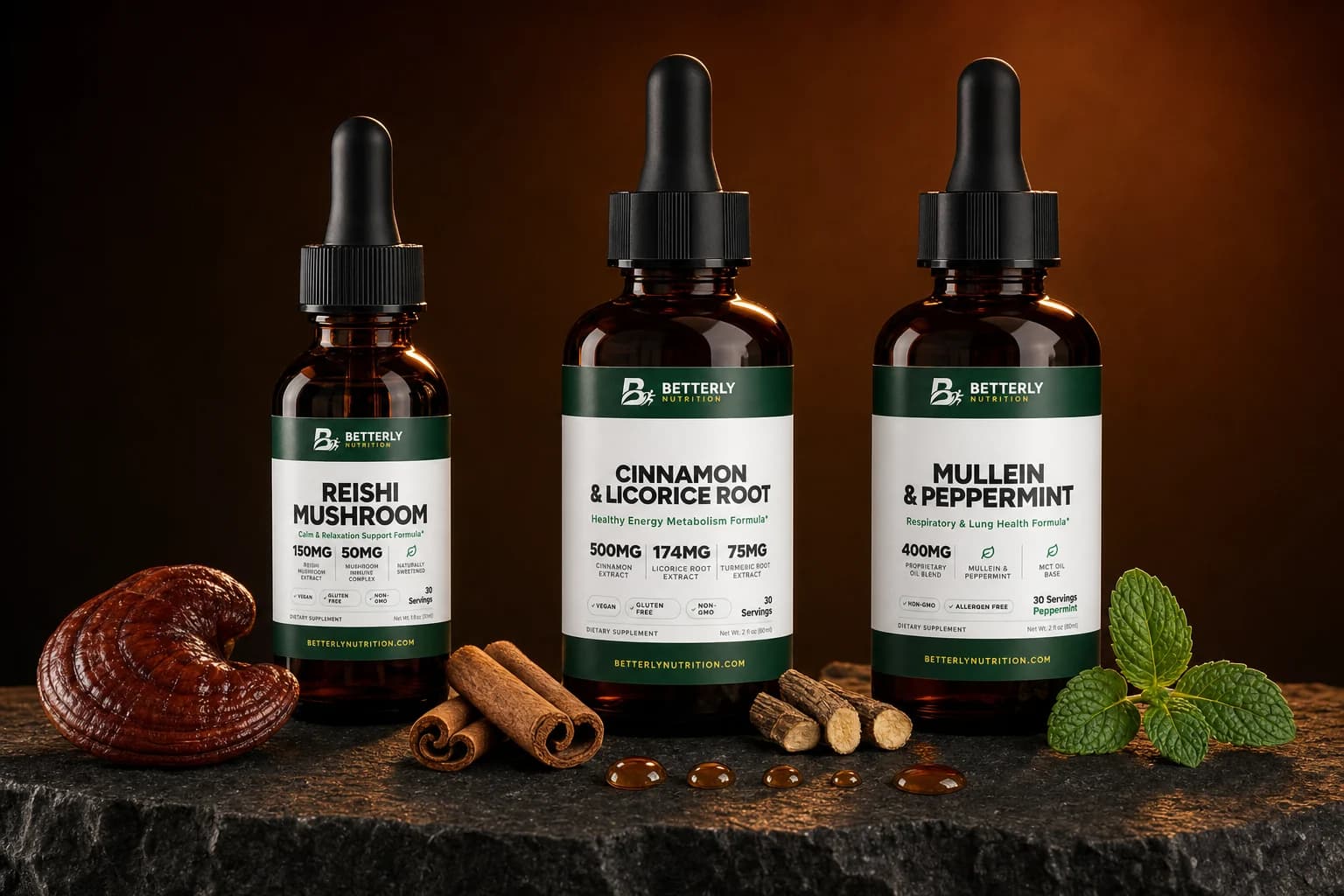
- Betterly's Cinnamon & Licorice Root Drops and Mullein & Peppermint Oil Drops each list a 2 ml serving as 40 drops, which works out to 20 drops per ml.
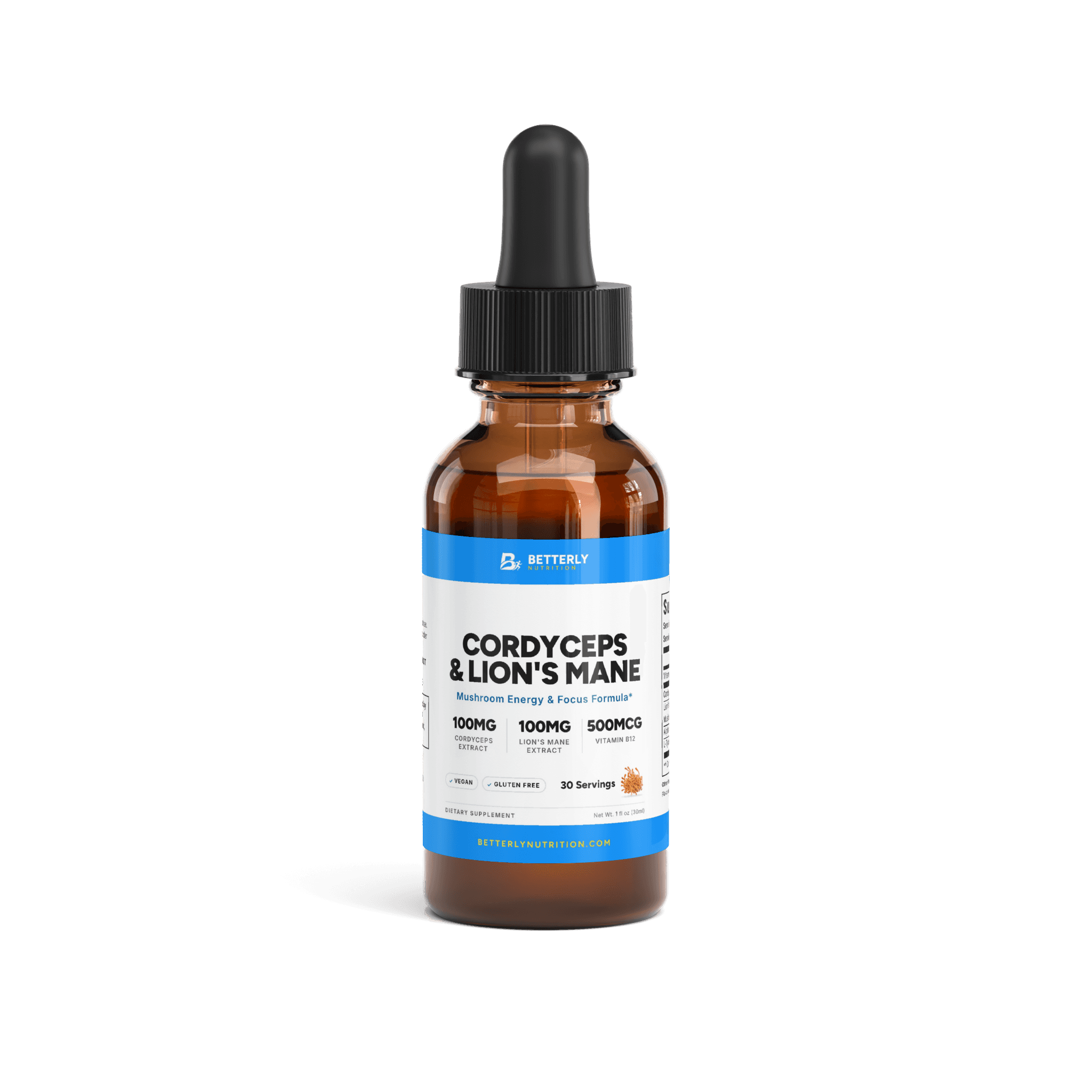
- Our three mushroom drops define a serving as "1 ml / 1 dropper (30 drops)," which works out to 30 drops per ml.
- A drop is an estimate that shifts with the dropper and the liquid, while a milliliter is the fixed volume that a panel's milligrams depend on.
- All five bottles in this guide hold 30 servings, which turns the empty bottle into a check on how well you've been measuring.
We sell all five dropper bottles covered here, so we'd rather point out where our own labels disagree than paper over it.
How many drops are in 1 ml of tincture?
One ml of tincture has no fixed drop count: going by each label's own numbers, 30 drops is 1 ml on one of our bottles and 1.5 ml on another.
A 20-per-ml count means each drop is 0.05 ml, a tidy number that real drops often miss. At 30 per ml, each drop is about 0.033 ml, a third smaller. Both figures appear on our labels. If your drops aren't the size your label assumes, a counted serving comes up short or runs over.
Where you picked up a drop count matters, too. A count that fits another brand's alcohol tincture may not fit these bottles, since alcohol may drip more drops per ml than our glycerin-and-water formulas (more on why below). Whether glycerin, water or oil drops count as tinctures at all is its own question, answered in our glycerin vs alcohol tincture comparison.
Measuring eye drops or a liquid medicine? This guide isn't for that. Follow your pharmacist or the medicine's own label, using the device that came with it.
Why do some of our labels count 20 drops per ml and others 30?
The five drop labels in this guide don't say why they disagree, but drop size depends on the dropper tip, the liquid and how you squeeze, and these liquids do differ.
Three things set the size of a drop:
- The tip. A drop hangs from the dropper until its weight beats the surface tension holding it on, so a wider tip makes a bigger drop.
- The liquid. Liquids with lower surface tension, such as alcohol and most oils, let go sooner, so a milliliter holds more of their smaller drops.
- Your hand. A hard squeeze can push out oversized drops or a stream, while slow, steady pressure gives more even ones.
Under the FDA's ingredient-labeling rule, 21 CFR 101.4, ingredients are listed "in descending order of predominance by weight." The botanicals sit in the Supplement Facts panel, so the "Other ingredients" line ranks what's left, which is mostly the base liquid:
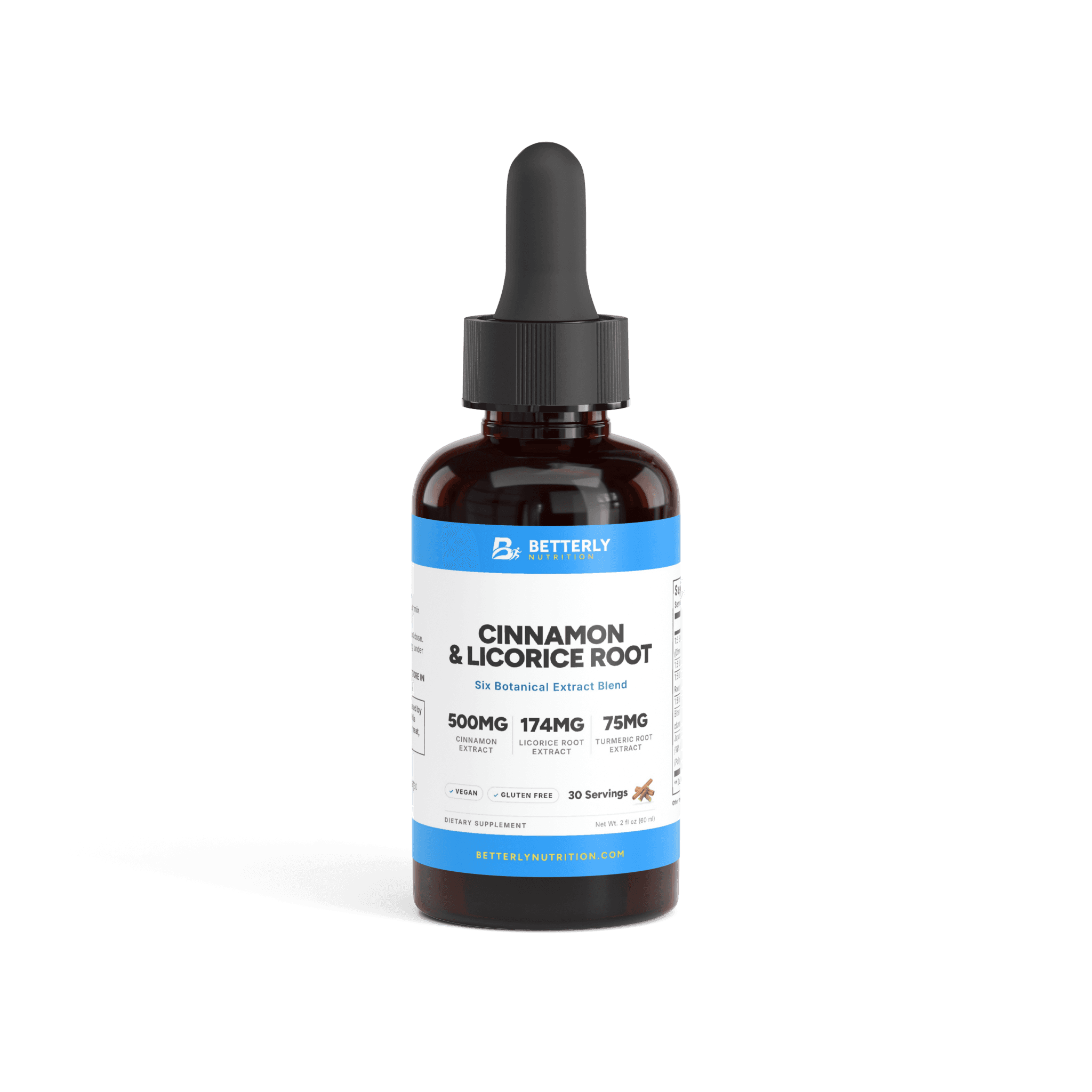
- Cinnamon & Licorice Root Drops: "Water, Glycerin, Potassium Sorbate." Water leads.
- The three mushroom drops: "Glycerin, Purified Water, Natural Flavoring, Sweetener (Stevia), Potassium Sorbate, Nisin." Glycerin leads.
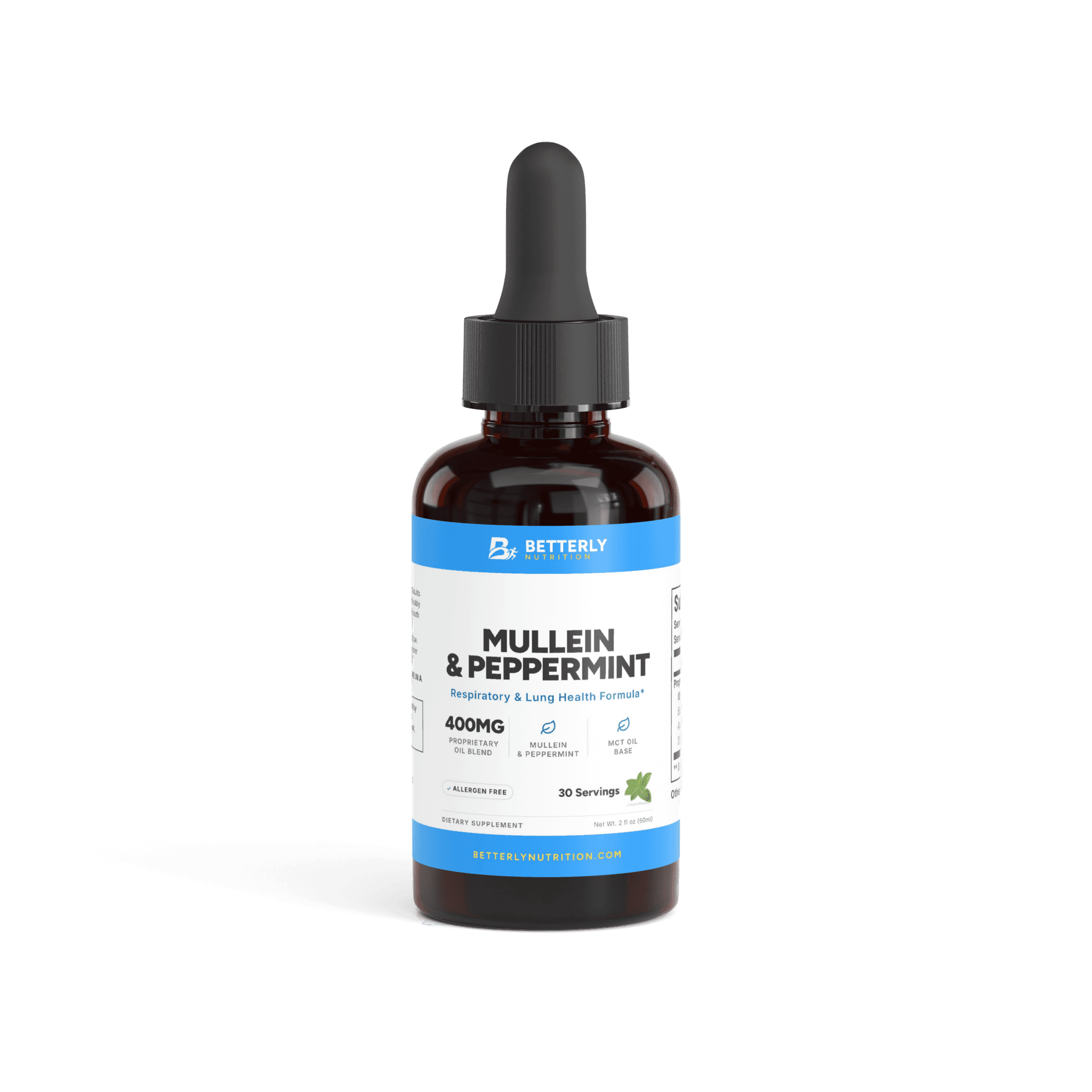
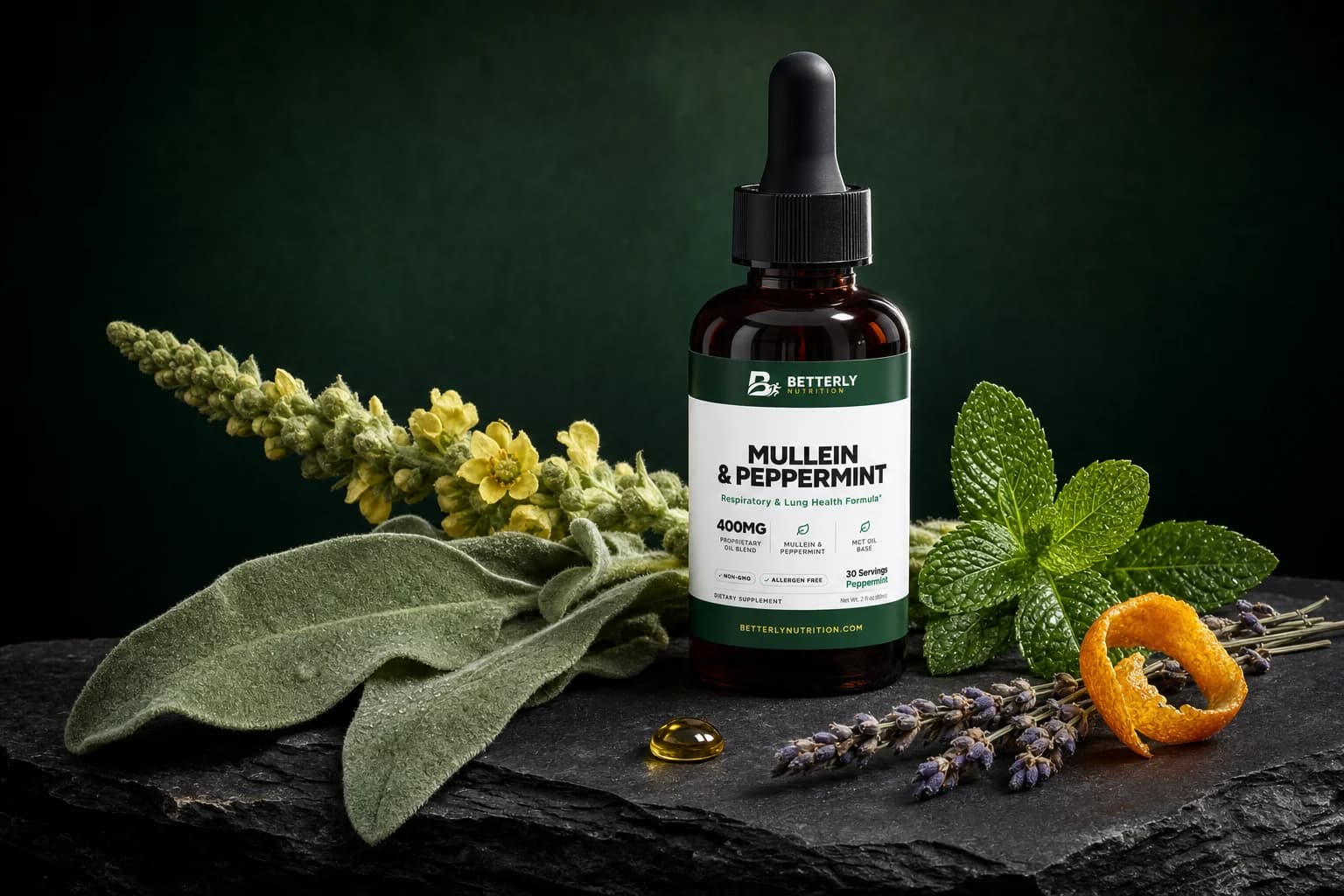
- Mullein & Peppermint Oil Drops: "MCT Oil." No water is listed at all.
That's three different liquids. From the same kind of tip, physics would predict smaller drops from the mullein oil than from the watery cinnamon liquid. Yet both labels print 40 drops per 2 ml. That suggests the drop count is a rounded convention, not a measurement of each liquid.
No label splits the 20-versus-30 gap between liquid and dropper. What stays fixed on all five is the milliliter.
Is a full dropper 1 ml?
A full dropper is 1 ml on Betterly's three mushroom drops, because their panels say so, but that's a fact about those labels, not a rule for every dropper.
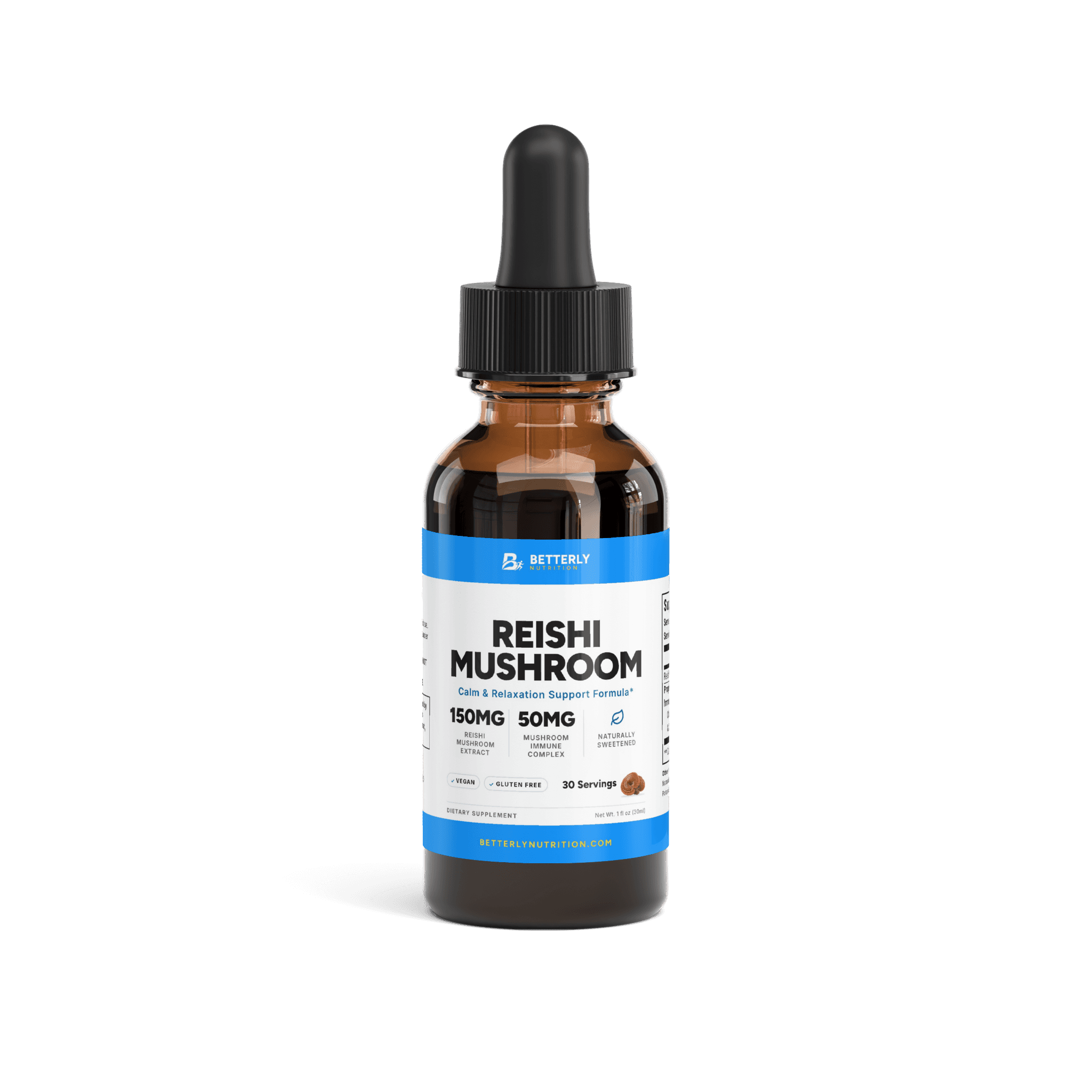
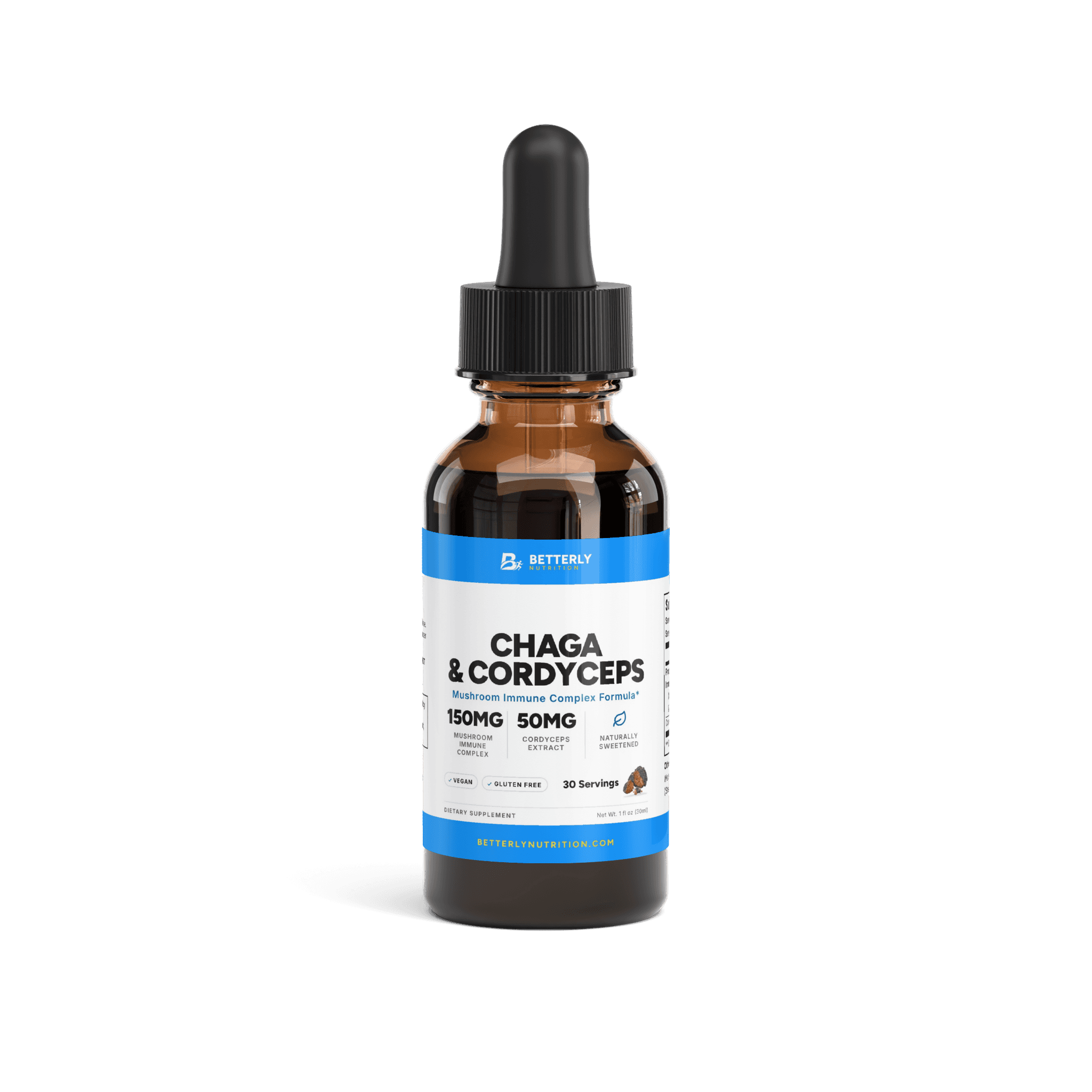
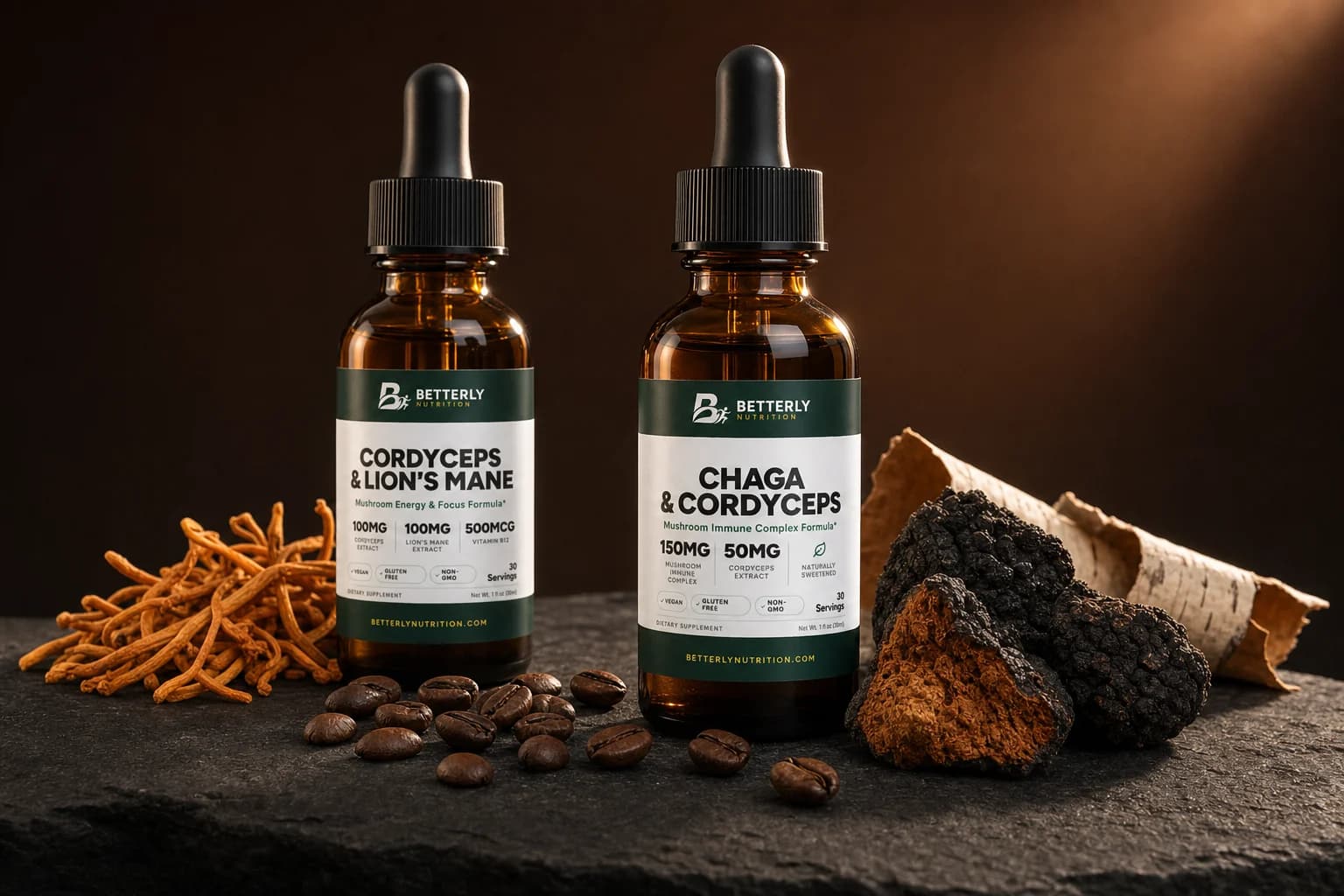
The Reishi Mushroom Calm Drops, Chaga & Cordyceps Mushroom Drops and Cordyceps & Lion's Mane Energy Drops all print one serving size: "1 ml / 1 dropper (30 drops)." That line ties three measures together, so for those bottles a single draw of the dropper is the serving. Our guide to taking mushroom tincture drops picks up from there.
The 2 ml labels never mention a dropperful. The cinnamon and mullein serving could be one draw of a big dropper, two draws of a small one or something in between. Since neither label says, don't assume "2 ml" means "two droppers."
That's also why answers to how many drops fill a dropper vary so much: bulb size, glass length and your press all change what one draw pulls up.
How many drops are in a 30 ml or 60 ml dropper bottle?
A 30 ml dropper bottle holds about 600 drops at the common 20 per ml, or about 900 at the 30 per ml on our mushroom labels.
Our 60 ml cinnamon and mullein bottles hold about 1,200 by their labels' count. Both Betterly totals are label math: 30 servings of 30 drops, and 30 servings of 40. Here's every drop product in this guide side by side:
| Our drops | Serving on the label | Drops per ml | Bottle and days |
|---|---|---|---|
| Cinnamon & Licorice Root | 2 ml (40 drops) | 20 | 60 ml, 30 days |
| Mullein & Peppermint Oil | 2 ml (40 drops) | 20 | 60 ml, 30 days |
| Reishi Mushroom Calm | 1 ml (30 drops) | 30 | 30 ml, 30 days |
| Chaga & Cordyceps Mushroom | 1 ml (30 drops) | 30 | 30 ml, 30 days |
| Cordyceps & Lion's Mane Energy | 1 ml (30 drops) | 30 | 30 ml, 30 days |
The drop counts split two ways, but the days don't: every label lands on 30, since each serving divides evenly into the bottle's printed milliliters. The 2 fl oz bottles say 60 ml and the 1 fl oz bottles say 30 ml. That matches the rounding the FDA uses for nutrition labeling in its guidance on metric equivalents of household measures, where "1 fluid ounce means 30 mL."
That gives you a free accuracy check. If a 60 ml bottle runs dry on day 22 instead of day 30, your servings averaged about 2.7 ml, not 2.
From our shop: Cinnamon & Licorice Root Drops — a 2 fl oz (60 ml) bottle of 30 servings, each 2 ml (40 drops) listing 500 mg of a 1:5 cinnamon bark extract and 174 mg of a 1:5 licorice root extract.
Should you trust the ml line or the drop count?
Trust the ml line: Betterly's panels list milligrams per serving, the milliliter is that serving's fixed volume, and the drop count is only the label's estimate of it.
Run the numbers on the cinnamon drops. The panel lists 500 mg of cinnamon extract per 2 ml, which is 250 mg in each ml. At the label's 40 drops, that's 12.5 mg per drop. But if your dropper makes drops big enough that 40 of them add up to 2.5 ml, you'd take 625 mg, a quarter more than the serving, without ever miscounting.
Small drops do the reverse and leave you short. Either way, the milligrams only mean what they say when the volume is right.
Use this table to choose a measuring method from what the label prints:
| What the label prints | Measure with | Why |
|---|---|---|
| ml and drops, like "2 ml (40 drops)" | A dropper or oral syringe marked in ml | The ml is the volume the milligrams describe |
| ml equal to one dropper, like "1 ml / 1 dropper" | One draw of the bottle's own dropper | The label has defined its dropper for you |
| Drops only | A slow count, then the bottle math | There's no volume to measure against |
| "Dropperful" only | Ask the maker for the ml | A dropperful isn't a unit |
The pattern down that table: a milliliter mark beats a count whenever you have one, and a dropper the label defines in milliliters counts as a mark.
How do you measure a 2 ml or 1 ml serving at home?
To measure Betterly's drops, shake the bottle and draw the milliliters its label names: 2 ml for cinnamon or mullein, 1 ml for the mushroom drops.
Here are the directions, word for word:
- Cinnamon & Licorice Root Drops: "Shake well. Adults take 2 ml (40 drops) daily, orally, in the morning. Dispense directly into mouth or mix with a beverage."
- Mullein & Peppermint Oil Drops: "Shake well before use. Adults take 2 ml (40 drops) orally once daily, preferably in the morning. Dispense directly into the mouth or mix with a beverage."
- All three mushroom drops: "Shake well. Take 1 ml (30 drops) daily."
A routine that keeps the milliliter honest:
- Shake first. All five labels start there.
- For the mushroom drops, one draw of the dropper is the label's 1 ml.
- For the 2 ml bottles, fill a dropper or oral syringe with an ml scale to the 2 ml line.
- No marked tool? Count 40 drops with the dropper pointing straight down, pressing slowly so each drop falls on its own.
- Keep one tool per bottle, and wash a syringe in warm, soapy water after the mullein oil.
If 40 drops looks off to you, let a marked tool settle it rather than adding or holding back drops on a hunch. For mixing the oil into a drink, see our guide to taking mullein drops.
Whatever you measure with, stick to one serving a day and skip the catch-up after a missed day. On all five bottles, the warning's first line is "Do not exceed recommended dose."
From our shop: Reishi Mushroom Calm Drops — the label defines one dropper as its 1 ml (30 drops) serving, listing 150 mg of reishi mushroom extract and a 50 mg mushroom complex, with 30 servings in a 1 fl oz bottle.
When don't you need to count drops at all?
You can skip counting when a label defines its dropper in milliliters, as Betterly's three mushroom drops do, and sometimes the honest answer is to skip the bottle itself.
- The dropper is already defined. "1 ml / 1 dropper" means the draw is the measurement.
- You own a marked dropper or oral syringe. Read the ml line instead.
A few reasons to pass on the drops altogether:
- You're avoiding licorice that isn't labeled DGL. The cinnamon drops list 174 mg of licorice root extract per 2 ml serving, so no way of measuring makes them a fit.
- You want the same amount in every unit. A capsule's milligrams don't hinge on a steady hand, and our adaptogens collection carries capsule formulas beside the cinnamon drops.
Who should check with a healthcare provider first?
Talk to a healthcare provider before starting Betterly's drops if you're pregnant, nursing, under 18, on prescription medicine, facing surgery or under a doctor's care for any health condition. For the cinnamon drops, add a salty diet or a heart or kidney condition to that list.
Those lists go a little beyond the labels, which all print this one warning: "Do not exceed recommended dose. Consult a physician if pregnant, nursing, under 18, or have a medical condition."
The cinnamon drops' panel lists 174 mg of licorice root extract per 2 ml and doesn't say the licorice is deglycyrrhizinated. The National Center for Complementary and Integrative Health (NCCIH) licorice root page says a licorice compound called glycyrrhizin can cause serious adverse effects, especially in large amounts or with long-term use.
The same page says even small amounts of glycyrrhizin have been linked to severe reactions in people who eat a lot of salt or who have a heart or kidney condition, so check with a provider before taking even the label's 2 ml. NCCIH also calls large amounts during pregnancy unsafe and notes reported interactions with corticosteroids.
Careful measuring matters here as well, since extra drops of this formula mean extra licorice. Our DGL vs licorice root guide shows how to tell the two forms apart on a label.
If a serving ever leaves you feeling off, stop and talk to a provider, and bring the bottle so they can read the panel.
FAQ: counting drops in 1 ml of tincture
How many ml is 40 drops?
Forty drops is 2 ml on our cinnamon and mullein labels, which put 20 drops in each ml. By the 30-per-ml count on our mushroom labels, the same 40 drops would be about 1.3 ml. So 40 drops equals 2 ml only on a bottle whose label says it does. When your label gives milliliters, measure those, and never go past the label's serving.
How many drops are in a teaspoon?
A teaspoon is 5 ml under the FDA's labeling conversion, so it holds about 100 drops at 20 per ml, or about 150 at 30 per ml. That's far more than any serving in this guide. The common quarter-teaspoon and half-teaspoon measures hold about 1.25 ml and 2.5 ml, so neither matches a 1 ml or 2 ml serving. Leave the spoons in the drawer.
How many drops of tincture should you take?
Take the number of drops your own tincture's label gives, and no more. For the drops in this guide, that's 2 ml (40 drops) once a day for the cinnamon and mullein formulas, and 1 ml (30 drops) daily for the three mushroom formulas. Don't borrow another brand's drop count, because its strength, liquid and dropper can all differ from yours. If you're unsure what your serving should be, ask a healthcare provider.
Is it OK to take a few extra drops?
No, extra drops go past the serving, and every label in this guide says "Do not exceed recommended dose." A few drops add up faster than they look. With the cinnamon drops, 10 extra drops is a quarter more than the label's 40. Overshot the mark? Let the surplus drip back into the bottle and check the amount again before you take it.
How long does a 1 oz tincture bottle last?
A 1 fl oz bottle holds roughly 30 ml, the rounded figure our labels print, so it lasts about 30 days at 1 ml a day, which is how our three mushroom drops are labeled. Our 2 fl oz cinnamon and mullein bottles also last 30 days, since their serving is 2 ml. Another brand's 1 oz bottle taken at 2 ml a day would last about 15 days, so divide the bottle's milliliters by your own label's serving.
Sources
- 21 CFR 101.4: Food; designation of ingredients, Electronic Code of Federal Regulations
- Guidance for Industry: Guidelines for Determining Metric Equivalents of Household Measures, FDA
- Licorice Root: Usefulness and Safety, NCCIH
If this left you looking for somewhere to start, read cinnamon and licorice root drops — its amounts per serving are listed on the page. For the practical questions this raises, how dosing, sourcing and subscriptions work is answered in one place.