On this page
- Key takeaways
- How do you take mullein drops, step by step?
- How many drops of mullein should you take?
- Should you put mullein drops under your tongue?
- Can you put mullein drops in water, juice or tea?
- What time of day should you take mullein drops?
- What's in a 40-drop serving, and how should you read the label?
- Can you take mullein drops with other supplements?
- When don't you need mullein drops?
- Who needs a healthcare provider's OK before taking mullein drops?
- FAQ: how to take mullein drops
- Sources
The short answer: How to take mullein drops depends on the bottle, and ours spells it out. Shake well, then take 2 ml (40 drops) by mouth once a day, preferably in the morning. You can squeeze the drops straight into your mouth or stir them into a drink. The label never mentions holding them under your tongue, and it asks you not to go past that one daily serving.
Key takeaways
- A 60 ml bottle of Betterly's Mullein & Peppermint Oil Drops holds 30 servings of 2 ml, so one serving each morning lasts about a month.
- The mullein label counts 40 drops in 2 ml but never says how much its dropper holds, so count the drops instead of guessing a dropperful.
- Menthol is listed first in the 400 mg Proprietary Oil Blend and mullein oil third, so expect a strong mint taste.
- We found no NCCIH fact sheet on mullein, so there's no official mullein dose to measure against, and the label is your ceiling.
- Oil doesn't dissolve in water, so if you mix the drops into a drink, stir it and finish every sip.
We sell the mullein drops this guide keeps quoting, so read our take with that in mind. Where our own label leaves a question open, we'll name the gap instead of guessing.
How do you take mullein drops, step by step?
To take Betterly's mullein drops, follow four label steps: shake the bottle, measure one serving, take it by mouth or in a drink, and store it cool and dry.
Here's the full direction, word for word from the label: "Shake well before use. Adults take 2 ml (40 drops) orally once daily, preferably in the morning. Dispense directly into the mouth or mix with a beverage."
Each step, in practice:
- Shake the bottle. The blend is menthol plus four oils in an MCT oil carrier, and shaking mixes them before you draw a serving.
- Measure 40 drops, or 2 ml if you have a marked dropper.
- Take it once, straight into your mouth or stirred into a beverage. There's no second dose later.
- Cap it and store it somewhere cool and dry, out of children's reach, as the label asks.
Searching how to take mullein drops for lungs? The steps don't change. Our label calls the product a "Respiratory & Lung Health Formula," and there's no separate routine behind that name. What mullein is traditionally used for is its own question, covered in our guide to mullein benefits for lungs.
Each part of the label maps to one small habit, and to one easy slip:
| Label says | Do this | Common slip |
|---|---|---|
| "Shake well before use" | Shake every morning | Shaking only the first day |
| "2 ml (40 drops)" | Count 40 drops | Guessing with one squeeze |
| "once daily" | One serving a day | A top-up later on |
| "preferably in the morning" | Tie it to a morning habit | Taking it whenever you remember |
| "directly into the mouth or mix with a beverage" | Choose either route | Leaving oil in the glass |
| "Store in a cool, dry place" | A closed cupboard | A sunny windowsill |
The middle column is the whole routine: one amount, one frequency and one preferred time. Anything beyond that is your habit, not a rule.
How many drops of mullein should you take?
The mullein drops dosage on Betterly's label is 40 drops (2 ml) once daily, and we found no federal health source that sets a standard mullein dose.
The National Center for Complementary and Integrative Health (NCCIH) keeps an Herbs at a Glance series covering dozens of plants, from acai to yohimbe, and mullein isn't among them. Ranges you'll see elsewhere, like 10 to 30 drops two or three times a day, belong to other products. Don't borrow them.
A "drop" isn't a fixed amount of liquid, either. Our label counts 40 drops in 2 ml but doesn't say what its dropper holds, so count to 40 rather than assuming "one dropperful" or "two droppers." Drop size shifts with the dropper and the liquid, and our guide to how many drops are in 1 ml of tincture works through that math across labels.
Should you put mullein drops under your tongue?
Betterly's mullein drops label doesn't ask you to hold them under your tongue. It says to dispense them directly into the mouth or mix them with a beverage.
Plenty of mullein pages say to hold drops under your tongue for 30 to 60 seconds. That advice is written for other products, often leaf extracts made with alcohol or glycerin. We didn't find a federal source saying it changes anything for mullein, so we won't claim it does.
Follow the label as written: into your mouth and swallow, or into a drink. Forty drops of a menthol-led oil is an intense, cooling mouthful anyway, and swallowing promptly is easier if strong mint is a bit much for you.
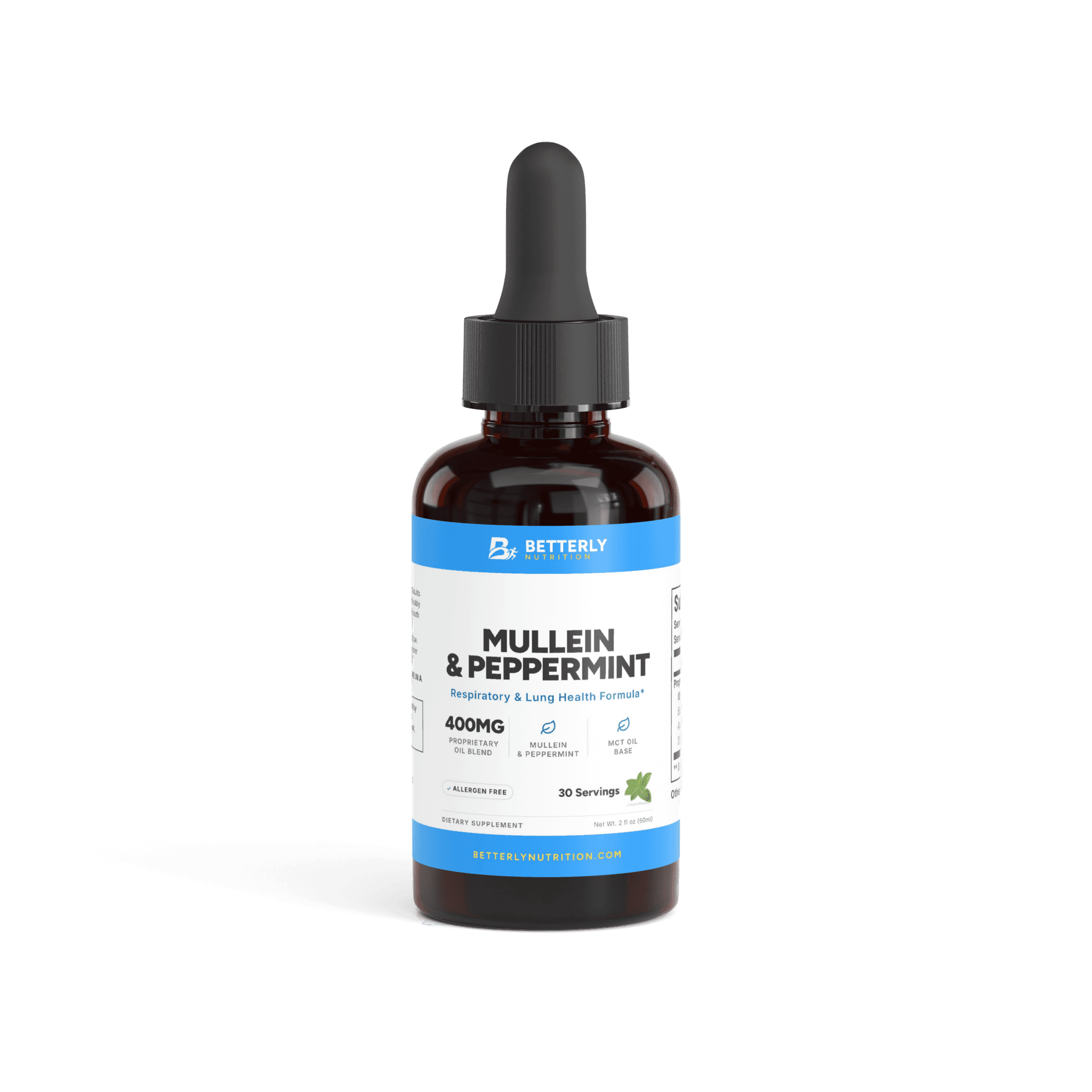
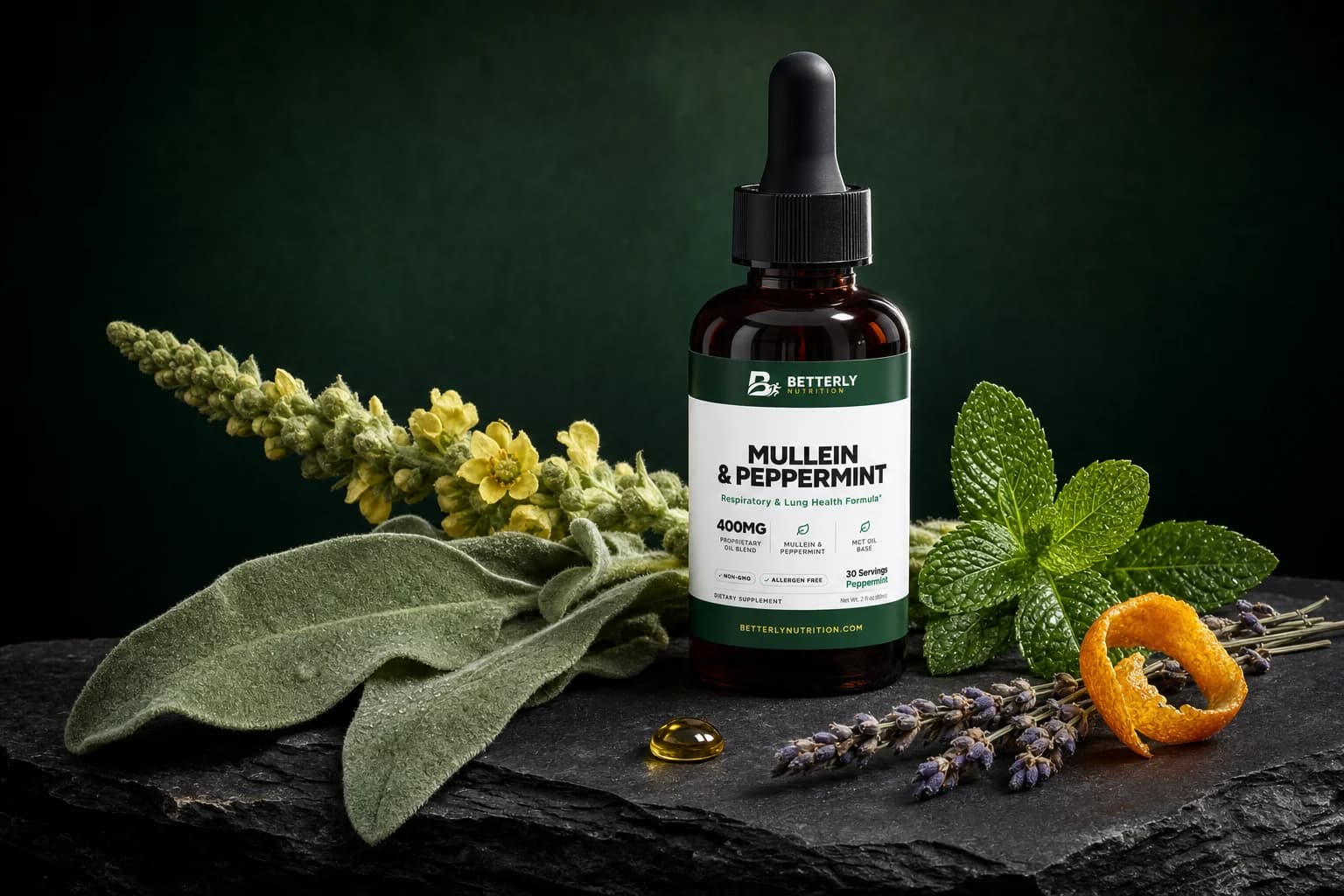
From our shop: Mullein & Peppermint Oil Drops — a 400 mg Proprietary Oil Blend of menthol plus peppermint, mullein, orange peel and lavender oils per 2 ml (40 drops) serving, in an MCT oil base with 30 servings per bottle.
Can you put mullein drops in water, juice or tea?
Yes. Betterly's mullein drops label says you can mix the 2 ml serving with a beverage, though it doesn't name a particular drink or temperature.
Expect one quirk: this is an oil. The blend sits in MCT oil (medium-chain triglycerides, a light fat that stays liquid at room temperature), and oil doesn't dissolve in water. Stir 40 drops into plain water and they'll bead up and float.
A few habits make a drink work better:
- Use a small pour, a few ounces rather than a tall glass, so you finish it in a few sips.
- Stir right before drinking, then swirl the last sip to catch oil on the sides.
- Try something with body. A smoothie hides the oily layer better than plain water.
Hot tea? Our label doesn't address hot drinks, and we found no federal source on it, so a warm mug comes down to taste. The bottle's front says "Peppermint," and that's what you'll taste first.
What time of day should you take mullein drops?
Betterly's mullein drops label says to take them once daily, preferably in the morning, and it doesn't give a reason for the timing.
The easiest way to follow "preferably in the morning" is to hitch the drops to something you already do early, like pouring your first glass of water or juice, which can double as the beverage. Our guide to building a routine you'll actually keep explains how to anchor a new product to an existing habit.
Food is a gap on our label, and we found no source saying mullein drops need a meal or an empty stomach. If oil first thing doesn't sit well, taking the drops with breakfast still fits the once-daily, morning direction.
Miss a morning? Pick up again the next day. The label calls for one serving daily and never says to make up a missed one.
What's in a 40-drop serving, and how should you read the label?
Each 2 ml (40 drops) serving of Betterly's mullein drops contains a 400 mg Proprietary Oil Blend of menthol plus four oils in MCT oil, with no single-ingredient amounts listed.
The blend's indented line reads: "Menthol USP, Peppermint Essential Oil, Mullein Oil, Citrus Aurantium Dulcis (Orange) Peel Oil, Lavender Essential Oil." The only other ingredient is "MCT Oil," so there's no alcohol, glycerin, water or sweetener listed. The front label claims Allergen Free.
That order matters. Chapter IV of the FDA's labeling guide for supplement makers requires a proprietary blend's ingredients to appear "in descending order of predominance by weight." So on our label, menthol is the largest share of the 400 mg, and mullein oil comes third of five ingredients. We'd rather you know that before you buy: this is a mint-forward blend with mullein in it, not a concentrated mullein extract.
"Mullein" usually means common mullein (Verbascum thapsus), a tall plant with soft, silvery leaves and a spike of yellow flowers. Our panel names neither the species nor the plant part the oil comes from.
That's where oil drops and a mullein tincture part ways. According to the NIH Office of Dietary Supplements' botanical supplements background page, a tincture is a botanical soaked in alcohol and water. The FDA guide adds that a liquid extract's label must identify its solvent. A bottle listing alcohol and an extract ratio is a tincture, and a glycerin-based leaf extract is a different preparation again. Either way, it comes with its own directions. Our mullein tea vs drops comparison sets the formats side by side.
For any mullein product, ours included, check six things on the label:
- The serving size in both milliliters and drops.
- Whether mullein has its own amount or sits inside a blend.
- Where mullein falls in the blend's order.
- The base liquid: oil, alcohol, glycerin or water.
- The species and plant part, if the label names them.
- How often to take it, and whether a time of day is given.
Can you take mullein drops with other supplements?
Betterly's mullein drops label doesn't warn against any specific supplement. The thing to watch is overlap, especially menthol and peppermint oil turning up in more than one product.
Mint turns up in peppermint tea, breath mints and some digestive formulas. Our label rules none of them out, but stacking several adds up to more peppermint oil than any one label accounts for.
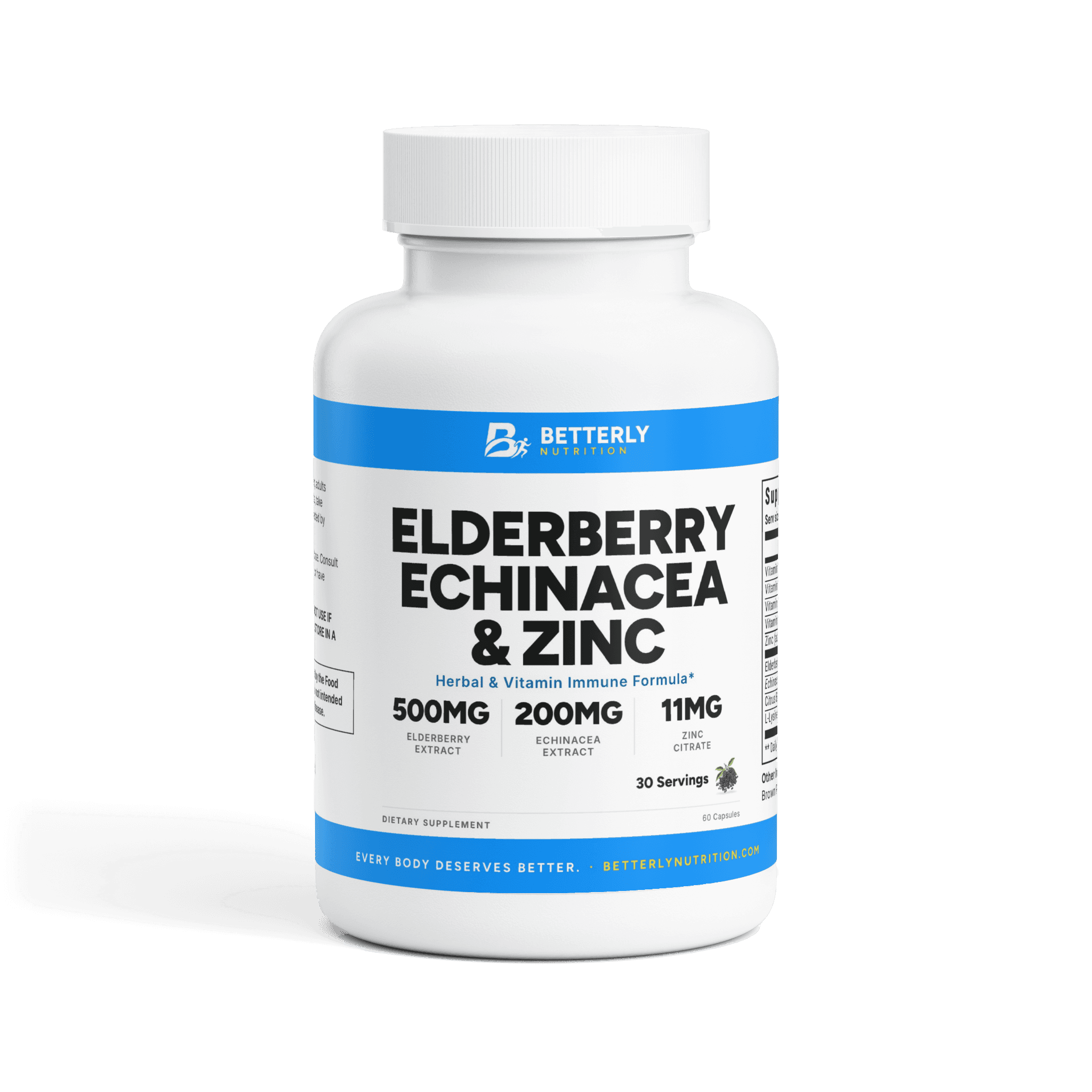
If you already keep a morning routine for normal immune function, mullein drops can sit beside it. Our Elderberry, Echinacea & Zinc Capsules contain no mint oils, so nothing doubles up. Their label pairs the two-capsule serving with a glass of water, and that same glass can carry your 40 drops. Our daily immune support routine suggests what else fits that kind of morning. For other single-purpose formulas, browse our targeted support range.
From our shop: Elderberry, Echinacea & Zinc Capsules — 500 mg elderberry fruit extract, 200 mg Echinacea purpurea extract and 11 mg zinc per 2-capsule serving, with no peppermint or menthol in the formula.
When don't you need mullein drops?
You probably don't need mullein drops if you dislike strong mint, already take several peppermint products, or want a stated amount of mullein itself.
- You want a mullein number. Our blend doesn't break out mullein's share, so a product listing mullein on its own line suits you better.
- Strong mint bothers you. Forty drops of a menthol-led oil won't taste mild, mixed or not.
- You want a result by a certain date. The label promises no outcome or timeline, and neither do we.
- A morning habit won't stick, and a 30-serving bottle forgotten in a cupboard does nothing for anyone.
Who needs a healthcare provider's OK before taking mullein drops?
Check with a healthcare provider before taking mullein drops if you're pregnant or nursing, under 18, taking any prescription medication, scheduled for surgery, or managing a medical condition.
The caution printed on our bottle says: "Do not exceed recommended dose. Consult a physician if pregnant, nursing, under 18, or have a medical condition."
NCCIH's peppermint oil page lists heartburn, nausea, abdominal pain and dry mouth as possible side effects of peppermint oil taken by mouth. It says little is known about medicinal amounts of peppermint during pregnancy or breastfeeding, and advises, "If you take any type of medicine, talk with your health care provider before using any herbal product."
If anything feels off after a serving, stop and ask a provider. Our guide to mullein side effects goes ingredient by ingredient.
FAQ: how to take mullein drops
Can kids take mullein drops?
Betterly's mullein drops are labeled for adults, so there's no child serving to follow. The dosing sentence begins "Adults take 2 ml," and the caution sends anyone younger than 18 to a physician before use. The bottle also carries a "KEEP OUT OF REACH OF CHILDREN" line. NCCIH notes that menthol, which is in peppermint oil, shouldn't be inhaled by or applied to the face of an infant or small child, so store this mint-strong bottle up high.
How long do mullein drops take to work?
Nobody can honestly promise a timeline for mullein drops, and our label doesn't offer one. We also couldn't find a federal fact sheet on mullein that sets a time frame. What you control is consistency: the same 2 ml each morning, and an honest look at whether the habit is worth keeping once the bottle's 30 servings run out.
Is it OK to take more than 40 drops of mullein?
No, Betterly's mullein drops label says not to exceed its recommended dose of 2 ml (40 drops) once daily. Extra drops don't add mullein alone. They add more menthol and peppermint oil too, since those come first in the blend. The NIH Office of Dietary Supplements points out that peppermint oil is much more concentrated than peppermint tea. If you think you need more, ask a healthcare provider first.
How do you take mullein tincture?
Take a mullein tincture exactly as its own label says, because tinctures and oil drops aren't dosed the same way. The NIH Office of Dietary Supplements describes a tincture as a botanical soaked in alcohol and water, and FDA labeling rules require a liquid extract to name its solvent. Check that line, the serving in milliliters or drops, and the frequency. Our 40-drops-once-daily direction doesn't transfer to a tincture.
Do mullein drops go bad after opening?
Betterly's mullein drops label doesn't set a use-within window once the bottle is open. Store it as printed, in a cool, dry place and out of children's reach, and screw the dropper cap down firmly after each serving. If the smell, color or taste turns noticeably off, don't use it.
Sources
- Herbs at a Glance, National Center for Complementary and Integrative Health
- Peppermint Oil, National Center for Complementary and Integrative Health
- Botanical Dietary Supplements: Background Information, NIH Office of Dietary Supplements
- Dietary Supplement Labeling Guide: Chapter IV. Nutrition Labeling, FDA
If this left you looking for somewhere to start, read mullein and peppermint oil drops — its amounts per serving are listed on the page. For the practical questions this raises, how dosing, sourcing and subscriptions work is answered in one place.