On this page
- Key takeaways
- Mullein tea vs drops: which is better for you?
- What's in mullein tea, tinctures, capsules and oil drops?
- How is mullein tea made, and why do you strain it?
- Mullein tea vs tincture, extract or capsules: what changes?
- Are Betterly's mullein drops a mullein extract?
- Is mullein leaf the same as mullein oil?
- How do you take each mullein format by its label?
- Who's better off skipping mullein drops for tea or capsules?
- Who should check with a healthcare provider first?
- FAQ: mullein tea vs drops
- Sources
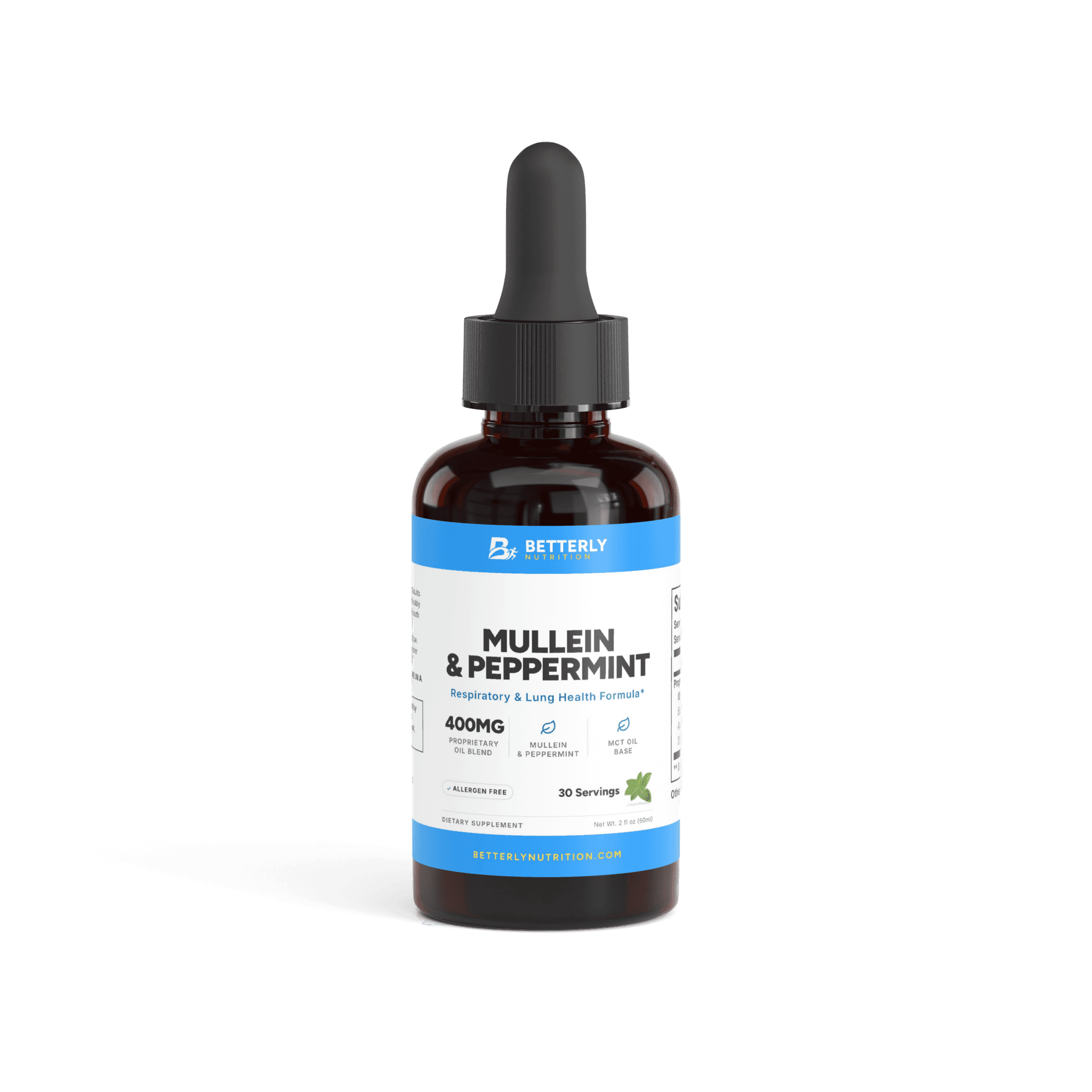
The short answer: Mullein tea vs drops comes down to what's actually in the cup or the bottle. Tea is dried mullein steeped in hot water, so you're handling the plant itself, fuzz and all, and most tea recipes call for a fine strainer. "Drops" can mean an alcohol tincture, a glycerin extract or an oil blend like ours, where mullein oil sits third, behind menthol and peppermint oil, in a 400 mg blend per 2 ml serving.
Key takeaways
- Mullein tea is dried leaf or flower steeped in hot water, and since the plant is coated in fine hairs, most recipes strain it more finely than a tea ball can.
- "Mullein drops" covers at least three different liquids: alcohol tinctures, glycerin extracts and oil blends.
- Betterly's Mullein & Peppermint Oil Drops rank mullein oil third of five ingredients in a 400 mg Proprietary Oil Blend, measured per 2 ml (40 drops) serving.
- A mullein capsule holds powdered plant or a dried extract, and only the label's wording tells you which.
- We found no federal source that sets a mullein dose or says one format works better than another, so compare products by what their labels disclose.
We sell one mullein format, an oil-based drop, and no mullein tea, tincture or capsule. That's a stake in this comparison, so every number about our bottle comes from its Supplement Facts panel, including the details that make it the wrong pick for some readers.
Mullein tea vs drops: which is better for you?
Neither mullein tea nor mullein drops is better for everyone. The right pick depends on whether you want the plant itself or a fixed serving you can take anywhere.
We found no federal source comparing mullein formats head to head, so nobody can honestly say one does more in your body. You can compare what goes into each product, the effort it takes, and what its label reveals:
| If you want... | Lean toward | Check the label for |
|---|---|---|
| The plant, nothing added | Loose or bagged tea | Species, plus leaf or flower |
| A set serving, no brewing | Capsules | Powder or extract, in mg |
| A liquid with no alcohol | Glycerin or oil drops | The base and full ingredient list |
| A classic liquid extract | Tincture | Solvent and plant-to-liquid ratio |
| Strong mint, once a day | An oil blend like ours | Where mullein sits in the blend |
Two bottles sold as mullein drops can share a name and very little else, so reading the label beats picking a format by reputation.
What about claims that drops "absorb faster"? We found no federal source showing it for mullein, the same verdict we reached comparing mushroom drops, capsules and gummies.
What's in mullein tea, tinctures, capsules and oil drops?
Mullein formats differ from the first step: tea is steeped plant, a tincture is plant soaked in alcohol and water, a capsule holds dried material, and oil drops are oil.
The NIH Office of Dietary Supplements (ODS) lays out these preparations on its botanical supplements background page. A tea is plant steeped in boiling water, and an infusion is just a very strong tea. A tincture soaks the plant in alcohol and water. An extract soaks it in a chosen liquid; dry that liquid off and you have a powdered extract for capsules.
| Format | What's inside | Day to day | Label detail to find |
|---|---|---|---|
| Tea | Dried leaf, flower or both | Steep, strain, sip | Plant part and species |
| Tincture | Plant in alcohol and water | Measured by dropper | Ratio, solvent, ml per serving |
| Glycerin extract | Plant in glycerin | Measured by dropper | Solvent and ratio |
| Capsules | Plant powder or dried extract | Swallow with water | Powder or extract, mg each |
| Our oil drops | Menthol plus four oils in MCT oil | 40 drops once daily | 400 mg blend total only |
Only a plain-powder capsule has you swallow the plant material itself. Tea gives you what hot water pulls from it, and every liquid carries a solvent or carrier too.
How is mullein tea made, and why do you strain it?
Mullein tea is made by steeping dried mullein leaves or flowers in hot water, and most recipes then strain it finely because the plant is covered in tiny hairs.
The USDA Forest Service's species review of common mullein (Verbascum thapsus) describes a thick coating of branched hairs on its stems and leaves. Dried leaf keeps that fuzz, and loose bits can drift through a wide-mesh tea ball.
That's why many mullein tea recipes add a second, finer pass, pouring the brewed cup through paper or a few layers of cheesecloth. That tip comes from recipe writers, not from a government source. Bagged tea handles part of it by keeping the leaf contained.
Here's what tea can't give you: a number. How much of the plant ends up in your cup depends on how much you use, how hot the water is and how long it steeps. Follow the package's steeping directions and keep them the same each time.
Mullein tea vs tincture, extract or capsules: what changes?
Switching from mullein tea to a tincture, extract or capsule mainly changes concentration and convenience: less volume, a measured serving, and a label that should explain the strength.
ODS notes that teas, tinctures and extracts differ in strength. Its example: the same amount of a plant may be in a cup of tea, a few teaspoons of tincture, or an even smaller amount of extract.
Reading a tincture label takes one extra step. The federal rule on supplement labels, 21 CFR 101.36, says a liquid extract whose solvent hasn't been removed is declared by the volume or weight of the entire extract. So "2 ml of mullein leaf extract" measures the finished liquid, alcohol included. The rule lets a brand print the plant-to-solvent ratio, and it requires the solvent to be named, either on the panel or in the ingredient list.
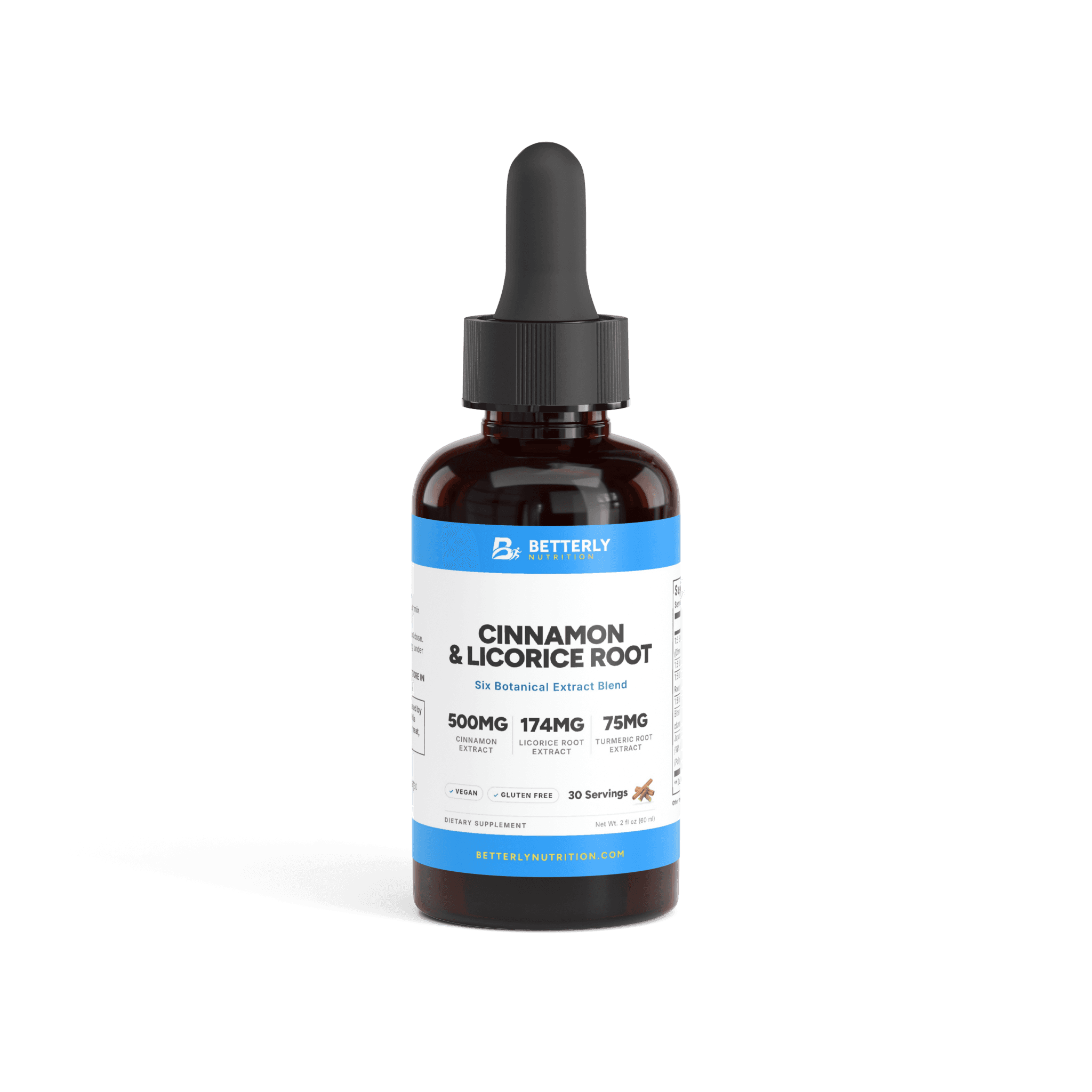
Our Cinnamon & Licorice Root Drops show that on a real panel: "1:5 Extract of Cinnamon (Cinnamomum cassia) (bark)" at 500 mg per 2 ml (40 drops) serving, in water and glycerin. The 500 mg counts the finished extract, not 500 mg of bark, and the plant part is named. Look for the same details on a mullein tincture.
Not every dropper bottle lists alcohol. Those cinnamon drops list water and glycerin as their base, and our mullein drops list only MCT oil beyond the blend.
Capsules skip the liquid entirely. Under the same rule, a dry extract's listed weight is the extract alone, with the solvent gone. So 450 mg of leaf powder and 450 mg of a concentrated extract aren't the same amount of plant. The wording, "leaf" versus "leaf extract" plus any ratio, is how you tell.
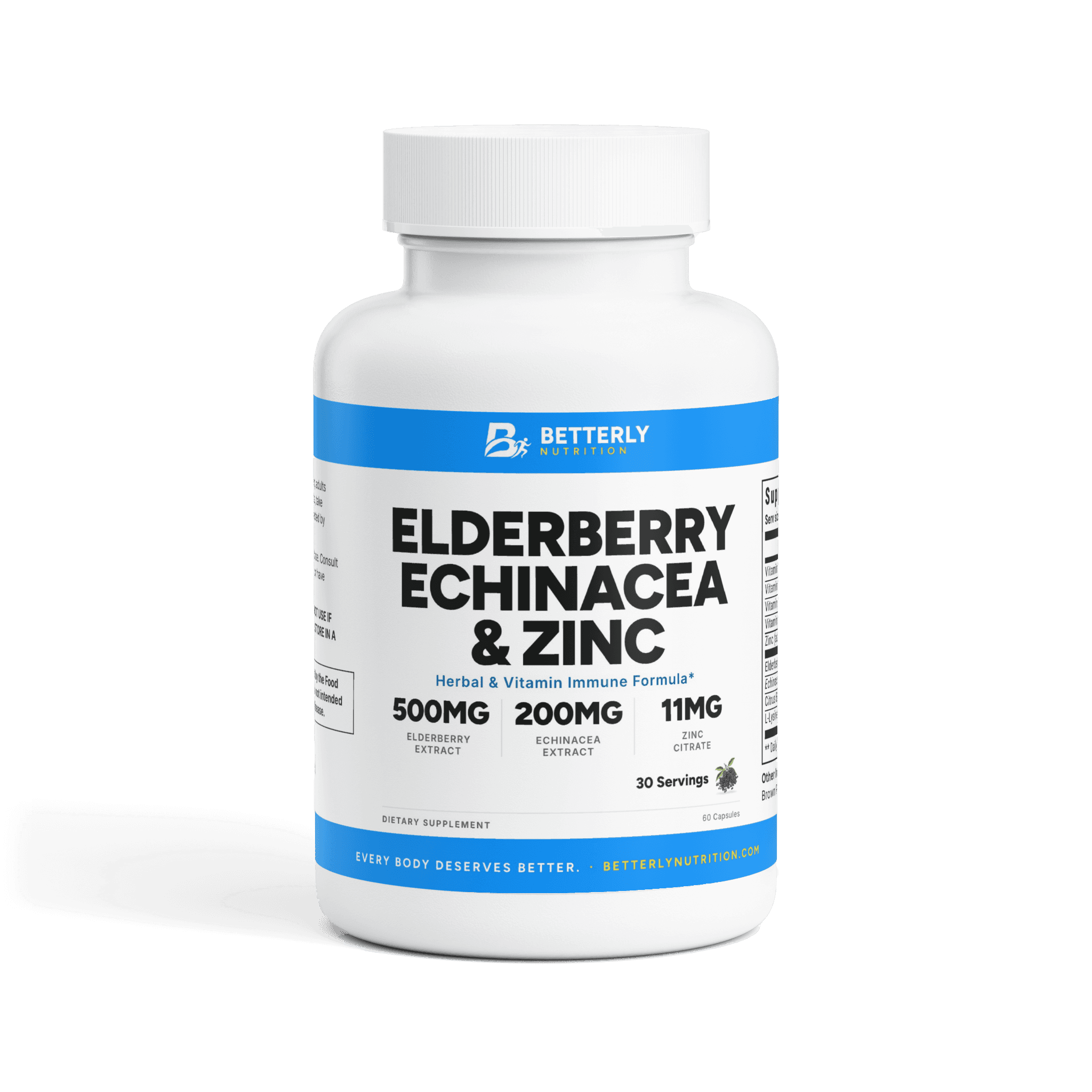
From our shop: Elderberry, Echinacea & Zinc Capsules — no mullein inside, but a capsule panel that names the plant part for both herbal extracts: 500 mg elderberry fruit extract and 200 mg Echinacea purpurea whole-plant extract per 2-capsule serving.
Are Betterly's mullein drops a mullein extract?
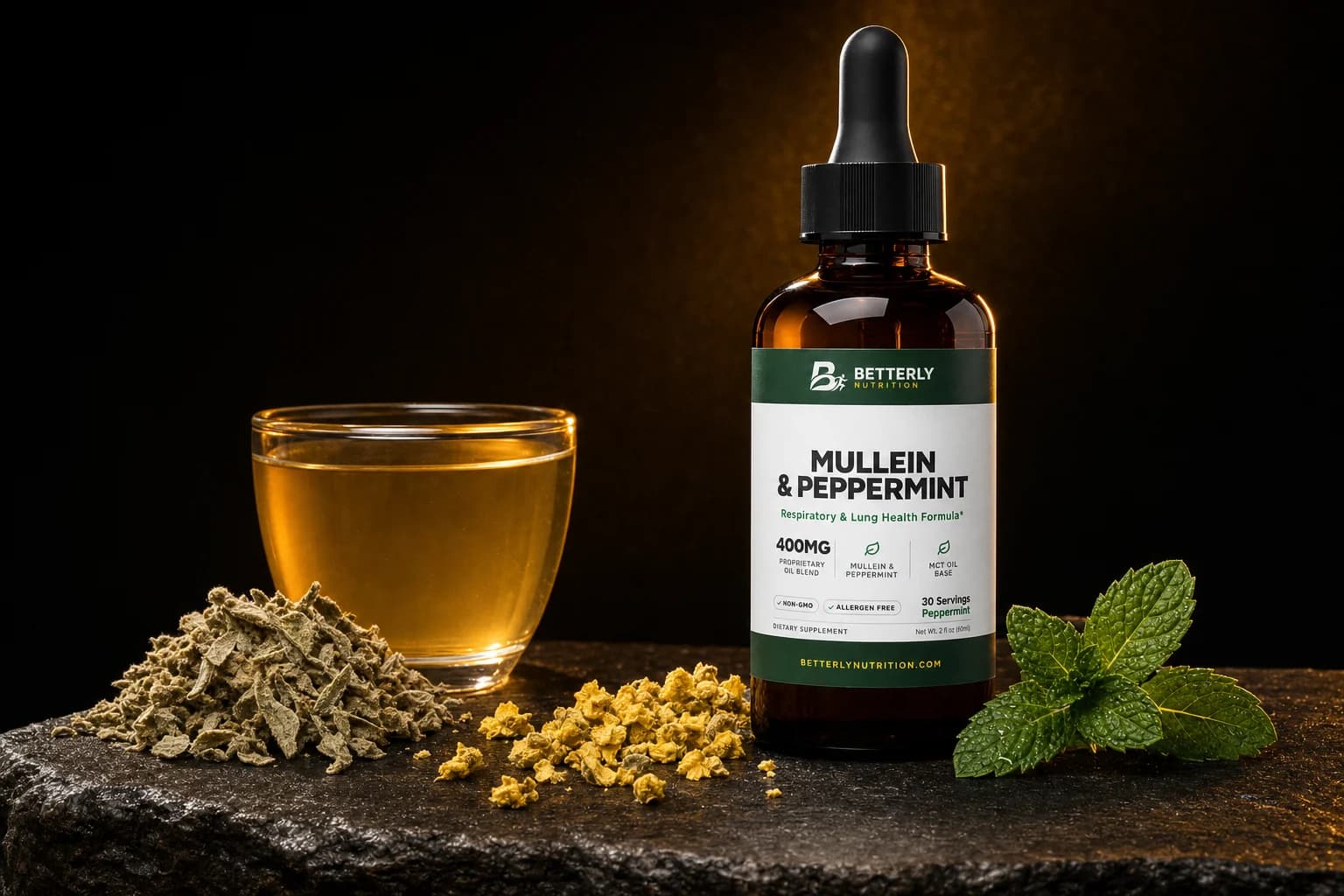
No. Betterly's Mullein & Peppermint Oil Drops are an oil blend, not a leaf extract: menthol and four botanical oils in MCT oil, with mullein oil listed third.
So how much of a serving could be mullein? Each 2 ml (40 drops) serving holds a 400 mg Proprietary Oil Blend, with five names printed under it: "Menthol USP, Peppermint Essential Oil, Mullein Oil, Citrus Aurantium Dulcis (Orange) Peel Oil, Lavender Essential Oil."
Because federal labeling rules order a blend by weight, largest share first, menthol and peppermint oil each outweigh the mullein oil. That caps mullein at less than a third of the 400 mg, and the label doesn't say how far below that it falls. A cup of plain mullein leaf tea, by contrast, has no other plant in it.
The panel also skips which part of the plant the mullein oil came from, and whether it's an infused or a distilled oil. Our step-by-step guide to mullein drops covers the rest of the label.
Mint shows why form matters. NCCIH's peppermint oil fact sheet separates peppermint tea, made from the leaves, from peppermint essential oil, which it calls very concentrated. Our blend's first two ingredients sit on the concentrated side of that line.
So a mug of mullein leaf tea and 40 of our drops are different preparations, and what's written about the leaf doesn't carry over to our blend.
From our shop: Mullein & Peppermint Oil Drops — an oil drop, not a tincture: each 2 ml (40 drops) serving holds a 400 mg Proprietary Oil Blend led by menthol, with MCT oil as the only other ingredient.
Is mullein leaf the same as mullein oil?
No. Mullein leaf is the dried plant you steep or swallow as powder, while "mullein oil" is a label name covering products made in very different ways.
Some products sold as mullein oil are flower-infused oils labeled for external use only. A label like that rules out stirring it into a drink.
Ours points the other way: the directions say to take it "orally," and they cover no other use. Same name, different products.
How do you take each mullein format by its label?
Take each mullein format exactly as its own label directs, because a cup of tea, a dropper of tincture, a capsule and 40 of our drops aren't interchangeable servings.
- Tea: follow the package's steeping directions, strain well, and stick to its suggested servings.
- Tincture or glycerin extract: measure the milliliters or drops that bottle lists, not a guessed "dropperful." Drop size varies with the liquid, as our guide to counting drops in 1 ml of tincture explains.
- Capsules: take the count the label gives, with the water it asks for.
- Our oil drops: the label reads "Shake well before use. Adults take 2 ml (40 drops) orally once daily, preferably in the morning. Dispense directly into the mouth or mix with a beverage."
Don't convert one format's serving into another. No federal source says how many cups of tea or capsules would match 40 of our drops.
One 2 ml serving a day is the limit, since the bottle's caution tells you "Do not exceed recommended dose." If straight mint oil tastes too strong, the label lets you mix it into a beverage.
Who's better off skipping mullein drops for tea or capsules?
You're better off with mullein tea or a capsule than with our oil drops if you want the leaf itself, a milligram figure for mullein, or no essential oils.
- You already brew mullein tea and like the ritual. Our drops hold an oil, not dried plant, so they wouldn't replace it.
- You want to compare mullein amounts across brands. Look for a leaf capsule that gives mullein its own milligram line, because our five oils share one 400 mg figure.
- You'd rather skip essential oils. Our panel lists peppermint and lavender as essential oils, with menthol ahead of both, and plain leaf tea avoids them.
- Something written about the leaf is what drew you to mullein. Leaf tea, tincture or capsules match that better, since our bottle never names a plant part.
No format is required, either. Mullein isn't a vitamin or mineral with a recommended intake, and our panel prints "Daily Value (DV) not established" beside the blend. Our targeted support collection shows what else we sell for specific goals, and our mullein side effects guide weighs the downsides ingredient by ingredient.
Who should check with a healthcare provider first?
Get a healthcare provider's OK before any mullein product, tea included, if you take medication, have surgery ahead, manage a health condition, are pregnant or breastfeeding, or haven't turned 18.
Our bottle's caution says: "Do not exceed recommended dose. Consult a physician if pregnant, nursing, under 18, or have a medical condition." The dosing directions assume an adult, which fits that list.
NCCIH adds two points about our blend's mint. Little is known about whether medicinal amounts of oral peppermint are safe during pregnancy or breastfeeding. It also warns that menthol, found in peppermint oil, may affect an infant's or small child's breathing if they inhale it or it's applied to their face. Keep that in mind if a baby or toddler lives with you.
Tea isn't exempt. MedlinePlus's herbal medicine page notes that some herbs can interact with prescription and over-the-counter medicines, and advises, "tell your health care provider about any herbal medicines you are taking." Home-brewed tea counts as an herbal medicine for that conversation.
FAQ: mullein tea vs drops
Is mullein tea weaker than mullein drops or tincture?
Mullein tea can be weaker, yes, when you compare it with a leaf tincture or extract. ODS explains that tinctures concentrate a plant, and that a smaller amount of extract may hold as much plant as a cup of tea. That comparison covers leaf preparations, not Betterly's drops. Ours is a 400 mg oil blend per 2 ml serving led by menthol and peppermint oil, so "stronger" there mostly means stronger mint.
Can you drink mullein tea and take mullein drops on the same day?
Ask your healthcare provider first, because we found no federal source on combining mullein tea with mullein drops. Our label covers only its own 2 ml serving, not tea or a second mullein product. Bring the drops' label and the tea's package so your provider sees everything you'd be taking.
Are mullein capsules better than mullein tea?
Mullein capsules aren't better than tea by any federal measure we found, but some people find them easier. A capsule skips steeping, straining and taste, and gives the same serving every time. Tea takes more effort and shows you what went into the cup. On a capsule, check whether it says leaf powder or leaf extract.
Are mullein gummies better than drops?
Mullein gummies aren't automatically better than drops. A gummy trades the dropper for a chew, so check its panel for an added sugars line and for how much mullein each gummy holds. We don't sell a mullein gummy, so we have no label of our own to show you.
Which part of the mullein plant goes into tea?
Mullein teas are sold made from dried leaves, flowers or a mix, and the package should say which. Leaf and flower are different parts of Verbascum thapsus, so a pouch that says only "mullein" leaves a gap. Betterly's drops list "Mullein Oil" without naming a plant part, one more reason they don't stand in for leaf tea.
Sources
- Botanical Dietary Supplements: Background Information, NIH Office of Dietary Supplements
- Peppermint Oil: Usefulness and Safety, National Center for Complementary and Integrative Health
- Verbascum thapsus (common mullein), Fire Effects Information System, U.S. Forest Service
- 21 CFR 101.36: Nutrition labeling of dietary supplements, Electronic Code of Federal Regulations
- Herbal Medicine, MedlinePlus, U.S. National Library of Medicine
If this left you looking for somewhere to start, read mullein drops in an MCT oil base — its amounts per serving are listed on the page. For the practical questions this raises, how dosing, sourcing and subscriptions work is answered in one place.