On this page
- Key takeaways
- What is mullein, and where does it come from?
- What is mullein good for, according to tradition?
- Are mullein benefits for lungs backed by research?
- Which mullein claims go further than the evidence?
- What does a "respiratory support" claim really promise?
- Why do mullein drops include menthol and peppermint oil?
- How should you take mullein drops if you try them?
- When don't you need mullein at all?
- Who should check with a healthcare provider before taking mullein?
- FAQ: mullein benefits
- Sources
The short answer: Mullein benefits for lungs are mostly a matter of tradition. Common mullein (Verbascum thapsus) has a long folk history for the respiratory tract, but no federal health agency we checked has reviewed studies of it in people. So the honest phrase is "traditionally used," not "proven." Betterly's drops list mullein oil third among five ingredients that share one 400 mg total per 2 ml serving.
Key takeaways
- Common mullein's reputation for the chest and airways comes from folk use recorded over centuries, not from trials in people that a federal agency has reviewed.
- The NIH Office of Dietary Supplements calls studies with people the most direct evidence for an herb, and that's the kind of evidence where we found nothing on mullein that a federal agency has reviewed.
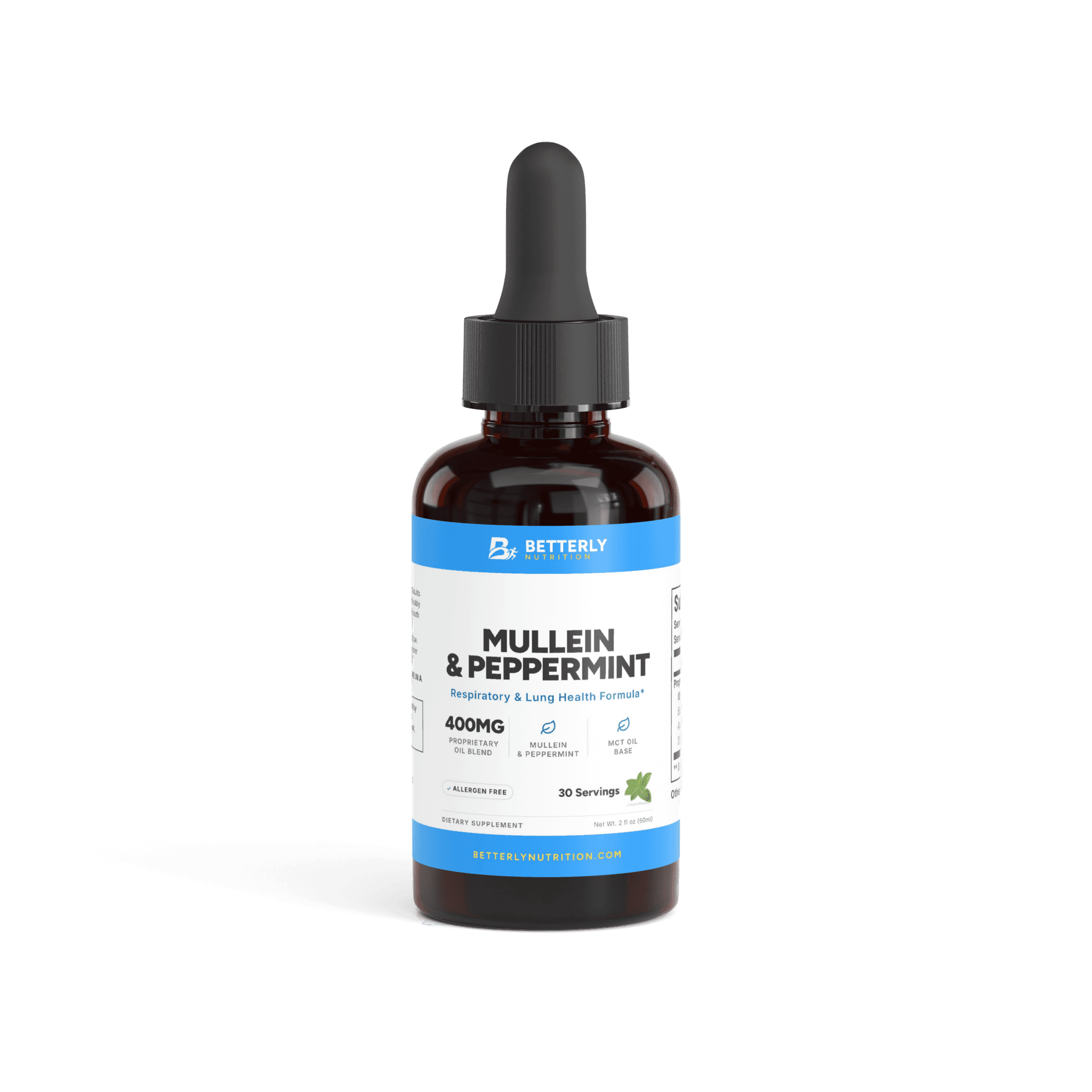
- Betterly's Mullein & Peppermint Oil Drops list menthol and peppermint oil ahead of mullein oil in a 400 mg Proprietary Oil Blend per 2 ml (40 drops) serving.
- A phrase like "supports respiratory health" is a structure/function statement, and the FDA doesn't approve those before a product goes on sale.
- The cool rush of a menthol-led drop is a flavor sensation, not a sign that anything in your lungs has changed.
We sell mullein drops, so we'd gain if this page oversold them. It won't. Below, we separate what's documented from what's just repeated, and we point out where our own label leaves you guessing.
What is mullein, and where does it come from?
Mullein usually means common mullein (Verbascum thapsus), a woolly, yellow-flowered plant that early settlers brought from Europe to North America.
The U.S. Forest Service's Fire Effects Information System entry on Verbascum thapsus lists several other names for it, including flannel plant, great mullein and woolly mullein. Settlers grew it before the Revolutionary War, so it has likely been in the United States for more than 230 years.
Mullein takes two years to finish its life cycle: a low rosette of big, furry leaves in year one, then one thick flowering stem in year two.
Leaves and flowers, capsules, alcohol extracts and flower oil were all available in the U.S. when that Forest Service review was written in 2008. That variety matters, because a benefit claim written about leaf tea may say nothing about an oil blend. Our drops sit in our targeted support collection, next to other single-goal formulas.
What is mullein good for, according to tradition?
Mullein is best known as a traditional herb for the respiratory tract, and the Forest Service review records that folk use among several Native American nations.
The review names the Potawatomi, Mohegan, Penobscot and Menominee among the peoples who used dried mullein leaves for the chest and airways. In Europe, it adds, folk recipes mixed the leaves with the roots. The review also lists folk claims that range far beyond breathing, and those are often where modern marketing starts.
The flowers show up in that history too, just not for breathing. The review's example is yellow mullein flowers used to dye hair as early as the 4th century BC.
A history of use tells you what people did with a plant. It can't tell you how well the plant worked, and these records mostly describe dried leaves and roots, not an oil from a dropper.
Are mullein benefits for lungs backed by research?
Mullein benefits for lungs aren't backed by research that any federal health agency we checked has reviewed. What we could verify is mostly traditional use, not trials in people.
The NIH Office of Dietary Supplements (ODS) explains how scientists size up an herb on its botanical supplements background page. They can look at a plant's history of use, at lab work on cells or tissue, and at animal studies. Studies with people, ODS says, "provide the most direct evidence."
Here's how mullein fares on each rung, using only what we could verify:
| Type of evidence | What it can show | What we found for mullein |
|---|---|---|
| History of use | What people did with the plant | Folk use for the airways, on record |
| Lab studies (cells or tissue) | How compounds act in a dish | A 2002 study of extracts, named by the Forest Service review without saying what kind |
| Animal studies | Effects in animals | No federal summary found |
| Studies with people | The most direct evidence, per ODS | No federal summary found |
Beyond folk use, the only research we found in a federal source is a one-line mention, in the Forest Service review, of a 2002 study of mullein extracts, which doesn't say it involved people. A passing mention like that can't show what happens in your lungs. We also went looking for a mullein page from the National Center for Complementary and Integrative Health (NCCIH), the NIH center that writes plain-language herb summaries, and came up empty.
So the research is thin. That doesn't mean mullein does nothing. It means we couldn't find human evidence, reviewed by a federal agency, that shows what it does for your lungs.
Which mullein claims go further than the evidence?
The mullein claims that go furthest promise a specific lung result, a lasting change or a quick effect. None of those rests on a federal review of studies in people.
Once you know the evidence is mostly tradition, product pages get easier to sort:
| You'll often read | What we could verify | What we say instead |
|---|---|---|
| "Used for centuries for the lungs" | Folk use on record | Traditionally used for the respiratory tract |
| "Proven to support lung function" | No federal review of human studies | The research is limited |
| Claims that it repairs or resets the lungs | Nothing we found | We don't make this claim |
| "You'll notice it within days" | No timeline in any source we found | No promised timeline |
| "Mullein drops are mostly mullein" | Depends on the label | Check where mullein sits in the list |
The first row holds up once it's framed as tradition. The next three don't, so read any page that leans on them with some doubt, ours included if we ever slip. The last row depends on the bottle in your hand, which is exactly what our comparison of mullein tea and drops digs into.
What does a "respiratory support" claim really promise?
A "respiratory support" line is a structure/function claim: a statement about the body's normal workings that the FDA doesn't approve before the product is sold.
The FDA's page on structure/function claims sets out the rules. A claim like this may describe how an ingredient affects the normal structure or function of the body. One of the agency's own examples is "calcium builds strong bones." The company doesn't need the agency's sign-off first, but it must notify the FDA no later than 30 days after the product goes on sale.
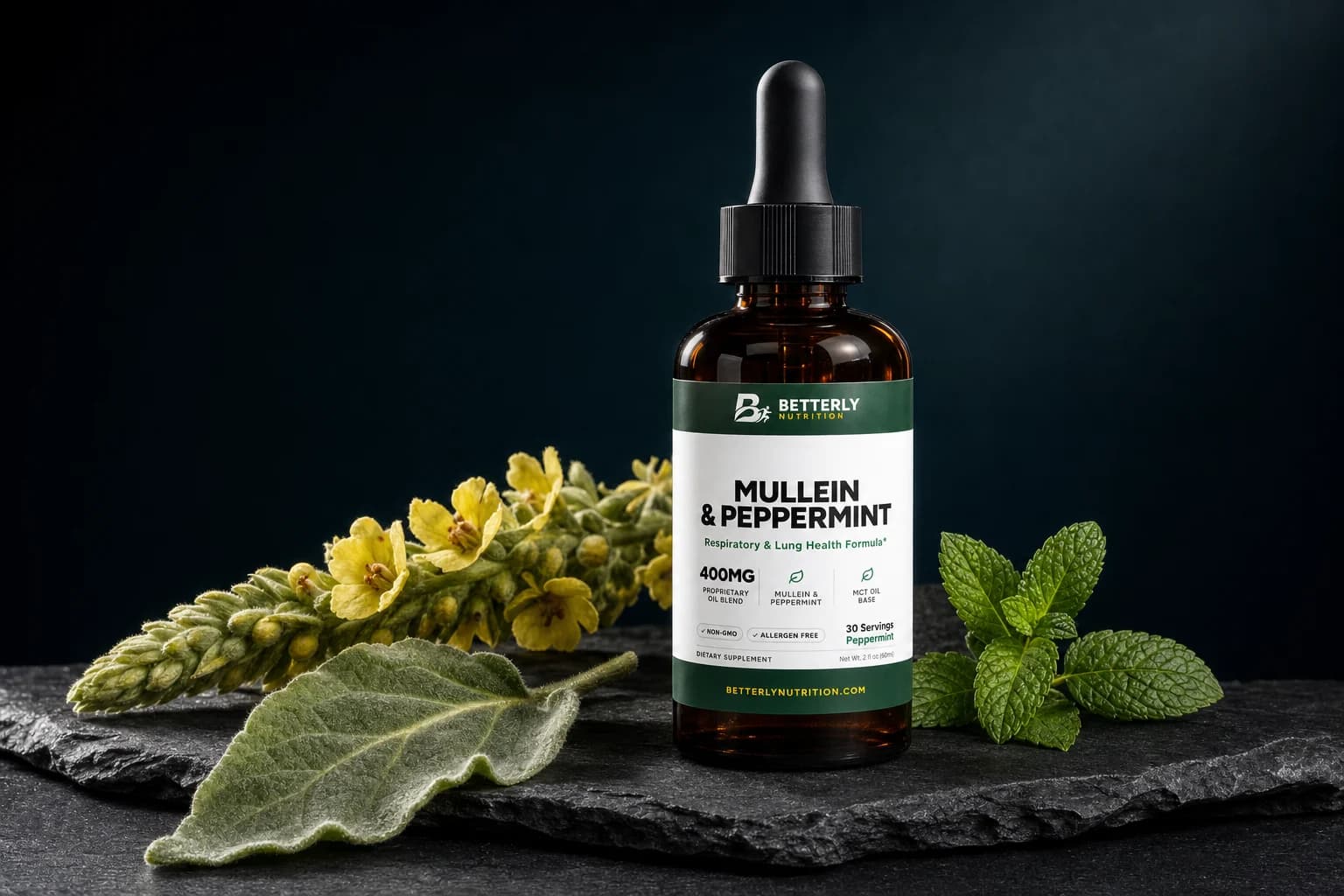
Any supplement label making such a claim must also carry a disclaimer saying the FDA hasn't evaluated it. Our bottle shows how that looks. Under the product name, it reads "Respiratory & Lung Health Formula*," and the asterisk ties that phrase to the FDA disclaimer. Read the phrase as the goal the formula was put together for. It isn't a promise of a result, and it isn't an FDA finding.
Why do mullein drops include menthol and peppermint oil?
Betterly's mullein drops lead with menthol and peppermint oil, which give the blend its strong mint flavor and cool feel, and the label doesn't say why they were chosen.
Here's the full blend row, per 2 ml (40 drops) serving. The 400 mg Proprietary Oil Blend contains "Menthol USP, Peppermint Essential Oil, Mullein Oil, Citrus Aurantium Dulcis (Orange) Peel Oil, Lavender Essential Oil." Everything is suspended in MCT oil, which the panel lists as its only other ingredient. Supplement labels list a blend's contents from heaviest to lightest, so the mullein oil weighs no more than either of the two ingredients above it.
Does the peppermint side bring breathing research with it? Not much. NCCIH's peppermint oil fact sheet describes the research on peppermint oil as small, and most of it looks at the gut rather than the airways.
That leaves the cool feel. It's real, and plenty of people enjoy it. But it comes from the mint, much like the chill of a strong breath mint, and it isn't evidence that anything in your lungs has changed.
The benefits of mullein drops like ours come down to a measured, once-daily serving and a strong mint taste. What the label doesn't give you is a mullein amount: the panel lists a single 400 mg total for all five ingredients. And we found no federal source that has reviewed mullein drops in people. Our proprietary blend explainer shows what ingredient order does and doesn't reveal.
From our shop: Mullein & Peppermint Oil Drops — a menthol-led 400 mg Proprietary Oil Blend per 2 ml (40 drops) serving, with mullein oil third and MCT oil as the base, for adults who enjoy strong mint.
How should you take mullein drops if you try them?
Take Betterly's mullein drops as the label directs: shake well, then have 2 ml (40 drops) once a day, ideally in the morning, straight or stirred into a drink.
The label's own words are "Adults take 2 ml (40 drops) orally once daily, preferably in the morning. Dispense directly into the mouth or mix with a beverage."
One serving a day is the most the label allows, and its caution begins "Do not exceed recommended dose." ODS gives matching advice for any botanical: stick to the maker's directions and stay within the recommended dose unless your healthcare provider says otherwise.
If you're hoping more drops will mean more benefit, there's nothing to measure that by. The label never states how much mullein a serving holds, so extra drops wouldn't add a known amount of it. They'd only take you past the label's limit.
For the finer points, from mixing an oil into a drink to handling a missed morning, see our step-by-step mullein drops routine.
When don't you need mullein at all?
You don't need mullein if you're after a promised lung result, if your breathing feels different than usual, or if your real goal is normal immune function.
- You want a guaranteed outcome. No source we read promises one, and neither does our label.
- Your breathing has changed, or something just feels off. That calls for a visit with a healthcare provider, not a new supplement.
- You're drawn to the herb as tradition used it. Folk records mostly describe dried leaves and roots, and our drops are an oil blend with menthol first.
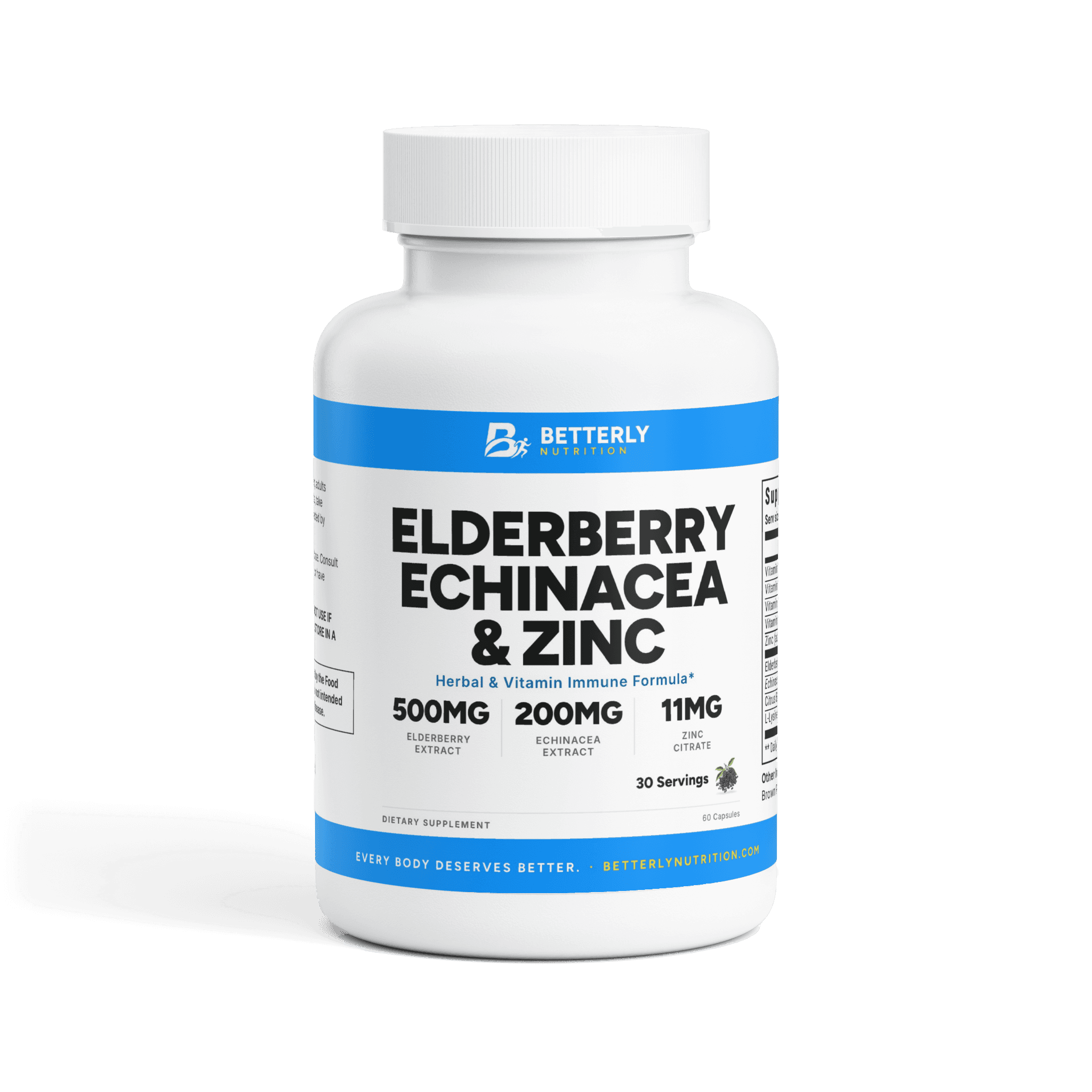
If normal immune function is your real goal, that calls for separate ingredients. Mullein's reputation is tied to the airways, not to the immune system. Our Elderberry, Echinacea & Zinc Capsules are built for that goal instead, pairing zinc and vitamins C, D3, E and B6 with elderberry and echinacea extracts. Their label calls for two capsules daily with 6-8 oz (177-237 ml) of water.
From our shop: Elderberry, Echinacea & Zinc Capsules — a mint-free capsule formula for normal immune function, where each 2-capsule serving lists 500 mg elderberry fruit extract, 180 mg vitamin C and 40 mcg vitamin D3.
Who should check with a healthcare provider before taking mullein?
Check with a healthcare provider before taking mullein if you're pregnant, nursing or under 18, take prescription medicine, have surgery coming up, or live with a medical condition.
Word for word, the label's caution is: "Do not exceed recommended dose. Consult a physician if pregnant, nursing, under 18, or have a medical condition." Medicine and surgery aren't on that line, but ODS says to bring up every botanical you take, or plan to take, with your provider, and those are two moments when that conversation matters most.
ODS adds that a "natural" label doesn't make a botanical safe, because safety depends on its chemical makeup, how it acts in the body, how it's made into a product and the amount you use. Bring the bottle along, since the panel names all five ingredients.
If your breathing feels different than usual, see a provider before you reach for any herb. And if mint, lavender or orange peel has bothered you before, our ingredient-by-ingredient look at mullein side effects walks through what federal sources say about each oil in the blend.
FAQ: mullein benefits
What are the benefits of mullein leaf?
Mullein leaf's benefits are traditional rather than established. The leaf is the part the Forest Service review most often links to folk use for the chest and airways, and European recipes also used the root. We found no federal fact sheet reviewing leaf studies in people. Betterly's drops list "Mullein Oil" in an oil blend, so leaf traditions don't carry over to them one for one.
Are there mullein benefits for women or men specifically?
No, we found no federal source describing mullein benefits that differ for women or men. Searches for mullein benefits for women, men or skin tend to repeat the same traditional respiratory reputation under a new heading. Our drops' directions are the same for every adult: 2 ml (40 drops) once daily. The label's caution does single out pregnancy and nursing, so check with a healthcare provider first in either case.
Is mullein good for you?
Nobody can say for sure. We found no NCCIH or ODS fact sheet on mullein, so "good for you" goes further than any federal review has shown, and its reputation rests on tradition. ODS also cautions that a "natural" label doesn't by itself make a botanical safe. If you try it, follow the label exactly and tell your healthcare provider it's now part of your routine.
Can you put mullein drops in a steamer or diffuser?
No. Betterly's mullein drops are labeled to be taken by mouth, and the directions cover no other use. Menthol leads the blend, and according to NCCIH, it can interfere with an infant's or small child's breathing when inhaled or applied to their face. Keep the bottle out of steam bowls and diffusers, especially in a home with young children, and store it well out of their reach.
Does mullein make you sleepy?
No federal source we found ties mullein to drowsiness, and Betterly's drops carry no drowsiness warning. The blend's last oil is lavender, though, and our mullein side-effects guide covers a possible interaction between lavender and medicines that make you drowsy. The label suggests the morning for its serving but doesn't say why. If you feel sleepy or unwell after a serving, stop taking the drops and tell a healthcare provider, along with every other supplement and medicine you use.
Sources
- Verbascum thapsus (common mullein) species review, Fire Effects Information System, USDA Forest Service
- Botanical Dietary Supplements: Background Information, NIH Office of Dietary Supplements
- Peppermint Oil: Usefulness and Safety, National Center for Complementary and Integrative Health
- Structure/Function Claims, U.S. Food and Drug Administration
If this left you looking for somewhere to start, read mullein drops for respiratory health — its amounts per serving are listed on the page. For the practical questions this raises, how dosing, sourcing and subscriptions work is answered in one place.