On this page
- Key takeaways
- What mullein side effects come from the plant itself?
- Why do mullein drops carry different cautions than mullein tea?
- Can mullein drops upset your stomach or cause heartburn?
- Can you take mullein drops with medication?
- Can you be allergic to mullein, peppermint or lavender?
- How should you take mullein drops to keep side effects in check?
- What should you do if mullein drops don't agree with you?
- When are mullein drops the wrong choice for you?
- Who should skip mullein or check with a provider first?
- FAQ: mullein side effects and safety
- Sources
The short answer: Mullein side effects are thinly documented. NCCIH's herb fact sheets don't cover the plant, and the leaf-hair warning behind strained mullein tea comes from herbal guides, not federal pages. Oil drops change the picture. In our 400 mg Proprietary Oil Blend, menthol and peppermint oil come first, and NCCIH links peppermint oil taken by mouth to heartburn, nausea, abdominal pain and dry mouth.
Key takeaways
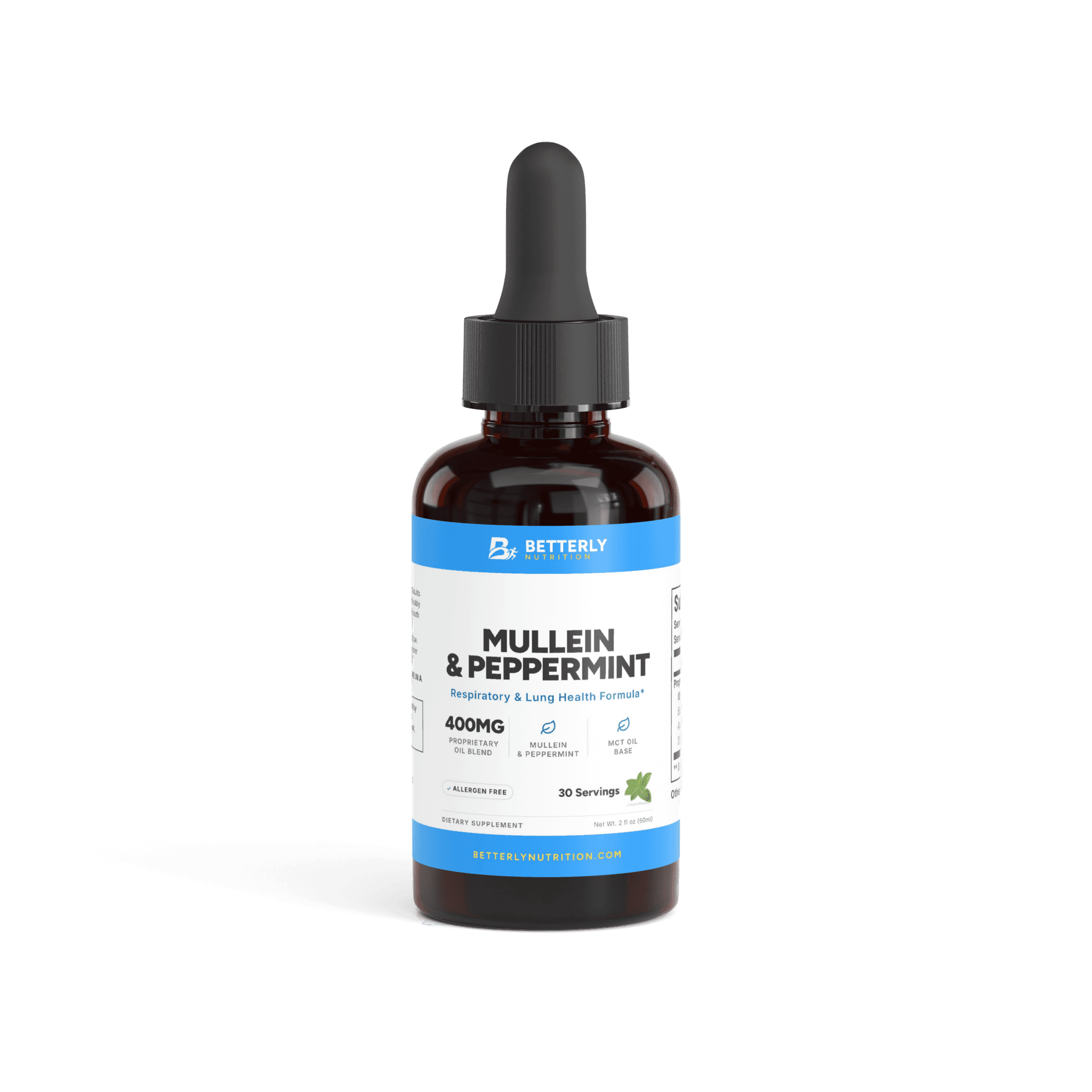
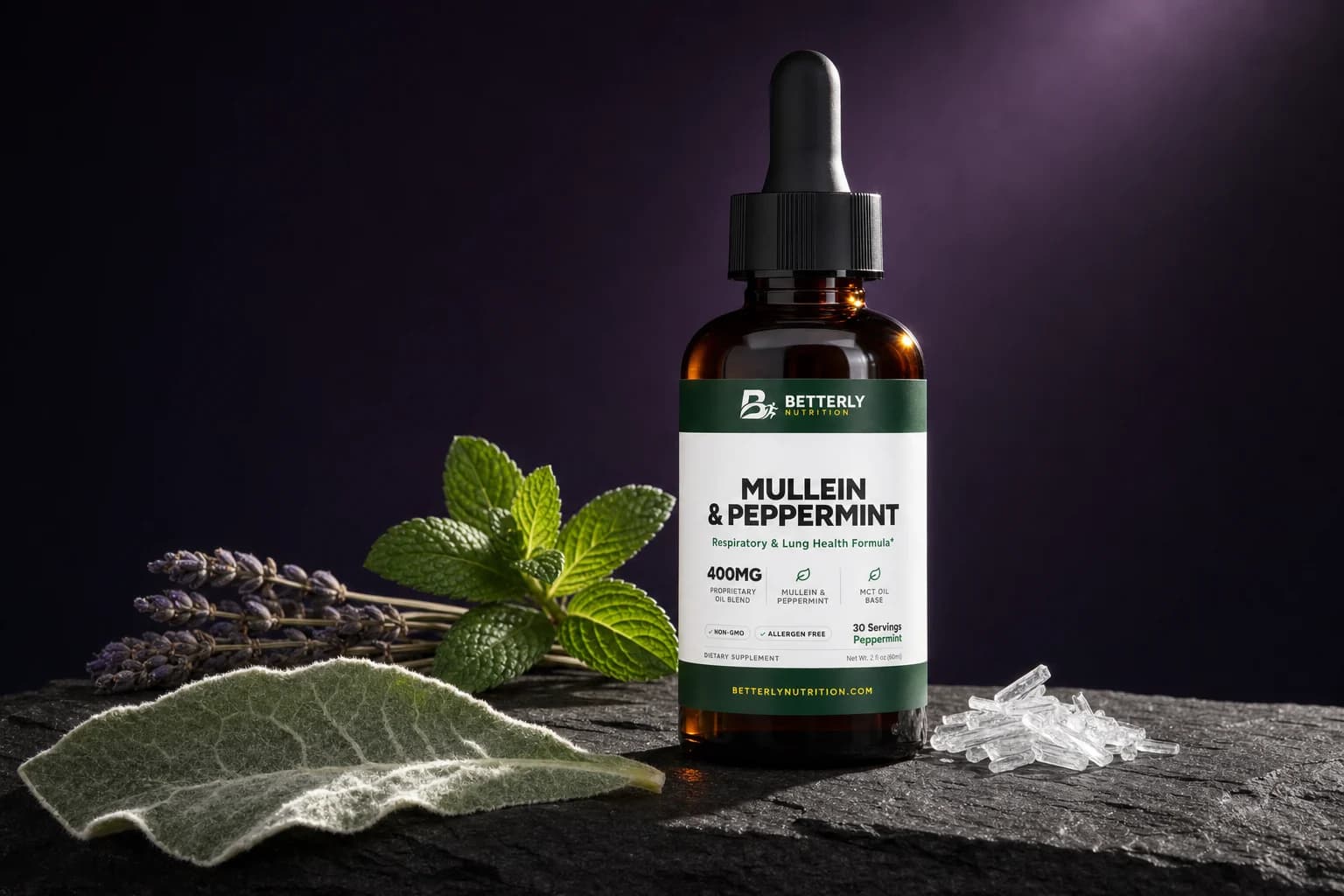
- Betterly's Mullein & Peppermint Oil Drops list menthol plus four botanical oils in one 400 mg Proprietary Oil Blend per 2 ml (40 drops) serving, with menthol first and mullein oil third.
- In a combination drop like ours, the side effects a federal source actually describes belong to the peppermint oil and the lavender, not to the mullein.
- A liquid can't carry the enteric coating that NCCIH says peppermint oil capsules often use to reduce the likelihood of heartburn.
- Our label is written for adults and says not to exceed the 2 ml daily serving. It sends anyone who's pregnant, nursing, younger than 18 or managing a medical condition to a physician before use.
We sell these drops, and this page gives you several reasons not to buy them, so weigh our view with that stake in mind. Every caution below comes from our label or a federal page we name, and we say so when neither covers something.
What mullein side effects come from the plant itself?
Mullein's own side effects are poorly documented: no federal fact sheet we found lists any, and the familiar leaf-hair warning comes from herbal guides.
The U.S. Forest Service's Fire Effects Information System review of the species describes common mullein (Verbascum thapsus) as "a densely woolly, sturdy biennial" that may top 7 feet. Branched hairs coat its stems and leaves, and the review says that coat breaks the force of surface winds.
Herbal guides and tea recipes commonly pass along two warnings about that fuzz:
- Handling fresh leaves may leave skin prickly or itchy.
- Hairs that get past a coarse strainer may leave your throat scratchy, so recipes pour the tea through a paper coffee filter or a tight cloth.
None of the federal pages we cite mentions either one, so treat them as sensible kitchen advice rather than documented side effects.
NCCIH, the NIH center that profiles herbs, has pages on peppermint oil and lavender but none on mullein. When a site offers a long, confident list of mullein side effects and symptoms, check whether each item links to a source you can open yourself.
Why do mullein drops carry different cautions than mullein tea?
Betterly's mullein drops are an oil blend with no dried leaf in the ingredient list, so leaf hairs aren't a concern, but menthol and peppermint oil lead the formula.
Under the blend's 400 mg total, the panel names: "Menthol USP, Peppermint Essential Oil, Mullein Oil, Citrus Aurantium Dulcis (Orange) Peel Oil, Lavender Essential Oil." MCT oil is the carrier and the only other ingredient. A proprietary blend lists its ingredients from most to least by weight, so mullein sits in the middle of this one. Our walkthrough of how to take mullein drops explains that rule.
One name trips people up. Plain "Citrus aurantium" usually means bitter orange, but "dulcis" is Latin for sweet, and the label's everyday name for it is simply "(Orange)."
Here's what federal sources say about each active, in label order:
| Ingredient (blend order) | What a federal source says | Pay attention if you... |
|---|---|---|
| Menthol (1st) | Found in peppermint oil; NCCIH says keep it off an infant's face | Share a home with a baby |
| Peppermint oil (2nd) | By mouth: heartburn, nausea, abdominal pain, dry mouth; rarely allergy | Get occasional heartburn |
| Mullein oil (3rd) | No NCCIH fact sheet exists | Want mullein-specific safety data |
| Orange peel oil (4th) | Not covered by the pages we cite | Have reacted to citrus peel before |
| Lavender oil (5th) | By mouth: diarrhea, headache, nausea, burping; a theoretical interaction with drowsy-making medicines | Take anything that makes you sleepy |
The side effects a federal source documents for this bottle belong to the mint and the lavender. Mullein brings a gap, not a list. Still deciding on a format? We're putting mullein tea and drops side by side in a separate guide.
Can mullein drops upset your stomach or cause heartburn?
Mullein drops can upset some stomachs, because the peppermint oil listed second in our blend can bring heartburn, nausea, abdominal pain or dry mouth when swallowed, per NCCIH.
That list comes from the National Center for Complementary and Integrative Health's peppermint oil fact sheet, which also notes that peppermint oil capsules are often enteric-coated to reduce the likelihood of heartburn. An enteric coating is a shell built to get past the stomach before it opens.
A liquid can't have that shell. If you're prone to occasional heartburn, that's a real reason to pass on a liquid mint oil, ours included.
Lavender, listed last in the blend, adds its own short list. NCCIH's lavender fact sheet says some people taking oral lavender products have had diarrhea, headache, nausea or burping.
So the stomach effects on record for this bottle trace to its peppermint and lavender. Mullein oil has no comparable entry in the sources we checked, and an empty record can't tell you how mild it is.
Our label doesn't say whether to take the drops with food, and we won't invent a rule.
From our shop: Mullein & Peppermint Oil Drops — menthol leads the 400 mg Proprietary Oil Blend in each 2 ml (40 drops) serving, so these suit adults who enjoy strong mint and don't deal with occasional heartburn.
Can you take mullein drops with medication?
No federal fact sheet we found lists medication interactions for mullein, but NCCIH flags a possible one for lavender, the last oil in Betterly's blend.
According to NCCIH, there are theoretical reasons to suspect lavender might interact with some medicines or herbs that cause drowsiness, which matters most before a surgical procedure. For peppermint oil, the agency's advice is broader: anyone on medicine should clear an herbal product with a provider first, because herbs and drugs can clash.
Other sites print long mullein interaction lists. None of the federal pages we read backs them up, so we've left them out. That doesn't mean mullein has no interactions, only that we couldn't confirm any in a source you can check.
The most useful move is to show your pharmacist the bottle. Our panel names all five ingredients in the blend but not each one's amount, an honest limit of a proprietary blend. Mention any other menthol products you use too, since they add the same compound.
Can you be allergic to mullein, peppermint or lavender?
Yes, you can react to the botanicals in mullein drops: NCCIH says peppermint oil rarely causes allergic reactions, and topical lavender may cause skin reactions in some people.
That lavender note covers skin products, not drops you swallow, so read it as a sign of sensitivity rather than a measured oral risk.
We found no federal source on mullein allergy. If handling mullein leaves has made your skin itch before, mention it to a provider before trying any mullein product.
Our front label says "Allergen Free." Read that as a statement about the formula, not a promise that you won't react to mint, lavender, orange peel or mullein.
Swelling of the face, eyes or tongue, or trouble breathing, can signal a severe reaction, and MedlinePlus's allergic reactions page says to call 911 right away for one.
How should you take mullein drops to keep side effects in check?
Take Betterly's mullein drops exactly as labeled: after shaking the bottle, one 2 ml (40 drops) serving by mouth, once daily, preferably in the morning, and never more.
The label adds that you can "dispense directly into the mouth or mix with a beverage." The first words of its caution are "Do not exceed recommended dose." We found no federal dose ceiling for menthol or any of the four oils, so that line is your limit.
A few habits keep the odds of a bad day low:
- Measure every time. Count 40 drops, or use a marked dropper at 2 ml, instead of judging by eye.
- Start the drops in a week when you aren't beginning anything else, so you know the likely source if something feels off. Our guide to everyday immune support supplements makes the same case for adding one new thing at a time.
- Mix it if the mint is too much. The label allows a beverage, which spreads the menthol through a drink.
- Keep it oral. The directions say "orally," so keep these drops out of your ears, nose and eyes.
- Store it out of reach. The label says "KEEP OUT OF REACH OF CHILDREN" and asks for a cool, dry place.
A simple overuse check: at one serving a day, the bottle's 30 servings last a month. If yours runs dry in two weeks, someone is taking more than the label allows.
What should you do if mullein drops don't agree with you?
If mullein drops don't agree with you, stop taking them and contact your healthcare provider, and bring the bottle so they can read all five ingredients.
Tell them which symptom came first and how soon after a serving it showed up. That timing helps separate a reaction to the drops from a coincidence.
You can also tell the FDA. The agency's supplement problem-reporting page points consumers to the federal Safety Reporting Portal and says even partial information can help. Please tell us through our contact page too.
When are mullein drops the wrong choice for you?
Skipping mullein drops makes sense when one of the blend's five ingredients has already given you trouble, since a combination bottle can't show which part caused a reaction.
- Peppermint tea or strong mints bring on occasional heartburn. An uncoated mint oil is an odd next step.
- You've reacted to mint, lavender or citrus peel in the past. All three come in every serving, with no way to take the mullein alone.
- You already use other menthol products, such as strong mints, lozenges or topical rubs. These drops would add one more source of the same compound.
- You're trying to pin down what you react to. Single-ingredient products let you trace a reaction to its source, while a blend with no individual amounts leaves you guessing.
If your cabinet is already full, our advice on keeping your supplement list short can help you trim before adding anything.
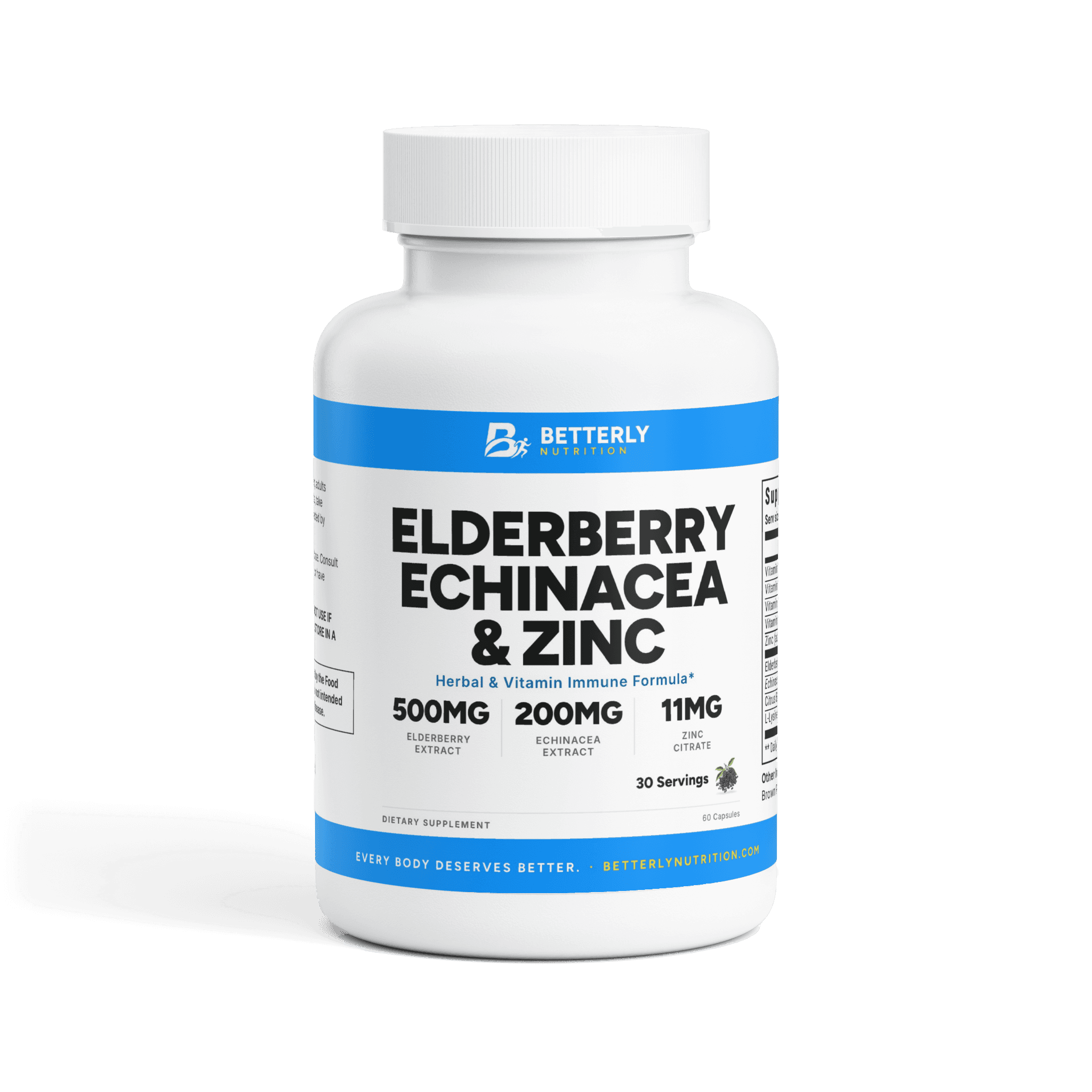
If you'd rather avoid essential oils altogether, our Elderberry, Echinacea & Zinc Capsules come in gelatin shells with none in the formula. They're still a botanical blend, though, with elderberry and echinacea extracts plus a citrus bioflavonoid, and their label carries the same physician caution as the drops. Any switch means reading the new label's ingredients just as closely. The rest of our focused formulas sit on the targeted support shelf.
From our shop: Elderberry, Echinacea & Zinc Capsules — a swallow-and-done option with no essential oils, listing 11 mg zinc, 180 mg vitamin C and 500 mg elderberry fruit extract in each 2-capsule serving.
Who should skip mullein or check with a provider first?
Pass on mullein drops, or get a provider's OK first, during pregnancy or nursing, before age 18, alongside any medication, ahead of surgery, or with a medical condition.
Our bottle's caution reads: "Do not exceed recommended dose. Consult a physician if pregnant, nursing, under 18, or have a medical condition." Why each group is on it, plus a few more the label leaves out:
- Pregnant or breastfeeding: NCCIH calls the safety of medicinal-strength oral peppermint and of lavender at these times largely unknown, and no federal page we read covers mullein.
- Under 18: the directions address adults only ("Adults take 2 ml") and set no amount for anyone younger.
- Living with a baby or toddler: NCCIH warns that peppermint oil shouldn't go on an infant's or young child's face, because inhaling its menthol can cause serious side effects.
- On any medicine, prescription or over-the-counter, especially one that makes you drowsy.
- Scheduled for surgery, since NCCIH ties its lavender interaction concern to upcoming procedures.
- Managing a medical condition, prone to occasional heartburn, or sensitive to mint, lavender or citrus peel.
FAQ: mullein side effects and safety
Is mullein safe?
No federal source has ruled on whether mullein is safe as a supplement, because NCCIH, the NIH center for herbs, has no mullein fact sheet. In Betterly's drops, the documented cautions come from other ingredients. NCCIH says peppermint oil appears to be safe by mouth in commonly used doses, though it can cause heartburn or nausea, and it lists possible side effects for oral lavender too. The label's firmest warning comes first: "Do not exceed recommended dose."
Is mullein poisonous?
Mullein seeds are toxic to fish, according to the U.S. Forest Service's species review, but we found no federal source on whether mullein leaves, flowers or oil are poisonous to people. The review describes crushed seeds put into slow-moving water, where fish breathing was severely reduced or stopped. Our panel lists "Mullein Oil" without naming the plant part it comes from, so contact us if that detail matters to you.
Can you take mullein every day?
Betterly's mullein drops are labeled for daily use, one 2 ml serving a day, but no federal source we found says how long daily mullein is safe. NCCIH says oral lavender products might be safe in the short term, which doesn't settle months of use either. Once the drops become a steady habit, add them to the medicine and supplement list your provider keeps for you.
Can mullein give you a headache?
We found no federal source linking mullein itself to headaches, but lavender, the last ingredient in Betterly's blend, is a possible culprit. NCCIH lists headache among the effects some people have had with oral lavender products, and with lavender aromatherapy too. If headaches start after you begin the drops, stop taking them and tell your provider when they began.
Is mullein safe during pregnancy or while breastfeeding?
Mullein's safety during pregnancy or breastfeeding hasn't been established by any federal source we found. NCCIH notes that the safety of medicinal amounts of oral peppermint is largely unknown for pregnant or breastfeeding women, and flags the same gap for lavender. Our label tells pregnant and nursing adults to check with a physician before use. Until a provider who knows your history says otherwise, leave these drops on the shelf.
Sources
- Peppermint Oil: Usefulness and Safety, National Center for Complementary and Integrative Health
- Lavender: Usefulness and Safety, National Center for Complementary and Integrative Health
- Verbascum thapsus species review, Fire Effects Information System, USDA Forest Service
- Allergic reactions, MedlinePlus, U.S. National Library of Medicine
- How to Report a Problem with Dietary Supplements, U.S. Food and Drug Administration
If this left you looking for somewhere to start, read mullein drops with menthol and peppermint oil — its amounts per serving are listed on the page. For the practical questions this raises, how dosing, sourcing and subscriptions work is answered in one place.