On this page
- Key takeaways
- What is andrographis, and why is it called the king of bitters?
- Is andrographis paniculata the same as kalmegh?
- What is andrographis good for, according to research?
- Andrographis powder vs extract vs tincture: what's the difference?
- How much andrographis is in Betterly's Turmeric & Andrographis Strips?
- How is andrographis different from echinacea and elderberry?
- How do you take andrographis strips, per the label?
- When don't you need an andrographis supplement?
- Who should check with a healthcare provider first?
- FAQ: andrographis
- Sources
The short answer: Andrographis is Andrographis paniculata, an intensely bitter herb called kalmegh in India, and one of its common names is the "king of bitters." It's thought to come from southern India and Sri Lanka, though an NIH fact sheet calls it native to Southeast Asia. Our Turmeric & Andrographis Strips list 15 mg of andrographis extract per 1 Oral Strip (165 mg) serving, a small taste of the herb rather than an amount matched to research.
Key takeaways
- Andrographis and kalmegh are two names for one plant, Andrographis paniculata, an annual herb in the acanthus family that's thought to have originated in southern India and Sri Lanka.
- The "king of bitters" nickname is about taste, and andrographolide, the most abundant of the plant's main bioactive compounds and a widely researched one, builds up in the leaves.
- The NIH Office of Dietary Supplements lists andrographis among herbs that might affect the immune system, and says more studies are needed to confirm the findings so far.
- Our Turmeric & Andrographis Strips hold 15 mg of andrographis extract per 1 Oral Strip (165 mg) serving, one of seven botanical extracts, so we don't present them as an andrographis dose.
A quick disclosure: we sell one product with andrographis in it, the strip above, and it isn't a single-herb supplement. So this guide covers the plant first, then shows you our own label with its limits in plain view. Every product number comes from our Supplement Facts panels.
What is andrographis, and why is it called the king of bitters?
Andrographis is Andrographis paniculata, a small annual herb so bitter that one of its common names is the "king of bitters."
A 2022 plant-breeding study in Frontiers in Plant Science, archived by the National Library of Medicine, describes it as a self-pollinating annual in the acanthus family (Acanthaceae). The authors say it's thought to have come from southern India and Sri Lanka, and they call it a highly traded medicinal herb. Indian farmers took up kalmegh as a crop because buyers wanted its main compound, they add, and quality raw herb is still in short supply.
That compound is andrographolide. The study names four compounds that build up in the leaves and are thought to be the plant's main bioactive ingredients. Andrographolide is the most prevalent of the four, and the authors note it has been widely researched.
A capsule hides that bitterness, and flavored products mask it. Our strip leans on mango and orange flavor, steviol glycosides and licorice extract.
Is andrographis paniculata the same as kalmegh?
Yes, Andrographis paniculata and kalmegh are the same plant: kalmegh is its common name in India, where it has a long history in Ayurvedic, Siddha and Unani herbal practice.
The 2022 study lists other folk names, including green chirata, bhui-neem and king of bitter. In the Chinese system of medicine, it says, the herb made from its leaves or other above-ground parts is called chuan xin lian.
A 2023 review in Cureus places kalmegh among the plants most regularly used in Ayurvedic, Siddha and Unani practice. It describes traditional preparations such as fresh juice, dried powder, a boiled-down decoction and a liquid extract.
The review's list of traditional uses runs long, and most entries are medical conditions. A supplement can't be sold as a remedy for any of them, so we won't repeat them. A tradition tells you how long people have used a plant, not what it will do for you.
On a supplement panel, trust the Latin name over the nicknames. "Bhui-neem" borrows the name of neem, a different tree entirely. Our own panel prints "Andrographis paniculate extract," a one-letter slip for paniculata, and it's the same herb.
Before buying any Ayurvedic herb, run through our guide to checking Ayurvedic supplements for metals and label gaps.
What is andrographis good for, according to research?
Research hasn't settled what andrographis is good for: the NIH Office of Dietary Supplements lists it among herbs that might affect immune function, with findings that still need confirming.
ODS covers andrographis in its consumer fact sheet on dietary supplements for immune function, in the same botanicals section as echinacea, elderberry, garlic and ginseng. Its summary of the studies is hedged at every step, and it ends by saying "additional studies are needed to confirm these findings."
Keep that in mind when you read "andrographis benefits" lists online. Many turn hedged findings into confident promises. Others name conditions that no supplement can be sold to address.
So, our honest read: andrographis is a long-used traditional herb whose research still needs confirming. It isn't a proven way to change how your immune system works, and we won't sell it to you as one.
Andrographis powder vs extract vs tincture: what's the difference?
Andrographis powder is the dried, ground herb, an andrographis extract concentrates compounds pulled from the plant with a liquid, and a tincture is an extract kept in alcohol and water.
The NIH Office of Dietary Supplements explains these terms in its Botanical Dietary Supplements background sheet. To make an extract, the plant soaks in water, alcohol or another liquid, and the result can be dried to fill capsules and tablets. Tinctures stay liquid, and ODS notes they're sold in different strengths, so two same-size bottles of andrographis tincture may not match.
| Form | What it is | What a clear label shows | Watch for |
|---|---|---|---|
| Powder | Dried, ground leaves or aerial parts | Milligrams of herb and the plant part | Strong bitterness |
| Extract (capsule or tablet) | Herb soaked in a liquid, often dried | Milligrams, plus a ratio or % andrographolide | "Standardized" with no % |
| Tincture | Herb kept in alcohol and water | Plant-to-liquid ratio, mL per serving | Alcohol content |
| Oral strip | Film that dissolves on the tongue | Milligrams of extract per strip | Small amounts, many herbs |
A label that names the form, the plant part and a strength figure gives you something to compare. A label that only says "andrographis, 15 mg" tells you far less, and ours is one of those.
What does a standardized andrographis extract mean?
A standardized andrographis extract is one where the maker measures a marker, often a compound such as andrographolide, and adjusts each batch so the amount stays consistent.
ODS adds a caveat that's easy to miss. Ideally a marker would be the compound behind a plant's effects, but for most botanicals nobody knows which compound that is. Our explainer on what standardized extract means goes further. And if a product calls itself an "andrographis complex," it's a mix, so look for each ingredient's own amount on the panel.
How much andrographis is in Betterly's Turmeric & Andrographis Strips?
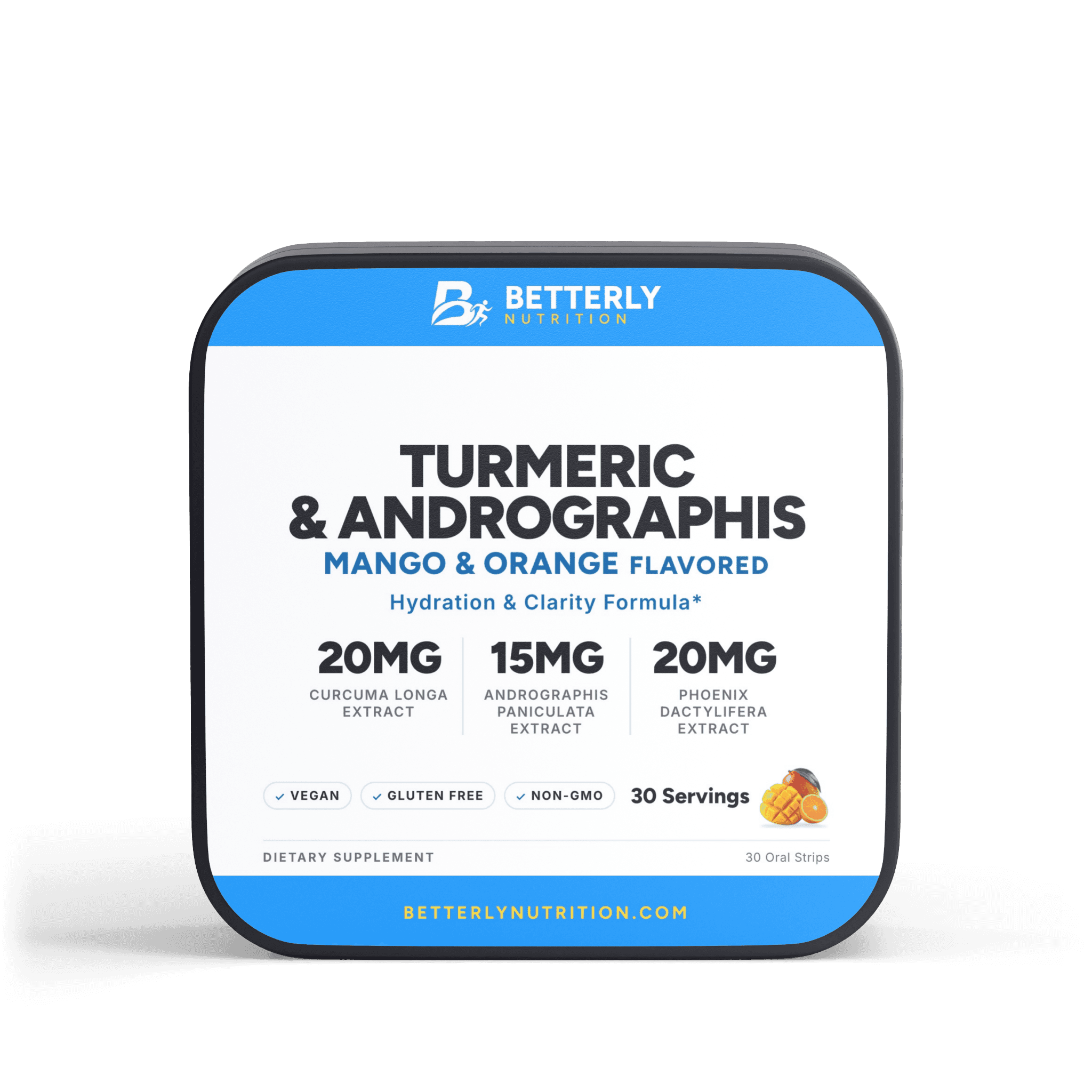
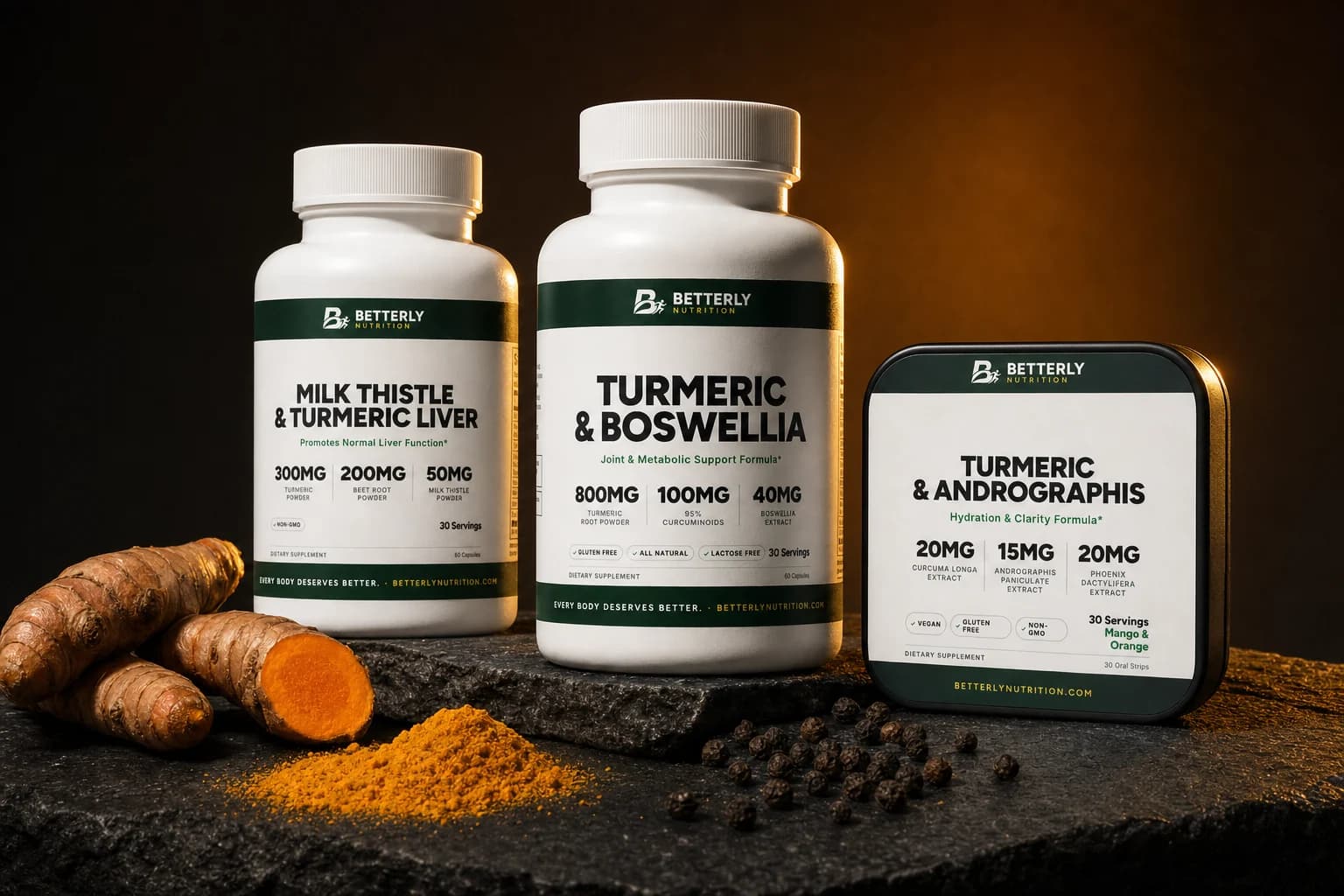
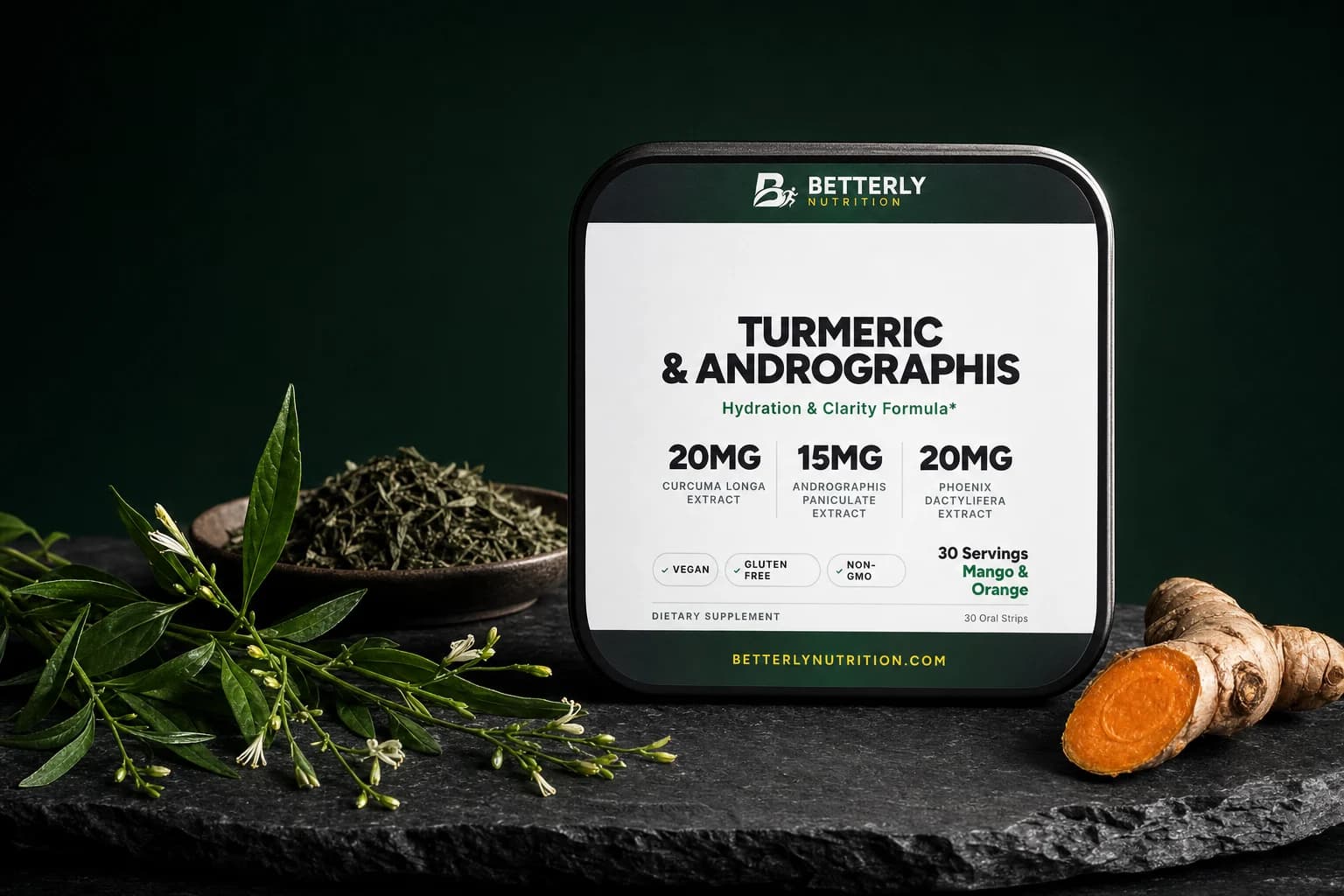
Betterly's Turmeric & Andrographis Strips list 15 mg of andrographis extract per 1 Oral Strip (165 mg) serving, one of seven botanical extracts on the panel.
Per strip, the full panel reads:
- Phoenix dactylifera (date palm) extract: 20 mg
- Curcuma longa (turmeric) extract: 20 mg
- Andrographis paniculate extract: 15 mg
- Cichorium intybus (chicory) extract: 15 mg
- Vitis vinifera (grape) extract: 15 mg
- Phyllanthus niruri extract: 15 mg
- Phyllanthus emblica (amla) extract: 15 mg
By our own math, those rows add up to 115 mg. The rest of the strip is what forms and flavors it, from pullulan and mannitol to mango flavor and steviol glycosides. The pack calls it a "Hydration & Clarity Formula" in Mango & Orange, labeled vegan, gluten free and non-GMO.
The strip also leaves out three things a careful shopper looks for: the plant part, an extract ratio and an andrographolide percentage. The traditional powders in the 2023 review are measured in grams, and because no extract ratio is printed, you can't convert this 15 mg back into grams of herb.
So think of the strip as a small, flavored taste of andrographis inside a mixed botanical formula. If you want the herb itself with a stated strength, compare single-herb extracts, which we don't sell. The strip's turmeric row gets the same scrutiny in our turmeric vs curcumin comparison.
From our shop: Turmeric & Andrographis Strips — 15 mg of andrographis extract and 20 mg of turmeric extract per 1 Oral Strip (165 mg) serving, a mango-and-orange strip you let dissolve on your tongue, not a single-herb andrographis supplement.
How is andrographis different from echinacea and elderberry?
Andrographis, echinacea and elderberry all sit in the ODS list of herbs that might affect the immune system, but they're different plants with different pregnancy cautions.
| Herb | Part on our label | ODS pregnancy note | Amount in our products |
|---|---|---|---|
| Andrographis | Not stated | Some scientists advise avoiding it if pregnant or trying to conceive | 15 mg extract per strip |
| Echinacea (E. purpurea) | Whole plant | Safety in pregnancy unknown | 200 mg extract per 2 capsules |
| Elderberry (Sambucus nigra) | Fruit | Safety in pregnancy unknown | 500 mg extract per 2 capsules |
The takeaway: andrographis carries the firmest pregnancy caution of the three, and our strip holds far less of its herb than our capsules hold of theirs.
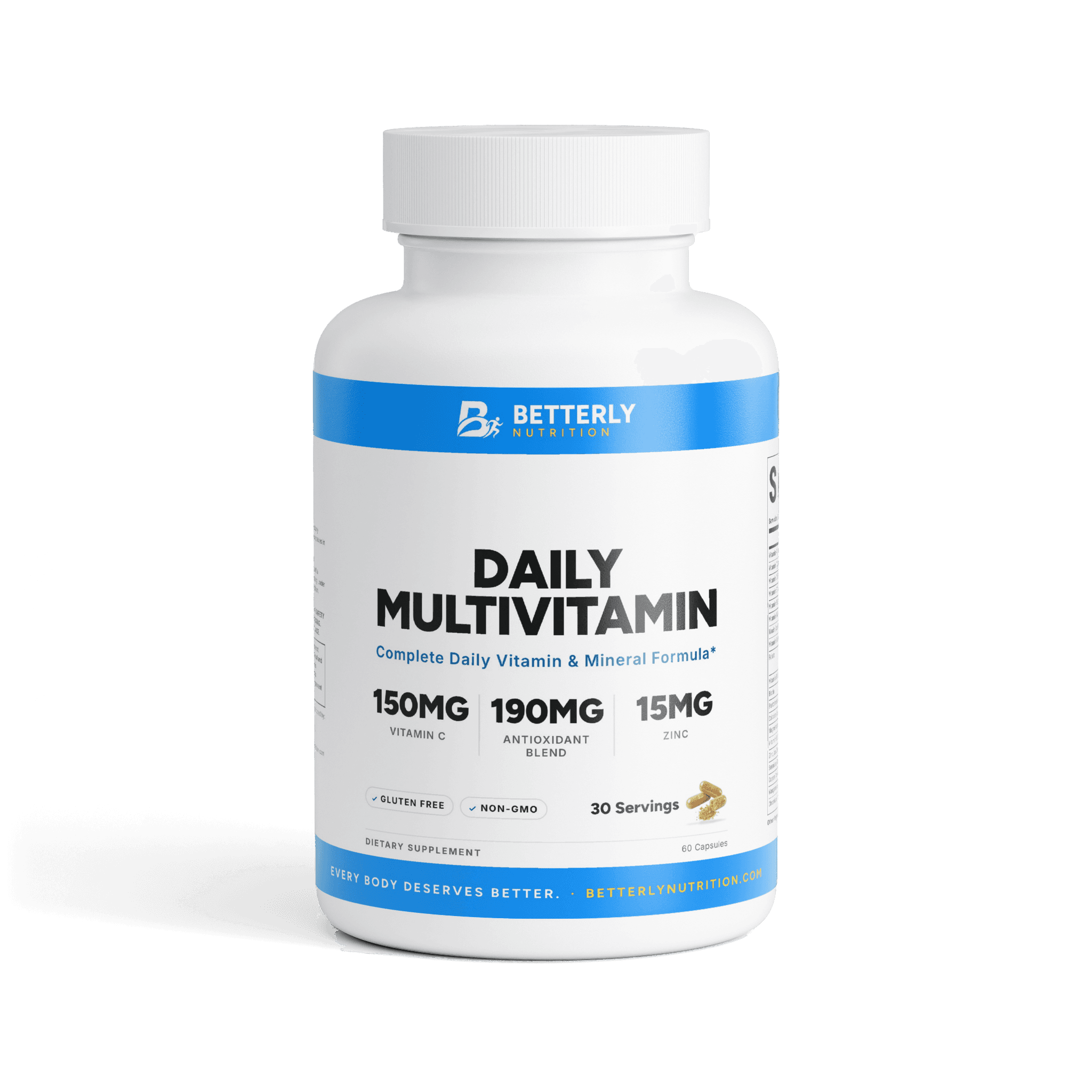
Our Daily Multivitamin Capsules also list Echinacea purpurea extract (aerial parts) inside a 110 mg blend, with no separate amount.
The ODS sheet also starts where most herb marketing doesn't: with nutrients. Before it gets to any herb, it names vitamin C, vitamin D and zinc among the vitamins and minerals your immune system relies on.
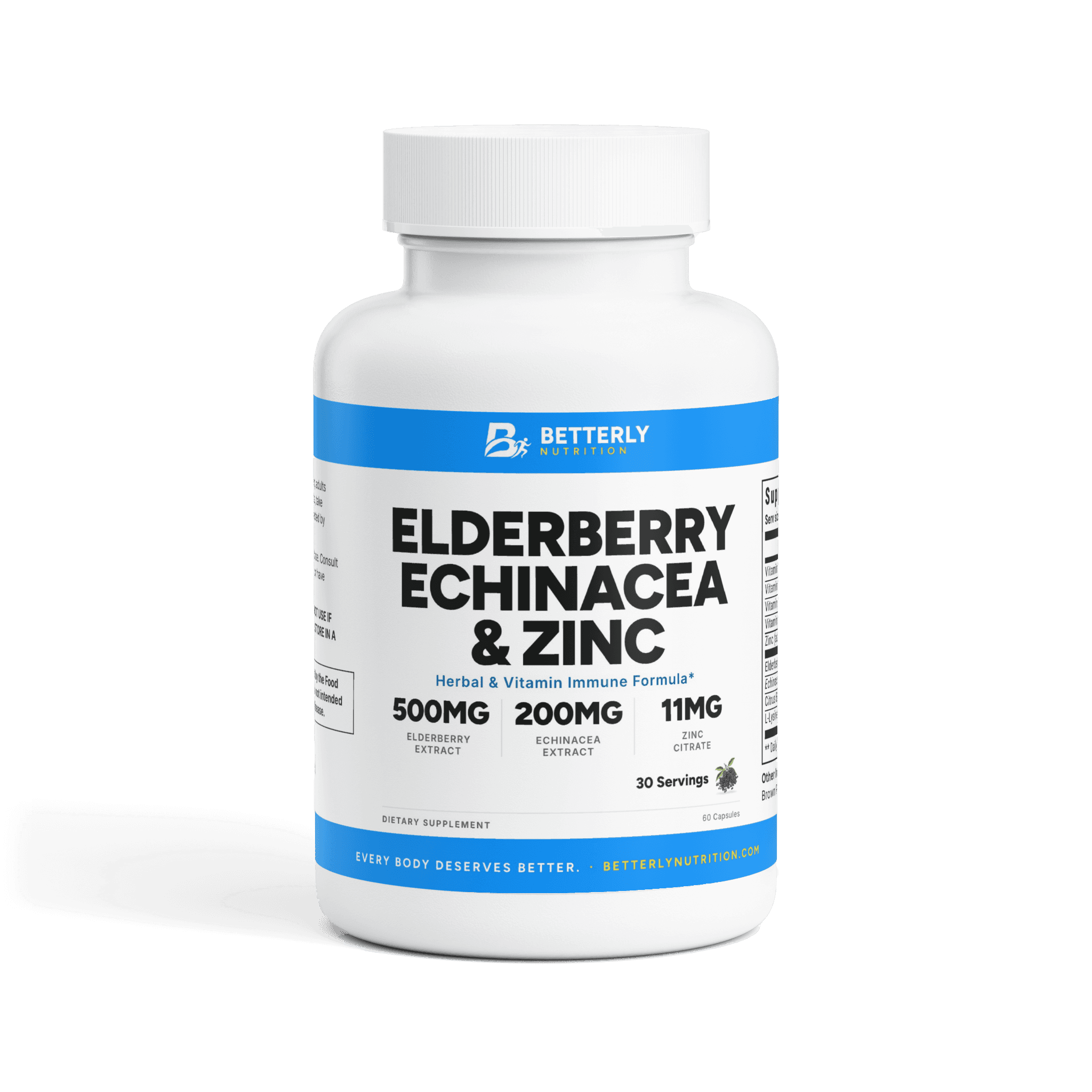
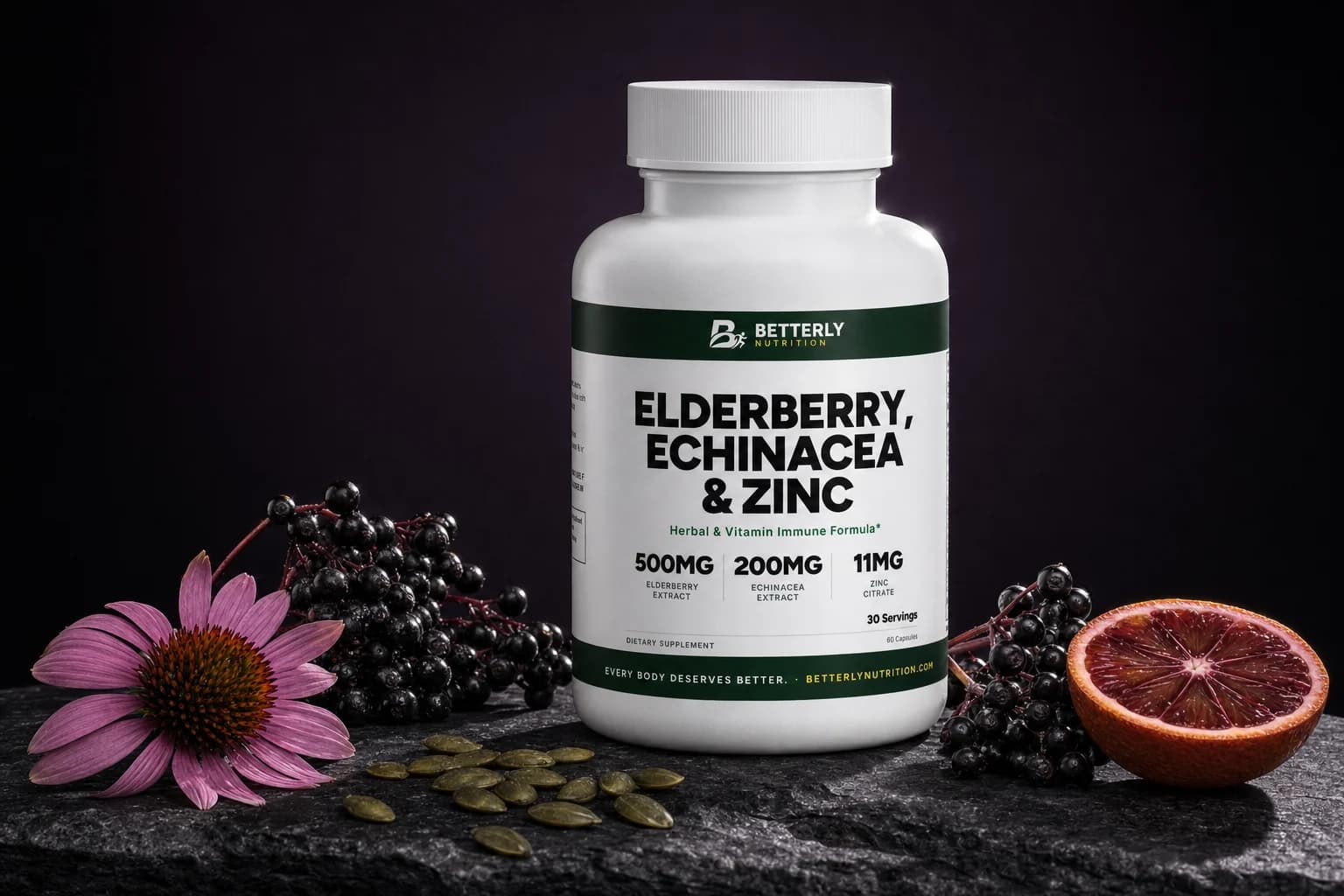
Our Elderberry, Echinacea & Zinc Capsules pair the two herbs with those nutrients. Each 2-capsule serving lists 180 mg of vitamin C (200% DV), 40 mcg of vitamin D3 (200% DV) and 11 mg of zinc (100% DV), plus vitamin E, vitamin B6, citrus bioflavonoids and L-lysine. There's no andrographis in them, and the capsules are gelatin, so they aren't a vegan pick.
Already on a multivitamin? Our daily totals guide for elderberry, zinc and vitamin C shows how the numbers stack. Herbal and nutrient options sit side by side in our immune support collection.
From our shop: Elderberry, Echinacea & Zinc Capsules — 500 mg of elderberry extract, 200 mg of echinacea extract, 180 mg of vitamin C and 11 mg of zinc per 2-capsule serving, for adults who'd rather get nutrients alongside their herbs.
How do you take andrographis strips, per the label?
The Turmeric & Andrographis Strips label says to place 1 oral strip on the tongue daily and let it dissolve, so a 30-strip pack covers 30 days.
- No water on the label. The directions only say to let the strip dissolve on your tongue.
- Any time that sticks. The label names no time of day, and the panel lists no caffeine, so tie it to a habit you already have.
- One a day. The caution line reads "Do not exceed recommended dose," so skip the second strip.
- Keep it dry. The label says to store the pack in a cool, dry place.
For the elderberry capsules, the label's suggested use is 2 capsules daily for adults, with 6-8 oz (177-237 ml) of water. If you use both products, start one at a time so you can tell how each sits with you.
When don't you need an andrographis supplement?
You probably don't need andrographis if you eat a varied diet, feel well, and were drawn in by promises of a stronger immune system that research doesn't back.
Skipping it also makes sense in these cases:
- You're pregnant, trying to conceive or nursing. The ODS caution on fertility is reason enough to leave it out.
- You want a measurable amount of the herb. Our strip isn't built for that, and we'd rather tell you than sell it to you.
- You already take a multi-herb formula. Check its panel for andrographis or kalmegh before adding more.
- You're hoping to feel a difference. Neither label we've quoted says you'll notice anything, and we won't claim it either.
Who should check with a healthcare provider first?
Check with a healthcare provider before taking andrographis if you're pregnant, planning a pregnancy, nursing, under 18, on any prescription medicine, facing surgery or managing a medical condition.
ODS says andrographis might affect fertility, which is why some scientists recommend avoiding it during pregnancy or while trying for a baby. It also says andrographis could interact with blood-thinning medicines, with medicines that suppress the immune system, and with some heart and circulation medicines. Because ODS notes it might thin the blood, mention it before any planned surgery, too.
Both of our labels print the same caution: "Do not exceed recommended dose. Consult a physician if pregnant, nursing, under 18, or have a medical condition." ODS also lists side effects people have reported, and our guide to andrographis side effects covers them.
FAQ: andrographis
Is andrographis the same as andrographolide?
No, andrographis is the whole plant, and andrographolide is one compound inside it. Andrographolide is the most abundant of the plant's main bioactive compounds and builds up in the leaves, so a standardized andrographis extract may name it as the marker. A label that lists "andrographis extract" tells you about the plant material, while a percentage of andrographolide tells you how concentrated it is. Our strip lists the extract only, with no andrographolide figure.
Where does andrographis come from?
Andrographis comes from South and Southeast Asia, though sources differ on exactly where it started. The 2022 Frontiers study says it's thought to have originated in southern India and Sri Lanka, while the NIH Office of Dietary Supplements calls it native to Southeast Asia. The 2023 Cureus review lists places it's grown, including India, Sri Lanka, Pakistan, Thailand, Indonesia and Malaysia.
How long does andrographis take to work?
Nobody can give you an honest timeline for andrographis, because research hasn't pinned down what it does. Our label promises no time frame or result, and neither does the ODS summary. With andrographis at 15 mg beside six other extracts (115 mg of extracts in all), it would also be hard to credit any single herb in our strip. If you try it, take it as directed and keep the rest of your routine steady.
Can you take andrographis and echinacea together?
We can't say for sure: our strip and our elderberry capsules share no listed ingredient, but no source we cite has looked at andrographis and echinacea taken together. ODS does give both herbs one shared caution. Each might make medicines that suppress the immune system work less well. If you take one of those medicines, are pregnant or manage a medical condition, ask a healthcare provider before you combine them.
Sources
- Chaturvedi et al., genetic variation in ecotypes of kalmegh (Andrographis paniculata), Frontiers in Plant Science, 2022, via PubMed Central
- Physiological Activities of the King of Bitters (Andrographis paniculata): A Review, Cureus, 2023, via PubMed Central
- Dietary Supplements for Immune Function: Fact Sheet for Consumers, NIH Office of Dietary Supplements
- Botanical Dietary Supplements: Background Information for Consumers, NIH Office of Dietary Supplements
If this left you looking for somewhere to start, read andrographis extract strips with turmeric — its amounts per serving are listed on the page. For the practical questions this raises, how dosing, sourcing and subscriptions work is answered in one place.