On this page
- Key takeaways
- Are Ayurvedic supplements safe, or is the metals warning overblown?
- What separates an herb-only formula from a metal-based preparation?
- Are herbal supplements safe just because they're plants?
- How do you check an Ayurvedic supplement before buying?
- How do our labels with Ayurvedic ingredients score?
- What's actually on our Ayurvedic label, line by line?
- How do you take these capsules without doubling up?
- When don't you need an Ayurvedic blend at all?
- Who should check with a healthcare provider first?
- FAQ: Ayurvedic supplement safety
- Sources
The short answer: Ayurvedic supplements can be safe, but no label can prove it. NCCIH warns that some Ayurvedic preparations may hold lead, mercury or arsenic in harmful amounts, and FDA says these products typically aren't labeled as containing those metals. Only a batch report answers the metals question, and each herb brings its own cautions too. The six checks below start with the label and end with that paperwork.
Key takeaways
- Ayurvedic products come mostly from plants but can include metals and minerals, and NCCIH and FDA both warn that some contain lead, mercury or arsenic.
- No Supplement Facts panel reports lead or mercury, so metal results have to come from a certificate of analysis whose lot number matches your bottle.
- Plant-only doesn't mean caution-free: NCCIH says ashwagandha, the first herb on our Ayurvedic capsule's panel, may be safe for up to 3 months and should be avoided during pregnancy.
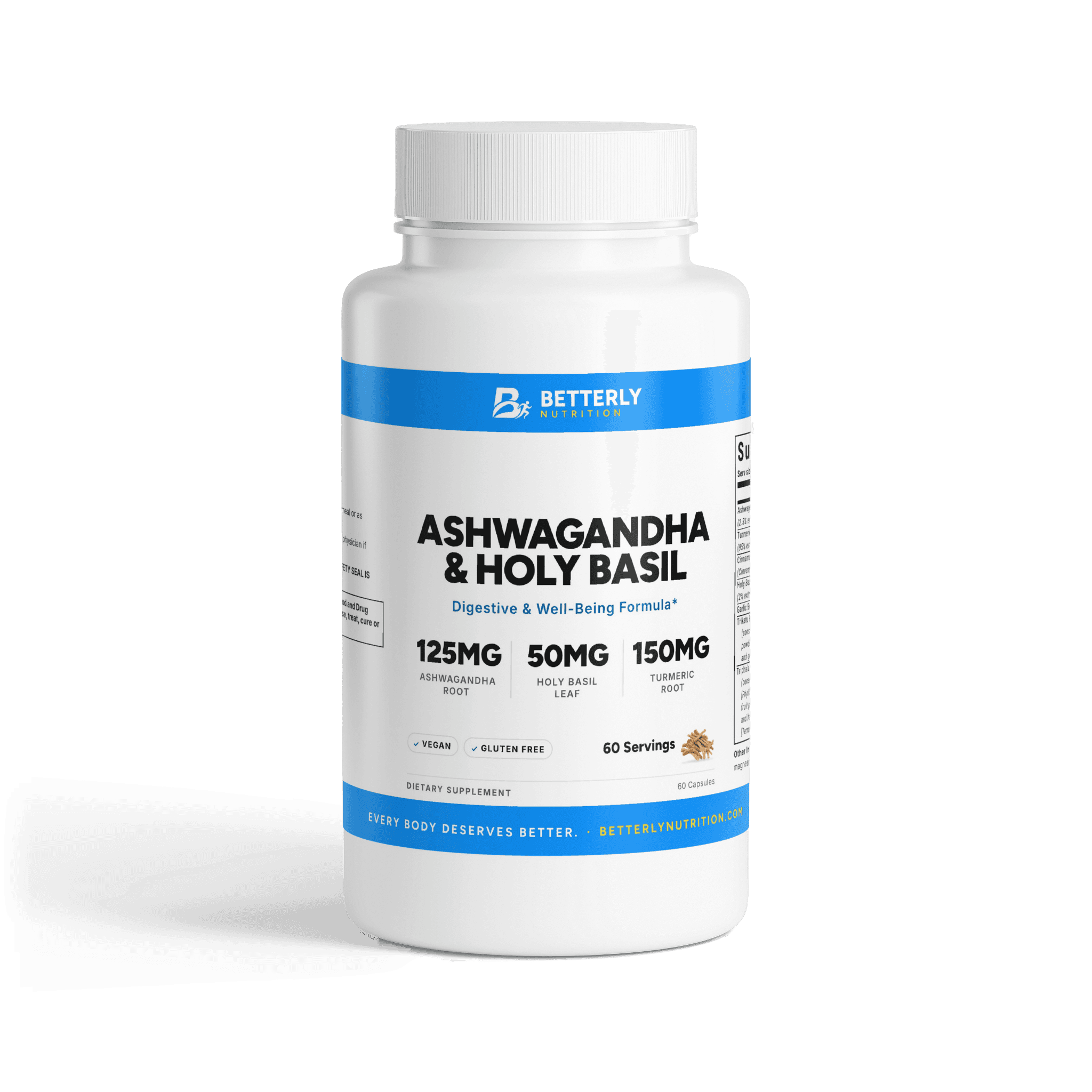
- Our Ashwagandha & Holy Basil Ayurvedic Capsules list 17 dosed rows per 1-capsule serving, including 50 mg of triphala and 25 mg of shilajit. We don't publish batch metal results for them.
Disclosure first: Betterly sells the Ayurvedic capsule this guide takes apart, plus two formulas that include Ayurvedic herbs, one with bacopa and gotu kola, the other with shilajit and ashwagandha. Read our labels as skeptically as any brand's: none of our bottles passes all six checks below.
Are Ayurvedic supplements safe, or is the metals warning overblown?
The metals warning around Ayurvedic supplements isn't overblown: in a 2015 survey tied to a lead-exposure investigation, about one in four supplements tested had high lead levels.
That survey is summarized on the in-depth Ayurvedic medicine page run by NCCIH, the National Center for Complementary and Integrative Health. Almost half of the tested products were also high in mercury, and 40 percent of the Ayurvedic users surveyed had raised blood lead. NCCIH's reference for it is a report on lead exposure among Ayurvedic users, so the figures prove the risk is real without describing every shelf.
FDA's page on heavy metals in certain unapproved Ayurvedic drug products explains that these metals can build up in the body over time, and that adults and children can become very sick as they do.
None of this makes every ashwagandha capsule dangerous. "Ayurvedic" describes a tradition, not a purity standard.
What separates an herb-only formula from a metal-based preparation?
An herb-only Ayurvedic formula is built from plant material such as roots, leaves, fruits and spices, while a metal-based preparation deliberately includes processed metals or minerals.
NCCIH describes Ayurvedic products as coming mainly from plants but sometimes from animal, metal or mineral sources. Traditional practice also includes metal-based preparations, sometimes sold as bhasmas. If an ingredient list names a bhasma or a metal such as gold, silver or mercury, you're not holding an herb-only product.
Are herbal supplements safe just because they're plants?
Herbal supplements aren't safe simply because they come from plants; the NIH Office of Dietary Supplements says a botanical's safety depends on its chemistry, preparation and dose.
The ODS background sheet on botanical supplements says the common belief that products labeled natural are safe isn't necessarily correct. It adds that judging a botanical product's quality from its label is difficult. Three rows on our Ayurvedic capsule show how differently the cautions run from herb to herb.
Ashwagandha comes first on the panel, at 125 mg of a 2.5% extract per 1-capsule serving. The NCCIH ashwagandha page says it may be safe short term, up to 3 months, and that there isn't enough information to judge longer use. It also notes rare cases tying ashwagandha supplements to problems with liver function.
Turmeric is the largest row, at 150 mg of a 95% extract per 1-capsule serving. According to the NCCIH turmeric page, conventionally formulated turmeric is likely safe at recommended amounts for up to 2 or 3 months, a window that excludes forms made to absorb better. NCCIH says problems with liver function have been reported with some of those enhanced forms, and it names piperine, from black pepper, as one absorption booster. Our trikatu row lists black pepper without a piperine figure.
Licorice root gets 25 mg per 1-capsule serving. NCCIH's licorice root page calls it generally safe as a food ingredient, but says glycyrrhizin, a compound in the root, can cause serious side effects, mostly with large amounts or long-term use. Even small amounts have been linked to severe reactions in some people, including those who eat a lot of salt, and our panel gives no glycyrrhizin figure.
How do you check an Ayurvedic supplement before buying?
To check an Ayurvedic supplement, work through six questions in order: how it's sold, metals, species, amounts, extract strength and batch paperwork.
- Is it sold as a dietary supplement? Look for a Supplement Facts panel and FDA's standard disclaimer. A product promising to fix a medical problem fails here.
- Does any ingredient come from metal? Scan for the word bhasma or named metals such as mercury.
- Does each plant have a species and a part? A Latin name such as Bacopa monnieri pins down the plant, and "root" or "leaf" tells you which piece went in.
- Does every ingredient have its own amount? A blend total hides each herb's share. Our guide to how proprietary blends hide amounts shows what that costs you.
- Does an extract percentage name what it measures? ODS points out that U.S. law has no legal definition of "standardized," so read a bare "20% extract" as incomplete.
- Can the seller show batch results for metals? Ask for a certificate of analysis whose lot number matches your bottle.
How do our labels with Ayurvedic ingredients score?
Our Ayurvedic capsule and two formulas that include Ayurvedic herbs pass the first two checks, earn mixed marks on species, amounts and extract strength, and fail the batch check.
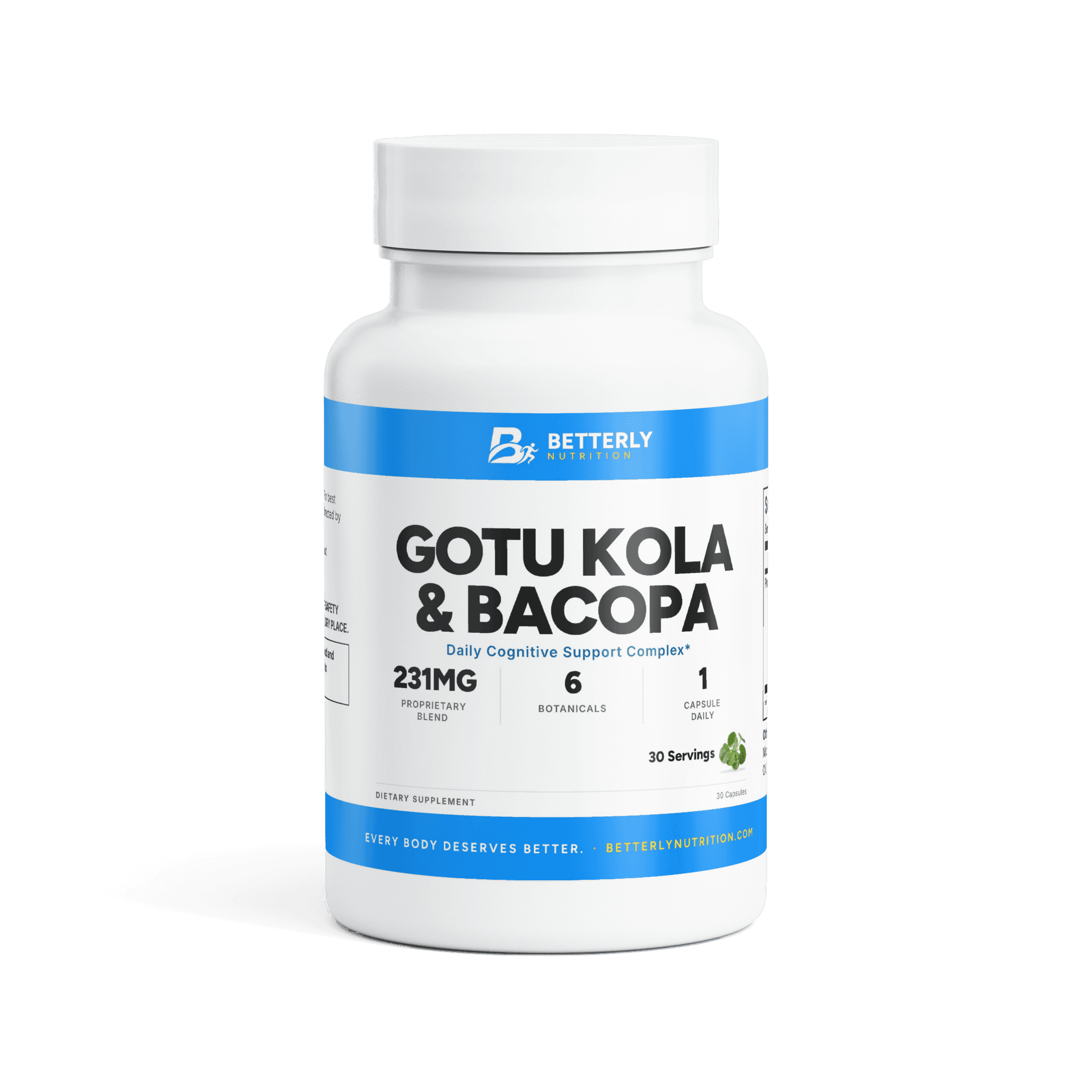
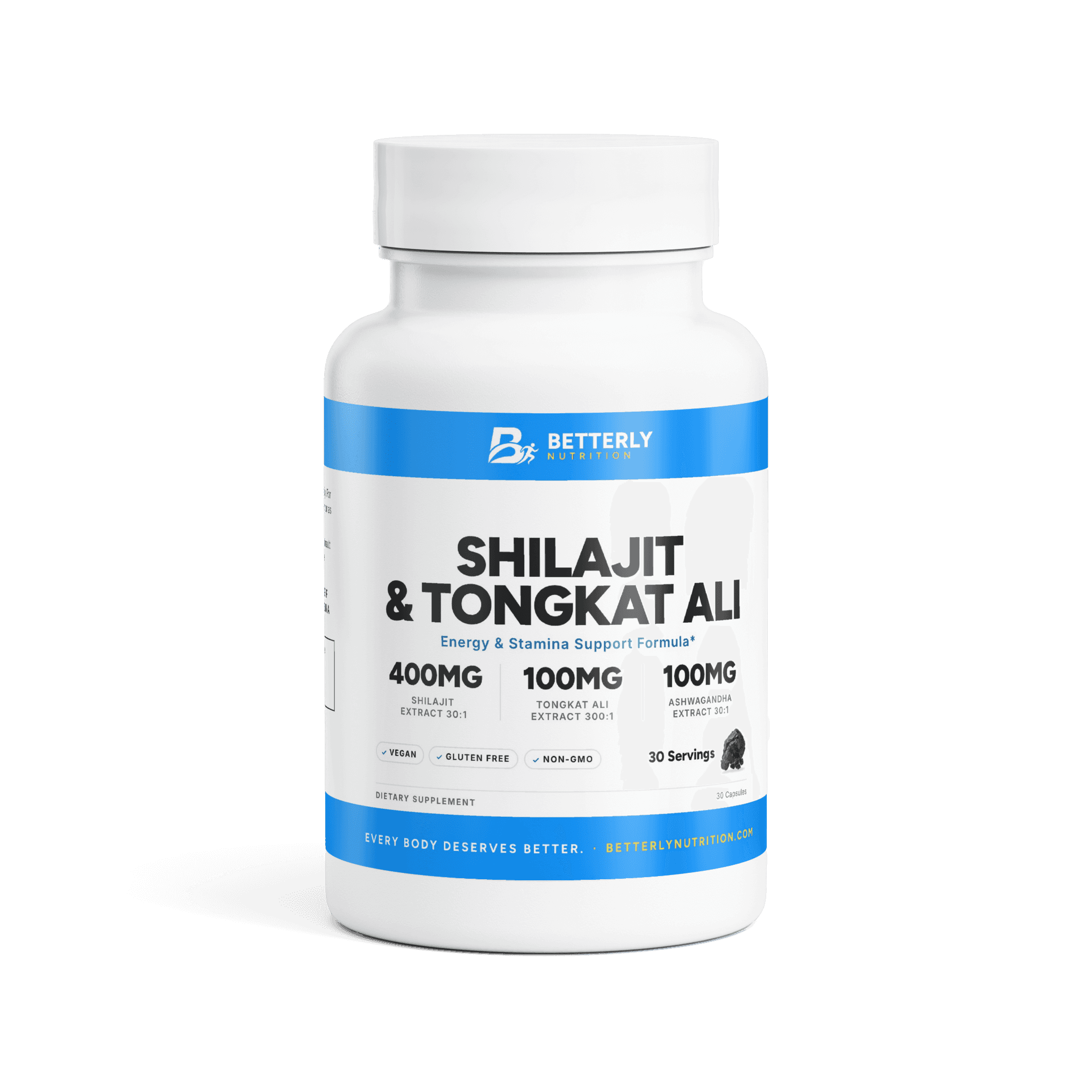
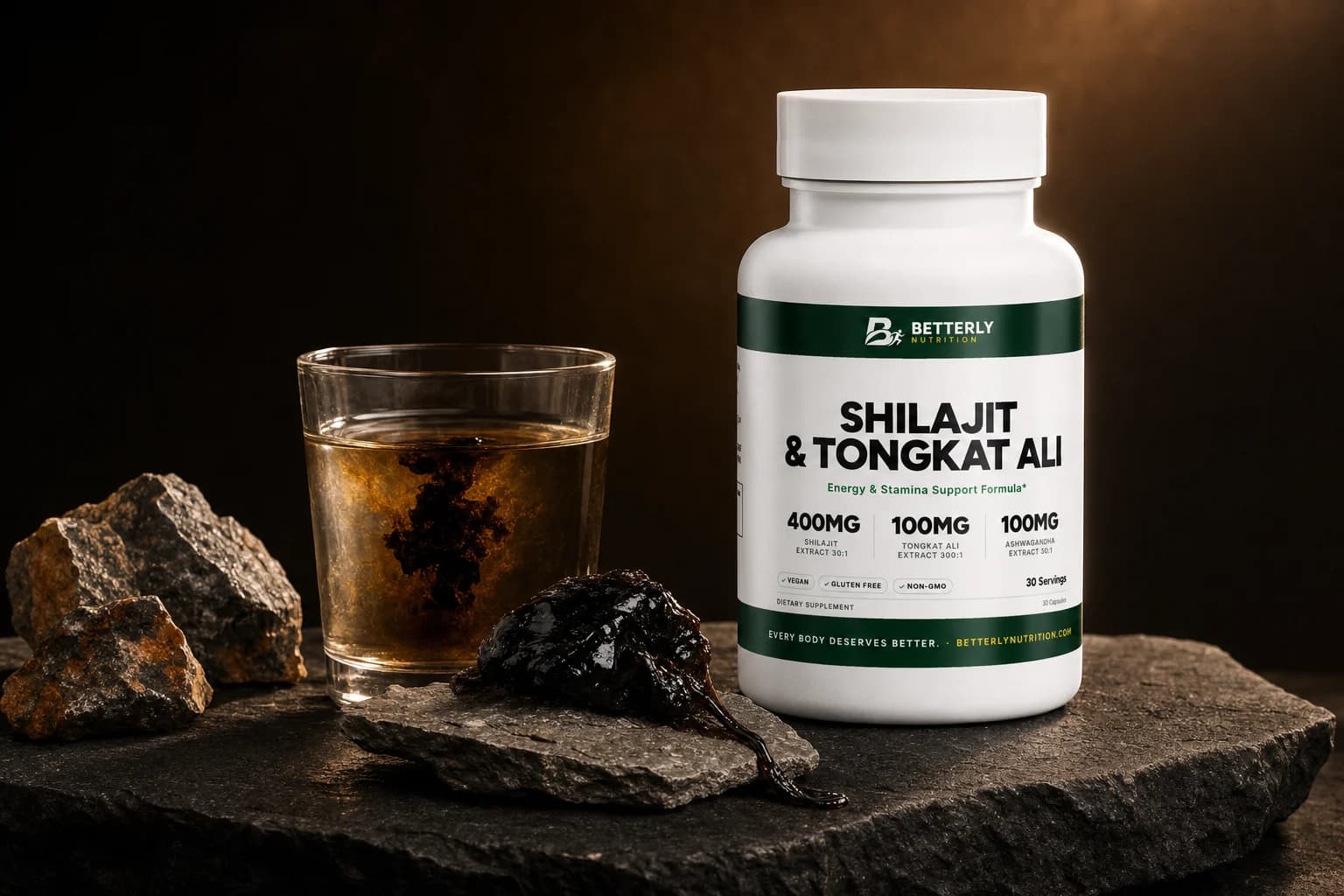
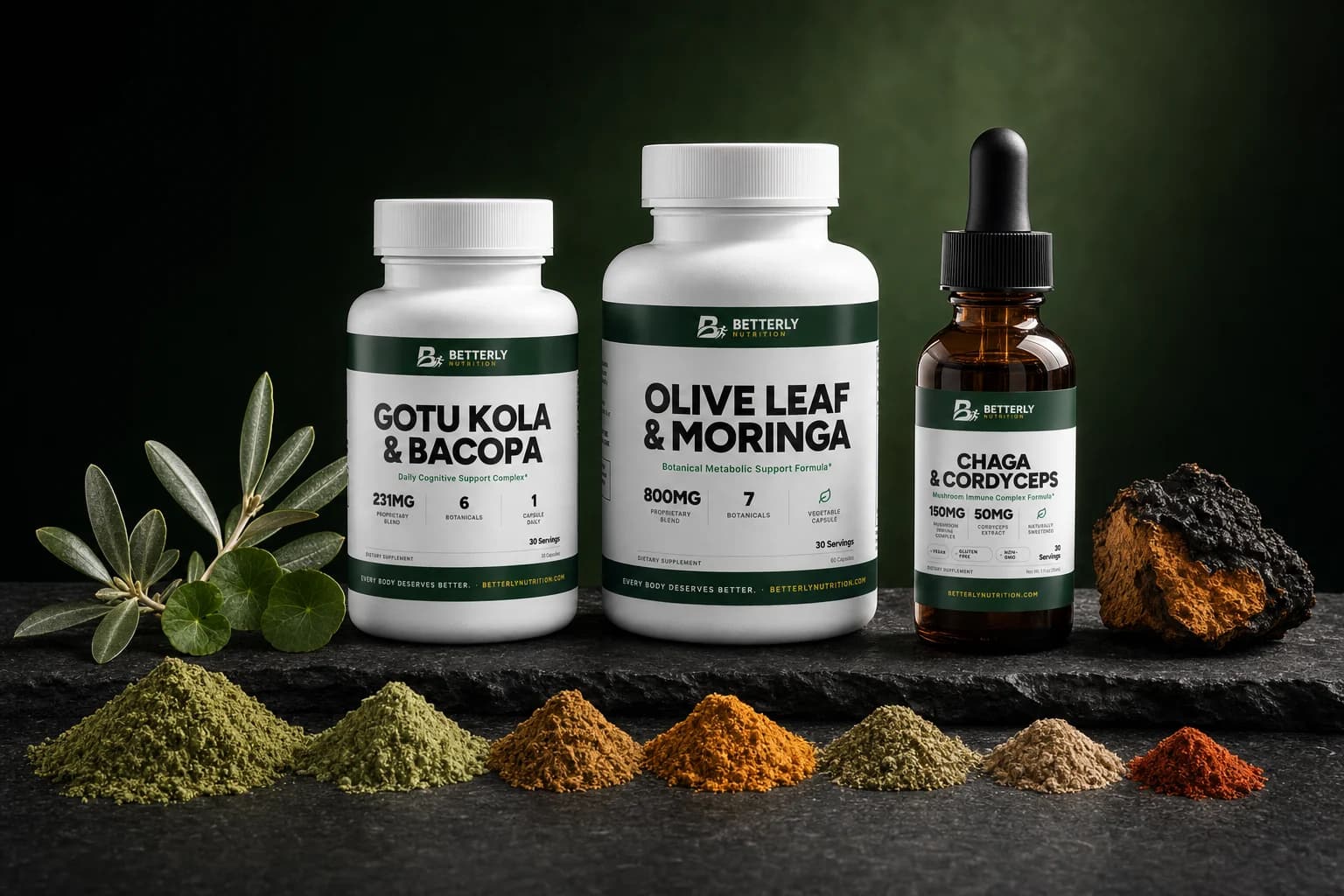
Alongside the Ayurvedic blend, we scored the Gotu Kola & Bacopa Capsules and the Shilajit & Tongkat Ali Capsules.
| Check | Ashwagandha & Holy Basil | Gotu Kola & Bacopa | Shilajit & Tongkat Ali |
|---|---|---|---|
| Metal-based ingredients | None listed | None listed | None listed |
| Shilajit per 1-capsule serving | 25 mg | None | 400 mg extract, 30:1 |
| Species named | 4 of 17 rows | 5 of 6 botanicals | 3 of 4 rows |
| Own amount per ingredient | Mostly: 17 rows, 2 are 3-part mixes | No, one 231 mg blend | Yes, 4 rows |
| Extract strength | 5 percentages, no compound named | 65% proanthocyanidins, 1 of 6 botanicals | 4 ratios |
| Batch metal results published | Not yet | Not yet | Not yet |
No capsule wins every row. The Ayurvedic blend discloses the most amounts but names species on the smallest share of its rows, the Gotu Kola & Bacopa formula names its plants but folds them into one blend, and the shilajit capsule carries the most of the rock-sourced ingredient.
All three fail the bottom row. As our quality page explains, we haven't audited our supplier's facility and don't publish batch documentation yet. Ask any brand, us included, for a lot-matched report, and count a missing one as a no.
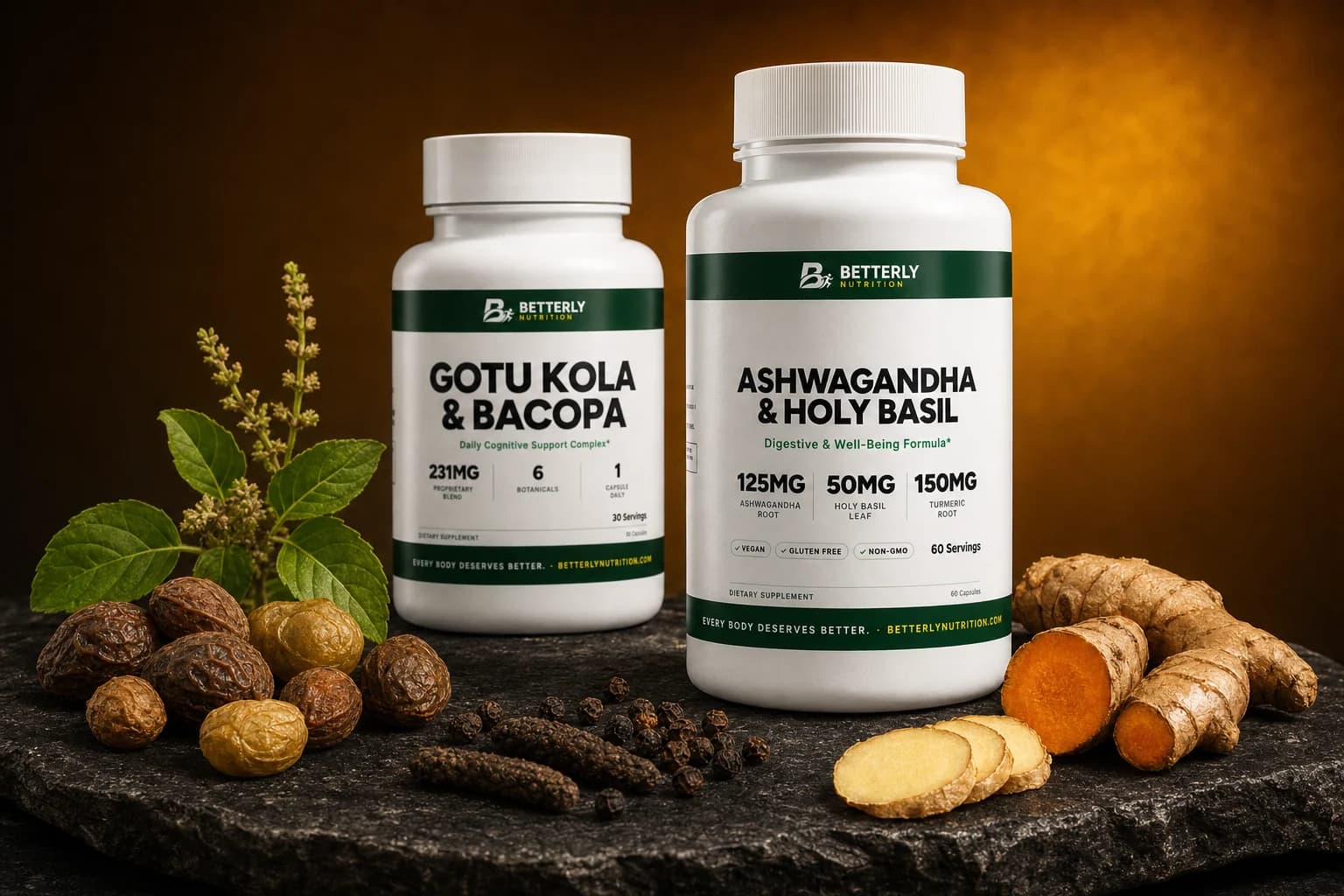
From our shop: Ashwagandha & Holy Basil Ayurvedic Capsules — an herb-led Ayurvedic formula with 17 separately dosed rows per 1-capsule serving, labeled vegan and gluten free.
What's actually on our Ayurvedic label, line by line?
Our Ashwagandha & Holy Basil Ayurvedic Capsules list 17 dosed rows that add up to 800 mg per 1-capsule serving, and the traditional rows need the closest read.
| Row on the panel | Per 1-capsule serving | What it is | What the label leaves out |
|---|---|---|---|
| Triphala Powder | 50 mg | Three dried fruits | Each fruit's share |
| Trikatu Powder | 25 mg | Three pungent spices | Each spice's share |
| Brahmi Leaves (20% extract) | 75 mg | Bacopa monnieri | What the 20% measures |
| Shilajit | 25 mg | Mineral-rich rock resin | Source, ratio, metal results |
| Sandalwood Wood Powder | 25 mg | Pterocarpus soyauxii | Nothing, but check the species |
The rows that make this capsule Ayurvedic are its least specific ones: two single numbers covering three ingredients each, and a shilajit row with no qualifier. The sandalwood row is a lesson in check 3: Pterocarpus soyauxii is a different tree from Santalum album, the species usually sold as sandalwood.
What is triphala made of?
Triphala is made of three dried fruits: amla (Phyllanthus emblica), bibhitaki (Terminalia bellirica) and haritaki (Terminalia chebula), which our panel names in full.
"Tri" means three and "phala" means fruit. Ayurvedic tradition uses it as a digestive formula, but we found no NCCIH or ODS fact sheet reviewing whether it works.
One quirk: amla shows up twice, inside triphala and as its own 25 mg row. Since the panel doesn't split the triphala, total amla lands between 25 mg and 75 mg.
What are trikatu's ingredients?
Trikatu's ingredients are black pepper, long pepper and ginger, listed on our panel as fruit, fruit and root powders inside a single 25 mg row.
Which brahmi is this, bacopa or gotu kola?
This brahmi is bacopa: our panel prints Bacopa monnieri beside "Brahmi Leaves," settling a name some sellers also give gotu kola.
Our comparison of gotu kola and bacopa explains why both plants answer to "brahmi."
Why is shilajit the row to ask about?
Shilajit is the row to ask about because it's gathered from rock rather than grown, and our Ayurvedic capsule lists 25 mg with no source, ratio or processing note.
Our Shilajit & Tongkat Ali Capsules print more: "Shilajit Extract 30:1 (Asphaltum)," from "Stone," at 400 mg per 1-capsule serving. Neither panel can show metals. Our guide to telling real shilajit from fake explains how to read a batch report.
How do you take these capsules without doubling up?
Take each capsule exactly as its label directs: all three call for 1 capsule a day, and no label addresses combining them.
- Ashwagandha & Holy Basil Ayurvedic Capsules: "Take 1 capsule daily preferably with a meal or as directed by a healthcare professional." A bottle holds 60 servings.
- Gotu Kola & Bacopa Capsules and Shilajit & Tongkat Ali Capsules: adults take 1 capsule daily with 6-8 oz (177-237 ml) of water. Each bottle holds 30 servings, and the gotu kola formula uses gelatin capsules.
Each label prints "Do not exceed recommended dose," and none names a time of day. The Ayurvedic blend shares shilajit and ashwagandha with the shilajit capsule, and bacopa with the Gotu Kola & Bacopa formula. Pick one instead of layering them unless your provider advises otherwise.
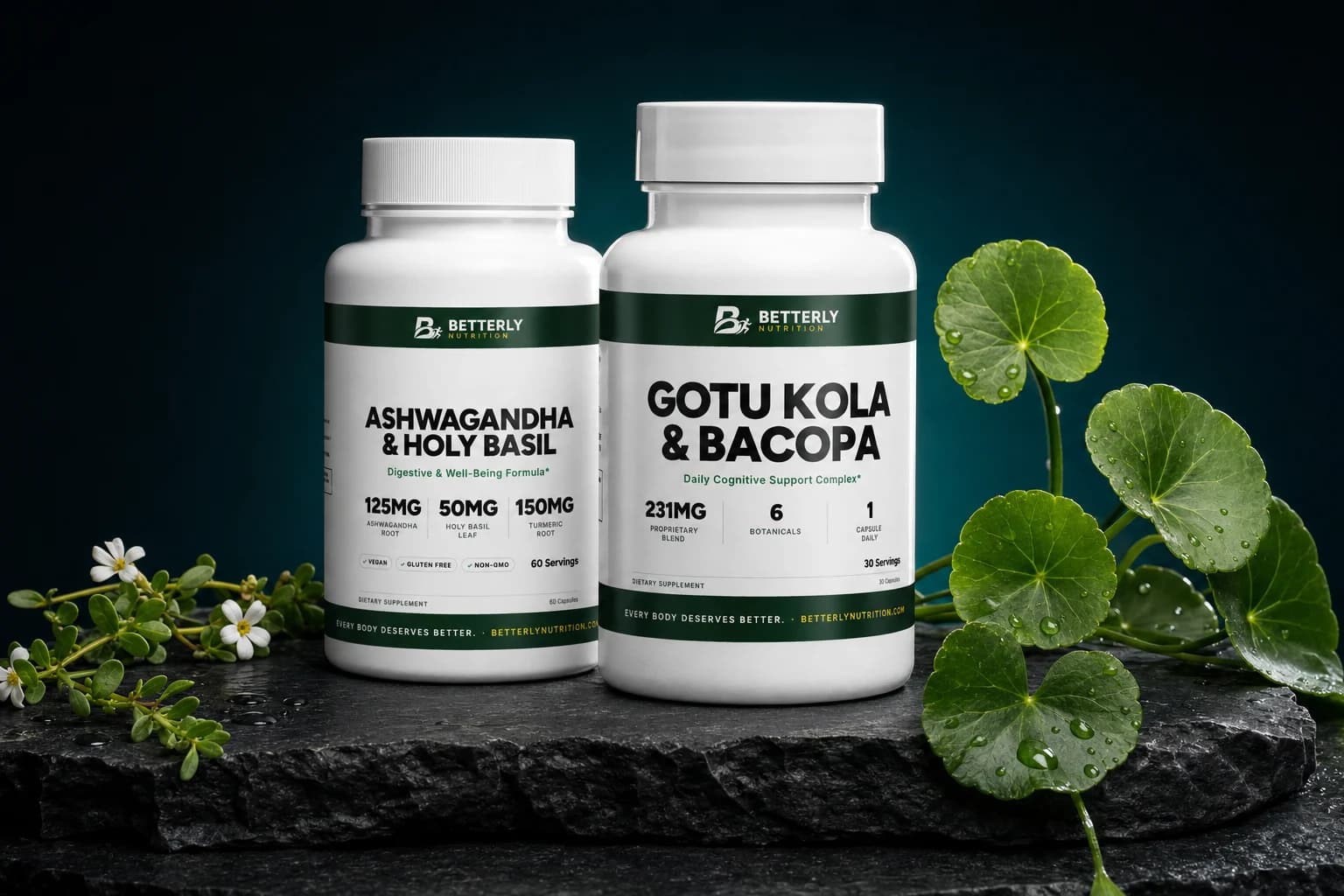
From our shop: Gotu Kola & Bacopa Capsules — six named botanicals, including gotu kola and Bacopa monnieri whole herb, in a 231 mg proprietary blend per 1-capsule serving.
When don't you need an Ayurvedic blend at all?
You don't need an Ayurvedic blend if you want a real dose of one herb, if batch results are non-negotiable, or if you're using it to put off a checkup.
- You're after one herb. A 17-row formula spreads 800 mg thin. Single-herb options sit on our adaptogen shelf.
- You won't buy without metal results. We can't meet that bar yet, so buy from a seller who can hand you a report for your lot.
- You're hoping to skip a checkup. NCCIH advises against using Ayurvedic medicine to delay seeing a conventional provider about a medical problem.
Who should check with a healthcare provider first?
Check with a healthcare provider before any Ayurvedic supplement if you're pregnant or nursing, under 18, taking prescription medicine, facing surgery or managing a medical condition.
All three of our labels say: "Consult a physician if pregnant, nursing, under 18, or have a medical condition." The federal pages add detail, much of it about ashwagandha, which two of the three capsules contain:
- Pregnant or nursing. NCCIH says ashwagandha should be avoided during pregnancy and not used while breastfeeding, and that turmeric supplements may be unsafe in pregnancy. FDA notes metals in a mother's body can pass to a nursing infant.
- Taking prescription medicine. NCCIH says ashwagandha may interact with some medications, including thyroid hormone medicines and sedatives, and reports interactions between licorice and corticosteroids. Bring the whole label to your pharmacist.
- Facing surgery. NCCIH doesn't recommend ashwagandha for people about to have surgery, so raise the capsule with your surgical team early.
- Managing a medical condition. NCCIH advises talking with your conventional provider before using Ayurvedic products if you have a health condition. Its ashwagandha page adds that the herb isn't recommended for people whose doctor is managing their thyroid or immune function.
If you've used an Ayurvedic product and notice symptoms you think could come from heavy metals, FDA suggests calling your provider or a poison center at 1-800-222-1222.
FAQ: Ayurvedic supplement safety
Do Ayurvedic supplements have side effects?
Yes, Ayurvedic supplements can have side effects, and a natural origin doesn't rule them out. NCCIH says ashwagandha may cause drowsiness, stomach upset, diarrhea or vomiting in some people, and links large or long-term amounts of licorice root to serious reactions. Metals are a separate risk that no label shows. Should something feel off after you begin a new capsule, set it aside and bring the bottle, lot number included, to your provider.
Is shilajit Ayurvedic?
Yes, shilajit has a long history in Ayurveda, but it isn't an herb. It's a mineral-rich resin collected from mountain rock, so metal results matter more for it than for most plants. Our Ayurvedic capsule lists 25 mg of shilajit per 1-capsule serving and prints no source or extract ratio for it.
Does the FDA check Ayurvedic supplements before they're sold?
No, FDA doesn't review Ayurvedic supplements before they reach shelves, since supplements don't need its approval before sale. FDA acts afterward: its Ayurvedic warning page describes reviewing reports of harm, testing some products for heavy metals, recommending recalls and issuing warning letters. It also states that it hasn't approved any Ayurvedic product.
How long can you take an Ayurvedic supplement?
For the two biggest herbs in our Ayurvedic capsule, federal safety windows cover only a few months. NCCIH says ashwagandha may be safe for up to 3 months, with long-term safety unknown, and gives conventionally formulated turmeric a likely-safe window of 2 or 3 months. Plan around the shorter turmeric figure and talk with your provider before the 2-month mark, and ask for batch results, since FDA says metals accumulate over time.
Sources
- Ayurvedic Medicine: In Depth, National Center for Complementary and Integrative Health
- FDA warns about heavy metal poisoning associated with certain unapproved ayurvedic drug products, U.S. Food and Drug Administration
- Botanical Dietary Supplements: Background Information, NIH Office of Dietary Supplements
- Ashwagandha: Usefulness and Safety, National Center for Complementary and Integrative Health
- Turmeric: Usefulness and Safety, National Center for Complementary and Integrative Health
- Licorice Root: Usefulness and Safety, National Center for Complementary and Integrative Health
If this left you looking for somewhere to start, read ayurvedic capsules with triphala and trikatu — its amounts per serving are listed on the page. For the practical questions this raises, how dosing, sourcing and subscriptions work is answered in one place.