On this page
- Key takeaways
- Can you take ashwagandha and turmeric together?
- What are the benefits of ashwagandha and turmeric together?
- Why are ashwagandha and turmeric paired in Ayurvedic formulas?
- One capsule or two bottles: how do the amounts compare?
- How do you avoid doubling up on turmeric or ashwagandha?
- When should you take ashwagandha and turmeric?
- Is ashwagandha and turmeric tea the same as a supplement?
- When don't you need ashwagandha and turmeric?
- Who should check with a healthcare provider first?
- FAQ: ashwagandha and turmeric
- Sources
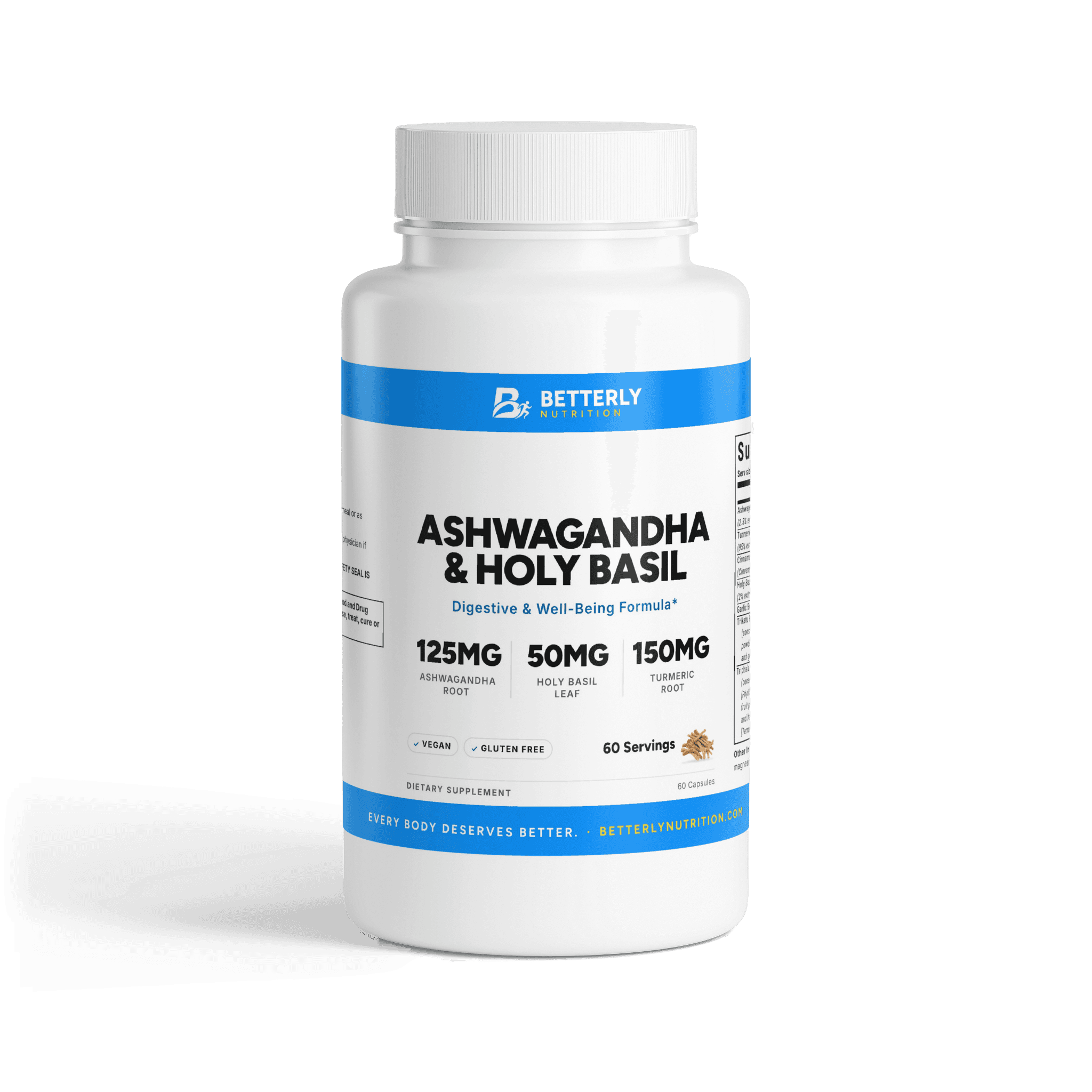
The short answer: You can take ashwagandha and turmeric together, and some Ayurvedic formulas, ours included, put both in one capsule. The NCCIH and ODS pages we cite never discuss the pair or name a clash between them, so each herb keeps its own cautions, including a liver caution on both. Our Ashwagandha & Holy Basil Ayurvedic Capsules pair 125 mg of ashwagandha root extract with 150 mg of turmeric root extract per 1-capsule serving.
Key takeaways
- NCCIH reports rare liver injury with ashwagandha and liver damage in some people taking absorption-enhanced curcumin. We count our BioPerine® turmeric capsule as one of those and can't rule out our blend, whose trikatu includes black pepper.
- In the seven stress studies a 2021 review gathered, which ODS summarizes, ashwagandha extract doses ran 240 to 1,250 mg a day, far more than the 125 mg in our blend's 1-capsule serving.
- In total milligrams, the blend gives you small amounts of both herbs, while a separate ashwagandha capsule and a turmeric-led formula give you more of each.
- Greens powders and other blends can already hold one or both herbs, so check every panel you own.
- If you take prescription medication, check with your pharmacist before adding either herb.
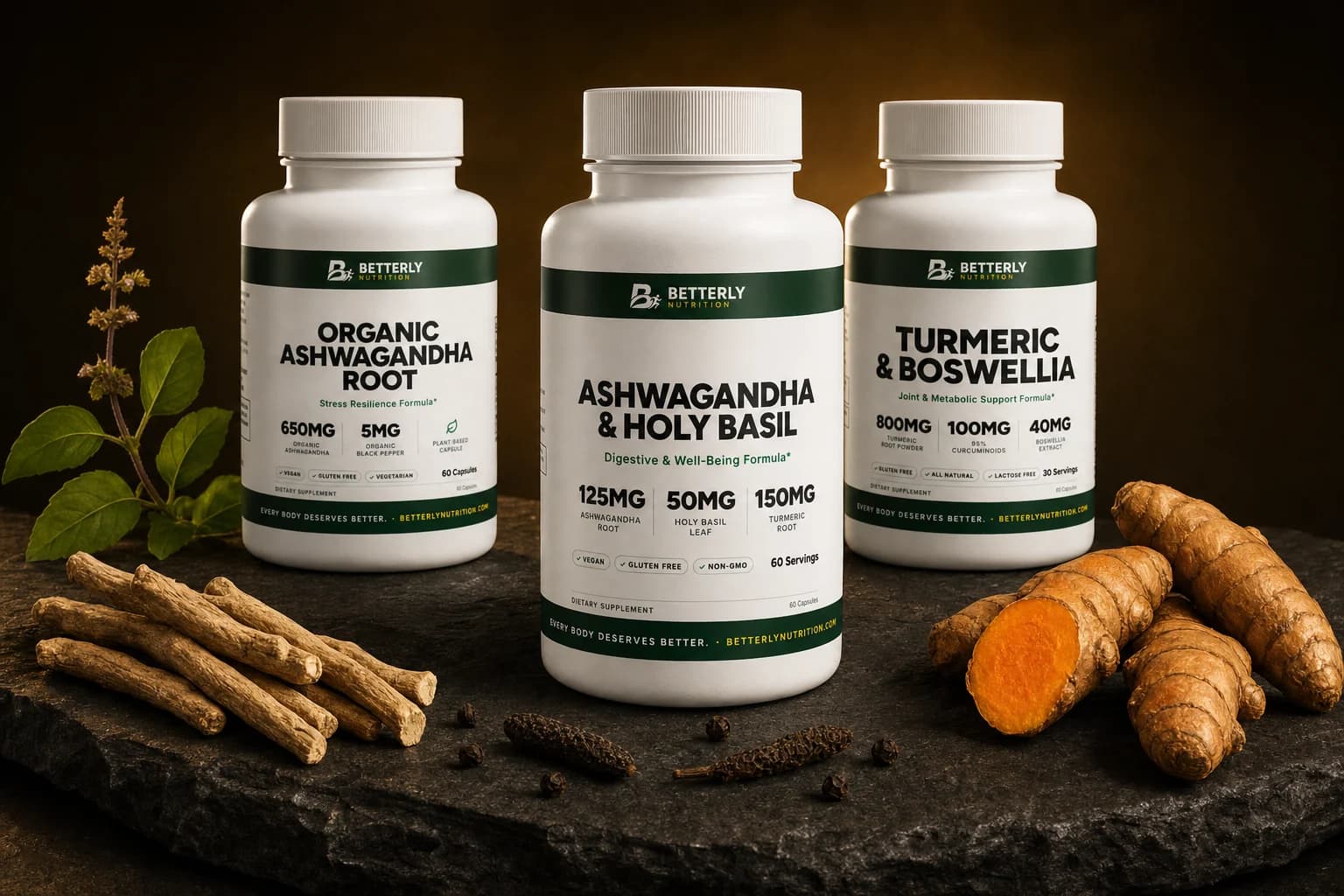
We sell all three products compared below. Every number here comes straight off our labels, including the ones that make our blend look small.
Can you take ashwagandha and turmeric together?
Yes, you can take ashwagandha and turmeric together, but the pairing carries both herbs' cautions at once rather than a separate set of its own.
Read the NCCIH page on ashwagandha and its page on turmeric as two safety lists you clear one at a time. If a warning on either page fits you, such as pregnancy or an upcoming operation, that warning covers the stack.
What are the benefits of ashwagandha and turmeric together?
No study we found measures what ashwagandha and turmeric do as a pair, so the honest answer is each herb's own evidence.
Withania somnifera, the plant behind ashwagandha, is an evergreen shrub grown in warm parts of Asia, Africa and Europe. An ashwagandha fact sheet from the NIH Office of Dietary Supplements (ODS) summarizes a handful of placebo-controlled trials, mostly small and brief, suggesting extracts may help with perceived stress and sleep quality.
ODS summarizes a 2021 review of seven stress studies in which extract doses ran from 240 to 1,250 mg a day, and in several, benefits appeared greater at 500 to 600 mg. That's far above the 125 mg of 2.5% extract in our blend's 1-capsule serving, so those results don't transfer to it. ODS adds that the trials used so many different extracts and amounts that no recommended dose stands out.
Turmeric (Curcuma longa) belongs to the ginger family, and its underground stem is the yellow spice in your kitchen. NCCIH notes that many studies have been run, yet it still can't definitively say whether turmeric or curcumin is beneficial for any health purpose.
Our blend doesn't claim the pair does more together. Its front label calls it a "Digestive & Well-Being Formula," and the two herbs share the capsule with 15 other ingredients. Our side-by-side of holy basil and ashwagandha covers one of them.
Why are ashwagandha and turmeric paired in Ayurvedic formulas?
Ashwagandha and turmeric both have a history in Ayurveda, India's traditional medicine system, which is why Ayurvedic formulas often hold both.
ODS says ashwagandha root has been used in Ayurvedic and Unani medicine as an adaptogen, a loose term for something thought to help the body resist or adapt to stress. NCCIH lists Ayurveda among the traditional systems that used turmeric, along with Chinese, Islamic and Thai medicine.
Our blend leans into that heritage, with triphala (a mix of three fruits), amla, brahmi, licorice root and trikatu, a traditional mix of three pungent spices, on its panel. The panel spells trikatu out as black pepper fruit powder, long pepper fruit powder and ginger root powder, 25 mg in total, with no split between them.
Where black pepper fits
NCCIH notes that oral curcumin products often contain piperine from black pepper, and that adding piperine is one way to increase the share of curcumin your body takes in.
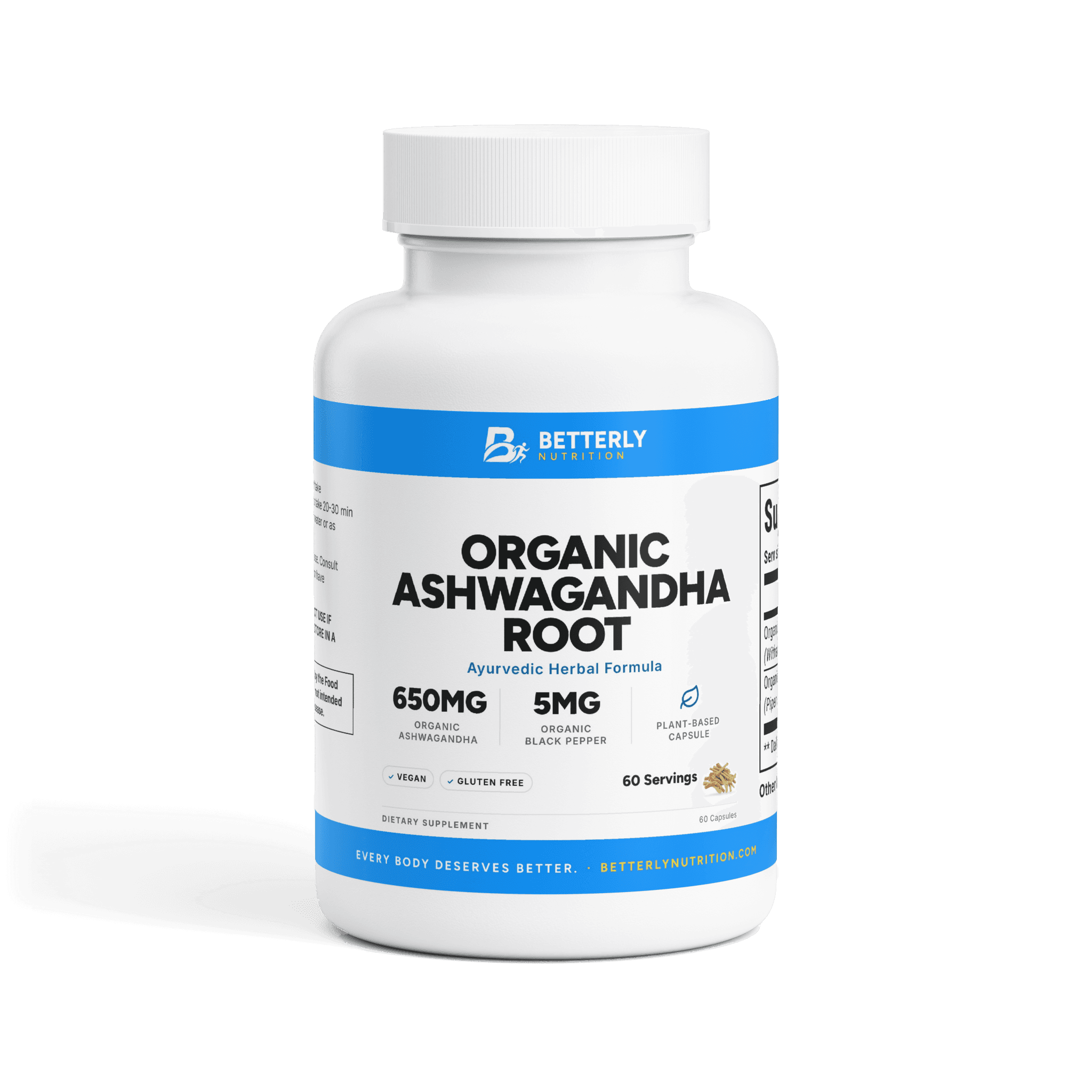
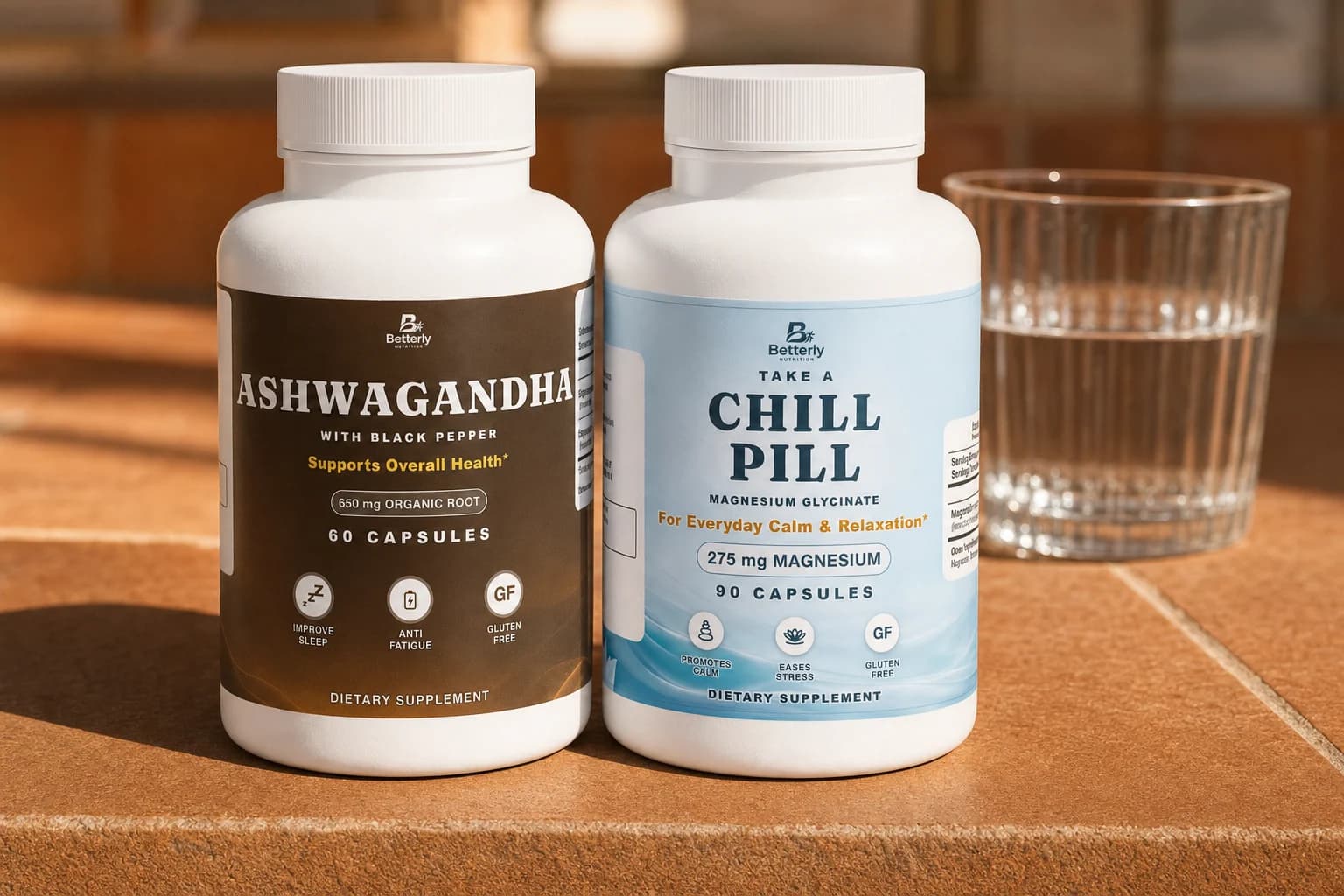
Our separate ashwagandha and turmeric labels follow the same habit. The Organic Ashwagandha Root Capsules list 650 mg of organic ashwagandha root and 5 mg of organic black pepper per 1-capsule serving, and the Turmeric Curcumin & Boswellia Capsules list 10mg of BioPerine®, a branded black pepper extract, per 2-capsule serving. The blend's pepper sits inside its trikatu with no piperine figure, so we can't tell you how much piperine you get. Our guide to why turmeric is sold with black pepper digs into those pepper rows.
One capsule or two bottles: how do the amounts compare?
The Ashwagandha & Holy Basil Ayurvedic Capsules give 125 mg of ashwagandha extract and 150 mg of turmeric extract per 1-capsule serving, fewer total milligrams than two separate bottles.
If you're choosing an ashwagandha and turmeric supplement, the other route pairs the root capsule, taken twice a day, with the turmeric-led formula, taken once. Here's every route at each label's suggested use. The last two rows add the blend to one separate bottle, which neither label suggests.
| Route (capsules a day) | Ashwagandha per day | Turmeric per day | Label timing |
|---|---|---|---|
| Blend only (1) | 125 mg root, 2.5% extract | 150 mg root, 95% extract | With a meal |
| Ashwagandha capsule + turmeric formula (4) | 1,300 mg root | 800mg root powder + 100mg 95% curcuminoids | 20-30 min before meals |
| Blend + turmeric capsules (3) | 125 mg | 150 mg + 900mg | Mixed |
| Blend + ashwagandha capsules (3) | 125 mg + 1,300 mg | 150 mg | Mixed |
In total milligrams, the blend is the light end and the two-bottle route the heavy end, though extract strength blurs that line. Adding the blend to either bottle mostly piles on more of one herb.
The milligrams don't compare one-for-one. The blend's ashwagandha is a 2.5% extract, while the root capsule holds plain root with no extract ratio, and ODS points out how widely ashwagandha preparations vary.
Turmeric is murky too: the blend's 150 mg row says "95% extract" without naming what the 95% measures, while the turmeric capsule's 100mg row names curcuminoids. Counting standardized extract alone, the blend isn't clearly the lighter turmeric source.
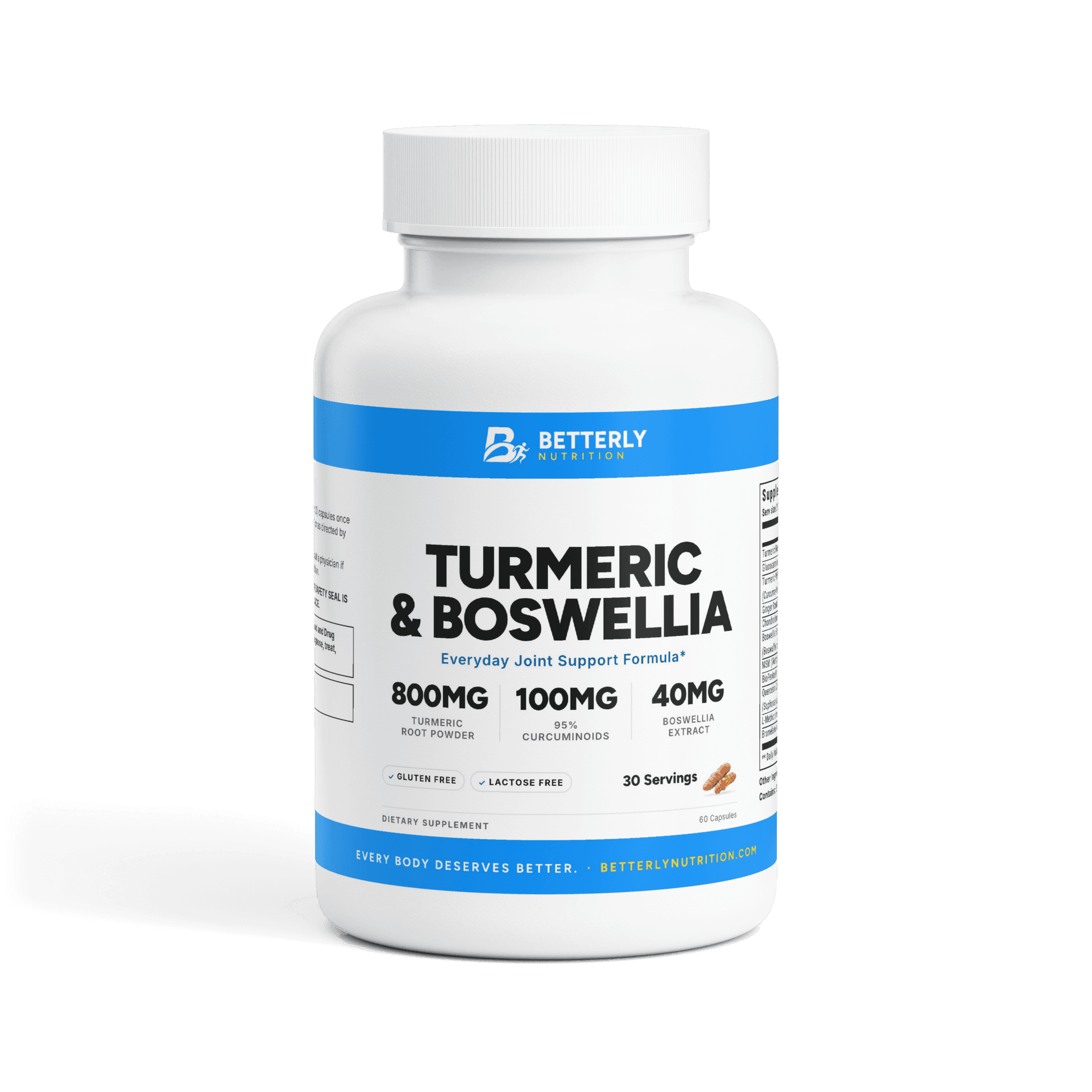
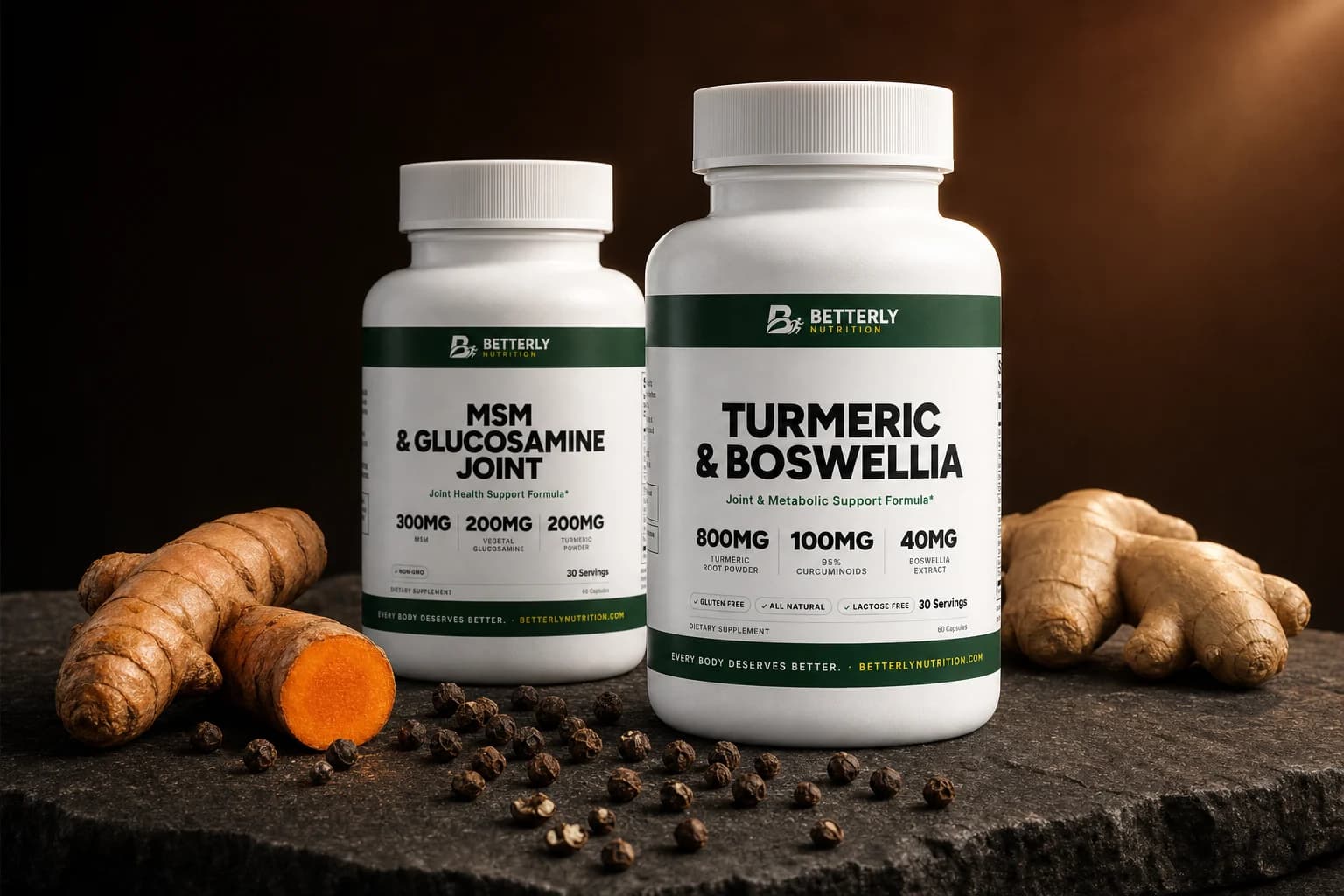
The turmeric capsule isn't turmeric alone, either. Each 2-capsule serving also lists glucosamine sulfate, ginger root extract, chondroitin sulfate, boswellia extract, MSM, BioPerine®, quercetin, L-methionine and bromelain.
Both ashwagandha products live in our adaptogens collection.
From our shop: Ashwagandha & Holy Basil Ayurvedic Capsules — both herbs in one vegan capsule a day, with 125 mg of ashwagandha root (2.5% extract) and 150 mg of turmeric root (95% extract) per 1-capsule serving.
How do you avoid doubling up on turmeric or ashwagandha?
Avoid doubling up by listing every turmeric and ashwagandha row across your supplements before adding anything, because both herbs turn up in blends whose names don't mention them.
On our own shelf, these labels list one or both herbs:
- Barley Grass & Spirulina Greens Powder lists turmeric extract, ashwagandha powder and black pepper extract inside one 300 mg blend per 1 scoop (4.2 g) serving, with no amount for any of them.
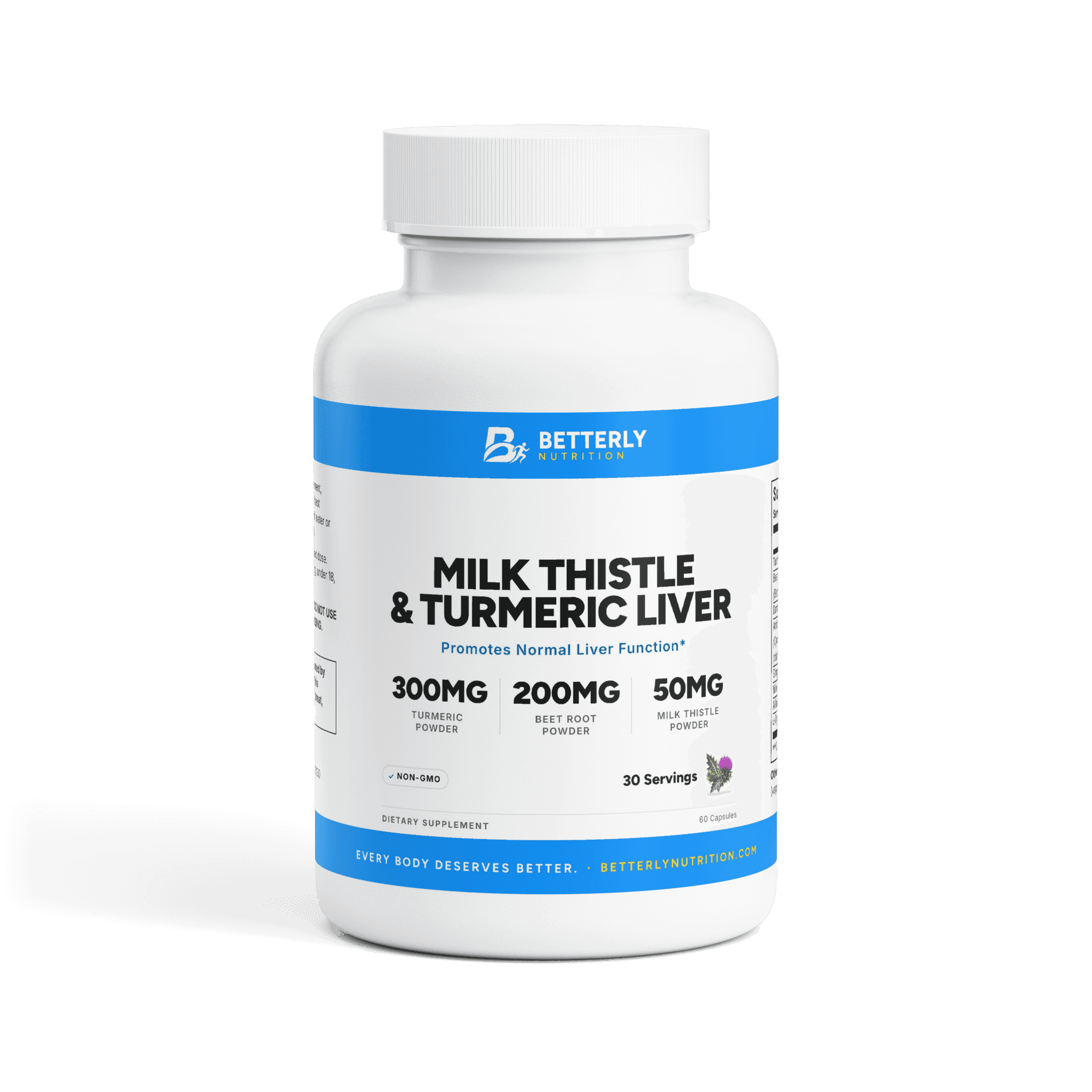
- Milk Thistle & Turmeric Liver Capsules list 300 mg of turmeric powder (root) per 2-capsule serving.
- Cinnamon & Licorice Root Drops list 75 mg of a 1:5 turmeric root extract per 2 ml/40 drops serving.
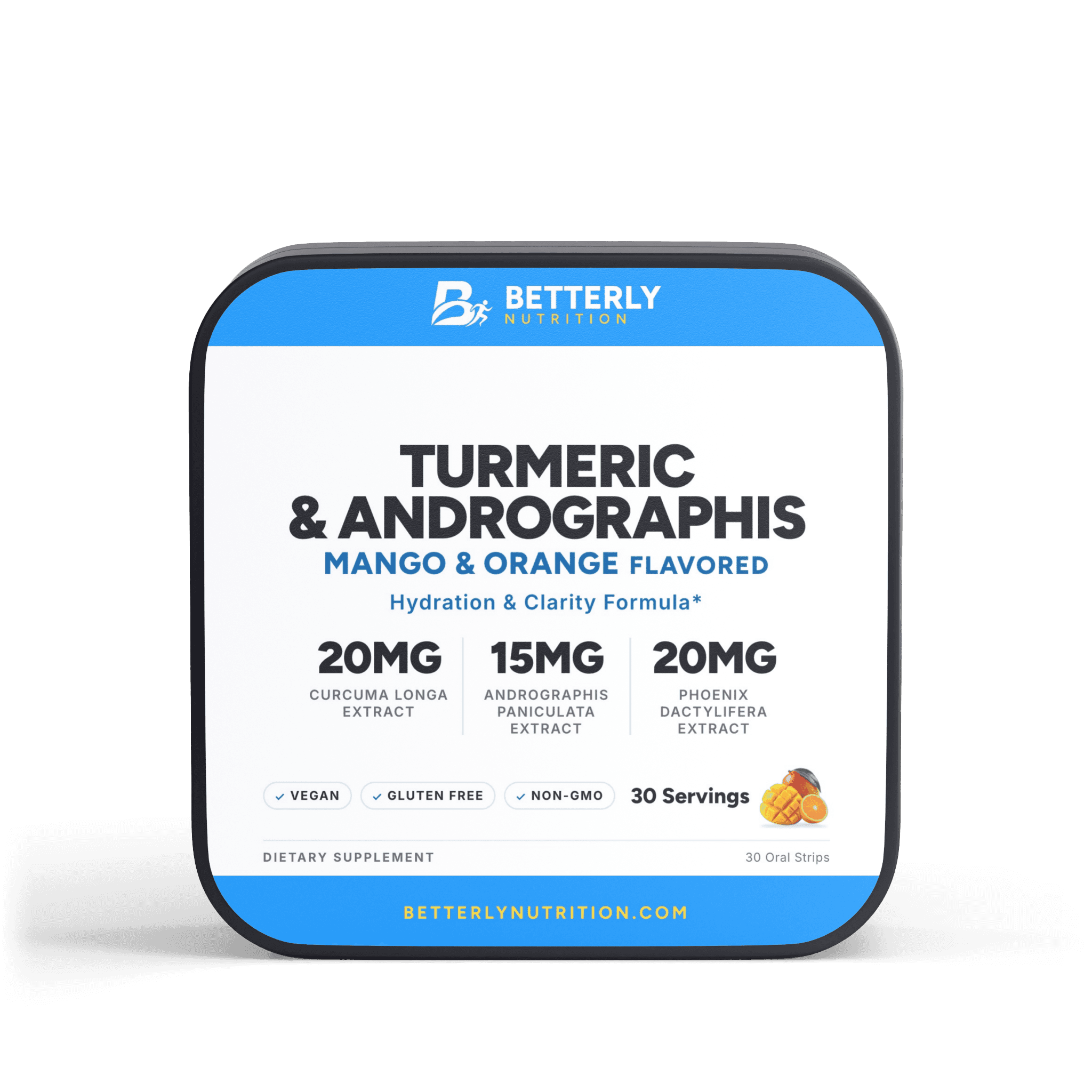
- Turmeric & Andrographis Strips list 20 mg of Curcuma longa extract per 1 oral strip (165 mg) serving.
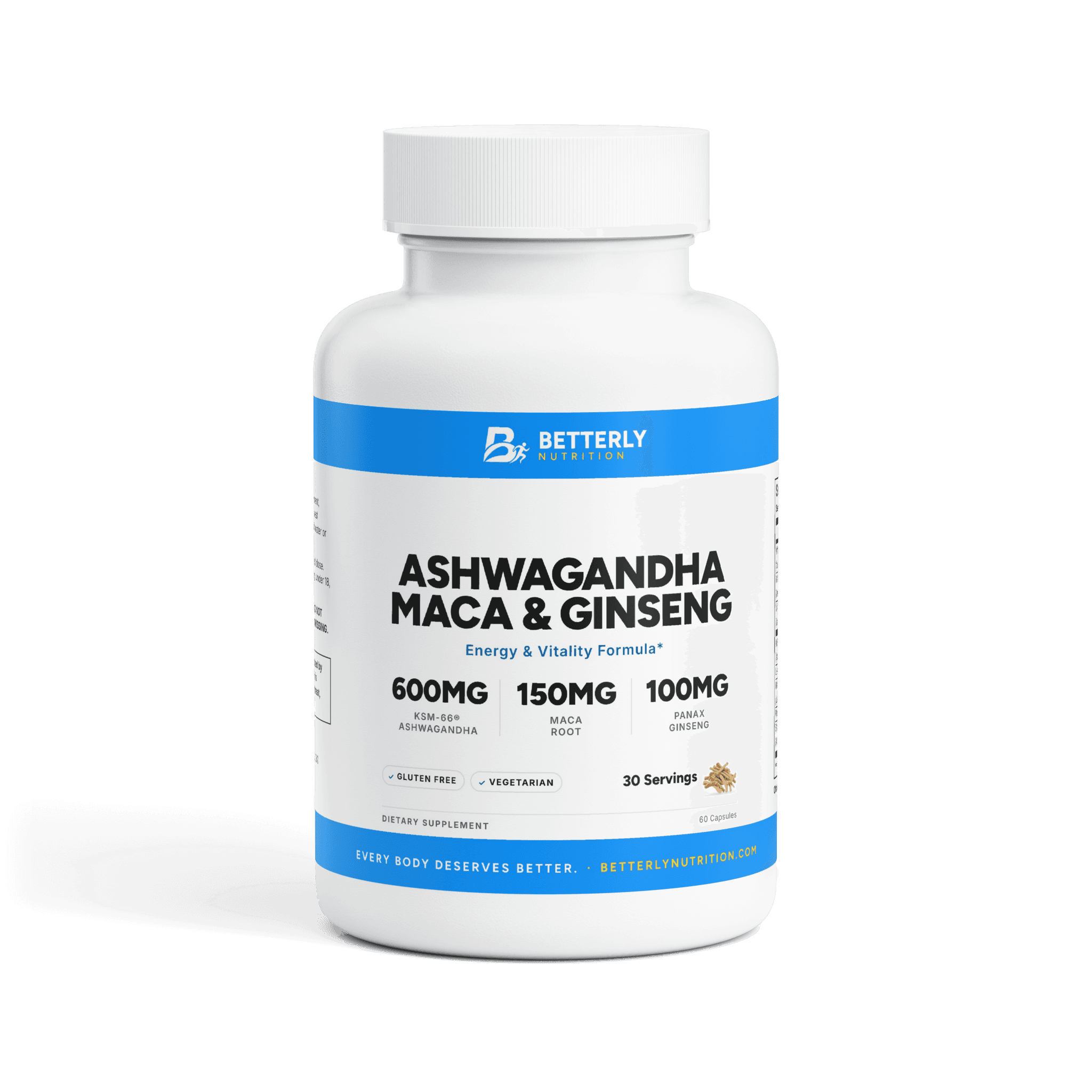
- Ashwagandha, Maca & Ginseng Capsules list 600 mg of KSM-66® ashwagandha extract, standardized to 5% withanolides, per 2-capsule serving.
When you find a match, keep the one product whose label fits your goal and drop the duplicate. The ODS consumer guide, Dietary Supplements: What You Need to Know, names taking lots of different supplements as one of the situations where side effects become more likely.
When should you take ashwagandha and turmeric?
Take ashwagandha and turmeric by your product's label: the blend asks for 1 capsule daily with a meal, while the two separate labels say 20-30 minutes before a meal.
- Ashwagandha & Holy Basil Ayurvedic Capsules: "Take 1 capsule daily preferably with a meal or as directed by a healthcare professional."
- Organic Ashwagandha Root Capsules: one capsule twice a day, 20-30 min before a meal, with an 8oz (237ml) glass of water.
- Turmeric Curcumin & Boswellia Capsules: two capsules once a day, 20-30 min before a meal.
All three print "Do not exceed recommended dose," and none sets a time of day. Morning or evening is your call. The blend asks for food, so don't move it to an empty stomach to match the other bottles.
NCCIH's side-effect lists include stomach upset, diarrhea, vomiting and drowsiness for ashwagandha, and nausea, acid reflux and an upset stomach for turmeric. If anything on those lists shows up, talk with your provider rather than reshuffling doses yourself.
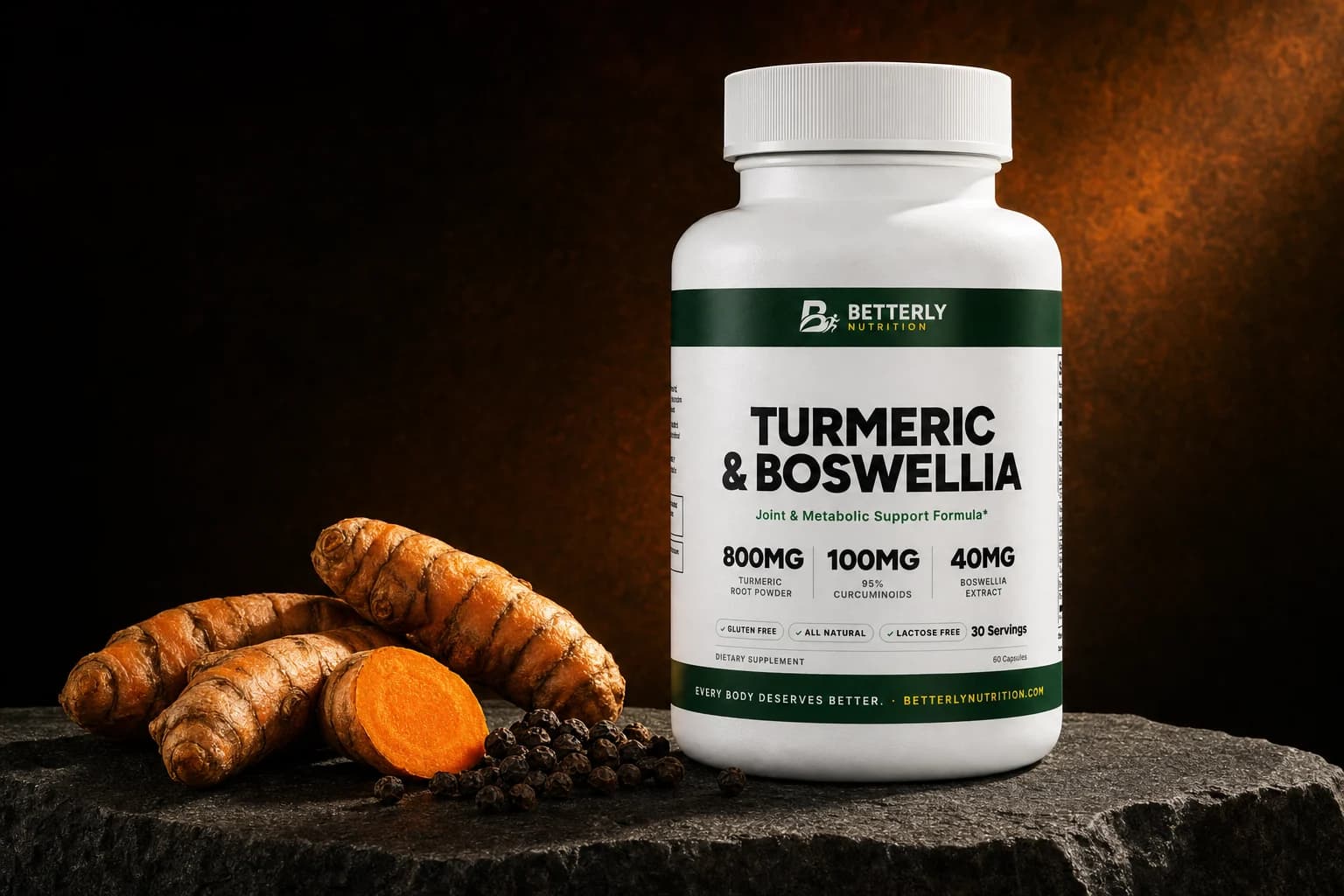
From our shop: Turmeric Curcumin & Boswellia Capsules — a turmeric-led formula with 800mg of turmeric root powder and 100mg of 95% curcuminoids per 2-capsule serving, plus boswellia, ginger and glucosamine; the label lists shellfish, so skip it if you're allergic.
Is ashwagandha and turmeric tea the same as a supplement?
No, ashwagandha and turmeric tea isn't the same as a supplement: a mug has no Supplement Facts panel, so you can't tell how much of either herb you're drinking.
Golden milk is a turmeric drink, and many "moon milk" recipes stir in ashwagandha powder too. If you like either, enjoy it, with two caveats. Ashwagandha in a mug is still ashwagandha, so its cautions around pregnancy, breastfeeding, surgery and medication apply. And a daily mug is one more source to count if you also take a capsule with either herb.
When don't you need ashwagandha and turmeric?
You don't need ashwagandha and turmeric if another product already covers them, if you enjoy turmeric mainly as a spice, or if a synergy promise is your main reason.
- Your cabinet already has both. The greens powder above holds both herbs, and a stack just doubles rows you can't measure.
- Turmeric lives in your cooking. Given NCCIH's uncertainty above, we don't think a spice habit needs a capsule on top.
- You're buying for synergy. No study we found tests the pair, so a "better together" promise has nothing behind it yet.
Stress or sleep trouble that drags on deserves a provider visit before any herb.
Who should check with a healthcare provider first?
Talk to a healthcare provider before combining ashwagandha and turmeric if you're pregnant or nursing, under 18, on prescription medication, facing surgery, or managing a health condition.
All three of our labels print "Consult a physician if pregnant, nursing, under 18, or have a medical condition." NCCIH and ODS go further:
- Pregnancy. NCCIH rules out ashwagandha during pregnancy and calls turmeric supplements possibly unsafe then, so skip this stack.
- Breastfeeding. NCCIH says not to use ashwagandha while breastfeeding and that little is known about turmeric above food amounts.
- Prescription medication. Check with your pharmacist before adding either herb, and bring every label.
- Surgery. If an operation is on your calendar, NCCIH advises against ashwagandha, and the ODS consumer guide warns that certain supplements taken before an operation can affect bleeding or your reaction to anesthesia.
- Thyroid or autoimmune conditions. NCCIH advises against ashwagandha for anyone managing one.
- Liver. NCCIH links rare liver injury cases to ashwagandha and reports liver damage in some people taking curcumin made to absorb better. Our Turmeric Curcumin & Boswellia Capsules list 10mg of BioPerine® per 2-capsule serving, and NCCIH names piperine as one way to raise curcumin absorption, so we read the enhanced-absorption warning as written for that bottle, with no federal time limit we could find. Our blend's trikatu also contains black pepper, with no piperine figure on the panel, so we can't say whether NCCIH would count it as absorption-enhanced. ODS adds that some ashwagandha liver reports involved combination products. NCCIH's turmeric page lists tiredness, nausea, poor appetite, dark urine and yellowing skin or eyes as warning signs; if any appear, stop and call your provider.
- Shellfish allergy. The Turmeric Curcumin & Boswellia Capsules list glucosamine sulfate, which is shellfish-derived, and their Contains line reads "Shellfish (Crab, Lobster and Crawfish)." The label warns people allergic to shellfish not to take it. The blend lists no shellfish.
FAQ: ashwagandha and turmeric
Do ashwagandha and turmeric interact with each other?
No interaction between ashwagandha and turmeric shows up on the NCCIH or ODS pages cited here, which is a gap, not a clearance. Medicines are the clearer concern: the ODS consumer guide says supplements can interact with some medicines in ways that might cause problems. If you take any prescription, check with your pharmacist before adding either herb, and bring both labels.
Can you take ashwagandha, turmeric and magnesium together?
Ashwagandha, turmeric and magnesium can share a routine, but clear the trio with your provider first. None of the three panels in this guide lists magnesium as an ingredient amount, so it doesn't repeat a row you already have. Our guide to pairing magnesium with ashwagandha covers that duo.
Can you take ashwagandha, turmeric and ginger together?
Yes, ashwagandha, turmeric and ginger can share a routine, and several of our labels already combine ginger with one or both herbs. Our blend lists ginger root powder inside its 25 mg of trikatu, the Turmeric Curcumin & Boswellia Capsules list 100mg of ginger root extract per 2-capsule serving, and the greens powder and Milk Thistle & Turmeric Liver Capsules above list ginger too. A separate ginger supplement adds one more source, so tell your pharmacist about every product listing ginger.
How long can you take ashwagandha and turmeric?
Ashwagandha and turmeric have only short-term safety windows. NCCIH says ashwagandha may be safe up to 3 months, and ODS says its long-term safety isn't known. NCCIH calls turmeric not modified to absorb better likely safe at recommended amounts for up to 2 or 3 months. Our Turmeric Curcumin & Boswellia Capsules list 10mg of BioPerine® per 2-capsule serving, and NCCIH names piperine as one way to raise curcumin absorption, so we apply its liver warning to them, not that window. Our blend's trikatu also contains black pepper, with no piperine figure on the panel, so we can't say whether NCCIH would count it as absorption-enhanced. Ask your provider before passing 2 months.
Sources
- Ashwagandha: Usefulness and Safety (NCCIH)
- Turmeric: Usefulness and Safety (NCCIH)
- Ashwagandha: Fact Sheet for Health Professionals (NIH Office of Dietary Supplements)
- Dietary Supplements: What You Need to Know (NIH Office of Dietary Supplements)
If this left you looking for somewhere to start, read ashwagandha and turmeric in one daily capsule — its amounts per serving are listed on the page. For the practical questions this raises, how dosing, sourcing and subscriptions work is answered in one place.