On this page
- Key takeaways
- Holy basil vs ashwagandha: how do a leaf and a root compare?
- What does federal research say about holy basil and ashwagandha?
- Holy basil vs ashwagandha for stress: which suits a hectic week?
- Tulsi vs ashwagandha for sleep: does either belong at bedtime?
- Can you take holy basil and ashwagandha together?
- What's actually in a capsule that pairs both herbs?
- How do you take holy basil or ashwagandha, going by the label?
- When is it fine to skip both herbs?
- Who should check with a healthcare provider before either herb?
- FAQ: holy basil vs ashwagandha
- Sources
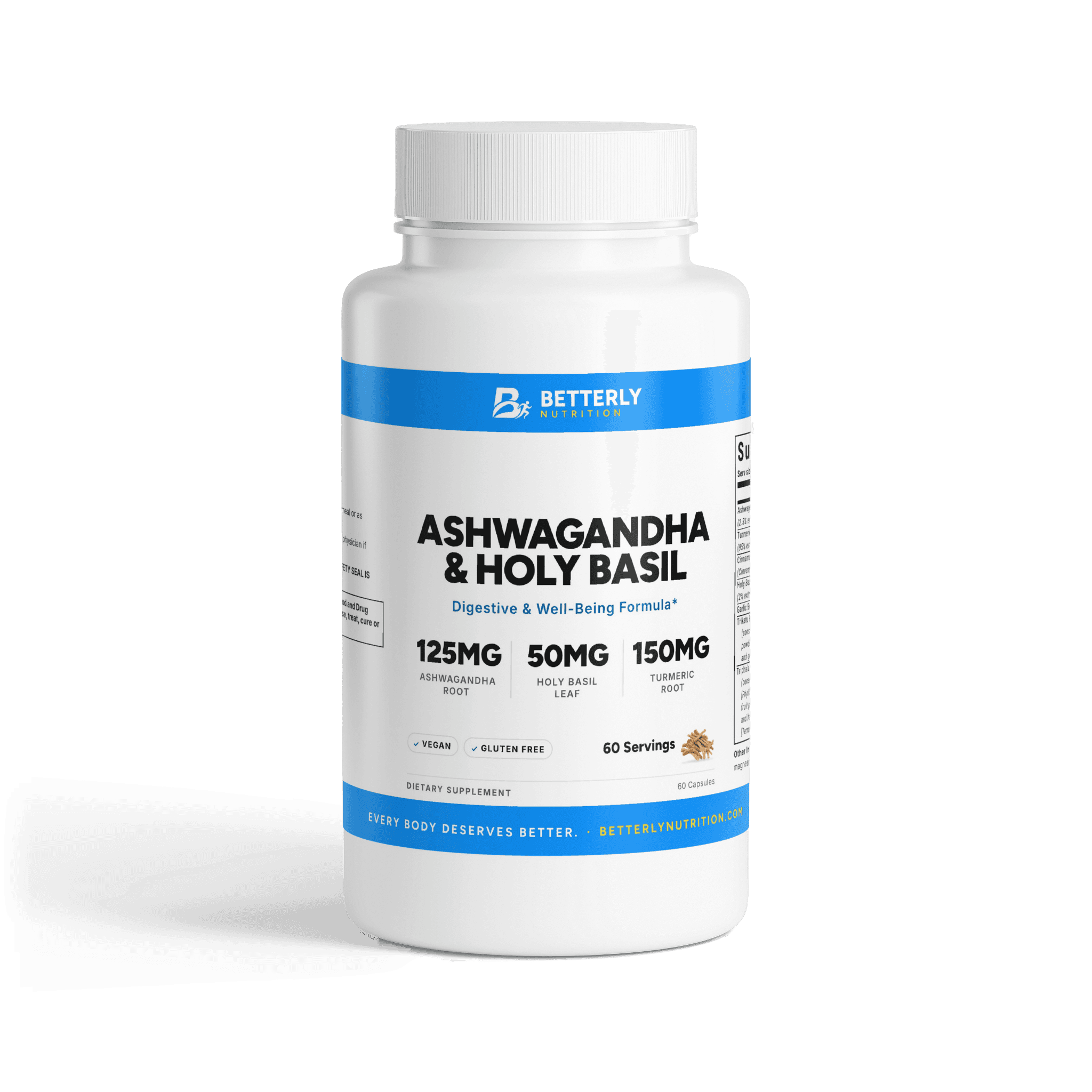
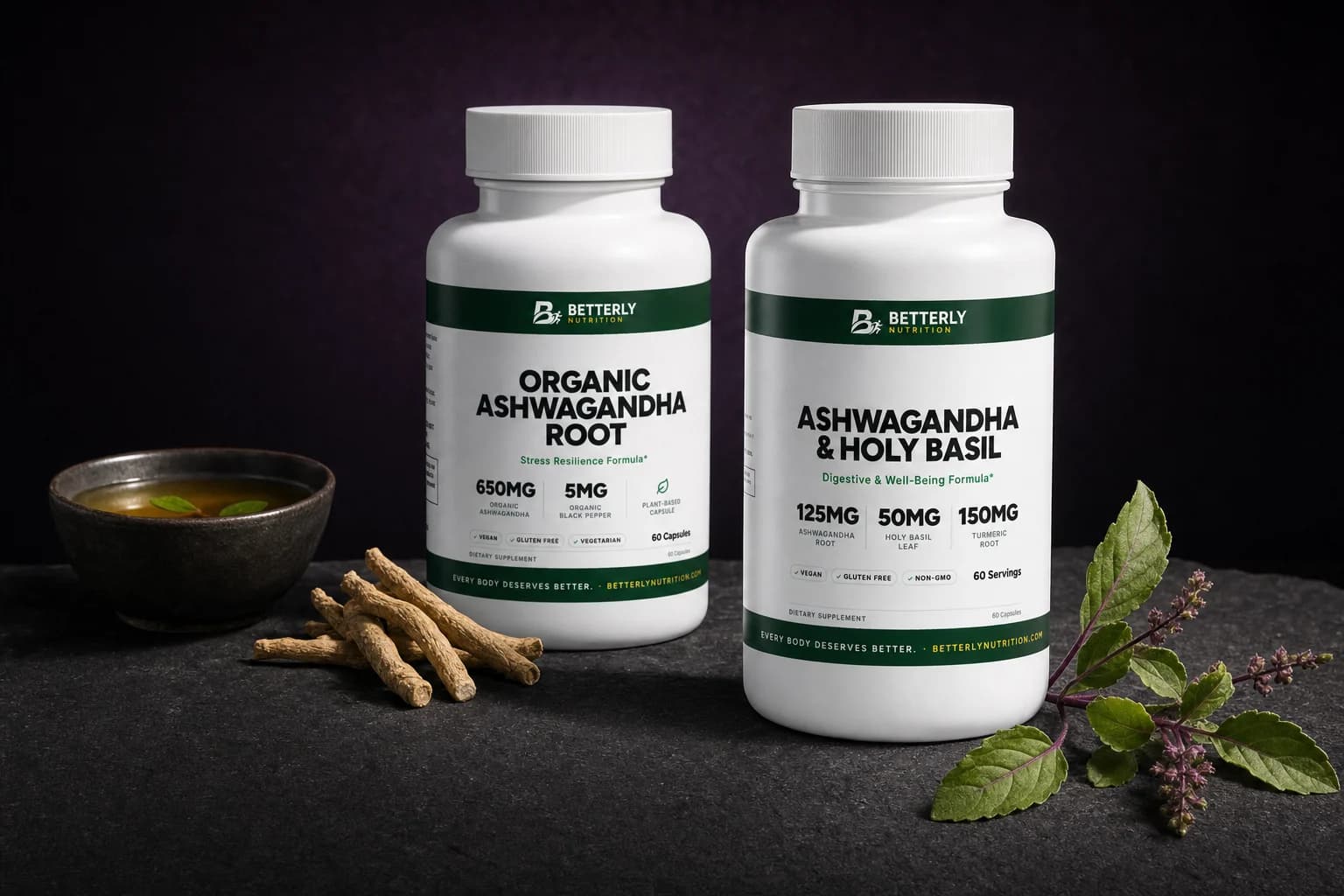
The short answer: Holy basil vs ashwagandha comes down to leaf versus root, and to how much is known. Ashwagandha (Withania somnifera) root has an NIH fact sheet summarizing small human trials on occasional stress and sleep. Holy basil, or tulsi (Ocimum tenuiflorum), is a leaf brewed as tea, with no federal fact sheet we could find. Our blend pairs 125 mg of ashwagandha root extract with 50 mg of holy basil leaf extract per 1-capsule serving.
Key takeaways
- The NIH Office of Dietary Supplements summarizes a set of small, short ashwagandha trials, and we found no ODS or NCCIH fact sheet for holy basil.
- NCCIH lists drowsiness, stomach upset, diarrhea and vomiting as possible ashwagandha side effects and says to avoid it during pregnancy and breastfeeding.
- Ayurvedic blends often combine the two herbs, but none of the NIH pages we read covers taking the pair together.
- Our Ashwagandha & Holy Basil Ayurvedic Capsules list 125 mg of ashwagandha root extract and 50 mg of holy basil leaf extract per 1-capsule serving. Those two sit among 17 rows totaling 800 mg, and turmeric root (150 mg) is the largest.
Betterly sells both herbs, holy basil in two capsules and ashwagandha in several, so any answer here points back to our shelf. One number works against us: our blend's 125 mg of ashwagandha extract sits below every stress-trial amount covered later, and you'll see how far below.
Holy basil vs ashwagandha: how do a leaf and a root compare?
Holy basil is the fragrant leaf of a mint-family plant, ashwagandha comes from the root of an evergreen shrub, and only ashwagandha has a federal fact sheet.
Ashwagandha, also called winter cherry, is grown in tropical and subtropical parts of Asia, Africa and Europe. The NIH Office of Dietary Supplements (ODS) notes that its root and leaf differ chemically and that most supplements use the root, as both of ours here do.
Holy basil is a sacred plant in Hindu tradition, and across India its leaves are steeped as tulsi tea.
| Holy basil (tulsi) | Ashwagandha | |
|---|---|---|
| Part used | Leaf | Root |
| Common forms | Tea, leaf extract in capsules | Root powder, root extract |
| Federal summary | Not found on ODS or NCCIH | ODS fact sheet, NCCIH page |
| Side effects, per federal pages | Unknown: no federal page found | Drowsiness, stomach upset, rare liver reports |
| On our shelf | 2 blends | 1 root capsule (with black pepper), several blends |
Across the rows, ashwagandha arrives with more paperwork, evidence and warnings alike, while holy basil arrives with tradition and a thin file. A thin file means unknown, not safe. Both herbs live in our adaptogen collection.
What does federal research say about holy basil and ashwagandha?
Federal health sources summarize ashwagandha's human trials in detail, but neither the NIH Office of Dietary Supplements nor NCCIH has a holy basil fact sheet we could find.
The ODS ashwagandha fact sheet for health professionals describes several placebo-controlled trials, "most of them fairly small in size and of short duration." It adds two caveats. Trials tested a wide mix of extracts and amounts, so there's no agreed dose. And most ran inside a traditional medical system, which leaves open how ashwagandha behaves as an everyday supplement.
The NCCIH ashwagandha page says some ashwagandha preparations may help with sleep and stress, and that the herb may be safe for short-term use of up to 3 months.
Holy basil vs ashwagandha for stress: which suits a hectic week?
For occasional stress, ashwagandha is the herb with measured results, while holy basil offers a traditional daily ritual that no federal source has summarized.
One stress trial on the ODS sheet ran a full 90 days at two health centers in India. Its 130 healthy adults, ages 20 to 55, all said they were feeling stressed. Each took one 300 mg capsule a day of a slow-release root extract or a placebo, and the extract group reported better stress and sleep-quality scores.
The wider picture is less tidy. A 2021 review that ODS summarizes pulled together seven stress trials, all run in India over 6 to 8 weeks. Six tested extracts and one used dried root granules, and several saw bigger effects at 500 to 600 mg a day than at lower amounts. Participants were picked because they were already under strain, so the results say little about a calm stretch of life.
Holy basil's case for stress is mostly tradition. Brewing tulsi is its own small pause, a fair reason to enjoy it but not evidence.
Our plain-English primer on adaptogens explains the idea both herbs are sold under.
Tulsi vs ashwagandha for sleep: does either belong at bedtime?
Ashwagandha has a few small sleep trials and drowsiness among its possible side effects, while holy basil has no federal sleep summary at all.
ODS calls the ashwagandha sleep research limited. In one trial it describes, 150 adults with self-reported sleep problems took a standardized root-and-leaf extract, 120 mg a day, or a placebo for 6 weeks. Sleep-quality scores rose 72% with the extract and 29% with placebo. That branded extract is unlike either of our capsules, so its milligrams don't carry over to our labels.
Neither the blend's label nor the root capsule's names a time of day. Because NCCIH lists drowsiness as a possible side effect, try your first dose on a day when you won't be driving soon afterward.
If winding down at night is the real goal, our look at reishi and ashwagandha for evenings compares another option.
Can you take holy basil and ashwagandha together?
Holy basil and ashwagandha are often sold together in Ayurvedic blends, ours included, but no NIH page we read covers taking the pair together.
None of those pages lists an interaction between the two herbs, either. That's an absence of data, not a clean bill of health. If you want both, you can take one capsule that holds both at modest amounts, or two products started one at a time.
Here's how the options line up, tea included:
| If this sounds like you | Consider | Per serving, from the label |
|---|---|---|
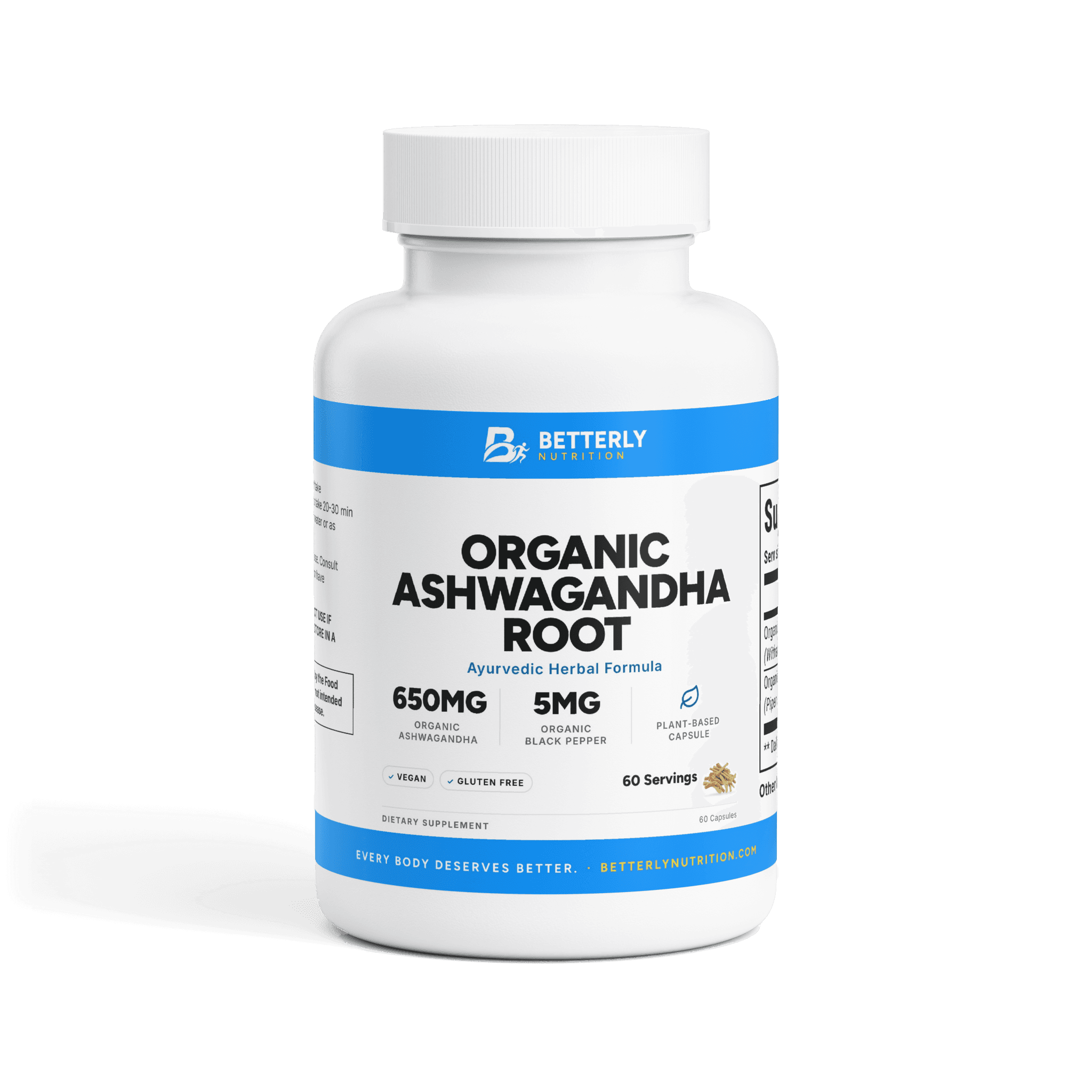
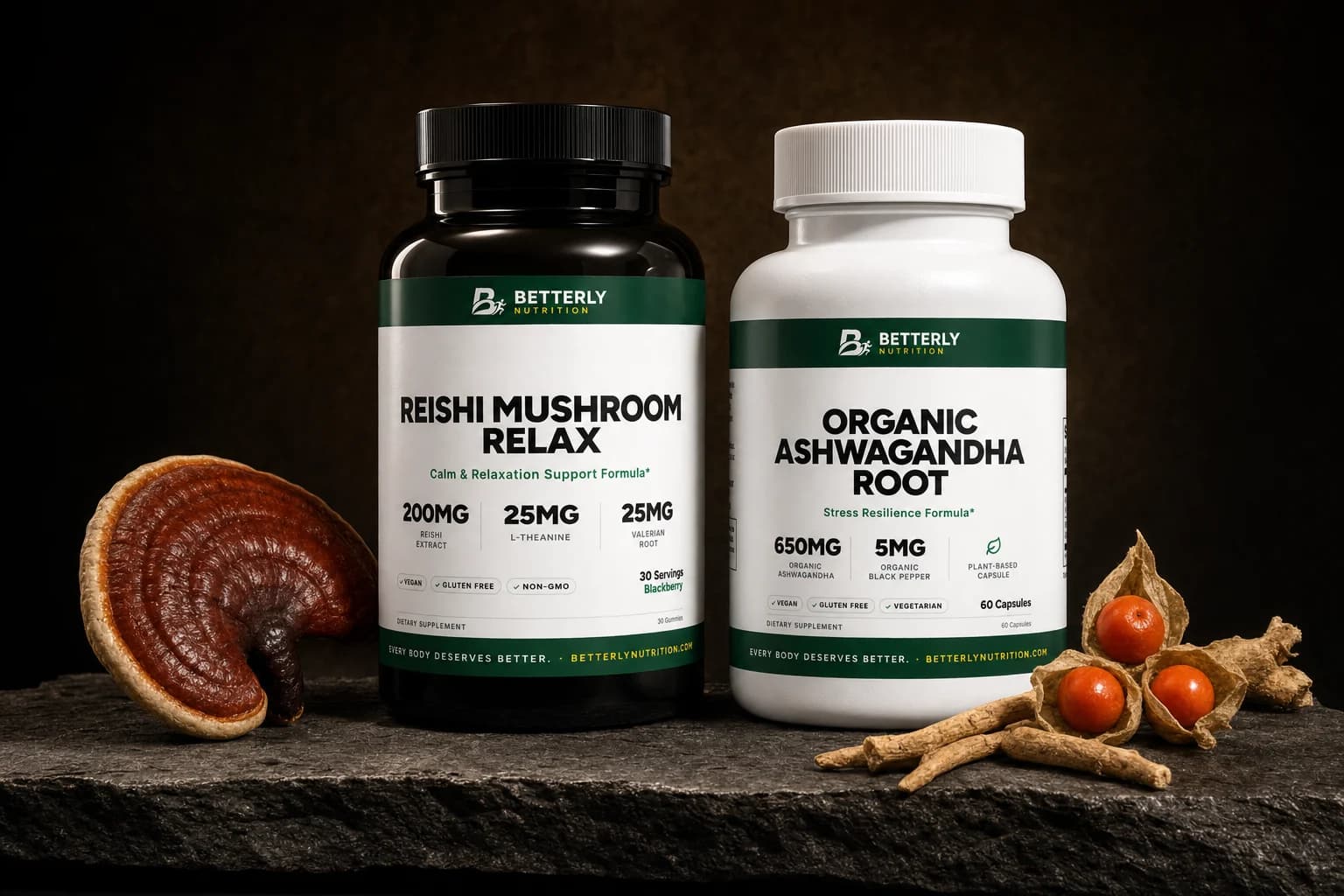
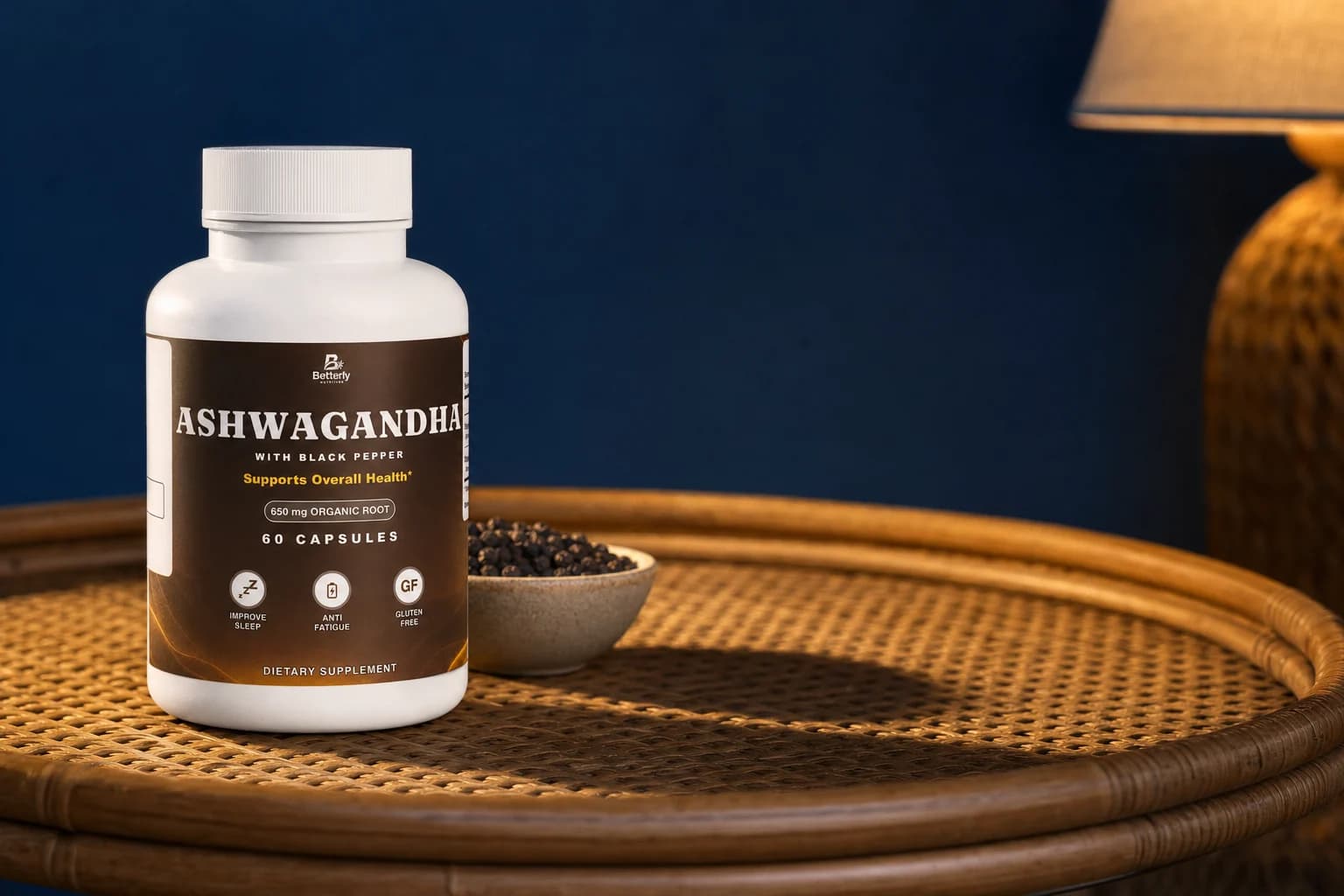
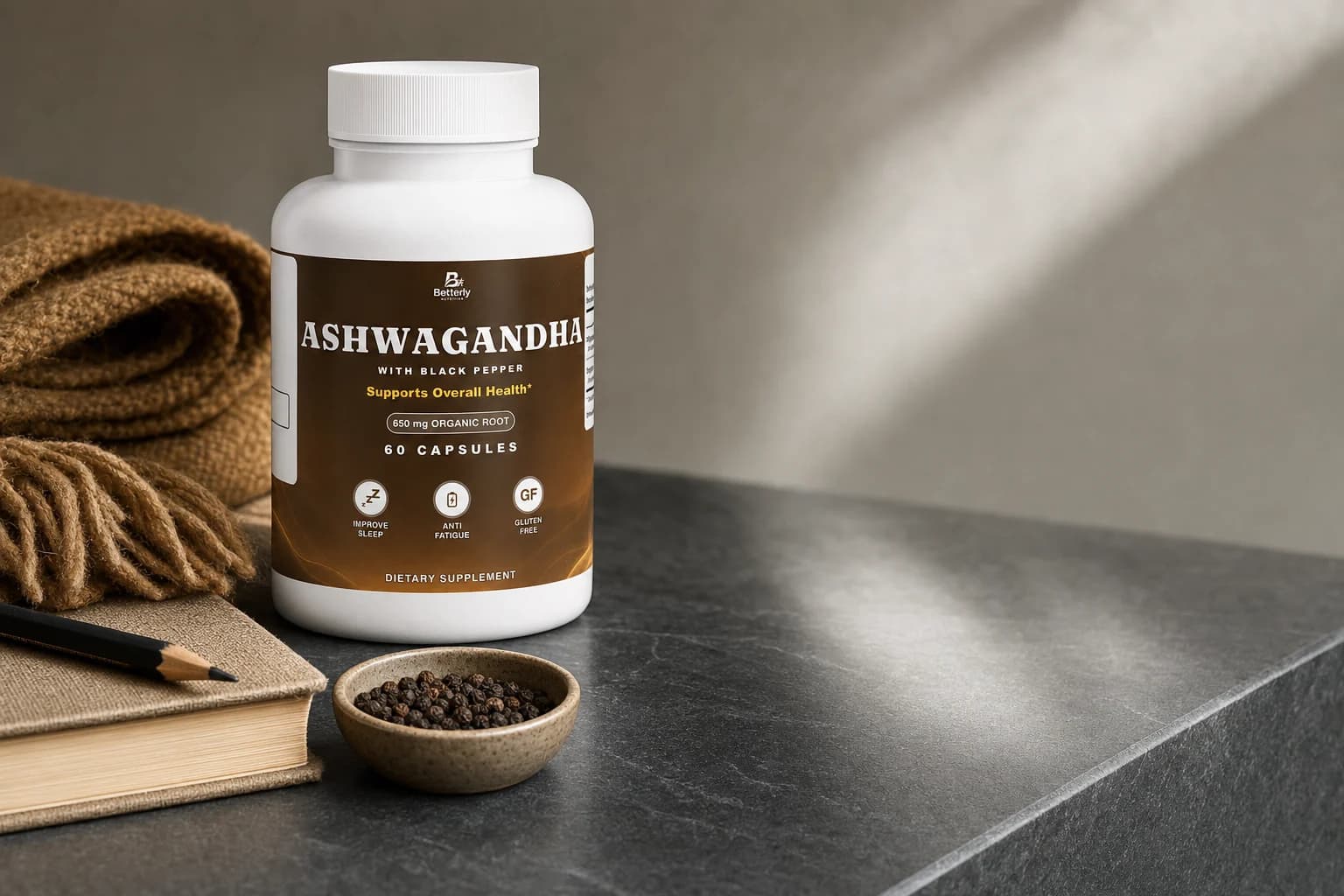
| You want ashwagandha as root, without holy basil | Organic Ashwagandha Root Capsules | 650 mg organic ashwagandha root plus 5 mg organic black pepper (1 capsule) |
| You want both herbs in one small daily capsule | Ashwagandha & Holy Basil Ayurvedic Capsules | 125 mg ashwagandha root extract, 50 mg holy basil leaf extract (1 capsule) |
| You want holy basil alone, as a daily ritual | Plain tulsi tea | No capsule; strength depends on the brew |
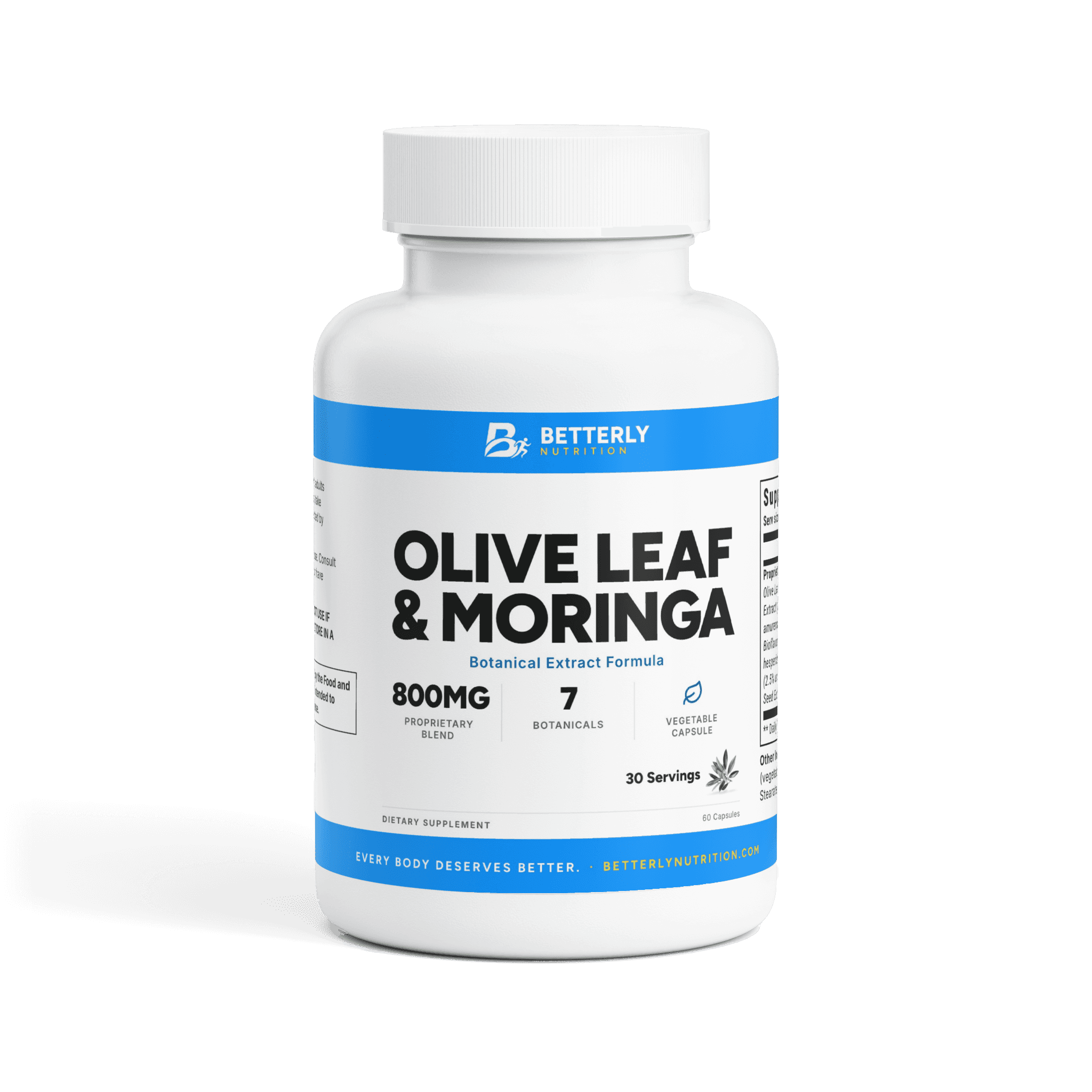
| You want holy basil inside a wider botanical formula | Olive Leaf, Moringa & Holy Basil Capsules | Holy basil is 1 of 7 extracts in an 800 mg blend; its amount isn't listed (2 capsules) |
The takeaway: pick the row that matches your reason, not the biggest number. Only the root capsule gives you ashwagandha without holy basil, and only the blend puts both herbs under one set of directions.
A caution on that first row. The root capsule's panel lists organic ashwagandha root with no extract ratio or withanolide percentage, so its 650 mg can't be compared with the extract amounts used in the trials ODS describes. More milligrams of root doesn't mean more of what those studies tested.
In the olive leaf formula, holy basil is one of seven extracts in an 800 mg proprietary blend, alongside olive leaf, moringa, phellodendron bark, citrus bioflavonoids, African mango seed and cayenne. Its panel doesn't break out holy basil's share, and its front label says metabolic support, not calm.
What's actually in a capsule that pairs both herbs?
Our Ashwagandha & Holy Basil Ayurvedic Capsules pair 125 mg of ashwagandha root extract with 50 mg of holy basil leaf extract per 1-capsule serving, plus 15 other ingredients.
Add up all 17 rows and the 1-capsule serving comes to 800 mg, so the two named herbs make up about 22%. Here's the rest:
- 150 mg turmeric root (95% extract), the largest single row
- 75 mg cinnamon bark powder and 75 mg brahmi leaves (20% extract)
- 50 mg triphala powder, a traditional mix of three fruits
- 25 mg each of garlic bulb extract, trikatu powder, amla fruit, sandalwood, clove bud, celery seed, licorice root, shilajit, cordyceps mycelium, lavender and peppermint leaf
The brahmi here is bacopa (Bacopa monnieri), as the panel notes. The front label calls the whole thing a "Digestive & Well-Being Formula" and prints vegan and gluten free.
Two label details are easy to misread. First, "2.5% extract" and "2% extract" don't say which compound the percentage measures. The ODS background sheet on botanical supplements notes that U.S. law doesn't require standardization and has no legal definition of the term, so percentages from different brands rarely compare cleanly.
Second, 125 mg is a supporting amount. In the 2021 review ODS summarizes, the six extract trials used 240 to 1,250 mg of extract a day, so 125 mg is about half the low end of that range. Think of this capsule as a sampler of Ayurvedic botanicals rather than an ashwagandha product sized to those trials.
From our shop: Ashwagandha & Holy Basil Ayurvedic Capsules — the "or both" answer in a single daily capsule, holding 125 mg of ashwagandha root (2.5% extract) and 50 mg of holy basil leaf (2% extract) per 1-capsule serving among 17 listed ingredients.
How do you take holy basil or ashwagandha, going by the label?
Follow each bottle's own directions: our blend says 1 capsule daily with a meal, and our ashwagandha root capsule says 1 capsule twice a day before meals.
- Ashwagandha & Holy Basil Ayurvedic Capsules: 1 capsule daily, "preferably with a meal." A bottle holds 60 servings.
- Organic Ashwagandha Root Capsules: 1 capsule twice a day, 20 to 30 minutes before a meal, with an 8 oz (237 ml) glass of water. That's 1,300 mg of ashwagandha root and 10 mg of black pepper a day, counted as root rather than extract.
- Olive Leaf, Moringa & Holy Basil Capsules: 2 capsules daily with 6 to 8 oz (177 to 237 ml) of water. A bottle holds 30 servings.
One label says with a meal and another says before one, so don't improvise a combined schedule. Each panel also prints "Do not exceed recommended dose." If you move from the blend to the root capsules, swap rather than stack unless your provider says otherwise.
From our shop: Organic Ashwagandha Root Capsules — ashwagandha without the holy basil, listing 650 mg of organic ashwagandha root plus 5 mg of organic black pepper per 1-capsule serving, with a label that says 1 capsule twice a day.
When is it fine to skip both herbs?
You can skip holy basil and ashwagandha if your stress has an obvious fix, you already take an ashwagandha product, or you're hoping to feel a change tonight.
Late caffeine and a phone on the pillow are cheaper to change than any bottle, and the trials ran for weeks, not evenings. Check your cabinet, too: ashwagandha turns up in several of our other formulas, from a sleep capsule to a greens powder.
If stress or poor sleep has dragged on for weeks and started affecting work or home life, a healthcare provider is a better first stop than an herb.
Who should check with a healthcare provider before either herb?
Get a healthcare provider's okay before holy basil or ashwagandha if you're pregnant or nursing, younger than 18, scheduled for surgery, on any prescription or living with a medical condition.
Our three labels all carry a physician caution for anyone pregnant, nursing, under 18 or with a medical condition. The surgery and prescription points come from NCCIH and ODS, whose ashwagandha pages get more specific:
- Pregnancy and breastfeeding: NCCIH's advice is to steer clear of ashwagandha while pregnant and not to use it while breastfeeding.
- Surgery: NCCIH advises against ashwagandha if an operation is coming up.
- Thyroid and immune health: NCCIH says ashwagandha isn't recommended if you're managing a thyroid or immune-system condition, so bring it up with your provider before starting.
- Medicines: ODS lists possible interactions with thyroid hormone medicines, immune-suppressing medicines and sedatives, among others.
- Hormones: NCCIH advises one group with a hormone-sensitive condition to avoid ashwagandha, so ask first if hormones are part of your health history.
- Liver: NCCIH notes that, although rare, a number of liver injury cases have been linked to ashwagandha supplements.
For holy basil, the lack of a federal safety page isn't a green light. Blends bring extras too: ours includes licorice root and shilajit, and the olive leaf formula's phellodendron extract is standardized to 8% berberine, worth knowing if you already take berberine. Our fuller list of who should skip ashwagandha goes deeper.
FAQ: holy basil vs ashwagandha
Which is better, holy basil or ashwagandha?
Neither holy basil nor ashwagandha is better for everyone. Ashwagandha brings more human research on occasional stress and sleep, which the NIH Office of Dietary Supplements has reviewed, and a longer caution list. Holy basil brings a long traditional record but no federal fact sheet. Lean toward ashwagandha if you want the more-studied herb, keeping in mind that trial extracts and amounts differ from most store products, ours included, and toward holy basil if you'd like a leaf you can also brew.
Is holy basil the same as regular basil?
No, holy basil isn't the basil in your pesto. Both belong to the same plant genus, Ocimum, but kitchen sweet basil is Ocimum basilicum and holy basil is Ocimum tenuiflorum, also labeled Ocimum sanctum. They're separate species, so cooking with sweet basil isn't a stand-in for holy basil tea or extract.
Is tulsi and ashwagandha tea the same as taking capsules?
A tulsi and ashwagandha tea isn't directly comparable to a capsule. The ODS background sheet on botanical supplements notes that a mug of tea, a few spoonfuls of tincture and a far smaller amount of extract can all hold the same quantity of a plant. Tea boxes rarely list milligrams, so a mug can't be lined up against a capsule's panel. If you drink the tea and take a capsule too, mention both to your provider.
How many months can you stay on ashwagandha or holy basil?
For ashwagandha, the NIH Office of Dietary Supplements says trials show it's generally well tolerated for about 3 months, while use over many months or years hasn't been studied enough to judge. We found no federal time frame for holy basil at all, and none of our labels names a duration. Planning to continue past 3 months? Ask your healthcare provider first.
Sources
- Ashwagandha: Fact Sheet for Health Professionals, NIH Office of Dietary Supplements
- Ashwagandha: Usefulness and Safety, National Center for Complementary and Integrative Health
- Botanical Dietary Supplements: Background Information, NIH Office of Dietary Supplements
If this left you looking for somewhere to start, read ashwagandha and holy basil capsules — its amounts per serving are listed on the page. For the practical questions this raises, how dosing, sourcing and subscriptions work is answered in one place.