On this page
- Key takeaways
- Reishi vs ashwagandha: what's the actual difference?
- Which has more research behind it, reishi or ashwagandha?
- Which is better for a stressful week, ashwagandha or reishi?
- Reishi vs ashwagandha for sleep: which belongs in your evening?
- How do our reishi and ashwagandha labels compare?
- Can you take reishi and ashwagandha together?
- How should you take reishi or ashwagandha, per the label?
- When don't you need reishi or ashwagandha at all?
- Who should check with a healthcare provider before taking either?
- FAQ: reishi vs ashwagandha
- Sources
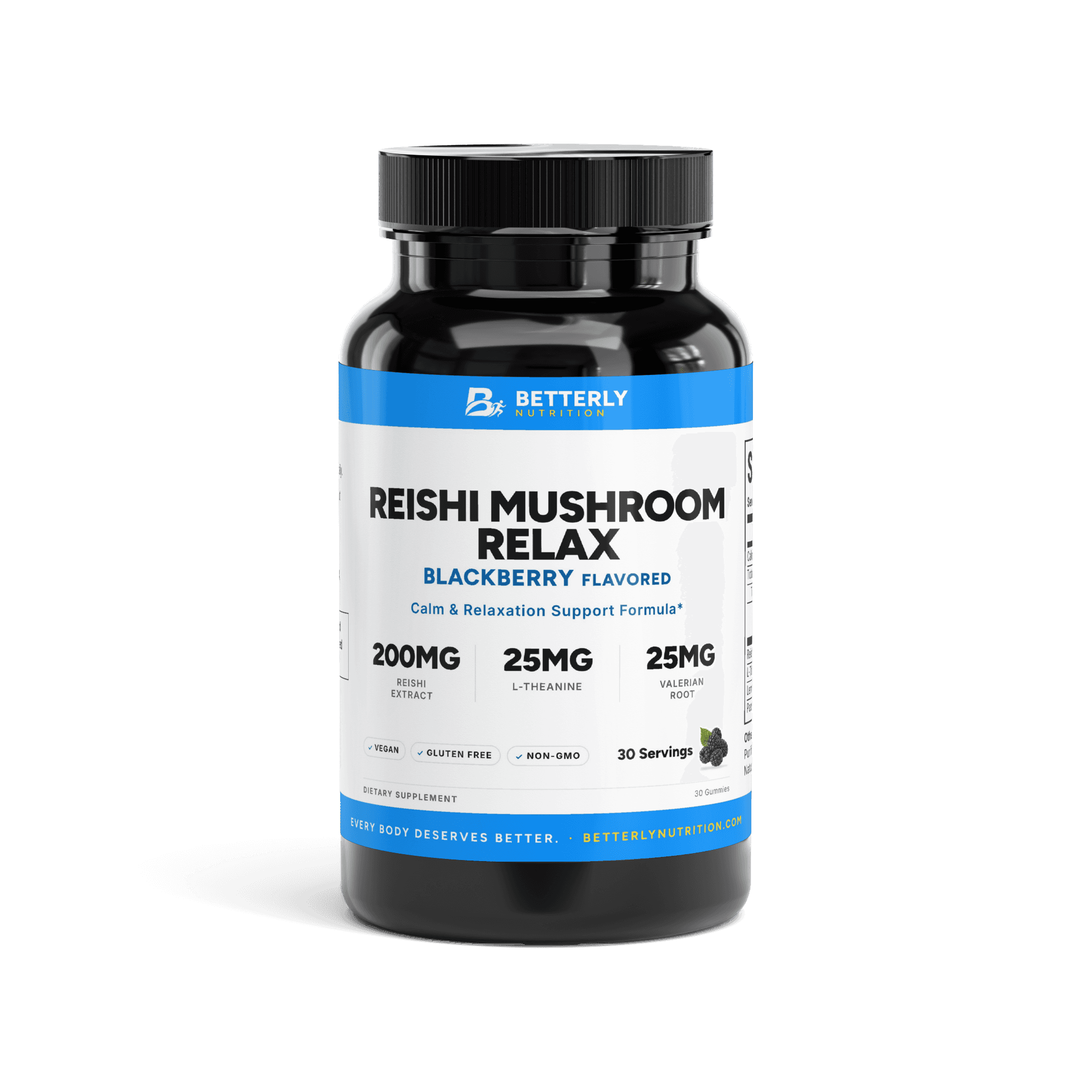
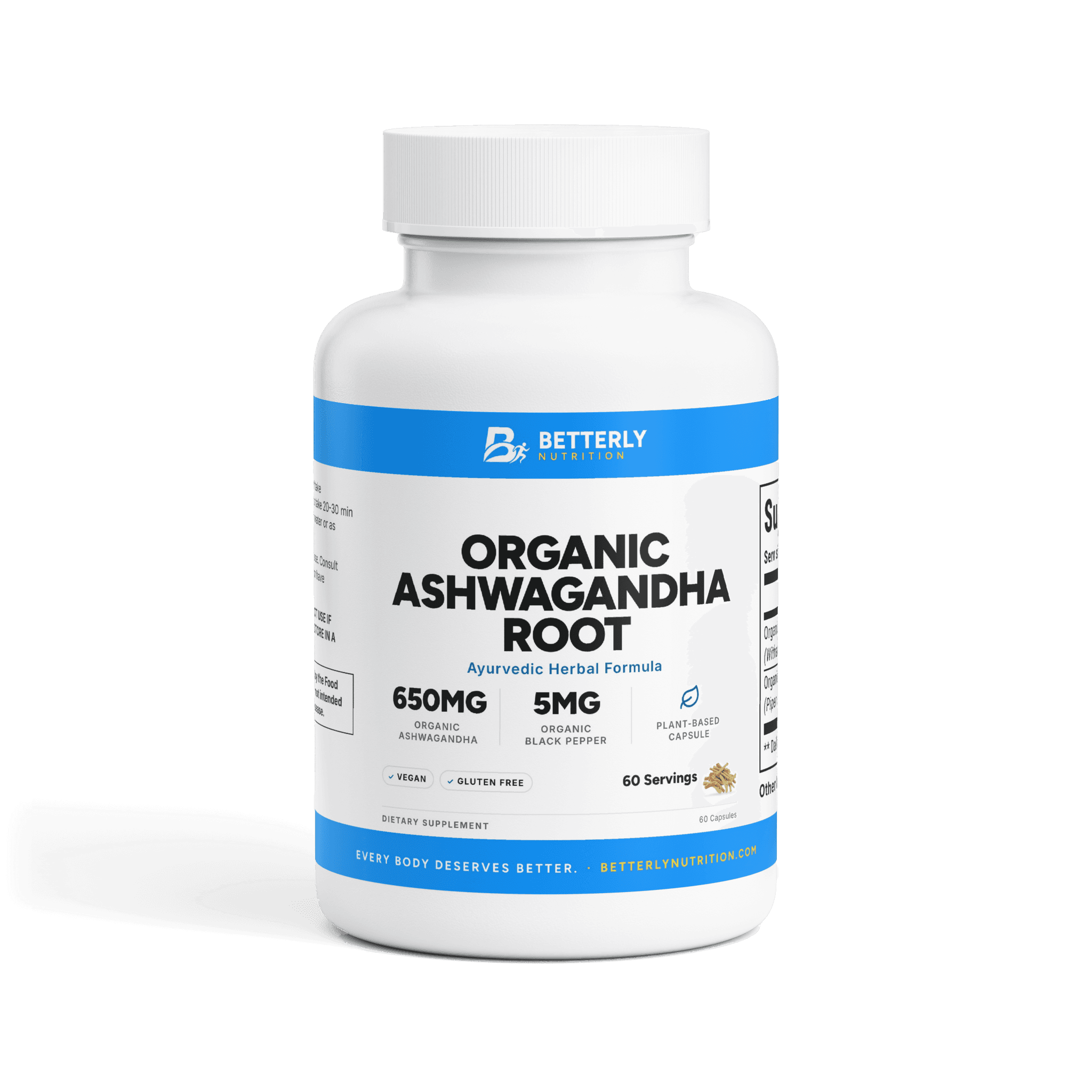
The short answer: Reishi vs ashwagandha comes down to evidence and cautions. Ashwagandha, an Ayurvedic root, has more human research on stress and sleep, plus a longer NIH caution list. Reishi, a bitter mushroom, has little well-controlled human research. Choose ashwagandha if research depth matters most, reishi for a gentler evening ritual. Our Reishi Mushroom Relax Gummies print 200 mg of reishi extract per 1-gummy serving, and our Organic Ashwagandha Root Capsules 650 mg of root per capsule.
Key takeaways
- Ashwagandha (Withania somnifera) has several small human trials on stress and sleep, according to the NIH Office of Dietary Supplements.
- Reishi (Ganoderma lucidum) comes from traditional Chinese medicine, and the NIH's LiverTox database says its promoted benefits haven't been shown in adequately sized human trials.
- NCCIH says to avoid ashwagandha during pregnancy and breastfeeding, and doesn't recommend it before surgery.
- No NIH page we read covers taking the two together, so start one at a time.
A word on bias: six Betterly formulas contain reishi and eight contain ashwagandha, so either answer sells something of ours. The product amounts below match what's printed on each bottle, and each study summary links to its NIH page.
Reishi vs ashwagandha: what's the actual difference?
Reishi is a bitter mushroom from East Asian tradition, while ashwagandha is the root of an Ayurvedic shrub, and NIH sources describe far more human research on the root.
LiverTox, the NIH's liver-safety reference, describes reishi as a large, reddish-brown, fan-shaped mushroom that grows at the base of trees. It's called reishi in Japan and lingzhi in China.
Ashwagandha is an evergreen shrub. The NIH Office of Dietary Supplements (ODS) explains that its Sanskrit name refers to the root's smell, said to resemble a wet horse. It's sometimes called Indian ginseng, though it isn't in the ginseng family.
| Reishi | Ashwagandha | |
|---|---|---|
| What it is | Mushroom (Ganoderma lucidum) | Shrub root (Withania somnifera) |
| Tradition | Traditional Chinese medicine | Ayurvedic and Unani systems of India |
| Human research, per NIH pages | Small, short trials | Several small trials on stress and sleep |
| Cautions NIH pages list | Few side effects; rare liver case reports | Drowsiness, stomach upset; avoid in pregnancy; drug interactions |
| Our amount per serving | 200 mg (gummy) or 150 mg (drops) of extract | 650 mg of root; 125 or 600 mg of extract in blends |
Put simply, the root brings deeper evidence and a longer caution list, while the mushroom brings little of either. That doesn't make reishi the safer pick. It mostly means reishi has been studied less.
Which has more research behind it, reishi or ashwagandha?
Ashwagandha has more human research than reishi, though ODS still describes most ashwagandha trials as fairly small and short.
The ODS ashwagandha fact sheet summarizes a 2021 review of seven trials with 491 adults, all in India, lasting 6 to 8 weeks. People taking ashwagandha scored lower on stress rating scales than people taking a placebo, and several studies saw bigger differences at 500 to 600 mg a day.
Reishi's record is much thinner. LiverTox says "none of the purported beneficial activities has been demonstrated in adequately sized and properly controlled clinical trials in humans."
If you pick reishi anyway, know that its case rests more on tradition than on trials. Our guide to reishi for the evening wind-down covers the smaller reishi studies.
Which is better for a stressful week, ashwagandha or reishi?
For occasional stress, ashwagandha is the better-documented pick, because the trials ODS describes measured perceived stress directly, and reishi has nothing comparable in the NIH pages we read.
The 491 adults in that review reported high stress, and some had a related clinical diagnosis, so they weren't just having a busy week. Their doses ran from 240 to 1,250 mg a day of extract. Our Organic Ashwagandha Root Capsules carry an "Ayurvedic Herbal Formula" descriptor, and the label's suggested use is one capsule twice a day, 20 to 30 minutes before a meal.
NCCIH, the federal center for complementary health, says on its ashwagandha page that some ashwagandha preparations may help with stress and sleep. Notice the word "some." A result from one branded extract doesn't carry over to every bottle.
Reishi's case for stress is mostly its reputation as the calm mushroom. Our gummy's label says "Calm & Relaxation Support Formula," which names a goal, not a proven effect. Don't expect a reishi gummy to carry a heavy week.
Reishi vs ashwagandha for sleep: which belongs in your evening?
Ashwagandha has the stronger sleep research, with ODS describing a small but significant effect over placebo, while reishi's evening reputation rests mostly on tradition.
The species name somnifera comes from the Latin for sleep-inducing, ODS notes. An analysis it summarizes pooled five trials with 372 adults over 6 to 12 weeks, using 120 to 600 mg a day of extract. The effect over placebo was small. It was clearer at 600 mg a day, and larger in participants who already had significant sleep trouble than in healthy volunteers.
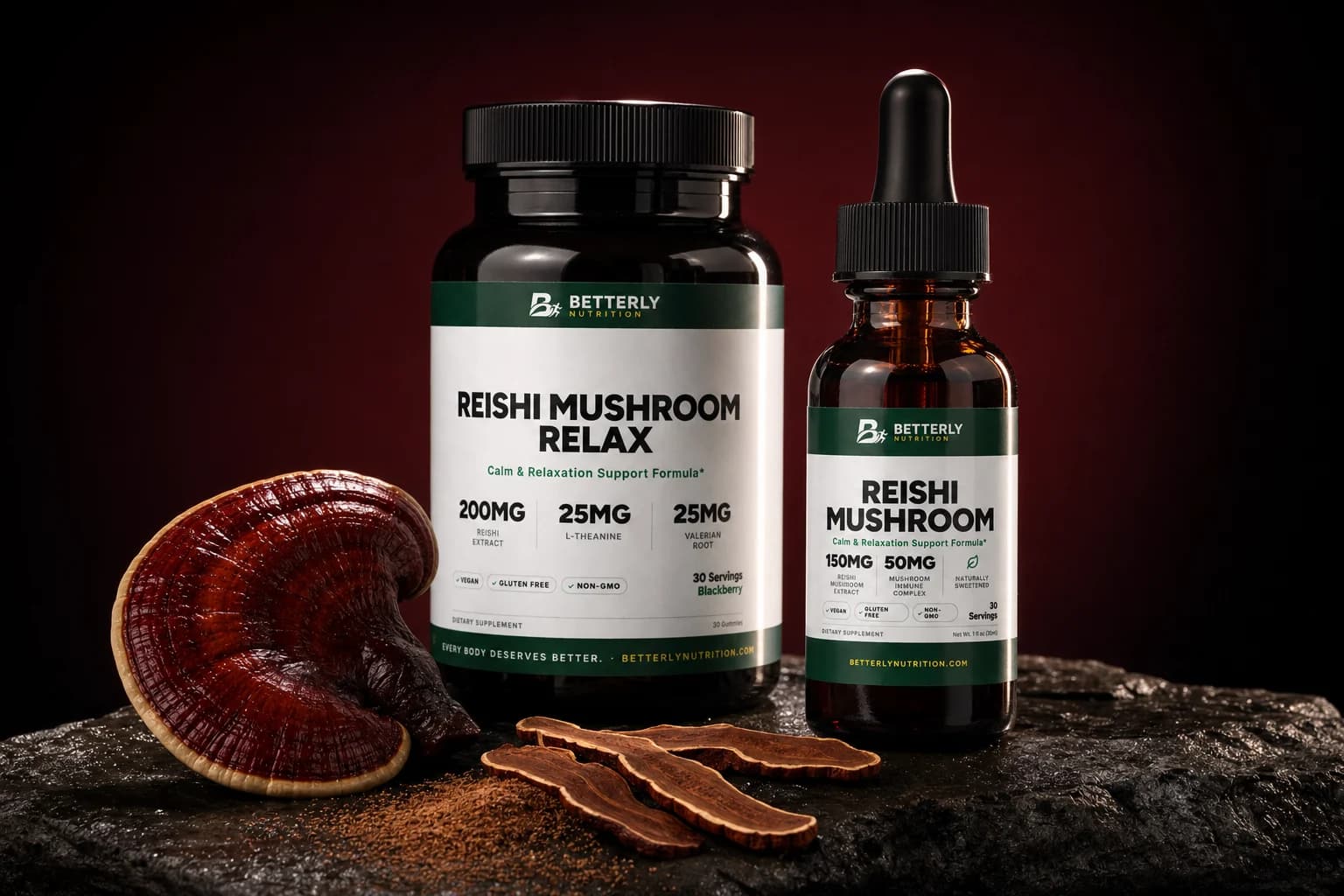
The Reishi Mushroom Relax Gummies aren't reishi alone: each 1-gummy serving pairs 200 mg of reishi extract with 25 mg each of L-theanine, lemon balm, passion flower and valerian root.
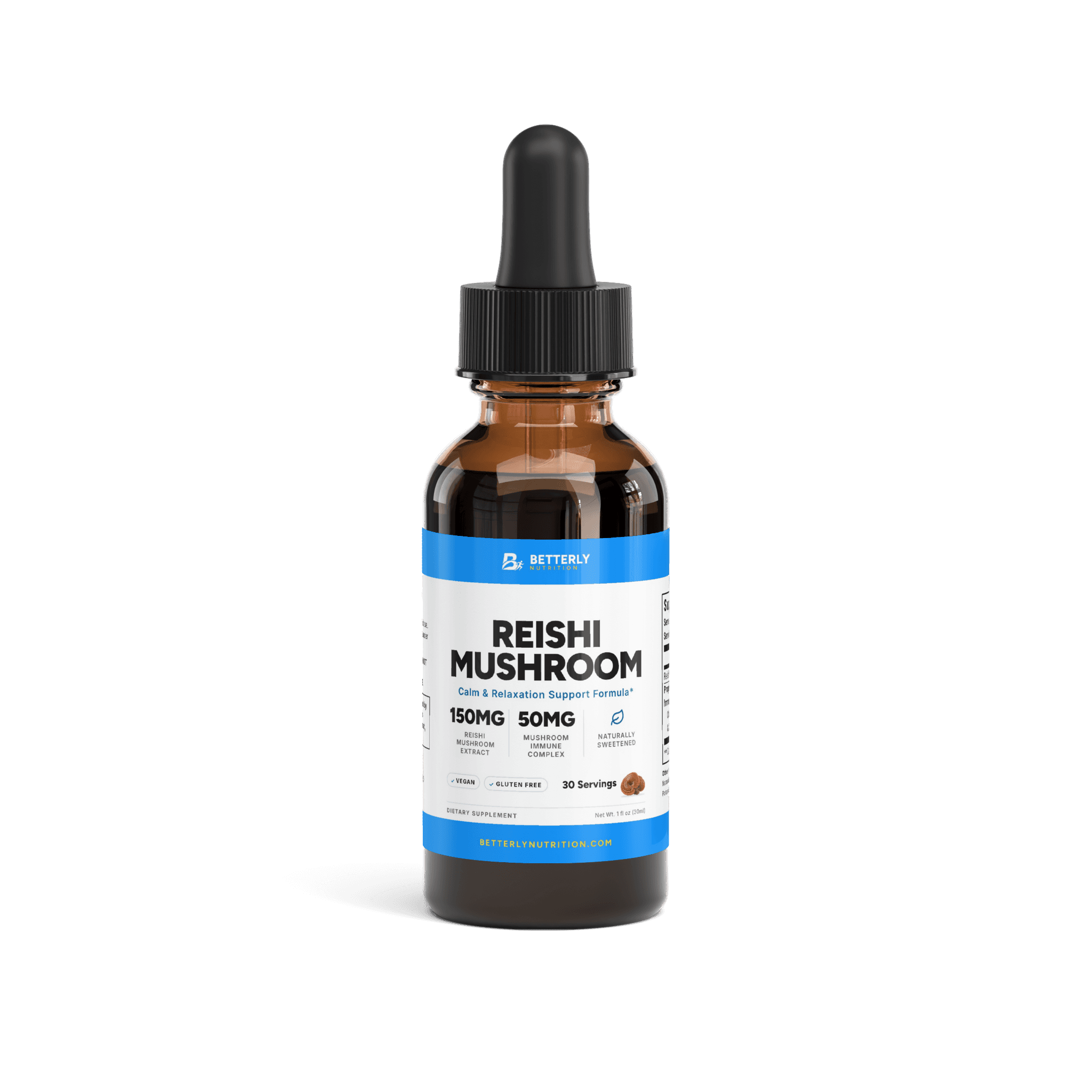
For reishi by itself, the Reishi Mushroom Calm Drops come closer. Each 1 ml (30-drop) serving lists 150 mg of reishi mushroom extract plus a 50 mg proprietary blend of chaga, reishi, maitake, shiitake and turkey tail, with no added calming herbs like the gummy's passion flower or valerian. Both formats sit in our mushroom collection.
How do our reishi and ashwagandha labels compare?
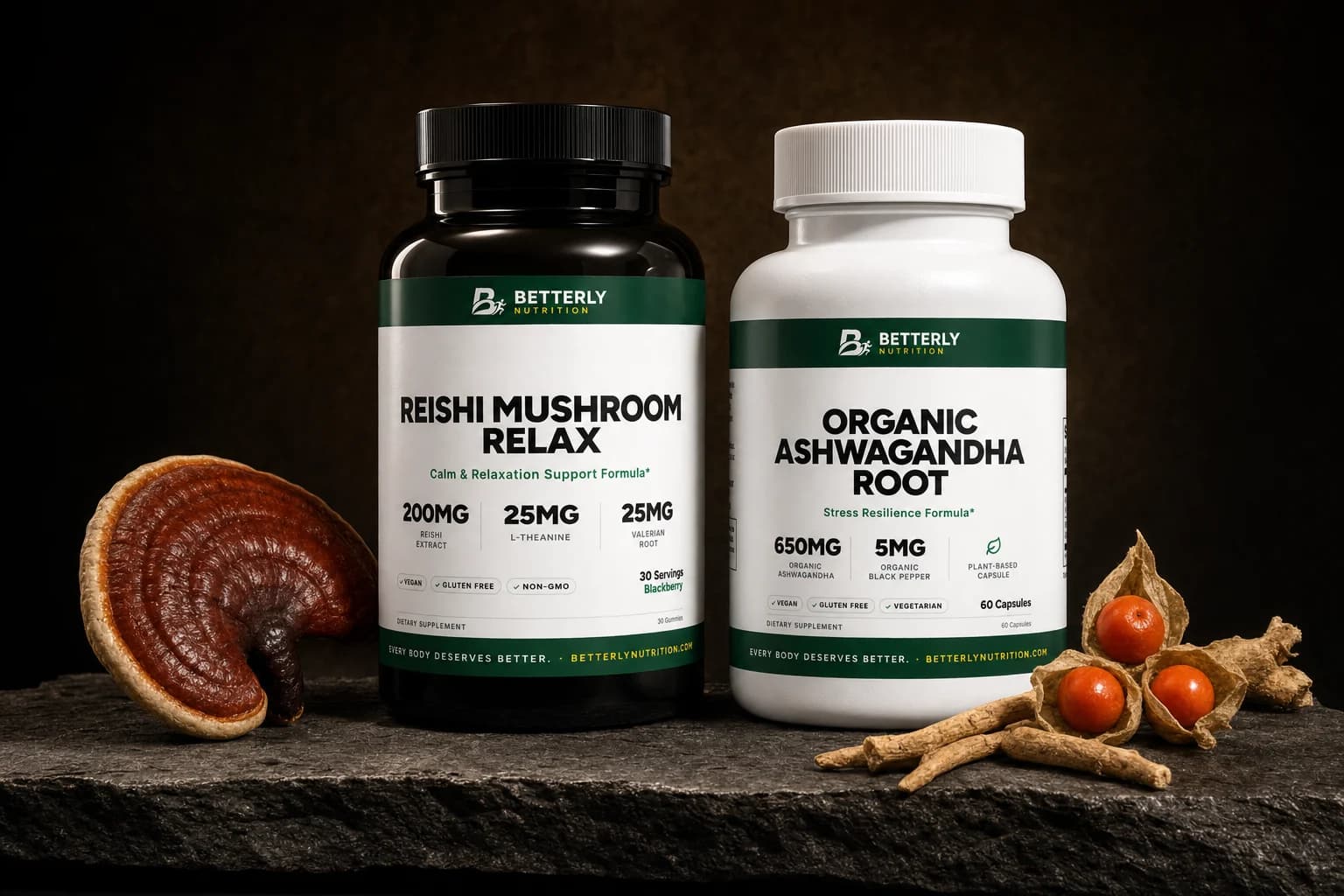
Per serving, Reishi Mushroom Relax Gummies print 200 mg of reishi extract, Reishi Mushroom Calm Drops 150 mg, and Organic Ashwagandha Root Capsules 650 mg of ashwagandha root.
| Product (serving) | Headline amount | Label's suggested use | Also listed |
|---|---|---|---|
| Reishi Mushroom Relax Gummies (1 gummy) | 200 mg reishi extract | 1 to 2 gummies daily | 4 extras, 25 mg each |
| Reishi Mushroom Calm Drops (1 ml) | 150 mg reishi mushroom extract | 1 ml (30 drops) daily | 50 mg mushroom blend |
| Organic Ashwagandha Root Capsules (1 capsule) | 650 mg ashwagandha root | 1 capsule twice a day | 5 mg black pepper |
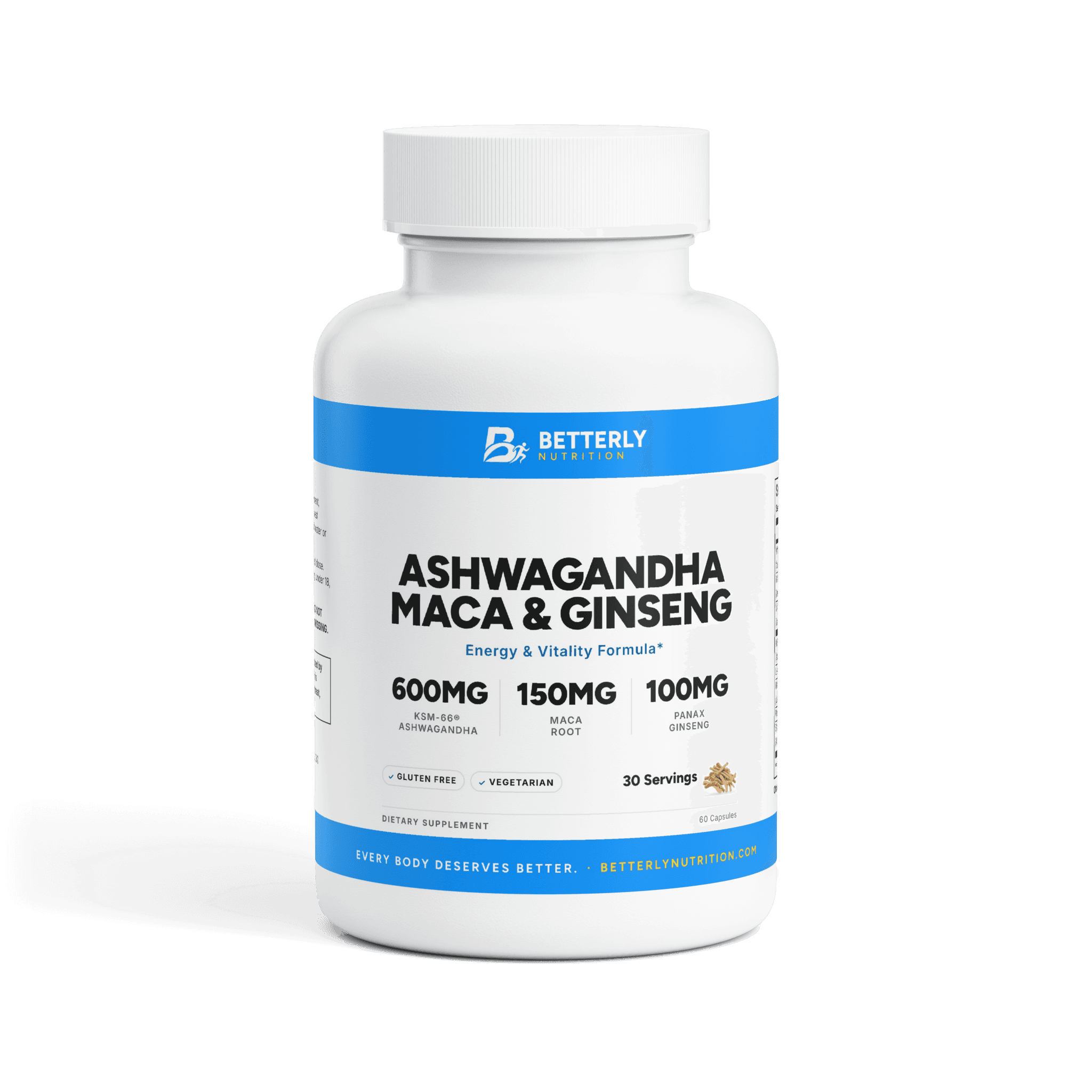
| Ashwagandha, Maca & Ginseng Capsules (2 capsules) | 600 mg KSM-66® ashwagandha extract | 2 capsules daily | L-arginine, 3 herbs, 3 vitamins |
Dried root and extract don't compare one to one by weight, so the table isn't a ranking. What the numbers mean in practice:
- The Organic Ashwagandha Root Capsules come to 1,300 mg of root a day at two capsules. The panel says root, not extract, and prints no withanolide percentage. ODS says withanolides are thought to account for many of ashwagandha's proposed effects, though other compounds may play a part.
- The one trial in that stress review that used whole root, not extract, gave the equivalent of 6,000 mg of root powder a day, more than four times our 1,300 mg.
- The Ashwagandha, Maca & Ginseng Capsules list 600 mg of KSM-66® ashwagandha extract (5% withanolides) per 2-capsule serving. That matches the branded extract and daily amount in one sleep trial ODS describes, but no trial tested this formula, and it adds L-arginine, maca, ginseng, shatavari and three vitamins.
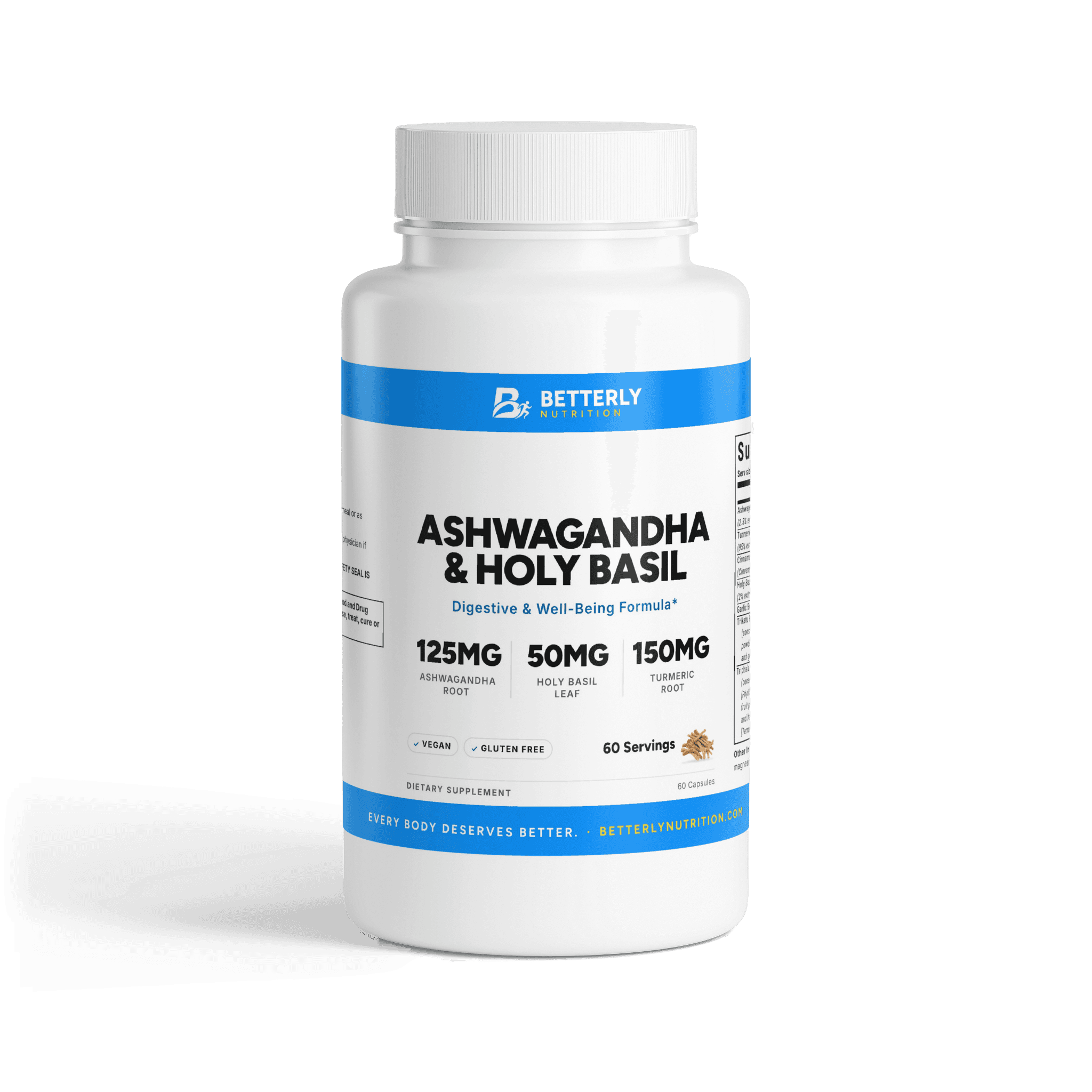
- The Ashwagandha & Holy Basil Ayurvedic Capsules list 125 mg of a 2.5% extract, below the 240 mg low end of the stress trials, among 17 ingredients. Buy it for the blend, not the ashwagandha.
- Two reishi gummies add up to 400 mg of reishi extract and 4 g of added sugars a day.
Why do our reishi amounts look small next to LiverTox? That NIH reference puts reishi's usual dose at 500 mg to 3 grams a day, without saying whether it means extract or dried mushroom. Our gummy prints 200 mg of extract (400 mg at the 2-gummy maximum), and the drops 150 mg per 1 ml. Both labels say "Do not exceed recommended dose," so stick to the printed serving.
From our shop: Reishi Mushroom Relax Gummies — a pick for readers who'd rather take reishi in a blend than alone, since each 1-gummy serving pairs 200 mg of reishi extract with L-theanine and three botanicals, and the label suggests 1 to 2 gummies daily.
Can you take reishi and ashwagandha together?
You'll find reishi and ashwagandha sold together, but none of the NIH pages we read addresses the pair, so add them one at a time and check every panel first.
We found no listed interaction between the two herbs, but that isn't proof the pairing is fine.
Side effects and add-in herbs deserve a look. NCCIH lists drowsiness among ashwagandha's possible side effects and says it may interact with sedatives. Our reishi gummy adds passion flower, and NCCIH's passionflower page lists drowsiness, dizziness and confusion as possible side effects. Pair that gummy with ashwagandha, and one evening holds two ingredients NCCIH ties to drowsiness.
If you want both, here's a careful way in:
- Start with the one that matches your reason: ashwagandha for all-day stress, reishi for an evening ritual.
- Take it alone, exactly as labeled, through a stretch of ordinary days.
- Add the second only if you still want it, trying the first combined evening at home.
- For pairing, consider the drops, which have no added calming herbs like the gummy's passion flower or valerian.
Adding magnesium too? Our look at pairing magnesium with ashwagandha covers that duo's label timing.
Are ashwagandha reishi gummies worth buying?
A combined ashwagandha and reishi gummy earns its price only when the panel gives each herb its own milligram amount. Betterly doesn't sell one, so on another company's bottle, check four things:
- Check extract or powder, and for ashwagandha, a withanolide percentage.
- Find the plant part. ODS notes that ashwagandha root and leaf differ chemically.
- Count gummies per serving, then read the Added Sugars line.
- Scan for extra calming ingredients like valerian, passion flower or melatonin, each with its own cautions.
How should you take reishi or ashwagandha, per the label?
Follow each label as written: our ashwagandha root capsule says one capsule twice a day before meals, and our reishi gummy says one to two gummies daily.
The root capsule label pairs each dose with an 8 oz (237 ml) glass of water, and breakfast and dinner make easy anchors. With the gummies, starting at one keeps you at the low end. The drops say to shake well and take 1 ml (30 drops) daily.
Our ashwagandha basics guide covers the herb's forms in more depth.
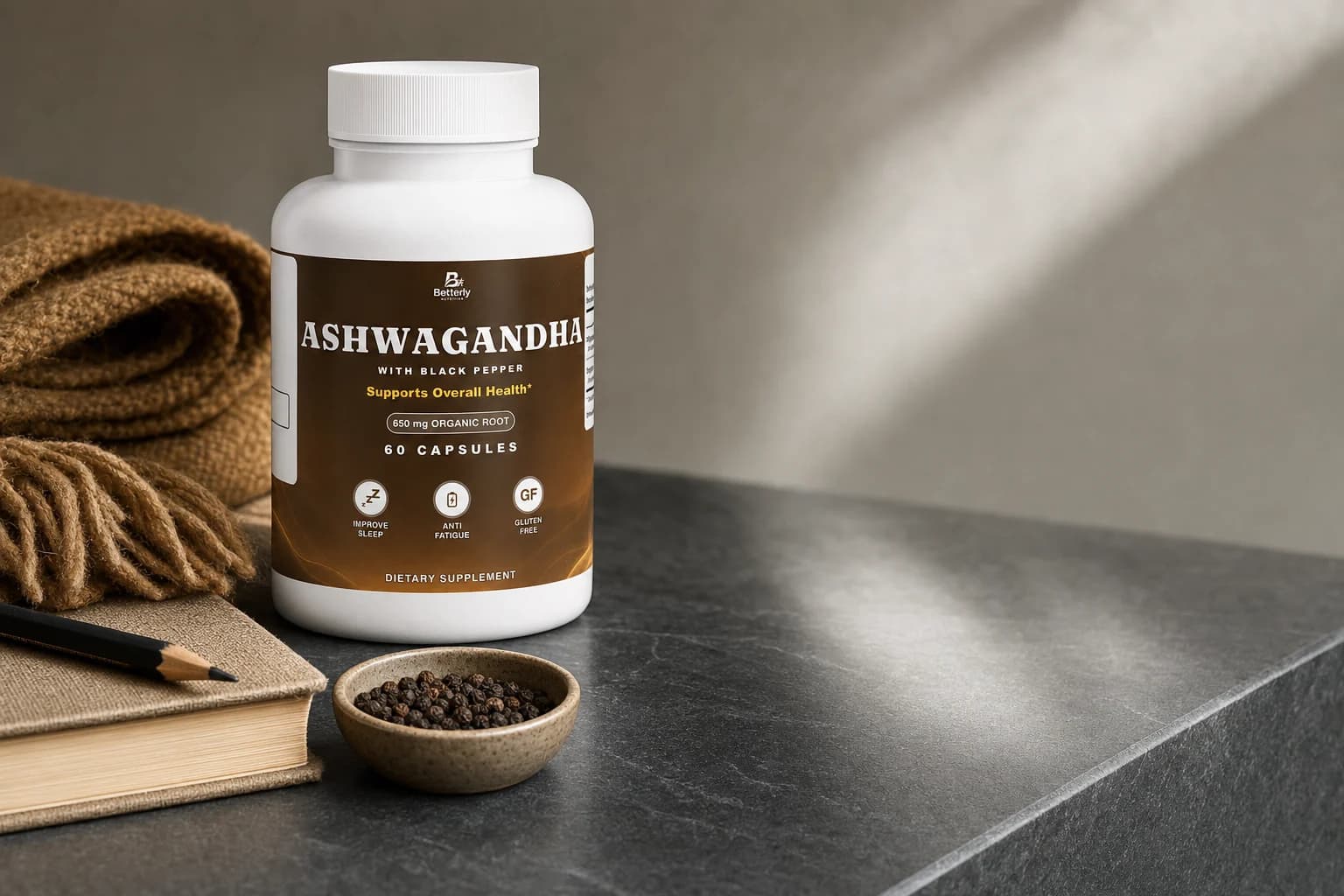
From our shop: Organic Ashwagandha Root Capsules — 650 mg of organic ashwagandha root and 5 mg of organic black pepper per 1-capsule serving, in a pullulan capsule labeled vegan and gluten free.
When don't you need reishi or ashwagandha at all?
You may not need reishi or ashwagandha if your stress has a clear, fixable cause, your evenings already wind down fine, or you want something you'll feel tonight.
None of our labels describes a feeling you'll notice. If a late screen, a late coffee or an overbooked calendar is the problem, changing that costs nothing.
Check what you already take, too. Ashwagandha root sits inside the 905 mg proprietary blend of our 10mg Melatonin Sleep Capsules, which doesn't break out its share, and reishi turns up in several of our mushroom blends. A second product can double you up unnoticed.
If sleep or stress has been rough for weeks and is spilling into your days, start with a healthcare provider, not the supplement aisle.
Who should check with a healthcare provider before taking either?
Check with a healthcare provider before reishi or ashwagandha if you're pregnant, nursing, under 18, facing surgery, taking prescription medicine or managing a medical condition.
Every label in this comparison says to consult a physician if you're pregnant, nursing, under 18 or have a medical condition. NCCIH adds surgery and prescription medicines, and the NIH pages give specifics:
- Pregnant or breastfeeding: NCCIH says to avoid ashwagandha during pregnancy and not to use it while breastfeeding. It also says passionflower, which is in our reishi gummy, shouldn't be used during pregnancy.
- Surgery ahead: NCCIH doesn't recommend ashwagandha for people about to have surgery, and flags passionflower within 2 weeks of a scheduled surgery.
- Prescription medicines: NCCIH lists possible ashwagandha interactions with sedatives, thyroid hormone medicines, medicines that suppress the immune system and several others.
- Thyroid or immune system under a provider's care: NCCIH doesn't recommend ashwagandha here.
- Liver monitoring: NCCIH notes rare liver injury cases tied to ashwagandha supplements, and LiverTox rates reishi a possible rare cause. Ask first.
FAQ: reishi vs ashwagandha
Is reishi an adaptogen?
Reishi is often marketed as an adaptogen, but no NIH page we read calls it one. The NIH Office of Dietary Supplements calls the term "loosely defined," meaning something said to help a person adapt to stressors in nonspecific ways, and uses it for ashwagandha's traditional role. Read "adaptogen" on a label as a nod to tradition, not a measured effect.
Should you take reishi or ashwagandha at night?
Ashwagandha and reishi can both fit an evening, though neither our reishi labels nor our Organic Ashwagandha Root Capsules label asks for bedtime. That label calls for one capsule twice a day, 20 to 30 minutes before a meal, so the second often lands before dinner. Because our Reishi Mushroom Relax Gummies include passion flower, which NCCIH links to drowsiness, try your first one at home in the evening, not before driving.
How long can you take ashwagandha or reishi?
Ashwagandha has a known safety window rather than a results timeline: NCCIH says it may be safe for up to 3 months, and its long-term safety isn't known. Reishi has no comparable window, since LiverTox describes its human trials as small and short. None of our labels names a time frame. If you'd like to keep taking ashwagandha past 3 months, talk it over with your provider first.
Can reishi or ashwagandha make you drowsy?
Ashwagandha can, according to NCCIH, which lists drowsiness among its possible side effects along with stomach upset, diarrhea and vomiting. LiverTox says reishi extracts had few or no side effects in small, short trials. Our Reishi Mushroom Relax Gummies also contain passion flower, which NCCIH links to drowsiness and dizziness. If you notice either, skip driving and mention it to your provider.
Does Betterly sell a reishi and ashwagandha blend?
No, none of our products contains both reishi and ashwagandha. The closest is the Ashwagandha & Holy Basil Ayurvedic Capsules, which list 125 mg of ashwagandha root extract and 25 mg of cordyceps mycelium, a different mushroom, per capsule. Wanting both means buying two products, which also lets you start them one at a time.
Sources
- Ashwagandha: Fact Sheet for Health Professionals, NIH Office of Dietary Supplements
- Ashwagandha: Usefulness and Safety, NCCIH
- Lingzhi, Reishi, LiverTox, National Institutes of Health
- Passionflower, NCCIH
If this left you looking for somewhere to start, read reishi gummies with 200 mg of reishi extract — its amounts per serving are listed on the page. For the practical questions this raises, how dosing, sourcing and subscriptions work is answered in one place.