On this page
- Key takeaways
- What does magnesium actually do?
- What does ashwagandha actually do?
- Why do people pair them for evening wind-down?
- When should you take magnesium and ashwagandha?
- What should you look for when buying?
- Who is this stack for — and who should skip it?
- How do you build the pair into an evening routine?
- Frequently asked questions
- Sources
The short answer: Yes — magnesium and ashwagandha are commonly taken together, and they slot naturally into the same evening wind-down routine. They work in different lanes: magnesium is a mineral that supports healthy muscle relaxation, normal nerve function, and healthy sleep patterns, while ashwagandha is an adaptogenic herb that helps support your body's response to everyday stress. Follow each product's label, keep the habit consistent, and if you're pregnant, nursing, or taking medication, talk with your physician first.
Key takeaways
- Magnesium and ashwagandha aren't redundant — one is a mineral, the other an herb — and that difference is exactly why people pair them for evening wind-down.
- Magnesium supports healthy muscle relaxation, normal nerve function, and healthy sleep patterns.
- Ashwagandha is an adaptogen that helps support the body's response to everyday stress and a steadier sense of calm.
- Timing, straight from our labels: ashwagandha is one capsule twice a day, 20–30 minutes before a meal; magnesium glycinate is three capsules once daily, and many people take theirs in the evening.
- Neither is a knockout pill. They support a wind-down routine — they don't replace one. Under 18, pregnant or nursing, or on medication? Talk with your physician first.
What does magnesium actually do?
Magnesium is one of those minerals doing quiet work all over the body — it acts as a cofactor in more than 300 enzyme systems, including ones involved in muscle and nerve function (NIH Office of Dietary Supplements). Most of it should come from food — leafy greens, nuts, seeds, beans, whole grains — but plenty of people find their diet runs a little light, and that's where a supplement can help fill the gap.
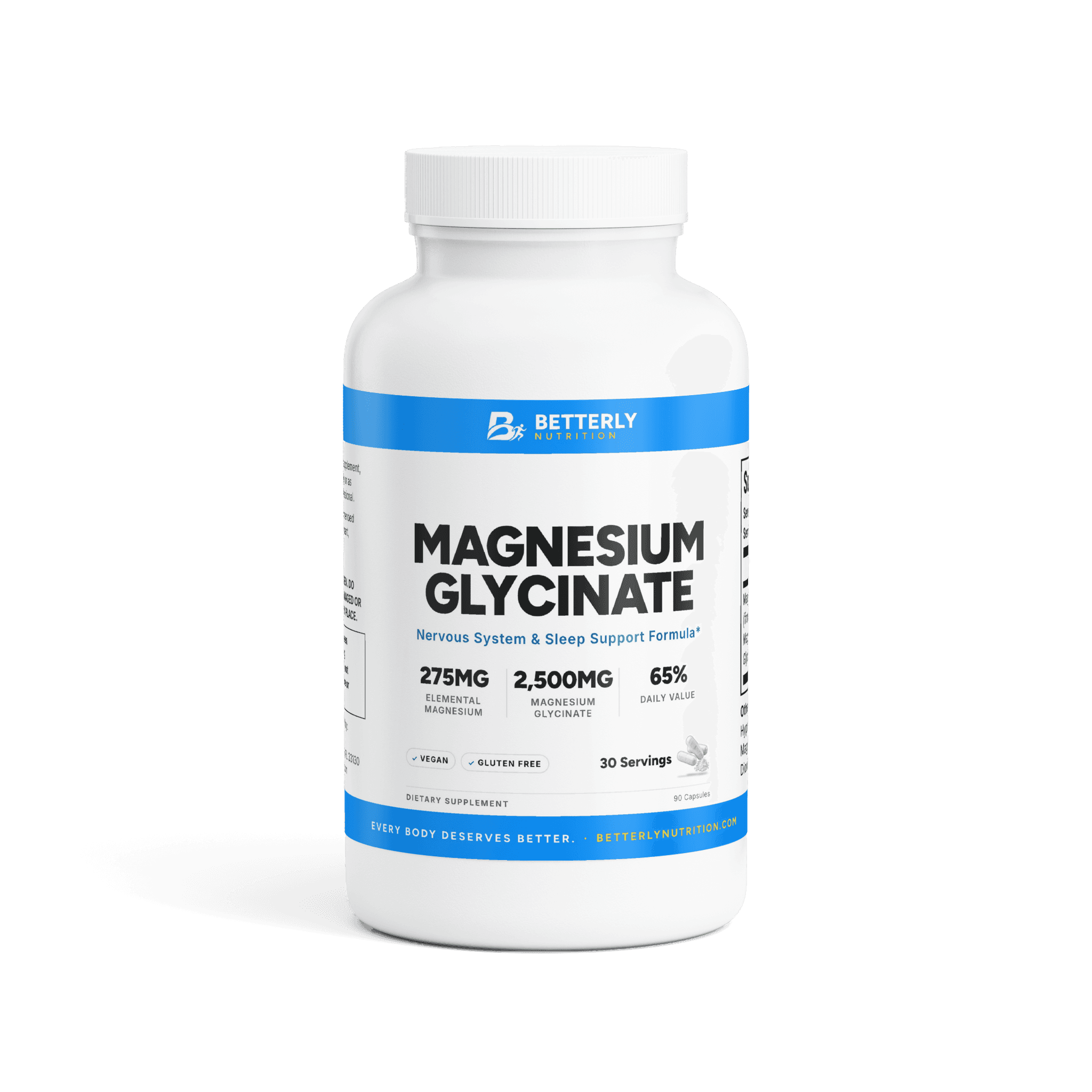
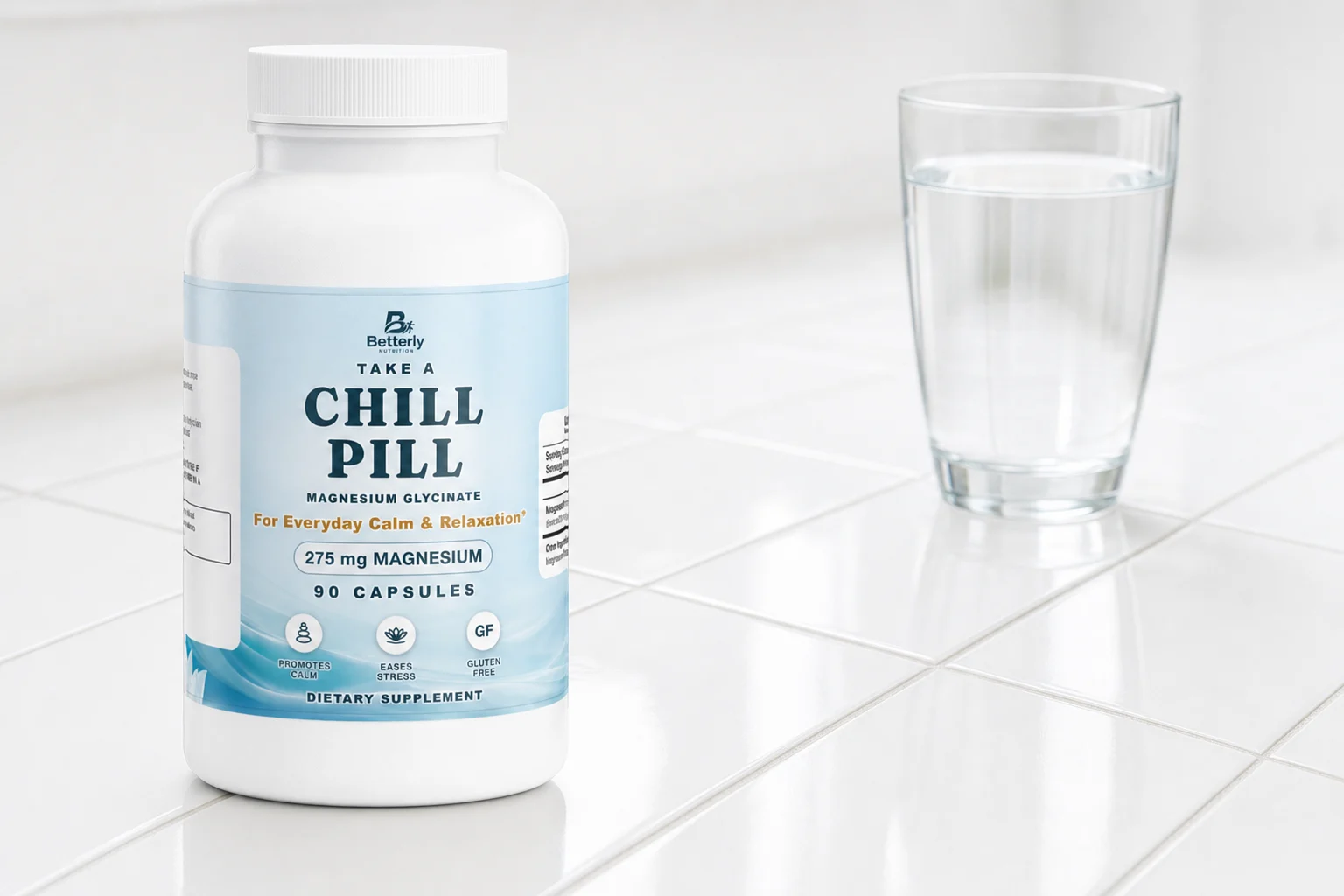
Our capsules use magnesium glycinate, which pairs elemental magnesium with the amino acid glycine. It supports healthy muscle relaxation, normal nerve function, and healthy sleep patterns — the body-side basics of feeling settled at the end of the day. Each daily serving of our three capsules delivers 275 mg of elemental magnesium from 2,500 mg of magnesium glycinate, in a plant-based hypromellose capsule.
If you're weighing forms, our guide to magnesium glycinate vs citrate walks through the differences in plain English. The short version: glycinate is the form our capsules use, so it's the one we'd point to for this wind-down stack.
What does ashwagandha actually do?
Ashwagandha (Withania somnifera) is a root with a long history — it has been used in traditional Ayurvedic practice for generations as an adaptogen (NIH Office of Dietary Supplements). In modern supplement terms, adaptogens are herbs taken to help support the body's response to everyday stress, and ashwagandha is probably the best known of the bunch. If the category is new to you, Adaptogens 101 covers the landscape.
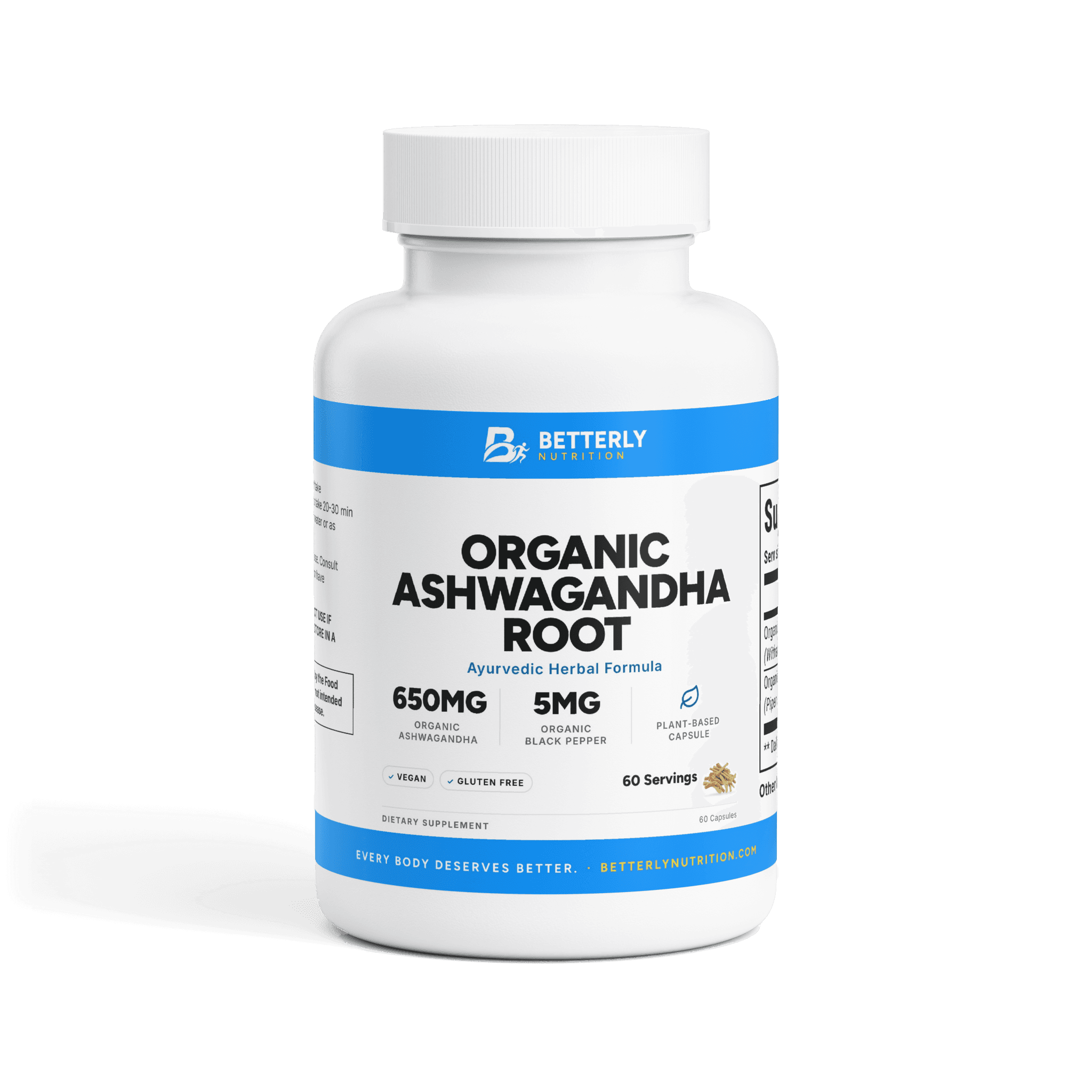
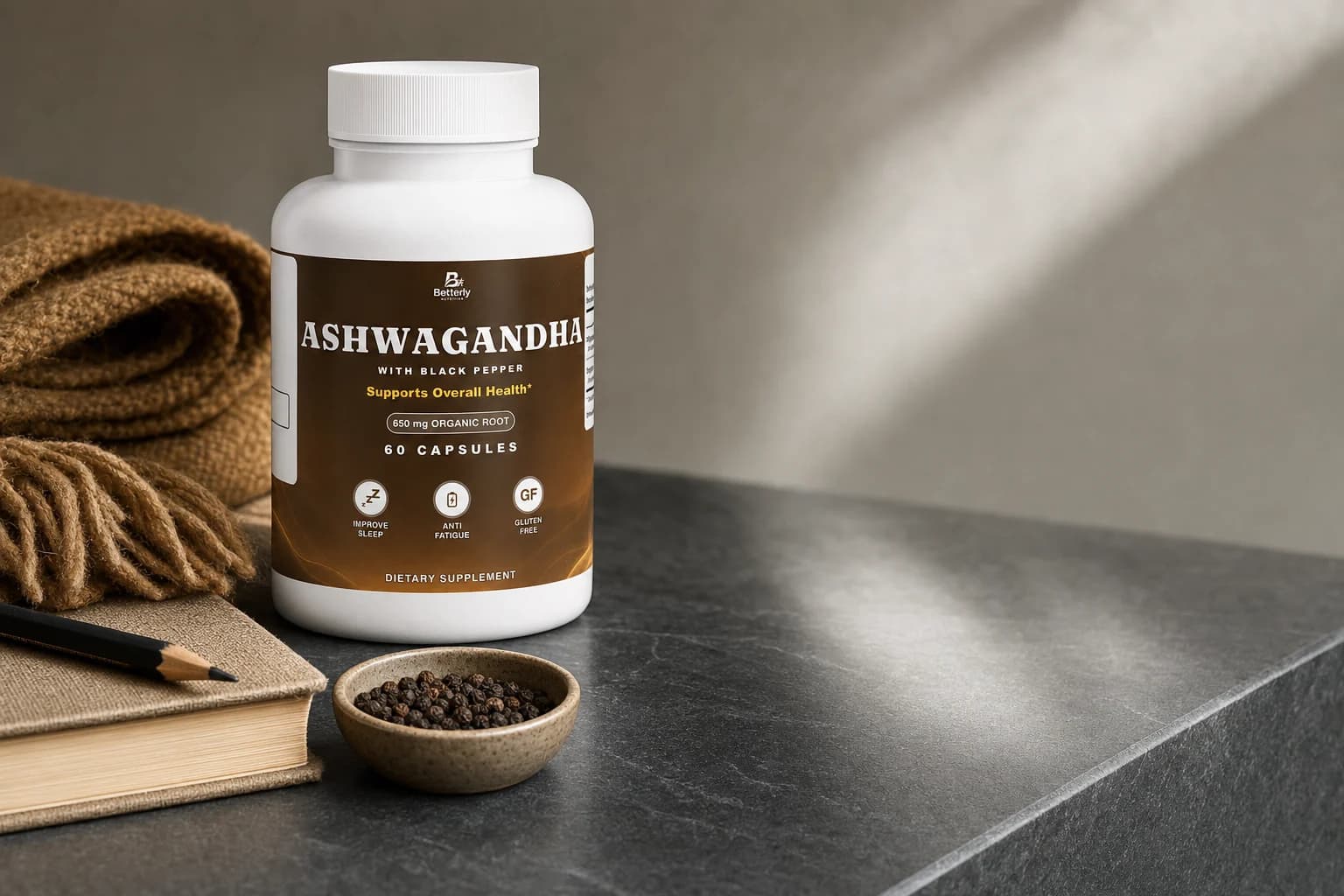
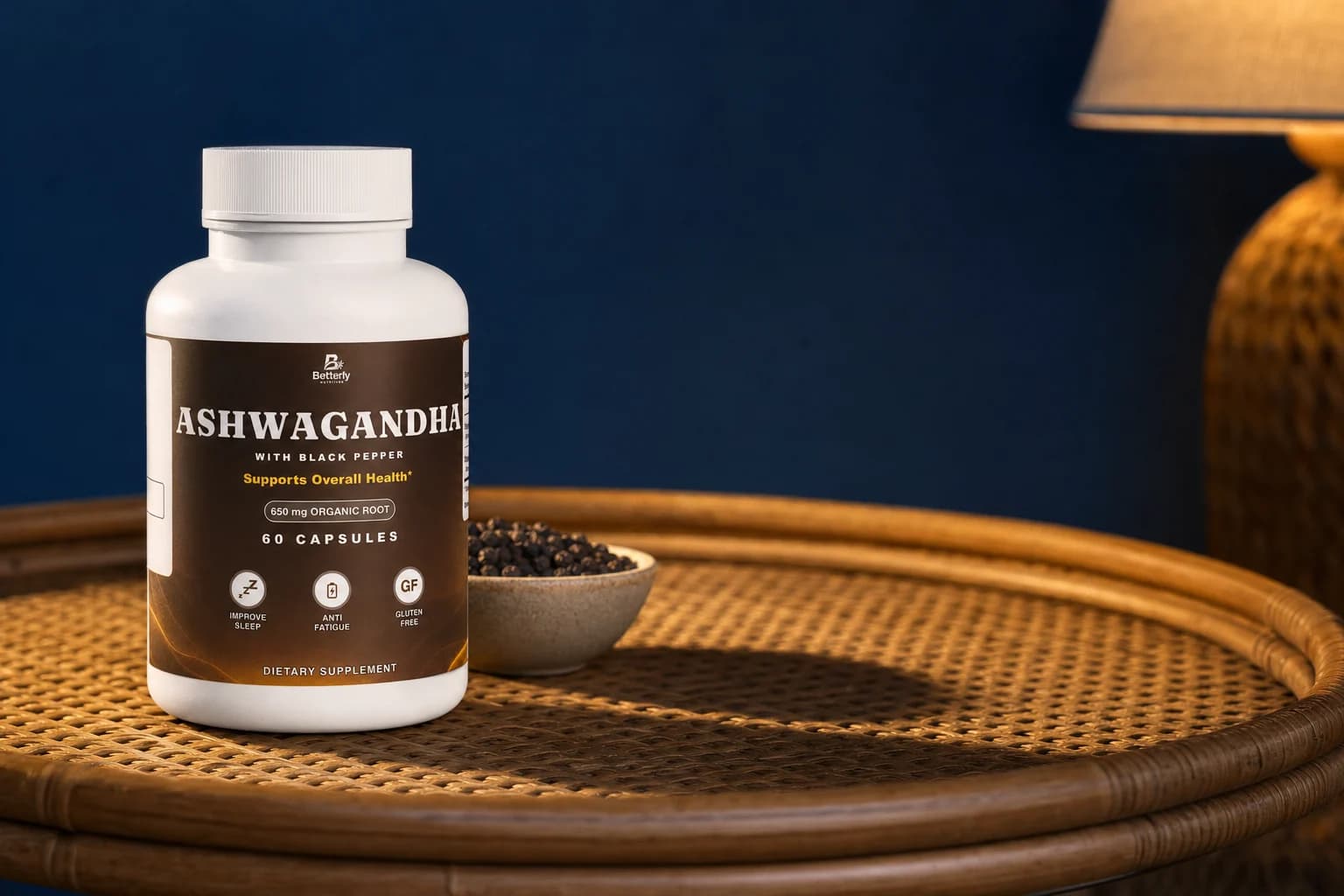
Where magnesium works on the body side of winding down, ashwagandha works on the wound-tight side: it's traditionally used to help you feel calm and grounded as the day winds down. Our Organic Ashwagandha Root Capsules pair 650 mg of organic ashwagandha root with 5 mg of organic black pepper per 1-capsule serving, in vegan pullulan capsules with no animal-derived gelatin. For a deeper look at the herb on its own, we've written a full guide to ashwagandha benefits and how to take it.
Why do people pair them for evening wind-down?
Because they cover different ground without overlapping.
A tense body and a busy head tend to show up together at 9 p.m. Magnesium speaks to the first — healthy muscle relaxation, normal nerve function, healthy sleep patterns. Ashwagandha speaks to the second — the body's response to everyday stress and that steadier, more grounded feeling. One is a mineral, one is an herb; nothing is duplicated between the two formulas, and each label's serving stays exactly the same whether you take one or both.
We'd rather be straight with you about what pairing them won't do: neither is a sedative, and stacking them won't switch you off like a light. What the combination is good at is supporting a wind-down you're already building — dimmer evenings, a consistent-ish bedtime, dinner that isn't eaten at your desk. That's the honest frame for everything in our Sleep & Stress Relief collection: support, not shortcuts.
When should you take magnesium and ashwagandha?
Timing comes straight from each product's label. Here's how the two sit side by side, and how they layer into one evening.
| Magnesium Glycinate Capsules | Organic Ashwagandha Root Capsules | |
|---|---|---|
| Label serving | Three capsules, once daily | One capsule, twice a day |
| Timing on the label | Once daily; the label sets no time of day | 20–30 minutes before a meal |
| Water and food | The label doesn't tie it to a meal | With an 8 oz glass of water, before a meal |
| Evening-stack fit | With your wind-down, once the day is done | Many people take the second capsule in the evening to help unwind |
| What it supports | Healthy muscle relaxation, normal nerve function, healthy sleep patterns | The body's response to everyday stress; a steadier sense of calm |
The verdict, split by use case: if evenings are the tense part of your day, magnesium glycinate at night is the simpler place to start. If the whole day runs wound-up, ashwagandha's split serving — one capsule earlier, one in the evening — fits better. And if you want the full wind-down stack, they layer cleanly: ashwagandha 20–30 minutes before meals, magnesium when you start powering down for the night.
From our shop: Magnesium Glycinate Capsules — 275 mg of elemental magnesium, from 2,500 mg of magnesium glycinate, per 3-capsule serving in plant-based hypromellose capsules.
What should you look for when buying?
This is where honest labels earn their keep. A few things worth checking before you buy either supplement — from us or anyone else:
- Elemental magnesium, spelled out. Magnesium is always bonded to a partner molecule, so there are two numbers that matter: the compound weight and the magnesium your body actually gets. The label on our Magnesium Glycinate Capsules gives you both — 275 mg of elemental magnesium from 2,500 mg of magnesium glycinate. A label that shows its math is being straight with you.
- The form, named plainly. A label should say which form of magnesium it uses (glycinate, citrate, oxide and others); ours says magnesium glycinate, and our guide to glycinate vs citrate covers how the forms differ.
- The root, for ashwagandha. The root is the part with the generations-long traditional track record, and it's what our capsules use — organic, with 5 mg of organic black pepper per 1-capsule serving alongside.
- A short list you can read aloud. Our magnesium is magnesium glycinate in a hypromellose capsule, with magnesium stearate, silicon dioxide and rice flour as the only other ingredients; our ashwagandha is root, pepper, and a vegan pullulan shell. No mystery blends.
- No miracle promises. We'll say it about our own products: these support a routine, they don't replace one. Our ashwagandha is manufactured in the USA, and each label lists exactly what's inside. Any brand promising more than support is overpromising.
Who is this stack for — and who should skip it?
It's for adults whose evenings could use some help arriving: people who reach the end of the day still carrying it, who want support for occasional stress and a more settled lead-up to bed, alongside a balanced diet and a reasonably consistent routine.
Some people should hold off, or get a green light first:
- Under 18. Both labels say to consult a physician first if you're under 18.
- Pregnant or nursing. Talk with your physician before using these or any dietary supplement.
- Taking medication, or managing a known medical condition. Same answer — your physician knows your situation, and a quick conversation beats guessing.
- Thyroid or liver concerns, or a medication that makes you sleepy. According to the NIH Office of Dietary Supplements, ashwagandha might affect thyroid function, has been linked in a few reports to effects on liver function, and might interact with some medications, including sedatives. It appears well tolerated for up to about 3 months, and its long-term safety isn't known.
- Surgery on the calendar. Tell your surgeon about every supplement you take, these two included.
- Anyone tempted to double up. Don't exceed the recommended dose on either label. More isn't a shortcut.
And the standing reminder: this article is education, not a substitute for personal medical advice.
How do you build the pair into an evening routine?
The trick with both of these is unglamorous: consistency beats intensity. A capsule here and there won't tell you much; a steady daily rhythm gives the routine a fair shot.
Anchor each one to something you already do. The label rhythms make that easy — ashwagandha's one-capsule-twice-a-day serving can sit 20–30 minutes before breakfast and dinner, and magnesium's three capsules can mark the official start of your wind-down: kettle on, screens dimming, capsules taken, done. If you're new to building habits like this, our guide to building a simple daily supplement routine is a good companion.
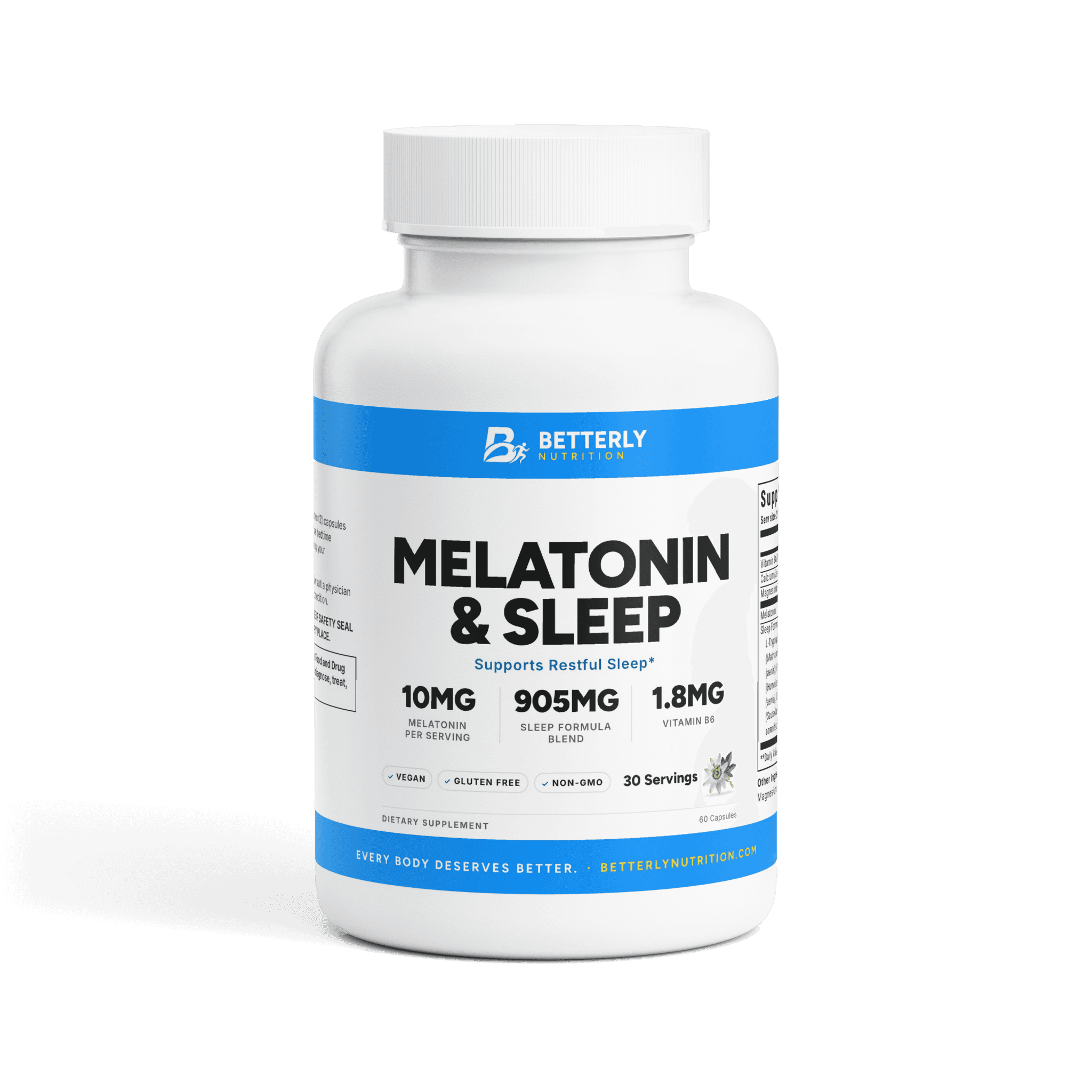
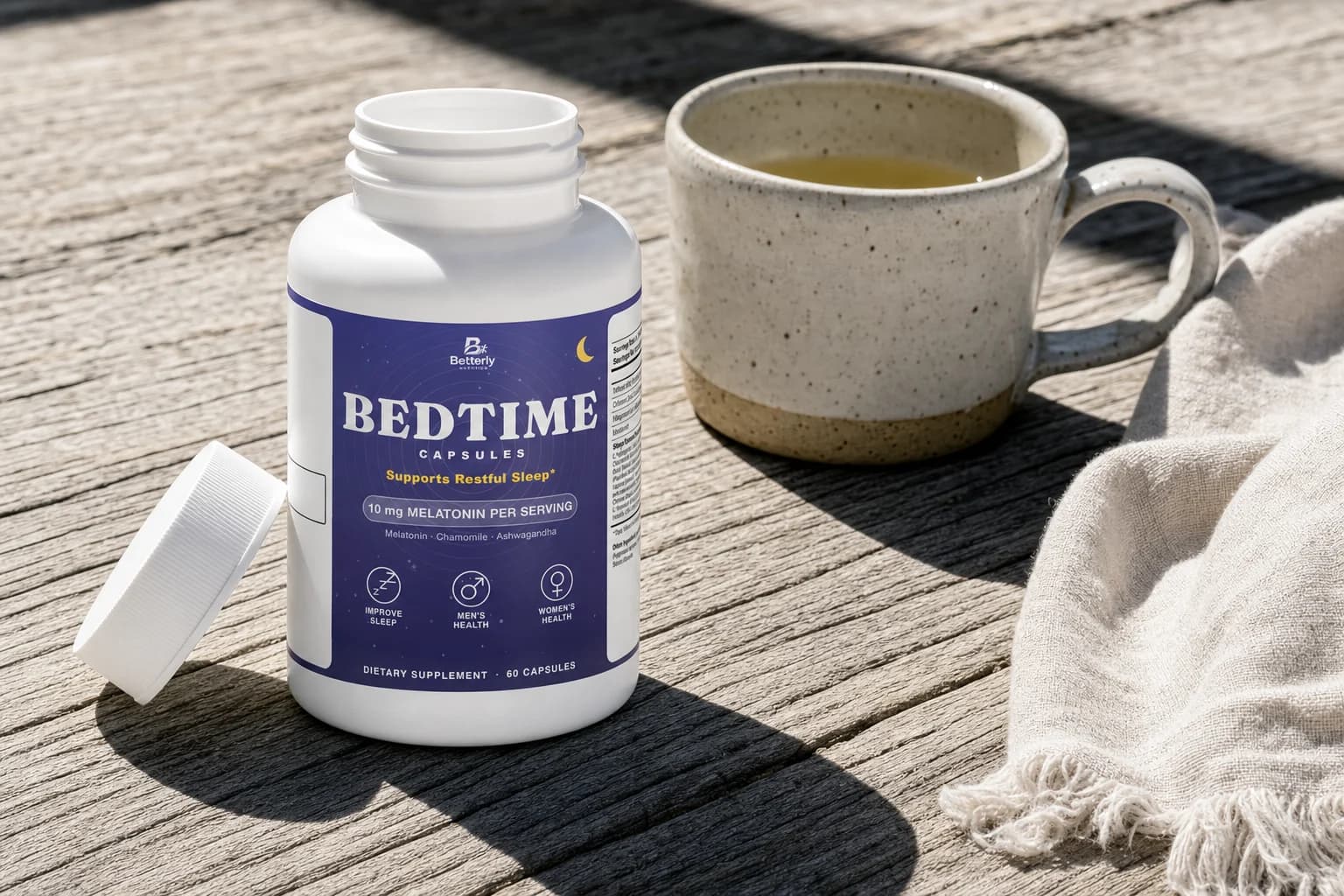
One honest fork in the road: if you'd rather take one product than two, our 10mg Melatonin Sleep Capsules are the obvious thing to look at — and we'd rather hand you its label than the tidy version. It's a melatonin-led formula: 10 mg of melatonin per 2-capsule serving, plus a 905 mg proprietary blend of calming botanicals like chamomile, lemon balm, and passion flower, with ashwagandha in there too — though the blend doesn't break out individual amounts. It does list magnesium citrate, but at 13 mg a serving, 3% of the Daily Value. A serving of our Magnesium Glycinate Capsules gives you 275 mg of elemental magnesium, 65% of the Daily Value — roughly twenty-one times as much.
So this isn't really one product versus two; it's two different jobs. If a meaningful daily magnesium serving is what you're after, the melatonin capsules won't stand in for it, and swapping is a step backwards on that axis. If melatonin and botanicals to help you settle at bedtime is what you're after, that's exactly what those capsules are built for — and it's one to take on its own rather than stacked on top of another melatonin product. And for the wider picture of what can help at night, our roundup of the best supplements for better sleep puts the options side by side.
From our shop: Organic Ashwagandha Root Capsules — 650 mg of organic ashwagandha root and 5 mg of organic black pepper per 1-capsule serving, in vegan pullulan capsules.
Frequently asked questions
Do magnesium and ashwagandha do the same thing?
No — and that's the point of pairing them. Magnesium is a mineral that supports healthy muscle relaxation, normal nerve function, and healthy sleep patterns. Ashwagandha is an adaptogenic herb that helps support the body's response to everyday stress. Complementary lanes, not two versions of the same thing.
Do you need to take them at the same time?
No. Our ashwagandha label suggests one capsule twice a day, 20–30 minutes before a meal, while the magnesium glycinate label says three capsules once daily and sets no time of day. One rhythm that follows both labels: the second ashwagandha capsule 20–30 minutes before dinner, then the magnesium once your wind-down starts.
Should you take them with food?
Ashwagandha's label points to 20–30 minutes before a meal, with an 8 oz glass of water, so it goes in ahead of food rather than with it. The magnesium glycinate label doesn't tie it to food either way, so just pick a consistent time that fits your evening and stick with it.
Can you take them alongside melatonin?
Yes, with your physician's okay: the National Center for Complementary and Integrative Health (NCCIH) says people taking medicine should consult a health care provider before using melatonin. Our 10mg Melatonin Sleep Capsules carry 10 mg per 2-capsule serving, so stick to the label serving and don't add another melatonin. Their 905 mg proprietary blend includes ashwagandha, so pairing them with Organic Ashwagandha Root Capsules means ashwagandha from two products. It also lists St. John's Wort and 5-HTP; NCCIH says St. John's wort can weaken the effects of many medicines.
Will the stack make you drowsy?
It isn't built to, but it can happen. Neither magnesium nor ashwagandha is a sedative, though the NIH Office of Dietary Supplements lists mild drowsiness among ashwagandha's common side effects, so see how the pair affects you before you drive. Think of them as one supportive piece of a wind-down, not a switch.
Is it OK to take them every day?
Both labels are written for daily use, and daily consistency is what makes the routine worth judging. Just don't exceed the recommended dose on either label — and if you're pregnant, nursing, on medication, or managing a known medical condition, talk with your physician first.
Sources
- Magnesium: Fact Sheet for Health Professionals (NIH Office of Dietary Supplements)
- Ashwagandha: Fact Sheet for Health Professionals (NIH Office of Dietary Supplements)
- St. John's Wort: Usefulness and Safety (NCCIH)
- Melatonin: What You Need To Know (NCCIH)
If this left you looking for somewhere to start, read magnesium glycinate for evening wind-down — its amounts per serving are listed on the page. For the practical questions this raises, how dosing, sourcing and subscriptions work is answered in one place.